Tag Archives: theology

One Was Thankful

And one of them, when he saw that he was healed, turned back, and with a loud voice glorified God, (Luke 17:15)

Thanksgiving Day is upon us, and I’m sure most of us have plans for food, family, friends, and fellowship. In today’s culture, Thanksgiving Day is just a good excuse to have a day (or two) off work, indulge in gluttonous behavior, and worship before the luminous god of football followed by the giving of alms to the god of materialism the next day, all the while in complete ignorance of the significance of the day.

As I thought about Thanksgiving coming up, the Lord brought to mind the account of Jesus healing the ten lepers. We read about that in Luke 17:11-19:

And it came to pass, as he went to Jerusalem, that he passed through the midst of Samaria and Galilee. And as he entered into a certain village, there met him ten men that were lepers, which stood afar off: And they lifted up their voices, and said, Jesus, Master, have mercy on us. And when he saw them, he said unto them, Go shew yourselves unto the priests. And it came to pass, that, as they went, they were cleansed. And one of them, when he saw that he was healed, turned back, and with a loud voice glorified God, And fell down on his face at his feet, giving him thanks: and he was a Samaritan. And Jesus answering said, Were there not ten cleansed? but where are the nine? There are not found that returned to give glory to God, save this stranger. And he said unto him, Arise, go thy way: thy faith hath made thee whole. (Luke 17:11-19)

Following the “Transfiguration” (Luke 9:28-36), Jesus “stedfastly set His face to go to Jerusalem” (Luke 9:51). Coming down from Caesarea Philippi, Luke records that Jesus “passed through the midst of Samaria and Galilee” (v. 11). He is traveling from the north to the south (toward Jerusalem), which means He must pass through Galilee first before going through Samaria. Why did Luke name Samaria first? I do not know. I could not find one commentator that could tell me, but I suspect the answer is down below. Jesus was on His way to the cross.

As the passage records, ten leprous men met Him, and while remaining at a distance –because their disease was so contagious, they were not allowed to come near other people – they cried out for Jesus to have mercy on them. They addressed Him as “Master” – Greek ἐπιστάτης (epistatēs), from epi, “superimposition, to be over, above,” and histēmi, “to stand” Together the title means “one who stands above” – Master! This is not to be confused with διδάσκαλος (didaskalos) meaning “teacher” (Luke 3:12). Thus, they recognized that Jesus had the power to heal their disease.

When Jesus saw them, “He said unto them, ‘Go show yourselves’” (v.14). Note that Jesus does not touch nor approach them. Why? Jesus had often touched lepers when He healed them, why not today? Jesus was on His way to the Cross. He could not allow Himself to become “unclean.” Note also that His Word was sufficient to heal the lepers – “as they went, they were cleansed.” This healing by His verbal command is a clear demonstration of His deity.

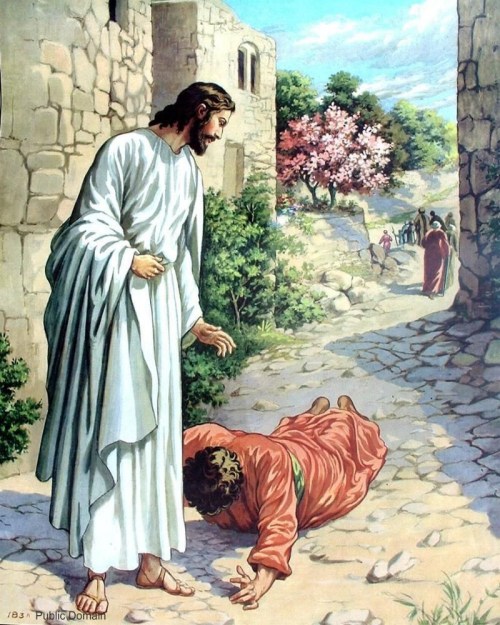
All ten exercised faith in believing His Word that they would be healed, but only one returned to give thanks. “When he saw that he was healed, turned back, and with a loud voice glorified God” (v. 15). “And fell down on his face at his feet, giving him thanks: and he was a Samaritan” (v. 16). He did not simply bow in reverence. He completely prostrated himself, flat with his face to the ground. He placed himself at Jesus’ feet. His attitude was one of complete humility, reverence, worship, and gratitude – “and he was a Samaritan.” That this one was a Samaritan may explain why Luke listed Samaria before Galilee. The implication is that the other nine were Jews.

Jesus seems surprised that only this one returned to give thanks. However, knowing that the Lord knows the hearts of all men, His feigned surprise was likely intended to make a point. Jesus said that “[God] is kind to the unthankful and to the evil” (Luke 6:35).

Thankfulness was not particularly characteristic of the Jews. Consider how often they complained after they were freed from Egypt. Think of how soon they fell into idol worship during the time of the Judges. Consider their presumption on God knowing that they were His people. Their lack of gratitude came as no surprise to Jesus. However, the “stranger” recognized his unworthiness and was grateful for the mercy Jesus bestowed on him.

“And he said unto him, Arise, go thy way: thy faith hath made thee whole” (v.19). The Greek word translated “whole” here is σεσωκεν (sesoken), and it means “has saved.” Literally what Jesus said is, “thy faith hath saved thee.” Obedience (which also required faith) had made him “whole,” i.e., healed him. However, his “faith” in recognizing Jesus as “Master” saved him. He was “whole” not only physically, but spiritually.

Does God Expect Us To Be Thankful?

Leviticus 22:29  And when ye will offer a sacrifice of thanksgiving unto the LORD, offer it at your own will.

  1. Not out of obligation
  2. 2 Corinthians 9:7 Every man according as he purposeth in his heart, so let him give; not grudgingly, or of necessity: for God loveth a cheerful giver.

1 Chronicles 16:8  Give thanks unto the LORD, call upon his name, make known his deeds among the people.

Can’t do the latter without the former.

1 Chronicles 16:34  O give thanks unto the LORD; for he is good; for his mercy endureth for ever.

Psalm 30:4  Sing unto the LORD, O ye saints of his, and give thanks at the remembrance of his holiness.

Considering God’s holiness and our unworthiness, how can we not be thankful for the love He has shown to us?

Psalm 95:2  Let us come before his presence with thanksgiving, and make a joyful noise unto him with psalms.

Not “come before His presence with prayer requests.” Prayer requests are fine, but let’s first thank Him.

Psalm 100:4  Enter into his gates with thanksgiving, and into his courts with praise: be thankful unto him, and bless his name.

“Bless His name,” i.e., “speak well of His name” What are some attributes of God that come to mind?

Colossians 2:6-7  As ye have therefore received Christ Jesus the Lord, so walk ye in him:  (7)  Rooted and built up in him, and stablished in the faith, as ye have been taught, abounding therein with thanksgiving.

Philippians 4:6  Be careful for nothing; but in every thing by prayer and supplication with thanksgiving let your requests be made known unto God.

1 Thessalonians 5:18  In every thing give thanks: for this is the will of God in Christ Jesus concerning you.

Consequences of Ingratitude:

Romans 1:21  Because that, when they knew God, they glorified him not as God, neither were thankful; but became vain in their imaginations, and their foolish heart was darkened.

Ingratitude darkens the heart.

2 Timothy 3:1-2, 7-9  This know also, that in the last days perilous times shall come.  (2)  For men shall be lovers of their own selves, covetous, boasters, proud, blasphemers, disobedient to parents, unthankful, unholy … (7) Ever learning, and never able to come to the knowledge of the truth. (8)  Now as Jannes and Jambres withstood Moses, so do these also resist the truth: men of corrupt minds, reprobate concerning the faith. (9)  But they shall proceed no further: for their folly shall be manifest unto all men, as theirs also was.

Benefits of Thankfulness:

Psalm 140:13  Surely the righteous shall give thanks unto thy name: the upright shall dwell in thy presence.

We are made “righteous” through Christ. Because of that we have His presence within us.

Jeremiah 30:19  And out of them shall proceed thanksgiving and the voice of them that make merry: and I will multiply them, and they shall not be few; I will also glorify them, and they shall not be small.

  1. In context, this is referring to Israel’s return from Babylonian captivity.
  2. However, the principle applies.
  3. God will bless our thankfulness.

2 Corinthians 4:15  For all things are for your sakes, that the abundant grace might through the thanksgiving of many redound to the glory of God.

  1. “redound” Greek περισσεύω (perisseuō)
  2. to superabound (in quantity or quality), be in excess
  3. God’s grace to us “supper-abounds” through thanksgiving.

2 Corinthians 9:11  Being enriched in every thing to all bountifulness, which causeth through us thanksgiving to God.

Colossians 3:15  And let the peace of God rule in your hearts, to the which also ye are called in one body; and be ye thankful.

1 Timothy 4:1-5  Now the Spirit speaketh expressly, that in the latter times some shall depart from the faith, giving heed to seducing spirits, and doctrines of devils;  (2)  Speaking lies in hypocrisy; having their conscience seared with a hot iron;  (3)  Forbidding to marry, and commanding to abstain from meats, which God hath created to be received with thanksgiving of them which believe and know the truth.  (4)  For every creature of God is good, and nothing to be refused, if it be received with thanksgiving:  (5)  For it is sanctified by the word of God and prayer.

Conclusion:

Jesus healed ten lepers. Nine of them were of “the chosen.” Their attitude reflected ingratitude for the marvelous work Jesus performed in their lives – almost as if they believed they were entitled to what they received.

One leper – a “stranger,” a Samaritan, clearly an “outsider” due to both his leprosy and his heritage – recognized his own unworthiness and the greatness of the One who healed him; and he returned to give thanks and worship the God who healed him. And he was saved.  Let us recognize that we are all lepers and give thanks for all He has done for us.

Happy Thanksgiving!

3 Comments

Filed under Apologetics, Christianity, Holidays, Religion, Salvation, Thanksgiving, Theology

Three Anointings

There came unto him a woman having an alabaster box of very precious ointment, and poured it on his head, as he sat at meat. (Matthew 26:7)

In one of my Bible readings this week, I came across an account of a woman anointing Jesus. All four Gospels record such an event. A detached, casual reading of the event can make the reader conclude that all four accounts are the same. Indeed, if we check the cross-references in our Bibles, they all seem to point to the other accounts leading the reader to assume they are all the same account. However, a close and careful examination of the four accounts will reveal a different story.

We have two, arguably three, different accounts of Jesus’ anointing. Luke’s account places the anointing long before the transfiguration while He was still in Capernaum (Luke 7:36-50).

Luke 7:36-39  And one of the Pharisees desired him that he would eat with him. And he went into the Pharisee’s house, and sat down to meat.  (37)  And, behold, a woman in the city, which was a sinner, when she knew that Jesus sat at meat in the Pharisee’s house, brought an alabaster box of ointment,  (38)  And stood at his feet behind him weeping, and began to wash his feet with tears, and did wipe them with the hairs of her head, and kissed his feet, and anointed them with the ointment.  (39)  Now when the Pharisee which had bidden him saw it, he spake within himself, saying, This man, if he were a prophet, would have known who and what manner of woman this is that toucheth him: for she is a sinner.

Matthew 26:6-9  Now when Jesus was in Bethany, in the house of Simon the leper(7)  There came unto him a woman having an alabaster box of very precious ointment, and poured it on his head, as he sat at meat.  (8)  But when his disciples saw it, they had indignation, saying, To what purpose is this waste?  (9)  For this ointment might have been sold for much, and given to the poor.

Mark 14:1-5  After two days was the feast of the passover, and of unleavened bread … (3)  And being in Bethany in the house of Simon the leper, as he sat at meat, there came a woman having an alabaster box of ointment of spikenard very precious; and she brake the box, and poured it on his head.  (4)  And there were some that had indignation within themselves, and said, Why was this waste of the ointment made?  (5)  For it might have been sold for more than three hundred pence, and have been given to the poor. And they murmured against her.

John 12:1-6  Then Jesus six days before the passover came to Bethany, where Lazarus was which had been dead, whom he raised from the dead.  (2)  There they made him a supper; and Martha served: but Lazarus was one of them that sat at the table with him.  (3)  Then took Mary a pound of ointment of spikenard, very costly, and anointed the feet of Jesus, and wiped his feet with her hair: and the house was filled with the odour of the ointment.  (4)  Then saith one of his disciples, Judas Iscariot, Simon’s son, which should betray him,  (5)  Why was not this ointment sold for three hundred pence, and given to the poor?  (6)  This he said, not that he cared for the poor; but because he was a thief, and had the bag, and bare what was put therein.

Matthew and Mark place the anointing after the Triumphal Entry (Matthew 21:1-11; Mark 11:1-11) and two days before the Passover. John places the anointing the day before the Triumphal Entry (John 12:12). Matthew and Mark place the anointing in the “house of Simon the Leper.” John seems to place the anointing in the house of Lazarus following the raising of Lazarus from the dead. Neither Matthew nor Mark names the woman who anointed Jesus. Had she been Mary, they certainly would have known who she was. John names Lazarus, Martha, and Mary who anointed Jesus. Matthew records that the “disciples” were indignant about the waste. Mark only records that “there were some that had indignation within themselves.” The difference and precision in detail between Matthew and Mark’s account and the account of John are too distinct to be an error in recording. Therefore, these are two separate anointings. Luke’s account came too early to be confused with these that took place just before the crucifixion. Luke records that the anointing took place in the house of a Pharisee named Simon – not a leper – and the woman that anointed Jesus was “a sinner.” Surely, Mary, named by John, would not have been identified as a “sinner.” She is the one that “sat at Jesus’ feet, and heard His word” (Luke 10:39). Also, Luke’s account records nothing said about the cost of the ointment being used.

In all, we have three separate accounts of Jesus being anointed by women. Even though there are some similarities, the differences are too great to conflate them as one or two. The lesson here is to let the Bible speak for itself. The experts, while we can learn much from them, are also fallen men after all; they can make mistakes too.

Matthew and Mark describe the same anointing. John records a second anointing by Mary, Lazarus’ sister (Lazarus whom Jesus raised from the dead, John 11). Both accounts take place before the Passover when Jesus would be crucified. In both instances, Jesus commented that the anointing was for His burial (Matthew 26:12; John 12:7). Jesus knew that the cross lay before Him, and He went willingly to take our sin upon Himself. He paid a debt He did not owe to cancel the debt we could never pay. Reader, our sin debt was paid by Jesus who bought our pardon with His blood. All we have to do is accept that pardon. Have you done that? If not please read my page on “Securing Eternal Life.”

Comments Off on Three Anointings

Filed under Apologetics, Bible, Christianity, Gospel, Salvation, Theology

Little Ones

Take heed that ye despise not one of these little ones; for I say unto you, That in heaven their angels do always behold the face of my Father which is in heaven. (Matthew 18:10)

The verse above was part of my daily Bible reading this week. It is a very familiar verse that I have read hundreds of times perhaps, heard sermons preached on it, and participated in Bible studies that covered it. When read out of context, it seems that Jesus refers to children – “little ones” – in this discourse, and that is the way it has been presented, or at least the way I have understood it, in the past.

However, as I read the assigned Bible passage (Matthew 18:7-35), it occurred to me that “little ones” did not refer to children. That made me stop and dig a little deeper. In order to understand the complete meaning of a passage, it is advisable always to read a single verse in its full context. In this case, we need to go back to the beginning of the chapter to get a clear picture of what was taking place.

As the chapter opens, we find Jesus’ disciples wondering and questioning Jesus as to who (among them, supposedly) would be the greatest in the “kingdom of heaven” (18:1). Matthew does not name the participants in the discussion nor do the other two synoptic Gospels.[1] Interestingly, all three record this event as having taken place shortly after the Transfiguration.[2] Mark records that the discussion took place on the return trip from Caesarea Philippi, the location of the “Mount of the Transfiguration,” to Capernaum. Three of the twelve, Peter, James, and John, were the only witnesses to the Transfiguration. Surely these three, because the special privilege afforded them, felt that they should be chiefest among them. Moreover, all of the disciples discounted what Jesus told them a short time before. “And while they abode in Galilee, Jesus said unto them, The Son of man shall be betrayed into the hands of men: And they shall kill him, and the third day he shall be raised again. And they were exceeding sorry” (Matthew 17:22-23).[3] The idea was unthinkable, so they quickly eliminated it from memory.

As an object lesson, Jesus took a small child and set him before them. “And said, Verily I say unto you, Except ye be converted, and become as little children, ye shall not enter into the kingdom of heaven. Whosoever therefore shall humble himself as this little child, the same is greatest in the kingdom of heaven. And whoso shall receive one such little child in my name receiveth me” (Matthew 18:3-5, emphasis mine). The Greek word translated as “converted” is strephō. The word, as defined by Strong’s,[4] means “to twist, that is, turn quite around or reverse,” which is similar to “repent.” Obviously, Jesus identified the problem as pride manifested as misguided ambition for greatness. The solution requires repentance, conversion, or transformation from a position of pride to that of humility, like that of a child. Those who make the transformation will achieve greatness in the kingdom of heaven. Jesus then adds that one who receives “one such little child,” i.e., one that has made the “conversion,” in “My name, receives Me.” Jesus was not speaking of a child, but rather one who becomes “like a little child” in humility.  The child in their midst was just the “prop” for the object lesson.

As He continued the object lesson, He added, “But whoso shall offend one of these little ones which believe in me, it were better for him that a millstone were hanged about his neck, and that he were drowned in the depth of the sea” (Matthew 18:6, emphasis mine). At this point, we need to examine the language closer to understand what Jesus was actually saying. At the beginning, Jesus used a child as a prop for the object lesson. The Greek word translated “little child” (18:2) is paidion, which, according to Strong’s means “a childling (of either sex), that is, (properly) an infant, or (by extension) a half grown boy or girl; figuratively an immature Christian” (emphasis mine). Notice that Jesus switches from “little child” to “little ones.” That is a different word in the Greek: mikros. Strong’s defines that word as “small (in size, quantity, number or (figuratively) dignity)” (emphasis mine). This agrees with Strong’s definition of “paidon” being “figuratively an immature Christian” who would also be “figuratively small in dignity.”

Jesus then pronounces a “woe” to the world for the offenses it brings to these “little ones” (mikron, plural). He notes that offences will come, but He issues a warning, “woe to that man by whom the offence cometh!” (18:7). By way of hyperbole, Jesus stresses the seriousness of offending a “little one.” He suggested removing any body part that causes offence rather than going to hell completely whole.[5] The obvious exaggeration is a warning to the mature Christian to cast off anything in life that would cause offense to an immature Christian, causing him to stumble. I see this a lot among Christians who, because of the “freedom” in Christ, conduct their lives closely imitating the ways of the world without consideration for their weaker brethren. Jesus says to cast off such things.

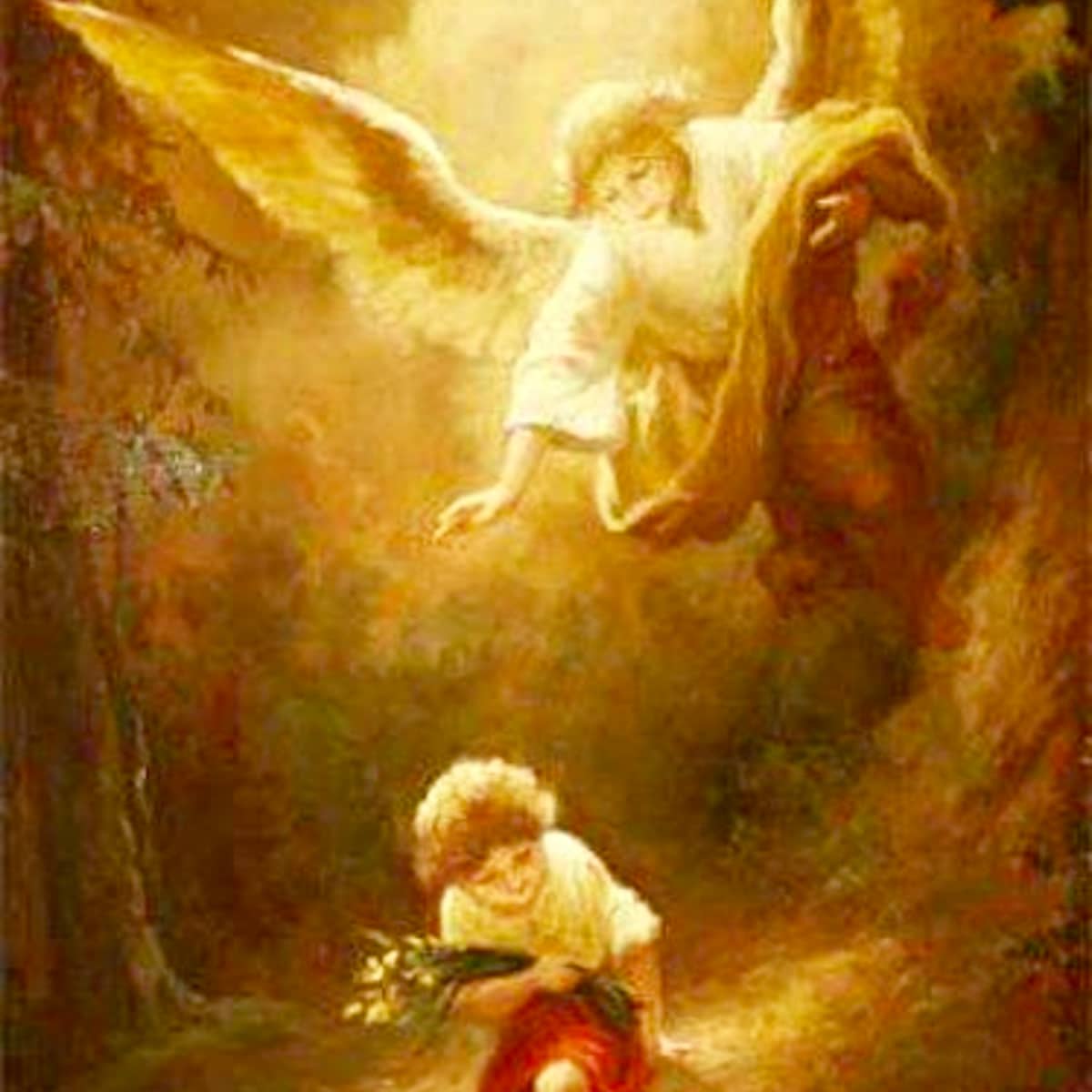
Jesus warns, “Take heed that ye despise not one of these little ones; for I say unto you, That in heaven their angels do always behold the face of my Father which is in heaven” (Matthew 18:10). So, rather than speaking of children having their guardian angels watching over them, as I was taught in the past, Jesus is talking about the mikron (little ones), or immature Christians, who, as mature Christians, we are not to “despise,” i.e., consider lesser than ourselves or count them of low esteem. It is they whose angels watch over them, who stand before the Father. “For the Son of man is come to save that which was lost” (Matthew 18:11).

Jesus illustrates His concern for these “little ones” with the “Parable of the Lost Sheep.”[6] In the parable, the Good Shepherd has 100 sheep, analogous to mature Christians, and one, analogous to the immature Christian, wanders away from the flock. Presumably, that one was offended and caused to leave the flock. The Good Shepherd leaves the 99 behind and goes after that one lost sheep. “And if so be that he find it, verily I say unto you, he rejoiceth more of that sheep, than of the ninety and nine which went not astray. Even so it is not the will of your Father which is in heaven, that one of these little ones should perish” (Matthew 18:13-14, emphasis mine). This further strengthens the argument that Jesus was not speaking of children necessarily, although the application could certainly be made in reference to children. Children watch and learn from adults and many come to Jesus at an early age, so it behooves adult, mature Christians to set a good example that they can follow.

The remainder of the chapter (vv. 15-35) deals with the way we should forgive one another. Forgiveness among the brethren goes a long way in maintaining the bond of fellowship and deters the possibility of offending a “little one.” To illustrate this, Jesus offered another parable of a servant who owed his master (God by analogy) an unimaginable amount of money that could never be repaid. When the master comes to collect, the servant throws himself at the mercy of his master. The master moved with compassion, forgives the debtor, and absolves him of all his debt. God, through Jesus’ sacrifice, has forgiven us of a sin debt that cannot be paid in all of eternity.

Continuing with Jesus’ parable, the servant leaves his master free of all debt, but when he finds a fellow servant who owes him a small amount, he refuses to forgive his fellow servant and has him cast into prison. When the master finds out about the servant’s unforgiving actions, he has him cast into prison until all is paid.

What we learn from this lesson is that we should likewise forgive those “little ones” their offenses toward us, because God has also forgiven us from an eternal debt that we can never repay.

We all carry a debt that we can in no way repay. Jesus died in our place to pay the debt due us. However, we need to come to Him and ask that He, in His mercy, will forgive us. Reader, if you have not asked the Master for that forgiveness, please read my page on “Securing Eternal Life.”

Notes:


[1]  Mark 9:33-34; Luke 9:46-47

[2] Matthew 17:1-9; Mark 9:2-9; Luke 9:28-36

[3]  Mark 9:31-32; Luke 9:44-45

[4]  All references to “Strong’s” come from the Strong’s Hebrew and Greek Dictionaries, Dictionaries of Hebrew and Greek Words taken from Strong’s Exhaustive Concordance by James Strong, S.T.D., LL.D., (Published in 1890; public domain).

[5]  Matthew 18:8-9

[6]  Matthew 18:12-13

Comments Off on Little Ones

Filed under Apologetics, Christianity, Gospel, Theology

Spit In The Eye

When he had thus spoken, he spat on the ground, and made clay of the spittle, and he anointed the eyes of the blind man with the clay, (John 9:6)

Jesus performed many healing miracles during His time of ministry on earth. The miracles were not only an expression of His compassion for the hurting, but they served as evidence of who He was according to predictive prophecy.

John the Baptist, who baptized Jesus, recognized who He was. “And John bare record, saying, I saw the Spirit descending from heaven like a dove, and it abode upon him. And I knew him not: but he that sent me to baptize with water, the same said unto me, Upon whom thou shalt see the Spirit descending, and remaining on him, the same is he which baptizeth with the Holy Ghost. And I saw, and bare record that this is the Son of God” (John 1:32-34, emphasis mine). Later, John was imprisoned by Herod Antipas, and he started having doubts about the authenticity of Jesus. In order to reassure himself that he had baptized the right man, he sent his disciples to verify that Jesus was indeed the expected Messiah. Responding to their questions, “Jesus answered and said unto them, Go and shew John again those things which ye do hear and see: The blind receive their sight, and the lame walk, the lepers are cleansed, and the deaf hear, the dead are raised up, and the poor have the gospel preached to them” (Matthew 11:4-5, emphasis mine).

Jesus quoted prophecy with which John would be familiar as proof of who He was. “Then the eyes of the blind shall be opened, and the ears of the deaf shall be unstopped. Then shall the lame man leap as an hart, and the tongue of the dumb sing: for in the wilderness shall waters break out, and streams in the desert” (Isaiah 35:5-6, emphasis mine). “Thy dead men shall live, together with my dead body shall they arise. Awake and sing, ye that dwell in dust: for thy dew is as the dew of herbs, and the earth shall cast out the dead” (Isaiah 26:19, emphasis mine). “The Spirit of the Lord GOD is upon me; because the LORD hath anointed me to preach good tidings unto the meek; he hath sent me to bind up the brokenhearted, to proclaim liberty to the captives, and the opening of the prison to them that are bound” (Isaiah 61:1, emphasis mine).

Jesus performed many miracles proving His power and divinity. So many were His miracles that of Him that the Gospel writer, John said, “And there are also many other things which Jesus did, the which, if they should be written every one, I suppose that even the world itself could not contain the books that should be written. Amen” (John 21:25).

Blindness was one of the more common healings Jesus performed. In most cases, Jesus simply spoke the word and the blind were healed. For example, the first restoral of sight recorded by Matthew was of two blind men. “And when Jesus departed thence, two blind men followed him, crying, and saying, Thou Son of David, have mercy on us. And when he was come into the house, the blind men came to him: and Jesus saith unto them, Believe ye that I am able to do this? They said unto him, Yea, Lord. Then touched he their eyes, saying, According to your faith be it unto you. And their eyes were opened; and Jesus straitly charged them, saying, See that no man know it” (Matthew 9:27-30, emphasis mine). On another occasion, Matthew records, “Then was brought unto him one possessed with a devil, blind, and dumb: and he healed him, insomuch that the blind and dumb both spake and saw (Matthew 12:22, emphasis mine). In most cases, the healing required faith on the part of the recipient, but in this case, it was the faith of those who brought the demon possessed man to Jesus.

Many more examples could be cited of Jesus healing the blind simply at His word. However, two cases recorded in the Gospels stand out among the others for the “unorthodox” method Jesus employed in healing the blindness. One is recorded in Mark’s Gospel and the other in John’s.

“And he cometh to Bethsaida; and they bring a blind man unto him, and besought him to touch him. And he took the blind man by the hand, and led him out of the town; and when he had spit on his eyes, and put his hands upon him, he asked him if he saw ought” (Mark 8:22-23, emphasis mine). This was not an instantaneous healing as in other cases where Jesus healed with just His word. At first the man’s vision was unclear. “And he looked up, and said, I see men as trees, walking. After that he put his hands again upon his eyes, and made him look up: and he was restored, and saw every man clearly.” (Mark 8:24, emphasis mine). Could Jesus not have just spoken the word, as He had on other occasions, and healed the man’s blindness instantly? This has puzzled commentators through the years. Adam Clark suggests, “Our Lord could have restored this man to sight in a moment; but he chose to do it in the way mentioned in the text, to show that he is sovereign of his own graces; and to point out that, however insignificant means may appear in themselves, they are divinely efficacious when he chooses to work by them.”[1] That seems like a reasonable conclusion, but why here and not in all cases?

Albert Barnes is equally puzzled. “Why this was done is not known. It was evidently not intended to perform the cure by any natural effect of the spittle. It was to the man a “sign,” an evidence that it was the power of Jesus. The eyes were probably closed. They were perhaps “gummed” or united together by a secretion that had become hard. To apply spittle to them – to wet them – would be a “sign,” a natural expression of removing the obstruction and opening them. The power was not in the spittle, but it attended the application of it.”[2] This too seems a reasonable explanation, but why spit; why not water or olive oil?

Matthew Henry probably offers the best explanation. “That Christ used a sign; he spat on his eyes (spat into them, so some), and put his hand upon him. He could have cured him, as he did others, with a word speaking, but thus he was pleased to assist his faith which was very weak, and to help him against his unbelief. And this spittle signified the eye-salve wherewith Christ anoints the eyes of those that are spiritually blind.”[3] It is true that Jesus, by the faith of the recipients, healed immediately. But here the blind man was brought to Jesus; he did not come of his volition. Furthermore, Jesus took him by the hand and led him out of the city. This act initiated the man’s trust in the Healer. Spitting into his eyes further convinced the man that Jesus was doing something. At first, he is vision was blurred, but it was better than before. This too served to further increase his faith in Jesus’ healing touch. The second time Jesus touched his eyes, his vision was fully restored.

John records the other vision restoration by spittle in John 9. In this account, Jesus was in Jerusalem, possibly on the Feast of Tabernacles.[4] As he walked in the vicinity of the Temple, He saw a man that was blind from birth.[5] The text implies that Jesus knew that the man was blind from birth, but how the disciple knew is not clear for they asked Him, “Master, who did sin, this man, or his parents, that he was born blind?” (John 9:2). They had the common understanding that such tragedies came as a result of sin. Jesus assured them that neither was the case, “but that the works of God should be made manifest in him” (v. 3). With that, Jesus proceeded to restore the man’s vision. “When he had thus spoken, he spat on the ground, and made clay of the spittle, and he anointed the eyes of the blind man with the clay, And said unto him, Go, wash in the pool of Siloam, (which is by interpretation, Sent.) He went his way therefore, and washed, and came seeing” (John 9:6-7, emphasis mine).

This is another sight restoration that puzzles the commentators. Why would Jesus employ such methods? It could not have been to prove anything to His disciples; they had already seen Him heal blindness. If the purpose was merely to show that sin was not the cause of the man’s blindness, He could have healed him as He had done others. Besides applying mud spitballs to the man’s eyes, Jesus encouraged the man’s faith by sending him to wash in the Pool of Siloam.

Without consulting other commentaries, I suspect I know the reason behind Jesus’ method. (I could be wrong, of course, but I think I have good reason for my conclusion.) Jesus is the Creator. “All things were made by him; and without him was not any thing made that was made” (John 1:3). “For by him [Jesus] were all things created, that are in heaven, and that are in earth, visible and invisible, whether they be thrones, or dominions, or principalities, or powers: all things were created by him, and for him: (Colossians 1:16).

With that understanding, we can look back to Genesis. “And the LORD God formed man of the dust of the ground, and breathed into his nostrils the breath of life; and man became a living soul” (Genesis 2:7). God “formed” man out of dirt. The Hebrew word translated “formed” is yâtsar, which Strong’s defines as “to mould into a form; especially as a potter.” By implication, it required God (Jesus) to form and shape the human body out of moist clay.

Coming back to the blind man’s condition, John records that he was “born blind.”[6] That leads me to suspect that the man may have been born with a birth defect where his eyeballs did not develop completely or did not develop at all. The fact that Jesus made clay with His spittle harkens back to the original creation account. Here, Jesus created the missing eyeballs out of the clay. In this, Jesus demonstrated to His disciples and to us in a very clear and visual object lesson that He is the Creator God.

There is physical blindness that impairs the victim from seeing the physical world. There is also a spiritual blindness that impairs the sinner from seeing the spiritual world. Jesus heals both kinds of blindness, but of the two, spiritual blindness is the more severe, for it leads the victim to an eternity separated from the only One that can heal. Reader, if you do not know Jesus, you are spiritually blind. Come to Jesus and be forever healed of that blindness. Read my page on “Securing Eternal Life.”

Notes:


[1]  Adam Clarke, LL.D., F.S.A., (1715-1832), Adam Clarke’s Commentary on the Bible, (Published in 1810-1826; Public Domain).

[2]  Albert Barnes, Albert Barnes’ Notes on the Bible, (Published in 1847-1885; Public Domain).

[3]  Matthew Henry, Matthew Henry’s Commentary on the Whole Bible, (Published in 1708-1714; Public Domain).

[4]  John 7:2

[5]  John 9:1

[6]  John 9:19

Comments Off on Spit In The Eye

Filed under Apologetics, Bible, Christianity, Creation, Gospel, Theology

Judge Not

Judge not, that ye be not judged. (Matthew 7:1)

Throughout church history, false teachings and outright heresies have arisen due to the faulty hermeneutic of taking Scripture, especially a single verse, or even a single phrase within a verse, out of context. So it is with the verse above.

The “lost” frequently stymie the witness of Christians by misquoting this Scripture – “Judge not” – and they stop there without reciting the remaining portion of the verse. The well-meaning, albeit unprepared, Christian studders and stammers not knowing how to respond. They think, “That’s true. Jesus said, ‘Judge not, that ye be not judged.’ I don’t want to be a judge or be judged.” Thus, the Christian is defeated and the lost person continues in his lost condition thinking himself in a superior condition to that of the Christian.

Did Jesus really mean that we should suspend all judgment? We need to read beyond that single phrase or the single verse. In the verses that follow in the same seventh chapter of the Gospel of Matthew, Jesus gives several examples where judgment must be employed, but let us first inspect the first verses more closely.

The Greek word translated “judge” in this verse is krinō which means, “to distinguish, that is, decide (mentally or judicially); by implication to try, condemn, punish: – avenge, conclude, condemn, damn, decree, determine, esteem…”[1] Simply put, it means to make a judgment for condemnation. Ultimately, that kind of judgment is reserved for God alone. However, the Christian is free to exercise discernment as to the condition of a lost person, and knowing the consequence of that condition, the Christian is obligated to try and redirect the lost one from the road to perdition to the way of salvation. Scripture is clear on this point. “When I [God] say unto the wicked, O wicked man, thou shalt surely die; if thou dost not speak to warn the wicked from his way, that wicked man shall die in his iniquity; but his blood will I require at thine hand. Nevertheless, if thou warn the wicked of his way to turn from it; if he do not turn from his way, he shall die in his iniquity; but thou hast delivered thy soul” (Ezekiel 33:8-9, emphasis mine). In order to recognize “that wicked man,” one must exercise judgment, not in a condemning way, but by way of discernment.

The verse (7:1) concludes with, “that ye be not judged.” In other words, “Do not condemn, so that you are not condemned.” In the Ezekiel passage above, judgment (discernment) must be exercised to identify the “wicked man” and “to warn the wicked from his way, that wicked man shall die in his iniquity.” The condemnation to the Christian comes for failing to warn the “wicked man” – “his blood will I require at thine hand.” It is not our place to condemn anyone, not even the “wicked man.” In fact, that is exactly what we do when we recognize a lost person, and we fail to witness to them. We have effectively condemned them to an eternity in hell.

Jesus continues: “For with what judgment ye judge, ye shall be judged: and with what measure ye mete, it shall be measured to you again” (Matthew 7:2). Consider an occasion where you judge (discern) that someone is lost and you resist the Spirit’s prompting to share Christ with that person. Now consider Jesus looking at you with the same regard you gave to that lost person. Is that not a frightening thought?

Jesus gives self-examination as the prerequisite for making a judgment. He uses hyperbole in His example of inspecting a mote (speck) in someone’s eye while having a “beam” in one’s own eye. “Thou hypocrite, first cast out the beam out of thine own eye; and then shalt thou see clearly to cast out the mote out of thy brother’s eye” (Matthew 7:5). We need to keep our own sin in check before trying to correct the sin in others.

Jesus does not call us to suspend all judgment. Indeed, the verse that follows cannot be accomplished without a certain degree of judgment and discernment. “Give not that which is holy unto the dogs, neither cast ye your pearls before swine, lest they trample them under their feet, and turn again and rend you” (Matthew 7:6, emphasis mine). Jesus uses the terms “that which is holy” and “your pearls” synonymously to represent the precious Gospel that we have. “‘Dogs’ signify people who spurn, oppose, and abuse that doctrine; people of special sourness and malignity of temper, who meet it like growling and quarrelsome curs, Php_3:2; 2Pe_2:22; Rev_22:15. “Swine” denote those who would trample the precepts underfoot; people of impurity of life; those who are corrupt, polluted, profane, obscene, and sensual; those who would not know the value of the gospel, and who would tread it down as swine would pearls, 2Pe_2:22; Pro_11:22[2] (emphasis mine). Obviously, one needs to make a judgment call to discern who are the “dogs” and the “swine.”

Identifying false prophets requires judgment. Jesus warns against false prophets who disguise themselves “in sheep’s clothing, but inwardly they are ravening wolves” (7:15). They can be known. Jesus says, “Ye shall know them by their fruits” (7:16). Their “fruit” is what they produce. Do they bear the “fruit of the Spirit”?[3] Paul sums up the fruit of the Spirit like this: “For the fruit of the Spirit is in all goodness and righteousness and truth” (Ephesians 5:9). If you suspend judgment when you come under a false teacher, how will you know that the teacher is teaching truth? If you suspend judgment, you will swallow everything a false teacher feeds you because, after all, he/she is a seminary graduate with a Ph.D.! Do not let letter suffixes cloud your judgment.

Do not be intimidated by those who misquote and misuse Scripture. Remember, Satan excels in twisting Scripture. He did it with Eve in the Garden of Eden,[4] and he tried it with Jesus in the wilderness.[5] Those who throw up the “judge not” roadblock are only parroting Satan’s tactics. Don’t fall for it. Stick to your guns. Stick to the Word. Don’t even flinch when you hear “judge not!”

Reader, do you know the Lord Jesus? If not, please read my page on “Securing Eternal Life.” He is coming soon and you need to be ready. You can read more about that on my “Revelation” page.

Notes:


[1]  Strong’s Hebrew and Greek Dictionaries, (Published in 1890; public domain).

[2]  Albert Barnes’ Notes on the Bible, (Published in 1847-85; public domain).

[3]  Galatians 5:22-23

[4]  Genesis 3:1-6

[5]  Matthew 4:1-11; Luke 4:1-13

Comments Off on Judge Not

Filed under Apologetics, Bible, Christianity, Gospel, Salvation, Satan, Theology