Category Archives: Bible

When You’re In the Hole, Stop Digging

A wise man feareth, and departeth from evil: but the fool rageth, and is confident. (Proverbs 14:16)

I have heard it said that insanity is repeating the same mistakes and expecting different results. The nation of Judah exemplifies that notion, and I see the same pattern in our nation today.

Toward the end of the sixth century B.C., Judah rebelled against God and followed the gods of the pagan nations around them. Jeremiah prophesied during these final years of the nation and suffered severe persecution because of it. Judah knew the law of God and continued to practice the rituals, but their zeal was for the gods that are “no gods.” “Hath a nation changed their gods, which are yet no gods? but my people have changed their glory for that which doth not profit” (Jeremiah 2:11).

The surrounding nations were faithful to their “gods,” yet Judah, who knew the true God, abandoned Him for the false gods. Not that God can be surprised by the actions of humans, but in human terms, their actions were perplexing. Despite numerous warnings and pleas, Judah refused to repent, until God finally had enough of their unfaithfulness. “How shall I pardon thee for this? thy children have forsaken me, and sworn by them that are no gods: when I had fed them to the full, they then committed adultery, and assembled themselves by troops in the harlots’ houses” (Jeremiah 5:7).

Johoiachin, a.k.a. Coniah,[1]a.k.a. Jeconiah,[2] a.k.a. Jechonias,[3] reigned as the final king of the sovereign nation of Judah. He was the third wicked successor of good king Josiah. By the time of his reign, Judah plunged to the depths of her depravity. To him God instructed Jeremiah to “Take thee a roll of a book, and write therein all the words that I have spoken unto thee against Israel, and against Judah, and against all the nations, from the day I spake unto thee, from the days of Josiah, even unto this day” (Jeremiah 36:2, emphasis mine). God wanted to make clear the warnings He had given in the recent past. This book was the written Word of God. However, rather than heed God’s Word, Johoiachin discarded the Word of God as rubbish to be burned. “And it came to pass, that when Jehudi had read three or four leaves, [Jehoiachin] cut it with the penknife, and cast it into the fire that was on the hearth, until all the roll was consumed in the fire that was on the hearth” (Jeremiah 36:23). The other national leaders in the audience did no better. “Yet they were not afraid, nor rent their garments, neither the king, nor any of his servants that heard all these words” (Jeremiah 36:24). As a result, God allowed the Babylonians to invade and conquer Judah and Jerusalem.[4] This was the first time Nebuchadnezzar took away captives from Jerusalem. The prophet Daniel went into captivity at this time.

In many ways, Nebuchadnezzar showed kindness to Judah by installing Mattaniah, a.k.a. Zedekiah,[5] as king to govern the conquered province. One might think that Judah learned her lesson. “But neither [Zedekiah], nor his servants, nor the people of the land, did hearken unto the words of the LORD, which he spake by the prophet Jeremiah” (Jeremiah 37:2). “And [Zedekiah] did that which was evil in the sight of the LORD, according to all that Jehoiakim had done. For through the anger of the LORD it came to pass in Jerusalem and Judah, until he had cast them out from his presence, that Zedekiah rebelled against the king of Babylon” (2 Kings 24:19-20).[6]

Zedekiah was not alone in his rebellion against God. “Moreover all the chief of the priests, and the people, transgressed very much after all the abominations of the heathen; and polluted the house of the LORD which he had hallowed in Jerusalem. And the LORD God of their fathers sent to them by his messengers, rising up betimes, and sending; because he had compassion on his people, and on his dwelling place” (2 Chronicles 36:14-15, emphasis mine). One of those messengers through whom God showed compassion was Jeremiah. He suffered beatings and imprisonment for speaking God’s Word. Yet the people refused to listen. “But they mocked the messengers of God, and despised his words, and misused his prophets, until the wrath of the LORD arose against his people, till there was no remedy” (2 Chronicles 36:16).

“And it came to pass in the ninth year of his reign, in the tenth month, in the tenth day of the month, that Nebuchadnezzar king of Babylon came, he, and all his host, against Jerusalem, and pitched against it; and they built forts against it round about. And the city was besieged unto the eleventh year of king Zedekiah” (2 Kings 25:1-2). With Jerusalem under siege for more than two years, starvation and sickness plagued the city until they could not withstand the armies of Babylon. Jerusalem fell once again and Zedekiah and many others were taken captive for the second time. This time, Nebuchadnezzar was not so nice. He had Zedekiah’s sons killed as he watched and then had his eyes put out so that was the last thing Zedekiah saw.[7]

Jerusalem and the Temple were burned[8] and the Temple treasures were carried off to Babylon. Even with that, the people remained unrepentant until a third and final invasion took the last of the able-bodied.

Judah fell into a deep hole of depravity, but despite all of God’s pleading through His prophets, Judah just kept digging the hole deeper. It got to the point where God would not even entertain prayers on their behalf. God told Jeremiah to stop praying for these people.[9]

As I contemplate the state of our nation, the USA, and compare it to Judah, I see a perfect parallel, except for one thing. The nation of Israel has the promise of God for her preservation; the USA does not. God gave us a great land, godly founders, and a constitution founded on the Word of God. Throughout the years, God has provided great “prophets” proclaiming the Word of God, and for most of our history, we have listened to those prophets. No more! We have, as a nation, cast aside and trampled the Word of God. We embrace wickedness and call it inclusion. We bow at the altar of Gaia and call it “the Green New Deal.” We celebrate infanticide and call it women’s rights. We idolize celebrities in all their different venues – movies, sports, and even religion – while those that preach and teach the true Word of God are held in contempt. We have dug a deep hole for ourselves, and we only keep digging it deeper. Stop digging!

When Solomon dedicated the first Temple, he prayed that God would bless it. God answered, “If my people, which are called by my name, shall humble themselves, and pray, and seek my face, and turn from their wicked ways; then will I hear from heaven, and will forgive their sin, and will heal their land” (2 Chronicles 7:14); but that promise was for them. Many well-meaning pastors urge their people to pray for our nation and claim this promise in hopes that it will turn around. However, that promise was not made to the USA. If anything, I hear God saying, “pray no more for this people.” The hope for this nation, and the world in general, is for Christ’s return to establish His righteous kingdom on earth. Our prayer, then, should be, “Come quickly, Lord Jesus.”

Jesus is coming soon. The signs for His appearing are increasing in intensity and frequency. Are you prepared to meet Him? If you do not know Jesus as your personal Lord and Savior, please read my page on “Securing Eternal Life.”


Notes:

[1]  Jeremiah 22:24, 28; 37:1

[2]  Jeremiah 24:1

[3]  Matthew 1:11

[4]  2 Kings 24:10-12; Jeremiah 36:29-30
[5]  2 Kings 24:17; Jeremiah 37:1

[6]  2 Chronicles 36:13

[7]  2 Kings 25:3-7

[8]  2 Kings 25:8-10

[9]  Jeremiah 7:16; 11:14; 14:11

1 Comment

Filed under Apologetics, Bible, Christianity, Second Coming of Christ, Theology

Then Came Sunday

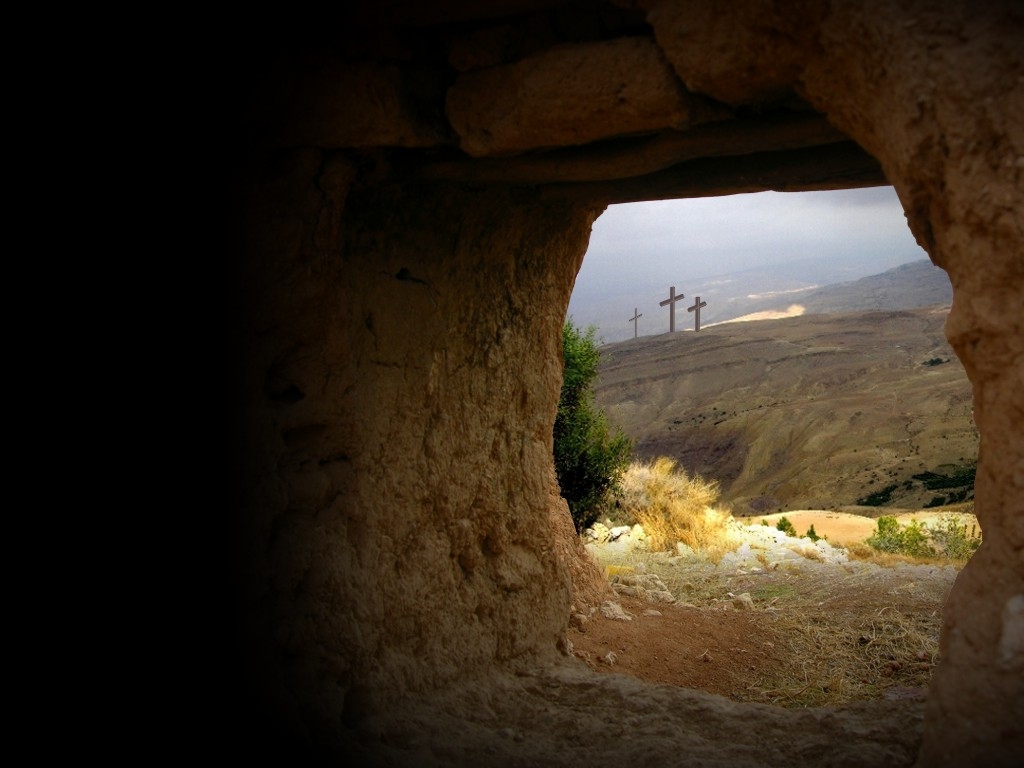
Empty Tomb

And very early in the morning the first day of the week, they came unto the sepulchre at the rising of the sun … And when they looked, they saw that the stone was rolled away: for it was very great. (Mark 16:2, 4)

The story of mankind is brief and straightforward despite the naturalistic stories invented by evolutionists. God created man in His own image (Genesis 1:26). God created man to enjoy fellowship with Him, but man erected a barrier between himself and God by his disobedience to God’s only command: “But of the tree of the knowledge of good and evil, thou shalt not eat of it: for in the day that thou eatest thereof thou shalt surely die” (Genesis 2:17). That disobedience brought the curse of death – separation from God who is life and the giver of life. “Jesus said unto her, I am the resurrection, and the life: he that believeth in me, though he were dead, yet shall he live: And whosoever liveth and believeth in me shall never die. Believest thou this?” (John 11:25-26). Holy God cannot abide sin. “Shall the throne of iniquity have fellowship with thee, which frameth mischief by a law?” (Psalm 94:20).

From that time on, innocent blood has been shed to cover or atone for the sins of man “For all have sinned, and come short of the glory of God” (Romans 3:23). Starting with that first sacrificial lamb slaughtered by the Lamb of God (Genesis 3:21), the innocent pay the penalty for the sins of the guilty. So the sacrificial system began carried on by Abel (Genesis 4:4), Noah (Genesis 8:20) and the law delivered by Moses. But the practice failed to bridge the chasm rived by sin “For it is not possible that the blood of bulls and of goats should take away sins” (Hebrews 10:4).

This hopeless situation required a better and permanent solution. This was mankind’s problem and the responsibility fell upon man for resolution. But Holy God cannot be satisfied with anything less a perfect, sinless sacrifice. Only the blood of a perfect, sinless man would do. Where could such a man be found? For, “As it is written, There is none righteous, no, not one … They are all gone out of the way, they are together become unprofitable; there is none that doeth good, no, not one” (Romans 3:10, 12). Such a conundrum was no puzzle for an omniscient God. “[He] made himself of no reputation, and took upon him the form of a servant, and was made in the likeness of men: And being found in fashion as a man, he humbled himself, and became obedient unto death, even the death of the cross” (Philippians 2:7-8). “Wherefore, as by one man sin entered into the world, and death by sin; and so death passed upon all men, for that all have sinned” (Romans 5:12). So, God in human form died in the stead of His human creation, and He took upon Himself the penalty that was due to each one of us individually. This is an awesome thing! In all the world religions of man, man sacrifices himself to his god, but the Bible teaches that God sacrificed Himself for man. Is that not incredible!

So Jesus died on the cross at Passover. He became the sacrificial Lamb of God to atone for the sins of mankind. He took on the crushing blow of the curse of death. In His final words He declared, “It is finished!” (John 19:30), and He died. Death took its greatest prize, but then came Sunday! The curse of death was broken. “Therefore as by the offence of one judgment came upon all men to condemnation; even so by the righteousness of one the free gift came upon all men unto justification of life” (Romans 5:18).

When I survey the wondrous cross
On which the Prince of glory died,
My richest gain I count but loss,
And pour contempt on all my pride.

Forbid it, Lord, that I should boast,
Save in the death of Christ my God!
All the vain things that charm me most,
I sacrifice them to His blood.

See from His head, His hands, His feet,
Sorrow and love flow mingled down!
Did e’er such love and sorrow meet,
Or thorns compose so rich a crown?

Were the whole realm of nature mine,
That were a present far too small;
Love so amazing, so divine,
Demands my soul, my life, my all.

(“When I Survey the Wondrous Cross” – Isaac Watts, 1707)

His death on the cross covered our sins once and for all. His resurrection bridged the chasm of death separating sinful humanity from Holy God. He has made the way for you and for me. He said, “I am the way, the truth, and the life: no man cometh unto the Father, but by me” (John 14:6). After all He has done for you, the least you can do is follow the way He has prepared. “Love so amazing, so divine, demands my soul, my life, my all!”


1 Comment

Filed under Apologetics, Bible, Christianity, Creation, Death, Easter, Evangelism, Gospel, Religion, Resurrection, Salvation, Theology

An Expected End

For I know the thoughts that I think toward you, saith the LORD, thoughts of peace, and not of evil, to give you an expected end. (Jeremiah 29:11)[1]

Christians often quote the verse above without understanding the context in which it was given. It is one of those feel-good verses that makes us feel special believing that God is looking out for us and only has good things in store for us. While that is certainly true to a great extent – God does care and provide for His own, and I can certainly testify to that in my own life. However, deeper thought should be given to the circumstances surrounding this passage.

The ten northern tribes of Israel were conquered and expatriated by Assyria around 722 B.C., and a short 136 years later, the southern kingdom, comprised of the two remaining tribes, Judah and Benjamin, was taken captive by Babylon. It was during this time that Jeremiah prophesied. Indeed, before the Babylonian conquest, Jeremiah urged Judah to repent of its idolatry and avoid what God determined to bring upon them. So deep had they fallen into sin that God actually instructed Jeremiah to stop praying on their behalf.[2]

God finally had it with His people and He summoned “His servant,” Nebuchadnezzar,[3] to conquer them and take them away captive, which he did in 586 B.C. Nebuchadnezzar took Daniel, the prophet, and his friends,[4] captive in this first of three rounds of deportations.

Early in their captivity there arose false prophets telling the captives that their captivity would not be long and that God soon liberate them. That was not God’s plan, and He instructed Jeremiah to send a letter “unto the residue of the elders which were carried away captives, and to the priests, and to the prophets, and to all the people whom Nebuchadnezzar had carried away captive from Jerusalem to Babylon” (Jeremiah 29:1). In short, the letter instructed the people to settle down and prepare for a long stay – build houses, plant gardens, have children and grandchildren. Their stay would not be permanent, but it would be long – 70 years[5] to be exact. God encouraged them to “seek the peace of the city … and pray unto the LORD for it: for in the peace thereof shall ye have peace” (Jeremiah 29:7).

Surely these were not ideal conditions for God’s people. Psalm 137 records how they felt. “By the rivers of Babylon, there we sat down, yea, we wept, when we remembered Zion. We hanged our harps upon the willows in the midst thereof. For there they that carried us away captive required of us a song; and they that wasted us required of us mirth, saying, Sing us one of the songs of Zion. How shall we sing the LORD’S song in a strange land?” (Psalm 137:1-4).

Under these circumstances, God promised, “For thus saith the LORD, That after seventy years be accomplished at Babylon I will visit you, and perform my good word toward you, in causing you to return to this place. For I know the thoughts that I think toward you, saith the LORD, thoughts of peace, and not of evil, to give you an expected end” (Jeremiah 29:10-11, emphasis mine). God’s “good plan” for them was not immediate. Not until a generation away would God’s plan be realized. In the meantime, they had to endure the captivity, pray for their captors and get by in the best way they could. There was no easy way out.

The phrase, “to give you an expected end,” gives pause for thought. When we consider the rest of Israel’s history, we learn that their relationship with God did not improve that much. Yes, they finally gave up their overt idolatry, but they exchanged it for the idolatry of “religion” and “legalism.” After they returned to their homeland and after they rebuilt their Temple, God stopped talking to them for 400 years until Jesus came. So steeped were they in the practice of their religion and legalism, that they completely missed their promised Messiah. Their rejection of their Savior led to the dissolution of their nation and the dispersing of their people among the nations of the world.

Yet, when the prophets speak of the “expected end” – the Day of the Lord – Israel once again becomes a nation, and they finally recognize their Messiah whom they missed at His first coming. God says, “And I will pour upon the house of David, and upon the inhabitants of Jerusalem, the spirit of grace and of supplications: and they shall look upon me whom they have pierced, and they shall mourn for him, as one mourneth for his only son, and shall be in bitterness for him, as one that is in bitterness for his firstborn” (Zechariah 12:10). This, I believe, is their “expected end” to which God referred in Jeremiah 29:11.

Now, with all this in mind, how does this verse apply to us? In many respects, we as Christians, are living in a kind of Babylon. The world grows continually more wicked every day. As Jesus warned, we live “as in the days of Noah.”[6] He said that we “are not of the world,”[7] yet we are “in the world.”[8] Our citizenship is in heaven.[9] Therefore, we need to conduct our lives in a manner befitting our true Kingdom. We should be good citizens in our current state and pray for our leaders and the welfare of our nation. We may not change the world (indeed, the Bible tells us that we won’t), but we do have an influence on people around us. And, God does know the thoughts and plans He has for us – thoughts of “peace” – the peace that only comes from His Holy Spirit in us. Jesus said, “Peace I leave with you, my peace I give unto you: not as the world giveth, give I unto you. Let not your heart be troubled, neither let it be afraid” (John 14:27). We also have an “expected end” with Him in heaven for all eternity, whether we meet Him in death or in the air.[10]

So, next time you hear Jeremiah 29:11 quoted out of context, think on these things. If you do not know Jesus as your personal Lord and Savior, please read my page on “Securing Eternal Life.”


Notes:

[1]  Many modern translations read, “For I know the plans I have for you, declares the Lord, plans for welfare and not for evil, to give you a future and a hope” (ESV) or “For I know the plans that I have for you,’ declares the Lord, ‘plans for prosperity and not for disaster, to give you a future and a hope” (NASB). The Hebrew word that they translate as “welfare” and “prosperity” is “shâlôm,” which the KJV accurately translates as “peace.” It is no wonder that Christians often misapply this verse.

[2]  Jeremiah 7:16; 11:14; 14:11

[3]  Jeremiah 25:9; 27:6

[4]  Daniel 1:3-6

[5]  Jeremiah 29:10

[6]  Matthew 24:37

[7]  John 17:14

[8]  John 17:15

[9]  Philippians 3:20

[10]  1 Thessalonians 4:16-17

Comments Off on An Expected End

Filed under Apologetics, Bible, Christianity, Religion, Second Coming of Christ, Theology

Israel Forever!

Jerusalem

My personal Bible reading this morning had me in Jeremiah 31. In this chapter, God expresses His desire to restore Israel, not because Israel is sinless, but because God is faithful to keep His promise. All end-times prophecy centers on the nation of Israel, which is precisely why Satan has worked throughout history to destroy the nation. If Satan can destroy Israel then God can be shown to be unfaithful and unreliable. If God cannot keep His promises concerning Israel, neither can He keep His promises to us about our eternal life. That is why this is so important.

The prophecies of Israel’s restoration have been partially fulfilled. After almost 2000 years of diaspora, from which no culture in history has ever survived, the Jews, no matter where in the world they lived – Spain, Poland, Germany, Russia, America, etc. – they maintained their identity, customs, traditions, and even to a great extent, their language. Then on May 14, 1948, they became a nation once again, and they continue to attract Jews from all over the world. They are growing stronger in number, in wealth, and in science and technology. God’s promise has been and is being fulfilled in our time. And Satan hates it! Those that call America the Great Satan and Israel the Little Satan are Satan themselves.

But God is not blessing Israel because they are “good” or better than any other nation on earth. In fact, Israel is a very secular nation. It has, perhaps, one of the largest percentages per capita of homosexuals in the world. Many of the Jews keep the customs and traditions but are really atheist in their beliefs. The truly religious Jews hold the minority in the nation. So, God is not blessing them because they are faithful to Him. He is blessing them because He promised to do so, and God keeps His Word.

However, one day very soon, all the Jews that survive the coming events of “Jacob’s trouble,” aka, the Tribulation, will finally return to God.

For there shall be a day, that the watchmen upon the mount Ephraim shall cry, Arise ye, and let us go up to Zion unto the LORD our God. For thus saith the LORD; Sing with gladness for Jacob, and shout among the chief of the nations: publish ye, praise ye, and say, O LORD, save thy people, the remnant of Israel. Behold, I will bring them from the north country, and gather them from the coasts of the earth, and with them the blind and the lame, the woman with child and her that travaileth with child together: a great company shall return thither. They shall come with weeping, and with supplications will I lead them: I will cause them to walk by the rivers of waters in a straight way, wherein they shall not stumble: for I am a father to Israel, and Ephraim is my firstborn. (Jeremiah 31:6-9)

God says …

Behold, the days come, saith the LORD, that I will make a new covenant with the house of Israel, and with the house of Judah: Not according to the covenant that I made with their fathers in the day that I took them by the hand to bring them out of the land of Egypt; which my covenant they brake, although I was an husband unto them, saith the LORD: But this shall be the covenant that I will make with the house of Israel; After those days, saith the LORD, I will put my law in their inward parts, and write it in their hearts; and will be their God, and they shall be my people. (Jeremiah 31:31-33)

In that day – during the Millennial reign of Christ – all of Israel will turn to God. “And they shall teach no more every man his neighbour, and every man his brother, saying, Know the LORD: for they shall all know me, from the least of them unto the greatest of them, saith the LORD: for I will forgive their iniquity, and I will remember their sin no more” (Jeremiah 31:34).

And here is how sure God’s promise is. God says that when the physical laws that govern the sun, moon, and stars cease to function, then will God break His promise. When man is able to discover the boundaries of the universe or discover the foundations of the earth, then will God’s promise cease to be in effect. Hear this …

Thus saith the LORD, which giveth the sun for a light by day, and the ordinances of the moon and of the stars for a light by night, which divideth the sea when the waves thereof roar; The LORD of hosts is his name: If those ordinances depart from before me, saith the LORD, then the seed of Israel also shall cease from being a nation before me for ever. Thus saith the LORD; If heaven above can be measured, and the foundations of the earth searched out beneath, I will also cast off all the seed of Israel for all that they have done, saith the LORD. (Jeremiah 31:35-37)

God has been faithful to keep His promise to Israel thus far and unless the physical laws which govern the universe cease to function – and it is God who established and maintains the physical laws – God will keep His promise to Israel, not because they deserve it, but because God is faithful. For those of us who have placed our faith, trust, and hope in Christ for our eternal salvation, we can know without a doubt that He will be faithful to keep His promises to us.

Comments Off on Israel Forever!

Filed under Apologetics, Bible, Christianity, Current Events, End Times, Eschatology, Religion, Science, Second Coming of Christ, Theology

Just As Predicted

For unto us a child is born, unto us a son is given: and the government shall be upon his shoulder: and his name shall be called Wonderful, Counsellor, The mighty God, The everlasting Father, The Prince of Peace. (Isaiah 9:6)

Many people regard the Bible as any other book of mythology. They cannot accept that it is a true for a host of reasons. Some question its veracity because it was written by men, and we all know men are flawed and always embellish the truth in order to make their god or hero appear better than reality. Some suggest that through the many centuries of transmission, errors have crept into the text so that it cannot be trusted. Even now, they say, we have so many translations, and they all differ one from another.

It is true that the Bible had many human authors. Many of these men lived centuries apart and lived in different regions. They all wrote independently of one another, yet the Bible maintains a flow and consistency that defies human ingenuity. The only reasonable explanation for such cohesion and consistency is supernatural guidance. The Apostle Paul tells us that “All scripture is given by inspiration of God…” (2 Timothy 3:16). The Apostle Peter explains, “Knowing this first, that no prophecy of the scripture is of any private interpretation. For the prophecy came not in old time by the will of man: but holy men of God spake as they were moved by the Holy Ghost” (2 Peter 1:20-21, emphasis mine).

As for errors in transcription and transmission, over 5000 manuscripts of the New Testament Scriptures exist today and they all agree, and the few errors that exists are mostly minor spelling errors that are readily identifiable when compared to other copies. As for the Old Testament, the Dead Sea Scrolls validate that what we have in our modern Bibles is accurate. Jesus said, “Heaven and earth shall pass away, but my words shall not pass away” (Matthew 24:35).

The skeptic may concede the accuracy in transmission, but may still doubt the veracity of the text. The best way to respond is to show where the predictions made in the Bible have come to pass. The birth of Jesus offers many examples.

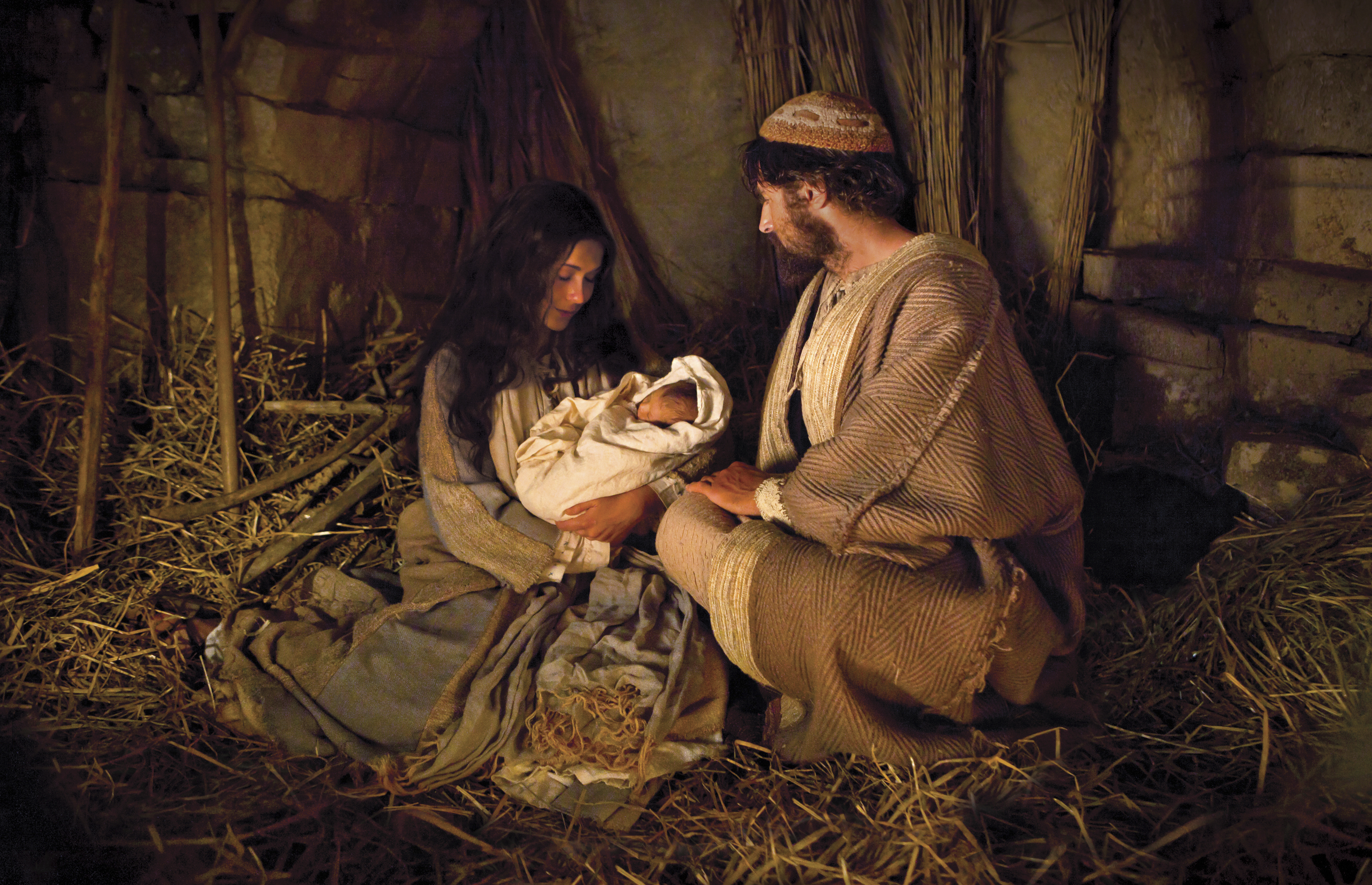
The first book of the Bible declares Jesus’ linage from the tribe of Judah.[1] The pagan prophet Balaam predicted that a star would announce His birth.[2] Several passages predict that Jesus would come from the line of King David.[3] Our beginning verses predicts that Jesus would come as a child.[4] He would be born of a virgin.[5] His birthplace would be Bethlehem.[6] Shepherds and wisemen would worship Him.[7] Baby boys in Bethlehem would be slaughtered in an attempt to kill the baby Jesus.[8] His earthly parents would escape to Egypt and return after Herod the Great died.[9]

All of these predictions came true and these only surrounded His birth. All those concerning His earthly ministry, His death, burial and resurrection came true exactly as predicted. The odds of just those listed concerning His birth coming true are astronomical. Yet Jesus fulfilled every one of those things which were prophesied about His first coming. If that cannot convince the skeptics that the Bible is true, then they just do not want to believe.

More prophesies exist about His second coming than exist about His first coming. If the prophecies of His first advent were fulfilled with 100% accuracy, we can be certain that the prophecies concerning His second advent will be come to pass just as predicted. In fact, we see many of those taking place before our eyes.

The religious leaders of Jesus’ time had access to all the prophecies concerning Jesus’ first coming, and they completely missed Him. He is coming again. How many today are so busy doing “religious” things that they will miss His second coming? Are you ready? If not, please read my page on “Securing Eternal Life.”

Notes:


[1] Genesis 49:10

[2]  Numbers 24:17

[3]  Isaiah 11:1 (Jesse was David’s father); 2 Samuel 7:12-13; Jeremiah 23:5-6;

[4]  Isaiah 9:6

[5]  Isaiah 7:14

[6]  Micah 5:2

[7]  Psalm 72:9-10

[8]  Jeremiah 31:15

[9]  Hosea 11:1

Comments Off on Just As Predicted

Filed under Apologetics, Bible, Christianity, Christmas, Holidays, Second Coming of Christ, Theology