Category Archives: Bible

Seven Lamps

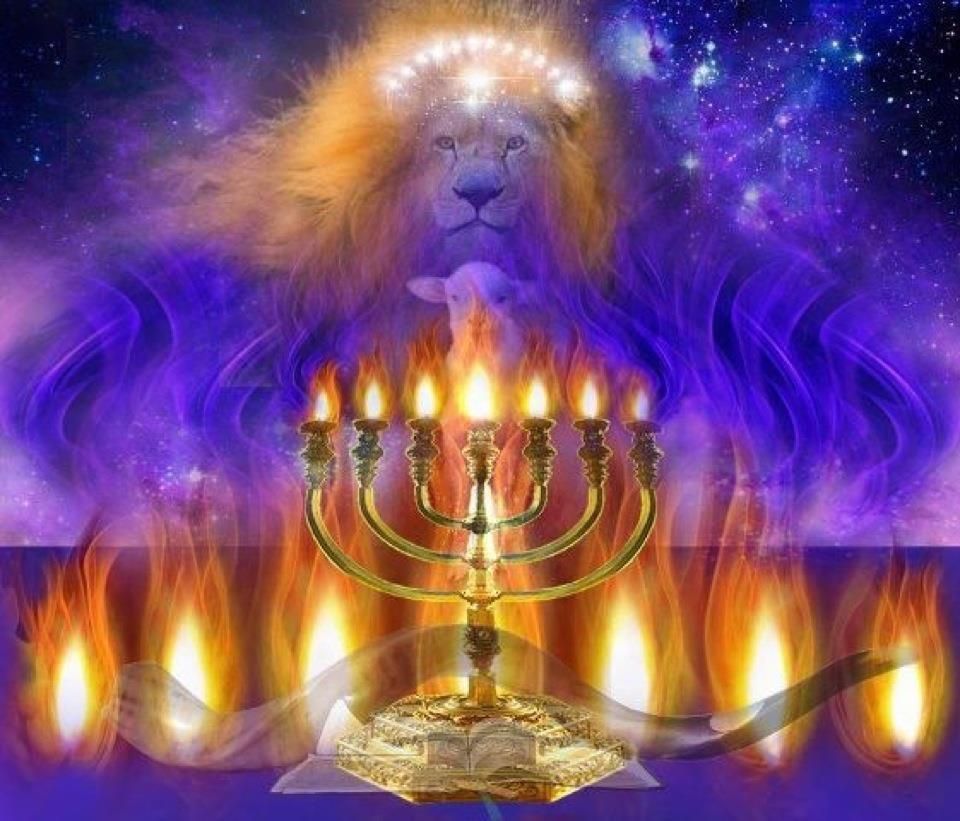
And out of the throne proceeded lightnings and thunderings and voices: and there were seven lamps of fire burning before the throne, which are the seven Spirits of God. (Revelation 4:5)

Recently, I started reading my Bible through again beginning with the New Testament, but this time in Spanish. I arrived at Apocalipsis (Revelation) Chapter 4, and Verse 5 gave me pause. I am reading in the Reina-Valera Revisión 1960, which translates επτα πνευματα του θεου (the seven spirits of God) as “los siete espíritus de Dios.” What caught my attention is that “espíritus” was in lower case suggesting this is NOT the Holy Spirit.

I cross-referenced my KJV (1873), and it too had “spirits” in lower case. However, my e-Sword[1] electronic Bible that resides on my computer, uses the 1769 KJV and it capitalizes “Spirits.” Seeing the difference between the 1769 and 1873 made me look to the original 1611; it capitalized “Spirits” – “the seuen Spirits of God.” Looking further back to the 1599 Geneva Bible (the one used by the Pilgrims), I found “spirits” in lower case. Finally, I looked at the Reina-Valera Revisión 1909 and found “Espíritus” capitalized.

Obviously, the translators cannot agree if the Greek πνευματα refers to the Holy Spirit or spirits in general. Spanish is notorious for putting in lower case most words that we in English normally capitalize, like days of the weeks, names of months, and reserving capitals mostly for proper names only. It could be argued that the problem with English was the lack of orthographical standardization prior to the 18th and 19th centuries so that the translators could not agree to capitalize or not.

The question remains, are “the seven spirits of God” the Holy Spirit or is this referring to something else? Throughout the NT, the Holy Spirit is always spoken of in the singular, never in the plural. The only possible exceptions are here in Revelation 4:5, and in Revelation 1:4; 3:1; 5:6. That the “spirits” belong to God is perfectly clear, but to conclude that they refer to the Holy Spirit is rather nebulous.

I looked to some reputable prophecy teachers for insight. Clarence Larkin, whose commentary on Revelation is the foundation upon which others build, completely overlooked Revelation 4:5. He commented extensively on Verse 4 and skipped right over to Verse 6.[2] Apparently, he was unconvinced one way or the other. Ed Hindson, Professor of Religion and Dean of the Institute of Biblical Studies at Liberty University commented, “The seven lamps of fire depict the seven Spirits of God (cf. 1:4)”[3] without any further explanation. Note too that he capitalizes “Spirits” indicating that he believes these to be the One referring only to Revelation 1:4 for support.

Let us examine that verse. “John to the seven churches which are in Asia: Grace be unto you, and peace, from him which is, and which was, and which is to come; and from the seven Spirits which are before his throne” (Revelation 1:4, KJV 1769, emphasis mine). This is the first appearance of this phrase in the NT. Note the capitalization of “Spirits” for no apparent reason. Nothing in the text itself warrants the capitalization. For comparison, the 1873 KJV does not capitalize “spirits” nor does the 1611. The 1599 Geneva Bible does capitalize “Spirits” but adds a note which I will address later. So, we remain in a biblical fog on the meaning of “the seven spirits.”

Tim LaHaye, another well-respected prophecy teacher who is now in the presence of our Lord and knows all things perfectly now, suggested that “the seven Spirits of God” represent seven characteristics of the Holy Spirit as described in Isaiah 11:2: (1) the spirit of the Lord, (2) the spirit of wisdom, (3) the spirit of understanding, (4) the spirit of counsel, (5) the spirit of might, (6) the spirit of knowledge, and (7) the spirit of the fear of the Lord. LaHaye draws a convincing parallel of the seven attributes of the Holy Spirit, but why would John make such an ambiguous connection when elsewhere in the Revelation he refers to “the Spirit” in the singular?[4]

In all the 50 years that I have studied end-times prophecy, I have been taught and have come to believe that “the seven spirits of God” referred to the Holy Spirit. I am unconvinced now. Looking at this from a different perspective, I have arrived at the conclusion that “the seven spirits of God” represent the raptured churches that are before the throne of God. Here is how I arrive at this conclusion.

As I stated earlier, throughout the NT the Holy Spirit is always referred to in the singular, never in the plural. The Godhead a unified plurality composed of three single entities working separately and together simultaneously. (I know that is a difficult concept to grasp, but that is what the Bible teaches, and we must accept that by faith.) So, the Holy Spirit is always the Holy Spirit, not Holy Spirits. Therefore, in this verse (and also 1:4, 3:1 and 5:6), “the seven spirits of God” must refer to something else which helps explain the confusion about capitalization. Here’s what I think.

Revelation 4:5 says, “And out of the throne proceeded lightnings and thunderings and voices: and there were seven lamps of fire burning before the throne, which are the seven spirits of God” (KJV 1873, emphasis mine). Have we been introduced to seven lamps before this point? Yes, indeed we have; the first time John sees Jesus. “And I turned to see the voice that spake with me. And being turned, I saw seven golden candlesticks … The mystery of the seven stars which thou sawest in my right hand, and the seven golden candlesticks. The seven stars are the angels of the seven churches: and the seven candlesticks which thou sawest are the seven churches” (Revelation 1:12, 20, emphasis mine).

Someone might well say, “There is a big difference between a “lamp” and a “candlestick” (some modern translations say lampstand). Amen (‘tis true)! John saw Jesus standing in the midst of seven candlesticks (lampstands) representing the seven churches Jesus would address. The word in the Greek is luchnia, which is a lampstand or candelabrum designed for supporting a lamp (or torch). In 4:5, John sees seven lamps before the throne. The Greek word there is lampas, which is a torch or lamp. Thayer’s Greek Definitions adds further, “a lamp, the flame of which is fed with oil.” Isn’t that interesting? Oil is also symbolic of the Holy Spirit.

So, on earth, John sees Jesus in the midst of seven lampstands designed to support lamps, i.e., flaming torches. The Holy Spirit is often depicted as a flame of fire. That could be a study on its own, but by way of example, the flaming bush that Moses confronted in the wilderness was the Spirit of God.[5] The Spirit of God was seen as a pillar of fire by night as the children of Israel wandered in the desert.[6] Later, when the Holy Spirit descended on the disciples at Pentecost, He appeared as “tongues of fire” over their heads.[7]

We know that the Holy Spirit indwells every true believer and by extension, He indwells every true church of Christ. So, as John sees Jesus in the midst of the seven churches (which represent all of His churches throughout the ages), he sees the lampstands, the churches, shining forth the lamps (torches) which are, in fact, One Spirit. Jesus said, “Ye are the light of the world. A city that is set on an hill cannot be hid. Neither do men light a candle, and put it under a bushel, but on a candlestick; and it giveth light unto all that are in the house” (Matthew 5:14-15, emphasis mine). Now, John does not describe the candlesticks as having torches. However, it seems silly to think that Jesus would be in the midst of lampstands with no lamps burning. That, in fact, would be rather sad because it would mean that the Holy Spirit was not in the Churches. Why then would Jesus be in their midst?

Jesus then addresses the seven churches, which represent the churches of all the ages, in chapters two and three. Now we come to Chapter 4. John says, “After this I looked, and, behold, a door was opened in heaven: and the first voice which I heard was as it were of a trumpet talking with me; which said, Come up hither, and I will shew thee things which must be hereafter. And immediately I was in the spirit: and, behold, a throne was set in heaven, and one sat on the throne” (Revelation 4:1-2). Every good prophecy teacher I know suggests that this represents the Rapture of the Church. The first three chapters dealt with the Church on earth at this present time. Now, John is called up to heaven and from this point on, the Church is no longer seen until the Wedding Supper of the Lamb and she returns to earth with Christ.[8]

This is John’s first vision of heaven and the first thing he sees is God on His throne surrounded by (among other things) “seven lamps of fire burning before the throne, which are the seven Spirits of God” (4:5). These seven lamps, I say, represent the seven churches that John saw on earth, which were raptured up with John when he heard the command, “Come up hither!” They are now just lamps. There is no further need for the lampstand, because they have done their job.

I found a note from the 1599 Geneva Bible on Revelation 1:4 very interesting. It says, “That is, from the Holy Spirit who proceeds from the Father and the Son. This Spirit is one in person according to his subsistence: but in communication of his power, and in demonstration of his divine works in those seven churches, perfectly manifests himself as if there were many spirits, every one perfectly working in his own church” (emphasis mine). That goes along with what I have concluded.

Without completely rejecting the notion that “the seven spirits of God” refers to the Holy Spirit, I suggest that the “seven lamps of fire burning before the throne” are the seven churches that are “the seven spirits of God” through the work of the Holy Spirit.

Notes:


[1]  e-Sword: Free Bible Study for the PC – https://e-sword.net/

[2]  Clarence Larkin, The Book of Revelation Illustrated, (The Rev. Clarence Larkin Estate, Philadelphia, 1919), pp. 38-41.

[3]  Edward Hindson, The Book of Revelation: Unlocking the Future, (AMG Publishers, Chattanooga, 2002), p. 59.

[4]  Revelation 1:10; 2:7, 11, 17, 29; 3:6, 13, 22; 11:11; 14:13; 22:17

[5]  Exodus 3:2

[6]  Exodus 13:21

[7]  Acts 2:1-4

[8]  Revelation 19

Comments Off on Seven Lamps

Filed under Apologetics, Bible, Christianity, End Times, Eschatology, Holy Spirit, Rapture, Salvation, Second Coming of Christ, Theology

Sharpen Your Sword

And take the helmet of salvation, and the sword of the Spirit, which is the word of God: (Ephesians 6:17)

Earlier this past week, my BSF (Bible Study Fellowship) group met to study Matthew 4, where the Gospel writer recounts Jesus’ temptation by Satan after He spent 40 days and 40 nights without food in the wilderness. The writer of the Epistle to the Hebrews states that “we have not an high priest which cannot be touched with the feeling of our infirmities; but was in all points tempted like as we are, yet without sin” (Hebrews 4:15). In his first general epistle, the Apostle John lists three points whereby we are tempted: the lust of the flesh, the lust of the eyes, and the pride of life.[1] We have evidence of this from the very beginning. “And when the woman saw that the tree was good for food [lust of the flesh], and that it was pleasant to the eyes [lust of the eyes], and a tree to be desired to make one wise [pride of life], she took of the fruit thereof, and did eat…” (Genesis 3:6).

Matthew records that Satan tempted Jesus by the same means, albeit not in the same order.[2] The order of the temptations is not as relevant as the fact that the temptations are the same as those to which we succumb. Satan first came at Him with the lust of the flesh, “command that these stones be made bread.” [3] Next he tried tempting Him with the pride of life, “cast thyself down: for it is written, He shall give his angels charge concerning thee: and in their hands they shall bear thee up, lest at any time thou dash thy foot against a stone.”[4] It behooves us to take note that Satan quoted Scripture[5] to Jesus, although it was misapplied. (We must take that as a lesson; knowledge of Scripture is not the path to salvation.) Finally, Satan went for the lust of the eyes. “Again, the devil taketh him up into an exceeding high mountain, and sheweth him all the kingdoms of the world, and the glory of them; And saith unto him, All these things will I give thee, if thou wilt fall down and worship me” (Matthew 4:8-9). Satan is the “prince and god of this world;”[6] therefore, he had a legitimate right to make that claim.

Jesus did not take the bait. Jesus answered each temptation with a passage from Scripture. The Bible reminds us that “There hath no temptation taken you but such as is common to man: but God is faithful, who will not suffer you to be tempted above that ye are able; but will with the temptation also make a way to escape, that ye may be able to bear it” (1 Corinthians 10:13, emphasis mine). And do not think that because Jesus is God that He held a higher advantage. Satan attacked Jesus’ humanity, and He is every bit as human as you and I.

If Jesus had an advantage, it was His perfect knowledge of the Word of God, which brings me to the reason for the title of this article. Scripture often refers to the Word of God as a “sword.” Our leading verse (above) refers to the Word of God as “the sword of the Spirit.” “For the word of God is quick [i.e., alive/living], and powerful, and sharper than any twoedged sword…” (Hebrews 4:12). In Revelation, the Word proceeding from Jesus’ mouth is described as a sword.[7]

The “sword” is the final piece of the Christian soldier’s armor.[8] All the pieces of the soldier’s armor are defensive in nature. They are designed to protect the wearer, but the sword is both a defensive and offensive weapon. As a Christian you have surely experienced opposition when you made an argument based on the Word of God. Of course! It hurts. It cuts, “piercing even to the dividing asunder of soul and spirit, and of the joints and marrow, and is a discerner of the thoughts and intents of the heart” (Hebrews 4:12). Naturally, the lost hearer will recoil at the message of the Bible.

However, as a Christian, if you have not experienced such reactions, perhaps your sword is dull. Maybe you have hidden your sword away somewhere, and it has become pitted and rusted. Then, when you attempt to use it only bruises but does not cut, and the bruises quickly heal and are forgotten. If that is the case, you need to sharpen your sword! You cannot sharpen your sword with a 30-minute sermon or a 45-minute Sunday school lesson every Sunday. You need to “Study to shew thyself approved unto God, a workman that needeth not to be ashamed, rightly dividing the word of truth (2 Timothy 2:15, emphasis mine). “Study” does not mean to sit down and casually read a few chapters as one would a dime-store novel. The Greek word, spoudazō, means to “to use speed, that is, to make effort, be prompt or earnest: – do (give) diligence, be diligent (forward), endeavour, labour, study.”[9] If you will take just one or two chapters daily, read slowly and carefully, question the text, seek out the meaning of difficult words, etc. you will gain a deeper understanding of the Word of God. And, because you dug it out for yourself, it will stick better in your mind than what you can get out of casually reading it or listening to what the preacher may have to say about it. This is how you sharpen your sword and prepare yourself for the spiritual battle you face every day

Notes:


[1]  1 John 2:16

[2]  Luke records the same account in the order prescribed by John – Luke 4:1-14

[3]  Matthew 4:3

[4]  Matthew 4:6

[5]  Psalm 91:11-12

[6]  John 12:31; 14:30; 16:11; 2 Corinthians 4:4

[7]  Revelation 1:16; 2:12, 16; 19:15

[8]  Ephesians 6:13-17

[9]  Strong’s Exhaustive Concordance by James Strong, S.T.D., LL.D., G4704

1 Comment

Filed under Apologetics, Bible, Christianity, Salvation, Theology

Church And Politics

For our [citizenship] is in heaven; from whence also we look for the Saviour, the Lord Jesus Christ: (Philippians 3:20)

I am at the end of my three-year term as a member of the personnel committee of my church. One of the final tasks of my term is to bring in a new ministerial staff member. This week the personnel committee met with the candidate for an interview by the entire committee. In the process of the interview one of the committee members asked the candidate how he felt about politics in the church. He gave what I thought was an appropriate answer. Basically, he said that the church is not about politics but rather about accomplishing the Great Commission.[1] He said that if we teach the Bible correctly, politics will take care of itself. He pointed out that Jesus is neither Democrat nor Republican (nor was He a Pharisee or a Sadducee). As our lead verse (above) states, we are citizens of heaven, not of this world. This world is passing away, but our eternal home in heaven is without end.

I wholeheartedly agree with that sentiment. The primary focus of the Church – the Bride of Christ – is to enlarge His kingdom, not the kingdoms of this world. That said, the Church, whether it wants to be or not, is involved in politics and must be active in politics. While the Church is not of this world, yet we are in the world for the purpose of being salt and light in the world.[2] That does not mean that the Church must choose one political party or the other, but those parties, that direct our government make laws that either confirm or deny the Word of God. The Church must stand firmly on the Word of God in the world.

When Jesus said, “upon this rock I will build my church; and the gates of hell shall not prevail against it” (Matthew 16:18), He did not mean that the gates of hell would attack the Church and somehow the Church would survive. Rather, He meant that the Church would storm the gates of hell and the gates of hell would not withstand the assault. However, it seems to me that the Church is not doing much assaulting lately, rather it seems to be in retreat.

Again, this does not have anything to do with picking a political party. In many ways, they are equally corrupt. However, the Church must stand against ungodliness regardless of the party that promotes it. To do that, the Church must get involved in politics, not partisanism.

Abortion is murder. It is the destruction of the image of God. Child sacrifice is an abomination to God; therefore, the Church must stand up against it with all the resources it can muster. Because politicians take tax dollars to fund Planned Parenthood, and make laws that protect the abortionists, the issue has become political and the Church must get involved.

The gay-rights alphabet movement tirelessly works to promote their perverted lifestyle onto the general public in an effort to “normalize” their perversion. They are not content to impose their aberration on the adult population; that is not enough. They go beyond and seek to corrupt little children with their deviance. This too, is an abomination to God, and He makes that very clear in His Word. Here again, politicians enthusiastically make laws to “protect” the twisted “rights” of sodomites. The Church must fight against such perversion, and that means getting involved in politics.

There are many other ungodly legislations that could be addressed. The crisis on our southern border for example, is a cesspool of human and drug trafficking. It is all an affront to God and His Word. If the Church is going to storm the gates of hell, it must get involved in politics.

How do we do this? Unless you are living under a rock, the evidence is all around us.  The news media (as far as it can be trusted) tells us it is taking place. There are other independent news outlets that can inform us on what the mainstream media withholds. There are many other Christian resources on platforms such as YouTube, Rumble and others that tell you what the mainstream media does not want you to hear. It takes effort, but God does not have us here in this world sit on our blessed assurance, watching the world go by on the way to hell. Pastors should be reading the new media almost as much as the Bible so that they can identify sinful legislation and those promoting it, regardless of political party, and call on the church to get involved in fighting it.

Just because the Church is non-partisan does not mean that it should not engage in politics. One way or another, the Church is involved in politics. It can either fight for righteousness or allow itself to be overcome by wickedness.

Notes:


[1]  Matthew 28:18-20

[2]  Matthew 5:13-16

2 Comments

Filed under Apologetics, Bible, Christianity, Current Events, Politics, Random Musings

Plugged Ears

He that hath ears to hear, let him hear. (Matthew 11:15)

Lately I find myself at a loss for subject matter about which to write. I want to make my articles encouraging and uplifting, but as I look at what is going on around me, in our nation, and in the world, I find very little that is positive. Our government lacks leadership. Those in positions of power seem to be following the dictates of some unseen puppet master. Ultimately, that puppet master is Satan, but that is another topic altogether. Our world fares no better. Economies are failing all over the world placing the whole world at the brink of war. The powers that be continue to increase control over the populous through fear tactics over the supposed pandemic that threatens to kill us all. Pressure to take “the jab” comes from all directions so that, at least in the USA, the government can feign innocence in pushing an unconstitutional mandate. Soon we will not be able to travel, work, buy, or sell without proof that we have been jabbed. No, the jab is not the “mark of the beast,” but it is a good conditioning method to train a compliant society.

All of this may sound depressing to some, but I am actually encouraged. These “signs” indicate that the return of Christ is very near. Jesus foretold all of these things in his Olivet Discourse.[1] Of course, Jesus prophesied of the events that would take place during the Tribulation period seven years before[2] His Second Coming. Before that happens, those who are part of the “true Church,” His Bride, will be raptured out of this world to meet Him in the air.[3]

Some imagine that the Tribulation will begin as soon as Jesus takes His Church out of the world. Then all the Tribulation judgments will begin and escalate rapidly. However, I do not hold that opinion. I believe that the signs will begin slowly, and then steadily increase in frequency and intensity. Jesus described His Second Coming (at the end of the Tribulation) as “A woman when she is in travail hath sorrow, because her hour is come: but as soon as she is delivered of the child, she remembereth no more the anguish, for joy that a man is born into the world” (John 16:21). “All these are the beginning of sorrows” (Matthew 24:8). “And when these things begin to come to pass, then look up, and lift up your heads; for your redemption draweth nigh … So likewise ye, when ye see these things come to pass, know ye that the kingdom of God is nigh at hand.” (Luke 21:28; 31).

All the things of which Jesus spoke cannot take place in an instant. Things have to progress (or regress depending on your perspective) slowly. Economies must fail. Desperation must increase. Distrust in leaders must diminish. Governments must maneuver to gain advantage and power. Wars and rumors of wars will increase. Currently, the USA is under threat from China, Russia, Iran, and North Korea. Israel is surrounded by hostile nations. Iran, Turkey and Russia along with their allies are staging their armies in Syria and Lebanon to threaten Israel’s northern border.

The situation seems rather grim. I have heard several prophecy teachers offer this illustration: “When you see the Christmas decorations going up in all the stores, you know Thanksgiving is near.” In the same way, as we see all of the signs for His Second Coming intensify in number and frequency, we can be sure that the Rapture of the Church is very close.

For the believer, that should be cause for joy, hope, and anticipation! At least, that is how I feel about it. So, imagine my surprise when I recently shared a link to one of Jan Markell’s pod casts[4] and a “sister” asked me to remove her from my mailing list because she did not want to hear anything “political.” It occurred to me that some of our brothers and sisters in Christ want to plug their ears and not hear about what is going on in our world. They want to live their lives as “normal” without anything to disrupt the status quo. Ignorance is bliss, the saying goes. Jesus described these days as the days of Noah and the days of Lot[5] when people carried out their lives as normal without a care in the world of the impending doom. When judgment came, they were caught by surprise. In context, Jesus referred to the time of Tribulation, but the same principle can be applied to the time before the Rapture.

Many “blissful” Christians will be caught by surprise when Jesus snatches them out of this world. That is not so bad you may think. However, think of all those left behind who did not hear the Gospel because Jesus’ servants were carrying on their lives as if nothing were happening. Jesus described such servants in two separate parables.[6] In both examples, one servant did nothing with the charge left to him by his Master, and when the Master returned demanding an accounting, the unfaithful servant was chastised and demoted. So, how will these blissful Christians react when Jesus asks for a reckoning? “Lord! I didn’t know you were coming so soon!”

That is what will happen when you go around with plugged ears refusing to hear what is going on around you and what the Bible has to say about it. At least a third of the Bible, I am told, deals with end-times prophecy. It stands to reason that God put that much prophecy in the Bible to prepare us for the things to come. We cannot prepare for the coming days if we go around with plugged ears. The Bible commends the children of Issachar for their situational awareness. “And of the children of Issachar, which were men that had understanding of the times, to know what Israel ought to do; the heads of them were two hundred; and all their brethren were at their commandment” (1 Chronicles 12:32, emphasis mine). We should follow their example. “He that hath ears to hear, let him hear” (Matthew 11:15)

Reader, perhaps you do not have plugged ears, you are very aware of the decaying condition of the world around you, and you wonder what in the world is going on. I have many articles on the topic of last days under “Categories” that may help answer some of your questions. However, it will all be moot if you do not know the Savior. I encourage you to please read my page on “Securing Eternal Life.”

Notes:


[1]  Matthew 24; Mark 13; Luke 21

[2]  Daniel 9:27

[3]  1 Corinthians 15:51-53; 1 Thessalonians 4:15-17

[4]  “Who’s Behind the Shadow Government” Jan Markell with guest Bill Koenig, posted July 29, 2021 on Rumble: https://rumble.com/vkhgxr-whos-behind-the-shadow-government-bill-koenig.html

[5]  Luke 17:26-30

[6]  Matthew 25:14-30; Luke 19:11-27

2 Comments

Filed under Apologetics, Bible, Christianity, Current Events, End Times, Eschatology, Evangelism, Gospel, Rapture, Religion, Salvation, Second Coming of Christ, Theology

Like As We

For we have not an high priest which cannot be touched with the feeling of our infirmities; but was in all points tempted like as we are, yet without sin. (Hebrews 4:15)

Our starting verse assures us that in Christ, we (who belong to Him) have a high priest – an advocate, an intercessor, or a “go-between” – that can relate to “the feeling of our infirmities,” i.e., our weaknesses or frailties both physical and emotional. He understands because He “… made himself of no reputation, and took upon him the form of a servant, and was made in the likeness of men” (Philippians 2:7). He knows our struggles because He experienced our struggles Himself.

We may find ourselves on trial some day in a court of law for some alleged infraction of the law. In our defense, a lawyer – an advocate – will plead our case, but that lawyer goes only by what evidence we can offer. He cannot plead our case from personal experience. Jesus can.

Satan, our prosecutor/accuser, started his practice from the very beginning of creation. He not only brings the accusation, but he initiates the offense to begin with. His first victim was Eve in the Garden of Eden[1] and his tactics have not changed from the beginning. He introduces doubt in God’s Word – “Yea, hath God said?” Then he asserts that God’s Word is a lie – “Ye shall not surely die!” Next he accuses God of withholding something good and implies that he can offer something better – “God doth know that in the day ye eat thereof, then your eyes shall be opened, and ye shall be as gods, knowing good and evil.”

Of course, Satan cannot take all of the blame. God gave humans free will to choose whether to obey or disobey and a nature capable of enjoying all the pleasures God created for us to enjoy. John the Beloved warned, “Love not the world, neither the things that are in the world. If any man love the world, the love of the Father is not in him” (1 John 2:15). The Greek word translated “world” – kosmos – has a broad range of meanings. However, in this context, John is referring to “the whole circle of earthly goods, endowments riches, advantages, pleasures, etc, which although hollow and frail and fleeting, stir desire, seduce from God and are obstacles to the cause of Christ.”[2]

John sums up “the world” three ways. “For all that is in the world, the lust of the flesh, and the lust of the eyes, and the pride of life, is not of the Father, but is of the world” (1 John 2:16, emphasis mine). Eve demonstrated all three of these frailties. “And when the woman saw that the tree was good for food [lust of the flesh], and that it was pleasant to the eyes [lust of the flesh], and a tree to be desired to make one wise [pride of life], she took of the fruit thereof, and did eat, and gave also unto her husband with her; and he did eat” (Genesis 3:6). We are no different today. Satan employs the same tactics and we still have the same weaknesses.

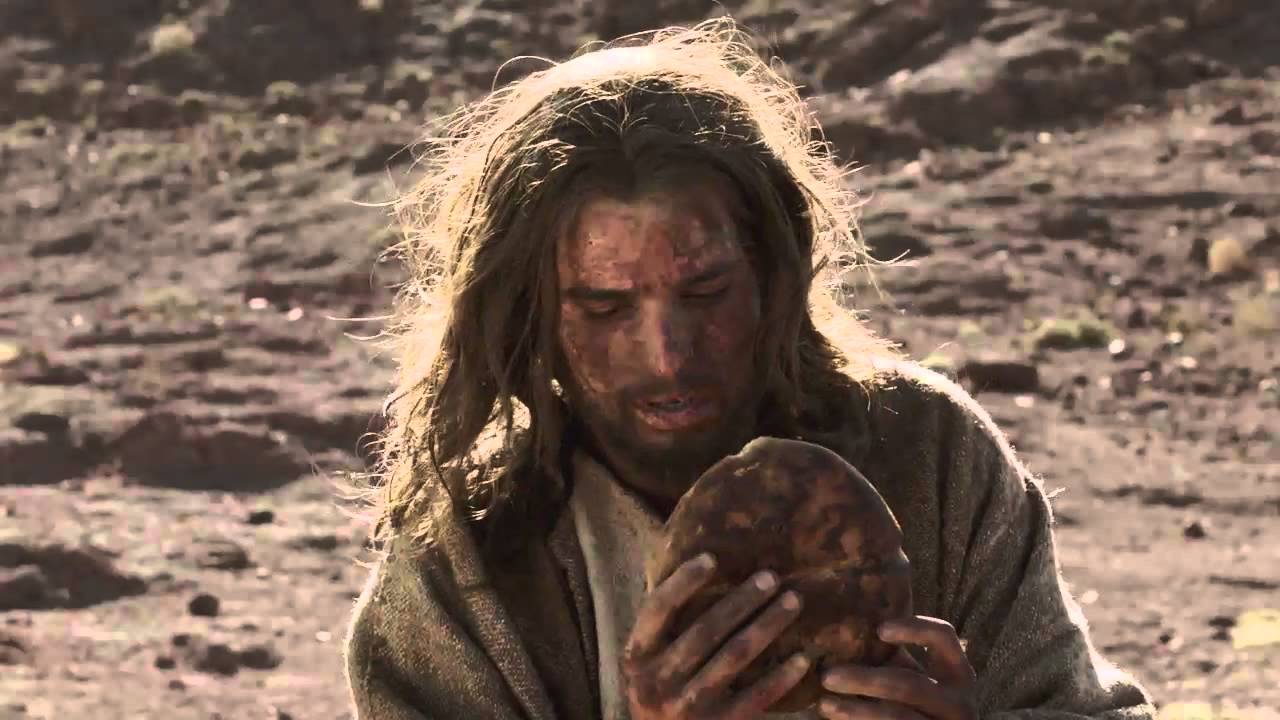
The Gospels of Matthew and Luke both record Satan’s attempt to cause Jesus to sin.[3] At the beginning of His ministry, John the Baptist baptized Jesus in the Jordan River. Guided by the Holy Spirit, Jesus went into the wilderness, and for forty days and nights he fasted in preparation for His ministry. At the end of the forty days, he was physically exhausted, malnourished, and hungry. He was at His weakest point both physically and emotionally.

Satan assessed his victim’s weakened condition and availed himself of a prime opportunity to attack. Knowing with whom he was dealing, Satan dispensed with his usual tactics. He knew that he could not cause doubt in God’s Word. He was facing the Word Himself.[4] He could not slander the Word of God because he was in the presence of the Truth.[5] He could not tempt Him with “ye shall be as gods”[6] because he was in the company of God. Rather, Satan attacked Jesus’ human nature through human weaknesses. “And the devil said unto him, If thou be the Son of God, command this stone that it be made bread” (Luke 4:3). Here, the lust of the flesh, was especially challenging to a starving man. Who could fault Him for succumbing to that temptation? Yet Jesus answered Satan’s challenge with the Word of God. “And Jesus answered him, saying, It is written, That man shall not live by bread alone, but by every word of God.” (Luke 4:4, emphasis mine).

Failing at his first attempt, Satan tried again. “And the devil, taking him up into an high mountain, shewed unto him all the kingdoms of the world in a moment of time [the lust of the eyes]. And the devil said unto him, All this power will I give thee, and the glory of them: for that is delivered unto me; and to whomsoever I will I give it. If thou therefore wilt worship me, all shall be thine” (Luke 4:5-7). Again, Jesus responded with Scripture. “And Jesus answered and said unto him, Get thee behind me, Satan: for it is written, Thou shalt worship the Lord thy God, and him only shalt thou serve” (Luke 4:8).

Satan knows Scripture too, and he knows how to twist it to suit his purpose. “And he brought [Jesus] to Jerusalem, and set him on a pinnacle of the temple, and said unto him, If thou be the Son of God, cast thyself down from hence: For it is written, He shall give his angels charge over thee, to keep thee: And in their hands they shall bear thee up, lest at any time thou dash thy foot against a stone [the pride of life]” (Luke 4:9-11, emphasis mine). The final fail – Jesus sent Satan packing with His final Word making clear to Satan with whom he was dealing. “And Jesus answering said unto him, It is said, Thou shalt not tempt the Lord thy God” (Luke 4:12, emphasis mine). Satan knew he met his match, so, “he departed from him for a season” (Luke 4:13, emphasis mine). Satan is a highly intelligent being, but he is stupid. Knowing full well that he is out matched by God, he still thinks he can somehow pull off a win.

We continue to struggle with our frailties, the lust of the flesh, the lust of the eyes, and the pride of life. Jesus faced those challenges also, just as we do, “yet without sin” (Hebrews 4:15). Because we, who belong to Him, have His Holy Spirit in us, we can conquer our temptations the same way Jesus did, by standing on the Word of God. However, the Holy Spirit in us can only use the amount of ammunition that we provide, so it is vitally important that we maintain a well-stocked arsenal of God’s Word by reading and studying it daily. And when we fail, and we do fail, we can be sure that “we have not an high priest which cannot be touched with the feeling of our infirmities; but was in all points tempted like as we are” (Hebrews 4:15) that intercedes on our behalf.

Reader, if you do not have this assurance, please read my page on “Securing Eternal Life.”

Notes:


[1]  Genesis 3:1-5

[2] Joseph Henry Thayer, D.D., The New Thayer’s Greek-English Lexicon of the New Testament, (Hendrickson Publishing, Peabody, MA, 1981), Strong’s Number G2889, p.357.

[3]  Matthew 4:1-11Luke 4:1-13

[4]  John 1:1

[5]  John 14:6

[6]  Genesis 3:5

Comments Off on Like As We

Filed under Apologetics, Bible, Christianity, Gospel, Holy Spirit, Salvation, Satan, Theology