Category Archives: Bible

The Universe Is Young

For in six days the LORD made heaven and earth, the sea, and all that in them is, and rested the seventh day: wherefore the LORD blessed the sabbath day, and hallowed it. (Exodus 20:11)

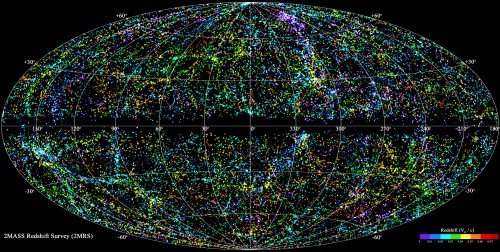
I have heard it said that the universe is something like 13.8 Billion years old and that the earth is around 4.4 Billion years old. How they—those that make such claims—arrive at such astronomical numbers is beyond me. The earth does not have a manufacturer’s date stamp on it (or does it?). Those that make those claims are, for the most part, God-deniers along with some who, while not denying God, question the veracity of His Word.

The Bible says the universe, of which earth is a part, is young. Since God-deniers reject the notion of an all-powerful, all-knowing Creator God, they must invent some mechanism from which the entirety of the universe came. BANG! They invent a brilliant idea that all matter was compressed into an infinitesimally small “singularity” that got really hot and rapidly expanded into the universe that we know, which, by the way, continues to expand. You may recognize this hypothesis as the Big Bang theory, only it is not a very good hypothesis, much less a theory.[1] Many secular scientists recognize the problem with this hypothesis and continue to look for ways to make it better. Some have given up on it altogether and opted for other hypotheses like the “string theory” (Don’t ask; I don’t have a clue what that means.), or the “multiverse theory.” The latter is quite clever. Since parallel universes are unobservable, they are free to speculate to their heart’s content on what happens in those unseen realms. Who will prove them wrong? At least they generally agree that the universe had a beginning.

“In the beginning God created the heaven and the earth” (Genesis 1:1). There you have it—the universe—in the opening sentence of the Bible—just ten short words (seven in the original Hebrew). In that short sentence you find time, space, and matter/energy—the components of the universe. The biblical creation record begins with Genesis 1:1 and concludes with Genesis 2:3. (The reader should keep in mind that chapter and verse divisions are not inspired text, and they do not appear in the original manuscripts.) The biblical creation account records that the entirety of creation took six 24-hour days with a cessation of creative activity on the seventh day. Now, there are compromisers out there calling themselves Bible-believing Christians that attempt to accommodate the God-deniers by inserting long ages anywhere they can in the biblical record. I do not have space here to present or argue against their positions. For now, allow me to simply say, they are wrong—so wrong![2] [3]

According to the Bible, the universe is only one day older than the planet earth. I need to point out that the universe in the beginning contained all the elements in a disorganized mess (it wasn’t a mess for God). “And the earth [i.e., matter/energy, the elements] was without form, and void; and darkness was upon the face of the deep. And the Spirit of God moved upon the face of the waters” (Genesis 1:2). The “planet” Earth was formed and organized on the second day of creation (Genesis 1:6-8). On the third day (Genesis 1:9-13), God caused the waters to separate from the land. It was not until the fourth day (Genesis 1:14-19) that God created the sun, moon, stars, galaxies, and all other celestial bodies.

Genesis 5 gives a detailed accounting of the years from the creation of Adam and Eve (Genesis 1:24-31) to the global flood of Noah[4] which was about 1656 years.[5] Creation to the time of Abraham was about 2000 years, from Abraham to Jesus another 2000 years, and from Jesus to present about 2000 years—6000 years total. There you have it! It is now time for the seventh millennium of rest (Revelation 20)!

Of course, God-deniers and Bible-doubters want scientific proof. Anyone serious enough and ambitious enough can go to the Institute for Creation Research website and take advantage of the search engine there where they will find all kinds of scientific research proving a young earth and a young universe. Here are just some of the proofs they will find:

  • Magnetic fields on Uranus and Neptune that should not exist if the universe is billions of years old[6] [7] [8]
  • Jupiter expends more energy than it receives from the sun. It should have run out of gas by now, if it is billions of years old[9]
  • Blue stars use up their fuel very rapidly. None should exist, if the universe is billions of years old[10]
  • Spiral galaxies would be unrecognizable, if they were billions of years old[11]
  • Carbon-14 in diamonds proves a young earth[12]
  • Soft tissue in dinosaur fossils should not last 65 million years [13]
  • The improbability of evolution proves a young earth[14]
  • Scientists unwittingly confirm the Global Flood as recorded in Genesis 7, albeit attributing billions of years to it[15]

The resources provided in the End Notes below should suffice for anyone with ears to hear and eyes to see; however, the God-denier cannot be convinced by evidence. The God-denier has a problem with God. That is a spiritual problem, not an intellectual problem. “But the natural man receiveth not the things of the Spirit of God: for they are foolishness unto him: neither can he know them, because they are spiritually discerned” (1 Corinthians 2:14). The universe and the earth are young, just like the Bible says.

Notes:


[1]  “March For ‘Science’” http://www.icr.org/article/march-for-science

[2]  “A Day Is A Day” https://erniecarrasco.com/2015/10/25/a-day-is-a-day/

[3]  “No Gap” https://erniecarrasco.com/2015/10/18/no-gap/

[4]  “Age of the Earth” https://erniecarrasco.com/2014/02/23/age-of-the-earth/

[5]  “How Young Is the Earth? Applying Simple Math to Data Provided in Genesis” http://www.icr.org/article/how-young-earth-applying-simple-math-data-provided

[6]  “The Creation of Cosmic Magnetic Fields” http://www.icr.org/article/cosmic-magnetic-fields-creation

[7]  “The Solar System: Uranus” http://www.icr.org/article/solar-system-uranus

[8]  “The Solar System: Neptune” http://www.icr.org/article/solar-system-neptune

[9]  “The Solar System: Jupiter” http://www.icr.org/article/solar-system-jupiter

[10]  “Blue Stars Confirm Recent Creation” http://www.icr.org/article/blue-stars-confirm-recent-creation

[11]  Dr. Jason Lisle speaking on the topic “Astronomy Reveals 6,000 Year Old Earth” on YouTube at around minute 34:17, https://www.youtube.com/watch?v=bEejUyEyhhg

[12]  “Diamonds May Be a Creationist’s Best Friend” http://www.icr.org/article/diamonds-may-be-creationists-best-friend

[13]  Too many articles to list. Go to http://www.icr.org/home/search/ and search under “soft tissue”

[14]  “The Mathematical Impossibility Of Evolution” http://www.icr.org/article/mathematical-impossibility-evolution

[15]  “Early Earth was covered in a global ocean and had no mountains” New Scientist, May 8, 2017, https://www.newscientist.com/article/2130266-early-earth-was-covered-in-a-global-ocean-and-had-no-mountains/, accessed May 20, 2017.
4 Comments

Filed under Apologetics, Atheism, Bible, Christianity, Creation, Evolution, Origins, Religion, Science, Theology

Tasty Book

And I went unto the angel, and said unto him, Give me the little book. And he said unto me, Take it, and eat it up; and it shall make thy belly bitter, but it shall be in thy mouth sweet as honey. And I took the little book out of the angel’s hand, and ate it up; and it was in my mouth sweet as honey: and as soon as I had eaten it, my belly was bitter. (Revelation 10:9-10)

Before ascending to His throne “on the right hand of the power of God” (Luke 22:69); Jesus hinted at the possibility that John the Beloved, might live until His return. “Jesus saith unto him [Peter], If I will that he [John] tarry till I come, what is that to thee? follow thou me” (John 21:22). In a way, that did indeed come to pass. John is probably the only one of Jesus’ apostles that died a natural death and did not experience martyrdom. Jesus granted John the unique privilege of seeing end-time events from a heavenly perspective.

While exiled on the island of Patmos for the sake of the Gospel (Revelation 1:9), John had a vision of the risen Christ and was “raptured” up to heaven to witness events at the end of time (Revelation 4:1). So, in a manner of speaking, John did indeed tarry until the coming of the Lord.

Beginning with Chapter 6 of the Apocalypse, John witnesses the horrors of the first half of the Tribulation. Following the sounding of the Sixth Trumpet (Revelation 9:13-21), there is a pause in the activity on earth and the scene shifts to what is taking place in heaven.

John describes the scene this way. “And I saw another mighty angel come down from heaven, clothed with a cloud: and a rainbow was upon his head, and his face was as it were the sun, and his feet as pillars of fire: And he had in his hand a little book open: and he set his right foot upon the sea, and his left foot on the earth” (Revelation 10:1-2, emphasis mine). The “mighty angel” that John saw is the Lord Jesus Christ. We know this by the description given by John. The Mighty Angel is clothed with a cloud as He was when He ascended to heaven (Acts 1:9). He is crowned with a rainbow like the one John saw around the throne of God (Revelation 4:3), and “His feet as pillars of fire” take us back to John’s initial meeting with the risen Christ (Revelation 1:15). He stands with one foot on the sea and the other on the land indicating His dominion over all the earth. Furthermore, He declares, “that there should be time no longer” (Revelation 10:6), something only God can control.

In His hand, He carries “a little book open.” A voice from heaven instructs John to take the little book from the Mighty Angel. Fearlessly, John records, “And I went unto the angel, and said unto him, Give me the little book” (Revelation 10:9a). We are awestruck by John’s boldness in the presence of the risen Lord until we recall that this was “that disciple whom Jesus loved” (John 21:7). “And he said unto me, Take it, and eat it up; and it shall make thy belly bitter, but it shall be in thy mouth sweet as honey. And I took the little book out of the angel’s hand, and ate it up; and it was in my mouth sweet as honey: and as soon as I had eaten it, my belly was bitter” (Revelation 10:9b-10, emphasis mine).

Eating a book seems rather strange to us, but this is not the first time such imagery is presented in the Bible. The book represents the Word of God. God instructed the Prophet Ezekiel, “But thou, son of man, hear what I say unto thee; Be not thou rebellious like that rebellious house: open thy mouth, and eat that I give thee. And when I looked, behold, an hand was sent unto me; and, lo, a roll of a book was therein; And he spread it before me; and it was written within and without: and there was written therein lamentations, and mourning, and woe. (Ezekiel 2:8-10, emphasis mine). He continues, “So I opened my mouth, and he caused me to eat that roll. And he said unto me, Son of man, cause thy belly to eat, and fill thy bowels with this roll that I give thee. Then did I eat it; and it was in my mouth as honey for sweetness” (Ezekiel 3:2-3, emphasis mine).

The Prophet Jeremiah experienced something similar when he said, “Thy words were found, and I did eat them; and thy word was unto me the joy and rejoicing of mine heart: for I am called by thy name, O LORD God of hosts” (Jeremiah 15:16, emphasis mine). The psalmist says, “The fear of the LORD is clean, enduring for ever: the judgments of the LORD are true and righteous altogether. More to be desired are they than gold, yea, than much fine gold: sweeter also than honey and the honeycomb” (Psalm 19:9-10, emphasis). “How sweet are thy words unto my taste! yea, sweeter than honey to my mouth!” (Psalm 119:103).

For the child of God, His Word is sweet. It gives comfort, hope and security. Some have called it God’s love letter to the world. It is sweet to feast upon the Word of God. However, its consumption also brings bitterness. Why? Perhaps it is precisely because we are His children that we share His remorse for the lost who reject His Word. “Have I any pleasure at all that the wicked should die? saith the Lord GOD: and not that he should return from his ways, and live?” (Ezekiel 18:23). “Say unto them, As I live, saith the Lord GOD, I have no pleasure in the death of the wicked; but that the wicked turn from his way and live: turn ye, turn ye from your evil ways; for why will ye die, O house of Israel?” (Ezekiel 33:11, emphasis mine). “The Lord is not slack concerning his promise, as some men count slackness; but is longsuffering to us-ward, not willing that any should perish, but that all should come to repentance” (2 Peter 3:9, emphasis mine).

The Word of God is Good News to the one who accepts it and consumes it; but it is bad news for the one who rejects its warnings. To the one who “eats” of its sweetness, it becomes bitterness knowing that friends and loved ones who reject its message are doomed to an eternity in “the lake of fire: (Revelation 20:15). Still, the Word of God is a “tasty book.”

Reader, if you have not tasted of God’s Word, time is getting short. Do not waste another day!

1 Comment

Filed under Bible, Christianity, End Times, Gospel, Heaven, Hell, Religion, Salvation, Theology

Life on Other Planets

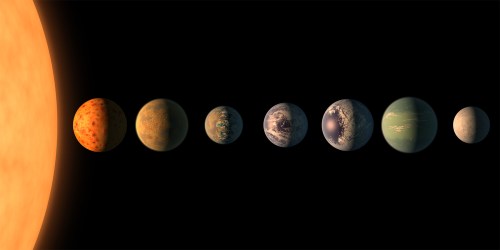
NOTE: NASA has no idea what these planets look like. This is the rendition of an artist’s imagination.

Let them praise the name of the LORD: for he commanded, and they were created. (Psalm 148:5)

Recently the National Aeronautics and Space Administration (NASA) created quite a stir concerning the discovery of seven earth-sized planets around the TRAPPIST-1 System.[1] Several of the scientists are absolutely gobsmacked and giddy over the prospect of the possibility of life on these planets.

“For thousands of years, people have wondered, are there other planets like Earth out there? Do any support life?” said Sara Seager, astrophysicst [sic] and planetary scientist at MIT. “Now we have a bunch of planets that are accessible for further study to try to start to answer these ancient questions.”[2]

Given the propensity of these scientists to reject the supernatural creative acts of God, they understandably seek proof of spontaneous generation on other worlds where they are free to speculate to their heart’s content. Failing to prove evolution here on earth, they hope to prove it elsewhere where their speculations escape scrutiny.

It is bad enough that they suck the mindless masses into the void of fantasy, but sadly, many “Bible-believing” Christians get sucked into the same vortex. I received an email from such a one just recently that read as follows:

While I am in agreement with the thought that the universe is God’s creation I’m not sure I understand comments that suggest life is impossible anywhere else.  While we know the Bible is truth, there is truth outside of the Bible.  God may have created life elsewhere for His purposes, what am I missing?

The writer referred to an article recently published on the Institute for Creation Research website[3] about the seven newly discovered exoplanets.

While many cautiously practice speculating about non-disclosures in the Bible, danger lurks when personal opinions become truths that can lead the believer astray. So for this one, and others that may be going off on a tangent, I offer the following.

The best resource to address the question of life on other worlds is the Bible.

The secret things belong unto the LORD our God: but those things which are revealed belong unto us and to our children for ever, that we may do all the words of this law. (Deuteronomy 29:29, emphasis mine)

For thus saith the LORD that created the heavens; God himself that formed the earth and made it; he hath established it, he created it not in vain, he formed it to be inhabited: I am the LORD; and there is none else. (Isaiah 45:18, emphasis mine)

And God created great whales, and every living creature that moveth, which the waters brought forth abundantly, after their kind, and every winged fowl after his kind: and God saw that it was good. (Genesis 1:21, emphasis mine)

And God made the beast of the earth after his kind, and cattle after their kind, and every thing that creepeth upon the earth after his kind: and God saw that it was good. (Genesis 1:25, emphasis mine)

So God created man in his own image, in the image of God created he him; male and female created he them. (Genesis 1:27, emphasis mine) Question: How many “images,” according to this verse, does God have?

And the Word [i.e., the Lord Jesus Christ] was made flesh, and dwelt among us, (and we beheld his glory, the glory as of the only begotten of the Father,) full of grace and truth. (John 1:14, emphasis mine)

Let this mind be in you, which was also in Christ Jesus: Who, being in the form of God, thought it not robbery to be equal with God: But made himself of no reputation, and took upon him the form of a servant, and was made in the likeness of men: And being found in fashion as a man, he humbled himself, and became obedient unto death, even the death of the cross. (Philippians 2:5-8, emphasis mine)

For our [citizenship] is in heaven; from whence also we look for the Saviour, the Lord Jesus Christ: Who shall change our vile body, that it may be fashioned like unto his glorious body, according to the working whereby he is able even to subdue all things unto himself. (Philippians 3:20-21, emphasis mine)

The Bible defines “life” more narrowly than how secular scientists define life.

For the life of the flesh is in the blood: and I have given it to you upon the altar to make an atonement for your souls: for it is the blood that maketh an atonement for the soul. (Leviticus 17:11, emphasis mine)

For it is the life of all flesh; the blood of it is for the life thereof: therefore I said unto the children of Israel, Ye shall eat the blood of no manner of flesh: for the life of all flesh is the blood thereof: whosoever eateth it shall be cut off. (Leviticus 17:14, emphasis mine)

Basically, no blood, no life. So, if the question has to do with “life forms” such as bacteria, plants, or things like that, it is possible that such things could exist on other planets. However, one must ask, what would be the purpose? God does not create anything without purpose. What was God’s purpose for creating here on earth? (By the way, bear in mind that God created earth before any of the other heavenly bodies.)

Even every one that is called by my name: for I have created him for my glory, I have formed him; yea, I have made him. (Isaiah 43:7, emphasis mine)

The glory of the LORD shall endure for ever: the LORD shall rejoice in his works. (Psalm 104:31, emphasis mine)

I have made the earth, and created man upon it: I, even my hands, have stretched out the heavens, and all their host have I commanded. (Isaiah 45:12, emphasis mine)

Be thou exalted, O God, above the heavens; let thy glory be above all the earth. (Psalm 57:5,11, emphasis mine)

And all men shall fear, and shall declare the work of God; for they shall wisely consider of his doing. The righteous shall be glad in the LORD, and shall trust in him; and all the upright in heart shall glory. (Psalm 64:9-10, emphasis mine)

The heavens declare his righteousness, and all the people see his glory. (Psalm 97:6, emphasis mine)

Kings of the earth, and all people; princes, and all judges of the earth: Both young men, and maidens; old men, and children: Let them praise the name of the LORD: for his name alone is excellent; his glory is above the earth and heaven. (Psalm 148:11-13, emphasis mine)

That they may see, and know, and consider, and understand together, that the hand of the LORD hath done this, and the Holy One of Israel hath created it. (Isaiah 41:20, emphasis mine)

To whom then will ye liken me, or shall I be equal? saith the Holy One. Lift up your eyes on high, and behold who hath created these things, that bringeth out their host by number: he calleth them all by names by the greatness of his might, for that he is strong in power; not one faileth. (Isaiah 40:25-26, emphasis mine)

From the verses above, we see that at least part of God’s purpose in creation is twofold: for His glory and personal satisfaction, and so that man, whom He created in His image, can glorify God. Therefore, we must ask, how can we glorify God in that which we cannot observe? We continue to find more and more in the submicroscopic and subatomic levels right here on earth, so that we can marvel at God’s creation right here on earth. So, how would His purpose be accomplished by creating life on other planets beyond our observation? How can we glorify God about “life” of which we know nothing? (By the way, those NASA scientists are evolutionists. They do not believe in the Creator God of the Bible. They believe in evolution by “natural causes,” therefore, they “assume” that life “could” evolve on other planets. This is why they get so excited about the possibility. However, they have no rational basis to substantiate that belief. They cannot even prove life evolved here on earth.)

If we speculate that the “life” on other planets might be human-like, we need only to remember that humans were made in God’s image. That raises the question, in whose image were those creatures created? The question presents serious theological problems. Man’s sin in the Garden of Eden (Genesis 3) brought the curse upon all of God’s creation (Romans 8:22); therefore, those creatures would be under the curse of death too. However, Jesus died to redeem mankind, not Klingons or Vulcans. To redeem them, Jesus would have to die for each of those “races”, but the Bible says, “[We] are sanctified through the offering of the body of Jesus Christ once for all” (Hebrews 10:10, emphasis mine). Jesus’ death on the cross was a one-time deal; therefore, Jesus’ sacrifice excludes Klingons and Vulcans. God is just and righteous in His judgment; therefore, I conclude that all life is here on earth alone.

Reader, if you reject the Creator God, you are just as alien to God as Klingons and Vulcans, and in grave danger of spending eternity in hell. “The soul that sinneth, it shall die. The son shall not bear the iniquity of the father, neither shall the father bear the iniquity of the son: the righteousness of the righteous shall be upon him, and the wickedness of the wicked shall be upon him” (Ezekiel 18:20, emphasis mine). “And death and hell were cast into the lake of fire. This is the second death. And whosoever was not found written in the book of life was cast into the lake of fire” (Revelation 20:14-15, emphasis mine). There is a way of escape for you; however, you must decide. The Bible says, “And it shall come to pass, that whosoever shall call on the name of the Lord shall be saved” (Acts 2:21, emphasis mine). Do that now.

Notes:


[1] Probing the Seven Worlds with NASA’s James Webb Space Telescope: https://www.nasa.gov/feature/goddard/2017/probing-seven-worlds-with-nasas-james-webb-space-telescope

[2]  Ibid.

[3]  Seven Earth-size Planets Discovered: http://www.icr.org/article/9867

2 Comments

Filed under Apologetics, Bible, Christianity, Creation, Current Events, Death, Evangelism, Evolution, Gospel, Heaven, Hell, Origins, Religion, Salvation, Science, Theology

Jesus’ Seven Discourses in John (7)

good-shepherd

I am the good shepherd: the good shepherd giveth his life for the sheep. (John 10:11)

Jesus’ seventh discourse recorded by the Apostle John contains two I AM statements that I covered in previous articles. The main theme of the discourse is the relationship of the Shepherd to His sheep. Jesus says, “I AM the door”[1] and “I AM the Good Shepherd.”[2]

In the first I AM statement, Jesus portrays Himself as “the Door” to the sheepfold (John 10:7, 9). As the Door, Jesus places Himself at the singular entrance to the sheepfold – the place of protection for the sheep. Anyone wanting to gain entry must go through Him. Only those sheep belonging to the Shepherd gain access to the place of comfort, peace and protection. All others are excluded. “Jesus saith unto him, I am the way, the truth, and the life: no man cometh unto the Father, but by me” (John 14:6, emphasis mine).

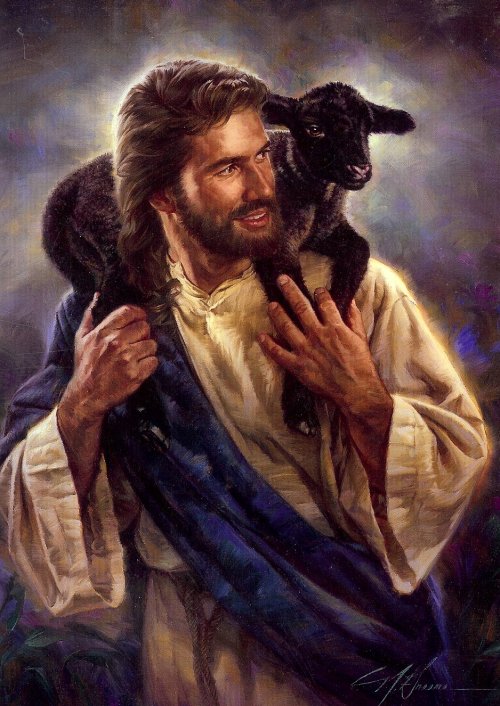
In the second I AM statement, Jesus declares that He is the Good Shepherd (John 10:11, 14). The Good Shepherd gives His life for His sheep (John 10:11).  The Good Shepherd knows His Sheep and His Sheep know Him (John 10:14). The relationship between the Good Shepherd and His sheep is interesting. John the Baptist identified the Good Shepherd as “the Lamb of God, which taketh away the sin of the world” (John 1:29, 36). That title impressed John the Apostle so much that he refers to the Risen Lord as “the Lamb” throughout the Apocalypse (Revelation 5:6,12,13; 6:1,16; 7:9,10,14,17; 12:11; 13:8,11; 14:1,4,10; 15:3; 17:14; 19:7,9; 21:9,14,22,23,27; 22:1,3).  The Lamb is also the Good Shepherd; He is like His sheep in many respects. “He came unto his own, and his own received him not” (John 1:11). The Apostle Paul says that He “made himself of no reputation, and took upon him the form of a servant, and was made in the likeness of men: And being found in fashion as a man, he humbled himself, and became obedient unto death, even the death of the cross” (Philippians 2:7-8, emphasis mine).

The Good Shepherd became a Lamb in order that He might lay down His life for his sheep (John 10:15). Sometimes Jesus is seen as a “victim” of the crucifixion, but that is far from the truth. Jesus said, “I lay down my life, that I might take it again. No man taketh it from me, but I lay it down of myself. I have power to lay it down, and I have power to take it again.” (John 10:17-18, emphasis mine).

From the time of the Fall (Genesis 3:21), it required the spilling of innocent blood to cover – atone for – the sins of man. “For the life of the flesh is in the blood: and I have given it to you upon the altar to make an atonement for your souls: for it is the blood that maketh an atonement for the soul” (Leviticus 17:11, emphasis mine). However, man sinned, not animals, so the only suitable blood sacrifice was that of an innocent man. “For it is not possible that the blood of bulls and of goats should take away sins” (Hebrews 10:4, emphasis mine). The problem is that there are no innocent men. “For all have sinned, and come short of the glory of God” (Romans 3:23, emphasis mine).  Therefore, the Good Shepherd, the only sinless man, laid down His life to atone/cover/pay for the sins of His sheep. “So Christ was once offered to bear the sins of many; and unto them that look for him shall he appear the second time without sin unto salvation” (Hebrews 9:28, emphasis mine).

Reader, if you are not under the protection of the Good Shepherd’s sheepfold, why not come to Him today? He is the Door, the only way in.

Notes:


[1]  Jesus’ Seven ‘I AM’ Statements in John (3): https://erniecarrasco.com/2016/09/18/jesus-seven-i-am-statements-in-john-3/

[2]  Jesus’ Seven ‘I AM’ Statements in John (4): https://erniecarrasco.com/2016/09/25/jesus-seven-i-am-statements-in-john-4/

Comments Off on Jesus’ Seven Discourses in John (7)

Filed under Bible, Christianity, Evangelism, Gospel, Religion, Salvation, Theology

Jesus’ Seven Discourses in John (6)

light-of-the-world

Then spake Jesus again unto them, saying, I am the light of the world: he that followeth me shall not walk in darkness, but shall have the light of life. (John 8:12)

This dialog recorded in Chapter 8 of John seems to be an extension of the conversation Jesus had with the Pharisees in Chapter 7. It was now the day after the Feast of Tabernacles (John 7:37; 8:2). At the end of Chapter 7, the Jews would have taken Jesus into custody, “but no man laid hands on him” (John 7:44), and the religious leaders were at odds as to what to do with Him (John 7:45-53).

On the following day, John records that the scribes and Pharisees brought to Him a woman caught in the act of adultery asking Jesus to pass judgment on her. Some “scholars” suggest that John 8:1-11, which relates this account, either is not original to John, or if it is original to John, it was not included in the original writing. They come to this conclusion based on variant manuscripts of the Gospel, some of which do not contain the narrative at all, and some that do contain the narrative find it in other locations of the same Gospel. Personally, I will go with the Textus Receptus that places it right where it is in all of our Bibles.

I believe the narrative falls logically into this place. Consider that Jesus debated the Jews on the last day of the Feast of Tabernacles (John 7:37). The conversation ended with their failed attempt to arrest Him (John 7:44). The Jews were then in a dilemma as to what to do with Him (John 7:45-53), and Jesus retreats to His base camp at the Mount of Olives (John 8:1). Then, “early in the morning he came again into the temple, and all the people came unto him; and he sat down, and taught them” (John 8:2). At this time, the Jews brought the woman to Jesus, and Jesus turned the tables on them suggesting that “He that is without sin among you, let him first cast a stone at her” (John 8:7). “Being convicted by their own conscience, went out one by one, beginning at the eldest, even unto the last” (John 8:9). It is worthy to note that, even though Jesus did not condemn the woman, neither did He accommodate her sin. “Jesus said unto her, Neither do I condemn thee: go, and sin no more” (John 8:11, emphasis mine).

Apparently, a crowd, including some Pharisees that were not involved in the “sting operation,” observed what took place and saw how the accusers tucked tail and left. Jesus then addresses the audience that remained. “Then spake Jesus again unto them, saying, I am the light of the world: he that followeth me shall not walk in darkness, but shall have the light of life” (John 8:12, emphasis mine).[1] In spite of what the “scholars” say, the narrative of the woman caught in adultery fits perfectly in this place. The light Jesus brought to bear exposed the hypocrisy of the Jewish religious leaders and sent them into hiding (temporarily). John’s prolog alerts us to the light Jesus brought into the world. “In him was life; and the life was the light of men. And the light shineth in darkness; and the darkness comprehended it notThat was the true Light, which lighteth every man that cometh into the world” (John 1:4-5, 9, emphasis mine). Light dispels darkness and exposes evil. “And this is the condemnation, that light is come into the world, and men loved darkness rather than light, because their deeds were evil. For every one that doeth evil hateth the light, neither cometh to the light, lest his deeds should be reproved. But he that doeth truth cometh to the light, that his deeds may be made manifest, that they are wrought in God” (John 3:19-21, emphasis mine). The Pharisees were in the dark, and the light of Jesus exposed them for what they were.

The dialog between Jesus and the Pharisees continued even though they understood very little of what Jesus had to say. In the conversation, Jesus makes several important points. First, believing in Him is essential to salvation. “If ye believe not that I am he, ye shall die in your sins” (John 8:24); “For the wages of sin is death; but the gift of God is eternal life through Jesus Christ our Lord” (Romans 6:23). Second, if you believe in Him and claim to be His disciple, i.e., follower/student, you must be faithful to His teaching. “Then said Jesus to those Jews which believed on him, If ye continue in my word, then are ye my disciples indeed; And ye shall know the truth, and the truth shall make you free” (John 8:31-32, emphasis mine). His Word is the Bible, and the truth contained in His Word liberates the soul. Jesus is the Living Word (John 1:1), and He gives us His written Word. Therefore, “If the Son therefore shall make you free, ye shall be free indeed” (John 8:36). Third, only those who belong to God can hear and understand God’s Word. “He that is of God heareth God’s words: ye therefore hear them not, because ye are not of God” (John 8:47). The Pharisees did not understand Jesus’ message because, even though they were “religious,” they were not “of God.” Fourth, they who are of God understand His Word and keep it; therefore, they will enjoy eternal life. “Verily, verily, I say unto you, If a man keep my saying, he shall never see death” (John 8:51, emphasis mine).

The fifth point Jesus made revealed His eternal nature and His equality with God the Father. “Your father Abraham rejoiced to see my day: and he saw it, and was glad” (John 8:56). Some scholars believe Jesus was referring to Abraham’s hope in the promise of Messiah, however, that does not seem the fit the Pharisees’ reaction. “Then said the Jews unto him, Thou art not yet fifty years old, and hast thou seen Abraham?” (John 8:57, emphasis mine).

If this mean no more than that he had a prophetic foresight of the gospel-day – the second clause just repeating the first – how could the Jews understand our Lord to mean that He “had seen Abraham?” And if it mean that Abraham was then beholding, in his disembodied spirit, the incarnate Messiah [Stier, Alford, etc.], the words seem very unsuitable to express it. It expresses something past – “he saw My day, and was glad,” that is, surely while he lived. He seems to refer to the familiar intercourse which Abraham had with God, who is once and again in the history called “the Angel of the Lord,” and whom Christ here identifies with Himself. On those occasions, Abraham “saw ME” (Olshausen, though he thinks the reference is to some unrecorded scene). If this be the meaning, all that follows is quite natural. (Emphasis mine)[2]

That is my take on just the normal reading of the text. Jesus referred to His encounters with Abraham recorded in the Book of Beginnings, as the LORD (Genesis 12:7; 15:1-18; 17:1; 18:1), as the Angel of the Lord who stopped him from sacrificing Isaac (Genesis 22:11-18), as Melchizedek (Genesis 14:18-20), and as one of the three “men” that visited with him in the plains of Mamre (Genesis 18). The Pharisees rightly understood that Jesus referred to personal encounters with Abraham; therefore, they questioned, “Thou art not yet fifty years old, and hast thou seen Abraham?” (John 8:57, emphasis mine). Abraham lived 2000 years prior to this time, so how could a mere man, not yet even in his fifties, have a personal encounter with him? Jesus cleared up their confusion. “Jesus said unto them, Verily, verily, I say unto you, Before Abraham was, I am” (John 8:58, emphasis mine). With His authority as God, Jesus identified Himself as the Great I AM. His message was clear and the Pharisees understood precisely what he was saying. “Then took they up stones to cast at him: but Jesus hid himself, and went out of the temple, going through the midst of them, and so passed by” (John 8:59, emphasis mine). For a mere man to make such a claim was blasphemous, and it demanded immediate execution.  However, Jesus was no mere man, and His claim was “Verily, verily” (Truly, truly).

As I AM,[3] Jesus is also the Light of the World. Jesus “Who only hath immortality, dwelling in the light which no man can approach unto; whom no man hath seen [i.e., “the light], nor can see: to whom be honour and power everlasting. Amen” (1 Timothy 6:16, emphasis mine). “This then is the message which we have heard of him, and declare unto you, that God is light, and in him is no darkness at all … But if we walk in the light, as he is in the light, we have fellowship one with another, and the blood of Jesus Christ his Son cleanseth us from all sin” (1 John 1:5, 7, emphasis mine). “For God, who commanded the light to shine out of darkness, hath shined in our hearts, to give the light of the knowledge of the glory of God in the face of Jesus Christ” (2 Corinthians 4:6, emphasis mine). “Ye are all the children of light, and the children of the day: we are not of the night, nor of darkness” (1 Thessalonians 5:5, emphasis mine). “And the city [the New Jerusalem] had no need of the sun, neither of the moon, to shine in it: for the glory of God did lighten it, and the Lamb is the light thereof. And the nations of them which are saved shall walk in the light of it: and the kings of the earth do bring their glory and honour into it” (Revelation 21:23-24, emphasis mine).

Jesus said, “I am the light of the world: he that followeth me shall not walk in darkness, but shall have the light of life” (John 8:12, emphasis mine). Reader, have you seen the light, or are you still hiding from the light?

Notes:


[1]  Jesus’ Seven ‘I AM’ Statements in John (2): https://erniecarrasco.com/2016/09/04/jesus-seven-i-am-statements-in-john-2/

[2]  Robert Jamieson, A. R. Fausset and David Brown, A Commentary on the Old and New Testaments, Commentary on John 8:56.

[3]  Jesus’ Seven ‘I AM’ Statements in John (1): https://erniecarrasco.com/2016/08/28/jesus-seven-i-am-statements-in-john-1/

5 Comments

Filed under Apologetics, Bible, Christianity, Evangelism, Gospel, Religion, Salvation, Theology