Category Archives: Death

Bare Naked

And the eyes of them both were opened, and they knew that they were naked; and they sewed fig leaves together, and made themselves aprons. (Genesis 3:7)

Man (and woman) was created in the image of God – Imago Dei for the sophisticates. That image incorporates many of God’s attributes without the omni- aspect of those attributes. Man is a rational being, although that ability to reason progressively wanes through constant rejection of God (Romans 1:28). Man creates beauty: art, sculptures, music, architecture, etc. Man invents gadgets that make life easier: machines that carry us over land, through the sea or in the air to get us where we want to go. We use all kinds of machines to help us perform our work more efficiently: computers, portable communications devices, power tools of all kinds, and even sophisticated diagnostic equipment that allow doctors to “see” into our bodies to find malfunctions. Man’s ability to design, engineer and fabricate finds resolution only in that we are created in the image of God. None other of God’s creatures possesses the almost limitless creative abilities that man has. However, no other creature bears the image of God. Evolutionists (who suffer from the Romans 1:28 syndrome), would have us believe that humans are just a more highly evolved specimen of animal. However, according to evolutionists, some animals currently in existence have been around much longer than humans have. So, one must ask, why do they remain the same with no evidence of evolution – not in the least bit? Nevertheless, that is not the point of this writing.

Humans demonstrate the image of God in their ability to love and in their ability to judge right from wrong. Humans, like God, are triune creatures with a mind, spirit and physical body. Some people have difficulty understanding that God is three persons in one Godhead. That confusion becomes clear when one understands that humans are also three persons in one “soul.” The mind directs man’s activities. The spirit of man motivates man into action, and the body carries out that the plan. Of us, God says, “I have said, Ye are gods; and all of you are children of the most High” (Psalm 82:6, emphasis mine). Jesus made the same argument when the Pharisees would stone Him for blasphemy. “Jesus answered them, Is it not written in your law, I said, Ye are gods?” (John 10:34, emphasis mine). [1] Just as God is Three-in-One in complete unity, humans too possess a triune nature.

The body, the “carriage” for our mind and spirit, also represents the image of God. Jesus, “Who is the image of the invisible God, the firstborn of every creature” (Colossians 1:15, emphasis mine) is the Creator; “For by him were all things created, that are in heaven, and that are in earth, visible and invisible …” (Colossians 1:16, emphasis mine). “All things were made by him; and without him was not any thing made that was made” (John 1:3, emphasis mine). Jesus “made himself of no reputation, and took upon him the form of a servant, and was made in the likeness of men” (Philippians 2:7, emphasis mine). Knowing that He would one day be “made in the likeness of men,” it stands to reason that Jesus, the Creator, would design the kind of body suitable for Himself for His time on earth (and after).

The care that He took to design the human body becomes apparent when we read the creation account in Genesis 1. Every creature God created came about by Divine fiat. “And God said, Let the waters bring forth abundantly the moving creature that hath life, and fowl that may fly above the earth in the open firmament of heaven” (Genesis 1:20, emphasis mine). “And God said, Let the earth bring forth the living creature after his kind, cattle, and creeping thing, and beast of the earth after his kind: and it was so” (Genesis 1:24, emphasis mine). However, when it came to man, God took greater care. “And God said, Let us make man in our image, after our likeness … So God created man in his own image, in the image of God created he him; male and female created he them” (Genesis 1:26-27, emphasis mine). Chapter 2 provides even greater insight. “And the LORD God formed man of the dust of the ground, and breathed into his nostrils the breath of life; and man became a living soul … And the rib, which the LORD God had taken from man, made he a woman, and brought her unto the man” (Genesis 2:7, 22, emphasis mine).

Still, man lacks one aspect of God’s physical form. Of Jesus, Paul writes, “Who only hath immortality, dwelling in the light which no man can approach unto; whom no man hath seen, nor can see: to whom be honour and power everlasting. Amen” (1 Timothy 6:16, emphasis mine). The Beloved Apostle also wrote, “This then is the message which we have heard of him, and declare unto you, that God is light, and in him is no darkness at all” (1 John 1:5, emphasis mine).[2] The Bible often describes angels as possessing a glow about them. Moses, when he came down from the mountain after spending 40 days in the presence of God had a glow about him. The glow caused the children of Israel to fear so much that they asked him to cover his face.[3] There was a glow about Jesus when He was transfigured that left the disciples awestruck.[4]

It seems likely that part of the image of God in man would include a glow about our bodies, but we no longer see that. Oh, I know some psychics claim to see an “aura” around people, but if one is there, it is too dim for “normal” people to see it. As the guy in the motel commercial says, “Nobody glows.” Why is that? I have a theory.

As we noted, God is and dwells in light. In the beginning when He said, “Let there be light” (Genesis 1:3), He actually created darkness to contrast the light. He says as much to the prophet Isaiah: “I form the light, and create darkness: I make peace, and create evil: I the LORD do all these things”(Isaiah 45:7, emphasis mine). So, I believe that when God created man in His image, He created man robed in light. Perhaps that was included in the “breath of life.” When Adam disobeyed God and ate of the forbidden fruit, the light went out (and so too did “life”), “And the eyes of them both were opened, and they knew that they were naked” (Genesis 3:7). It is instructive to note that it was not until Adam (not Eve) ate of the fruit that their eyes were opened. It was Adam, not Eve, who received the command not to eat of the forbidden fruit directly from God; thus, his was the greater responsibility.

To cover (atone) their nakedness, God had to kill innocent animals to make clothing for the bare naked pair. “Unto Adam also and to his wife did the LORD God make coats of skins, and clothed them” (Genesis 3:21, emphasis mine). There may be an intentional play on words here. The Hebrew word for skin is ‛ôr, spelled עוֹר. The Hebrew word for “light,” the clothing they had lost, is ‘ôr, spelled אוֹר. When Adam sinned, the couple lost their ‘ôr (light), and God had to cover their nakedness with ‛ôr (skins).

That temporary covering for sin required the shedding of innocent animal blood. The permanent covering for sin required the innocent blood of the Son of Man, the Lamb of God. Now God offers that gift to us at no cost. Only one thing remains – that we accept the gift by faith. See my page on Heaven for the rest of the story.

Notes:


[1]  See John 10:24-39 for context.

[2]  This is often understood to say that God is the source of all wisdom, knowledge and truth. This is certainly true given the context surrounding this verse. However, Henry M. Morris, Ph.D sees the physical aspect of God’s light as he notes in The Henry Morris Study Bible: http://www.icr.org/Bible/1John/1:5/

[3]  See Exodus 34:30-35.

[4]  See Matthew 17:1-8; Mark 9:2-13; Luke 9:28-36.

1 Comment

Filed under Apologetics, Christianity, Creation, Death, Evolution, Gospel, Origins, Religion, Salvation, Theology

Plant Death

And God said, Behold, I have given you every herb bearing seed, which is upon the face of all the earth, and every tree, in the which is the fruit of a tree yielding seed; to you it shall be for meat. (Genesis 1:29)

Plants do not possess life in the biblical sense. The Bible almost always refers to plant “death” as “withering.” The Bible says that “the life of the flesh is in the blood” (Leviticus 17:11). Plants do not have blood; therefore, plants do not have life, neither do they die in the biblical sense. The prophet Isaiah wrote: “The grass withereth, the flower fadeth: but the word of our God shall stand for ever” (Isaiah 40:8). Notice that he says that the grass “withers,” not that it dies.

If that is true, then why did Jesus say that a grain of wheat falling to the ground dies (John 12:24)? In this passage, the word “die” translates the Greek word apothnēskō. According to Strong’s (G599), the word means, “to die off (literally or figuratively).” Jude applies the same word to “trees whose fruit withereth, without fruit, twice dead, plucked up by the roots” (Jude 1:12, emphasis mine). The word translated “dead” is the same Greek word, apothnēskō, but note that it is associated with “withereth.” Therefore, death, in the Bible, can be applied to plants, but it is more in the figurative sense than in a literal sense.

Jesus said, “Verily, verily, I say unto you, Except a corn of wheat fall into the ground and die, it abideth alone: but if it die, it bringeth forth much fruit” (John 12:24, emphasis mine). However, He used the word “die” in the figurative sense. He was referring to His pending death and resurrection. He was not using the word in a literal sense that a seed actually dies.

When a seed gets buried in the ground, it does not remain a seed. Rather, it germinates and transforms into a new plant that produces many more seeds. Similarly, Jesus died and was buried in the earth. On the third day, He came up out of the ground, and His resurrection produced eternal life for all who would believe on Him.

So, talk to your plants, if you like, but they really do not hear you. Plants are food, not pets.

Comments Off on Plant Death

Filed under Apologetics, Christianity, Creation, Death, Religion, Resurrection, Science, Theology

Pre-Flood Fish Food

And God said, Behold, I have given you every herb bearing seed, which is upon the face of all the earth, and every tree, in the which is the fruit of a tree yielding seed; to you it shall be for meat. And to every beast of the earth, and to every fowl of the air, and to every thing that creepeth upon the earth, wherein there is life, I have given every green herb for meat: and it was so. (Genesis 1:29-30)

Our lead verse above often leads to questions about the diet of carnivores prior to the Fall recorded in Genesis 3. Those who raise the question point out that some animals’ teeth are designed for eating plants and others are designed for eating meat. I can answer that question by simply pointing out that my dogs (and probably yours) eat grass, carrots, apples, potatoes, green beans, watermelon, etc. Not only that, but their kibble is made mostly of vegetable products; they do not have to eat meat to survive. In addition, many animals existing today survive on a purely vegetarian diet even though they have sharp meat-eating teeth;[1] for example, panda bears are strict vegetarians, even though they have a mouth full of sharp meat-grinding teeth! Likewise, dinosaurs were all vegetarians before the Fall[2] for the same reason.

Someone recently asked, “What about the sea creatures? Can we assume that there are plants in the oceans? How would that make any sense? What were the sea creatures feeding on if not one another according to the food chain? Doesn’t that represent some kind of death already existing before the fall?”

That is a very good question. The Bible says that when God finished creation, He said it was “very good” (Genesis 1:31). Since the Bible calls death “the enemy” (1 Corinthians 15:26), death cannot be a part of a “very good” creation. Both humans and animals were vegetarian, as pointed out in our verse above. (Genesis 1:29-30); therefore we can safely conclude that applied to sea creatures as well.

We must first define what “life” is. The Bible says that “life is in the blood” (Leviticus 17:11). Therefore, anything that has blood has life. “Life,” according to God’s Word, is not the same as defined by modern science. Modern scientists define life as anything that grows and reproduces, so to modern scientists, plants are “alive,” but that is not what the Bible says. Many creatures grow, reproduce and move freely in the oceans, like plankton. These are considered “motile organisms.” However, they have no blood; therefore, according to the Bible, they do not really have “life.” Whales eat tons of plankton every day and so do other sea creatures. Besides that, many kinds of plants grow in the shallows where sunlight for photosynthesis can still penetrate. Therefore, it should not be difficult to conclude that all sea creatures were vegetarian before the Fall (Genesis 3).

Consider also that the Fall took place probably less than a month after creation – perhaps even within the following week. I say that because Adam and Eve were perfect human specimens, created in the image of God (Genesis 1:26-27). They had absolutely no physical flaws. God gave them instruction to “Be fruitful, and multiply, and [fill] the earth” (Genesis 1:28). Eve did not conceive until after the Fall (Genesis 4:1). Considering that a woman’s menstrual cycle is about 28 days and that Eve was the most beautiful woman in the world – literally – Adam, I am certain, would have gotten busy right away to keep God’s command to “be fruitful and multiply.” Eve, being the perfect example of femininity and physical health should have gotten pregnant right away. Since that did not happen until after the Fall, we must conclude that the Fall occurred before she became pregnant, and therefore less than one month after creation. That should not be too long to survive a vegetarian diet. I could even do that for a month, although, I might not be too much fun to be around!

Aside from the academic exercise of a pre-Fall animal diet is the question of death before sin.[3] If death existed before Adam and Eve disobeyed God by eating from the forbidden tree, then how can death be the logical consequence of sin? Death before sin destroys the whole premise of the Gospel. Therefore, biblical compromises like the Gap Theory,[4] the Day-Age Theory,[5] and Theistic Evolution[6] must be rejected. With all of that, we can conclude that all creatures were vegetarian prior to the Fall.

Notes:


[1]  “Why God Created Large, Sharp Teeth?” – http://www.icr.org/article/why-god-created-large-sharp-teeth

[2]  “How Do the Dinosaurs Fit In?” – http://www.icr.org/article/how-do-dinosaurs-fit-in

[3]  “The Curse of Death” – https://erniecarrasco.com/2015/06/14/the-curse-of-death/

[4]  “No Gap” – https://erniecarrasco.com/2015/10/18/no-gap/

[5]  “A Day Is A Day” – https://erniecarrasco.com/2015/10/25/a-day-is-a-day/

[6]  “The Bible Says” – https://erniecarrasco.com/2016/04/03/the-bible-says/

3 Comments

Filed under Apologetics, Christianity, Creation, Death, Gospel, Origins, Random Musings, Science

Good Guys Go to Hell

And in hell he lift up his eyes, being in torments, and seeth Abraham afar off, and Lazarus in his bosom. (Luke 16:23)

A popular idea going around these days suggests that anyone can go to heaven, if he or she is a “good” person. That sounds good, but by what standard does one measure “goodness”? The fornicator may say, “I’m not so bad; I won’t cheat on my wife.” The adulterer might say, “I’m not so bad; I’ve never molested a child.” The child molester could say, “I’m not so bad; I’ve never murdered anyone.” The murderer excuses himself, “I’m not so bad; the one I killed had it coming.” He would also add, “I am not a mass murderer,” and so on. Each one is not as bad as the other person is; by their own standard, they qualify for heaven. However, heaven’s standards exceed those we place on ourselves.

Jesus recounts the death of two men. The account is often mistaken as one of Jesus’ parables; however, the matter-of-fact telling of the account carries no alternative meaning, as do the regular parables of Jesus. In this instance, Jesus gives the proper name of one of the characters, Lazarus. He refers to the second man simply as “a rich man.” In this account, Jesus gives the impression that He has firsthand knowledge of the parties involved, so it makes one wonder why the rich man remains unnamed. The Bible tells us that “when the roll is called up yonder,” those who have died without Christ will be judged by their works recorded in “the books” (Revelation 20:12-13). When their “works” fail to meet heavenly standards, those being judged will be looked up in the Book of Life, and when their names are not found there, they will be cast into “the lake of fire” (Revelation 20:15). Perhaps this is why Jesus does not name the rich man. On the other hand, Jesus knows Lazarus by name. Jesus said, “My sheep hear my voice, and I know them, and they follow me: And I give unto them eternal life; and they shall never perish, neither shall any man pluck them out of my hand” (John 10:27-28, emphasis mine). Apparently, Jesus did not know the rich man meaning that the rich man was not one of His sheep.

As Jesus relates the account, the worst thing said about the rich man is that he “was clothed in purple and fine linen, and fared sumptuously every day” (Luke 16:19). Is there anything sinful about being rich? Surely, that cannot be the reason for his eternal life sentence! Indeed, “in hell he lift up his eyes, being in torments, and seeth Abraham afar off,” (Luke 16:23, emphasis mine). Abraham was one of the richest men recorded in the Bible, yet there he is in paradise, so wealth was not the man’s problem.

Jesus tells us that Lazarus, a beggar, “was laid at his gate, full of sores, And desiring to be fed with the crumbs which fell from the rich man’s table” (Luke 16:20-21). The account implies that the rich man took no notice of the beggar’s plight, although Jesus does not explicitly say so. Very possibly the rich man tossed a few coins to the beggar from time to time as might be expected of a man of his status. Even here, we find no “sin” worthy of an eternal sentence to hell.

One characteristic about the rich man that clearly comes through in Jesus’ account is his self-centeredness or self-focus, especially upon his arrival in hell. “And he cried and said, Father Abraham, have mercy on me, and send Lazarus, that he may dip the tip of his finger in water, and cool my tongue; for I am tormented in this flame” (Luke 16:24, emphasis mine). Even in his circumstance, he considered himself superior to Lazarus so that Lazarus should serve him. His request denied and realizing that his fate is permanent, he suddenly becomes evangelistic. “Then he said, I pray thee therefore, father, that thou wouldest send him to my father’s house: For I have five brethren; that he may testify unto them, lest they also come into this place of torment.” (Luke 16:27-28, emphasis mine). Notice his concern is not for a lost world, but only for his family.

We see that the rich man was self-indulgent – “But Abraham said, Son, remember that thou in thy lifetime receivedst thy good things” (Luke 16:25) – and egocentric. So what! Did that make him an evil person deserving hell? My guess is that the rich man was probably a pretty good guy over all. Jesus does not say that he mistreated Lazarus in any way, only that Lazarus desired “to be fed with the crumbs which fell from the rich man’s table” (Luke 16:21). That only means that the rich man took no real notice of the beggar’s plight. If such neglect condemns one to hell, then I plead guilty as charged. Not a day goes by that I do not see someone begging on some street corner of Dallas, and I drive on by. No, that was not the rich man’s problem.

The unnamed rich man’s problem was his ignorance of the Good Shepherd. The rich man was not one of Jesus’ sheep; Lazarus was, though. Jesus knew his name, and he gained entry into the presence of God. The rich man did not go to hell because he was some kind of great sinner; he went to hell because his name was not written in the Lamb’s Book of Life. Heaven – the New Jerusalem – is an exclusive place. “And there shall in no wise enter into it any thing that defileth, neither whatsoever worketh abomination, or maketh a lie: but they which are written in the Lamb’s book of life” (Revelation 21:27, emphasis mine). The rich man’s name was not recorded in that book, but Lazarus’ name was recorded there, which is why Jesus knew his name.

How about you, Reader? Is your name recorded in the Lamb’s Book of Life? If not, you will end up with that nameless rich man, and humanly speaking, you may even be a better person than the rich man. You may consider yourself to be a good person, but at the Great White Throne Judgment, when the books are brought out (Revelation 20:12-13) (one of which is the Word of God, the Bible), your good deeds will be judged according to the standard of God’s Word. Prepare yourself. You will not measure up. “For all have sinned, and come short of the glory of God” (Romans 3:23). Your only hope is for your name to be listed in the Lamb’s Book of Life. Ask Jesus to write your name in His book today. “For whosoever shall call upon the name of the Lord shall be saved” (Romans 10:13). “That if thou shalt confess with thy mouth the Lord Jesus, and shalt believe in thine heart that God hath raised him from the dead, thou shalt be saved” (Romans 10:9). Good guys go to hell, but those whose names are written in the Lamb’s Book of Life will be saved. Do it today!

Jesus’ account of the rich man and Lazarus is recorded in Luke 16:19-31.

Comments Off on Good Guys Go to Hell

Filed under Apologetics, Christianity, Death, End Times, Evangelism, Gospel, Heaven, Hell, Religion, Salvation, Theology

In the Twinkling of an Eye

Behold, I shew you a mystery; We shall not all sleep, but we shall all be changed, In a moment, in the twinkling of an eye, at the last trump: for the trumpet shall sound, and the dead shall be raised incorruptible, and we shall be changed. (1 Corinthians 15:51-52)

For several years now, but more so lately, the soon return of the Lord Jesus Christ, occupies my mind almost constantly – hopefully not to the point that I am so heavenly minded that I am no earthly good. As a matter of fact, the prospect incites a sense of urgency within me to share, or better, to warn, the lost around me, especially my loved ones, of the menacing peril that looms ahead for those left behind when Jesus returns for His Bride, the Church. Anyone rejecting Christ, whether by choice or by ignorance, faces seven years of unimaginable horror on earth, until Jesus returns as King of Kings and Lord of Lords to claim His Kingdom on earth for 1000 years (Revelation 20). During that awful period of seven years, people will still have the opportunity to repent and follow Jesus, but they may have to pay for that choice with their lives.

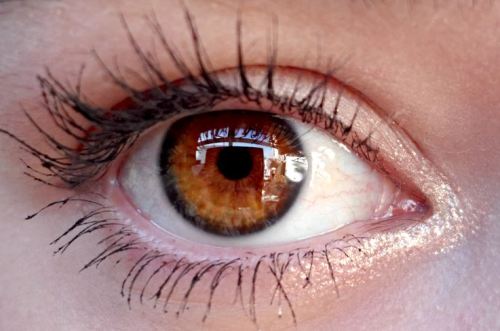
For believers who share my anticipation, I wonder what our call to “come up hither” (Revelation 4:1) will be like? In the starting verse above, the Apostle Paul says that we, if we are not “asleep,” will “be changed in a moment, in the twinkling of an eye” (1 Corinthians 15:51-52).  The Greek word translated moment is atomos, from which we get our English word “atom,” and it signifies the smallest, indivisible amount of time. Paul further defines the “moment” as “the twinkling of an eye.” The twinkling of an eye is faster than “the blink of an eye” which is 100-400 milliseconds.[1] I read somewhere that the “twinkling of an eye” is the amount of time it takes for light to enter the eye, hit the retina, and reflect back out;[2] it is a ridiculously small amount of time.

Paul tells us this event takes place “at the last trump.” John the Revelator, who enjoyed a “sneak preview” of this future event, said, “the first voice which I heard was as it were of a trumpet talking with me; which said, Come up hither” (Revelation 4:1, emphasis mine). Will we hear an actual trumpet call and automatically understand that we are being called home? In another place Paul says that, “the Lord himself shall descend from heaven with a shout, with the voice of the archangel, and with the trump of God” (1 Thessalonians 4:16, emphasis mine). Will everyone on earth hear the sound? Perhaps they will, but only those for whom the call is intended will understand the meaning. I recall that when Jesus called Paul into service, “the men which journeyed with him stood speechless, hearing a voice, but seeing no man,” (Acts 9:7, emphasis mine). In another place Paul says, “they that were with me saw indeed the light, and were afraid; but they heard not the voice of him that spake to me” (Acts 22:9, emphasis mine). The connotation here is that, even though they heard the sound, they did not hear the voice with understanding. The communication was intended solely for Paul and no one else. That is what I think will happen at the Last Trump. Those who are His “sheep” will hear and understand the voice of the Shepherd. The rest may hear something, but not know what it is.

When that call comes, “the dead in Christ shall rise first: Then we which are alive and remain shall be caught up together with them in the clouds, to meet the Lord in the air” (1 Thessalonians 4:16-17, emphasis mine). In the twinkling of an eye, the decayed bodies of all the saints who are “asleep” (i.e., dead) will be reconstituted, and they will burst forth from their graves and take flight to meet Jesus in the air. In that same instant, “we [who are alive] shall all be changed” (1 Corinthians 15:51); in the twinkling of an eye, our bodies will be transformed from mortal to immortal. Will we feel it? What sensation will we experience? Suddenly all aches and pains will cease. Wrinkled skin will return to the firm supple skin of our youth. Grey hair will return to its former natural vibrancy. Heads of skin will be restored to their former glory – without the dandruff! I imagine myself in front of the mirror checking my “gig line.” I look down to check a button I missed, and when I look back up, I am staring at my 30-year old self with a full head of wavy hair! Then in the next moment, my clothes fall off as I pass right through the roof of my house. I look down and watch my house grow smaller and smaller as I zoom skyward like in a Star Wars movie. I look up and see Jesus standing there in space with open arms to welcome me, and I look around me and see millions of others wearing white robes like mine going the same direction I am traveling – toward Jesus. And no one is old. No one is disfigured. No one is bent, broken, or blemished in any way. All those I see are perfect creations like the first pair God made in the Garden of Eden. It will happen in the twinkling of an eye!

Not everyone on earth will go. Behind will be all those who rejected God’s free gift of salvation to face the horrors of hell on earth for the next seven years. Reader, if you have not asked Jesus to be your Savior, you will be included with those who are left behind. Do not let another day go by without asking Jesus to save you. Invite Him into your heart today. In the twinkling of an eye, that matter will be settled, and you can rest secured in His love. Do it now!

Notes:


[1]  “How Fast Is a Blink of an Eye?” http://sciencing.com/fast-blink-eye-5199669.html/, accessed 04/18/2017.

[2]  Question posted at https://math.stackexchange.com/questions/48664/how-long-would-it-take-for-light-to-go-through-a-human-eyeball-and-back-to-the-o/, accessed 04/18/2017.

3 Comments

Filed under Christianity, Death, End Times, Evangelism, Gospel, Heaven, Random Musings, Religion, Resurrection, Salvation, Second Coming of Christ, Theology