Category Archives: Evangelism

Seeing to Believe

"My Lord and my God."

“My Lord and my God.”

And I will pour upon the house of David, and upon the inhabitants of Jerusalem, the spirit of grace and of supplications: and they shall look upon me whom they have pierced, and they shall mourn for him, as one mourneth for his only son, and shall be in bitterness for him, as one that is in bitterness for his firstborn. (Zechariah 12:10)

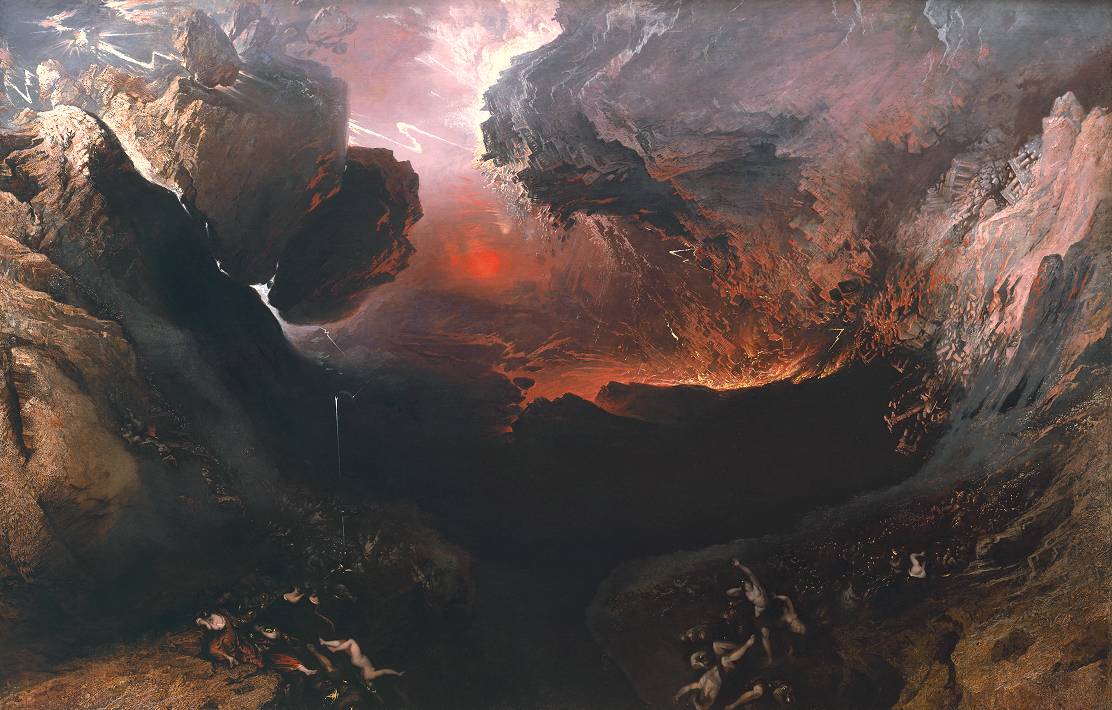
My blog is titled “Ernie’s Musings” because I write about things that cross my mind – when I can remember them. So it was this last week as I was in the shower in an effort to wake up and start the day. These days I think a lot about the Lord’s return with great anticipation as well as some dread for loved ones that are not prepared for the event. As I thought about that great event, I recalled the Scripture passage above and imagined the scene described in Revelation 19:11-16:

And I saw heaven opened, and behold a white horse; and he that sat upon him was called Faithful and True, and in righteousness he doth judge and make war. His eyes were as a flame of fire, and on his head were many crowns; and he had a name written, that no man knew, but he himself. And he was clothed with a vesture dipped in blood: and his name is called The Word of God. And the armies which were in heaven followed him upon white horses, clothed in fine linen, white and clean. And out of his mouth goeth a sharp sword, that with it he should smite the nations: and he shall rule them with a rod of iron: and he treadeth the winepress of the fierceness and wrath of Almighty God. And he hath on his vesture and on his thigh a name written, KING OF KINGS, AND LORD OF LORDS.

God long ago selected Israel among all the other nations for a particular purpose:

For thou art an holy people unto the LORD thy God: the LORD thy God hath chosen thee to be a special people unto himself, above all people that are upon the face of the earth. The LORD did not set his love upon you, nor choose you, because ye were more in number than any people; for ye were the fewest of all people: But because the LORD loved you, and because he would keep the oath which he had sworn unto your fathers, hath the LORD brought you out with a mighty hand, and redeemed you out of the house of bondmen, from the hand of Pharaoh king of Egypt. (Deuteronomy 7:6-8, emphasis mine)

God chose Israel for the purpose of bringing Messiah into the world and identifying Him with an undeniable lineage so that He wouldn’t be missed (see Matthew 1:1-16; Luke 3:23-38). God also promised the land of Israel to Abraham as an eternal possession (see Genesis 13:14-15). “Know therefore that the LORD thy God, he is God, the faithful God, which keepeth covenant and mercy with them that love him and keep his commandments to a thousand generations” (Deuteronomy 7:9, emphasis mine).

The history of Israel, from the time of the Exodus to the Babylonian captivity and beyond has been one of rebellion against God. Even now the majority of Israelis practice Judaism more out of tradition than out of a sincere devotion to God. Indeed, Israel is primarily a secular nation. Salvation for Israel has never been a “done deal.” God’s salvation is for individuals, not nations. John the Baptist made this point when a group of Pharisees and Sadducees came to him to be baptized: “And think not to say within yourselves, We have Abraham to our father: for I say unto you, that God is able of these stones to raise up children unto Abraham” (Matthew 3:9).  Salvation is not a national right for Israel. Israel exists as a sign to the world and to give testimony of God’s faithfulness. “God is not a man, that he should lie; neither the son of man, that he should repent: hath he said, and shall he not do it? or hath he spoken, and shall he not make it good?” (Numbers 23:19) God, because of His mercy and faithfulness, will give Israel one final chance to repent, and when they see the Lord returning in the clouds, “they shall look upon me whom they have pierced, and they shall mourn for him, as one mourneth for his only son, and shall be in bitterness for him, as one that is in bitterness for his firstborn” (Zechariah 12:10), but each individually, not as a nation.

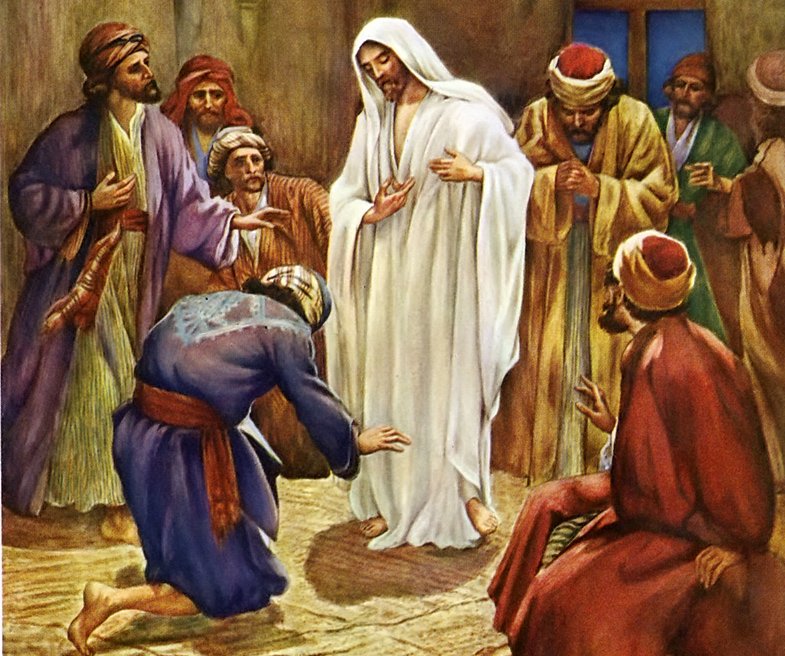
As I mused on this, I recalled John’s account of Thomas, the apostle, following the resurrection of Christ. Jesus was crucified during Passover and placed in a tomb where He laid for three nights and three days (John 19:38-42). Then early on the first day of the week (Sunday), He reclaimed His life and rose from the grave (John 20:1). There He was seen by Mary Magdalene who clung to Him when she saw Him. “Jesus saith unto her, Touch me not; for I am not yet ascended to my Father: but go to my brethren, and say unto them, I ascend unto my Father, and your Father; and to my God, and your God” (John 20:17). Apparently, His absence was brief. Mary Magdalene gave Jesus’ message to the disciples who were holed up in the upper room “for fear of the Jews” (John 20:19). It was the same day in the evening (prior to 6 PM), when “came Jesus and stood in the midst, and saith unto them, Peace be unto you” (v. 19). Thomas was not in the group. When the others gave Thomas the news, “he said unto them, Except I shall see in his hands the print of the nails, and put my finger into the print of the nails, and thrust my hand into his side, I will not believe” (John 20:25). The following Sunday, Jesus once again appeared to His disciples, and this time Thomas was with the group.

Then saith he to Thomas, Reach hither thy finger, and behold my hands; and reach hither thy hand, and thrust it into my side: and be not faithless, but believing. And Thomas answered and said unto him, My Lord and my God. Jesus saith unto him, Thomas, because thou hast seen me, thou hast believed: blessed are they that have not seen, and yet have believed. (John 20:27-29, emphasis mine)

I see a parallel here between this account of Jesus’ resurrection and His return at the last days. The day of Jesus’ resurrection is the presentation of the Gospel which the Apostles received upon seeing Him. Thomas was not there to witness the risen Christ, but the message was presented to him, and he rejected it. The period between the Sunday of Christ’s resurrection and the following Sunday can be compared to the “Church Age” where the Gospel – the good news – is proclaimed but the only evidence is the testimony of the messengers. Those who believe must do so by faith and the credibility of the message. The following week, Christ returns and this time Thomas sees Him in the flesh. This can be compared to the end of this age when the Lord returns to set up His millennial kingdom (Revelation 20). At that time many of the Jews who rejected Him by faith shall look upon Him “whom they have pierced, and they shall mourn for him, as one mourneth for his only son, and shall be in bitterness for him, as one that is in bitterness for his firstborn” (Zechariah 12:10). And Jesus will say, “because thou hast seen me, thou hast believed: blessed are they that have not seen, and yet have believed” (John 20:29, emphasis mine). Jesus will return very soon. Don’t wait to see Him in order to believe. It may be too late then.

2 Comments

Filed under Bible, Christianity, Easter, End Times, Evangelism, Gospel, Religion, Resurrection, Salvation, Second Coming of Christ, Theology

Building the Ark

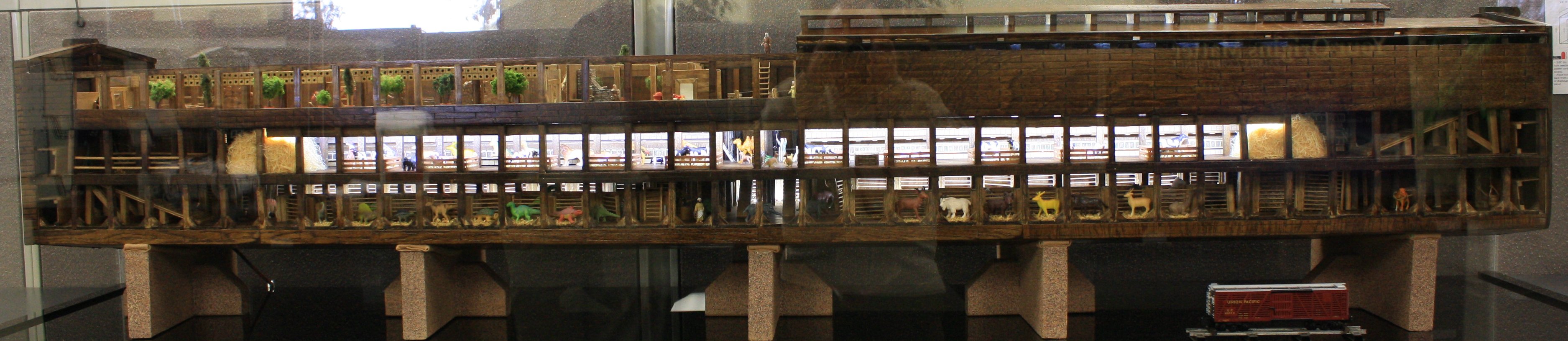
Noah's Ark Model on display at the Institute for creation Research, Dallas, Texas

Noah’s Ark Model on display at the Institute for Creation Research, Dallas, Texas

 Make thee an ark of gopher wood. (Genesis 6:14)

About five years ago, March 2010, God woke me in the middle of the night and gave me a vision to build a scale model of Noah’s Ark. At the time, I was in the middle of working on my M.C.Ed degree in Biblical apologetics from the School of Biblical Apologetics (SOBA) at the Institute for Creation Research (ICR), and I needed a Master’s project or a thesis in order to fulfill the requirements for the degree. The Noah’s Ark model would fulfill that requirement.

As with Noah, God gave me a “big picture” vision of all the details that would need to go on the model. Part of that vision included donating the completed model to ICR. In the end, I was unable to complete the model in time for graduation, so I fulfilled my requirements by writing a thesis. However, that did not squelch my determination to complete the model and make good on my promise. So the work continued a few hours every night after work and on weekends. My only limitation was my own “wimpyness.” My garage, where I built the Ark, is not climate controlled, so in the summer temperatures were unbearably hot, and in the winter temperatures were numbingly cold. The five-year timeframe was due to those limitations, but in that time, I spent 1379 hours to complete the task.

The importance of my God-given task results from what Peter wrote: “Knowing this first, that there shall come in the last days scoffers, walking after their own lusts” (2 Peter 3:3). Scoffers attack anything “Bible,” but one of their favorite targets is the book of Genesis and what it has to say about Creation, the Fall, and the Global Flood. They say stupid things like, “How could all those animals fit inside the Ark?” Sadly, too many Christians, rather than defend God’s Word, take the side of the scoffers. Therefore, this model serves to encourage Christians to trust God’s Word completely and bolster their faith in defending the Word of God.

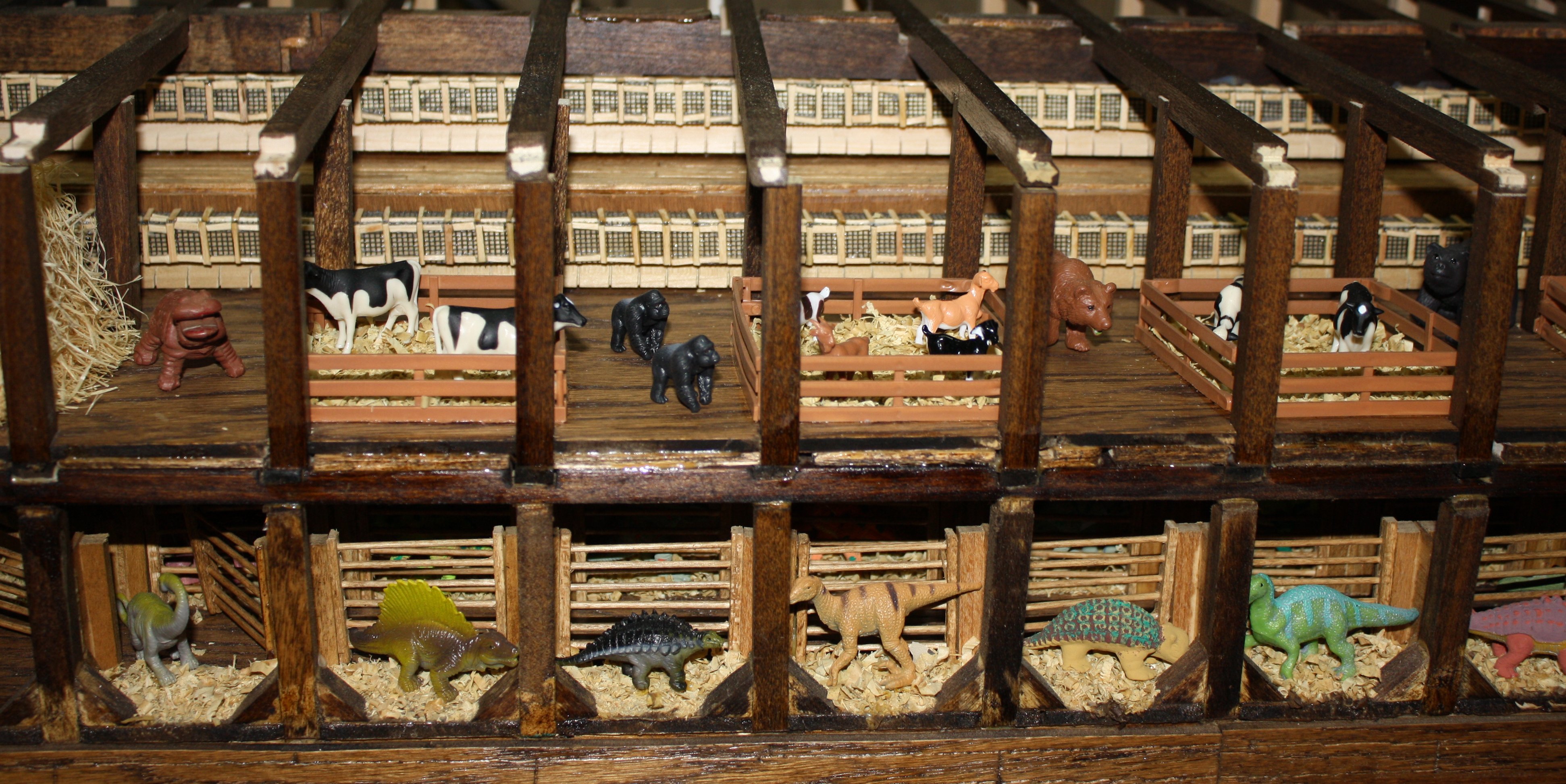
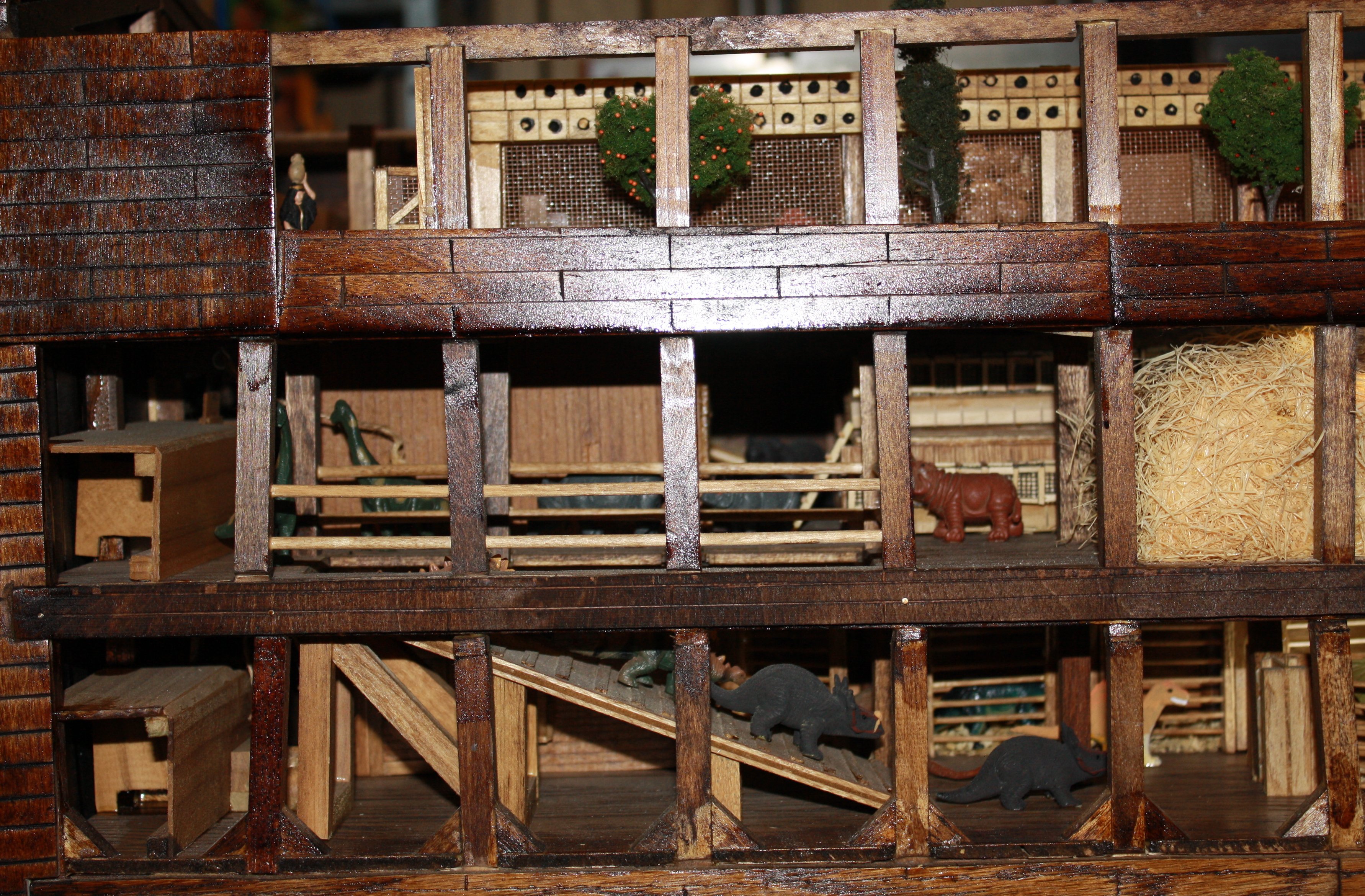
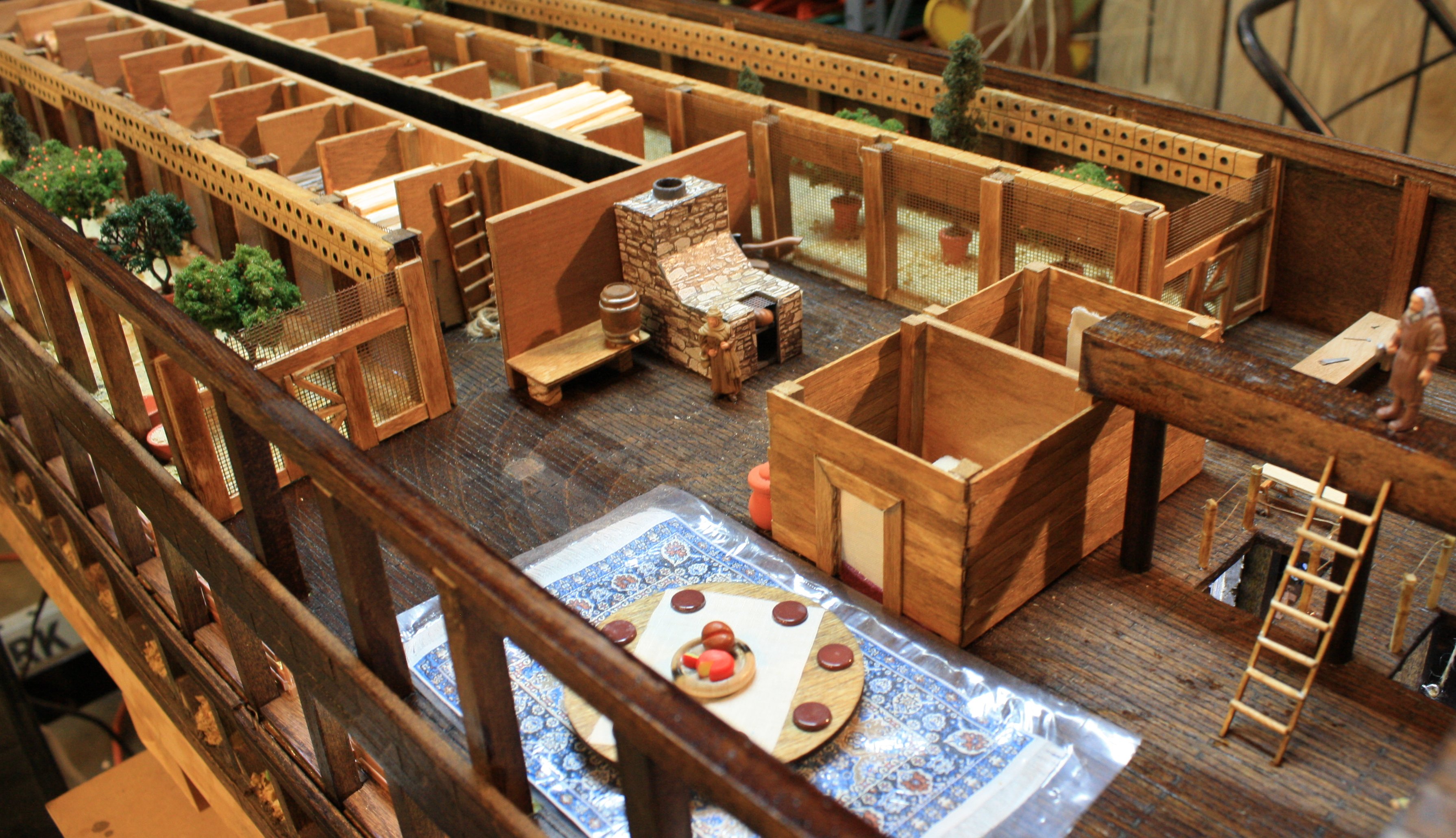
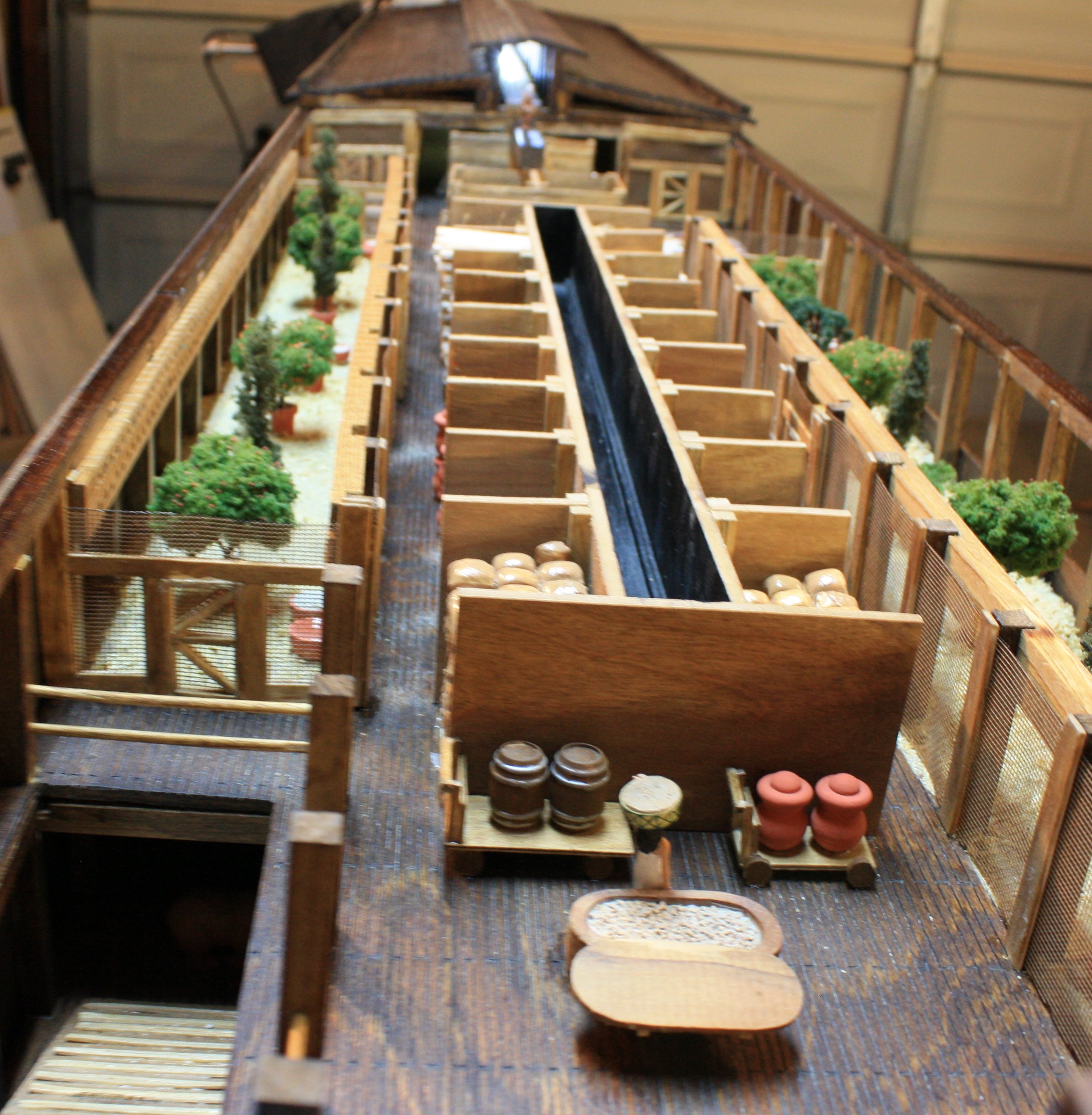
Large animal pens. Note the dinosaurs.

Large animal pens. Note the dinosaurs.

God said to Noah, “Make thee an ark of gopher wood; rooms shalt thou make in the ark” (Genesis 6:14).  The Hebrew word translated “rooms” is qên and it literally means “nests.” That indicates that these would not be large pens where the animals could move around a lot. Noah, his family, and all the menagerie endured 371 days onboard the Ark.

Genesis 6_14(3)

Small animal cages

  That being the case, it is my opinion that God caused the animals to hibernate during that time, so large spaces were not required for the animals. Furthermore, since the average size the animals was about the size of a small cow, a good majority of the animals were small. In order to represent this, made small animal cages for the second deck.

I tried to represent a variety of “kinds” of animals: clean and unclean, mammals, reptiles (dinosaurs) and birds.

I tried to represent a variety of “kinds” of animals: clean and unclean, mammals, reptiles (dinosaurs) and birds.

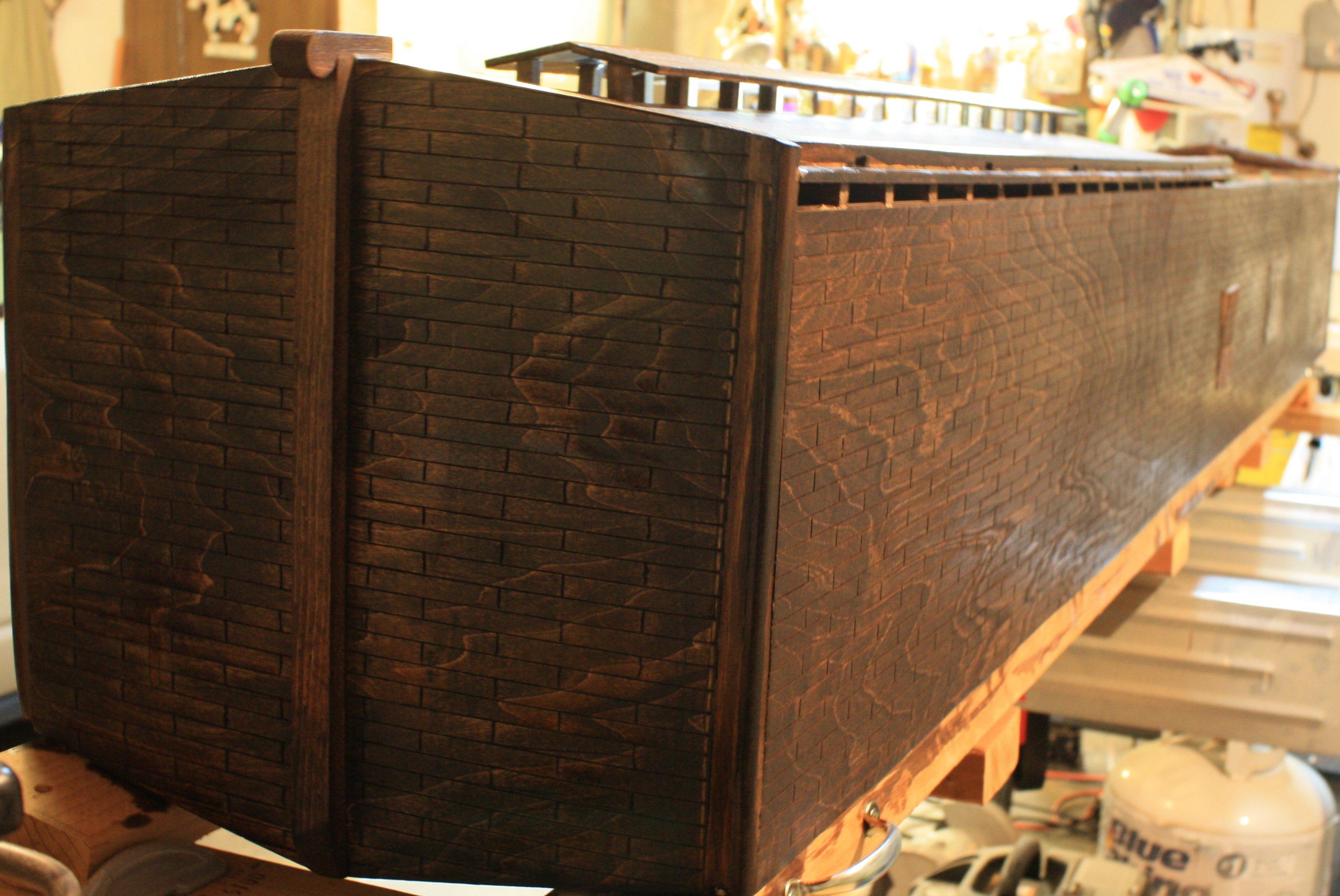
Starboard Side of the Ark

Starboard Side of the Ark

God gave Noah the dimensions of the Ark as follows: “And this is the fashion which thou shalt make it of: The length of the ark shall be Starboard Side of the Ark three hundred cubits, the breadth of it fifty cubits, and the height of it thirty cubits” (Genesis 6:15). Based on an 18-inch cubit, that would make the Ark 450 feet long (the length of one and one half football fields), 75 feet wide, and 45 feet tall. My model is 1/60 scale making it 7.5 feet (90 inches) long, 15 inches wide, and 9 inches tall. (Those are inside dimensions.)

The tsôhar

The tsôhar

Noah was also instructed to make a “window” for the Ark. “A window shalt thou make to the ark, and in a cubit shalt thou finish it above” (Genesis 6:16). The Hebrew word translated “window” is tsôhar and it literally means a “light” or “double light” as in midday or noon. Only in this passage is it translated “window,” so evidently it was some way to allow outside light into the Ark. Toward the end of the voyage we are told, “And it came to pass at the end of forty days, that Noah opened the window of the ark which he had made” (Genesis 8:6, emphasis mine). In this case, the Hebrew word is challôn and this word does mean “window” and is so translated throughout the Old Testament.

The challôn

The challôn

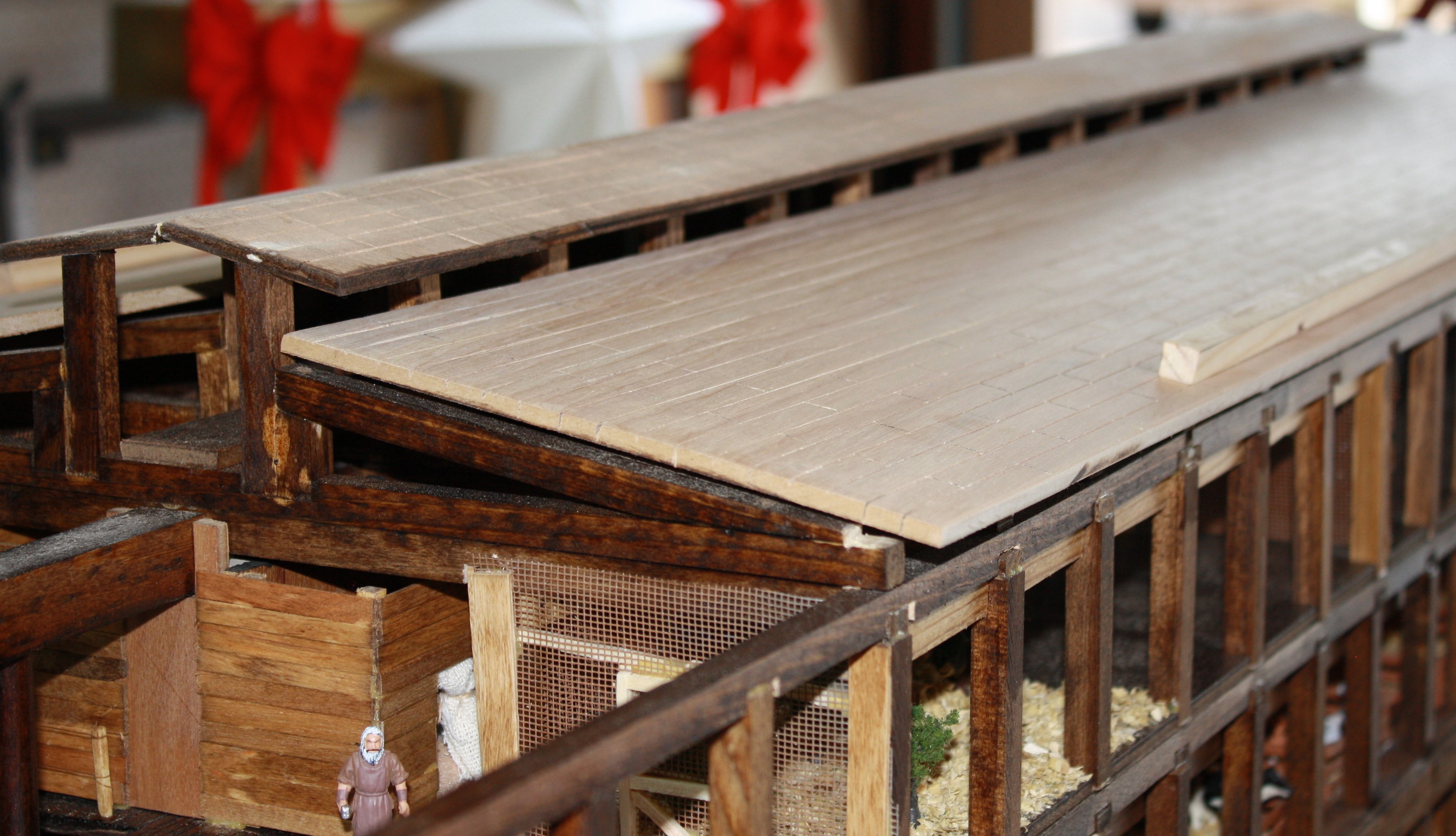
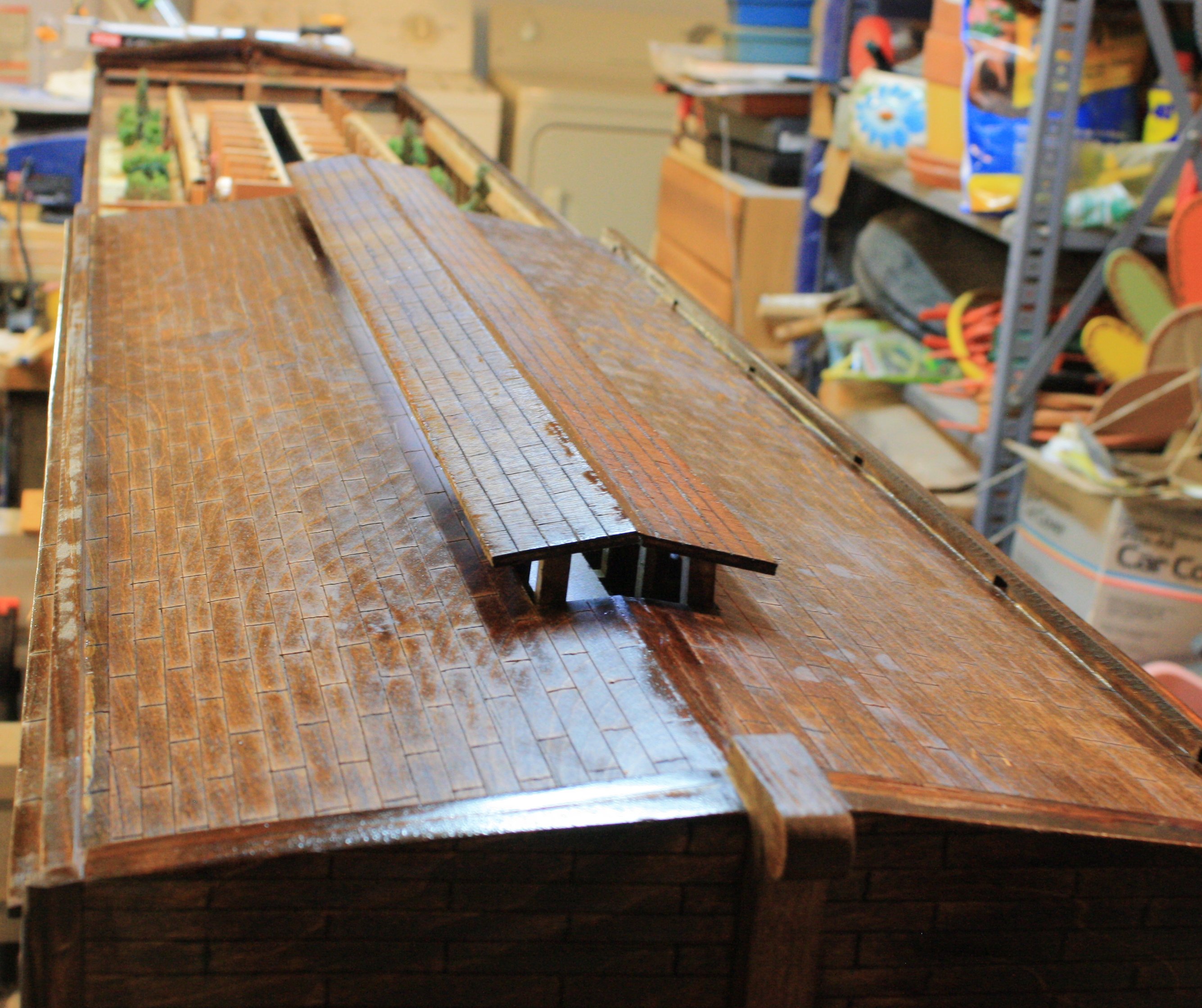
This tells me that Noah had some leeway in the construction of the Ark and not every detail was strictly dictated by God. This fact gives me confidence in using my “sanctified imagination” in creating the detail for the model not specified in Scripture.  The roof, therefore, features an opening beneath the eave of the main roof extending the length of the Ark on both sides as well as the vent opening above the main roof. These two sets of “windows” would allow for air circulation and ventilation.

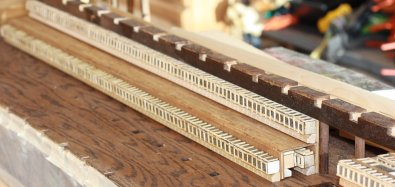
The finished roof with “window”

The one and only door

Noah’s instructions also included “the door of the ark shalt thou set in the side thereof” (Genesis 6:16). Unlike the blasphemous “Noah” movie, the Ark had only a single door.

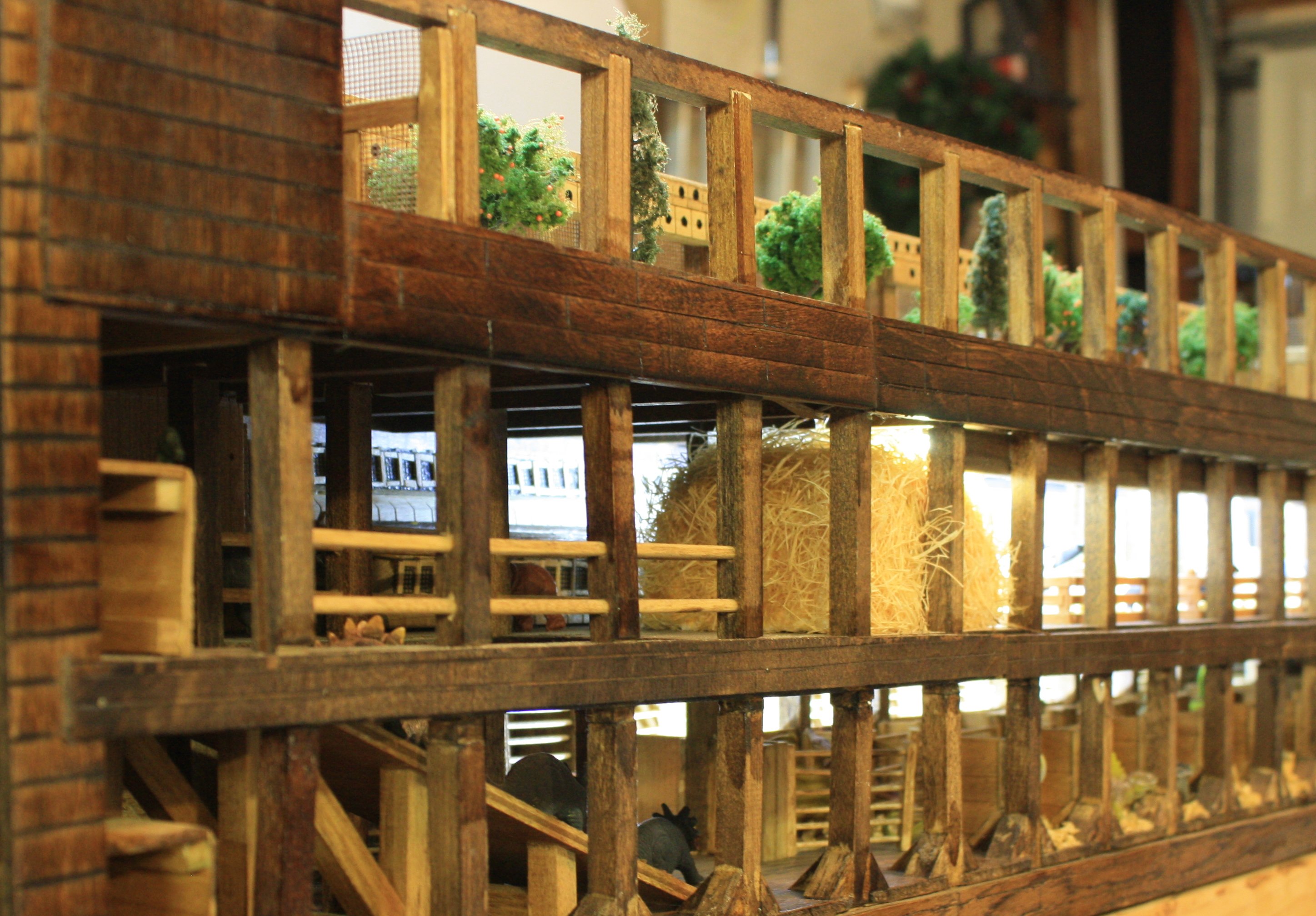
God also specified three “stories” or decks for the Ark: “with lower, second, and third stories shalt thou make it” (Genesis 6:16). 

God also specified three “stories” or decks for the Ark: “with lower, second, and third stories shalt thou make it” (Genesis 6:16).

First story - large animals; Second story - "clean" and small animals; Third story - aviary and storage

First story – large animals; Second story – “clean” and small animals; Third story – aviary and storage

Grain storage (silo)

Grain storage (silo)

Noah was also instructed to carry provisions for his family and for all the animals. “And take thou unto thee of all food that is eaten, and thou shalt gather it to thee; and it shall be for food for thee, and for them” (Genesis 6:21). All of these things came to mind in building the model as I attempted to represent, to a limited extent, what would have been carried on the Ark.

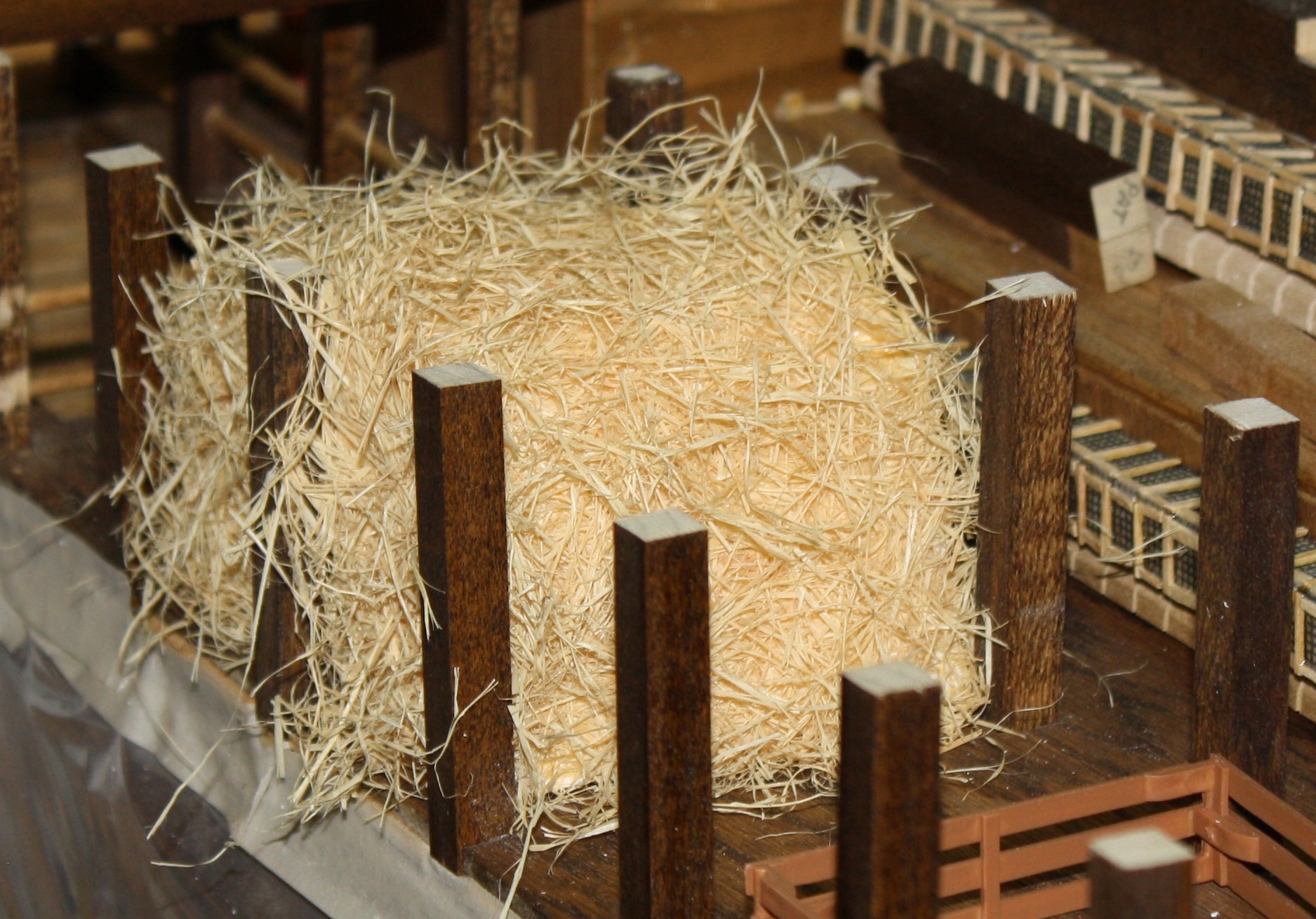
Lots of hay

Lots of hay

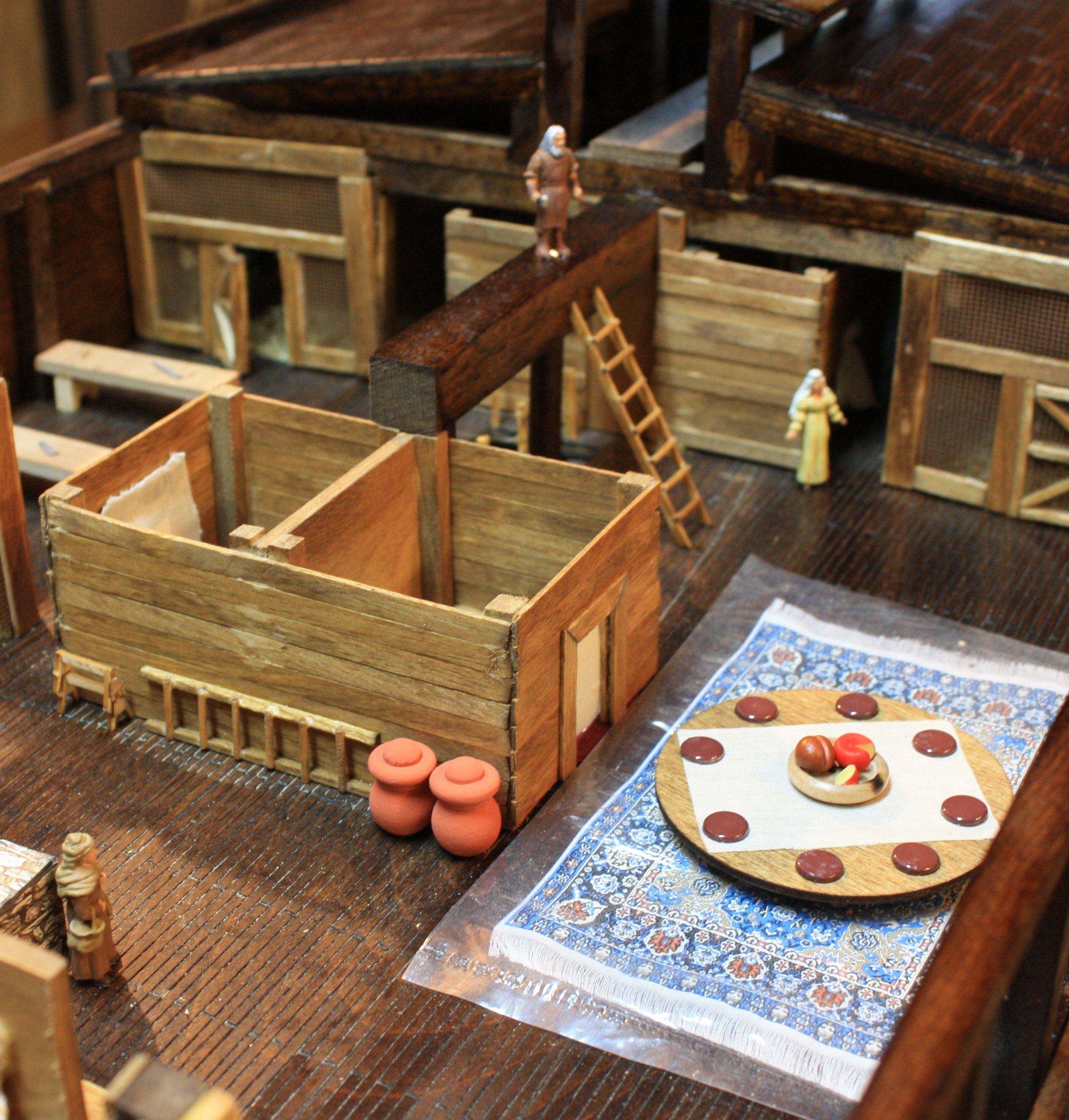
Family gathering area and work spaces

Family gathering area and work spaces

Aviaries, food stores and fill ports for the forward grain silo

Aviaries, food stores and fill ports for the forward grain silo

Family living quarters, aft aviaries and storage

Family living quarters, aft aviaries and storage

Detail showing stone oven, forward starboard side aviary and storage

Detail showing stone oven, forward starboard side aviary and storage

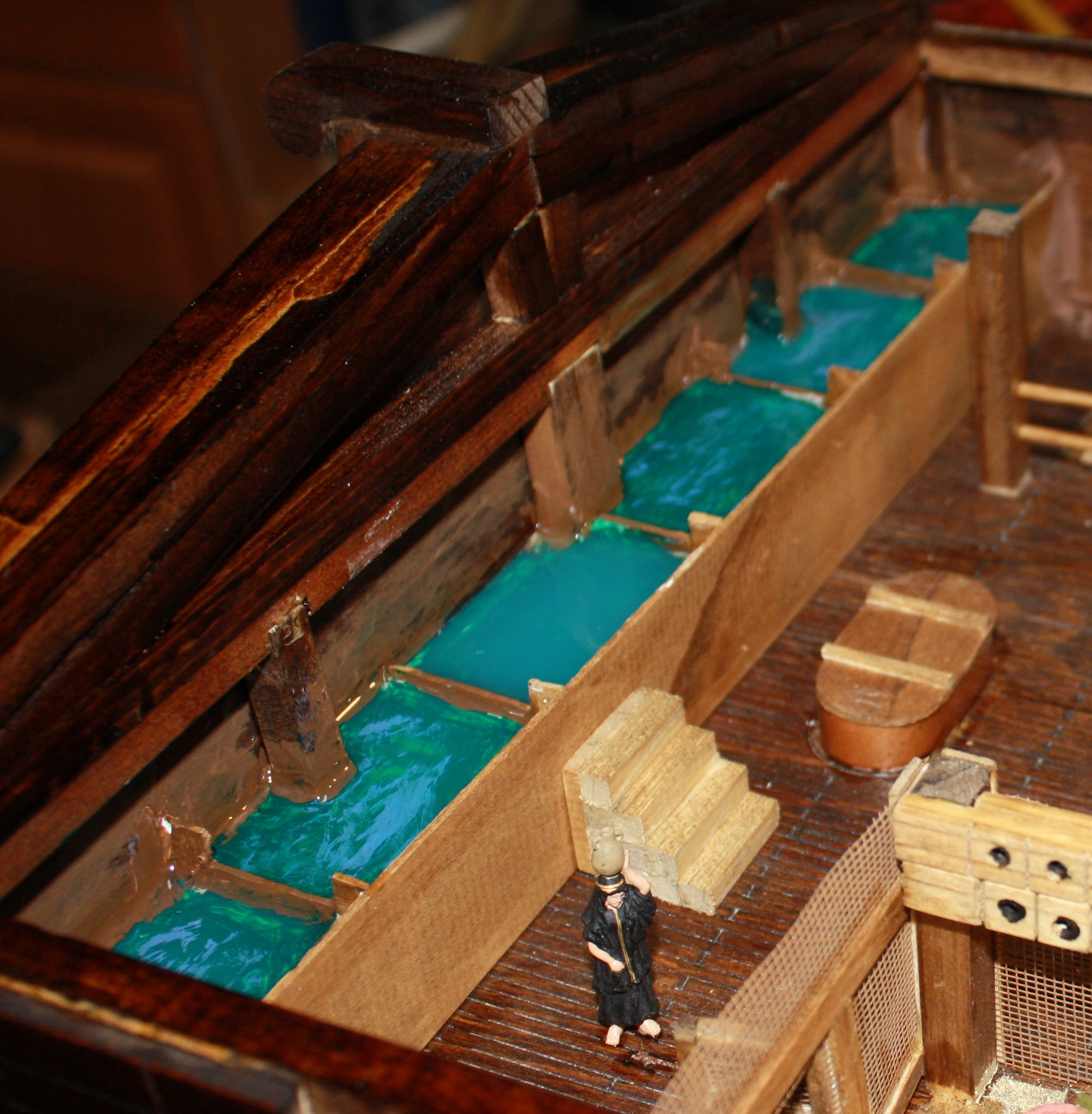
One of six cisterns for water storage - two on each deck, fore and aft

One of six cisterns for water storage – two on each deck, fore and aft

Cistern detail showing baffle for dampening "slosh"

Cistern detail showing baffle for dampening “slosh”

Cistern detail showing water

Cistern detail showing water

The Noah’s Ark model visually represents the Gospel message in the Ark as a “type” of Christ. The Bible tells us that the world had become so corrupt “And it repented the LORD that he had made man on the earth, and it grieved him at his heart … The earth also was corrupt before God, and the earth was filled with violence.” (Genesis 6:6, 11). Things have not changed in all the years since that time. “For all have sinned, and come short of the glory of God” (Romans 3:23). In His holiness must judge and punish sin, “For the wages of sin is death” (Romans 6:23). Just as God is holy, He is also merciful. “But Noah found grace in the eyes of the LORD” (Genesis 6:8) and He provided a way of salvation. Noah had 120 years to build the Ark. During that time the Bible tells us that Noah was “a preacher of righteousness” (2 Peter 2:5) pleading for all to repent of their sin and find refuge in the Ark for God is “not willing that any should perish, but that all should come to repentance” (2 Peter 3:9). The Ark had only one door by which men could enter. Jesus said, “I am the door: by me if any man enter in, he shall be saved, and shall go in and out, and find pasture” (John 10:9). God had complete control of the door to Noah’s Ark. When the fountains of the deep burst open and the deluge descended upon the earth, “And they that went in, went in male and female of all flesh, as God had commanded him: and the LORD shut him in” (Genesis 7:16). There is still only one way obtain salvation. Jesus said, “I am the way, the truth, and the life: no man cometh unto the Father, but by me” (John 14:6). The way of salvation in Noah’s day was the wooden Ark with its single door. Today, the way of salvation is through the wooden cross upon which Jesus died; it is the only way. Eight people were saved on the Ark out of the billions that lived on earth at that time. Jesus said, “Because strait is the gate, and narrow is the way, which leadeth unto life, and few there be that find it” (Matthew 7:14, emphasis mine). Today those that place their faith and trust on the cross of Jesus Christ will be saved from eternal death. “But as many as received him, to them gave he power to become the sons of God, even to them that believe on his name: Which were born, not of blood, nor of the will of the flesh, nor of the will of man, but of God” (John 1:12-13). My prayer is that you have found your Ark in Jesus Christ.

See the article in the March 2015 issue of Acts & Facts: http://www.icr.org/article/noahs-ark-model.

7 Comments

Filed under Apologetics, Christianity, Evangelism, Gospel, Religion, Salvation, Theology

The Church Universal is at Our Doorstep

The Church Universal is at Our Doorstep

By Geri Ungurean.

There is only One God. His name is Jesus. “Neither is there salvation in any other: for there is none other name under heaven given among men, whereby we must be saved” (Acts 4:12) .

2 Comments

Filed under Apologetics, Christianity, End Times, Evangelism, Gospel, Resurrection, Second Coming of Christ

It’s Not That Bad

But as the days of Noe were, so shall also the coming of the Son of man be. For as in the days that were before the flood they were eating and drinking, marrying and giving in marriage, until the day that Noe entered into the ark, And knew not until the flood came, and took them all away; so shall also the coming of the Son of man be.  (Matthew 24:37-39)

Unless you have totally detached yourself from all society, isolated yourself in a cave, or numbed your brain with drugs, you know that the world is in moral decline. We have ejected God from the public square, spurned His law and called what is good evil and what is evil good (Isaiah 5:20). We accept that which is unnatural and hold it up as something to be praised and held in honor. We castigate those who hold firm to their passé morality, and stigmatize them as evil haters. We hail outlaws as heroes and call true heroes cowards. We slaughter our progeny and fearlessly defend the life and welfare of animals. We fight against polluting the planet and think nothing of the moral pollution of our minds. Boy! Are we screwed up!

We hear of wars and rumors of wars. Natural and man-made catastrophes are increasing all over the world, and for the most part, life, for the vast majority of people, goes on as usual. The words of Jesus recorded by Matthew above make me wonder. Just how bad were things at the time of Noah? Genesis records that “it repented the LORD that he had made man on the earth, and it grieved him at his heart. And the LORD said, I will destroy man whom I have created from the face of the earth … for it repenteth me that I have made them” (Genesis 6:6-7). Things must have been pretty bad for God to take such extreme measures. “The earth also was corrupt before God, and the earth was filled with violence. And God looked upon the earth, and, behold, it was corrupt; for all flesh had corrupted his way upon the earth” (Genesis 6:11-12). Is that not what we see today? Mankind is corrupt and the earth is filled with violence. So, why does Christ delay His return? Surely, things are as bad today as they were in the days of Noah.

It seems that there have been periods in world history that were far worse than they are today, and Jesus did not return then either. When Jesus spoke these words, He was not referring to the moral condition of the world, but rather the suddenness of the destruction that fell upon them. Note that they were conducting life as usual, “eating and drinking, marrying and giving in marriage.” There is nothing particularly sinful in that, but as they carried on life as usual, destruction came on them suddenly, “And [they] knew not until the flood came, and took them all away” (Matthew 24:39). But there may be more to it than they were just carrying on life as usual. The world was violent then and evil was so rampant that God said, “Enough!”

For Christians (and I always feel that I need to qualify that with the adjective “true”) the world does not have to get as bad as in the days of Noah. Paul would remind us, as he did the Christians in Thessalonica, “Now we beseech you, brethren, by the coming of our Lord Jesus Christ, and by our gathering together unto him, That ye be not soon shaken in mind, or be troubled, neither by spirit, nor by word, nor by letter as from us, as that the day of Christ is at hand. Let no man deceive you by any means: for that day shall not come, except there come a falling away first, and that man of sin be revealed, the son of perdition” (2 Thessalonians 2:1-3, emphasis mine). That “falling away” is the Greek word apostasia, which means a “defection from the truth.” We see that happening today, but God still has a remnant. I heard today that the number of “true” Christians, according to Barna, is down to about 7%, but that remnant is still strong. Paul says that the “son of perdition,” a.k.a. “Antichrist,” will not be revealed until “he who now letteth will let, until he be taken out of the way” (2 Thessalonians 2:7, emphasis mine). That word “lets” (“letteth”) is actually two Greek words: katechō meaning “to hold down,” and arti, meaning “suspension.” That “He” is the Holy Spirit who indwells every child of God. When the Bride of Christ is “taken out of the way,” there will be nothing left to restrain evil.

It’s bad now, but it’s not that bad. Christ will call for His Bride at any moment. As in the days of Noah, life will be going on as usual. Then suddenly, millions of people – Christians – will disappear from all over the earth, and the trouble begins. It’s not that bad now, but it’s going to get bad. I hope you are ready!

2 Comments

Filed under Apologetics, Christianity, Current Events, End Times, Evangelism, Gospel, Heaven, Religion, Salvation, Satan, Second Coming of Christ

No Time Like the Present

timeflies

… behold, now is the accepted time; behold, now is the day of salvation. (2 Corinthians 6:2)

We understand time in three phases: past, present, and future. We receive wise counsel not to live in the past while at the same time we are advised to plan for the future. Indeed, even the Apostle Paul exhorts, “Brethren, I count not myself to have apprehended: but this one thing I do, forgetting those things which are behind, and reaching forth unto those things which are before, I press toward the mark for the prize of the high calling of God in Christ Jesus” (Philippians 3:13-14). Our minds help us in regard to the past by minimizing bad memories and enhancing the good ones. This is healthy for when we latch on to bitter memories, the effects degrade both our physical and mental health. If we focus too much on the future, we can set ourselves up for disappointment, if we fail to accomplish unrealistic goals.

Either dwelling too much on the past or focusing too much on the future can both have negative effects on our lives, so we are encouraged to live in the present. “Take time to smell the roses,” we are told. Recently, this has given me cause to ponder. Just how long is the present that we should dwell therein? A minute? A second? A millisecond? A nanosecond? Time constantly moves forward with no stops. In the blink of an eye, the present becomes the past, while in the same instant we arrive in the future and then that is gone. The question is really an existential one since it deals with our existence and experience. We experience life through our senses: touch, sight, taste, hearing, and smell. These all employ our nervous system with the brain and all of its complex network of nerves. So I thought perhaps the present has to do with the speed of nerve impulses. “Scientists have an idea how fast nerves send signals. It varies among different animals and humans, but in general, one can say it is very fast, on the order of 115197 ft/sec (3560 m/sec).”[1] That is amazingly fast, but even at that the nerve impulse itself has a start and stop time, so it too moves from the past into the future with no hesitation.

So, how long is the present? Apparently, the present cannot be measured by time, so this must be a philosophical question. I asked a coworker, whose opinion I value highly, how long he thought the present could be. He said the present does not exist. Similarly, I asked an astrophysicist friend, and he said suggested that it was zero. Both of these answers make sense to me because time is constantly moving forward. I envision standing on the zero point on a line graph that continually moves beneath me from positive to negative-positive being the future and negative being the past. I operate from the zero point as time whizzes by me, but what I do at the zero point – the present – influences the future that comes at me.

I posed the same question to my oldest son. He’s pretty smart in his own right, and he gave me the most provocative response of all. He said, “The present is eternal.” I do not know if he fully understood the ramifications of such a profound statement. For starters, God is eternal, and He identifies Himself to Moses as “I AM THAT I AM” (Exodus 3:14). He is ever-present. We understand that God is unfettered by time, so He is present at every point in time. He is present in the past and in the future simultaneously. That is why He could say to the Prophet Jeremiah, “Before I formed thee in the belly I knew thee; and before thou camest forth out of the womb I sanctified thee, and I ordained thee a prophet unto the nations” (Jeremiah 1:5). God can accurately foretell the future because He exists in the future. He is eternally present.

Unlike God, we are confined by time. We can only experience time at point zero, and that only for the briefest of moments. We experience the future as it passes us by, but our actions in that brief moment affect the unseen consequences that lie ahead. God created us in His image (Genesis 1:26), and as such we are eternal beings. Unlike God, we have a beginning and no end, and again, we exist at point zero. Our actions, therefore, incur eternal consequences. When Adam and Eve disobeyed God in the Garden of Eden (Genesis 3), they caused an eternal rift between God and mankind (Genesis 3:22) that affected all of their posterity – you and me. Their offense and our subsequent sins offend an eternal and holy God, and the offense is eternal. Since the offense is eternal, the consequence is also eternal, and therefore must be atoned for eternally. Hell is eternal because the offense is eternal, therefore the punishment must be eternal.

The good news is that God granted a way of escape from the eternal punishment that we all deserve. I AM is present in all of time from creation to re-creation; so that

Forasmuch as ye know that ye were not redeemed with corruptible things, as silver and gold, from your vain conversation received by tradition from your fathers; But with the precious blood of Christ, as of a lamb without blemish and without spot: Who verily was foreordained before the foundation of the world, but was manifest in these last times for you, Who by him do believe in God, that raised him up from the dead, and gave him glory; that your faith and hope might be in God. (1 Peter 1:18-21, emphasis mine)

At the perfect time (Galatians 4:4), God stepped out of eternity into our present time in the form of the first, sinless Adam, to offer up Himself as the perfect atoning sacrifice for all of mankind. That sacrifice had the eternal effect of mending the eternal rift between God and mankind.

But the remedy is not universal, and it is not automatic. Each individual must make the choice for himself. Making the right or wrong decision in the present will settle your fate for all eternity. “But as many as received him, to them gave he power to become the sons of God, even to them that believe on his name: Which were born, not of blood, nor of the will of the flesh, nor of the will of man, but of God” (John 1:12-13).

And as Moses lifted up the serpent in the wilderness, even so must the Son of man be lifted up: That whosoever believeth in him should not perish, but have eternal life. For God so loved the world, that he gave his only begotten Son, that whosoever believeth in him should not perish, but have everlasting life. (John 3:14-16, emphasis mine)

The present is eternal after all. There is no time like the present to change the course of your eternity.

 Notes:


[1] From http://scienceline.ucsb.edu/getkey.php?key=1950, accessed January 16, 2015.

Comments Off on No Time Like the Present

Filed under Apologetics, Christianity, Creation, Evangelism, Gospel, Hell, Philosophy, Religion, Salvation, Theology