And when he had opened the seventh seal, there was silence in heaven about the space of half an hour. (Revelation 8:1)
How long is half an hour in heaven? Is it the same as half an hour here on Earth? Have you ever experienced half an hour in complete silence? I do not think I ever have; there are always some audible sounds even in the quietest times: the sound of the wind, bird songs, distant traffic sounds, etc. I cannot imagine total silence for even a short time, much less half an hour. I imagine it would be rather unnerving.
The Lamb has opened six seals to this point and unleashed all kinds of havoc around the globe. The white horse introduced the Antichrist. The red horse brings war to the earth. The black horse introduces worldwide economic collapse along with extreme inflation. The pale horse adds death from hunger, disease, and pestilences. The fifth seal introduces us to the Tribulation saints that have been martyred for their faith in Christ. The sixth seal brings down heaven in the way of falling space rocks, the darkening of the sun and moon, and an earthquake that shakes the entire planet. The whole world reels from the judgments that have come upon the planet.
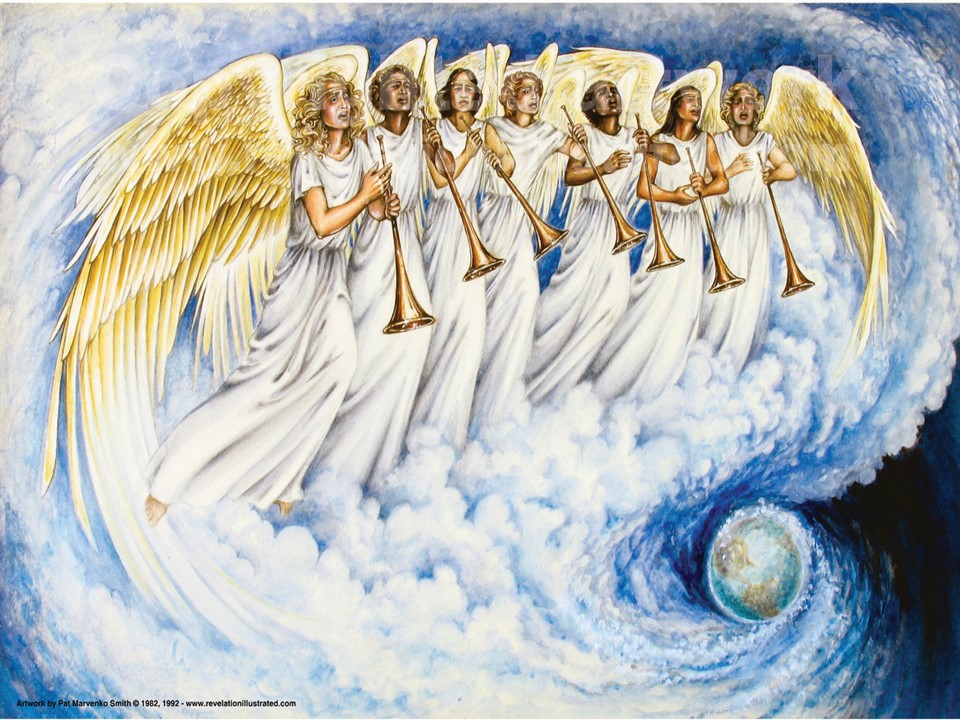
Now, the Lamb opens the seventh seal and there is total silence in heaven for half an hour. All of heaven stands still. As if in shock from the past judgments, those in heaven are awestruck at what is about to come. If you thought the first six seals were bad, you have not seen anything yet. The worst is yet to come.
“And when he had opened the seventh seal, there was silence in heaven about the space of half an hour. And I saw the seven angels which stood before God; and to them were given seven trumpets” (Revelation 8:1-2, emphasis mine). The seven trumpets herald seven more judgments far worse than those seen so far. Arguably, by this time we are at the midpoint of the Tribulation and entering a time of “Great Tribulation.” Of this time, Jesus said, “For then shall be great tribulation, such as was not since the beginning of the world to this time, no, nor ever shall be” (Matthew 24:21, emphasis mine). No wonder the prospect of what comes next causes silence in heaven.
Now John looks “And another angel came and stood at the altar, having a golden censer; and there was given unto him much incense, that he should offer it with the prayers of all saints upon the golden altar which was before the throne. And the smoke of the incense, which came with the prayers of the saints, ascended up before God out of the angel’s hand” (Revelation 8:3-4, emphasis mine). The writer of the book of Hebrews informs us that the Tabernacle, and subsequently the Temple, was constructed after the pattern of that which was in heaven.[1] In the Tabernacle and in the Temple, there was an altar before the Holy of Holies upon which incense was burned continuously. The sweet-smelling smoke of the burning incense represented the prayers of the people going up before God. Here, in the heavenly temple of God, the prayers of the saints constantly rise before the Lord. John does not specify whether the prayers are those of the Tribulation saints who remain on the earth, those of the martyred saints beneath the altar,[2] or the saints of all time. Regardless, it is comforting and encouraging to know that our prayers are constantly before the throne of God. The priest responsible for bringing our prayers before God is none other than Jesus Christ. “For there is one God, and one mediator between God and men, the man Christ Jesus” (1 Timothy 2:5).
In the model prayer, Jesus said, “Thy kingdom come. Thy will be done in earth, as it is in heaven” (Matthew 6:10). That particular prayer is about to be answered in full. “And the angel took the censer, and filled it with fire of the altar, and cast it into the earth: and there were voices, and thunderings, and lightnings, and an earthquake. And the seven angels which had the seven trumpets prepared themselves to sound” (Revelation 8:5-6). Brace yourself for what comes next!
Reader, are you prepared for what is coming to the world? You do not need to go through the Tribulation, God’s wrath, that is coming upon the world. Read my page on “Securing Eternal Life,” and ask Jesus to save you from the wrath to come.
And I heard the number of them which were sealed: and there were sealed an hundred and forty and four thousand of all the tribes of the children of Israel. (Revelation 7:4)
The first six seals[1] release unprecedented havoc upon the earth, and the seventh seal is next in line. Meanwhile, John shifts the focus from the judgments taking place on earth to the grace and mercy that God continues to offer the inhabitants of Earth. Even in these times, God is “not willing that any should perish, but that all should come to repentance” (2 Peter 3:9).
John says, “And after these things I saw four angels standing on the four corners of the earth, holding the four winds of the earth, that the wind should not blow on the earth, nor on the sea, nor on any tree. And I saw another angel ascending from the east, having the seal of the living God: and he cried with a loud voice to the four angels, to whom it was given to hurt the earth and the sea, Saying, Hurt not the earth, neither the sea, nor the trees, till we have sealed the servants of our God in their foreheads” (Revelation 7:1-3).
John sees four angels that control the wind currents from the four points of the compass. As such, they have power over the weather on Earth, and they are prepared to unleash their fury on Earth. However, another angel appears from the rising sun (translated as “east”) to temporarily halt the next judgment. John says that this angel has “the seal of the living God.”
This “seal” is probably something like a stamp, brand, or signet ring that carries with it the authority of God. John does not elaborate on the mark, but I wonder if it could be the Hebrew letter shin (שׁ). One of the names of God is El Shadday – “Almighty God.” The initial of this name is the Hebrew letter shin. At the dedication of Solomon’s Temple, God said, “… I have hallowed this house, which thou hast built, to put my name there for ever; and mine eyes and mine heart shall be there perpetually” (1 Kings 9:3, emphasis mine). The Temple Mount in Jerusalem is geographically cradled above three valleys that come together in the shape of the letter shin (שׁ) when viewed from the air. I find that intriguing.
Perhaps the shin is the symbol on the seal that the angel carries. Some suggest that the angel with the seal of God is Jesus. They come to this conclusion because he seems to have the authority of God by way of the seal. However, it is not beyond God to delegate His authority to His angels. Arguably, Jesus controls all the events concerning the Tribulation, and He holds the scroll and opens the seals. It makes sense that He is directing this angel and has delegated His authority to this angel for the sealing of His servants. Also, there is the point that John describes this angel as “another angel” (7:2) like those holding the four winds. So, in my view, this is not Jesus.
The angels holding back the four winds are temporarily restrained from unleashing their judgments until “we have sealed the servants of our God in their foreheads” (7:3). “And I heard the number of them which were sealed: and there were sealed an hundred and forty and four thousand of all the tribes of the children of Israel” (Revelation 7:4, emphasis mine). These 144,000 who are sealed are Jews, not Jehovah’s Witnesses. There are 12,000 from each of the 12 tribes of Israel and are listed in the verses that follow.[2] The tribes listed are as follows: Judah, Reuben, Gad, Asher, Naphtali, Manasseh, Simeon, Levi, Issachar, Zebulun, Joseph, and Benjamin.[3] For those who pay attention, there is an apparent discrepancy between the Revelation list and the lists found in the Pentateuch (Genesis-Deuteronomy). This list includes Joseph from whom the two “half tribes” originated: Manasseh and Ephraim. Here, Joseph is listed as a stand-alone tribe and Ephraim is omitted from the list. The tribe of Dan is also missing.
The reason for their omission is due to a specific sin of idolatry that they allowed in their territories after the kingdom of Israel split under the reign of Rehoboam, successor to Solomon. Before entering the Promised Land, God issued a warning and a curse to anyone who led Israel into idolatry. “The LORD will not spare him, but then the anger of the LORD and his jealousy shall smoke against that man, and all the curses that are written in this book shall lie upon him, and the LORD shall blot out his name from under heaven. And the LORD shall separate him unto evil out of all the tribes of Israel, according to all the curses of the covenant that are written in this book of the law” (Deuteronomy 29:20-21). Dan was the first to lapse into idolatry. “And the children of Dan set up the graven image: and Jonathan, the son of Gershom, the son of Manasseh, he and his sons were priests to the tribe of Dan until the day of the captivity of the land” (Judges 18:30, emphasis mine). After the kingdom split, Jeroboam, king of the northern kingdom, had two golden calves made, and he placed one in Ephraim and the other in Dan.[4] Granted, all 12 tribes of Israel continually had problems with idolatry, but these two seem to be the first of the overt violations of God’s warning and may be the reason for the omission of these two tribes from the list of the 144,000.
These 144,000 Jewish sealed servants of God seem to be partly responsible for the conversion and salvation of innumerable souls during the Tribulation. John reports, “After this I beheld, and, lo, a great multitude, which no man could number, of all nations, and kindreds, and people, and tongues, stood before the throne, and before the Lamb, clothed with white robes, and palms in their hands; And cried with a loud voice, saying, Salvation to our God which sitteth upon the throne, and unto the Lamb” (Revelation 7:9-10, emphasis mine). As we have seen before, the “white robes” represent the righteousness of Christ that is imparted to them who have placed their faith and trust in Him (7:14). John records the celebration for these saints. “And all the angels stood round about the throne, and about the elders and the four beasts, and fell before the throne on their faces, and worshipped God, Saying, Amen: Blessing, and glory, and wisdom, and thanksgiving, and honour, and power, and might, be unto our God for ever and ever. Amen” (Revelation 7:11-12). Jesus said, “there is joy in the presence of the angels of God over one sinner that repenteth” (Luke 15:10), and here we see millions upon millions.
One of the elders approached John and asked the same question we might ask. “What are these which are arrayed in white robes? and whence came they?” (7:13). John had no answer, so the elder explained, “These are they which came out of great tribulation, and have washed their robes, and made them white in the blood of the Lamb” (7:14, emphasis mine). They have come out of “great tribulation.” These are Tribulation saints; they are not the Church that was snatched out at the Rapture before the Tribulation begins. This is the amazing thing to me about this time. Even though God is unleashing His great wrath upon a sinful world, He still makes opportunities for people to be saved. “The Lord is not slack concerning his promise, as some men count slackness; but is longsuffering to us-ward, not willing that any should perish, but that all should come to repentance” (2 Peter 3:9).
We will see later on that God sends two untouchable Old Testament prophets to preach, and He even sends an angel to proclaim the Gospel around the earth. God is not willing that any should perish, but with all of His effort, we know that the greater majority will continue to reject Him. Jesus said, “Enter ye in at the strait gate: for wide is the gate, and broad is the way, that leadeth to destruction, and many there be which go in thereat” (Matthew 7:13, emphasis mine).
For all who enter through the “strait (narrow) gate” there is this promise: “Therefore are they [those ‘who have washed their robes and made them white in the blood of the lamb’ (7:14)] before the throne of God, and serve him day and night in his temple: and he that sitteth on the throne shall dwell among them. They shall hunger no more, neither thirst any more; neither shall the sun light on them, nor any heat. For the Lamb which is in the midst of the throne shall feed them, and shall lead them unto living fountains of waters: and God shall wipe away all tears from their eyes” (Revelation 7:15-17).
Reader, are you prepared for what is coming to the world? You do not need to go through the Tribulation, God’s wrath, that is coming upon the world. Read my page on “Securing Eternal Life,” and ask Jesus to save you from the wrath to come.
Then shall they deliver you up to be afflicted, and shall kill you: and ye shall be hated of all nations for my name’s sake. (Matthew 24:9)
The first seal,[1]the white horse, introduced the Antichrist. The second seal,[2]the red horse, brought global wars. The third seal,[3]the black horse, brings economic collapse. War and economic collapse result in famines and pestilences. The fourth seal[4] releases the pale horse bringing death by way of war, hunger, and pandemics.
“And when he had opened the fifth seal, I saw under the altar the souls of them that were slain for the word of God, and for the testimony which they held” (Revelation 6:9, emphasis mine). Who are these “souls … slain for the word of God?” With minimal effort, we can infer that these are martyred Christians. We make that conclusion based on a verse that follows. “And white robes were given unto every one of them…” (Revelation 6:11).
There are some students of end-times prophecy who use these verses to reject the doctrine of the Rapture of the Church. They use these verses to prove that the Church will go through and suffer persecution in the Tribulation. Hear what these martyrs cry. “And they cried with a loud voice, saying, How long, O Lord, holy and true, dost thou not judge and avenge our blood on them that dwell on the earth?” (Revelation 6:10). We know from Verse 9 that they “were slain for the word of God and for the testimony which they held.” No doubt they are Christians who have died for their faith, and they plead for God’s vengeance on the earth-dwellers that caused their suffering. From the response given to them, we understand that other Christians still remain and suffer on earth. “And white robes were given unto every one of them; and it was said unto them, that they should rest yet for a little season, until their fellowservants also and their brethren, that should be killed as they were, should be fulfilled” (Revelation 6:11, emphasis mine). Obviously, there are Christians going through the Tribulation with the expectation that they will be martyred.
This would be a solid no-Rapture argument if these verses are the only verses used to make the case. However, making a case based on only a single passage is poor hermeneutics. We need to examine the whole counsel of God’s Word.
I hold the pre-millennial/pre-tribulation view of eschatology. The Pre-millennial view holds to a seven-year Tribulation period before Christ returns to establish His 1000-year reign on Earth.[5] The pre-tribulation side says that Jesus will come to receive His Bride – the Church – prior to the Tribulation. I covered some of these points in my article “The First Sight.” However, here it may be worth the extra time and space to support that stance.
First of all, the time of Tribulation is for the purpose of restoring Israel and God fulfilling the promise He made to Abraham to make him a great nation and give him a land (the land of Israel) as an everlasting covenant or promise.[6] God must keep His promise otherwise none of the promises He makes to us can be trusted.
The prophet Daniel laid out the time determined for Israel. “Seventy weeks are determined upon thy people and upon thy holy city, to finish the transgression, and to make an end of sins, and to make reconciliation for iniquity, and to bring in everlasting righteousness, and to seal up the vision and prophecy, and to anoint the most Holy” (Daniel 9:24, emphasis mine). The Hebrew word translated as “weeks” is shebû‛âh, which is a period of seven (years in this case). By applying simple multiplication, we conclude that Israel was given 490 years until the anointing of “the most Holy,” i.e., Jesus Christ. That time started when Cyrus gave the command for the Jews to return to Judah and for the rebuilding of Jerusalem and the Temple.[7] Obviously, more than 490 years have elapsed. However, Daniel’s prophecy breaks up the timetable so that after 483 years, “shall Messiah be cut off, but not for himself” (Daniel 9:26). Several biblical scholars have calculated the time and have verified the accuracy of the prophecy determining that Jesus was crucified (“cut off”) exactly 483 years to the day as predicted by Daniel. That leaves seven years (“one week”) to complete Israel’s timetable. Daniel immediately transitions to the final week which begins when “the people of the prince that shall come shall destroy the city and the sanctuary” (Daniel 9:26, emphasis mine). This “prince,” we conclude, is the Antichrist. “And he shall confirm the covenant with many for one week: and in the midst of the week he shall cause the sacrifice and the oblation to cease, and for the overspreading of abominations he shall make it desolate, even until the consummation, and that determined shall be poured upon the desolate” (Daniel 9:27, emphasis mine). Antichrist, a.k.a. “the beast,” shows up on the scene and promises peace for Israel for seven years (“one week”).
Again, the timetable seems to fail. Considering that the Messiah, Jesus Christ, was “cut off” in AD 30 (arguably), the 70th or final week would have concluded in AD 37; but the Temple was not destroyed until AD 70. However, the Bible is NEVER wrong, so why have almost 2000 years gone by since the death, burial, and resurrection of Jesus Christ with no fulfillment of the 70th week? Enter the Church.
Part of Israel’s responsibility as God’s chosen people was that they should be a “priest” nation to the rest of the world. “And ye shall be unto me a kingdom of priests, and an holy nation. These are the words which thou shalt speak unto the children of Israel” (Exodus 19:6, emphasis mine). They failed in this responsibility by adopting an exclusionary attitude toward other nations, i.e., Gentiles. Furthermore, when their promised Messiah revealed Himself, they rejected and crucified Him. However, God’s plan has always been for the redemption of all people. “The Lord is not slack concerning his promise, as some men count slackness; but is longsuffering to us-ward, not willing that any should perish, but that all should come to repentance” (2 Peter 3:9, emphasis mine).
God has temporarily set aside Israel and temporarily replaced it with the Church to accomplish His plan of spreading the Gospel, the “good news,” around the world. John reminds us that “… Jesus Christ, who is the faithful witness, and the first begotten of the dead, and the prince of the kings of the earth. Unto him that loved us, and washed us from our sins in his own blood, And hath made us kings and priests unto God and his Father; to him be glory and dominion for ever and ever. Amen” (Revelation 1:5-6) However, He is not done dealing with Israel. Paul is clear on this matter:
For I would not, brethren, that ye should be ignorant of this mystery, lest ye should be wise in your own conceits; that blindness in part is happened to Israel, until the fulness of the Gentiles be come in. And so all Israel shall be saved: as it is written, There shall come out of Sion the Deliverer, and shall turn away ungodliness from Jacob: For this is my covenant unto them, when I shall take away their sins. As concerning the gospel, they are enemies for your sakes: but as touching the election, they are beloved for the fathers’ sakes. For the gifts and calling of God are without repentance. For as ye in times past have not believed God, yet have now obtained mercy through their unbelief: Even so have these also now not believed, that through your mercy they also may obtain mercy. For God hath concluded them all in unbelief, that he might have mercy upon all. (Romans 11:25-32, emphasis mine).
Let me highlight some important points in the passage above. In addressing the church in Rome, Paul declares God’s dealing with Israel a “mystery.” He addresses some of these things in bits and pieces in other parts of the letter to the Romans,[8] but here the message is concise. First, Israel is spiritually blind in that they do not recognize their Messiah. This spiritual blindness will continue until the time of the Gentiles, i.e., the Church, is completed. Second, all Israel – at least all that survive the Tribulation – will be saved. This happens when Jesus returns in His second coming. God says through the prophet Zechariah, “And I will pour upon the house of David, and upon the inhabitants of Jerusalem, the spirit of grace and of supplications: and they shall look upon me [God/Jesus] whom they have pierced, and they shall mourn for him, as one mourneth for his only son, and shall be in bitterness for him, as one that is in bitterness for his firstborn” (Zechariah 12:10, emphasis mine). That has not happened; this event is yet future. Third, there is the promise of a Deliverer coming out of Zion[9] that will turn away ungodliness from Jacob (Israel). The Deliverer came but He was rejected; so, this promise is yet future. Fourth, Israel (Jews) are enemies of the Gospel for our sake, the Gentile Church. However, they are still “elect” for their fathers’ (Abraham, Isaac, and Jacob/Israel) sakes, and “the gifts and calling of God are without repentance,” i.e., God is not going to change His mind about it. Finally, God has concluded or determined this in order that all may receive mercy.
So far, I hope, I have established that the time of Tribulation is for the sake of restoring Israel so that God can fulfill His promise to Abraham, Isaac, and Jacob (Israel). The final week of Daniel’s prophecy is intended for Israel “to finish the transgression, and to make an end of sins, and to make reconciliation for iniquity, and to bring in everlasting righteousness, and to seal up the vision and prophecy, and to anoint the most Holy” (Daniel 9:24). This time is not meant for the Church. In speaking of “the Day of the Lord,”[10] which will come “as a thief in the night,” Paul assures us, “For God hath not appointed us to wrath, but to obtain salvation by our Lord Jesus Christ” (1 Thessalonians 5:9, emphasis mine). The Church is not appointed for the wrath of God. That time is reserved for the spiritual restoration of Israel.
Even now, the Church is experiencing persecution around the world. Christians are being killed for their faith in all of the Muslim countries, including China, in India, and in several African countries. In many western nations, including the United States, “soft” persecution is taking place where Christians are being “canceled” by social media and other media outlets. Laws are being enacted that declare much of the Bible, particularly those portions speaking against sodomy, as hate speech. Pastors that speak against such topics are in danger of being arrested. It is happening in Canada, and it will soon come here. But that is the wrath of man, not the wrath of God. The Church will not face the wrath of God.
Jesus promised to take His Bride home to be with Him.[11] That event, known as the Rapture, will take place in an instant. “For the Lord himself shall descend from heaven with a shout, with the voice of the archangel, and with the trump of God: and the dead in Christ shall rise first: Then we which are alive and remain shall be caught up together with them in the clouds, to meet the Lord in the air: and so shall we ever be with the Lord” (1 Thessalonians 4:16-17, emphasis mine). John gave us a glimpse of this when he says, “After this I looked, and, behold, a door was opened in heaven: and the first voice which I heard was as it were of a trumpet talking with me; which said, Come up hither, and I will shew thee things which must be hereafter. And immediately I was in the spirit: and, behold, a throne was set in heaven, and one sat on the throne” (Revelation 4:1-2, emphasis mine). To the church of Philadelphia, Jesus promised, “Because thou hast kept the word of my patience, I also will keep thee from the hour of temptation, which shall come upon all the world, to try them that dwell upon the earth” (Revelation 3:10, emphasis mine).
The Tribulation is not for the Church. The Bride will be with the Bridegroom during this awful time on earth. So, who are these souls under the altar that were killed for the Word of God and for their testimony? These are those that missed the Rapture and had to go through the Tribulation. Perhaps they were CINOs (Christians In Name Only) who were not saved but retained enough Bible knowledge to recognize what was taking place. At that point, they will truly believe in the Gospel, but it will cost them their lives. Others will be those who came to faith by the witness of those who are being saved. Still, others will believe because of the preaching of the 144,000 witnesses described in Revelation 7, 14 or from the preaching of the two witnesses in Jerusalem.[12] If that is not enough, God sends a Gospel angel to preach the Word to all the world.[13] As Peter said, God is “not willing that any should perish, but that all should come to repentance” (2 Peter 3:9). These will be saved, but it will cost them their lives. To these, Jesus said, “Then shall they deliver you up to be afflicted, and shall kill you: and ye shall be hated of all nations for my name’s sake” (Matthew 24:9).
“And this gospel of the kingdom shall be preached in all the world for a witness unto all nations; and then shall the end come” (Matthew 24:14, emphasis mine). I am constantly amazed at the love of God for a sinful world. He gives every opportunity for people to repent, ask forgiveness, and place their trust in Jesus Christ who is the only Way, Truth, and Life.[14] Even so, many who will recognize that all the judgments that will follow come from God, will still refuse to repent and will curse God instead.[15]
Reader, are you prepared for what is coming to the world? You do not need to go through the Tribulation, God’s wrath, that is coming upon the world. Read my page on “Securing Eternal Life,” and ask Jesus to save you from the wrath to come.
Thou art worthy, O Lord, to receive glory and honour and power: for thou hast created all things, and for thy pleasure they are and were created. (Revelation 4:11)
The book of Revelation puzzles many who read it. It seems strange and sometimes bizarre. Many avoid the book because the contents elicit fear about the predictions of things to come. However, the book of Revelation is the only book of the Bible that promises a blessing to those who read, hear, and apply its contents. “Blessed is he that readeth, and they that hear the words of this prophecy, and keep those things which are written therein: for the time is at hand.” (Revelation 1:3).
Revelation opens with the last remaining apostle of Jesus, the Apostle John, “in the Spirit the Lord’s Day.”[1] The Roman government arrested and exiled John to the prison island of Patmos for preaching the disruptive Gospel of Jesus Christ.[2]
The initial recipients of the book were seven churches in Asia Minor: Ephesus, Smyrna, Pergamos, Thyatira, Sardis, Philadelphia, and Laodicea.[3] To these, the risen Christ addresses individual letters.[4] These churches existed in John’s day, but because of the commendations and reproofs Jesus gives to these churches, some have seen in them patterns of each throughout church history.
John then describes his first glimpse of Jesus as though in a vision. This is not the Jesus John remembers during His earthly ministry. This Jesus is awesome to behold. John says, “And I turned to see the voice that spake with me. And being turned, I saw seven golden candlesticks; And in the midst of the seven candlesticks one like unto the Son of man, clothed with a garment down to the foot, and girt about the paps with a golden girdle. His head and his hairs were white like wool, as white as snow; and his eyes were as a flame of fire; And his feet like unto fine brass, as if they burned in a furnace; and his voice as the sound of many waters. And he had in his right hand seven stars: and out of his mouth went a sharp twoedged sword: and his countenance was as the sun shineth in his strength” (Revelation 1:12-16). The dazzling sight caused John to fall at His feet in awestruck fear, but that tender, familiar voice reassured him of the One he loved. “… Fear not; I am the first and the last: I am he that liveth, and was dead; and, behold, I am alive for evermore, Amen; and have the keys of hell and of death” (Revelation 1:17-18).
John saw Jesus in the midst of seven lampstands holding seven stars in His right hand. Jesus explained to him that the seven lampstands represented the seven churches and the seven stars represented the seven angels, i.e., messengers or pastors, of the seven churches.[5] The image reminds us that Jesus dwells among His churches and that He keeps and protects the pastors of His churches in His right hand (a position of power). This should also serve as a warning to pastors. Just as Jesus’ right hand protects His messengers, He also has the power to crush the pastor that fails in his responsibility to Jesus’ Bride, the Church.
As noted earlier, Jesus dictates direct messages to each of the seven churches. Immediately following the last word to the church of Laodicea, John looks up and sees an open door in heaven and hears a sound (Greek: phōnē) like that of a trumpet that said, “Come up hither, and I will shew thee things which must be hereafter. And immediately I was in the spirit: and, behold, a throne was set in heaven, and one sat on the throne” (Revelation 4:1-2, emphasis mine).
Many see the Rapture of the Church in these verses. John is commanded to “come up here” and “immediately” he sees the throne of God for the first time. From this point forward, the Church no longer appears on earth until Christ returns with His saints in Chapter 19.
There are many who teach that the Rapture is not taught in the Bible. They correctly argue that the word “rapture” appears nowhere in the Bible. However, neither do the words bible or trinity, yet no one will argue that these concepts are not taught in the Bible. “Rapture” translates the Greek word harpazō into the Latin raptus meaning “to seize; to catch away or up; to pluck, pull, or take by force”. This is what happened to John. He was on the earth and “immediately” he was caught away into the throne room of God.
Jesus gave us the first promise of the Rapture before going to the cross. He said, “Let not your heart be troubled: ye believe in God, believe also in me. In my Father’s house are many mansions: if it were not so, I would have told you. I go to prepare a place for you. And if I go and prepare a place for you, I will come again, and receive you unto myself; that where I am, there ye may be also” (John 14:1-3, emphasis mine). Paul teaches of the time when the trumpet shall sound and our corrupt bodies will be changed in the twinkling of an eye. The dead in Christ will rise from their graves, and we who are alive will join them to meet Jesus in the air.[6]
John enters the presence of God and his first sight is the throne of God. The person seated on the throne appears not as a human or any other creature, but rather as a glorious splendor. Of Him, John says, “And he that sat was to look upon like a jasper and a sardine stone: and there was a rainbow round about the throne, in sight like unto an emerald” (Revelation 4:3). The Bible teaches that God has no human form, except in the form of Jesus. Jesus said, “God is a Spirit: and they that worship him must worship him in spirit and in truth” (John 4:24, emphasis mine). John was given a privilege that even Moses (or anyone else for that matter) was denied. Moses, who spoke with God face-to-face as with a friend,[7] wanted to see God in His glory, but God denied his request, “And he said, Thou canst not see my face: for there shall no man see me, and live” (Exodus 33:20, emphasis mine). Yet, somehow John saw God in all of His glory and did not die. In our corrupt human bodies, we cannot withstand the glory of God’s presence. However, at the Rapture, our bodies will be transformed in such a way that we can be in the presence of God in His full glory and not be harmed, just like John.
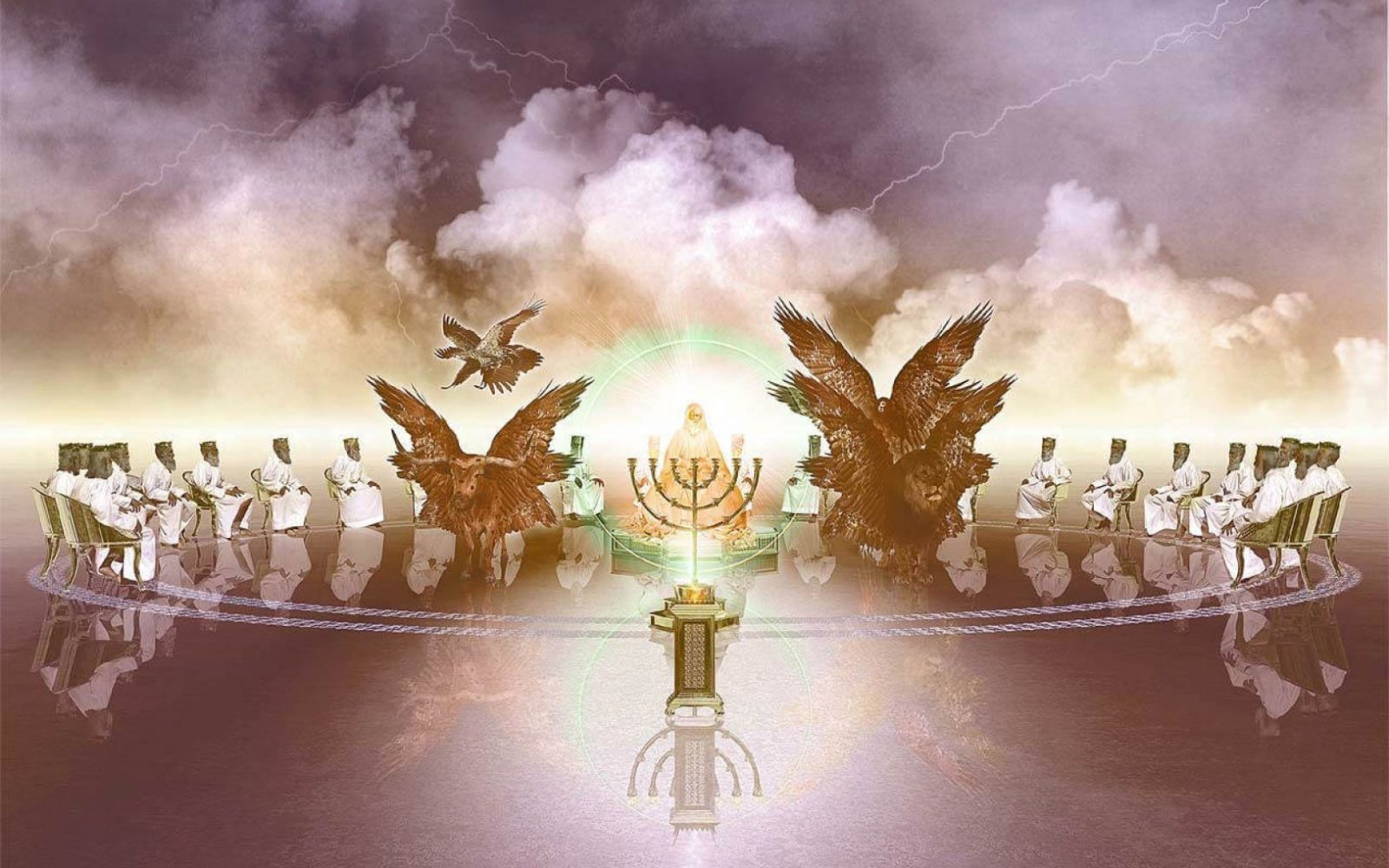
The scene overwhelmed John. There were lightnings, thunders, and voices. Around the throne of God, John saw 24 thrones upon which seven elders sat wearing white robes and crowns of gold.[8] Some suppose these represent the twelve tribes of Israel and the twelve apostles. Others suggest that they merely represent believers of all the ages. In either case, the white robes represent the righteousness of Christ conferred on them. The golden crowns are stephanos, which are “victors crowns” awarded to them for conquering sin, not through their own righteousness, but through the blood of Christ.
John then sees seven lampstands around the throne defined as the “seven spirits of God” Some suggest that these seven lampstands represent seven attributes of the Holy Spirit as described by the prophet Isaiah. “And the spirit of the LORD shall rest upon him [i.e., Jesus], the spirit of wisdom and understanding, the spirit of counsel and might, the spirit of knowledge and of the fear of the LORD” (Isaiah 11:2, emphasis mine). We know that the Holy Spirit indwells believers and thereby indwells the Church. In the first chapter, John sees Jesus in the midst of seven lampstands, which represent the churches. Now, these same lampstands (i.e., churches) are seen around the throne of God. I see the lampstands representing both the Holy Spirit and the churches wherein the Holy Spirit resides. The attributes described by Isaiah certainly apply as well.
Around the throne is a crystal sea. It is difficult to know what John saw in this. It is all strange and wonderful and beyond words to describe. John could only relate what he saw by his limited earthly vocabulary. But then he sees four strange creatures full of eyes and with six wings each. One “beast” had the head of a lion, the second the head of a calf, the third the head of a man, and the fourth the head of an eagle.[9] The eyes represent the omniscience of God and the four different heads represent all of God’s creatures: wild animals, domestic animals, human beings, and avian life. All of God’s creation never ceasing to praise Him day or night “saying, Holy, holy, holy, Lord God Almighty, which was, and is, and is to come” (Revelation 4:8).
John then observed that when these praised God, the 24 elders prostrate themselves and cast their victor’s crowns before the throne saying, “Thou art worthy, O Lord, to receive glory and honour and power: for thou hast created all things, and for thy pleasure they are and were created” (Revelation 4:11).
With the focus on the throne, John spots something new. “And I saw in the right hand of him that sat on the throne a book written within and on the backside, sealed with seven seals” (Revelation 5:1, emphasis mine). By its description, we know that this “book” is actually a scroll – perhaps parchment – with writing on both sides, rolled up and secured with seven seals. Many suggest that this scroll represents the title dead to the earth and the kingdoms thereof. When God created the earth, He gave dominion over the earth to man whom He created in His image on the sixth day of creation.[10] However, man lost that dominion when he sinned in the Garden of Eden.[11] The dominion of earth transferred to Satan. Paul calls him the “god of this world.”[12] When Satan tempted Jesus, he offered Jesus the kingdoms of this world if He would only bow down and worship him. “And the devil said unto him, All this power will I give thee, and the glory of them: for that is delivered unto me; and to whomsoever I will I give it” (Luke 4:6, emphasis mine). However, his ownership is only temporary.
Then John saw and heard a strong angel proclaim, “Who is worthy to open the book, and to loose the seals thereof?” (Revelation 5:2). And no one in heaven, on earth, or under the earth was found worthy to take the scroll and break the seals. The situation was dire indeed. All of God’s creation hung in the balance and there was no one to come to the rescue. John says, “And I wept much, because no man was found worthy to open and to read the book, neither to look thereon” (Revelation 5:4).
John’s tears were soon assuaged. “And one of the elders saith unto me, Weep not: behold, the Lion of the tribe of Juda, the Root of David, hath prevailed to open the book, and to loose the seven seals thereof,” John says, “And I beheld, and, lo, in the midst of the throne and of the four beasts, and in the midst of the elders, stood a Lamb as it had been slain, having seven horns and seven eyes, which are the seven Spirits of God sent forth into all the earth” (Revelation 5:5-6). John the Baptist saw this Lamb come to him to be baptized in the Jordan and proclaimed, “Behold the Lamb of God, which taketh away the sin of the world” (John 1:29). He was slain on the cross, was buried in a borrowed tomb, and rose again on the third day.[13] Horns represent kingdoms and the Lamb has seven representing completion. All the kingdoms belong to Him. He is “KING OF KINGS, AND LORD OF LORDS” (Revelation 19:16). Seven eyes suggest omniscience with all the attributes of the seven Spirits of God.
Only the Lamb, by virtue of His sacrifice, is worthy to take and open the scroll. “And he came and took the book out of the right hand of him that sat upon the throne” (Revelation 5:7). When the Lamb took the scroll, a great celebration broke out in heaven. The four living creatures and the 24 elders prostrate themselves before the Lamb. “And they sung a new song, saying, Thou art worthy to take the book, and to open the seals thereof: for thou wast slain, and hast redeemed us to God by thy blood out of every kindred, and tongue, and people, and nation; And hast made us unto our God kings and priests: and we shall reign on the earth” (Revelation 5:9-10).
Then the rest of heaven breaks out in praise, “Saying with a loud voice, Worthy is the Lamb that was slain to receive power, and riches, and wisdom, and strength, and honour, and glory, and blessing. And every creature which is in heaven, and on the earth, and under the earth, and such as are in the sea, and all that are in them, heard I saying, Blessing, and honour, and glory, and power, be unto him that sitteth upon the throne, and unto the Lamb for ever and ever” (Revelation 5:12-13).
Worthy indeed! I cannot imagine how John must have felt at the first sight of heaven and the throne of God. I cannot wait to see it for myself!
The 14 chapters that follow bring us back to earth and the events that will transpire during the seven-year Tribulation. The scenes are horrific. However, the Church, the Bride of Christ, will not experience the horrors of the Tribulation. The Church, as we saw will be around the throne of God and not on earth. Will you be there or will you experience the horrors that are coming upon the earth? Your ticket out of here was purchased by Jesus more than 2000 years ago. All you have to do is accept it. Check out my page on “Securing Eternal Life.”
I am the good shepherd: the good shepherd giveth his life for the sheep. (John 10:11)
The LORD. This is the personal name of God, YHWH, revealed to Moses at Mount Horeb[1] in response to Moses’ question “[when] they shall say to me, What is his name; what shall I say unto them? And God said unto Moses, I AM THAT I AM” (Exodus 3:13-14). To the Jews, His name is so holy, so sacred, that they will not attempt to pronounce the name. Instead, they substitute “Adoni” (LORD) or “Ha Shem” (the name). The LORD is the Creator who made heaven and earth.[2] The opening statement of the Bible asserts, “In the beginning God created the heaven and the earth” (Genesis 1:1). John’s Gospel opens with a similar statement attributed to Jesus. “In the beginning was the Word, and the Word was with God, and the Word was God. The same was in the beginning with God. All things were made by him; and without him was not any thing made that was made” (John 1:1-3, emphasis mine). All things came into existence with only the power of His spoken Word, which testifies to His omnipotence. The LORD is possessor, and master of all He has created.[3]
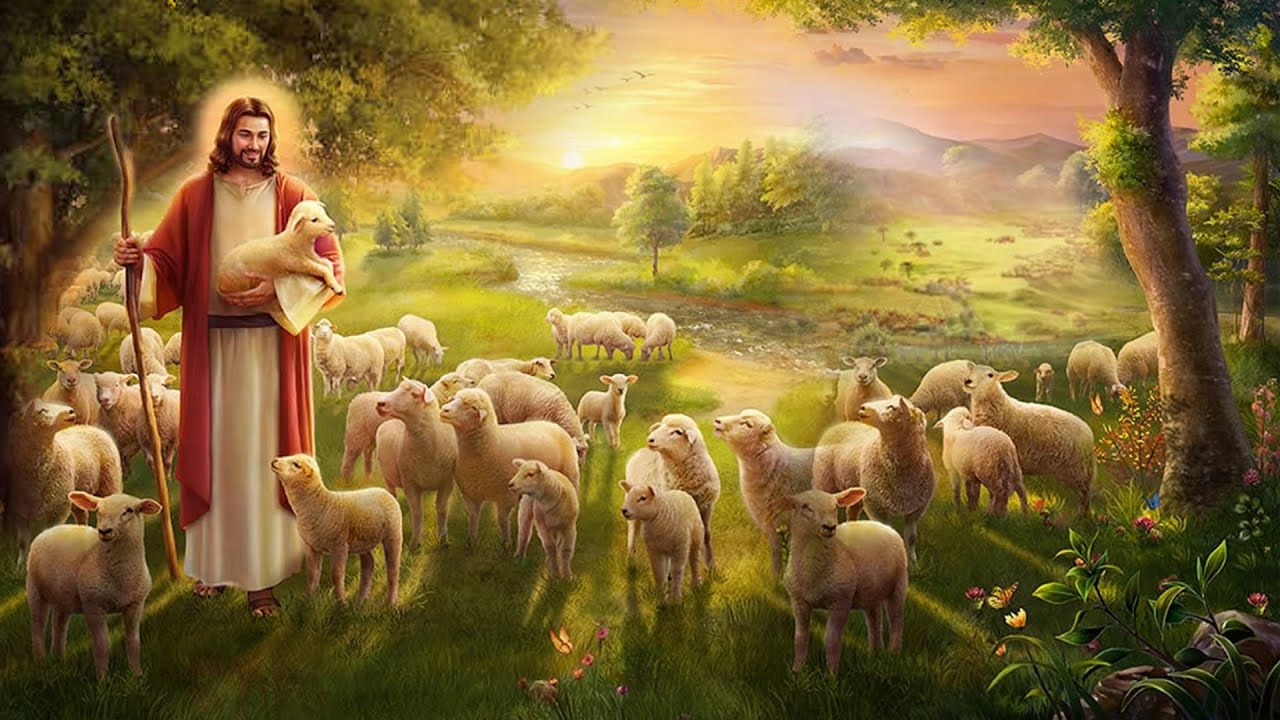
Ismy Shepherd. A good shepherd cares for his flock and will risk his life to protect his sheep. Jesus said, “I am the good shepherd: the good shepherd giveth his life for the sheep” (John 10:11). The Good Shepherd knows his sheep individually. “I am the good shepherd, and know my sheep, and am known of mine” (John 10:14). He knows His own so well that He will seek out the one out of 100 that gets lost.[4]
I shall not want. Because the LORD, the Creator and Possessor of heaven and earth, is my Shepherd who willingly gave His life for me, all my needs will be met. I will want for nothing.
He makes me to lie down in green pastures. To lie down implies rest. Green pastures are peaceful. Because the pastures are green, they provide rich nourishment. Again, the LORD provides abundantly.
He leads me beside the still waters. Sheep fear moving water. If they fall into rushing water, their wool gets saturated with water and they drown. They know this, so they will not go near it. However, still water is no threat. My Shepherd not only leads me to still waters, but He gives “living water”[5] that leads to eternal life.
He restores my soul. That is, He brings my soul back to life. “And you hath he quickened [made alive], who were dead in trespasses and sins” (Ephesians 2:1, emphasis mine). My Shepherd is the One who gives true life. “Jesus said unto her, I am the resurrection, and the life: he that believeth in me, though he were dead, yet shall he live” (John 11:25).
He leads me in the paths of righteousness for his name’s sake. He leads me by His Word through His Spirit in the right way, and He does this for His reputation. In another place, the psalmist writes, “Thy word have I hid in mine heart, that I might not sin against thee” (Psalm 119:11). He also says, “Thy word is a lamp unto my feet, and a light unto my path” (Psalm 119:105). Concerning the Word of God, Paul writes, “All scripture is given by inspiration of God, and is profitable for doctrine, for reproof, for correction, for instruction in righteousness: That the man of God may be perfect, throughly furnished unto all good works” (2 Timothy 3:16-17).
Yea, though I walk through the valley of the shadow of death, I will fear no evil; for thou art with me. When I go through dark and troubled times, even where death lurks nearby, I have no fear because I know my Shepherd is near to protect me in every circumstance. I can rest in His promise “[That] we know that all things work together for good to them that love God, to them who are the called according to his purpose” (Romans 8:28). I am His, and I have been “called according to His purpose” I know my Shepherd and He knows me by name.
Thy rod and thy staff they comfort me. The rod is used for discipline. Wise King Solomon advised, “He that spareth his rod hateth his son: but he that loveth him chasteneth him betimes” (Proverbs 13:24). I know that my Shepherd loves me and He will punish me when I sin, but He will never disown me. Paul reminds us of the words of Job[6] when he writes, “My son, despise not thou the chastening of the Lord, nor faint when thou art rebuked of him” (Hebrews 12:5). The shepherd’s staff has a crook or “hook” at one end which is used to pull back a sheep that wanders away from the flock. My Shepherd’s staff is the Holy Spirit which constantly works to pull me back when I tend to wander away into sin. His rod and staff comfort me knowing that His desire is to keep me near His side.
Thou preparest a table before me in the presence of mine enemies. His “table” is a feast that awaits me in His presence. Even now, I enjoy His rich blessings which come in countless forms. Ultimately, my enemies are the demonic forces that would destroy my life, but they cannot. They can only stand by and witness God’s grace on me, and they hate it.
Thou anointest my head with oil; my cup overflows. In the Old Testament, anointing the head with oil consecrated, or set apart, an individual as king or priest. The oil is symbolic of the Holy Spirit being poured out on a person. The Apostle John reminds us that Jesus loved us and washed us from our sin with His own blood, “And hath made us kings and priests unto God and his Father; to him be glory and dominion for ever and ever. Amen” (Revelation 1:6, emphasis mine). Paul explains it this way, “Now he which [established] us with you in Christ, and hath anointed us, is God; Who hath also sealed us, and given the earnest of the Spirit in our hearts” (2 Corinthians 1:21-22). His anointing is more than sufficient; it overflows my life.
Surely goodness and mercy shall follow me all the days of my life. It is a sure thing. His goodness – all of His rich blessings – and mercy – sparing me the punishment I deserve for my sins – will go with me through all my days of this earthly life.
And I will dwell in the house of the LORD forever. We sometimes think of our church buildings as “the house of God.” That is true in a sense. However, God does not live or dwell in a building. In the Old Testament, God’s presence, manifested by His shekinah glory, resided in the Holy of Holies in the Tabernacle and later in the Temple. However, when Judah sinned through idolatry and desecrated the Temple through pagan worship, God’s glory departed the Temple and never returned.[7] When Jesus died on the cross, Matthew records that the veil of the Temple which separated the Holy of Holies from the rest of the Temple was torn from top to bottom[8] opening the way into the presence of God. Forty days after His resurrection, Jesus ascended into heaven and ten days later, the Holy Spirit descended and rested as a “tongue of fire” over the heads of the disciples gathered in the upper room.[9] The flame represented the shekinah glory of God that had departed the Temple, now indwelling the believers by way of the Holy Spirit. The dwelling of God was now truly with man. Indeed, Paul reminds us of this truth when he writes, “Know ye not that ye are the temple of God, and that the Spirit of God dwelleth in you?” (1 Corinthians 3:16). But more than that, we have the promise that we have a place with Him in His eternal home. Before the cross, Jesus assured us of this fact. “Let not your heart be troubled: ye believe in God, believe also in me. In my Father’s house are many mansions: if it were not so, I would have told you. I go to prepare a place for you. And if I go and prepare a place for you, I will come again, and receive you unto myself; that where I am, there ye may be also” (John 14:1-3). So, I am certain that “I will dwell in the house of the LORD forever.”



 Ernie's Musings