Category Archives: Religion

Articles that deal with religions other than orthodox Christianity.

The Universe Is Young

For in six days the LORD made heaven and earth, the sea, and all that in them is, and rested the seventh day: wherefore the LORD blessed the sabbath day, and hallowed it. (Exodus 20:11)

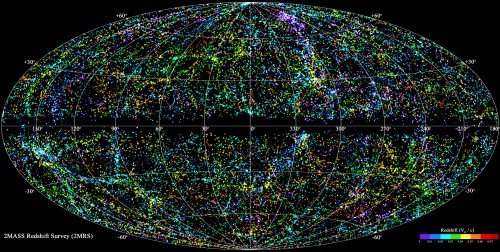
I have heard it said that the universe is something like 13.8 Billion years old and that the earth is around 4.4 Billion years old. How they—those that make such claims—arrive at such astronomical numbers is beyond me. The earth does not have a manufacturer’s date stamp on it (or does it?). Those that make those claims are, for the most part, God-deniers along with some who, while not denying God, question the veracity of His Word.

The Bible says the universe, of which earth is a part, is young. Since God-deniers reject the notion of an all-powerful, all-knowing Creator God, they must invent some mechanism from which the entirety of the universe came. BANG! They invent a brilliant idea that all matter was compressed into an infinitesimally small “singularity” that got really hot and rapidly expanded into the universe that we know, which, by the way, continues to expand. You may recognize this hypothesis as the Big Bang theory, only it is not a very good hypothesis, much less a theory.[1] Many secular scientists recognize the problem with this hypothesis and continue to look for ways to make it better. Some have given up on it altogether and opted for other hypotheses like the “string theory” (Don’t ask; I don’t have a clue what that means.), or the “multiverse theory.” The latter is quite clever. Since parallel universes are unobservable, they are free to speculate to their heart’s content on what happens in those unseen realms. Who will prove them wrong? At least they generally agree that the universe had a beginning.

“In the beginning God created the heaven and the earth” (Genesis 1:1). There you have it—the universe—in the opening sentence of the Bible—just ten short words (seven in the original Hebrew). In that short sentence you find time, space, and matter/energy—the components of the universe. The biblical creation record begins with Genesis 1:1 and concludes with Genesis 2:3. (The reader should keep in mind that chapter and verse divisions are not inspired text, and they do not appear in the original manuscripts.) The biblical creation account records that the entirety of creation took six 24-hour days with a cessation of creative activity on the seventh day. Now, there are compromisers out there calling themselves Bible-believing Christians that attempt to accommodate the God-deniers by inserting long ages anywhere they can in the biblical record. I do not have space here to present or argue against their positions. For now, allow me to simply say, they are wrong—so wrong![2] [3]

According to the Bible, the universe is only one day older than the planet earth. I need to point out that the universe in the beginning contained all the elements in a disorganized mess (it wasn’t a mess for God). “And the earth [i.e., matter/energy, the elements] was without form, and void; and darkness was upon the face of the deep. And the Spirit of God moved upon the face of the waters” (Genesis 1:2). The “planet” Earth was formed and organized on the second day of creation (Genesis 1:6-8). On the third day (Genesis 1:9-13), God caused the waters to separate from the land. It was not until the fourth day (Genesis 1:14-19) that God created the sun, moon, stars, galaxies, and all other celestial bodies.

Genesis 5 gives a detailed accounting of the years from the creation of Adam and Eve (Genesis 1:24-31) to the global flood of Noah[4] which was about 1656 years.[5] Creation to the time of Abraham was about 2000 years, from Abraham to Jesus another 2000 years, and from Jesus to present about 2000 years—6000 years total. There you have it! It is now time for the seventh millennium of rest (Revelation 20)!

Of course, God-deniers and Bible-doubters want scientific proof. Anyone serious enough and ambitious enough can go to the Institute for Creation Research website and take advantage of the search engine there where they will find all kinds of scientific research proving a young earth and a young universe. Here are just some of the proofs they will find:

  • Magnetic fields on Uranus and Neptune that should not exist if the universe is billions of years old[6] [7] [8]
  • Jupiter expends more energy than it receives from the sun. It should have run out of gas by now, if it is billions of years old[9]
  • Blue stars use up their fuel very rapidly. None should exist, if the universe is billions of years old[10]
  • Spiral galaxies would be unrecognizable, if they were billions of years old[11]
  • Carbon-14 in diamonds proves a young earth[12]
  • Soft tissue in dinosaur fossils should not last 65 million years [13]
  • The improbability of evolution proves a young earth[14]
  • Scientists unwittingly confirm the Global Flood as recorded in Genesis 7, albeit attributing billions of years to it[15]

The resources provided in the End Notes below should suffice for anyone with ears to hear and eyes to see; however, the God-denier cannot be convinced by evidence. The God-denier has a problem with God. That is a spiritual problem, not an intellectual problem. “But the natural man receiveth not the things of the Spirit of God: for they are foolishness unto him: neither can he know them, because they are spiritually discerned” (1 Corinthians 2:14). The universe and the earth are young, just like the Bible says.

Notes:


[1]  “March For ‘Science’” http://www.icr.org/article/march-for-science

[2]  “A Day Is A Day” https://erniecarrasco.com/2015/10/25/a-day-is-a-day/

[3]  “No Gap” https://erniecarrasco.com/2015/10/18/no-gap/

[4]  “Age of the Earth” https://erniecarrasco.com/2014/02/23/age-of-the-earth/

[5]  “How Young Is the Earth? Applying Simple Math to Data Provided in Genesis” http://www.icr.org/article/how-young-earth-applying-simple-math-data-provided

[6]  “The Creation of Cosmic Magnetic Fields” http://www.icr.org/article/cosmic-magnetic-fields-creation

[7]  “The Solar System: Uranus” http://www.icr.org/article/solar-system-uranus

[8]  “The Solar System: Neptune” http://www.icr.org/article/solar-system-neptune

[9]  “The Solar System: Jupiter” http://www.icr.org/article/solar-system-jupiter

[10]  “Blue Stars Confirm Recent Creation” http://www.icr.org/article/blue-stars-confirm-recent-creation

[11]  Dr. Jason Lisle speaking on the topic “Astronomy Reveals 6,000 Year Old Earth” on YouTube at around minute 34:17, https://www.youtube.com/watch?v=bEejUyEyhhg

[12]  “Diamonds May Be a Creationist’s Best Friend” http://www.icr.org/article/diamonds-may-be-creationists-best-friend

[13]  Too many articles to list. Go to http://www.icr.org/home/search/ and search under “soft tissue”

[14]  “The Mathematical Impossibility Of Evolution” http://www.icr.org/article/mathematical-impossibility-evolution

[15]  “Early Earth was covered in a global ocean and had no mountains” New Scientist, May 8, 2017, https://www.newscientist.com/article/2130266-early-earth-was-covered-in-a-global-ocean-and-had-no-mountains/, accessed May 20, 2017.
4 Comments

Filed under Apologetics, Atheism, Bible, Christianity, Creation, Evolution, Origins, Religion, Science, Theology

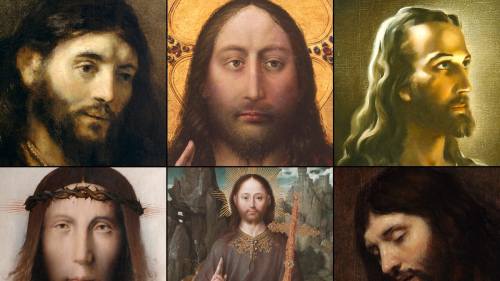
Who Is Jesus?

Who being the brightness of his glory, and the express image of his person, and upholding all things by the word of his power, when he had by himself purged our sins, sat down on the right hand of the Majesty on high; (Hebrews 1:3)

For the last 2000 years, people have asked that question, but for those who have “ears to hear,” the Bible provides the answer. “God, who at sundry times and in divers manners spake in time past unto the fathers by the prophets” (Hebrews 1:1).

From the very beginning, the Scriptures have pointed to Christ. “And the LORD God said unto the serpent … I will put enmity between thee and the woman, and between thy seed and her seed; [He] shall bruise thy head, and thou shalt bruise his heel” (Genesis 3:15, emphasis mine). Abraham received the promise: “… in thee shall all families of the earth be blessed” (Genesis 12:3). Isaac received the same promise: “…in thy seed shall all the nations of the earth be blessed” (Genesis 26:4), and the promise was passed on to Jacob: “…in thy seed shall all the families of the earth be blessed” (Genesis 28:14). Jacob (renamed Israel) prophesied “The sceptre shall not depart from Judah, nor a lawgiver from between his feet, until Shiloh come; and unto him shall the gathering of the people be” (Genesis 49:10, emphasis mine). The scepter signifies rule. A “lawgiver” signifies absolute authority. This One would come from the tribe of Judah, and “the people” (meaning all the people, not just Israel) would be gathered unto Him. This is just in the book of Genesis!

Moses spoke of this Promised One. “And the LORD said unto me, They have well spoken that which they have spoken. I will raise them up a Prophet from among their brethren, like unto thee, and will put my words in his mouth; and he shall speak unto them all that I shall command him” (Deuteronomy 18:17-18, emphasis mine). Job looked forward to the Promised One. He said, “For I know that my redeemer liveth, and that he shall stand at the latter day upon the earth: And though after my skin worms destroy this body, yet in my flesh shall I see God: Whom I shall see for myself, and mine eyes shall behold, and not another; though my reins be consumed within me” (Job 19:25-27, emphasis mine). The psalmists sang about Him. The prophets predicted His arrival with pinpoint accuracy. The prophet Daniel predicted His presentation to the very day! “Know therefore and understand, that from the going forth of the commandment to restore and to build Jerusalem [March 5, 444 BC][1] unto the Messiah the Prince shall be seven weeks [i.e. 49 years],[2] and threescore and two weeks [i.e. 434 years, 483 years total]: the street shall be built again, and the wall, even in troublous times. And after threescore and two weeks [483 years] shall Messiah be cut off [April 3, AD 33],[3] but not for himself: and the people of the prince that shall come shall destroy the city and the sanctuary; and the end thereof shall be with a flood, and unto the end of the war desolations are determined” (Daniel 9:25-26, emphasis mine).

The prophets predicted His birth in precise detail. They predicted His teaching in parables and His healing miracles. They predicted every agonizing detail of His crucifixion and even His resurrection. “For thou wilt not leave my soul in hell [i.e. the grave]; neither wilt thou suffer thine Holy One to see corruption. Thou wilt shew me the path of life: in thy presence is fulness of joy; at thy right hand there are pleasures for evermore” (Psalm 16:10-11, emphasis mine). Not only would He rise again, but as the martyr Stephan reported, “Behold, I see the heavens opened, and the Son of man standing on the right hand of God” (Acts 7:56, emphasis mine).

Yes, but who was Jesus?

“God, … Hath in these last days [i.e. the days in which we live] spoken unto us by his Son [Jesus Christ], whom he hath appointed heir of all things, by whom also he made the worlds; Who being the brightness of his glory, and the express image of his person, and upholding all things by the word of his power, when he had by himself purged our sins, sat down on the right hand of the Majesty on high” (Hebrews 1:1-3, emphasis mine).

He is “heir of ALL things.” The universe and all that it contains belong to Jesus Christ. “He made the worlds.” “All things were made by him; and without him was not any thing made that was made” (John 1:3, emphasis mine). “For by him were all things created, that are in heaven, and that are in earth, visible and invisible, whether they be thrones, or dominions, or principalities, or powers: all things were created by him, and for him” (Colossians 1:16, emphasis mine). He is the Creator and owner of all that exists.

He is “the express image” of God. “Who is the image of the invisible God, the firstborn of every creature” (Colossians 1:15, emphasis mine). “And the Word [i.e. Jesus Christ] was made flesh, and dwelt among us, (and we beheld his glory, the glory as of the only begotten of the Father,) full of grace and truth” (John 1:14, emphasis mine). “No man hath seen God at any time; the only begotten Son, which is in the bosom of the Father, he hath declared him” (John 1:18, emphasis mine). In other words, Jesus is the full expression of God in human form. “For it pleased the Father that in him should all fulness [of the Godhead] dwell” (Colossians 1:19, emphasis mine). “For in him dwelleth all the fulness of the Godhead bodily” (Colossians 2:9, emphasis mine).

Jesus is the One “upholding all things by the word of his power.” He is “the Word.” “In the beginning was the Word, and the Word was with God, and the Word was God. The same was in the beginning with God” (John 1:1-2, emphasis mine). “And he is before all things, and by him all things consist” (Colossians 1:17, emphasis mine). The Greek world translated “consist” is sunistaō, which means “to set together” or “hold together.” In other words, Jesus keeps the universe from flying apart!

Jesus is the Savior.  He “by himself purged our sins.” “If we confess our sins, he is faithful and just to forgive us our sins, and to cleanse us from all unrighteousness” (1 John 1:9, emphasis mine). “But God commendeth his love toward us, in that, while we were yet sinners, Christ died for us” (Romans 5:8, emphasis mine). Jesus, “Who, being in the form of God, thought it not robbery to be equal with God: But made himself of no reputation, and took upon him the form of a servant, and was made in the likeness of men: And being found in fashion as a man, he humbled himself, and became obedient unto death, even the death of the cross” (Philippians 2:6-8, emphasis mine). Is that not amazing! This He did so that, “as many as received him, to them gave he power to become the sons of God, even to them that believe on his name” (John 1:12). The inverse is also true. “He that believeth on him is not condemned: but he that believeth not is condemned already, because he hath not believed in the name of the only begotten Son of God” (John 3:18, emphasis mine).

Finally, Jesus is LORD. He is, and always has been, seated “on the right hand of the Majesty on high.” Who is he that condemneth? It is Christ that died, yea rather, that is risen again, who is even at the right hand of God, who also maketh intercession for us” (Romans 8:34, emphasis mine). {Who needs Mary!} “If ye then be risen with Christ, seek those things which are above, where Christ sitteth on the right hand of God” (Colossians 3:1, emphasis mine). “Now of the things which we have spoken this is the sum: We have such an high priest, who is set on the right hand of the throne of the Majesty in the heavens” (Hebrews 8:1, emphasis mine).  “But this man, after he had offered one sacrifice for sins for ever, sat down on the right hand of God” (Hebrews 10:12, emphasis mine). Jesus, “Who is gone into heaven, and is on the right hand of God; angels and authorities and powers being made subject unto him” (1 Peter 3:22, emphasis mine).

Who is Jesus? He is God. He is Creator. He is sustainer of creation. He is Savior. He is Lord, and He is coming again. Jesus said, “Let not your heart be troubled: ye believe in God, believe also in me. In my Father’s house are many mansions: if it were not so, I would have told you. I go to prepare a place for you. And if I go and prepare a place for you, I will come again, and receive you unto myself; that where I am, there ye may be also” (John 14:1-3, emphasis mine).

Reader, this is Jesus. Do you know Him? You can know Him. If you will sincerely ask Him to reveal Himself to you, He will. “The Lord [Jesus] is not slack concerning his promise, as some men count slackness; but is longsuffering to us-ward, not willing that any should perish, but that all should come to repentance” (2 Peter 3:9, emphasis mine). Just ask Him. Jesus said, “For every one that asketh receiveth; and he that seeketh findeth; and to him that knocketh it shall be opened” (Matthew 7:8, emphasis mine).

Notes:


[1]  Ed Hinderson & Thomas Ice, Charting the Bible Chronologically: A Visual Guide to God’s Unfolding Plan, (Eugene, OR, Harvest House Publishers, 2016), 98.

[2]  Ibid.

[3]  Ibid.

1 Comment

Filed under Apologetics, Christianity, Creation, Evangelism, Gospel, Religion, Salvation, Second Coming of Christ, Theology

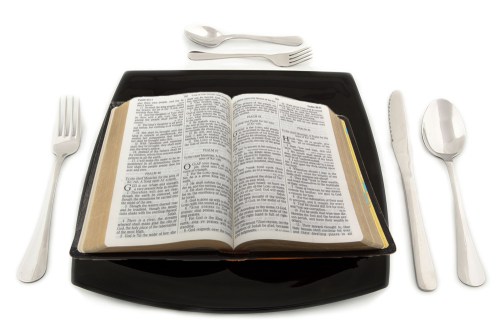
Tasty Book

And I went unto the angel, and said unto him, Give me the little book. And he said unto me, Take it, and eat it up; and it shall make thy belly bitter, but it shall be in thy mouth sweet as honey. And I took the little book out of the angel’s hand, and ate it up; and it was in my mouth sweet as honey: and as soon as I had eaten it, my belly was bitter. (Revelation 10:9-10)

Before ascending to His throne “on the right hand of the power of God” (Luke 22:69); Jesus hinted at the possibility that John the Beloved, might live until His return. “Jesus saith unto him [Peter], If I will that he [John] tarry till I come, what is that to thee? follow thou me” (John 21:22). In a way, that did indeed come to pass. John is probably the only one of Jesus’ apostles that died a natural death and did not experience martyrdom. Jesus granted John the unique privilege of seeing end-time events from a heavenly perspective.

While exiled on the island of Patmos for the sake of the Gospel (Revelation 1:9), John had a vision of the risen Christ and was “raptured” up to heaven to witness events at the end of time (Revelation 4:1). So, in a manner of speaking, John did indeed tarry until the coming of the Lord.

Beginning with Chapter 6 of the Apocalypse, John witnesses the horrors of the first half of the Tribulation. Following the sounding of the Sixth Trumpet (Revelation 9:13-21), there is a pause in the activity on earth and the scene shifts to what is taking place in heaven.

John describes the scene this way. “And I saw another mighty angel come down from heaven, clothed with a cloud: and a rainbow was upon his head, and his face was as it were the sun, and his feet as pillars of fire: And he had in his hand a little book open: and he set his right foot upon the sea, and his left foot on the earth” (Revelation 10:1-2, emphasis mine). The “mighty angel” that John saw is the Lord Jesus Christ. We know this by the description given by John. The Mighty Angel is clothed with a cloud as He was when He ascended to heaven (Acts 1:9). He is crowned with a rainbow like the one John saw around the throne of God (Revelation 4:3), and “His feet as pillars of fire” take us back to John’s initial meeting with the risen Christ (Revelation 1:15). He stands with one foot on the sea and the other on the land indicating His dominion over all the earth. Furthermore, He declares, “that there should be time no longer” (Revelation 10:6), something only God can control.

In His hand, He carries “a little book open.” A voice from heaven instructs John to take the little book from the Mighty Angel. Fearlessly, John records, “And I went unto the angel, and said unto him, Give me the little book” (Revelation 10:9a). We are awestruck by John’s boldness in the presence of the risen Lord until we recall that this was “that disciple whom Jesus loved” (John 21:7). “And he said unto me, Take it, and eat it up; and it shall make thy belly bitter, but it shall be in thy mouth sweet as honey. And I took the little book out of the angel’s hand, and ate it up; and it was in my mouth sweet as honey: and as soon as I had eaten it, my belly was bitter” (Revelation 10:9b-10, emphasis mine).

Eating a book seems rather strange to us, but this is not the first time such imagery is presented in the Bible. The book represents the Word of God. God instructed the Prophet Ezekiel, “But thou, son of man, hear what I say unto thee; Be not thou rebellious like that rebellious house: open thy mouth, and eat that I give thee. And when I looked, behold, an hand was sent unto me; and, lo, a roll of a book was therein; And he spread it before me; and it was written within and without: and there was written therein lamentations, and mourning, and woe. (Ezekiel 2:8-10, emphasis mine). He continues, “So I opened my mouth, and he caused me to eat that roll. And he said unto me, Son of man, cause thy belly to eat, and fill thy bowels with this roll that I give thee. Then did I eat it; and it was in my mouth as honey for sweetness” (Ezekiel 3:2-3, emphasis mine).

The Prophet Jeremiah experienced something similar when he said, “Thy words were found, and I did eat them; and thy word was unto me the joy and rejoicing of mine heart: for I am called by thy name, O LORD God of hosts” (Jeremiah 15:16, emphasis mine). The psalmist says, “The fear of the LORD is clean, enduring for ever: the judgments of the LORD are true and righteous altogether. More to be desired are they than gold, yea, than much fine gold: sweeter also than honey and the honeycomb” (Psalm 19:9-10, emphasis). “How sweet are thy words unto my taste! yea, sweeter than honey to my mouth!” (Psalm 119:103).

For the child of God, His Word is sweet. It gives comfort, hope and security. Some have called it God’s love letter to the world. It is sweet to feast upon the Word of God. However, its consumption also brings bitterness. Why? Perhaps it is precisely because we are His children that we share His remorse for the lost who reject His Word. “Have I any pleasure at all that the wicked should die? saith the Lord GOD: and not that he should return from his ways, and live?” (Ezekiel 18:23). “Say unto them, As I live, saith the Lord GOD, I have no pleasure in the death of the wicked; but that the wicked turn from his way and live: turn ye, turn ye from your evil ways; for why will ye die, O house of Israel?” (Ezekiel 33:11, emphasis mine). “The Lord is not slack concerning his promise, as some men count slackness; but is longsuffering to us-ward, not willing that any should perish, but that all should come to repentance” (2 Peter 3:9, emphasis mine).

The Word of God is Good News to the one who accepts it and consumes it; but it is bad news for the one who rejects its warnings. To the one who “eats” of its sweetness, it becomes bitterness knowing that friends and loved ones who reject its message are doomed to an eternity in “the lake of fire: (Revelation 20:15). Still, the Word of God is a “tasty book.”

Reader, if you have not tasted of God’s Word, time is getting short. Do not waste another day!

1 Comment

Filed under Bible, Christianity, End Times, Gospel, Heaven, Hell, Religion, Salvation, Theology

A PROMISE OF WHAT’S TO COME

This is an excellent lesson from a very wise friend!

dianegates's avatarMOVING THE ANCIENT BOUNDARIES

 A promise of whats to come 4

We study about, talk about, and read about history, but our view of history is so narrow—generally focused on the span of our lives—give or take a few years. Or about a hundred years.

That’s why God gave us sixty-six books of His story. His life, death, life story. So, we would have a constant reminder His plan is far beyond our peep-hole into past, present, and future.  God’s view of history encompasses the beginning through all eternity.

A promise of whats to come 5

Scripture tells us: “Whatever things were written in earlier times were written for our instruction, that through perseverance and study of the scriptures, we might have hope” (Romans 15:4 NAS).

But we moan and groan, I don’t understand the Bible. So many words, all the thee’s and thou’s. It’s so confusing. And I just don’t have time to sort out all that stuff.  We can’t understand. Without the stirring power…

View original post 1,044 more words

Comments Off on A PROMISE OF WHAT’S TO COME

Filed under Christianity, Religion

Good Guys Go to Hell

And in hell he lift up his eyes, being in torments, and seeth Abraham afar off, and Lazarus in his bosom. (Luke 16:23)

A popular idea going around these days suggests that anyone can go to heaven, if he or she is a “good” person. That sounds good, but by what standard does one measure “goodness”? The fornicator may say, “I’m not so bad; I won’t cheat on my wife.” The adulterer might say, “I’m not so bad; I’ve never molested a child.” The child molester could say, “I’m not so bad; I’ve never murdered anyone.” The murderer excuses himself, “I’m not so bad; the one I killed had it coming.” He would also add, “I am not a mass murderer,” and so on. Each one is not as bad as the other person is; by their own standard, they qualify for heaven. However, heaven’s standards exceed those we place on ourselves.

Jesus recounts the death of two men. The account is often mistaken as one of Jesus’ parables; however, the matter-of-fact telling of the account carries no alternative meaning, as do the regular parables of Jesus. In this instance, Jesus gives the proper name of one of the characters, Lazarus. He refers to the second man simply as “a rich man.” In this account, Jesus gives the impression that He has firsthand knowledge of the parties involved, so it makes one wonder why the rich man remains unnamed. The Bible tells us that “when the roll is called up yonder,” those who have died without Christ will be judged by their works recorded in “the books” (Revelation 20:12-13). When their “works” fail to meet heavenly standards, those being judged will be looked up in the Book of Life, and when their names are not found there, they will be cast into “the lake of fire” (Revelation 20:15). Perhaps this is why Jesus does not name the rich man. On the other hand, Jesus knows Lazarus by name. Jesus said, “My sheep hear my voice, and I know them, and they follow me: And I give unto them eternal life; and they shall never perish, neither shall any man pluck them out of my hand” (John 10:27-28, emphasis mine). Apparently, Jesus did not know the rich man meaning that the rich man was not one of His sheep.

As Jesus relates the account, the worst thing said about the rich man is that he “was clothed in purple and fine linen, and fared sumptuously every day” (Luke 16:19). Is there anything sinful about being rich? Surely, that cannot be the reason for his eternal life sentence! Indeed, “in hell he lift up his eyes, being in torments, and seeth Abraham afar off,” (Luke 16:23, emphasis mine). Abraham was one of the richest men recorded in the Bible, yet there he is in paradise, so wealth was not the man’s problem.

Jesus tells us that Lazarus, a beggar, “was laid at his gate, full of sores, And desiring to be fed with the crumbs which fell from the rich man’s table” (Luke 16:20-21). The account implies that the rich man took no notice of the beggar’s plight, although Jesus does not explicitly say so. Very possibly the rich man tossed a few coins to the beggar from time to time as might be expected of a man of his status. Even here, we find no “sin” worthy of an eternal sentence to hell.

One characteristic about the rich man that clearly comes through in Jesus’ account is his self-centeredness or self-focus, especially upon his arrival in hell. “And he cried and said, Father Abraham, have mercy on me, and send Lazarus, that he may dip the tip of his finger in water, and cool my tongue; for I am tormented in this flame” (Luke 16:24, emphasis mine). Even in his circumstance, he considered himself superior to Lazarus so that Lazarus should serve him. His request denied and realizing that his fate is permanent, he suddenly becomes evangelistic. “Then he said, I pray thee therefore, father, that thou wouldest send him to my father’s house: For I have five brethren; that he may testify unto them, lest they also come into this place of torment.” (Luke 16:27-28, emphasis mine). Notice his concern is not for a lost world, but only for his family.

We see that the rich man was self-indulgent – “But Abraham said, Son, remember that thou in thy lifetime receivedst thy good things” (Luke 16:25) – and egocentric. So what! Did that make him an evil person deserving hell? My guess is that the rich man was probably a pretty good guy over all. Jesus does not say that he mistreated Lazarus in any way, only that Lazarus desired “to be fed with the crumbs which fell from the rich man’s table” (Luke 16:21). That only means that the rich man took no real notice of the beggar’s plight. If such neglect condemns one to hell, then I plead guilty as charged. Not a day goes by that I do not see someone begging on some street corner of Dallas, and I drive on by. No, that was not the rich man’s problem.

The unnamed rich man’s problem was his ignorance of the Good Shepherd. The rich man was not one of Jesus’ sheep; Lazarus was, though. Jesus knew his name, and he gained entry into the presence of God. The rich man did not go to hell because he was some kind of great sinner; he went to hell because his name was not written in the Lamb’s Book of Life. Heaven – the New Jerusalem – is an exclusive place. “And there shall in no wise enter into it any thing that defileth, neither whatsoever worketh abomination, or maketh a lie: but they which are written in the Lamb’s book of life” (Revelation 21:27, emphasis mine). The rich man’s name was not recorded in that book, but Lazarus’ name was recorded there, which is why Jesus knew his name.

How about you, Reader? Is your name recorded in the Lamb’s Book of Life? If not, you will end up with that nameless rich man, and humanly speaking, you may even be a better person than the rich man. You may consider yourself to be a good person, but at the Great White Throne Judgment, when the books are brought out (Revelation 20:12-13) (one of which is the Word of God, the Bible), your good deeds will be judged according to the standard of God’s Word. Prepare yourself. You will not measure up. “For all have sinned, and come short of the glory of God” (Romans 3:23). Your only hope is for your name to be listed in the Lamb’s Book of Life. Ask Jesus to write your name in His book today. “For whosoever shall call upon the name of the Lord shall be saved” (Romans 10:13). “That if thou shalt confess with thy mouth the Lord Jesus, and shalt believe in thine heart that God hath raised him from the dead, thou shalt be saved” (Romans 10:9). Good guys go to hell, but those whose names are written in the Lamb’s Book of Life will be saved. Do it today!

Jesus’ account of the rich man and Lazarus is recorded in Luke 16:19-31.

Comments Off on Good Guys Go to Hell

Filed under Apologetics, Christianity, Death, End Times, Evangelism, Gospel, Heaven, Hell, Religion, Salvation, Theology