Category Archives: Religion

WHO DO YOU KNOW AND HOW DO YOU KNOW ‘EM?

DiAne Gates is a good friend and sister in the Lord. In this article, she deals with the intimate relationship we, as Christians, can experience with our Lord and Savior. DiAne is an excellent writer, and I think you will be inspired by what she has to say.

dianegates's avatarMOVING THE ANCIENT BOUNDARIES

If I met Benjamin Netanyahu on the street I would point and gasp, “I know him!” But I don’t know him—I know about him.


When my friend Barbara pulls her car into my driveway for lunch, I’m thrilled to see her. We’ve been friends for many years and I know more about her than I do casual acquaintances. But when it all boils down—I only know about her.


My husband and I have been married thirty-eight years and like any wife, I know his habits and have watched his responses to me and to other people. But do I really know what’s in the recesses of his heart? After all, there is no Book of Richard to tell me.


Since early childhood, I sat in Sunday School and church, and came to know about God and about His Son, Jesus Christ. I knew God created the world. I…

View original post 1,085 more words

Comments Off on WHO DO YOU KNOW AND HOW DO YOU KNOW ‘EM?

Filed under Christianity, Religion

Worship vs. Emotion

I beseech you therefore, brethren, by the mercies of God, that ye present your bodies a living sacrifice, holy, acceptable unto God, which is your reasonable service.   (Romans 12:1)

This topic has been on my mind for quite some time now, but I have been hesitant to write about it because, well, it stirs up a lot of emotion. The topic of worship is a hot-button topic in church circles because Christians take worship personally – and it is personal. Most of the debate centers around the kind of music used in worship services. The conflict usually boils down to hymns vs. “praise and worship” (P&W) music, or “reverent” vs. “up-beat” music. Personally, I like all kinds of music – classical, country gospel, “high” church and regular hymns, and, yes, even some P&W music. In a recent article I remarked about listening to “godless” rock and roll; I like that too. For me, it is not about the style of the music, but rather the substance. My personal assessment of modern P&W music is that it is shallow in content, overly repetitious, and manipulative. By manipulative I mean that it is designed to excite and stir up the emotions. Hymns sometimes do that for me, but that happens when the truth of the lyrics strikes a chord in my heart that reveals my fallen condition and God’s awesome grace shed on one so undeserving. That puts a knot in my throat and brings tears to my eyes. It is, for me, an emotional experience that brings to mind the great “worth” of God – worship. Some P&W songs do the same, but by and large, not so much.

But worship has little to do with music, or the lyrics of songs. Worship means to “assign ‘worth’ to.” The hosts of heaven assign worth to the Lamb of God: “Thou art worthy, O Lord, to receive glory and honour and power: for thou hast created all things, and for thy pleasure they are and were created” (Revelation 4:11). The first occurrence of the word “worship” in the King James Bible is found in Genesis 22:5. Here we see Abraham on his way to sacrifice Isaac in obedience to God’s command. As they arrive at the location of the sacrifice, Abraham tells his servants “Abide ye here with the ass; and I and the lad will go yonder and worship, and come again to you.” Abraham wasn’t on his way to a song service. In fact, I imagine that he did not feel much like singing at that time. He was on his way to worship. The Hebrew word here is shâchâh and it means to “prostrate (especially reflexively in homage to royalty or God): – to bow down; to crouch; to fall down flat; to humbly beseech; to do or make obeisance; to do reverence; to make to stoop; to worship.” Nothing in that definition says anything about singing or music. I am not saying that music and singing should not be a part of worship. Indeed, the Psalms are a collection of hymns and many of them, like Psalm 150, talk about singing and making music unto to Lord. Psalm 66:4 says, “All the earth shall worship thee, and shall sing unto thee; they shall sing to thy name. Selah.” It might be worth noting that the “worship” comes before the singing, not the other way around. So, there is an aspect of worship that calls for music, but even in the Psalms the focus is on God and His majesty, greatness and awesomeness. Often when a complaint is leveled against modern P&W music the retort comes back, “We’re just singing the Psalms.” That is only partially true. The fact is that one or two lines are taken out of a Psalm (and usually out of context), and repeated ad nauseam. The worshipers seldom know the source of the Psalm much less the context, but it makes them “feel” good.

Worship is more than music. Our lead verse exhorts us to make our bodies, i.e., our lives, a “living sacrifice” (recall Abraham’s sacrifice above) holy, i.e., set apart/sanctified from this world, and acceptable unto God. In the O.T. an acceptable sacrifice had to be spotless and without blemish (Exodus 12:5). In our sinful nature, that is impossible, but when we have been cleansed by the blood of the Lamb (Isaiah 1:18), we qualify. Finally, our verse says that our sacrifice is our “reasonable service.” The Greek word translated “service” here is latreia which means “ministration of God, divine service or worship.” That it is “reasonable” (Greek logikos) means that it is logical, or rational. It is not “mindless.”

We may never fully understand God. How can the creature comprehend the Creator! But the closer we get to Him, the better we get to know Him, the more we realize His power and His awesomeness, the more we will recognize and acknowledge that HE IS GOD. And our lives should reflect that. It is not about the style of music we sing. It is not about emotion. It is not about how we feel. It is about who He is and how well we know Him. Worship has little or nothing to do with emotions. We may not feel like “worshiping,” but God is always worthy of our worship; and we show that best with how we conduct our lives.

10 Comments

Filed under Christianity, Religion, Theology, Worship

It’s Not That Bad

But as the days of Noe were, so shall also the coming of the Son of man be. For as in the days that were before the flood they were eating and drinking, marrying and giving in marriage, until the day that Noe entered into the ark, And knew not until the flood came, and took them all away; so shall also the coming of the Son of man be.  (Matthew 24:37-39)

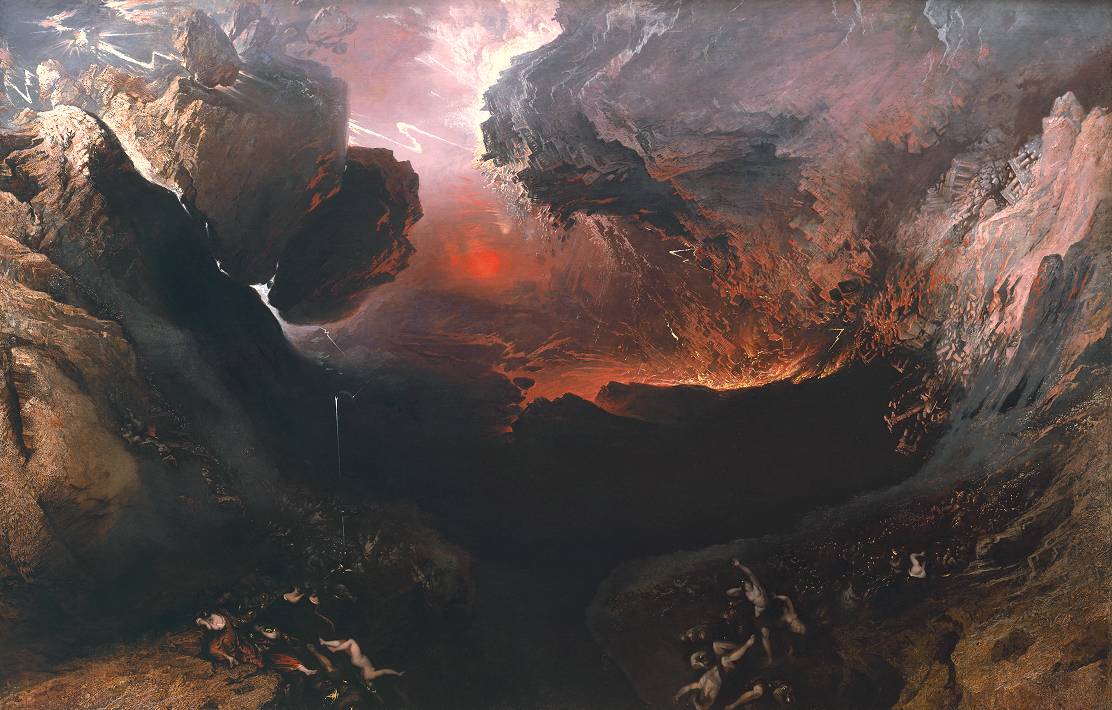
Unless you have totally detached yourself from all society, isolated yourself in a cave, or numbed your brain with drugs, you know that the world is in moral decline. We have ejected God from the public square, spurned His law and called what is good evil and what is evil good (Isaiah 5:20). We accept that which is unnatural and hold it up as something to be praised and held in honor. We castigate those who hold firm to their passé morality, and stigmatize them as evil haters. We hail outlaws as heroes and call true heroes cowards. We slaughter our progeny and fearlessly defend the life and welfare of animals. We fight against polluting the planet and think nothing of the moral pollution of our minds. Boy! Are we screwed up!

We hear of wars and rumors of wars. Natural and man-made catastrophes are increasing all over the world, and for the most part, life, for the vast majority of people, goes on as usual. The words of Jesus recorded by Matthew above make me wonder. Just how bad were things at the time of Noah? Genesis records that “it repented the LORD that he had made man on the earth, and it grieved him at his heart. And the LORD said, I will destroy man whom I have created from the face of the earth … for it repenteth me that I have made them” (Genesis 6:6-7). Things must have been pretty bad for God to take such extreme measures. “The earth also was corrupt before God, and the earth was filled with violence. And God looked upon the earth, and, behold, it was corrupt; for all flesh had corrupted his way upon the earth” (Genesis 6:11-12). Is that not what we see today? Mankind is corrupt and the earth is filled with violence. So, why does Christ delay His return? Surely, things are as bad today as they were in the days of Noah.

It seems that there have been periods in world history that were far worse than they are today, and Jesus did not return then either. When Jesus spoke these words, He was not referring to the moral condition of the world, but rather the suddenness of the destruction that fell upon them. Note that they were conducting life as usual, “eating and drinking, marrying and giving in marriage.” There is nothing particularly sinful in that, but as they carried on life as usual, destruction came on them suddenly, “And [they] knew not until the flood came, and took them all away” (Matthew 24:39). But there may be more to it than they were just carrying on life as usual. The world was violent then and evil was so rampant that God said, “Enough!”

For Christians (and I always feel that I need to qualify that with the adjective “true”) the world does not have to get as bad as in the days of Noah. Paul would remind us, as he did the Christians in Thessalonica, “Now we beseech you, brethren, by the coming of our Lord Jesus Christ, and by our gathering together unto him, That ye be not soon shaken in mind, or be troubled, neither by spirit, nor by word, nor by letter as from us, as that the day of Christ is at hand. Let no man deceive you by any means: for that day shall not come, except there come a falling away first, and that man of sin be revealed, the son of perdition” (2 Thessalonians 2:1-3, emphasis mine). That “falling away” is the Greek word apostasia, which means a “defection from the truth.” We see that happening today, but God still has a remnant. I heard today that the number of “true” Christians, according to Barna, is down to about 7%, but that remnant is still strong. Paul says that the “son of perdition,” a.k.a. “Antichrist,” will not be revealed until “he who now letteth will let, until he be taken out of the way” (2 Thessalonians 2:7, emphasis mine). That word “lets” (“letteth”) is actually two Greek words: katechō meaning “to hold down,” and arti, meaning “suspension.” That “He” is the Holy Spirit who indwells every child of God. When the Bride of Christ is “taken out of the way,” there will be nothing left to restrain evil.

It’s bad now, but it’s not that bad. Christ will call for His Bride at any moment. As in the days of Noah, life will be going on as usual. Then suddenly, millions of people – Christians – will disappear from all over the earth, and the trouble begins. It’s not that bad now, but it’s going to get bad. I hope you are ready!

2 Comments

Filed under Apologetics, Christianity, Current Events, End Times, Evangelism, Gospel, Heaven, Religion, Salvation, Satan, Second Coming of Christ

Remember?

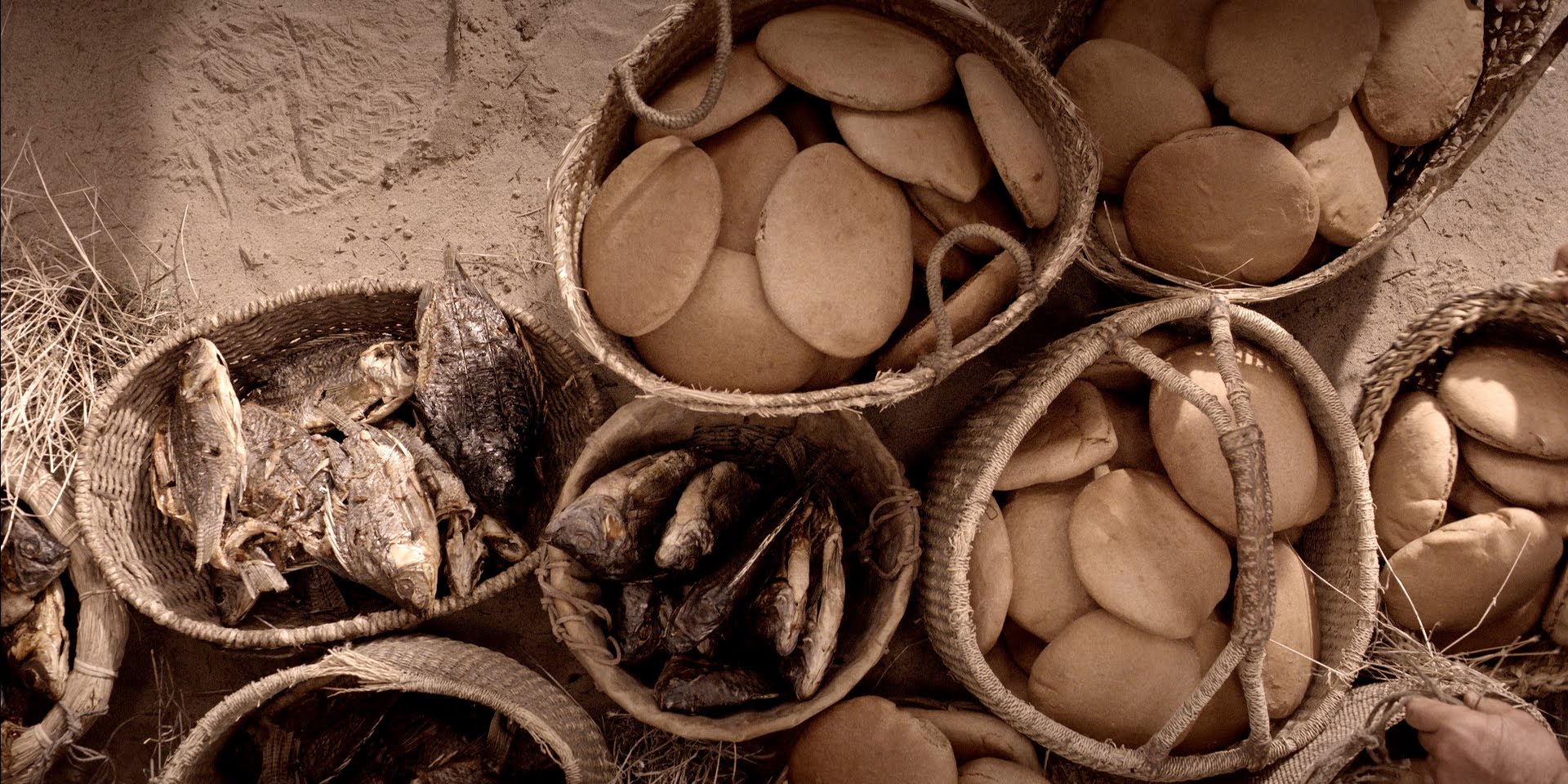
Loaves and Fishes

Do ye not yet understand, neither remember the five loaves of the five thousand, and how many baskets ye took up? Neither the seven loaves of the four thousand, and how many baskets ye took up? (Matthew 16:9-10)

Jesus and His disciples left the village of Magdala and crossed the Sea of Galilee. Mark tells us that they landed at Bethsaida (Mark 8:22), but before they arrived, Jesus thought aloud about an encounter they had in Magdala with a group Pharisees and Sadducees (Matthew 16:1-4). This bunch demanded “a sign from heaven” to validate His teachings. Obviously, the miracles Jesus performed were insufficient for these religious experts. So as Jesus thought on this, He offered His disciples an object lesson. “Then Jesus said unto them, Take heed and beware of the leaven of the Pharisees and of the Sadducees” (Matthew 16:6). However, the disciples were preoccupied with the fact that they forgot to pack a lunch (v. 5), “And they reasoned among themselves, saying, It is because we have taken no bread” (Matthew 16:7).

In their preoccupation with their stomachs, they missed the spiritual meal their Master had prepared for them. So, to refocus their minds to receive the real meal, Jesus reminded them of the miracle where He fed the 5000 (Matthew 14:13-21), and more recently, the feeding of the 4000 (Matthew 15:32-38). They need not concern themselves about what they were going to eat. Indeed, Jesus spoke on this very thing in His Sermon on the Mount. “Therefore take no thought, saying, What shall we eat? or, What shall we drink? or, Wherewithal shall we be clothed?” (Matthew 6:31). They were not about to go hungry with Jesus in their company.

We often behave just like the disciples. We get caught up with the worries and troubles of this world, and we forget all the times that God carried us through those troubled times. Remember when you were abandoned, and God brought that special person into your life to mend your brokenness? Remember when you lost your job and somehow God provided for you until He had a better job for you? Remember when you sacrificially gave to a cause God placed on your heart, and somehow you never missed that sacrificial gift? Remember?

When you are in the company of Jesus, all your needs (not wants) will be met, “for your heavenly Father knoweth that ye have need of all these things” (Matthew 6:32). Remember how God provided for you in the past, and “seek ye first the kingdom of God, and his righteousness; and all these things shall be added unto you” (Matthew 6:33). Remember.

Comments Off on Remember?

Filed under Christianity, Religion, Theology

No Time Like the Present

timeflies

… behold, now is the accepted time; behold, now is the day of salvation. (2 Corinthians 6:2)

We understand time in three phases: past, present, and future. We receive wise counsel not to live in the past while at the same time we are advised to plan for the future. Indeed, even the Apostle Paul exhorts, “Brethren, I count not myself to have apprehended: but this one thing I do, forgetting those things which are behind, and reaching forth unto those things which are before, I press toward the mark for the prize of the high calling of God in Christ Jesus” (Philippians 3:13-14). Our minds help us in regard to the past by minimizing bad memories and enhancing the good ones. This is healthy for when we latch on to bitter memories, the effects degrade both our physical and mental health. If we focus too much on the future, we can set ourselves up for disappointment, if we fail to accomplish unrealistic goals.

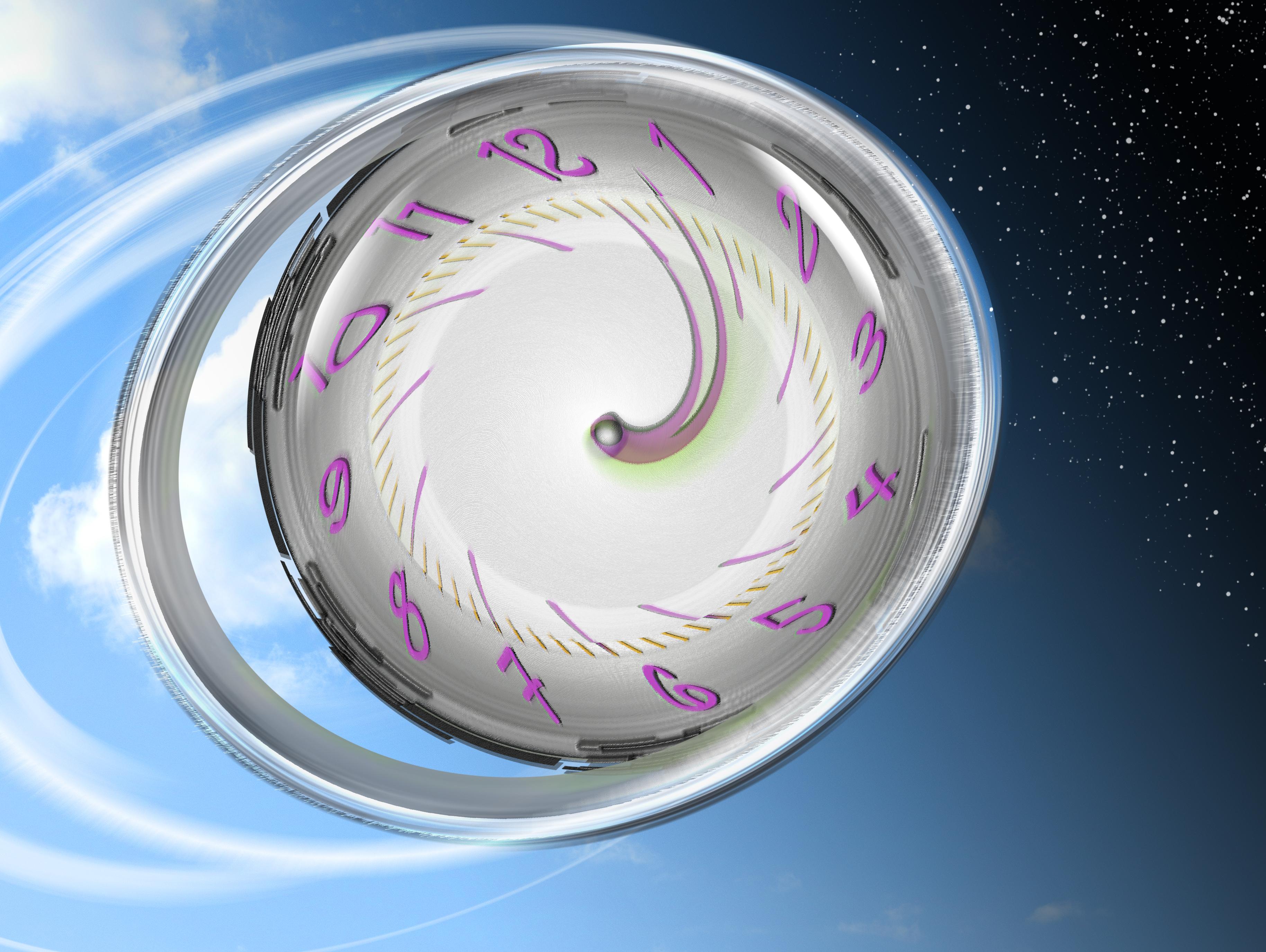
Either dwelling too much on the past or focusing too much on the future can both have negative effects on our lives, so we are encouraged to live in the present. “Take time to smell the roses,” we are told. Recently, this has given me cause to ponder. Just how long is the present that we should dwell therein? A minute? A second? A millisecond? A nanosecond? Time constantly moves forward with no stops. In the blink of an eye, the present becomes the past, while in the same instant we arrive in the future and then that is gone. The question is really an existential one since it deals with our existence and experience. We experience life through our senses: touch, sight, taste, hearing, and smell. These all employ our nervous system with the brain and all of its complex network of nerves. So I thought perhaps the present has to do with the speed of nerve impulses. “Scientists have an idea how fast nerves send signals. It varies among different animals and humans, but in general, one can say it is very fast, on the order of 115197 ft/sec (3560 m/sec).”[1] That is amazingly fast, but even at that the nerve impulse itself has a start and stop time, so it too moves from the past into the future with no hesitation.

So, how long is the present? Apparently, the present cannot be measured by time, so this must be a philosophical question. I asked a coworker, whose opinion I value highly, how long he thought the present could be. He said the present does not exist. Similarly, I asked an astrophysicist friend, and he said suggested that it was zero. Both of these answers make sense to me because time is constantly moving forward. I envision standing on the zero point on a line graph that continually moves beneath me from positive to negative-positive being the future and negative being the past. I operate from the zero point as time whizzes by me, but what I do at the zero point – the present – influences the future that comes at me.

I posed the same question to my oldest son. He’s pretty smart in his own right, and he gave me the most provocative response of all. He said, “The present is eternal.” I do not know if he fully understood the ramifications of such a profound statement. For starters, God is eternal, and He identifies Himself to Moses as “I AM THAT I AM” (Exodus 3:14). He is ever-present. We understand that God is unfettered by time, so He is present at every point in time. He is present in the past and in the future simultaneously. That is why He could say to the Prophet Jeremiah, “Before I formed thee in the belly I knew thee; and before thou camest forth out of the womb I sanctified thee, and I ordained thee a prophet unto the nations” (Jeremiah 1:5). God can accurately foretell the future because He exists in the future. He is eternally present.

Unlike God, we are confined by time. We can only experience time at point zero, and that only for the briefest of moments. We experience the future as it passes us by, but our actions in that brief moment affect the unseen consequences that lie ahead. God created us in His image (Genesis 1:26), and as such we are eternal beings. Unlike God, we have a beginning and no end, and again, we exist at point zero. Our actions, therefore, incur eternal consequences. When Adam and Eve disobeyed God in the Garden of Eden (Genesis 3), they caused an eternal rift between God and mankind (Genesis 3:22) that affected all of their posterity – you and me. Their offense and our subsequent sins offend an eternal and holy God, and the offense is eternal. Since the offense is eternal, the consequence is also eternal, and therefore must be atoned for eternally. Hell is eternal because the offense is eternal, therefore the punishment must be eternal.

The good news is that God granted a way of escape from the eternal punishment that we all deserve. I AM is present in all of time from creation to re-creation; so that

Forasmuch as ye know that ye were not redeemed with corruptible things, as silver and gold, from your vain conversation received by tradition from your fathers; But with the precious blood of Christ, as of a lamb without blemish and without spot: Who verily was foreordained before the foundation of the world, but was manifest in these last times for you, Who by him do believe in God, that raised him up from the dead, and gave him glory; that your faith and hope might be in God. (1 Peter 1:18-21, emphasis mine)

At the perfect time (Galatians 4:4), God stepped out of eternity into our present time in the form of the first, sinless Adam, to offer up Himself as the perfect atoning sacrifice for all of mankind. That sacrifice had the eternal effect of mending the eternal rift between God and mankind.

But the remedy is not universal, and it is not automatic. Each individual must make the choice for himself. Making the right or wrong decision in the present will settle your fate for all eternity. “But as many as received him, to them gave he power to become the sons of God, even to them that believe on his name: Which were born, not of blood, nor of the will of the flesh, nor of the will of man, but of God” (John 1:12-13).

And as Moses lifted up the serpent in the wilderness, even so must the Son of man be lifted up: That whosoever believeth in him should not perish, but have eternal life. For God so loved the world, that he gave his only begotten Son, that whosoever believeth in him should not perish, but have everlasting life. (John 3:14-16, emphasis mine)

The present is eternal after all. There is no time like the present to change the course of your eternity.

 Notes:


[1] From http://scienceline.ucsb.edu/getkey.php?key=1950, accessed January 16, 2015.

Comments Off on No Time Like the Present

Filed under Apologetics, Christianity, Creation, Evangelism, Gospel, Hell, Philosophy, Religion, Salvation, Theology