Category Archives: Salvation

Dan’s Sin

Lest there should be among you man, or woman, or family, or tribe, whose heart turneth away this day from the LORD our God, to go and serve the gods of these nations … The LORD will not spare him, but then the anger of the LORD and his jealousy shall smoke against that man, … and the LORD shall blot out his name from under heaven. And the LORD shall separate him unto evil out of all the tribes of Israel, according to all the curses of the covenant that are written in this book of the law: (Deuteronomy 29:18-21)

Dan was Jacob’s first son born to him by Bilhah, Rachel’s handmaid.[1] His name means “judge.” He was the fifth of Jacob’s sons. Before Jacob died, he blessed his sons. Of Dan, Israel said. “Dan shall judge his people, as one of the tribes of Israel. Dan shall be a serpent by the way, an adder in the path, that biteth the horse heels, so that his rider shall fall backward” (Genesis 49:16-17). Long after Dan had died and his “tribe” came out of Egypt, Moses declared of the tribe, “And of Dan he said, Dan is a lion’s whelp: he shall leap from Bashan” (Deuteronomy 33:22). “By this probably Moses intended to point out the strength and prowess of this tribe, that it should extend its territories, and live a sort of predatory life.”[2]

Among the tribes of Israel, Dan remains rather unremarkable. When one looks at a map displaying the original land allotments to the various tribes, Dan’s portion was rather small. It was only slightly larger than that allotted to Benjamin which bordered Dan on the east. Its eastern border extended from Kiriath-jearim on the south up to Beth-horon in Ephraim. From there it descended southeast to Gezer (Ephraim) and beyond. Then it turned north to Gath-rimmon to the Me Jarkin River, its northern boundary, and west to the Mediterranean Sea. Turning south along the coast for about 12 miles and then east and south again past Ekron and Timnah back to Kiriath-jearim. From its eastern border to the sea was about 25 miles, and its U-shaped width was about 12-13 miles wide at any point. The tribe of Dan did not have much land, and they were not satisfied with their little portion.

The Book of Joshua records the allocation of land once the land was conquered. “And the seventh lot came out for the tribe of the children of Dan according to their families … And the coast of the children of Dan went out too little for them: therefore the children of Dan went up to fight against Leshem, and took it, and smote it with the edge of the sword, and possessed it, and dwelt therein, and called Leshem, Dan, after the name of Dan their father” (Joshua 19:40, 47, emphasis mine). It seems that this detail was included after the fact (or it was prophetic). The Book of Judges details Dan’s conquest of land beyond their allotted borders.

The account unfolds beginning in Judges 17 after the death of Samson, when a man by the name of Micah, an Ephraimite, makes some idols of silver stolen from his mother. Not long after, he hired a wayward Levite to be his personal priest. “And Micah consecrated the Levite; and the young man became his priest, and was in the house of Micah. Then said Micah, Now know I that the LORD will do me good, seeing I have a Levite to my priest” (Judges 17:12-13). He was wrong about that, of course. It was at this time that the Danites[3] sought more land besides that which was allotted to them. They sent spies north to assess unconquered land to the north. Their route north took them through the land of Ephraim, and they came to Micah’s house which was on their way. There they saw Micah’s idols and his “priest.”[4]

The Danite spies accomplished their mission and brought back a positive report. “And they came unto their brethren to Zorah and Eshtaol: and their brethren said unto them, What say ye? And they said, Arise, that we may go up against them: for we have seen the land, and, behold, it is very good: and are ye still? be not slothful to go, and to enter to possess the land” (Judges 18:8-9). So the Danites mustered up a large army and headed north. Along the way, they stopped off at Micah’s house and took his idols and his priest. They convinced the Levite to go with them and be their priest – a job promotion. “And they said unto him, Hold thy peace, lay thine hand upon thy mouth, and go with us, and be to us a father and a priest: is it better for thee to be a priest unto the house of one man, or that thou be a priest unto a tribe and a family in Israel? And the priest’s heart was glad, and he took the ephod,[5] and the teraphim, and the graven image, and went in the midst of the people” (Judges 18:19-20).

So, the Danites took the idols and the “priest,” and after they conquered the land, they set up their own religion. They built a new city in the conquered land and named it after their patriarch, Dan. “And the children of Dan set up the graven image: and Jonathan, the son of Gershom, the son of Manasseh, he and his sons were priests to the tribe of Dan until the day of the captivity of the land.[6] And they set them up Micah’s graven image, which he made, all the time that the house of God was in Shiloh” (Judges 18:30-31, emphasis mine).

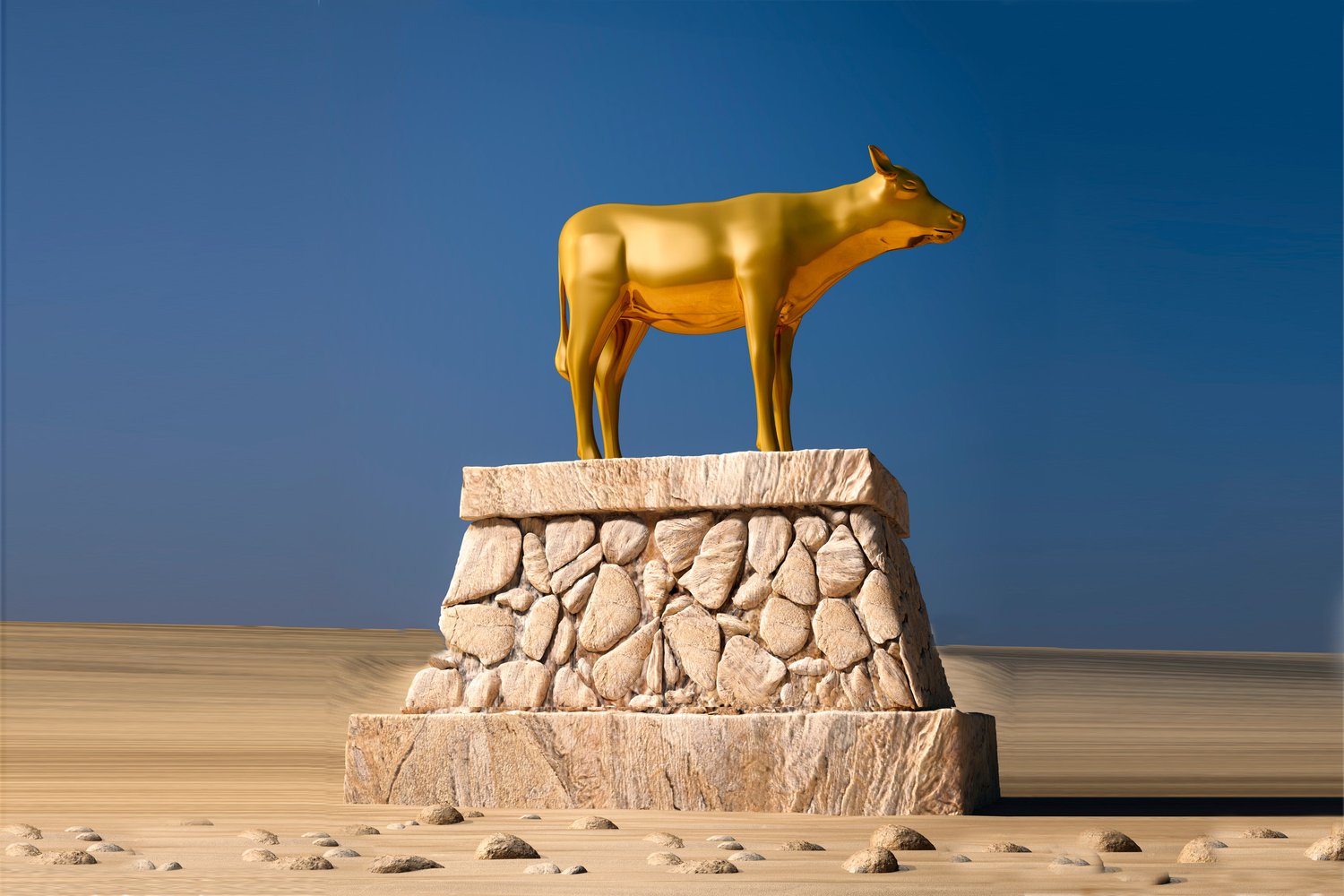
The story does not end there. At the end of the book (i.e., the Bible), the list of the tribes of Israel excludes Dan and Ephraim.[7] Granted, Israel, especially the northern kingdom, continually had problems with idolatry. However, there was always a faithful remnant. Not so with Ephraim and Dan. These two tribes were the first to wholeheartedly embrace it. Later, in the reign of Rehoboam, the northern ten tribes of Israel split off and formed their own kingdom under the reign of Jeroboam.[8] In order to prevent his subjects from going to Jerusalem to worship at the Temple, Jeroboam had two golden calves made and placed one in Bethel (in Ephraim) and the other in Dan,[9] and they were only too happy to take them. I cannot say with complete certainty, but their absence in the Revelation list seems to result from the warning God gave in our beginning passage above (Deuteronomy 29:18-21).

Neither Dan nor Ephraim are included in the list of the 144,000 witnesses, 12,000 from each of the 12 tribes of Israel.[10] This, of course, takes place during the seven-year Tribulation. However, it appears that they are restored during the Millennial Reign of Christ after the Tribulation. The Prophet Ezekiel describes the Temple that will exist during the Millennium.[11] Following that, he describes the division of the land of Israel at that time.[12] Remarkably, the first tribe listed is Dan. “Now these are the names of the tribes. From the north end to the coast of the way of Hethlon, as one goeth to Hamath, Hazarenan, the border of Damascus northward, to the coast of Hamath; for these are his sides east and west; a portion for Dan” (Ezekiel 48:1, emphasis mine).

Does this mean there is a contradiction in the Bible? Certainly not! God, speaking through the Prophet Ezekiel said, “For thus saith the Lord GOD; I will even deal with thee as thou hast done, which hast despised the oath in breaking the covenant. Nevertheless I will remember my covenant with thee in the days of thy youth, and I will establish unto thee an everlasting covenant” (Ezekiel 16:59-60, emphasis mine). God later responds to a rhetorical question. “Yet say ye, Why? doth not the son bear the iniquity of the father? When the son hath done that which is lawful and right, and hath kept all my statutes, and hath done them, he shall surely live. The soul that sinneth, it shall die. The son shall not bear the iniquity of the father, neither shall the father bear the iniquity of the son: the righteousness of the righteous shall be upon him, and the wickedness of the wicked shall be upon him” (Ezekiel 18:19-20, emphasis mine). God made an unconditional promise to Abraham,[13] and He will keep it. Although Dan and Ephraim sinned and lost the privilege of being represented among the 144,000 witnesses in Revelation, God remains faithful to His promise and Abraham’s descendants will inherit all of the land that He promised to Abraham.

Some may question the veracity of that statement. After all, the Jews, for the most part, have rejected Jesus as their Messiah. It is only through faith in Him that one can inherit eternal life (John 14:6). However, there are many Jews currently coming to Christ now, and when He returns, the Bible says that many Jews at that time will be saved in the same way. “And I will pour upon the house of David, and upon the inhabitants of Jerusalem, the spirit of grace and of supplications: and they shall look upon me whom they have pierced, and they shall mourn for him, as one mourneth for his only son, and shall be in bitterness for him, as one that is in bitterness for his firstborn” (Zechariah 12:10, emphasis mine). Notice that the same grace we receive when we place our trust in Christ will also be given to them at that time. As Christ returns in the clouds, they will recognize “Me” (God is speaking) and they will mourn for “Him” (speaking of Christ). They will recognize Him for Who He is and be saved.

The Prophet Amos uttered another prophecy regarding the restoration of the land to Israel. God says, “And I will bring again the captivity of my people of Israel, and they shall build the waste cities, and inhabit them; and they shall plant vineyards, and drink the wine thereof; they shall also make gardens, and eat the fruit of them. And I will plant them upon their land, and they shall no more be pulled up out of their land which I have given them, saith the LORD thy God” (Amos 9:14-15, emphasis mine). Of course, there are many other places where God reaffirms this promise, and we have witnessed in our present day the partial fulfillment of this promise. The Jews are back in their land, and God promises that they will never be removed again. Now, they do not yet possess all of the land God promised to Israel, but they will in the Millennium, and that includes Dan and Ephraim.

We can learn from this that God will keep all of His promises to us no matter how undeserving we may be. Israel has never been deserving. Dan and Ephraim were undeserving. Yet God remains faithful even when we are unfaithful. “For all have sinned, and come short of the glory of God … For the wages of sin is death; but the gift of God is eternal life through Jesus Christ our Lord” (Romans 3:23; 6:23). Neither we nor Israel deserve God’s grace. Aren’t we grateful that He is faithful even when we are unfaithful!

If you have not experienced God’s grace and His faithfulness, take time to read my page on “Securing Eternal Life.”

Notes:


[1]  Genesis 30:6

[2]  Adam Clarke, LL.D., F.S.A., (1715-1832), Adam Clarke’s Commentary on the Bible, (Published in 1810-1826; public domain).

[3]  Samson was a Danite Judges 13:2

[4]  Judges 18:2-6

[5]  An “ephod” can be either a tunic worn by the high priest or it can be an idol. In this case, the word refers to an idol.

[6] The “captivity of the land” came when the Assyrians conquered the northern kingdom in 722 BC.

[7]  Revelation 7:4-8

[8]  1 Kings 12

[9]  1 Kings 12:27-30

[10]  See my article “The 144K

[11]  Ezekiel 40-47

[12]  Ezekiel 48:1-7

[13]  Genesis 15:18

Comments Off on Dan’s Sin

Filed under Apologetics, Bible, Christianity, Current Events, End Times, Eschatology, Gospel, Religion, Salvation, Second Coming of Christ, Theology

Come 2024!

And the Spirit and the bride say, Come. And let him that heareth say, Come. And let him that is athirst come. And whosoever will, let him take the water of life freely. (Revelation 22:17)

The last chapter in the Book of Revelation was my final reading for the year. There, the verse above jumped out at me. The verse is an invitation to those who are “outside” of the body of Christ to come and “take of the water of life freely.” Notice who issues the invitation: “the Spirit and the Bride.” We understand that “the Spirit” is the Holy Spirit. The “Bride” is the Church of Christ (not the denomination by that name) – the body of believers who have been saved by grace through faith.

Although we find this verse in the middle of a passage that describes the New Jerusalem (i.e., Heaven), which is yet future, the invitation is current. The fact that the invitation comes from both the Spirit and the Bride informs us that the invitation issues primarily from the Church. In writing to the church in Corinth, the Apostle Paul says, “Know ye not that ye are the temple of God, and that the Spirit of God dwelleth in you?” (1 Corinthians 3:16). “Ye” in the King James English is a plural, second person pronoun, so he is addressing the whole body of the church saying that they are the “temple of God” in which the Holy Spirit dwells. So, as we read our starting verse, we can see that the invitation to come is from the Holy Spirit through the Church which is currently on Earth (but I pray not much longer).

The year (2024) that lies ahead does not promise improvement over the last. Indeed, since the year 2020 (and even long before that) things in the world continue to degenerate. The Middle East is on fire. The war in Ukraine continues with no end in sight. China will take Taiwan and the United States is too weak to do anything about it. Kim Jong Un is like a kid with a fist full of bottle rockets happily shooting them off daring anybody to stop him. Muslims are rioting and creating havoc in Europe, the United States, and other places around the world. The global decay of moral fiber infects every area of society and has even infiltrated the church. And there is no promise of improvement for 2024.

All of that seems rather gloomy and pessimistic, but I say, “Come 2024!” The darker the world becomes, the brighter will be the light of His appearing. Now, more than ever is the time for the church to shine her light. To His Bride, Jesus says, “Ye are the light of the world. A city that is set on an hill cannot be hid … Let your light so shine before men, that they may see your good works, and glorify your Father which is in heaven” (Matthew 5:14, 16). Jesus is coming for His Bride very soon; but while we are still here, our light must shine brighter than ever. “The Spirit and the Bride say, ‘Come!’ And I say, “Come 2024!”

Reader, the verse offers an invitation to come drink of the “water of life.” Are you thirsty for the only thing that can quench the thirst of your soul? Come to Jesus. If you want to know how to do that, please read my page on “Securing Eternal Life.”

Happy New Year!

Comments Off on Come 2024!

Filed under Apologetics, Bible, Christianity, Current Events, Holidays, New Year's Day, Salvation

The Mystery of the Gospel

… that I may open my mouth boldly, to make known the mystery of the gospel, (Ephesians 6:19)

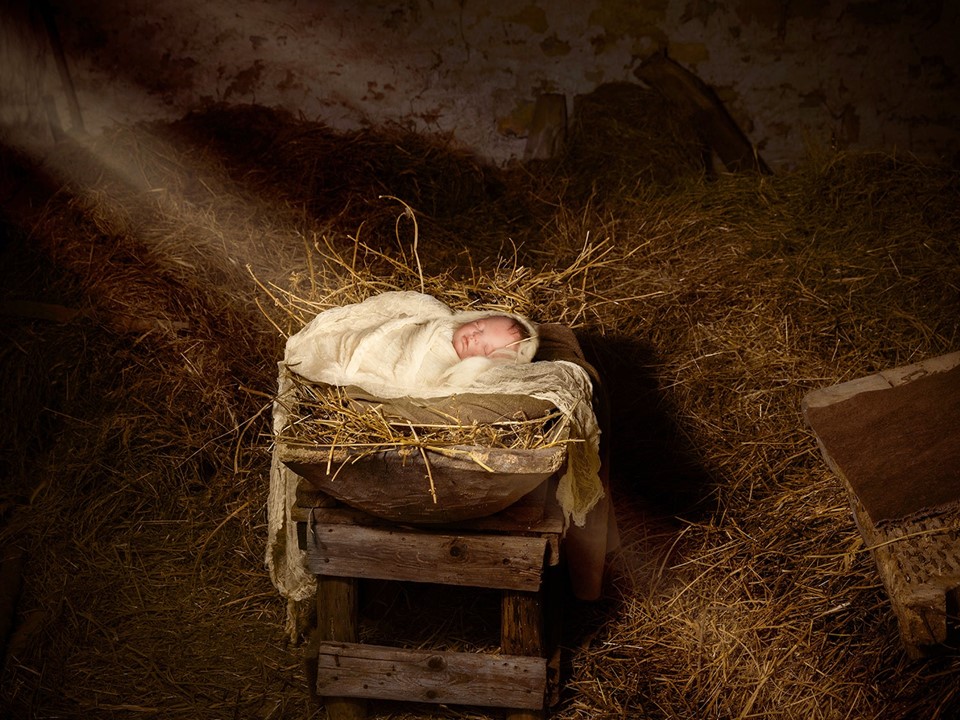
The Gospel is a mystery. The Gospel (Greek: euaggelion) means “good tidings” or “good news.” The angel brought the euaggelion to the shepherds who watched their flocks by night.[1] It was the euaggelion that the Savior was born in Bethlehem. But what did this euaggelion mean? When the angels departed, the shepherds hurried to Bethlehem to see the euaggelion for themselves. Once they had seen the baby, they spread the news to all who would hear. “And all they that heard it wondered at those things which were told them by the shepherds” (Luke 2:18, emphasis mine). It was a mystery!

At Christmastime, we sing the mournful carol, “Oh Come, Oh Come Emanuel.” The lyrics describe a deep yearning for the advent of Messiah. “Oh come, oh come Emanuel, and rescue captive Israel, that mourns in lonely exile here, until the Son of God appear.” However, Israel was not expecting the Son of God to appear. That was the mystery.

Indeed, the prophets foretold of the coming Messiah. When the magi later came searching for “he that is born King of the Jews,”[2] the religious leaders, who knew the Scriptures, directed them to Bethlehem. They quoted the Prophet Micah: “And thou Bethlehem, in the land of Juda, art not the least among the princes of Juda: for out of thee shall come a Governor, that shall rule my people Israel” (Matthew 2:6, emphasis mine). However, they omitted the last phrase of Micah’s prophecy: “whose goings forth have been from of old, from everlasting” (Micah 5:9). That last part was a mystery to them. How could an earthly ruler/king exist “from of old, from everlasting”? That would mean this king existed from eternity past. That could only mean this coming king would be God. To them, that was impossible. It was a mystery.

Four hundred years prior, the last prophet spoke of the coming Messiah. “And he shall sit as a refiner and purifier of silver: and he shall purify the sons of Levi, and purge them as gold and silver, that they may offer unto the LORD an offering in righteousness” (Malachi 3:3). This certainly speaks of authority, but the general tone of the prophecy expressed God’s displeasure with His people obscuring any hint of the Messiah’s divinity. After that, God stopped talking for four hundred years. A lot can be forgotten in four hundred years or blurred beyond recognition.

Previous prophets had spoken of a coming king who would sit on David’s throne. A favorite Christmas passage from Isaiah says, “For unto us a child is born, unto us a son is given: and the government shall be upon his shoulder: and his name shall be called Wonderful, Counsellor, The mighty God, The everlasting Father, The Prince of Peace. Of the increase of his government and peace there shall be no end, upon the throne of David, and upon his kingdom, to order it, and to establish it with judgment and with justice from henceforth even for ever. The zeal of the LORD of hosts will perform this” (Isaiah 9:6-7, emphasis mine). While Isaiah clearly stated that His name would be “The mighty God” and “The everlasting Father,” the promise of His reign on David’s throne overshadowed (in their minds) the fact of His divinity. Since the fifth century before Christ, Israel had been ruled by outside forces; first Babylon, then Persia, then Greece, and now the Romans. The Jews wanted a king to make them a superpower. God coming to reign on earth in human flesh was unthinkable. It was a mystery!

Other prophecies held an even more unimaginable mystery – Messiah would suffer and die. Psalm 22 describes His crucifixion when such execution methods did not exist. Isaiah 53 also details the suffering of Messiah. The prophet Daniel precisely foretold the number of years when Messiah would be “cut off.”[3] The Messiah that was to be king and rule the world would have to die. That makes no sense! It was a mystery!

Even today, the idea that the Almighty, Creator God took on human flesh, in a virgin’s womb, was born by natural means in the lowliest of estates, grew up among “his own, and his own received him not” (John 1:11). “He is despised and rejected of men; a man of sorrows, and acquainted with grief: and we hid as it were our faces from him; he was despised, and we esteemed him not” (Isaiah 53:3). He was nailed to a cross for our sins and rose on the third day so “that whosoever believeth in him should not perish, but have everlasting life” (John 3:16). “But as many as received him, to them gave he power to become the sons of God, even to them that believe on his name” (John 1:12). That is the mystery of the Gospel.

All religions of the world, including many so-called “Christian” religions, demand some kind of sacrifice from their adherents. The adherents of these false religions must do something to appease their gods in order to gain entry into eternal life. It is no wonder then that the idea that all one needs to do is believe in Jesus and trust in the sufficiency of His sacrifice for our sins. It’s too easy. It’s a mystery! Paul describes how Jesus left His first estate as God, and took on human flesh for the purpose of making Himself the perfect sacrifice for our sins.[4] Our God performed the work of salvation for us so that all we need to do is believe. “For by grace are ye saved through faith; and that not of yourselves: it is the gift of God: Not of works, lest any man should boast” (Ephesians 2:8-9, emphasis mine). It is a mystery! “But the natural man receiveth not the things of the Spirit of God: for they are foolishness unto him: neither can he know them, because they are spiritually discerned” (1 Corinthians 2:14). That is the mystery of the Gospel.

As we ponder the mystery of the Gospel, especially during this Christmas season, the thought of God coming to us in the form of a helpless baby should captivate us in awestruck wonder. How could such a thing be! The only thing that remains is praise and thanksgiving for the incalculable gift that He offers. “For God so loved the world, that he gave his only begotten Son, that whosoever believeth in him should not perish, but have everlasting life” (John 3:16).

Reader, if you have not accepted God’s free gift of salvation, there is nothing you have to do but believe. Please read my page on “Securing Eternal Life.”

Notes:


[1]  Luke 2:8-18

[2]  Matthew 2:1-12

[3]  Daniel 9:25-26

[4]  Philippians 2:5-11

Comments Off on The Mystery of the Gospel

Filed under Apologetics, Bible, Christianity, Christmas, Gospel, Holidays, Religion, Salvation, Theology

Chose or Chosen?

For many are called, but few are chosen. (Matthew 22:14)

I have found some Christian brothers that have strong Calvinist leanings. I accept most of the five points of Calvinism to some degree – Total Depravity, Unconditional Election, Limited Atonement, Irresistible Grace, and Perseverance of the Saints (T.U.L.I.P.) – but I cannot fully embrace U, L, and I. I completely agree with T and P – the Total Depravity of man, and the Perseverance of the Saints, i.e., “once saved, always saved.”

As already noted, the points that give me the most grief are U and L. Unconditional Election says that God predetermined from the beginning of time who would be saved and who would be damned for eternity. The argument is that God is sovereign, and He can do exactly as He pleases (no argument there). A favorite verse used to make this point is Romans 9:15 “For he saith to Moses, I will have mercy on whom I will have mercy, and I will have compassion on whom I will have compassion.” Here Paul referred to the time when Moses wanted to “see” God’s glory and God responded, “And he said, I will make all my goodness pass before thee, and I will proclaim the name of the LORD before thee; and will be gracious to whom I will be gracious, and will shew mercy on whom I will shew mercy” (Exodus 33:19, emphasis mine). Clearly, God was not speaking in soteriological terms. Indeed, neither was Paul in making the reference to Moses. When taken in context, Paul was referring to God’s sovereignty in determining the course of salvation in general, not in particular.

Limited Atonement builds on Unconditional Election. Limited Atonement says that Jesus died only for those who were unconditionally elected for salvation. That eliminates all the “whosoever” verses beginning with John 3:16 “For God so loved the world, that he gave his only begotten Son, that whosoever believeth in him should not perish, but have everlasting life” (emphasis mine). Since the Bible is always true and does not contradict itself in any way, this verse alone should serve to debunk Limited Atonement.

To a limited degree, I also disagree with Irresistible Grace. It is the Holy Spirit who convicts the individual’s heart of sin (John 16:8) and convinces him of his need for the Savior. The “call” is ubiquitous (Romans 1:20), however, it is felt more strongly in some than it is in others. Thus, it can indeed be resisted, and more resist the call than respond to it (Matthew 7:13-14).

The Bible speaks to both man’s autonomy in choosing and God’s work of “election.” I maintain that the answer is “Somewhere in the Middle,” and neither side of the argument can hold his view dogmatically.

Recently the debate came up again in my church. I made my case and the other side made their case and neither side convinced the other, which is usually the case. However, the fact that this debate keeps raising its ugly head, I determined to “Search the Scriptures; for in them ye think ye have eternal life: and they are they which testify of me” (John 5:39). I looked in the New Testament for all the verses I could find related to salvation for the individual. I divided my findings into three categories: (1) Choice/Free Will, (2) Predestination/Election, and (3) verses that can apply to both sides. Here is what I found: for Category 1, there were 77 verses; for Category 2, there were 15 verses. Of those, 7, when read in context, suggest that the “predestination” is of “purpose” not of salvation; for Category 3 there were 17. Rather than argue one side or the other, I think it best to allow the Bible to speak for itself, and the reader can decide for himself.

Verses for Category 1: Matthew 7:13-14, 24; 10:32-33; 11:28-30; 12:31-32, 50; 16:24-26; 18:3-4, 14; Mark 3:28-29, 35; 8:34-38; 9:37; 10:15; 16:16; Luke 6:47; 7:23; 9:23-25, 48; 12:8-10; 13:3, 5, 23-24; 17:33; 18:17; John 1:12-13; 3:3, 15-18, 36; 4:14; 5:24; 6:28-29, 35, 40, 45, 47, 51; 10:9-10; 11:25-26; 14:6; 20:29; Acts 2:21, 38; 10:43; Romans 1:16; 3:28; 4:5; 5:6, 12; 10:13; 2 Corinthians 5:21; Galatians 1:3-4; 2:16; 3:6-7, 11, 22, 24-27; Ephesians 1:7; 2:4-9; Philippians 2:5-11; Colossians 1:14; 2:13-14; 1 Thessalonians 5:9-10; 1 Timothy 1:15; 2:3-4; 4:10; 2 Timothy 1:9; Titus 2:11; 3:5-7; Hebrews 3:7-8, 15; 7:25; 9:28; 11:6; 2 Peter 3:9; 1 John 2:2; 5:1, 10-12; Revelation 22:14.

Verses for Category 2: Luke 10:22; John 6:37, 44, 65; 17:24; Romans 8:33;* Ephesians 1:5, 11; 2:10;* Colossians 3:12; 2 Thessalonians 2:13; 2 Timothy 2:10;* Titus 1:1;* 1 Peter 1:2;* 2 John 1:1, 13. The passages marked with an asterisk (*) speak of predestination, but when examined closely, the predestination is a “Predestination of Purpose” not predestination for salvation. In other words, it is the predetermined plan God has for those who are “justified” having placed their faith in the atoning work of Christ on the cross. As I read these passages my conclusion is that those who are “elect” are “elected” by virtue of their faith in Christ for salvation and their “predestination” is to be conformed to the image of Christ.

Verses for Category 3: Matthew 9:13; 10:39; 20:28; 22:14; Luke 5:32; John 7:38-39; 10:27-29; 14:23; Acts 4:12; 15:11; Romans 6:23; 8:1; 2 Corinthians 5:17; Hebrews 4:3; 1 Peter 3:18; 1 John 4:9-10. These verses can apply equally to either Category 1 or 2.

As we enter this Advent Season, we remember that God took on human flesh and entered time and space by way of a virgin’s womb to live and walk among His creation (John 1:1-3, 14). “He came unto his own, and his own received him not. But as many as received him, to them gave he power to become the sons of God, even to them that believe on his name” (John 1:11-12). He took the penalty of our sins upon Himself and shed His own blood on the cross to pay our sin debt. He was buried in a borrowed tomb and rose again on the third day, conquering death and the grave on our behalf to win our salvation. He did that for “whosoever” will accept His free, “grace” gift of salvation by faith in His finished work. “For God so loved the world, that he gave his only begotten Son, that whosoever believeth in him should not perish, but have everlasting life” (John 3:16). “Whosoever” accepts His offer by “believing in Him” is “elected” for “everlasting life.” This is the whole message of Christmas.

Reader, have you accepted Jesus’ free gift of salvation? If not, or if you are unsure, please read my page on “Securing Eternal Life.”

6 Comments

Filed under Apologetics, Bible, Christianity, Christmas, Gospel, Salvation, Theology

One Was Thankful

And one of them, when he saw that he was healed, turned back, and with a loud voice glorified God, (Luke 17:15)

Thanksgiving Day is upon us, and I’m sure most of us have plans for food, family, friends, and fellowship. In today’s culture, Thanksgiving Day is just a good excuse to have a day (or two) off work, indulge in gluttonous behavior, and worship before the luminous god of football followed by the giving of alms to the god of materialism the next day, all the while in complete ignorance of the significance of the day.

As I thought about Thanksgiving coming up, the Lord brought to mind the account of Jesus healing the ten lepers. We read about that in Luke 17:11-19:

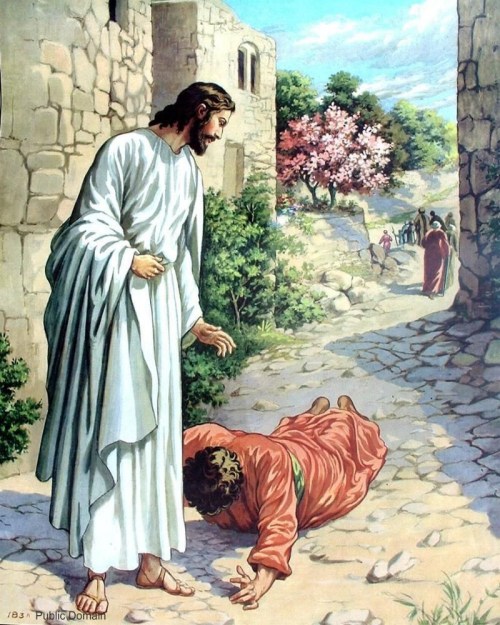
And it came to pass, as he went to Jerusalem, that he passed through the midst of Samaria and Galilee. And as he entered into a certain village, there met him ten men that were lepers, which stood afar off: And they lifted up their voices, and said, Jesus, Master, have mercy on us. And when he saw them, he said unto them, Go shew yourselves unto the priests. And it came to pass, that, as they went, they were cleansed. And one of them, when he saw that he was healed, turned back, and with a loud voice glorified God, And fell down on his face at his feet, giving him thanks: and he was a Samaritan. And Jesus answering said, Were there not ten cleansed? but where are the nine? There are not found that returned to give glory to God, save this stranger. And he said unto him, Arise, go thy way: thy faith hath made thee whole. (Luke 17:11-19)

Following the “Transfiguration” (Luke 9:28-36), Jesus “stedfastly set His face to go to Jerusalem” (Luke 9:51). Coming down from Caesarea Philippi, Luke records that Jesus “passed through the midst of Samaria and Galilee” (v. 11). He is traveling from the north to the south (toward Jerusalem), which means He must pass through Galilee first before going through Samaria. Why did Luke name Samaria first? I do not know. I could not find one commentator that could tell me, but I suspect the answer is down below. Jesus was on His way to the cross.

As the passage records, ten leprous men met Him, and while remaining at a distance –because their disease was so contagious, they were not allowed to come near other people – they cried out for Jesus to have mercy on them. They addressed Him as “Master” – Greek ἐπιστάτης (epistatēs), from epi, “superimposition, to be over, above,” and histēmi, “to stand” Together the title means “one who stands above” – Master! This is not to be confused with διδάσκαλος (didaskalos) meaning “teacher” (Luke 3:12). Thus, they recognized that Jesus had the power to heal their disease.

When Jesus saw them, “He said unto them, ‘Go show yourselves’” (v.14). Note that Jesus does not touch nor approach them. Why? Jesus had often touched lepers when He healed them, why not today? Jesus was on His way to the Cross. He could not allow Himself to become “unclean.” Note also that His Word was sufficient to heal the lepers – “as they went, they were cleansed.” This healing by His verbal command is a clear demonstration of His deity.

All ten exercised faith in believing His Word that they would be healed, but only one returned to give thanks. “When he saw that he was healed, turned back, and with a loud voice glorified God” (v. 15). “And fell down on his face at his feet, giving him thanks: and he was a Samaritan” (v. 16). He did not simply bow in reverence. He completely prostrated himself, flat with his face to the ground. He placed himself at Jesus’ feet. His attitude was one of complete humility, reverence, worship, and gratitude – “and he was a Samaritan.” That this one was a Samaritan may explain why Luke listed Samaria before Galilee. The implication is that the other nine were Jews.

Jesus seems surprised that only this one returned to give thanks. However, knowing that the Lord knows the hearts of all men, His feigned surprise was likely intended to make a point. Jesus said that “[God] is kind to the unthankful and to the evil” (Luke 6:35).

Thankfulness was not particularly characteristic of the Jews. Consider how often they complained after they were freed from Egypt. Think of how soon they fell into idol worship during the time of the Judges. Consider their presumption on God knowing that they were His people. Their lack of gratitude came as no surprise to Jesus. However, the “stranger” recognized his unworthiness and was grateful for the mercy Jesus bestowed on him.

“And he said unto him, Arise, go thy way: thy faith hath made thee whole” (v.19). The Greek word translated “whole” here is σεσωκεν (sesoken), and it means “has saved.” Literally what Jesus said is, “thy faith hath saved thee.” Obedience (which also required faith) had made him “whole,” i.e., healed him. However, his “faith” in recognizing Jesus as “Master” saved him. He was “whole” not only physically, but spiritually.

Does God Expect Us To Be Thankful?

Leviticus 22:29  And when ye will offer a sacrifice of thanksgiving unto the LORD, offer it at your own will.

  1. Not out of obligation
  2. 2 Corinthians 9:7 Every man according as he purposeth in his heart, so let him give; not grudgingly, or of necessity: for God loveth a cheerful giver.

1 Chronicles 16:8  Give thanks unto the LORD, call upon his name, make known his deeds among the people.

Can’t do the latter without the former.

1 Chronicles 16:34  O give thanks unto the LORD; for he is good; for his mercy endureth for ever.

Psalm 30:4  Sing unto the LORD, O ye saints of his, and give thanks at the remembrance of his holiness.

Considering God’s holiness and our unworthiness, how can we not be thankful for the love He has shown to us?

Psalm 95:2  Let us come before his presence with thanksgiving, and make a joyful noise unto him with psalms.

Not “come before His presence with prayer requests.” Prayer requests are fine, but let’s first thank Him.

Psalm 100:4  Enter into his gates with thanksgiving, and into his courts with praise: be thankful unto him, and bless his name.

“Bless His name,” i.e., “speak well of His name” What are some attributes of God that come to mind?

Colossians 2:6-7  As ye have therefore received Christ Jesus the Lord, so walk ye in him:  (7)  Rooted and built up in him, and stablished in the faith, as ye have been taught, abounding therein with thanksgiving.

Philippians 4:6  Be careful for nothing; but in every thing by prayer and supplication with thanksgiving let your requests be made known unto God.

1 Thessalonians 5:18  In every thing give thanks: for this is the will of God in Christ Jesus concerning you.

Consequences of Ingratitude:

Romans 1:21  Because that, when they knew God, they glorified him not as God, neither were thankful; but became vain in their imaginations, and their foolish heart was darkened.

Ingratitude darkens the heart.

2 Timothy 3:1-2, 7-9  This know also, that in the last days perilous times shall come.  (2)  For men shall be lovers of their own selves, covetous, boasters, proud, blasphemers, disobedient to parents, unthankful, unholy … (7) Ever learning, and never able to come to the knowledge of the truth. (8)  Now as Jannes and Jambres withstood Moses, so do these also resist the truth: men of corrupt minds, reprobate concerning the faith. (9)  But they shall proceed no further: for their folly shall be manifest unto all men, as theirs also was.

Benefits of Thankfulness:

Psalm 140:13  Surely the righteous shall give thanks unto thy name: the upright shall dwell in thy presence.

We are made “righteous” through Christ. Because of that we have His presence within us.

Jeremiah 30:19  And out of them shall proceed thanksgiving and the voice of them that make merry: and I will multiply them, and they shall not be few; I will also glorify them, and they shall not be small.

  1. In context, this is referring to Israel’s return from Babylonian captivity.
  2. However, the principle applies.
  3. God will bless our thankfulness.

2 Corinthians 4:15  For all things are for your sakes, that the abundant grace might through the thanksgiving of many redound to the glory of God.

  1. “redound” Greek περισσεύω (perisseuō)
  2. to superabound (in quantity or quality), be in excess
  3. God’s grace to us “supper-abounds” through thanksgiving.

2 Corinthians 9:11  Being enriched in every thing to all bountifulness, which causeth through us thanksgiving to God.

Colossians 3:15  And let the peace of God rule in your hearts, to the which also ye are called in one body; and be ye thankful.

1 Timothy 4:1-5  Now the Spirit speaketh expressly, that in the latter times some shall depart from the faith, giving heed to seducing spirits, and doctrines of devils;  (2)  Speaking lies in hypocrisy; having their conscience seared with a hot iron;  (3)  Forbidding to marry, and commanding to abstain from meats, which God hath created to be received with thanksgiving of them which believe and know the truth.  (4)  For every creature of God is good, and nothing to be refused, if it be received with thanksgiving:  (5)  For it is sanctified by the word of God and prayer.

Conclusion:

Jesus healed ten lepers. Nine of them were of “the chosen.” Their attitude reflected ingratitude for the marvelous work Jesus performed in their lives – almost as if they believed they were entitled to what they received.

One leper – a “stranger,” a Samaritan, clearly an “outsider” due to both his leprosy and his heritage – recognized his own unworthiness and the greatness of the One who healed him; and he returned to give thanks and worship the God who healed him. And he was saved.  Let us recognize that we are all lepers and give thanks for all He has done for us.

Happy Thanksgiving!

3 Comments

Filed under Apologetics, Christianity, Holidays, Religion, Salvation, Thanksgiving, Theology