Category Archives: Second Coming of Christ

Seeing to Believe

"My Lord and my God."

“My Lord and my God.”

And I will pour upon the house of David, and upon the inhabitants of Jerusalem, the spirit of grace and of supplications: and they shall look upon me whom they have pierced, and they shall mourn for him, as one mourneth for his only son, and shall be in bitterness for him, as one that is in bitterness for his firstborn. (Zechariah 12:10)

My blog is titled “Ernie’s Musings” because I write about things that cross my mind – when I can remember them. So it was this last week as I was in the shower in an effort to wake up and start the day. These days I think a lot about the Lord’s return with great anticipation as well as some dread for loved ones that are not prepared for the event. As I thought about that great event, I recalled the Scripture passage above and imagined the scene described in Revelation 19:11-16:

And I saw heaven opened, and behold a white horse; and he that sat upon him was called Faithful and True, and in righteousness he doth judge and make war. His eyes were as a flame of fire, and on his head were many crowns; and he had a name written, that no man knew, but he himself. And he was clothed with a vesture dipped in blood: and his name is called The Word of God. And the armies which were in heaven followed him upon white horses, clothed in fine linen, white and clean. And out of his mouth goeth a sharp sword, that with it he should smite the nations: and he shall rule them with a rod of iron: and he treadeth the winepress of the fierceness and wrath of Almighty God. And he hath on his vesture and on his thigh a name written, KING OF KINGS, AND LORD OF LORDS.

God long ago selected Israel among all the other nations for a particular purpose:

For thou art an holy people unto the LORD thy God: the LORD thy God hath chosen thee to be a special people unto himself, above all people that are upon the face of the earth. The LORD did not set his love upon you, nor choose you, because ye were more in number than any people; for ye were the fewest of all people: But because the LORD loved you, and because he would keep the oath which he had sworn unto your fathers, hath the LORD brought you out with a mighty hand, and redeemed you out of the house of bondmen, from the hand of Pharaoh king of Egypt. (Deuteronomy 7:6-8, emphasis mine)

God chose Israel for the purpose of bringing Messiah into the world and identifying Him with an undeniable lineage so that He wouldn’t be missed (see Matthew 1:1-16; Luke 3:23-38). God also promised the land of Israel to Abraham as an eternal possession (see Genesis 13:14-15). “Know therefore that the LORD thy God, he is God, the faithful God, which keepeth covenant and mercy with them that love him and keep his commandments to a thousand generations” (Deuteronomy 7:9, emphasis mine).

The history of Israel, from the time of the Exodus to the Babylonian captivity and beyond has been one of rebellion against God. Even now the majority of Israelis practice Judaism more out of tradition than out of a sincere devotion to God. Indeed, Israel is primarily a secular nation. Salvation for Israel has never been a “done deal.” God’s salvation is for individuals, not nations. John the Baptist made this point when a group of Pharisees and Sadducees came to him to be baptized: “And think not to say within yourselves, We have Abraham to our father: for I say unto you, that God is able of these stones to raise up children unto Abraham” (Matthew 3:9).  Salvation is not a national right for Israel. Israel exists as a sign to the world and to give testimony of God’s faithfulness. “God is not a man, that he should lie; neither the son of man, that he should repent: hath he said, and shall he not do it? or hath he spoken, and shall he not make it good?” (Numbers 23:19) God, because of His mercy and faithfulness, will give Israel one final chance to repent, and when they see the Lord returning in the clouds, “they shall look upon me whom they have pierced, and they shall mourn for him, as one mourneth for his only son, and shall be in bitterness for him, as one that is in bitterness for his firstborn” (Zechariah 12:10), but each individually, not as a nation.

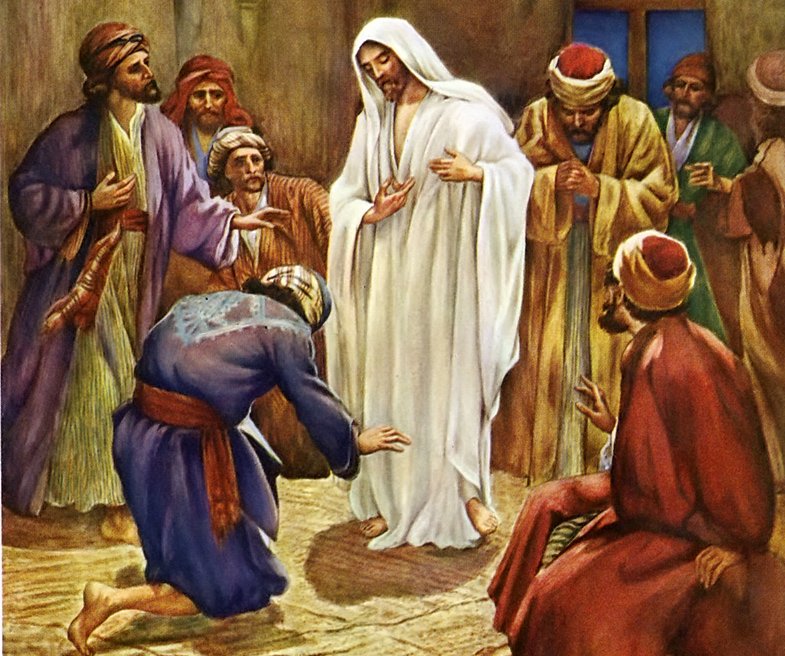
As I mused on this, I recalled John’s account of Thomas, the apostle, following the resurrection of Christ. Jesus was crucified during Passover and placed in a tomb where He laid for three nights and three days (John 19:38-42). Then early on the first day of the week (Sunday), He reclaimed His life and rose from the grave (John 20:1). There He was seen by Mary Magdalene who clung to Him when she saw Him. “Jesus saith unto her, Touch me not; for I am not yet ascended to my Father: but go to my brethren, and say unto them, I ascend unto my Father, and your Father; and to my God, and your God” (John 20:17). Apparently, His absence was brief. Mary Magdalene gave Jesus’ message to the disciples who were holed up in the upper room “for fear of the Jews” (John 20:19). It was the same day in the evening (prior to 6 PM), when “came Jesus and stood in the midst, and saith unto them, Peace be unto you” (v. 19). Thomas was not in the group. When the others gave Thomas the news, “he said unto them, Except I shall see in his hands the print of the nails, and put my finger into the print of the nails, and thrust my hand into his side, I will not believe” (John 20:25). The following Sunday, Jesus once again appeared to His disciples, and this time Thomas was with the group.

Then saith he to Thomas, Reach hither thy finger, and behold my hands; and reach hither thy hand, and thrust it into my side: and be not faithless, but believing. And Thomas answered and said unto him, My Lord and my God. Jesus saith unto him, Thomas, because thou hast seen me, thou hast believed: blessed are they that have not seen, and yet have believed. (John 20:27-29, emphasis mine)

I see a parallel here between this account of Jesus’ resurrection and His return at the last days. The day of Jesus’ resurrection is the presentation of the Gospel which the Apostles received upon seeing Him. Thomas was not there to witness the risen Christ, but the message was presented to him, and he rejected it. The period between the Sunday of Christ’s resurrection and the following Sunday can be compared to the “Church Age” where the Gospel – the good news – is proclaimed but the only evidence is the testimony of the messengers. Those who believe must do so by faith and the credibility of the message. The following week, Christ returns and this time Thomas sees Him in the flesh. This can be compared to the end of this age when the Lord returns to set up His millennial kingdom (Revelation 20). At that time many of the Jews who rejected Him by faith shall look upon Him “whom they have pierced, and they shall mourn for him, as one mourneth for his only son, and shall be in bitterness for him, as one that is in bitterness for his firstborn” (Zechariah 12:10). And Jesus will say, “because thou hast seen me, thou hast believed: blessed are they that have not seen, and yet have believed” (John 20:29, emphasis mine). Jesus will return very soon. Don’t wait to see Him in order to believe. It may be too late then.
2 Comments

Filed under Bible, Christianity, Easter, End Times, Evangelism, Gospel, Religion, Resurrection, Salvation, Second Coming of Christ, Theology

The Church Universal is at Our Doorstep

The Church Universal is at Our Doorstep

By Geri Ungurean.

There is only One God. His name is Jesus. “Neither is there salvation in any other: for there is none other name under heaven given among men, whereby we must be saved” (Acts 4:12) .

2 Comments

Filed under Apologetics, Christianity, End Times, Evangelism, Gospel, Resurrection, Second Coming of Christ

It’s Not That Bad

But as the days of Noe were, so shall also the coming of the Son of man be. For as in the days that were before the flood they were eating and drinking, marrying and giving in marriage, until the day that Noe entered into the ark, And knew not until the flood came, and took them all away; so shall also the coming of the Son of man be.  (Matthew 24:37-39)

Unless you have totally detached yourself from all society, isolated yourself in a cave, or numbed your brain with drugs, you know that the world is in moral decline. We have ejected God from the public square, spurned His law and called what is good evil and what is evil good (Isaiah 5:20). We accept that which is unnatural and hold it up as something to be praised and held in honor. We castigate those who hold firm to their passé morality, and stigmatize them as evil haters. We hail outlaws as heroes and call true heroes cowards. We slaughter our progeny and fearlessly defend the life and welfare of animals. We fight against polluting the planet and think nothing of the moral pollution of our minds. Boy! Are we screwed up!

We hear of wars and rumors of wars. Natural and man-made catastrophes are increasing all over the world, and for the most part, life, for the vast majority of people, goes on as usual. The words of Jesus recorded by Matthew above make me wonder. Just how bad were things at the time of Noah? Genesis records that “it repented the LORD that he had made man on the earth, and it grieved him at his heart. And the LORD said, I will destroy man whom I have created from the face of the earth … for it repenteth me that I have made them” (Genesis 6:6-7). Things must have been pretty bad for God to take such extreme measures. “The earth also was corrupt before God, and the earth was filled with violence. And God looked upon the earth, and, behold, it was corrupt; for all flesh had corrupted his way upon the earth” (Genesis 6:11-12). Is that not what we see today? Mankind is corrupt and the earth is filled with violence. So, why does Christ delay His return? Surely, things are as bad today as they were in the days of Noah.

It seems that there have been periods in world history that were far worse than they are today, and Jesus did not return then either. When Jesus spoke these words, He was not referring to the moral condition of the world, but rather the suddenness of the destruction that fell upon them. Note that they were conducting life as usual, “eating and drinking, marrying and giving in marriage.” There is nothing particularly sinful in that, but as they carried on life as usual, destruction came on them suddenly, “And [they] knew not until the flood came, and took them all away” (Matthew 24:39). But there may be more to it than they were just carrying on life as usual. The world was violent then and evil was so rampant that God said, “Enough!”

For Christians (and I always feel that I need to qualify that with the adjective “true”) the world does not have to get as bad as in the days of Noah. Paul would remind us, as he did the Christians in Thessalonica, “Now we beseech you, brethren, by the coming of our Lord Jesus Christ, and by our gathering together unto him, That ye be not soon shaken in mind, or be troubled, neither by spirit, nor by word, nor by letter as from us, as that the day of Christ is at hand. Let no man deceive you by any means: for that day shall not come, except there come a falling away first, and that man of sin be revealed, the son of perdition” (2 Thessalonians 2:1-3, emphasis mine). That “falling away” is the Greek word apostasia, which means a “defection from the truth.” We see that happening today, but God still has a remnant. I heard today that the number of “true” Christians, according to Barna, is down to about 7%, but that remnant is still strong. Paul says that the “son of perdition,” a.k.a. “Antichrist,” will not be revealed until “he who now letteth will let, until he be taken out of the way” (2 Thessalonians 2:7, emphasis mine). That word “lets” (“letteth”) is actually two Greek words: katechō meaning “to hold down,” and arti, meaning “suspension.” That “He” is the Holy Spirit who indwells every child of God. When the Bride of Christ is “taken out of the way,” there will be nothing left to restrain evil.

It’s bad now, but it’s not that bad. Christ will call for His Bride at any moment. As in the days of Noah, life will be going on as usual. Then suddenly, millions of people – Christians – will disappear from all over the earth, and the trouble begins. It’s not that bad now, but it’s going to get bad. I hope you are ready!

2 Comments

Filed under Apologetics, Christianity, Current Events, End Times, Evangelism, Gospel, Heaven, Religion, Salvation, Satan, Second Coming of Christ

A King On A Donkey


Hosanna!

Hosanna!

Rejoice greatly, O daughter of Zion; shout, O daughter of Jerusalem: behold, thy King cometh unto thee: he is just, and having salvation; lowly, and riding upon an ass, and upon a colt the foal of an ass. (Zechariah 9:9)

Passover was just a few days away. Jerusalem buzzed with activity. Jews from all parts of the Roman world made the pilgrimage to the Judean capitol to celebrate the first of three Feasts of the Lord that required mandatory attendance by every Jewish male (Deuteronomy 16:16). In spite of Roman oppression, this was a time of celebration as everyone anticipated the promised king that would deliver them and restore Israel’s former greatness. “Perhaps this year,” they thought.

To this cacophony of festivities entered the unassuming King of Kings. Daniel had prophesied this event more than 483 years before. “Know therefore and understand, that from the going forth of the commandment to restore and to build Jerusalem unto the Messiah the Prince shall be seven weeks, and threescore and two weeks: the street shall be built again, and the wall, even in troublous times. And after threescore and two weeks shall Messiah be cut off, but not for himself: and the people of the prince that shall come shall destroy the city and the sanctuary; and the end thereof shall be with a flood, and unto the end of the war desolations are determined” (Daniel 9:25-26). Today the prophecy appeared – lowly, and riding upon a donkey’s foal as prophesied by Zechariah. Even this unnoticed act was miraculous. A foal is a donkey (or horse) that is not yet a year old. This one, a colt (male), had never been ridden (Mark 11:2; Luke 19:30). Surely anyone reading this knows what happens when a donkey, horse or mule is mounted for the first time, but not so here. “And they brought him [the colt] to Jesus: and they cast their garments upon the colt, and they set Jesus thereon. And as he went, they spread their clothes in the way” (Luke 19:35-36). Somehow, that little animal understood the significance of the rider. He was carrying the Creator, the One who said, “Take my yoke upon you … For my yoke is easy, and my burden is light” (Matthew 11:29-30).

Thus Jesus entered His city to present Himself as the “Prince of Peace” (Isaiah 9:6). A conqueror would have entered upon a white charger parading his conquests before him, but a king who comes in peace enters in on a mule or a donkey (1 Kings 1:30-40). As Jesus made His way into the city, the crowd thronged Him singing the words of the psalm “Hosanna!” meaning “Save now!” “Blessed be he that cometh in the name of the LORD” (Psalm 118:25-26). Who knows if the mob understood the significance of the psalm or of the Man to whom they sang? When the religious leaders compelled Jesus to silence the crowd (for they understood very well the significance of the words), “he answered and said unto them, I tell you that, if these should hold their peace, the stones would immediately cry out” (Luke 19:40).

Interesting that at the first Passover, when the children of Israel were in Egypt, Moses required each family to take an unblemished lamb into their home at the first of the month. This lamb would become endeared to the family, and then on the fourteenth of the month, the lamb would be slain and its blood painted on the door posts of the house (Exodus 12:1-12). Now the Lamb of God entered the house of Israel to be sacrificed for the sins of the world. All things foreordained “from the foundation of the world” (Revelation 13:8). Thus Messiah, the King on a donkey, presented Himself only to be “despised and rejected of men” (Isaiah 53:3). Soon the Passover Lamb would be “cut off” (Daniel 9:26).

The King will return. When He returns, His mount will not be a lowly donkey, but a mighty, white steed. “And I saw heaven opened, and behold a white horse; and he that sat upon him was called Faithful and True, and in righteousness he doth judge and make war … And he hath on his vesture and on his thigh a name written, KING OF KINGS, AND LORD OF LORDS. (Revelation 19:11, 16) – no longer a King on a donkey.

Hallelujah! “Even so, come, Lord Jesus!” (Revelation 22:20)

2 Comments

Filed under Apologetics, Christianity, End Times, Gospel, Religion, Salvation, Second Coming of Christ, Theology

I Am A Christian

Cross in Tunnel

For I am not ashamed of the gospel of Christ: for it is the power of God unto salvation to every one that believeth; to the Jew first, and also to the Greek. (Romans 1:16)

I am a Christian. I do not adhere to a religion. I submit to, dedicate and devote my life to a person – the Person of Jesus Christ. He is my Creator (John 1:1-3), my Lord (Philippians 2:11), my Master (John 13:13) and my God (John 20:28). I owe my entire life (John 1:4), in this present physical state, and in a future and glorified state, to Him. I have this assurance because I have placed my complete trust in Him for my present welfare and my future security (Romans 10:11). There is nothing that I have done or can do to procure that right. “For by grace are ye saved through faith; and that not of yourselves: it is the gift of God: Not of works, lest any man should boast” (Ephesians 2:8-9, emphasis added). I know this to be true because, “as many as received him, to them gave he power to become the sons of God, even to them that believe on his name” (John 1:12), and that applies to me. I know the truth of this because He placed His Spirit within me and His Spirit confirms with my spirit that this is indeed true. “Now he which [establishes] us with you in Christ, and hath anointed us, is God; Who hath also sealed us, and given the earnest of the Spirit in our hearts” (2 Corinthians 1:21-22, emphasis added), and “The Spirit [Himself] beareth witness with our spirit, that we are the children of God” (Romans 8:16).

I am a Christian. I believe that the Bible is THE Word of God. That being the case, it is without error (inerrant), and it is faithful and true (infallible). The Bible may include some things that I cannot understand or explain, but I accept it nonetheless because, coming from God, it is true. “All scripture is given by inspiration of God, and is profitable for doctrine, for reproof, for correction, for instruction in righteousness” (2 Timothy 3:26, emphasis added). The Bible did not come to us by the device of man, but rather by men as inspired and directed by God. “We have also a more sure word of prophecy; whereunto ye do well that ye take heed … Knowing this first, that no prophecy of the scripture is of any private interpretation. For the prophecy came not in old time by the will of man: but holy men of God spake as they were moved by the Holy Ghost” (2 Peter 2:19-21, emphasis added). The same Spirit of God that inspired the scribes of God’s Word also gives understanding to those who have “ears to hear.” Jesus promised, “But the Comforter, which is the Holy Ghost, whom the Father will send in my name, he shall teach you all things, and bring all things to your remembrance, whatsoever I have said unto you” (John 14:26, emphasis added). As a Christian, I reject that a Pope or any other so called “spiritual leader” has greater insight into the Word of God than what the Holy Spirit has given me, so long as I submit to His leading and not to my personal preferences. Those who reject the Bible do so not because they do not understand it, but because they do understand and are unwilling to comply with its teachings. But regardless of what men say, the Word of God will stand when all others fall. God says, “So shall my word be that goeth forth out of my mouth: it shall not return unto me void, but it shall accomplish that which I please, and it shall prosper in the thing whereto I sent it” (Isaiah 55:11, emphasis added). Jesus echoed the same assertion this way: “For verily I say unto you, Till heaven and earth pass, one jot or one tittle shall in no wise pass from the law, till all be fulfilled” (Matthew 5:18, emphasis added). So, when Genesis 1 records that God created the universe and all that is in it – earth, sun, moon, stars, plants, animals, and man – in just six 24-hour days, I accept that as truth, regardless of whether or not science can confirm it, which, by the way, it does. When Jesus says “I will come again, and receive you unto myself; that where I am, there ye may be also” (John 14:3), I know that is true.

I am a Christian. I know that Jesus will return as He promised (John 14:1-3) to snatch away those who have placed their trust in Him. “For the Lord himself shall descend from heaven with a shout, with the voice of the archangel, and with the trump of God: and the dead in Christ shall rise first: Then we which are alive and remain shall be caught up together with them in the clouds, to meet the Lord in the air: and so shall we ever be with the Lord” (1Thessalonians 4:16-17, emphasis added). Those who have placed their trust in their own devices or gods of their own making are destined to an eternity separated from God in Hell. The Apostle Peter puts it this way:

The Lord knoweth how to deliver the godly out of temptations, and to reserve the unjust unto the day of judgment to be punished: But chiefly them that walk after the flesh in the lust of uncleanness, and despise government. Presumptuous are they, selfwilled, they are not afraid to speak evil of dignities. Whereas angels, which are greater in power and might, bring not railing accusation against them before the Lord. But these, as natural brute beasts, made to be taken and destroyed, speak evil of the things that they understand not; and shall utterly perish in their own corruption; (2 Peter 2:9-12, emphasis added).

However, this is not the will of God. “The Lord is not slack concerning his promise, as some men count slackness; but is longsuffering to us-ward, not willing that any should perish, but that all should come to repentance” (2 Peter 3:9, emphasis added). But there is only one way to obtain eternal life, not many ways as many would prefer. Jesus said, “I am the way, the truth, and the life: no man cometh unto the Father, but by me” (John 14:6, emphasis added). “Neither is there salvation in any other: for there is none other name under heaven given among men, whereby we must be saved” (Acts 4:12, emphasis added). While many see this as narrow and intolerant, I would be quick to point out that the holiness of God demands that all sin be punished “For all have sinned, and come short of the glory of God” (Romans 3:23, emphasis added). It is only through His grace and mercy that we even have this “way” of salvation.

I am a Christian. I am not sinless. I am not perfect. In my own strength I am no greater that the worst offender. Any right standing that I have before God is only through the covering (atoning) blood of Jesus Christ my Lord who shed His precious blood in my stead to completely pay my debt of sin, and not mine alone but “whosoever” will believe in Him (John 3:16).  However, even though I am not sinless or perfect, my heart’s desire is to please my God and emulate my Lord and Savior Jesus Christ, and that distinguishes me from someone who is not a Christian. Even this is the result of God’s Spirit in me rather than something I manufacture through my own effort.

I am a Christian. I continue to learn and grow as I strive to follow the example of my Lord. The Bible tells us that the disciples were first called Christians in Antioch (Acts 11:26). A “disciple” is a student or pupil. In the first century, a disciple did not sit at a desk taking notes from an instructor. Rather, they attached themselves to a teacher and tried not only to learn the “teachings” of their teacher, but they tried to emulate his life style. These students at Antioch learned indirectly from Barnabas and Saul (Paul) the teachings of Jesus, and they tried to emulate the life of Christ to the point that outsiders took notice and assigned to them the moniker of “Christian.” My desire, as a Christian, is to so live my life in such a way that others will see Christ in me.

Will you join me and take on the name of Christ? You will not be in the majority. Jesus said, “Enter ye in at the strait gate: for wide is the gate, and broad is the way, that leadeth to destruction, and many there be which go in thereat: Because strait is the gate, and narrow is the way, which leadeth unto life, and few there be that find it” (Matthew 7:13-14). The Greek word translated “strait” is stenos which means “narrow” and it carries the idea of a very tight passage through which one must squeeze with great effort. Thus, it is easily overlooked. The Greek word translated “narrow” is thlibō which means crowed, not because many are on the way, but because it is narrow (like a deer trail) and the few that are on the path overcrowd it easily. It is a road fraught with affliction, tribulation and trouble. It is a perilous road that will alienate the traveler from friends and family and the world. It does come with a cost, but Jesus said:

Think not that I am come to send peace on earth: I came not to send peace, but a sword. For I am come to set a man at variance against his father, and the daughter against her mother, and the daughter in law against her mother in law. And a man’s foes shall be they of his own household. He that loveth father or mother more than me is not worthy of me: and he that loveth son or daughter more than me is not worthy of me. And he that taketh not his cross, and followeth after me, is not worthy of me. (Matthew 10:34-38, emphasis added)

I am a Christian. My first allegiance is to Christ. Yet, as severe as these words of the Lord are, there is a paradox. Jesus also said, “Come unto me, all ye that labour and are heavy laden, and I will give you rest. Take my yoke upon you, and learn of me; for I am meek and lowly in heart: and ye shall find rest unto your souls. For my yoke is easy, and my burden is light” (Matthew 11:28-30, emphasis added). There is nothing that the Lord takes away, that He does not replace with something much better. Those others along the crowed narrow way are your brothers and sisters in Christ, and often, they understand the struggles you face because they have faced them too, and they are there to help you along the narrow way. God’s family is greater than any earthly family or any worldly friends. That is just one more reason I am glad I am a Christian.

3 Comments

Filed under Apologetics, Christianity, Creation, End Times, Evangelism, Gospel, Heaven, Hell, Religion, Salvation, Second Coming of Christ, Theology