Category Archives: Theology

Babylon

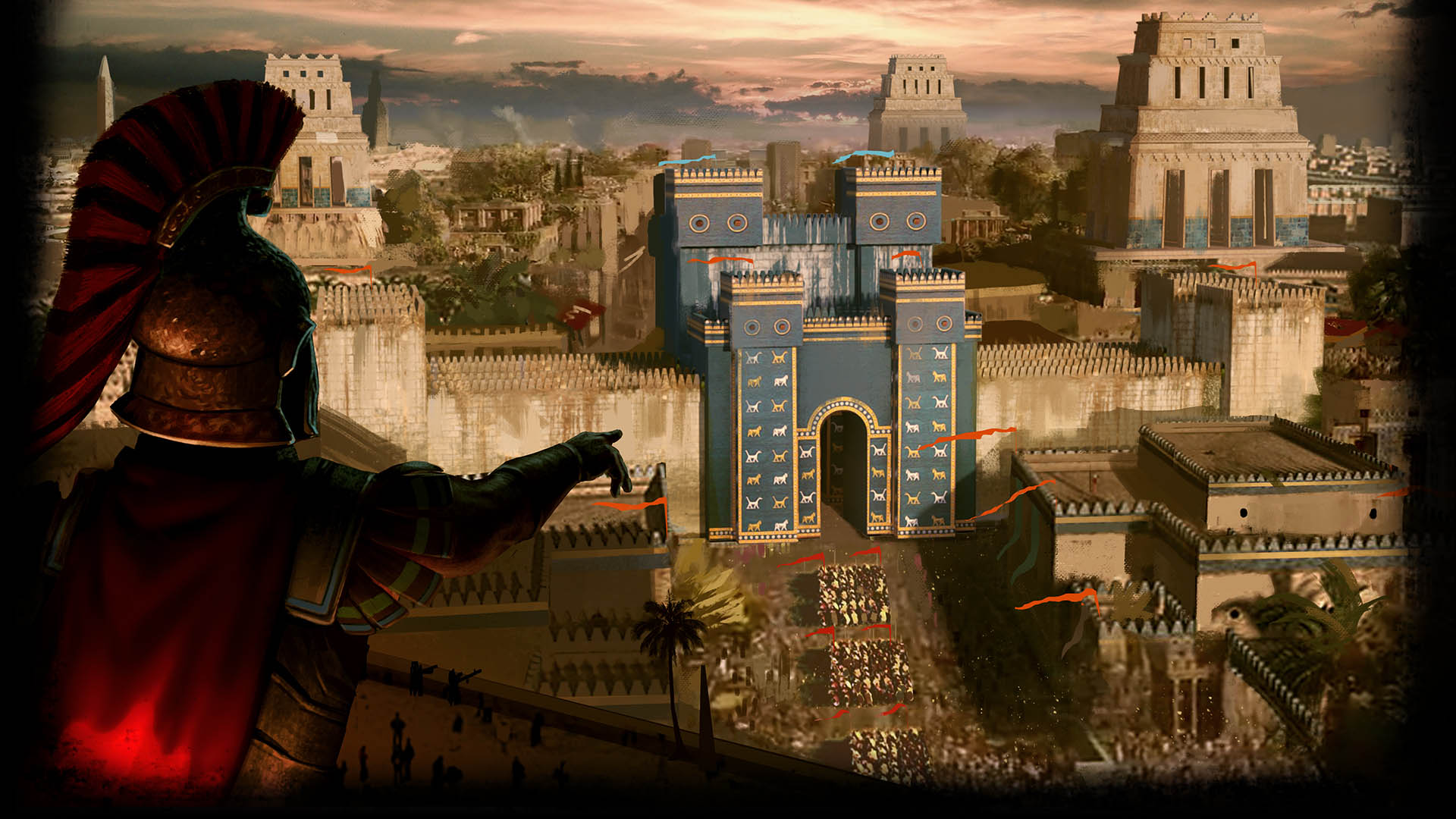
The Ishtar Gate of ancient Babylon

And Babylon, the glory of kingdoms, the beauty of the Chaldees’ excellency, shall be as when God overthrew Sodom and Gomorrah. It shall never be inhabited, neither shall it be dwelt in from generation to generation: neither shall the Arabian pitch tent there; neither shall the shepherds make their fold there. But wild beasts of the desert shall lie there; and their houses shall be full of doleful creatures; and owls shall dwell there, and satyrs shall dance there. And the wild beasts of the islands shall cry in their desolate houses, and dragons in their pleasant palaces: and her time is near to come, and her days shall not be prolonged. (Isaiah 13:19-22)

Babylon appears 294 times in the King James Bible. The first reference can be found in Second Kings. “And the king of Assyria brought men from Babylon, and from Cuthah, and from Ava, and from Hamath, and from Sepharvaim, and placed them in the cities of Samaria instead of the children of Israel: and they possessed Samaria, and dwelt in the cities thereof” (2 Kings 17:24). This citation refers to the time when the Assyrians conquered the northern kingdom of Israel. Babylon had not yet ascended to power. However, the history of Babylon goes all the way back to Genesis after the flood when the people rebelled against God by refusing to “fill the earth” as God had commanded. Instead, they congregated in one place and built a tower to worship the heavens. God overruled their plans, confused their language, and scattered them all over the earth as He willed.[1] “So the LORD scattered them abroad from thence upon the face of all the earth: and they left off to build the city. Therefore is the name of it called Babel; because the LORD did there confound the language of all the earth: and from thence did the LORD scatter them abroad upon the face of all the earth” (Genesis 11:8-9).

“Babylon was initially a minor city-state, and controlled little surrounding territory; its first four Amorite rulers did not assume the title of king. The older and more powerful states of Assyria, Elam, Isin, and Larsa overshadowed Babylon until it became the capital of Hammurabi’s short-lived empire about a century later … After the reign of Hammurabi, the whole of southern Mesopotamia came to be known as Babylonia, whereas the north had already coalesced centuries before into Assyria.”[2] After this, Babylon diminished into a weak city-state until Nebopolassar came into power. “Under Nabopolassar, a previously Chaldean King, Babylon escaped Assyrian rule, and in an alliance with Cyaxares, king of the Medes who was his son in law together with Cimmerians, finally destroyed the Assyrian Empire between 612 BC and 605 BC. Babylon thus became the capital of the Neo-Babylonian (sometimes called the Chaldean) Empire. With the recovery of Babylonian independence, a new era of architectural activity ensued, particularly during the reign of his son Nebuchadnezzar II (604–561 BC).”[3]

As students of the Bible, this last name rings a bell. We are familiar with the biblical accounts of the conquest of Judah and Jerusalem and the demise of the Babylonian Empire by the Medes and the Persians. Prophecies concerning Babylon call for its utter destruction as in our passage above (Isaiah 13:19-22). Consider the following verses from the Prophet Jeremiah.

Because of the wrath of the LORD it shall not be inhabited, but it shall be wholly desolate: every one that goeth by Babylon shall be astonished, and hiss at all her plagues. (Jeremiah 50:13)

As God overthrew Sodom and Gomorrah and the neighbour cities thereof, saith the LORD; so shall no man abide there, neither shall any son of man dwell therein. (Jeremiah 50:40)

And I will render unto Babylon and to all the inhabitants of Chaldea all their evil that they have done in Zion in your sight, saith the LORD. Behold, I am against thee, O destroying mountain, saith the LORD, which destroyest all the earth: and I will stretch out mine hand upon thee, and roll thee down from the rocks, and will make thee a burnt mountain. And they shall not take of thee a stone for a corner, nor a stone for foundations; but thou shalt be desolate for ever, saith the LORD. (Jeremiah 51:24-26)

And Babylon shall become heaps, a dwellingplace for dragons, an astonishment, and an hissing, without an inhabitant. (Jeremiah 51:37)

How is Sheshach taken! and how is the praise of the whole earth surprised! how is Babylon become an astonishment among the nations! The sea is come up upon Babylon: she is covered with the multitude of the waves thereof. Her cities are a desolation, a dry land, and a wilderness, a land wherein no man dwelleth, neither doth any son of man pass thereby. (Jeremiah 51:41-43)

And thou shalt say, Thus shall Babylon sink, and shall not rise from the evil that I will bring upon her: and they shall be weary. Thus far are the words of Jeremiah. (Jeremiah 51:64)

The book of Revelation also speaks of the complete destruction of Babylon. “And the great city was divided into three parts, and the cities of the nations fell: and great Babylon came in remembrance before God, to give unto her the cup of the wine of the fierceness of his wrath” (Revelation 16:19). “And after these things I saw another angel come down from heaven, having great power; and the earth was lightened with his glory. And he cried mightily with a strong voice, saying, Babylon the great is fallen, is fallen, and is become the habitation of devils, and the hold of every foul spirit, and a cage of every unclean and hateful bird.” (Revelation 18:1-2).

Babylon exists today, albeit not as a city of great significance. The rebuilding of the Ishtar Gate and the archeology taking place there make it more of a destination for curiosity seekers. “By 1905, there were several villages in Babylon, one of which was Qwaresh with about 200 households located within the boundaries of the ancient inner city walls. The village grew due to the need for laborers during the German Oriental Society excavations (1899-1917) … On 5 July 2019, the site of Babylon was inscribed as a UNESCO World Heritage Site. Thousands of people reside in Babylon within the perimeter of the ancient outer city walls, and communities in and around them are ‘rapidly developing from compact, dense settlements to sprawling suburbia despite laws restricting constructions’.”[4]

Obviously, the prophecies of the total destruction of Babylon have not come to pass. Since God cannot lie,[5] these prophecies must yet be future. However, there are some end-times prophecy teachers that teach that the Babylon referred to in Revelation is symbolic of false religion that has its roots in Babylon. They also teach that John employed coded language to refer to the Roman Empire as Peter did in his letters. “The church that is at Babylon, elected together with you, saluteth you; and so doth Marcus my son” (1 Peter 5:13). However, there are many that take deference to that saying that Peter was referring to an actual church in literal Babylon.

It’s hard to say. It may be that John was referring to Rome when he referred to Babylon. Christians experienced much persecution under Rome and perhaps this was John’s way of obscuring the meaning in case the letter was intercepted by Roman authorities. That is not beyond possibility. However, there is still the fact that the real, physical Babylon still exists, and it has not been made “a land wherein no man dwelleth, neither doth any son of man pass thereby” (Jeremiah 51:43). It is also not beyond the realm of possibility that Antichrist could indeed set up his headquarters there. There is a population there. There is infrastructure. It does not need to be a “show place” for him to operate from there. For that reason, I lean toward the actual Babylon being the center of Antichrist’s government. That is where false religion started, and that is where it will end when Christ returns. Then all the prophecies of its total destruction will be fulfilled.

Jesus is coming soon, and His reward is with Him. The signs for His appearing are increasing in intensity and frequency. Are you prepared to meet Him? If you do not know Jesus as your personal Lord and Savior, please read my page on “Securing Eternal Life.”

Notes:


[1]  Genesis 11:1-9

[2]  “Babylon” – https://en.wikipedia.org/wiki/Babylon

[3]  Ibid.

[4]  Ibid.
[5]  Numbers 23:19; Titus 1:2

1 Comment

Filed under Apologetics, End Times, Eschatology, Religion, Second Coming of Christ, Theology

Sometimes Good Deeds Are Rewarded

Trust in the LORD, and do good; so shalt thou dwell in the land, and verily thou shalt be fed. (Psalm 37:3)

Karma characterizes the eastern idea of reaping what you sow. If you sow good deeds, you will reap good. If you sow evil deeds, you will reap evil. To be fair, the Bible teaches the same thing in a more realistic way.

“The wicked worketh a deceitful work: but to him that soweth righteousness shall be a sure reward” (Proverbs 11:18).

“Be not deceived; God is not mocked: for whatsoever a man soweth, that shall he also reap. For he that soweth to his flesh shall of the flesh reap corruption; but he that soweth to the Spirit shall of the Spirit reap life everlasting” (Galatians 6:7-8).

Of course, the Bible also says that such is not always the case. To us, it sometimes appears as if the wicked receive good for their evil.

“The tabernacles [i.e., “houses”] of robbers prosper, and they that provoke God are secure; into whose hand God bringeth abundantly” (Job 12:6).

“I was envious at the foolish, when I saw the prosperity of the wicked. For there are no bands in their death: but their strength is firm. They are not in trouble as other men; neither are they plagued like other men. Therefore pride compasseth them about as a chain; violence covereth them as a garment. Their eyes stand out with fatness: they have more than heart could wish. They are corrupt, and speak wickedly concerning oppression: they speak loftily. They set their mouth against the heavens, and their tongue walketh through the earth. Therefore his people return hither: and waters of a full cup are wrung out to them. And they say, How doth God know? and is there knowledge in the most High? Behold, these are the ungodly, who prosper in the world; they increase in riches” (Psalm 73:3-12).

The difference between karma and the Bible is that for karma, the axiom is sure and constant. The Bible makes no promises that good will be rewarded or evil will be punished in this world. The Bible offers many examples of good individuals suffering evil consequences: Joseph, Jesus, Paul, and the other apostles. Just rewards are reserved for eternity.

However, the Bible also gives examples of those who were rewarded for their righteous acts. Such was the case with one Ebed-melech. “Ebedmelech the Ethiopian, one of the eunuchs which was in the king’s house.”[1] Ebedmelech was probably not his real name. My KJV Bible hyphenates the name emphasizing the compound word, which means “Servant of the King.” He was an Ethiopian; therefore, he did not have a proper Hebrew name. Scripture tells us that he was a eunuch meaning he had been castrated at some point in his life – probably when he entered the king’s service.

“Eunuchs would usually be servants or slaves who had been castrated to make them less threatening servants of a royal court where physical access to the ruler could wield great influence. Seemingly lowly domestic functions—such as making the ruler’s bed, bathing him, cutting his hair, carrying him in his litter, or even relaying messages—could, in theory, give a eunuch “the ruler’s ear” and impart de facto power on the formally humble but trusted servant. Similar instances are reflected in the humble origins and etymology of many high offices.

Eunuchs supposedly did not generally have loyalties to the military, the aristocracy, or a family of their own (having neither offspring nor in-laws, at the very least). They were thus seen as more trustworthy and less interested in establishing a private “dynasty”. Because their condition usually lowered their social status, they could also be easily replaced or killed without repercussion. In cultures that had both harems and eunuchs, eunuchs were sometimes used as harem servants.”[2]

King Zedekiah, in whose service Ebedmelech was employed, had been set up as king over Judah by King Nebuchadnezzar[3] following the first deportation. Zedekiah called on Jeremiah for counsel from the Lord, but he despised what the Lord had to say.[4] Zedekiah sent word to Jeremiah asking him to pray to the Lord for them. At this time, the Egyptians had come up to defend Judah, but the “Chaldeans,” i.e., the Babylonians, turned them back to Egypt.

“Then came the word of the LORD unto the prophet Jeremiah, saying, Thus saith the LORD, the God of Israel; Thus shall ye say to the king of Judah, that sent you unto me to enquire of me; Behold, Pharaoh’s army, which is come forth to help you, shall return to Egypt into their own land. And the Chaldeans shall come again, and fight against this city, and take it, and burn it with fire” (Jeremiah 37:6-8).

God advised Zedekiah not to deceive himself into thinking that the Egyptians could defeat the Babylonians. “For though ye had smitten the whole army of the Chaldeans that fight against you, and there remained but wounded men among them, yet should they rise up every man in his tent, and burn this city with fire” (Jeremiah 37:10).

While the Chaldeans were off fighting the Egyptians, Jeremiah left Jerusalem and went to the territory of Benjamin. There, he was overtaken by Irijah, one of Zedekiah’s officers and accused of defecting to the Chaldeans. So, Jeremiah was arrested and imprisoned in a dungeon. While there, Zedekiah came to him requesting “any word from the Lord.” The word from the Lord was that he would be delivered over to the king of Babylon. The word displeased Zedekiah and he put Jeremiah back in prison.[5]

Jeremiah continued to prophesy from his prison cell in the court where all passersby could hear. Jeremiah’s message was harsh but true. All in the city would “die by the sword, by the famine, and by the pestilence.”[6] However, anyone surrendering to the Chaldeans would be spared.[7] The message did not appeal to the leaders because they felt it would dishearten the people. They asked Zedekiah to do something about Jeremiah, and he gave them permission to do whatever they wanted with the prophet. So, their solution was to put Jeremiah in a deep cistern that held no water but was deep in mud. Here is where Ebedmelech comes in.

“Now when Ebedmelech the Ethiopian, one of the eunuchs which was in the king’s house, heard that they had put Jeremiah in the dungeon; the king then sitting in the gate of Benjamin; Ebedmelech went forth out of the king’s house, and spake to the king, saying, My lord the king, these men have done evil in all that they have done to Jeremiah the prophet, whom they have cast into the dungeon; and he is like to die for hunger in the place where he is: for there is no more bread in the city. Then the king commanded Ebedmelech the Ethiopian, saying, Take from hence thirty men with thee, and take up Jeremiah the prophet out of the dungeon, before he die. So Ebedmelech took the men with him, and went into the house of the king under the treasury, and took thence old cast clouts and old rotten rags, and let them down by cords into the dungeon to Jeremiah. And Ebedmelech the Ethiopian said unto Jeremiah, Put now these old cast clouts and rotten rags under thine armholes under the cords. And Jeremiah did so. So they drew up Jeremiah with cords, and took him up out of the dungeon: and Jeremiah remained in the court of the prison” (Jeremiah 38:7-13).

Ebedmelech had nothing to gain by pleading on Jeremiah’s behalf, but he had surely heard Jeremiah preach and believed that he was God’s prophet. He also trusted that Jeremiah’s message was true. Seeing the mistreatment of Jeremiah moved him to compassion. As a eunuch in the king’s service, he had the trust and the ear of the king, so he acted on behalf of Jeremiah and rescued him from the mirey pit.

Again, Zedekiah requested a word from the Lord by Jeremiah and the answer came back the same. The Chaldeans would conquer the city and all would die by the sword. However, if they surrendered, they would survive. Zedekiah rejected the message and imprisoned Jeremiah again, albeit not in as harsh of conditions. Zedekiah resisted the Babylonians for two years under siege, but the Babylonians finally prevailed. All that resisted died by the sword and those that surrendered were taken away captive in the second deportation. As for Zedekiah, “Then the king of Babylon slew the sons of Zedekiah in Riblah before his eyes: also the king of Babylon slew all the nobles of Judah. Moreover he put out Zedekiah’s eyes, and bound him with chains, to carry him to Babylon” (Jeremiah 39:6-7)

In all this time, God did not forget the good that Ebedmelech had done for Jeremiah.

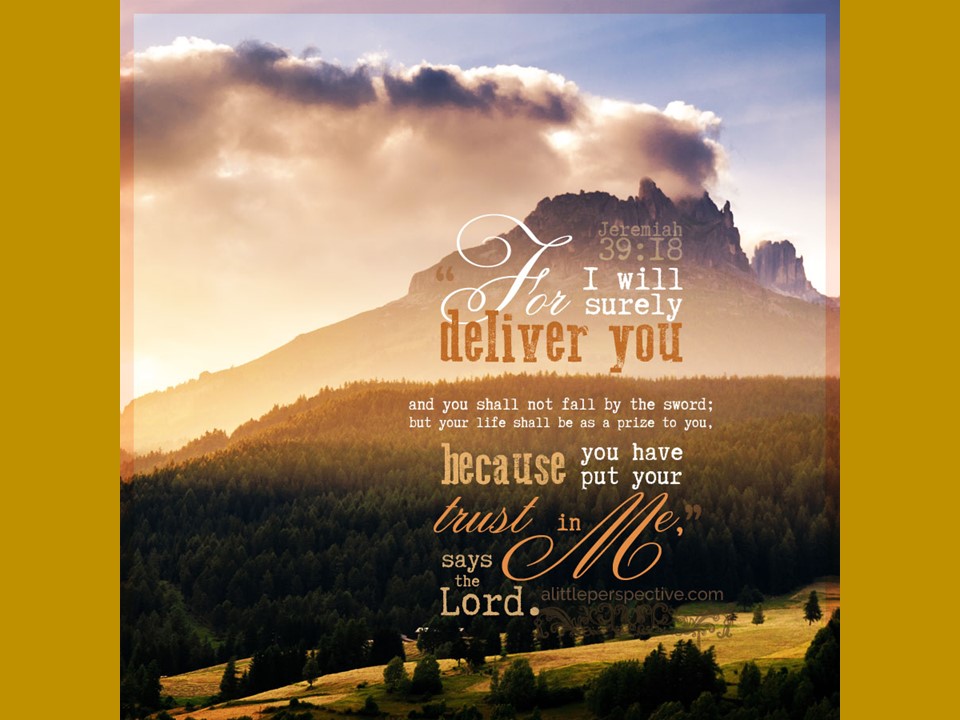
“Now the word of the LORD came unto Jeremiah, while he was shut up in the court of the prison, saying, Go and speak to Ebedmelech the Ethiopian, saying, Thus saith the LORD of hosts, the God of Israel; Behold, I will bring my words upon this city for evil, and not for good; and they shall be accomplished in that day before thee. But I will deliver thee in that day, saith the LORD: and thou shalt not be given into the hand of the men of whom thou art afraid. For I will surely deliver thee, and thou shalt not fall by the sword, but thy life shall be for a prey unto thee: because thou hast put thy trust in me, saith the LORD” (Jeremiah 39:15-18).

Our good deeds seldom get noticed or rewarded instantly. It is quite possible, that they many never be rewarded in our life here on earth. By the same token, neither do our evil deeds. We often see wicked people get away with murder and never get their just punishment, but God does not forget. Karma, as any false idea, is only partially true. Sometimes we do receive good for good and evil for evil, but not always. The Bible’s record shows that all deeds will eventually be justly rewarded. No one can get away with murder in the end.

Jesus is coming soon, and His reward is with Him. The signs for His appearing are increasing in intensity and frequency. Are you prepared to meet Him? If you do not know Jesus as your personal Lord and Savior, please read my page on “Securing Eternal Life.”

Notes:


[1]  Jeremiah 38:7

[2]  “Eunuch” — https://en.wikipedia.org/wiki/Eunuch

[3]  Jeremiah 37:1

[4]  Jeremiah 37:2

[5]  Jeremiah 37:11-21

[6]  Jeremiah 38:2

[7]  Jeremiah 38:3

Comments Off on Sometimes Good Deeds Are Rewarded

Filed under Apologetics, Book Reviews, Christianity, Philosophy, Theology

When You’re In the Hole, Stop Digging

A wise man feareth, and departeth from evil: but the fool rageth, and is confident. (Proverbs 14:16)

I have heard it said that insanity is repeating the same mistakes and expecting different results. The nation of Judah exemplifies that notion, and I see the same pattern in our nation today.

Toward the end of the sixth century B.C., Judah rebelled against God and followed the gods of the pagan nations around them. Jeremiah prophesied during these final years of the nation and suffered severe persecution because of it. Judah knew the law of God and continued to practice the rituals, but their zeal was for the gods that are “no gods.” “Hath a nation changed their gods, which are yet no gods? but my people have changed their glory for that which doth not profit” (Jeremiah 2:11).

The surrounding nations were faithful to their “gods,” yet Judah, who knew the true God, abandoned Him for the false gods. Not that God can be surprised by the actions of humans, but in human terms, their actions were perplexing. Despite numerous warnings and pleas, Judah refused to repent, until God finally had enough of their unfaithfulness. “How shall I pardon thee for this? thy children have forsaken me, and sworn by them that are no gods: when I had fed them to the full, they then committed adultery, and assembled themselves by troops in the harlots’ houses” (Jeremiah 5:7).

Johoiachin, a.k.a. Coniah,[1]a.k.a. Jeconiah,[2] a.k.a. Jechonias,[3] reigned as the final king of the sovereign nation of Judah. He was the third wicked successor of good king Josiah. By the time of his reign, Judah plunged to the depths of her depravity. To him God instructed Jeremiah to “Take thee a roll of a book, and write therein all the words that I have spoken unto thee against Israel, and against Judah, and against all the nations, from the day I spake unto thee, from the days of Josiah, even unto this day” (Jeremiah 36:2, emphasis mine). God wanted to make clear the warnings He had given in the recent past. This book was the written Word of God. However, rather than heed God’s Word, Johoiachin discarded the Word of God as rubbish to be burned. “And it came to pass, that when Jehudi had read three or four leaves, [Jehoiachin] cut it with the penknife, and cast it into the fire that was on the hearth, until all the roll was consumed in the fire that was on the hearth” (Jeremiah 36:23). The other national leaders in the audience did no better. “Yet they were not afraid, nor rent their garments, neither the king, nor any of his servants that heard all these words” (Jeremiah 36:24). As a result, God allowed the Babylonians to invade and conquer Judah and Jerusalem.[4] This was the first time Nebuchadnezzar took away captives from Jerusalem. The prophet Daniel went into captivity at this time.

In many ways, Nebuchadnezzar showed kindness to Judah by installing Mattaniah, a.k.a. Zedekiah,[5] as king to govern the conquered province. One might think that Judah learned her lesson. “But neither [Zedekiah], nor his servants, nor the people of the land, did hearken unto the words of the LORD, which he spake by the prophet Jeremiah” (Jeremiah 37:2). “And [Zedekiah] did that which was evil in the sight of the LORD, according to all that Jehoiakim had done. For through the anger of the LORD it came to pass in Jerusalem and Judah, until he had cast them out from his presence, that Zedekiah rebelled against the king of Babylon” (2 Kings 24:19-20).[6]

Zedekiah was not alone in his rebellion against God. “Moreover all the chief of the priests, and the people, transgressed very much after all the abominations of the heathen; and polluted the house of the LORD which he had hallowed in Jerusalem. And the LORD God of their fathers sent to them by his messengers, rising up betimes, and sending; because he had compassion on his people, and on his dwelling place” (2 Chronicles 36:14-15, emphasis mine). One of those messengers through whom God showed compassion was Jeremiah. He suffered beatings and imprisonment for speaking God’s Word. Yet the people refused to listen. “But they mocked the messengers of God, and despised his words, and misused his prophets, until the wrath of the LORD arose against his people, till there was no remedy” (2 Chronicles 36:16).

“And it came to pass in the ninth year of his reign, in the tenth month, in the tenth day of the month, that Nebuchadnezzar king of Babylon came, he, and all his host, against Jerusalem, and pitched against it; and they built forts against it round about. And the city was besieged unto the eleventh year of king Zedekiah” (2 Kings 25:1-2). With Jerusalem under siege for more than two years, starvation and sickness plagued the city until they could not withstand the armies of Babylon. Jerusalem fell once again and Zedekiah and many others were taken captive for the second time. This time, Nebuchadnezzar was not so nice. He had Zedekiah’s sons killed as he watched and then had his eyes put out so that was the last thing Zedekiah saw.[7]

Jerusalem and the Temple were burned[8] and the Temple treasures were carried off to Babylon. Even with that, the people remained unrepentant until a third and final invasion took the last of the able-bodied.

Judah fell into a deep hole of depravity, but despite all of God’s pleading through His prophets, Judah just kept digging the hole deeper. It got to the point where God would not even entertain prayers on their behalf. God told Jeremiah to stop praying for these people.[9]

As I contemplate the state of our nation, the USA, and compare it to Judah, I see a perfect parallel, except for one thing. The nation of Israel has the promise of God for her preservation; the USA does not. God gave us a great land, godly founders, and a constitution founded on the Word of God. Throughout the years, God has provided great “prophets” proclaiming the Word of God, and for most of our history, we have listened to those prophets. No more! We have, as a nation, cast aside and trampled the Word of God. We embrace wickedness and call it inclusion. We bow at the altar of Gaia and call it “the Green New Deal.” We celebrate infanticide and call it women’s rights. We idolize celebrities in all their different venues – movies, sports, and even religion – while those that preach and teach the true Word of God are held in contempt. We have dug a deep hole for ourselves, and we only keep digging it deeper. Stop digging!

When Solomon dedicated the first Temple, he prayed that God would bless it. God answered, “If my people, which are called by my name, shall humble themselves, and pray, and seek my face, and turn from their wicked ways; then will I hear from heaven, and will forgive their sin, and will heal their land” (2 Chronicles 7:14); but that promise was for them. Many well-meaning pastors urge their people to pray for our nation and claim this promise in hopes that it will turn around. However, that promise was not made to the USA. If anything, I hear God saying, “pray no more for this people.” The hope for this nation, and the world in general, is for Christ’s return to establish His righteous kingdom on earth. Our prayer, then, should be, “Come quickly, Lord Jesus.”

Jesus is coming soon. The signs for His appearing are increasing in intensity and frequency. Are you prepared to meet Him? If you do not know Jesus as your personal Lord and Savior, please read my page on “Securing Eternal Life.”


Notes:

[1]  Jeremiah 22:24, 28; 37:1

[2]  Jeremiah 24:1

[3]  Matthew 1:11

[4]  2 Kings 24:10-12; Jeremiah 36:29-30

[5]  2 Kings 24:17; Jeremiah 37:1

[6]  2 Chronicles 36:13

[7]  2 Kings 25:3-7

[8]  2 Kings 25:8-10

[9]  Jeremiah 7:16; 11:14; 14:11

1 Comment

Filed under Apologetics, Bible, Christianity, Second Coming of Christ, Theology

Is the Number of Stars Definite or Indefinite?

a2218_hstkelly

And he is before all things, and by him all things consist (Colossians 1:17)

Is the number of stars definite or indefinite? I recently posted that question my Facebook status, and I was completely unprepared for the firestorm of controversy that seemingly innocuous question would raise. The question, to me, seems simple enough. I have identified a subject – the number of stars – and offered an either-or response.

One person responding to the question suggested that the number of stars is indefinite. Certainly from man’s perspective that is true. There is no way for us to ever know the exact number of stars. There are billions of galaxies in our known universe, and each is composed of billions .of stars. Such numbers are staggering. And then there is that outside possibility that new stars are being “born” regularly. That has never been observed, and it is based solely on very questionable evolutionary theories – more on that later.

But from God’s perspective, the number of stars is definite. The psalmist says, “He telleth the number of the stars; he calleth them all by their names” (Psalm 147:4). The Hebrew word translated “telleth” (tells) is mânâh and it means to “weigh out, to allot, or to enumerate” and so could be translated as “to number.” By this we know that God keeps a complete inventory of the stars. He “calls” them – Hebrew qârâ’, which means “to call out to” or “to address” each individual star by name. Well, one might say, God could still be creating stars, and He would still know the number each time He creates a new one. That is also true. Jesus says that the very hairs of my head are numbered (Matthew 10:30). God knows exactly how many hairs on my head I started with, the maximum count I had at my zenith, the number of hairs I have lost and He knows my current count now. So, whether God has created new stars since the beginning of creation, or whether the number has remained static since creation, to God, the number is always definite.

One perceptive individual responded “Yes!” In other words, he was saying it’s both. I wrongly responded “No. It has to be one or the other.” But after thinking about it, he was more right than anyone, considering what I have just explained above. To man, the number is indefinite, but to God the number is definite.

But, as these “conversations” tend to go sometimes, it quickly degenerated into a discussion about whether God was still actively creating or not. Since the subject is “stars” I would suggest that the answer is no; God is not actively creating new stars, or anything else for that matter. I see all those red flags going up right now! Before you burn me at the stake as a heretic, hear me out. I base this on two very basic verses in Genesis. As we read the creation account in Genesis one, we see that at the end of almost every day, God’s assessment of the process was as that “it was good.” This is true of every day of creation except for the second day where earth was, for lack of a better term, a big mud ball; it wasn’t bad, but it wasn’t good enough to be called “good” by God. At any rate, we get the feeling that God was pleased with His creative work. Then when the sixth day of creation was completed “God saw every thing that he had made, and, behold, it was very good” (Genesis 1:31). “Very good” (Heb. ṭôb me‘ôd) meaning vehemently good. Such an assessment coming from a perfectly good Creator implies that it could not be made better than this; it cannot be improved upon. So, when God “made the stars also” (Genesis 1:15), the number of them was perfect by His assessment. Furthermore, we read in Genesis 2:2 that “on the seventh day God ended his work which he had made; and he rested on the seventh day from all his work which he had made.” That He “ended his work” translates the Hebrew word kâlâh, which means “to cease” or “to be finished.” This too seems to have a note of finality – it’s done! In addition to that, it says that “He rested.” God was not tired and in need of a break! The Hebrew word used here is shâbath, which also means to “desist from exertion.” What I get from this, is that when God finished His creative work, He set in motion the laws of physics and nature that maintain the current state of the universe in stasis. This is alluded to in our opening verse (Colossians 1:17): “by [Jesus] all things consist,” i.e., “hold together.” The Greek word translated “consist” is the compound word sunistaō from sun meaning together and histēmi meaning “to stand” or “to abide.” We see that it is God – Jesus – Who is keeping everything from flying apart! We see God’s promise to keep things together following the Flood. God promised, “While the earth remaineth, seedtime and harvest, and cold and heat, and summer and winter, and day and night shall not cease” (Genesis 8:22); in other words, things will continue as God designed.

There is a danger in seeing this from a deistic perspective and concluding that God, like a divine clock maker just got it all wound up and let it go without further involvement. That would be a very wrong conclusion considering the record of God’s involvement in the affairs of man that are contained in Scripture. Does this mean that God no longer creates? The answer is both yes and no. God is no longer creating the “stuff” of the universe; the first law of thermodynamics confirms that. But He has not stopped creating altogether. Each time a baby is conceived, God has created a whole new soul. God’s involvement in the development of a baby in the womb is beautifully described by the psalmist in Psalm 139:14-16:

I will praise thee; for I am fearfully and wonderfully made: marvellous are thy works; and that my soul knoweth right well.

My substance was not hid from thee, when I was made in secret, and curiously wrought in the lowest parts of the earth.

Thine eyes did see my substance, yet being unperfect; and in thy book all my members were written, which in continuance were fashioned, when as yet there was none of them.

Jesus performed creative acts during His earthly ministry. He turned water into wine (John 2:1-11).  He healed a boy of a fever by reversing the effect of the first law of thermodynamics (John 4:46-54). He healed a paralytic and restored the atrophied muscles to his legs (John 5:1-9). He fed the 5000 (men, not counting women and children) from just two fish and five buns (John 6:1-14). He walked on water suspending the laws of physics that would cause Him to sink (John 6:16-21). He healed a man who had been blind since birth (John 9:1-7). He raised Lazarus from the dead (John 11:1-44).  All these He did by just His word. And His greatest creation miracle of all is when He gives new life to the walking dead by the regeneration of the “new birth” (John 3:3; John 1:12; 2 Corinthians 5:17).

Not only does God continue to create in this way, but He will one day create a New Heaven and a New Earth (Revelation 21:1). But new stars, for now, I don’t think so.

For more on star creation listen to Ken Ham’s commentary on the subject: Star Formation – Can it Happen? Also, Answers in Genesis has a couple of short articles on the subject:

Classic Conundrum

Star Formation and Creation

4 Comments

Filed under Apologetics, Christianity, Creation, End Times, Evolution, Gospel, Religion, Salvation, Theology

Then Came Sunday

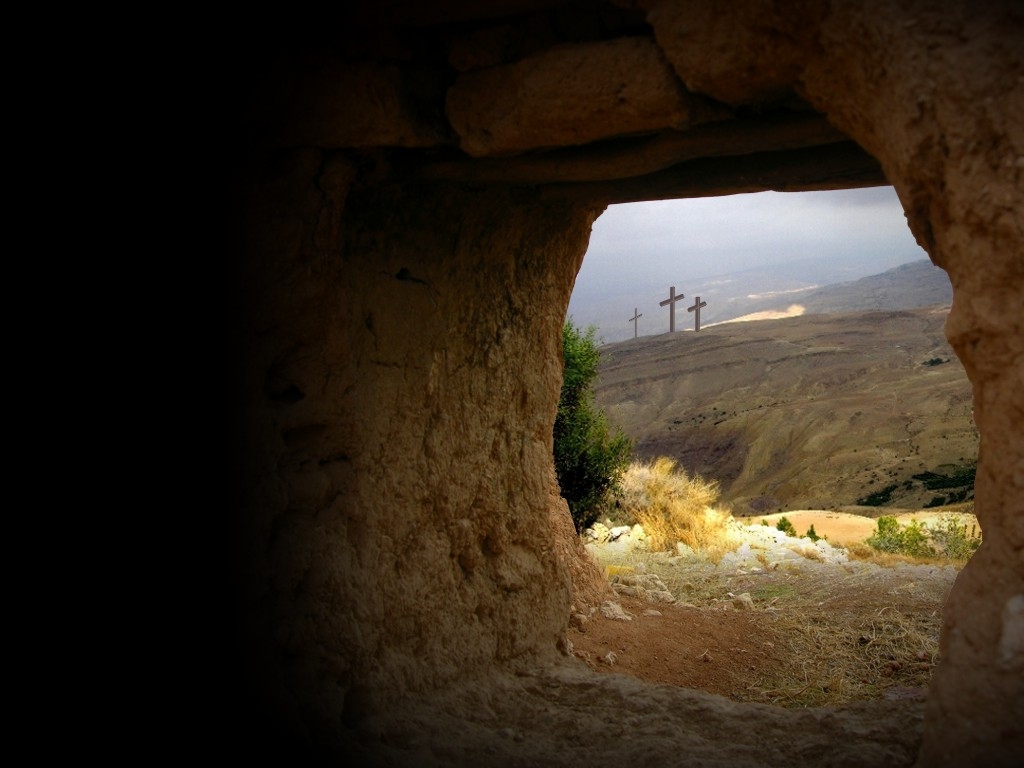
Empty Tomb

And very early in the morning the first day of the week, they came unto the sepulchre at the rising of the sun … And when they looked, they saw that the stone was rolled away: for it was very great. (Mark 16:2, 4)

The story of mankind is brief and straightforward despite the naturalistic stories invented by evolutionists. God created man in His own image (Genesis 1:26). God created man to enjoy fellowship with Him, but man erected a barrier between himself and God by his disobedience to God’s only command: “But of the tree of the knowledge of good and evil, thou shalt not eat of it: for in the day that thou eatest thereof thou shalt surely die” (Genesis 2:17). That disobedience brought the curse of death – separation from God who is life and the giver of life. “Jesus said unto her, I am the resurrection, and the life: he that believeth in me, though he were dead, yet shall he live: And whosoever liveth and believeth in me shall never die. Believest thou this?” (John 11:25-26). Holy God cannot abide sin. “Shall the throne of iniquity have fellowship with thee, which frameth mischief by a law?” (Psalm 94:20).

From that time on, innocent blood has been shed to cover or atone for the sins of man “For all have sinned, and come short of the glory of God” (Romans 3:23). Starting with that first sacrificial lamb slaughtered by the Lamb of God (Genesis 3:21), the innocent pay the penalty for the sins of the guilty. So the sacrificial system began carried on by Abel (Genesis 4:4), Noah (Genesis 8:20) and the law delivered by Moses. But the practice failed to bridge the chasm rived by sin “For it is not possible that the blood of bulls and of goats should take away sins” (Hebrews 10:4).

This hopeless situation required a better and permanent solution. This was mankind’s problem and the responsibility fell upon man for resolution. But Holy God cannot be satisfied with anything less a perfect, sinless sacrifice. Only the blood of a perfect, sinless man would do. Where could such a man be found? For, “As it is written, There is none righteous, no, not one … They are all gone out of the way, they are together become unprofitable; there is none that doeth good, no, not one” (Romans 3:10, 12). Such a conundrum was no puzzle for an omniscient God. “[He] made himself of no reputation, and took upon him the form of a servant, and was made in the likeness of men: And being found in fashion as a man, he humbled himself, and became obedient unto death, even the death of the cross” (Philippians 2:7-8). “Wherefore, as by one man sin entered into the world, and death by sin; and so death passed upon all men, for that all have sinned” (Romans 5:12). So, God in human form died in the stead of His human creation, and He took upon Himself the penalty that was due to each one of us individually. This is an awesome thing! In all the world religions of man, man sacrifices himself to his god, but the Bible teaches that God sacrificed Himself for man. Is that not incredible!

So Jesus died on the cross at Passover. He became the sacrificial Lamb of God to atone for the sins of mankind. He took on the crushing blow of the curse of death. In His final words He declared, “It is finished!” (John 19:30), and He died. Death took its greatest prize, but then came Sunday! The curse of death was broken. “Therefore as by the offence of one judgment came upon all men to condemnation; even so by the righteousness of one the free gift came upon all men unto justification of life” (Romans 5:18).

When I survey the wondrous cross
On which the Prince of glory died,
My richest gain I count but loss,
And pour contempt on all my pride.

Forbid it, Lord, that I should boast,
Save in the death of Christ my God!
All the vain things that charm me most,
I sacrifice them to His blood.

See from His head, His hands, His feet,
Sorrow and love flow mingled down!
Did e’er such love and sorrow meet,
Or thorns compose so rich a crown?

Were the whole realm of nature mine,
That were a present far too small;
Love so amazing, so divine,
Demands my soul, my life, my all.

(“When I Survey the Wondrous Cross” – Isaac Watts, 1707)

His death on the cross covered our sins once and for all. His resurrection bridged the chasm of death separating sinful humanity from Holy God. He has made the way for you and for me. He said, “I am the way, the truth, and the life: no man cometh unto the Father, but by me” (John 14:6). After all He has done for you, the least you can do is follow the way He has prepared. “Love so amazing, so divine, demands my soul, my life, my all!”


1 Comment

Filed under Apologetics, Bible, Christianity, Creation, Death, Easter, Evangelism, Gospel, Religion, Resurrection, Salvation, Theology