The Good Muslim

But I say unto you, Love your enemies, bless them that curse you, do good to them that hate you, and pray for them which despitefully use you, and persecute you;  (45)  That ye may be the children of your Father which is in heaven: for he maketh his sun to rise on the evil and on the good, and sendeth rain on the just and on the unjust. ( Matthew 5:44-45)

At the time of this writing (November 1, 2017), the news is all abuzz over the latest act of jihad by another Muslim terrorist. On Tuesday, October 31, 2017, Halloween, Sayfullo Habibullaevic Saipov, drove his rented Home Depot truck onto a bike lane along Manhattan’s West Side Highway killing at least eight and injuring half a dozen others. Saipov, a recent Muslim import, hails from Uzbekistan and entered by way of the “green card lottery” in 2010. The odious piece of legislation that opened the door for Saipov sprang from the frothing cesspool of Demoncrat minds known as the “Diversity Visa Program” – it sounds nice. Demoncrat Senate Minority Leader, Chuck Schumer pushed the legislation through in 1990, as if our nation is not “diverse” enough!

Several people interviewed reported that Saipov was a “nice guy.” No one that knew him suspected that he was capable of such a heinous act. They all thought he was one of the “good Muslims.” I found an interview of one of Saipov’s “Mosque-ovites” (one who worships at the same mosque) less than amusing. The FOX street reporter prompted the “Mosque-ovite” by asking, “How do ‘good Muslims’ respond to these acts of terror?” (or something to that effect). Of course, the “Mosque-ovite” denounced the act in the strongest terms even calling the culprit “an animal.” Apparently, “good Muslims” harbor no tolerance for Muslims who perform acts of terror. But, how do we know that they really believe what they proclaim? Where is the outcry from the Muslim community calling for these acts to stop!

Allow me to say at the onset that I do not believe all Muslims are out to wage war on the “infidels” and convert or kill us all. Surely many Muslims want to live in peace and have a “normal” life; but how can we distinguish “the good Muslim” from the one that seeks to convert infidels through force or otherwise eliminate the infidel from the earth? Good and “bad” Muslims are indistinguishable until one of them receives the inspiration to wage jihad and kill a bunch of innocent people. Then we know—that was one of the bad ones.

From what I have learned about the Muslim religion, “the good Muslim” – “good” by American standards – can be likened to the nominal Christian. The nominal Christian claims the name of Christ. They may or may not attend church services on a regular basis. They probably own a Bible, but rarely open it. If they carry their Bible to church, they will read what is put on the big screen, but they will not open their Bible to see if the preacher quoted the Scripture correctly. A nominal Christian might say, “the Bible says” and then quote some pious platitude that has no basis in Scripture. A nominal Christian believes that all people are basically good and that anyone can go to heaven as long as they exercise good moral behavior and follow the “golden rule.” They conduct themselves by the motto, “live and let live.”

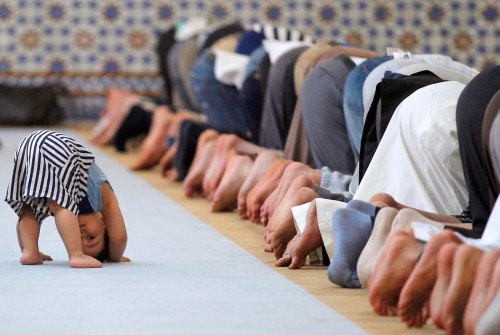
Likewise, “good Muslims” acknowledge Allah as their god.[1] They go to the mosque every Friday and pray five times a day. They may own a Qur’an but not really read it. The Qu’ran is written in Arabic, although there are some parallel versions that have the English translation on one side. I would venture to say that a good majority of American Muslims can neither read nor speak Arabic, so that must rely on the teachings of their Imams. Good Muslims believe that Islam is a religion of peace and that “jihad” is an “inner struggle” to please Allah. While they may believe that infidels are going to hell, they are happy enough to let them go there. They share the same motto with nominal Christians: “Just live and let live.”

From an American perspective, “good Muslims” are just like us. Americans believe that Muslims share the same values, and that “good Muslims” just want to live their lives in peace. However, Americans view the world through a skewed westernized lens that, like it or not, originates from a biblical foundation. Ideas like “Love your enemies, bless them that curse you, do good to them that hate you, and pray for them which despitefully use you, and persecute you” (Matthew 5:44) are basic to the American psyche. “Thou shalt not murder” (Exodus 20:13) and “all things whatsoever ye would that men should do to you, do ye even so to them: for this is the law and the prophets” (Matthew 7:12) are all principles taught in the Bible. Americans, whether they know the Bible or not, pretty much live by these principles; and because they do not know the source, they assume the rest of the world lives by these principles too. Consequently, Americans believe “good Muslims” live by the same principles.

The Bible instructs us to love our enemies, to do good to them that hate you, and to pray for those who despitefully use you and persecute you. It teaches that we should treat others as we would have them treat us. We are told not to murder or to lie (Exodus 20:16; Proverbs 14:5). We are instructed to care for the poor, the widows and the orphans. How does the Qur’an[2] compare with what the Bible teaches?

Infidels – anyone who does not adhere to Islam – are enemies according to the Qur’an (2:98; 4:101).[3] The Qur’an teaches that Allah does not love the infidels (3:32, 140), unlike the Bible that teaches that “God is love” (1 John 4:8) and He is not willing that any should perish (2 Peter 3:9). Therefore, since Allah does not love infidels, they must be persecuted (4:104-105; 2:217). Unlike the Bible’s teaching that Christians are to witness for Christ (Matthew 28:18-20; Acts 1:8), the Qur’an teaches that Muslims should “not take the infidels for friends … whoever does this has nothing to do with Allah” (3:28: 4:144; 5:51; 60:1-2). That is pretty harsh! Is it any wonder that Muslims do not assimilate into the American culture? To be sure, Allah encourages emigration for the sake of jihad (2:218), which explains their invasion of Europe, Canada, the U.S., and others. Moreover, Allah encourages the killing of infidels (4:89), and if the Muslim dies in the process of jihad, they automatically gain entry into heaven (3:169; 4:95). Sadly, even this effort carries with it no guarantee: “O you who have believed [i.e. the Muslim], fear Allah and desire the way to him. And perform jihad for his sake, perhaps you may prosper: (5:35, emphasis mine).

More could be said concerning the contrast between the Bible and Qur’an, but from this brief review, Americans should hope that “good Muslims” do not take seriously the Qur’an. When they do take it seriously the contents of this satanic book and convert to “good Muslims” (according to the standards of the Qur’an), it only spells danger for us poor infidels. The problem is further exacerbated when one realizes that Muslims are not obligated to deal honestly with infidels (2:225; 3:28, 54; 9:3; 16:106; 40:28; 66:2). Unlike the Bible that exhorts truthfulness and honesty (Exodus 20:16; Psalm 101:7; Proverbs 12:22; Colossians 3:9-10; et al), the Qur’an encourages Muslims to lie[4] to infidels if it is to their advantage. The practice is known as taqiyya.[5] Knowing this, how can one discern one “good Muslim” from another? One cannot know if a Muslim is nominal, moderate, or a full-fledged jihadist, because their “holy” book discourages them from befriending an infidel unless it is for the dishonest purpose of gaining some advantage. Can the distrust of Muslims honestly be labeled “Islamophobia” when the Muslim “holy” book instructs “good Muslims” to lie to infidels? The Qur’an itself claims that Allah is the greatest liar of all (3:54; 4:142; 8:30). Compare that to the Bible’s teaching that God does not lie (Numbers 23:19). Additionally, the Bible identifies the “father of lies” as Satan (John 8:44).

What are we to do? Surely, there are Muslims that hold their religion in name only and they truly want to live in peace with their neighbors, but the tenets of that religion are incompatible with the American way of life. I desire that they would all convert to Christianity, but barring that, I would be happy if they would just renounce that satanic religion, embrace the law of this land, the United States Constitution, and assimilate into the American culture.

Notes:


[1]  “God Is Not Allah” – https://erniecarrasco.com/2013/09/29/god-is-not-allah/

[2]  A English/Arabic paperback copy of the Qur’an can be obtained at Amazon.com. I would recommend the one translated by Abdulla Yusuf, which is the copy I have. For my study, however, I use The Generous Qur’an: An accurate, Modern English Translation of the Qur’an, Islam’s Holiest Book, translated and annotated by Usama K. Dadok. It too is available from Amazon.com.

[3]  Citations from the Qur’an follow the format of Chapter:Verse, e.g. (2:98). The Qur’an does not have “books” like the Bible.

[4]  “Islam Permits Lying to Deceive Unbelievers and Bring World Domination!” – http://muslimfact.com/bm/terror-in-the-name-of-islam/islam-permits-lying-to-deceive-unbelievers-and-bri.shtml

[5]  “Deception, Lying and Taqiyya” – https://www.thereligionofpeace.com/pages/quran/taqiyya.aspx
Comments Off on The Good Muslim

Filed under Current Events, Random Musings, Religion

Sultan Knish: We Didn’t Beat ISIS, It’s Here

Source: Sultan Knish: We Didn’t Beat ISIS, It’s Here

“The Islamic State is not going anywhere. It’s not a name. It’s an Islamic imperative. And it’s here.”

How long before our leaders in America get a clue? Perhaps they do have a clue and support the problem!

Comments Off on Sultan Knish: We Didn’t Beat ISIS, It’s Here

Filed under Current Events, Religion

Here We Stand – AlbertMohler.com

Source: Here We Stand – AlbertMohler.com

Celebrating 500 years of the Reformation!

“Martin Luther’s great moment of theological clarification came at the climax of a command performance. Facing the threat of martyrdom and execution, Luther appeared on trial at the Diet of Worms before the Emperor of the Holy Roman Empire. Asked on what authority he dared to defy the Pope and the magisterium of the Roman Catholic Church, Luther famously replied:”

Read more… http://www.albertmohler.com/2017/10/30/here-we-stand/


Comments Off on Here We Stand – AlbertMohler.com

Filed under Apologetics, Christianity, Religion

Jerusalem

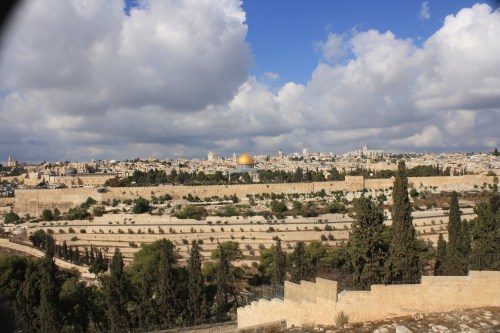
Modern Jerusalem viewed from the Mount of Olives

And unto his son will I give one tribe, that David my servant may have a light alway before me in Jerusalem, the city which I have chosen me to put my name there. (1 Kings 11:36)

Emerging from the tunnel cut through the mountain from Jericho, I caught my first glimpse of the “Eternal City,” Jerusalem. I was completely unprepared for the overwhelming emotional “rush” I would get upon my first view of the city – God’s city. Although Jerusalem is in every way a modern city – nothing like it was in Jesus’ day – building codes imposed on new construction maintain the “old” appearance of the city. That probably contributed to my emotional response.

There are cities in the Middle East more ancient than Jerusalem. Damascus, Syria, for example, is first mentioned in Genesis 14:15.  In this account, a confederation of four kings from the area around Damascus came against the kings of the south, in the area around the Dead Sea. One of those cities was Sodom where Abram’s nephew Lot was living. The invading kings sacked the five cities including Sodom and carried off captives of which Lot was one. Abram mustered up a small army of his own servants, pursued the four kings, rescued Lot, and the other captives, and took back the booty taken by the marauding kings. On his return, he encountered Melchizedek, king of Salem (Genesis 14:17-20). Some have supposed that Salem was the same as Jerusalem, but I disagree for several reasons.[1]

Jerusalem[2] is built on the mountains in the land of Moriah. It was “upon one of the mountains” (Genesis 22:2) there that God instructed Abraham to sacrifice his only son Isaac. It is noteworthy that God did not instruct Abraham to go to Salem, Jerusalem, or Jebus (Judges 19:10-11; 1 Chronicles 11:4-5). Jebus was the “city of the Jebusites” and the Jebusites were in the land when Abram first arrived (Genesis 15:21), and it seems it would have been an excellent landmark if it existed at the time of Abraham. Instead, God instructed Abraham to go the “land of Moriah” and sacrifice Isaac on one of the mountains there. A normal reading of the text leads one to see this place as isolated and uninhabited. However, this would later become the site of Jerusalem, and the particular mountain on which Isaac was offered would become the site of the Temple “in the threshingfloor of Ornan the Jebusite.” (2 Chronicles 3:1). Eventually, God would sacrifice His own Son, on the mountains of Moriah.

This alone makes Jerusalem a special place. Geographically, Jerusalem is located near the center of earth’s total landmass.[3] More than this, God stamped His name on Jerusalem.[4] Jews associate the Hebrew letter “Shin” (ש) with the name of God. They derive this from the “Shama” (meaning “hear”) in Deuteronomy 6:4 – “Hear, O Israel: The LORD our God is one LORD.” Jerusalem – the “Old City” is situated on the mountains of Moriah, which are flanked by two valleys – the Kidron, and Tyropean – with a third, the Hinnom (Gehenna), that runs down the center to join the other two. The topography forms the letter “Shin” the symbol of God’s name. The land of Israel has a similar stamp where the three headwaters of the Jordon River join together to form the letter “Shin.”

The mountains of Moriah are made up of three mountain heads: Ophel, Moriah, and Zion. “Ophel” means “My Fortress” and represents God the Father. “Moriah” means “to see God” or “to be seen of God” and represents God the Son. “Zion” means “the Mark” and represents God the Holy Spirit who is the “seal” or the “mark” of all believers. One mountain range with three heads representing one God in three persons.

Jerusalem, as stated earlier, is the “Eternal City.” When Jesus returns to reign as King of Kings and Lord of Lords, He will come to Jerusalem. “And his feet shall stand in that day upon the mount of Olives, which is before Jerusalem on the east, and the mount of Olives shall cleave in the midst thereof toward the east and toward the west, and there shall be a very great valley; and half of the mountain shall remove toward the north, and half of it toward the south” (Zechariah 14:4, emphasis mine). Jesus will physically reign from His Temple in Jerusalem. A river will flow from his throne here and will run to the east and into the Dead Sea, which will be healed (Ezekiel 47:8-9).

At the end of the 1000-year reign of Christ on earth, God will create a “new heaven and a new earth,” and a “New Jerusalem” will descend from heaven to a recreated earth (Revelation 21:1-2) where those of us who are His children will reign forever with Him. As beautiful as Jerusalem is today, it will not compare to the New Jerusalem where not just God’s name will dwell, but God Himself will dwell with us!

Reader, if you are unsure where you will spend eternity, read my page on Heaven.

Notes:


[1]  “Is Salem Jerusalem?” – https://erniecarrasco.com/2015/08/16/is-salem-jerusalem/

[2]  “Hebrew Word Study – Jerusalem – Part I” – http://livingwordin3d.com/discovery/2016/12/18/hebrew-word-study-jerusalem-part-i/

[3]  “The Center of the Earth” – http://www.icr.org/article/50

[4]  “Jerusalem – I Will Put My Name There – Amazing Revelations” – https://www.youtube.com/watch?v=aZO_eRmR2ho

2 Comments

Filed under Bible, Christianity, End Times, Gospel, Heaven, Religion, Salvation, Second Coming of Christ, Theology

Pressed Three Times

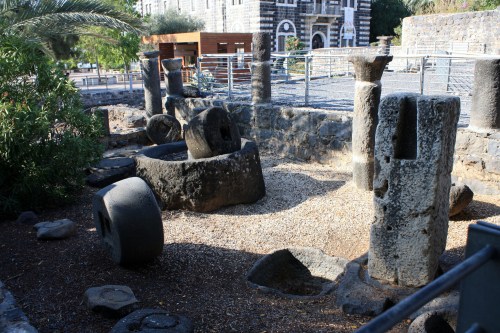
First-century olive press in Capernaum on the northern shore of the Sea of Galilee, Israel

Then cometh Jesus with them unto a place called Gethsemane, and saith unto the disciples, Sit ye here, while I go and pray yonder. (Matthew 26:36)

We recently returned from our first “pilgrimage” to the Holy Land. If I never check off another item on my “bucket list,” this is enough. To walk in the land where God stamped His name defies description, so I will not even try. God assumed human form and traversed this land from Jerusalem to the Galilee; we also set foot on many of the same places.

On one of those stops, we visited the ruins of the city of Capernaum. Jesus made this city His “headquarters” as He ministered around the Sea of Galilee. Peter made his home here as did Andrew, his brother, and James and John, the sons of Zebedee. Here He called Levi (Matthew) away from the customs table to follow Him (Mark 2:1, 14). Capernaum was the site of many of Jesus’ miracles, yet the people did not believe (John 6:26-29); therefore Jesus cursed the city (Matthew 11:23-24). The city came to ruin from an earthquake the leveled it in 749 A.D.

In 1838, American explorer Edward Robinson discovered the ruins of ancient Capernaum,[1] and excavations at the site continue to the present. One of the more interesting finds uncovered at the site is an ancient olive press dating back to the first century. This olive press would have been used in Capernaum when Jesus lived there.

Olives growing on an olive tree on the Mount of Olives, Jerusalem, Israel

Olives, besides being good to eat, produce oil useful for many purposes. Extracting the oil from the olives required three pressings.[2] The first pressing extracted the purest “virgin” olive oil used for lighting the menorah and other lamps in the Temple. It was also for ceremonial anointing of special servants of God such as priests (Exodus 28:41; 29:4-7), kings (1 Samuel 15:1; 16:12-13), and also for the implements used in the Temple (Exodus 40:9). After extracting the virgin olive oil, the crushed olives were placed into burlap sacks, which were placed in the mortar table for a second pressing. A heavy weight was then added to the pestle wheel. The second pressing produced less pure oil suitable for common use such as cooking, medicine, and fuel for lamps. More weight was then added to the wheel for the third and final pressing, which extracted lye for making soap. At this point, the olives had nothing left to give.

In Jerusalem to the east of the Temple, across the Kidron Valley, rises a hill that has large olive groves aptly named the Mount of Olives or Olivet.

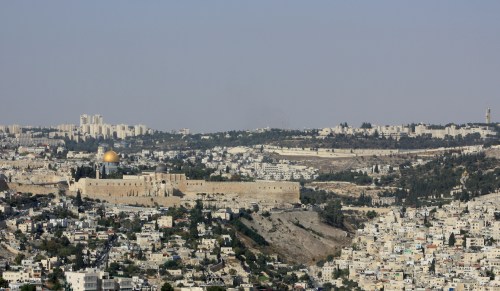
The Dome of the Rock stands where the Temple used to be in Jesus’ day. Across the Kidron Valley is the Mount of Olives where the Garden of Gethsemane was located.

In Jesus’ day, amongst the olive trees, there was a garden that had an olive press. The name of the garden was Gethsemane, which means oil press. On the night before His crucifixion, Jesus went there to pray with His disciples. He left eight of His disciples further down the hill, but His inner circle, Peter, James, and John, He took up to the place of pressing. “Then saith he unto them, My soul is exceeding sorrowful, even unto death: tarry ye here, and watch with me” (Matthew 26:38, emphasis mine). He knew way lay ahead for Him. The physical pain and agony He knew awaited Him would make any man seek to escape, but that was not what pressed on Him. He was God in the flesh. He was sinless. Soon, the sin of all mankind would fall on Him. Soon that sin would sever His relationship with the Father. “And he went a little further, and fell on his face, and prayed, saying, O my Father, if it be possible, let this cup pass from me: nevertheless not as I will, but as thou wilt” (Matthew 26:39, emphasis mine). He returned to His closest disciples only to find them sleeping (Matthew 26:40-41). The first press was done. “He went away again the second time, and prayed, saying, O my Father, if this cup may not pass away from me, except I drink it, thy will be done” (Matthew 26:42, emphasis mine.). “And there appeared an angel unto him from heaven, strengthening him” (Luke 22:43). “And he came and found them asleep again: for their eyes were heavy” (Matthew 26:43). The second press was complete. “And he left them, and went away again, and prayed the third time, saying the same words” (Matthew 26:44, emphasis mine). “And being in an agony he prayed more earnestly: and his sweat was as it were great drops of blood falling down to the ground” (Luke 22:44, emphasis mine). “Then cometh he to his disciples, and saith unto them, Sleep on now, and take your rest: behold, the hour is at hand, and the Son of man is betrayed into the hands of sinners” (Matthew 26:45). He gave all He had to give. With the final press completed, He said, “Rise, let us be going: behold, he is at hand that doth betray me” (Matthew 26:46, emphasis mine). He did not wait for His accusers to find Him. He went out to meet them!

There in the Garden of the Olive Press, He was pressed three times, and He gave His all. He gave up His anointing as King. He gave up His human body – the only suitable sacrifice for sin. He gave the last dregs of His being to cleanse us from our sins, and open the way to eternal life with Him, if we will only accept His sacrifice.

Reader, if you do not know Jesus who gave His all for you, do not delay any longer. Soon He will return, or you may otherwise meet your end. Either way, it will be too late. “Wherefore (as the Holy Ghost saith, To day if ye will hear his voice, Harden not your hearts, …” (Hebrews 3:7-8). Read my page on Heaven.

Notes:


[1]  “Capernaum” – https://en.wikipedia.org/wiki/Capernaum

[2]  “Oil Presses in the Holy Land” – http://www.biblewalks.com/Info/OilPresses.html

6 Comments

Filed under Christianity, Gospel, Religion, Salvation, Theology