
And after these things I saw another angel come down from heaven, having great power; and the earth was lightened with his glory. And he cried mightily with a strong voice, saying, Babylon the great is fallen, is fallen, and is become the habitation of devils, and the hold of every foul spirit, and a cage of every unclean and hateful bird. (Revelation 18:1-2)
I must confess a bit of confusion as I consider this next chapter in the Book of Revelation. In the previous chapter, we saw Mystery Babylon, the controlling religious system of the Tribulation period, destroyed by the Antichrist and the world leaders that used her to gain power and control over the people of the earth. “And the ten horns [i.e., the world leaders] which thou sawest upon the beast [the Antichrist], these shall hate the whore, and shall make her desolate and naked, and shall eat her flesh, and burn her with fire” (Revelation 17:16, emphasis mine).
However, we hear “another angel” – possibly the same Gospel angel of Revelation 14:8 – repeating similar words. “And he cried mightily with a strong voice, saying, Babylon the great is fallen, is fallen, and is become the habitation of devils, and the hold of every foul spirit, and a cage of every unclean and hateful bird. For all nations have drunk of the wine of the wrath of her fornication, and the kings of the earth have committed fornication with her, and the merchants of the earth are waxed rich through the abundance of her delicacies” (Revelation 18:2-3, emphasis mine). As we read further, on the surface, it appears as if the descriptions of “Babylon the Great” apply to Mystery Babylon, but she is also called “that great city Babylon, that mighty city!” (18:10). Because of the several references to merchants and commerce, most scholars see this Babylon as the commercial center of the Antichrist’s (the Beast) government. Then there is all the talk about the rulers of the world having “committed fornication with her” (18:3, 9). That is similar language applied to Mystery Babylon in the previous chapter. If this Babylon is just a commercial and political center, then why does the angel urgently call, “Come out of her, my people, that ye be not partakers of her sins, and that ye receive not of her plagues” (18:4)?
Perhaps my confusion finds resolution in amalgamating the two – a religious and commercial/political center. Clarence Larkin says, “If ‘Mystery Babylon’ was destroyed in the previous chapter then she cannot appear in this chapter, and the ‘City’ here described must be a literal city called Babylon…”[1] Most end-times prophecy teachers would agree with that. I can accept that; however, I suggest that the seat of both the “One-World” religious system and the “One-World” ruling system exist together in the same place. The demise of the religious system at the hands of the ruling system would leave a “residue” of the former so that the remaining ruling system (that of the Beast) would retain many of the same attributes; hence, the similar language used in condemnation of the city. Also, the “kings of the earth” and the “merchants” that lament the demise of “that great city” are probably not part of the “ten horns” over which the Beast rules; the cabal of the Beast are the ones that made “her desolate and naked … and burn[ed] her with fire” (Revelation 17:16). So, for the sake of simplicity, let us agree with those who say this Babylon is the commercial and political center of the Beast’s power after Mystery Babylon is removed.
The next question that comes up concerns the city, Babylon. Is the text to be taken literally or symbolically? Does the text refer to the literal Babylon in Iraq, or is it a “code name” for a different city and system? Those who suggest that Babylon is symbolic say that the term was used by the early church as a code name for Rome and the Roman Empire. They will cite Peter’s epistle where he says, “The church that is at Babylon, elected together with you, saluteth you; and so doth Marcus my son” (1 Peter 5:13, emphasis mine). “This epistle was written from Babylon, but scholars are divided as to whether this refers literally to Babylon in Mesopotamia or symbolically to Rome. There is no tradition that Peter went to Babylon, and in his day, it had few inhabitants. On the other hand, tradition consistently indicates that Peter spent the last years of his life in Rome. As a center of idolatry, the term ‘Babylon’ was an appropriate figurative designation for Rome.”[2]
However, that carries with it a certain degree of speculation based on “tradition,” which may or may not be valid. On the other hand, we are looking beyond the time of John, the human author of Revelation, into the end-times. Regardless of whether Peter was referring to actual Babylon or to Rome does not necessarily mean that John was referring to Rome in his account. When we read the text as we should – “if the plain sense makes sense, then look for no other sense or else you will end up in nonsense” – there is no indication that it should be taken in any other way than literally.
Still, some will claim that the original Babylon was destroyed fulfilling OT prophecy. Against Babylon, Isaiah prophesied, “It shall never be inhabited, neither shall it be dwelt in from generation to generation: neither shall the Arabian pitch tent there; neither shall the shepherds make their fold there” (Isaiah 13:20, emphasis mine). Similarly, Jeremiah prophesied, “And they shall not take of thee a stone for a corner, nor a stone for foundations; but thou shalt be desolate for ever, saith the LORD … And Babylon shall become heaps, a dwelling place for dragons, an astonishment, and an hissing, without an inhabitant … Her cities are a desolation, a dry land, and a wilderness, a land wherein no man dwelleth, neither doth any son of man pass thereby.” (Jeremiah 51:26, 37, 43, emphasis mine). The question we must ask is, have these prophecies been fulfilled literally? Frankly, the answer is a resounding NO! So, if they have not been fulfilled, and because the Word of the Lord is true and trustworthy, then they must be yet future.
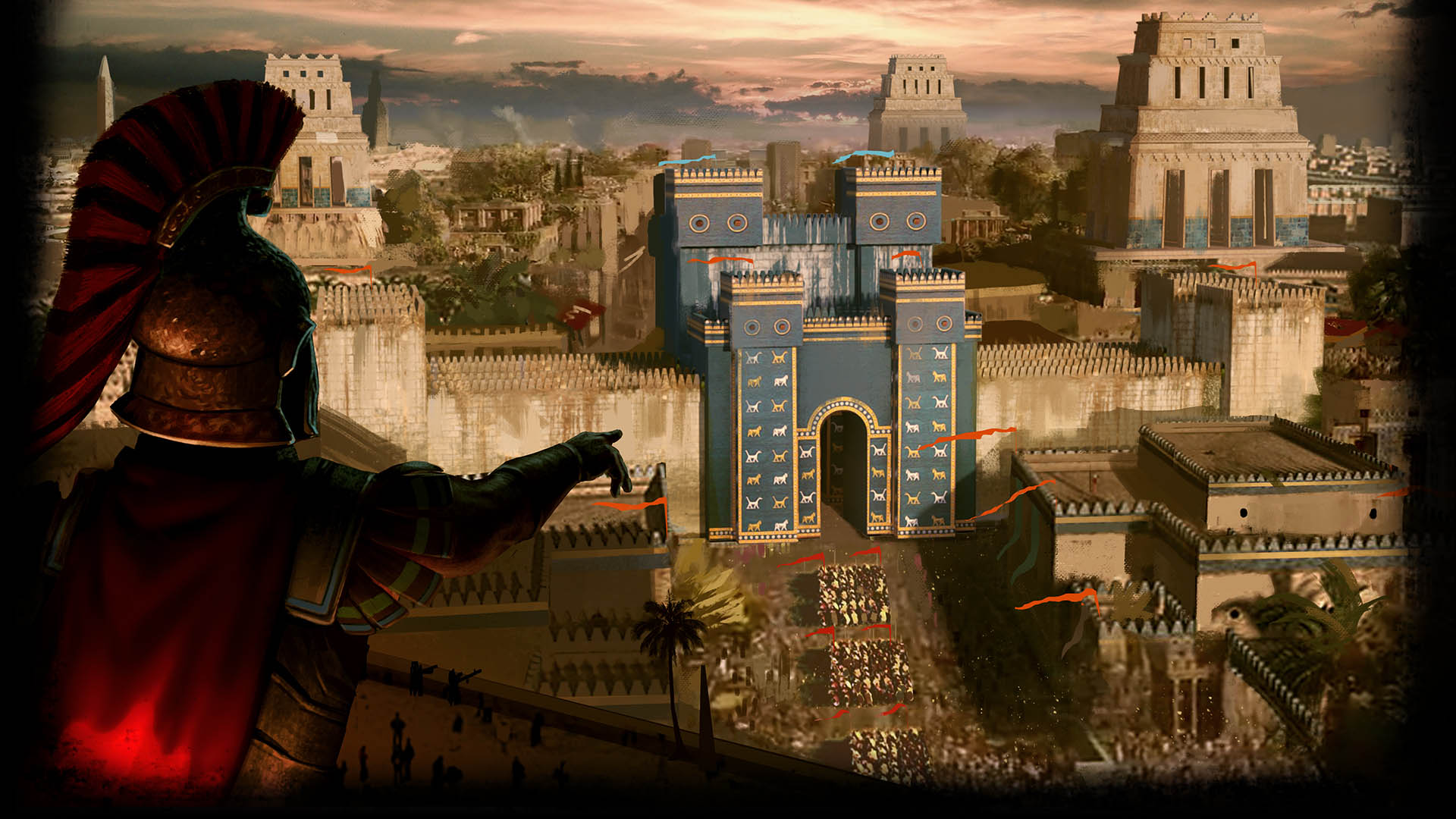
Larkin gives a detailed history of Babylon beginning with its origins at the Tower of Babel.[3] Nebuchadnezzar made Babylon one of the wonders of the world. It retained its splendor after the conquering by the Persians and later the Greeks. After that, the city degraded but continued to be inhabited even during the time of the early church. Larkin, citing ancient historians, says that “the Jews left from the Captivity still resided there in large numbers, and in A.D. 60 we find the Apostle Peter working among them, for it was from Babylon that Peter wrote his Epistle (1 Pet. 5:13).”[4] The city, albeit no longer “great,” continued to be inhabited.
Larkin continues, “In A.D. 917 Ibu Hankel mentions Babylon as an insignificant village, but still in existence. About A.D. 1100 it seems to have again grown into a town of some importance, for it was then known as the ‘Two Mosques.’ Shortly afterward it was enlarged and fortified and received the name of Hillah, or ‘Rest.’ In A.D. 1898 Hillah contained about 10,000 inhabitants, and was surrounded by fertile lands and abundant date groves stretched along the banks of the Euphrates.”[5] Obviously, the prophecies of Isaiah, Jeremiah, and Revelation concerning the demise of Babylon are yet future, so the modern Babylon (Hillah) is certainly a contender for the one described in this chapter of Revelation.
However, some end-times prophecy students protest that this modern Babylon is too underdeveloped and too insignificant to qualify as the “great city” described in these verses. Currently, the population of Hillah (i.e., Babylon) is around 455,700;[6] that is about the size of Omaha, NE, USA, which is almost twice the size of the state capital, Lincoln. Just how “great” does it need to be for it to be of significant? With the technology we currently have in the world, the Beast could set up his headquarters anywhere and operate without any problems. If he needs a castle, he could have one built in less than a year. There is no reason, logistically or biblically for the Babylon of Revelation not being located in the original site of ancient Babel/Babylon.
“And I heard another voice from heaven, saying, Come out of her, my people, that ye be not partakers of her sins, and that ye receive not of her plagues. For her sins have reached unto heaven, and God hath remembered her iniquities. Reward her even as she rewarded you, and double unto her double according to her works: in the cup which she hath filled fill to her double” (Revelation 18:4-6, emphasis mine). As I noted earlier, I believe Revelation 18 is an amalgamation of Mystery Babylon and political Babylon, the seat of the Beast’s power. As Larkin pointed out, Babylon had a large population of Jews in Peter’s day. In a way, Peter was calling them out at that time to come out of her. During the Tribulation, the false religion of the Beast will be headquartered in the same place as the Beast, in Babylon. The call to “come out of her” is not only a call to leave the false religion, but to flee the city itself because of the coming judgment, but more so to leave the false religion and not be “partakers of her sins.” The sins of the false religion as well as the sins of the city “have reached unto heaven.” The charge seems to carry a double application, which is why I think this chapter applies to both Mystery Babylon and Babylon “the great city.”
“How much she hath glorified herself, and lived deliciously, so much torment and sorrow give her: for she saith in her heart, I sit a queen, and am no widow, and shall see no sorrow. (Revelation 18:7, emphasis mine). Her self-aggrandizement reminds me of the Church of Laodicea. “Because thou sayest, I am rich, and increased with goods, and have need of nothing; and knowest not that thou art wretched, and miserable, and poor, and blind, and naked” (Revelation 3:17, emphasis mine). Although this aptly applies to Mystery Babylon, we need to keep in mind that the “religion” of the Beast and the Beast are tightly linked.
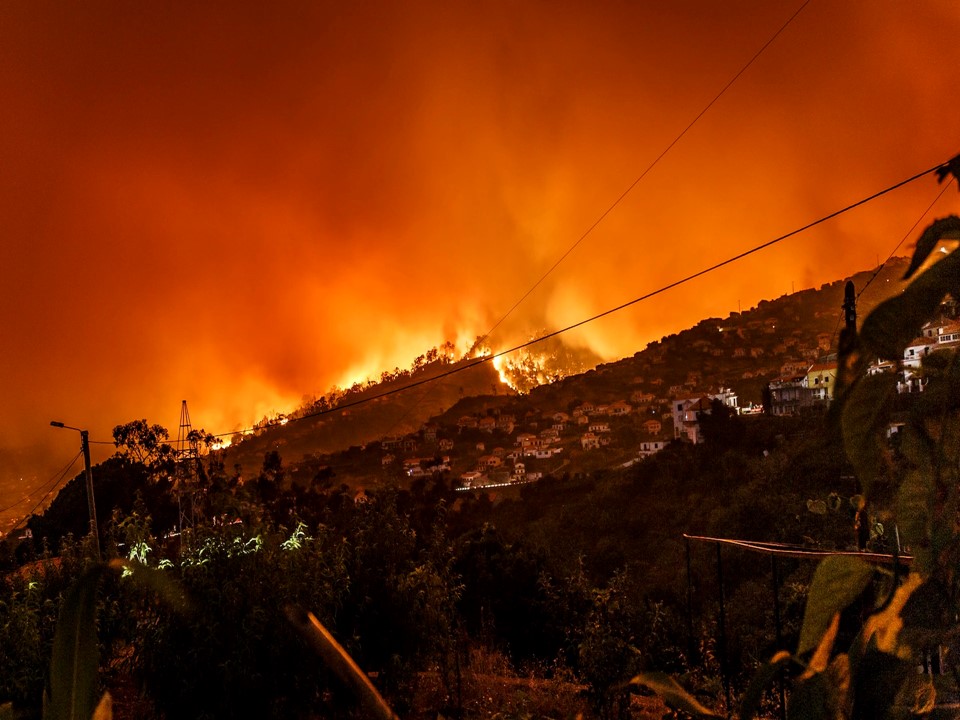
“Therefore shall her plagues come in one day, death, and mourning, and famine; and she shall be utterly burned with fire: for strong is the Lord God who judgeth her. And the kings of the earth, who have committed fornication and lived deliciously with her, shall bewail her, and lament for her, when they shall see the smoke of her burning, Standing afar off for the fear of her torment, saying, Alas, alas, that great city Babylon, that mighty city! for in one hour is thy judgment come. And the merchants of the earth shall weep and mourn over her; for no man buyeth their merchandise any more” (Revelation 18:8-11, emphasis). While there still remains some hints of Mystery Babylon in these verses, the application is clearly to “that great city Babylon.” Here we see the prophecies of Isaiah and Jeremiah concerning the demise of Babylon fulfilled in full.
Revelation 18:12-14 describe the lost trade for which the merchants of the world mourn. “The merchants of these things, which were made rich by her, shall stand afar off for the fear of her torment, weeping and wailing, And saying, Alas, alas, that great city, that was clothed in fine linen, and purple, and scarlet, and decked with gold, and precious stones, and pearls! For in one hour so great riches is come to nought. And every shipmaster, and all the company in ships, and sailors, and as many as trade by sea, stood afar off, And cried when they saw the smoke of her burning, saying, What city is like unto this great city! And they cast dust on their heads, and cried, weeping and wailing, saying, Alas, alas, that great city, wherein were made rich all that had ships in the sea by reason of her costliness! for in one hour is she made desolate” (Revelation 18:15-19, emphasis mine). We saw Mystery Babylon destroyed by the Beast and his ten horns in the previous chapter, and now her city and her center of influence is laid waste.
“Rejoice over her, thou heaven, and ye holy apostles and prophets; for God hath avenged you on her” (Revelation 18:20). From this time and forevermore, false religion has been removed from the earth. All the false religions spawned from Babylon, that persecuted the saints of God, are crushed into dust. This is cause for great rejoicing in heaven. The only One worthy of worship will now reign on Earth.
“And a mighty angel took up a stone like a great millstone, and cast it into the sea, saying, Thus with violence shall that great city Babylon be thrown down, and shall be found no more at all” (Revelation 18:21). As a millstone cast into the sea suddenly disappears from view leaving only ripples which soon subside, so will be the sudden destruction of Babylon the Great and all she represents without leaving a single ripple.
Next, the true Christ, the Lord of lords and King of kings comes to set up His kingdom on Earth for 1000 years. We will see that in the next chapter.
How about you, reader? Are you prepared to meet the coming King of kings and Lord of lords? If you do not know the Savior, do not wait any longer. The time is short. Please read my page on “Securing Eternal Life.”
Notes:
[1] Clarence Larkin, The Book of Revelation, Illustrated, (Rev. Clarence Larkin Estate, Philadelphia, 1919), p. 155.
[2] New American Standard Bible, The Open Bible Expanded Edition, (Thomas Nelson Publishers, Nashville, 1985), p. 1258.
[4] Larkin, p.157.
[5] Ibid.
 Ernie's Musings