Tag Archives: Bible

Sometimes Good Deeds Are Rewarded

Trust in the LORD, and do good; so shalt thou dwell in the land, and verily thou shalt be fed. (Psalm 37:3)

Karma characterizes the eastern idea of reaping what you sow. If you sow good deeds, you will reap good. If you sow evil deeds, you will reap evil. To be fair, the Bible teaches the same thing in a more realistic way.

“The wicked worketh a deceitful work: but to him that soweth righteousness shall be a sure reward” (Proverbs 11:18).

“Be not deceived; God is not mocked: for whatsoever a man soweth, that shall he also reap. For he that soweth to his flesh shall of the flesh reap corruption; but he that soweth to the Spirit shall of the Spirit reap life everlasting” (Galatians 6:7-8).

Of course, the Bible also says that such is not always the case. To us, it sometimes appears as if the wicked receive good for their evil.

“The tabernacles [i.e., “houses”] of robbers prosper, and they that provoke God are secure; into whose hand God bringeth abundantly” (Job 12:6).

“I was envious at the foolish, when I saw the prosperity of the wicked. For there are no bands in their death: but their strength is firm. They are not in trouble as other men; neither are they plagued like other men. Therefore pride compasseth them about as a chain; violence covereth them as a garment. Their eyes stand out with fatness: they have more than heart could wish. They are corrupt, and speak wickedly concerning oppression: they speak loftily. They set their mouth against the heavens, and their tongue walketh through the earth. Therefore his people return hither: and waters of a full cup are wrung out to them. And they say, How doth God know? and is there knowledge in the most High? Behold, these are the ungodly, who prosper in the world; they increase in riches” (Psalm 73:3-12).

The difference between karma and the Bible is that for karma, the axiom is sure and constant. The Bible makes no promises that good will be rewarded or evil will be punished in this world. The Bible offers many examples of good individuals suffering evil consequences: Joseph, Jesus, Paul, and the other apostles. Just rewards are reserved for eternity.

However, the Bible also gives examples of those who were rewarded for their righteous acts. Such was the case with one Ebed-melech. “Ebedmelech the Ethiopian, one of the eunuchs which was in the king’s house.”[1] Ebedmelech was probably not his real name. My KJV Bible hyphenates the name emphasizing the compound word, which means “Servant of the King.” He was an Ethiopian; therefore, he did not have a proper Hebrew name. Scripture tells us that he was a eunuch meaning he had been castrated at some point in his life – probably when he entered the king’s service.

“Eunuchs would usually be servants or slaves who had been castrated to make them less threatening servants of a royal court where physical access to the ruler could wield great influence. Seemingly lowly domestic functions—such as making the ruler’s bed, bathing him, cutting his hair, carrying him in his litter, or even relaying messages—could, in theory, give a eunuch “the ruler’s ear” and impart de facto power on the formally humble but trusted servant. Similar instances are reflected in the humble origins and etymology of many high offices.

Eunuchs supposedly did not generally have loyalties to the military, the aristocracy, or a family of their own (having neither offspring nor in-laws, at the very least). They were thus seen as more trustworthy and less interested in establishing a private “dynasty”. Because their condition usually lowered their social status, they could also be easily replaced or killed without repercussion. In cultures that had both harems and eunuchs, eunuchs were sometimes used as harem servants.”[2]

King Zedekiah, in whose service Ebedmelech was employed, had been set up as king over Judah by King Nebuchadnezzar[3] following the first deportation. Zedekiah called on Jeremiah for counsel from the Lord, but he despised what the Lord had to say.[4] Zedekiah sent word to Jeremiah asking him to pray to the Lord for them. At this time, the Egyptians had come up to defend Judah, but the “Chaldeans,” i.e., the Babylonians, turned them back to Egypt.

“Then came the word of the LORD unto the prophet Jeremiah, saying, Thus saith the LORD, the God of Israel; Thus shall ye say to the king of Judah, that sent you unto me to enquire of me; Behold, Pharaoh’s army, which is come forth to help you, shall return to Egypt into their own land. And the Chaldeans shall come again, and fight against this city, and take it, and burn it with fire” (Jeremiah 37:6-8).

God advised Zedekiah not to deceive himself into thinking that the Egyptians could defeat the Babylonians. “For though ye had smitten the whole army of the Chaldeans that fight against you, and there remained but wounded men among them, yet should they rise up every man in his tent, and burn this city with fire” (Jeremiah 37:10).

While the Chaldeans were off fighting the Egyptians, Jeremiah left Jerusalem and went to the territory of Benjamin. There, he was overtaken by Irijah, one of Zedekiah’s officers and accused of defecting to the Chaldeans. So, Jeremiah was arrested and imprisoned in a dungeon. While there, Zedekiah came to him requesting “any word from the Lord.” The word from the Lord was that he would be delivered over to the king of Babylon. The word displeased Zedekiah and he put Jeremiah back in prison.[5]

Jeremiah continued to prophesy from his prison cell in the court where all passersby could hear. Jeremiah’s message was harsh but true. All in the city would “die by the sword, by the famine, and by the pestilence.”[6] However, anyone surrendering to the Chaldeans would be spared.[7] The message did not appeal to the leaders because they felt it would dishearten the people. They asked Zedekiah to do something about Jeremiah, and he gave them permission to do whatever they wanted with the prophet. So, their solution was to put Jeremiah in a deep cistern that held no water but was deep in mud. Here is where Ebedmelech comes in.

“Now when Ebedmelech the Ethiopian, one of the eunuchs which was in the king’s house, heard that they had put Jeremiah in the dungeon; the king then sitting in the gate of Benjamin; Ebedmelech went forth out of the king’s house, and spake to the king, saying, My lord the king, these men have done evil in all that they have done to Jeremiah the prophet, whom they have cast into the dungeon; and he is like to die for hunger in the place where he is: for there is no more bread in the city. Then the king commanded Ebedmelech the Ethiopian, saying, Take from hence thirty men with thee, and take up Jeremiah the prophet out of the dungeon, before he die. So Ebedmelech took the men with him, and went into the house of the king under the treasury, and took thence old cast clouts and old rotten rags, and let them down by cords into the dungeon to Jeremiah. And Ebedmelech the Ethiopian said unto Jeremiah, Put now these old cast clouts and rotten rags under thine armholes under the cords. And Jeremiah did so. So they drew up Jeremiah with cords, and took him up out of the dungeon: and Jeremiah remained in the court of the prison” (Jeremiah 38:7-13).

Ebedmelech had nothing to gain by pleading on Jeremiah’s behalf, but he had surely heard Jeremiah preach and believed that he was God’s prophet. He also trusted that Jeremiah’s message was true. Seeing the mistreatment of Jeremiah moved him to compassion. As a eunuch in the king’s service, he had the trust and the ear of the king, so he acted on behalf of Jeremiah and rescued him from the mirey pit.

Again, Zedekiah requested a word from the Lord by Jeremiah and the answer came back the same. The Chaldeans would conquer the city and all would die by the sword. However, if they surrendered, they would survive. Zedekiah rejected the message and imprisoned Jeremiah again, albeit not in as harsh of conditions. Zedekiah resisted the Babylonians for two years under siege, but the Babylonians finally prevailed. All that resisted died by the sword and those that surrendered were taken away captive in the second deportation. As for Zedekiah, “Then the king of Babylon slew the sons of Zedekiah in Riblah before his eyes: also the king of Babylon slew all the nobles of Judah. Moreover he put out Zedekiah’s eyes, and bound him with chains, to carry him to Babylon” (Jeremiah 39:6-7)

In all this time, God did not forget the good that Ebedmelech had done for Jeremiah.

“Now the word of the LORD came unto Jeremiah, while he was shut up in the court of the prison, saying, Go and speak to Ebedmelech the Ethiopian, saying, Thus saith the LORD of hosts, the God of Israel; Behold, I will bring my words upon this city for evil, and not for good; and they shall be accomplished in that day before thee. But I will deliver thee in that day, saith the LORD: and thou shalt not be given into the hand of the men of whom thou art afraid. For I will surely deliver thee, and thou shalt not fall by the sword, but thy life shall be for a prey unto thee: because thou hast put thy trust in me, saith the LORD” (Jeremiah 39:15-18).

Our good deeds seldom get noticed or rewarded instantly. It is quite possible, that they many never be rewarded in our life here on earth. By the same token, neither do our evil deeds. We often see wicked people get away with murder and never get their just punishment, but God does not forget. Karma, as any false idea, is only partially true. Sometimes we do receive good for good and evil for evil, but not always. The Bible’s record shows that all deeds will eventually be justly rewarded. No one can get away with murder in the end.

Jesus is coming soon, and His reward is with Him. The signs for His appearing are increasing in intensity and frequency. Are you prepared to meet Him? If you do not know Jesus as your personal Lord and Savior, please read my page on “Securing Eternal Life.”

Notes:


[1]  Jeremiah 38:7

[2]  “Eunuch” — https://en.wikipedia.org/wiki/Eunuch

[3]  Jeremiah 37:1

[4]  Jeremiah 37:2

[5]  Jeremiah 37:11-21

[6]  Jeremiah 38:2

[7]  Jeremiah 38:3

Comments Off on Sometimes Good Deeds Are Rewarded

Filed under Apologetics, Book Reviews, Christianity, Philosophy, Theology

Then Came Sunday

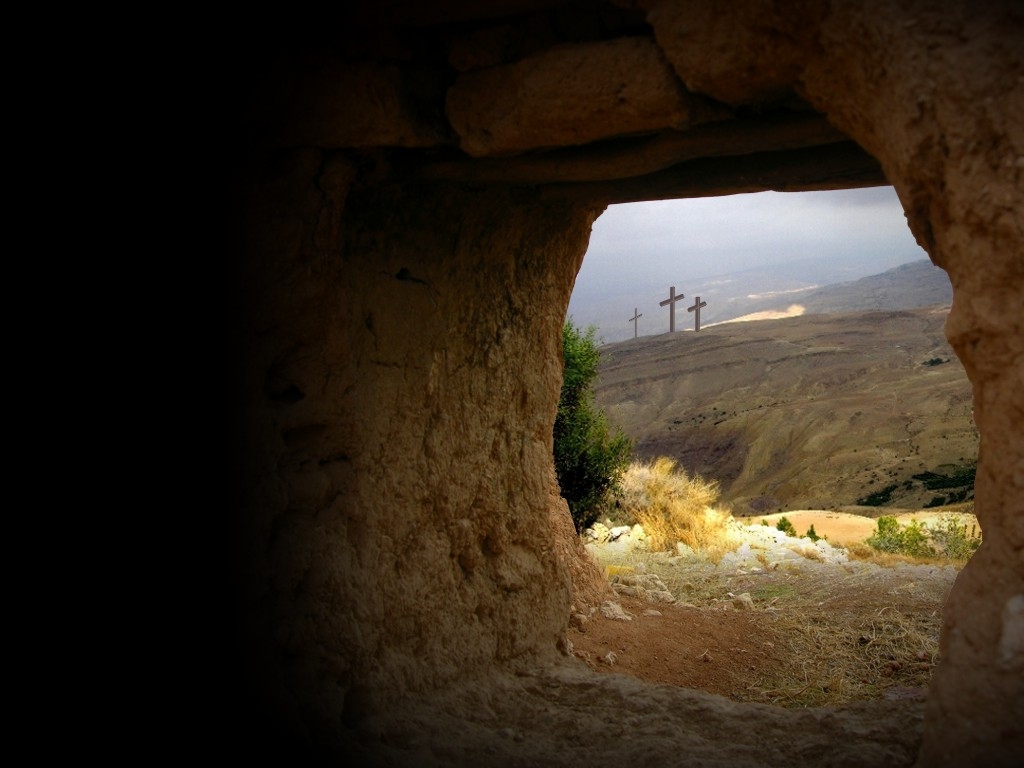
Empty Tomb

And very early in the morning the first day of the week, they came unto the sepulchre at the rising of the sun … And when they looked, they saw that the stone was rolled away: for it was very great. (Mark 16:2, 4)

The story of mankind is brief and straightforward despite the naturalistic stories invented by evolutionists. God created man in His own image (Genesis 1:26). God created man to enjoy fellowship with Him, but man erected a barrier between himself and God by his disobedience to God’s only command: “But of the tree of the knowledge of good and evil, thou shalt not eat of it: for in the day that thou eatest thereof thou shalt surely die” (Genesis 2:17). That disobedience brought the curse of death – separation from God who is life and the giver of life. “Jesus said unto her, I am the resurrection, and the life: he that believeth in me, though he were dead, yet shall he live: And whosoever liveth and believeth in me shall never die. Believest thou this?” (John 11:25-26). Holy God cannot abide sin. “Shall the throne of iniquity have fellowship with thee, which frameth mischief by a law?” (Psalm 94:20).

From that time on, innocent blood has been shed to cover or atone for the sins of man “For all have sinned, and come short of the glory of God” (Romans 3:23). Starting with that first sacrificial lamb slaughtered by the Lamb of God (Genesis 3:21), the innocent pay the penalty for the sins of the guilty. So the sacrificial system began carried on by Abel (Genesis 4:4), Noah (Genesis 8:20) and the law delivered by Moses. But the practice failed to bridge the chasm rived by sin “For it is not possible that the blood of bulls and of goats should take away sins” (Hebrews 10:4).

This hopeless situation required a better and permanent solution. This was mankind’s problem and the responsibility fell upon man for resolution. But Holy God cannot be satisfied with anything less a perfect, sinless sacrifice. Only the blood of a perfect, sinless man would do. Where could such a man be found? For, “As it is written, There is none righteous, no, not one … They are all gone out of the way, they are together become unprofitable; there is none that doeth good, no, not one” (Romans 3:10, 12). Such a conundrum was no puzzle for an omniscient God. “[He] made himself of no reputation, and took upon him the form of a servant, and was made in the likeness of men: And being found in fashion as a man, he humbled himself, and became obedient unto death, even the death of the cross” (Philippians 2:7-8). “Wherefore, as by one man sin entered into the world, and death by sin; and so death passed upon all men, for that all have sinned” (Romans 5:12). So, God in human form died in the stead of His human creation, and He took upon Himself the penalty that was due to each one of us individually. This is an awesome thing! In all the world religions of man, man sacrifices himself to his god, but the Bible teaches that God sacrificed Himself for man. Is that not incredible!

So Jesus died on the cross at Passover. He became the sacrificial Lamb of God to atone for the sins of mankind. He took on the crushing blow of the curse of death. In His final words He declared, “It is finished!” (John 19:30), and He died. Death took its greatest prize, but then came Sunday! The curse of death was broken. “Therefore as by the offence of one judgment came upon all men to condemnation; even so by the righteousness of one the free gift came upon all men unto justification of life” (Romans 5:18).

When I survey the wondrous cross
On which the Prince of glory died,
My richest gain I count but loss,
And pour contempt on all my pride.

Forbid it, Lord, that I should boast,
Save in the death of Christ my God!
All the vain things that charm me most,
I sacrifice them to His blood.

See from His head, His hands, His feet,
Sorrow and love flow mingled down!
Did e’er such love and sorrow meet,
Or thorns compose so rich a crown?

Were the whole realm of nature mine,
That were a present far too small;
Love so amazing, so divine,
Demands my soul, my life, my all.

(“When I Survey the Wondrous Cross” – Isaac Watts, 1707)

His death on the cross covered our sins once and for all. His resurrection bridged the chasm of death separating sinful humanity from Holy God. He has made the way for you and for me. He said, “I am the way, the truth, and the life: no man cometh unto the Father, but by me” (John 14:6). After all He has done for you, the least you can do is follow the way He has prepared. “Love so amazing, so divine, demands my soul, my life, my all!”


1 Comment

Filed under Apologetics, Bible, Christianity, Creation, Death, Easter, Evangelism, Gospel, Religion, Resurrection, Salvation, Theology

An Expected End

For I know the thoughts that I think toward you, saith the LORD, thoughts of peace, and not of evil, to give you an expected end. (Jeremiah 29:11)[1]

Christians often quote the verse above without understanding the context in which it was given. It is one of those feel-good verses that makes us feel special believing that God is looking out for us and only has good things in store for us. While that is certainly true to a great extent – God does care and provide for His own, and I can certainly testify to that in my own life. However, deeper thought should be given to the circumstances surrounding this passage.

The ten northern tribes of Israel were conquered and expatriated by Assyria around 722 B.C., and a short 136 years later, the southern kingdom, comprised of the two remaining tribes, Judah and Benjamin, was taken captive by Babylon. It was during this time that Jeremiah prophesied. Indeed, before the Babylonian conquest, Jeremiah urged Judah to repent of its idolatry and avoid what God determined to bring upon them. So deep had they fallen into sin that God actually instructed Jeremiah to stop praying on their behalf.[2]

God finally had it with His people and He summoned “His servant,” Nebuchadnezzar,[3] to conquer them and take them away captive, which he did in 586 B.C. Nebuchadnezzar took Daniel, the prophet, and his friends,[4] captive in this first of three rounds of deportations.

Early in their captivity there arose false prophets telling the captives that their captivity would not be long and that God soon liberate them. That was not God’s plan, and He instructed Jeremiah to send a letter “unto the residue of the elders which were carried away captives, and to the priests, and to the prophets, and to all the people whom Nebuchadnezzar had carried away captive from Jerusalem to Babylon” (Jeremiah 29:1). In short, the letter instructed the people to settle down and prepare for a long stay – build houses, plant gardens, have children and grandchildren. Their stay would not be permanent, but it would be long – 70 years[5] to be exact. God encouraged them to “seek the peace of the city … and pray unto the LORD for it: for in the peace thereof shall ye have peace” (Jeremiah 29:7).

Surely these were not ideal conditions for God’s people. Psalm 137 records how they felt. “By the rivers of Babylon, there we sat down, yea, we wept, when we remembered Zion. We hanged our harps upon the willows in the midst thereof. For there they that carried us away captive required of us a song; and they that wasted us required of us mirth, saying, Sing us one of the songs of Zion. How shall we sing the LORD’S song in a strange land?” (Psalm 137:1-4).

Under these circumstances, God promised, “For thus saith the LORD, That after seventy years be accomplished at Babylon I will visit you, and perform my good word toward you, in causing you to return to this place. For I know the thoughts that I think toward you, saith the LORD, thoughts of peace, and not of evil, to give you an expected end” (Jeremiah 29:10-11, emphasis mine). God’s “good plan” for them was not immediate. Not until a generation away would God’s plan be realized. In the meantime, they had to endure the captivity, pray for their captors and get by in the best way they could. There was no easy way out.

The phrase, “to give you an expected end,” gives pause for thought. When we consider the rest of Israel’s history, we learn that their relationship with God did not improve that much. Yes, they finally gave up their overt idolatry, but they exchanged it for the idolatry of “religion” and “legalism.” After they returned to their homeland and after they rebuilt their Temple, God stopped talking to them for 400 years until Jesus came. So steeped were they in the practice of their religion and legalism, that they completely missed their promised Messiah. Their rejection of their Savior led to the dissolution of their nation and the dispersing of their people among the nations of the world.

Yet, when the prophets speak of the “expected end” – the Day of the Lord – Israel once again becomes a nation, and they finally recognize their Messiah whom they missed at His first coming. God says, “And I will pour upon the house of David, and upon the inhabitants of Jerusalem, the spirit of grace and of supplications: and they shall look upon me whom they have pierced, and they shall mourn for him, as one mourneth for his only son, and shall be in bitterness for him, as one that is in bitterness for his firstborn” (Zechariah 12:10). This, I believe, is their “expected end” to which God referred in Jeremiah 29:11.

Now, with all this in mind, how does this verse apply to us? In many respects, we as Christians, are living in a kind of Babylon. The world grows continually more wicked every day. As Jesus warned, we live “as in the days of Noah.”[6] He said that we “are not of the world,”[7] yet we are “in the world.”[8] Our citizenship is in heaven.[9] Therefore, we need to conduct our lives in a manner befitting our true Kingdom. We should be good citizens in our current state and pray for our leaders and the welfare of our nation. We may not change the world (indeed, the Bible tells us that we won’t), but we do have an influence on people around us. And, God does know the thoughts and plans He has for us – thoughts of “peace” – the peace that only comes from His Holy Spirit in us. Jesus said, “Peace I leave with you, my peace I give unto you: not as the world giveth, give I unto you. Let not your heart be troubled, neither let it be afraid” (John 14:27). We also have an “expected end” with Him in heaven for all eternity, whether we meet Him in death or in the air.[10]

So, next time you hear Jeremiah 29:11 quoted out of context, think on these things. If you do not know Jesus as your personal Lord and Savior, please read my page on “Securing Eternal Life.”


Notes:

[1]  Many modern translations read, “For I know the plans I have for you, declares the Lord, plans for welfare and not for evil, to give you a future and a hope” (ESV) or “For I know the plans that I have for you,’ declares the Lord, ‘plans for prosperity and not for disaster, to give you a future and a hope” (NASB). The Hebrew word that they translate as “welfare” and “prosperity” is “shâlôm,” which the KJV accurately translates as “peace.” It is no wonder that Christians often misapply this verse.

[2]  Jeremiah 7:16; 11:14; 14:11

[3]  Jeremiah 25:9; 27:6

[4]  Daniel 1:3-6

[5]  Jeremiah 29:10

[6]  Matthew 24:37

[7]  John 17:14

[8]  John 17:15

[9]  Philippians 3:20

[10]  1 Thessalonians 4:16-17

Comments Off on An Expected End

Filed under Apologetics, Bible, Christianity, Religion, Second Coming of Christ, Theology

Limited Patience

For my people is foolish, they have not known me; they are sottish children, and they have none understanding: they are wise to do evil, but to do good they have no knowledge. (Jeremiah 4:22)

Jeremiah prophesied at the time just before, during and after the Babylonian captivity of Judah. As I read the first chapters of Jeremiah, I recognized the United States in the litany of charges God leveled against the nation of Judah. I mourn as the words on the page ring true as applied to the nation that I love.

Judah abandoned God and turned to and worshiped demonic gods. They still went to the Temple and offered sacrifices, but it had become a meaningless routine. “To what purpose cometh there to me incense from Sheba, and the sweet cane from a far country? your burnt offerings are not acceptable, nor your sacrifices sweet unto me” (Jeremiah 6:20). They were going through the motions, but treating the LORD no different than any of the other gods they worshiped. By this point in their history, Judah had gradually fallen into idolatry in the course of 200 years or more. God had been patient with them sending prophet after prophet to warn them of the dangerous road they were on, but they did not listen. “Hear, O earth: behold, I will bring evil upon this people, even the fruit of their thoughts, because they have not hearkened unto my words, nor to my law, but rejected it” (Jeremiah 6:19, emphasis mine).

God had it with Judah! On three separate occasions God told Jeremiah, “Therefore pray not thou for this people, neither lift up cry nor prayer for them, neither make intercession to me: for I will not hear thee” (Jeremiah 7:16, emphasis mine). Imagine offending God so badly that He will not listen to the prayers of those who pray for you! This is how low Judah had sunk. “Therefore pray not thou for this people, neither lift up a cry or prayer for them: for I will not hear them in the time that they cry unto me for their trouble” (Jeremiah 11:14, emphasis mine). Judah had crossed the line. “Therefore thus saith the LORD, Behold, I will bring evil upon them, which they shall not be able to escape; and though they shall cry unto me, I will not hearken unto them” (Jeremiah 11:11, emphasis mine). “Then said the LORD unto me, Pray not for this people for their good” (Jeremiah 14:11).

Judah’s list of sins was long and wicked. Not only did they worship idols fashioned after demonic gods, but they offered their babies as burnt sacrifices to these gods. They practiced sexual sins of all kinds. They took advantage of the poor and the widows. They listened to false prophets and rejected the prophets of God who spoke God’s truth like Jeremiah. This was no small thing and they breached the limit of God’s patience. Their rejection of God resulted in their demise at the hands of the Babylonians.

The warning God gave had both a short-term and a long-term application. The Babylonians carried out the short-term application and the Romans carried out the long-term application in A.D. 70 that lasted for almost 2000 years. However, God demonstrates His mercy in that He does not retain His anger forever. He also demonstrates His faithfulness in that He will not break His promise.

Although Israel and Judah were unfaithful to God with their idolatry, He determined to keep His word, not for any merit of this unfaithful nation, but because of His own integrity. He made a promise to Abraham long before Israel became a nation and the only collateral, He gave was His name.[1]God is not a man, that he should lie; neither the son of man, that he should repent: hath he said, and shall he not do it? or hath he spoken, and shall he not make it good?” (Numbers 23:19, emphasis mine).

As an object lesson, God instructed Jeremiah to go to the house of the potter. There, Jeremiah saw the potter working at the wheel forming a clay vessel. In the process, the vessel developed a flaw at which time the potter crushed it and started over until he completed a vessel that suited his liking. “Then the word of the LORD came to me, saying, O house of Israel, cannot I do with you as this potter? saith the LORD. Behold, as the clay is in the potter’s hand, so are ye in mine hand, O house of Israel” (Jeremiah 18:5-6).

We see the fulfillment of this prophecy today. For almost 2000 years the Jews wandered from country to country never having a homeland of their own. Linguists considered the Hebrew language a dead language. The Jews did not speak it, yet they maintained their identity as a people and carried on all of their traditions. They never assimilated into the cultures of the lands in which they lived. Then, on May 14, 1948 God brought them back into their Promised Land from all over the world, made them a nation once, and revived their dead language. No other people group in the history of the world had maintained their identity after such a dispersion. The Jewish people returning to their land and the rebirth of their nation is a miracle of God and a promise kept! Of this day the Prophet Isaiah said, “Who hath heard such a thing? who hath seen such things? Shall the earth be made to bring forth in one day? or shall a nation be born at once? for as soon as Zion travailed, she brought forth her children” (Isaiah 66:8).

There is more to come for Israel. However, what is true for Israel is not necessarily true for the United States of America. We can see many parallels. Regardless of what revisionist historians say, America was founded on biblical principles giving glory to God for His providence. Four hundred years have gone by since the Pilgrims landed on Plymouth Rock. For most of our History, God was central to our government and our nation, but slowly the leaven of humanism crept in and started eating away at our foundations. About 50 years ago, the cracks in the foundation became more obvious, until now they seem to have crumbled altogether.

One big difference sets America apart from Israel. God never made an unconditional promise to any one of our founding fathers, not even to George Washington. God made an unconditional promise to Abraham; therefore, Israel survives as a nation. We have no such guarantee. “Blessed is the nation whose God is the LORD; and the people whom he hath chosen for his own inheritance” (Psalm 33:12); but we, as a nation, have rejected God and made the earth our god. Unless we, as a nation, repent and return to God, no hope remains for our survival. I see no prospect of a national repentance. God’s patience is limited, and I fear we have breached the limit.

Yet, even though the nation crumbles – that seems evident to me – God’s people will survive. While God still has His people here, it is incumbent on His people to carry on His work until Jesus comes to take us home. As God’s people, we need to remember that this world is not our home.[2] We are citizens of heaven[3] and we are ambassadors of the king[4] in this foreign land. Let us do the work of an ambassador until the Lord closes down our embassy and calls us home.

If you do not know God and are unsure of where you will spend eternity, please read my page on “Securing Eternal Life.”

Notes:


[1]  Genesis 12:2-3; 13:15-16; 15:18

[2]  John 15:19

[3]  Philippians 3:20

[4]  2 Corinthians 5:20

1 Comment

Filed under Apologetics, Christianity, Current Events, End Times, Eschatology, Evangelism, Religion, Second Coming of Christ, Theology

Sharpen Your Sword

And take the helmet of salvation, and the sword of the Spirit, which is the word of God: (Ephesians 6:17)

Earlier this past week, my BSF (Bible Study Fellowship) group met to study Matthew 4, where the Gospel writer recounts Jesus’ temptation by Satan after He spent 40 days and 40 nights without food in the wilderness. The writer of the Epistle to the Hebrews states that “we have not an high priest which cannot be touched with the feeling of our infirmities; but was in all points tempted like as we are, yet without sin” (Hebrews 4:15). In his first general epistle, the Apostle John lists three points whereby we are tempted: the lust of the flesh, the lust of the eyes, and the pride of life.[1] We have evidence of this from the very beginning. “And when the woman saw that the tree was good for food [lust of the flesh], and that it was pleasant to the eyes [lust of the eyes], and a tree to be desired to make one wise [pride of life], she took of the fruit thereof, and did eat…” (Genesis 3:6).

Matthew records that Satan tempted Jesus by the same means, albeit not in the same order.[2] The order of the temptations is not as relevant as the fact that the temptations are the same as those to which we succumb. Satan first came at Him with the lust of the flesh, “command that these stones be made bread.” [3] Next he tried tempting Him with the pride of life, “cast thyself down: for it is written, He shall give his angels charge concerning thee: and in their hands they shall bear thee up, lest at any time thou dash thy foot against a stone.”[4] It behooves us to take note that Satan quoted Scripture[5] to Jesus, although it was misapplied. (We must take that as a lesson; knowledge of Scripture is not the path to salvation.) Finally, Satan went for the lust of the eyes. “Again, the devil taketh him up into an exceeding high mountain, and sheweth him all the kingdoms of the world, and the glory of them; And saith unto him, All these things will I give thee, if thou wilt fall down and worship me” (Matthew 4:8-9). Satan is the “prince and god of this world;”[6] therefore, he had a legitimate right to make that claim.

Jesus did not take the bait. Jesus answered each temptation with a passage from Scripture. The Bible reminds us that “There hath no temptation taken you but such as is common to man: but God is faithful, who will not suffer you to be tempted above that ye are able; but will with the temptation also make a way to escape, that ye may be able to bear it” (1 Corinthians 10:13, emphasis mine). And do not think that because Jesus is God that He held a higher advantage. Satan attacked Jesus’ humanity, and He is every bit as human as you and I.

If Jesus had an advantage, it was His perfect knowledge of the Word of God, which brings me to the reason for the title of this article. Scripture often refers to the Word of God as a “sword.” Our leading verse (above) refers to the Word of God as “the sword of the Spirit.” “For the word of God is quick [i.e., alive/living], and powerful, and sharper than any twoedged sword…” (Hebrews 4:12). In Revelation, the Word proceeding from Jesus’ mouth is described as a sword.[7]

The “sword” is the final piece of the Christian soldier’s armor.[8] All the pieces of the soldier’s armor are defensive in nature. They are designed to protect the wearer, but the sword is both a defensive and offensive weapon. As a Christian you have surely experienced opposition when you made an argument based on the Word of God. Of course! It hurts. It cuts, “piercing even to the dividing asunder of soul and spirit, and of the joints and marrow, and is a discerner of the thoughts and intents of the heart” (Hebrews 4:12). Naturally, the lost hearer will recoil at the message of the Bible.

However, as a Christian, if you have not experienced such reactions, perhaps your sword is dull. Maybe you have hidden your sword away somewhere, and it has become pitted and rusted. Then, when you attempt to use it only bruises but does not cut, and the bruises quickly heal and are forgotten. If that is the case, you need to sharpen your sword! You cannot sharpen your sword with a 30-minute sermon or a 45-minute Sunday school lesson every Sunday. You need to “Study to shew thyself approved unto God, a workman that needeth not to be ashamed, rightly dividing the word of truth (2 Timothy 2:15, emphasis mine). “Study” does not mean to sit down and casually read a few chapters as one would a dime-store novel. The Greek word, spoudazō, means to “to use speed, that is, to make effort, be prompt or earnest: – do (give) diligence, be diligent (forward), endeavour, labour, study.”[9] If you will take just one or two chapters daily, read slowly and carefully, question the text, seek out the meaning of difficult words, etc. you will gain a deeper understanding of the Word of God. And, because you dug it out for yourself, it will stick better in your mind than what you can get out of casually reading it or listening to what the preacher may have to say about it. This is how you sharpen your sword and prepare yourself for the spiritual battle you face every day

Notes:


[1]  1 John 2:16

[2]  Luke records the same account in the order prescribed by John – Luke 4:1-14

[3]  Matthew 4:3

[4]  Matthew 4:6

[5]  Psalm 91:11-12

[6]  John 12:31; 14:30; 16:11; 2 Corinthians 4:4

[7]  Revelation 1:16; 2:12, 16; 19:15

[8]  Ephesians 6:13-17

[9]  Strong’s Exhaustive Concordance by James Strong, S.T.D., LL.D., G4704

1 Comment

Filed under Apologetics, Bible, Christianity, Salvation, Theology