Tag Archives: Bible

What You Don’t Know

Genesis1

And Jesus answering said unto them, Do ye not therefore err, because ye know not the scriptures, neither the power of God? (Mark 12:24)

Jesus faced His crucifixion just days away. Jerusalem was already in full Passover mode as Jews descended on the capital city from all over the Roman world. This was one of three holy convocations where Jews were to gather to celebrate the Feasts of the Lord (Leviticus 23). The Jewish religious leaders were already plotting to have Jesus killed, but because of His popularity, they couldn’t just kill Him. They had to bring up charges against Him that would warrant execution, so they tried to trip Him up with questions regarding their Jewish laws and traditions.

So it was in this case. First they approached Him with a question on paying taxes to Rome. They first tried to butter Him up with false flattery: “Master, we know that thou art true, and carest for no man: for thou regardest not the person of men, but teachest the way of God in truth” (Mark 12:14). They addressed Him as “Master,” i.e., “teacher,” yet they disregarded His teaching even though they stated that He “taught the way of God.” Their question failed to challenge Jesus. The answer was easy: “Render to Caesar the things that are Caesar’s, and to God the things that are God’s” (Mark 12:17).

The Sadducees, who “say there is no resurrection” (Mark 12:18), followed up with a question concerning the resurrection. Their question was well thought out – they thought. Seven brothers had the same wife, and they all died including the wife. In the resurrection, whose wife shall she be? Aha! Answer that one, Jesus! Jesus replied that there is no marriage in heaven, but before giving His answer, He chided them for their ignorance of Scripture and consequently the power of God (our verse above).

We do often err because we “do not know the Scriptures.” It’s no great challenge to find this ignorance working in a non-believing world, but it’s sad to find the same ignorance, albeit perhaps not as pronounced, among “believers.” One common example is the controversy over creation. Did God cause the Big Bang and then use millions of years of death and suffering to create life by means of evolution? Or did God create in six 24-hour days as clearly recorded in Genesis 1?

Those believers that support the Big Bang and evolution come in different varieties, but they all prefer “science falsely so called” (1 Timothy 6:20) over the clear teaching of Scripture. They hold the word of man in higher regard than the Word of God. They do err because they “know not the scriptures, neither the power of God.” The power of God! God says, “My counsel shall stand, and I will do all my pleasure” (Isaiah 46:10). “I the LORD have spoken it, and I will do it” (Ezekiel 36:36). “And Jesus looking upon them saith, With men it is impossible, but not with God: for with God all things are possible” (Mark 10:27). If God cannot do what He clearly said He did in Genesis 1, then neither can He part the waters of the Red Sea, cause the Sun to stop, or turn back ten degrees, make an ax head float, cleans a leper’s spots, turn water into wine, walk on water or calm the raging sea. If God cannot create as He said He did in Genesis 1, neither can He raise the dead, much less raise Himself from the dead. You do err because you do not know the Scriptures, and because you do not know the Scriptures, you do not know the power of God. What you don’t know can lead you astray. Jesus said, “Search the scriptures; for in them ye think ye have eternal life: and they are they which testify of me” (John 5:39).

Comments Off on What You Don’t Know

Filed under Apologetics, Christianity, Creation, Easter, Evolution, Gospel, Origins, Religion, Resurrection, Science, Theology

Building the Ark

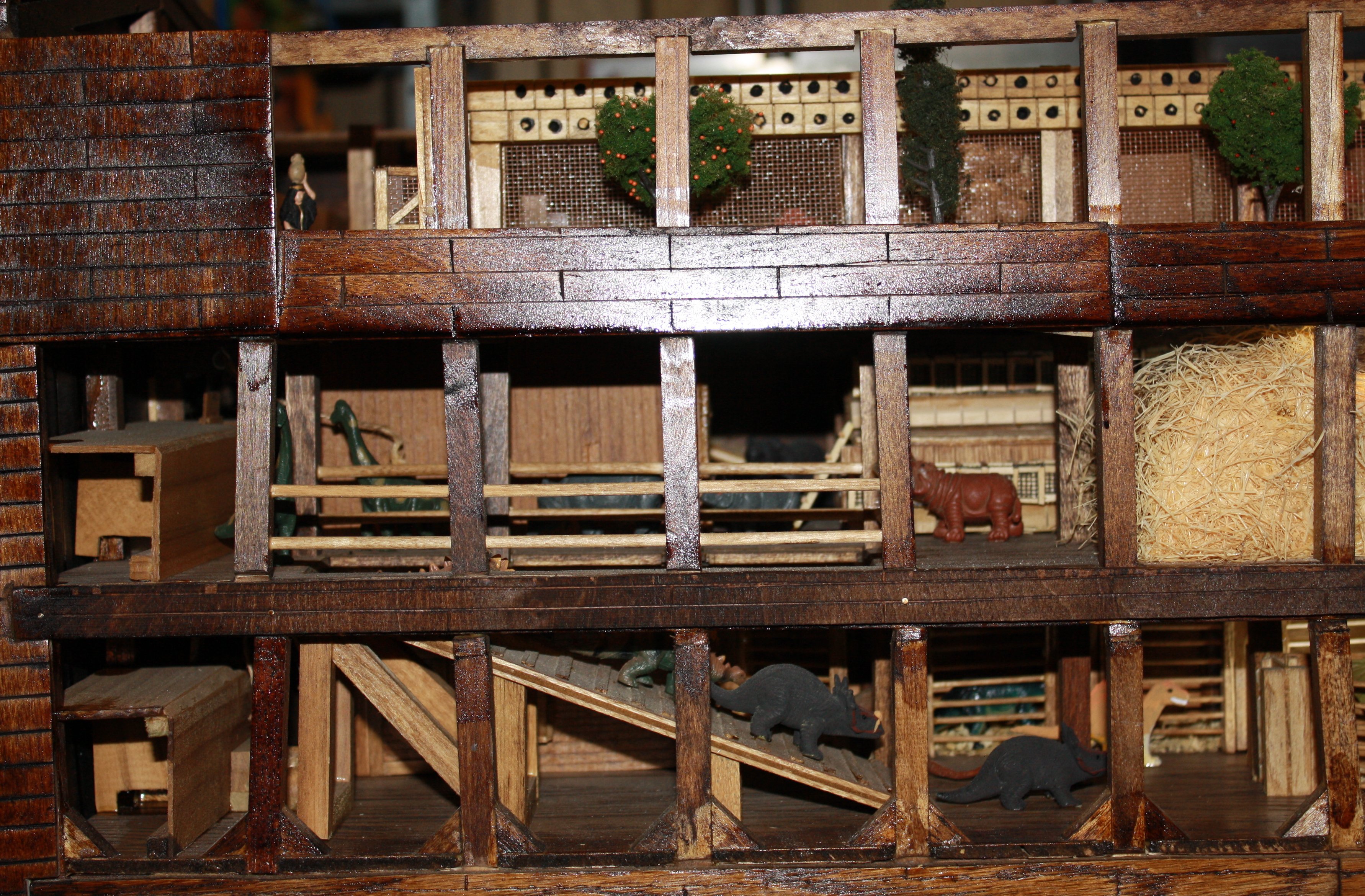
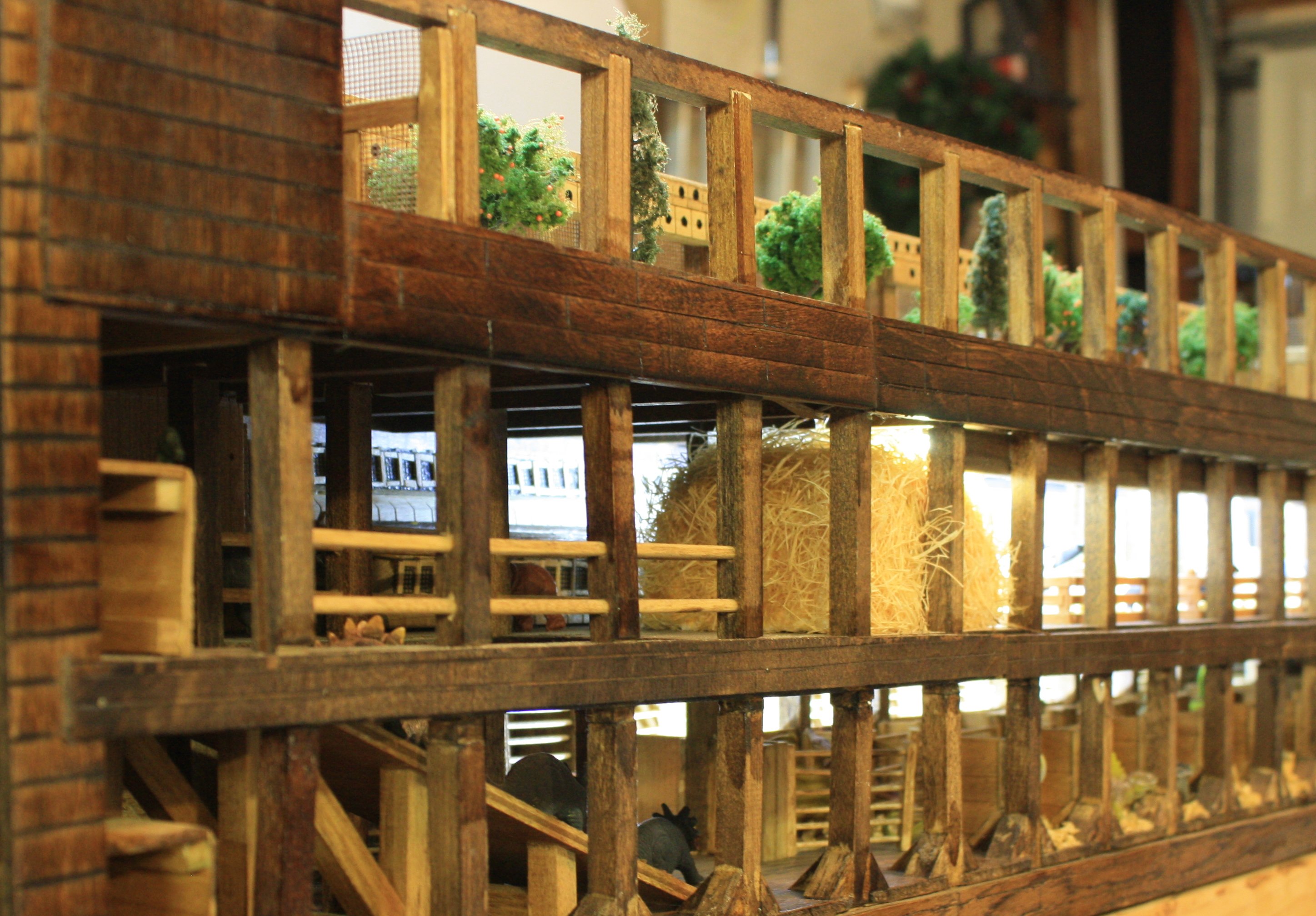
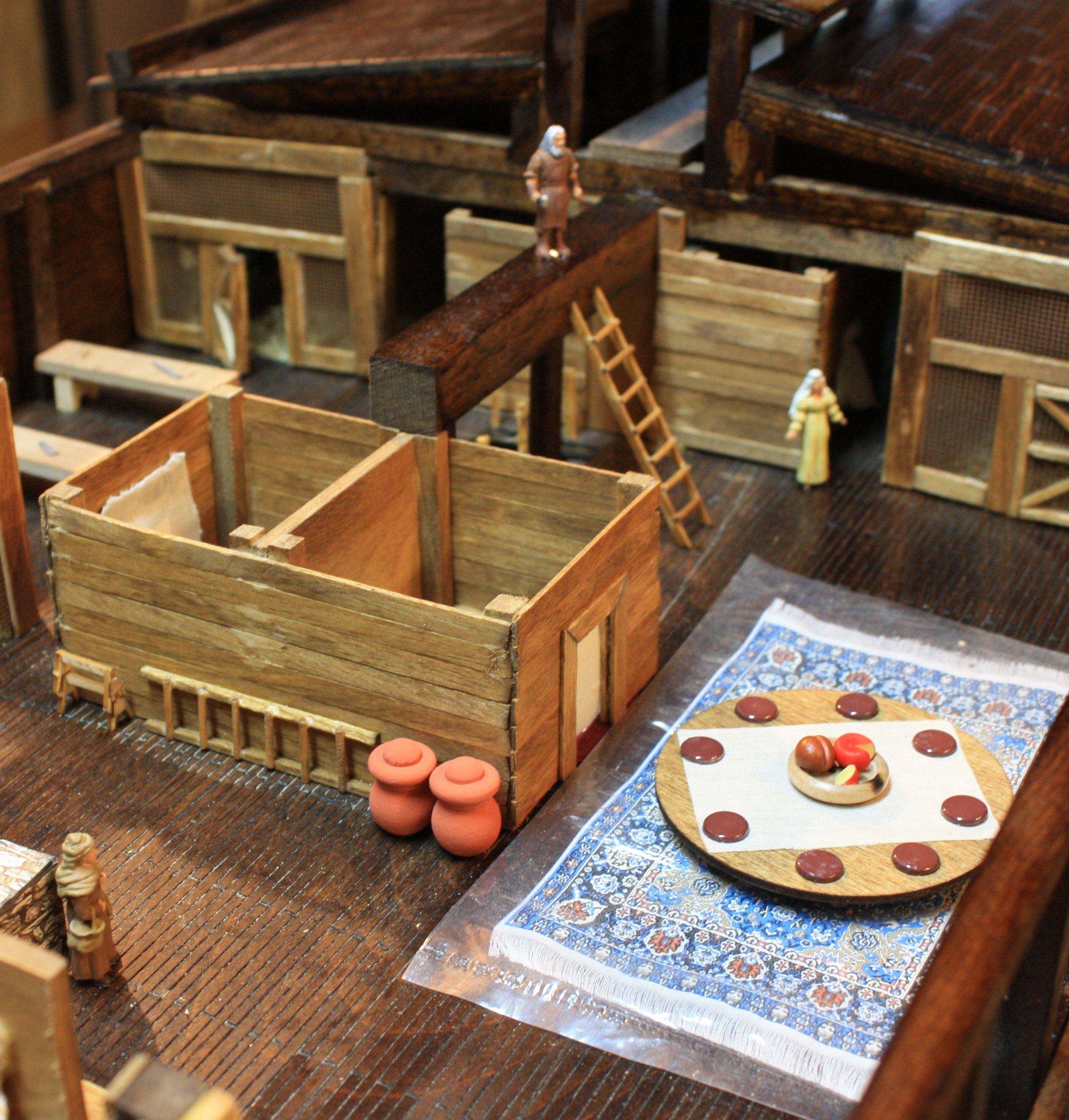
Noah's Ark Model on display at the Institute for creation Research, Dallas, Texas

Noah’s Ark Model on display at the Institute for Creation Research, Dallas, Texas

 Make thee an ark of gopher wood. (Genesis 6:14)

About five years ago, March 2010, God woke me in the middle of the night and gave me a vision to build a scale model of Noah’s Ark. At the time, I was in the middle of working on my M.C.Ed degree in Biblical apologetics from the School of Biblical Apologetics (SOBA) at the Institute for Creation Research (ICR), and I needed a Master’s project or a thesis in order to fulfill the requirements for the degree. The Noah’s Ark model would fulfill that requirement.

As with Noah, God gave me a “big picture” vision of all the details that would need to go on the model. Part of that vision included donating the completed model to ICR. In the end, I was unable to complete the model in time for graduation, so I fulfilled my requirements by writing a thesis. However, that did not squelch my determination to complete the model and make good on my promise. So the work continued a few hours every night after work and on weekends. My only limitation was my own “wimpyness.” My garage, where I built the Ark, is not climate controlled, so in the summer temperatures were unbearably hot, and in the winter temperatures were numbingly cold. The five-year timeframe was due to those limitations, but in that time, I spent 1379 hours to complete the task.

The importance of my God-given task results from what Peter wrote: “Knowing this first, that there shall come in the last days scoffers, walking after their own lusts” (2 Peter 3:3). Scoffers attack anything “Bible,” but one of their favorite targets is the book of Genesis and what it has to say about Creation, the Fall, and the Global Flood. They say stupid things like, “How could all those animals fit inside the Ark?” Sadly, too many Christians, rather than defend God’s Word, take the side of the scoffers. Therefore, this model serves to encourage Christians to trust God’s Word completely and bolster their faith in defending the Word of God.
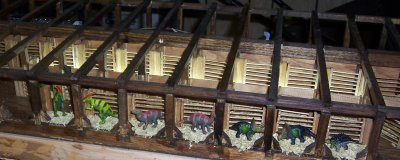
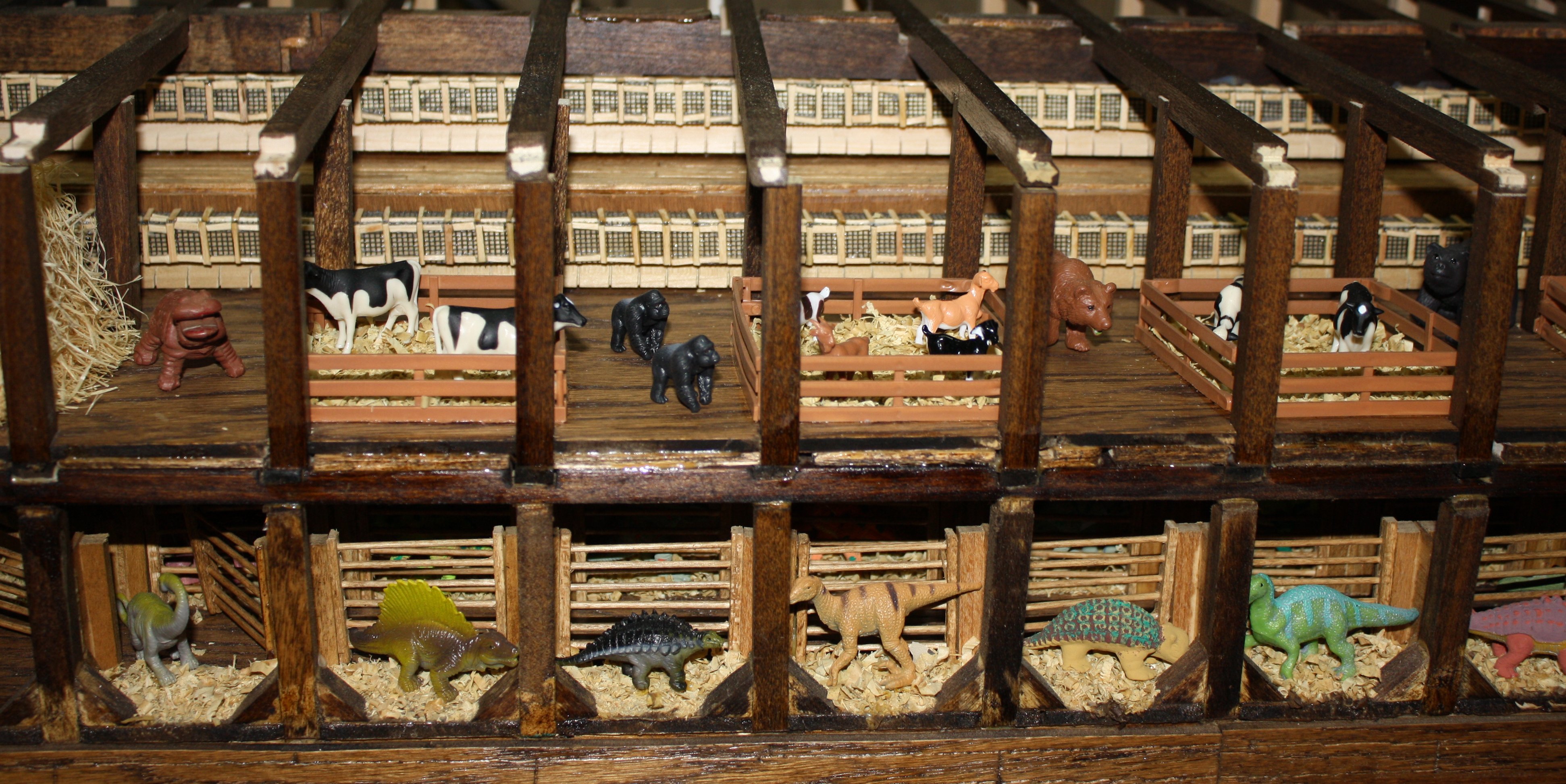
Large animal pens. Note the dinosaurs.

Large animal pens. Note the dinosaurs.

God said to Noah, “Make thee an ark of gopher wood; rooms shalt thou make in the ark” (Genesis 6:14).  The Hebrew word translated “rooms” is qên and it literally means “nests.” That indicates that these would not be large pens where the animals could move around a lot. Noah, his family, and all the menagerie endured 371 days onboard the Ark.
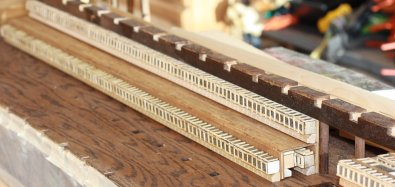
Genesis 6_14(3)

Small animal cages

  That being the case, it is my opinion that God caused the animals to hibernate during that time, so large spaces were not required for the animals. Furthermore, since the average size the animals was about the size of a small cow, a good majority of the animals were small. In order to represent this, made small animal cages for the second deck.
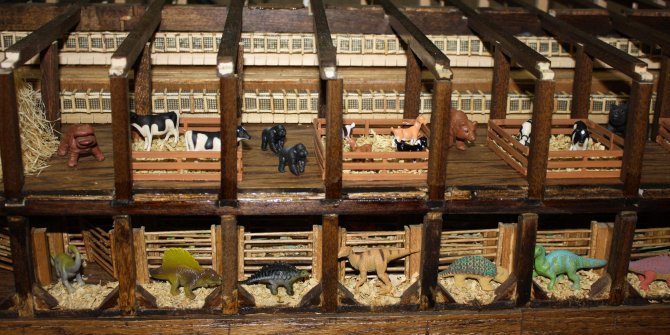
I tried to represent a variety of “kinds” of animals: clean and unclean, mammals, reptiles (dinosaurs) and birds.
I tried to represent a variety of “kinds” of animals: clean and unclean, mammals, reptiles (dinosaurs) and birds.

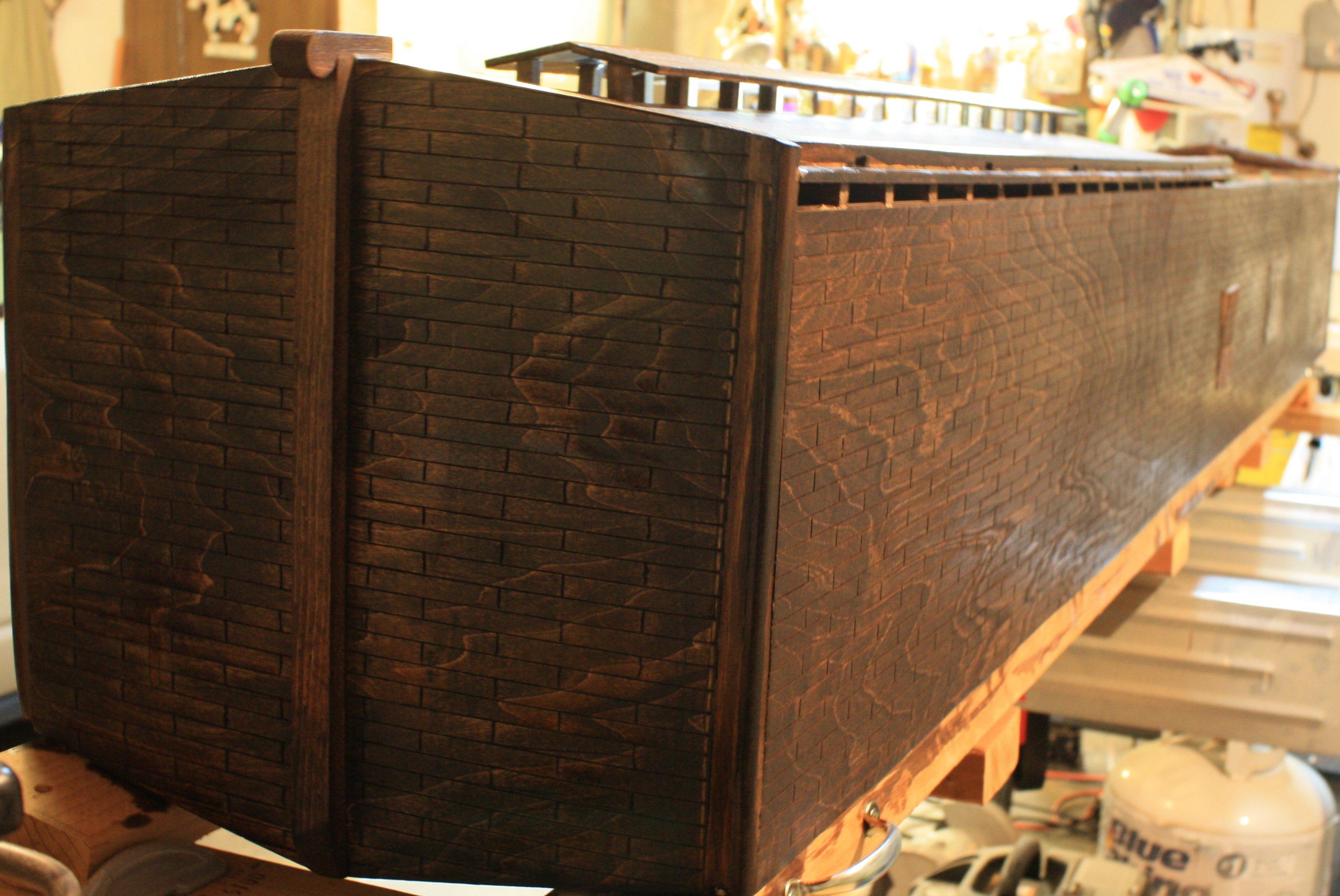
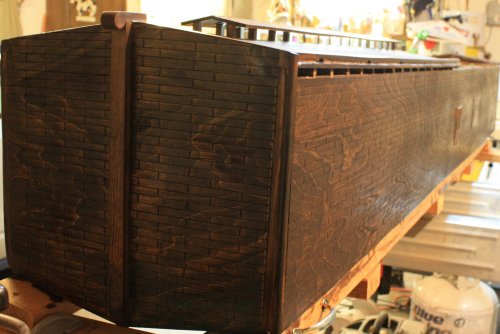
Starboard Side of the Ark

Starboard Side of the Ark

God gave Noah the dimensions of the Ark as follows: “And this is the fashion which thou shalt make it of: The length of the ark shall be Starboard Side of the Ark three hundred cubits, the breadth of it fifty cubits, and the height of it thirty cubits” (Genesis 6:15). Based on an 18-inch cubit, that would make the Ark 450 feet long (the length of one and one half football fields), 75 feet wide, and 45 feet tall. My model is 1/60 scale making it 7.5 feet (90 inches) long, 15 inches wide, and 9 inches tall. (Those are inside dimensions.)
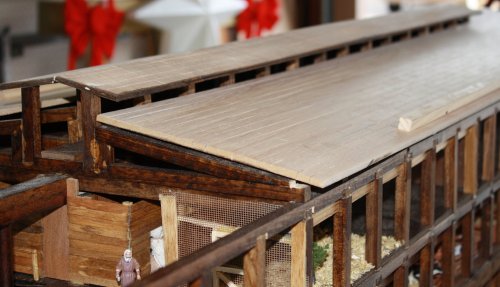
The tsôhar

The tsôhar

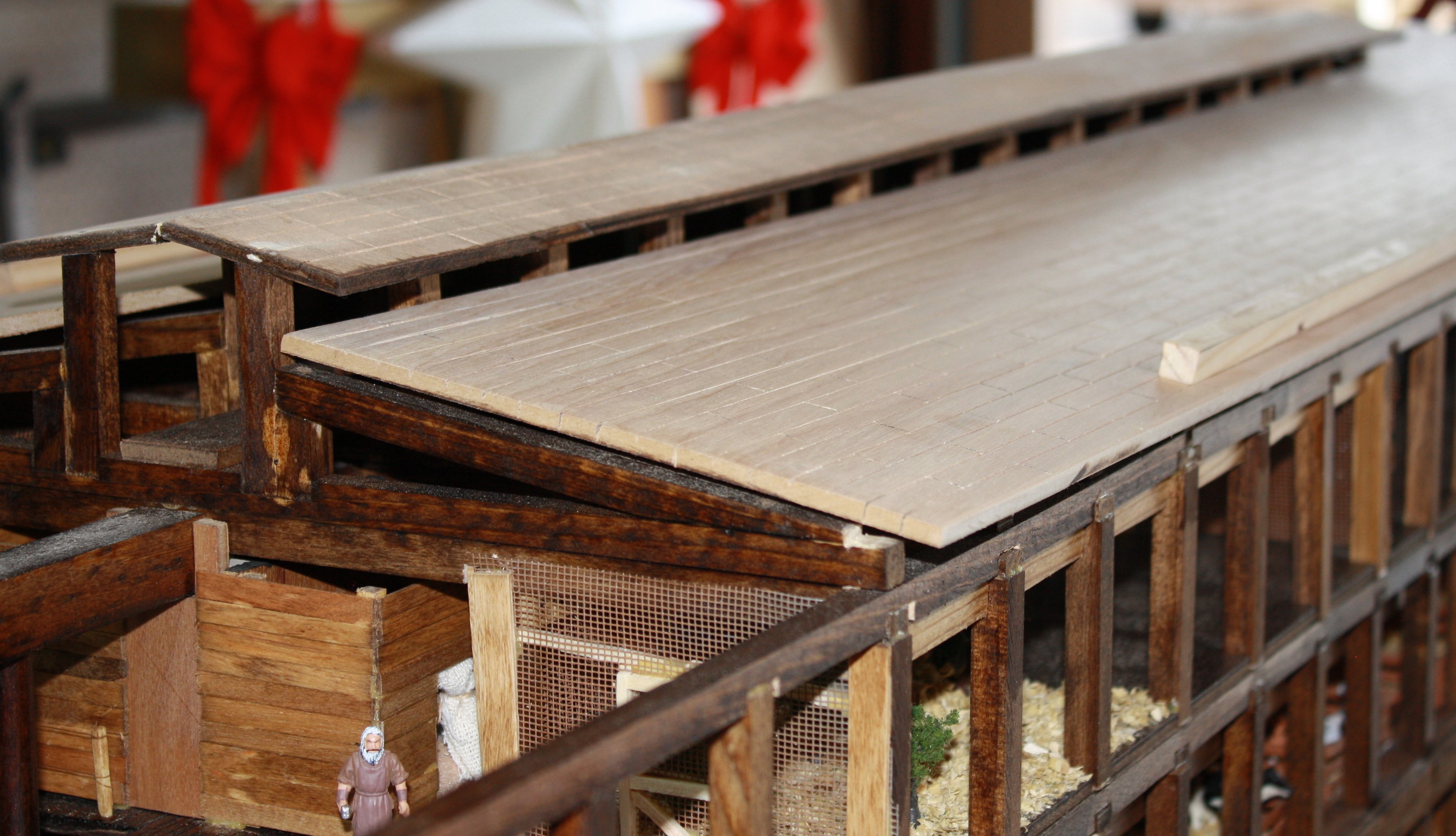
Noah was also instructed to make a “window” for the Ark. “A window shalt thou make to the ark, and in a cubit shalt thou finish it above” (Genesis 6:16). The Hebrew word translated “window” is tsôhar and it literally means a “light” or “double light” as in midday or noon. Only in this passage is it translated “window,” so evidently it was some way to allow outside light into the Ark. Toward the end of the voyage we are told, “And it came to pass at the end of forty days, that Noah opened the window of the ark which he had made” (Genesis 8:6, emphasis mine). In this case, the Hebrew word is challôn and this word does mean “window” and is so translated throughout the Old Testament.

The challôn

The challôn

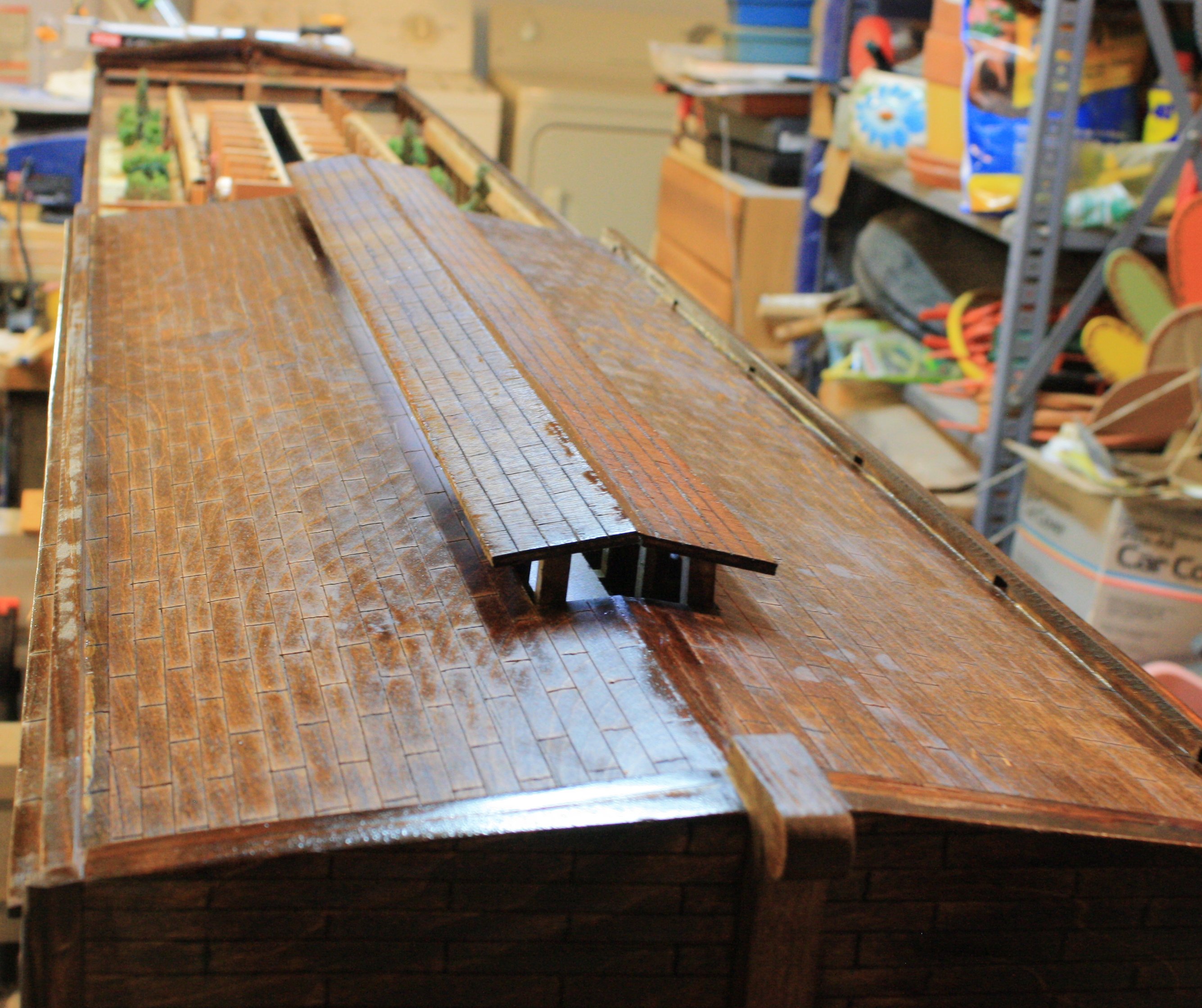
This tells me that Noah had some leeway in the construction of the Ark and not every detail was strictly dictated by God. This fact gives me confidence in using my “sanctified imagination” in creating the detail for the model not specified in Scripture.  The roof, therefore, features an opening beneath the eave of the main roof extending the length of the Ark on both sides as well as the vent opening above the main roof. These two sets of “windows” would allow for air circulation and ventilation.
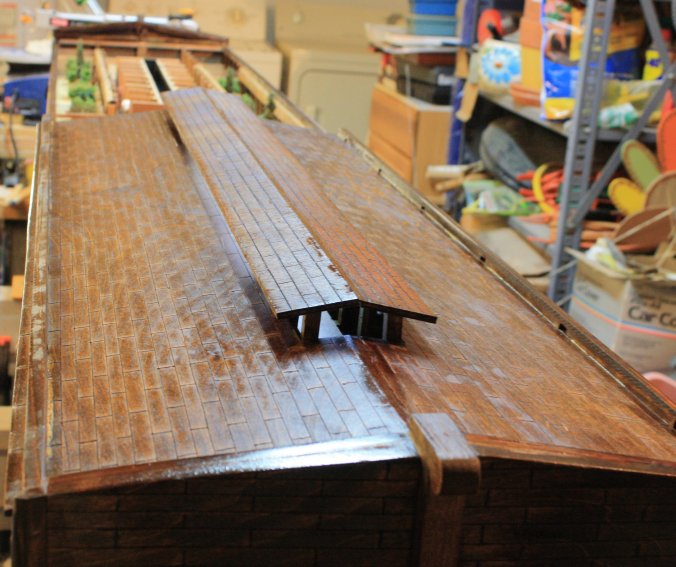
The finished roof with “window”

The one and only door

Noah’s instructions also included “the door of the ark shalt thou set in the side thereof” (Genesis 6:16). Unlike the blasphemous “Noah” movie, the Ark had only a single door.
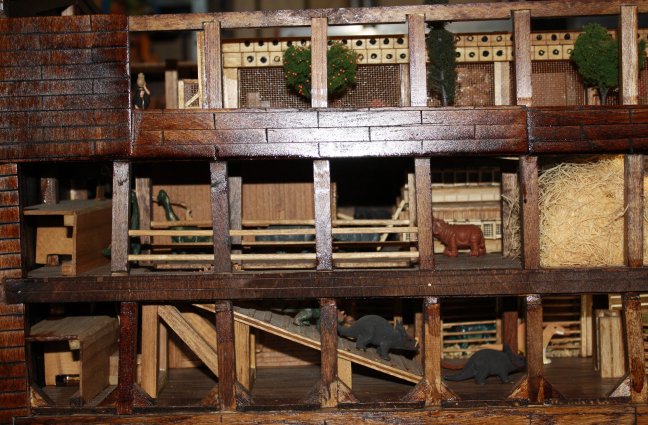
God also specified three “stories” or decks for the Ark: “with lower, second, and third stories shalt thou make it” (Genesis 6:16). 

God also specified three “stories” or decks for the Ark: “with lower, second, and third stories shalt thou make it” (Genesis 6:16).
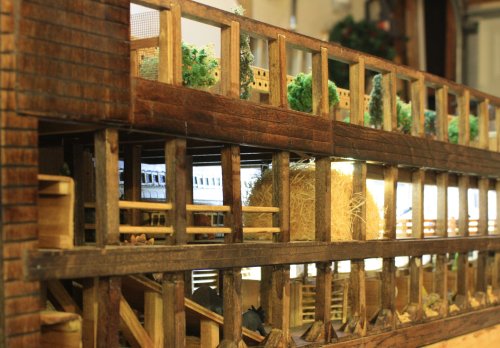
First story - large animals; Second story - "clean" and small animals; Third story - aviary and storage

First story – large animals; Second story – “clean” and small animals; Third story – aviary and storage
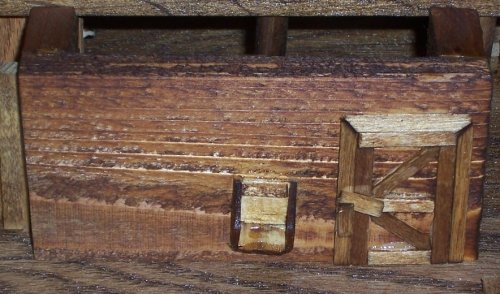
Grain storage (silo)

Grain storage (silo)

Noah was also instructed to carry provisions for his family and for all the animals. “And take thou unto thee of all food that is eaten, and thou shalt gather it to thee; and it shall be for food for thee, and for them” (Genesis 6:21). All of these things came to mind in building the model as I attempted to represent, to a limited extent, what would have been carried on the Ark.
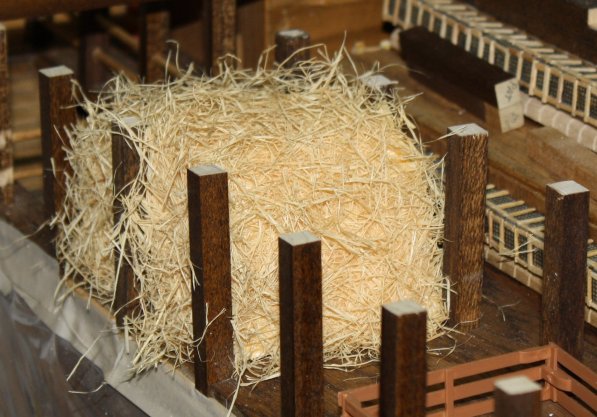
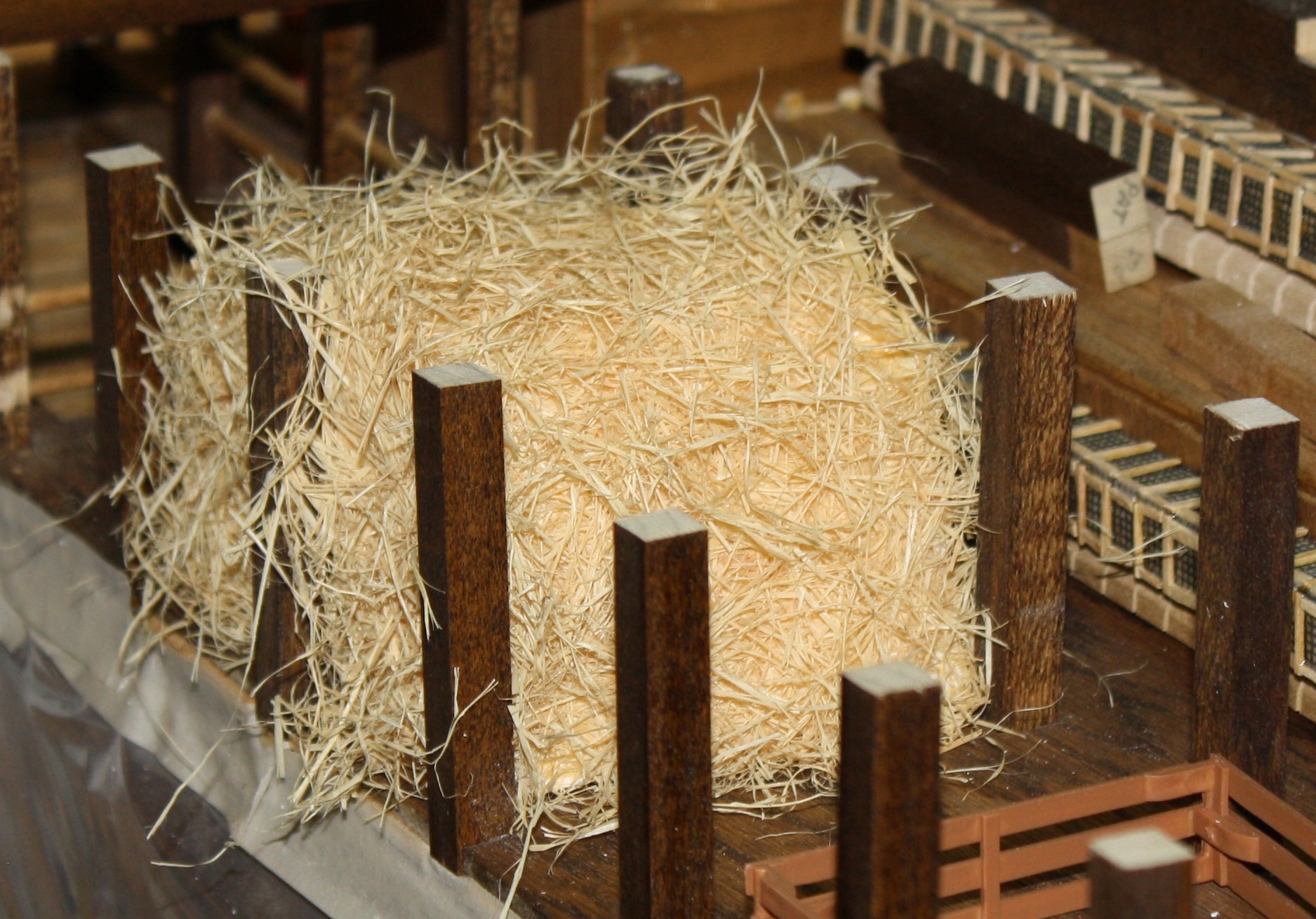
Lots of hay

Lots of hay

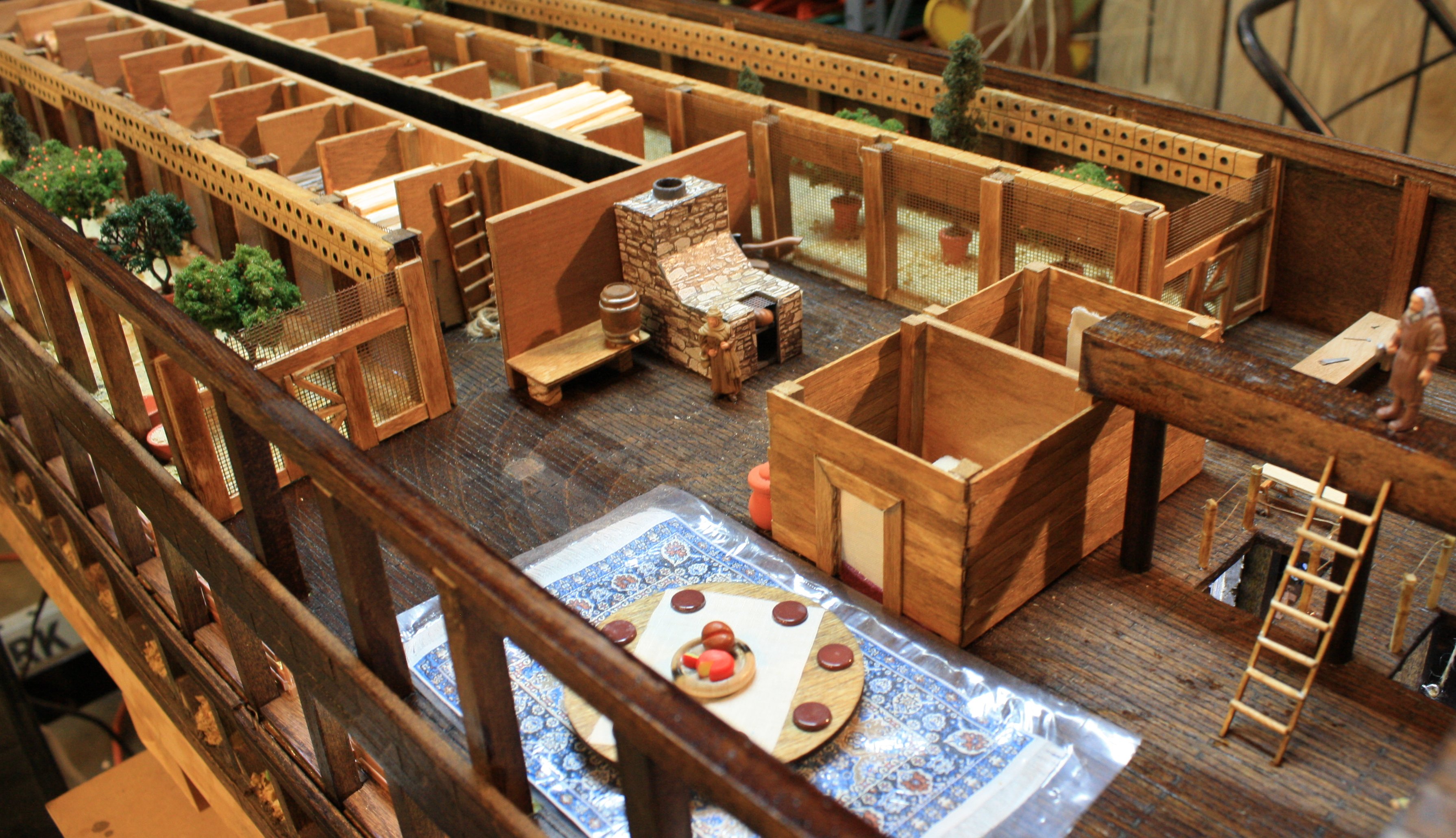
Family gathering area and work spaces

Family gathering area and work spaces

Aviaries, food stores and fill ports for the forward grain silo
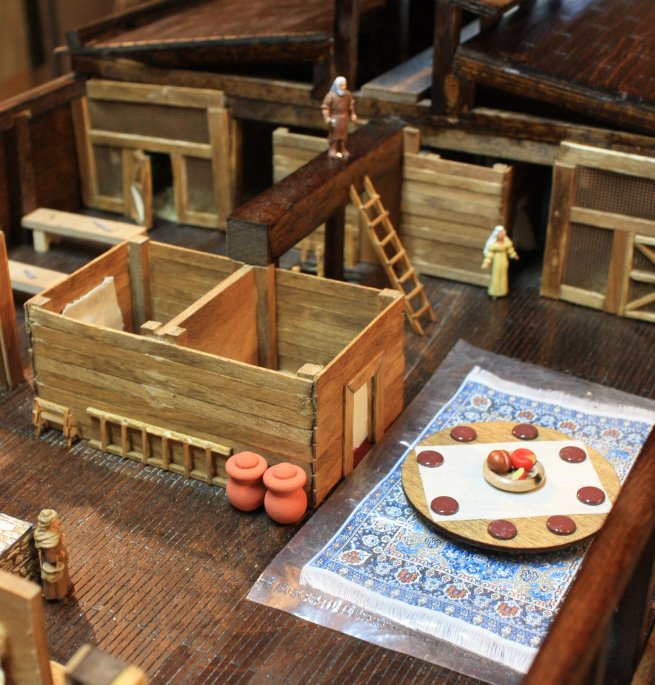
Aviaries, food stores and fill ports for the forward grain silo

Family living quarters, aft aviaries and storage

Family living quarters, aft aviaries and storage

Detail showing stone oven, forward starboard side aviary and storage
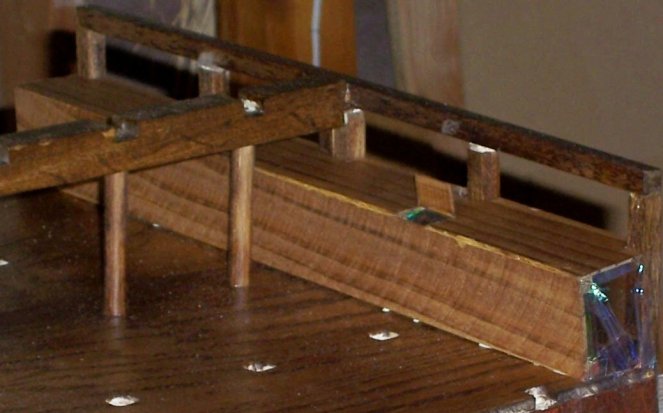
Detail showing stone oven, forward starboard side aviary and storage

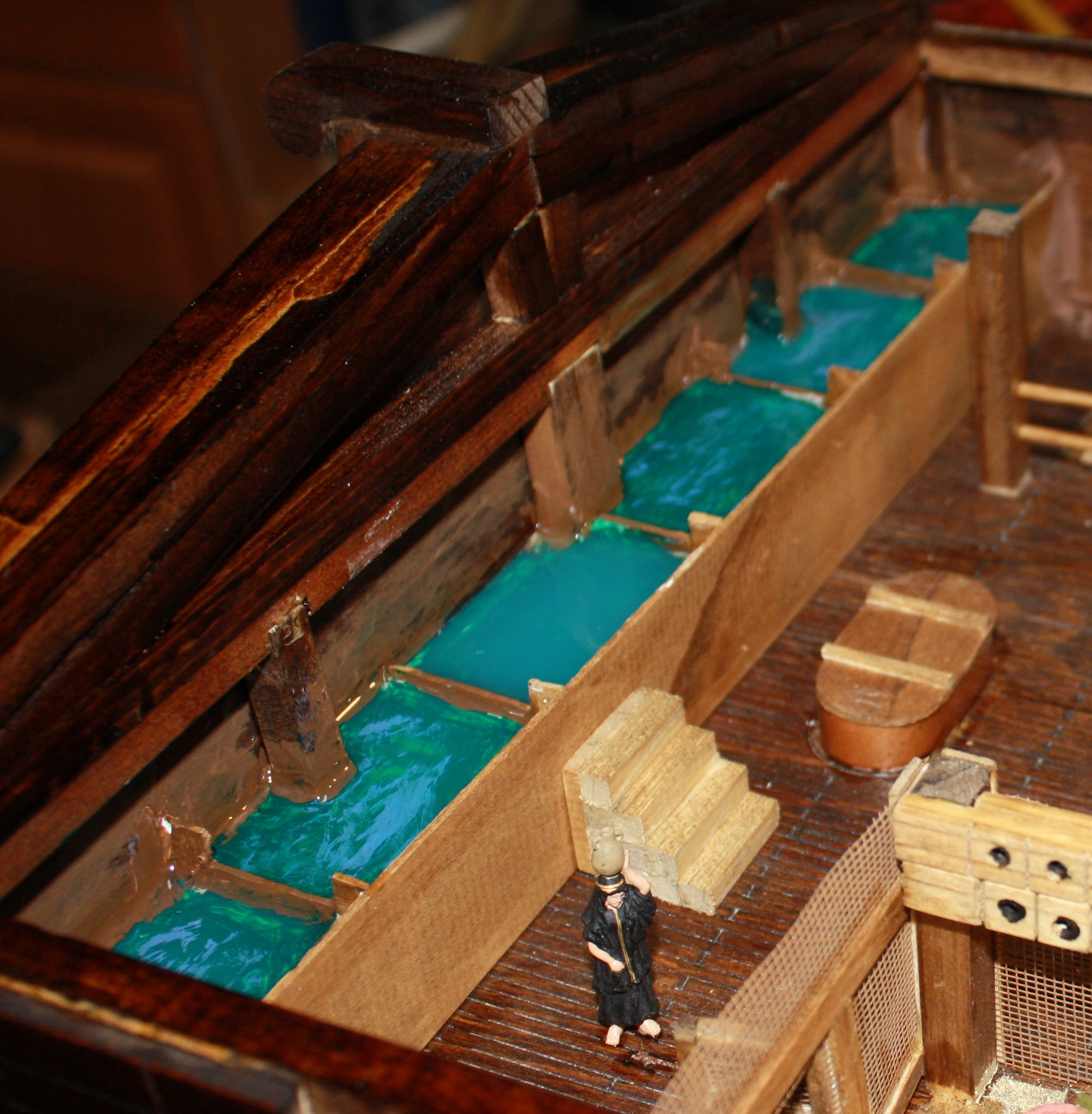
One of six cisterns for water storage - two on each deck, fore and aft

One of six cisterns for water storage – two on each deck, fore and aft
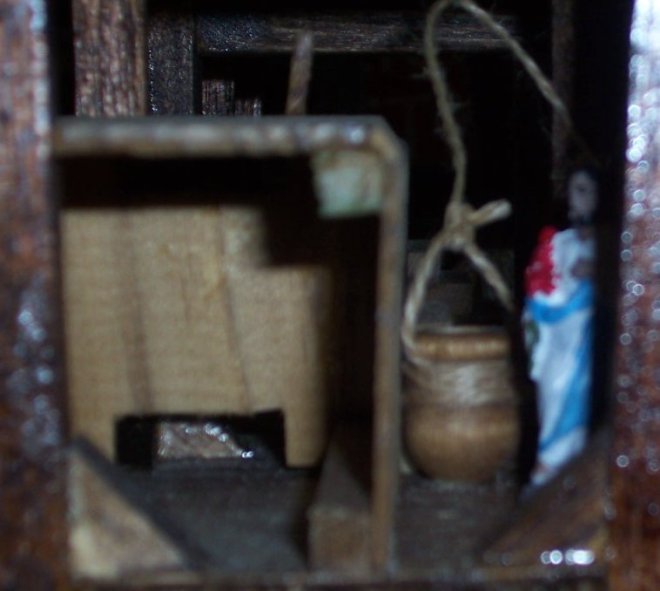
Cistern detail showing baffle for dampening "slosh"

Cistern detail showing baffle for dampening “slosh”
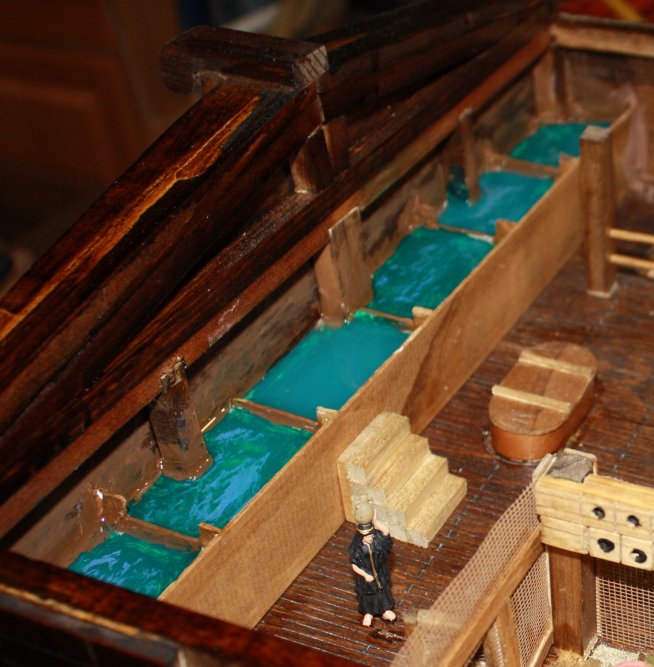
Cistern detail showing water

Cistern detail showing water

The Noah’s Ark model visually represents the Gospel message in the Ark as a “type” of Christ. The Bible tells us that the world had become so corrupt “And it repented the LORD that he had made man on the earth, and it grieved him at his heart … The earth also was corrupt before God, and the earth was filled with violence.” (Genesis 6:6, 11). Things have not changed in all the years since that time. “For all have sinned, and come short of the glory of God” (Romans 3:23). In His holiness must judge and punish sin, “For the wages of sin is death” (Romans 6:23). Just as God is holy, He is also merciful. “But Noah found grace in the eyes of the LORD” (Genesis 6:8) and He provided a way of salvation. Noah had 120 years to build the Ark. During that time the Bible tells us that Noah was “a preacher of righteousness” (2 Peter 2:5) pleading for all to repent of their sin and find refuge in the Ark for God is “not willing that any should perish, but that all should come to repentance” (2 Peter 3:9). The Ark had only one door by which men could enter. Jesus said, “I am the door: by me if any man enter in, he shall be saved, and shall go in and out, and find pasture” (John 10:9). God had complete control of the door to Noah’s Ark. When the fountains of the deep burst open and the deluge descended upon the earth, “And they that went in, went in male and female of all flesh, as God had commanded him: and the LORD shut him in” (Genesis 7:16). There is still only one way obtain salvation. Jesus said, “I am the way, the truth, and the life: no man cometh unto the Father, but by me” (John 14:6). The way of salvation in Noah’s day was the wooden Ark with its single door. Today, the way of salvation is through the wooden cross upon which Jesus died; it is the only way. Eight people were saved on the Ark out of the billions that lived on earth at that time. Jesus said, “Because strait is the gate, and narrow is the way, which leadeth unto life, and few there be that find it” (Matthew 7:14, emphasis mine). Today those that place their faith and trust on the cross of Jesus Christ will be saved from eternal death. “But as many as received him, to them gave he power to become the sons of God, even to them that believe on his name: Which were born, not of blood, nor of the will of the flesh, nor of the will of man, but of God” (John 1:12-13). My prayer is that you have found your Ark in Jesus Christ.

See the article in the March 2015 issue of Acts & Facts: http://www.icr.org/article/noahs-ark-model.

7 Comments

Filed under Apologetics, Christianity, Evangelism, Gospel, Religion, Salvation, Theology

Reaping What You Sow

Be not deceived; God is not mocked: for whatsoever a man soweth, that shall he also reap. (Galatians 6:7)

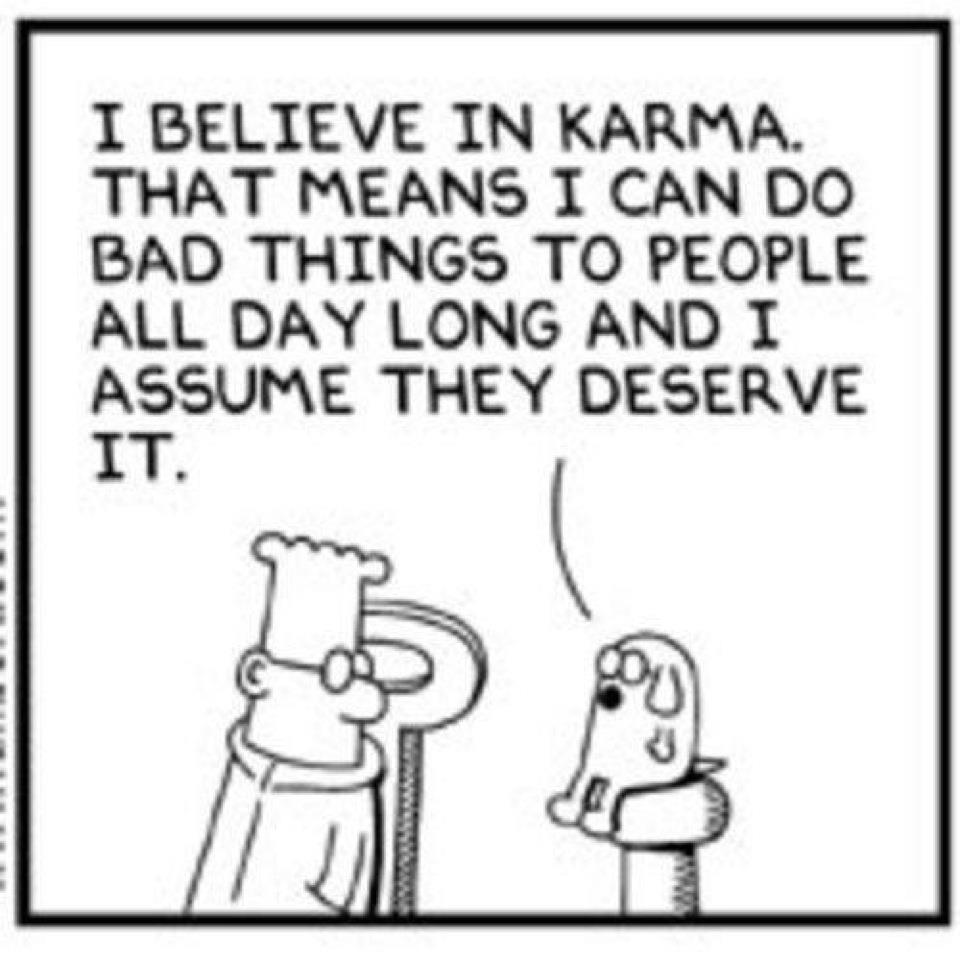
The idea that you sow what you reap has been around for a very long time, even before the time of Christ. The Hindu version is karma. You sow good karma, you reap good karma in return. The Chinese have the philosophy of the “yin and yang” which is “bahlahns, Danielson” (think of “Karate Kid”) between good and evil. Star Wars conjoined these ideas into “The Force” with its good or “light” side and its dark side.

In Jesus’ time, the Jews had similar ideas. For example, they extrapolated from the Levitical Law “an eye for an eye and a tooth for a tooth” (Leviticus 24:20) and used it to exact revenge. That was not the intent of the law as Jesus, the Author of the original, explained:

Ye have heard that it hath been said, An eye for an eye, and a tooth for a tooth: But I say unto you, That ye resist not evil: but whosoever shall smite thee on thy right cheek, turn to him the other also. And if any man will sue thee at the law, and take away thy coat, let him have thy cloke also. And whosoever shall compel thee to go a mile, go with him twain. Give to him that asketh thee, and from him that would borrow of thee turn not thou away. (Matthew 5:38-42)

Allow me a moment just to chase this important rabbit. Notice how Jesus responds to “Ye have heard.” His response is, “But I say unto you.” Throughout scripture any OT prophet or NT apostle who relays a message from God always qualifies his message by “Thus saith the Lord,” but not Jesus. He speaks by His own authority. He is the Lord. I just thought that’s a good thing for you to know.

The Jews of Jesus day also had the idea that good health and material prosperity were a sign of God’s favor, i.e., good karma, as a reward for righteous living. Poor health and poverty were a sign of God’s disfavor, i.e., bad karma, as punishment for a sinful life. (See Deuteronomy 29:9; 1 Kings 2:3)  Jesus debunked these perversions. For example, Jesus came across a man blind from birth and His disciples asked Him, “Master, who did sin, this man, or his parents, that he was born blind?” (John 9:2) They shared the prevailing thought that if one keeps the law, i.e., does not sin, they will prosper and enjoy good health, but a sinner will be punished with poverty or a debilitating disease. To put a stop to their stinking thinking, “Jesus answered, Neither hath this man sinned, nor his parents: but that the works of God should be made manifest in him … When he had thus spoken, he spat on the ground, and made clay of the spittle, and he anointed the eyes of the blind man with the clay, And said unto him, Go, wash in the pool of Siloam, (which is by interpretation, Sent.) He went his way therefore, and washed, and came seeing” (John 9:3, 6-7).

The point is that there is not necessarily a direct correlation between your actions and the good or bad you receive in this world. There are many really bad people in this world – most of them in Washington D.C. – that enjoy great wealth and good health. On the other hand, there are many really good people who have low income and/or poor health. Yet the prevailing belief among many people remains that if one does good, one will receive good in return. This further translates into their view of eternity. They believe that in the end God will weigh their good deeds against their sin, and if their good outweighs their bad, they’ll make it into heaven. What they do not understand is that their deeds will indeed be weighed, but their deeds will be weighed against the Word of God (Revelation 20:12-13). Finding themselves painfully short of perfection, their names will be searched for in the Book of Life. Then when their names are not found there, their doom will be sealed for eternity (Revelation 20:15).

Our lead verse above reminds us not to trifle with God – He will not be mocked. But this is not talking about karma in the sense the world understands. In fact, this verse is not necessarily talking about eternity, and it is not directed at non-believers. Paul was writing to Christians – the church in Galatia. He begins this final chapter by addressing church discipline for a brother “overtaken in a fault” (Galatians 6:1). He encourages the church to support one another in prayer (v. 2). He discourages misplaced pride (v. 3). He exhorts everyone to judge their own actions and not those of others (v. 4). He admonishes everyone to pull their own weight (v. 5). Then he entreats them to financially support those who teach them (v. 6). After all this he says, “Be not deceived; God is not mocked: for whatsoever a man soweth, that shall he also reap” (Galatians 6:7). In other words, God sees, not only what you do, but the motives behind the actions – He will not be mocked. One who is a twice-born child of God, will not lose his “sonship,” but just like any good father disciplines his child to correct wrong actions, so the Heavenly Father corrects His misbehaving child. “If ye endure chastening, God dealeth with you as with sons; for what son is he whom the father chasteneth not? … Furthermore we have had fathers of our flesh which corrected us, and we gave them reverence: shall we not much rather be in subjection unto the Father of spirits, and live?” (Hebrews 12:7, 9)

Paul elaborates on the law of sowing and reaping: “For he that soweth to his flesh shall of the flesh reap corruption; but he that soweth to the Spirit shall of the Spirit reap life everlasting” (Galatians 6:8). The “flesh” here should be understood as our sinful nature. While we live in this fallen world, we retain that sinful nature. When we place our trust in Christ, our dead spirit is made alive. “And so it is written, The first man Adam was made a living soul; the last Adam was made a quickening spirit” (1 Corinthians 15:45). “The last Adam” refers to Christ who has been made a “vitalizing spirit” or a “spirit that brings life.” The meaning of the second birth is that Christ has made our dead spirit come to life. That spirit constantly battles the sinful nature that we carry in our flesh. Paul describes this struggle in Romans 7:14-23. In the end he cries out, “O wretched man that I am! who shall deliver me from the body of this death? I thank God through Jesus Christ our Lord. So then with the mind I myself serve the law of God; but with the flesh the law of sin” (Romans 7:24-25).

As children of God, we have both a sinful nature and an eternal spirit. We understand from nature that what is fed will grow, and what is starved will wither or atrophy. We can feed our flesh by indulging our worldly desires like spending too much time on entertainment, watching or listing to worldly programming on television or the radio, listening to worldly music, reading worldly materials, etc. (I am not addressing non-believers, so my word choices should be clear to believers.) Alternately, we can feed our spirit by listening to Godly programming on television or radio, listening to sacred music that honors God, spending time in God’s Word, etc. If we feed our flesh, our desire for worldly pleasures will increase while our spirit will grow weak. Paul warns that we will reap the consequences for “sowing to the flesh.” God does believe in spanking His children. On the contrary, if we feed the spirit, God will enrich our lives (not necessarily in material ways) so that those blessings will reach into eternity. You reap what you sow.

Comments Off on Reaping What You Sow

Filed under Apologetics, Christianity, Religion, Theology

Worship vs. Emotion

I beseech you therefore, brethren, by the mercies of God, that ye present your bodies a living sacrifice, holy, acceptable unto God, which is your reasonable service.   (Romans 12:1)

This topic has been on my mind for quite some time now, but I have been hesitant to write about it because, well, it stirs up a lot of emotion. The topic of worship is a hot-button topic in church circles because Christians take worship personally – and it is personal. Most of the debate centers around the kind of music used in worship services. The conflict usually boils down to hymns vs. “praise and worship” (P&W) music, or “reverent” vs. “up-beat” music. Personally, I like all kinds of music – classical, country gospel, “high” church and regular hymns, and, yes, even some P&W music. In a recent article I remarked about listening to “godless” rock and roll; I like that too. For me, it is not about the style of the music, but rather the substance. My personal assessment of modern P&W music is that it is shallow in content, overly repetitious, and manipulative. By manipulative I mean that it is designed to excite and stir up the emotions. Hymns sometimes do that for me, but that happens when the truth of the lyrics strikes a chord in my heart that reveals my fallen condition and God’s awesome grace shed on one so undeserving. That puts a knot in my throat and brings tears to my eyes. It is, for me, an emotional experience that brings to mind the great “worth” of God – worship. Some P&W songs do the same, but by and large, not so much.

But worship has little to do with music, or the lyrics of songs. Worship means to “assign ‘worth’ to.” The hosts of heaven assign worth to the Lamb of God: “Thou art worthy, O Lord, to receive glory and honour and power: for thou hast created all things, and for thy pleasure they are and were created” (Revelation 4:11). The first occurrence of the word “worship” in the King James Bible is found in Genesis 22:5. Here we see Abraham on his way to sacrifice Isaac in obedience to God’s command. As they arrive at the location of the sacrifice, Abraham tells his servants “Abide ye here with the ass; and I and the lad will go yonder and worship, and come again to you.” Abraham wasn’t on his way to a song service. In fact, I imagine that he did not feel much like singing at that time. He was on his way to worship. The Hebrew word here is shâchâh and it means to “prostrate (especially reflexively in homage to royalty or God): – to bow down; to crouch; to fall down flat; to humbly beseech; to do or make obeisance; to do reverence; to make to stoop; to worship.” Nothing in that definition says anything about singing or music. I am not saying that music and singing should not be a part of worship. Indeed, the Psalms are a collection of hymns and many of them, like Psalm 150, talk about singing and making music unto to Lord. Psalm 66:4 says, “All the earth shall worship thee, and shall sing unto thee; they shall sing to thy name. Selah.” It might be worth noting that the “worship” comes before the singing, not the other way around. So, there is an aspect of worship that calls for music, but even in the Psalms the focus is on God and His majesty, greatness and awesomeness. Often when a complaint is leveled against modern P&W music the retort comes back, “We’re just singing the Psalms.” That is only partially true. The fact is that one or two lines are taken out of a Psalm (and usually out of context), and repeated ad nauseam. The worshipers seldom know the source of the Psalm much less the context, but it makes them “feel” good.

Worship is more than music. Our lead verse exhorts us to make our bodies, i.e., our lives, a “living sacrifice” (recall Abraham’s sacrifice above) holy, i.e., set apart/sanctified from this world, and acceptable unto God. In the O.T. an acceptable sacrifice had to be spotless and without blemish (Exodus 12:5). In our sinful nature, that is impossible, but when we have been cleansed by the blood of the Lamb (Isaiah 1:18), we qualify. Finally, our verse says that our sacrifice is our “reasonable service.” The Greek word translated “service” here is latreia which means “ministration of God, divine service or worship.” That it is “reasonable” (Greek logikos) means that it is logical, or rational. It is not “mindless.”

We may never fully understand God. How can the creature comprehend the Creator! But the closer we get to Him, the better we get to know Him, the more we realize His power and His awesomeness, the more we will recognize and acknowledge that HE IS GOD. And our lives should reflect that. It is not about the style of music we sing. It is not about emotion. It is not about how we feel. It is about who He is and how well we know Him. Worship has little or nothing to do with emotions. We may not feel like “worshiping,” but God is always worthy of our worship; and we show that best with how we conduct our lives.

10 Comments

Filed under Christianity, Religion, Theology, Worship

It’s Not That Bad

But as the days of Noe were, so shall also the coming of the Son of man be. For as in the days that were before the flood they were eating and drinking, marrying and giving in marriage, until the day that Noe entered into the ark, And knew not until the flood came, and took them all away; so shall also the coming of the Son of man be.  (Matthew 24:37-39)

Unless you have totally detached yourself from all society, isolated yourself in a cave, or numbed your brain with drugs, you know that the world is in moral decline. We have ejected God from the public square, spurned His law and called what is good evil and what is evil good (Isaiah 5:20). We accept that which is unnatural and hold it up as something to be praised and held in honor. We castigate those who hold firm to their passé morality, and stigmatize them as evil haters. We hail outlaws as heroes and call true heroes cowards. We slaughter our progeny and fearlessly defend the life and welfare of animals. We fight against polluting the planet and think nothing of the moral pollution of our minds. Boy! Are we screwed up!

We hear of wars and rumors of wars. Natural and man-made catastrophes are increasing all over the world, and for the most part, life, for the vast majority of people, goes on as usual. The words of Jesus recorded by Matthew above make me wonder. Just how bad were things at the time of Noah? Genesis records that “it repented the LORD that he had made man on the earth, and it grieved him at his heart. And the LORD said, I will destroy man whom I have created from the face of the earth … for it repenteth me that I have made them” (Genesis 6:6-7). Things must have been pretty bad for God to take such extreme measures. “The earth also was corrupt before God, and the earth was filled with violence. And God looked upon the earth, and, behold, it was corrupt; for all flesh had corrupted his way upon the earth” (Genesis 6:11-12). Is that not what we see today? Mankind is corrupt and the earth is filled with violence. So, why does Christ delay His return? Surely, things are as bad today as they were in the days of Noah.

It seems that there have been periods in world history that were far worse than they are today, and Jesus did not return then either. When Jesus spoke these words, He was not referring to the moral condition of the world, but rather the suddenness of the destruction that fell upon them. Note that they were conducting life as usual, “eating and drinking, marrying and giving in marriage.” There is nothing particularly sinful in that, but as they carried on life as usual, destruction came on them suddenly, “And [they] knew not until the flood came, and took them all away” (Matthew 24:39). But there may be more to it than they were just carrying on life as usual. The world was violent then and evil was so rampant that God said, “Enough!”

For Christians (and I always feel that I need to qualify that with the adjective “true”) the world does not have to get as bad as in the days of Noah. Paul would remind us, as he did the Christians in Thessalonica, “Now we beseech you, brethren, by the coming of our Lord Jesus Christ, and by our gathering together unto him, That ye be not soon shaken in mind, or be troubled, neither by spirit, nor by word, nor by letter as from us, as that the day of Christ is at hand. Let no man deceive you by any means: for that day shall not come, except there come a falling away first, and that man of sin be revealed, the son of perdition” (2 Thessalonians 2:1-3, emphasis mine). That “falling away” is the Greek word apostasia, which means a “defection from the truth.” We see that happening today, but God still has a remnant. I heard today that the number of “true” Christians, according to Barna, is down to about 7%, but that remnant is still strong. Paul says that the “son of perdition,” a.k.a. “Antichrist,” will not be revealed until “he who now letteth will let, until he be taken out of the way” (2 Thessalonians 2:7, emphasis mine). That word “lets” (“letteth”) is actually two Greek words: katechō meaning “to hold down,” and arti, meaning “suspension.” That “He” is the Holy Spirit who indwells every child of God. When the Bride of Christ is “taken out of the way,” there will be nothing left to restrain evil.

It’s bad now, but it’s not that bad. Christ will call for His Bride at any moment. As in the days of Noah, life will be going on as usual. Then suddenly, millions of people – Christians – will disappear from all over the earth, and the trouble begins. It’s not that bad now, but it’s going to get bad. I hope you are ready!

2 Comments

Filed under Apologetics, Christianity, Current Events, End Times, Evangelism, Gospel, Heaven, Religion, Salvation, Satan, Second Coming of Christ