In him was life; and the life was the light of men. And the light shineth in darkness; and the darkness comprehended it not. (John 1:4-5)
It is Christmas Eve as write this. June and I enjoyed a time of fellowship with our church. Our sermon today was based on Isaiah 9:6-7, which speaks of the child that was to be born whose name was “Wonderful Counselor, The Mighty God, The Everlasting Father, The Prince of Peace.” He is the One upon whose shoulder the government should rest and whose reign would have no end. It is one of those promises whose fulfillment is now and not yet. Truly He reigns within the heart of every believer, but He is yet to come to rule over all the earth.
After church, June and I came home to settle into our Sunday routine which includes “second breakfast” and listening to more Bible teachings and sermons on YouTube. One of those was Dr. Robert Jeffress of the First Baptist Church of Dallas. In his sermon, he spoke of Jesus coming to earth as “the Light of the World,” a term Jesus applied to Himself (John 8:12; 9:5).
As I listened to Jeffress’ exposition, my mind carried me back to Genesis 1:14-19 when God created all of the celestial bodies. “And God set them in the firmament of the heaven to give light upon the earth, And to rule over the day and over the night, and to divide the light from the darkness: and God saw that it was good” (Genesis 1:17-18, emphasis mine). Was that not also Jesus’ purpose for coming to the earth? – “to give light upon the earth” and “to divide the light from the darkness”? It seems that the Apostle John made the same point – “In him was life; and the life was the light of men. And the light shineth in darkness; and the darkness comprehended it not” (John 1:4-5, emphasis mine).
As I mused on this, I remembered that God created the celestial luminaries on the fourth day of creation. That brought to mind what the Apostle Peter wrote about the way God reckons time. “But, beloved, be not ignorant of this one thing, that one day is with the Lord as a thousand years, and a thousand years as one day” (2 Peter 3:8). Of course, Peter was using simile to express the timeless nature of God, but as we consider biblical chronology, the comparison does seem to fit. It has been about 6000 years since creation, which is comparable to six days, and creation was accomplished in six literal days. God ceased from creation on the seventh day, and we yet await our seventh day of rest when Jesus rules on earth for 1000 years (1 day) – Revelation 20:1-8. So, it appears that the days of creation and the years of Earth’s history have a 1:1000 correspondence.
Taking this a step further, Jesus was born around 4000 years after creation which corresponds with the fourth day of creation when God created all the heavenly bodies. I wonder if God did that on purpose?
“But when the fulness of the time was come, God sent forth his Son, made of a woman, made under the law, To redeem them that were under the law, that we might receive the adoption of sons” (Galatians 4:4-5).
… that I may open my mouth boldly, to make known the mystery of the gospel, (Ephesians 6:19)
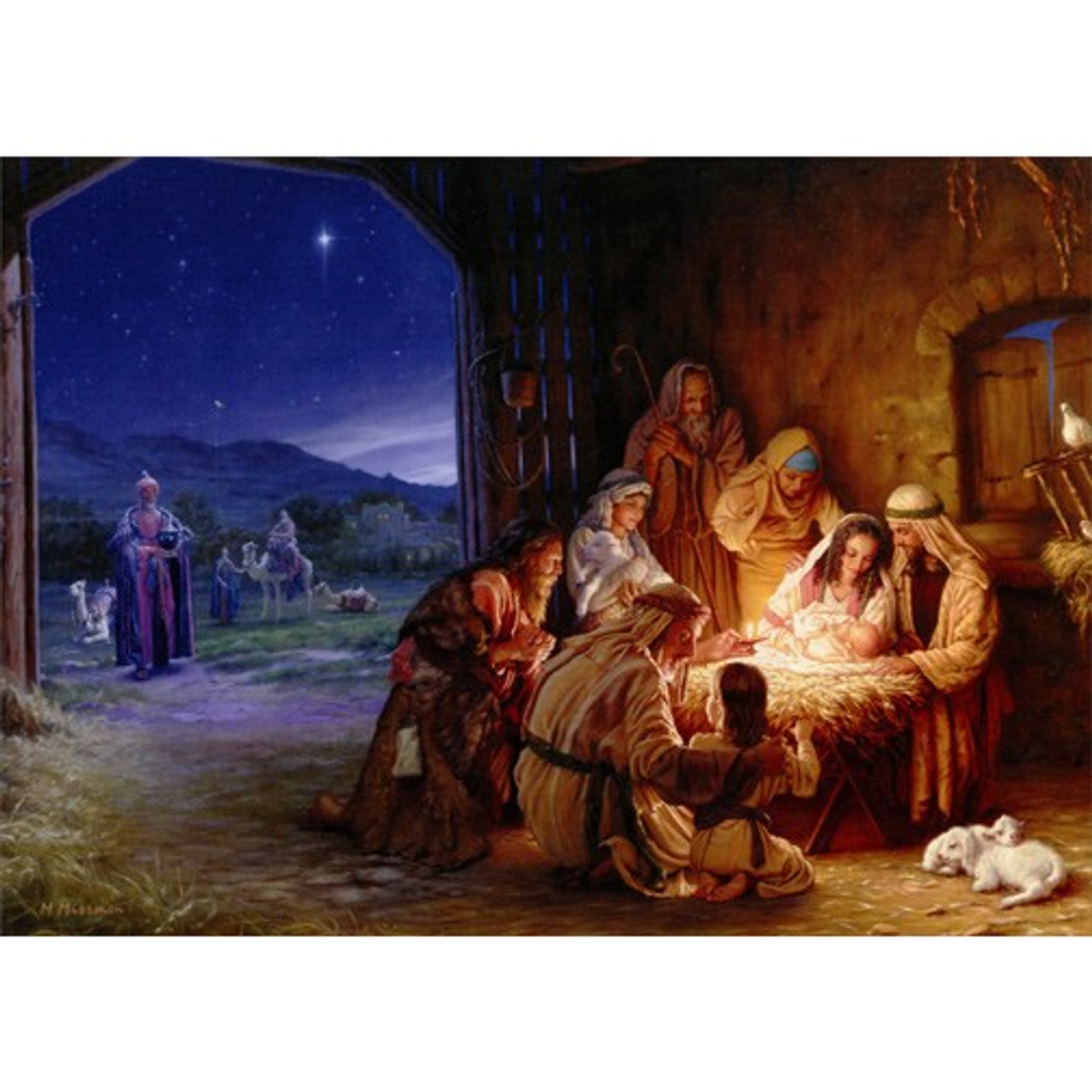
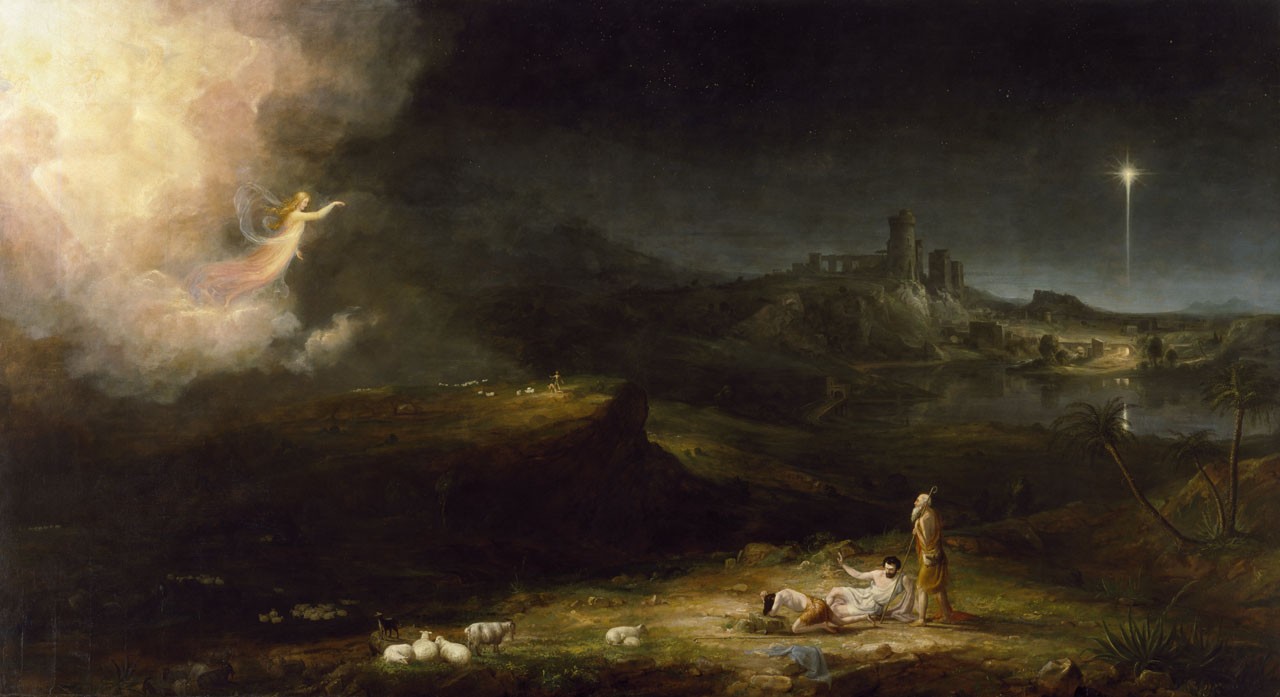
The Gospel is a mystery. The Gospel (Greek: euaggelion) means “good tidings” or “good news.” The angel brought the euaggelion to the shepherds who watched their flocks by night.[1] It was the euaggelion that the Savior was born in Bethlehem. But what did this euaggelion mean? When the angels departed, the shepherds hurried to Bethlehem to see the euaggelion for themselves. Once they had seen the baby, they spread the news to all who would hear. “And all they that heard it wondered at those things which were told them by the shepherds” (Luke 2:18, emphasis mine). It was a mystery!
At Christmastime, we sing the mournful carol, “Oh Come, Oh Come Emanuel.” The lyrics describe a deep yearning for the advent of Messiah. “Oh come, oh come Emanuel, and rescue captive Israel, that mourns in lonely exile here, until the Son of God appear.” However, Israel was not expecting the Son of God to appear. That was the mystery.
Indeed, the prophets foretold of the coming Messiah. When the magi later came searching for “he that is born King of the Jews,”[2] the religious leaders, who knew the Scriptures, directed them to Bethlehem. They quoted the Prophet Micah: “And thou Bethlehem, in the land of Juda, art not the least among the princes of Juda: for out of thee shall come a Governor, that shall rule my people Israel” (Matthew 2:6, emphasis mine). However, they omitted the last phrase of Micah’s prophecy: “whose goings forth have been from of old, from everlasting” (Micah 5:9). That last part was a mystery to them. How could an earthly ruler/king exist “from of old, from everlasting”? That would mean this king existed from eternity past. That could only mean this coming king would be God. To them, that was impossible. It was a mystery.
Four hundred years prior, the last prophet spoke of the coming Messiah. “And he shall sit as a refiner and purifier of silver: and he shall purify the sons of Levi, and purge them as gold and silver, that they may offer unto the LORD an offering in righteousness” (Malachi 3:3). This certainly speaks of authority, but the general tone of the prophecy expressed God’s displeasure with His people obscuring any hint of the Messiah’s divinity. After that, God stopped talking for four hundred years. A lot can be forgotten in four hundred years or blurred beyond recognition.
Previous prophets had spoken of a coming king who would sit on David’s throne. A favorite Christmas passage from Isaiah says, “For unto us a child is born, unto us a son is given: and the government shall be upon his shoulder: and his name shall be called Wonderful, Counsellor, The mighty God, The everlasting Father, The Prince of Peace. Of the increase of his government and peace there shall be no end, upon the throne of David, and upon his kingdom, to order it, and to establish it with judgment and with justice from henceforth even for ever. The zeal of the LORD of hosts will perform this” (Isaiah 9:6-7, emphasis mine). While Isaiah clearly stated that His name would be “The mighty God” and “The everlasting Father,” the promise of His reign on David’s throne overshadowed (in their minds) the fact of His divinity. Since the fifth century before Christ, Israel had been ruled by outside forces; first Babylon, then Persia, then Greece, and now the Romans. The Jews wanted a king to make them a superpower. God coming to reign on earth in human flesh was unthinkable. It was a mystery!
Other prophecies held an even more unimaginable mystery – Messiah would suffer and die. Psalm 22 describes His crucifixion when such execution methods did not exist. Isaiah 53 also details the suffering of Messiah. The prophet Daniel precisely foretold the number of years when Messiah would be “cut off.”[3] The Messiah that was to be king and rule the world would have to die. That makes no sense! It was a mystery!
Even today, the idea that the Almighty, Creator God took on human flesh, in a virgin’s womb, was born by natural means in the lowliest of estates, grew up among “his own, and his own received him not” (John 1:11). “He is despised and rejected of men; a man of sorrows, and acquainted with grief: and we hid as it were our faces from him; he was despised, and we esteemed him not” (Isaiah 53:3). He was nailed to a cross for our sins and rose on the third day so “that whosoever believeth in him should not perish, but have everlasting life” (John 3:16). “But as many as received him, to them gave he power to become the sons of God, even to them that believe on his name” (John 1:12). That is the mystery of the Gospel.
All religions of the world, including many so-called “Christian” religions, demand some kind of sacrifice from their adherents. The adherents of these false religions must do something to appease their gods in order to gain entry into eternal life. It is no wonder then that the idea that all one needs to do is believe in Jesus and trust in the sufficiency of His sacrifice for our sins. It’s too easy. It’s a mystery! Paul describes how Jesus left His first estate as God, and took on human flesh for the purpose of making Himself the perfect sacrifice for our sins.[4] Our God performed the work of salvation for us so that all we need to do is believe. “For by grace are ye saved through faith; and that not of yourselves: it is the gift of God: Not of works, lest any man should boast” (Ephesians 2:8-9, emphasis mine). It is a mystery! “But the natural man receiveth not the things of the Spirit of God: for they are foolishness unto him: neither can he know them, because they are spiritually discerned” (1 Corinthians 2:14). That is the mystery of the Gospel.
As we ponder the mystery of the Gospel, especially during this Christmas season, the thought of God coming to us in the form of a helpless baby should captivate us in awestruck wonder. How could such a thing be! The only thing that remains is praise and thanksgiving for the incalculable gift that He offers. “For God so loved the world, that he gave his only begotten Son, that whosoever believeth in him should not perish, but have everlasting life” (John 3:16).
Reader, if you have not accepted God’s free gift of salvation, there is nothing you have to do but believe. Please read my page on “Securing Eternal Life.”
For many are called, but few are chosen. (Matthew 22:14)
I have found some Christian brothers that have strong Calvinist leanings. I accept most of the five points of Calvinism to some degree – Total Depravity, Unconditional Election, Limited Atonement, Irresistible Grace, and Perseverance of the Saints (T.U.L.I.P.) – but I cannot fully embrace U, L, and I. I completely agree with T and P – the Total Depravity of man, and the Perseverance of the Saints, i.e., “once saved, always saved.”
As already noted, the points that give me the most grief are U and L. Unconditional Election says that God predetermined from the beginning of time who would be saved and who would be damned for eternity. The argument is that God is sovereign, and He can do exactly as He pleases (no argument there). A favorite verse used to make this point is Romans 9:15 “For he saith to Moses, I will have mercy on whom I will have mercy, and I will have compassion on whom I will have compassion.” Here Paul referred to the time when Moses wanted to “see” God’s glory and God responded, “And he said, I will make all my goodness pass before thee, and I will proclaim the name of the LORD before thee; and will be gracious to whom I will be gracious, and will shew mercy on whom I will shew mercy” (Exodus 33:19, emphasis mine). Clearly, God was not speaking in soteriological terms. Indeed, neither was Paul in making the reference to Moses. When taken in context, Paul was referring to God’s sovereignty in determining the course of salvation in general, not in particular.
Limited Atonement builds on Unconditional Election. Limited Atonement says that Jesus died only for those who were unconditionally elected for salvation. That eliminates all the “whosoever” verses beginning with John 3:16 “For God so loved the world, that he gave his only begotten Son, that whosoever believeth in him should not perish, but have everlasting life” (emphasis mine). Since the Bible is always true and does not contradict itself in any way, this verse alone should serve to debunk Limited Atonement.
To a limited degree, I also disagree with Irresistible Grace. It is the Holy Spirit who convicts the individual’s heart of sin (John 16:8) and convinces him of his need for the Savior. The “call” is ubiquitous (Romans 1:20), however, it is felt more strongly in some than it is in others. Thus, it can indeed be resisted, and more resist the call than respond to it (Matthew 7:13-14).
The Bible speaks to both man’s autonomy in choosing and God’s work of “election.” I maintain that the answer is “Somewhere in the Middle,” and neither side of the argument can hold his view dogmatically.
Recently the debate came up again in my church. I made my case and the other side made their case and neither side convinced the other, which is usually the case. However, the fact that this debate keeps raising its ugly head, I determined to “Search the Scriptures; for in them ye think ye have eternal life: and they are they which testify of me” (John 5:39). I looked in the New Testament for all the verses I could find related to salvation for the individual. I divided my findings into three categories: (1) Choice/Free Will, (2) Predestination/Election, and (3) verses that can apply to both sides. Here is what I found: for Category 1, there were 77 verses; for Category 2, there were 15 verses. Of those, 7, when read in context, suggest that the “predestination” is of “purpose” not of salvation; for Category 3 there were 17. Rather than argue one side or the other, I think it best to allow the Bible to speak for itself, and the reader can decide for himself.
Verses for Category 2: Luke 10:22; John 6:37, 44, 65; 17:24; Romans 8:33;* Ephesians 1:5, 11; 2:10;* Colossians 3:12; 2 Thessalonians 2:13; 2 Timothy 2:10;* Titus 1:1;* 1 Peter 1:2;* 2 John 1:1, 13. The passages marked with an asterisk (*) speak of predestination, but when examined closely, the predestination is a “Predestination of Purpose” not predestination for salvation. In other words, it is the predetermined plan God has for those who are “justified” having placed their faith in the atoning work of Christ on the cross. As I read these passages my conclusion is that those who are “elect” are “elected” by virtue of their faith in Christ for salvation and their “predestination” is to be conformed to the image of Christ.
As we enter this Advent Season, we remember that God took on human flesh and entered time and space by way of a virgin’s womb to live and walk among His creation (John 1:1-3, 14). “He came unto his own, and his own received him not. But as many as received him, to them gave he power to become the sons of God, even to them that believe on his name” (John 1:11-12). He took the penalty of our sins upon Himself and shed His own blood on the cross to pay our sin debt. He was buried in a borrowed tomb and rose again on the third day, conquering death and the grave on our behalf to win our salvation. He did that for “whosoever” will accept His free, “grace” gift of salvation by faith in His finished work. “For God so loved the world, that he gave his only begotten Son, that whosoever believeth in him should not perish, but have everlasting life” (John 3:16). “Whosoever” accepts His offer by “believing in Him” is “elected” for “everlasting life.” This is the whole message of Christmas.
Reader, have you accepted Jesus’ free gift of salvation? If not, or if you are unsure, please read my page on “Securing Eternal Life.”
“And there were in the same country shepherds abiding in the field, keeping watch over their flock by night.” (Luke 2:8)
One of the best arguments against the birth of Christ having taken place in late December is this fact recorded by Luke in his Gospel. There were shepherds out in the fields watching over their flocks. By late December, there is not sufficient grazing to sustain large flocks of sheep. Jerusalem is near the same latitude as Dallas, Texas where I used to live, and by the middle to the end of November, there is not much left on which cattle can graze. So, they need to be fed on hay or “cake” until the next spring. So, it seems very unlikely that shepherds would be out in the fields tending to sheep in the wintertime.
The shepherds around Bethlehem generally kept the sheep and goats that were used for sacrifice in the Temple in nearby Jerusalem. Some have suggested that Jesus’ birth was around late September which coincides with the Jewish Fall Feasts: Feast of Trumpets (Rosh Hashanah), Day of Atonement (Yom Kippur), and Feast of Tabernacles (Sukkoths). These feasts required all Jewish men to make a pilgrimage to the Temple in Jerusalem. The fact that this requirement happened to coincide with the decree from Caesar Augustus for the census (Luke 2:1) may explain why “there was no room for them in the inn” (Luke 2:7) for the expectant couple. In fact, His birth may have occurred during the Feast of Tabernacles making John’s statement that “the Word was made flesh, and [tabernacled] among us” (John 1:14) even more significant. Interestingly, if one counts back nine months from the end of September, one arrives at a date sometime in late December. It could be that rather than celebrating Christ’s birth on December 25, we are actually celebrating His conception!
Regardless, it was to these simple shepherds that this paramount announcement was delivered. “For unto you is born this day in the city of David a Saviour, which is Christ the Lord” (Luke 2:11). To these shepherds who were known for feeding and protecting their flocks; who sought out the lost sheep, and rescued those that were attacked. It seems appropriate that to these the news of the arrival of the “Shepherd of Israel” should be first delivered. He who would later say, “I am the good shepherd: the good shepherd giveth his life for the sheep” (John 10:11) had come. So without hesitation, they said, “Let us now go even unto Bethlehem, and see this thing which is come to pass, which the Lord hath made known unto us” (Luke 2:15). They came “with haste” Luke tells us, “and found Mary, and Joseph, and the [Lamb of God] lying in a manger” (Luke 2:16). The name given the babe was Jesus, “for he shall save his people from their sins” (Matthew 1:21). This little Lamb of God, who was to be the Shepherd of shepherds, had finally come to them. He did not come to a palace but to a dirty, smelly stable. He was not announced to the kings of the world, but to those of the lowest social status – to shepherds.
After two days will he revive us: in the third day he will raise us up, and we shall live in his sight. (Hosea 6:2)
In one of my Bible readings this week, I was reading Luke’s account of Jesus’ resurrection. Luke records that two disciples (not apostles) were returning to their home in Emmaus.[1] Because they invited Jesus into their home, I assume that they were husband and wife; Luke does not say. Regardless, after Jesus broke bread with them and disappeared from their sight, they finally recognized that it was Jesus who had traveled with them. They immediately returned to Jerusalem and found “the eleven” together. However, according to John’s account, Thomas was not with them.[2] Apparently, Luke used the term (“the eleven”) in a generic sense referring to the Apostles.
While the two recounted their experience, Jesus appeared in their midst. After assuring them that He was not a ghost by inviting them to inspect His wounds and by eating a piece of broiled fish and bread with them, Luke writes, “Then opened he their understanding, that they might understand the scriptures, And said unto them, Thus it is written, and thus it behoved Christ to suffer, and to rise from the dead the third day” (Luke 24:45-46, emphasis mine). That last phrase stopped my reading. Jesus said, “Thus it is written,” meaning that His suffering and resurrection had been prophesied. I checked the cross-reference in my Bible and found two: Isaiah 53:3-12 dealing with His suffering and Hosea 6:2 predicting His resurrection.
There is no question that Hosea’s prophecy, quoted above, refers to Jesus’ resurrection because Jesus applied the prophecy to Himself. However, what caught my attention was the use of the plural first-person pronouns, “us” and “we” rather than “me” and “I.” It is always best to read a single Bible verse within its context to get a clear understanding. Backing up to the previous verse, we understand that the prophet is addressing Israel. “Come, and let us return unto the LORD: for he hath torn, and he will heal us; he hath smitten, and he will bind us up” (Hosea 6:1, emphasis mine). In the previous chapter (Hosea 5), the prophet foretold the demise of Israel (Judah and Ephraim). The Lord says, “I will go and return to my place, till they acknowledge their offence, and seek my face: in their affliction they will seek me early” (Hosea 5:15). The “I” here refers to the Lord Jesus. He fulfilled this prophecy when He ascended and returned to “His place,” and He waits there until they repent and turn to Him. The Prophet Zechariah says, “they shall look upon me [Jesus] whom they have pierced, and they shall mourn for him, as one mourneth for his only son, and shall be in bitterness for him, as one that is in bitterness for his firstborn” (Zechariah 12:10).
In 70 A.D. the Romans destroyed Jerusalem, razed the Jewish temple, and scattered the Jews all over the world. Hosea encourages Israel, the Jews, to “return unto the LORD.” Then he adds this prophecy that Jesus applied to Himself. “After two days will he revive us: in the third day he will raise us up, and we shall live in his sight” (Hosea 6:2, emphasis mine). In context, the primary application is to Israel. They have been torn. They have been smitten, and the promise is that God will heal and bind their wounds “after two days” and “in the third day he will raise us up.” That raises the question, are the days literal or symbolic? Obviously, when applied to Jesus’ resurrection, the days are literal; He was in the tomb for three days and raised on the third. However, the days cannot be literal when applied to Israel.
Three days have long passed since the destruction of Jerusalem. Indeed, almost 2000 years have gone by. However, we see the prophecy taking place with the rebirth of the nation of Israel, which is yet another event that was foretold by the prophets. However, they have yet to turn to their Messiah, but we see the dry bones taking on flesh.[3]
Perhaps the “days” have something to do with what Peter said in his second epistle. “But, beloved, be not ignorant of this one thing, that one day is with the Lord as a thousand years, and a thousand years as one day” (2 Peter 3:8, emphasis mine). Because of his use of simile, I have always understood, and still do, that this verse refers primarily to God’s timelessness. The psalmist echoes the same refrain. “For a thousand years in thy sight are but as yesterday when it is past, and as a watch in the night” (Psalm 90:4, emphasis mine). God is not bound by time, and so time for Him is irrelevant. However, that is not true for us.
Therefore, if we take the days in Hosea symbolically to mean 1000 years, 2 days equals 2000 years, which is where we are now since the resurrection of Jesus Christ. God has returned the Jews to their homeland as foretold by the prophets, but yet, as Ezekiel described, the breath of God is not in them yet. They have yet to undergo the final seven years assigned to them by Daniel the Prophet.[4] Then, after the seven years (of Tribulation), Israel will be fully restored (“raised”) as prophesied on the third day, the final 1000 years[5] when Christ will rule as absolute monarch from His throne in Jerusalem.
If you would like to study more on end-times prophecy, find my page on “Revelation.” There you will find links to articles I have written that will take you systematically through the Book of Revelation along with other articles that cover end-times in general.