
Tag Archives: Christ Jesus

Chose or Chosen? (Rev. 1)

For many are called, but few are chosen. (Matthew 22:14)

Some Christian brothers have strong Calvinist leanings. I accept most of the five points of Calvinism to some degree – Total Depravity, Unconditional Election, Limited Atonement, Irresistible Grace, and Perseverance of the Saints (T.U.L.I.P.) – but I cannot fully embrace U, L, and I. I completely agree with T and P – the Total Depravity of man, and the Perseverance of the Saints, i.e., “once saved, always saved.”

As already noted, the points that give me the most grief are U and L. Unconditional Election says that God predetermined from the beginning of time who would be saved, and by default, who would be damned for eternity. The argument is that God is sovereign, and He can do exactly as He pleases (no argument there). A favorite verse used to make this point is Romans 9:15 “For he saith to Moses, I will have mercy on whom I will have mercy, and I will have compassion on whom I will have compassion.” Here Paul referred to the time when Moses wanted to “see” God’s glory and God responded, “And he said, I will make all my goodness pass before thee, and I will proclaim the name of the LORD before thee; and will be gracious to whom I will be gracious, and will shew mercy on whom I will shew mercy” (Exodus 33:19, emphasis mine). Clearly, God was not speaking in soteriological terms. Indeed, neither was Paul in making the reference to Moses. When taken in context, Paul was referring to God’s sovereignty in determining the course of salvation in general, not in particular.

Limited Atonement builds on Unconditional Election. Limited Atonement says that Jesus died only for those who were unconditionally elected for salvation. That eliminates all the “whosoever” verses beginning with John 3:16 “For God so loved the world, that he gave his only begotten Son, that whosoever believeth in him should not perish, but have everlasting life” (emphasis mine). Since the Bible is always true and does not contradict itself in any way, this verse alone should serve to debunk Limited Atonement.

To a limited degree, I also disagree with Irresistible Grace. That teaches that when the Holy Spirit, Who convicts the individual’s heart of sin (John 16:8) and convinces him of his need for the Savior, calls on the individual’s heart, that call cannot be rejected. The “call” is ubiquitous (Romans 1:20), however, it is felt more strongly in some than it is in others. Thus, it can indeed be resisted, and more resist the call than respond to it (Matthew 7:13-14).

The Bible speaks to both man’s freedom in choosing and God’s work of “election.” I maintain that the answer is “Somewhere in the Middle,” and neither side of the argument can hold his view dogmatically.

The debate continues. I have made my case and the other side made their case. Neither side convinced the other, which is usually the case. However, since this debate keeps coming up, I determined to “Search the Scriptures; for in them ye think ye have eternal life: and they are they which testify of me” (John 5:39). I looked in the New Testament for all the verses I could find related to salvation for the individual. I divided my findings into three categories: (1) Choice/Free Will, (2) Predestination/Election, and (3) verses that can apply to both sides. Here is what I found: for Category 1, there were more than 80 verses; for Category 2, there were 15 verses. Of those, seven, when read in context, suggest that the “predestination” is of “purpose” not of salvation; for Category 3 there were 17. Rather than argue one side or the other, I think it best to allow the Bible to speak for itself, and the reader can decide for himself.

Verses for Category 1: Matthew 7:13-14, 21-24; 10:32-33; 11:28-30; 12:31-32, 50; 16:24-26; 18:3-4, 14; Mark 3:28-29, 35; 8:34-38; 9:37; 10:15; 16:16; Luke 6:47; 9:23-26, 48; 12:8-10; 13:3, 5, 23-24; 17:33; 18:17; John 1:12-13; 3:3, 15-18, 36; 4:14; 5:24; 6:28-29, 35, 40, 45, 47, 51; 10:9-10; 11:25-26; 14:6; 20:29; Acts 2:21, 38; 10:43; Romans 1:16; 3:28; 4:5; 5:6, 8, 12; 10:9-13; 2 Corinthians 5:21; Galatians 1:3-4; 2:16; 3:6-7, 11, 22, 24-27; Ephesians 1:7; 2:4-9; Philippians 2:5-11; Colossians 1:14; 2:13-14; 1 Thessalonians 5:9-10; 1 Timothy 1:15; 2:3-4; 4:10; 2 Timothy 1:9; Titus 2:11; 3:5-7; Hebrews 3:7-8, 15; 7:25; 9:28; 11:6; 1 Peter 2:6; 3:18; 2 Peter 3:9; 1 John 2:2; 5:1, 10-12; Revelation 22:14.

Verses for Category 2: Luke 10:22; John 6:37, 44, 65; 17:24; Romans 8:33;* Ephesians 1:5, 11; 2:10;* Colossians 3:12; 2 Thessalonians 2:13; 2 Timothy 2:10;* Titus 1:1;* 1 Peter 1:2;* 2 John 1:1, 13. The passages marked with an asterisk (*) speak of predestination, but when examined closely, the predestination is a “Predestination of Purpose” not predestination for salvation. In other words, it is the predetermined plan God has for those who are “justified” having placed their faith in the atoning work of Christ on the cross. As I read these passages my conclusion is that those who are “elect” are “elected” by virtue of their faith in Christ for salvation and their “predestination” is to be conformed to the image of Christ.

Verses for Category 3: Matthew 9:13; 10:39; 20:28; 22:14; Luke 5:32; John 7:38-39; 10:27-29; 14:23; Acts 4:12; 15:11; Romans 6:23; 8:1; 2 Corinthians 5:17; Hebrews 4:3; 1 Peter 3:18; 1 John 4:9-10. These verses can apply equally to either Category 1 or 2.

The message of the Gospel is simple. The Lord Jesus Christ left His place in Glory, took on human flesh (John 1:14; Philippians 2:5-11), took the penalty of our sins upon Himself, and shed His own blood on the cross to pay our sin debt. He was buried in a borrowed tomb and rose again on the third day, conquering death and the grave on our behalf to win our salvation (1 Corinthians 15:1-8). He did that for “whosoever” will accept His free, “grace” gift of salvation by faith in His finished work. “For God so loved the world, that he gave his only begotten Son, that whosoever believeth in him should not perish, but have everlasting life” (John 3:16). “Whosoever” accepts His offer by “believing in Him” is “elected” for “everlasting life.” This is the whole message of Christmas.

When one reads the Bible’s plain teaching on the topic of salvation (soteriology), the overwhelming weight of evidence supports the truth that the individual has a choice – to accept or reject – God’s free gift of salvation. So, from where does this doctrine of “election” – that God predetermines who will be saved – come? It does not come from Scripture if one truly believes in “Sola Scriptura.” The question prompted me to blow the dust off of my systematic theology textbook and review the section on soteriology. The authors of my textbook ask, “For whom did Christ die? Did the Father send his [SIC] Son into the world to die for all persons or only for the elect?”[1]

In my reading, I learned that the early church fathers, by and large, did not hold to the doctrine of election, at least not in the way proposed by John Calvin. “The apostolic fathers advanced no single theory of the atonement, but articulated a number of biblical motifs.”[2]

“Irenaeus interpreted Christ’s death as a victory over sin, death and the Devil … Christ conquered Satan, thereby freeing believing (emphasis mine) sinners from his power and giving them eternal life.”[3] Given that believing is a prerequisite for salvation, it makes sense that Jesus died for believers; however, that does not imply election. “Athanasius taught that in order to solve the problem posed by human sin and condemnation God sent the divine Word into the world. In his [SIC] body the Son bore the penalty and paid the debt that sinners owed to God. Thus Christ offered ‘the sacrifice on behalf of all, surrendering his own temple [body] to death in place of all, to settle man’s account with death and free him from the primal transgression’” (emphasis mine).[4]

“Concerning the intent or purpose of the atonement, most patristic authorities held that Christ died for the sins of the world. Athanasius maintained that in the divine scheme of things ‘death there had to be, and death for all, so that the due of all might be paid.’ Cyril of Jerusalem affirmed that ‘Jesus truly suffered for all men.’ While not speaking clearly on the issue, Augustine seemed to suggest that Christ died for the world, although the cross is effectual only for those who believe[5] (emphasis mine).

Later, Anselm of Canterbury (1033-1109) said that “adequate satisfaction [for sin] must come from one who is divine, that is, from God himself [SIC]. On the other hand, satisfaction must be paid by one who genuinely represents humanity … the sinless Jesus Christ voluntarily suffered and died, thereby accruing more merit than needed to pay the debt humanity owed. God accepted the surplus of Christ’s passion, credited it to the account of the sinful race, and thus is disposed to restore fellowship all who trust Christ’s saving provision[6] (emphasis mine). “The English Reformer John Wycliffe also followed the main lines of the Anselmic satisfaction motif.”[7] That further supports the idea that Jesus’ sacrifice on the cross was sufficient for all mankind, but efficient only for those who believe. “Luther taught that Christ in his [SIC] life and death bore the sin, guilt, and punishment of a condemned race … As a result of his [SIC] propitiatory sacrifice, Christ frees trusting souls from the curse of the law; reconciles God and sinners; imparts perfect righteousness; and conquers sin, death and the Devil” (emphasis mine).[8]  

Later came Arminius and Calvin who developed their differing views on the atonement. In opposition to the Calvinist view of Limited Atonement, “Arminian theologians consistently uphold a universal atonement: Christ died for the purpose of providing salvation for the entire world. Thus Arminius succinctly affirmed: ‘Christ died for all men and for every individual.’… The Arminians press their position by asking how persons could be held guilty for refusing to believe what was not intended for them.”[9] In this regard, Arminians hold a more correct view of Christ’s work of atonement in my opinion.   

The authors of my text note that “As for John Calvin, several recent scholars believe that although Calvin held to double predestination he also taught a doctrine of unlimited atonement. In his Institutes Calvin wrote, ‘It is certain that the Lord offers us mercy and the pledge of his [SIC] grace both in his [SIC] Sacred Word and his [SIC] sacraments. But it is understood only by those who take Word and sacraments with sure faith, just as Christ is offered and held forth by the Father to all unto salvation, yet not all acknowledge and receive him.’ [SIC] In his later commentaries, Calvin more clearly postulates an unlimited atonement. With regard to Galatians 5:12 Calvin affirms: ‘God commends to us the salvation of all men without exception, even as Christ suffered for the sins of the whole world’” (emphasis mine).[10] Apparently, John Calvin was not all that “Calvinistic.”

“Scholastic Calvinism, however, narrowed the intent of the atonement and claimed that Christ died solely for the purpose of saving the elect, the exact number of whom are actually brought to salvation. Thus proponents argue that the design of the cross was not merely to provide salvation but to secure the salvation of those persons the Father gave to the Son. Christ allegedly died for all who were related to him [SIC], just as Adam sinned for all who were related to him … God purposed to save some persons and to condemn others, the high Calvinist claims that Christ died solely for those predestined to life”[11]

John Owen, a Puritan held in high regard by many who hold to this view of election, presents what to me is a ridiculous argument for the limited atonement of election. “If Christ dies for all and all are not saved, then Christ died ineffectively, which cannot be. If God loves all and not all are saved, then God loves ineffectually, which also cannot be. Thus Christ did not die for all, and God does not love all people. Says Owen: ‘We deny that all mankind are the object of that love of God which moved him [SIC] to send his [SIC] Son to die.’ God’s love is reflected in his [SIC] will to save the elect the heirs of the covenant of grace, for whose sins Christ made satisfaction on the cross. Owen concludes that if the death of Christ accomplishes all that the Father intended, ‘then died he only for those that are in the event sanctified, purged, redeemed, justified, freed from wrath and death, quickened, saved, etc.’ but that all are not thus sanctified, freed, etc., is most apparent: and, therefore they cannot be said to be the proper object of the death of Christ.’”[12] Owen’s conclusion, I believe, comes not from Scripture, but from his own feeble attempt at logic.

Against Scholastic Calvinism, Moses Amyraut, French theologian, proposed the theory of “hypothetical universalism.” “Amyraut insisted that God willed the salvation of all persons on the condition that they believe … Christ died for all persons sufficiently, but for the elect efficiently. Amyraut’s position was championed by later scholars such as Cameron of the Saumar Academy, Richard Baxter, John Bunyon, Samuel Hipkins, and Heinrich Heppe”[13] (emphasis mine).

I contend that the position of the “hyper-Calvinists” are the ideas of men – albeit well-meaning, godly men – and not necessarily the plain teaching of the Bible. Such a narrow soteriological position cannot be supported by “Sola Scriptura” as I attempted to demonstrate above with my list of biblical references in three categories. I encourage the reader to scrutinize those passages laying aside any preconceived ideas that you have been taught in the past. Allow the Bible to speak for itself without the aid of commentators or scholars of the past. The Word of God is perspicuous and perfectly able to speak for itself without outside influence.

Notes:


[1] Gordon R Lewis and Bruce A Demarest, Integrative Theology, Volume Two, (Zondervan Publishing House, Grand Rapids, Michigan, 1990), p. 372.

[2]  Ibid, p. 378.

[3]  Ibid, p. 373.

[4]  Ibid, p. 379.

[5]  Ibid, p. 380.

[6]  Ibid, p. 375.

[7]  Ibid.

[8]  Ibid, p. 379

[9]  Ibid, p. 376-377.

[10]  Ibid, p. 380.

[11]  Ibid, p. 381.

[12]  Ibid.

[13] Ibid, p.382.
1 Comment

Filed under Apologetics, Bible, Christianity, Evangelism, Gospel, Heaven, Hell, Holy Spirit, Salvation, Theology

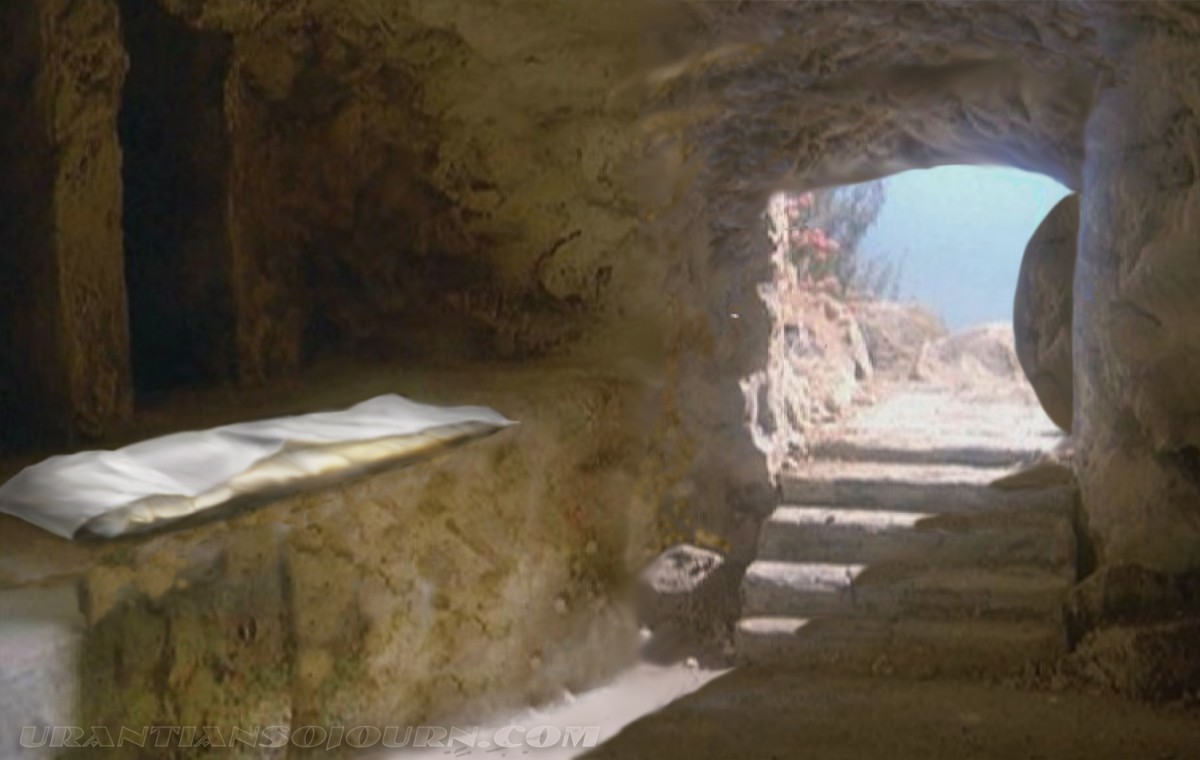
The Resurrection Matters

He is not here, but is risen: remember how he spake unto you when he was yet in Galilee, (Luke 24:6)

Christmas and Easter (I prefer “Resurrection Day”) are the two most important days on the Christian calendar with Resurrection Day being, arguably, the most important of the two. One might argue that we could not have the Resurrection without the Birth, but the Birth without the Resurrection would render both insignificant.

Jesus’ birth came like the birth of any other baby. The Gospel writer Luke records the event taking place in a humble animal shelter visited only by lowly shepherds. However, Luke points out an important fact that is summarily overlooked by most readers. Luke says that, “while they were there, the days were accomplished that she should be delivered” (Luke 2:6, emphasis mine). So, apparently, Joseph and Mary had been in Bethlehem a few days before the time of her delivery. Luke does not say, but it seems reasonable that in Bethlehem there were ladies who, seeing a young woman ready to give birth, would have offered their services as midwives. That is the way they did it in those days. Regardless, the birth was no different than any other. The conception nine months prior was the “miracle.” At that time, God planted His seed in Mary’s womb without human aid.

So Jesus came into the world and “dwelt among us”[1] and “increased in wisdom and stature, and in favour with God and man” (Luke 2:52). He grew up like any other Jewish boy and probably learned carpentry from His earthly father, Joseph. At the age of 30,[2] the age at which priests enter service,[3] Jesus started His three-year earthly ministry. We know from the four Gospel accounts that His ministry ended with His death on the cross. He was buried in a borrowed tomb and rose on the third day.

But what if the resurrection never happened? Paul put it quite succinctly when he said, “if Christ be not raised, your faith is vain; ye are yet in your sins” (1 Corinthians 15:17). If Jesus did not rise from the grave, His death for our sins is of no avail. We have no hope of eternal life, and, worse, our destiny is in hell. That explains why unbelievers live for this life alone because, for them, this life is all there is. They reject the concept of hell and prefer the idea that death ends it all, or that it begins a new cycle through reincarnation.

Many arguments against the resurrection of Jesus exist that have a long history from the very beginning. Some say that Jesus did not die on the cross but only “swooned” and revived in the cool dampness of the tomb, rolled the two-ton stone away, and walked out. That is a silly theory when one considers the beating, torture, and flogging Jesus received before being nailed to the cross. Also, the Roman soldiers who crucified Him were expert executioners and were familiar with death. Had they suspected that He “swooned,” they would have broken His legs like they did with the other two victims.[4] These were professionals; they knew death. Then, to ensure His death, one of the soldiers ran his spear into his side and punctured the pericardium.[5] 

Let us say, for argument’s sake, that this one they failed to recognize and Jesus did indeed pass out. Even if He did revive in the cool tomb, the loss of blood from the beatings and flogging, not to mention the puncturing of his heart sac, would have left Him too weak to roll away the heavy stone – one that took several men to move – by Himself.

Another argument suggests that Jesus’ disciples overpowered the Roman guard posted at the tomb.[6] This too is a silly argument. All four Gospels record how the disciples went into hiding at Jesus’ arrest. They feared for their lives. It seems unlikely that these frightened men, most of them fishermen, and at least one un-calloused tax collector, would dare to take on battle-hardened professional Roman soldiers. However, this fabrication spread from the very beginning. Matthew records that an angel came to roll back the stone and the soldiers on watch were scared stiff.[7] The soldiers, knowing the consequence (death) for failing in their responsibility to keep the tomb secure, went to the chief priests, rather than their leaders, hoping to get a sympathetic hearing about the empty tomb. They made a good choice as the Jewish religious leaders paid them off and covered for them as long as they would spread the lie that the disciples had stolen the body.[8]

Still another argument insists that the women who went to the tomb on Sunday morning were so grief-stricken that they failed to recognize Jesus’ tomb and went to the wrong sepulcher which was empty. This argument simply rejects what Scripture clearly reports. Three of the four Gospels record that the women witnessed the tomb where Jesus was laid.[9] John, who was present at the crucifixion along with Jesus’ mother and the other women, does not say, but it stands to reason that he would have accompanied them to the tomb.

Jesus rose from the dead. If that were not true, the Jews, because of their hatred for Him, only needed to exhume the body and present it to the world, but they had no body. Men have tried and failed to show Jesus’ remains, but they cannot.

Jesus rose from the dead. He conquered death, and because He conquered death, we have the assurance that our sins are covered and we have eternal life with him. “If in this life only we have hope in Christ, we are of all men most miserable. But now is Christ risen from the dead, and become the firstfruits of them that slept [died]. For since by man came death, by man came also the resurrection of the dead. For as in Adam all die, even so in Christ shall all be made alive” (1 Corinthians 15:19-22, emphasis mine). “For if by one man’s [Adam] offence death reigned by one; much more they which receive abundance of grace and of the gift of righteousness shall reign in life by one, Jesus Christ.) Therefore as by the offence of one [Adam] judgment came upon all men to condemnation; even so by the righteousness of one [Jesus] the free gift came upon all men unto justification of life. For as by one man’s [Adam] disobedience many were made sinners, so by the obedience of one [Jesus] shall many be made righteous” (Romans 5:17-19, emphasis mine).

Because Jesus conquered death, we can have the assurance of eternal life with Him. That is why the resurrection matters. If you are not sure where you stand before Jesus, please read my page on “Securing Eternal Life.”

Notes:


[1]  John 1:14

[2]  Luke 3:23

[3]  Numbers 4:3

[4]  John 19:32-33

[5]  John 19:34

[6]  Matthew 27:65-66

[7]  Matthew 28:2-4

[8]  Matthew 28:11-15

[9]  Matthew 27:61; Mark 15:47; Luke 23:55

Comments Off on The Resurrection Matters

Filed under Apologetics, Bible, Christianity, Easter, Gospel, Holidays, Resurrection, Salvation, Theology

Dan’s Sin

Lest there should be among you man, or woman, or family, or tribe, whose heart turneth away this day from the LORD our God, to go and serve the gods of these nations … The LORD will not spare him, but then the anger of the LORD and his jealousy shall smoke against that man, … and the LORD shall blot out his name from under heaven. And the LORD shall separate him unto evil out of all the tribes of Israel, according to all the curses of the covenant that are written in this book of the law: (Deuteronomy 29:18-21)

Dan was Jacob’s first son born to him by Bilhah, Rachel’s handmaid.[1] His name means “judge.” He was the fifth of Jacob’s sons. Before Jacob died, he blessed his sons. Of Dan, Israel said. “Dan shall judge his people, as one of the tribes of Israel. Dan shall be a serpent by the way, an adder in the path, that biteth the horse heels, so that his rider shall fall backward” (Genesis 49:16-17). Long after Dan had died and his “tribe” came out of Egypt, Moses declared of the tribe, “And of Dan he said, Dan is a lion’s whelp: he shall leap from Bashan” (Deuteronomy 33:22). “By this probably Moses intended to point out the strength and prowess of this tribe, that it should extend its territories, and live a sort of predatory life.”[2]

Among the tribes of Israel, Dan remains rather unremarkable. When one looks at a map displaying the original land allotments to the various tribes, Dan’s portion was rather small. It was only slightly larger than that allotted to Benjamin which bordered Dan on the east. Its eastern border extended from Kiriath-jearim on the south up to Beth-horon in Ephraim. From there it descended southeast to Gezer (Ephraim) and beyond. Then it turned north to Gath-rimmon to the Me Jarkin River, its northern boundary, and west to the Mediterranean Sea. Turning south along the coast for about 12 miles and then east and south again past Ekron and Timnah back to Kiriath-jearim. From its eastern border to the sea was about 25 miles, and its U-shaped width was about 12-13 miles wide at any point. The tribe of Dan did not have much land, and they were not satisfied with their little portion.

The Book of Joshua records the allocation of land once the land was conquered. “And the seventh lot came out for the tribe of the children of Dan according to their families … And the coast of the children of Dan went out too little for them: therefore the children of Dan went up to fight against Leshem, and took it, and smote it with the edge of the sword, and possessed it, and dwelt therein, and called Leshem, Dan, after the name of Dan their father” (Joshua 19:40, 47, emphasis mine). It seems that this detail was included after the fact (or it was prophetic). The Book of Judges details Dan’s conquest of land beyond their allotted borders.

The account unfolds beginning in Judges 17 after the death of Samson, when a man by the name of Micah, an Ephraimite, makes some idols of silver stolen from his mother. Not long after, he hired a wayward Levite to be his personal priest. “And Micah consecrated the Levite; and the young man became his priest, and was in the house of Micah. Then said Micah, Now know I that the LORD will do me good, seeing I have a Levite to my priest” (Judges 17:12-13). He was wrong about that, of course. It was at this time that the Danites[3] sought more land besides that which was allotted to them. They sent spies north to assess unconquered land to the north. Their route north took them through the land of Ephraim, and they came to Micah’s house which was on their way. There they saw Micah’s idols and his “priest.”[4]

The Danite spies accomplished their mission and brought back a positive report. “And they came unto their brethren to Zorah and Eshtaol: and their brethren said unto them, What say ye? And they said, Arise, that we may go up against them: for we have seen the land, and, behold, it is very good: and are ye still? be not slothful to go, and to enter to possess the land” (Judges 18:8-9). So the Danites mustered up a large army and headed north. Along the way, they stopped off at Micah’s house and took his idols and his priest. They convinced the Levite to go with them and be their priest – a job promotion. “And they said unto him, Hold thy peace, lay thine hand upon thy mouth, and go with us, and be to us a father and a priest: is it better for thee to be a priest unto the house of one man, or that thou be a priest unto a tribe and a family in Israel? And the priest’s heart was glad, and he took the ephod,[5] and the teraphim, and the graven image, and went in the midst of the people” (Judges 18:19-20).

So, the Danites took the idols and the “priest,” and after they conquered the land, they set up their own religion. They built a new city in the conquered land and named it after their patriarch, Dan. “And the children of Dan set up the graven image: and Jonathan, the son of Gershom, the son of Manasseh, he and his sons were priests to the tribe of Dan until the day of the captivity of the land.[6] And they set them up Micah’s graven image, which he made, all the time that the house of God was in Shiloh” (Judges 18:30-31, emphasis mine).

The story does not end there. At the end of the book (i.e., the Bible), the list of the tribes of Israel excludes Dan and Ephraim.[7] Granted, Israel, especially the northern kingdom, continually had problems with idolatry. However, there was always a faithful remnant. Not so with Ephraim and Dan. These two tribes were the first to wholeheartedly embrace it. Later, in the reign of Rehoboam, the northern ten tribes of Israel split off and formed their own kingdom under the reign of Jeroboam.[8] In order to prevent his subjects from going to Jerusalem to worship at the Temple, Jeroboam had two golden calves made and placed one in Bethel (in Ephraim) and the other in Dan,[9] and they were only too happy to take them. I cannot say with complete certainty, but their absence in the Revelation list seems to result from the warning God gave in our beginning passage above (Deuteronomy 29:18-21).

Neither Dan nor Ephraim are included in the list of the 144,000 witnesses, 12,000 from each of the 12 tribes of Israel.[10] This, of course, takes place during the seven-year Tribulation. However, it appears that they are restored during the Millennial Reign of Christ after the Tribulation. The Prophet Ezekiel describes the Temple that will exist during the Millennium.[11] Following that, he describes the division of the land of Israel at that time.[12] Remarkably, the first tribe listed is Dan. “Now these are the names of the tribes. From the north end to the coast of the way of Hethlon, as one goeth to Hamath, Hazarenan, the border of Damascus northward, to the coast of Hamath; for these are his sides east and west; a portion for Dan” (Ezekiel 48:1, emphasis mine).

Does this mean there is a contradiction in the Bible? Certainly not! God, speaking through the Prophet Ezekiel said, “For thus saith the Lord GOD; I will even deal with thee as thou hast done, which hast despised the oath in breaking the covenant. Nevertheless I will remember my covenant with thee in the days of thy youth, and I will establish unto thee an everlasting covenant” (Ezekiel 16:59-60, emphasis mine). God later responds to a rhetorical question. “Yet say ye, Why? doth not the son bear the iniquity of the father? When the son hath done that which is lawful and right, and hath kept all my statutes, and hath done them, he shall surely live. The soul that sinneth, it shall die. The son shall not bear the iniquity of the father, neither shall the father bear the iniquity of the son: the righteousness of the righteous shall be upon him, and the wickedness of the wicked shall be upon him” (Ezekiel 18:19-20, emphasis mine). God made an unconditional promise to Abraham,[13] and He will keep it. Although Dan and Ephraim sinned and lost the privilege of being represented among the 144,000 witnesses in Revelation, God remains faithful to His promise and Abraham’s descendants will inherit all of the land that He promised to Abraham.

Some may question the veracity of that statement. After all, the Jews, for the most part, have rejected Jesus as their Messiah. It is only through faith in Him that one can inherit eternal life (John 14:6). However, there are many Jews currently coming to Christ now, and when He returns, the Bible says that many Jews at that time will be saved in the same way. “And I will pour upon the house of David, and upon the inhabitants of Jerusalem, the spirit of grace and of supplications: and they shall look upon me whom they have pierced, and they shall mourn for him, as one mourneth for his only son, and shall be in bitterness for him, as one that is in bitterness for his firstborn” (Zechariah 12:10, emphasis mine). Notice that the same grace we receive when we place our trust in Christ will also be given to them at that time. As Christ returns in the clouds, they will recognize “Me” (God is speaking) and they will mourn for “Him” (speaking of Christ). They will recognize Him for Who He is and be saved.

The Prophet Amos uttered another prophecy regarding the restoration of the land to Israel. God says, “And I will bring again the captivity of my people of Israel, and they shall build the waste cities, and inhabit them; and they shall plant vineyards, and drink the wine thereof; they shall also make gardens, and eat the fruit of them. And I will plant them upon their land, and they shall no more be pulled up out of their land which I have given them, saith the LORD thy God” (Amos 9:14-15, emphasis mine). Of course, there are many other places where God reaffirms this promise, and we have witnessed in our present day the partial fulfillment of this promise. The Jews are back in their land, and God promises that they will never be removed again. Now, they do not yet possess all of the land God promised to Israel, but they will in the Millennium, and that includes Dan and Ephraim.

We can learn from this that God will keep all of His promises to us no matter how undeserving we may be. Israel has never been deserving. Dan and Ephraim were undeserving. Yet God remains faithful even when we are unfaithful. “For all have sinned, and come short of the glory of God … For the wages of sin is death; but the gift of God is eternal life through Jesus Christ our Lord” (Romans 3:23; 6:23). Neither we nor Israel deserve God’s grace. Aren’t we grateful that He is faithful even when we are unfaithful!

If you have not experienced God’s grace and His faithfulness, take time to read my page on “Securing Eternal Life.”

Notes:


[1]  Genesis 30:6

[2]  Adam Clarke, LL.D., F.S.A., (1715-1832), Adam Clarke’s Commentary on the Bible, (Published in 1810-1826; public domain).

[3]  Samson was a Danite Judges 13:2

[4]  Judges 18:2-6

[5]  An “ephod” can be either a tunic worn by the high priest or it can be an idol. In this case, the word refers to an idol.

[6] The “captivity of the land” came when the Assyrians conquered the northern kingdom in 722 BC.

[7]  Revelation 7:4-8

[8]  1 Kings 12

[9]  1 Kings 12:27-30

[10]  See my article “The 144K

[11]  Ezekiel 40-47

[12]  Ezekiel 48:1-7

[13]  Genesis 15:18

Comments Off on Dan’s Sin

Filed under Apologetics, Bible, Christianity, Current Events, End Times, Eschatology, Gospel, Religion, Salvation, Second Coming of Christ, Theology

Incurring A Curse

And I will bless them that bless thee, and curse him that curseth thee: and in thee shall all families of the earth be blessed. (Genesis 12:3)

There is a notion going around and gaining strength that the promises God made to Israel have been taken away from Israel and given to the Church. There is also the idea that the Jews occupying the modern nation of Israel are not the same people to whom God made the promise, therefore God’s promises made to Israel are null and void since the original Israelites no longer exist. Both notions are false.

God’s promise to Abraham (Abram) came with no conditions.[1] God promised the land of Israel’s current borders and beyond as an “everlasting” possession. God’s unconditional promise, detailed in Genesis 15, was a “covenant” – a contract – guaranteed by God alone. “For when God made promise to Abraham, because he could swear by no greater, he sware by himself” (Hebrews 6:13). God would be going against His own nature if He broke the covenant He made with Abraham and guaranteed by His own name. “God is not a man, that he should lie; neither the son of man, that he should repent: hath he said, and shall he not do it? or hath he spoken, and shall he not make it good?” (Numbers 23:19).

Some will argue that God annulled that covenant and made a “new covenant” that applies to the Church and which was fulfilled at Pentecost.[2] They come to this conclusion from a prophecy given by the Prophet Jeremiah. “Behold, the days come, saith the LORD, that I will make a new covenant with the house of Israel, and with the house of Judah” (Jeremiah 31:31). However, the plain reading of the text clearly specifies that the promise is to “the house of Israel” and “the house of Judah.” One really has to stretch to make it apply to the Church. These will quickly point to Peter’s words at Pentecost when he said, “this is that which was spoken by the prophet Joel” (Acts 2:16). That being the case, we need to see exactly what Joel said. “And it shall come to pass afterward, that I will pour out my spirit upon all flesh; and your sons and your daughters shall prophesy, your old men shall dream dreams, your young men shall see visions: And also upon the servants and upon the handmaids in those days will I pour out my spirit” (Joel 2:28-29, emphasis mine). That certainly came true in part on the Day of Pentecost. However, it was not the complete fulfillment of the prophecy. In the verses that follow, the prophet continues: “And I will shew wonders in the heavens and in the earth, blood, and fire, and pillars of smoke. The sun shall be turned into darkness, and the moon into blood, before the great and the terrible day of the LORD come” (Joel 2:30-31, emphasis mine). That certainly did not take place at Pentecost, but it is meant for a future time.

 In the second chapter of Joel, the prophet is talking about the coming of “the day of the Lord.” That phrase must be understood in its context. Here, the prophet was speaking of the coming of the Lord (i.e., Jesus) to set up His earthly kingdom. The prophets of the O.T. did not foresee the “Church.” The Apostle Paul declares that the Church was a “mystery” to the prophets of old. “Even the mystery which hath been hid from ages and from generations, but now is made manifest to his saints: To whom God would make known what is the riches of the glory of this mystery among the Gentiles; which is Christ in you, the hope of glory” (Colossians 1:26-27, emphasis mine). John the Revelator amplifies to whom it was made a mystery. “But in the days of the voice of the seventh angel, when he shall begin to sound, the mystery of God should be finished, as he hath declared to his servants the prophets” (Revelation 10:7, emphasis mine). In other words, what was a mystery to the prophets will finally be revealed during and after the time of the Tribulation.

When one reads the prophecies in the O.T., it is clear that they all pertain to Israel. Even those who speak of the coming Messiah, they make clear that the Messiah is coming to save His people. Those prophecies that speak of His suffering and dying, the Jews of Jesus’ time treated as anathema. They believed then, and do even now, that the Messiah would be a human that would be a king in the line of David and would make their nation great among all the nations of the earth. As we study the prophecies, we cannot argue with that line of thinking, apart from Christ. Knowing this, we can understand their rejection of Jesus as the Messiah. Jesus Himself said, “I am not sent but unto the lost sheep of the house of Israel” (Matthew 15:24). However, He was not exactly what they expected, and so, He was “despised and rejected of men” (Isaiah 53:3) and nailed to a Roman cross.

However, the prophets were not erred about Jesus coming as king. That is yet to come, and all the promises made to Israel will be finally and ultimately be fulfilled according to the covenant God made with Abraham – an “everlasting covenant.” Jesus will indeed return and rule the nations with a rod of iron.[3]

However, before all of that happens, the Jews have to be back in the land that God promised Abraham as an everlasting possession. The migration began in the late 19th Century and into the 20th Century. Then on May 14, 1948, Israel took its place among the free nations of the world. That event became the harbinger of the “last days,” because for the last days’ prophecies to be fulfilled, there must be a national Israel – and it is NOT the Church. Today, the population of Israel is over 9.55 million and growing. With the increase of worldwide antisemitism, that number grows daily. Yet some discount that saying those populating Israel are not genetically pure Jews. That is a ridiculous claim! Have those making that claim done serious genetic research to verify that claim? I dare say not! It is only their way to deny what is evident before their eyes. Besides, who believes that God, who knows the number of hairs on every head, can lose track of His chosen people? Besides, can anyone make the claim that Jesus was a “pure” Jew? Jesus’ lineage came from the line of Judah through Tamar (a Canaanite), followed by Rehab (a Canaanite prostitute), and later by Ruth (a Moabite), and who knows how many others who were not named. Does that disqualify Jesus’ Messiahship?

So, God is keeping and will keep His promise to Abraham and to his descendants. But along with those promises, did you catch what was also included in that promise? “I will bless them that bless thee, and curse him that curseth thee” (Genesis 12:3). God does not renege on His promises. He promises to bless those who bless Israel and curse those who curse Israel. That is a lesson that our elected officials do not seem to understand. Our current President in his recent State of the Union address boasted that the United States stands with Israel. That “sounds” good to American Jews and Evangelicals; but behind the scenes, the United States is giving money to Iran, which hates America and is intent on the annihilation of Israel. Iran uses that money to fund its terrorist proxies, Hamas, Hezbollah, ISIS, the Houthis, the Muslim Brotherhood, etc. At the same time, the U.S. is pressuring Israel to cease fire against the demonic Hamas and is actively supplying Israel’s enemy in Gaza. By her actions, the United States is cursing Israel and for this, God will curse America, if He hasn’t already. If America does not repent of its wrongheaded action, America will incur God’s curse upon us. God keeps His promises. If God has reneged on His promise to Abraham, how can we trust Him to keep His promise to us? God is faithful. He keeps His promises.

Notes:


[1]  Genesis 12:2-3; 15:17-18

[2]  Acts 2:1-4

[3]  Revelation 19:11-21

Comments Off on Incurring A Curse

Filed under Apologetics, Bible, Current Events, End Times, Eschatology, Second Coming of Christ, Theology

God Is Particular

(For the LORD thy God is a jealous God among you) lest the anger of the LORD thy God be kindled against thee, and destroy thee from off the face of the earth. (Deuteronomy 6:15)

This year I have been following a chronological reading plan for reading the Bible through in the year, and currently, I am trudging through the book of Leviticus. Beginning with Exodus 20 when God speaks the Ten Commandments in the hearing of the children of Israel, Scripture goes into tedious detail for the proper worship of God by the Israelites.

Not only do the Scriptures detail the “thou shalt not” commandments, but every minute detail of the construction of the Tabernacle with all of its implements, and the garments of the priests, especially that of the high priest. The methods and occasions for the offering of sacrifices follows that in great detail. Reading the monotonous minutia might make the reader skip over all of those pages to get to more interesting reading, like Numbers. One is tempted to wonder why God would put all of that boring stuff in the Bible and actually expect readers to take it seriously.

For Christians, who are under grace and not under the Law, the reading may seem non-applicable, and to some degree, that is true. We who are born-again, Spirit-filled, children of God ARE the Temple of God[1] and priests unto God.[2] That being the case, where is the value in reading monotonous tedium? Much indeed.

The sacrificial system prescribed by God to Moses made clear God’s view of sin. To God, ALL sin is repulsive. That was true then and it is true today. When one considers the amount of blood shed for every manner of sin, one wonders how their herds were never depleted. To our animal-loving Western minds, the slaughter of innocent animals and the method (the throat was slit to drain blood while the heart continues to pump) for the holocaust is grotesque – it had to be. The revolting procedure dramatically illustrated how abhorrent sin is to God.

God specifies in great detail exactly how the priests were to handle the sacrifice. God gives precise descriptions on how to make the oil for the lampstand, the bread for the showbread, the incense for the altar of incense, and how to maintain all these things on a perpetual basis. Even if one scans quickly through these pages, it becomes readily apparent that God is very particular about how He is to be worshiped. However, this is not a new revelation.

From the beginning, God shed the blood of innocent animals to cover the nakedness of Adam and Eve after the Fall.[3] Apparently, the practice of sacrificing animals for sin in worship to God continued because later we find Cain and Abel sacrificing to God. However, Cain did not offer his sacrifice in the prescribed manner, so his offering was rejected by God.[4] The practice continued until the time of Noah and afterward with Abraham, Isaac, and Jacob (Israel). However, the practice was not codified until God gave the Law to Moses. Not long after the Tabernacle was dedicated and the form of worship was implemented, the first infraction took place. Two of Aaron’s sons, Nadab and Abihu (priests), took fire for the incense altar from somewhere other than from the altar of sacrifice (outside the tent) as prescribed. For their disobedience, God rained fire from heaven and incinerated them instantly.[5] God made His point clear. He is particular about the way He is worshipped.

The modern-day Christian might ask, “What does this have to do with us?” I asked myself the same question. However, as I browsed the minutia, which is not minutia to God, the broad understanding I gleaned is that God is particular about how His people approach Him in worship. We, Christians, are far removed from the sacrificial system and are not bound by the Levitical laws. Jesus is our once-and-for-all sacrifice. “But Christ being come an high priest of good things to come, by a greater and more perfect tabernacle, not made with hands, that is to say, not of this building; Neither by the blood of goats and calves, but by his own blood he entered in once into the holy place, having obtained eternal redemption for us” (Hebrews 9:11-12, emphasis mine).

For the law having a shadow of good things to come, and not the very image of the things, can never with those sacrifices which they offered year by year continually make the comers thereunto perfect. For then would they not have ceased to be offered? because that the worshippers once purged should have had no more conscience of sins. But in those sacrifices there is a remembrance again made of sins every year. For it is not possible that the blood of bulls and of goats should take away sins. Wherefore when he [the Lord Jesus Christ] cometh into the world, he saith, Sacrifice and offering thou wouldest not, but a body hast thou prepared me: In burnt offerings and sacrifices for sin thou hast had no pleasure. Then said I [Jesus speaking], Lo, I come (in the volume of the book it is written of me,) to do thy will, O God. Above when he said, Sacrifice and offering and burnt offerings and offering for sin thou wouldest not, neither hadst pleasure therein; which are offered by the law; Then said he, Lo, I come to do thy will, O God. He taketh away the first, that he may establish the second. By the which will we are sanctified through the offering of the body of Jesus Christ once for all. And every priest standeth daily ministering and offering oftentimes the same sacrifices, which can never take away sins: But this man [Jesus], after he had offered one sacrifice for sins for ever, sat down on the right hand of God; From henceforth expecting till his enemies be made his footstool. (Hebrews 10:1-13, emphasis mine)

So, Jesus, by His sacrifice on the cross, ended the sacrificial system prescribed by the Law. As He breathed out His final breath, He proclaimed, “It is finished”[6] – paid in full. For those who are “born again,” who have placed their faith and trust in Christ, the rigors of the Levitical system of worship have been done away. Does that mean that God no longer cares about how we approach Him in worship? Is He less worthy of awe and reverence now than when He struck down Aaron’s sons for bringing “strange fire” before Him? I think not.

How one comes before God is a matter of one’s personal attitude, so I cannot judge the condition of an individual’s heart. However, as I observe many public gatherings called “worship services,” the focus of the activities seems designed to stir the emotions of the “worshipers,” and even though Christian lingo is randomly repeated, the direction of the “worship” is horizontal (i.e., human to human) rather than vertical.

I follow several well-known pastors who I consider to be very biblically sound and who preach the Gospel without reservation, yet, before they stand to preach, their “band” comes out to warm up the congregation in preparation for the sermon. As the cameras scan the crowd, some stand there unmoved while others raise their hands and sway to the music as if they are at a rock concert.  I wonder how God, Who was so particular in the OT about how He was to be worshipped, feels about the “worship” offered up these days. Indeed, far too often that worship is man-centered, not God-centered; it is not even directed to God. It is all about us and how we feel. Again, I cannot judge the heart of individual worshipers; only God can see into the heart, but what I observe on the surface comes across more as entertainment than worship.

So, regardless of the “atmosphere” of the “worship service” in which we participate, we need to remove all distractions from our minds and focus our thoughts, our minds, and our hearts on the greatness and majesty of our awesome, all-mighty, Creator God. Let Him be the object of our worship, not the performers on the stage.

“I beseech you therefore, brethren, by the mercies of God, that ye present your bodies a living sacrifice, holy, acceptable unto God, which is your reasonable [act of worship]. And be not conformed to this world: but be ye transformed by the renewing of your mind, that ye may prove what is that good, and acceptable, and perfect, will of God” (Romans 12:1-2).

Notes:


[1]  1 Corinthians 3:16

[2]  Revelation 1:6

[3]  Genesis 3:21

[4]  Genesis 4:3-5

[5]  Leviticus 10:1-2

[6]  John 19:30

Comments Off on God Is Particular

Filed under Apologetics, Bible, Christianity, Religion, Theology, Worship