Tag Archives: Christ Jesus

Reaping What You Sow

Be not deceived; God is not mocked: for whatsoever a man soweth, that shall he also reap. (Galatians 6:7)

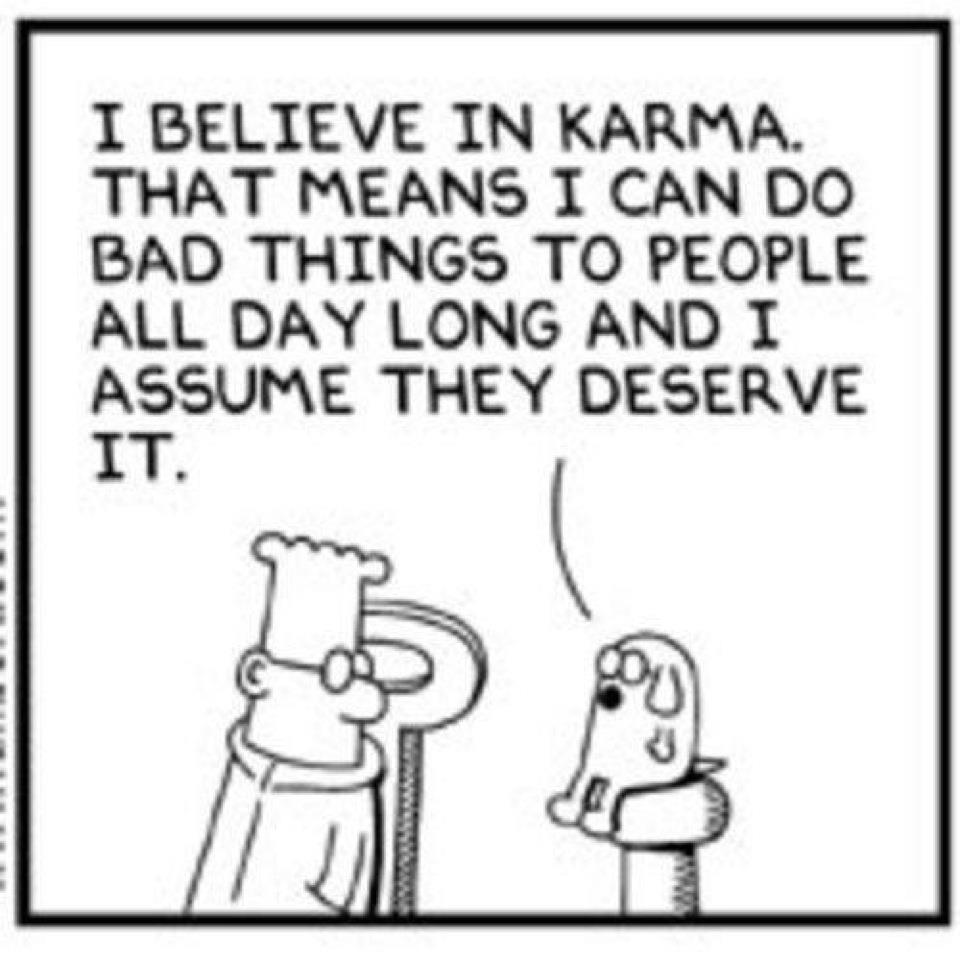
The idea that you sow what you reap has been around for a very long time, even before the time of Christ. The Hindu version is karma. You sow good karma, you reap good karma in return. The Chinese have the philosophy of the “yin and yang” which is “bahlahns, Danielson” (think of “Karate Kid”) between good and evil. Star Wars conjoined these ideas into “The Force” with its good or “light” side and its dark side.

In Jesus’ time, the Jews had similar ideas. For example, they extrapolated from the Levitical Law “an eye for an eye and a tooth for a tooth” (Leviticus 24:20) and used it to exact revenge. That was not the intent of the law as Jesus, the Author of the original, explained:

Ye have heard that it hath been said, An eye for an eye, and a tooth for a tooth: But I say unto you, That ye resist not evil: but whosoever shall smite thee on thy right cheek, turn to him the other also. And if any man will sue thee at the law, and take away thy coat, let him have thy cloke also. And whosoever shall compel thee to go a mile, go with him twain. Give to him that asketh thee, and from him that would borrow of thee turn not thou away. (Matthew 5:38-42)

Allow me a moment just to chase this important rabbit. Notice how Jesus responds to “Ye have heard.” His response is, “But I say unto you.” Throughout scripture any OT prophet or NT apostle who relays a message from God always qualifies his message by “Thus saith the Lord,” but not Jesus. He speaks by His own authority. He is the Lord. I just thought that’s a good thing for you to know.

The Jews of Jesus day also had the idea that good health and material prosperity were a sign of God’s favor, i.e., good karma, as a reward for righteous living. Poor health and poverty were a sign of God’s disfavor, i.e., bad karma, as punishment for a sinful life. (See Deuteronomy 29:9; 1 Kings 2:3)  Jesus debunked these perversions. For example, Jesus came across a man blind from birth and His disciples asked Him, “Master, who did sin, this man, or his parents, that he was born blind?” (John 9:2) They shared the prevailing thought that if one keeps the law, i.e., does not sin, they will prosper and enjoy good health, but a sinner will be punished with poverty or a debilitating disease. To put a stop to their stinking thinking, “Jesus answered, Neither hath this man sinned, nor his parents: but that the works of God should be made manifest in him … When he had thus spoken, he spat on the ground, and made clay of the spittle, and he anointed the eyes of the blind man with the clay, And said unto him, Go, wash in the pool of Siloam, (which is by interpretation, Sent.) He went his way therefore, and washed, and came seeing” (John 9:3, 6-7).

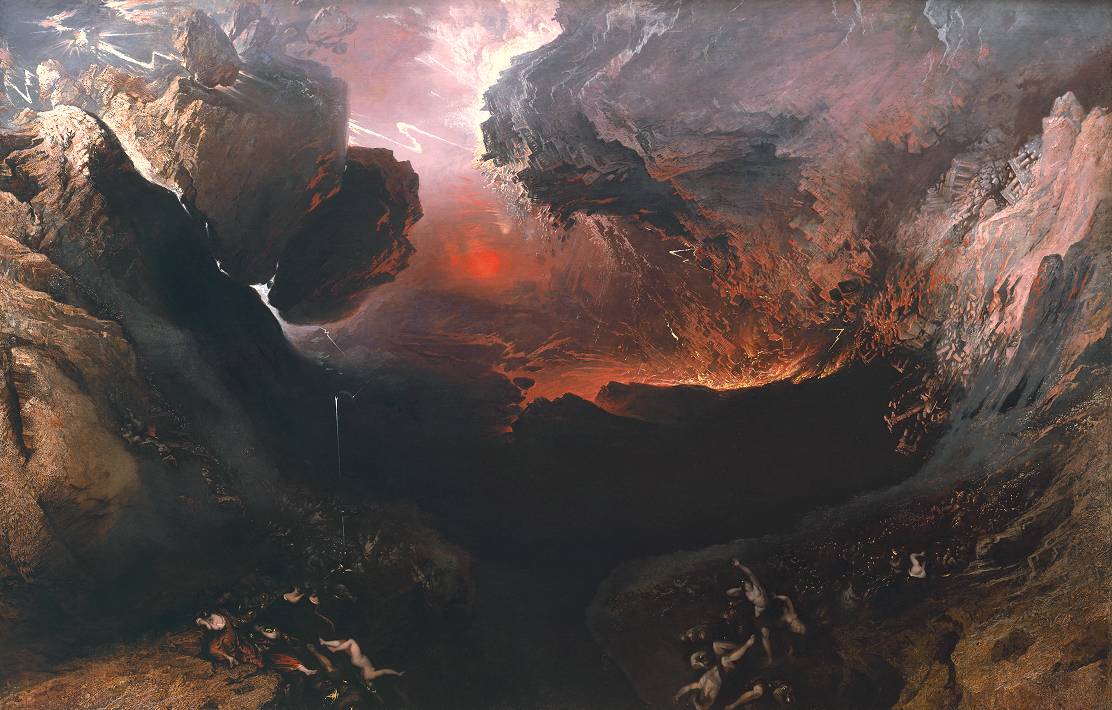
The point is that there is not necessarily a direct correlation between your actions and the good or bad you receive in this world. There are many really bad people in this world – most of them in Washington D.C. – that enjoy great wealth and good health. On the other hand, there are many really good people who have low income and/or poor health. Yet the prevailing belief among many people remains that if one does good, one will receive good in return. This further translates into their view of eternity. They believe that in the end God will weigh their good deeds against their sin, and if their good outweighs their bad, they’ll make it into heaven. What they do not understand is that their deeds will indeed be weighed, but their deeds will be weighed against the Word of God (Revelation 20:12-13). Finding themselves painfully short of perfection, their names will be searched for in the Book of Life. Then when their names are not found there, their doom will be sealed for eternity (Revelation 20:15).

Our lead verse above reminds us not to trifle with God – He will not be mocked. But this is not talking about karma in the sense the world understands. In fact, this verse is not necessarily talking about eternity, and it is not directed at non-believers. Paul was writing to Christians – the church in Galatia. He begins this final chapter by addressing church discipline for a brother “overtaken in a fault” (Galatians 6:1). He encourages the church to support one another in prayer (v. 2). He discourages misplaced pride (v. 3). He exhorts everyone to judge their own actions and not those of others (v. 4). He admonishes everyone to pull their own weight (v. 5). Then he entreats them to financially support those who teach them (v. 6). After all this he says, “Be not deceived; God is not mocked: for whatsoever a man soweth, that shall he also reap” (Galatians 6:7). In other words, God sees, not only what you do, but the motives behind the actions – He will not be mocked. One who is a twice-born child of God, will not lose his “sonship,” but just like any good father disciplines his child to correct wrong actions, so the Heavenly Father corrects His misbehaving child. “If ye endure chastening, God dealeth with you as with sons; for what son is he whom the father chasteneth not? … Furthermore we have had fathers of our flesh which corrected us, and we gave them reverence: shall we not much rather be in subjection unto the Father of spirits, and live?” (Hebrews 12:7, 9)

Paul elaborates on the law of sowing and reaping: “For he that soweth to his flesh shall of the flesh reap corruption; but he that soweth to the Spirit shall of the Spirit reap life everlasting” (Galatians 6:8). The “flesh” here should be understood as our sinful nature. While we live in this fallen world, we retain that sinful nature. When we place our trust in Christ, our dead spirit is made alive. “And so it is written, The first man Adam was made a living soul; the last Adam was made a quickening spirit” (1 Corinthians 15:45). “The last Adam” refers to Christ who has been made a “vitalizing spirit” or a “spirit that brings life.” The meaning of the second birth is that Christ has made our dead spirit come to life. That spirit constantly battles the sinful nature that we carry in our flesh. Paul describes this struggle in Romans 7:14-23. In the end he cries out, “O wretched man that I am! who shall deliver me from the body of this death? I thank God through Jesus Christ our Lord. So then with the mind I myself serve the law of God; but with the flesh the law of sin” (Romans 7:24-25).

As children of God, we have both a sinful nature and an eternal spirit. We understand from nature that what is fed will grow, and what is starved will wither or atrophy. We can feed our flesh by indulging our worldly desires like spending too much time on entertainment, watching or listing to worldly programming on television or the radio, listening to worldly music, reading worldly materials, etc. (I am not addressing non-believers, so my word choices should be clear to believers.) Alternately, we can feed our spirit by listening to Godly programming on television or radio, listening to sacred music that honors God, spending time in God’s Word, etc. If we feed our flesh, our desire for worldly pleasures will increase while our spirit will grow weak. Paul warns that we will reap the consequences for “sowing to the flesh.” God does believe in spanking His children. On the contrary, if we feed the spirit, God will enrich our lives (not necessarily in material ways) so that those blessings will reach into eternity. You reap what you sow.

Comments Off on Reaping What You Sow

Filed under Apologetics, Christianity, Religion, Theology

It’s Not That Bad

But as the days of Noe were, so shall also the coming of the Son of man be. For as in the days that were before the flood they were eating and drinking, marrying and giving in marriage, until the day that Noe entered into the ark, And knew not until the flood came, and took them all away; so shall also the coming of the Son of man be.  (Matthew 24:37-39)

Unless you have totally detached yourself from all society, isolated yourself in a cave, or numbed your brain with drugs, you know that the world is in moral decline. We have ejected God from the public square, spurned His law and called what is good evil and what is evil good (Isaiah 5:20). We accept that which is unnatural and hold it up as something to be praised and held in honor. We castigate those who hold firm to their passé morality, and stigmatize them as evil haters. We hail outlaws as heroes and call true heroes cowards. We slaughter our progeny and fearlessly defend the life and welfare of animals. We fight against polluting the planet and think nothing of the moral pollution of our minds. Boy! Are we screwed up!

We hear of wars and rumors of wars. Natural and man-made catastrophes are increasing all over the world, and for the most part, life, for the vast majority of people, goes on as usual. The words of Jesus recorded by Matthew above make me wonder. Just how bad were things at the time of Noah? Genesis records that “it repented the LORD that he had made man on the earth, and it grieved him at his heart. And the LORD said, I will destroy man whom I have created from the face of the earth … for it repenteth me that I have made them” (Genesis 6:6-7). Things must have been pretty bad for God to take such extreme measures. “The earth also was corrupt before God, and the earth was filled with violence. And God looked upon the earth, and, behold, it was corrupt; for all flesh had corrupted his way upon the earth” (Genesis 6:11-12). Is that not what we see today? Mankind is corrupt and the earth is filled with violence. So, why does Christ delay His return? Surely, things are as bad today as they were in the days of Noah.

It seems that there have been periods in world history that were far worse than they are today, and Jesus did not return then either. When Jesus spoke these words, He was not referring to the moral condition of the world, but rather the suddenness of the destruction that fell upon them. Note that they were conducting life as usual, “eating and drinking, marrying and giving in marriage.” There is nothing particularly sinful in that, but as they carried on life as usual, destruction came on them suddenly, “And [they] knew not until the flood came, and took them all away” (Matthew 24:39). But there may be more to it than they were just carrying on life as usual. The world was violent then and evil was so rampant that God said, “Enough!”

For Christians (and I always feel that I need to qualify that with the adjective “true”) the world does not have to get as bad as in the days of Noah. Paul would remind us, as he did the Christians in Thessalonica, “Now we beseech you, brethren, by the coming of our Lord Jesus Christ, and by our gathering together unto him, That ye be not soon shaken in mind, or be troubled, neither by spirit, nor by word, nor by letter as from us, as that the day of Christ is at hand. Let no man deceive you by any means: for that day shall not come, except there come a falling away first, and that man of sin be revealed, the son of perdition” (2 Thessalonians 2:1-3, emphasis mine). That “falling away” is the Greek word apostasia, which means a “defection from the truth.” We see that happening today, but God still has a remnant. I heard today that the number of “true” Christians, according to Barna, is down to about 7%, but that remnant is still strong. Paul says that the “son of perdition,” a.k.a. “Antichrist,” will not be revealed until “he who now letteth will let, until he be taken out of the way” (2 Thessalonians 2:7, emphasis mine). That word “lets” (“letteth”) is actually two Greek words: katechō meaning “to hold down,” and arti, meaning “suspension.” That “He” is the Holy Spirit who indwells every child of God. When the Bride of Christ is “taken out of the way,” there will be nothing left to restrain evil.

It’s bad now, but it’s not that bad. Christ will call for His Bride at any moment. As in the days of Noah, life will be going on as usual. Then suddenly, millions of people – Christians – will disappear from all over the earth, and the trouble begins. It’s not that bad now, but it’s going to get bad. I hope you are ready!

2 Comments

Filed under Apologetics, Christianity, Current Events, End Times, Evangelism, Gospel, Heaven, Religion, Salvation, Satan, Second Coming of Christ

Remember?

Loaves and Fishes

Do ye not yet understand, neither remember the five loaves of the five thousand, and how many baskets ye took up? Neither the seven loaves of the four thousand, and how many baskets ye took up? (Matthew 16:9-10)

Jesus and His disciples left the village of Magdala and crossed the Sea of Galilee. Mark tells us that they landed at Bethsaida (Mark 8:22), but before they arrived, Jesus thought aloud about an encounter they had in Magdala with a group Pharisees and Sadducees (Matthew 16:1-4). This bunch demanded “a sign from heaven” to validate His teachings. Obviously, the miracles Jesus performed were insufficient for these religious experts. So as Jesus thought on this, He offered His disciples an object lesson. “Then Jesus said unto them, Take heed and beware of the leaven of the Pharisees and of the Sadducees” (Matthew 16:6). However, the disciples were preoccupied with the fact that they forgot to pack a lunch (v. 5), “And they reasoned among themselves, saying, It is because we have taken no bread” (Matthew 16:7).

In their preoccupation with their stomachs, they missed the spiritual meal their Master had prepared for them. So, to refocus their minds to receive the real meal, Jesus reminded them of the miracle where He fed the 5000 (Matthew 14:13-21), and more recently, the feeding of the 4000 (Matthew 15:32-38). They need not concern themselves about what they were going to eat. Indeed, Jesus spoke on this very thing in His Sermon on the Mount. “Therefore take no thought, saying, What shall we eat? or, What shall we drink? or, Wherewithal shall we be clothed?” (Matthew 6:31). They were not about to go hungry with Jesus in their company.

We often behave just like the disciples. We get caught up with the worries and troubles of this world, and we forget all the times that God carried us through those troubled times. Remember when you were abandoned, and God brought that special person into your life to mend your brokenness? Remember when you lost your job and somehow God provided for you until He had a better job for you? Remember when you sacrificially gave to a cause God placed on your heart, and somehow you never missed that sacrificial gift? Remember?

When you are in the company of Jesus, all your needs (not wants) will be met, “for your heavenly Father knoweth that ye have need of all these things” (Matthew 6:32). Remember how God provided for you in the past, and “seek ye first the kingdom of God, and his righteousness; and all these things shall be added unto you” (Matthew 6:33). Remember.

Comments Off on Remember?

Filed under Christianity, Religion, Theology

Who Were the Magi?

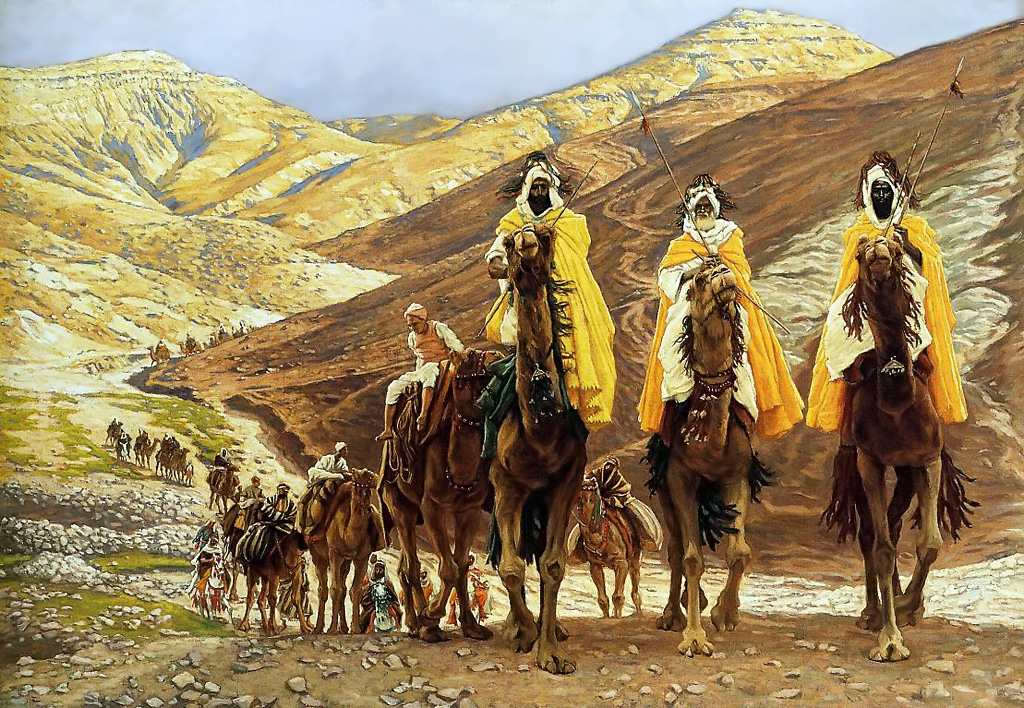
There came wise men from the east to Jerusalem

There came wise men from the east to Jerusalem

Now when Jesus was born in Bethlehem of Judaea in the days of Herod the king, behold, there came wise men from the east to Jerusalem, Saying, Where is he that is born King of the Jews? for we have seen his star in the east, and are come to worship him. (Matthew 2:1-2)

No Nativity scene is complete without three wise men and their entourage. Of course, any student of Scripture understands that their number is unknown but rather inferred from the three gifts that were presented to the Christ child – gold, frankincense, and myrrh (Matthew 2:11). Nor did they arrive at the moment of His birth, but rather some two years later. We know this because the family was living in a “house” (v. 11) rather than a stable (Luke 2:7). The wise men also found a “young child” (Greek: paidion – a toddler) rather than a “babe” (Greek: brephos – an infant). Regardless, the shepherds, wise men, singing angels and the whole menagerie make for a sweet tableau at Christmastime.

But who were these “wise men” and from where did they come? First of all, the Greek word translated as “wise men” is magoi meaning an “oriental scientist,” or by implication, a “magician” or “sorcerer.” The Latin translation of the Greek is magi, which is also commonly used in English. Secular sources say that the magi were the Zoroastrian priests of the ancient Medes and Persians. John Wesley suggests that “Probably they were Gentile philosophers, who, through the Divine assistance, had improved their knowledge of nature, as a means of leading to the knowledge of the one true God.” Other commentators suggest that they had Balaam’s prophecy (Numbers 24:17), and perhaps Daniel’s (Daniel 9:24, etc.), handed down to them by tradition. Adam Clarke offers this: “It is very probable that the persons mentioned by the evangelist were a sort of astrologers, probably of Jewish extraction, that they lived in Arabia-Felix, and … came to worship their new-born sovereign.”

The Bible has little to say about these men. They came from the “east,” which most agree is from the area of Persia. Since no one really seems to know for certain, I feel free to offer my suggestion. I reject the secular view that these men were Zoroastrian priests. While a pagan priest might be familiar with Hebrew Scriptures (because as educated men, they would probably study a wide variety of sources), they would not necessarily be compelled to take them seriously. After all, they adhered to their own religion. I agree with Clarke who suggests that they were “probably of Jewish extraction.” My guess is that they were of the remnant that remained in Babylon after Cyrus allowed the Jewish exiles to return to Jerusalem. Daniel remained in Babylon and maintained a high position as advisor to the king. Daniel was a “wise man.” Undoubtedly he established a school for wise men where he taught from the Hebrew Scriptures. There were many Jews that served in high positions in the Persian court: Mordecai (Esther 2:19), Nehemiah (Nehemiah 1:11); so it is reasonable to conclude that others followed suit. As Jewish “wise men,” they would have a greater reason to study the Scriptures as they yearned for their Messiah, the King of the Jews. I conclude that these magi were Jews coming from Babylon in search of their Messiah, and “When they saw the star, they rejoiced with exceeding great joy” (Matthew 2:10). And when they found the child, they “fell down, and worshipped him” (Matthew 2:11).

5 Comments

Filed under Apologetics, Christmas, Religion

Did God Create Evil?

And, having made peace through the blood of his cross, by him to reconcile all things unto himself; by him, I say, whether they be things in earth, or things in heaven. (Colossians 1:20)

Question: Because the Lord is the Creator of all, He brought also evil in the universe. Did He do penance, when He died on the cross?

Answer: To accuse God of creating evil is a misunderstanding of God’s nature. The Bible says:

Let no man say when he is tempted, I am tempted of God: for God cannot be tempted with evil, neither tempteth he any man: But every man is tempted, when he is drawn away of his own lust, and enticed. (James 1:13-14, emphasis mine)

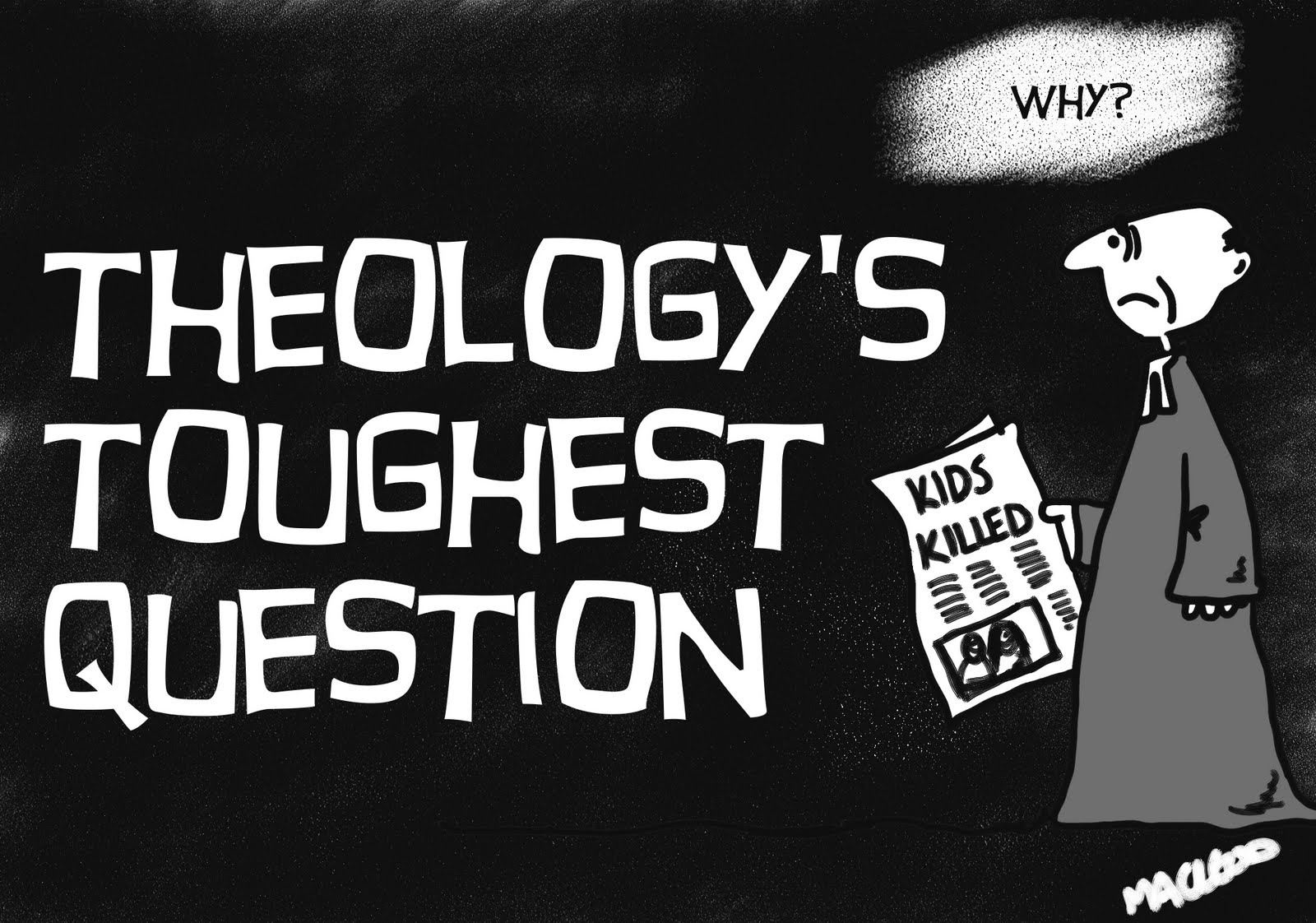
God did not create evil or sin, but in His wisdom “allowed” for it. Having created man in His own image (Genesis 1:26), He gave man the option to obey or disobey, to accept God or reject Him, to love Him or not to love Him. Without that option, we would be no more than androids that only function according to the programming of the designer. Without the option, it would be impossible for us to have a “personal” relationship with our Creator.

Therefore, it is not for His sin that Jesus died on the cross, but for ours. When you think about it, that is pretty incredible that God, should take upon Himself the penalty for our sin in order to restore the broken relationship between man and his Creator (Philippians 2:5-11) .

7 Comments

Filed under Apologetics, Atheism, Christianity, Creation, Evangelism, Gospel, Origins, Religion, Salvation, Theology