But when the fulness of the time was come, God sent forth his Son, made of a woman, made under the law, (Galatians 4:4)
Today is the 1,686th Christmas since the holy day was first sanctioned in AD 336. Before then, the date of Jesus’ birth remained in question, but December 25 was not considered an option. “Around AD 200, Clement of Alexandria wrote: ‘There are those who have determined not only the year of our Lord’s birth, but also the day; and they say that it took place in the 28th year of Augustus, and in the 25th day of [the Egyptian month] Pachon [May 20] … Further, others say that He was born on the 24th or 25th of Pharmuthi [April 20 or 21].’”[1]
This year December 25th falls on Sunday and this will not recur again for another 11 years. What better day to celebrate the birth of our Lord than on “the Lord’s Day”! Of course, we gather and worship together every Sunday, the Lord’s Day, because it commemorates His resurrection from the dead. So, this Sunday, we remember both His entry into this world to die for our sins and His victory over death to provide eternal life for us.
He came once as foretold by the prophets. I have not counted them myself, but supposedly, there are over 300 prophecies foretelling Jesus’ first coming.[2] “Using the science of probability, we find that the chances of just forty-eight [48] of these prophecies being fulfilled in one person to be only one in ten157[1×10157].”[3] That is a mathematical impossibility! Even so, Jesus fulfilled every prophecy concerning His first coming.
The Old Testament also foretells of Jesus’ second coming. However, the OT prophets conflated both prophecies of His first and second coming. For them, the prophecies foretold the coming Messiah who would rule as king over all the world. In retrospect, we can read these prophecies and distinguish those that have been fulfilled by His first coming and those that are yet to be fulfilled.
Since Jesus fulfilled the prophecies of His first coming, we can conclude that He will fulfill all those concerning His second coming beginning with Jesus’ own promise of His return. “Let not your heart be troubled: ye believe in God, believe also in me. In my Father’s house are many mansions: if it were not so, I would have told you. I go to prepare a place for you. And if I go and prepare a place for you, I will come again, and receive you unto myself; that where I am, there ye may be also” (John 14:1-3, emphasis mine).
The most meaningful thing for me about this Christmas is knowing that just as Jesus came the first time, He is coming again. As we study the prophecies of Jesus’ second coming, we recognize the “signs of the times” that signal the soon return of Jesus. I look forward to what 2023 will bring. I hope to meet Him in the air.[4]
He came, and He is coming again. Are you prepared to meet Him? If not, please read my page on “Securing Eternal Life.”
But when the fulness of the time was come, God sent forth his Son, made of a woman, made under the law, To redeem them that were under the law, that we might receive the adoption of sons. (Galatians 4:4-5)
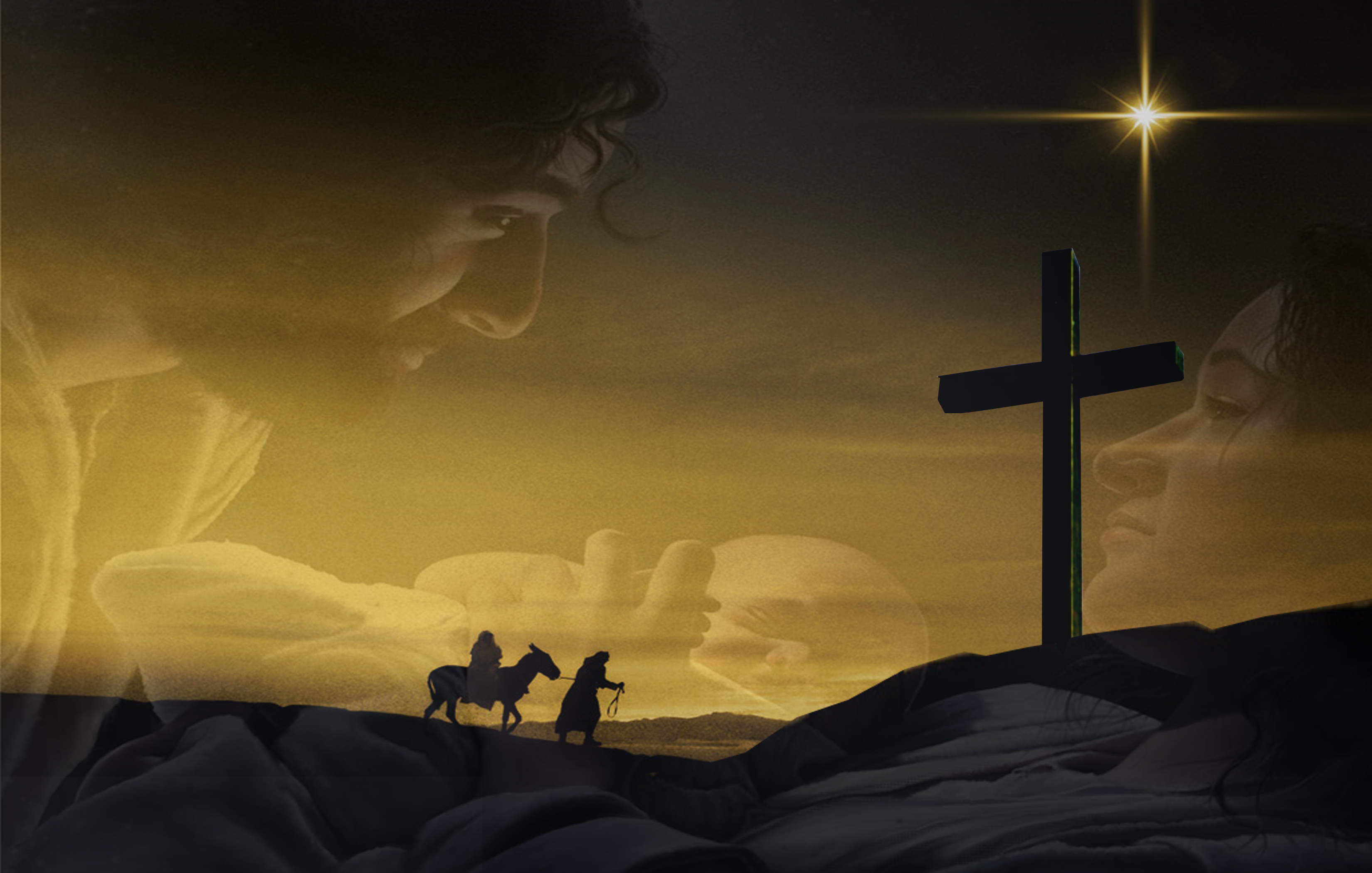
It’s that time of year again; Christmas is in the air. Regardless of your perception of Christmas – it’s too commercial, it’s under attack, it’s just a pagan celebration dressed up in Christian garb, etc. – it is altogether appropriate that Christians set time aside to commemorate the first advent of our Lord and Savior Jesus Christ.
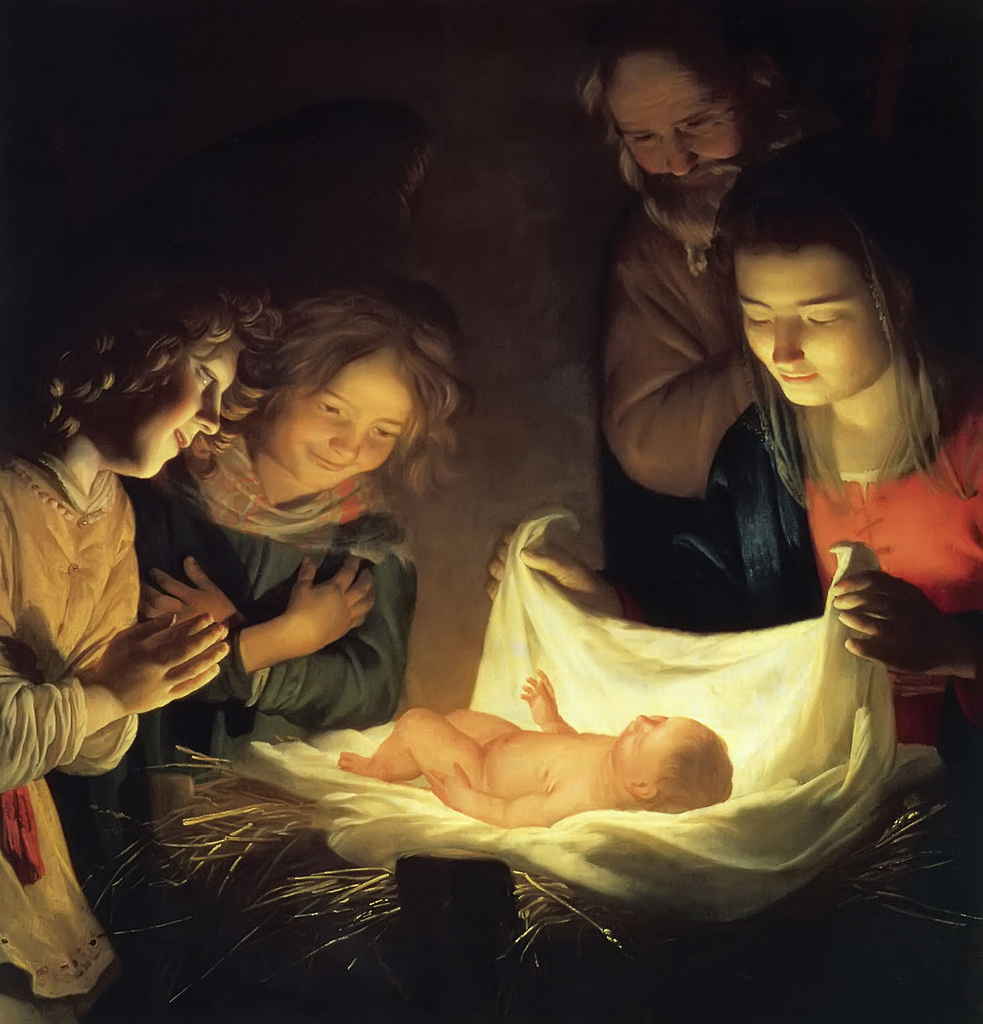
At this time we remember the miraculous conception and birth of God made man (John 1:14), but too often our focus shifts away from the significance of that event to the sappy sentimentality of the Nativity scene. As sweet as the image of a cuddly infant lying in a feeding trough adored by loving parents and worshipped by shepherds and wise men may be, the fact remains that this baby was God clothed in human flesh. The thought that the Creator condescended to take the form of His fallen creation (Philippians 2:7) to redeem as many as would receive Him (John 1:12), should leave us awestruck.
This was no afterthought on the part of God. In my article, “Why Satan?,” I address the issue of why God allowed sin in the first place, but along with the possibility of sin, God provided a way out (Hebrews 4:3; Revelation 13:8). From the very beginning there was the promise of a Savior (Genesis 3:15). Eve understood this promise, and at the birth of her first-born she rejoiced, “and said, I have gotten a man from the LORD” (Genesis 4:1). The literal translation of the Hebrew actually says “I have gotten a man Yahweh (the Lord).” She believed that she had given birth to the Savior according to the promise of God. But the time was not right. God wanted His creation, man in particular, to “be fruitful and multiply” (Genesis 1:28; 9:1). Abraham “Who against hope believed in hope, that he might become the father of many nations, according to that which was spoken, So shall thy seed be” (Romans 4:18). That promise was not only for Abraham, “But for us also, to whom it shall be imputed, if we believe on him that raised up Jesus our Lord from the dead; Who was delivered for our offences, and was raised again for our justification” (Romans 4:24-25). For “The Lord is not slack concerning his promise, as some men count slackness; but is longsuffering to us-ward, not willing that any should perish, but that all should come to repentance” (2 Peter 3:9). So, when the time was right, God entered the world He created (John 1:3) as a helpless baby – fully God and fully man – to give up His life to buy back and restore His fallen creation. “For God so loved the world, that he gave his only begotten Son, that whosoever believeth in him should not perish, but have everlasting life” (John 3:16).
Very soon, at the fullness of time, He will return for His own as He promised: “And if I go and prepare a place for you, I will come again, and receive you unto myself; that where I am, there ye may be also” (John 14:3). So, regardless of your perspective on Christmas, as Christians it is a good time to remember that baby in the manger was God who came to die for us that we may live with Him, and soon we will be with Him.
Pray for the peace of Jerusalem: they shall prosper that love thee. (Psalm 122:6)
In Sunday School, our pastor is leading us through a study from John Owen’s book, Rules for Walking in Fellowship.
Owen was by common consent the weightiest Puritan theologian, and many would bracket him with Jonathan Edwards as one of the greatest Reformed theologians of all time. Born in 1616, he entered Queen’s College, Oxford, at the age of twelve and secured his M.A. in 1635, when he was nineteen. In his early twenties, conviction of sin threw him into such turmoil that for three months he could scarcely utter a coherent word on anything; but slowly he learned to trust Christ, and so found peace. In 1637 he became a pastor; in the 1640s he was chaplain to Oliver Cromwell, and in 1651 he was made Dean of Christ Church, Oxford’s largest college. In 1652 he was given the additional post of Vice-Chancellor of the University, which he then reorganized with conspicuous success. After 1660 he led the Independents through the bitter years of persecution till his death in 1683. —J. I. Packer[1]
In our pastor’s absence, I was asked to bring this Sunday’s lesson from the book. It is indeed a very good lesson entitled “Bearing One Another’s Burdens,” which is the 15th chapter in Owens’ book. At the end of the lesson, Owens gives directions on how to apply the principles in the lesson. For the first direction, Owens says, “A proper valuing, strong desire, and high esteem of the church’s prosperity, in every member of it (Ps. 122:6)” – (emphasis mine).
I do not know a lot about John Owens other than he was and is a highly regarded reformed theologian and Puritan preacher. I do not know what his views were on eschatology (the study of end times), however, in the quote above, his use of Psalm 122:6 in connection to the church is misapplied.
I do not want to disparage such a great man of God as John Owen, but the verse, when taken literally as it should be, is speaking of Jerusalem not the Church. A parallel between Jerusalem and the church can certainly be drawn here in the form of allegory, but to make a direct connection cannot be supported if one takes the words of Scripture literally. Jerusalem/Israel is not the Church, nor is the Church Jerusalem/Israel.
In Owens’ defense, he was living at a time when Israel did not exist and had not existed for over 1500 years. Many theologians of that time believed that God had rejected Israel for their rejection of their Messiah and that the Church had replaced Israel. However, not all theologians took that position. Those that did not hold to that “replacement theology” believed that God would restore Israel in the end times. They came to this conclusion from the clear, literal teaching of the Old Testament prophets. I do not know to which camp Owens belonged, so I will withhold judgement.
I will, however, attempt to point out the error in “replacement theology” as concisely as possible. When one studies the Old Testament prophets, one quickly finds God’s repeated promises to (1) scatter Israel to the four corners of the earth, (2) to draw them back into their own land, (3) to restore the nation of Israel once again, and (4) to save the remanent of Israel in the “latter days.” The following is just a small sample of God’s promises to Israel.
And the LORD shall scatter you [Israel] among the nations, and ye shall be left few in number among the heathen, whither the LORD shall lead you. (Deuteronomy 4:27)
And it shall come to pass, that as the LORD rejoiced over you [Israel] to do you good, and to multiply you; so the LORD will rejoice over you to destroy you, and to bring you to nought; and ye shall be plucked from off the land whither thou goest to possess it. And the LORD shall scatter thee among all people, from the one end of the earth even unto the other; and there thou shalt serve other gods, which neither thou nor thy fathers have known, even wood and stone. And among these nations shalt thou find no ease, neither shall the sole of thy foot have rest: but the LORD shall give thee there a trembling heart, and failing of eyes, and sorrow of mind: And thy life shall hang in doubt before thee; and thou shalt fear day and night, and shalt have none assurance of thy life: In the morning thou shalt say, Would God it were even! and at even thou shalt say, Would God it were morning! for the fear of thine heart wherewith thou shalt fear, and for the sight of thine eyes which thou shalt see. (Deuteronomy 28:63-67)
And it shall come to pass, when all these things are come upon thee, the blessing and the curse, which I have set before thee, and thou shalt call them to mind among all the nations, whither the LORD thy God hath driven thee, And shalt return unto the LORD thy God, and shalt obey his voice according to all that I command thee this day, thou and thy children, with all thine heart, and with all thy soul; That then the LORD thy God will turn thy captivity, and have compassion upon thee, and will return and gather thee from all the nations, whither the LORD thy God hath scattered thee. If any of thine be driven out unto the outmost parts of heaven, from thence will the LORD thy God gather thee, and from thence will he fetch thee: And the LORD thy God will bring thee into the land which thy fathers possessed, and thou shalt possess it; and he will do thee good, and multiply thee above thy fathers. And the LORD thy God will circumcise thine heart, and the heart of thy seed, to love the LORD thy God with all thine heart, and with all thy soul, that thou mayest live. (Deuteronomy 30:1-6)
And it shall come to pass in the last days, that the mountain of the LORD’S house shall be established in the top of the mountains, and shall be exalted above the hills; and all nations shall flow unto it. And many people shall go and say, Come ye, and let us go up to the mountain of the LORD, to the house of the God of Jacob; and he will teach us of his ways, and we will walk in his paths: for out of Zion shall go forth the law, and the word of the LORD from Jerusalem. And he shall judge among the nations, and shall rebuke many people: and they shall beat their swords into plowshares, and their spears into pruninghooks: nation shall not lift up sword against nation, neither shall they learn war any more. (Isaiah 2:2-4)
The remnant shall return, even the remnant of Jacob, unto the mighty God. For though thy people Israel be as the sand of the sea, yet a remnant of them shall return: the consumption decreed shall overflow with righteousness. (Isaiah 10:21-22)
Fear not: for I am with thee: I will bring thy seed from the east, and gather thee from the west; I will say to the north, Give up; and to the south, Keep not back: bring my sons from far, and my daughters from the ends of the earth; Even every one that is called by my name: for I have created him for my glory, I have formed him; yea, I have made him. (Isaiah 43:5-7)
Behold, these shall come from far: and, lo, these from the north and from the west; and these from the land of Sinim. Sing, O heavens; and be joyful, O earth; and break forth into singing, O mountains: for the LORD hath comforted his people, and will have mercy upon his afflicted. But Zion said, The LORD hath forsaken me, and my Lord hath forgotten me. Can a woman forget her sucking child, that she should not have compassion on the son of her womb? yea, they may forget, yet will I not forget thee. Behold, I have graven thee upon the palms of my hands; thy walls are continually before me. (Isaiah 49:12-16)
No weapon that is formed against thee shall prosper; and every tongue that shall rise against thee in judgment thou shalt condemn. This is the heritage of the servants of the LORD, and their righteousness is of me, saith the LORD. (Isaiah 54:17)
And they shall build the old wastes, they shall raise up the former desolations, and they shall repair the waste cities, the desolations of many generations. And strangers shall stand and feed your flocks, and the sons of the alien shall be your plowmen and your vinedressers. But ye shall be named the Priests of the LORD: men shall call you the Ministers of our God: ye shall eat the riches of the Gentiles, and in their glory shall ye boast yourselves. (Isaiah 61:4-6)
Who hath heard such a thing? who hath seen such things? Shall the earth be made to bring forth in one day? or shall a nation be born at once? for as soon as Zion travailed, she brought forth her children. Shall I bring to the birth, and not cause to bring forth? saith the LORD: shall I cause to bring forth, and shut the womb? saith thy God. Rejoice ye with Jerusalem, and be glad with her, all ye that love her: rejoice for joy with her, all ye that mourn for her: (Isaiah 66:8-10)
At that time they shall call Jerusalem the throne of the LORD; and all the nations shall be gathered unto it, to the name of the LORD, to Jerusalem: neither shall they walk any more after the imagination of their evil heart. In those days the house of Judah shall walk with the house of Israel, and they shall come together out of the land of the north to the land that I have given for an inheritance unto your fathers. (Jeremiah 3:17-18)
I will scatter them also among the heathen, whom neither they nor their fathers have known: and I will send a sword after them, till I have consumed them. (Jeremiah 9:16)
And I will gather the remnant of my flock out of all countries whither I have driven them, and will bring them again to their folds; and they shall be fruitful and increase. And I will set up shepherds over them which shall feed them: and they shall fear no more, nor be dismayed, neither shall they be lacking, saith the LORD … Therefore, behold, the days come, saith the LORD, that they shall no more say, The LORD liveth, which brought up the children of Israel out of the land of Egypt; But, The LORD liveth, which brought up and which led the seed of the house of Israel out of the north country, and from all countries whither I had driven them; and they shall dwell in their own land. (Jeremiah 23:3-4; 7-8)
There are more. Ezekiel 36 speaks of the scattering and regathering of Israel to and from the nations. Ezekiel 37 presents Israel as a valley of dry bones that God brings together and raises up into a mighty army. In that chapter, God also promises that the “two sticks” (Judah and Israel, the divided kingdoms) will reunite as one.
All of these prophecies deal with the nation of Israel, not the Church. Why is this important? It is important because the integrity of God is at stake. If God can break His covenant with Israel, what guarantee is there that He will keep His promises to the Church? Face it, the “Church” these days these days is not a pristine virgin!
Therefore, because God is faithful, He will keep His promises to Israel and to the Church as well. Israel and the Church are two separate entities, but salvation is the same for both. When the psalmist, David, says “Pray for the peace of Jerusalem,” there is only One Peace that can effectively apply and that is the Prince of Peace, the Lord Jesus Christ.[2]
So, in a way, Owens was correct in applying the psalm to the Church by way of allegory, but not in a literal sense. We are to pray for the “Peace of Jerusalem” because only He can bring true peace to the world. When we pray for the “Peace of Jerusalem,” we pray that the Lord will soon come and set up His kingdom on earth. “Thy kingdom come. Thy will be done in earth, as it is in heaven” (Matthew 6:10). As for the Church, the kingdom, in part, has already come and dwells within the heart of every believer and the Church as a whole by way of the Holy Spirit who gives us peace. Then, one day, perhaps very soon, we will enjoy His physical kingdom here on earth along with our Lord and Savior Jesus Christ. I can hardly wait!
Dear reader, do you know the Prince of Peace? If not, please read my page on “Securing Eternal Life.”
And the seventh angel sounded; and there were great voices in heaven, saying, The kingdoms of this world are become the kingdoms of our Lord, and of his Christ; and he shall reign for ever and ever. (Revelation 11:15)
Election Day came and went on Tuesday, November 8, and the anticipated “Red Wave” that was expected fizzled to a slow trickle. On the positive side, Republicans seem to have pulled out a very narrow majority in the House, while the Senate count remains undetermined. It appears that the Senate may win a one-seat majority, but because of outstanding returns (which raises suspicions of voter fraud again), the results may end up in a 50-50 Senate with the Democrat VP as the tiebreaker.
I do not foresee any prospect for improvement in our government. I do not say that as a pessimist. In fact, I see the decline of our nation as a source of optimism. How? I study end-times prophecy, and I see the decline in our nation and that of the western world as the fulfillment of end-times prophecy. In His Olivet Discourse,[1] Jesus foretold what we could expect as signs of His coming and the end of the age.
While we are not there yet, we can see (if we are paying attention) that those things are falling into place. One of the signs of the end of days describes a coming one-world government.[2] The foundations for a one-world government are already in place in the form of the World Economic Forum[3] and the United Nations. However, these entities cannot assume world power with a superpower like the United States getting in the way. Therefore, the USA needs to be neutralized, and we have many in our own government working to do just that.
To me, that is great news! Please do not think that I have no love for my country. I do. As I write this, we celebrate Veterans Day, and I am proud to have served in my country’s armed forces – in the US Navy. However, the nation I once served exists in name only today. I would love for our nation to turn around (repent), but I see no prospect of that. However, I have a greater hope because my eternal citizenship is in heaven. “For we know that if our earthly house of this tabernacle were dissolved, we have a building of God, an house not made with hands, eternal in the heavens” (2 Corinthians 5:1).
Although the election results disappointed, I eagerly look for the coming of my Lord Jesus Christ. He is coming soon, and His kingdom will be one of righteousness and perfect peace. How soon? I do not know, but the darker this world gets, the closer we are to His return. In the meantime, we continue to serve, witness, and do what we know to be right so that when He does come, He will find us working at our assigned duties. “Blessed is that servant, whom his lord when he cometh shall find so doing” (Matthew 24:46).
We are living in the “last days,” and it is only a matter of time before the Lord says that it is enough, and He puts a final end to it all. Dear reader, are you prepared to meet the Savior when He comes to clean up this mess? If not, please read my page on “Securing Eternal Life.”
This know also, that in the last days perilous times shall come. (2 Timothy 3:1)
At our Gideon camp meeting this Saturday, our Scripture reading was 2 Timothy 3. A visitor to our meeting commented how the passage sounded a lot like today. The way he said it was as if he had never heard that passage before. That is not surprising. Many Christians today live day to day unaware of what is going on around them. It is understandable. Life is full of activities that need to get done. Between work and family, who wants to spend time keeping up with world events when the news can be so depressing if it can be trusted at all? So, spending free time on entertainment of one kind or another is the preferred choice for spare-time activities.
Pastors that do not preach on end-times prophecy only add to the lack of awareness of most Christians. While the congregants may perceive the growing darkness in our country, they do not associate it with the “last days.” They may just assume that these days are no worse than those in the past;[1] many think that we are just more aware of them due to worldwide media coverage. While that may be partially true, the rapid worldwide moral decline is more pervasive, more diverse, and more rampant than anything the world has ever experienced except, perhaps, for the days of Noah or the days of Lot.[2]
So, what did our Gideon visitor hear that sounded so much like today? Paul said that the “last days” would be perilous (i.e., difficult, dangerous, furious) times.[3] Paul goes on to explain what he means by that. He says, “men shall be lovers of their own selves.” Surely men (and that includes women) have always been somewhat egocentric – thinking of themselves ahead of anyone else. But have we ever seen it to the extent that we see it now?
Paul goes on to list other characteristics of “last days” people. They are “covetous” – that is they are avarice, they love money and material possessions particularly when those things belong to someone else. That also includes someone else’s husband or wife.
“Last days” people are “boasters.” They like to “puff themselves” up about their possessions or achievements whether real or presumed. Closely related to that is “pride.” The Greek word here is huperēphanos, i.e., “showing one’s self above others, overtopping, conspicuous above others, pre-eminent.”[4] In other words, they think more highly of themselves than they ought.[5]
“Last days” people are “blasphemers,” “speaking evil, slanderous, reproachful, railing, abusive”[6] of all things pertaining to God. We see blasphemy everywhere these days, in entertainment, in “science,” and in politics (one particular party that has a donkey as its mascot comes to mind). “Last days” people violate the fifth of the Ten Commandments,[7] which says to honor father and mother; they are disobedient to parents. Going along with that, they are “unthankful” either to God or to their parents or anyone who has benefitted them. They are “unholy,” i.e., impious and wicked. “Holy” means to be “set apart,” especially for the service of God. These people are just the opposite.
Paul continues. “Last days” people are “without natural affection,” that is, “unsociable, inhuman, unloving.”[8] The most glaring evidence for this is the abortion issue these days. These “last days” people do not care about human life. They willingly murder unborn babies even up to the moment of birth, and many advocate for infanticide up to two years of age. At the same time, they want to save the panda, the polar bear, the whale, the planet, etc. – “without natural affection.”
“Last days” people are “trucebreakers.” They are untrustworthy. They lie without shame. They are “false accusers.” Think of the many “righteous” people that have been falsely accused by the FBI lately, while those that are true lawbreakers are set free. Paul says that “last days” people are “incontinent.” By that, he means that they lack self-control. Think of the many instances where we see on the news mobs breaking into stores taking anything they want. Think of angry, left-wing protestors that shout down opposing voices and refuse to listen to reason. Think about those that violently attack unsuspecting victims in public and in broad daylight. That last group, Paul defines as “fierce” meaning “not tame or savage.”
“Last days” people are “despisers of those that are good.” They “call evil good, and good evil; that put darkness for light, and light for darkness; that put bitter for sweet, and sweet for bitter!” (Isaiah 5:20). To end the list, Paul names other characteristics synonymous with those already listed. “Last days” people are “Traitors, heady, highminded, lovers of pleasures more than lovers of God” (2 Timothy 3:4).
Dear reader, does that not sound like the world in which we live? The visitor to our Gideon prayer meeting surely thought so. This is not just true within our nation, but it permeates the entire world, which is why we hear of wars and rumors of wars[9] worldwide. These things have not always been this way. They are much more pervasive today, and they are converging together all at once. That is the major difference between now and then.
We are living in the “last days,” and it is only a matter of time before the Lord says that it is enough, and He puts a final end to it all. Dear reader, are you prepared to meet the Savior when He comes to clean up this mess? If not, please read my page on “Securing Eternal Life.”




 Ernie's Musings