Tag Archives: Christ

Just As Predicted

For unto us a child is born, unto us a son is given: and the government shall be upon his shoulder: and his name shall be called Wonderful, Counsellor, The mighty God, The everlasting Father, The Prince of Peace. (Isaiah 9:6)

Many people regard the Bible as any other book of mythology. They cannot accept that it is a true for a host of reasons. Some question its veracity because it was written by men, and we all know men are flawed and always embellish the truth in order to make their god or hero appear better than reality. Some suggest that through the many centuries of transmission, errors have crept into the text so that it cannot be trusted. Even now, they say, we have so many translations, and they all differ one from another.

It is true that the Bible had many human authors. Many of these men lived centuries apart and lived in different regions. They all wrote independently of one another, yet the Bible maintains a flow and consistency that defies human ingenuity. The only reasonable explanation for such cohesion and consistency is supernatural guidance. The Apostle Paul tells us that “All scripture is given by inspiration of God…” (2 Timothy 3:16). The Apostle Peter explains, “Knowing this first, that no prophecy of the scripture is of any private interpretation. For the prophecy came not in old time by the will of man: but holy men of God spake as they were moved by the Holy Ghost” (2 Peter 1:20-21, emphasis mine).

As for errors in transcription and transmission, over 5000 manuscripts of the New Testament Scriptures exist today and they all agree, and the few errors that exists are mostly minor spelling errors that are readily identifiable when compared to other copies. As for the Old Testament, the Dead Sea Scrolls validate that what we have in our modern Bibles is accurate. Jesus said, “Heaven and earth shall pass away, but my words shall not pass away” (Matthew 24:35).

The skeptic may concede the accuracy in transmission, but may still doubt the veracity of the text. The best way to respond is to show where the predictions made in the Bible have come to pass. The birth of Jesus offers many examples.

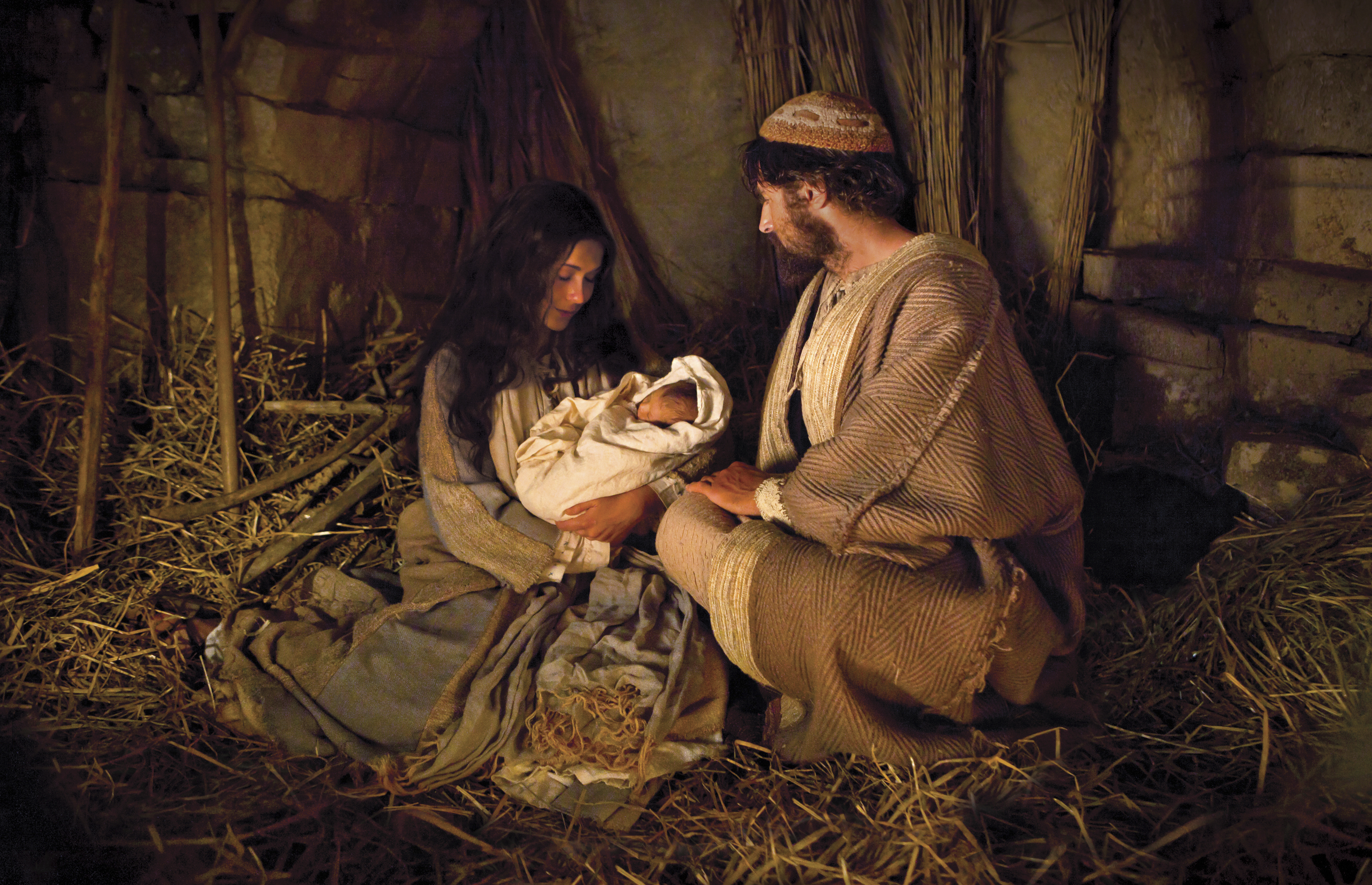
The first book of the Bible declares Jesus’ linage from the tribe of Judah.[1] The pagan prophet Balaam predicted that a star would announce His birth.[2] Several passages predict that Jesus would come from the line of King David.[3] Our beginning verses predicts that Jesus would come as a child.[4] He would be born of a virgin.[5] His birthplace would be Bethlehem.[6] Shepherds and wisemen would worship Him.[7] Baby boys in Bethlehem would be slaughtered in an attempt to kill the baby Jesus.[8] His earthly parents would escape to Egypt and return after Herod the Great died.[9]

All of these predictions came true and these only surrounded His birth. All those concerning His earthly ministry, His death, burial and resurrection came true exactly as predicted. The odds of just those listed concerning His birth coming true are astronomical. Yet Jesus fulfilled every one of those things which were prophesied about His first coming. If that cannot convince the skeptics that the Bible is true, then they just do not want to believe.

More prophesies exist about His second coming than exist about His first coming. If the prophecies of His first advent were fulfilled with 100% accuracy, we can be certain that the prophecies concerning His second advent will be come to pass just as predicted. In fact, we see many of those taking place before our eyes.

The religious leaders of Jesus’ time had access to all the prophecies concerning Jesus’ first coming, and they completely missed Him. He is coming again. How many today are so busy doing “religious” things that they will miss His second coming? Are you ready? If not, please read my page on “Securing Eternal Life.”

Notes:


[1] Genesis 49:10

[2]  Numbers 24:17

[3]  Isaiah 11:1 (Jesse was David’s father); 2 Samuel 7:12-13; Jeremiah 23:5-6;

[4]  Isaiah 9:6

[5]  Isaiah 7:14

[6]  Micah 5:2

[7]  Psalm 72:9-10

[8]  Jeremiah 31:15

[9]  Hosea 11:1

Comments Off on Just As Predicted

Filed under Apologetics, Bible, Christianity, Christmas, Holidays, Second Coming of Christ, Theology

Xmas Is Not Christian

Give not that which is holy unto the dogs, neither cast ye your pearls before swine, lest they trample them under their feet, and turn again and rend you. (Matthew 7:6)

I am certain that my title stirred my Christian brothers and sisters to protest, “It is too!” Well, hang on and allow me to explain.

I assume, wrongly perhaps, that most Christians understand that Jesus was not born on December 25, or any time in December. I have covered that in other articles,[1], [2], [3] but that is not my purpose here. Regardless of the accuracy of the date, it is right that we, as Christians, take time to celebrate and give thanks to God for sending us His Son to “save His people from their sins.”[4]

But let us face it. The majority of the world who celebrates this season see it as the season of giving (and getting). They may have a remote idea for the Reason for the season, but only as a matter fact and not necessarily the focal point. In fact, any reminder of Christ’s birth is seen as offensive. The mere greeting of “Merry Christmas” is socially unacceptable and the preferred greeting is “happy holidays” or “season’s greetings,” but most choose to leave Christ out of it.

I could give more examples of the rampant materialism that takes place at that this time, but why harp on the obvious? For all these reasons I say that Christmas is not Christian; it is largely a secular plunge into self-indulgence and avarice. However, Christians need not get sucked into the fray. Lay aside the world’s Xmas and focus on the true meaning of this special time of celebration. “This is a faithful saying, and worthy of all acceptation, that Christ Jesus came into the world to save sinners; of whom I am chief” (1 Timothy 1:15).

Notes:


[1] “Jesus’ Birthday” – https://erniecarrasco.com/2016/12/25/jesus-birthday/  

[2]  “What A Thing!” – https://erniecarrasco.com/2017/12/10/what-a-thing/

[3]  “Shepherd of Shepherds” — https://erniecarrasco.com/2013/12/22/shepherd-of-shepherds/

[4]  Matthew 1:21

Comments Off on Xmas Is Not Christian

Filed under Christianity, Christmas, Holidays, Salvation

Take No Thought

Therefore I say unto you, Take no thought for your life, what ye shall eat, or what ye shall drink; nor yet for your body, what ye shall put on. Is not the life more than meat, and the body than raiment? (Matthew 6:25)

Last week the Wuhan Bug arrived at our house. I felt it first. It came on me Saturday evening in the form of a low-grade fever. I felt my ears “burn” as I worked on a sermon that I was supposed to deliver the following day at an assisted living facility. I called Linda, the lady in charge of the services, to let her know the situation. At that time, I was not aware that I had been “bitten” by the bug, but knowing the precautions taken at the facility to keep the residents safe, I felt obligated to report my condition. Linda, our leader, was a little distraught because she did not have a substitute on such short notice. So, I promised that if my fever left, I would show up and fulfill my obligation. The next morning, I was ready to preach.

I battle allergies constantly, especially this time of the year. So, for me, what I experienced was “normal.” My wife June, on the other hand started feeling bad Monday. That evening, she took her temperature and it was over 100º. The next day she called in sick to work and made an appointment to see a doctor. She was tested and diagnosed with COVID-19. Naturally, when she tested positive, they called me in and I tested positive as well. Keep in mind that I was not “feeling” sick during all of this time, except for the low-grade fever on Saturday night. The doctor prescribed an infusion of monoclonal antibodies and a medical team came to our house on Wednesday to administer the infusion to us. Following the infusion, I experienced chills and high fever the next two days. June had a similar experience, but after that, we both felt much better.

Our experience with the Wuhan Bug was a mild one compared to some. God made each one of us unique. Each one of us has a one-of-a-kind genetic makeup so that viruses affect us differently. One of the reasons I oppose the COVID injection being pushed by our government is that it is designed to manipulate your DNA. In simple terms, the mRNA injected into your body is supposed to “train” your God-created DNA into fighting of the spike protein of the coronavirus. The scientists that developed this “gene therapy” are ignorant (compared to the Designer and Creator of DNA), fallen, humans who are trying to manipulate what God has created. We must remember that these scientists, for the most part, believe that humans evolved from some common ancestor with ape, therefore they have a low regard for the notion that we were created in the image of God. I could go on, but that is not the purpose of this article.

From the beginning of the “plandemic” June and I have rejected the fearmongering propaganda surrounding it. We decided from the onset that we would trust God rather than men. Some will argue that God gave men intelligence to develop medicines and vaccines to help improve the health of mankind. To a large extent, I agree. In the past, medicines and vaccines have been developed from substances God created in nature. Past remedies stemmed from men “thinking God’s thoughts after Him.” These new so-called mRNA vaccines are none of that. They are all developed from manmade substances which attempt to alter or manipulate what God designed and created. You are welcome to disagree, and you have every right to be wrong, but I digress.

In Jesus’ Sermon on the Mount He stressed, “Take no thought for your life, what ye shall eat, or what ye shall drink; nor yet for your body, what ye shall put on. Is not the life more than meat, and the body than raiment?” The Greek word translated “thought” is merimnaō and it means “to be anxious about” something. The word “anxious” carries the connotation of “sickening worry.” This Wuhan Bug has many people I know and love living in fear, too afraid to come out of their homes for fear of being infected. June and I refuse to live like that without presuming upon God for our safety. We understood that we could be infected, but we also trusted that God would see us through – and He did!

Jesus says to “take no thought for your life.” The Greek word translated “life” here is not the common Greek words translated as “life.” Rather, it is the Greek word, psuchē, which means “breath” or “spirit.” It carries the connotation of the “soul,” which is the very essence of one’s being and existence. A Christian, of all people, should not be worried or anxious about his life knowing that, as Paul said, “We are confident, I say, and willing rather to be absent from the body, and to be present with the Lord. (2 Corinthians 5:8, emphasis mine). If you claim to be a Christian and lack that confidence, then you may need to reassess your position before God.

Jesus goes on to list material things over which we should not worry, but He tied all these back to what He stated earlier. Note that He begins the verse with “Therefore I say unto you.” Anytime we see “therefore” in the Bible, we need to see what it’s “there for.” In this case, Jesus had spoken of storing up treasures in heaven.[1] He stressed the folly of accumulating treasures here on earth, because it decays or can be stolen. “Treasures” can be anything that we value – our home, material possessions, family, time, work, life, etc. These are all temporal in nature. Jesus instructed that we should “lay up for yourselves treasures in heaven, where neither moth nor rust doth corrupt, and where thieves do not break through nor steal” (Matthew 6:20).

I really long for the day when “the Lord himself shall descend from heaven with a shout, with the voice of the archangel, and with the trump of God: and the dead in Christ shall rise first: Then we which are alive and remain shall be caught up together with them in the clouds, to meet the Lord in the air: and so shall we ever be with the Lord” (1 Thessalonians 4:16-17, emphasis mine). I am shocked when I run into Christians that do not share my enthusiasm for the Lord’s return, and in fact, they hope that He does not return anytime soon because they have so many treasures here on earth that they are unwilling to turn loose. Jesus reminds us, “For where your treasure is, there will your heart be also” (Matthew 6:21). Where is your treasure?

Divided loyalties weaken the Christian and make him susceptible to fear and worry. Jesus said, “No man can serve two masters: for either he will hate the one, and love the other; or else he will hold to the one, and despise the other. Ye cannot serve God and mammon” (Matthew 6:24). You can either put your trust in and serve the things of this world (“mammon”) or you can place your trust in God for His provision knowing that your life, your psuchē, is in His strong and loving hands. If your trust is in Him, the Wuhan Bug should not scare you.

Notes:


[1]  Matthew 6:19-24

Comments Off on Take No Thought

Filed under Apologetics, Christianity, Creation, Current Events, Eschatology, Gospel, Origins, Random Musings, Rapture, Salvation, Science, Second Coming of Christ, Theology

Still Coming

… and said unto them, Occupy till I come.  (Luke 19:13)

As I wrote last week, “For many years now, I come to this time of year with a heightened sense of expectation.” More than ten years ago, I learned about the Feasts of the Lord.[1] By His death, burial and resurrection, Jesus fulfilled first three spring feasts, and Pentecost fulfilled the fourth feast. The last three fall feasts remain unfulfilled, and the Feast of Trumpets comes first in that series. The Feast of Trumpets is significant because it heralds the new year. It is also a holy convocation announced by the blowing of trumpets that summons the people to the Temple.

The connection with the Feast of Trumpets and the Rapture of the Church comes by way of deduction derived from 1 Corinthians 15:51-52; 1 Thessalonians 4:16-17; and Revelation 4:1. These passages speak of the sound of a trumpet preceding the Rapture of the Church, so it seems logical that the call could come at the first fall feast that remains unfulfilled.

Although it might seem like a reasonable conclusion, the fact remains that nothing in Scripture tells us when the Rapture will take place. The Bible gives no signs to signal the Rapture. Instead, the Bible (the New Testament) teaches that the Rapture is imminent; it can happen at any time without warning. Jesus said, “Therefore be ye also ready: for in such an hour as ye think not the Son of man cometh. Who then is a faithful and wise servant, whom his lord hath made ruler over his household, to give them meat in due season? Blessed is that servant, whom his lord when he cometh shall find so doing” (Matthew 24:44-46, emphasis mine).

In a different place, Jesus relayed a parable of a “A certain nobleman [representing Himself] went into a far country to receive for himself a kingdom, and to return. And he called his ten servants, and delivered them ten pounds, and said unto them, Occupy till I come” (Luke 19:12-13, emphasis mine). Our “nobleman,” Jesus Christ, has gone to receive His kingdom and He has promised to return (John 14:1-3). We do not know when. In the meantime, He has commanded, “Occupy till I come.”

Another Rosh HaShanah, the Feast of Trumpets, came and went again, and the trumpet did not sound to call us home, but Jesus did not tell us when He would return. He just told us to watch, wait, and occupy until He comes. When He does come for us, He expects to find us taking care of His business. What will He find us doing?

The Rapture is imminent. It comes without warning and without signs. However, the Second Coming does have signs, and we see many of the signs falling into place. The greatest of these signs is the miraculous rebirth of the nation of Israel. As the signs of the last days[2] increase in number and intensity, we know the time is near, and if the Second Coming of Christ is near, the Rapture is closer. Are you ready? Are you occupied in the task He has given you or are you distracted by the cares of the world? He did not come last Tuesday, or Wednesday, but He may come today. How will He find you?

Reader, if you do not know the Savior, please read my page on “Securing Eternal Life.”

Notes:


[1] “Rosh HaShanah” – https://erniecarrasco.com/2016/10/03/rosh-hashanah/

[2]  Matthew 24; Mark 13; Luke 21

1 Comment

Filed under Apologetics, Christianity, Current Events, End Times, Eschatology, Feasts of the Lord, Gospel, Rapture, Religion, Second Coming of Christ, Theology

Sharpen Your Sword

And take the helmet of salvation, and the sword of the Spirit, which is the word of God: (Ephesians 6:17)

Earlier this past week, my BSF (Bible Study Fellowship) group met to study Matthew 4, where the Gospel writer recounts Jesus’ temptation by Satan after He spent 40 days and 40 nights without food in the wilderness. The writer of the Epistle to the Hebrews states that “we have not an high priest which cannot be touched with the feeling of our infirmities; but was in all points tempted like as we are, yet without sin” (Hebrews 4:15). In his first general epistle, the Apostle John lists three points whereby we are tempted: the lust of the flesh, the lust of the eyes, and the pride of life.[1] We have evidence of this from the very beginning. “And when the woman saw that the tree was good for food [lust of the flesh], and that it was pleasant to the eyes [lust of the eyes], and a tree to be desired to make one wise [pride of life], she took of the fruit thereof, and did eat…” (Genesis 3:6).

Matthew records that Satan tempted Jesus by the same means, albeit not in the same order.[2] The order of the temptations is not as relevant as the fact that the temptations are the same as those to which we succumb. Satan first came at Him with the lust of the flesh, “command that these stones be made bread.” [3] Next he tried tempting Him with the pride of life, “cast thyself down: for it is written, He shall give his angels charge concerning thee: and in their hands they shall bear thee up, lest at any time thou dash thy foot against a stone.”[4] It behooves us to take note that Satan quoted Scripture[5] to Jesus, although it was misapplied. (We must take that as a lesson; knowledge of Scripture is not the path to salvation.) Finally, Satan went for the lust of the eyes. “Again, the devil taketh him up into an exceeding high mountain, and sheweth him all the kingdoms of the world, and the glory of them; And saith unto him, All these things will I give thee, if thou wilt fall down and worship me” (Matthew 4:8-9). Satan is the “prince and god of this world;”[6] therefore, he had a legitimate right to make that claim.

Jesus did not take the bait. Jesus answered each temptation with a passage from Scripture. The Bible reminds us that “There hath no temptation taken you but such as is common to man: but God is faithful, who will not suffer you to be tempted above that ye are able; but will with the temptation also make a way to escape, that ye may be able to bear it” (1 Corinthians 10:13, emphasis mine). And do not think that because Jesus is God that He held a higher advantage. Satan attacked Jesus’ humanity, and He is every bit as human as you and I.

If Jesus had an advantage, it was His perfect knowledge of the Word of God, which brings me to the reason for the title of this article. Scripture often refers to the Word of God as a “sword.” Our leading verse (above) refers to the Word of God as “the sword of the Spirit.” “For the word of God is quick [i.e., alive/living], and powerful, and sharper than any twoedged sword…” (Hebrews 4:12). In Revelation, the Word proceeding from Jesus’ mouth is described as a sword.[7]

The “sword” is the final piece of the Christian soldier’s armor.[8] All the pieces of the soldier’s armor are defensive in nature. They are designed to protect the wearer, but the sword is both a defensive and offensive weapon. As a Christian you have surely experienced opposition when you made an argument based on the Word of God. Of course! It hurts. It cuts, “piercing even to the dividing asunder of soul and spirit, and of the joints and marrow, and is a discerner of the thoughts and intents of the heart” (Hebrews 4:12). Naturally, the lost hearer will recoil at the message of the Bible.

However, as a Christian, if you have not experienced such reactions, perhaps your sword is dull. Maybe you have hidden your sword away somewhere, and it has become pitted and rusted. Then, when you attempt to use it only bruises but does not cut, and the bruises quickly heal and are forgotten. If that is the case, you need to sharpen your sword! You cannot sharpen your sword with a 30-minute sermon or a 45-minute Sunday school lesson every Sunday. You need to “Study to shew thyself approved unto God, a workman that needeth not to be ashamed, rightly dividing the word of truth (2 Timothy 2:15, emphasis mine). “Study” does not mean to sit down and casually read a few chapters as one would a dime-store novel. The Greek word, spoudazō, means to “to use speed, that is, to make effort, be prompt or earnest: – do (give) diligence, be diligent (forward), endeavour, labour, study.”[9] If you will take just one or two chapters daily, read slowly and carefully, question the text, seek out the meaning of difficult words, etc. you will gain a deeper understanding of the Word of God. And, because you dug it out for yourself, it will stick better in your mind than what you can get out of casually reading it or listening to what the preacher may have to say about it. This is how you sharpen your sword and prepare yourself for the spiritual battle you face every day

Notes:


[1]  1 John 2:16

[2]  Luke records the same account in the order prescribed by John – Luke 4:1-14

[3]  Matthew 4:3

[4]  Matthew 4:6

[5]  Psalm 91:11-12

[6]  John 12:31; 14:30; 16:11; 2 Corinthians 4:4

[7]  Revelation 1:16; 2:12, 16; 19:15

[8]  Ephesians 6:13-17

[9]  Strong’s Exhaustive Concordance by James Strong, S.T.D., LL.D., G4704

1 Comment

Filed under Apologetics, Bible, Christianity, Salvation, Theology