
Tag Archives: Christ

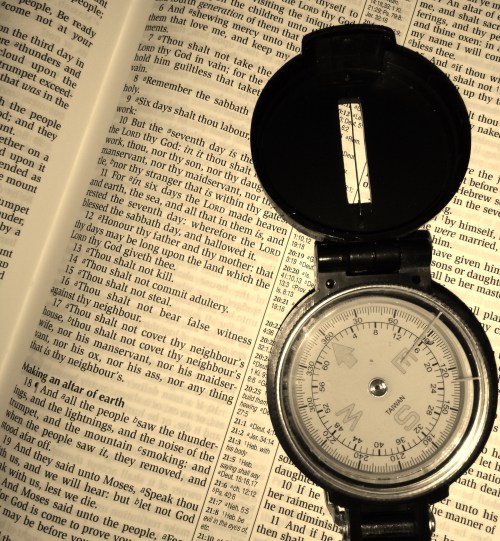
Knowing the Way

Dallas Hi-5 Traffic

Jesus saith unto him, I am the way, the truth, and the life: no man cometh unto the Father, but by me.  (John 14:6)

Traffic in and around Dallas, especially during rush hour, is an adventure to say the least. I never know from one day to the next how long my daily commute will take. Mondays seem to be the worst. Perhaps due to overindulgence over the weekend, the attentiveness of some drivers is sorely lacking. Combine that with technical distractions (aka “smart” phones), and it is no surprise the number of incidents that emerge along the way to impede and prolong one’s travel.

Except for the fact that my concentration focuses on staying alive, I sometimes find the insanity rather amusing and even entertaining. One interesting maneuver I have witnessed on more than one occasion is the last-minute dash from the far left lane across a crowded, bumper-to-bumper, fast-moving (in Dallas rush hour that means anything over 20 mph) highway, picking his way across the four-lane maze of cars to take his exit that is less than a quarter mile away. Did he not realize – a long time ago – that his exit was coming up? That is just poor planning, or else he is paying more attention to his smart phone rather than to his geographic location. Perhaps the driver is new to the area, and this is the first time he has driven this route, and the exit just caught him by surprise. I’ve been there.

This kind of frantic maneuvering generally results from not knowing the way. Unfortunately, in Monday morning rush hour, this lack of awareness culminates in the incidents that impede the progress of drivers who do know the way. I usually do not experience those kinds of problems on my commute because I know the way. I know the location of all my exits, and I logistically maneuver my vehicle into the proper lane to make my exit long before the exit comes up. I relax and enjoy the ride without stress (while staying alert for the crazies).

Life can sometimes be like rush-hour traffic full of roadblocks, near misses, and incidents. Not knowing your destination can further complicate the journey. Too many distractions often leave one unprepared for the sudden diversions one will encounter along the way. When this happens we can become desperate, and franticly struggle to get back on course or find an alternate route. Too many times our solutions lead to incidents that halt our progress and impede the progress of others.

Jesus knew the way. He knew the road blocks along the way, and He knew how to get around them. He knew the exit He must take. “And it came to pass, when the time was come that he should be received up, he stedfastly set his face to go to Jerusalem” (Luke 9:51). He knew the cross awaited Him, and He allowed nothing to deter Him. When well-meaning “Peter took him, and began to rebuke him, saying, Be it far from thee, Lord: this shall not be unto thee” (Matthew 16:22), Jesus sternly and resolutely responded, “Get thee behind me, Satan: thou art an offence unto me: for thou savourest not the things that be of God, but those that be of men” (Matthew 16:23). Nothing was going to deter Jesus from His destination.

In the final hours before the cross, His disciples were still distracted with illusions of greatness with Jesus as king. “They said unto him, Grant unto us that we may sit, one on thy right hand, and the other on thy left hand, in thy glory” (Mark 10:37). – Evidently they had been watching their smart phones instead of watching the road! – So when Jesus said, “I go to prepare a place for you” (John 14:2), it is not surprising that “Thomas saith unto him, Lord, we know not whither thou goest; and how can we know the way?” (John 14:5).  Nor was their reaction surprising when they encountered the roadblock, i.e. Jesus’ arrest, “And they all forsook him, and fled” (Mark 14:50), but Jesus knew the way He must travel.

It’s a good thing that Jesus knew the way, and that He stayed the course. By staying true to His course, He made the way for us to follow. “Jesus saith unto him, I am the way, the truth, and the life: no man cometh unto the Father, but by me” (John 14:6, emphasis mine).

All life is eternal life. That is how God intended it in the beginning: “But of the tree of the knowledge of good and evil, thou shalt not eat of it: for in the day that thou eatest thereof thou shalt surely die” (Genesis 2:17, emphasis mine). But because of Adam’s disobedience, the end result is eternal separation from God – death. Eternal life has two destinations. One destination has many roads, many distractions, many diversions, i.e. many ways. “Enter ye in at the strait gate: for wide is the gate, and broad is the way, that leadeth to destruction, and many there be which go in thereat” (Matthew 7:13, emphasis mine). The Greek word translated “destruction” is apōleia, and it does NOT mean annihilation; rather it means ruin or loss (physical, spiritual, or eternal). This is the meaning of “death,” and Jesus said that many go down that “broad way.”

The other destination is “narrow” or “strait.” “Because strait is the gate, and narrow is the way, which leadeth unto life, and few there be that find it” (Matthew 7:14, emphasis mine). That destination is not easily found, but Jesus said, “I am the way … and the life.” Since He made the way, He knows best route to take. One finds the way in Christ alone; “no man cometh unto the Father, but by me,” He said. There is no other way; “Neither is there salvation in any other: for there is none other name under heaven given among men, whereby we must be saved” (Acts 4:12, emphasis mine).

The road to eternal life with God is “strait and narrow,” but it is not impossible to find or even difficult. Knowing the Way is essential. Jesus said, “I AM the Way.”

By the way, knowing the Way does not ensure an incident-free journey, but when Jesus takes the wheel, He knows how to steer you around – even through – the trouble spots. Give Him the wheel and let Him drive! He knows the way. You can know the way too!

2 Comments

Filed under Christianity, Death, Evangelism, Gospel, Heaven, Hell, Religion, Salvation, Theology

God’s Laws

GodsLaw

… in thy seed shall all the nations of the earth be blessed; Because that Abraham obeyed my voice, and kept my charge, my commandments, my statutes, and my laws. (Genesis 26:4-5)

I don’t know where we, Evangelical Christians, have gotten the idea that the Old Testament laws no longer apply. A few years ago, Dr. Charles Swindoll came out with a book entitled Grace Awakening where, I think, he attempts to assuage the guilt some Christians bear due to unnecessary legalism and encourage Christians to take joy in the freedom found through Christ. I have a great deal of respect for Dr. Swindoll. He is a far greater scholar and theologian that I can ever hope to be, but I think he unintentionally opened the door to liberalism here.

Swindoll rightly affirms that salvation, i.e., “justification” cannot be achieved through the works of the Law (Galatians 2:16, Ephesians 2:8-9), but then he unintentionally, I hope, implies that the Christian is no longer subject to the law. Here it is that we part ways, because the results of “grace living,” from my observation, are “carnal” Christians. The result is that modern Evangelical Christians are indistinguishable from the world around them, except on Sundays, when they are at their worship services.

Here is the truth: no one can be saved – be justified, have eternal life – through any act or effort of their own (Galatians 2:16, Ephesians 2:8-9). It is only through grace – the unmerited favor, the free gift – of God. It is all God’s doing, and it happens the instant one believes – places his trust – in the saving work of Jesus’ death, burial and resurrection (John 1:12; 3:16, 36). Once that takes place, the matter is forever settled. One does not have to keep a long list of laws to come to that point. One does not need the proper theological understanding to come to that point. In the words of the children’s chorus, “Jesus loves me this I know, for the Bible tells me so.” Salvation takes place the instant one believes. That one act settles the matter. Now there remains the matter of “living” the Christian life. Here is where the Law comes to play.

Before I develop that point, let me preface the keeping of the Law by assuring the believer, especially the new Christian, that keeping the Laws of God is not accomplished through our own effort. At the moment we are saved, God’s Spirit comes to reside in us (1 Corinthians 3:16). God says, “I will put my law in their inward parts, and write it in their hearts” (Jeremiah 31:33). Jesus said, “Take my yoke upon you … For my yoke is easy, and my burden is light (Matthew 11:29-30). The “burden” of the Law, for the Christian, is born supernaturally, so that the Christian should not suffer undue stress over keeping the law; however that does not mean no effort is required. Jesus said, “If ye love me, keep my commandments” (John 14:15), so obviously some effort is involved on the part of the Christian, but that effort is aided by the Holy Spirit that dwells within us.

So, what are those commandments, i.e. the laws, which the Christian must keep? Simply speaking, they are the same laws God has always maintained. God’s laws are eternal. God says, “I am the LORD, I change not” (Malachi 3:6, emphasis mine). Jesus said, “For verily I say unto you, Till heaven and earth pass, one jot or one tittle shall in no wise pass from the law, till all be fulfilled” (Matthew 5:18, emphasis mine). In our beginning verse above (Genesis 26:4-5), Abraham lived about 500 years before the Mosaic Law was given, and yet God says of him, “Abraham obeyed my voice, and kept my charge, my commandments, my statutes, and my laws” (emphasis mine). When Jesus said, “Think not that I am come to destroy the law, or the prophets: I am not come to destroy, but to fulfil” (Matthew 5:17, emphasis mine).  By fulfilling the Law, He did not negate God’s law. Rather, by perfectly keeping God’s law, He qualified Himself to be the perfect, sinless sacrifice for our sins, so that we don’t have to – not that we could ever keep God’s law perfectly. As His followers, we are still responsible to keep His commandments.

How does the Christian accomplish that? Jesus gave us the simplest way to accomplish this. He said, “Thou shalt love the Lord thy God with all thy heart, and with all thy soul, and with all thy mind … And the second is like unto it, Thou shalt love thy neighbour as thyself. On these two commandments hang all the law and the prophets” (Matthew 22:37-40). This is good for beginners, but as the Christian grows in the faith, the “heart, soul, and mind” will want to do more out of love for “the Lord thy God.”

Love for God implies love for God’s Word – all of God’s Word, which includes the Old Testament. There the Christian will find the Law of God in the first five books of the Bible. Obviously some of those laws no longer apply. For example, we no longer have to offer animal sacrifices, because the blood of Christ is the ultimate sacrifice. Most of us Christians are Gentiles, so the dietary laws no longer apply, although, following them might make us healthier. Some of the dress code does not apply to Christians, however the principal behind such laws is still in effect.

Many of those laws were given to distinguish God’s people from the heathen nations around them.  God said, “Now therefore, if ye will obey my voice indeed, and keep my covenant, then ye shall be a peculiar treasure unto me above all people: for all the earth is mine (Exodus 19:5, emphasis mine). That word “peculiar” in the Hebrew implies something “special” that is “shut up” and treasured. In another place, God said, “For thou art an holy people unto the LORD thy God, and the LORD hath chosen thee to be a peculiar people unto himself, above all the nations that are upon the earth” (Deuteronomy 14:2, emphasis mine). “Holy” means to be set aside as consecrated or sacred. In fact God demands holiness from His people: “Sanctify yourselves therefore, and be ye holy: for I am the LORD your God” (Leviticus 20:7, emphasis mine). For those who think that the Old Testament no longer applies, that command is repeated in the New Testament (1 Peter 1:15-16).

God’s people are to be distinct from the world. They should be set apart. They should be holy. God’s people should reflect God, not mimic the world. The way we do that is to follow God’s laws. Will we be able to follow God’s laws perfectly? Don’t count on it, and don’t be disheartened when you fail. But that does not mean that we don’t try. When we do fail, we can find comfort in knowing that “If we confess our sins, he is faithful and just to forgive us our sins, and to cleanse us from all unrighteousness” (1 John 1:9). We can still be joyful knowing that God loves us and has forgiven us even when we fail to keep His laws perfectly. But don’t think for one moment that God’s laws can be discarded by the Christian. Indeed, Paul, that great advocate of grace said, “Wherefore the law is holy, and the commandment holy, and just, and good” (Romans 7:12) because it gives us a standard that we can follow. It helps us to recognize sin in our lives and it guides us to holy living. But on the day we stand before God’s throne, we will not be judged by the Law, but by the blood that Jesus shed on the cross for us.

2 Comments

Filed under Apologetics, Christianity, Evangelism, Gospel, Religion, Salvation, Theology

Almost Gone

new-year-clock

Brethren, I count not myself to have apprehended: but this one thing I do, forgetting those things which are behind, and reaching forth unto those things which are before, I press toward the mark for the prize of the high calling of God in Christ Jesus. (Philippians 3:13-14)

The presents are gone from under the tree. The wrappings, ribbons and bows are all in the trash, and all the guests left days ago. Not many days remain in what’s left of this year, and soon we’ll be singing “Auld Lang Syne.”

The older I get, the quicker the years seem to zoom by. This year is no exception. I must confess that this year has been somewhat of a disappointment to me. You may attribute that to the state of politics, the economy, the rise of terror, the decline of morality in our nation, etc., and while all those things can put a damper on one’s outlook, they really are not the source of my disappointment.

I started this year with the genuine hope that this would be the year that Christ returned, and we, His children, would be taken up in the clouds to meet Him in the air (1 Thessalonians 4:17).  Many of the signs seemed to converge to make a good case for this being the year. First there was the third Blood Moon of the rare tetrad at Passover in April that was preceded by a total solar eclipse in March. Then the fourth Blood Moon of the tetrad appeared during the Feast of Tabernacles in late September. Add to that, the final Blood Moon followed the end of the Shamitah which modern “prophets” saw as a sign of economic collapse, (which did not occur in any way to cause great consternation). To boot, all of this leads to the Year of Jubilee, which began on Rosh Ha-Shanna, September 13.

All this year, I have looked toward the eastern sky and cupped my ear for the sound of the trumpet, and it didn’t come.

Jesus did not come. 😦

I am disappointed, but not disheartened or discouraged. After all, Jesus said, “But of that day and that hour knoweth no man, no, not the angels which are in heaven, neither the Son, but the Father” (Mark 13:32, emphasis mine). The modern day prophets made some good guesses solidly based on Scripture, but they obviously missed it. To their credit, none would dogmatically set a date for Christ’s return, and all offered the disclaimer that God is not bound by their speculations. Still, there was the hope.

Should that hope be abandoned simply because mortal men guessed wrong? As Paul would say, “God forbid!” Jesus promised to return: “Let not your heart be troubled: ye believe in God, believe also in me. In my Father’s house are many mansions: if it were not so, I would have told you. I go to prepare a place for you. And if I go and prepare a place for you, I will come again, and receive you unto myself; that where I am, there ye may be also” (John 14:1-3, emphasis mine). There is absolutely no reason not to believe that He will do as He promised. The Old Testament is full of prophecies foretelling of His first coming, and all were proven true beyond any shadow of doubt. So accurately were those promises fulfilled, that the probability of one man fulfilling just eight of them is a virtual impossibility, yet Jesus fulfilled them all. If Scripture proved true about His first coming, then it will certainly prove true for His second coming.

A few days still remain in 2015. Jesus may return before the clock strikes midnight on December 31st, or He may yet delay. Twenty-Sixteen is the Year of Jubilee and that would be a great time for Christ to return. And what if He does not come in 2016? So what! Jesus promised He will return. In the meantime He said, “It is not for you to know the times or the seasons, which the Father hath put in his own power. But ye shall receive power, after that the Holy Ghost is come upon you: and ye shall be witnesses unto me both in Jerusalem, and in all Judaea, and in Samaria, and unto the uttermost part of the earth” (Acts 1:7-8, emphasis mine). “Go ye therefore, and teach all nations, baptizing them in the name of the Father, and of the Son, and of the Holy Ghost: Teaching them to observe all things whatsoever I have commanded you: and, lo, I am with you alway, even unto the end of the world. Amen” (Matthew 28:19-20, emphasis mine). We must do this because, “The Lord is not slack concerning his promise, as some men count slackness; but is longsuffering to us-ward, not willing that any should perish, but that all should come to repentance” (2 Peter 3:9, emphasis mine). Likewise, we should not be willing that any should perish.

Does this mean I should stop looking and listening? Of course not! “Blessed is he that readeth, and they that hear the words of this prophecy, and keep those things which are written therein: for the time is at hand” (Revelation 1:3, emphasis mine). “Henceforth there is laid up for me a crown of righteousness, which the Lord, the righteous judge, shall give me at that day: and not to me only, but unto all them also that love his appearing” (2 Timothy 4:8). So, no lollygagging! There is work yet to be done! “Blessed is that servant, whom his lord when he cometh shall find so doing” (Matthew 24:46). Perhaps in 2016!

2 Comments

Filed under Apologetics, Christianity, Current Events, End Times, Evangelism, Gospel, New Year's Day, Religion, Salvation, Second Coming of Christ, Theology

Christmas Trees

Cross Christmas Ornament on tree

Christ hath redeemed us from the curse of the law, being made a curse for us: for it is written, Cursed is every one that hangeth on a tree.    (Galatians 3:13)

For most of my adult life I have bemoaned the blatant commercialization of Christmas. Long before the satanic observance of Halloween, Christmas displays start showing up in stores enticing consumers to bring their offerings to the god of mammon. Featured in every display is a wide assortment of Christmas trees in all shapes, sizes, and styles all professionally adorned to put the buyer in the Christmas spirit. Who cares if it is still 90° outside in Texas! What would Christmas be without a Christmas tree!

What does a Christmas tree have to do with Christmas anyway? Google is a wonderful thing and a great resource for information on a number of things, including Christmas trees. Generally speaking, the Christmas tree has pagan origins typically associated with the winter solstice and the lengthening of daylight. The evergreen tree symbolizes life, and the arrival of longer days shows the triumph of life over death and darkness. One can easily see the association of the evergreen with eternal life and the coming of the “Sun of Righteousness” (Malachi 4:2). However, it is doubtful that the “Sun of Righteousness,” whom we celebrate, arrived during the winter solstice.

Not long ago I discovered a sweet story about Christmas trees. It is “The Legend of the Three Trees.” The story tells of three young trees and their dreams of what they wanted to be when they grew up. The first wanted be made into a beautiful chest and hold a wealth of treasure. The second wanted to be made into a great ship that would carry kings. The third just wanted to stay atop its high hill and point men to God. As the story concludes, the first tree was made into a feed trough which held the greatest treasure ever – the Christ child. The second was made into a simple fishing boat that carried the King of King and Lord of Lords. Finally the third was made into a despicable cross on which the Lamb of God was sacrificed. Atop that lonely hill, that ugly tree pointed the way to God.

Perhaps that is the best image of a Christmas tree – the old rugged cross with God’s greatest gift hung on it. “And as Moses lifted up the serpent in the wilderness, even so must the Son of man be lifted up: That whosoever believeth in him should not perish, but have eternal life. For God so loved the world, that he gave his only begotten Son, that whosoever believeth in him should not perish, but have everlasting life” (John 3:14-16). No brightly lit and decorated tree could be more beautiful than God’s Christmas tree!

1 Comment

Filed under Christianity, Christmas, Evangelism, Gospel, Religion, Salvation, Theology

Why Jesus?

jesus_and_mary_manger_by_bnw20401

But when the fulness of the time was come, God sent forth his Son, made of a woman, made under the law, To redeem them that were under the law, that we might receive the adoption of sons.    (Galatians 4:4-5)

At this time of year we pause to consider and reflect on the entry of God into the world in human form. When we take the time to seriously ponder this wonder, the notion that He chose to make His entry as a helpless newborn baby, makes us marvel in awe. He, “being in the form of God, thought it not robbery to be equal with God: But made himself of no reputation, and took upon him the form of a servant, and was made in the likeness of men” (Philippians 2:6-7, emphasis mine), as a baby. Why? And why in this way?

Too often we get caught up in the “story” of Christmas and overlook the greater significance. God had to intervene into the hopeless human condition in order to ransom back His most prized creature ruined shortly after creation. Man, Adam, disobeyed God’s only prohibition. “And the LORD God commanded the man, saying, Of every tree of the garden thou mayest freely eat: But of the tree of the knowledge of good and evil, thou shalt not eat of it: for in the day that thou eatest thereof thou shalt surely die. (Genesis 2:16-17, emphasis mine). “And when the woman saw that the tree was good for food, and that it was pleasant to the eyes, and a tree to be desired to make one wise, she took of the fruit thereof, and did eat, and gave also unto her husband with her; and he did eat” (Genesis 3:6, emphasis mine). What weakness is there in man that even in a pristine environment that, without a need or care in the world, he cannot keep one simple commandment?

That single act brought the curse of death upon all subsequent generations – not only physical death (Genesis 3:17-19) but, worse, spiritual death separating us from our Creator (Ephesians 2:1). “Wherefore, as by one man sin entered into the world, and death by sin; and so death passed upon all men, for that all have sinned” (Romans 8:12, emphasis mine). Being that man offended Holy God (and because God is eternal, the offense is eternal), only man can right the wrong, and the only thing that can reverse the curse of death, is the gift of life. God tells us in His Word, “For the life of the flesh is in the blood: and I have given it to you upon the altar to make an atonement for your souls: for it is the blood that maketh an atonement for the soul” (Leviticus 17:11, emphasis mine).

As a temporary measure, God (I believe in the form of the pre-incarnate Christ) offered the first blood sacrifice to atone for (cover) the sin of the first couple. “Unto Adam also and to his wife did the LORD God make coats of skins, and clothed them” (Genesis 3:21, emphasis mine). In order to make “coats of skins” innocent animals had to shed their blood to cover the nakedness of the disobedient couple. But animal blood is insufficient; “For it is not possible that the blood of bulls and of goats should take away sins” (Hebrews 10:4). Neither is the tainted blood of man sufficient to take away sins because the sacrifice must be “without blemish” (Exodus 12:5). The innocent blood of animals cannot qualify because the sin belongs to man, and the blood of humans cannot qualify because it is blemished with sin.

Enter Christ. Innocent animal blood was insufficient because they are not at fault; animals did not sin. The one responsible for sin and death is the only one that can pay the “wages of sin” (Romans 6:23). That responsibility falls on man, but man’s blood cannot atone for sin, because man’s blood is tainted by sin. So God became man, engendered in a virgin’s womb, gestated for nine months until the proper time to be delivered as a helpless baby. Then, He grew up as a normal child (Luke 2:52) into adulthood, and He “was in all points tempted like as we are, yet without sin” (Hebrews 4:15, emphasis mine). Jesus, God in human flesh, voluntarily became “a lamb without blemish and without spot” – the only acceptable sacrifice to atone for the sins of man. John the Baptist recognized Him at the beginning of His earthly ministry: “and saith, Behold the Lamb of God, which taketh away the sin of the world.” (John 1:29, emphasis mine) – perfect man; sinless blood; problem solved! Thus, He is the only path to redemption. “Jesus saith unto him, I am the way, the truth, and the life: no man cometh unto the Father, but by me” (John 14:6). “Neither is there salvation in any other: for there is none other name under heaven given among men, whereby we must be saved” (Acts 4:12).

As we celebrate this Christmas, let us look beyond the baby in the manger. If you do not know the Savior, this is a great time of the year to get acquainted.

1 Comment

Filed under Apologetics, Christianity, Christmas, Creation, Death, Evangelism, Gospel, Origins, Religion, Salvation, Theology