
Tag Archives: Christ

Perhaps This Year!

2014

“Watch therefore, for ye know neither the day nor the hour wherein the Son of man cometh.” (Matthew 25:13)

This past weekend my wife and I had dinner with some good friends from church. A little sign above their kitchen clock caught my eye. It read: “Perhaps Today.” It reminded me that Henry M. Morris, founder of the Institute for Creation Research, kept a similar placard on his desk as a constant reminder that Jesus could return any day. Jesus Himself commanded that we should “watch” for His return. That word in the Greek is grēgoreuō, and it means to “keep awake,” to “be vigilant.”

Jesus issued that exhortation in the context of the Parable of the Ten Virgins (Matthew 25:1-13). Five of the virgins were characterized as “wise” and the other five were “foolish.” All ten virgins fell asleep. Perhaps the expected Bride Groom tarried longer than anticipated, and they all grew weary in waiting. The difference is that the wise virgins were prepared with extra oil for their lamps while the foolish virgins used all they had and made no provision for the unexpected. When the herald announced the coming of the Bride Groom, the wise virgins, prepared with extra oil for their lamps, went on in to be with the Bride Groom while the foolish virgins missed the wedding.

Oil is often used to symbolize the Holy Spirit. We who are “born again” have the advantage of the Holy Spirit residing within us, and, like the wise virgins, we have the provision of the Holy Spirit so that no matter when the Lord returns, we will be prepared. However, just like the wise virgins we can become weary of waiting for the Lord’s return, and we lose focus. We fall asleep often distracted by the cares and worries of this world, and we forget to watch. Sometimes we lament, “How long for His return!” While the foolish, distracted and unconcerned, say, “Where is the promise of his coming? for since the fathers fell asleep, all things continue as they were from the beginning of the creation” (2 Peter 3:4). And so, they have no “oil” for their lamps; they are unprepared.

Our dinner conversation quickly turned to the topic of eschatology, the study of end times. All of us at the table are on “watch” and anxiously await our Lord’s return. Someone brought up the fact that there are four “blood moons” (lunar eclipses) and a solar eclipse expected on significant Jewish feast days in 2014 and 2015. The first will occur on Passover (April 15) 2014 followed by the second on the Feast of Tabernacles (October 8) 2014. The third will occur on Passover (April 4) 2015 followed by the fourth on the Feast of Tabernacles (September 28) 2015. This infrequent sequence of lunar eclipses has historically held great significance for the Jewish people.

For example, when it happened in 1493 and 1494 Jews were expelled from Spain. The blood moons in 1949 and 1950 came right after the nation of Israel was assembled, giving the Jews a homeland for the first time in thousands of years. And in 1967 and 1968 it was linked to the Six-Day War.[1]

In addition to this, a solar eclipse is expected on March 20, 2015. This date equates to Nisan 1 on the Jewish calendar which is New Year’s Day on the Jewish religious calendar. When measured against Scripture, these phenomena should make us pay attention.

When God initiated these feasts (there are seven), He said, “these are My feasts.” “Speak unto the children of Israel, and say unto them, Concerning the feasts of the LORD, which ye shall proclaim to be holy convocations, even these are my feasts” (Leviticus 23:2, emphasis added). Besides the seven, modern Jews celebrate Purim and Chanukah, but these are not “feasts of the LORD.” The Feasts of the Lord is a fascinating study, which I cannot cover in this brief article. They hold great significance as they reveal God in the Person of Jesus Christ and demonstrate His plan for the ages.

The fact that this sequence of blood moons, along with the solar eclipse, looms in our immediate future has many who study eschatology excited for the prospect of Christ’s imminent return. “The sun shall be turned into darkness, and the moon into blood, before the great and the terrible day of the LORD come” (Joel 2:31, emphasis added).

How are you fixed for oil in your lamp? “Ye are the light of the world” (Matthew 5:14). Are you prepared for the Lord’s return? Perhaps this year! Perhaps today!

Comments Off on Perhaps This Year!

Filed under Christianity, Current Events, End Times, Evangelism, Gospel, New Year's Day, Religion, Salvation, Second Coming of Christ, Theology

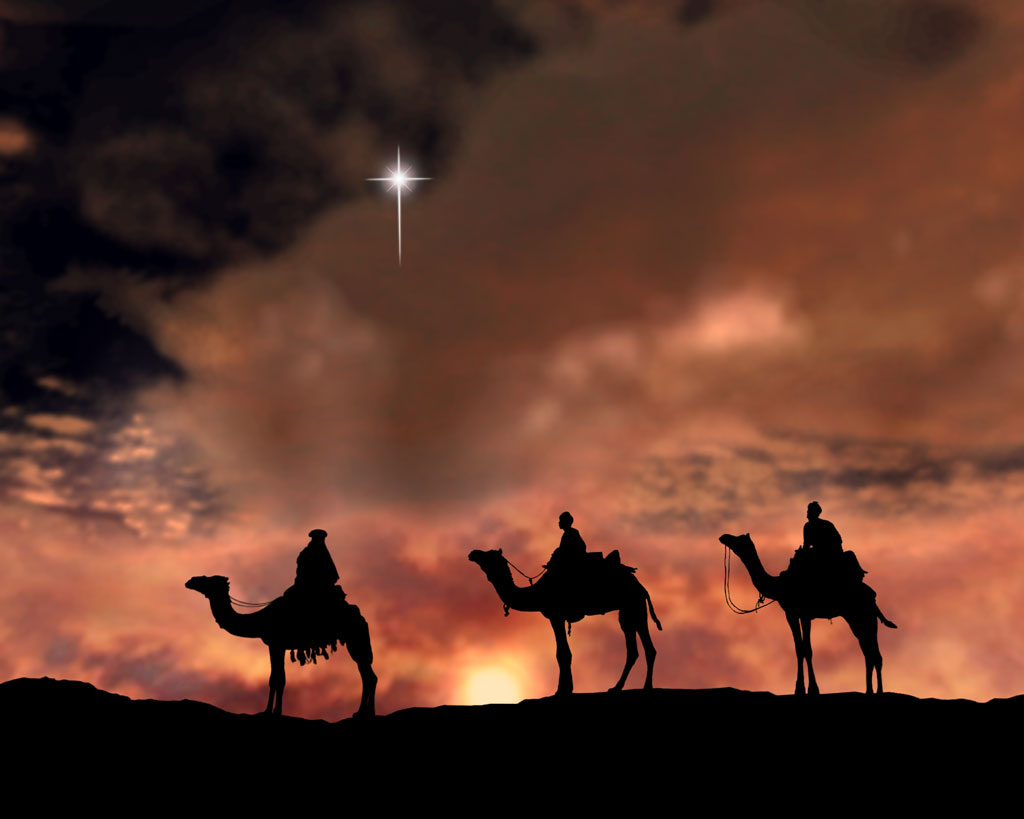
The Star and the Cross

chasing-star-of-bethlehem-412624

When they saw the star, they rejoiced with exceeding great joy. (Matthew 2:10)

Black was the sky of the oriental night
Bejeweled as an empress displaying her might.
Lost in the tedium of nocturnal watch,
The wisest of wise appraised a new sight.
 
High in the heavens and brighter than most
A dazzling new object had joined the host.
The astrologers pondered and ventured a guess:
“A mighty new monarch this beacon does toast.”
 
Consulting their sources and making their plans
The seekers trekked westward across the hot sands.
They followed the beacon that showed them the way
To the City of David, and the Savior of man.
 
By day and by night they followed the trail
Of their guiding light with much travail,
For a curious sight its beams had revealed
— The form of a cross in full detail.
 
For two years they followed their stellar guide
Until it rested, and shown with pride
O’er a humble house and the family there
Who with the Mighty King did abide.
 
So they offered their gifts, their praise to assign
As the cross and the star continued to shine,
And knowing not why, their burden was lifted;
The child in the house did their sorrow consign.
 
Some thirty years later, on a cross made of wood
The child, now a young man, there hung in the nude,
And the bright Star of Bethlehem continued to blaze,
The King of all kings gave His life to conclude.


1 Comment

Filed under Christianity, Christmas, Evangelism, Gospel, Poetry, Religion, Salvation, Theology

Time for Pride to Grow

“. . . when the morning stars sang together, and all the sons of God shouted for joy?” (Job 38:7)

A common question that arises from time to time is, “When did God make the angels?” A corollary question to that is “Was there enough time for pride to grow in Satan and for the war in Heaven to occur within the first few days?”

In the Job passage quoted above, God is telling Job that the angels were there at the time when He formed the earth. As to whether there was sufficient time for Satan’s pride to grow, we must ask, “How much time does it take for pride to grow?” In our own experience, does it take a long time to develop pride, or does it just seem to flare up unexpectedly? I would say the latter. Pride is one of the most basic sins. Human beings are naturally selfish and self-centered. Recall that very shortly after Creation, Satan was able to tempt Eve with “the pride of life” (1 John 2:16): “ye shall be as gods, knowing good and evil” (Genesis 3:5). It does not take a great amount of time for pride to grow.

The angels probably were created on the first day of the creation week. We cannot be dogmatic about this. The Bible does not specify when the angels were created, but the above passage in Job indicates that they were at least around to see the creation taking place. The angels, therefore, were created before man. Perhaps the reason for not focusing more attention on angels is that the Bible focuses mainly on the relationship between God and man. Angels play a part, but they are not central to God’s redemptive plan. But what does God say about man? “Let us make man in our image, after our likeness: and let them have dominion over the fish of the sea, and over the fowl of the air, and over the cattle, and over all the earth, and over every creeping thing that creepeth upon the earth” (Genesis 1:26, emphasis added). Did God say that about the angels? Did God give dominion over His creation to the angels? Can you see anything there that would give rise to pride and jealousy?

It would not have taken a long time for Satan’s pride to grow. Having been created first and then given lower status than man, Satan said, “I will ascend into heaven, I will exalt my throne above the stars of God: I will sit also upon the mount of the congregation, in the sides of the north: I will ascend above the heights of the clouds; I will be like the most High” (Isaiah 14:13-14, emphasis added). Satan hates man because God has bestowed upon man greater status than the angels. “What is man, that thou art mindful of him? and the son of man, that thou visitest him? For thou hast made him a little lower than the angels, and hast crowned him with glory and honour. Thou madest him to have dominion over the works of thy hands; thou hast put all things under his feet” (Psalm 8:4-6, emphasis added). The English phrase “a little lower than the angels” is not an accurate translation. “Angels” is the Hebrew ‘ĕlôhîym referring to God rather than the normal word for angels mal’âkîm. This is a messianic passage describing the condescension of Christ in taking human form, but this also has a secondary meaning as applied to man. Having been created in the image of his Maker, man holds a higher status than the angels, and this infuriates Satan.

This being the case, Satan most likely rebelled on Day Six of creation or very shortly thereafter. Seeing that man was God’s prized creation, Satan turned his ire toward destroying man. Knowing that man was created in the image of God, he employed that fact to cause man’s demise: “ye shall be as gods” (Genesis 3:5). If one analyses the source of any sin, it all goes back to pride – man wants to be his own god. This has been true from the beginning when Satan witnessed the creation of man, and since the fall of man in the Garden (Genesis 3). It really takes no time for pride to develop. It is nothing that requires any nurturing. On the contrary, it is something must actively be suppressed, and this cannot be done through human strength. It requires the supernatural power that only comes from God through the Holy Spirit. Jesus promised, “ye shall receive power, after that the Holy Ghost is come upon you” (Acts 1:8), and it is in that power alone that pride can be conquered.

1 Comment

Filed under Apologetics, Christianity, Creation, Evolution, Gospel, Origins, Theology

Lordship Salvation

Moses and Before the Ten Commandments

Moses and Before the Ten Commandments

Blessed is the man to whom the Lord will not impute sin For whosoever shall call upon the name of the Lord shall be saved. (Romans 4:8; 10:13)

There is always danger in trying to condense deep theological concepts into catchy phrases. Such is the case with the title of this article. “Lordship salvation” is a nebulous term that means different things to different people. Some may consider that it implies a “works” based salvation where the individual has to make Jesus “Lord” by following some undetermined regimen of “good works” in order to earn one’s salvation. Such an idea is ludicrous when measured against Scripture. The Bible is clear that “There is none righteous, no, not one” (Psalm 14:3; 53:3; Romans 3:10). The fact of the matter is that the lost person is incapable of making such a choice of his own volition. As the Psalms suggest, they are fools (Psalm 14:1; 53:1) because “the natural man receiveth not the things of the Spirit of God: for they are foolishness unto him: neither can he know them, because they are spiritually discerned” (1 Corinthians 2:14).

Obviously any recognition of Christ’s deity necessarily implies His Creatorship and Sovereignty over His creation, including individuals at the individual level.  Thus, to “confess” that Jesus is LORD” involves a voluntary acceptance of the reality that He is the Master of all creation, including me. (JJSJ[1])

On the other hand, the Bible does teach that Jesus must be Lord of your life otherwise you cannot be saved. Paul writes in his letter to the Romans, “That if thou shalt confess with thy mouth the Lord Jesus, and shalt believe in thine heart that God hath raised him from the dead, thou shalt be saved” (Romans 10:9). This does not give a long list of things that must be done to earn salvation, but there seems to be no option other than to “confess” (i.e., profess/proclaim/acknowledge) Jesus Christ as Lord. That word “confess” is the compound Greek word homologeō: homo meaning “same,” and logos, meaning “something said.” So in essence, “confess” means to agree with what is said, i.e., that Jesus is Lord.

[A] saving belief/affirmation/acceptance (recognizing Who the Lord Jesus Christ really is, in relation to me, a sinner) is not the same thing as thinking that a “service commitment” (i.e., a promise to serve/surrender) to Him is being exchanged for “salvation” – any such “deal” would be an attempt to gain (or keep) salvation by human efforts/deeds/works/commitments/discipleship/etc., which is a losing formula soteriologically speaking.  Sinners do not qualify themselves for salvation by promising to serve Christ – that would be exchanging salvation for a (promised) life of service/worship, negating the Biblical doctrine of redemption as a divine gift of pure grace. (JJSJ)

Paul in his letter to the Philippians says, “And that every tongue should confess that Jesus Christ is Lord, to the glory of God the Father” (Philippians 2:11). Paul expresses lordship salvation this way: “I am crucified with Christ: nevertheless I live; yet not I, but Christ liveth in me: and the life which I now live in the flesh I live by the faith of the Son of God, who loved me, and gave himself for me” (Galatians 2:20). To the Philippians he writes:

10 That I may know him, and the power of his resurrection, and the fellowship of his sufferings, being made conformable unto his death;

11  If by any means I might attain unto the resurrection of the dead.

12  Not as though I had already attained, either were already perfect: but I follow after, if that I may apprehend that for which also I am apprehended of Christ Jesus.

13  Brethren, I count not myself to have apprehended: but this one thing I do, forgetting those things which are behind, and reaching forth unto those things which are before,

14 I press toward the mark for the prize of the high calling of God in Christ Jesus. (Philippians 3:10-14)

That is Paul’s picture of “lordship salvation” – to die to self and live for Christ. He does not have to live his life that way in order “to be saved,” but rather because he “is saved,” and Jesus has “apprehended” him. He lives this way because “Jesus is Lord,” and Paul recognized that fact and subjected himself to the Lordship of Christ.

Romans 14:8 sums it up pretty well: “For whether we live, we live unto the Lord; and whether we die, we die unto the Lord: whether we live therefore, or die, we are the Lord’s” Jesus Christ is Lord, whether we submit to His Lordship or not. But salvation is by grace alone. There is nothing one can do to earn it (Ephesians 2:8-9), but once we are saved we submit to His Lordship “For we are his workmanship, created in Christ Jesus unto good works, which God hath before ordained that we should walk in them” (Ephesians 2:10).


[1] Dr. James J. S. Johnson is Chief Academic Officer for the Institute for Creation Research School of Biblical Apologetics and my good friend.

Comments Off on Lordship Salvation

Filed under Apologetics, Christianity, Evangelism, Gospel, Religion, Salvation, Theology

Confronting Historical Adam

creating_adam

And the LORD God formed [ʼâdâm] of the dust of the ground, and breathed into his nostrils the breath of life; and [ʼâdâm] became a living soul.  (Genesis 2:7)

The question of whether Adam was a true historical person is not a new one. Liberal theologians have debated the question since at least the middle of the nineteenth century. They eventually concluded that Adam was a mythical figure recorded in Scripture for the purpose of attributing to God a superintending role in the process of creation, which was mostly guided by evolution. This rejection of the literal reading of the text quickly degenerated into relegating the rest of Scripture to the stuff of myths, and ultimately to the rejection of the deity of Christ. The Bible thus became a good book to live by, but not necessarily to be taken seriously.

This is nothing new. However, the negation of the historical Adam, and the rest of the Genesis creation account, is now cropping up in Evangelical circles. Evangelicals who have traditionally stood for the inerrancy and infallibility of Scripture are now beginning to question the historicity of a real Adam and Eve as the very first, uniquely created, human pair from which the rest of humanity sprang. Granted, this is NOT a salvation issue. Our salvation is by Grace alone, through Faith in Christ alone, and by no other means. However, what one believes about the historical Adam has huge theological implications for several reasons.

First of all, the Bible is the “God-breathed” Word of God (2 Timothy 3:16), therefore it cannot be found in error because God does not lie (Numbers 23:19). Nor can God’s Word fail (Psalm 119:89; Isaiah 40:8; Matthew 5:18; Luke 21:33; 1 Peter 1:25). Some may try to discredit the Bible by claiming that it was written by men and therefore is full of errors. That is to charge that God is incapable of preserving His Word. Scripture makes clear that God’s Word is not to be tampered with (Deuteronomy 4:2), and that it is not the product of the will of man but of God Who inspired and guided men to pen the text (2 Peter 1:20-21). Since the writing of the original autographs, textual criticism had confirmed the integrity of the text that we now have over and over again. So, to question the historicity of Adam is to question the integrity of God and His Word. Personally, I would rather steer clear of that.

Secondly, Jesus confirmed the authenticity of the historical Adam (Matthew 19:4; Mark 10:6), as well as other “questionable” miracles contained in Scripture: Noah and the Flood (Matthew 24:37-38; Luke 17:26-27), the destruction of Sodom and Gomorrah (Matthew 10:15; 11:23-24; Mark 6:11; Luke 10:12; 17:29), and Jonah swallowed by the “great fish” (Matthew 12:39-40; 16:4; Luke 11:29). Since Jesus is the Creator (John 1:1-3; Colossians 1:16) and the ultimate Author of Scripture, one would surmise that He had first-hand knowledge of the events. So, to deny the historicity of Adam is to find fault with Jesus’ testimony. Ultimately it is to deny His deity, for how can God commit such errors! To deny the historical Adam is to charge that either Jesus purposefully lied, which God cannot do, or that He was uninformed, which God, through omniscience, is incapable of doing.

Thirdly, other New Testament writers affirm the historical Adam. Luke, the physician (Colossians 4:14), who had “taken in hand to set forth in order a declaration of those things which are most surely believed among us” (Luke 1:1), set down in his Gospel the genealogy of Jesus tracing it back all the way to “Adam, which was the son of God” (Luke 3:38). The significance of this is in that Luke, being a physician and scientist, was meticulous about the details he recorded as can be seen throughout his Gospel. Paul also, highly educated under the tutelage of Gamaliel (Acts 22:3), refers back to Adam especially with regard to original sin (Romans 5:14; 1 Corinthians 15:22, 45; 1 Timothy 2:13-14). Jude, the half-brother of Jesus, counts the generations of Enoch beginning with Adam (Jude 14).

With all the internal evidence for the historical Adam, especially that which comes from the lips of our Lord Himself, one has only two options: accept the historicity of Adam recorded in the foundational book of Genesis, or reject the Bible altogether as unreliable. That brings us full circle to the issue of salvation. If the Bible is unreliable with regard to historical Adam, how can it be trusted in regard to salvation? One cannot ride the fence on this issue, and it is time for Evangelicals to nail this down once and for all. Adam and Eve were real, historical figures and the progenitors of the human race.

1 Comment

Filed under Apologetics, Christianity, Creation, Current Events, Evolution, Gospel, Religion, Salvation, Theology