Tag Archives: God

What You Don’t Know

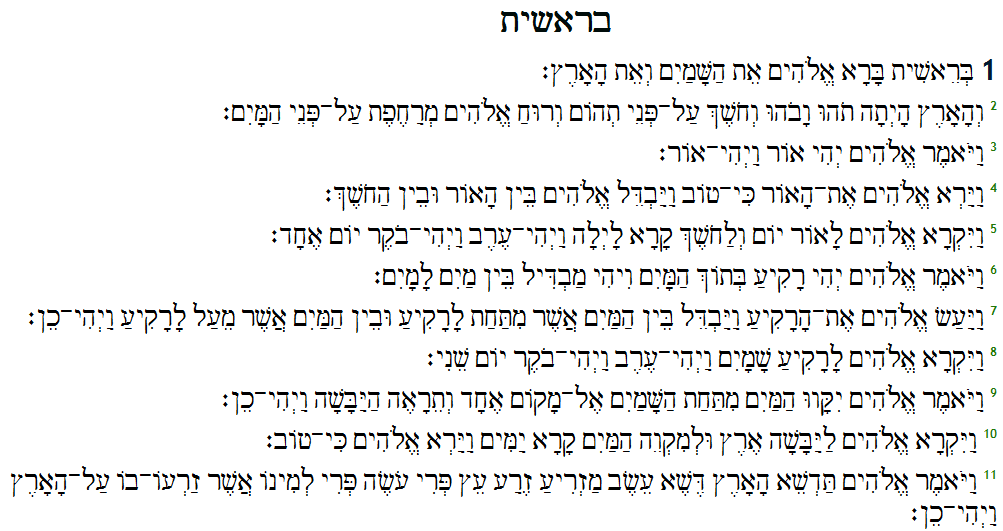
Genesis1

And Jesus answering said unto them, Do ye not therefore err, because ye know not the scriptures, neither the power of God? (Mark 12:24)

Jesus faced His crucifixion just days away. Jerusalem was already in full Passover mode as Jews descended on the capital city from all over the Roman world. This was one of three holy convocations where Jews were to gather to celebrate the Feasts of the Lord (Leviticus 23). The Jewish religious leaders were already plotting to have Jesus killed, but because of His popularity, they couldn’t just kill Him. They had to bring up charges against Him that would warrant execution, so they tried to trip Him up with questions regarding their Jewish laws and traditions.

So it was in this case. First they approached Him with a question on paying taxes to Rome. They first tried to butter Him up with false flattery: “Master, we know that thou art true, and carest for no man: for thou regardest not the person of men, but teachest the way of God in truth” (Mark 12:14). They addressed Him as “Master,” i.e., “teacher,” yet they disregarded His teaching even though they stated that He “taught the way of God.” Their question failed to challenge Jesus. The answer was easy: “Render to Caesar the things that are Caesar’s, and to God the things that are God’s” (Mark 12:17).

The Sadducees, who “say there is no resurrection” (Mark 12:18), followed up with a question concerning the resurrection. Their question was well thought out – they thought. Seven brothers had the same wife, and they all died including the wife. In the resurrection, whose wife shall she be? Aha! Answer that one, Jesus! Jesus replied that there is no marriage in heaven, but before giving His answer, He chided them for their ignorance of Scripture and consequently the power of God (our verse above).

We do often err because we “do not know the Scriptures.” It’s no great challenge to find this ignorance working in a non-believing world, but it’s sad to find the same ignorance, albeit perhaps not as pronounced, among “believers.” One common example is the controversy over creation. Did God cause the Big Bang and then use millions of years of death and suffering to create life by means of evolution? Or did God create in six 24-hour days as clearly recorded in Genesis 1?

Those believers that support the Big Bang and evolution come in different varieties, but they all prefer “science falsely so called” (1 Timothy 6:20) over the clear teaching of Scripture. They hold the word of man in higher regard than the Word of God. They do err because they “know not the scriptures, neither the power of God.” The power of God! God says, “My counsel shall stand, and I will do all my pleasure” (Isaiah 46:10). “I the LORD have spoken it, and I will do it” (Ezekiel 36:36). “And Jesus looking upon them saith, With men it is impossible, but not with God: for with God all things are possible” (Mark 10:27). If God cannot do what He clearly said He did in Genesis 1, then neither can He part the waters of the Red Sea, cause the Sun to stop, or turn back ten degrees, make an ax head float, cleans a leper’s spots, turn water into wine, walk on water or calm the raging sea. If God cannot create as He said He did in Genesis 1, neither can He raise the dead, much less raise Himself from the dead. You do err because you do not know the Scriptures, and because you do not know the Scriptures, you do not know the power of God. What you don’t know can lead you astray. Jesus said, “Search the scriptures; for in them ye think ye have eternal life: and they are they which testify of me” (John 5:39).
Comments Off on What You Don’t Know

Filed under Apologetics, Christianity, Creation, Easter, Evolution, Gospel, Origins, Religion, Resurrection, Science, Theology

It’s Not That Bad

But as the days of Noe were, so shall also the coming of the Son of man be. For as in the days that were before the flood they were eating and drinking, marrying and giving in marriage, until the day that Noe entered into the ark, And knew not until the flood came, and took them all away; so shall also the coming of the Son of man be.  (Matthew 24:37-39)

Unless you have totally detached yourself from all society, isolated yourself in a cave, or numbed your brain with drugs, you know that the world is in moral decline. We have ejected God from the public square, spurned His law and called what is good evil and what is evil good (Isaiah 5:20). We accept that which is unnatural and hold it up as something to be praised and held in honor. We castigate those who hold firm to their passé morality, and stigmatize them as evil haters. We hail outlaws as heroes and call true heroes cowards. We slaughter our progeny and fearlessly defend the life and welfare of animals. We fight against polluting the planet and think nothing of the moral pollution of our minds. Boy! Are we screwed up!

We hear of wars and rumors of wars. Natural and man-made catastrophes are increasing all over the world, and for the most part, life, for the vast majority of people, goes on as usual. The words of Jesus recorded by Matthew above make me wonder. Just how bad were things at the time of Noah? Genesis records that “it repented the LORD that he had made man on the earth, and it grieved him at his heart. And the LORD said, I will destroy man whom I have created from the face of the earth … for it repenteth me that I have made them” (Genesis 6:6-7). Things must have been pretty bad for God to take such extreme measures. “The earth also was corrupt before God, and the earth was filled with violence. And God looked upon the earth, and, behold, it was corrupt; for all flesh had corrupted his way upon the earth” (Genesis 6:11-12). Is that not what we see today? Mankind is corrupt and the earth is filled with violence. So, why does Christ delay His return? Surely, things are as bad today as they were in the days of Noah.

It seems that there have been periods in world history that were far worse than they are today, and Jesus did not return then either. When Jesus spoke these words, He was not referring to the moral condition of the world, but rather the suddenness of the destruction that fell upon them. Note that they were conducting life as usual, “eating and drinking, marrying and giving in marriage.” There is nothing particularly sinful in that, but as they carried on life as usual, destruction came on them suddenly, “And [they] knew not until the flood came, and took them all away” (Matthew 24:39). But there may be more to it than they were just carrying on life as usual. The world was violent then and evil was so rampant that God said, “Enough!”

For Christians (and I always feel that I need to qualify that with the adjective “true”) the world does not have to get as bad as in the days of Noah. Paul would remind us, as he did the Christians in Thessalonica, “Now we beseech you, brethren, by the coming of our Lord Jesus Christ, and by our gathering together unto him, That ye be not soon shaken in mind, or be troubled, neither by spirit, nor by word, nor by letter as from us, as that the day of Christ is at hand. Let no man deceive you by any means: for that day shall not come, except there come a falling away first, and that man of sin be revealed, the son of perdition” (2 Thessalonians 2:1-3, emphasis mine). That “falling away” is the Greek word apostasia, which means a “defection from the truth.” We see that happening today, but God still has a remnant. I heard today that the number of “true” Christians, according to Barna, is down to about 7%, but that remnant is still strong. Paul says that the “son of perdition,” a.k.a. “Antichrist,” will not be revealed until “he who now letteth will let, until he be taken out of the way” (2 Thessalonians 2:7, emphasis mine). That word “lets” (“letteth”) is actually two Greek words: katechō meaning “to hold down,” and arti, meaning “suspension.” That “He” is the Holy Spirit who indwells every child of God. When the Bride of Christ is “taken out of the way,” there will be nothing left to restrain evil.

It’s bad now, but it’s not that bad. Christ will call for His Bride at any moment. As in the days of Noah, life will be going on as usual. Then suddenly, millions of people – Christians – will disappear from all over the earth, and the trouble begins. It’s not that bad now, but it’s going to get bad. I hope you are ready!

2 Comments

Filed under Apologetics, Christianity, Current Events, End Times, Evangelism, Gospel, Heaven, Religion, Salvation, Satan, Second Coming of Christ

Remember?

Loaves and Fishes

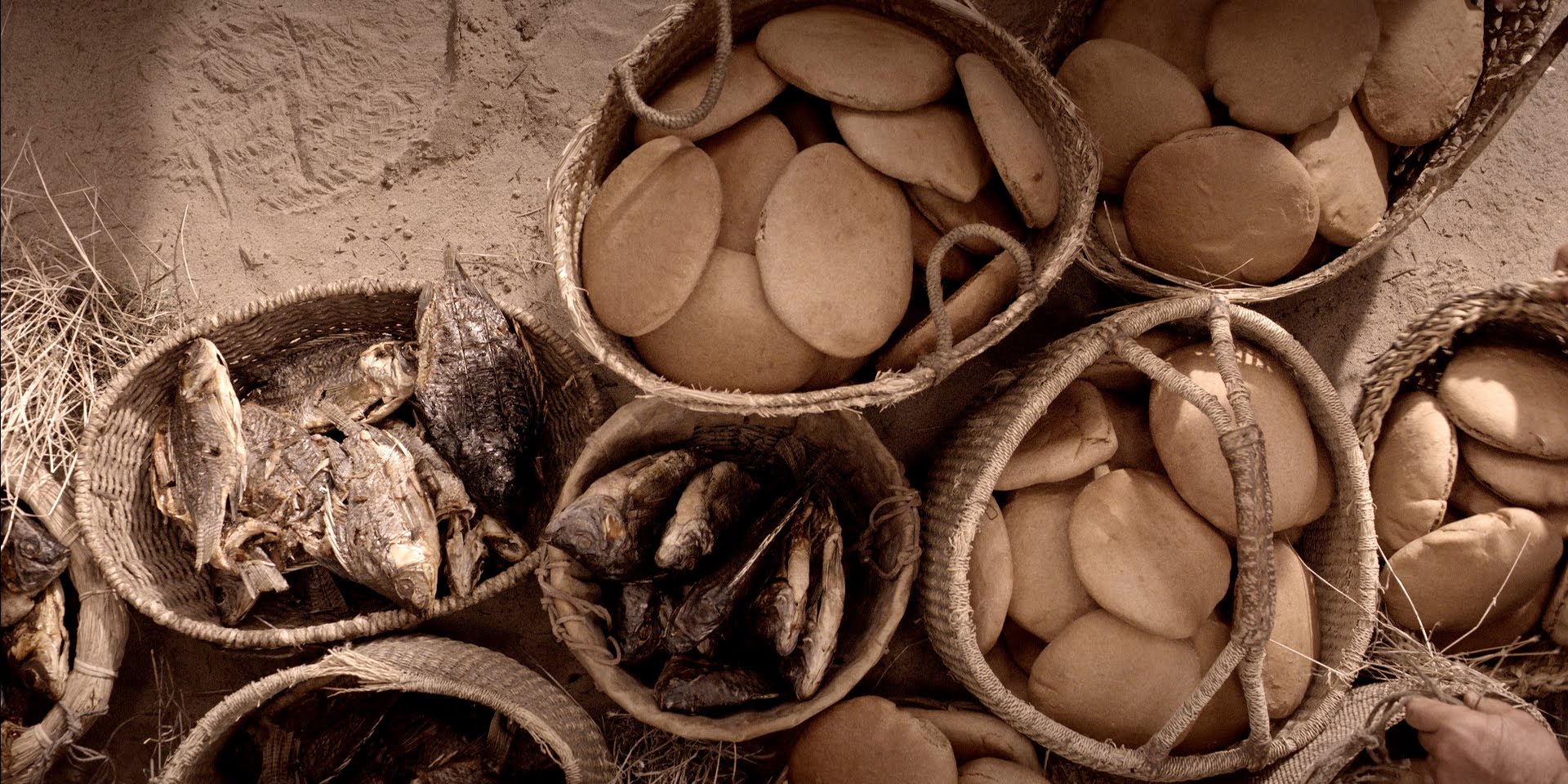
Do ye not yet understand, neither remember the five loaves of the five thousand, and how many baskets ye took up? Neither the seven loaves of the four thousand, and how many baskets ye took up? (Matthew 16:9-10)

Jesus and His disciples left the village of Magdala and crossed the Sea of Galilee. Mark tells us that they landed at Bethsaida (Mark 8:22), but before they arrived, Jesus thought aloud about an encounter they had in Magdala with a group Pharisees and Sadducees (Matthew 16:1-4). This bunch demanded “a sign from heaven” to validate His teachings. Obviously, the miracles Jesus performed were insufficient for these religious experts. So as Jesus thought on this, He offered His disciples an object lesson. “Then Jesus said unto them, Take heed and beware of the leaven of the Pharisees and of the Sadducees” (Matthew 16:6). However, the disciples were preoccupied with the fact that they forgot to pack a lunch (v. 5), “And they reasoned among themselves, saying, It is because we have taken no bread” (Matthew 16:7).

In their preoccupation with their stomachs, they missed the spiritual meal their Master had prepared for them. So, to refocus their minds to receive the real meal, Jesus reminded them of the miracle where He fed the 5000 (Matthew 14:13-21), and more recently, the feeding of the 4000 (Matthew 15:32-38). They need not concern themselves about what they were going to eat. Indeed, Jesus spoke on this very thing in His Sermon on the Mount. “Therefore take no thought, saying, What shall we eat? or, What shall we drink? or, Wherewithal shall we be clothed?” (Matthew 6:31). They were not about to go hungry with Jesus in their company.

We often behave just like the disciples. We get caught up with the worries and troubles of this world, and we forget all the times that God carried us through those troubled times. Remember when you were abandoned, and God brought that special person into your life to mend your brokenness? Remember when you lost your job and somehow God provided for you until He had a better job for you? Remember when you sacrificially gave to a cause God placed on your heart, and somehow you never missed that sacrificial gift? Remember?

When you are in the company of Jesus, all your needs (not wants) will be met, “for your heavenly Father knoweth that ye have need of all these things” (Matthew 6:32). Remember how God provided for you in the past, and “seek ye first the kingdom of God, and his righteousness; and all these things shall be added unto you” (Matthew 6:33). Remember.

Comments Off on Remember?

Filed under Christianity, Religion, Theology

Almighty Creator in Infant Form

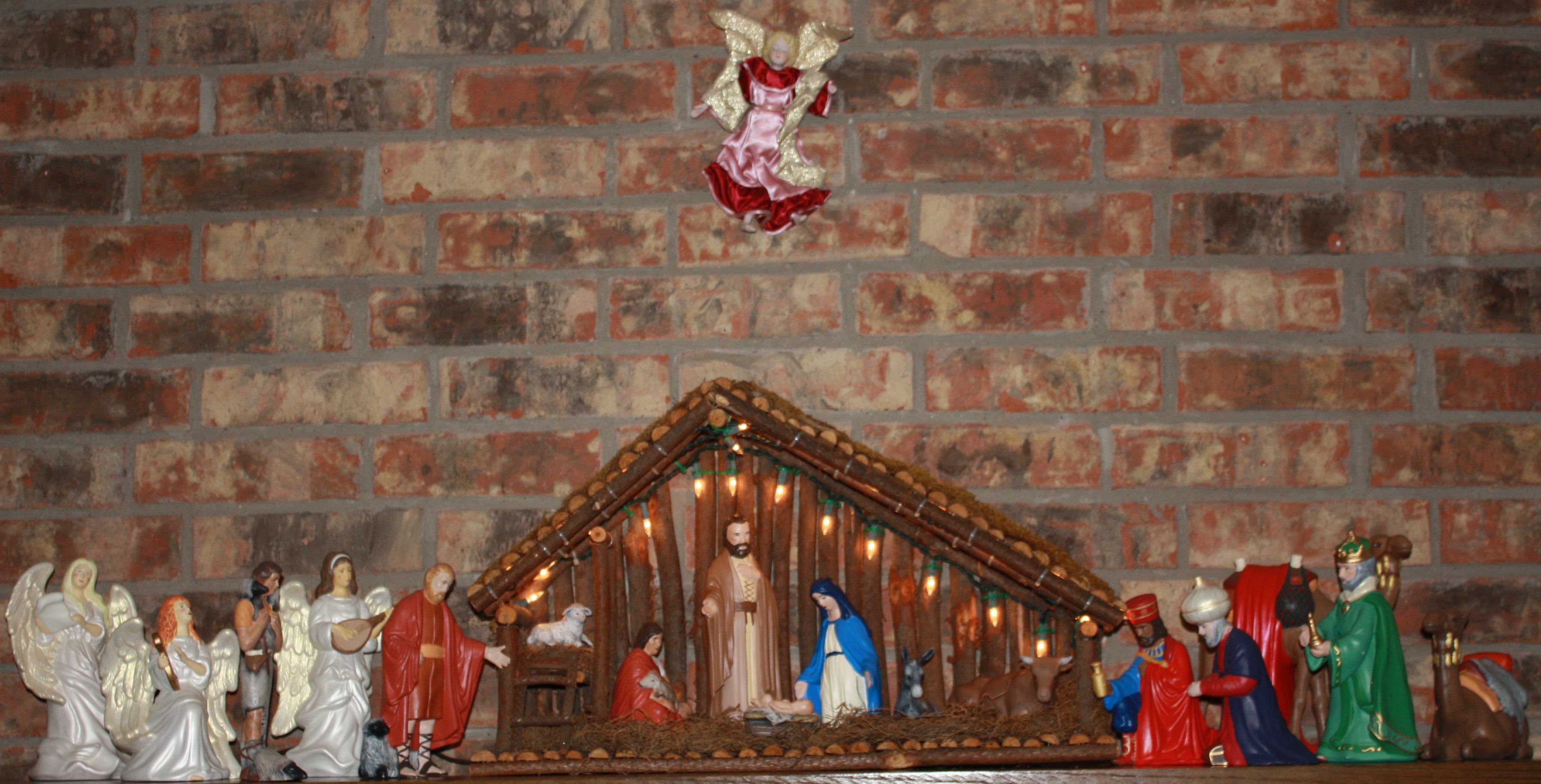
This ceramic Nativity was hand-painted by the author and has been the main feature for household decor for over 30 years.

This ceramic Nativity set was hand-painted by the author and has been the main feature for our household decor for over 30 years.

In the beginning was the Word, and the Word was with God, and the Word was God. (John 1:1)

This time of year we expect to see the story of the birth of Christ played out in humble means by children in small churches, or by freezing “actors” in “living” nativity scenes, or in glitzy performances by mega church choirs.  Even the Radio City Rockettes present the Christmas story at the end of every performance.  All of these presentations begin with the typical scene of Mary, Joseph, and the baby Jesus in a stable surrounded by farm animals, and conclude with an unbiblical menagerie of shepherds, wise men and angels all worshiping the Christ child.

While this serves as a sweet reminder to get one focused on the true meaning of Christmas, it somehow misses the awesome significance of this event.  The Word, the Logos, the revealed Wisdom of God, was manifested in a tiny, helpless infant.  This now revealed Word, our verse tells us, existed with God at the beginning of time (John 1:2), and He was, in fact, very God.  “All things were made by him; and without him was not any thing made that was made” (John 1:3).  “Who, being in the form of God, thought it not robbery to be equal with God:  But made himself of no reputation, and took upon him the form of a servant, and was made in the likeness of men” (Philippians 2:6-7).  And so, “the Word was made flesh” (John 1:14) in the form of a helpless baby – a baby that, though He existed in eternity past, entered and grew in His mother’s womb from a zygote to a fetus that had to fight His way through the birth canal.  God came as a baby that had to be nursed at His mother’s breast.  A baby that had to be carried everywhere He went.  A baby that had to have His diapers changed.  This was God in human form – the Creator of heaven and earth cloaked in human flesh as a tiny babe. Is that not incredible!

The idea of it all is inconceivable!  Yet, this was His plan from the beginning, so that “as many as received him, to them gave he power to become the sons of God, even to them that believe on his name” (John 1:12).  “And being found in fashion as a man, he humbled himself, and became obedient unto death, even the death of the cross” (Philippians 2:8).  That is the message that is often overshadowed in the scenes and sounds of the season.

The lyrics to Mark Lowry’s song, “Mary Did You Know” so poignantly express the significance of this blessed event:

Mary did you know that your baby boy is Lord of all creation?
Mary did you know that your baby boy will one day rule the nations?
Did you know that your baby boy is heaven’s perfect Lamb?
This sleeping child you’re holding is the great I am.
 

This Christmas, try to think beyond the nativity scene. See the babe for the God He truly is, and be awed that He did this for you.

1 Comment

Filed under Apologetics, Christianity, Christmas, Creation, Gospel, Origins, Religion, Salvation, Theology

Clothing In Heaven

King Jesus 2

And white robes were given unto every one of them; (Revelation 6:11)

Recently we were reading our daily devotional Days of Praise. The devotional for that day was entitled “Clothing.” In that article, the author, John D. Morris, Ph.D., points out the fact that Adam and Eve were naked when they were created, and only after they sinned did their nakedness become apparent to them. The last book of the Bible informs us that we will be clothed with white robes in heaven – that is, those of us who go to heaven. So the question came up, why are we not naked in heaven the way God created us in the beginning? The Bible tells us that we will be clothed “in fine linen, clean and white,” but it makes no comment about why we are clothed rather than naked. That made me think.

When Adam and Eve sinned, God had to clothe them in skins to cover their nakedness (Genesis 3:21). Someone suggested that before they sinned, Adam and Eve were “clothed” in light. The Hebrew word for light is ‘ôr (אור). This reminds me of the time when Moses was in the presence of God for forty days, and his face shone with a light so that the people were afraid of him. He had to veil his face (Exodus 34:29-35) so that the people would not fear him. Then there was the time at the Mount of Transfiguration when Moses and Elijah appeared with Jesus, and all of them glowed (Matthew 17:1-2). Adam and Eve may have had a similar glow about them. Then when they sinned, they lost that glow so that their nakedness became apparent to them (Genesis 3:7). God then covered them with skins. The Hebrew word for skin is ‛ôr (עור). There may be a play on words here. Note that both Hebrew words are pronounced “or,” but they have different spellings in Hebrew. Before they sinned, they were clothed in אור (light), but after they sinned, God clothed them in עור (skin).

That may be a part of it, but what is of greater importance is that the skins were a covering for their nakedness which represented their sin. The idea of covering conveys the meaning of “atonement.” Throughout Scripture the shedding of innocent blood has always been the requirement for making atonement or the covering of sin.

For the life of the flesh is in the blood: and I have given it to you upon the altar to make an atonement for your souls: for it is the blood that maketh an atonement for the soul. (Leviticus 17:11, emphasis mine)

The robes given to the saints in heaven are made “white in the blood of the Lamb” (Revelation 7:14). Once again, the innocent blood of Jesus Christ, the Lamb of God (John 1:29), was shed, once for all, to cover our sin.

For if the blood of bulls and of goats, and the ashes of an heifer sprinkling the unclean, sanctifieth to the purifying of the flesh: How much more shall the blood of Christ, who through the eternal Spirit offered himself without spot to God, purge your conscience from dead works to serve the living God? (Hebrews 9:13-14, emphasis mine)

Perhaps this is why we wear robes in heaven. The robes will remind us for eternity that Jesus shed His blood to cover (atone for) our sin. Our clothing in heaven is His righteousness, not our own. “He that overcometh, the same shall be clothed in white raiment; and I [Jesus] will not blot out his name out of the book of life, but I will confess his name before my Father, and before his angels” (Revelation 3:5, emphasis mine). “For in this we groan, earnestly desiring to be clothed upon with our house which is from heaven: If so be that being clothed we shall not be found naked” (2 Corinthians 5:2-3).

Comments Off on Clothing In Heaven

Filed under Apologetics, Christianity, Creation, Heaven, Religion, Salvation, Theology