Tag Archives: Religion and Spirituality

God’s Not Fair

Judgment of God

O man, who art thou that repliest against God? Shall the thing formed say to him that formed it, Why hast thou made me thus? (Romans 9:20)

Someone complained that God is unfair to send people to hell simply because they don’t know any better. She said, “I’ve recently hit a point where my faith is all but dead, not by will but by fear that the worst is true, that there is no God after all.” Her reasons for arriving at this conclusion are as follows: “It’s two-fold in that [1] God has never revealed Himself to me in ways that I was taught He would (Pentecostal background), and [2] more recently that I just cannot wrap my head around the idea of a God of ultimate love knowingly creating even one single soul knowing it was destined for eternal damnation. I question why God would create such a being, knowing beforehand the choices he would make.”

Her first reason, it seems to me, finds an explanation in her “Pentecostal background.” I see this problem with many Pentecostals because many (not all) are taught (if not directly then by inference) that God must reveal Himself in miraculous ways: speaking in tongues, healings, tangible answers to prayer, etc. The fact is that God is not obligated to reveal Himself to us in any way other than He has already done, i.e., through His creation (Romans 1:19-20) and through His Word (John 1:1-3, 14; Psalm 119:105; 2 Timothy 3:16, et. al.). Her Pentecostal background may also have something to do with her second issue against God in the Arminian soteriology of Pentecostals, which holds, in part, that a believer can “fall from grace,” and if they die in that condition, they will go to hell. So, Pentecostals must continuously “work out their own salvation” so as not to lose their salvation. That, in itself I think, might give one a tenuous grasp on their eternal status and sense of eternal security.

Her Pentecostal background may be the source of her sense of insecurity which she then projects on those whom she sees as victims of a merciless God. Why would God create humans knowing that He is going to send them to hell? Not only is God merciless, but she finds eternity in hell to be cruel and unusual punishment.  She said, “I am a pale imitation of God, an ignorant human born in a world of decay, yet to me the pain of one soul, any soul, even the worst example of humanity, is not worth the existence of this universe” (emphasis mine). Can you see what she has done? She made moral judgment against God and placed herself in a position of moral superiority above God. Though she is “a pale imitation of God,” she makes herself morally superior  to God because she would not cause pain even to the worst example of humanity. If she were in the place of God, she would not even create the universe, if even one soul would suffer eternal torment. Furthermore, God has no basis “to extend this eternal punishment further to those that fail to heed words in a book thousands of years old when other books tell their own versions (other religions).”

As I read her tirade, I distinctly heard echoes of Genesis 3:1-5: “Tssssssssssssssss! Yea, hath God said in the Bible? That book is so ancient. Those are just the words of men. What about all those other holy books? Aren’t they just as valid? Ye shall not surely die. If God is so loving, He wouldn’t send anyone to hell would He? And even if He did, surely He wouldn’t make someone suffer for eternity. If He does, then God’s not fair! Why should you follow a God like that!”

When we put ourselves in a position where we question why God made us the way He did, we in effect pass judgment on Him and make ourselves superior to Him because we are saying that we could have done it better. “Who art thou that repliest against God? Shall the thing formed say to him that formed it, Why hast thou made me thus? Hath not the potter power over the clay, of the same lump to make one vessel unto honour, and another unto dishonour?” (Romans 9:20-21 also Isaiah 29:16, emphasis mine). We are not in a position to question God’s motives in creating us as He did. We are not God. Humanly speaking, does not a creator/inventor of anything have the right to assign value to his/her creation/invention, and to decide how to dispose of it? By the same token, can we not allow the Creator to decide the “worth” of His creation and select what He will keep and what He will discard without our input? Let’s be fair here!

The fact is that God made us in His image (Genesis 1:27), and part of that image includes rational thought and the ability to make decisions and exercise our free will. Along with that comes the responsibility to assume the consequences for our decisions.  When God made Adam and Eve and He placed them in the Garden, He gave them one choice: eat of the tree of life and live, or eat of the tree of the knowledge of good and evil and die, i.e., be eternally separated from God (Genesis 2:16-17). God created Adam and Eve with a will and the ability to choose whether to obey or disobey God. Had God not given that choice, His creatures would be no different than any other animal, and they certainly would not have the “image” of God. The will and the ability to make choices is part of having the image of God. Without that, we are just animals.

Adam and Eve disobeyed God’s only prohibition (Genesis 3:1-6). Eve was deceived, but Adam disobeyed willingly (1 Timothy 2:14). That disobedience, whether willful or through deception, brought death upon all of God’s creation. Because of that original sin, all of mankind receives the curse of sin which is death (Genesis 3:19). Every human being is born “dead” – eternally damned – due to Adam’s original sin. We are not sinners because we sin; we sin because we are sinners. We are all in the same condition; there is no escaping it. How well informed or how misinformed one is has nothing to do with it.

Wherefore, as by one man sin entered into the world, and death by sin; and so death passed upon all men, for that all have sinned. (Romans 5:12)

And you, being dead in your sins and the uncircumcision of your flesh, hath he quickened together with him, having forgiven you all trespasses (Colossians 2:13)

And you hath he quickened, who were dead in trespasses and sins … Even when we were dead in sins, hath quickened us together with Christ, (by grace ye are saved;) (Ephesians 2:1, 5)

Behold, all souls are mine; as the soul of the father, so also the soul of the son is mine: the soul that sinneth, it shall die. (Ezekiel 18:4)

This is the truth, and it is not going to change simply because it offends our sensibilities. It does not matter whether someone is duped by evolution, or whether they have not had the Gospel explained clearly enough for them to understand; the fact of the matter is that every human being that is born, is born “dead” because of sin. The penalty for sin is eternal death (separation from God) in hell.

However, this dead condition is not without resolution. God provided the way to eternal life through the death and resurrection of Jesus Christ. God makes Himself available to all who will seek Him. “For by [the free gift of] grace [i.e., unmerited favor] are ye saved through faith [Hebrews 11:6]; and that not of yourselves [even the faith to believe comes from God]: it is the gift of God: Not of works, lest any man should boast” (Ephesians 2:8-9). What God asks of us is not that difficult: “That if thou shalt confess with thy mouth the Lord Jesus, and shalt believe in thine heart that God hath raised him from the dead, thou shalt be saved” (Romans 10:9). “Neither is there salvation in any other [than Jesus]: for there is none other name under heaven given among men, whereby we must be saved” (Acts 4:12). “Jesus saith unto him, I am the way, the truth, and the life: no man cometh unto the Father, but by me” (John 14:6).

People like to quote John 3:16 because it expresses the love of God for the entire world, but two verses later it says, “He that believeth on him is not condemned: but he that believeth not is condemned already, because he hath not believed in the name of the only begotten Son of God” (John 3:18, emphasis mine). A choice has to be made. Because of Adam’s sin, we all begin from the point of “condemned already.” We all have the same choice: believe or disbelieve. Not choosing is actually choosing to disbelieve. And to remove any excuses, God’s creation testifies to His existence, “For the invisible things of him from the creation of the world are clearly seen, being understood by the things that are made, even his eternal power and Godhead; so that they are without excuse” (Romans 1:20, emphasis mine). God reveals Himself in His creation. Without exception, everyone has a choice.

The charge that God is somehow unmerciful and unloving dissolves in light of His personal intervention on our behalf. God’s grace and mercy was expressed on the cross of Christ. “The gift of God is eternal life through Jesus Christ our Lord” (Romans 6:23). God has given sufficient evidence in His creation to make man wonder about his origin and about the origin of the world around him. God says, “And ye shall seek me, and find me, when ye shall search for me with all your heart” (Jeremiah 29:13). God does not hide Himself. The fault is with man for rejecting the evidence God has provided and refusing to seek God. Jesus said that the way to destruction is broad, and many go that way; but the way to life is narrow and difficult to find, and very few find it (Matthew 7:13-14).

Answering the criticism of God sending people to hell: God created hell for “the devil and his angels” (Matthew 25:41), not for human beings. People choose to go to hell by not choosing God. God demonstrated “his love toward us, in that, while we were yet sinners, Christ [God in the flesh] died for us” (Romans 5:8, emphasis mine). What more could He possibly do and still respect our will and our right to choose? He could have made us animals, but He didn’t. He made each one of us unique, created in His very image. That is why He values us, and because He values us, He gives us the choice to either accept Him or reject Him. Because He cherishes us, He will not impose Himself on any one of us. But, if we reject Him, we make an eternal choice, but it is our choice. God didn’t create us for hell. Do you think for one moment that God has any desire to destroy His image! “The Lord is not slack concerning his promise, as some men count slackness; but is longsuffering to us-ward, not willing that any should perish, but that all should come to repentance” (2 Peter 3:9), but He respects our choice.

There you have it. Rather than criticize God for His methods with which we may disagree, why not simply submit to Him? He is God, and by definition, His way is right regardless of what we may think. “For my thoughts are not your thoughts, neither are your ways my ways, saith the LORD. For as the heavens are higher than the earth, so are my ways higher than your ways, and my thoughts than your thoughts” (Isaiah 55:8-9, emphasis mine). If we are truly concerned for those that are bound for hell, perhaps rather than criticizing God for His methods, we should be a light to show the way (Matthew 5:14).

5 Comments

Filed under Apologetics, Atheism, Christianity, Creation, Death, Evangelism, Evolution, Gospel, Heaven, Hell, Origins, Religion, Salvation, Theology

Jesus Said It

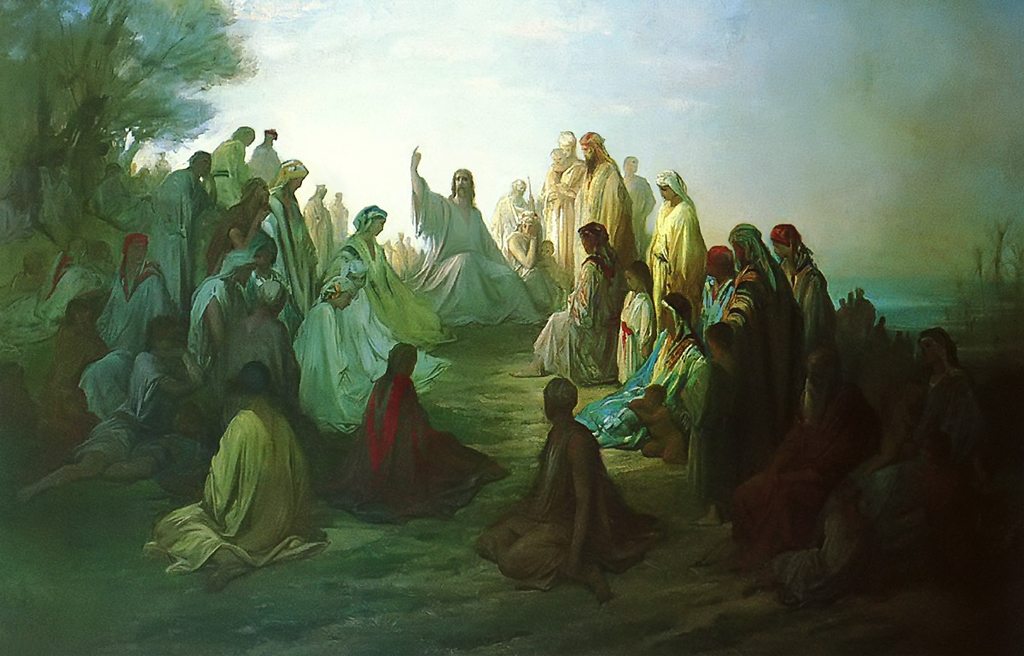
Jesus Preaching the Sermon on the Mount - Gustave Dore

                 Jesus Preaching the Sermon on the Mount – Gustave Dore

Heaven and earth shall pass away, but my words shall not pass away.   (Matthew 24:35)

The general conception of Jesus, if He is thought of at all, is that He was a nice guy, a good teacher, and perhaps a miracle worker. A lot of what He said are words to live by, like, “all things whatsoever ye would that men should do to you, do ye even so to them” (Matthew 7:12), and “Judge not, that ye be not judged” (Matthew 7:1 – taken out of context, a great verse for Christian bashing). There is no doubt that Jesus taught many things that benefit when applied to every-day life. Those kinds of teachings find general acceptance by all, but Jesus also said many things that many in this politically correct culture would find offensive.

Jesus said, “Repent: for the kingdom of heaven is at hand.” Repent? Many today who, like Donald Trump, believe they have done nothing from which to repent. The Bible says, “For all have sinned, and come short of the glory of God” (Romans 3:23), and “the soul that sinneth, it shall die” (Ezekiel 18:4, 20). Jesus said, “Repent”!

Jesus said, “Ye have heard that it was said by them of old time, Thou shalt not commit adultery: But I say unto you, That whosoever looketh on a woman to lust after her hath committed adultery with her already in his heart” (Matthew 5:27-28). What man alive can claim innocence of that sin? These days, the same could be said of woman. Along with that He said, “whosoever shall put away his wife, saving for the cause of fornication, causeth her to commit adultery: and whosoever shall marry her that is divorced committeth adultery” (Matthew 5:32). With today’s high rate of easy divorce, to how many does this apply? Speaking of adultery, Jesus said marriage is between one man and one woman: “But from the beginning of the creation God made them male and female. For this cause shall a man leave his father and mother, and cleave to his wife; And they twain shall be one flesh: so then they are no more twain, but one flesh. What therefore God hath joined together, let not man put asunder” (Mark 10:6-9, emphasis mine) – so much for same-sex unions.

Many think of Jesus as peaceful and gentle, but Jesus said, “Think not that I am come to send peace on earth: I came not to send peace, but a sword” (Matthew 10:34). Why is that? To His followers Jesus said, “And ye shall be hated of all men for my name’s sake” (Matthew 10:22, emphasis mine). “If the world hate you, ye know that it hated me before it hated you” (John 15:18).  Jesus said, “And a man’s foes shall be they of his own household” (Matthew 10:36).  “And the brother shall deliver up the brother to death, and the father the child: and the children shall rise up against their parents, and cause them to be put to death” (Matthew 10:21).  Jesus said, “For I am come to set a man at variance against his father, and the daughter against her mother, and the daughter in law against her mother in law” (Matthew 10:35); so “He that loveth father or mother more than me is not worthy of me: and he that loveth son or daughter more than me is not worthy of me. And he that taketh not his cross, and followeth after me, is not worthy of me.” (Matthew 10:37-38). However, He offers this promise: “he that loseth his life for my sake shall find it” (Matthew 10:39).

Jesus wants total allegiance; He wants first place in our lives. The reward is eternal life, but it is not without cost. Some will protest, and rightfully so, “Salvation is a free gift. It cannot be earned, Ephesians 2:8-9!” True. The “wages of sin” (Romans 3:23) were paid by Christ on the cross, but along with accepting the free gift comes the responsibility that goes with it. The Christian life is not one of ease, a life of “do as you please,” but the Christian has the promise of the Savior who says “my yoke is easy, and my burden is light” (Matthew 11:30) because He becomes your “yoke partner.”

Jesus said that the Global Flood was real: “But as the days of Noe were, so shall also the coming of the Son of man be. For as in the days that were before the flood they were eating and drinking, marrying and giving in marriage, until the day that Noe entered into the ark, And knew not until the flood came, and took them all away; so shall also the coming of the Son of man be (Matthew 24:37-39). Jesus said that the Jonah “fish story” was true: “For as Jonas was three days and three nights in the whale’s belly; so shall the Son of man be three days and three nights in the heart of the earth” (Matthew 12:40). He said this in foretelling of His own death, burial, and resurrection which He fulfilled at His crucifixion.

Jesus said hell is real. He spoke of those within the church – “tares” – that by all appearances look like genuine Christians, but are not. Of these He said, “As therefore the tares are gathered and burned in the fire; so shall it be in the end of this world. The Son of man shall send forth his angels, and they shall gather out of his kingdom all things that offend, and them which do iniquity; And shall cast them into a furnace of fire: there shall be wailing and gnashing of teeth” (Matthew 13:40-42, emphasis mine). He spoke of the kingdom of heaven being like a net cast into the sea (the “sea” is often used as a metaphor for “the people” of the world) and gathered in by the angels who separate the good from the bad. “So shall it be at the end of the world: the angels shall come forth, and sever the wicked from among the just, And shall cast them into the furnace of fire: there shall be wailing and gnashing of teeth” (Matthew 13:49-50, emphasis mine).  Jesus said that if your hand, foot, or eye causes you to sin, you should get rid of them, for it is better to enter into heaven maimed than to be whole and “to go into hell, into the fire that never shall be quenched: Where their worm dieth not, and the fire is not quenched” (Mark 9:43-48, emphasis mine). Notice that Jesus stressed the eternality of hell; “never” means NEVER.  Jesus spoke of hell as a real place. He told the true account of a rich man and a poor beggar who both died and stepped into eternity (Luke 16:19-31).  The rich man ended up in hell, “And in hell he lift up his eyes, being in torments” (Luke 16:23, emphasis mine). Hell is real. Jesus said it.

Just as hell is real, Jesus said heaven is real. “Let not your heart be troubled: ye believe in God, believe also in me. In my Father’s house are many mansions: if it were not so, I would have told you. I go to prepare a place for you. And if I go and prepare a place for you, I will come again, and receive you unto myself; that where I am, there ye may be also” (John 14:1-3, emphasis mine). That place has dimensions: “And the city lieth foursquare, and the length is as large as the breadth: and he measured the city with the reed, twelve thousand furlongs. The length and the breadth and the height of it are equal” (Revelation 21:16).  A furlong is 660 feet. Twelve-thousand furlongs would be 7.92 million feet, and divided by 5280 feet (i.e. one mile), that is equal to 1500 miles. That is about the distance from Dallas, TX to New York, NY. Now imagine that in the size of a cube. It is not a small place! And that is just the “New Jerusalem.” There is no telling just how large the rest of heaven is, but with all that space, it is a very exclusive place. Jesus said, “Enter ye in at the strait [narrow/tight] gate: for wide is the gate, and broad is the way, that leadeth to destruction, and many there be which go in thereat: Because strait is the gate, and narrow is the way, which leadeth unto life, and few there be that find it” (Matthew 7:13-14, emphasis mine).

Many today appeal to the “love” of Jesus suggesting that a “loving God” would not send anyone to hell. Even the Pope has boarded that band wagon claiming that all roads lead to God. Those who appeal to a loving God are partially correct; God sends no one to hell. They end up there by their own choice. Those who claim John 3:16 fail to read any further. Two verses down, John 3:18 says, “He that believeth on him is not condemned: but he that believeth not is condemned already, because he hath not believed in the name of the only begotten Son of God” (emphasis mine). In my Bible, those words are written in red; Jesus said it.  God is not swayed by popular consensus. Jesus said, “I am the way, the truth, and the life: no man cometh unto the Father, but by me” (John 14:6, emphasis mine). There is no other way. Jesus said it.

Jesus taught many good lessons that when taken to heart prove beneficial to our day-to-day lives. But He also taught some very hard lessons that, when ignored, lead to eternal damnation. It’s tough to hear, but Jesus said it.

If you are unsure of your eternal destination, you alone can do something about it. “Ask, and it shall be given you; seek, and ye shall find; knock, and it shall be opened unto you: For every one that asketh receiveth; and he that seeketh findeth; and to him that knocketh it shall be opened” (Matthew 7:7-8). Jesus said it.

4 Comments

Filed under Apologetics, Christianity, Evangelism, Gospel, Heaven, Hell, Religion, Salvation, Theology

Still Listening

hand-to-ear-listening

Knowing this first, that there shall come in the last days scoffers, walking after their own lusts, And saying, Where is the promise of his coming? for since the fathers fell asleep, all things continue as they were from the beginning of the creation.  (2 Peter 3:3-4)

Last week I expressed my hope to hear that Last Trump and be taken to meet my Lord in the clouds. Well, I am still here and so are all my brothers and sisters that would have gone with me. There were no mass disappearances reported as one should expect with the Rapture of the church. We are all still here. In fact, things are pretty much as they were before. The Shemitah came and went and there was no crash in the stock market as some had suggested. No, the world, such as it is, continues as usual.

You might think I would become cynical after getting my hopes up for nothing. For nothing? No, it is not for nothing, and my hope is still as sure as ever. Remember what I said? “For the past 20 years or more, I have anxiously awaited this time of year.” I also said, “The Lord is not obligated to comply with my speculations.” You see, it’s not my speculations or those of anyone else in which I trust. I am fully trusting in the Word of God and in Jesus’ promise that He would come again. The truth is, that He never pinpointed a time when He would return. Instead He said, “But of that day and that hour knoweth no man, no, not the angels which are in heaven, neither the Son, but the Father” (Mark 13:32). So, the truth is that the Rapture of the Church could come at any time. In the meantime, Jesus expects His servants to “Occupy til I come” (Luke 19:13).

Jesus told a parable expressing His expectations upon His return (Luke 19:12-27). The parable is of a “nobleman” (representing Himself) that “went into a far country [His ascension to heaven] to receive for himself a kingdom, and to return (v. 12, emphasis mine). He left 10 servants in charge giving them equal amounts of money with the expectation that they would put it to good use.  Verse 14 says that the “citizens” hated Him and sent Him a message saying that they did not want him ruling over them. The Greek word translated “citizens” is politēs which can also be translated “townsmen.” It occurs to me that these “citizens” represent the “world” and not His “servants.” When He returns with His kingdom, He calls His servants to accounts. The first servant reports that he has multiplied what he was entrusted tenfold. The King rewards him with rulership of ten cities. The second servant reports that he has multiplied what he was entrusted fivefold, and the King rewards him with rulership over five cities. The third servant returns only what was given to him and makes excuses for his lack of productivity. This displeases the King and He takes what was given to the third servant and gives it to the first. The other seven servants are not mentioned, leading one to conclude that they cast their lot with the “citizens” who hate the King. For those the punishment is severe. “But those mine enemies, which would not that I should reign over them, bring hither, and slay them before me” (v. 27). We might also note that the third servant, although he was unprofitable, is not counted as an “enemy” or excluded from the kingdom.

Last week I explained the fall Feasts of the Lord taking place right now. Rosh HaShanah is past. Yom Kippur is still ahead, as is Sukkot.  Many things are still stirring in the world during this month of September. Jesus’ return is imminent. He still may come sometime this month or maybe not. If not, that does not negate His promise to return. The scoffer will say, “Where is the promise of his coming? for since the fathers fell asleep, all things continue as they were from the beginning of the creation” (2 Peter 3:4). They will be counted as the Lord’s “enemies.” But to the faithful servant that continues in the Lord’s work He says, “Blessed is that servant, whom his lord when he cometh shall find so doing. Of a truth I say unto you, that he will make him ruler over all that he hath” (Luke 12:43-44).

So, Jesus did not come at the Feast of Trumpets this time as I had hoped. That only means He still has work for me – for us – to do, but I am still listening for that Last Trump.

Comments Off on Still Listening

Filed under Apologetics, Christianity, Current Events, End Times, Religion, Salvation, Second Coming of Christ

The Last Trump

Shophar-739195

Behold, I shew you a mystery; We shall not all sleep, but we shall all be changed, In a moment, in the twinkling of an eye, at the last trump: for the trumpet shall sound, and the dead shall be raised incorruptible, and we shall be changed. (1 Corinthians 15:51-52)

For the past 20 years or more, I have anxiously awaited this time of year. Granted, the Lord is not obligated to comply with my speculations. The times are fully under His sovereign will and control, and I am more than happy to submit to His wisdom and direction. So whatever happens today, tomorrow or in the near future, I am fully trusting that God’s plan will be fulfilled in accordance with His perfect timing to which I am not, nor is anyone else, privy.

The reason for my excitement at this season, is that many years ago I learned that the Feasts of the Lord given to Israel in Exodus were given as a pattern for the future ministry of Christ. The first four feasts came in the spring and were fulfilled by Christ in His flesh. Jesus fulfilled Passover as the Lamb of God on the cross, followed by the Feast of Unleavened Bread. At this feast, all leaven, which represented sin, was to be removed and cast out of the house. Jesus fulfilled this by taking upon Himself our sin and being buried in the earth. Then followed the Feast of First Fruits, which celebrated new life. Jesus fulfilled this feast when He rose from the dead as the “first fruit” of the resurrection. After His resurrection, Jesus walked on the earth for 40 days and ascended into heaven. Ten days later, at the Feast of Pentecost, the Holy Spirit descended upon His followers fulfilling the spring harvest which continues to this day.

Three feasts remain to be fulfilled, and they are the fall feasts. The first is the Feast of Trumpets, or Rosh HaShanah, the beginning of the new civil year. Eight days later Yom Kippur, the Day of Atonement, follows, and then four days after that is Sukkot, or the Feast of Tabernacles (Booths), which is celebrated for eight days. The Feast of Trumpets was a holy convocation or gathering. On the Day of Atonement, sacrifices were offered for the sins of the nation. The high priest first had to offer a sacrifice for his own sins, and then he offered a sacrifice for the sins of the people. He carried the blood of the sacrifice into the temple, and only at this time could he enter into the Holy of Holies that housed the Ark of the Covenant where the presence of the Lord dwelt. As he entered into this most holy place, the chimes on the hem of his robe jingled gaving notice to those without that he was still alive and moving inside. A rope was tied to one of his ankles should the displeasure of the Lord strike him dead. Those outside would not be able to enter the most holy place to extract him, but they could drag him out by the rope. So, in he would go and take the blood of the sacrifice, and there upon the Mercy Seat (the covering of the Ark), he would pour out the blood of the sacrifice. Inside the Ark resided three elements that represented Israel’s sin against God. The tablets of the Ten Commandments represented God’s Law that had been violated. There was a sample of the manna that represented God’s provision that had been rejected. Finally there was Aaron’s staff that had budded representing God’s leadership against which they had rebelled. The contents of the Ark, therefore, represented Israel’s offences against God. These were covered by the sacrificial blood. This was indeed a most solemn and remorseful occasion. Four days later sorrow was followed by a joyous celebration as Israel commemorated their wanderings in the wilderness living in temporary housing – tents, i.e., tabernacles. During this time, God provided food and water for them, and their clothes and shoes did not wear out. More than that, God was always present with them in the form of a cloud by day and a pillar of fire by night. These last three feasts are yet to be fulfilled by the Lord Jesus Christ.

So how is that relevant to us? We are told in the Old Testament, and affirmed in the New Testament, that Christ will return and set up His kingdom on earth for 1000 years. (I have written about this in the past and so have many others, so I will skip the details for now.) Before that happens, seven years of “tribulation” will come upon the earth and mankind (Daniel 9:24-27). According to the pre-tribulation view of end-times, which I loosely hold, Christ will come for His Bride – the Church, the body of all true believers – and take her out of this world to save her from the wrath to come. This is what is known as the Rapture of the church (1 Thessalonians 4:14-18).  This event, we are told, will be preceded “with a shout, with the voice of the archangel, and with the trump of God” (1 Thessalonians 4:16, emphasis mine). Our leading verse says that it will be “at the last trump: for the trumpet shall sound, and the dead shall be raised incorruptible, and we shall be changed” (1 Corinthians 15:52, emphasis mine).

Today, September 13, 2015, is Elul 29 on the Jewish calendar. It is the last day of the Jewish civil year. I understand that every day during the month of Elul, the shofar (the trumpet) is sounded. The following day is Rosh HaShanah (the Feast of Trumpets) when the final trumpet is sounded calling all of Israel to gather at the temple. I believe that for the Church, the Bride of Christ, that will be the call to gather to Him, and thus fulfilling the first of the fall feasts. Tomorrow, September 14, 2015, Tishri 1 on the Jewish calendar, is that day.

There are many reasons to believe that the Rapture will occur tomorrow, although I will not presume upon God and make an emphatic or dogmatic statement. Today (Elul 29) concludes the Sabbatical Year – the Shemitah. Tomorrow, Tishri 1, announces the beginning of the 70th Year of Jubilee since the observance was given to Israel 3500 years ago. Seven, in biblical numerology is the number of completion. Many other “coincidental” events are also converging around this time as recorded in the last post I shared (http://www.ericbarger.com/focused.doom.htm).

I am not saying categorically that the Rapture will take place tomorrow. But I will say this: I will have my ear cocked toward the eastern sky listening for that last trump. I may be disappointed, but never disheartened or discouraged because the Lord promised that He would return (John 14:1-3), and I know that He will when HE is ready. I need to be ready too. Are you?

8 Comments

Filed under Apologetics, Bible, Christianity, Current Events, End Times, Religion, Resurrection, Second Coming of Christ, Theology

Are You Focused on Doom Instead of Him? – Is September the End?

Source: Are You Focused on Doom Instead of Him? – Is September the End?

focused.doom.logo.1

Eric Barger presents a very balanced perspective on the upcoming September events. This is a must-read article for all Christians who are looking forward to the soon return of the Lord Jesus Christ.

Comments Off on Are You Focused on Doom Instead of Him? – Is September the End?

Filed under Apologetics, Christianity, Current Events, End Times, Evangelism, Gospel, Religion, Salvation, Second Coming of Christ