Tag Archives: Religion

It Does Matter

For as Jonas was three days and three nights in the whale’s belly; so shall the Son of man be three days and three nights in the heart of the earth. (Matthew 12:40)

Recently I listened to a message on the crucifixion. The message excelled in many respects by providing insight into that fateful day of our Lord’s life. However, one part of the message troubled me. The messenger commented that some theologians believe Jesus was crucified on Friday, while others say He was crucified on Thursday. I know that; I’ve heard those arguments before. That is not what troubled me. What troubled me was his comment that the day on which the crucifixion took place does not really matter. The fact of the crucifixion is what really matters.

WOAH!

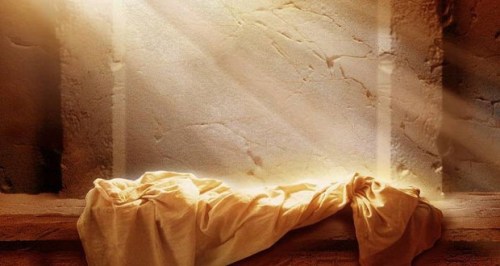
It does matter! Jesus said very specifically that “the Son of man [shall] be three days and three nights in the heart of the earth” (Matthew 12:40). That is three full days and three full nights.[1] You cannot get three full days and three full nights from a Friday crucifixion even if you allow for partial days and nights. Why does that matter?

One reason it matters is that “according to one Jewish tradition, the soul hovered about the body for three days in hope of reentering it.”[2] If it were not three full days and nights, then, as some have asserted, He could have resuscitated in the coolness of the tomb and walked out. (There are many problems with that idea, but that rabbit can be chased another day.)

Jesus raised Lazarus four days after his death. Lazarus was so dead that “by this time he stinketh: for he hath been dead four days” (John 11:39). Decomposition had already set in. That being the case, would it have been better for Jesus to remain in the tomb four days rather than three? No, because Scripture predicted that Jesus’ body would not decompose: “For thou wilt not leave my soul in hell; neither wilt thou suffer thine Holy One to see corruption” (Psalm 16:10). For that reason, it needed to be three full days and three full nights – long enough for the spirit to depart (in the estimation of the Jews), yet not long enough for decomposition to set in.

Another argument against a Friday crucifixion finds its basis in history. Most theologians hold the opinion that Jesus was crucified in A.D. 30. Passover, the day on which Jesus was crucified, always falls on Nissan 14 – the fourteenth day of the first month of the year.[3] Nissan 14, 30 A.D. fell on a Wednesday, not a Friday.[4] A Wednesday crucifixion allows for three full nights and three full days, meaning that Jesus would have risen anytime after 6:00 PM on Saturday evening, the first day of the week by Jewish reckoning – the day begins after sundown.

I believe those are good arguments against a Friday crucifixion, but they are not the best argument. The best argument is Jesus’ own words. He very specifically said that He would be in the heart of the earth, i.e., the grave, for three days and three nights. Anything less than that makes Jesus a liar. Do you really want to go there! If we believe God’s Word is inerrant – and Jesus IS God – then we must accept what HE said, and reject what errant men say. It Does Matter!

HE IS RISEN INDEED!

Notes:


[1]  “Three Days, Three Nights” – https://erniecarrasco.com/2014/07/13/three-days-three-nights/

[2]  Herschel Hobbs, The Illustrated Life of Jesus, (Nashville, Holman Bible Publishers, 2000), 183.

[3]  Leviticus 23:5

[4]  http://www.cgsf.org/dbeattie/calendar/?roman=30

2 Comments

Filed under Apologetics, Bible, Christianity, Easter, Gospel, Religion, Resurrection, Theology

April Fools’ Day

The fool hath said in his heart, There is no God. They are corrupt, they have done abominable works, there is none that doeth good. (Psalm 14:1)

We recognize the first day of April as April Fools’ Day. It “is an annual (primarily) Western celebration commemorated on April 1 by playing practical jokes and spreading hoaxes. The jokes and their victims are called April fools. People playing April Fool jokes often expose their prank by shouting ‘April fool(s)’ at the unfortunate victim(s). Some newspapers, magazines and other published media report fake stories, which are usually explained the next day or below the news section in smaller letters. Although popular since the 19th century, the day is not a public holiday in every country. Little is known about the origins of this tradition.”[1]

Victims of harmless pranks can hardly be called “fools.” Anyone is susceptible to deception at the hands of someone they trust. If that is a fool, then we all qualify.

The Bible has a much harsher view of a fool. The epithet is so severe that Jesus said, “whosoever shall say to his brother, Raca, shall be in danger of the council: but whosoever shall say, Thou fool, shall be in danger of hell fire” (Matthew 5:22, emphasis mine). The word “Raca” is of Chaldean origin and it means, “empty or worthless one.” A fool, on the other hand, is one who is “impious[2] or “godless.” Strong’s defines such a one as “dull, stupid or heedless.” The Greek word is mōros, from which we get our word “moron.” It is interesting that Jesus should offer such a severe condemnation as “hell fire” for the offense of calling someone a fool.

Jesus’ prohibition of the application of that word against another person comes at the beginning of His Sermon on the Mount. In the same sermon, He later said, “Judge not, that ye be not judged. For with what judgment ye judge, ye shall be judged: and with what measure ye mete, it shall be measured to you again” (Matthew 7:1-2). This verse gets misquoted and misunderstood often as meaning that we are never to exercise rational discernment about someone’s actions. However, that is not at all what Jesus was saying as subsequent verses reveal. The Greek words translated as “judge” and “judgment” are krinō and krima respectively. Both have to do with making a judgment that results in condemnation and punishment. We get our English words “crime” and “criminal” from these Greek words. The kind of judgment Jesus is describing is reserved for God alone. Therefore, if judging someone as “fool” condemns the one judging to “hell fire,” then the punishment for being a “fool” must also be “hell fire.” We deduce this from Jesus’ words, “with what measure ye mete, it shall be measured to you again.” In other words, because the punishment for being a fool is “hell fire,” then the one judging the fool will receive the same judgment because only God can make that judgment.

The English word “fool” appears often in the Bible translating other Greek or Hebrew words, but the strong word Jesus used, mōros, appears only a few times and always in the context of strong condemnation. For example, in Matthew 7:26 Jesus uses it to describe the “foolish man” who built his house on a foundation of sand. Jesus likens those hear His Word and ignore it to the fool who builds his house on sand. In Matthew 25:1-13, Jesus tells the Parable of the Ten Virgins and He calls the five unprepared virgins “foolish” because they were not ready to meet the bridegroom. The condemnation is they are not allowed into the wedding. Paul warns his young protégés, Timothy and Titus to avoid “foolish” (moronic) questions because they are unprofitable and vain and they only lead to strife.[3]

Our lead verse appears again in Psalm 53:1, “The fool hath said in his heart, There is no God. Corrupt are they, and have done abominable iniquity: there is none that doeth good.” The Hebrew word translated “fool” is nâbâl, and like mōros, it means stupid, wicked, (especially impious). Someone who does not believe in God, or rejects God is a fool. God condemns such a person to “hell fire,” which is why Jesus admonishes us not to make that judgment.

Paul describes how one sinks to that condition:

For the wrath of God is revealed from heaven against all ungodliness and unrighteousness of men, who hold the truth in unrighteousness; Because that which may be known of God is manifest in them; for God hath shewed it unto them. For the invisible things of him from the creation of the world are clearly seen, being understood by the things that are made, even his eternal power and Godhead; so that they are without excuse: Because that, when they knew God, they glorified him not as God, neither were thankful; but became vain in their imaginations, and their foolish heart was darkened. Professing themselves to be wise, they became fools” (Romans 1:18-22, emphasis mine).

By examining this passage more closely, we see that “the wrath of God” – His anger, i.e., “hell fire” – is revealed “against all ungodliness and unrighteousness of men,” i.e., “foolishness.” It is doubtful that “true” atheists exist because here we see that God reveals Himself through His creation. The “invisible things,” like viruses, bacteria, atoms, quarks, etc., clearly testify to the greatness of God. Every human being on earth can see the magnificence of God’s creation so that no one has an excuse for not acknowledging God. Everyone, even the atheist, knows that God exists, but they reject Him and refuse to glorify Him choosing rather to follow their own unintelligent (i.e., foolish) imaginations. As a result, their heart is darkened. This progressive condition results in a “reprobate mind,”[4] i.e., a mind that has lost its ability to properly reason. They think they are wise when in fact they have become fools.

“The fool hath said in his heart, There is no God” (Psalm 14:1; 53:1). And “The way of a fool is right in his own eyes” (Proverbs 12:15). “Every way of a man is right in his own eyes: but the LORD pondereth the hearts” (Proverbs 21:2). We are all fools at some time in our lives. “As it is written, There is none righteous, no, not one: There is none that understandeth, there is none that seeketh after God” (Romans 3:10-11, emphasis mine). We may all start out as fools, but we do not need to remain in that condition. If you do not know the Lord, please read my page on “Securing Eternal Life.” Don’t be an April Fool!

Notes:


[1] Wikipedia, “April Fool’s Day” – https://en.wikipedia.org/wiki/April_Fools%27_Day

[2]  “not pious or religious; lacking reverence for God, religious practices, etc.; irreligious; ungodly” Dictionary.Com definition – https://www.dictionary.com/browse/impious?s=t

[3]  2 Timothy 2:23; Titus 3:9

[4]  Romans 1:28

5 Comments

Filed under Apologetics, Atheism, Christianity, Creation, Current Events, Evangelism, Gospel, Hell, Theology

Dry Bones

Now learn a parable of the fig tree; When his branch is yet tender, and putteth forth leaves, ye know that summer is nigh: So likewise ye, when ye shall see all these things, know that it is near, even at the doors. Verily I say unto you, This generation shall not pass, till all these things be fulfilled. Heaven and earth shall pass away, but my words shall not pass away. (Matthew 24:32-35)

With the cross looming just days away, Jesus’ naïve apostles wondered about Jesus’ coming kingdom and what part they would play. “And as he sat upon the mount of Olives, the disciples came unto him privately, saying, Tell us, when shall these things be? and what shall be the sign of thy coming, and of the end of the world?” (Matthew 24:3, emphasis mine) The question inaugurated Jesus’ end-times sermon known as the Olivet Discourse. The sermon, addressed to Jesus’ Jewish disciples, delineated the events that would take place in the Great Tribulation spoken of by the Prophet Daniel[1] and detailed by John the Apostle.[2] Now, in order to pinpoint the proximity of these events, Jesus offered the Parable of the Fig Tree (our passage above).

Israel is compared to a fig tree in the Old Testament,[3] and Jesus uses this imagery to signal the last days. Just as the budding of a fig tree singals the proximity of summer, so the “budding” of Israel singals the nearness of the Lord’s return. The generation that witnesses Israel bud, Jesus said, “shall not pass, till all these things be fulfilled” (Matthew 24:34).

Ezekiel was one of the Jewish priests taken to Babylon in the first group of captives.[4] He was contemporary with the prophets Jeremiah and Daniel, and he ministered to the captives in Babylon. God gave the Prophet Ezekiel a preview of Israel’s rebirth. Ezekiel describes his experience as “The hand of the LORD was upon me, and carried me out in the spirit of the LORD, and set me down in the midst of the valley which was full of bones” (Ezekiel 37:1). “The spirit of the LORD” refers to the Holy Spirit who appears often in the Old Testament. Often we think of the Holy Spirit showing up at Pentcost[5] in the New Testament, and indeed He operates differently today than in Old Testament times, but He was no less active in those days. Today, the Holy Spirit indwells every true believer. In Old Testament time, He “came upon” individuals for specific purposes.

The Holy Spirit carried Ezekiel in a “vision” to a valley full of dry bones. We learn later that these dry bones represent the nation of Israel. “Then he said unto me, Son of man, these bones are the whole house of Israel: behold, they say, Our bones are dried, and our hope is lost: we are cut off for our parts” (Ezekiel 37:11, emphasis mine). Dry bones indicate that these bodies died many years before, perhaps hundreds or even thousands of years. We know by experience that when a body dies and is left unattended, it will decay. Scavengers will eat away at the flesh until nothing is left but the bones. The bones maintain their “boniness” for a long time, but eventually, the sun will bake them dry and they become brittle and eventually turn to dust.

The bones Ezekiel saw were disarticulated and scattered throughout the valley. The vision foretold of a time when Israel would be broken and scattered all over the world with no sign of life and no hope for revival. “And he said unto me, Son of man, can these bones live? And I answered, O Lord GOD, thou knowest” (Ezekiel 37:3). Ezekiel saw no hope of life for these bones, but he trusted that with the Lord, nothing is impossible.[6]

God commanded Ezekiel to prophesy to the dry bones. In his vision, Ezekiel witnessed the bones come together and tendons grow to hold the frame together. Then muscle and finally skin, but the bodies remained dead.[7] Then God told him to prophesy to the wind so that it would breathe life into the lifeless bodies. Ezekiel prophesied as instructed and the bodies came alive and stood to their feet and became a mighty army.[8]

After rejecting their Messiah, God punished Israel by destroying the nation and scattering the Jews all over the earth. This took place in 70 A.D. when the Roman general Titus destroyed Jerusalem and razed the Temple to the ground. The nation of Israel died that day, and its bones were scattered among the Gentile nations. Everywhere they went, they were persecuted, often having to flee from one nation to another with no place they could call their own. Remarkably, they never lost their national identity, traditions, customs, and language, and at every Passover celebration they recited the incessant prayer, “Next year in Jerusalem.”

For nearly 2000 years, the land lay fallow. By all human reconning, the land became a barren desert wasteland. Jews throughout the world could only dream of returning once again to their beloved homeland. Then at the turn of the 20th Century, God started working on Israel’s behalf again. The dry bones started coming together, Then on May 14, 1948, the dry bones stood up “a mighty army.” Immediately, they faced a fight for their lives, but God intervened and the newborn nation survived. Then in 1967, another invasion by their hostile, more powerful neighbors ended in only six days by God’s help, and Israel regained control of their beloved Jerusalem and the Temple Mount.

Today, more than 70 years later, tiny Israel is considered the eighth most powerful country in the world.[9] And we are that generation of which Jesus spoke that has witnessed the fig tree bud and the dry bones rise. This is the generation that will see the Lord’s return. Are you ready? If not, read my page, “Securing Eternal Life.”

Notes:


[1]  Daniel 9:24-27; 11:36-45

[2]  Revelation 6-19

[3]  Joel 1:7, 12

[4]  2 Kings 24:11-16; 2 Chronicles 36:5-8

[5]  Acts 2:1-4

[6]  Jeremiah 32:27

[7]  Ezekiel 37:7-8

[8]  Ezekiel 37:9-10

[9]  “Top 10 Most Powerful Countries in the World 2019

2 Comments

Filed under Christianity, Current Events, End Times, Religion, Second Coming of Christ, Theology

The Bethlehem Star

When they had heard the king, they departed; and, lo, the star, which they saw in the east, went before them, till it came and stood over where the young child was. (Matthew 2:9)

Once more the Christmas season arrived with all the usual pre-season hype of merchants competing for your hard-earned bucks by attempting to convince you that their product will bring you all the love an joy you deserve for “the holidays,” or that their product is the perfect gift to demonstrate your love for a loved one. As Christians, we know, or should know, that the celebration centers around the person of Jesus Christ – God’s gift to us.

Our church choir and orchestra performed our annual Christmas concert last Sunday. It was a program of beautiful Christmas music with a simple skit in the middle to give the choir a break. There was no pageantry; no live angles suspended in midair; no live animals herded down the aisles; no blinding laser lights flashing or smoke machines making fog. No, it was just good music meant to focus our attention on “the Reason for the season.”

This time of year should cause us to reflect on the significance of that incredible event when God came down to take on human flesh in the form of a baby. He came to a poor Nazarene couple. She was a virgin, pregnant out of wedlock.[1] He was a simple carpenter, an honorable man willing to fulfill his vow to his pregnant bride and to raise her child that was not his.[2]

Luke records the circumstances of their arrival to the little village of Bethlehem[3] and the birth of God-made-man in a stable – probably a grotto – meant for sheltering animals. It was a most malapropos place for the birth of the King of Kings and Lord of Lords. Yet, as Paul puts it, “[He] made himself of no reputation, and took upon him the form of a servant, and was made in the likeness of men” (Philippians 2:7).

In the fields outside of Bethlehem, shepherds kept the sheep destined for Temple sacrifice. Luke tells of an angel appearing to the shepherds to announce the birth of their Good Shepherd and how an army of angels illuminated the night sky and filled the air with their chorus of praise to God, “Glory to God in the highest, and on earth peace, good will toward men” (Luke 2:14). It must have been a spectacular sight to behold, and yet only shepherds witnessed it. It was their private invitation.

Matthew records a visitation by foreigners – gentiles – of high estate. These were the Magi[4] from somewhere in Mesopotamia, perhaps even from Babylon. They were not invited to the “presentation” as were the shepherds. In fact, they did not arrive until more than a year later. We conclude this by comparing the two accounts. Luke calls the child a “babe” – Greek brephos meaning “infant.”[5] Matthew’s record describes the baby Jesus as a “young child” – Greek paidion meaning a “little one” or “little boy,” perhaps a toddler. We can further infer this because of Herod’s edict to kill all the baby boys in Bethlehem that were two years old and younger.[6] Additionally, the shepherds found the child wrapped in swaddling clothes in a manger,[7] while the Magi found Him in a “house.”[8]

The Magi were not invited. They were looking for Him. Some Bible scholars suggest that these “Wise Men” were of the “School of Daniel,” and were familiar with the Hebrew Scriptures and the prophecies of the coming Messiah. God revealed to Daniel, “Know therefore and understand, that from the going forth of the commandment to restore and to build Jerusalem unto the Messiah the Prince shall be seven weeks, and threescore and two weeks: the street shall be built again, and the wall, even in troublous times” (Daniel 9:25, emphasis mine). “Weeks” are groups of seven years. “Threescore” is sixty (60). Applying simple math, we get (7×7)+(60×7)+(2×7) or 483 years. The Magi were “Wise Men,” and they could do the math. They knew the time was near. Not only that, but they were astronomers who carefully studied the stars, which God created for signs (i.e., a signal, flag, beacon, etc.) and seasons (i.e., appointment or festival).[9]

As the Magi studied the night sky, they observed an unusual pattern in the heavens that alerted them to the birth of a new king. But who was this new king and where was he to be born? They searched the source where all wise men should look; they searched the Scriptures. There, in the Hebrew Book of Numbers, they found this prophecy, “I shall see him, but not now: I shall behold him, but not nigh: there shall come a Star out of Jacob, and a Sceptre shall rise out of Israel, and shall smite the corners of Moab, and destroy all the children of Sheth” (Numbers 24:17, emphasis mine). Ah ha! The king (the “Sceptre”) was to come from Jacob, i.e., Judah and a star would “beacon” His arrival. Add to this, Daniel’s prophecy of 483 years suggested that the time was up.

The Magi assembled a caravan and headed west toward the only place where a Jewish king would be born – Jerusalem. When they arrived, they went to the king’s palace – the only suitable place for the birth of a king, “Saying, Where is he that is born King of the Jews? for we have seen his star in the east, and are come to worship him” (Matthew 2:2, emphasis mine). This announcement was unsettling for Herod, but after inquiring of those who should have known, the Wise Men were directed to Bethlehem. “And they said unto him, In Bethlehem of Judaea: for thus it is written by the prophet [Micah 5:2], And thou Bethlehem, in the land of Juda, art not the least among the princes of Juda: for out of thee shall come a Governor, that shall rule my people Israel” (Matthew 2:5-6, emphasis mine).

So off they went toward Bethlehem, and something very strange happened. “When they had heard the king, they departed; and, lo, the star, which they saw in the east, went before them, till it came and stood over where the young child was” (Matthew 2:9, emphasis mine). That last statement has caused much controversy. “Stars” do not behave in that way. All stars rise in the east (because of the earth’s rotation) and set in the west, just like the sun does. Bethlehem is south-southeast of Jerusalem. For the star to go “before them,” it would have to alter its normal course from east to west and travel north to south instead.

For this reason, many have suggested that the star was a comet – “Have you seen what I’ve seen? A star, a star shining in the night with a tail as big as a kite.” However, a comet will not go before you and then stop and hover over a house.

Some have suggested that the star was a conjunction of Jupiter (the King Planet) and Venus (the Mother Planet). Still, others have suggested that it was a conjunction of Jupiter and Regulus (the King Star), which is the major star in the constellation Leo (Jesus is the “Lion of Judah). This conjunction has some possibilities for the star the Magi saw “in the east,” while they were still in Mesopotamia. On September 11 (hmmm, 9-11), 3 BC, Jupiter joined Regulus (chief star in Leo), Royal Planet and Royal Star. The sun was in Virgo (Virgin Constellation), and the New Moon in Royal Constellation Leo (Judah). It was the first day of Jewish New Year – Rosh HaShannah.[10] This conjunction announced the Savior’s Birth.

However, that does not explain the strange movement of the star that led the wise men to Bethlehem. Besides, the conjunction that alerted the Magi would not remain in that configuration for the duration of time that it took them to arrive in Jerusalem. This “Bethlehem Star” must have been something else. Interestingly, there was another phenomena that occurred the following year, December 25, 2 BC. “Jupiter began to move westward, At its stationary point in Virgo Winter Solstace [sic], Daystar in Coma[11] Overhead at Bethlehem at Dawn?” [sic][12] Jesus at this time would have been 15 months old (provided He was born on September 11, 3 BC) – a “young child.” Obviously, this is not the same star the Magi saw originally, and Matthew seems to confirm this. When they arrived in Jerusalem, the Magi announced that they had “seen” (past tense) “His star in the east” (Matthew 2:2, emphasis mine). However, in verse 9, Matthew simply calls it “the star, which they saw in the east.” Perhaps that is a difference without a distinction, but this phenomena, except for the presence of Jupiter, does not seem to shout “King” as clearly. Again, all stars rise in the east, so seeing the star in the east to me merely suggests the direction from which they observed the star rise. That still does not explain the strange movement of the star.

Here is what I think – and I can speculate just as well as the next man. In the evening, as the Magi made their way to Bethlehem, they looked toward the east and observed a bright conjunction of stars – perhaps it was the December 25, 2 BC phenomena. There in the midst of this bright gathering of stars appeared an angel. Angels are sometimes referred to as “stars” in the Bible.[13] As the Magi observed the star, the angel (star) descended from the midst of the stellar conjunction and dropped down into the atmosphere where it could lead the Magi to where Jesus was. In case you are skeptical of my suggestion, let me remind you again of what the shepherds witnessed out in the field. “And, lo, the angel of the Lord came upon them, and the glory of the Lord shone round about them: and they were sore afraid” (Luke 2:9, emphasis mine). That must have been a pretty dazzling angel!

It might have happened that way, or maybe not. Perhaps it was a one-time, special occasion miracle of God. Whatever it was, the message was clear. “For unto you is born this day in the city of David a Saviour, which is Christ the Lord” (Luke 2:11).

Notes:


[1]  Luke 1:26-38

[2]  Matthew 1:18-25

[3]  Luke 2:1-20

[4]  “Who Were the Magi?” – https://erniecarrasco.com/2014/12/14/who-were-the-magi/

[5]  Luke 2:16

[6]  Matthew 2:16

[7]  Luke 2:12, 16

[8]  Matthew 2:11

[9]  Genesis 1:14

[10]  “Summary of Conjunctions of Planets (“wandering stars”), Constellations and Stars: Meanings, Interpretations, Timetable, Other Astronomical Events Near Time Of Christ’s Birth” – http://www.tccsa.tc/articles/star_dates.html

[11]  Ibid. “The Star in the Head of the Infant in “Coma” visible in daylight for 300 years.”

[12]  Ibid.

[13]  Job 38:7; Revelation 1:20; 6:13;12:4

3 Comments

Filed under Apologetics, Christianity, Christmas, Gospel, Holidays, Religion, Theology

The Soul

Behold, all souls are mine; as the soul of the father, so also the soul of the son is mine: the soul that sinneth, it shall die. (Ezekiel 18:4)

My twice-brother and I engaged in a discussion a few nights ago concerning the meaning of “the soul.” What is the soul? Most people think of the soul as the spiritual essence of a person. The English dictionary seems to support that view:

noun

  1. the principle of life, feeling, thought, and action in humans, regarded as a distinct entity separate from the body, and commonly held to be separable in existence from the body; the spiritual part of humans as distinct from the physical part.
  2. the spiritual part of humans regarded in its moral aspect, or as believed to survive death and be subject to happiness or misery in a life to come: arguing the immortality of the soul.
  3. the disembodied spirit of a deceased personHe feared the soul of the deceased would haunt him.[1] et al. (emphasis mine)

Our English language (especially American English) has “evolved” considerably since the founding of the United States, so I thought it might be interesting to see how the 1828 Webster’s Dictionary defined “soul.” I found the following definition:

SOUL, n.

  1. The spiritual, rational and immortal substance in man, which distinguishes him from brutes; that part of man which enables him to think and reason, and which renders him a subject of moral government. The immortality of the soul is a fundamental article of the christian [sic] system. Such is the nature of the human soul that it must have a God, an object of supreme affection.
  2. The understanding; the intellectual principle. The eyes of our soul then only begin to see, when our bodily eye are closing.
  3. Vital principle. Thou son, of this great world both eye and soul.
  4. Spirit; essence; chief part; as charity, the soul of all the virtues. Emotion is the soul of eloquence.
  5. Life; animation principle or part; as, an able commander is the soul of an army.
  6. Internal power. There is some soul of goodness in things evil.
  7. A human being; a person. There was no a soul present. In Paris there are more than seven hundred thousand souls. London, Westminster, Southwark and the suburbs, are said to contain twelve hundred thousand souls.[2] et al. (emphasis mine)

The idea that the soul is the immaterial “substance” or “essence” that animates us enjoys a long history of support, but I think there is more to the soul than that. Normally, the first and second definition listed in a dictionary provides the general understanding of the word. However, in this case, I prefer the seventh definition provided by the 1828 Webster’s Dictionary. It basically says that “the soul” is a human being or a person, and I believe I can show scriptural support for that idea.

The best place to start is at the beginning. “In the beginning God created the heaven and the earth” (Genesis 1:1). “God,” ‘ĕlôhı̂ym, is a plural noun. We understand God as Triune being – Father, Son, and Holy Spirit – three persons (we say) in one “Godhead.” We simply say “God,” but we understand His Triune nature.

God created humans according to His image. “And God said, Let us make man in our image, after our likeness: … So God created man in his own image, in the image of God created he him; male and female created he them” (Genesis 1:26-27, emphasis mine). All humans bear the “image of God” and share many of His attributes albeit without the “Omni” prefix. It follows that we too possess a triune nature (more on that later).

As we examine the creation account, we see that God created all living creatures by divine fiat, i.e., He spoke them into being. However, He took special care in creating man. “And the LORD God formed man of the dust of the ground, and breathed into his nostrils the breath of life; and man became a living soul” (Genesis 2:7, emphasis mine).

Humans and air-breathing animals possess the “breath of life.” The Hebrew word neshâmâh is defined as: “a puff, that is, wind, angry or vital breath, divine inspiration, intellect or (concretely) an animal: – blast, (that) breath (-eth), inspiration, soul, spirit.”[3] We see in Genesis 7:22 that animals possess the “breath of life.” That phrase is also found in Genesis 6:13 and 7:15, but the Hebrew word for “breath” there is rûach, which means: “wind; by resemblance breath, that is, a sensible (or even violent) exhalation; figuratively life, anger, unsubstantiality; by extension a region of the sky; by resemblance spirit, but only of a rational being (including its expression and functions): – air, anger, blast, breath, X cool, courage, mind, X quarter, X side, spirit ([-ual]), tempest, X vain, ([whirl-]) wind (-y).”[4] Both neshâmâh and rûach are similar in meaning, but the latter includes the idea of a “spirit.”

To further confuse matters, Genesis 2:7 says that “man became a living soul.” The word “soul” is the Hebrew nephesh, which is defined as: “a breathing creature, that is, animal or (abstractly) vitality; used very widely in a literal, accommodated or figurative sense (bodily or mental): – any, appetite, beast, body, breath, creature, X dead (-ly), desire, X [dis-] contented, X fish, ghost, + greedy, he, heart (-y), (hath, X jeopardy of) life (X in jeopardy), lust, man, me, mind, mortality, one, own, person, pleasure, (her-, him-, my-, thy-) self, them (your) -selves, + slay, soul, + tablet, they, thing, (X she) will, X would have it.”  It is not difficult to see that nephesh is related to neshâmâh in that both carry the aspect of “breathing.” However, nephesh includes the physical aspect of the creature.

Both man and animals possess a nephesh. The Hebrew word first appears in Genesis 1:20. “And God said, Let the waters bring forth abundantly the moving creature that hath life, and fowl that may fly above the earth in the open firmament of heaven” (emphasis mine). The Hebrew words translated “hath life” are nephesh chay (life), or “soul life.” Also, the following verse reads, “And God created great whales, and every living creature that moveth, which the waters brought forth abundantly, after their kind, and every winged fowl after his kind: and God saw that it was good” (Genesis 1:21, emphasis mine). The Hebrew word translated “creature” is nephesh. I could give more examples, but I want you to stay with me on this.

We see that both man (humans) and animals have souls – nephesh. What differentiates a human soul from that of an animal is the way in which it was given. Recall earlier that God created animals by divine fiat. He also created them en masse. Man was unique. He created one human couple. He did not speak them into being as he did with the animals. He “formed” man – the Hebrew word yâtsar meaning to mold as a potter forms and shapes a clay vessel. Then God breathed into man His own breath “and man became a living soul” (Genesis 2:7).

Looking back at the 1828 Webster’s definition of “soul,” the seventh definition becomes clear here. The clay figure on the ground came to life when God breathed into it, and he became a human being, a person, a living soul – made in the image of God, with a triune nature like his Maker.

So, what is the triune nature of man? As I see it, just as God is Father, Son, and Holy Spirit, man is mind, body, and spirit. The Father, Son, and Holy Spirit is the God, or the Godhead if you prefer. The mind, body, and spirit is the soul. God has a physical body. That body is the Son, Jesus Christ. The other two “persons” of God are immaterial and invisible – the Father and the Holy Spirit. “No man hath seen God at any time; the only begotten Son, which is in the bosom of the Father, he hath declared him” (John 1:18, emphasis mine). Likewise, the mind and spirit of the soul are immaterial and invisible, but the body reveals the soul. We have all heard the expression, “The eyes are the windows to the soul;” the eyes are physical, but they often reveal what is “inside.” In summary, the soul is the entire being or person, mind, body, and spirit.

We can know that the soul is more than some nebulous ethereal, intangible animator of our being by the consideration given “the soul” in Scripture. For example, when God called Abraham (Abram) out of his homeland, we read, “And Abram took Sarai his wife, and Lot his brother’s son, and all their substance that they had gathered, and the souls that they had gotten in Haran; and they went forth to go into the land of Canaan; and into the land of Canaan they came” (Genesis 12:5, emphasis mine). Those “souls” (nephesh) were not disembodied spirits; they were people. When Abraham went down to Egypt he told Sarah (Sarai), “Say, I pray thee, thou art my sister: that it may be well with me for thy sake; and my soul shall live because of thee” (Genesis 12:13, emphasis mine). Abram was not thinking of his “spirit being;” he wanted to save his own skin! That nephesh refers to the whole person is clearly demonstrated when Abraham went to rescue his nephew Lot from the marauding kings of the north. “And the king of Sodom said unto Abram, Give me the persons, and take the goods to thyself” (Genesis 14:21, emphasis mine). The word translated “persons” is the Hebrew word nephesh.

Another part of the nephesh is the “mind.” We find that example when Sarah died, and Abraham negotiated for a plot of land in which to bury her. “And he communed with them, saying, If it be your mind that I should bury my dead out of my sight; hear me, and intreat for me to Ephron the son of Zohar” (Genesis 23:8, emphasis mine). The Hebrew word translated “mind” is nephesh.

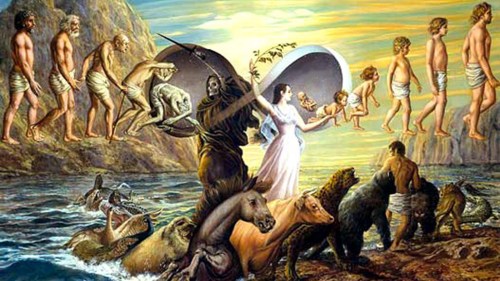
I could cite many more examples, but these should suffice. The point is that we do not have souls; we are souls. Each soul made in the image of God is a triune being with mind, body, and spirit. For a soul to exist, all three must be present. Take away any one of the three, and the soul (at least in this present life) ceases to exist. A soul is immortal; it exists forever. However, because of Adam’s sin in the Garden, the physical part dies even though the mind and spirit continue; the soul is incomplete. At the end of time, the mind, body, and spirit will reunite for eternity, but not all souls will enjoy the same destiny. Some souls will live eternally in the presence of God; other souls will exist eternally separated from God in hell. Soul, where will you spend eternity? If you have doubts, please read my page on “Securing Eternal Life.”

Notes:


[1]  Dictionary.com – https://www.dictionary.com/browse/soul

[2]  1828.mshaffer.com – https://1828.mshaffer.com/d/word/soul

[3]   Strong’s Definitions: H5395

[4]   Strong’s Definitions: H7307

6 Comments

Filed under Apologetics, Bible, Christianity, Creation, Death, End Times, Heaven, Hell, Religion, Resurrection, Theology