Tag Archives: Sin

What the Law Does

Therefore by the deeds of the law there shall no flesh be justified in his sight: for by the law is the knowledge of sin. (Romans 3:20)

Many Christians today adopt the attitude that the Old Testament Law no longer applies because we are not under the Law but under Grace. That is certainly true. However, the fact that we are under Grace does in no way render the Law irrelevant or make it of no effect.

The Law given in the Old Testament accomplished two things. It codified what God expected of His people, Israel, and it provided specific practices for God’s people to follow that set them apart from the pagan nations among whom they lived. They were to be “holy” as their God in heaven is holy, i.e., set apart, consecrated, distinct.

The Law provided a third way for the people to relate to God through the sacrificial system which provided a way to atone for or “cover” the sins of the people. However, the sacrificial system did not provide a permanent solution to the sin problem. Sacrifices were made for all kinds of infractions of the Law, and like sin, they were a perpetual practice. The continual offering of sacrifices illustrated the insufficiency of sacrifices to fully atone for the sin of the people. Even so, the sacrifices required faith in the offering otherwise they became a ritual practice akin to pagan practices. God rejected such sacrifices.

To what purpose is the multitude of your sacrifices unto me? saith the LORD: I am full of the burnt offerings of rams, and the fat of fed beasts; and I delight not in the blood of bullocks, or of lambs, or of he goats. (Isaiah 1:11)

To what purpose cometh there to me incense from Sheba, and the sweet cane from a far country? your burnt offerings are not acceptable, nor your sacrifices sweet unto me. (Jeremiah 6:20)

For it is not possible that the blood of bulls and of goats should take away sins. (Hebrews 10:4)

One thing we learn from the Old Testament is that it is impossible to keep the Law, and that it is insufficient to atone for sin. Our opening verse makes it clear, “by the deeds of the law there shall no flesh be justified in his sight” (Romans 3:20). The only sacrifice sufficient to atone for sin is the one offered by God Himself in the person of Jesus Christ and the blood He shed on the cross. Sin – all sin, for all time – was paid in full when Jesus exclaimed, “It is finished: and he bowed his head, and gave up the ghost” (John 19:30). However, Jesus did not remain dead. On the third day, He rose from the dead and conquered the “last enemy”[1] giving us access to eternal life by the simple act of believing. “And as Moses lifted up the serpent in the wilderness, even so must the Son of man be lifted up: That whosoever believeth in him should not perish, but have eternal life” (John 3:14-15).

Romans 3:23 says that “all have sinned, and come short of the glory of God.” The Old Testament teaches us that we are incapable of keeping God’s Law, therefore we are doomed by that standard. “For the wages of sin is death; but the gift of God is eternal life through Jesus Christ our Lord” (Romans 6:23, emphasis mine). Grace is God’s gift to us. Grace is “unmerited favor.” Grace cannot be earned through any human effort because “by the deeds of the law there shall no flesh be justified in his sight” (Romans 3:20). Grace is a gift, bought and paid for by Jesus’ sacrifice on the cross. “For by grace are ye saved through faith; and that not of yourselves: it is the gift of God: Not of works, lest any man should boast” (Ephesians 2:8-9). As with any gift, it must be accepted before it becomes one’s own possession.

What good, then, is the Old Testament Law, if one cannot gain salvation, i.e., eternal life, by keeping it (not that you could if you tried)? Paul provides the following affirmation: “Therefore we conclude that a man is justified by faith without the deeds of the law” (Romans 3:28). We are declared “just” when we place our “faith” in what Jesus did for us on the cross. That is a “done deal” outside the keeping (“the deeds”) of the law. Then Paul poses and responds to our question. “Do we then make void the law through faith? God forbid: yea, we establish the law” (Romans 3:31). The Greek word translated “establish” is histēmi, and it means “to cause to stand.”

The Law still stands. It is not required to gain eternal life nor is it needed to maintain our salvation. However, it does serve as our guide to holy living which God still requires of His children. “But as he which hath called you is holy, so be ye holy in all manner of conversation; Because it is written, Be ye holy; for I am holy” (1 Peter 1:15-16). Jesus tied our love for Him to the keeping of His commandments.[2] Jesus spoke these words 25-30 years before the first Gospel was written, so His commandments were the same commandments He gave to Moses, which are summarized in two great commandments: love the Lord your God with all your heart, soul, and mind (your whole being), and love your neighbor as yourself.[3]

But what does that look like? Our opening verse tells us: “for by the law is the knowledge of sin” (Romans 3:20). Granted, much of the Mosaic Law had direct application to the culture of that time, however, the principles therein apply to our modern time. Take for instance the laws given to dress. The reason for those laws served to make the children of Israel distinct from the people among whom they lived. God still wants the same for us today. We shouldn’t dress and look like the lost world around us. We should be distinct. We should be holy as our Father in heaven is holy – set apart from the world. Speaking of us, Jesus said, “They are not of the world, even as I am not of the world” (John 17:16). What the law does is show us how not to live like the world.


Notes:


[1]  1 Corinthians 15:26

[2]  John 14:15, 21; 15:10

[3]  Matthew 22:36-40

1 Comment

Filed under Apologetics, Bible, Christianity, Gospel, Religion, Salvation, Theology

Vegan Adam & Eve

And God said, Behold, I have given you every herb bearing seed, which is upon the face of all the earth, and every tree, in the which is the fruit of a tree yielding seed; to you it shall be for meat. And to every beast of the earth, and to every fowl of the air, and to every thing that creepeth upon the earth, wherein there is life, I have given every green herb for meat: and it was so. (Genesis 1:29-30)

This week a young woman that looked to be in her early to mid-thirties asked me if Adam and Eve were vegans. She was slender and attractive, giving me the impression that she wanted to justify her vegan lifestyle from Scripture. Personally, I do not care what one chooses to eat as long as they do not try to impose their diet on me.[1]

Veganism, like most belief systems, can get rather complicated. For starters, vegans are vegetarian, and one can be a vegetarian without being a vegan. Vegans go beyond simple vegetarianism. “Distinctions may be made between several categories of veganism. Dietary vegans (also known as strict vegetarians) refrain from consuming animal products, not only meat but also eggs, dairy products and other animal-derived substances. The term ethical vegan (also known as moral vegetarian) is often applied to those who not only follow a vegan diet but extend the philosophy into other areas of their lives, and oppose the use of animals for any purpose. Another term is environmental veganism, which refers to the avoidance of animal products on the premise that the industrial farming of animals is environmentally damaging and unsustainable”[2]

Whether or not Adam and Eve were vegans cannot be determined by the creation account recorded in Scripture. Certainly, Adam and Eve were vegetarians as were “every beast of the earth … every fowl of the air … [and] every thing that creepeth upon the earth, wherein there is life” (Genesis 1:30). God gave “every green herb for [food].”

However, were Adam and Eve required to abstain from drinking milk from cows or goats? Did they make cheese from the milk of other animals? Were they allowed to eat chicken eggs? One might argue that infertile eggs have no potential of producing a living bird, so maybe eggs would be allowed. Scripture is silent on the matter. Let us assume, however, that initially, they were strict vegetarians, i.e., vegans, and that they only ate vegetable matter and nothing from animals. We might assume so since they were naked in the Garden of Eden,[3] and they made clothes of fig leaves when they discovered their nakedness.

Their stay in the Garden was short-lived.[4] They soon sinned and their ethical veganism would have ended at that point. The shame of their nakedness and sin required the slaughter of an innocent animal for covering, and God Himself performed the sacrifice[5] to clothe them in animal skins. After that, the practice of animal sacrifice continued, as we find Abel offering an animal sacrifice in Genesis 4:4. However, it is hard to imagine that they would find domesticated animals useful only for sacrifice and not for any other purpose like wool, milk, cheese, eggs, etc. Scripture is silent on this, so we should not be dogmatic.

After the Flood, God sanctioned the eating of animal flesh. “Every moving thing that liveth shall be meat for you; even as the green herb have I given you all things” (Genesis 9:3). If humans were vegans before, all that ended after the Flood. The lady that raised the question was not satisfied with my answer, but since I had answered from Scripture, she could raise no further objection.

Notes:


[1]  Romans 14:16-23

[2]  “Veganism” – https://en.wikipedia.org/wiki/Veganism

[3]  Genesis 3:7

[4]  “A Nutshell History of the World” – https://erniecarrasco.com/2018/10/28/a-nutshell-history-of-the-world/

[5]  Genesis 3:21

3 Comments

Filed under Apologetics, Bible, Christianity, Creation, Origins, Religion, Theology

The Man Upstairs

Thou shalt not take the name of the LORD thy God in vain; for the LORD will not hold him guiltless that taketh his name in vain. (Exodus 20:7)

I am certain that every writer experiences “writer’s block” occasionally. For me, it occurs more often than I would like. Most often it happens when I have neglected spending consistent time in the Word. Since this blog is biblically based, it is important that I remain faithful to Bible reading from which I draw my inspiration.

Those who follow this blog know that I post something every Sunday morning. I have no obligation to write. This blog does not contribute to my livelihood in any way, so if the “well is dry” no harm is done if I skip a week or two. However, when I started this blog, I committed to produce something regularly that would benefit the readers. Besides those who subscribe to this blog, I get readers from all over the world, so I take care to rightly divide the Word of truth[1] knowing that I am accountable to God for the way I handle His Word. I am also keenly aware that not everyone that reads my blog is a born-again Christian. So, I do my best and pray that God will use it for His glory.

Anyway, this was one of those weeks, and I kept praying that God would give me something for subject matter. When I find myself in an empty well, God often gives me inspiration from the most unusual sources.

This week I received it from the evening sportscast. I am not at all interested in sports. Oh, I like to watch a good game now and then, but I am not a fanatic about any sport or any team. However, as I sat in front of my TV set with my reheated Tex-Mex leftovers, paying more attention to my refried beans and enchiladas than to the programming, I caught a brief sound bite from the sportscaster that perked up my ears. As I said, I am uninterested in sports so the details eluded me. He mentioned some football player who was traded for a better deal. The sportscaster attributed the player’s windfall to divine intervention from “the big guy upstairs.” Why did he not just say “God”?

I hear similar epithets for God all the time – “the man upstairs,” “the big guy upstairs,” or just “the big guy” (spoken with eyes cast skyward), etc. It always bothers me when I hear this, but it bothers me worse when I hear it from Christians.

What! You’re embarrassed to say, “God”?

I am sure it bothers me more than it bothers God. After all, judgment day is coming, and that matter will be settled when all creation stands before the King of Kings and Lord of Lords.[2] When Isaiah came face to face before God, he fell on his face and cried, “Woe is me! for I am undone; because I am a man of unclean lips, and I dwell in the midst of a people of unclean lips: for mine eyes have seen the King, the LORD of hosts” (Isaiah 6:5).

Perhaps such epithets sprang up from a desire not to violate the third commandment (our verse above)[3] much like Jews avoid pronouncing the name of God, Yahweh. To avoid the infraction, they will say Adoni (“Lord”) or Ha-Shem (“The Name”). However, the intent of the commandment was for us to hold the name of God in reverence and not to cast it about carelessly.

How we use God’s name betrays how we value Him in our heart.[4] The sportscaster could have said that God intervened on behalf of the football player, and it would have been just as demeaning. The reason for this is the assumption that God had anything to do with it in the first place, and the sportscaster’s smirk indicating that he did not believe what he was saying to begin with. (I do not know that for certain as only God knows the heart.)

The practice of using epithets for God violates the third commandment, although not always. Referring to God in any careless way breaks the commandment. Even when one intends to be respectful by not using the name of God, the use of the epithet demeans the name of God. He is not the “man upstairs.” He is not a man at all.[5] He is the Creator of heaven and earth. He is the One who gives life and breath to all.[6] We should never refer to Him lightly or carelessly in our conversation. When we speak His name, it should only be with reverence and in a way that honors and glorifies Him, and we should never be ashamed or embarrassed to say His name. We do this when we testify what great things God has done for us. We do this when we speak of His love for us and for others, how He sent His Son to die on the cross for our sins. This is how we should use God’s name, and use it often. Do not use His name frivolously, and certainly do not demean His great character by calling Him “the man upstairs.”

Notes:


[1]  2 Timothy 2:15

[2]  1 Timothy 6:14-15

[3]  Exodus 20:7

[4]  Note: “God” is what He is, not who He is. His name is Yahweh and He has other names ascribed to Him that tell us something about His nature – like, God Almighty, God of Hosts, LORD Provider, et al.

[5]  John 4:24

[6]  Isaiah 42:5; John 6:33

3 Comments

Filed under Apologetics, Christianity, Gospel, Theology

Assault Weapons

Ye have heard that it was said by them of old time, Thou shalt not kill; and whosoever shall kill shall be in danger of the judgment: But I say unto you, That whosoever is angry with his brother without a cause shall be in danger of the judgment: and whosoever shall say to his brother, Raca, shall be in danger of the council: but whosoever shall say, Thou fool, shall be in danger of hell fire. (Matthew 5:21-22)

All the Demoncrat (misspelling intentional) presidential candidates are campaigning on the platform of banning assault weapons and some even advocate confiscation of all firearms. The push clearly violates the Second Amendment, which exists in part to protect the First Amendment. Their assault on assault weapons presents only one avenue for denying citizens of their God-given constitutional rights. The “Green New Deal” additionally would deprive citizens of anything they, in their reprobate minds,[1] perceive as harmful to the environment. They hypocritically play on the emotions of the ignorant while they surround themselves with armed bodyguards, travel across the country in private jets, eat the flesh of air-polluting bovine, and live in mansions that consume three and four times the energy than the average American family. However, for now I only want to focus on their war against assault weapons.

What is an assault weapon? Dictionary.com defines an assault weapon as “any of various automatic and semiautomatic military firearms utilizing an intermediate-power cartridge, designed for individual use.”[2] However, I would argue that is an incorrect definition. In the first place, we are looking at two words, not one. The first is an adjective modifying the second, so of the two, the second word – weapon – is the most significant.

Dictionary.com defines “weapon” as “any instrument or device for use in attack or defense in combat, fighting, or war, as a sword, rifle or cannon,” or “anything used against an opponent, adversary, or victim.”[3] Here we see that a weapon can be used for offense (“attack”) or defense. We also see no special attention is given to “automatic or semiautomatic military firearms.” A third definition offered is in the area of zoology: “any part or organ serving for attack or defense, as claws, horns, teeth, or stings.”[4] Obviously, a weapon can either be used for defense or assault. Therefore, an assault weapon can also be a defensive weapon depending on its application. However, in order to remain consistent in our theme, we will keep our focus on “assault weapons.”

Since it is the modifier that makes the distinction, we need to know the meaning of “assault.” Dictionary.com defines “assault” as “(1) a sudden, violent attack; onslaught: (2) Law. an unlawful physical attack upon another; an attempt to offer to do violence to another, with or without battery, as by holding a stone or club in a threatening manner.”[5] This definition excludes the use of a weapon. By this definition, even words might be considered assault weapons. One example given is “an assault on tradition.”[6] Clearly, the rhetoric by the Demoncrats constitutes an assault on our liberty and the Constitution.

We have learned that assault weapons can be any instrument, including words, used in a sudden, violent attack upon another person. Since weapons are not restricted only to firearms of any kind, it may be informative to examine the different kinds of weapons that can be used in an assault.

Probably the first and oldest assault weapons known to man are hands. An open hand can land a stinging blow to a victim’s face which can cause contusions and even blindness if the blow lands on an eyeball. A closed hand becomes a club which can break facial bones and even cause death. Hands can be used to strangle the life out of a victim and are capable of crushing the larynx. Hands constitute assault weapons. Feet, knees, and elbows can also be used as clubs and make formidable assault weapons.

Speaking of clubs, these come in many shapes and sizes and are readily available from any sporting goods stores. I am speaking, of course, of baseball bats. Walking canes and sticks make good clubs, and speaking of walking, one can usually find a good assault weapon laying on the ground. We call them rocks.

The average home is full of excellent assault weapons: hammers, knives, scissors, iron skillets, rope, plastic bags, pillows, etc. Some of us carry assault weapons in our shirt pockets and do not even know it. I am talking about ballpoint pens. Jab that thing with enough force into someone’s eye, and it will likely penetrate the brain causing death.

The cars we drive can also be used as assault weapons. Perhaps that is why the Green New Deal would like to do away with them.

If the Demoncrats seriously want to ban assault weapons, think of all the things we would need to give up. No, the Demoncrats do not really concern themselves with assault weapons; they want firearm confiscation because a disarmed populous offers no resistance to their desire for controlling power. The Demoncrats strategically use rhetoric as an assault weapon against liberty by redefining terms. They have redefined “assault weapon” to focus primarily on semiautomatic rifles that resemble those used by the military, like the AR-15, primarily because they “look scary” and because they seem to be the weapon of choice by mass murderers due to their high magazine capacity. However, 2017 statistics[7] indicate that rifles (of which AR-15s are only one of a kind) accounted for only 403 murders while sharp instruments accounted for 1591 murders. Handguns, both revolvers and semiautomatic, accounted for 7,032. Perhaps Demoncrats do not make as big a fuss about handguns because that is what their personal bodyguards carry.

In conclusion, almost anything can be used as an assault weapon. By the same token, an assault weapon can also be used as a defense weapon; it all has to do with the intent of the user. The nature of a weapon depends on the its modifier and its application. I keep several firearms in my home. Most of my firearms are semiautomatic. I also keep several knives with blades ranging in length from two inches to 28 inches (my samurai swords). Most of these weapons stay in their place and collect dust. None of them are used for assault. However, if needed, they can all become defense weapons.

The Demoncrats are disingenuous with their assault on assault weapons, because the problem is not the weapon. The problem is the condition of the individual’s heart. The reason they fail to see this is because their hearts are every bit as perverse as the hearts of those carrying out mass murders.

I started this article quoting a verse from Jesus’ Sermon on the Mount. He identified murder as being a matter of the heart. “But I say unto you, That whosoever is angry with his brother without a cause shall be in danger of the judgment…” (Matthew 5:22, emphasis mine).

Violence in our nation and in the world is increasing at an unprecedented rate, and denying law-abiding citizens their right to self-defense with firearms will not retard the rise. The only thing that can reverse the trend is a healthy dose of the fear of God in every human heart. Considering that the Demoncrats cut God out of their platform and embrace every pagan religion while rejecting Christianity, especially Evangelical Christianity, every form of violence, not just gun violence, will continue to increase. Our only real hope is for the King of Kings and Lord of Lords to return and reclaim His creation. When He comes, He will rule with a “rod of iron”[8]  He will rule as the true “Prince of Peace.”[9] In the meantime, let us not be intimidated by the Demoncrats into giving up our “assault weapons.”

Notes:


[1]  Romans 1:28; 2 Timothy 3:8; Titus 1:16

[2]  https://www.dictionary.com/browse/assault-weapon?s=t

[3]  https://www.dictionary.com/browse/weapon?s=t

[4]  Ibid.

[5]  https://www.dictionary.com/browse/assault?s=t

[6]  Ibid.

[7]  https://www.statista.com/statistics/195325/murder-victims-in-the-us-by-weapon-used/

[8]  Revelation 19:5

[9]  Isaiah 9:6

2 Comments

Filed under Current Events, End Times, Politics, Random Musings, Second Coming of Christ

The Church

And I say also unto thee, That thou art Peter, and upon this rock I will build my church; and the gates of hell shall not prevail against it. (Matthew 16:18)

Today is Sunday, and June and I just got out of “church.” We enjoyed a wonderful time of worshiping God our Savior, Jesus Christ, and listening to the Word of God exposited by our “under shepherd,” our pastor. Then we gathered in our Sunday school classroom to enjoy family time by fellowshipping with our brothers and sisters and enjoying a time of deeper study into the Word of God. Currently, we are studying the book of Isaiah. We have been in the book of Isaiah for nearly a year, and we are only halfway through the book. I really appreciate our Bible teacher and his dedication to the careful study of God’s Word.

I have said this before, and it is still true. I love church! But what is church? Some people think of a building where people meet on Sundays for some unknown reason. Others have a vague notion that people gather there to sing and listen to some preacher talk. Many Christians consider church attendance as some kind of obligation. It’s just something one does.

Before going into what “church” is, perhaps we should understand what it is not.

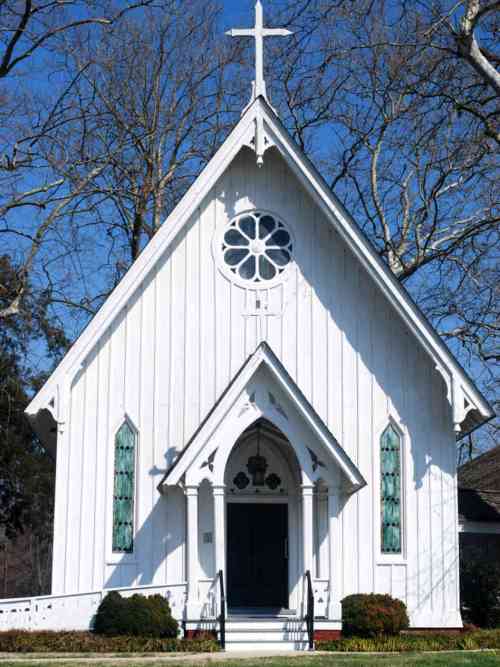
“Church” is not a building. The first definition of “church” found at Dictionary.Com says that it is “a building for public Christian worship.”[1] While that may be the modern, accepted understanding of the word, it is nonetheless in error. The second definition says that a church is a “public worship of God or a religious service in such a building.” That comes closer to a correct understanding; however, it is still false.

Some people who attend church services select their place of “worship” based on the style of music that is played. They want to hear stirring music that stimulates the emotions and elevates their spirits to euphoric heights. Many church leaders are keenly aware of this “need” and they go to great expense and effort to tailor music that attracts the most number of attendees. Many “worship” services employ loud, screaming guitars, jungle-beating percussion sets, laser-light shows, and even smoke machines to stimulate the emotions. After 45 minutes or so of ear-splitting, pulse-raising “music,” the speaker comes up to give a 15-minute motivational speech specifically intended to maintain the hearer in a happy state – no talk of sin and the need for the Savior, or the prospect of hell; only talk about God’s love and how He loves you just the way you are (a partial truth originating from the “father of lies”).[2]

No, the church is not a place to be entertained, emotionally elevated, or encouraged in your sin. Even churches that still sing the “tired old hymns” can degenerate into places where we can go to just feel good about ourselves. That is not what church is. Neither is the church intended to attract unbelievers, which the modern “church growth” movement emphasizes.

The word translated “church” in the Bible is the Greek word ekklēsia, and it could be translated the “called out ones.” Immediately we notice that the definition precludes a building of any kind. So, the “church” is not a building. The church is people, and not just people, they are people that have been “called out.” The question that immediately comes to mind is, “called out of what?” Simply put, the church is an assembly of people who have been “called out” of the world. To use a “churchy” term, the church is a body of those who have been “saved” out of the world, out of sin, and out of an eternity in hell.

Jesus said, “Ye have not chosen me, but I have chosen you, and ordained you, that ye should go and bring forth fruit, and that your fruit should remain …” (John 15:16, emphasis mine). The Greek word translated “ordained” means “to place” or “to set.” In other words, Jesus has “chosen,” i.e. “called out,” His church and set it in a place to do His work on earth – to “bring forth fruit.” “Bringing forth fruit” does not necessarily mean increasing the number of attendees in a particular church body. Indeed, Jesus said, “For many are called, but few are chosen” (Matthew 22:14). The “call” goes out to all, but only a few will respond. “Because strait is the gate, and narrow is the way, which leadeth unto life, and few there be that find it” (Matthew 7:14, emphasis mine).

Jesus said these things before the church was established at Pentecost.[3] The church, therefore, consists of individuals who are “called out” by Christ through the Holy Spirit, regardless of man-made “branding” – Baptist, Methodist, Presbyterian, Catholic, etc. The unifying theme of the Church is a belief in the saving work of Jesus Christ on the cross in payment for our sin, His resurrection from the grave (after three days), His ascension into heaven and His soon return as King of Kings and Lord of Lords. “Neither is there salvation in any other: for there is none other name under heaven given among men, whereby we must be saved” (Acts 4:12, emphasis mine). If one trusts simply in that, that one is included in “the Church.” If, on the other hand, one is trusting in the practices observed by their church, they are probably not included in “the Church.”[4]

The Bible refers to the body of all true believers, the “called out ones,” i.e. “the Church,” as “the Bride of Christ.”[5] This is the Church – not a building or a particular “Christian” denomination. The Church is a body of “called out” individuals who join together to worship God, to “feed” on His Word, to grow and mature in the Spirit, to rejoice with those who rejoice and weep with those who weep, to fellowship and encourage one another, and to work together to “bring forth fruit,” i.e., bring others to Christ.

The purpose of the local church is to build up the body – the Church – for the work of the kingdom. It is not to entertain, nor is it to gain numbers for the sake of numbers. The Church is not confined to a single building; however, the smaller gathering that meets in a “church” building plays a major role as part of the “greater” Church. Therefore, “… let us consider one another to provoke unto love and to good works: Not forsaking the assembling of ourselves together, as the manner of some is; but exhorting one another: and so much the more, as ye see the day approaching” (Hebrews 10:24-25).

One day soon the Church will gather together from all parts of the earth in one great assembly forever to be united with our Bridegroom, the Lord Jesus Christ. I so yearn for that day! In the meantime, I enjoy the little piece of Heaven God has provided here on earth in my local church with my brothers and sisters in Christ.

Notes:


[1]  Church – https://www.dictionary.com/browse/church?s=t

[2]  John 8:44

[3]  Acts 2

[4]  See my articles on “False Religion”

[5]  Matthew 25:1-13; Revelation 19:7-9

2 Comments

Filed under Apologetics, Christianity, End Times, Gospel, Hell, Religion, Salvation, Second Coming of Christ, Theology, Worship