And after threescore and two weeks shall Messiah be cut off, but not for himself: and the people of the prince that shall come shall destroy the city and the sanctuary; and the end thereof shall be with a flood, and unto the end of the war desolations are determined. (Daniel 9:26)
The Sunday before Resurrection Day (I dislike the term “Easter”[1]) is traditionally known as Palm Sunday. This is the day Jesus entered into Jerusalem presenting Himself as the long-awaited Messiah. Daniel predicted this presentation[2] to the exact day, and on the following Wednesday evening[3] (not Friday), Messiah was “cut off.”
The Prophet Zechariah foretold of the presentation like this: “Rejoice greatly, O daughter of Zion; shout, O daughter of Jerusalem: behold, thy King cometh unto thee: he is just, and having salvation; lowly, and riding upon an ass, and upon a colt the foal of an ass” (Zechariah 9:9). All four Gospels record this event (Matthew 21:1-11; Mark 11:1-11; Luke 19:28-44; John 12:12-19).[4] Many Bibles insert the title “The Triumphal Entry” before the passage. As one ponders the events that followed that week ending in His crucifixion, one wonders, “Where is the triumph?” In those days, conquering kings entered the conquered cities on a white steed amidst a grand procession of his conquered armies followed by his conquering troops. Jesus entered His city on a young donkey colt cheered on by humble peasants and followed by His bewildered disciples. Just a few days later the same crowd jeered at Him as He hung dying on a Roman cross while all His disciples, save one, were nowhere to be found.
We count His resurrection three days later as a triumph over death, from which we rest assured that our eternal life with Him is secure. But His entry into Jerusalem that fateful week was no triumph. Jesus Himself wept over the event. “O Jerusalem, Jerusalem, thou that killest the prophets, and stonest them which are sent unto thee, how often would I have gathered thy children together, even as a hen gathereth her chickens under her wings, and ye would not!” (Matthew 23:37)
It is a misnomer to call His presentation on that Sunday a “triumphal entry.” That day yet awaits His return![5]
And I saw heaven opened, and behold a white horse; and he that sat upon him was called Faithful and True, and in righteousness he doth judge and make war. His eyes were as a flame of fire, and on his head were many crowns; and he had a name written, that no man knew, but he himself. And he was clothed with a vesture dipped in blood: and his name is called The Word of God. And the armies which were in heaven followed him upon white horses, clothed in fine linen, white and clean. And out of his mouth goeth a sharp sword, that with it he should smite the nations: and he shall rule them with a rod of iron: and he treadeth the winepress of the fierceness and wrath of Almighty God. And he hath on his vesture and on his thigh a name written, KING OF KINGS, AND LORD OF LORDS. (Revelation 19:11-16)
When Jesus returns to reign on earth as King of Kings and Lord of Lords, that will be His Triumphal Entry. On that day, He will enter on a white steed followed by a great host of His followers who will not retreat. “Behold, he cometh with clouds; and every eye shall see him, and they also which pierced him: and all kindreds of the earth shall wail because of him. Even so, Amen” (Revelation 1:7). That day is coming soon. Are you prepared to meet the King of Kings and Lord of Lords? If not read my page “Securing Eternal Life.”
Thus saith the LORD, Let not the wise man glory in his wisdom, neither let the mighty man glory in his might, let not the rich man glory in his riches: (Jeremiah 9:23)
Today’s culture encourages us to put ourselves first above everything and everyone else. It’s all about YOU! In my previous life before retirement, I found it difficult to build up myself on a résumé in order to land a job. Not that I did not have the qualifications for the positions I sought, but the idea of over-emphasizing my qualifications, using just the right words and phrases, seemed a bit dishonest to me. However, that practice was encouraged by all employment counselors and followed by all who sought work. I did it, but I did not like it because it went against biblical teaching that I should “not think [of myself] more highly than [I] ought to think; but to think soberly, according as God hath dealt to every man the measure of faith” (Romans 12:3). Jesus said something similar when His disciples argued among themselves about which one would be greater in His kingdom. Jesus made a small child the example of greatness (Matthew 18:1-4). There is no one more unassuming or humble as a child.
The Bible gives other examples of this concept, for example, our opening verse above. “Let not the wise man glory in his wisdom.” The Hebrew word translated “wise” is châkâm, which can be translated “skillful, shrewd, crafty, cunning, subtle, learned, prudent,” It can also be translated as “wise” (ethically and religiously), the kind of wisdom that comes from God. The remaining definitions for “wise” seem well-suited for résumé building. However, God says not to “glory” (i.e., brag or boast) in such wisdom. What is wrong with tooting your own horn about your talents, skills, abilities, knowledge, savvy, etc.? Well, humanly speaking, while you may be better at one thing than the next guy, there is always someone that is better at it than you. Besides all that, no one can top God’s “wisdom.” The wise Solomon said, “Be not wise in thine own eyes: fear the LORD, and depart from evil” (Proverbs 3:7).
The verse goes on to say, “neither let the mighty man glory in his might.” The Hebrew word translated “mighty” is gibbôr. It means “strong, brave.” It can also mean “powerful, warrior, tyrant, a valiant man.” When God spoke these words to the Prophet Jeremiah, He was addressing the unfaithful nation of Judah, who trusted in their armies and their alliances, i.e., military might. However, the same idea can be applied to individuals who trust in their own strength, be that physical, financial, intellectual, etc. God says not to “glory” in those things for the same reasons given above. We may out-do one another, but we can never match God in might.
Then He says, “let not the rich man glory in his riches.” The wealth of this world is fleeting. If you have it, when you die, it will go to your heirs (if you have a will) or to the government (if you do not have a will). Solomon considered this when he wrote, “Yea, I hated all my labour which I had taken under the sun: because I should leave it unto the man that shall be after me. And who knoweth whether he shall be a wise man or a fool? yet shallhe have rule over all my labour wherein I have laboured, and wherein I have shewed myself wise under the sun. This is also vanity” (Ecclesiastes 2:18-19, emphasis mine). Jesus also addressed the vanity of material wealth. “Lay not up for yourselves treasures upon earth, where moth and rust doth corrupt, and where thieves break through and steal: But lay up for yourselves treasures in heaven, where neither moth nor rust doth corrupt, and where thieves do not break through nor steal” (Matthew 6:19-20, emphasis mine).
Is there anything about which we can boast? Actually, yes, the Bible gives us something about which we can “glory” in the verse that follows. “But let him that glorieth glory in this, that he understandeth and knoweth me, that I am the LORD which exercise lovingkindness, judgment, and righteousness, in the earth: for in these things I delight, saith the LORD” (Jeremiah 9:24, emphasis mine). If you want to brag, brag about your understanding and knowledge of God (provided you understand and know Him). God says He exercises “lovingkindness, judgment, and righteousness.” If you understand and know God, you will exercise the same things. These are the things in which God delights and when you understand and know God, you will delight in the same things.
If you want to brag, brag on God!
If you do not know God and are unsure of where you will spend eternity, please read my page on “Securing Eternal Life.”
Thou therefore gird up thy loins, and arise, and speak unto them all that I command thee: be not dismayed at their faces, lest I confound thee before them … And they shall fight against thee; but they shall not prevail against thee; for I am with thee, saith the LORD, to deliver thee. (Jeremiah 1:17, 19)
Sometime before the new year, I determined to do my daily Bible reading in my Spanish Bible (Reina-Valera 1960). I completed reading through the New Testament and started reading the major prophets in the Old Testament. I finished reading Isaiah (Isaías) and started reading Jeremiah (Jeremías) this week. When I came to the passage above, I sent it to my pastor as a word of encouragement.
Jeremiah lived in a time when Israel (the Northern Kingdom) had been taken captive by the Assyrians and Babylon was threatening Judah (the Southern Kingdom). These invasions were God’s judgement on the nation for their idolatry. Judah retained a form of religion. They observed all the prescribed feast days and performed all the required sacrifices, but pagan worship and rituals crept into their religious life. Whatever worship they offered God was insincere and offensive to God. His patience exhausted, God said, “… I will utter my judgments against them touching all their wickedness, who have forsaken me, and have burned incense unto other gods, and worshipped the works of their own hands” (Jeremiah 1:16).
So, God assigned Jeremiah to proclaim His Word to the people with the assurance that they would not want to hear the message. God warned that they would fight against him, and indeed they did. Jeremiah was abused, beaten, and cast into a muddy cistern because he tried to warn the people of what was coming. However, God encouraged him, “be not dismayed at their faces … they shall not prevail against thee: for I am with thee … to deliver thee.” It seems strange that God warns Jeremiah that He will “confound” him if he is dismayed by the angry looks he gets from his audience. The Geneva Bible notes that “God’s vengeance is prepared against them who do not execute their duty faithfully, either for fear of man, or for any other reason.” In other words, God is telling Jeremiah to speak boldly, without fear, or God will allow him to look foolish before his audience.
We live in a time very much like that of Jeremiah’s day. Forget the secular crowd; they make no pretense of religiosity. The church crowd that has adopted the ways of this world and tried to put a religious spin on it will be our opposition. This is Super Bowl Sunday. Think of all the churches that have cancelled Sunday night services so their congregants can stay home and watch the Super Bowl at home. And even if services are not cancelled, how many “Christians” will skip Sunday night services so they will not miss one minute of the Super Bowl?
That is just a small example. What about the churches that have incorporated “critical race theory” and “wokeness” into their practices? How about those churches that for a long-time now have rejected biblical teaching against homosexuality and women pastors? Not only do they embrace the practice but they allow them in their pulpits to preach! If you speak up against such things you will be ridiculed and labeled as a bigot, a racist, a homophobe, intolerant, etc. They will come at you with a vicious vengeance. As God told Jeremiah, “they shall fight against thee, but they shall not prevail against thee.” Do you believe that? God says, “gird up thy loins, and arise, and speak unto them all that I command thee.”
Paul exhorted his young protégé, Timothy to “Preach the word; be instant in season, out of season; reprove, rebuke, exhort with all longsuffering and doctrine” (2 Timothy 4:2). This exhortation does not apply only to “preachers.” It is meant for every one of Jesus’ witnesses. Like it or not, if you claim Jesus as your Savior, if you claim to be a Christian, then you are a witness of Jesus Christ, for good or bad. We have a message to proclaim, in season and out of season. In other words, when it is convenient and when it is not convenient. Many will not appreciate the message, especially those who fancy themselves to be religious and are not. The adage is true that “the truth hurts,” and you can expect pushback when you deliver God’s Word (not your word or opinion). However, as God told Jeremiah, “I am with thee, saith the LORD, to deliver thee.” God is faithful, and He will keep His promise. The question is, do you really believe that? We live in evil days and God does not want us to go into hiding, but to be bold and proclaim His Word in the midst of opposition. HE will deliver us. We need not fear. Preach it!
If you are unsure of where you will spend eternity, please read my page on “Securing Eternal Life.”
And in hell he lift up his eyes, being in torments, and seeth Abraham afar off, and Lazarus in his bosom. (Luke 16:23)
No one wants to hear about hell, but someone needs to talk about it. Why not me? I do not write this blog to be popular or become famous. If anything, dealing with topics such as this may win my place in infamy. That is okay; I will take my chances.
Most people largely ignore hell. They ask, “How can a loving God send anyone to hell?” Indeed, God sends no one to hell. “The Lord is not slack concerning his promise, as some men count slackness; but is longsuffering to us-ward, not willing that any should perish, but that all should come to repentance” (2 Peter 3:9, emphasis mine). In fact, when God unleashes the full force of His wrath upon the world during the seven-year Tribulation, He provides 144,000 witnesses to preach the Gospel to all nations.[1] He brings two Old Testament prophets from the dead to preach repentance and perform miracles in Jerusalem.[2] If that is not enough, God sends an angel to proclaim the Gospel to all of the world.[3] God does not want to send anyone to hell. He gives mankind every opportunity to avoid that place. (That is the main purpose of this blog.) However, it is up to every individual to make that choice for themselves. God does not force His affection on anyone.
If hell is not real, why would God go to such extremes – like taking on human form[4] to die on a cross for our sins[5] – to keep us out of that place? The Bible speaks more about hell than it speaks about heaven. Yet, some scoffers foolishly mock claiming that they look forward to going to hell so that they can party with all of their friends. Little do they know that they will suffer hell alone. (More on that later.) Still others, while accepting the fact of hell, reject the eternal nature of hell. Obviously, they have misinterpreted the multiple times that Jesus referred to hell as a place of “everlasting fire.”[6] While some may acknowledge that hell is eternal, they believe a sentence to hell is not. They believe that those that go to hell will only spend enough time there to pay for their sins and then cease to exist. However, that amounts to a lot of wishful thinking with no basis in Scripture.
In the Old Testament, “hell” often translates the Hebrew word she’ôl, which is the abode of the dead. Sometimes it is translated as “the grave” or “the pit,” and it is a place of no return. It is not clear to me, but it seems that she’ôl refers to “life after death,” and it could be either bad or good. King David expressed this idea at the death of his son by Bathsheba.[7] When the child was sick, David fasted and prayed unto God for the child’s life, but when the child died, he washed, dressed in his kingly apparel, and ended his fast. When asked about this seemingly odd behavior, David said, “But now he [the child] is dead, wherefore should I fast? can I bring him back again? I shall go to him, but he shall not return to me” (2 Samuel 12:23, emphasis mine). David understood that there was life after death, and his anticipation of that event was not cause for dread; rather, David looked forward to that day.
She’ôl also has a not-so-pleasant side to it. In describing Israel’s reward for idolatry, Moses records God’s plan. “And he [God] said, I will hide my face from them [Israel], I will see what their end shall be: for they are a very froward generation, children in whom is no faith. They have moved me to jealousy with that which is not God; they have provoked me to anger with their vanities: and I will move them to jealousy with those which are not a people; I will provoke them to anger with a foolish nation. For a fire is kindled in mine anger, and shall burn unto the lowest hell, and shall consume the earth with her increase, and set on fire the foundations of the mountains. I will heap mischiefs upon them; I will spend mine arrows upon them” (Deuteronomy 32:20-23, emphasis mine). While the language may be figurative (I take it literally), it describes the extent of God’s wrath against sin, and it is not pretty.
We see, then, that she’ôl, the abode of the dead, has both a good and a bad side. Jesus confirmed this idea when He recounted the death of a rich man and Lazarus.[8] Some assume that this was one of Jesus’ parables, but a close inspection reveals that Jesus relayed this as an actual account. Lazarus died as did the unnamed rich man, but they ended up in two different locations. Lazarus died “and was carried by the angels into Abraham’s bosom: the rich man also died, and was buried” (Luke 16:22). Albert Barnes points out that “Burial was thought to be an honor, and funerals were, as they are now, often expensive, splendid, and ostentatious. This is said of the rich man to show that he had “every” earthly honor, and all that the world calls happy and desirable.”[9]
That the rich man was buried also expresses the finality of, at least, his earthly life. However, that was not his end. “And in hell he lift up his eyes, being in torments, and seeth Abraham afar off, and Lazarus in his bosom” (Luke 16:23, emphasis mine). “Hell” here translates the Greek word hadēs which is equivalent to the Hebrew she’ôl. Two regions of the abode of the dead are expressed here: “Abraham’s bosom” and “torments.”
“Torments” is what we normally understand as “hell.” Notice that the rich man possessed consciousness. He could see Abraham and Lazarus “afar off.” However, Lazarus seems to be unaware of the rich man’s suffering. It appears that part of the torture of those in hell is seeing those who are enjoying heaven. At the same time, those in heaven remain unaware of those suffering in hell. Heaven would not be so heavenly knowing the fate of friends and loved ones suffering in hell.
Jesus described the rich man’s end as a place of fire. “And he cried and said, Father Abraham, have mercy on me, and send Lazarus, that he may dip the tip of his finger in water, and cool my tongue; for I am tormented in this flame” (Luke 16:24, emphasis mine). Some deny the fire of hell, but Jesus never did.[10] Notice that the rich man retains his selfish nature in hell. He dares to ask Abraham to send Lazarus to relieve him of some of his suffering. Later, he asks that Lazarus be sent to preach to his five brothers (vv. 27-28). He does not care about the rest of the lost, only his brothers. Sinners in hell do not change their sinful ways.
Finally, Jesus does not mention others suffering along with the rich man. He appears to be alone and isolated. So much for those who think they will party in hell with their friends. When one rejects God’s free offer of salvation, that one alone bears the responsibility for that choice. It is important to point out that nothing in this account describes the rich man as a particularly wicked or sinful person. Nor does it portray Lazarus as a particularly upright man. However, by implication, the rich man took no thought about God, while Lazarus depended on no one else but God. The rich man counted on his riches and thereby rejected God – not overtly – he probably attended synagogue regularly – but in his attitude of self-sufficiency.
Hell is a real place and the final destination of many. Jesus said, “Enter ye in at the strait [i.e., “narrow”] gate: for wide is the gate, and broad is the way, that leadeth to destruction, and many there be which go in thereat: Because strait is the gate, and narrow is the way, which leadeth unto life, and few there be that find it” (Matthew 7:13-14, emphasis mine). Sadly, Jesus makes it clear that the majority of people will end up in hell.
Many believe that at “judgement day” their good deeds will outweigh the bad and they will gain access into heaven by their good works. They correctly conclude that their deeds will be judged, but the standard to which they will be evaluated is the perfect, sinless life of Jesus Christ, and all will fall short of that standard. Everyone’s life is recorded in the annals of heaven and everyone will give an account. John the Revelator writes, “And I saw the dead, small and great, stand before God; and the books were opened: and another book was opened, which is the book of life: and the dead were judged out of those things which were written in the books, according to their works … And death and hell [hadēs] were cast into the lake of fire. This is the second death. And whosoever was not found written in the book of life was cast into the lake of fire” (Revelation 20:12, 14-15, emphasis mine). “The lake of fire” is the place we understand as “hell,” and it is eternal.
The question remains. Which way do you choose, the broad way or the narrow way? Do you want to follow the majority on the way to hell or choose the narrow way that leads to eternal life? The choice is yours and yours alone. Jesus said, “I am the way, the truth, and the life: no man cometh unto the Father, but by me” (John 14:6, emphasis mine). Does that seem narrow? It is! If you are on the broad way with the majority, you can get off of that road to destruction. Please read my page on “Securing Eternal Life.”
For unto us a child is born, unto us a son is given: and the government shall be upon his shoulder: and his name shall be called Wonderful, Counsellor, The mighty God, The everlasting Father, The Prince of Peace. (Isaiah 9:6)
Many people regard the Bible as any other book of mythology. They cannot accept that it is a true for a host of reasons. Some question its veracity because it was written by men, and we all know men are flawed and always embellish the truth in order to make their god or hero appear better than reality. Some suggest that through the many centuries of transmission, errors have crept into the text so that it cannot be trusted. Even now, they say, we have so many translations, and they all differ one from another.
It is true that the Bible had many human authors. Many of these men lived centuries apart and lived in different regions. They all wrote independently of one another, yet the Bible maintains a flow and consistency that defies human ingenuity. The only reasonable explanation for such cohesion and consistency is supernatural guidance. The Apostle Paul tells us that “All scripture is given by inspiration of God…” (2 Timothy 3:16). The Apostle Peter explains, “Knowing this first, that no prophecy of the scripture is of any private interpretation. For the prophecy came not in old time by the will of man: but holy men of God spake as they were moved by the Holy Ghost” (2 Peter 1:20-21, emphasis mine).
As for errors in transcription and transmission, over 5000 manuscripts of the New Testament Scriptures exist today and they all agree, and the few errors that exists are mostly minor spelling errors that are readily identifiable when compared to other copies. As for the Old Testament, the Dead Sea Scrolls validate that what we have in our modern Bibles is accurate. Jesus said, “Heaven and earth shall pass away, but my words shall not pass away” (Matthew 24:35).
The skeptic may concede the accuracy in transmission, but may still doubt the veracity of the text. The best way to respond is to show where the predictions made in the Bible have come to pass. The birth of Jesus offers many examples.
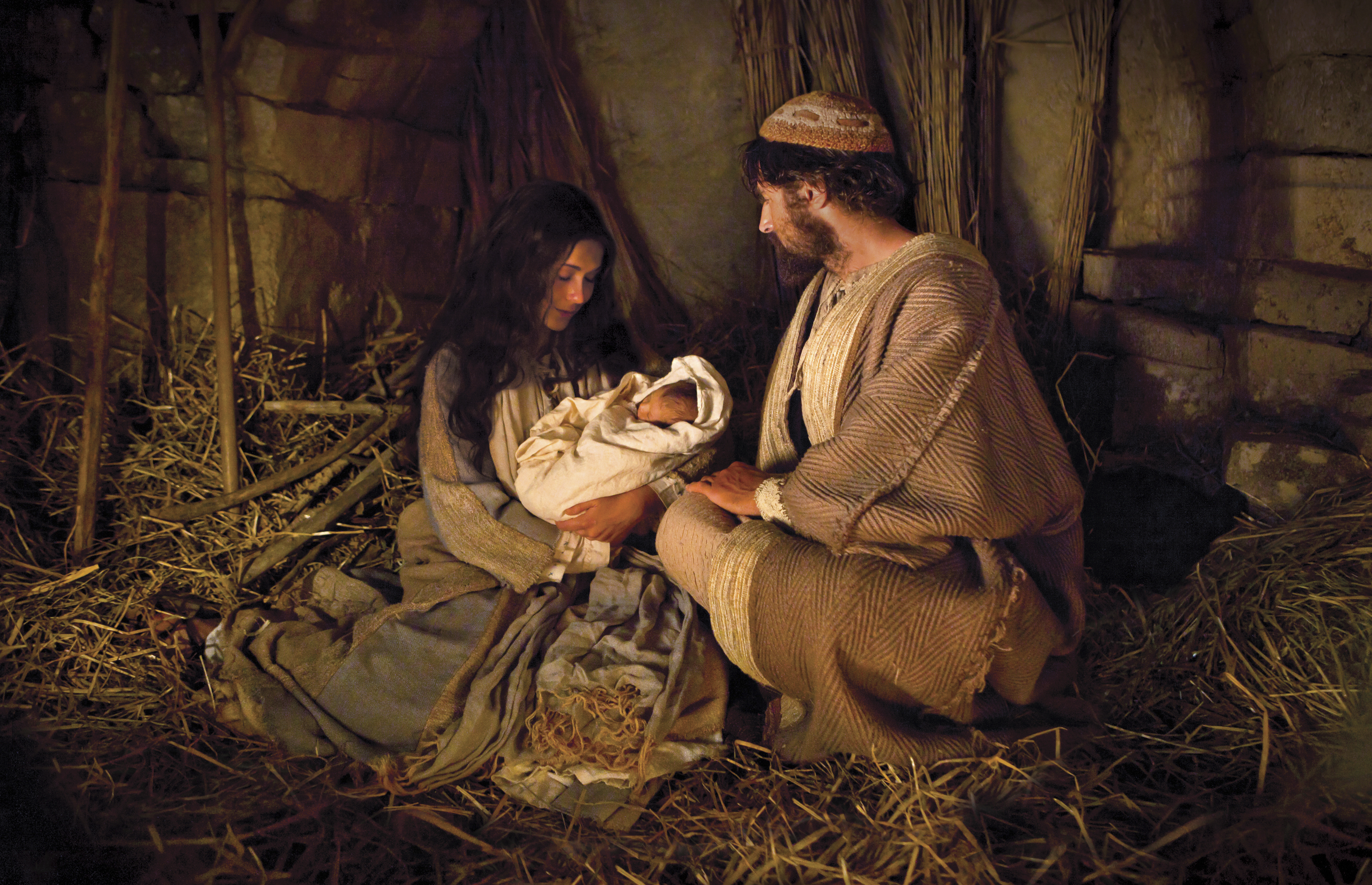
The first book of the Bible declares Jesus’ linage from the tribe of Judah.[1] The pagan prophet Balaam predicted that a star would announce His birth.[2] Several passages predict that Jesus would come from the line of King David.[3] Our beginning verses predicts that Jesus would come as a child.[4] He would be born of a virgin.[5] His birthplace would be Bethlehem.[6] Shepherds and wisemen would worship Him.[7] Baby boys in Bethlehem would be slaughtered in an attempt to kill the baby Jesus.[8] His earthly parents would escape to Egypt and return after Herod the Great died.[9]
All of these predictions came true and these only surrounded His birth. All those concerning His earthly ministry, His death, burial and resurrection came true exactly as predicted. The odds of just those listed concerning His birth coming true are astronomical. Yet Jesus fulfilled every one of those things which were prophesied about His first coming. If that cannot convince the skeptics that the Bible is true, then they just do not want to believe.
More prophesies exist about His second coming than exist about His first coming. If the prophecies of His first advent were fulfilled with 100% accuracy, we can be certain that the prophecies concerning His second advent will be come to pass just as predicted. In fact, we see many of those taking place before our eyes.
The religious leaders of Jesus’ time had access to all the prophecies concerning Jesus’ first coming, and they completely missed Him. He is coming again. How many today are so busy doing “religious” things that they will miss His second coming? Are you ready? If not, please read my page on “Securing Eternal Life.”




 Ernie's Musings