Category Archives: Apologetics

Says Who?

After the Flood

Knowing this first, that there shall come in the last days scoffers, walking after their own lusts,   (2 Peter 3:3)

“Scoffers,” as defined by the Apostle Peter in the context of this verse, are those who reject the teaching of Scripture concerning the return of our Lord Jesus Christ, but more generally, scoffers ridicule all teachings of Scripture. Scoffers become, as the Apostle Paul described, “fools” – “Professing themselves to be wise” (Romans 1:22). A “fool,” as defined by the Bible, is one who “hath said in his heart, There is no God” (Psalm 14:1). While the world has always had a good number of “foolish scoffers,” it seems, to me at least, that their ranks have swelled in these “last days,” or perhaps they have just gotten more brazen. The open and unapologetic Christian will sooner or later encounter scoffers that will mock and challenge one’s faith in the Word of God. When that happens, Peter says, “sanctify the Lord God in your hearts: and be ready always to give an answer to every man that asketh you a reason of the hope that is in you with meekness and fear” (1 Peter 3:15, emphasis mine).

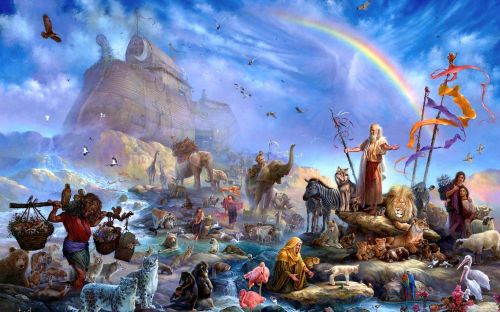
Recently I had an electronic exchange with a scoffer pretending to be a Christian. (“Wherefore by their fruits ye shall know them.” Matthew 7:20) This scoffer mocked the account of the Global Flood recorded in Genesis. He questioned the construction of the Ark, the collecting of the animals, the supposition that dinosaurs were carried onboard and the logistics of taking care of the menagerie. He asserted that dinosaurs did not live at the same time as the biblical account of the Flood, then chided that it made “me ashamed that fundamentalist Christianity is part of our culture, that these ‘adults’ actually live in a mass fantasy world, manipulated by others in their own fantasy world, some of whom have PhD after their name” – referring to creation scientists. He continued, “Don’t you realize that the New Testament gives us permission to abandon the fantastic myths of the Old Testament, and that the only teaching of Jesus is compassion, for which we don’t need a Bible, or for that matter, a religion?” (emphasis mine)

Proverbs teaches us to “Answer a fool according to his folly, lest he be wise in his own conceit.” (Proverbs 26:5) I assumed the scoffer to be “Christian” from his suggestion “that the New Testament gives us permission to abandon the fantastic myths of the Old Testament.” Although I found it rather astounding that a “Christian” would only accept less than one-third of the Bible. Obviously, he does not know his Bible very well, which is not something for which to be proud, if one really is a Christian. Consider the following:

In the beginning was the Word, and the Word was with God, and the Word was God. The same was in the beginning with God. All things were made by him; and without him was not any thing made that was made … And the Word was made flesh, and dwelt among us, (John 1:1-3, 14)

Obviously, that is talking about Jesus, but compare that with Genesis 1:1 “In the beginning God created the heaven and the earth.” Here the New Testament (NT) claims that Jesus IS God. That being the case, consider the following:

But from the beginning of the creation God made them [Adam and Eve] male and female. For this cause shall a man leave his father and mother, and cleave to his wife; And they twain shall be one flesh: so then they are no more twain, but one flesh. (Mark 10:6-8, emphasis mine)

For in those days shall be affliction, such as was not from the beginning of the creation which God created unto this time, neither shall be. (Mark 13:19, emphasis mine)

Ye are of your father the devil, and the lusts of your father ye will do. He was a murderer from the beginning, and abode not in the truth, because there is no truth in him. When he speaketh a lie, he speaketh of his own: for he is a liar, and the father of it. (John 8:44, emphasis mine)

In the verse above Jesus was referring to Genesis 3:1-5, “Now the serpent [the devil] was more subtil than any beast of the field which the LORD God had made. And he said unto the woman, Yea, hath God said, Ye shall not eat of every tree of the garden? … And the serpent said unto the woman, Ye shall not surely die” (emphasis mine)

But as the days of Noe [Noah] were, so shall also the coming of the Son of man be. For as in the days that were before the flood they were eating and drinking, marrying and giving in marriage, until the day that Noe entered into the ark, (Matthew 24:37-38, see also Luke 17:26-27, emphasis mine)

Verily I say unto you, It shall be more tolerable for the land of Sodom and Gomorrha in the day of judgment, than for that city. (Matthew 10:15, emphasis mine)

But I say unto you, That it shall be more tolerable for the land of Sodom in the day of judgment, than for thee. (Matthew 11:24, emphasis mine)

And whosoever shall not receive you, nor hear you, when ye depart thence, shake off the dust under your feet for a testimony against them. Verily I say unto you, It shall be more tolerable for Sodom and Gomorrha in the day of judgment, than for that city. (Mark 6:11, emphasis mine)

But the same day that Lot went out of Sodom it rained fire and brimstone from heaven, and destroyed them all. (Luke 17:29, emphasis mine)

For as Jonas [Jonah] was three days and three nights in the whale’s belly; so shall the Son of man be three days and three nights in the heart of the earth. The men of Nineveh shall rise in judgment with this generation, and shall condemn it: because they repented at the preaching of Jonas; and, behold, a greater than Jonas is here. (Matthew 12:40-41, emphasis mine)

Jesus said unto them, Verily, verily, I say unto you, Before Abraham was, I am. (John 8:58, emphasis mine)

By now, it should be obvious to even the most Bible illiterate that Jesus, who is God the Creator, affirmed the “myths” of the Old Testament (OT). Not only that, but being God Himself, He is also Author of those “myths.” The NT says that ALL Scripture is “breathed out” by God.

All scripture is given by inspiration of God, and is profitable for doctrine, for reproof, for correction, for instruction in righteousness (2 Timothy 3:16, emphasis mine)

Knowing this first, that no prophecy of the scripture is of any private interpretation. For the prophecy came not in old time by the will of man: but holy men of God spake as they were moved by the Holy Ghost. (2 Peter 1:20-21, emphasis mine)

The writers of the NT only knew the OT as “Scripture.”  So, how did they view the “myths” of the OT?

And to make all men see what is the fellowship of the mystery, which from the beginning of the world hath been hid in God, who created all things by Jesus Christ: (Ephesians 3:9, emphasis mine)

He that committeth sin is of the devil; for the devil sinneth from the beginning. For this purpose the Son of God was manifested, that he might destroy the works of the devil. (1 John 3:8, referring to Genesis 3:1-5, emphasis mine)

By faith Noah, being warned of God of things not seen as yet, moved with fear, prepared an ark to the saving of his house; by the which he condemned the world, and became heir of the righteousness which is by faith. (Hebrews 11:7, emphasis mine)

Which sometime were disobedient, when once the longsuffering of God waited in the days of Noah, while the ark was a preparing, wherein few, that is, eight souls were saved by water. (1 Peter 3:20, emphasis mine)

And [God] spared not the old world, but saved Noah the eighth person, a preacher of righteousness, bringing in the flood upon the world of the ungodly; And turning the cities of Sodom and Gomorrha into ashes condemned them with an overthrow, making them an ensample unto those that after should live ungodly; (2 Peter 2:5-6, emphasis mine)

Even as Sodom and Gomorrha, and the cities about them in like manner, giving themselves over to fornication, and going after strange flesh, are set forth for an example, suffering the vengeance of eternal fire. (Jude 1:7, emphasis mine)

By faith they [Israel] passed through the Red sea as by dry land: which the Egyptians assaying to do were drowned. By faith the walls of Jericho fell down, after they were compassed about seven days. (Hebrews 11:29-30, emphasis mine)

So, the NT confirms all of these “myths.” What then should we do? Discard the New Testament? If Jesus is who the NT says He is, then the scoffer needs to rethink his prideful arrogance. If all the accounts of the OT are simply myths, then Jesus was either misinformed, which precludes His omniscience, or He was lying. In either case, He would be disqualified as God because God, by definition, is all-knowing, and He cannot lie (Numbers 23:19; Hebrews 6:18)

If the scoffer really is a “Christian,” (which I doubt), he should take into consideration that the NT confirms the OT miraculous accounts. Therefore, at least by NT standards, the OT is true. If the OT is true, then science rightly practiced will validate what it has to say about Creation, the Fall, the Flood, and the division of nations, as well as all other fantastic accounts of the Bible. The Institute for Creation Research does scientific research that confirms what the Bible has to say about creation and other matters of science. The Bible is not a science text book, but when it speaks on scientific matters, it is accurate and trustworthy. The scoffer knows neither the Bible nor science.
3 Comments

Filed under Apologetics, Atheism, Bible, Christianity, Creation, End Times, Evangelism, Gospel, Origins, Religion, Satan, Science, Second Coming of Christ, Theology

A Willing Heart

first-baptist-church-dallas

And they came, every one whose heart stirred him up, and every one whom his spirit made willing, and they brought the LORD’S offering to the work of the tabernacle of the congregation, and for all his service, and for the holy garments. And they came, both men and women, as many as were willing hearted.  (Exodus 35:21-22a)

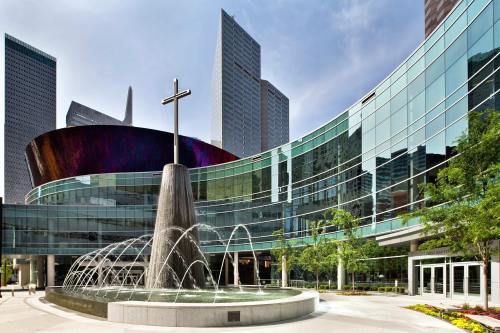
About three years ago, actually a little earlier than that, the First Baptist Church of Dallas embarked on a massive building campaign to completely renovate the entire campus in Downtown Dallas. The renovation included demolishing several outdated buildings with the exception of the historic landmark sanctuary, and building a new worship center and children’s education center at a cost of over $135 million. This in itself was a historic undertaking, in that no church in modern history had ever taken on such a challenge, and that was at a time when the economy was in “the tank.” The people of the First Baptist Church of Dallas contributed out of their abundance and out of their scarcity, but all from what God had provided; and together the funds were raised so that the project was completed in 2013 without any debt.

Of course, the detractors came out to criticize like Judas, “Why was that money wasted on building a fancy building rather than using it to feed the poor!” However, those same critics praised Jerry Jones for building a temple to the football gods in Arlington, Texas and imposing eminent domain to steal private property to do so. Meanwhile Jerry Jones charges outrageous admission prices to the football worshipers that attend his services, while admission is free to anyone at First Baptist Dallas. There is no comparison, but the God haters are blinded to the irony. The point is that the people of First Dallas gave willingly out of grateful hearts to God, not out of coercion.

Such was the case with the people of Israel. Not long after being freed from bondage in Egypt by the mighty hand of God, they were asked to contribute to the building of the Tabernacle. This followed after Moses’ second trip up to Mount Sinai to receive the Law from God. On his first trip, the children of Israel became tired of waiting and presumed him dead, so they asked Aaron to “make us gods, which shall go before us” (Exodus 32:1). Aaron complied and gathered gold from them and he “cast it into the fire, and there came out this calf” (Exodus 32:24). When Moses descended from the mountain and saw what the children of Israel had done, “his anger waxed hot, and he cast the tables out of his hands, and brake them beneath the mount” (Exodus 32:19b).  After punishing the people severely (Exodus 32:26-28), Moses went before God and confessed the sin of the people, and then he did a most astonishing thing. He interceded for the people and asked God to forgive them, “and if not, blot me, I pray thee, out of thy book which thou hast written” (Exodus 32:32, emphasis mine). Here we see in Moses a preview of what God in Christ would ultimately do. He offered his own life for the sins of his people. I am sure God appreciated the gesture, but His message is clear, “Whosoever hath sinned against me, him will I blot out of my book” (Exodus 32:33). Every individual is accountable to God for his own sin.

Once things settled down, Moses returned to receive the Law from God a second time. This time when he returned, things were much different. While he was up on the mountain, in addition to receiving the law for the second time, God gave Moses detailed instructions for the construction of the Tabernacle – the portable precursor to the Temple. Upon his return, the first item of business was the fabrication of the Tabernacle. The required materials came from the people. “And Moses spake unto all the congregation of the children of Israel, saying, This is the thing which the LORD commanded, saying,” (Exodus 35:4). The word “command” is a poor translation for the Hebrew word tsâvâh meaning to constitute, enjoin. It carries the sense of putting out an idea or a request and urging participation. This if further clarified in the verse that follows. “Take ye from among you an offering unto the LORD: whosoever is of a willing heart, let him bring it, an offering of the LORD” (Exodus 35:5, emphasis mine). The word “offering” is the Hebrew word tǝrûmâh, which means a present or a gift; and this should come from a “willing heart.” In other words, God did not compel them to give; they were encouraged to give out of a willing heart.

This they did until all the material required for the Tabernacle was given and more. The donations came in until Moses had to make them stop giving. “The children of Israel brought a willing offering unto the LORD, every man and woman, whose heart made them willing to bring for all manner of work, which the LORD had commanded to be made by the hand of Moses” (Exodus 35:29). “And Moses gave commandment, and they caused it to be proclaimed throughout the camp, saying, Let neither man nor woman make any more work for the offering of the sanctuary. So the people were restrained from bringing. For the stuff they had was sufficient for all the work to make it, and too much” (Exodus 36:6-7, emphasis mine). “Thus was all the work of the tabernacle of the tent of the congregation finished: and the children of Israel did according to all that the LORD commanded Moses, so did they” (Exodus 39:32).

The 80-20 rule is a well-established axiom that holds true in all areas of life. Twenty percent of the people do 80% of the work or give 80% resources. When the people of First Baptist Dallas took on the prodigious task of a $135 million campus make-over, no doubt 80% of the people stood by and just looked on, while 20% gave everything they could out of a willing heart, and God honored, and the task was accomplished with some to spare. As a result, downtown Dallas offers a showplace that honors God. Many are drawn to the church because of what they see on the outside, but the stay because of what they find on the inside – the many, many people that gave from a willing heart. Those 20% or so are also the ones that you will find working in a variety of ways, greeting, directing parking, ushering, teaching, and so on. If you ask them they will tell you that it is they who receive the blessing. “[R]emember the words of the Lord Jesus, how he said, It is more blessed to give than to receive” (Acts 20:35). It does not matter if one’s gift is money or labor, the blessing comes when the gift is from a willing heart.

Oh, and by the way, the First Baptist Church of Dallas continues to minister to the poor, the homeless, and the needy in the city and around the world. Jerry’s temple to the football gods only serves the want of those who can afford tickets to the events held at that venue. Do I hear any complaints about that? Chirp, chirp! Chirp, chirp! Chirp, chirp!

2 Comments

Filed under Apologetics, Christianity, Religion

Eyes That See Not

Miracles 9812570_ml

Son of man, thou dwellest in the midst of a rebellious house, which have eyes to see, and see not; they have ears to hear, and hear not: for they are a rebellious house.  (Ezekiel 12:2)

In this day of technological marvels it is increasingly more difficult to believe in miracles. It seems that every extraordinary accomplishment or phenomenon can be explained by some naturalistic means. Today we possess the ability to send men to the moon and return them safely. We send probes deep into space to explore distant planets in our solar system. Our space telescopes look deep into the far reaches of our universe. Medical science, while it has yet to find the cure for cancer, has made remarkable progress in healing patients having the dread disease. Scientists in the study of eugenics continue to make inroads into the modification of human DNA with the hopes of creating super humans with capabilities for greater physical endurance, greater mental agility and intellectual acuity, better vision with the ability to see into the infrared light spectrum, and all of this while consuming less food.[1],[2] This, of course, is for the betterment of mankind, and is seen as our next step in human evolution.

No wonder, then, that scoffers deny the miracles recorded in the Bible. However, this is nothing new. Skepticism in the Word of God has existed since the Garden of Eden: “Yea, hath God said …” (Genesis 3:1). During the Age of Enlightenment (a misnomer in my opinion) “reason” supplanted “faith” so that every effect resulted from a natural cause. Reason, then, eliminated miracles because from this perspective, everything has a natural explanation. Enlightened theologians attempted to explain the miracles of the Bible though natural means. Some who were less capable for the task simply rejected the miracles altogether and relegated them to the category of myth. Thomas Jefferson, for example, redacted the New Testament by excluding every record of Jesus’ miracles from the Gospels.[3]

Rejection of the Bible continues today in greater force due to our technological advancements. So, what is a miracle, anyway? By definition, a miracle is “an effect or extraordinary event in the physical world that surpasses all known human or natural powers and is ascribed to a supernatural cause[4] (emphasis mine). By definition, a miracle has no natural explanation and can only be attributed to the supernatural. Arguably, the greatest miracle of all is the universe itself, and all that it contains – from the largest star to the tiniest subatomic particle. Even though there is great disagreement among atheistic scientists about the origin of the universe, they all tenaciously seek a natural explanation for the existence of it all. The Big Bang theory is in such crisis that some have proposed an “eternal” universe disregarding the Second Law of Thermodynamics (entropy – everything is dying). Yet the Bible offers the simplest explanation of all: “In the beginning God created the heaven and the earth” (Genesis 1:1, emphasis mine) – beginning (time), heaven (space), earth (matter/energy) – the universe. The existence of the universe is a miracle – an immense effect brought about by a “supernatural” cause – God.

If one rejects this greatest of all miracles, which has no natural explanation despite all the theories man can contrive, then no other miracles recorded in Scripture are credible. For this reason, liberal theologians contend that the Global Flood (Genesis 6-9) was just local in spite of the unreasonableness of the command to build an Ark for the event. The confusion of tongues at the Tower of Babel mythically explains the diversity of languages. The destruction of Sodom and Gomorrah resulted from an asteroid impact or a long-since vanished volcano. The Red Sea crossing came about by a hot easterly wind that died up the very shallow Reed Sea – a marsh. The quail with which God fed the Israelites in the wilderness (Exodus 16:13) were migrating and coincidently tired out exactly where Israel was camped so that about a million Israelites ate until full. Downplaying such miracles takes little effort, but they are equally defensible by employing some simple logic. What about the sun stopping (Joshua 10:11-13), or regressing ten degrees (2 Kings 20:11)? Can an ax head really float (2 Kings 6:5-6)? These things defy the physical laws as we know them, and since the skeptic fails in concocting natural explanations for such occurrences, these miracles are attributed to either fantasy or myth. Either way, the skeptic rejects all miracles. For the skeptic, miracles either have a natural explanation, or they will have a natural explanation when “science” learns more, or they are simply fantasy.

These are they who “have eyes to see, and see not” (our starting verse); but for those who “have eyes to see,” miracles are real, and they happen every day.  The creation of a new life in the womb occurs thousands of times daily. Those who “see not” attribute that to natural biological reproduction. But out of millions of sperm cells deposited during sexual intercourse, how does one particular sperm cell just happen to fertilize one particular ovum to create one very unique individual? Who writes the DNA code for the 46 chromosomes (23 from each parent) that make up the one-of-a-kind person we are individually? Even identical twins are not exactly identical. The naturalist has no explanation for this and attributes it to random chance. God says, “Before I formed thee in the belly I knew thee; and before thou camest forth out of the womb I sanctified thee …” (Jeremiah 1:5). Those who have “eyes to see” respond, “I will praise thee; for I am fearfully and wonderfully made: marvellous are thy works; and that my soul knoweth right well. My substance was not hid from thee, when I was made in secret, and curiously wrought in the lowest parts of the earth. Thine eyes did see my substance, yet being unperfect; and in thy book all my members were written, which in continuance were fashioned, when as yet there was none of them” (Psalm 139:14-16). They who “have eyes to see, and see not” suffer from a spiritual blindness that prevents them from seeing the supernatural work of God – the miracles that take place every day.

They who have “eyes to see,” believe the words of Jesus when He said, “Again I say unto you, That if two of you shall agree on earth as touching any thing that they shall ask, it shall be done for them of my Father which is in heaven” (Matthew 18:19). When God answers their prayer, they who have “eyes to see” recognize the Source and give credit to Whom credit is due.

Recently my brother-in-law was involved in a farming accident where he was run over by a huge farm tractor. There are so many ways that he could have died that day. He tells me that when the tractor ran over him he was completely at peace knowing that he would soon see Jesus. He says, “I kept looking around expecting to see heaven, but all I could see was corn stalks.” The tractor he had been driving was pulling a trailer full of silage, and it was coming toward him to get him a second time. The tractor had crushed his pelvis and broken his hip so that he was unable to move, yet he felt that “Someone” rolled him out of the way of the oncoming trailer. Some time elapsed before his son-in-law found him and contacted emergency services. He was flown to Omaha where he spent two weeks in the Intensive Care Unit of the hospital. He had several surgeries to reconstruct his pelvis and replace his hip. Today, nearly four months after the accident, he has returned to work and is walking with the assistance of a cane. The skeptic would attribute his recovery to the excellent work of the physicians that attended him, and they completely miss the miracle that transpired. Those who have “eyes to see” know that even before anyone knew of the accident, God was already at work to preserve his life. Then as soon as “believing” friends and family were made aware of the situation, petitions to the Father started flooding the gates of heaven on his behalf and continued throughout his recovery. Those with “eyes to see” see the miracle that those who “see not” miss.

For them who “see not” the miracles that God performs every day but have a desire to see, Jesus says, “blessed are they that have not seen, and yet have believed” (John 20:29). “But without faith it is impossible to please him: for he that cometh to God must believe that he is, and that he is a rewarder of them that diligently seek him” (Hebrews 11:6). “Now faith is the substance of things hoped for, the evidence of things not seen” (Hebrews 11:1). Jesus said, “Ask, and it shall be given you; seek, and ye shall find; knock, and it shall be opened unto you: For every one that asketh receiveth; and he that seeketh findeth; and to him that knocketh it shall be opened” (Matthew 7:7-8).  To have eyes that see requires only that one take God at His Word and ask. “[I]f thou shalt confess with thy mouth the Lord Jesus, and shalt believe in thine heart that God hath raised him from the dead, thou shalt be saved” (Romans 10:9). If you have “eyes that see not,” Jesus says, “anoint thine eyes with eyesalve, that thou mayest see” (Revelation 3:18). That “eye-salve” is the Word of God contained in the Bible. It will teach you how to see the miracles of God.

Notes:


[1]  http://www.inhumanthemovie.com/

[2]  Horn, Thomas and Nita Horn, Forbidden Gates: How Genetics, Robotics, Artificial Intelligence, Synthetic Biology, Nanotechnology, and Human Enhancement Herald The Dawn Of TechnoDimensional Spiritual Warfare, (Defender Publishing LLC, January 1, 2011)

[3]  https://en.wikipedia.org/wiki/Jefferson_Bible

[4]  http://dictionary.reference.com/browse/miracle?s=t

Comments Off on Eyes That See Not

Filed under Apologetics, Atheism, Bible, Christianity, Creation, Death, Evangelism, Evolution, Gospel, Heaven, Origins, Prayer, Religion, Salvation, Science, Theology, Worship

God’s Laws

GodsLaw

… in thy seed shall all the nations of the earth be blessed; Because that Abraham obeyed my voice, and kept my charge, my commandments, my statutes, and my laws. (Genesis 26:4-5)

I don’t know where we, Evangelical Christians, have gotten the idea that the Old Testament laws no longer apply. A few years ago, Dr. Charles Swindoll came out with a book entitled Grace Awakening where, I think, he attempts to assuage the guilt some Christians bear due to unnecessary legalism and encourage Christians to take joy in the freedom found through Christ. I have a great deal of respect for Dr. Swindoll. He is a far greater scholar and theologian that I can ever hope to be, but I think he unintentionally opened the door to liberalism here.

Swindoll rightly affirms that salvation, i.e., “justification” cannot be achieved through the works of the Law (Galatians 2:16, Ephesians 2:8-9), but then he unintentionally, I hope, implies that the Christian is no longer subject to the law. Here it is that we part ways, because the results of “grace living,” from my observation, are “carnal” Christians. The result is that modern Evangelical Christians are indistinguishable from the world around them, except on Sundays, when they are at their worship services.

Here is the truth: no one can be saved – be justified, have eternal life – through any act or effort of their own (Galatians 2:16, Ephesians 2:8-9). It is only through grace – the unmerited favor, the free gift – of God. It is all God’s doing, and it happens the instant one believes – places his trust – in the saving work of Jesus’ death, burial and resurrection (John 1:12; 3:16, 36). Once that takes place, the matter is forever settled. One does not have to keep a long list of laws to come to that point. One does not need the proper theological understanding to come to that point. In the words of the children’s chorus, “Jesus loves me this I know, for the Bible tells me so.” Salvation takes place the instant one believes. That one act settles the matter. Now there remains the matter of “living” the Christian life. Here is where the Law comes to play.

Before I develop that point, let me preface the keeping of the Law by assuring the believer, especially the new Christian, that keeping the Laws of God is not accomplished through our own effort. At the moment we are saved, God’s Spirit comes to reside in us (1 Corinthians 3:16). God says, “I will put my law in their inward parts, and write it in their hearts” (Jeremiah 31:33). Jesus said, “Take my yoke upon you … For my yoke is easy, and my burden is light (Matthew 11:29-30). The “burden” of the Law, for the Christian, is born supernaturally, so that the Christian should not suffer undue stress over keeping the law; however that does not mean no effort is required. Jesus said, “If ye love me, keep my commandments” (John 14:15), so obviously some effort is involved on the part of the Christian, but that effort is aided by the Holy Spirit that dwells within us.

So, what are those commandments, i.e. the laws, which the Christian must keep? Simply speaking, they are the same laws God has always maintained. God’s laws are eternal. God says, “I am the LORD, I change not” (Malachi 3:6, emphasis mine). Jesus said, “For verily I say unto you, Till heaven and earth pass, one jot or one tittle shall in no wise pass from the law, till all be fulfilled” (Matthew 5:18, emphasis mine). In our beginning verse above (Genesis 26:4-5), Abraham lived about 500 years before the Mosaic Law was given, and yet God says of him, “Abraham obeyed my voice, and kept my charge, my commandments, my statutes, and my laws” (emphasis mine). When Jesus said, “Think not that I am come to destroy the law, or the prophets: I am not come to destroy, but to fulfil” (Matthew 5:17, emphasis mine).  By fulfilling the Law, He did not negate God’s law. Rather, by perfectly keeping God’s law, He qualified Himself to be the perfect, sinless sacrifice for our sins, so that we don’t have to – not that we could ever keep God’s law perfectly. As His followers, we are still responsible to keep His commandments.

How does the Christian accomplish that? Jesus gave us the simplest way to accomplish this. He said, “Thou shalt love the Lord thy God with all thy heart, and with all thy soul, and with all thy mind … And the second is like unto it, Thou shalt love thy neighbour as thyself. On these two commandments hang all the law and the prophets” (Matthew 22:37-40). This is good for beginners, but as the Christian grows in the faith, the “heart, soul, and mind” will want to do more out of love for “the Lord thy God.”

Love for God implies love for God’s Word – all of God’s Word, which includes the Old Testament. There the Christian will find the Law of God in the first five books of the Bible. Obviously some of those laws no longer apply. For example, we no longer have to offer animal sacrifices, because the blood of Christ is the ultimate sacrifice. Most of us Christians are Gentiles, so the dietary laws no longer apply, although, following them might make us healthier. Some of the dress code does not apply to Christians, however the principal behind such laws is still in effect.

Many of those laws were given to distinguish God’s people from the heathen nations around them.  God said, “Now therefore, if ye will obey my voice indeed, and keep my covenant, then ye shall be a peculiar treasure unto me above all people: for all the earth is mine (Exodus 19:5, emphasis mine). That word “peculiar” in the Hebrew implies something “special” that is “shut up” and treasured. In another place, God said, “For thou art an holy people unto the LORD thy God, and the LORD hath chosen thee to be a peculiar people unto himself, above all the nations that are upon the earth” (Deuteronomy 14:2, emphasis mine). “Holy” means to be set aside as consecrated or sacred. In fact God demands holiness from His people: “Sanctify yourselves therefore, and be ye holy: for I am the LORD your God” (Leviticus 20:7, emphasis mine). For those who think that the Old Testament no longer applies, that command is repeated in the New Testament (1 Peter 1:15-16).

God’s people are to be distinct from the world. They should be set apart. They should be holy. God’s people should reflect God, not mimic the world. The way we do that is to follow God’s laws. Will we be able to follow God’s laws perfectly? Don’t count on it, and don’t be disheartened when you fail. But that does not mean that we don’t try. When we do fail, we can find comfort in knowing that “If we confess our sins, he is faithful and just to forgive us our sins, and to cleanse us from all unrighteousness” (1 John 1:9). We can still be joyful knowing that God loves us and has forgiven us even when we fail to keep His laws perfectly. But don’t think for one moment that God’s laws can be discarded by the Christian. Indeed, Paul, that great advocate of grace said, “Wherefore the law is holy, and the commandment holy, and just, and good” (Romans 7:12) because it gives us a standard that we can follow. It helps us to recognize sin in our lives and it guides us to holy living. But on the day we stand before God’s throne, we will not be judged by the Law, but by the blood that Jesus shed on the cross for us.

2 Comments

Filed under Apologetics, Christianity, Evangelism, Gospel, Religion, Salvation, Theology

Almost Gone

new-year-clock

Brethren, I count not myself to have apprehended: but this one thing I do, forgetting those things which are behind, and reaching forth unto those things which are before, I press toward the mark for the prize of the high calling of God in Christ Jesus. (Philippians 3:13-14)

The presents are gone from under the tree. The wrappings, ribbons and bows are all in the trash, and all the guests left days ago. Not many days remain in what’s left of this year, and soon we’ll be singing “Auld Lang Syne.”

The older I get, the quicker the years seem to zoom by. This year is no exception. I must confess that this year has been somewhat of a disappointment to me. You may attribute that to the state of politics, the economy, the rise of terror, the decline of morality in our nation, etc., and while all those things can put a damper on one’s outlook, they really are not the source of my disappointment.

I started this year with the genuine hope that this would be the year that Christ returned, and we, His children, would be taken up in the clouds to meet Him in the air (1 Thessalonians 4:17).  Many of the signs seemed to converge to make a good case for this being the year. First there was the third Blood Moon of the rare tetrad at Passover in April that was preceded by a total solar eclipse in March. Then the fourth Blood Moon of the tetrad appeared during the Feast of Tabernacles in late September. Add to that, the final Blood Moon followed the end of the Shamitah which modern “prophets” saw as a sign of economic collapse, (which did not occur in any way to cause great consternation). To boot, all of this leads to the Year of Jubilee, which began on Rosh Ha-Shanna, September 13.

All this year, I have looked toward the eastern sky and cupped my ear for the sound of the trumpet, and it didn’t come.

Jesus did not come. 😦

I am disappointed, but not disheartened or discouraged. After all, Jesus said, “But of that day and that hour knoweth no man, no, not the angels which are in heaven, neither the Son, but the Father” (Mark 13:32, emphasis mine). The modern day prophets made some good guesses solidly based on Scripture, but they obviously missed it. To their credit, none would dogmatically set a date for Christ’s return, and all offered the disclaimer that God is not bound by their speculations. Still, there was the hope.

Should that hope be abandoned simply because mortal men guessed wrong? As Paul would say, “God forbid!” Jesus promised to return: “Let not your heart be troubled: ye believe in God, believe also in me. In my Father’s house are many mansions: if it were not so, I would have told you. I go to prepare a place for you. And if I go and prepare a place for you, I will come again, and receive you unto myself; that where I am, there ye may be also” (John 14:1-3, emphasis mine). There is absolutely no reason not to believe that He will do as He promised. The Old Testament is full of prophecies foretelling of His first coming, and all were proven true beyond any shadow of doubt. So accurately were those promises fulfilled, that the probability of one man fulfilling just eight of them is a virtual impossibility, yet Jesus fulfilled them all. If Scripture proved true about His first coming, then it will certainly prove true for His second coming.

A few days still remain in 2015. Jesus may return before the clock strikes midnight on December 31st, or He may yet delay. Twenty-Sixteen is the Year of Jubilee and that would be a great time for Christ to return. And what if He does not come in 2016? So what! Jesus promised He will return. In the meantime He said, “It is not for you to know the times or the seasons, which the Father hath put in his own power. But ye shall receive power, after that the Holy Ghost is come upon you: and ye shall be witnesses unto me both in Jerusalem, and in all Judaea, and in Samaria, and unto the uttermost part of the earth” (Acts 1:7-8, emphasis mine). “Go ye therefore, and teach all nations, baptizing them in the name of the Father, and of the Son, and of the Holy Ghost: Teaching them to observe all things whatsoever I have commanded you: and, lo, I am with you alway, even unto the end of the world. Amen” (Matthew 28:19-20, emphasis mine). We must do this because, “The Lord is not slack concerning his promise, as some men count slackness; but is longsuffering to us-ward, not willing that any should perish, but that all should come to repentance” (2 Peter 3:9, emphasis mine). Likewise, we should not be willing that any should perish.

Does this mean I should stop looking and listening? Of course not! “Blessed is he that readeth, and they that hear the words of this prophecy, and keep those things which are written therein: for the time is at hand” (Revelation 1:3, emphasis mine). “Henceforth there is laid up for me a crown of righteousness, which the Lord, the righteous judge, shall give me at that day: and not to me only, but unto all them also that love his appearing” (2 Timothy 4:8). So, no lollygagging! There is work yet to be done! “Blessed is that servant, whom his lord when he cometh shall find so doing” (Matthew 24:46). Perhaps in 2016!

2 Comments

Filed under Apologetics, Christianity, Current Events, End Times, Evangelism, Gospel, New Year's Day, Religion, Salvation, Second Coming of Christ, Theology