Category Archives: Christianity

Feet Only

Jesus saith to him, He that is washed needeth not save to wash his feet, but is clean every whit: and ye are clean, but not all. (John 13:10)

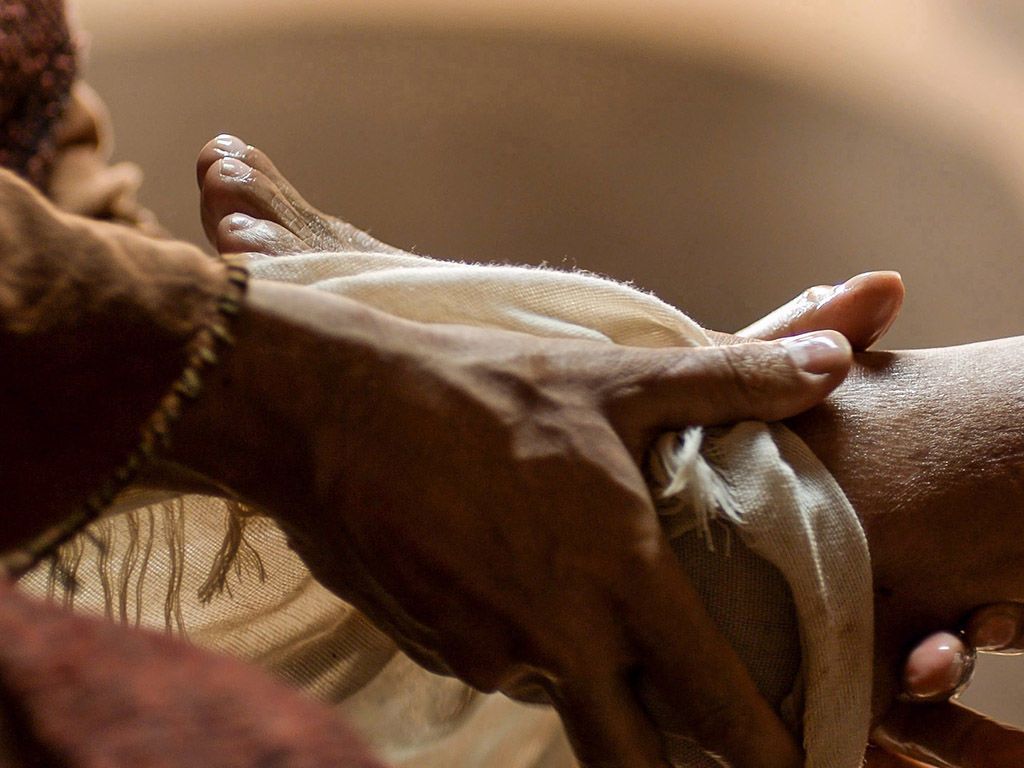
On the evening before His crucifixion, Jesus celebrated Passover with His disciples. The Apostle John records in his Gospel that Jesus “laid aside his garments; and took a towel, and girded himself” (John 13:4) and proceeded to wash the feet of His disciples.

In those days, the majority of travel was done on foot. The footwear of the day protected only the sole of the feet leaving the rest of the feet exposed to the elements. Most of the roads were no more than dirt trails so that feet collected a good amount of road dirt.

It was customary for the host of a house to welcome the traveler by washing the road dirt off their feet. This task was assigned to the lowest servant or the youngest member of the household. For whatever reason, no one performed the customary foot washing at this house, perhaps because it was a private gathering not hosted by the homeowner.

Whatever the reason, Jesus chose this time to give an object lesson. Jesus rose from the table, removed his outer garment, took a towel, and some water, and performed the task of the lowliest servant. Jesus washed all of the disciples’ feet, but when he got to Peter, Peter protested. “Lord, dost thou wash my feet?” (John 13:6). Peter was not being “holier than thou,” in his refusal to have Jesus wash his feet. Perhaps, as he watched Jesus wash the other’s feet, he thought, “Why didn’t someone else do that? The Master should not be the one doing that! Maybe I should be the one washing feet.” Whatever may have crossed his mind, it was obvious that he was humiliated that his Lord should lower Himself to that position.

“Jesus answered and said unto him, What I do thou knowest not now; but thou shalt know hereafter” (John 13:7). We seldom know what God is doing in our lives when we go through trials, but when we look back on our lives, we can see how God directed our circumstances for our good.[1] Peter did not get the lesson; “Thou shalt never wash my feet. Jesus answered him, If I wash thee not, thou hast no part with me. Simon Peter saith unto him, Lord, not my feet only, but also my hands and my head. Jesus saith to him, He that is washed needeth not save to wash his feet, but is clean every whit: and ye are clean, but not all.” (John 13:8-10).

Jesus washed all of the disciples’ feet. They did not need a bath; only their feet needed washing, but Jesus said not all were clean. The unclean one to whom Jesus referred as Judas Iscariot who would betray Him. It’s not that Judas failed to take his Sabbath Day mikvah; Jesus referred to Judas’ spiritual condition, not his physical cleanliness. Therefore, the significance of the foot-washing act goes deeper than road grime.

The disciples were “clean” because they believed that Jesus was their expected Messiah. When Jesus had asked, “Whom do you say that I am?” Peter confessed, “Thou art the Christ, the Son of the living God” (Matthew 16:16). The key to salvation (i.e., cleansing) is “That if thou shalt confess with thy mouth the Lord Jesus, and shalt believe in thine heart that God hath raised him from the dead, thou shalt be saved” (Romans 10:9). Obviously, Judas had not believed: therefore, he was not clean.

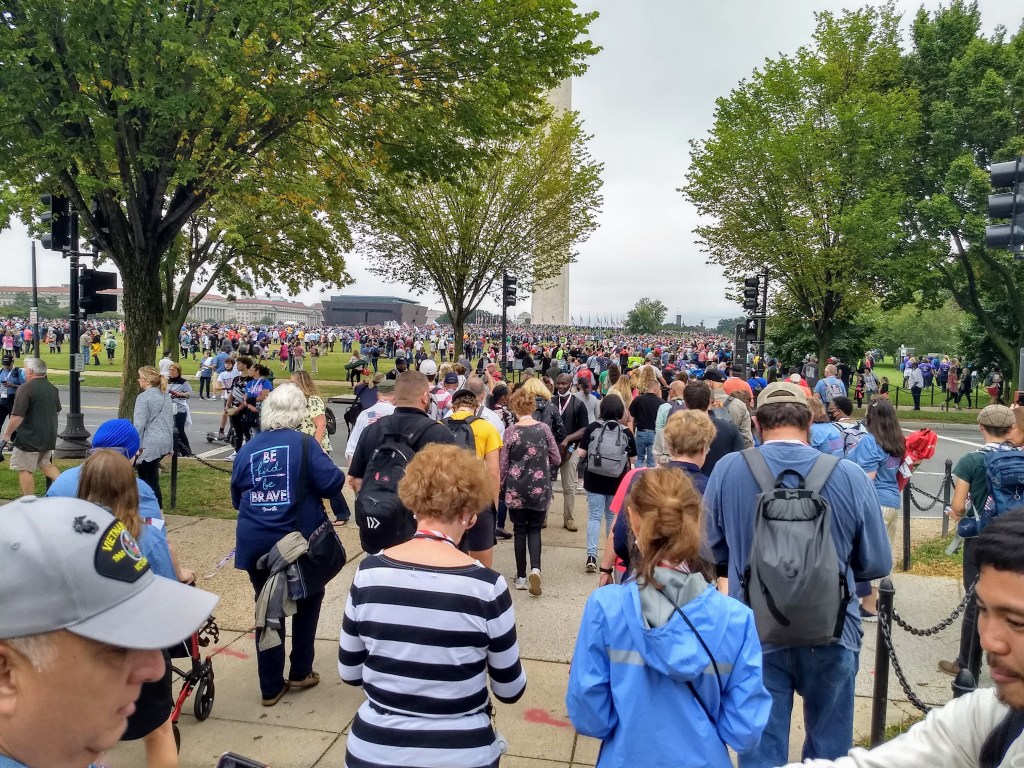
As we traveled to Washington, D.C. for the Franklin Graham 2020 Prayer March[2] last week, this topic came up in our conversation. My brother Eli made a very interesting analogy applicable to the Church today. Like Jesus’ disciples (and we too are disciples) we walk around in this filthy world every day, and the grime of the world cannot help but stick to our “spiritual feet.” Then, every time we gather for worship and fellowship, we have the opportunity to wash each other’s feet. We do not need a bath because the Bible says that “ye are washed, but ye are sanctified, but ye are justified in the name of the Lord Jesus, and by the Spirit of our God” (1 Corinthians 6:11). Our “spiritual” feet only need washing. Therefore, the Bible encourages us to gather together. “Let us draw near with a true heart in full assurance of faith, having our hearts sprinkled from an evil conscience, and our bodies washed with pure waterNot forsaking the assembling of ourselves together, as the manner of some is; but exhorting one another: and so much the more, as ye see the day approaching.” (Hebrews 10:22, 25, emphasis mine). Our gathering together is the way we wash each other’s feet by praying for each other and encouraging one another in the faith.

Another parallel that can be drawn from this account is that not all are clean. The twelve apostles walked with Jesus for three years of His earthly ministry, yet one of them was lost, i.e., not clean, the entire time. In the same way, not all within the Church are all saved. Some practice all the “right things” on the outside, but inwardly they have not truly believed. Jesus referred to these as “tares.”[3] When He returns for His Bride, the Church, these will be left behind. For now, feet only need washing if you have placed your trust in Jesus Christ. If not, you need a bath. If you are not sure of your standing before God, please read my page on “Securing Eternal Life.”

Notes:


[1]  Romans 8:28-29

[2]  https://erniecarrasco.com/2020/10/01/reflections-on-the-washington-2020-prayer-march/

[3]  Matthew 13:24-30

Comments Off on Feet Only

Filed under Bible, Christianity, End Times, Gospel, Salvation, Second Coming of Christ

Reflections on the Washington 2020 Prayer March

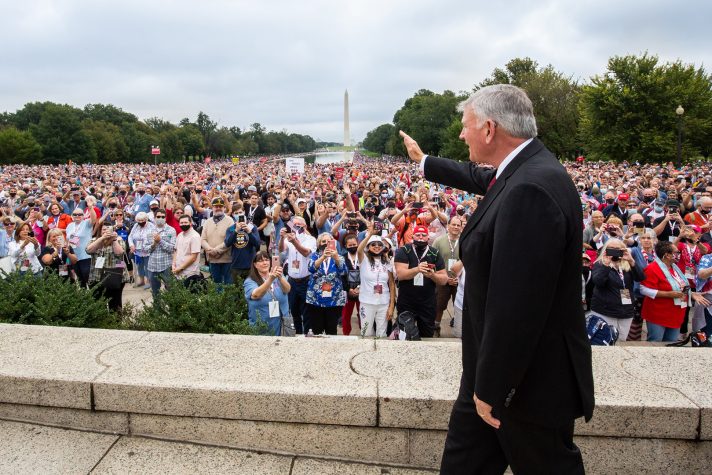
Franklin Graham greets a crowd of over 50,000 prayer warriors to initiate the 2020 Prayer March in front of the Lincoln Memorial.

Franklin Graham held a Prayer March for our nation in Washington, DC on September 26, 2020. It seems that a lot has gone wrong with our nation. The steady erosion of our moral fiber started its decline decades ago, but in the last 20 years, and more so in this past year, the decline has taken an almost 90-degree plunge. At this point, no hope exists for a reversal of the trend — but God!

My brother, Eli, and I drove from Texas to participate in the prayer march. Early on Wednesday morning, September 23, 2020, I drove from Garland to Tyler to pick up Eli, and from there, we headed eastbound on I-20 to rendezvous with thousands of like-minded prayer warriors. We were on a mission from God to plead for our nation.

I take terrible selfies. If Eli (standing behind me) looks a little more handsome, it’s only because he is five years younger.

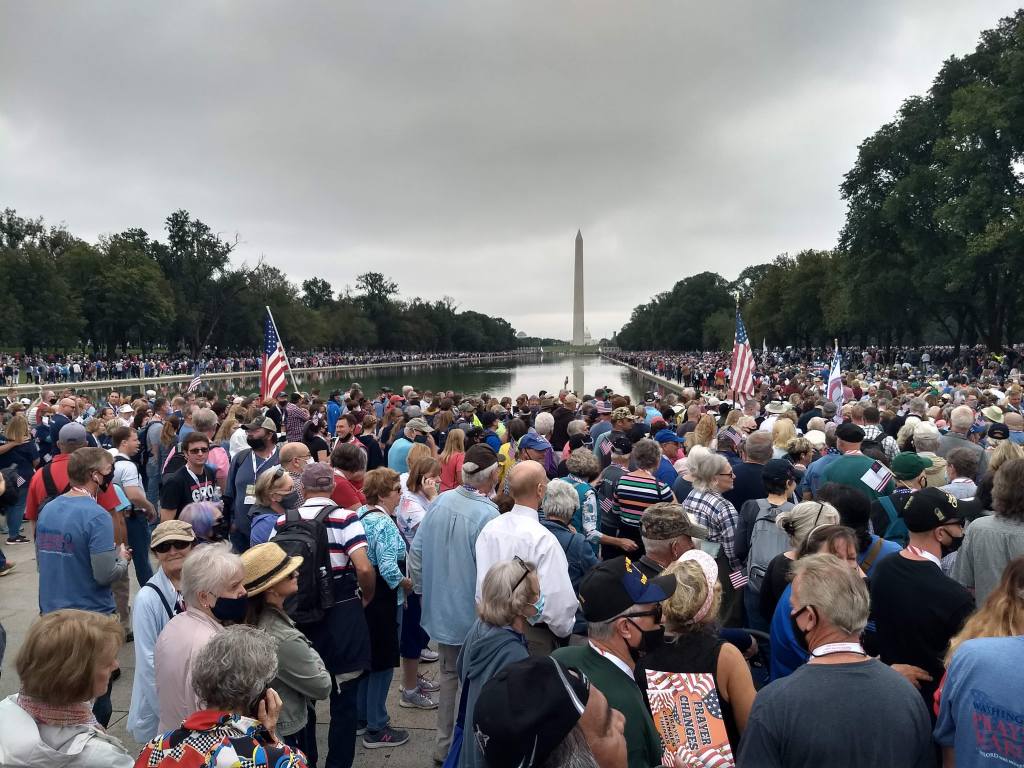
The extended weather forecast for Washington, DC on the 26th called for 60% chance of rain. We packed our ponchos determined to pray come rain or shine. With all the civil unrest and rioting across the nation, including DC, I maintained some concern about possible protests, perhaps even violent protests, against our efforts. However, as with 90% of our worries that never take place, not a drop of rain fell, although the sky remained overcast, nor did we see a single protestor. It was as if God put a protective shield around His people.

Waiting for our marching orders

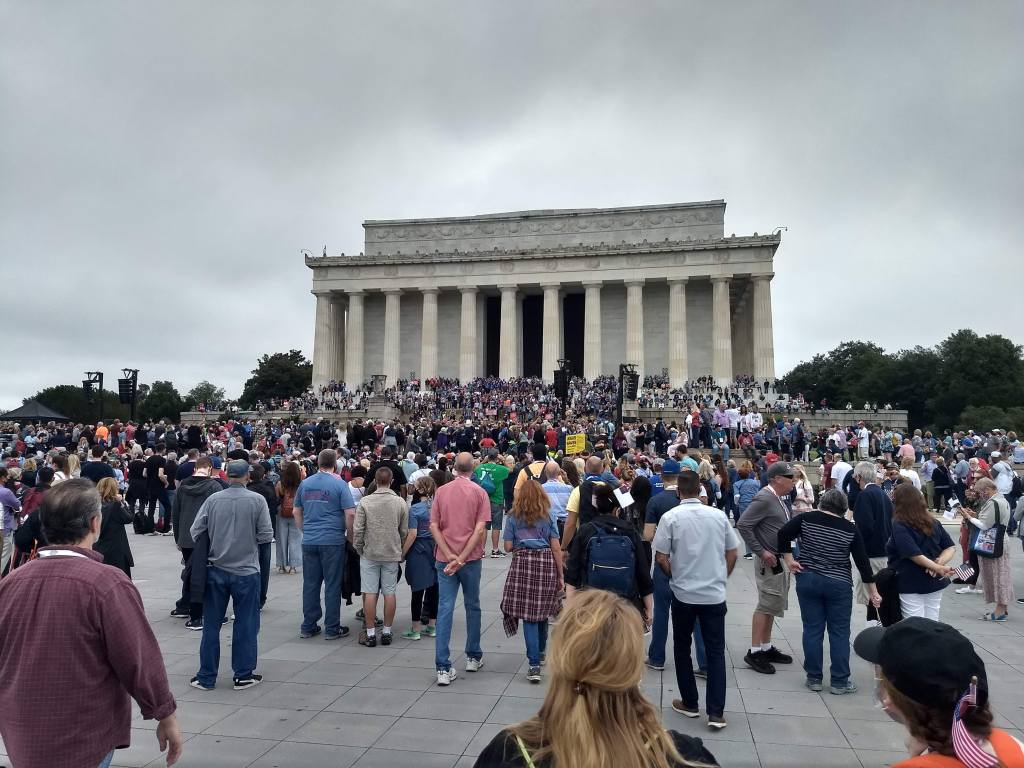
I do not know why I should be surprised; I have experienced this hundreds of times throughout my life. Among the thousands of people there, I did not meet a single stranger. The bond of Christian fellowship was palpable, and the warmth of the Holy Spirit dispersed the slight chill in the air. It seemed to me as if God cupped His hands over the group to keep us safe from any harm. As we congregated at the steps of the Lincoln Memorial, someone on a keyboard started playing and singing an old hymn. The congregation immediately joined in on all four stanzas. (I wish I could remember the titles.) Then the song leader started another old hymn and again the entire congregation joined in on all stanzas. After that, the song leader led in a couple of modern worship songs. The volume of singing went down considerably – not everyone knows the new songs — but with the oft-repeated phrases, the volume rose toward the end. The “song service” ended with four stanzas of “Amazing Grace.” The singing stirred my heart! I do not believe the angels in heaven could sound as good.

The Prayer March starting at the Lincoln Memorial and ending at the United States Capitol Building

After the singing, Franklin Graham came to the stand and announced that we had a surprise visitor. Vice President, Mike Pence and his wife Karen came and led the congregation in the opening prayer. Former Congresswoman, Michelle Bachman and Bishop Harry Jackson led in prayer, and when they were done, Rev. Graham asked us all to individually pray out loud. The sound of thousands of voices calling out to God was too incredible to express in human speech. It is awesome to know that God heard each and every prayer. Then our march started.

Praying every step of the way

We prayed every step of the way. From the Lincoln Memorial, we marched and prayed to the World War II Memorial, then to the Washington Monument, the White House, the National Museum of African American History & Culture, the National Archives, and finally to the U.S. Capitol. As we marched and prayed the words of a familiar chorus played over and over again in my head:

LORD, listen to Your children praying.
LORD, send Your Spirit in this place.
LORD, listen to Your children praying.
Send us love, send us power, send us grace.

Praying for our Legislators

We finally arrived at the Capitol Building where we prayed for our lawmakers. I know God wants us to pray. The Bible instructs us to pray for our leaders and those in authority over us. Many that came to pray, including me, asked God to forgive our nation for her sins and to turn our nation back to God. As I prayed, I rehearsed our national sins. In the 60’s we took prayer out of school and banned the Bible from our public education systems. We expelled God from the public square so that now the Democrat Party has stricken God out of their party platform. We have legalized the murder of unborn children and our national heart has hardened so much that even infanticide is acceptable in the process of partial-birth abortions. We have called good evil and evil good so that what used to be considered pedophilia is now acceptable, and we even teach it to our very young children. 

Our nation is sick, and I seriously wonder if God will answer our prayers in the way many of these brave prayer warriors expect. I recall the Prophet Jeremiah praying for his people as they tried God through their idolatry. Jeremiah prayed that God would spare Judah from the certain punishment they deserved. God spoke to Jeremiah and said, “Thus saith the LORD unto this people, Thus have they loved to wander, they have not refrained their feet, therefore the LORD doth not accept them; he will now remember their iniquity, and visit their sins. Then said the LORD unto me, Pray not for this people for their good” (Jeremiah 14:10-11).

Our nation has loved to wander away from God, and “have not refrained their feet.” Could it be that God will refuse to answer our prayers on behalf of our nation? Perhaps, but our mandate is still to pray and so we have and continue to pray. God has His plan and His plan will not fail. Consider that the United States of America is not found in prophecy although some would like it to be. For us, the over 50,000 prayer warriors that showed up to the Prayer March, our true citizenship is in heaven wherein we have our hope. Our hope is in Christ and in His return. His kingdom is a kingdom of eternal peace. Therein lies our hope.

Eli and I were blessed beyond measure to participate with thousands of our brothers and sisters in Christ in a loud call to God on behalf of our nation. We enjoyed warm fellowship with God’s family. I leave you with one final picture of my brother, the Marine.

Along the way we found a young man with his bulldog. The bulldog being the Marine mascot, Eli asked if he could get a picture with the “Devil Dog.” The young man was kind enough to grant his request!

If you would like to watch the entire Prayer March, click on this link: https://prayermarch2020.com/live/

1 Comment

Filed under Christianity, Holy Spirit, Prayer, Random Musings, Religion, Second Coming of Christ, Worship

Trumpets

… for the trumpet shall sound, and the dead shall be raised incorruptible, and we shall be changed.  (1 Corinthians 15:52)

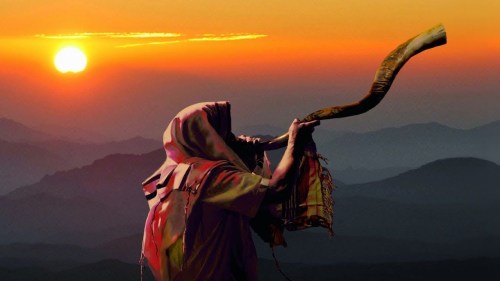
This weekend, Saturday and Sunday, September 19-20, 2020, celebrates Rosh Hashanah, the first of the Jewish civil year 5781. Rosh Hashanah is the fifth of the seven Feasts of the Lord prescribed in Leviticus 23, and is also known as the Feast of Trumpets for the sounding of trumpets proclaiming the new year. Feast of Trumpets is also known as the “feast where no man knows the day or the hour.”

The Feasts of the Lord are based on a lunar calendar, and the official declaration of the new year depends on the first sighting of the new moon. Since that cannot be determined precisely, Rosh Hashanah is observed over two days to ensure the sighting of the new moon for the sounding of the trumpets. Hence, no one knows the day or the hour.

Trumpets appear throughout Scripture. The first occurrence of a trumpet in the Bible comes after the exodus from Egypt and the crossing of the Red Sea. God brought the Children of Israel to Mount Sinai where He introduced Himself to them in person.[1] God instructed Moses that He would appear in the form of a cloud around the mountain and that no one could come near the mountain under penalty of death. “There shall not an hand touch it [the mountain], but he shall surely be stoned, or shot through; whether it be beast or man, it shall not live: when the trumpet soundeth long, they shall come up to the mount” (Exodus 19:13, emphasis mine). The sounding of the trumpet summoned the people to come up to the mountain unto the presence of the Lord. “And it came to pass on the third day in the morning, that there were thunders and lightnings, and a thick cloud upon the mount, and the voice of the trumpet exceeding loud; so that all the people that was in the camp trembled” (Exodus 19:16, emphasis mine). So Moses brought the people to the smoke-covered mountain before the Lord “And when the voice of the trumpet sounded long, and waxed louder and louder, Moses spake, and God answered him by a voice” (Exodus 19:19, emphasis mine). Following this, God gave the Ten Commandments to the people, and they all heard the commandments of God directly from God.[2] “And all the people saw the thunderings, and the lightnings, and the noise of the trumpet, and the mountain smoking: and when the people saw it, they removed, and stood afar off. And they said unto Moses, Speak thou with us, and we will hear: but let not God speak with us, lest we die” (Exodus 20:18-19, emphasis mine). From then on, God spoke to the people through His prophets, beginning with Moses.

Trumpets call the people to solemn assemblies. “And the LORD spake unto Moses, saying, Speak unto the children of Israel, saying, In the seventh month, in the first day of the month, shall ye have a sabbath, a memorial of blowing of trumpets, an holy convocation” (Leviticus 23:23-24, emphasis mine) . “Make thee two trumpets of silver; of a whole piece shalt thou make them: that thou mayest use them for the calling of the assembly, and for the journeying of the camps” (Numbers 10:2, emphasis mine). I could give more examples, but basically, the function of a trumpet serves to alert people to an event and to call for a gathering or assembly.

In the New Testament, Jesus refers to a trumpet in the negative sense of calling attention to yourself when performing acts of benevolence. “Therefore when thou doest thine alms, do not sound a trumpet before thee, as the hypocrites do in the synagogues and in the streets, that they may have glory of men. Verily I say unto you, They have their reward” (Matthew 6:2, emphasis mine).

The second occurrence appears in the Olivet Discourse when Jesus teaches His disciples about end-time events. “Immediately after the tribulation of those days … shall appear the sign of the Son of man in heaven … And he shall send his angels with a great sound of a trumpet, and they shall gather together his elect from the four winds, from one end of heaven to the other” (Matthew 24:29-31, emphasis mine).  The “tribulation of those days” to which Jesus referred is the 70th “week” of the Prophet Daniel’s prophecy.[3] Jesus called it a time of “great tribulation, such as was not since the beginning of the world to this time, no, nor ever shall be” (Matthew 24:21, emphasis mine)” At that time God will send His angels to gather His elect, i.e., Israel, from all over the world. These are NOT Christians, and I will explain that later on.

In the next reference to a trumpet, Paul points out the importance of a trumpet giving a distinct sound. “For if the trumpet give an uncertain sound, who shall prepare himself to the battle?” (1 Corinthians 14:8, emphasis mine). He stresses the importance of giving a clear gospel message so that the hearer is not confused. Later he talks about the last days when “In a moment, in the twinkling of an eye, at the last trump: for the trumpet shall sound, and the dead shall be raised incorruptible, and we shall be changed” (1 Corinthians 15:52, emphasis mine). Here he refers to the “dead in Christ” and “we” are the Christians who are alive when the trumpet sounds.

Most biblical scholars believe that Paul’s letters to the Church in Thessaloniki were his first “epistles.” To the Thessalonians he writes, “For this we say unto you by the word of the Lord, that we which are alive and remain unto the coming of the Lord shall not prevent [“precede”] them which are asleep [dead]. For the Lord himself shall descend from heaven with a shout, with the voice of the archangel, and with the trump of God: and the dead in Christ shall rise first: Then we which are alive and remain shall be caught up together with them in the clouds, to meet the Lord in the air: and so shall we ever be with the Lord” (1 Thessalonians 4:15-17, emphasis mine).  For those who claim that “rapture” in not taught in the Bible, the word translated “caught up” is the Greek ἁρπάζω (harpazō) which means to seize; catch away, catch up, pluck, pull, or take by force. The Latin Vulgate translates harpazō as “raptus” from which we get the word “rapture.”

The Beloved Apostle John saw the risen Lord while “in the Spirit” on the Lord’s Day (Sunday).[4] After Jesus finished dictating seven letters to seven churches,[5] John records, “After this I looked, and, behold, a door was opened in heaven: and the first voice which I heard was as it were of a trumpet talking with me; which said, Come up hither, and I will shew thee things which must be hereafter” (Revelation 4:1, emphasis mine). After this point, the Church is no longer mentioned in Revelation until Chapter 19 when she is described as “The Bride” at the marriage supper of the Lamb, and she returns with Jesus to end the Great Tribulation and initiate the 1000-year reign of Christ. This is the trumpet Jesus described in Matthew 24:29-31 above. For this reason, and I am convinced, many end-times teachers believe the church will be taken up before the seven-year Tribulation begins and will not experience the horrors of those times.

Because of the significance of trumpets throughout Scripture and especially in end-time prophecy, many have looked at the Feast of Trumpets as reasonable time for that to take place. Of course, many rear up and point out that Jesus said that “of that day and hour knoweth no man” (Matthew 24:36). That is true. Jesus’ coming is imminent;[6] it could happen at any minute. By studying the events recorded in Revelation and reckoning the division of the seven years, anyone living at that time, if they are paying attention, can determine when Jesus will return to earth. It is a set time – seven years. Once Antichrist affirms a treaty with Israel,[7] it is just a matter of counting the days – 2520. It is not rocket science.

However, the Rapture of the Church has no signs. We cannot guess what year it will take place, but we see the stage being set for the seven-year Tribulation, and Antichrist has not made his appearance, so we know the time is close.

So why single out Rosh Hashanah, the Feast of Trumpets, for the Rapture taking place? We can take a hint from Jesus who said that no man knows the day or the hour. The Feast of Trumpets is the feast that no man knows the day or the hour, so that has some association. Then, there is the idea that Jesus fulfilled the first four of the Feasts of the Lord: Passover, Unleavened Bread, First Fruits, and Pentecost. Pentecost was fulfilled when He sent the Holy Spirit to empower the Church.[8] He has yet to fulfill the last three feasts: Rosh Hashanah, Yom Kippur (Day of Atonement), and Sukkoth (Feast of Tabernacles). The next feast on the Calendar is Rosh Hashanah. So, it makes sense that the Rapture may take place on Rosh Hashanah because the sounding of the trumpet is the calling of the congregation together.

If not this year then perhaps it could happen next year, or the next. However, His coming is imminent – any minute! It doesn’t have to happen at Rosh Hashanah. So, we must always be ready. Jesus said, “Watch therefore: for ye know not what hour your Lord doth come” (Matthew 24:42).

If you read this and hear of millions of disappearances all over the world, you should know what happened. If not, thank God that He has given you more time, but don’t delay. He could come at any minute – imminent! If you do not know Jesus, please read my page on “Securing Eternal Life.”

Notes:


[1]  Exodus 19

[2]  Exodus 20

[3]  Daniel 9:24-27

[4]  Revelation 1:10

[5]  Revelation 2-3

[6]  “Imminent” – https://erniecarrasco.com/2020/01/12/imminent/

[7]  Daniel 9:27

[8]  “Tongues of Fire” – https://erniecarrasco.com/2020/09/13/tongues-of-fire/

Comments Off on Trumpets

Filed under Apologetics, Christianity, End Times, Evangelism, Gospel, Holy Spirit, Religion, Salvation, Second Coming of Christ, Theology

Tongues Of Fire

And there appeared unto them cloven tongues like as of fire, and it sat upon each of them.  (Acts 2:3)

My youngest brother, Eli (there are three of us of which I am the oldest), enjoys Bible study as much as, if not more than, I do. He has a gift of looking deeper into Scripture than your average Bible reader, and he is always eager to share his insights with me. It makes for wonderful and enlightening conversations.

Recently Eli shared his thoughts on Pentecost and the “coming” of the Holy Spirit. Conventional thought maintains that the Holy Spirit did not descend upon the disciples until the Day of Pentecost when 120 of them were gathered in the Upper Room as instructed by the Lord Jesus. “And, being assembled together with them, [Jesus] commanded them that they should not depart from Jerusalem, but wait for the promise of the Father, which, saith he, ye have heard of me. For John truly baptized with water; but ye shall be baptized with the Holy Ghost not many days hence” (Acts 1:4-5, emphasis mine).

This “promise of the Father,” most agree, is the Holy Spirit (Holy Ghost in the KJV) which Jesus promised would come after He was gone.[1] “Nevertheless I tell you the truth; It is expedient for you that I go away: for if I go not away, the Comforter will not come unto you; but if I depart, I will send him unto you” (John 16:7, emphasis mine). Luke, who also authored the Book of Acts, wrote more about the Holy Spirit in his Gospel (and Acts) than the other Gospel writers, including John. He records these words of Jesus before His ascension. “And, behold, I send the promise of my Father upon you: but tarry ye in the city of Jerusalem, until ye be endued with power from on high” (Luke 24:49, emphasis mine). Both Luke and John indicate that the coming of the Holy Spirit would come at a later time, and Luke’s account of the Day of Pentecost in Acts 2 seems to confirm Jesus’ promise of the Holy Spirit coming at a later time – ten days after His ascension.

However, John seems to throw a wrench into conventional thinking, as Eli points out. After His resurrection, Jesus met with His disciples, not just “the twelve,” on several occasions. In fact, Paul records that He was seen by as many as 500 at one time.[2] On the evening of His resurrection (it was Sunday evening), John records that, “Then the same day at evening, being the first day of the week [Sunday], when the doors were shut where the disciples were assembled for fear of the Jews, came Jesus and stood in the midst, and saith unto them, Peace be unto you” (John 20:19, emphasis mine). They were startled as one might imagine, and Jesus proved His identity by showing His wounds.[3] Then at this point, His ascension is still 39 days away, Jesus gives His Great Commission for the first time.[4] “Then said Jesus to them again, Peace be unto you: as my Father hath sent me, even so send I you. And when he had said this, he breathed on them, and saith unto them, Receive ye the Holy Ghost” (John 20:21-22, emphasis mine).

Well, that raises the question. When did the disciples receive the Holy Spirit, on the Resurrection Sunday, or at Pentecost? Something so dramatic definitely happened at Pentecost that Luke records that 3000 souls were saved![5] Contrary to Luke, John records the giving of the Holy Spirit prior to Pentecost in spite of his own record that the “Comforter” would not come until after Jesus was gone. It is very difficult to build a case on just one verse (John 20:22) when so many other verses seem to contradict, and Scripture never contradicts itself, even when we do not understand it clearly. “God is not the author of confusion” (1 Corinthians 14:33). So what is the answer?

Eli suggests that the miraculous event at Pentecost was a “manifestation” of the “power” of the Holy Spirit. Take our own experience for example. We come to a saving knowledge of Jesus Christ through the work of the Holy Spirit on our spirit to convince us of the truth of God’s Word, convict us of our sin, and convey our need for the Savior.[6] When that takes place and we trust in Jesus for our salvation, the Holy Spirit takes up residence in our lives and instantly the “light comes on,” and we know that the transaction took place. For most of us, that moment comes quietly and without a lot of fanfare – certainly nothing like what happened at Pentecost. We do not immediately start speaking foreign languages previously unknown to us or performing miracles. We do not suddenly possess a deeper understanding of Scripture. That comes along through study and prayer, but it is the Holy Spirit within us that guides us into greater understanding. That comes with time and with the degree to which we submit to the leading of the Holy Spirit in our lives.

My point is that receiving the Holy Spirit is generally not some kind of dramatic experience. That often disappoints some who are expecting some sort of “rush” from the experience. That expectation often causes them to doubt that their salvation experience really “took.” Trust me. If you “believe,” it took.

So, when Jesus breathed on the disciples that evening in the Upper Room, nothing out of the ordinary took place, yet John records that they received the Holy Spirit. So what was it that took place at Pentecost?

Eli makes a distinction between receiving the Holy Spirit, which happens when we believe, and being “empowered” by the Holy Spirit to perform acts of which we were heretofore incapable, like speaking in languages we had not previously learned, or performing miracles of healing or raising of the dead – all of which the disciples did in the early church.

(At this point it is incumbent on me to stress that the “powers” granted by the Holy Spirit in the early church were for the purpose of giving evidence to the truth of the Gospel and for the purpose of edifying – building up – the church. It was not for the purpose of the personal aggrandizement of the individual.

All of these “gifts” still exist today, but they are always for the purpose of spreading the Gospel, and they are given only as the Holy Spirit determines, not the individual. There is not much need of that here in America because we all speak the same language, we have ready access to God’s Word – the Bible is freely available to everyone – and the Word of God is clearly preached on radio, TV, and the internet. If anything, we have such a glut of the Gospel that many just turn a deaf ear to it.

There is no excuse for anyone here in America not to respond to the Gospel. That was not the case at Pentecost. Jesus had just risen from the dead and ascended to heaven. Most people were unaware of that fact and the Gospel was brand new. In addition, at Pentecost, visitors came to Jerusalem from all over the Roman Empire. The Gospel message needed a special “kick-start” from the Holy Spirit!

By the way, all born-again believers are endowed with certain gifts of the Holy Spirit that are not as sensational as performing miracles or speaking in previously unknown languages.[7] The ability to understand Spiritual truths being, I think, the most useful. “But the natural man receiveth not the things of the Spirit of God: for they are foolishness unto him: neither can he know them, because they are spiritually discerned” (1 Corinthians 2:14, emphasis)).

So, as Eli points out, the disciples were already indwelt by the Holy Spirit when Jesus breathed on them (John 20:22), but what they received at Pentecost was “power from on high.”[8] This was a special “unction” – an “anointing” by the Holy Spirit. Luke records Jesus saying, “For John [the Baptist] truly baptized with water; but ye shall be baptized with the Holy Ghost not many days hence” (Acts 1:5, emphasis mine). That word “baptized” is the Greek word βαπτίζω (baptizō) which means “to make whelmed;” “to submerge; engulf; overcome utterly;” “to immerse, to overwhelm.”

Again, this event was yet future which goes back to Jesus saying that “the comforter will not come unto you; but if I depart, I will send him unto you” (John 16:7).  Could it be that Jesus referred to His departure at the cross when He died? Jesus also said, “And I will pray the Father, and he shall give you another Comforter, that he may abide with you for ever; Even the Spirit of truth; whom the world cannot receive, because it seeth him not, neither knoweth him: but ye know him; for he dwelleth with you, and shall be in you” (John 14:16-17, emphasis mine). So, according to Jesus, the disciples (the twelve at this instance) were already indwelt with the Holy Spirit. This was before the crucifixion, before His resurrection, before His ascension, and before Pentecost. This further indicates that the event at Pentecost was a special manifestation of the Holy Spirit’s power for the purpose of “kick-starting” the Church, and not necessarily the first time the Holy Spirit came to reside in believers.

The Old Testament records many examples of the Holy Spirit empowering individuals to do God’s work. David experienced the indwelling of the Holy Spirit and prays, “Cast me not away from thy presence; and take not thy holy spirit from me” (Psalm 51:11, emphasis mine). David’s request further emphasizes the temporary nature of the Holy Spirit’s indwelling individuals in the Old Testament. That changed with Jesus’ advent.

Eli then draws a parallel to the creation account in Genesis when God created Adam – Man. In Genesis 2:7 we read that “the LORD God formed man of the dust of the ground, and breathed into his nostrils the breath of life; and man became a living soul” (emphasis mine). That “breath” was God’s Spirit distinct from the nephesh of the other creatures God created from the dust of the ground.[9] That “breath,” to a certain extent, was lost at the Fall[10] so that man died spiritually.[11] Jesus restores that life once more when He once again breathes out the breath of life into His disciples, “and saith unto them, Receive ye the Holy Ghost” (John 20:22, emphasis mine).

Another interesting insight Eli has concerns the appearance of the “cloven tongues like as of fire” that appeared over the heads of the disciples at Pentecost.[12] The description, first of all, is a simile – “like as of fire,” not actually fire. That they were “tongues” denotes the shape, and “cloven” indicates that they were divided either as a flame sometimes splits, or as candle-like flames distributed among the 120 present. Eli harkens back to the Tabernacle in the wilderness after the exodus from Egypt. God manifested His presence with the Children of Israel by way of a column/pillar of cloud by day and a pillar of fire by night over the Tabernacle. Today, God dwells within His children, born-again believers, by way of the Holy Spirit. “Know ye not that ye are the temple [i.e. “tabernacle”] of God, and that the Spirit of God dwelleth in you?” (1 Corinthians 3:16, emphasis mine). So, like the pillar of fire over the tabernacle in the wilderness, the “tongues of fire” over the heads of the disciples signified the new dwelling place of God within the lives of believers. I found that to be pretty insightful! I really enjoy plunging the wonderful depths of God’s Word with my little brother, Eli!

If you are reading this, and it makes little or no sense, it could be that the Spirit of God does not reside in you, so that it is all foolishness to you. That will change when you trust in Jesus and receive His Spirit who will help your understanding. Read my page on “Securing Eternal Life.”

Notes:


[1]  John 14:16-26; 15:26; 16:1-16

[2]  1 Corinthians 15:6

[3]  John 20:20

[4]  I say the “first time” because Matthew 28:18-20, and Acts 1:8 record the Great Commission given immediately before Jesus’ ascension which was 40 days following His resurrection. John has Jesus giving His Great Commission on the same day (at evening) of His resurrection. Is this a contradiction? I do not think so. During His 40 days, I feel certain He reminded them often of what He expected of them and the final reminder was at His ascension.

[5]  Acts 2:41

[6]  John 14:17, 26; 15:26; 16:8, 13

[7]  1 Corinthians 12:7-11; Galatians 5:22-23 (“fruits” of the Spirit)

[8]  Luke 24:49

[9]  Genesis 1:24-25

[10]  Genesis 3

[11]  Romans 5:15,17

[12]  Acts 2:3

Comments Off on Tongues Of Fire

Filed under Apologetics, Bible, Christianity, Gospel, Holy Spirit, Religion, Resurrection, Salvation, Theology

Impossible

For it is impossible for those who were once enlightened … If they shall fall away, to renew them again unto repentance; (Hebrews 6:4-6)

The fifth point of Calvinism is the “Perseverance of the Saints,” otherwise known as the principle of “once saved, always saved.”  This idea is certainly not without controversy.  There are many who believe rightly enough that we are saved “by grace through faith” and “not of works lest any man should boast” (Ephesians 2:8-9), but they maintain that one must “work out your own salvation with fear and trembling” (Philippians 2:12) and “Stand fast therefore in the liberty wherewith Christ hath made us free, and be not entangled again with the yoke of bondage” (Galatians 5:1) lest “Christ is become of no effect unto you, whosoever of you are justified by the law; ye are fallen from grace” (Galatians 5:4).  They would also point out (and not without reason) that the idea of “once saved, always saved” is a license to continue in a sinful lifestyle.  After all, once one has secured one’s permanent “fire insurance,” what is to keep one from sinning?

But the Scripture is clear on this point, i.e., the perseverance of the saints.  The same grace that cannot be earned by works can neither be maintained by works.  Of His sheep Jesus said, “I give unto them eternal life; and they shall never perish, neither shall any man pluck them out of my hand.  My Father, which gave them me, is greater than all; and no man is able to pluck them out of my Father’s hand” (John 10:28-29).  His sheep are made doubly secure.  Note the language that is used: “eternal life” – that is, life enduring without end; “shall never perish” – that is, life enduring that cannot be lost.  Many other such verses could be cited that testify to the same.

Our verse confirms that, if it were possible that one could fall away (and Scripture teaches otherwise), it would be impossible “to renew them again unto repentance; seeing that they crucify to themselves the Son of God afresh” (v. 6).  As Jesus died upon the cross, He exclaimed, “It is finished” (John 19:30).  His salvific work is complete; there is nothing left for Him to do.  “But [Jesus], after he had offered one sacrifice for sins for ever, sat down on the right hand of God” (Hebrews 10:12).  Therefore, “it is impossible for those who were once enlightened” (v. 4) to “fall away” (v. 6).

The question will naturally come up: what about those who once claimed to be Christians and have now renounced their faith and reject God?  The answer is really quite simple; they were never saved to begin with.  Keep in mind that salvation does not come from “head” knowledge (some atheists know the Bible better than many Christians); salvation comes by grace, through faith, which results in a personal relationship with the Savior.  The same goes for one who takes grace as a license to sin.  The common excuse given is “I am under grace not law.”  This shows a basic misunderstanding of Scripture and a low regard for the price of that grace.  Jesus said, “If ye love me, keep my commandments” (John 14:15).  Which ones? All of them!


3 Comments

Filed under Christianity, Gospel, Religion, Theology