Category Archives: End Times

The Book of Life

Book-of-life

“And I saw the dead, small and great, stand before God; and the books were opened: and another book was opened, which is the book of life …” (Revelation 20:12)

The debate between “election” (predestination) and “free will” continues with no satisfactory resolution on either side (See my article “Somewhere in the Middle”), and no clear winner. What we can know for certain is that at the final judgment, any remaining doubts will be assuaged. In the final scene before the “new heaven and a new earth: for the first heaven and the first earth were passed away” (Revelation 21:1) are revealed, John says, “And I saw the dead, small and great, stand before God; and the books were opened: and another book was opened, which is the book of life … And whosoever was not found written in the book of life was cast into the lake of fire” (Revelation 20:12,15, emphasis added).

John saw that “the books were opened.” Clearly this thorough examination includes more than one book, and one might wonder what these might be. I believe that “the books” are the journals of the life of every individual ever created by God. The psalmist says, “My substance was not hid from thee, when I was made in secret, and curiously wrought in the lowest parts of the earth. Thine eyes did see my substance, yet being unperfect; and in thy book all my members were written, which in continuance were fashioned, when as yet there was none of them” (Psalm 139:15-16). Jesus said that “the very hairs of your head are all numbered” (Matthew 10:30). In another psalm the psalmist says, “Thou tellest my wanderings: put thou my tears into thy bottle: are they not in thy book?” (Psalm 56:8). Every detail of our lives is recorded in these books: every stray thought, every word, every act whether good or bad. Sadly, the vast majority of people, from every religion including Christianity, live their lives believing that in the end, when the books are opened and examined, their good acts will outweigh the bad and gain them entrance into heaven. (See my article “Near Death.”)

Included in “the books” that will be opened is the Bible, I believe. In any court trial, the accused is judged according to a written standard – the law. Regardless of the overall good conduct of the accused, the judgment passed reflects the violation of an absolute standard. So it shall be at the final judgment. Each individuals life’s journal will be measured against God’s ultimate standard. At that final judgment it is possible, though highly unlikely, that one or maybe even two individuals lived almost flawless lives except for maybe one “indiscretion.” The Bible says, “whosoever shall keep the whole law, and yet offend in one point, he is guilty of all” (James 2:10).

So much for getting in on one’s own merits! But wait! One book remains unexamined – the Book of Life! Considering the court scene above, a human judge has the authority to extend mercy to the accused especially if the person has otherwise been law-abiding. So, the Book of Life is opened and the roll call begins, “And whosoever was not found written in the book of life was cast into the lake of fire” (Revelation 20:15). In this court, if one has “yet offended in one point, he is guilty of all” (James 2:10). Justice has been done, the verdict rendered, and there is no appeal.

We yet wait that final judgment, but it approaches nearer every day. Those whose names are written in the Book of Life know it without a doubt. The Apostle Paul alludes to this when he says, “And I intreat thee also, true yokefellow, help those women which laboured with me in the gospel, with Clement also, and with other my fellowlabourers, whose names are in the book of life” (Philippians 4:3, emphasis added).

Those not in that camp want to know how to inscribe their names in the Book of Life. I have a theory, albeit somewhat unorthodox, but I think I can support it scripturally. I believe that every person born, with some exceptions, is recorded in the Book of Life. That is why the Bible can claim that “The Lord is not slack concerning his promise, as some men count slackness; but is longsuffering to us-ward, not willing that any should perish, but that all should come to repentance” (2 Peter 3:9, emphasis added). Every person alive can receive eternal life through repentance and acceptance of God’s grace-gift of salvation by the atoning work of Christ on the cross. But when one rejects God’s offer of salvation, God blots out his name from the Book of Life. I arrive at this conclusion from Moses’ intercession for his people, Israel. “And Moses returned unto the LORD, and said, Oh, this people have sinned a great sin, and have made them gods of gold. Yet now, if thou wilt forgive their sin–; and if not, blot me, I pray thee, out of thy book which thou hast written. And the LORD said unto Moses, Whosoever hath sinned against me, him will I blot out of my book” (Exodus 32:31-33, emphasis added). Whoever thinks he can do as he pleases, “saying, I shall have peace, though I walk in the imagination of mine heart, to add drunkenness to thirst: The LORD will not spare him, but then the anger of the LORD and his jealousy shall smoke against that man, and all the curses that are written in this book shall lie upon him, and the LORD shall blot out his name from under heaven” (Deuteronomy 29:19-20, emphasis added). Messianic Psalm 69 describes the suffering Savior on the cross, and as He cries out to God for vindication He says, “Add iniquity unto their iniquity: and let them not come into thy righteousness. Let them be blotted out of the book of the living, and not be written with the righteous” (Psalm 69:27-28). Note that in these examples, the evildoers are written in “the book of the living” or the Book of Life. They must necessarily be in the book before they can be blotted out.

It seems that there comes a time, after an individual rejects God’s offer of salvation for the last time, that his name is removed from the Book of Life while he yet lives. During the time of the Great Tribulation, those whose names have been blotted out from the Book of Life while still living will readily accept the Anti-Christ and worship him. “And all that dwell upon the earth shall worship him, whose names are not written in the book of life of the Lamb slain from the foundation of the world” (Revelation 13:8, emphasis added).

“The beast that thou sawest was, and is not; and shall ascend out of the bottomless pit, and go into perdition: and they that dwell on the earth shall wonder, whose names were not written in the book of life from the foundation of the world, when they behold the beast that was, and is not, and yet is” (Revelation 17:8, emphasis added). Earlier I mentioned some exceptions to the rule that every person to ever live being recorded in the Book of Life, and this is it. Apparently, there are some born that were never intended to be born, so their names are not recorded in the Book of Life. God knows, and God has His reasons which we cannot know. I have some thoughts about this that I cannot get into at this time. But generally speaking, everyone living has their name written in the Book of Life, unless they have ultimately rejected God’s offer of salvation. Those who know that their names are permanently inscribed in the Book of Life are secure in that knowledge. Those who don’t know or are unsure have the opportunity to have their names indelibly sealed by accepting God’s gift of Salvation. For those of us who have loved ones that are lost, while they yet live we have hope that they can be saved. So we should pray for them incessantly that their names be not blotted out of the Lambs Book of Life. The issue is not getting in, but staying in the Book of Life, and that is a choice every individual must make.


Comments Off on The Book of Life

Filed under Apologetics, Christianity, Creation, Death, End Times, Evangelism, Gospel, Heaven, Hell, Religion, Salvation, Second Coming of Christ, Theology

Near Death

DIGITAL CAMERA

“Beloved, now are we the sons of God, and it doth not yet appear what we shall be: but we know that, when he shall appear, we shall be like him; for we shall see him as he is.” (1 John 3:2)

There seems to be an increased interest in the paranormal these days: crop circles, UFOs, alien abductions, zombies, vampires, etc. Included in these are the reports of “near-death” experiences. This seems particularly to have piqued an interest among Christians due to the Christian predisposition to think about the afterlife, particularly heaven. A new “Christian” movie that has added fuel to this fire takes its title from a book by the same name: Heaven Is For Real by Todd Burpo. This is supposedly a factual account of a little boy who dies in a hospital operating room and goes to heaven and returns to report all kinds of amazing things about his experience there.

A Christian lady concerned about what to make of this phenomenon told me about a nurse friend who told her about near death experiences she has witnessed. “I feel very uncomfortable about this,” she said to me. “It does not seem Scriptural…doesn’t seem to match with what Jesus has taught about death. And so, I’m wondering if these sorts of things are considered ‘false prophets doing great wonders to seduce even the elect.’”

She continued, “Surely it is tempting to hear ‘proof’ that such beauty exists…even to believe that, yes, heaven exists, and Jesus is waiting with outstretched arms when we die. Surely some people might become believers upon hearing such tales…at least, folks that would believe ‘we go to a place of great beauty, bright light, where Jesus is’ when we die. It’s such a comforting picture. But is it Scriptural? Are we to believe in these things?”

I assured her that I share her skepticism about these near death experience reports. Obviously, we cannot judge what another person experiences because only they are privy to that information. The same goes for judging another person’s salvation – only God (and the individual) truly knows the condition of the heart. So, when someone reports a near death experience, we have to take them at their word, because only they and God know what they experienced.

But going back to our example of salvation, we can pretty well guess the state of a person’s salvation because of the kinds of “fruit” they bear. Granted, a person may be putting on a good front leading us to think they are saved – in fact, they may even be fooling themselves – but they are not truly saved. Or the opposite may be true. The person may truly be saved, but are presently living in a temporary “back-slidden” state. Again, only God knows for sure, but we can certainly judge their “acts” and know if those acts, or fruits, are genuine – at least outwardly.

Coming back around to our near death question, except for a very small number of cases, most of these experiences report the very same thing regardless of the spiritual condition of the individual. There have been a few reports of individuals experiencing hell, and they are very thankful that they were “brought back,” but this is the exception rather than the norm.

I viewed a video on the topic recently[1]. For some time now neurologists have been studying near death experiences and to date they have no explanation for this phenomenon. It seems that the only thing they have been able to confirm is that when a patient is clinically dead, all brain activity ceases. They have been unable to determine at what point the patient has the “out-of-body” experience. Is it just before they die or is it when they are revived? They do not know. Yet the patients all seem to report similar experiences: a feeling of warmth, peace, acceptance and unconditional love. So, if all of these “good” experiences are true, regardless of the spiritual state of the individual, that might lead one to conclude that everyone goes to heaven – except for really, really bad people. The question then is how does that line up with what the Bible says?

There are several accounts of resuscitations[2] in the Bible where people died and were brought back to life: the raising of the widow’s son (1 Kings 17:22); the raising of the Shunammite woman’s son (2 Kings 4:33-36); the man raised at Elisha’s tomb (2 Kings 13:21); the raising of Jairus’ daughter (Matthew 9:25); saints raised at the death of Christ (Matthew 27:52); raising of the widow’s son (Luke 7:15); the raising of Lazarus (John 11:43-44); raising of Tabitha by Peter (Acts 9:40-41); and the raising of Eutychus by Paul (Acts 20:9-12). With all of these examples, there exists no record about what the individuals experienced during their time of death. In every instance, the Bible is silent.

There is one instance where one died and then returned to tell about it. That was Paul in Acts 14:19-20. He later relates his experience in 2 Corinthians 12:2-7:

I knew a man in Christ above fourteen years ago, … such an one caught up to the third heaven. And I knew such a man … How that he was caught up into paradise, and heard unspeakable words, which it is not lawful for a man to utter. (vv. 2-4)

So, Paul experienced something, but he was not allowed to speak about it. This evidence from Scripture calls into question all the reports we are hearing today. Is it possible that there is a hidden agenda there? – one that says, “What you believe makes no difference. If you are a reasonably good person, you will go to heaven.” That is the devil’s oldest lie: “Yea, hath God said …? … Ye shall not surely die” (Genesis 1:3, 4).

Jesus spoke more about hell than He spoke of heaven. In Luke 16:19-31, He relays the account of a rich man who died and woke up in Hades and likewise, poor, sickly Lazarus died “and was carried by the angels into Abraham’s bosom” (v. 22). Here we are given a peek into the afterlife from which no one returns (generally speaking). Two very different places are depicted and two very different experiences are presented. Jesus related this “story” as an actual account. Considering His divine nature, He had firsthand knowledge of this event, which clearly shows us that not everyone goes to the same place or experiences the same thing. Something else worth noting in this account is that nowhere does Jesus describe the rich man as being a particularly (what we would consider) a “bad” person. From Jesus’ account, we gather that the rich man was self-absorbed, narcissistic, self-centered, selfish, and unconcerned with the plight of the poor beggar that sat at his gate, but it’s not as if he were a mass murderer, or anything like that. He may have been a good father, husband and provider. He was evidently concerned about his loved ones (vv. 27-28). Had we known him, we probably would not have considered him to be a bad person. Those who mourned him at his funeral probably thought he ascended to “Abraham’s bosom,” but that certainly was not the case.

So, the bottom line is that we cannot know with certainty what these people have experienced, but we are right to employ a healthy dose of skepticism. There is no biblical basis for these reports, and science offers no satisfactory explanations. The fact that most experiences reported are positive contradicts Jesus’ very words that “strait is the gate, and narrow is the way, which leadeth unto life, and few there be that find it” (Matthew 7:14). The truth is that most people will NOT have a good experience. If these experiences are genuine, we should expect more bad experiences than good, but that is not what is being reported.

Of greater importance to anyone reading these words is the assurance and security of a place prepared for you by the Savior. He says:

Let not your heart be troubled: ye believe in God, believe also in me. In my Father’s house are many mansions: if it were not so, I would have told you. I go to prepare a place for you. And if I go and prepare a place for you, I will come again, and receive you unto myself; that where I am, there ye may be also. (John 14:1-3)

God promises: “And ye shall seek me, and find me, when ye shall search for me with all your heart” (Jeremiah 29:13). Jesus adds to that: “I am the way, the truth, and the life: no man cometh unto the Father, but by me” (John 14:6). “Seek ye the LORD while he may be found, call ye upon him while he is near” (Isaiah 55:6).

NOTES:


[1] Documentary: “The Day I Died” http://topdocumentaryfilms.com/day-i-died/

[2] Note that resuscitation is not the same as resurrection. In the former case, the individual eventually dies again. In the latter case, the individual remains alive for ever. Jesus is the “first fruits” of the resurrection (1 Corinthians 15:20, 23). Because He lives, we can be assured of eternal life.

1 Comment

Filed under Apologetics, Christianity, Current Events, Death, End Times, Evangelism, Gospel, Heaven, Hell, Religion, Salvation, Science, Uncategorized

Perhaps This Year!

2014

“Watch therefore, for ye know neither the day nor the hour wherein the Son of man cometh.” (Matthew 25:13)

This past weekend my wife and I had dinner with some good friends from church. A little sign above their kitchen clock caught my eye. It read: “Perhaps Today.” It reminded me that Henry M. Morris, founder of the Institute for Creation Research, kept a similar placard on his desk as a constant reminder that Jesus could return any day. Jesus Himself commanded that we should “watch” for His return. That word in the Greek is grēgoreuō, and it means to “keep awake,” to “be vigilant.”

Jesus issued that exhortation in the context of the Parable of the Ten Virgins (Matthew 25:1-13). Five of the virgins were characterized as “wise” and the other five were “foolish.” All ten virgins fell asleep. Perhaps the expected Bride Groom tarried longer than anticipated, and they all grew weary in waiting. The difference is that the wise virgins were prepared with extra oil for their lamps while the foolish virgins used all they had and made no provision for the unexpected. When the herald announced the coming of the Bride Groom, the wise virgins, prepared with extra oil for their lamps, went on in to be with the Bride Groom while the foolish virgins missed the wedding.

Oil is often used to symbolize the Holy Spirit. We who are “born again” have the advantage of the Holy Spirit residing within us, and, like the wise virgins, we have the provision of the Holy Spirit so that no matter when the Lord returns, we will be prepared. However, just like the wise virgins we can become weary of waiting for the Lord’s return, and we lose focus. We fall asleep often distracted by the cares and worries of this world, and we forget to watch. Sometimes we lament, “How long for His return!” While the foolish, distracted and unconcerned, say, “Where is the promise of his coming? for since the fathers fell asleep, all things continue as they were from the beginning of the creation” (2 Peter 3:4). And so, they have no “oil” for their lamps; they are unprepared.

Our dinner conversation quickly turned to the topic of eschatology, the study of end times. All of us at the table are on “watch” and anxiously await our Lord’s return. Someone brought up the fact that there are four “blood moons” (lunar eclipses) and a solar eclipse expected on significant Jewish feast days in 2014 and 2015. The first will occur on Passover (April 15) 2014 followed by the second on the Feast of Tabernacles (October 8) 2014. The third will occur on Passover (April 4) 2015 followed by the fourth on the Feast of Tabernacles (September 28) 2015. This infrequent sequence of lunar eclipses has historically held great significance for the Jewish people.

For example, when it happened in 1493 and 1494 Jews were expelled from Spain. The blood moons in 1949 and 1950 came right after the nation of Israel was assembled, giving the Jews a homeland for the first time in thousands of years. And in 1967 and 1968 it was linked to the Six-Day War.[1]

In addition to this, a solar eclipse is expected on March 20, 2015. This date equates to Nisan 1 on the Jewish calendar which is New Year’s Day on the Jewish religious calendar. When measured against Scripture, these phenomena should make us pay attention.

When God initiated these feasts (there are seven), He said, “these are My feasts.” “Speak unto the children of Israel, and say unto them, Concerning the feasts of the LORD, which ye shall proclaim to be holy convocations, even these are my feasts” (Leviticus 23:2, emphasis added). Besides the seven, modern Jews celebrate Purim and Chanukah, but these are not “feasts of the LORD.” The Feasts of the Lord is a fascinating study, which I cannot cover in this brief article. They hold great significance as they reveal God in the Person of Jesus Christ and demonstrate His plan for the ages.

The fact that this sequence of blood moons, along with the solar eclipse, looms in our immediate future has many who study eschatology excited for the prospect of Christ’s imminent return. “The sun shall be turned into darkness, and the moon into blood, before the great and the terrible day of the LORD come” (Joel 2:31, emphasis added).

How are you fixed for oil in your lamp? “Ye are the light of the world” (Matthew 5:14). Are you prepared for the Lord’s return? Perhaps this year! Perhaps today!

Comments Off on Perhaps This Year!

Filed under Christianity, Current Events, End Times, Evangelism, Gospel, New Year's Day, Religion, Salvation, Second Coming of Christ, Theology

Peace!

Christmas Bells

Glory to God in the highest, and on earth peace, good will toward men. (Luke 2:14)

Peace.  Such an elusive word.  So full of hope, and yet so seemingly unattainable.  The angels proclaimed “peace on earth, and good will toward men” as they announced the Savior’s birth that holy night.  There was no peace on earth at the time of that proclamation.  The Roman Empire was in control of a major part of the western world, and there was unrest in the land of Judea as one uprising after another was crushed by the heavy hand of the Roman legions.  Things then were not much different than what we see today – unrest in the Middle East, the constant threat of war, North Korea bent on becoming a nuclear power, China vamping up her navy and playing havoc with the American economy, Europe on the verge of economic collapse.  There is no peace on earth.

I heard the bells on Christmas day
Their old familiar carols play,
And wild and sweet the words repeat
Of peace on earth good will to men.
 
Then, in despair I bowed my head,
“There is no peace on earth,” I said,
“For hate is strong and mocks the song
Of peace on earth good will to men”
 

But the hope of peace is strong within man, and so the lowly shepherds to whom the announcement was made, left their flocks in hopes of catching a glimpse of the tiny Prince of Peace that had come into the world.  As a man, He would later say, “Peace I leave with you, my peace I give unto you: not as the world giveth, give I unto you.  Let not your heart be troubled, neither let it be afraid” (John 14:27).  Amidst all the trouble and chaos of the world, He still promises peace and encouragement: “Let not your heart be troubled, neither let it be afraid.”

Then peal the bells more loud and deep;
God is not dead, nor doth He sleep.
The wrong shall fail, the right prevail
With peace on earth good will to men.
 

A dear friend recently enlightened me to the fact that “Joy to the World” is not really a Christmas carol.  It is not about Christ’s first coming; it is about His second coming!  There will be no peace on earth until the King of Kings comes to reign over all of His creation.  At that time, it will be most appropriate to sing:

Joy to the world the Lord is come!
Let earth receive her king!
Let every heart prepare Him room,
And heaven and nature sing.
 
Joy to the earth! the Savior reigns!
Let men their songs employ;
While fields and floods, rocks, hills and plains
Repeat the sounding joy.
 
No more let sin and sorrow grow,
Or thorns infest the ground.
He comes to make His blessings flow
Far as the curse is found.
 
He rules the world with truth and grace,
And makes the nations prove
The glories of His righteousness,
And wonders of His love.
 

Writing almost 800 years before the first advent, the prophet Isaiah proclaims, “For unto us a child is born, unto us a son is given: and the government shall be upon his shoulder: and his name shall be called Wonderful, Counsellor, The mighty God, The everlasting Father, The Prince of Peace” (Isaiah 9:6).  The tiny babe Whose birth we celebrate this Christmas is the hope of peace for a troubled world and the realization of peace for those who know Him as Savior.  Let us find our peace in Him!

2 Comments

Filed under Christianity, Christmas, Current Events, End Times, Evangelism, Gospel, Religion, Salvation, Theology

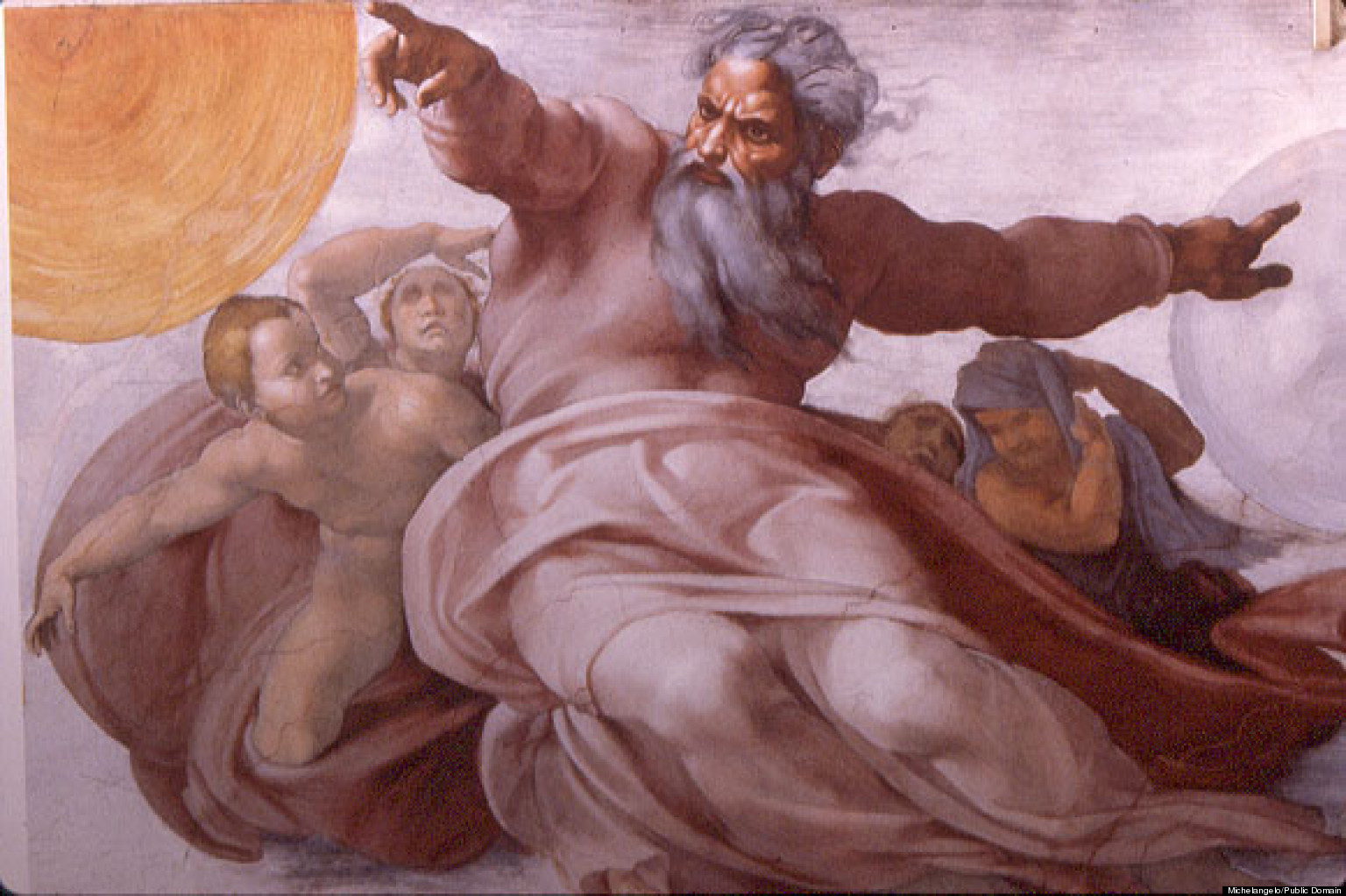
An Angry God

Angry God

Thou, even thou, art to be feared: and who may stand in thy sight when once thou art angry?  (Psalm 76:7)

When we think of God, we do not like to think of Him as angry; rather, we want to think of Him as loving, kind, merciful and patient. We want a “nice” God, not an angry one. But when we read the Old Testament Scriptures, we can come away with a very different perspective on God. Indeed, many atheists readily see this in the pages of the Bible, and are quick to point this out as they self-righteously boast that they could never believe in a God that acts so “irrationally” against people who do not wish to follow Him. They make a valid, albeit uniformed, point.

The English word “anger” appears 229 times in the Old Testament of the King James Bible compared to only five times in the New Testament. The Hebrew word most often translated as “anger” is ‘aph and it literally means “nose, nostril, or ire.” It describes an angry person who is breathing so heavily that his nostrils flare with rage. This Hebrew word appears 276 in the Old Testament, and with regard to God, it is translated as “anger” 198 times. Second to that is the Hebrew word chêmâh which means “heat, fury, passion or anger.” In relation to God, this word is used 94 times. Another frequently used Hebrew word is chârâh which means to “glow or grow warm, or to blaze up” with anger, zeal or jealousy. This word describes God’s anger 54 times. There are other Hebrew words that describe God’s anger as an outburst of passion, vexation, indignation, provocation or froth-at-the-mouth fury.  This is certainly not the kind of God we like to think about.

Why is God so angry, and what is it that provokes Him to anger? We see the first occurrence of English word “anger” applied to God in Exodus 4 when God assigned Moses the task of bringing His “people the children of Israel out of Egypt” (Exodus 3:10). Moses gave God one excuse after another as to why he was not the right man for the job until “the anger of the LORD was kindled against Moses” (Exodus 4:14). So reluctance to do God’s will angers God. The next instance where the word “anger” is applied to God is found in Numbers 11, where the children of Israel complained: “And when the people complained, it displeased the LORD: and the LORD heard it; and his anger was kindled; and the fire of the LORD burnt among them, and consumed them that were in the uttermost parts of the camp” (Numbers 11:1). God, Who provides everything for us, meets all of our needs and protects us from danger, is angry when we complain about our circumstances rather than respond to Him with a heart of gratitude.

On another occasion, Balak, the Moabite king, went to the prophet Balaam requesting that he curse the children of Israel. Balaam understood that these people were under God’s protection and was at first unwilling to accept the task. Balak persisted offering Balaam anything he wanted to do the job. At this second request, Balaam responded against God’s will, “And God’s anger was kindled because he went” (Numbers 22:22). Deliberately going against God’s will angers God. Since God would not permit him to curse Israel, Balaam devised a plan that would cause God to curse His own people.  “Balaam … taught Balac to cast a stumblingblock before the children of Israel, to eat things sacrificed unto idols, and to commit fornication” (Revelation 2:14). “And Israel abode in Shittim, and the people began to commit whoredom with the daughters of Moab. And they called the people unto the sacrifices of their gods: and the people did eat, and bowed down to their gods. And Israel joined himself unto Baalpeor: and the anger of the LORD was kindled against Israel And the LORD said unto Moses, Take all the heads of the people, and hang them up before the LORD against the sun, that the fierce anger of the LORD may be turned away from Israel.” (Numbers 25:1-4, emphasis added). This may sound extreme, but it shows how God feels about the practice of idolatry – allowing anything else to take the place of God (Exodus 20:3). Idolatry makes God angry.

Later, as the children of Israel were preparing to enter the Promised Land, the tribes of Ruben and Gad requested to stay on the east bank of the Jordan because of its good grazing lands (Numbers 32). Moses feared that the remaining ten tribes might become discouraged, if Ruben and Gad did not join in the fight. He reminded them of another time when the people were discouraged by a bad report by 10 of the 12 spies (Numbers 14), “And the LORD’S anger was kindled the same time” (Numbers 32:10). God was so angry at that time that He was ready to wipe out the whole nation and start over with Moses (Numbers 14:12). Lack of trust or faith in God makes Him angry. Indeed, “without faith it is impossible to please him” (Hebrews 11:6).

God demonstrates His anger in many ways throughout the Old Testament. The global flood of Noah’s day (Genesis 6-9) is an extreme example of God’s wrath poured out on billions of wicked, violent people who had total disregard for God. At the Tower of Babel (Genesis 11), God expressed His anger by confusing the languages of the people and scattering them throughout the world. Later, God evinced His anger on Sodom and Gomorrah for their sin of homosexuality, violence and all forms of wickedness (Genesis 19).

There are abundant examples of God displaying His anger throughout the Old Testament, but strangely enough, the New Testament mostly speaks of God’s “wrath” in terms of end times, otherwise known as “the day of wrath,” or with regard to an individual’s lost condition: “he that believeth not the Son shall not see life; but the wrath of God abideth on him” (John 3:36, emphasis added). “[T]he wrath of God is revealed from heaven against all ungodliness and unrighteousness of men, who hold the truth in unrighteousness” (Romans 1:18). Perhaps the reason for this is that God discharged the full measure of His anger and wrath on His Son, Jesus, at the cross. When Jesus cried out “τετελεσται” (it is finished!), God’s wrath was satisfied.

There is still the wrath to come, but from the cross to the present, God has withheld His anger for the coming judgment. It would behoove us, Christian and non-Christian alike, not to take this reprieve too lightly. God is love (1 John 4:8), but God is equally anger. Many Christians today reject the Old Testament teachings and want to hold only to what is taught in the New Testament. That is to reject a very fundamental truth: God is immutable, i.e., He does not change: “I am the LORD, I change not” (Malachi 3:6). James reminds us that all good things come “from the Father of lights, with whom is no variableness, neither shadow of turning” (James 1:17, emphasis added). So why should we think that God’s anger has ceased simply because we turned the page from Malachi 4:6 to Matthew 1:1? We need to revere God and hold Him in awe for Who He is. We should have a healthy “fear” of God and strive to please Him with the way we conduct our lives. “Sanctify yourselves therefore, and be ye holy: for I am the LORD your God” (Leviticus 20:7, emphasis added). “As obedient children, not fashioning yourselves according to the former lusts in your ignorance: But as he which hath called you is holy, so be ye holy in all manner of conversation [life conduct]; Because it is written, Be ye holy; for I am holy” (1 Peter 1:14-16, emphasis added). God still gets angry. Let us not make Him angry with us by living our lives in a manner that reflects poorly or negatively on Him.

2 Comments

Filed under Apologetics, Atheism, Christianity, End Times, Evangelism, Gospel, Religion, Salvation, Theology