Category Archives: Gospel

Tisha B’Av

For the Lord himself shall descend from heaven with a shout, with the voice of the archangel, and with the trump of God: and the dead in Christ shall rise first: Then we which are alive and remain shall be caught up together with them in the clouds, to meet the Lord in the air: and so shall we ever be with the Lord.  (1 Thessalonians 4:16-17)

At the posting of this article, August 6-7, 2022, Jews everywhere solemnly observe Tisha B’Av or the Ninth of Av. Av is the fifth month on the Jewish calendar which begins with the month of Nissan. Christians, for the most part, are ignorant of Jewish observations and feasts; but the same God that gave observations to the Jews is not a God who does things arbitrarily or at random and without purpose, and He does not change. So, even though Christians are under a different “covenant” than the Jews, that does not render these observations meaningless. It behooves Christians to study and understand the Jewish feasts and observances because, while they may not directly apply to us, they have great significance in our understanding of our God.

Tisha B’Av, like Purim and Chanukah, was not given by God as one of His seven Feasts of the Lord.[1] These “observances” were started by the Jews as memorials to God’s intervention in the life of the nation. Purim looks back to God’s salvation of the Jews that were in Babylon from the hand of Haman.[2] Chanukah commemorated the miraculous preservation of the oil in the menorah for eight days at the cleansing of the Temple after it was desecrated by Antiochus Epiphanes.[3]  

Tisha B’Av, however, reminds the Jews of God’s judgments on the nation for one sin or another. These judgments always fell on the Ninth of Av beginning when 10 of the 12 spies sent to spy out the Promised Land returned with a bad report.[4] The website “Rapture Ready” lists 29 judgments against the Jews from Av 9, 1312 BC to Av 9, 2020 AD.[5]

Perhaps the most significant judgments to the Jews were those involving the Temple. The Babylonians razed Solomon’s Temple on Av 9, 586 BC. The Romans destroyed the second temple, Herod’s Temple, on Av 9, 70 AD. Pete Garcia, a graduate of Dallas Theological Seminary, suggests the possibility (not the inevitability) that the Rapture of the Church could take place this year on Tisha B’Av.[6] (I recommend that you read his article in the link provided below. He goes into much greater detail than I plan to go into here.) Pete got his idea from Greg Lauer,[7] another student and teacher of end-times prophecy. (I recommend that you read his lengthy article as well. He goes into great detail to develop his theory and he employs sound logic in doing so. You can find the link to his article in the endnotes below.)

In brief, here is the summary of the idea that the Rapture could take place on Tisha B’Av – perhaps even today, August 7, 2022. By way of disclaimer, allow me to emphasize that neither of these men are setting a date for the Rapture, which “of that day and hour knoweth no man, no, not the angels of heaven, but my Father only” (Matthew 24:36). We cannot know the exact day or the hour; however, we can observe the signs and the season so that we should be ready. Therefore, Jesus said, “Watch therefore, for ye know neither the day nor the hour wherein the Son of man cometh” (Matthew 25:13). How can we watch if we do not know what to watch for?

We already see many of the signs of which Jesus spoke[8] taking place: Israel reborn, wars and rumors of wars, famines, and pestilences, economic collapse, worldwide hatred of Israel, the formulation of the Gog of Magog alliance,[9] [10] etc. These “labor pains” are increasing in number and frequency alerting us to the soon return of Christ as King of Kings and Lord of Lords. However, before that happens, the Church must be removed, and that is where the idea of the Rapture on Tisha B’Av comes to play.

Here is the idea in a nutshell. When Solomon dedicated the first temple, the glory of God filled the Temple to the point that the priests could not minister in the Temple.[11] Several hundred years later, the Prophet Ezekiel records seeing the glory of God depart the Temple.[12] The Babylonians then entered Jerusalem and destroyed the Temple of God on Av 9, 586 BC.

After 70 years of captivity, the Medo-Persian Empire conquered Babylon and Cyrus allowed the Jews to return and rebuild Jerusalem and the Temple. There is no record that this second temple enjoyed the filling by the glory of God. It was not until the time of Christ that the Temple experienced the presence of God in the form of Jesus Christ. Recall how at the cleansing Jesus declared, “My house shall be called the house of prayer; but ye have made it a den of thieves” (Matthew 21:13, emphasis mine). Of course, we know what happened later. The Jews rejected and crucified their Messiah during Passover, 30 AD (or 33 AD, the exact year is debatable). As a result, the Romans destroyed the Temple on Av 9, 70 AD.

The First Temple enjoyed the presence of God the Father. The Second Temple enjoyed the presence of God the Son. There is yet a Third Temple that enjoys the presence of God the Holy Spirit. Where might that Temple be? “Know ye not that ye are the temple of God, and that the Spirit of God dwelleth in you?” (1 Corinthians 3:16). The Holy Spirit resides within believers, the Church, the Bride of Christ. This Temple restrains Satan’s forces on earth and must be removed in order for God’s judgment to come upon the God-rejecting world. “And now ye know what withholdeth that he might be revealed in his time. For the mystery of iniquity doth already work: only he who now [restrains] will [restrain], until he [i.e., the Holy Spirit] be taken out of the way. And then shall that Wicked be revealed, whom the Lord shall consume with the spirit of his mouth, and shall destroy with the brightness of his coming” (2 Thessalonians 2:6-8, emphasis mine). When the Holy Spirit is taken “out of the way,” He will take His Temple with Him. This is what we understand as “the Rapture” of the Church.

So, since God does not do things arbitrarily or at random, it makes sense that the “Third Temple,” belonging to the Holy Spirit should also be removed, like the first two, on Tisha B’Av. If not today, then next year, or the next.

No man knows the day or the hour when Jesus will call His Bride home. As His Bride, we should be prepared daily for Him to call us home. It does not necessarily have to be on Tisha B’Av. It could be on Rosh HaShanah, or perhaps on Pentecost or any day when we least expect it. The point is to be ready and watching daily. We have work to do, and when our Lord calls us home, we want Him to find us working to increase His kingdom.

Are you ready to meet Jesus? If not, please read my page on “Securing Eternal Life.”

Notes:


[1]  “Rosh HaShanah” — https://erniecarrasco.com/2016/10/03/rosh-hashanah/

[2]  Read the book of Esther.

[3]  Read the apocryphal books of the Maccabees.

[4]  Numbers13:25-14:12

[5]  https://www.raptureready.com/2021/07/15/the-ninth-of-av-tisha-bav-by-jeff-van-hatten/

[6]  “This B’Av Rapture?” — https://www.rev310.net/post/tish-b-av-rapture

[7]  “A Pattern with a Hole” — https://www.alittlestrength.com/articles/2022/2206-pattern.htm

[8]  Matthew 24

[9]  Ezekiel 38-39

[10]  “Magog, Tubal, and Persia” — https://erniecarrasco.com/2022/07/24/magog-tubal-and-persia/

[11]  2 Chronicles 5:11-14

[12]  Ezekiel 9:3; 10:18

Comments Off on Tisha B’Av

Filed under Apologetics, Christianity, Current Events, End Times, Eschatology, Feasts of the Lord, Gospel, Holy Spirit, Rapture, Salvation, Satan, Second Coming of Christ, Theology

Is the Number of Stars Definite or Indefinite?

a2218_hstkelly

And he is before all things, and by him all things consist (Colossians 1:17)

Is the number of stars definite or indefinite? I recently posted that question my Facebook status, and I was completely unprepared for the firestorm of controversy that seemingly innocuous question would raise. The question, to me, seems simple enough. I have identified a subject – the number of stars – and offered an either-or response.

One person responding to the question suggested that the number of stars is indefinite. Certainly from man’s perspective that is true. There is no way for us to ever know the exact number of stars. There are billions of galaxies in our known universe, and each is composed of billions .of stars. Such numbers are staggering. And then there is that outside possibility that new stars are being “born” regularly. That has never been observed, and it is based solely on very questionable evolutionary theories – more on that later.

But from God’s perspective, the number of stars is definite. The psalmist says, “He telleth the number of the stars; he calleth them all by their names” (Psalm 147:4). The Hebrew word translated “telleth” (tells) is mânâh and it means to “weigh out, to allot, or to enumerate” and so could be translated as “to number.” By this we know that God keeps a complete inventory of the stars. He “calls” them – Hebrew qârâ’, which means “to call out to” or “to address” each individual star by name. Well, one might say, God could still be creating stars, and He would still know the number each time He creates a new one. That is also true. Jesus says that the very hairs of my head are numbered (Matthew 10:30). God knows exactly how many hairs on my head I started with, the maximum count I had at my zenith, the number of hairs I have lost and He knows my current count now. So, whether God has created new stars since the beginning of creation, or whether the number has remained static since creation, to God, the number is always definite.

One perceptive individual responded “Yes!” In other words, he was saying it’s both. I wrongly responded “No. It has to be one or the other.” But after thinking about it, he was more right than anyone, considering what I have just explained above. To man, the number is indefinite, but to God the number is definite.

But, as these “conversations” tend to go sometimes, it quickly degenerated into a discussion about whether God was still actively creating or not. Since the subject is “stars” I would suggest that the answer is no; God is not actively creating new stars, or anything else for that matter. I see all those red flags going up right now! Before you burn me at the stake as a heretic, hear me out. I base this on two very basic verses in Genesis. As we read the creation account in Genesis one, we see that at the end of almost every day, God’s assessment of the process was as that “it was good.” This is true of every day of creation except for the second day where earth was, for lack of a better term, a big mud ball; it wasn’t bad, but it wasn’t good enough to be called “good” by God. At any rate, we get the feeling that God was pleased with His creative work. Then when the sixth day of creation was completed “God saw every thing that he had made, and, behold, it was very good” (Genesis 1:31). “Very good” (Heb. ṭôb me‘ôd) meaning vehemently good. Such an assessment coming from a perfectly good Creator implies that it could not be made better than this; it cannot be improved upon. So, when God “made the stars also” (Genesis 1:15), the number of them was perfect by His assessment. Furthermore, we read in Genesis 2:2 that “on the seventh day God ended his work which he had made; and he rested on the seventh day from all his work which he had made.” That He “ended his work” translates the Hebrew word kâlâh, which means “to cease” or “to be finished.” This too seems to have a note of finality – it’s done! In addition to that, it says that “He rested.” God was not tired and in need of a break! The Hebrew word used here is shâbath, which also means to “desist from exertion.” What I get from this, is that when God finished His creative work, He set in motion the laws of physics and nature that maintain the current state of the universe in stasis. This is alluded to in our opening verse (Colossians 1:17): “by [Jesus] all things consist,” i.e., “hold together.” The Greek word translated “consist” is the compound word sunistaō from sun meaning together and histēmi meaning “to stand” or “to abide.” We see that it is God – Jesus – Who is keeping everything from flying apart! We see God’s promise to keep things together following the Flood. God promised, “While the earth remaineth, seedtime and harvest, and cold and heat, and summer and winter, and day and night shall not cease” (Genesis 8:22); in other words, things will continue as God designed.

There is a danger in seeing this from a deistic perspective and concluding that God, like a divine clock maker just got it all wound up and let it go without further involvement. That would be a very wrong conclusion considering the record of God’s involvement in the affairs of man that are contained in Scripture. Does this mean that God no longer creates? The answer is both yes and no. God is no longer creating the “stuff” of the universe; the first law of thermodynamics confirms that. But He has not stopped creating altogether. Each time a baby is conceived, God has created a whole new soul. God’s involvement in the development of a baby in the womb is beautifully described by the psalmist in Psalm 139:14-16:

I will praise thee; for I am fearfully and wonderfully made: marvellous are thy works; and that my soul knoweth right well.

My substance was not hid from thee, when I was made in secret, and curiously wrought in the lowest parts of the earth.

Thine eyes did see my substance, yet being unperfect; and in thy book all my members were written, which in continuance were fashioned, when as yet there was none of them.

Jesus performed creative acts during His earthly ministry. He turned water into wine (John 2:1-11).  He healed a boy of a fever by reversing the effect of the first law of thermodynamics (John 4:46-54). He healed a paralytic and restored the atrophied muscles to his legs (John 5:1-9). He fed the 5000 (men, not counting women and children) from just two fish and five buns (John 6:1-14). He walked on water suspending the laws of physics that would cause Him to sink (John 6:16-21). He healed a man who had been blind since birth (John 9:1-7). He raised Lazarus from the dead (John 11:1-44).  All these He did by just His word. And His greatest creation miracle of all is when He gives new life to the walking dead by the regeneration of the “new birth” (John 3:3; John 1:12; 2 Corinthians 5:17).

Not only does God continue to create in this way, but He will one day create a New Heaven and a New Earth (Revelation 21:1). But new stars, for now, I don’t think so.

For more on star creation listen to Ken Ham’s commentary on the subject: Star Formation – Can it Happen? Also, Answers in Genesis has a couple of short articles on the subject:

Classic Conundrum

Star Formation and Creation

4 Comments

Filed under Apologetics, Christianity, Creation, End Times, Evolution, Gospel, Religion, Salvation, Theology

Shiftless Hired Hand

Brueghel-j_bad-shepherd

But he that is an hireling, and not the shepherd, whose own the sheep are not, seeth the wolf coming, and leaveth the sheep, and fleeth: and the wolf catcheth them, and scattereth the sheep.  (John 10:12)

Jesus began this passage in the form of a contrast.  “I am the good shepherd: the good shepherd giveth his life for the sheep” (v. 11).  Jesus substantiated this claim by giving His life on the cross for us, His sheep.  In contrast to this is the shiftless hired hand who is more concerned about his wages and his own skin than for the well-being of the flock.

Who is this no account hireling, and how does this illustration apply to us?  A hireling can be compared to a pastor or a teacher who is responsible for the care and nurture of those God has assigned to him.  The New Testament word is “bishop” (episkopos) meaning superintendent or overseer, and it is used only five times.  “Take heed therefore unto yourselves, and to all the flock, over the which the Holy Ghost hath made you overseers, to feed the church of God, which he hath purchased with his own blood” (Acts 20:28).  “A bishop then must be blameless,” (2 Timothy 3:2; Titus 1:7).  Jesus is compared to a bishop: “For ye were as sheep going astray; but are now returned unto the Shepherd and Bishop of your souls” (1 Peter 2:25).

The no account hireling, then, would be the pastor or teacher who neglects the responsibility God has given him.  Sadly, there are some who have taken on the responsibility for reasons of self-aggrandizement rather than to serve the flock assigned to them by the Good Shepherd.  These, when trouble comes, shirk their responsibilities and abandon their post, leaving the flock to fend for themselves, often with devastating outcomes.

As Christians, we are all leaders in one way or another – as teachers, parents, friends, workers – we are all given a sphere of influence.  God has given each of us some “sheep” to nurture and defend.  Let us not be found negligent in the responsibility God has given us.


Comments Off on Shiftless Hired Hand

Filed under Christianity, Gospel, Religion, Salvation

Then Came Sunday

Empty Tomb

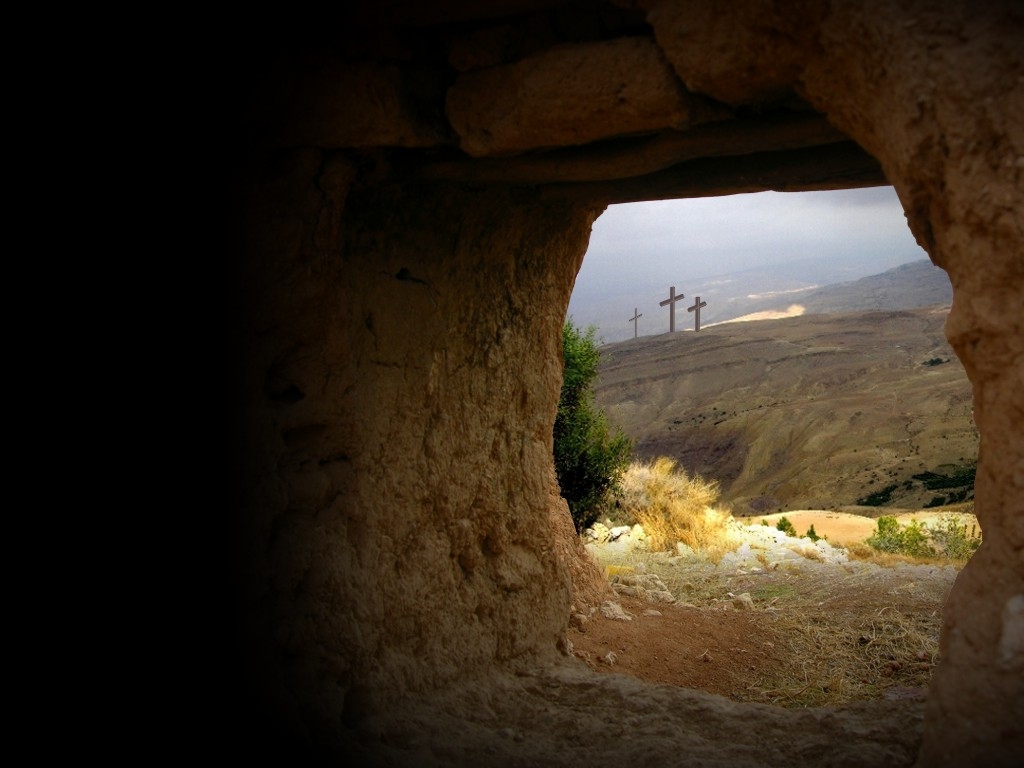
And very early in the morning the first day of the week, they came unto the sepulchre at the rising of the sun … And when they looked, they saw that the stone was rolled away: for it was very great. (Mark 16:2, 4)

The story of mankind is brief and straightforward despite the naturalistic stories invented by evolutionists. God created man in His own image (Genesis 1:26). God created man to enjoy fellowship with Him, but man erected a barrier between himself and God by his disobedience to God’s only command: “But of the tree of the knowledge of good and evil, thou shalt not eat of it: for in the day that thou eatest thereof thou shalt surely die” (Genesis 2:17). That disobedience brought the curse of death – separation from God who is life and the giver of life. “Jesus said unto her, I am the resurrection, and the life: he that believeth in me, though he were dead, yet shall he live: And whosoever liveth and believeth in me shall never die. Believest thou this?” (John 11:25-26). Holy God cannot abide sin. “Shall the throne of iniquity have fellowship with thee, which frameth mischief by a law?” (Psalm 94:20).

From that time on, innocent blood has been shed to cover or atone for the sins of man “For all have sinned, and come short of the glory of God” (Romans 3:23). Starting with that first sacrificial lamb slaughtered by the Lamb of God (Genesis 3:21), the innocent pay the penalty for the sins of the guilty. So the sacrificial system began carried on by Abel (Genesis 4:4), Noah (Genesis 8:20) and the law delivered by Moses. But the practice failed to bridge the chasm rived by sin “For it is not possible that the blood of bulls and of goats should take away sins” (Hebrews 10:4).

This hopeless situation required a better and permanent solution. This was mankind’s problem and the responsibility fell upon man for resolution. But Holy God cannot be satisfied with anything less a perfect, sinless sacrifice. Only the blood of a perfect, sinless man would do. Where could such a man be found? For, “As it is written, There is none righteous, no, not one … They are all gone out of the way, they are together become unprofitable; there is none that doeth good, no, not one” (Romans 3:10, 12). Such a conundrum was no puzzle for an omniscient God. “[He] made himself of no reputation, and took upon him the form of a servant, and was made in the likeness of men: And being found in fashion as a man, he humbled himself, and became obedient unto death, even the death of the cross” (Philippians 2:7-8). “Wherefore, as by one man sin entered into the world, and death by sin; and so death passed upon all men, for that all have sinned” (Romans 5:12). So, God in human form died in the stead of His human creation, and He took upon Himself the penalty that was due to each one of us individually. This is an awesome thing! In all the world religions of man, man sacrifices himself to his god, but the Bible teaches that God sacrificed Himself for man. Is that not incredible!

So Jesus died on the cross at Passover. He became the sacrificial Lamb of God to atone for the sins of mankind. He took on the crushing blow of the curse of death. In His final words He declared, “It is finished!” (John 19:30), and He died. Death took its greatest prize, but then came Sunday! The curse of death was broken. “Therefore as by the offence of one judgment came upon all men to condemnation; even so by the righteousness of one the free gift came upon all men unto justification of life” (Romans 5:18).

When I survey the wondrous cross
On which the Prince of glory died,
My richest gain I count but loss,
And pour contempt on all my pride.

Forbid it, Lord, that I should boast,
Save in the death of Christ my God!
All the vain things that charm me most,
I sacrifice them to His blood.

See from His head, His hands, His feet,
Sorrow and love flow mingled down!
Did e’er such love and sorrow meet,
Or thorns compose so rich a crown?

Were the whole realm of nature mine,
That were a present far too small;
Love so amazing, so divine,
Demands my soul, my life, my all.

(“When I Survey the Wondrous Cross” – Isaac Watts, 1707)

His death on the cross covered our sins once and for all. His resurrection bridged the chasm of death separating sinful humanity from Holy God. He has made the way for you and for me. He said, “I am the way, the truth, and the life: no man cometh unto the Father, but by me” (John 14:6). After all He has done for you, the least you can do is follow the way He has prepared. “Love so amazing, so divine, demands my soul, my life, my all!”


1 Comment

Filed under Apologetics, Bible, Christianity, Creation, Death, Easter, Evangelism, Gospel, Religion, Resurrection, Salvation, Theology

Preach It!

Thou therefore gird up thy loins, and arise, and speak unto them all that I command thee: be not dismayed at their faces, lest I confound thee before them … And they shall fight against thee; but they shall not prevail against thee; for I am with thee, saith the LORD, to deliver thee. (Jeremiah 1:17, 19)

Sometime before the new year, I determined to do my daily Bible reading in my Spanish Bible (Reina-Valera 1960). I completed reading through the New Testament and started reading the major prophets in the Old Testament. I finished reading Isaiah (Isaías) and started reading Jeremiah (Jeremías) this week. When I came to the passage above, I sent it to my pastor as a word of encouragement.

Jeremiah lived in a time when Israel (the Northern Kingdom) had been taken captive by the Assyrians and Babylon was threatening Judah (the Southern Kingdom). These invasions were God’s judgement on the nation for their idolatry. Judah retained a form of religion. They observed all the prescribed feast days and performed all the required sacrifices, but pagan worship and rituals crept into their religious life. Whatever worship they offered God was insincere and offensive to God. His patience exhausted, God said, “… I will utter my judgments against them touching all their wickedness, who have forsaken me, and have burned incense unto other gods, and worshipped the works of their own hands” (Jeremiah 1:16).

So, God assigned Jeremiah to proclaim His Word to the people with the assurance that they would not want to hear the message. God warned that they would fight against him, and indeed they did. Jeremiah was abused, beaten, and cast into a muddy cistern because he tried to warn the people of what was coming. However, God encouraged him, “be not dismayed at their faces … they shall not prevail against thee: for I am with thee … to deliver thee.” It seems strange that God warns Jeremiah that He will “confound” him if he is dismayed by the angry looks he gets from his audience. The Geneva Bible notes that “God’s vengeance is prepared against them who do not execute their duty faithfully, either for fear of man, or for any other reason.” In other words, God is telling Jeremiah to speak boldly, without fear, or God will allow him to look foolish before his audience.

We live in a time very much like that of Jeremiah’s day. Forget the secular crowd; they make no pretense of religiosity. The church crowd that has adopted the ways of this world and tried to put a religious spin on it will be our opposition. This is Super Bowl Sunday. Think of all the churches that have cancelled Sunday night services so their congregants can stay home and watch the Super Bowl at home. And even if services are not cancelled, how many “Christians” will skip Sunday night services so they will not miss one minute of the Super Bowl?

That is just a small example. What about the churches that have incorporated “critical race theory” and “wokeness” into their practices? How about those churches that for a long-time now have rejected biblical teaching against homosexuality and women pastors? Not only do they embrace the practice but they allow them in their pulpits to preach! If you speak up against such things you will be ridiculed and labeled as a bigot, a racist, a homophobe, intolerant, etc. They will come at you with a vicious vengeance. As God told Jeremiah, “they shall fight against thee, but they shall not prevail against thee.” Do you believe that? God says, “gird up thy loins, and arise, and speak unto them all that I command thee.”

Paul exhorted his young protégé, Timothy to “Preach the word; be instant in season, out of season; reprove, rebuke, exhort with all longsuffering and doctrine” (2 Timothy 4:2). This exhortation does not apply only to “preachers.” It is meant for every one of Jesus’ witnesses. Like it or not, if you claim Jesus as your Savior, if you claim to be a Christian, then you are a witness of Jesus Christ, for good or bad. We have a message to proclaim, in season and out of season. In other words, when it is convenient and when it is not convenient. Many will not appreciate the message, especially those who fancy themselves to be religious and are not. The adage is true that “the truth hurts,” and you can expect pushback when you deliver God’s Word (not your word or opinion). However, as God told Jeremiah, “I am with thee, saith the LORD, to deliver thee.” God is faithful, and He will keep His promise. The question is, do you really believe that? We live in evil days and God does not want us to go into hiding, but to be bold and proclaim His Word in the midst of opposition. HE will deliver us. We need not fear. Preach it!

If you are unsure of where you will spend eternity, please read my page on “Securing Eternal Life.”

Comments Off on Preach It!

Filed under Apologetics, Christianity, Evangelism, Gospel, Religion, Theology