Category Archives: Resurrection

A Thousand Years

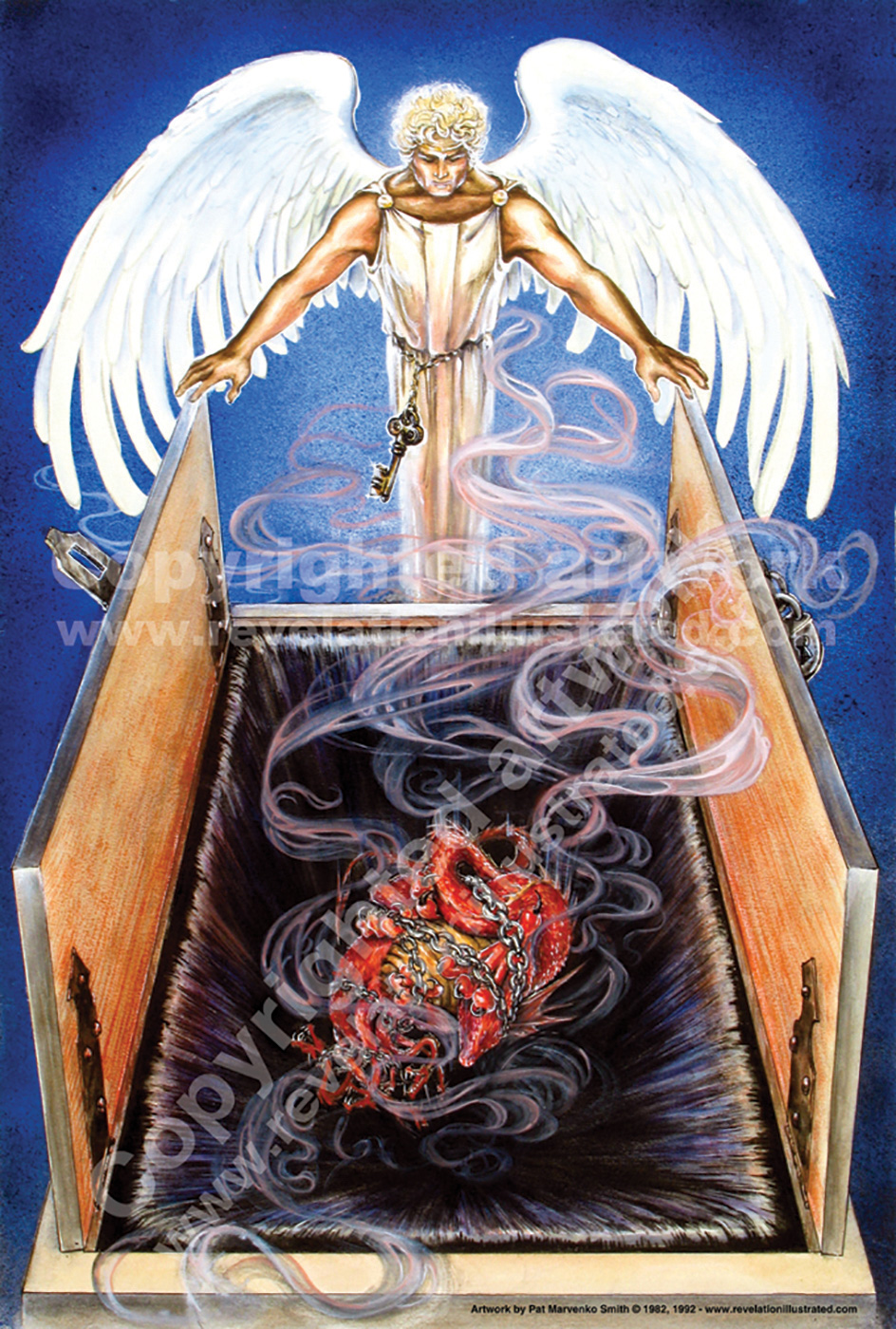
Art used by permission by Pat Marvenko Smith, Copyright 1992.
Click here to visit her “Revelation Illustrated” site.

And I saw an angel come down from heaven, having the key of the bottomless pit and a great chain in his hand. And he laid hold on the dragon, that old serpent, which is the Devil, and Satan, and bound him a thousand years, (Revelation 20:1-2)

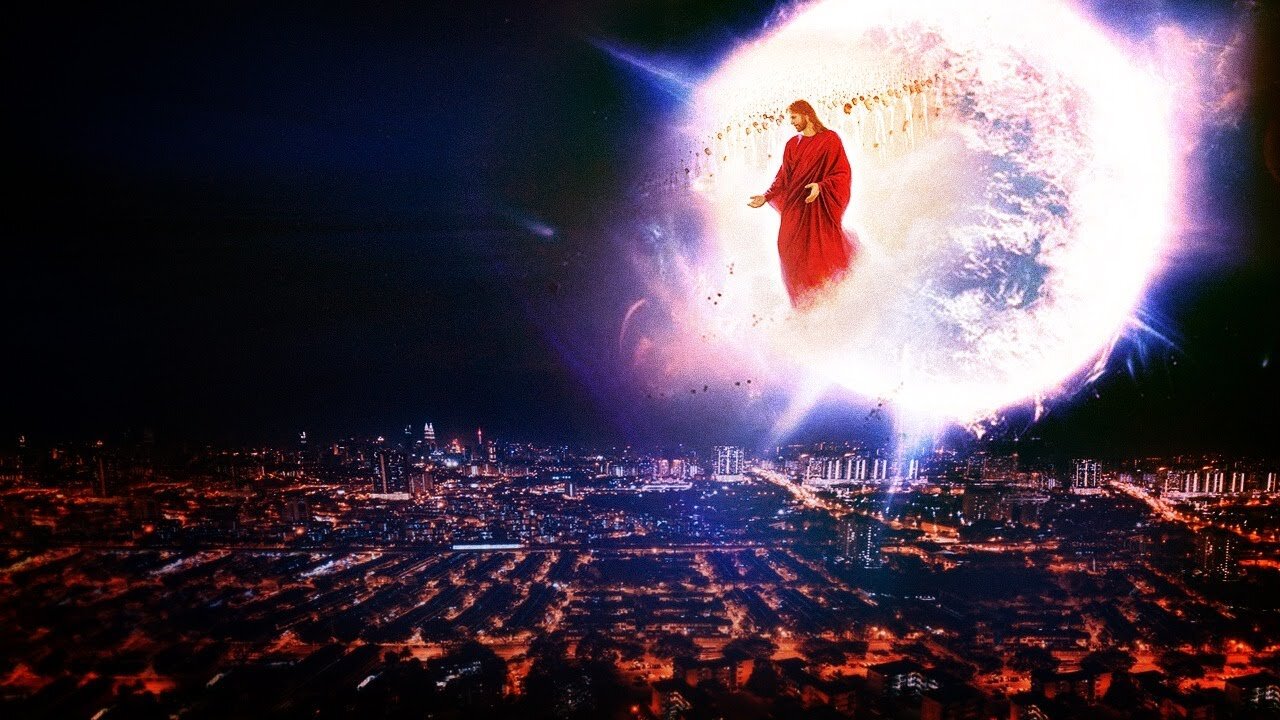
When Jesus entered Jerusalem almost 2000 years ago on the back of a donkey’s colt, He presented Himself as melek shâlêm, “King of Peace.” Now, He comes on a white horse as the conquering KING OF KINGS and LORD OF LORDS.[1] In the previous chapter of Revelation, we learned that He comes to rule “with a rod of iron.” Unlike kings that have come before, His rule will be absolute but benevolent, and He will reign on Earth for a thousand years.

The question arises here about the thousand years. Are these literally 1000 years or should it be taken as symbolic of “a long time” or even eternity? Two main viewpoints exist. The premillennial view, in all of its variations, takes the position that the 1000 years should be taken literally. The amillennial view takes the position that the 1000 years should be taken symbolically and allegorically of the eternal reign of Christ.[2] In that view, the millennium symbolizes either the present church age or the eternal state. There are no 1000 years. The “a” prefixed to “millennium” negates the millennium, therefore, there is “no millennium.” Along with that view is the idea that the Church is responsible for preparing the world for Christ’s return. That idea should make one ask, “How well is the Church doing in that regard?”

Without wasting keystrokes, let me just say that the amillennial view is wrong. At the same time, I need to stress that those that hold that view are not lost. One’s eschatological view is not a salvation issue. Faith in CHRIST ALONE is the only requirement for entry into heaven. That said, the amillennial view is wrong for two very fundamental reasons. First of all, as we read Revelation 20:1-7, there is nothing in the text to indicate that the 1000 years should be taken in any other way than literally. Secondly, in the first seven verses of the twentieth chapter, the phrase “a thousand years” is repeated SIX TIMES. When the Bible says something once, it should be taken as fact simply based on the fact that it is God’s Word. When the Bible repeats something twice, it should get our attention. If it repeats something three times, we need to take it very seriously. Here, the Bible repeats “a thousand years” six times. To take it to mean anything other than what it says is poor hermeneutics and just foolishness.

“And I saw an angel come down from heaven, having the key of the bottomless pit and a great chain in his hand. And he laid hold on the dragon, that old serpent, which is the Devil, and Satan, and bound him a thousand years” (Revelation 20:1-2, emphasis mine). At the sounding of the fifth trumpet, we saw an angel (a star) “fall from heaven unto the earth: and to him was given the key of the bottomless pit” (Revelation 9:1, emphasis mine). In my opinion, that angel was a demon who did not have possession of the key to the bottomless pit, but rather that it was “given” to him. Here we have a different angel. This angel does not “fall” out of heaven, but he comes down from heaven. Also, he is not “given” the key to the bottomless pit, but he has possession of it. This angel is probably the one that handed the key over to the demonic angel back in Revelation 9:1. This angel is the keeper of the key. He takes a “great chain” and lays “hold on the dragon, that old serpent, which is the Devil, and Satan” and binds him for a thousand years. Without a doubt, Satan is a powerful creature, but God’s angel has no trouble subduing him. “And cast him into the bottomless pit, and shut him up, and set a seal upon him, that he should deceive the nations no more, till the thousand years should be fulfilled: and after that he must be loosed a little season” (Revelation 20:3, emphasis mine). This is the second time the “thousand years” is mentioned. How long will Satan be bound? – a thousand years!

“And I saw thrones, and they sat upon them, and judgment was given unto them: and I saw the souls of them that were beheaded for the witness of Jesus, and for the word of God, and which had not worshipped the beast, neither his image, neither had received his mark upon their foreheads, or in their hands; and they lived and reigned with Christ a thousand years” (Revelation 20:4, emphasis mine). John mentions two distinct groups here. Those seated on thrones represent the Church (the Bride of Christ) that was raptured before the Tribulation. Those that were “beheaded for the witness of Jesus … which had not worshipped the beast, etc.” are those who were martyred during the Tribulation. Together, they will be involved in the administration of Christ’s reign on Earth. How long will they reign with Christ? – a thousand years!

John does not detail the Millennium. What will the Millennium be like? For that, we need to check with other prophets. One of the reasons the Jews in Jesus’ day missed their promised Messiah was because they were looking for a reigning monarch as described by the prophets. They rejected the prophecies that foretold of His suffering, death on the cross, and His resurrection. However, the Old Testament prophecies are clear on that regard. Of Millennium, Clarence Larkin says, “It is to be regretted … that the world ‘Millennium’ ever supplanted the Biblical word ‘Kingdom,’ for it is this period that Christ taught His Disciples to pray for the petition ‘Thy Kingdom Come.’[3]

In his book, Larkin presents five distinct characteristics of the Millennium.[4] (1) Satan is bound.[5] One advantage people living in the Millennium will have over our “first parents” in the Garden of Eden, is that neither Satan, nor his demons, will be around to tempt people to sin. However, this will only serve to prove that mankind does not need a lot of help or encouragement to rebel against God.[6] With Satan out of the picture, there will be no one around to stir up hate and strife and the world will enjoy true peace; there will be no more wars and there is the promise that men “shall beat their swords into plowshares, and their spears into pruninghooks.”[7]

(2) The revival of Israel. When Larkin wrote his book, the nation of Israel did not exist. At the end of World War I in 1917, efforts were started to establish a “national home for the Jewish people.” The brainchild of British Foreign Secretary, Artur James Balfour, the “Balfour Declaration” set aside the original homeland of the Jews, called Palestine at that time. The fruit of that effort was not realized until May 14, 1948, when Israel was reborn in the Promised Land. Although Israel exists in the present, it is only a partial fulfillment of what was prophesied in the Old Testament. The complete fulfillment will not be realized until the Millennium, but the fact that Israel exists presently lets us know that the fulfillment in full is much closer than we might think. It is no longer the same land that Mark Twain visited in 1867. His impression was that it was a “rocky and bare, repulsive and dreary … landscape … There was hardly a tree or a shrub any where. Even the olive and the cactus, those fast friends of a worthless soil, had almost deserted the country.”[8] He should see it now![9]

(3) There will be changes in the animal kingdom. In God’s original creation, before the Fall, man and animals were herbivorous.[10] There will be complete harmony between mankind and animals and among all the animals.[11] We will not be killing off each other for food.

(4) Human life will be prolonged. We read in the genealogical record[12] before the flood that lifespans averaged over 900 years. In the Millennium, long lifespans will be the norm. The Prophet Isaiah records, “There shall be no more thence an infant of days, nor an old man that hath not filled his days: for the child shall die an hundred years old; but the sinner being an hundred years old shall be accursed” (Isaiah 65:20, emphasis mine). I must emphasize that those who do die are those who came through the Tribulation in their natural bodies. They will have the ability to reproduce and repopulate the earth. Those who do die, in my opinion, will be those who in some way or another violate the absolute law of Christ (i.e., “the sinner”) Who will “rule with a rod of iron.” Lawbreakers (“sinners”) will not be tolerated in the Millenium. Those who return with Christ at His Second Coming, the Raptured saints (the Bride of Christ), and the Tribulation saints, have their glorified bodies[13] that are not subject to disease or death.

(5) There will be a sevenfold increase of light. “Moreover the light of the moon shall be as the light of the sun, and the light of the sun shall be sevenfold, as the light of seven days, in the day that the LORD bindeth up the breach of his people, and healeth the stroke of their wound” (Isaiah 30:26). I am not sure whether this refers to the Millennium or to the New Heaven and New Earth, but Larkin seemed to think it referred to the Millennium. We will know soon.

“But the rest of the dead lived not again until the thousand years were finished. This is the first resurrection” (Revelation 20:5, emphasis mine). We saw the Beast and the False Prophet cast alive into the “lake of fire,”[14] but the armies that followed them “were slain with the sword of him that sat upon the horse, which sword proceeded out of his mouth: and all the fowls were filled with their flesh” (Revelation 19:21). These go to “the grave,” a.k.a., hell, a.k.a., hades, a.k.a., the abode of the dead, a.k.a., “Torments.” Jesus referred to this place when He recounted the death of the rich man and Lazarus.[15] These will be resurrected and face the Great White Throne Judgment[16] at the end of – how many years? – a thousand years.

“Blessed and holy is he that hath part in the first resurrection: on such the second death hath no power, but they shall be priests of God and of Christ, and shall reign with him a thousand years” (Revelation 20:6, emphasis mine). The first resurrection takes place at the Rapture.[17] Those caught up in the Rapture will have their bodies transformed into glorified eternal bodies that will never grow old or experience pain of any sort. “For our [citizenship] is in heaven; from whence also we look for the Saviour, the Lord Jesus Christ: Who shall change our vile body, that it may be fashioned like unto his glorious body, according to the working whereby he is able even to subdue all things unto himself” (Philippians 3:20-21, emphasis mine). I am certain the Tribulation saints will have glorified bodies also, but how they receive their new bodies we are not told. I suspect that they will receive them instantly when they die; however, I am not certain about that. The good news is that “the second death hath no power” over them. The “second death” is an eternity in “the lake of fire.”[18] Instead, they reign with Christ – for how long? – a thousand years!

“And when the thousand years are expired, Satan shall be loosed out of his prison” (Revelation 20:7, emphasis mine). After – how many years? – a thousand years of perfect peace on Earth, Satan is once again loosed on the earth. Why? We will see in my next article – if the Lord wills. Another argument against amillennialism is that the 1000 years has an expiration date; therefore, it cannot be eternal. These verses make it clear that the Lord Jesus Christ will reign as KINGS OF KINGS and LORD OF LORDS for a thousand years.

How about you, reader? Will you experience the thousand-year reign of Christ? If you do not know the Savior, do not wait any longer. The time is short. Please read my page on “Securing Eternal Life.”

Notes:


[1]  Revelation 19:15-16

[2]  What is Amillenialism? Beliefs & Chart (crosswalk.com)

[3]  Clarence Larkin, The Book of Revelation Illustrated, (Rev. Clarence Larkin Estate, Philadelphia, 1919), p. 180.

[4]  Ibid, pp. 188-191

[5]  Revelation 20:1-2

[6]  Revelation 20:7-10

[7]  Micah 4:3-4

[8]  https://blog.nli.org.il/en/mark-twain-in-palestine/

[9]  Psalm 67:6; Isaiah 35:1; 55:13; Joel2:24-26; Amos 9:13

[10]  Genesis 1:29-30

[11]  Isaiah 11:6-9

[12]  Genesis 5

[13]  1 Corinthians 15:51-54

[14]  Revelation 19:20

[15]  Luke 16:19-31

[16]  Revelation 20:11

[17]  1 Corinthians 15:51-54; 1 Thessalonians 4:13-17

[18]  Revelation 20:14

1 Comment

Filed under Apologetics, Bible, Christianity, Current Events, End Times, Eschatology, Rapture, Resurrection, Satan, Second Coming of Christ, Theology

The Seventh Trumpet

And the seventh angel sounded; and there were great voices in heaven, saying, The kingdoms of this world are become the kingdoms of our Lord, and of his Christ; and he shall reign for ever and ever. (Revelation 11:15)

The Two Witnesses testify to the mercy of God that even through severe judgment, God gives a sinful and rebellious world ample opportunity to repent. For the first three-and-one-half years of the Tribulation, they have preached in the streets of Jerusalem and the whole world heard their message so that they have no excuse. Surely, many turned to Christ because of their message, but to be a Christ-believer in these times is a life-commitment indeed. We saw them underneath the altar as those who had been “slain for the word of God, and for the testimony which they held” (Revelation 6:9).

When “the beast” kills the two witnesses, the world celebrates their demise. However, the jubilation comes to an abrupt end when after three days life returns to their lifeless bodies, and they ascend to heaven as the whole world watches. The shock of such a sight cause many to reconsider their eternal state, and “the remnant were affrighted, and gave glory to the God of heaven” (Revelation 11:13).

In the account of the two witnesses, John gave us a brief look back at the previous three-and-one-half years in the midst of the trumpet judgments. Six trumpets have sounded thus far, and one remains to be sounded.

“And the seventh angel sounded; and there were great voices in heaven, saying, The kingdoms of this world are become the kingdoms of our Lord, and of his Christ; and he shall reign for ever and ever” (Revelation 11:15). The heavenly pronouncement gives a sense of finality for what is to come. It’s game over!

I will not be dogmatic about this. The chronology of these events is all up for debate, and anyone that claims they know doesn’t. However, as it appears to me, the trumpet judgments begin the final three-and-one-half years of the Tribulation. This is the time of Great Tribulation, and the seventh trumpet introduces the final 21 months of the Great Tribulation represented by the seven “bowl” judgments.[1]

For this reason, I believe the heavenly pronouncement announces “The kingdoms of this world are become the kingdoms of our Lord, and of his Christ; and he shall reign for ever and ever” (11:15). It’s a done deal. The end is very near.

“And the four and twenty elders, which sat before God on their seats, fell upon their faces, and worshipped God, Saying, We give thee thanks, O Lord God Almighty, which art, and wast, and art to come; because thou hast taken to thee thy great power, and hast reigned” (Revelation 11:16-17). The end of the horror on earth certainly is cause for celebration knowing that the King of Kings and Lord of Lords will soon take His throne.

The worshipers continue. “And the nations were angry, and thy wrath is come, and the time of the dead, that they should be judged, and that thou shouldest give reward unto thy servants the prophets, and to the saints, and them that fear thy name, small and great; and shouldest destroy them which destroy the earth” (Revelation 11:18). The psalmist captures this sentiment perfectly.

Why do the [nations] rage, and the people imagine a vain thing?

The kings of the earth set themselves, and the rulers take counsel together, against the LORD, and against his anointed, saying,

Let us break their bands asunder, and cast away their cords from us.

He that sitteth in the heavens shall laugh: the Lord shall have them in derision. (Psalm 2:1-4)

“The dead” speaks of those who have rejected God’s free gift of grace through faith.[2] Whether physically alive or physically dead, they are spiritually dead in their sins[3] because they have rejected Christ who is the only source of eternal life.[4] These will be judged at the “Great White Throne Judgment” at the end of the Millennium.[5] By contrast, God’s servants, the prophets, and the saints will enjoy eternal rewards.

Chapter 11 closes with a scene of the Temple of God in heaven and the Ark of the Covenant. “And the temple of God was opened in heaven, and there was seen in his temple the ark of his testament [covenant]: and there were lightnings, and voices, and thunderings, and an earthquake, and great hail” (Revelation 11:19). This is the real Temple of God and the real Ark of the Covenant from which the earthly Tabernacle/Temple and Ark were patterned. The “lightnings, and voices, and thunderings, and an earthquake, and great hail” are just a prelude of what the seventh trumpet announces – the final seven “bowl” judgments.

John describes the “bowl” judgments in Chapter 16. However, before John goes there, he gives us another parenthetical pause to provide insight into the events that have taken place on Earth, so far. Stay tuned!

The time is drawing near. The pieces of the end-times puzzle are falling into place and Christ’s return is closer now than at any time in history. Reader, are you prepared to meet Him? If not, check out my page on “Securing Eternal Life.”

Notes:


[1]  Revelation 16

[2]  Ephesians 2:8-9

[3]  Colossians 2:13

[4]  John 14:6

[5]  Revelation 20:11-15

Comments Off on The Seventh Trumpet

Filed under Apologetics, Bible, End Times, Eschatology, Rapture, Resurrection, Second Coming of Christ, Theology

The First Sight

Thou art worthy, O Lord, to receive glory and honour and power: for thou hast created all things, and for thy pleasure they are and were created. (Revelation 4:11)


The book of Revelation puzzles many who read it. It seems strange and sometimes bizarre. Many avoid the book because the contents elicit fear about the predictions of things to come. However, the book of Revelation is the only book of the Bible that promises a blessing to those who read, hear, and apply its contents. “Blessed is he that readeth, and they that hear the words of this prophecy, and keep those things which are written therein: for the time is at hand.” (Revelation 1:3).

Revelation opens with the last remaining apostle of Jesus, the Apostle John, “in the Spirit the Lord’s Day.”[1] The Roman government arrested and exiled John to the prison island of Patmos for preaching the disruptive Gospel of Jesus Christ.[2]

The initial recipients of the book were seven churches in Asia Minor: Ephesus, Smyrna, Pergamos, Thyatira, Sardis, Philadelphia, and Laodicea.[3] To these, the risen Christ addresses individual letters.[4] These churches existed in John’s day, but because of the commendations and reproofs Jesus gives to these churches, some have seen in them patterns of each throughout church history.

John then describes his first glimpse of Jesus as though in a vision. This is not the Jesus John remembers during His earthly ministry. This Jesus is awesome to behold. John says, “And I turned to see the voice that spake with me. And being turned, I saw seven golden candlesticks; And in the midst of the seven candlesticks one like unto the Son of man, clothed with a garment down to the foot, and girt about the paps with a golden girdle. His head and his hairs were white like wool, as white as snow; and his eyes were as a flame of fire; And his feet like unto fine brass, as if they burned in a furnace; and his voice as the sound of many waters. And he had in his right hand seven stars: and out of his mouth went a sharp twoedged sword: and his countenance was as the sun shineth in his strength” (Revelation 1:12-16). The dazzling sight caused John to fall at His feet in awestruck fear, but that tender, familiar voice reassured him of the One he loved. “… Fear not; I am the first and the last: I am he that liveth, and was dead; and, behold, I am alive for evermore, Amen; and have the keys of hell and of death” (Revelation 1:17-18).

John saw Jesus in the midst of seven lampstands holding seven stars in His right hand. Jesus explained to him that the seven lampstands represented the seven churches and the seven stars represented the seven angels, i.e., messengers or pastors, of the seven churches.[5] The image reminds us that Jesus dwells among His churches and that He keeps and protects the pastors of His churches in His right hand (a position of power). This should also serve as a warning to pastors. Just as Jesus’ right hand protects His messengers, He also has the power to crush the pastor that fails in his responsibility to Jesus’ Bride, the Church.

As noted earlier, Jesus dictates direct messages to each of the seven churches. Immediately following the last word to the church of Laodicea, John looks up and sees an open door in heaven and hears a sound (Greek: phōnē) like that of a trumpet that said, “Come up hither, and I will shew thee things which must be hereafter. And immediately I was in the spirit: and, behold, a throne was set in heaven, and one sat on the throne” (Revelation 4:1-2, emphasis mine).

Many see the Rapture of the Church in these verses. John is commanded to “come up here” and “immediately” he sees the throne of God for the first time. From this point forward, the Church no longer appears on earth until Christ returns with His saints in Chapter 19.

There are many who teach that the Rapture is not taught in the Bible. They correctly argue that the word “rapture” appears nowhere in the Bible. However, neither do the words bible or trinity, yet no one will argue that these concepts are not taught in the Bible. “Rapture” translates the Greek word harpazō into the Latin raptus meaning “to seize; to catch away or up; to pluck, pull, or take by force”. This is what happened to John. He was on the earth and “immediately” he was caught away into the throne room of God.

Jesus gave us the first promise of the Rapture before going to the cross. He said, “Let not your heart be troubled: ye believe in God, believe also in me. In my Father’s house are many mansions: if it were not so, I would have told you. I go to prepare a place for you. And if I go and prepare a place for you, I will come again, and receive you unto myself; that where I am, there ye may be also” (John 14:1-3, emphasis mine). Paul teaches of the time when the trumpet shall sound and our corrupt bodies will be changed in the twinkling of an eye. The dead in Christ will rise from their graves, and we who are alive will join them to meet Jesus in the air.[6]

John enters the presence of God and his first sight is the throne of God. The person seated on the throne appears not as a human or any other creature, but rather as a glorious splendor. Of Him, John says, “And he that sat was to look upon like a jasper and a sardine stone: and there was a rainbow round about the throne, in sight like unto an emerald” (Revelation 4:3). The Bible teaches that God has no human form, except in the form of Jesus. Jesus said, “God is a Spirit: and they that worship him must worship him in spirit and in truth” (John 4:24, emphasis mine). John was given a privilege that even Moses (or anyone else for that matter) was denied. Moses, who spoke with God face-to-face as with a friend,[7] wanted to see God in His glory, but God denied his request, “And he said, Thou canst not see my face: for there shall no man see me, and live” (Exodus 33:20, emphasis mine). Yet, somehow John saw God in all of His glory and did not die. In our corrupt human bodies, we cannot withstand the glory of God’s presence. However, at the Rapture, our bodies will be transformed in such a way that we can be in the presence of God in His full glory and not be harmed, just like John.

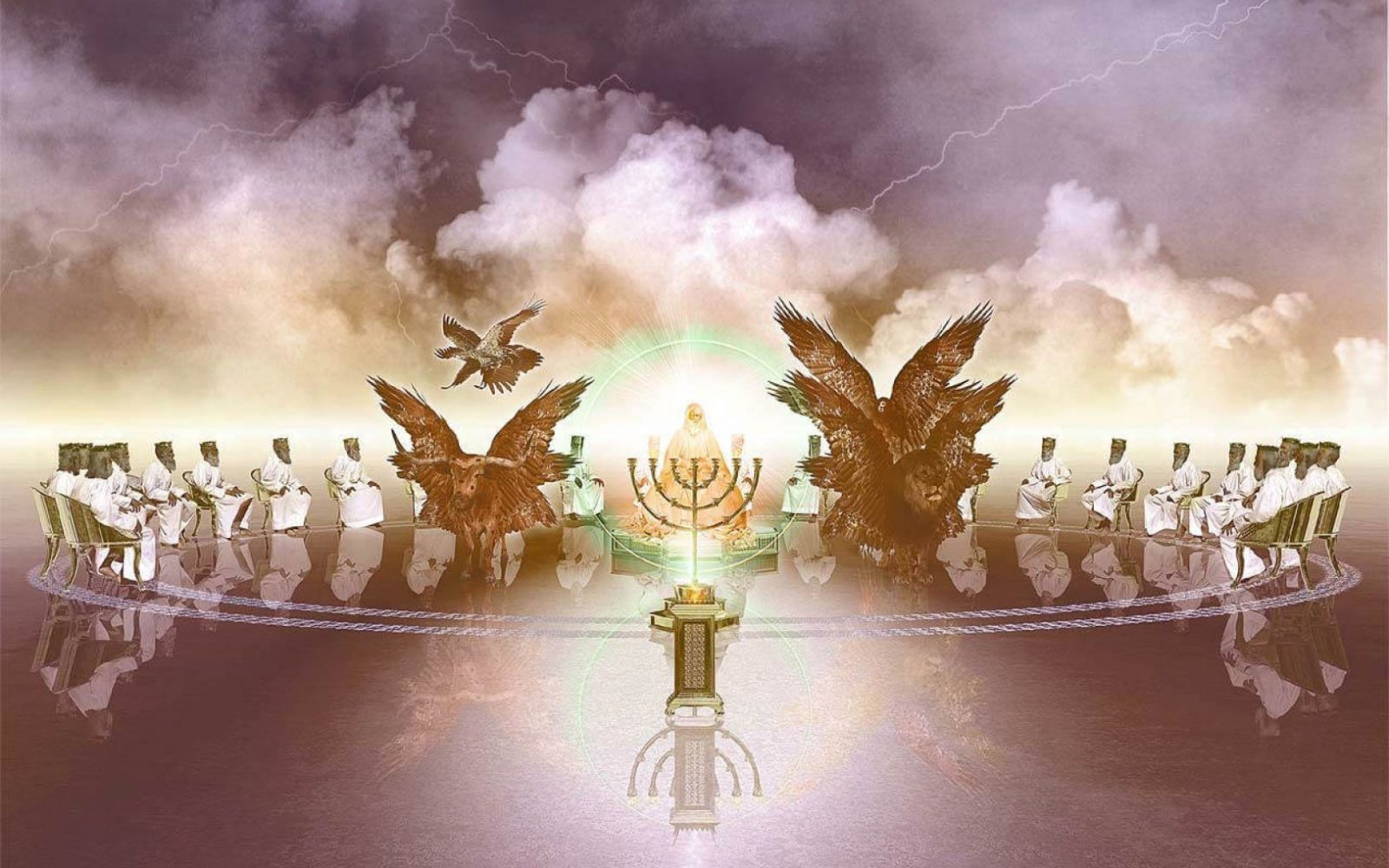
The scene overwhelmed John. There were lightnings, thunders, and voices. Around the throne of God, John saw 24 thrones upon which seven elders sat wearing white robes and crowns of gold.[8] Some suppose these represent the twelve tribes of Israel and the twelve apostles. Others suggest that they merely represent believers of all the ages. In either case, the white robes represent the righteousness of Christ conferred on them. The golden crowns are stephanos, which are “victors crowns” awarded to them for conquering sin, not through their own righteousness, but through the blood of Christ.

John then sees seven lampstands around the throne defined as the “seven spirits of God” Some suggest that these seven lampstands represent seven attributes of the Holy Spirit as described by the prophet Isaiah. “And the spirit of the LORD shall rest upon him [i.e., Jesus], the spirit of wisdom and understanding, the spirit of counsel and might, the spirit of knowledge and of the fear of the LORD” (Isaiah 11:2, emphasis mine). We know that the Holy Spirit indwells believers and thereby indwells the Church. In the first chapter, John sees Jesus in the midst of seven lampstands, which represent the churches. Now, these same lampstands (i.e., churches) are seen around the throne of God. I see the lampstands representing both the Holy Spirit and the churches wherein the Holy Spirit resides. The attributes described by Isaiah certainly apply as well.

Around the throne is a crystal sea. It is difficult to know what John saw in this. It is all strange and wonderful and beyond words to describe. John could only relate what he saw by his limited earthly vocabulary. But then he sees four strange creatures full of eyes and with six wings each. One “beast” had the head of a lion, the second the head of a calf, the third the head of a man, and the fourth the head of an eagle.[9] The eyes represent the omniscience of God and the four different heads represent all of God’s creatures: wild animals, domestic animals, human beings, and avian life. All of God’s creation never ceasing to praise Him day or night “saying, Holy, holy, holy, Lord God Almighty, which was, and is, and is to come” (Revelation 4:8).

John then observed that when these praised God, the 24 elders prostrate themselves and cast their victor’s crowns before the throne saying, “Thou art worthy, O Lord, to receive glory and honour and power: for thou hast created all things, and for thy pleasure they are and were created” (Revelation 4:11).

With the focus on the throne, John spots something new. “And I saw in the right hand of him that sat on the throne a book written within and on the backside, sealed with seven seals” (Revelation 5:1, emphasis mine). By its description, we know that this “book” is actually a scroll – perhaps parchment – with writing on both sides, rolled up and secured with seven seals. Many suggest that this scroll represents the title dead to the earth and the kingdoms thereof. When God created the earth, He gave dominion over the earth to man whom He created in His image on the sixth day of creation.[10] However, man lost that dominion when he sinned in the Garden of Eden.[11] The dominion of earth transferred to Satan. Paul calls him the “god of this world.”[12] When Satan tempted Jesus, he offered Jesus the kingdoms of this world if He would only bow down and worship him. “And the devil said unto him, All this power will I give thee, and the glory of them: for that is delivered unto me; and to whomsoever I will I give it” (Luke 4:6, emphasis mine). However, his ownership is only temporary.

Then John saw and heard a strong angel proclaim, “Who is worthy to open the book, and to loose the seals thereof?” (Revelation 5:2). And no one in heaven, on earth, or under the earth was found worthy to take the scroll and break the seals. The situation was dire indeed. All of God’s creation hung in the balance and there was no one to come to the rescue. John says, “And I wept much, because no man was found worthy to open and to read the book, neither to look thereon” (Revelation 5:4).

John’s tears were soon assuaged. “And one of the elders saith unto me, Weep not: behold, the Lion of the tribe of Juda, the Root of David, hath prevailed to open the book, and to loose the seven seals thereof,” John says, “And I beheld, and, lo, in the midst of the throne and of the four beasts, and in the midst of the elders, stood a Lamb as it had been slain, having seven horns and seven eyes, which are the seven Spirits of God sent forth into all the earth” (Revelation 5:5-6). John the Baptist saw this Lamb come to him to be baptized in the Jordan and proclaimed, “Behold the Lamb of God, which taketh away the sin of the world” (John 1:29). He was slain on the cross, was buried in a borrowed tomb, and rose again on the third day.[13] Horns represent kingdoms and the Lamb has seven representing completion. All the kingdoms belong to Him. He is “KING OF KINGS, AND LORD OF LORDS” (Revelation 19:16). Seven eyes suggest omniscience with all the attributes of the seven Spirits of God.

Only the Lamb, by virtue of His sacrifice, is worthy to take and open the scroll. “And he came and took the book out of the right hand of him that sat upon the throne” (Revelation 5:7). When the Lamb took the scroll, a great celebration broke out in heaven. The four living creatures and the 24 elders prostrate themselves before the Lamb. “And they sung a new song, saying, Thou art worthy to take the book, and to open the seals thereof: for thou wast slain, and hast redeemed us to God by thy blood out of every kindred, and tongue, and people, and nation; And hast made us unto our God kings and priests: and we shall reign on the earth” (Revelation 5:9-10).

Then the rest of heaven breaks out in praise, “Saying with a loud voice, Worthy is the Lamb that was slain to receive power, and riches, and wisdom, and strength, and honour, and glory, and blessing. And every creature which is in heaven, and on the earth, and under the earth, and such as are in the sea, and all that are in them, heard I saying, Blessing, and honour, and glory, and power, be unto him that sitteth upon the throne, and unto the Lamb for ever and ever” (Revelation 5:12-13).

Worthy indeed! I cannot imagine how John must have felt at the first sight of heaven and the throne of God. I cannot wait to see it for myself!

The 14 chapters that follow bring us back to earth and the events that will transpire during the seven-year Tribulation. The scenes are horrific. However, the Church, the Bride of Christ, will not experience the horrors of the Tribulation. The Church, as we saw will be around the throne of God and not on earth. Will you be there or will you experience the horrors that are coming upon the earth? Your ticket out of here was purchased by Jesus more than 2000 years ago. All you have to do is accept it. Check out my page on “Securing Eternal Life.”

Notes:


[1]  Revelation 1:10

[2]  Revelation 1:9

[3]  Revelation 1:11

[4]  Revelation 2-3

[5]  Revelation 1:20

[6]  1 Corinthians 15:50-53; 1 Thessalonians 4:15-17

[7]  Exodus 33:11

[8]  Revelation 4:4

[9]  Revelation 4:6-8

[10]  Genesis 1:26-28

[11]  Genesis 3

[12]  2 Corinthians 4:4

[13]  1 Corinthians 15:3-4

Comments Off on The First Sight

Filed under Apologetics, Bible, Christianity, End Times, Eschatology, Gospel, Heaven, Holy Spirit, Origins, Rapture, Resurrection, Satan, Second Coming of Christ, Theology, Worship

Things Have Always Been This Way!

Knowing this first, that there shall come in the last days scoffers, walking after their own lusts, And saying, Where is the promise of his coming? for since the fathers fell asleep, all things continue as they were from the beginning of the creation. (2 Peter 3:3-4)

At breakfast with some friends (“brothers”) recently, the conversation turned to current world events and the rapid moral decline of our nation and the world in general. I suggested that this should not come as a surprise to us Christians because the Lord told us to expect these things in the “last days.”

One of my brothers quickly spoke up and said that we have always had these things: wars, rumors of wars, famines, pestilences, natural disasters, etc. Things have always been this way since the beginning of history. I had to agree. These things have always been a part of history, and there has always been someone trying to conquer and rule the world. Indeed, there is nothing new about this. However, things are not exactly the same, and Israel is the key.

Jesus’ disciples “came unto him privately, saying, “Tell us, when shall these things be? and what shall be the sign of thy coming, and of the end of the world?” (Matthew 24:3). These men were Jews, and at that time, they had no idea about the Church that was to come. It was still a mystery to them. They probably did not even understand that Jesus must go to the cross. They believed in Jesus as the Messiah that was to come, but they still had the idea that He would establish an earthly kingdom that would throw off the yoke of the Roman empire. Their hopes would soon be dashed when the Jewish leaders arrested Jesus. All the disciples ran away in fear.[1]

In their minds, the disciples probably assumed that Jesus would set up His kingdom very soon followed by the end of the “world.” The word in Greek, aiōn, is better translated as “age.” Also, the Greek definite article, to, can also be translated as “this.” So, the question can be rendered, “what shall be the sign of thy coming, and of the end of this age?” They were looking and hoping for His kingdom now, and the end of this age now. Jesus’ response in the verses that follow focused on Jews and the nation of Israel. Jesus’ message followed the teachings of the Old Testament prophets, which maintained the end-times focus on Israel. The prophecies given to Daniel were intended for Israel. “Seventy weeks are determined upon thy people and upon thy holy city, to finish the transgression, and to make an end of sins, and to make reconciliation for iniquity, and to bring in everlasting righteousness, and to seal up the vision and prophecy, and to anoint the most Holy” (Daniel 9:24, emphasis mine). Daniel also wanted to know when these things would come to pass, but those details were denied to him. “But thou, O Daniel, shut up the words, and seal the book, even to the time of the end: many shall run to and fro, and knowledge shall be increased” (Daniel 12:4, emphasis mine).

Even though end-times prophecy focuses on Israel, it carries worldwide implications. The events Jesus and the prophets described will affect the entire world, but the intent is “to finish the transgression, and to make an end of sins, and to make reconciliation for iniquity, and to bring in everlasting righteousness, and to seal up the vision and prophecy, and to anoint the most Holy” (Daniel 9:24). The greatest “transgression” for Israel was the rejection of their Messiah – bad for them, good for us Gentiles. The “end of sins, and to make reconciliation for iniquity, and to bring in everlasting righteousness” comes when “the most Holy” (i.e., Jesus) is anointed as King of kings and Lord of lords. That happens at the “end of this age,” and at the beginning of the Millennium.[2]

Going back to my brother’s scoff that, “things have always been this way,” unless one is just not paying attention, things in this world have deteriorated exponentially in just the last 10-20 years. Even non-believers can see it. The World Economic Forum (WEF)[3] has plans for a one-world government, and they proudly publish their plans for all to see. Wars and rumors of wars abound with Russia threatening nuclear war, North Korea exercising its ballistic missiles over the sovereign country of Japan, China flexing its military muscles against the tiny, island country of Taiwan, Iran building up its nuclear arsenal as it continues to spew out threats against Israel and the United States, etc. Meanwhile, Israel seeks peace with Lebanon (Hezbollah, a proxy of Iran) by giving up its claim to its Mediterranean gas fields in exchange for peace.

While all of this is going on, economies are collapsing all over the world. Europe lost its gas supply line from Russia just as winter begins to set in. Many lives will be lost because people cannot heat their homes. The loss of gas may put a greater demand on Europe’s electrical grid, which could create other problems with food storage or food preparation. Speaking of food, droughts all over the world threaten the food supply and raise the specter of famine and starvation. All of this is of little concern to the WEF because they plan to reduce the world population to save the planet (for themselves).

The moral decline in the world presents itself in all kinds of sexual perversion, the slaughter of unborn babies, and senseless violence. As Jesus put it, “And because iniquity shall abound, the love of many shall wax cold” (Matthew 24:12). We are seeing all of these things coming together, and in deference to my brother, it has never been like this before.

The existence of the nation of Israel makes the key difference in the way things have always been and what is happening today. When Israel rejected and crucified their Messiah, God ended His dealings with them (temporarily) in 70 A.D. when the Romans leveled the Temple in Jerusalem and razed the city. Jews scattered to the four corners of the globe and never returned to their land. In their diaspora, they maintained their national and ethnic identity and all of their Jewish customs and traditions. That cannot be said of any other people groups having been expatriated from their native land. In addition, even though it was not practiced, they managed to keep their native language alive. Then, after almost 2000 years, God called them back to their promised land just as foretold by the prophets, and they continue to come from all corners of the world. The rebirth of Israel on May 14, 1948, was the fulfillment of Isaiah’s prophecy: “Who hath heard such a thing? who hath seen such things? Shall the earth be made to bring forth in one day? or shall a nation be born at once? for as soon as Zion travailed, she brought forth her children” (Isaiah 66:8).

None of the end-times prophecies in the Old Testament can come to pass without Israel being in place. Even Jesus, referring to Daniel’s prophecy,[4] said, “When ye therefore shall see the abomination of desolation, spoken of by Daniel the prophet, stand in the holy place, (whoso readeth, let him understand:) Then let them which be in Judaea flee into the mountains” (Matthew 24:15-16, emphasis mine). The “abomination of desolation” cannot take place without a Jewish Temple, and there can be no Temple without the nation of Israel. Everything for the Temple to be built is ready. All that is needed now is for the world (especially the Arab world) to give the Okay for its construction on the Temple Mount.

Things have always been this way, except that now, all these things are increasing (as labor pains) with more frequency and intensity. However, the key to it all, which has not always been this way, is that Israel is in place, ready for the remaining prophecies to fall into place.

Jesus directed His Olivet Discourse[5] to the Jews. All end-times prophecies have to do with Israel. Of course, they have worldwide implications. What happens to Christians in the end-times? We will not be here. Daniel’s prophecy[6] calls for 70 x 7 or 490 years “determined upon thy people [i.e., Israel] and upon thy holy city [i.e., Jerusalem]” (Daniel 9:24). From the time that Cyrus gave permission to rebuild the Second Temple to the day that Jesus was crucified, 483 of those years were fulfilled to the day. Seven years remain, which is the Tribulation, aka “the time of Jacob’s trouble.”[7] That is the time described by Jesus in His Olivet Discourse and in most of the book of Revelation. That is a time for God’s wrath upon a sinful, unrepentant world, and a time to redeem Israel. Christians are promised to be kept from the “wrath of God”

Let no man deceive you with vain words: for because of these things cometh the wrath of God upon the children of disobedience. (Ephesians 5:6, emphasis mine)

Mortify therefore your members which are upon the earth; fornication, uncleanness, inordinate affection, evil concupiscence, and covetousness, which is idolatry: For which things’ sake the wrath of God cometh on the children of disobedience: (Colossians 3:5-6, emphasis mine)

And to wait for his Son from heaven, whom he raised from the dead, even Jesus, which delivered us from the wrath to come. (1 Thessalonians 1:10, emphasis mine)

For God hath not appointed us to wrath, but to obtain salvation by our Lord Jesus Christ, (1 Thessalonians 5:9, emphasis mine)

Before going to the cross, Jesus promised to return for His own to take them to be with Him in His Father’s house. “Let not your heart be troubled: ye believe in God, believe also in me. In my Father’s house are many mansions: if it were not so, I would have told you. I go to prepare a place for you. And if I go and prepare a place for you, I will come again, and receive you unto myself; that where I am, there ye may be also” (John 14:1-3, emphasis mine). Jesus will come to take His children and keep them from the “wrath” to come. “For the Lord himself shall descend from heaven with a shout, with the voice of the archangel, and with the trump of God: and the dead in Christ shall rise first: Then we which are alive and remain shall be caught up together with them in the clouds, to meet the Lord in the air: and so shall we ever be with the Lord” (1 Thessalonians 4:16-17, emphasis mine).

All the things we see taking place tell us that Jesus’ Second Coming is very close. And if His coming is close, the time to call His children out of this world and escape the “wrath to come” is even closer. Are you ready? If not, please read my page on “Securing Eternal Life.”

Notes:


[1]  Matthew 26:56; Mark 14:50

[2]  Revelation 20:1-7

[3]  The World Economic Forum (weforum.org)

[4]  And he shall confirm the covenant with many for one week: and in the midst of the week he shall cause the sacrifice and the oblation to cease, and for the overspreading of abominations he shall make it desolate, even until the consummation, and that determined shall be poured upon the desolate. (Daniel 9:27, emphasis mine)

[5]  Matthew 24

[6]  Daniel 9:24-27

[7]  Jeremiah 30:7

Comments Off on Things Have Always Been This Way!

Filed under Apologetics, Christianity, Current Events, End Times, Eschatology, Rapture, Religion, Resurrection, Second Coming of Christ, Theology

Then Came Sunday

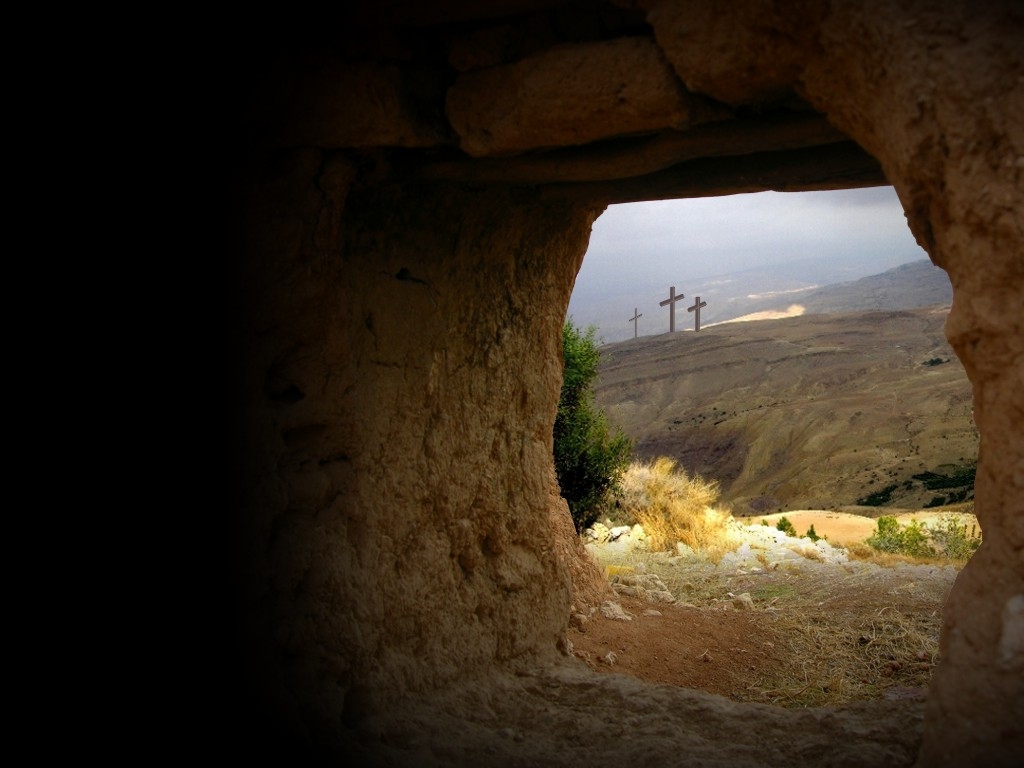
Empty Tomb

And very early in the morning the first day of the week, they came unto the sepulchre at the rising of the sun … And when they looked, they saw that the stone was rolled away: for it was very great. (Mark 16:2, 4)

The story of mankind is brief and straightforward despite the naturalistic stories invented by evolutionists. God created man in His own image (Genesis 1:26). God created man to enjoy fellowship with Him, but man erected a barrier between himself and God by his disobedience to God’s only command: “But of the tree of the knowledge of good and evil, thou shalt not eat of it: for in the day that thou eatest thereof thou shalt surely die” (Genesis 2:17). That disobedience brought the curse of death – separation from God who is life and the giver of life. “Jesus said unto her, I am the resurrection, and the life: he that believeth in me, though he were dead, yet shall he live: And whosoever liveth and believeth in me shall never die. Believest thou this?” (John 11:25-26). Holy God cannot abide sin. “Shall the throne of iniquity have fellowship with thee, which frameth mischief by a law?” (Psalm 94:20).

From that time on, innocent blood has been shed to cover or atone for the sins of man “For all have sinned, and come short of the glory of God” (Romans 3:23). Starting with that first sacrificial lamb slaughtered by the Lamb of God (Genesis 3:21), the innocent pay the penalty for the sins of the guilty. So the sacrificial system began carried on by Abel (Genesis 4:4), Noah (Genesis 8:20) and the law delivered by Moses. But the practice failed to bridge the chasm rived by sin “For it is not possible that the blood of bulls and of goats should take away sins” (Hebrews 10:4).

This hopeless situation required a better and permanent solution. This was mankind’s problem and the responsibility fell upon man for resolution. But Holy God cannot be satisfied with anything less a perfect, sinless sacrifice. Only the blood of a perfect, sinless man would do. Where could such a man be found? For, “As it is written, There is none righteous, no, not one … They are all gone out of the way, they are together become unprofitable; there is none that doeth good, no, not one” (Romans 3:10, 12). Such a conundrum was no puzzle for an omniscient God. “[He] made himself of no reputation, and took upon him the form of a servant, and was made in the likeness of men: And being found in fashion as a man, he humbled himself, and became obedient unto death, even the death of the cross” (Philippians 2:7-8). “Wherefore, as by one man sin entered into the world, and death by sin; and so death passed upon all men, for that all have sinned” (Romans 5:12). So, God in human form died in the stead of His human creation, and He took upon Himself the penalty that was due to each one of us individually. This is an awesome thing! In all the world religions of man, man sacrifices himself to his god, but the Bible teaches that God sacrificed Himself for man. Is that not incredible!

So Jesus died on the cross at Passover. He became the sacrificial Lamb of God to atone for the sins of mankind. He took on the crushing blow of the curse of death. In His final words He declared, “It is finished!” (John 19:30), and He died. Death took its greatest prize, but then came Sunday! The curse of death was broken. “Therefore as by the offence of one judgment came upon all men to condemnation; even so by the righteousness of one the free gift came upon all men unto justification of life” (Romans 5:18).

When I survey the wondrous cross
On which the Prince of glory died,
My richest gain I count but loss,
And pour contempt on all my pride.

Forbid it, Lord, that I should boast,
Save in the death of Christ my God!
All the vain things that charm me most,
I sacrifice them to His blood.

See from His head, His hands, His feet,
Sorrow and love flow mingled down!
Did e’er such love and sorrow meet,
Or thorns compose so rich a crown?

Were the whole realm of nature mine,
That were a present far too small;
Love so amazing, so divine,
Demands my soul, my life, my all.

(“When I Survey the Wondrous Cross” – Isaac Watts, 1707)

His death on the cross covered our sins once and for all. His resurrection bridged the chasm of death separating sinful humanity from Holy God. He has made the way for you and for me. He said, “I am the way, the truth, and the life: no man cometh unto the Father, but by me” (John 14:6). After all He has done for you, the least you can do is follow the way He has prepared. “Love so amazing, so divine, demands my soul, my life, my all!”


1 Comment

Filed under Apologetics, Bible, Christianity, Creation, Death, Easter, Evangelism, Gospel, Religion, Resurrection, Salvation, Theology