Category Archives: Salvation

Vile Vials

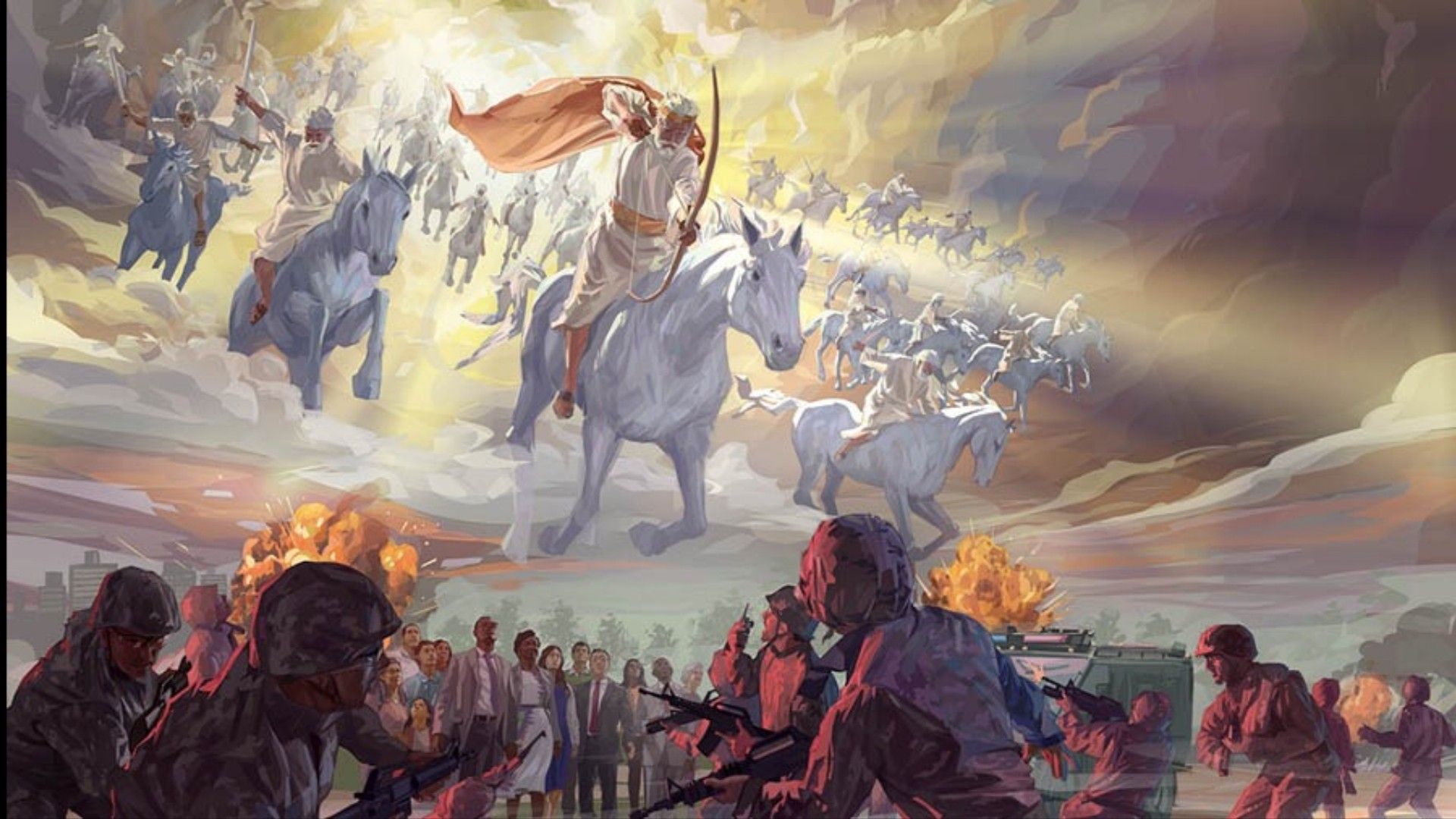
Image used by permission of artist Pat Marvenko Smith, Copyright 1992.
Visit her “Revelation Illustrated” site at https://revelationillustrated.com/.

And I heard a great voice out of the temple saying to the seven angels, Go your ways, and pour out the vials of the wrath of God upon the earth. (Revelation 16:1)

In the words of an old country-western song, “Turn out the lights; the party’s over.” According to my understanding, we have arrived at the final 21 months of the seven-year Tribulation. The first three and one-half years brought the seven seal judgments.[1] When Jesus, the Lamb, breaks open the seventh seal, the seven trumpets begin to sound.[2] Around the midpoint of the Tribulation, according to Daniel the Prophet, the Antichrist, a.k.a. the Beast, defiles the Jewish Temple in Jerusalem. If he was not recognized when he confirmed “the covenant” securing peace for Israel, which initiated the seven-year Tribulation, there will be no doubt about his identity at this time.[3]

As we follow the progression of the judgments, we notice that they become increasingly severe. At the same time, there is no indication that one judgment ends when another begins. With a few exceptions, the effects of the judgments continue throughout the Tribulation period. There are wars, economic collapses, famines, pandemics, natural disasters, and more, and now things are about to get worse.

“And one of the four beasts gave unto the seven angels seven golden vials full of the wrath of God, who liveth for ever and ever” (Revelation 15:7, emphasis mine). John does not tell us which of the four beasts gives the seven vials (or “bowls”) to the angels, but I think it might be the third beast having “a face as a man.”[4] I come to that conclusion because the judgments that come upon the earth, while they affect all of nature, are aimed at a sinful and rebellious human race. The other beasts (lion, calf, and eagle) represent the animal kingdom which does not have a sin nature. “And I heard a great voice out of the temple saying to the seven angels, Go your ways, and pour out the vials of the wrath of God upon the earth” (Revelation 16:1). Here it comes!

“And the first went, and poured out his vial upon the earth; and there fell a noisome and grievous sore upon the men which had the mark of the beast, and upon them which worshipped his image” (Revelation 16:2, emphasis mine). This “grievous sore” only affects those having the “mark of the beast.” With the advancement of modern technology, things like RFID chips, which can be embedded under the skin, or quantum dot tattoos[5] (that can not only contain all of one’s personal information, including health, financial, and social credit records, but they can be tracked) already exist and can easily be used as “the mark of the beast.” Because these things penetrate the body, it is possible that the human body will react to the foreign invader and produce these sores. In the case of the quantum dot tattoos, right now they are being promoted as a way to vaccinate people while also providing proof of vaccination. Many of the proposed vaccines of the mRNA type have the potential of modifying a person’s DNA. I have heard that altering a person’s DNA by only one percent renders them no longer human. If that is true, that person (being no longer human) loses any possibility for salvation – Jesus died for humans. Also, considering that only those with the “mark” contract these horrible sores implies that not all earth dwellers take the mark of the beast. These are either Tribulation saints that have survived in the midst of all these judgments or those who potentially will be saved before Christ returns.

“And the second angel poured out his vial upon the sea; and it became as the blood of a dead man: and every living soul died in the sea” (Revelation 16:3, emphasis mine). The sea does not turn into blood; “it became as blood,” which suggests some sort of pollution. When the second trumpet sounded, a third part of the sea was turned to blood.[6] However, here all the ocean waters are affected; all marine life dies. Imagine the stench of the rotting flesh and the potential for the spread of diseases!

“And the third angel poured out his vial upon the rivers and fountains of waters; and they became blood” (Revelation 16:4, emphasis mine). Here the waters are turned into blood, just like in the plagues of Egypt.[7] In that case, the plague lasted only seven days; here there is no indication of cessation.  What does one drink when there is no water to drink? All soft drinks are made with water. Alcoholic drinks do not quench thirst, and worse, they promote dehydration. Then imagine the chaos resulting from an intoxicated population! Milk might work, but the climate alarmists want to do away with cows, so that option may not be available.

While things here on earth are dire, in heaven God’s righteousness is acknowledged and celebrated. “And I heard the angel of the waters say, Thou art righteous, O Lord, which art, and wast, and shalt be, because thou hast judged thus. For they have shed the blood of saints and prophets, and thou hast given them blood to drink; for they are worthy. And I heard another out of the altar say, Even so, Lord God Almighty, true and righteous are thy judgments” (Revelation 16:5-7, emphasis mine). To us, the judgment may seem like cruel and unusual punishment, but God is always righteous in all of His acts. I have often stressed God’s mercy, even during this time of Great Tribulation. He gives mankind every opportunity to repent, but they rebelliously continue to reject Him. Even when they recognized that the judgments are from God, they curse God rather than repent.

“And the fourth angel poured out his vial upon the sun; and power was given unto him to scorch men with fire. And men were scorched with great heat, and blasphemed the name of God, which hath power over these plagues: and they repented not to give him glory” (Revelation 16:8-9, emphasis mine). The adage “When you’re in a hole, stop digging” is lost on these people. The fact that they have already pledged their allegiance to the Antichrist has sealed their doom. They are beyond redemption.

“And the fifth angel poured out his vial upon the seat of the beast; and his kingdom was full of darkness; and they gnawed their tongues for pain, And blasphemed the God of heaven because of their pains and their sores, and repented not of their deeds” (Revelation 16:10-11, emphasis mine). Notice that this darkness is localized. It is only “upon the seat of the beast,” or the capital of the Antichrist. There is debate as to where his seat will be located. Some think that his capital will be in Rome, the seat of the old Roman Empire. Others suggest that it might be Jerusalem since it is there where he desecrates the Temple.[8] Still others believe it is literal Babylon as we shall see later. The argument against today’s Babylon is that it is insignificant on the world stage, unlike its historical past. However, considering modern technology, any place can serve as a control center; so why not Babylon? Wherever “the beast” chooses to make his capital, it will experience such a dreadful darkness that it causes the inhabitants to “gnaw their tongues for pain.”

“And the sixth angel poured out his vial upon the great river Euphrates; and the water thereof was dried up, that the way of the kings of the east might be prepared. And I saw three unclean spirits like frogs come out of the mouth of the dragon, and out of the mouth of the beast, and out of the mouth of the false prophet. For they are the spirits of devils, working miracles, which go forth unto the kings of the earth and of the whole world, to gather them to the battle of that great day of God Almighty” (Revelation 16:12-14, emphasis mine).

If I have not done so in previous articles, I need to make it clear now. The Antichrist will not rule the entire world. He wants to, but he will not achieve his goal. The Asian nations, China, North Korea, India, Pakistan, and many of Muslim nations, will oppose his rule. The Muslim nations, because they are monotheistic, will reject him when he demands to be worshipped as God. China and many other Asian nations desire their own domination of the world. They do not want to submit to the leadership of “the West.” These “kings of the east” will be enticed by the demonic spirits sent by the “unholy trinity” (the dragon, the beast, the false prophet) to come against the Antichrist. He thinks he will finally crush his opposition, but little does he know that this is God’s doing “to gather them to the battle of that great day of God Almighty.” We learn in the next verses that this is the infamous “Battle of Armageddon.”

Jesus speaks now. “Behold, I come as a thief. Blessed is he that watcheth, and keepeth his garments, lest he walk naked, and they see his shame” (Revelation 16:15). He is not speaking to the Church because the Church is with Him in heaven. No, this is addressed to those saints that are suffering through the Tribulation. They are studying this book. They see the signs. They know the sequence of events. They know what comes next. They are watching. They know that they need to hang on for just 21 more months. Jesus here encourages them to remain steadfast and faithful in their trials. They will be blessed, as they watch the heaven split open and their long-awaited Lord descend on a white horse followed by all of His saints. Hang in there, Saints! It will not be much longer. Jesus comes “as a thief,” but not to these saints; they are expecting Him. The sudden surprise of His appearing is reserved for God rejecting sinners.

“And he gathered them together into a place called in the Hebrew tongue Armageddon” (Revelation 16:16). God is the one gathering all the armies of the world into this one valley. The name in Hebrew means Mount Megiddo and it actually refers to the valley north of this mountain. “This valley in northern Israel extends from the Mediterranean Sea to the Joran River south of Lake Tiberias (Sea of Galilee). It covers an area of roughly 380 square kilometers or 146.7 square miles. The blood of Jesus’ enemies will fill this “winepress” as high as a horse’s bridle. It is “the fierceness and wrath of Almighty God” (Revelation 19:15).”[9]

“And the seventh angel poured out his vial into the air; and there came a great voice out of the temple of heaven, from the throne, saying, It is done” (Revelation 16:17, emphasis mine). That is it! It is over! What follows describes the result of this final battle.

“And there were voices, and thunders, and lightnings; and there was a great earthquake, such as was not since men were upon the earth, so mighty an earthquake, and so great. And the great city was divided into three parts, and the cities of the nations fell: and great Babylon came in remembrance before God, to give unto her the cup of the wine of the fierceness of his wrath. And every island fled away, and the mountains were not found. And there fell upon men a great hail out of heaven, every stone about the weight of a talent: and men blasphemed God because of the plague of the hail; for the plague thereof was exceeding great” (Revelation 16:18-21, emphasis mine).

Earthquakes of 5.5 magnitude and above are on the increase albeit rarely publicized and occurring in locations where earthquakes are rare. The earth is groaning. “For we know that the whole creation groaneth and travaileth in pain together until now” (Romans 8:22). At the beginning of the Tribulation when the sixth seal is opened, we are told that there was “a great earthquake” great enough to blot out the sun and turn the moon blood red.[10] So great is this earthquake that it causes heaven to appear as if it is rolled up like a scroll. That earthquake is small compared to this one. This one is greater even than those that split the “fountains of the deep” at the time of the Great Flood.[11] The earthquake causes “the great city” (Jerusalem) to split three ways. This will not be a localized earthquake. It will eradicate islands and demolish mountains. The tectonic upheaval created by this earthquake will spawn volcanoes worldwide, spewing dust and ash high into the atmosphere. Increased evaporation from superheated oceans will send water vapors high into the atmosphere to return to the earth as massive hailstones weighing in excess of 120 pounds.

Men on earth recognize that these things are truly “an act of God,” and rather than repent, they curse and blaspheme God. The text says that at this time “Babylon came in remembrance before God.” That does not mean God had forgotten and then suddenly said, “Oh yeah! I forgot about Babylon.” No, God’s timing is always perfect, and He does not forget (which, by the way, is why hell is eternal. Sin offends the Eternal God eternally and the only remedy is the sin-atoning, sin-covering blood of Jesus.). The time has come for Babylon to be judged. We will see that in the chapters that follow.

I take no pleasure when I think about the horrors that will come upon mankind during the Tribulation. That is why I am writing this series on the Book of Revelation. I hope that my efforts will lead as least some to avoid the judgments that are coming. And, if they do not heed the warnings before the Rapture of the Church and the coming Tribulation, perhaps they will reconsider during the Tribulation while they still have a chance. Reader, if you do not know the Savior, do not wait any longer. The time is short. Please read my page on “Securing Eternal Life.”

Notes:


[1]  Revelation 6

[2]  Revelation 8-9

[3]  Daniel 9:27

[4]  Revelation 4:7

[5]  An Invisible Quantum Dot ‘Tattoo’ Could Be Used to ID Vaccinated Kids : ScienceAlert

[6]  Revelation 8:8

[7]  Exodus 7:14-25

[8]  Daniel 9:27; 11:45; Matthew 24:15; 2 Thessalonians 2:4
[9]  Harvest Time | Ernie’s Musings (erniecarrasco.com)

[10]  Revelation 6:12-14

[11]  Genesis 7:11

1 Comment

Filed under Apologetics, Bible, Christianity, Current Events, End Times, Eschatology, Gospel, Heaven, Hell, Rapture, Salvation, Second Coming of Christ, Theology

Harvest Time

And another angel came out of the temple, crying with a loud voice to him that sat on the cloud, Thrust in thy sickle, and reap: for the time is come for thee to reap; for the harvest of the earth is ripe. (Revelation 14:15)

At this point in the Revelation account, we have come to the last half of the Tribulation. We have seen that in the midst of the terrible judgments coming upon the earth, God in His mercy continues to reach out to a lost and rebellious world by way of the 144,000 witnesses[1], the two Old Testament prophets[2] brought back to earth to testify by way of wonders and miracles so that no one on earth will have an excuse for rejecting God. At the midpoint of the Tribulation, the Antichrist will desecrate the Temple in Jerusalem by claiming to be God and demanding that he be worshiped as God.[3] At this time, the Antichrist is fully possessed by Satan, and God allows him to kill the two prophets, and the 144,000 who, up until this point have been protected by God. In the previous verses, we see the 144,000 in the heavenly Mount Zion with Jesus.[4] However, God continues to show His mercy by sending His angels to proclaim the Gospel[5] all around the earth so that all on earth (who have not yet accepted the “mark of the beast”) will have the opportunity to turn to Christ. Of that time Jesus said, “And this gospel of the kingdom shall be preached in all the world for a witness unto all nations; and then shall the end come” (Matthew 24:14, emphasis mine).

Now we arrive at the final one year and nine months that remain in the Tribulation (as I understand the chronology). John gives us a quick summary previewing what is to come; the details will be revealed in the chapters that follow.

“And I looked, and behold a white cloud, and upon the cloud one sat like unto the Son of man, having on his head a golden crown, and in his hand a sharp sickle” (Revelation 14:14). Undoubtedly, “the Son of man” refers to Jesus, and He wears a golden “stephanos” – a victor’s crown, not a “diadēma” a royal crown. Although the final battle between the forces of Satan and Christ is yet future, the victory is sure, and Jesus is the Victor. He carries a sharp sickle in His hand prepared for the harvest. Larkin points out that “This is not the ‘Harvest of the Church.’ … This is the ‘Harvest’ of the Gentile Nations … The ‘Harvest and Vintage’ are JUDICIAL. That is, they are for the purpose of Judgment. The account here is anticipative.”[6] We can look forward to the details of that judgment when the seven bowls are poured out in Chapter 16.

“And another angel came out of the temple, crying with a loud voice to him that sat on the cloud, Thrust in thy sickle, and reap: for the time is come for thee to reap; for the harvest of the earth is ripe” (Revelation 14:15). Again, this looks forward in anticipation of the end when the final battle takes place at the battle of Armageddon.[7]

“And he that sat on the cloud thrust in his sickle on the earth; and the earth was reaped. (Revelation 14:16). At that time, He returns to the earth on a white horse followed by His saints on white horses.[8] His sickle will be the “sword,” which is His Word, that proceeds out of His mouth. The battle, if one can call it that, will be no battle at all, for the victory will be decisive and instantaneous.[9]

“And another angel came out of the temple which is in heaven, he also having a sharp sickle. And another angel came out from the altar, which had power over fire; and cried with a loud cry to him that had the sharp sickle, saying, Thrust in thy sharp sickle, and gather the clusters of the vine of the earth; for her grapes are fully ripe. And the angel thrust in his sickle into the earth, and gathered the vine of the earth, and cast it into the great winepress of the wrath of God” (Revelation 14:17-19). There is great excitement in heaven. The end is here and Jesus will soon take His rightful place as King of Kings and Lord of Lords. However, for those with the mark of the beast and those who have rejected God despite all of His efforts and offer of salvation, this is very bad news. On the other hand, for those saints who have managed to survive the seven-year Tribulation, their “blessed hope”[10] is about to be realized.

“And the winepress was trodden without the city, and blood came out of the winepress, even unto the horse bridles, by the space of a thousand and six hundred furlongs” (Revelation 14:20). The “winepress” is “without the city,” i.e., outside of Jerusalem. It is the Jezreel Valley, a.k.a. the Valley of Megiddo, a.k.a. Armageddon. This valley in northern Israel extends from the Mediterranean Sea to the Joran River south of Lake Tiberias (Sea of Galilee). It covers an area of roughly 380 square kilometers or 146.7 square miles. The blood of Jesus’ enemies will fill this “winepress” as high as a horse’s bridle. It is “the fierceness and wrath of Almighty God” (Revelation 19:15).

In a Messianic passage, the Prophet Isaiah sees the coming Lord like this. “Who is this that cometh from Edom, with dyed garments from Bozrah? this that is glorious in his apparel, travelling in the greatness of his strength? I that speak in righteousness, mighty to save. Wherefore art thou red in thine apparel, and thy garments like him that treadeth in the winefat? I have trodden the winepress alone; and of the people there was none with me: for I will tread them in mine anger, and trample them in my fury; and their blood shall be sprinkled upon my garments, and I will stain all my raiment. For the day of vengeance is in mine heart, and the year of my redeemed is come” (Isaiah 63:1-4, emphasis mine). John records it this way. “And he was clothed with a vesture dipped in blood: and his name is called The Word of God” (Revelation 19:13, emphasis mine).

For those who reject Christ, the end will not be nice. That is putting it mildly. Reader, if you do not know the Savior, do not wait any longer. The time is short. Please read my page on “Securing Eternal Life.”

Notes:


[1]  The 144K; Tribulation Witnesses

[2]  The Two Witnesses

[3]  Daniel 9:27; Matthew 24:15; 2 Thessalonians 2:3-4

[4]  Revelation 14:1-5

[5]  Revelation 14:6-13

[6]  Clarence Larkin, The Book of Revelation, Illustrated, (Rev. Clarence Larkin Estate, Philadelphia, 1919), p. 137.

[7]  Revelation 16:16

[8]  Revelation 19:14

[9]  Revelation 19:11-21

[10]  Titus 2:13

Comments Off on Harvest Time

Filed under Apologetics, Bible, Christianity, End Times, Eschatology, Evangelism, Gospel, Rapture, Salvation, Satan, Second Coming of Christ, Theology

The 144K

And I heard the number of them which were sealed: and there were sealed an hundred and forty and four thousand of all the tribes of the children of Israel. (Revelation 7:4)

The first six seals[1] release unprecedented havoc upon the earth, and the seventh seal is next in line. Meanwhile, John shifts the focus from the judgments taking place on earth to the grace and mercy that God continues to offer the inhabitants of Earth. Even in these times, God is “not willing that any should perish, but that all should come to repentance” (2 Peter 3:9).

John says, “And after these things I saw four angels standing on the four corners of the earth, holding the four winds of the earth, that the wind should not blow on the earth, nor on the sea, nor on any tree. And I saw another angel ascending from the east, having the seal of the living God: and he cried with a loud voice to the four angels, to whom it was given to hurt the earth and the sea, Saying, Hurt not the earth, neither the sea, nor the trees, till we have sealed the servants of our God in their foreheads” (Revelation 7:1-3).

John sees four angels that control the wind currents from the four points of the compass. As such, they have power over the weather on Earth, and they are prepared to unleash their fury on Earth. However, another angel appears from the rising sun (translated as “east”) to temporarily halt the next judgment. John says that this angel has “the seal of the living God.”

This “seal” is probably something like a stamp, brand, or signet ring that carries with it the authority of God. John does not elaborate on the mark, but I wonder if it could be the Hebrew letter shin (שׁ). One of the names of God is El Shadday – “Almighty God.” The initial of this name is the Hebrew letter shin. At the dedication of Solomon’s Temple, God said, “… I have hallowed this house, which thou hast built, to put my name there for ever; and mine eyes and mine heart shall be there perpetually” (1 Kings 9:3, emphasis mine). The Temple Mount in Jerusalem is geographically cradled above three valleys that come together in the shape of the letter shin (שׁ) when viewed from the air. I find that intriguing.

Perhaps the shin is the symbol on the seal that the angel carries. Some suggest that the angel with the seal of God is Jesus. They come to this conclusion because he seems to have the authority of God by way of the seal. However, it is not beyond God to delegate His authority to His angels. Arguably, Jesus controls all the events concerning the Tribulation, and He holds the scroll and opens the seals. It makes sense that He is directing this angel and has delegated His authority to this angel for the sealing of His servants. Also, there is the point that John describes this angel as “another angel” (7:2) like those holding the four winds. So, in my view, this is not Jesus.

The angels holding back the four winds are temporarily restrained from unleashing their judgments until “we have sealed the servants of our God in their foreheads” (7:3). “And I heard the number of them which were sealed: and there were sealed an hundred and forty and four thousand of all the tribes of the children of Israel” (Revelation 7:4, emphasis mine). These 144,000 who are sealed are Jews, not Jehovah’s Witnesses. There are 12,000 from each of the 12 tribes of Israel and are listed in the verses that follow.[2] The tribes listed are as follows: Judah, Reuben, Gad, Asher, Naphtali, Manasseh, Simeon, Levi, Issachar, Zebulun, Joseph, and Benjamin.[3] For those who pay attention, there is an apparent discrepancy between the Revelation list and the lists found in the Pentateuch (Genesis-Deuteronomy). This list includes Joseph from whom the two “half tribes” originated: Manasseh and Ephraim. Here, Joseph is listed as a stand-alone tribe and Ephraim is omitted from the list. The tribe of Dan is also missing.

The reason for their omission is due to a specific sin of idolatry that they allowed in their territories after the kingdom of Israel split under the reign of Rehoboam, successor to Solomon. Before entering the Promised Land, God issued a warning and a curse to anyone who led Israel into idolatry. “The LORD will not spare him, but then the anger of the LORD and his jealousy shall smoke against that man, and all the curses that are written in this book shall lie upon him, and the LORD shall blot out his name from under heaven. And the LORD shall separate him unto evil out of all the tribes of Israel, according to all the curses of the covenant that are written in this book of the law” (Deuteronomy 29:20-21). Dan was the first to lapse into idolatry. “And the children of Dan set up the graven image: and Jonathan, the son of Gershom, the son of Manasseh, he and his sons were priests to the tribe of Dan until the day of the captivity of the land” (Judges 18:30, emphasis mine). After the kingdom split, Jeroboam, king of the northern kingdom, had two golden calves made, and he placed one in Ephraim and the other in Dan.[4] Granted, all 12 tribes of Israel continually had problems with idolatry, but these two seem to be the first of the overt violations of God’s warning and may be the reason for the omission of these two tribes from the list of the 144,000.

These 144,000 Jewish sealed servants of God seem to be partly responsible for the conversion and salvation of innumerable souls during the Tribulation. John reports, “After this I beheld, and, lo, a great multitude, which no man could number, of all nations, and kindreds, and people, and tongues, stood before the throne, and before the Lamb, clothed with white robes, and palms in their hands; And cried with a loud voice, saying, Salvation to our God which sitteth upon the throne, and unto the Lamb” (Revelation 7:9-10, emphasis mine). As we have seen before, the “white robes” represent the righteousness of Christ that is imparted to them who have placed their faith and trust in Him (7:14). John records the celebration for these saints. “And all the angels stood round about the throne, and about the elders and the four beasts, and fell before the throne on their faces, and worshipped God, Saying, Amen: Blessing, and glory, and wisdom, and thanksgiving, and honour, and power, and might, be unto our God for ever and ever. Amen” (Revelation 7:11-12). Jesus said, “there is joy in the presence of the angels of God over one sinner that repenteth” (Luke 15:10), and here we see millions upon millions.

One of the elders approached John and asked the same question we might ask. “What are these which are arrayed in white robes? and whence came they?” (7:13). John had no answer, so the elder explained, “These are they which came out of great tribulation, and have washed their robes, and made them white in the blood of the Lamb” (7:14, emphasis mine). They have come out of “great tribulation.” These are Tribulation saints; they are not the Church that was snatched out at the Rapture before the Tribulation begins. This is the amazing thing to me about this time. Even though God is unleashing His great wrath upon a sinful world, He still makes opportunities for people to be saved. “The Lord is not slack concerning his promise, as some men count slackness; but is longsuffering to us-ward, not willing that any should perish, but that all should come to repentance” (2 Peter 3:9).

We will see later on that God sends two untouchable Old Testament prophets to preach, and He even sends an angel to proclaim the Gospel around the earth. God is not willing that any should perish, but with all of His effort, we know that the greater majority will continue to reject Him. Jesus said, “Enter ye in at the strait gate: for wide is the gate, and broad is the way, that leadeth to destruction, and many there be which go in thereat” (Matthew 7:13, emphasis mine).

For all who enter through the “strait (narrow) gate” there is this promise: “Therefore are they [those ‘who have washed their robes and made them white in the blood of the lamb’ (7:14)] before the throne of God, and serve him day and night in his temple: and he that sitteth on the throne shall dwell among them. They shall hunger no more, neither thirst any more; neither shall the sun light on them, nor any heat. For the Lamb which is in the midst of the throne shall feed them, and shall lead them unto living fountains of waters: and God shall wipe away all tears from their eyes” (Revelation 7:15-17).

Reader, are you prepared for what is coming to the world? You do not need to go through the Tribulation, God’s wrath, that is coming upon the world. Read my page on “Securing Eternal Life,” and ask Jesus to save you from the wrath to come.

Notes:


[1]  Revelation 6:1-17

[2]  Revelation 7:5-8

[3]  Genesis 49:1-27; Exodus 1:2-6

[4]  1 Kings 12:25-33

1 Comment

Filed under Apologetics, Christianity, End Times, Eschatology, Gospel, Heaven, Rapture, Religion, Salvation, Second Coming of Christ, Theology

Miracle of the Incarnation*

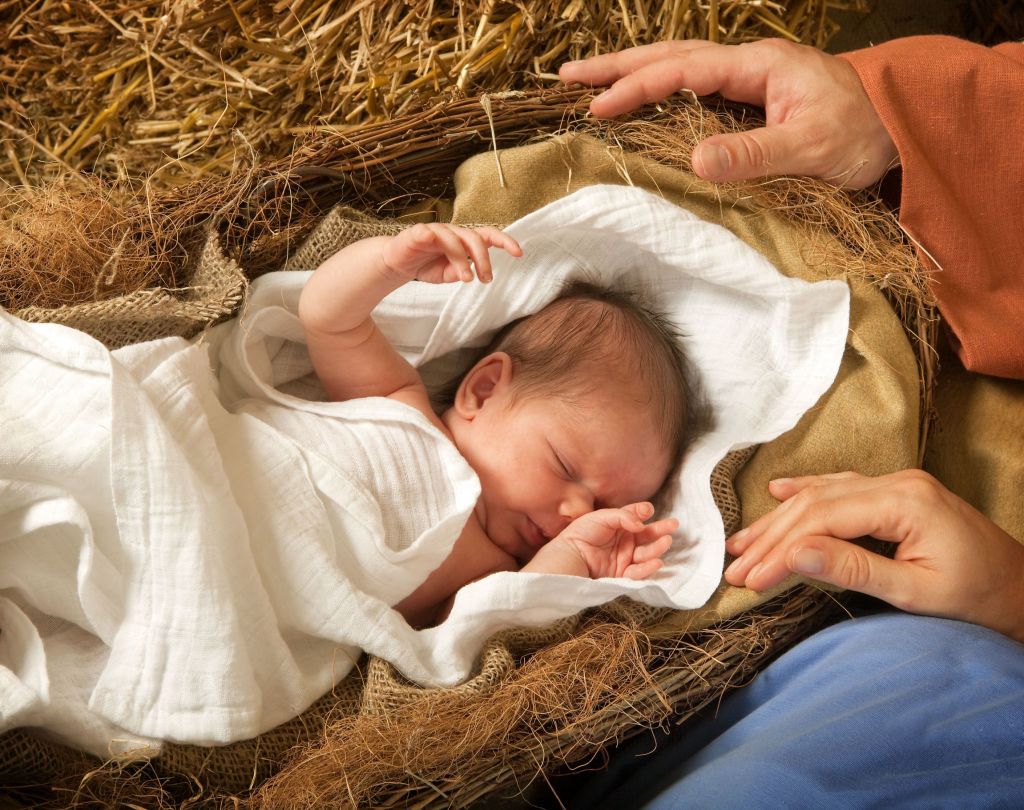
Baby Jesus in Manger

And the Word was made flesh, and dwelt among us, (and we beheld his glory, the glory as of the only begotten of the Father,) full of grace and truth”

(John 1:14).

At Christmastime many of us take time to reflect on the birth of Christ and the miracle of His incarnation; but His birth was not a miracle.  Jesus came into this world like billions of babies before Him and like billions of babies after Him.  Yes, the angels announced His birth to humble “shepherds abiding in the field, keeping watch over their flock by night” (Luke 2:8), and some magi saw “His star in the east” and came “to worship Him” (Matthew 2:2); but His birth, as special as it was, was no miracle.  A line in a favorite Christmas carol says, “The cattle are lowing, the dear baby wakes; but little Lord Jesus no crying He makes.” That is a sweet sentiment, but it is completely false.  Jesus cried at His birth just like any other baby.  He wet and soiled his diapers, just like any other baby.  He took nourishment from Mary’s breasts as any baby would from its mother.  There was nothing miraculous in any of that.

The miracle was not in His birth, but in His incarnation as a zygote in a virgin’s womb.  Skeptics challenge this on the impossibility of a virgin conceiving without the natural function of a man, but the impossibility of such a thing is what qualifies it as a “miracle.”  Mary expressed the same concerns when the angel relayed the news of her impending pregnancy.  The angel assured her that “with God nothing shall be impossible” (Luke 1:37).  This was in keeping with and in the fulfillment of Isaiah’s prophecy saying “Therefore the Lord himself shall give you a sign; Behold, a virgin shall conceive, and bear a son, and shall call his name Immanuel” (Isaiah 7:14).  Critics will point out that the Hebrew word translated “virgin” here is ‘almā, which strictly translated means “young woman.”  However, the translators of the Septuagint translated the same Hebrew word into the Greek parthenos, which has no other meaning than “virgin.”  This is the same Greek word that Matthew uses when he points to the fulfillment of Isaiah’s prophecy: “Behold, a virgin [parthenos] shall be with child, and shall bring forth a son, and they shall call his name Emmanuel, which being interpreted is, God with us” (Matthew 1:23).

Another problem arises with Jesus’ lineage.  He was prophesied to be in the line of David the king (2 Samuel 7:12-13, 16).  This promise was confirmed to Mary by the angel Gabriel: “He shall be great, and shall be called the Son of the Highest: and the Lord God shall give unto him the throne of his father David” (Luke 1:32).  Matthew presents an ancestral line (Matthew 1:1-17) that disagrees with the ancestral line presented by Luke (Luke 3:23-38).  Matthew traces Jesus’ genealogy through Joseph, His adoptive father.  This line is the “legal” line to the throne of David; however, this line had been cursed by God at the time of Jehoiachin (Coniah) shortly before Judah fell to the Babylonian empire.  Jeremiah records: “Thus saith the LORD, Write ye this man [Coniah] childless, a man that shall not prosper in his days: for no man of his seed shall prosper, sitting upon the throne of David, and ruling any more in Judah” (Jeremiah 22:30).  Luke, on the other hand, records Jesus’ genealogy through Mary who takes a branch through Nathan, another son of David.  This line escaped the curse.

That resolves the legality issue of Jesus’ right to David’s throne, but now we have another problem.  Since the conception was “parthenogenetic,” that would imply that Jesus received at least part of His genes (His DNA) from Mary.  Mary, being human, is under the curse of original sin, as we all are.  That being the case, Jesus could not be the sinless sacrifice required to atone for our sin.  The Roman Catholic Church recognized this dilemma early on and attempted to resolve the problem by proclaiming Mary sinless.  To achieve this status, they further proclaimed that she was immaculately conceived, i.e., she too was virgin-born.  That begs the question then, how was Mary immaculately conceived, if her mother had a sin nature?  And what about her grandmother, and her great-grandmother, etc.  If one follows that line of reasoning to its logical conclusion, one comes to Eve in the Garden of Eden, and it is generally accepted that Eve sinned.  The solution cannot be in Mary’s sinless nature, for she, herself, was in need of a Savior.  “And Mary said, My soul doth magnify the Lord, And my spirit hath rejoiced in God my Saviour” (Luke 1:46-47).

The truth is, that if one of Mary’s ova was used in the conception, Jesus would have inherited our sin nature.  Even half of a sin nature is full of sin for “a little leaven leaveneth the whole lump” (Galatians 5:9).   In his book, The Chemistry of the Blood (Zondervan, 1943), Dr. M. R. DeHann attempted to resolve this problem based on the idea that it is the blood that makes atonement for sin (Hebrews 9:22).  He concluded that since the embryo develops its own blood, and since there is no blood exchanged between the embryo and its mother, therefore Jesus’ blood was sinless.  At first sight, this may look like a good solution, however, the embryo develops its own blood based on the genes that it gets from its parents.  There is no DNA in red blood cells, but there is DNA in an ovum, and Mary’s ova were contaminated.

The only reasonable solution that remains is that Jesus’ earthly body was a wholly (and yes, “holy”) and unique creation without the inherited sin nature of any human parent.  Understandably, the objection immediately arises that He, therefore, could not really be considered fully human.  To answer that objection, we must recall the creation of the “first Adam” (Genesis 1:27; 2:7).  God created man from the dust of the ground, including his DNA.  There was no human agent required for this process.  It should not be a stretch, therefore, to accept that God created an entirely new body for the “Second Adam.”  It should also not stretch the imagination, in our technological age, to understand that this new creation was implanted into Mary’s womb to be carried to term.  Mary was the “surrogate” mother of Jesus.  She contributed none of her DNA to give Him life, and therefore she contributed none of her sin nature.  Mary’s little lamb was truly “without blemish and without spot” (1 Peter 1:19).  Conceived in this way He was “holy, harmless, undefiled, separate from sinners” (Hebrews 7:26), and because He developed in the womb from a zygote, He was “made like unto his brethren, that he might be a merciful and faithful high priest in things pertaining to God, to make reconciliation for the sins of the people” (Hebrews 2:17).  Jesus understood this. Once …

While he yet talked to the people, behold, his mother and his brethren stood without, desiring to speak with him.  Then one said unto him, Behold, thy mother and thy brethren stand without, desiring to speak with thee.  But he answered and said unto him that told him, Who is my mother? and who are my brethren?  And he stretched forth his hand toward his disciples, and said, Behold my mother and my brethren!  For whosoever shall do the will of my Father which is in heaven, the same is my brother, and sister, and mother (Matthew 12:46-50)

There is substantial scriptural support for the argument that Jesus’ body was an entirely new creation.  He “was made in the likeness of men” (Philippians 2:7).  Before His condescension, in conversation with His Father “he saith, Sacrifice and offering thou wouldest not, but a body hast thou prepared me” (Hebrews 10:5).  It was the Divine plan from the beginning that the Savior “Who verily was foreordained before the foundation of the world” (1 Peter 1:20) would come to be the ransom for our sin.  Paul tells us that “The first man [Adam] is of the earth, earthy: the second man [Jesus] is the Lord from heaven” (1 Corinthians 15:47).  John tells us that “The Word was made flesh” (John 1:14).  This is as it should be “For as in Adam all die, even so in Christ shall all be made alive” (1 Corinthians 15:22).

The miracle was the incarnation, not the birth.  It is an awesome thing to consider that the Creator of heaven and earth, would prepare for Himself a body of the same kind as His creation, begin life as a single human cell, go through the process of development in the womb of a virgin girl, pass through the birth canal, gasp for His first breath, grow up as a child and experience all the bumps and bruises of growing up, grow into manhood, only to give His life in the place of His fallen creation, so that we might experience life eternal with Him.  Who could conceive such a plan except a loving God!  It is too marvelous for words.

Merry Christmas!

*NOTE: This article was inspired by my Sunday school teacher and friend, Henry M. Morris III, D.Min., in a lesson he presented to our class on December 16, 2012.  Dr. Morris is CEO of the Institute for Creation Research, Dallas, Texas.

2 Comments

Filed under Apologetics, Christianity, Christmas, Creation, Gospel, Religion, Salvation, Theology

I’m Thankful

Thine, O LORD, is the greatness, and the power, and the glory, and the victory, and the majesty: for all that is in the heaven and in the earth is thine; thine is the kingdom, O LORD, and thou art exalted as head above all. Both riches and honour come of thee, and thou reignest over all; and in thine hand is power and might; and in thine hand it is to make great, and to give strength unto all. Now therefore, our God, we thank thee, and praise thy glorious name. (1 Chronicles 29:11-13)

We have once again arrived at that time of year when we set aside a special time to give thanks to God for all the blessings He has lavished on us. We can focus on the commercialization of the season; following right on the heels of that demonic “holiday” that glorifies death (which is highly commercialized). The focus then quickly changes to the “Holidays,” formerly known as Christmas, without even a cursory mention of Thanksgiving Day. Over the years, I have beaten this dead horse with no sign of revival. I have come to the realization that “it is what it is,” so all I can do is practice what I preach regardless of what others do.

Four years ago, I wrote “One Was Thankful” where I detail the attitude of gratitude, so there is no need for a rehash here. I would encourage my readers to follow the link and read the article. I think I did a fair job of handling the topic. In addition, I have other articles on Thanksgiving Day that I will share on Facebook throughout the week of Thanksgiving. For now, I want to share some of the things for which I am thankful.

First of all, I thank God for life. When God created man,[1] He breathed His breath into his nostrils.[2] What a precious gift, the breath of God, withheld from all other creatures. Only mankind has this special spark of life, and it is eternal. So special is human life that God demands capital punishment for that taking of human life. He even requires that of animals that take human life.[3] The psalmist put it like this: “I will praise thee; for I am fearfully and wonderfully made: marvellous are thy works; and that my soul knoweth right well” (Psalm 139:14). He goes on to describe God’s handiwork in the development of a baby in the womb,[4] which directly confronts those who would kill a baby at any stage of development. Every breath that I take, and every beat of my heart is a precious gift from God, which He can take whenever He wills.

Second, I thank God for eternal life. The Bible says that we all have sinned[5] and we are due the wages for that sin, which is death.[6] With no prospect of rectifying the matter on our own, God took on human flesh[7] and took the penalty of sin upon Himself in order so that we might be saved.[8] It seems too easy, but our only requirement is that we believe in Him and what He has accomplished by His death and resurrection by faith. I made that choice 66 years ago at the age of six and my faith in Him has only grown and has never disappointed. Because I know that my life is His, I know that when He comes to call His children home, or if He calls me home in death, I will be with Him for eternity in a place that I am sure is far more beautiful than that the Apostle John could describe.[9]

Third, I thank God for my wife. She blesses my life daily and has done so for over 34 years. I know she truly loves me even when I am not so loveable.

Fourth, I am thankful for family. I am thankful for Christian parents that were instrumental in leading me to Christ. I am thankful for my brothers and sister who love the Lord and for the love we have for one another. I am also thankful for my wife’s family who has taken me in as a real part of their family. We are family! And I am thankful that we all love the Lord and share that common bond.

Fifth, I am thankful for my church family. In my many years as a Christian, I have found that whenever I am among Christian, even those I have never met, I am among family; I never feel out of place. That sense of family is exponentially stronger in our local church. There we do share one another’s burdens and rejoice with the joy of others. We are truly brothers and sisters in Christ.

Finally, I am thankful for all the “stuff” with which God has blessed us (June and me). We have a house, our home. We have two, not-too-old vehicles. We have no debt. We have more clothes than our closets will accommodate. We have plenty of food to eat. We are blessed with good health. We live in a wonderful town filled with wonderful people. All of these things, as described in the leading verse above, come from the hand of God who richly blesses us even though we are undeserving. When God has so richly lavished His love on us, spiritually and materially, how can we be anything but thankful! God is good, and I am so thankful for Who He is and for His love for me. He loves you, too.

Dear reader, do you know this great and loving God? If not, please read my page on “Securing Eternal Life.”

Notes:


[1]  Genesis 1:26-28

[2]  Genesis 2:7

[3]  Genesis 9:5-6

[4]  Psalm 139:15-16

[5]  Romans 3:10, 23

[6]  Romans 6:23

[7]  John 1:14; Philippians 2:5-11

[8]  Romans 5:8

[9]  Revelation 21-22

1 Comment

Filed under Christianity, Evangelism, Gospel, Holidays, Salvation, Second Coming of Christ, Theology