Tag Archives: Christ Jesus

Evil Servant

Tell us, when shall these things be? and what shall be the sign of thy coming, and of the end of the world?

But and if that evil servant shall say in his heart, My lord delayeth his coming; (Matthew 24:48)

Matthew 24 begins what is known as Jesus’ “Olivet Discourse.” Jesus spoke these words on the Mount of Olives just two days before He went to the cross (Matthew 26:2). Jesus had just issued a series of eight “woes” against the Jewish religious leaders—the scribes and Pharisees (Matthew 23:13-33). Here as in other places in the Gospels, Jesus asserts His authority as God when He predicts, “Wherefore, behold, I send unto you prophets, and wise men, and scribes: and some of them ye shall kill and crucify; and some of them shall ye scourge in your synagogues, and persecute them from city to city; That upon you may come all the righteous blood shed upon the earth, from the blood of righteous Abel unto the blood of Zacharias son of Barachias, whom ye slew between the temple and the altar. Verily I say unto you, All these things shall come upon this generation” (Matthew 23:34-36, emphasis mine). Jesus then laments over Jerusalem (Matthew 23:37-39).

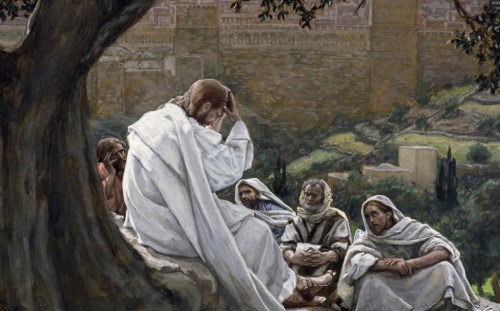
As the disciples stood around hearing these words, their curiosity piqued. “And as he sat upon the mount of Olives, the disciples came unto him privately, saying, Tell us, when shall these things be? and what shall be the sign of thy coming, and of the end of the world?” (Matthew 24:3, emphasis mine).

Before continuing, I must add a point of clarification here. Those asking the question, the disciples, were Jews. They based their question on their understanding of Old Testament prophecies concerning the reign of Messiah, whom they understood to be Jesus (Matthew 16:16). All prophecy—both in the Old and New Testaments—centers around Israel and Messiah’s reign in and from Jerusalem. The Old Testament alludes to the Church, but as Paul points out, it was a “mystery” to Old Testament writers (Ephesians 5:32). Furthermore, at the point of this dissertation, the Church did not exist. The Church was not established until after Jesus’ ascension and the coming of the Holy Spirit (Acts 2:1-4). Jesus, therefore, focused His response on “the time of Jacob’s trouble” (Jeremiah 30:7), a.k.a. “great tribulation” (Matthew 24:21; Revelation 2:22; 7:14). This prophecy was for the Jews and Israel, not for the Church.

Jesus goes into great detail about what will take place during the Tribulation. Even though this prophecy is not directed at the Church, He does provide signs for the Church to discern. “Now learn a parable of the fig tree; When his branch is yet tender, and putteth forth leaves, ye know that summer is nigh: So likewise ye, when ye shall see all these things, know that it is near, even at the doors. Verily I say unto you, This generation shall not pass, till all these things be fulfilled” (Matthew 24:32-34, emphasis mine).

The “fig tree” symbolizes the nation of Israel. Jesus had already predicted the demise of Israel (Judah at this time). “Behold, your house is left unto you desolate [i.e., barren; laid waste; devestated]” (Matthew 23:38, emphasis mine). The fulfillment of this prophecy took place in 70 A.D. when the Roman general Titus razed Jerusalem to the ground. The budding of the fig tree indicates the rebirth of Israel. This took place almost 70 years ago on May 14, 1948. Jesus said this generation, which witnesses the rebirth of Israel, “shall not pass, till all these things be fulfilled” (Matthew 24:34). We are that generation! Then Jesus guaranteed His prophecy, not with “Thus saith the Lord” (Jesus is Lord), but with “Verily, I say.” Then He affirmed, “Heaven and earth shall pass away, but my words shall not pass away” (Matthew 24:35, emphasis mine).

Jesus goes on to encourage watchfulness “for ye know not what hour your Lord doth come” (Matthew 24:42). For those of us who yearn for the Rapture of the Church and also for those who will live through the Tribulation, that means that we cannot predict that event with precision. However, Jesus provided enough information that we can determine the proximity, so we encouraged to “watch.”

Jesus then asks, “Who then is a faithful and wise servant, whom his lord hath made ruler over his household, to give them meat in due season?” (Matthew 24:45, emphasis mine). These are the pastors and teachers whom God has placed over His churches. Jesus instructs these servants to “give them—the churches, i.e., the “flock”—meat in due season.” “Meat” means nourishment, and since Jesus speaks of His “household,” He means “spiritual” nourishment. He made this point clear to Peter at Peter’s restoration when three times Jesus asked him, “Lovest thou Me?” To Peter’s weak responses, Jesus commanded three times, “feed My sheep” (John 21:15-17). In the context of this end-times discourse, the “meat” nourishes the “flock” in preparation for that which is sure to come.

Jesus then contrasts the “faithful and wise servant” with the “evil servant” who “shall say in his heart, My lord delayeth his coming; And shall begin to smite his fellowservants” (Matthew 24:48-49, emphasis mine).  This one does not take the Lord’s return seriously. The Greek word translated “smite” is tuptō and it means to beat with a whip or stick. The Thayer’s Greek Definitions adds that metaphorically the word implies “to wound, disquiet one’s conscience.” This indicates that the abuse is of a spiritual nature, where the pastor or teacher neglects the proper care and feeding of the flock. The flock is spiritually malnourished and completely unequipped for the Lord’s return.

Sadly, we have too many “evil servants” that neglect to prepare the flock for the Lord’s return. They offer many excuses. The worst of the lot simply do not believe in the imminent return of Christ. They do not regard end-times prophecy literally and attribute it to allegory to be spiritualized.  Others think the teaching is too controversial. They fear confusing or offending their congregation. Still, others have church growth as a top priority. “Doom’s Day” teaching might scare off seekers and stunt church growth. They believe church must be a fun and “safe” place. They would not risk making anyone uncomfortable. Some, while saying they believe that Jesus will return soon, feel they must give greater priority practical teaching to equip the flock for dealing with the daily issues of life. In some ways, this last group is the most dangerous. While it is true that pastors/teachers must equip their congregations to face the day-to-day challenges of life; they are still obligated to teach the “whole counsel” of God’s Word (Acts 20:27). That includes encouraging the flock “and so much the more, as ye see the day approaching” (Hebrews 10:25, emphasis mine). That does not mean that every sermon must be an end-times message, but every exhortation should be peppered with the expectation that the Lord may come at any moment.

Any pastor/teacher who fails to teach the imminency of Christ’s return is, according to these words of Jesus, an “evil servant.” For the evil servant who thus abuses his flock, Jesus says, “But whoso shall offend one of these little ones which believe in me, it were better for him that a millstone were hanged about his neck, and that he were drowned in the depth of the sea” (Matthew 18:6, emphasis mine). Jesus concludes this portion of the discourse with this severe warning: “The lord of that servant shall come in a day when he looketh not for him, and in an hour that he is not aware of, And shall cut him asunder, and appoint him his portion with the hypocrites: there shall be weeping and gnashing of teeth” (Matthew 24:50-51).
Comments Off on Evil Servant

Filed under Apologetics, Christianity, Current Events, End Times, Religion, Second Coming of Christ

High Cost of Admission

Then said Jesus unto his disciples, Verily I say unto you, That a rich man shall hardly enter into the kingdom of heaven. (Matthew 19:23)

Another Super Bowl came and went. I did not go, nor did I watch it, but I know the cost of admission was outrageous, even for the cheap seats. I read that the cheapest seats in the upper level, 11 rows from the top in the corner of the end zone, sold for $4900.[1] Undoubtedly, people actually paid the high cost of admission for the “experience,” and I am sure that today they are boasting that it was worth the “sacrifice.” For those willing to shell out that kind of cash, the price of admission was not too high a cost.

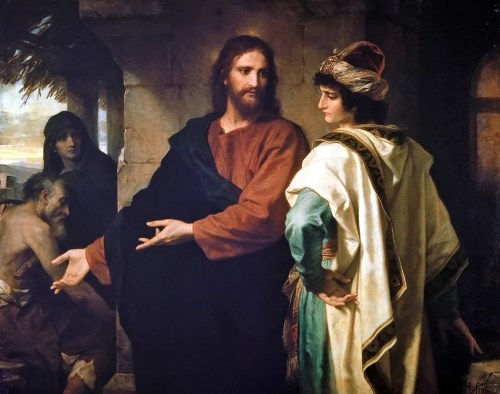
The Gospel writer, Matthew, records an account of “one” who came to Jesus asking about the cost of admission to “eternal life.” One would think the cost would be higher than for tickets to the Super Bowl. This one said, “Good Master, what good thing shall I do, that I may have eternal life?” (Matthew 19:16). By Jesus’ response, it seems the “young man” (v. 20) was insincere in his query. “And he [Jesus] said unto him, Why callest thou me good? there is none good but one, that is, God” (Matthew 19:17a). The young man did not recognize that he was in the presence of God. To him, Jesus was just another teacher (meaning of “Master”) and the attribution of “good” provided the incentive for Jesus to affirm what he thought about himself.

Jesus played along; “if thou wilt enter into life, keep the commandments” (Matthew 19:17b, emphasis mine). Jesus told him what we wanted to hear. Feigning humility, the young man responded coyly, “Which?” (v. 18) pretending that there might be one he missed. Jesus named off a representative list of the Ten Commandments (Matthew 19:18-19), and the young man could no longer contain his self-righteousness. “All these things have I kept from my youth up: what lack I yet?” (Matthew 19:20).

The young man must have thought Jesus would commend him for his righteousness and say, “You’re good to go! You are more than qualified to inherit eternal life.” Instead, “Jesus said unto him, If thou wilt be perfect, go and sell that thou hast, and give to the poor, and thou shalt have treasure in heaven: and come and follow me” (Matthew 19:21). The “follow me” part by itself was doable. If it got too rough, he could always go back to what he did before. However, selling all of his possessions and giving the proceeds to the poor was irreversible. The young man probably inherited all of his wealth and had no idea how to build wealth from scratch. He had probably never worked a day in his life. “Work” was something for peasants, not for him. The price was too high. “But when the young man heard that saying, he went away sorrowful: for he had great possessions.” (Matthew 19:22, emphasis mine).[2]

“Then said Jesus unto his disciples, Verily I say unto you, That a rich man shall hardly enter into the kingdom of heaven” (Matthew 19:23, emphasis mine). The KJV translates the Greek word duskolōs as “hardly,” but what it means is “with great difficulty.” Jesus did not mean that rich people cannot get into heaven. What He did say was that getting into heaven for a rich person is difficult. Why?

Matthew introduced this account with a scene where people (probably mothers) brought their children to Jesus so that He could pray and bless them (Matthew 19:13-15). The disciples rebuked the people for bringing their little urchins to the Lord. “But Jesus said, Suffer little children, and forbid them not, to come unto me: for of such is the kingdom of heaven” (Matthew 19:14, emphasis mine). Mark, in his Gospel (probably Peter’s account), records that Jesus was displeased with the action of His disciples. He further adds, “Verily I say unto you, Whosoever shall not receive the kingdom of God as a little child, he shall not enter therein” (Mark 10:15, emphasis mine). We refer to children as dependents. They are dependent on their parents for food, clothing, shelter, protection, and guidance. They believe what their parents tell them. They trust their parents for everything.

The rich young man was “independent.” His riches provided all that he needed, and, as long as he had his wealth, he was secure. Jesus challenged his source of security. What Jesus basically said was, “I AM all you need. Follow Me.” A child would have followed without question, but this young man chose rather to trust in his many possessions rather than to trust in Jesus. For him, the high cost of admission was too great a price to pay.

“When his disciples heard it, they were exceedingly amazed, saying, Who then can be saved? But Jesus beheld them, and said unto them, With men this is impossible; but with God all things are possible” (Matthew 19:25-26, emphasis mine). The disciples were shocked. If someone who follows all of God’s commandments and has been blessed by God with great wealth cannot be saved, then who can be saved? The lesson is simple. Wealth cannot purchase a ticket to heaven, even if you sell all of your possessions and give the proceeds to the poor. Neither can rigorous religious practice gain one entry into eternal life. However, when one places one’s trust in Jesus with a childlike faith and seeks to follow Him, God gives eternal life. Jesus already paid the high cost of admission.

Reader, in what do you place your trust? Jesus asks that you lay all that aside, and place your trust in Him. If you need help with that, read my page on “Heaven.”

Notes:


[1]  “Super Bowl 2018: How much do tickets cost? Any cheap flights and hotels for Eagles fans?” – http://www.nj.com/eagles/index.ssf/2018/01/super_bowl_tickets_cheap_flights_to_minnesota_eagl.html

[2]  “Too Rich for Heaven: – https://erniecarrasco.com/2015/04/19/too-rich-for-heaven/

4 Comments

Filed under Christianity, Evangelism, Gospel, Heaven, Religion, Salvation

Walking On Water

And he said, Come. And when Peter was come down out of the ship, he walked on the water, to go to Jesus. (Matthew 14:29)

One of my favorite accounts recorded in the Gospels is that of Peter walking on water. Everyone knows that Jesus walked on the water, but no one remembers that Peter walked on the water too. Most people focus on the fact that Peter sank. Peter succumbed to the natural laws of physics, but he did walk on water.

The record begins when Jesus fed “about five thousand men, beside women and children” (Matthew 14:21). This He did by multiplying the five barley loaves and two fish (Matthew 14:17). “And they did all eat, and were filled: and they took up of the fragments that remained twelve baskets full” (Matthew 14:20) – one basket full for each of the twelve disciples. The miracle demonstrated Jesus’ power as Creator. The beginning amount of food, if simply broken up into tiny morsels sufficient for each of the over 5000 people, would not have been enough for them all to be “filled” – the Greek word used there is chortazō, which means, “to gorge.”  Jesus created new food out of nothing, and the people were “stuffed.” After the “feast,” Jesus dismissed the crowd and instructed His disciples to get in the boat and go across the Sea of Galilee. Meanwhile, “he went up into a mountain apart to pray: and when the evening was come, he was there alone” (Matthew 14:23).

While Jesus prayed, a storm came up on the lake and caught the disciples in middle of the water fighting for their lives. After a long night of bailing water and manning the oars, the disciples looked across the water and thought they saw a ghost walking in their direction.[1] It was past three o’clock in the morning – the fourth watch. Lack of sleep combined with aching backs and shoulders from fighting the elements contributed to the fear that gripped their hearts at the sight of this phantasm. “They were troubled, saying, It is a spirit; and they cried out for fear” (Matthew 14:26, emphasis mine).

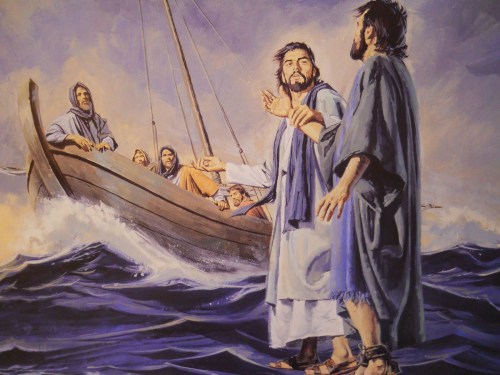
Then came that all too familiar voice, “Be of good cheer; it is I; be not afraid” (Matthew 14:27). Literally, the Greek reads, “Have courage. I AM. Fear not.” The Great I AM who created the laws of physics now subjected them to His will by transforming the surface tension of water into a solid surface for His footsteps. Incredible! The disciples had their doubts.  “And Peter answered him and said, Lord, if it be thou, bid me come unto thee on the water. And he said, Come.” (Matthew 14:28-29a, emphasis mine).

One must really admire the audacity of Peter! Although he could not believe his eyes, he recognized and trusted the voice of the Savior. “And when Peter was come down out of the ship, he walked on the water, to go to Jesus” (Matthew 14:29b). Look closely at what the verse says. Peter got out of the boat, but he did not just stand there holding on to the side. “He walked on the water.” He let go of the boat and started walking “to go to Jesus.” Peter was walking on water! Peter did not perform a miracle. He did not manipulate the laws of physics like Jesus did. He simply trusted in the Word of Jesus. Jesus said, “come,” and that was enough. Way to go, Peter!

However, “when he saw the wind boisterous, he was afraid” (Matthew 14:30). The Greek word translated “boisterous” is ischuros, and it means “forcible, mighty, powerful, strong, or valiant.” We cannot really “see” the wind, but we see its effects. The wind was “forceful.” The waves broke over the bow of the small boat. The sea plunged to a depth of more than 200 feet. A man could easily drown under these circumstances. Peter took his eyes off the One who said, “come,” and he took notice of the elements around him instead. That is when he lost his footing, “and beginning to sink, he cried, saying, Lord, save me. And immediately Jesus stretched forth his hand, and caught him” (Matthew 14:30-31, emphasis mine).  Peter’s head did not go under before Jesus brought him to the surface, “and said unto him, O thou of little faith, wherefore didst thou doubt?” (Matthew 14:31). We should not be too critical of Peter’s “little faith.” Under similar circumstances, we might react the same way.

Like Peter, Jesus calls us to come to Him. The storms of life surround us. Danger lurks everywhere. Some see Jesus as a phantom, a figment of religious imaginations, and though the storms of life are very real, they prefer to take their chances in the boat where it is “safe.” However, the boat guarantees no safety. One big wave can swamp the boat, and life is over. The safest place is out on the water with Jesus. We can walk on water through the storms of life as long as our eyes are fixed on the One who says, “Come,” “and be not faithless, but believing” (John 20:27).

That is not the end of the story. Peter did walk on water again. After Jesus saved him, they walked to the boat together. “And when they were come into the ship, the wind ceased” (Matthew 14:32, emphasis mine). Walking on water with Jesus calms the storms of life.

Notes:


[1]  “Jesus’ Seven Signs in John (5)” – https://erniecarrasco.com/2016/11/20/jesus-seven-signs-in-john-5/

1 Comment

Filed under Apologetics, Christianity, Gospel, Religion, Salvation, Theology

End of the World

Tares – a kind of darnel, resembling wheat

The Son of man shall send forth his angels, and they shall gather out of his kingdom all things that offend, and them which do iniquity; (Matthew 13:41)

In the thirteenth chapter of the Gospel of Matthew, Jesus relates several parables illustrating the “kingdom of heaven.” Beginning with verse 24, He compares the kingdom of heaven to a field that a farmer sowed with wheat (“good seed”). Then at night, while the farmer slept, an enemy came and sowed tares in the same field. The tares to which Jesus referred were probably some kind of darnel that looks much like wheat before it matures. Once it matures the difference becomes obvious.

The farmer’s hired hands detected the tares early on and reported their discovery to the farmer. “So the servants of the householder came and said unto him, Sir, didst not thou sow good seed in thy field? from whence then hath it tares?” (Matthew 13:27). They suggested pulling out the tares to keep the wheat from being stunted. The farmer wisely told the workers to leave them alone lest they accidentally pull up some of the wheat. Once the crop matured, the wheat would be separated from the tares and the tares would be burned.

Jesus compared the field to the world. He, “the Son of Man,” is the field owner that sowed the good seed. One commentator suggested that the “good seed” is the Word of God and the “bad seed” – the tares – is false doctrine sown by Satan, the enemy. There is an element of truth in that interpretation; however, it is not interpretation Jesus gave. Jesus said, “the good seed are the children of the kingdom; but the tares are the children of the wicked one” (Matthew 13:38). The enemy is the devil who sowed the tares – products of his false doctrine no doubt – and the reapers are the angels (Matthew 13:39).

Jesus portrays the image of the world where His “seed” and Satan’s seed exist together.[1] Often, and sadly, they are indistinguishable from one another. Jesus says that “the harvest is the end of the world” (Matthew 13:39). This cannot be the Second Coming of Christ, because when He comes again, He will set up His kingdom on earth (Revelation 19:11-16), and He will reign for 1000 years (Revelation 20:4).

The “end of the world” comes after the 1000-year reign of Christ on earth. “But the rest of the dead [the tares that died prior to Jesus’ Second Coming or were killed in the battle of Armageddon] lived not again until the thousand years were finished. This is the first resurrection” (Revelation 20:5, emphasis mine). “And when the thousand years are expired, Satan shall be loosed out of his prison” (Revelation 20:7, emphasis mine). Satan then incites many on earth to rebel against the rule of Christ, but the insurrection ends quickly (Revelation 20:9).

The tares – “the rest of the dead” – are raised and brought before “a great white throne” (Revelation 20:11) to be judged. Many today hope that on “judgment day” their good deeds will outweigh their bad deeds on the great cosmic scales. Indeed, good and bad will be judged.  “And I saw the dead, small and great, stand before God; and the books were opened: and another book was opened, which is the book of life: and the dead were judged out of those things which were written in the books, according to their works” (Revelation 20:12, emphasis mine). “The books” contain the life record of every individual that ever lived – both good deeds and bad deeds. “The dead,” i.e. the “tares,” are judged by the content of their books. Note that the “good seed,” i.e. the “wheat,” are not being judged. They were “gathered up” before the 1000-year reign and ruled with Christ for the 1000 years (Revelation 20:4).

James says that “whosoever shall keep the whole law, and yet offend in one point, he is guilty of all” (James 2:10). “And the sea gave up the dead which were in it; and death and hell [sheol – “the grave] delivered up the dead which were in them: and they were judged every man according to their works” (Revelation 20:13, emphasis mine). No one will be found guiltless. “For all have sinned, and come short of the glory of God” (Romans 3:23). To be fair, none of us can live up to such strict standards, so “the tares” are given one final test. Their names are checked against the Book of Life,[2] “And whosoever was not found written in the book of life was cast into the lake of fire” (Revelation 20:15, emphasis mine).

That is the end of the world, but it is not the end. “And I saw a new heaven and a new earth: for the first heaven and the first earth were passed away; and there was no more sea. And I John saw the holy city, new Jerusalem, coming down from God out of heaven, prepared as a bride adorned for her husband. And I heard a great voice out of heaven saying, Behold, the tabernacle of God is with men, and he will dwell with them, and they shall be his people, and God himself shall be with them, and be their God. And God shall wipe away all tears from their eyes; and there shall be no more death, neither sorrow, nor crying, neither shall there be any more pain: for the former things are passed away” (Revelation 21:1-4).

Reader, is your name recorded in the Lamb’s Book of Life? Has Satan filled your mind with false teachings and turned you into a tare? While there is breath in your body, you can alter your destiny and secure your name in the Book of Life. Call on Jesus; He alone can save you. “For whosoever shall call upon the name of the Lord shall be saved” (Romans 10:13). For more information, read my page on Heaven from the tab at the top of this page.

Notes:


[1]  “Tares Among the Wheat” – https://erniecarrasco.com/2013/05/19/tares-among-the-wheat/

[2]  “The Book of Life” – https://erniecarrasco.com/2014/02/03/the-book-of-life/

Comments Off on End of the World

Filed under Apologetics, Christianity, End Times, Evangelism, Gospel, Heaven, Hell, Religion, Resurrection, Salvation, Satan, Second Coming of Christ

All Things New

And he that sat upon the throne said, Behold, I make all things new. And he said unto me, Write: for these words are true and faithful. (Revelation 21:5)

For me, 2017[1] ends with mixed reviews. Beginning in January, the uncertainty of a Trump presidency offered a sense of cautious optimism. By this time, however, my opinion of President Donald Trump has swung to a strong positive. I still wish he would learn to control what comes out of his mouth. Then again, he is not a “politician,” so he pretty much tells it like it is. I can appreciate that about him. Of course, his lack of political correctness makes his opponents in government and the media dig in their heels even deeper, but with “his pen and his phone,” he managed to undo much of the harm created by the last administration. One has to admire his tenacity! Here are just some of our President’s accomplishments in his first year:

  1. Passing the tax-cut bill (promise kept)
  2. Neil Gorsuch confirmation to the Supreme Court (promise kept)
  3. Roll-back of [many] regulations (promise kept)
  4. Travel Ban [from terrorist spawning countries] (promise kept)
  5. Declaring Jerusalem the capital of Israel (promise kept)
  6. Withdrawal from the Paris climate deal (promise kept)
  7. Pulling out of NAFTA (promise kept)
  8. Roll-back of “some” of Obama’s Cuba policies (promise kept)
  9. Moving to repeal Obama’s net neutrality rules
  10. Fighting and further degrading ISIS (promise kept)[2]

In many ways, our nation improved in 2017. Economically, things are looking up. Companies are beginning to employ more workers due to the reduction in regulations and the prospect of corporate tax cuts. AT&T and others gave substantial year-end bonuses to their employees for the first time in many years. America has regained her status as the leader of the free world and earned back the respect lost by the last administration. However, that has also escalated the tensions with hostile nations like Iran, North Korea, China, and Russia. North Korea has grown more volatile since the days of the last administration. We wonder where that will lead in 2018. Even though America has seen many improvements in 2017, the world remains in a state of unrest as wars and rumors of wars continue to escalate.

Twenty-seventeen brought some disappointments for me. Supposedly, 2017 was the 70th Year of Jubilee[3] since God gave the observance to Moses 3500 years ago. The Jewish year was 5777. The number 10 in the Bible represents completeness, as does the number seven. The number three represents completeness also, but it is usually associated with the triune nature of God. Working together, all these numbers made 2017 significant apocalyptically. The 70th Jubilee is 7 x 10, and the Jewish year included three sevens in a row. Along with that, the U.S. experienced a significant total eclipse[4] all across the continent – a sign for Gentile nations. That was followed by “The Revelation 12 Sign,”[5] which took place on September 23.  Twenty-seventeen was also the 70th anniversary of the United Nations recognizing Israel as a sovereign nation and the 50th anniversary of Israel regaining control of their capital city, Jerusalem, in the 1967 Six-day War. All these things together along with our Lord’s words, “This generation shall not pass, till all these things be fulfilled” (Matthew 24:34), made 2017 an excellent time for our Lord’s return.

I do and have for many years held the opinion that Jesus will come for His Bride, the Church, on or around the Feast of Trumpets, which in 2017 took place on September 23/24. However, those days came and went, and we are all still here. One adamant YouTube advocate for the Revelation 12 Sign was often unfairly accused of being a “date setter” by more conservative end-times prophecy “experts” for suggesting that the Rapture “might” take place on the 23rd. Sadly, when the event did not take place, the young man stopped producing YouTube messages. I sympathize with his disappointment, but I have no doubt that Jesus will return for His Church at the appropriate time. When He does come, I want Him to find me occupied in my Father’s business.

We still look for Christ’s return with great anticipation. Some suggest that 2018 could be the year that Jesus comes for His Church. These revised predictions find their basis on the 70th anniversary of Israel declaring its independence on May 14, 1948.  That is as good as any other prediction considering the fact that Jesus never gave us a definite time.

The key factor in all end-times prophecy is the Nation of Israel. All end-times prophecy centers around Israel. Following the destruction of Jerusalem and the scattering of the Jews in 70 AD, the Nation of Israel ceased to exist, and for 2000 years, the land remained a barren ruin – a Valley of Dry Bones (Ezekiel 37). Then at the turn of the 20th Century, with the Balfour Declaration of 1917, the prophet’s vision was realized. The bones started coming together and then the sinew, the flesh, and the skin until in 1948 the dry bones stood up – a mighty army. Never in world history has a people been utterly disseminated among other nations and managed to maintain their identity and customs – and this for over 2000 years. Even the Hebrew, once considered a dead language, has revived as the national language of Israel. The Nation of Israel is nothing less than a miracle.

The fig tree symbolizes the Nation of Israel. Jesus alluded to the fig tree in His prophetic discourse.  He said that when you see the fig tree (Israel) put forth its leaves, you know that summer is near. “So likewise ye, when ye shall see all these things, know that it is near, even at the doors. Verily I say unto you, This generation shall not pass, till all these things be fulfilled” (Matthew 24:33-34, emphasis mine). The fig tree has not only budded, but it is now in full-bloom and producing fruit! Jesus guaranteed the truth of His statement. “Heaven and earth shall pass away, but my words shall not pass away” (Matthew 24:35). Seventy years – threescore and ten (Psalm 90:10) – qualifies as a generation. The time is near!

Frivolous distractions by the “fake news” and the “selective news” media blind us to the “rumors of wars” stirring in the Middle East. The Prophet Ezekiel spoke of the armies of Magog (Russia), Tubal (Turkey), Persia (Iran), and a few others gathering against Israel in the “last days” (Ezekiel 38-39). We see that happening now, but few are paying attention. God is preparing the scene for the coming of our Lord. Perhaps 2018 will be the year. I hope so. Regardless, our Lord is faithful, and Jesus will come soon. Therefore, “Humble yourselves therefore under the mighty hand of God, that he may exalt you in due time: Casting all your care upon him; for he careth for you” (1 Peter 5:6-7). We can look forward to the New Year knowing that God has all things well under control. I am excited about whatever He has in store for us!

Happy New Year!

Notes:


[1]  “A New Thing” – https://erniecarrasco.com/2017/01/01/a-new-thing/

[2]  From The Hill, “Trump’s Top 10 accomplishments of 2017” – http://thehill.com/homenews/administration/366429-trumps-top-10-accomplishments-of-2017

[3]  “Coming Soon!” – https://erniecarrasco.com/2017/07/09/coming-soon/

[4]  “Now’s A Good Time” – https://erniecarrasco.com/2017/09/17/nows-a-good-time/

[5]  “Coming Soon!” – https://erniecarrasco.com/2017/07/09/coming-soon/

3 Comments

Filed under Christianity, Current Events, End Times, Holidays, New Year's Day, Politics, Religion, Second Coming of Christ