Tag Archives: Christ Jesus

No Accident


CAUSE: Hydroplaning. EFFECT: Wreck. No Accident!

CAUSE: Hydroplaning. EFFECT: Wreck. No Accident!

All things were made by him; and without him was not any thing made that was made. (John 1:3)

Commuting to work on the rain-drenched LBJ Freeway in Dallas, Texas this past week, I was at once amused and terrified at the maneuvers made by some crazy drivers obviously unaware of the hazardous road conditions. It reminded me of something that my old Driver’s Ed teacher repeated often a hundred years ago, “Accidents don’t happen; they are caused.” Apparently the crazies on LBJ never took driving lessons from my old Driver’s Ed teacher.

The truth of the adage obeys the very basic law of physics, that of cause and effect. Simply stated, everything that happens, i.e. every “effect,” has a cause. On the highway, this basic law expresses itself through Newton’s three Laws of Motion: (1) Inertia – an object in motion tends to stay in motion unless some external force acts upon it, (2) Acceleration – when a force acts on a mass (object) to produce motion, and (3) Reaction – for every action, there is an equal and opposite reaction. These three laws are expressions of the primary law of cause and effect. There is a series of cause-and-effect scenarios that propel a vehicle down the road at high rates of speed. Friction is a stabilizing force acting upon the tires of a car to counter the inertia that would maintain the car’s high rate of speed. However, on a wet, rainy day, friction yields to a phenomenon known as hydroplaning. This “cause” creates a thin barrier of water between the surface of the road and the tires, which effectively negates the force of friction on the tires. The tires lose contact with the road surface and now skim along on a slippery sheet of water. Inertia now controls the forward motion of the vehicle, and the incognizant operator unwittingly presumes he is in full control until he has to make a quick lane change or a sudden stop. It takes little imagination to visualize the “effects” that may result. The frequent “mishaps” witnessed on the highway are “incidents” not “accidents.” The majority of the time, the main cause of these incidents is the loose nut behind the wheel. Lesson: be aware of road conditions!

Forgive the defensive driving lesson, but the point was to illustrate the law of cause and effect. Nothing that exists just happens. There are no accidents. This simple and common fact is overlooked or ignored by naturalists/evolutionists/atheists when dealing with the matter of origins. What caused the universe? The Big Bang they say. What caused the Big Bang? They say that an infinitesimal “singularity” rapidly expanded and produced all that there is. Even though no one existed to witness or record this great event, they (the “theoretical” physicists) can tell us what happened one second after the Big Bang, one minute after, five minutes after, and so on. So, from where did this singularity come? What caused the singularity? What made it expand? “We don’t know,” they admit, “but we are still working on it.” This is what is passed off as science today.

Everything must have a cause, but cause-and-effect can only be taken back so far. Eventually, we must arrive at the cause that caused all other causes, and this cause cannot itself be caused. “Science” has no explanation for this, therefore hypotheses abound. In desperation, absurdities, like the “multiverse” hypothesis, arise to account for what cannot be proven in this universe. Since it cannot be proven in this universe, it must be true in another. The problem is that this universe is the only universe to which we have access to do science. There remains this nagging requirement for science called observation, and we cannot observe other universes, if indeed they do exist. Ours is the only universe we can observe. Our science is limited to what we can observe in this universe.

That brings us back to question of origins. How did our universe come to be? If nothing else, the Big Bang asserts that our universe must have had a beginning. But what caused it all? Reason demands that the original cause cannot itself have a cause. Our universe is no accident.

Where science fails us, the Bible provides a reasonable answer. Naturalists automatically reject this notion; however they offer nothing in its place that makes more sense. “In the beginning God …” (Genesis 1:1). Time, “the beginning,” was caused by God. The reader will note that nothing is presented before God, the Cause. God is the “uncaused Cause,” and the Scripture’s presentation of nothing prior to God expresses His eternal nature, His infiniteness. His eternal existence is the only reasonable and logical response to an infinite series of causes and effects. God is no accident. He is and always has been and ever will be. He is the eternal “I AM THAT I AM” (Exodus 3:14). John identifies Jesus as the eternal Creator (John 1:1-3), and later records the Lord’s self-identification as the Eternal One: “I am Alpha and Omega, the beginning and the end” (Revelation 1:18; 21:6), “I am Alpha and Omega, the first and the last” (Revelation 1:11), “I am Alpha and Omega, the beginning and the end, the first and the last” (Revelation 22:13). He is the One, the initial Cause that started it all. Before Him nothing else existed.

Our universe is no accident; it had a cause – God the Creator. Our world, our earth, is no accident; it had a cause – God the Creator. You and I are no accidents. We have a Creator that fashioned us in His own image (Genesis 1:27), and loved us enough to give us the choice to accept or reject Him. Either choice produces eternal effects. If we choose to reject Him, that decision is eternal. If we choose to accept Him, that decision is eternal. The choice is no accident.

2 Comments

Filed under Apologetics, Atheism, Bible, Christianity, Creation, Evangelism, Evolution, Gospel, Origins, Philosophy, Religion, Science, Theology

Loving God

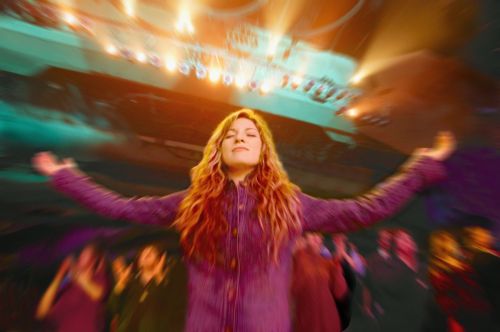
Woman in Worship 6214442_ml

If ye love me, keep my commandments … If a man love me, he will keep my words. (John 14:15, 23)

How can one love God? Jesus said, “God is a Spirit: and they that worship him must worship him in spirit and in truth” (John 4:24). How does one love or worship “a Spirit”? By definition, a spirit is immaterial. A spirit cannot be heard, seen, smelled, tasted, or touched. Those who choose not to believe in God use this as an excuse. Understandably, it is difficult for us material beings to relate to the Spirit of God. Some, I think, attempt to make the connection by raising hands and swaying to the music of a Sunday morning worship service in order to achieve some sort of euphoric state. (I’m not making fun. I have no way of knowing what goes on inside the heart of others. I’m only making an observation.) I cannot do that. I am not a touchy-feely person that requires a lot of external stimulus. I know God intuitively. God is real regardless of how I feel or whether I can sense Him or not, but to love Him, I must understand His personhood.

One aspect of God’s personhood is His desire to have fellowship with His creation. From the beginning we read, “And they [Adam and Eve] heard the voice of the LORD God walking in the garden in the cool of the day … And the LORD God called unto Adam, and said unto him, Where art thou?” (Genesis 3:8-9). God feels hurt when betrayed, but acts justly, yet with mercy. When Adam and Eve disobeyed, God expressed hurt when He said, “Behold, the man is become as one of us, to know good and evil” (Genesis 3:22), and although He had created the Garden of Eden just for them, He acted justly “and now, lest he put forth his hand, and take also of the tree of life, and eat, and live for ever: Therefore the LORD God sent him forth from the garden of Eden” (Genesis 3:22-23). Yet He showed mercy toward the couple. Rather than kill them outright, “Unto Adam also and to his wife did the LORD God make coats of skins, and clothed them” (Genesis 2:21) substituting the life of innocent animals to cover their sin.

From the beginning we find that, while God is just in punishing sin, His love for us, His creation created in the image of God (Genesis 1:26-27), manifests itself in His grace and mercy. We see this pattern revealed again in His dealing with Cain for murdering Abel (Genesis 4). We sense God’s pain: “And he said [to Cain], What hast thou done? the voice of thy brother’s blood crieth unto me from the ground” (Genesis 4:10). Because of this horrific act, God executed justice by banishing Cain to a life of wandering (Genesis 4:12), but He showed mercy on him by placing an identifying mark on him to keep others from taking revenge on him (Genesis 4:15).

Still, a greater example comes from the Flood account in Genesis 6-9. By that time mankind had become so wicked and corrupt, “And it repented the LORD that he had made man on the earth, and it grieved him at his heart” (Genesis 6:6, emphasis mine). The word translated “repented” is the Hebrew word nâcham, which means to “sigh” or “breathe strongly,” or, by implication, “to be sorry.” It does not mean that God changed His mind (Malachi 3:6). The end of that verse expresses God’s hurt over man’s depravity: “it grieved him at his heart.” God’s justice came in the form of the Flood. “But Noah found grace in the eyes of the LORD” (Genesis 6:8, emphasis mine). Because of His grace, i.e. love, God showed mercy in saving His creation from complete destruction.

We could go on and on with examples, but from the beginning of Genesis, the pattern was set for the personhood of God. He is just, loving and merciful (and much more). We should also note, in these first examples that it is man who does wrong, but it is God who first responds out of His love for us. Indeed, “We love him, because he first loved us” (1 John 4:19). John writes in his Gospel, “For God so loved the world, that he gave his only begotten Son, that whosoever believeth in him should not perish, but have everlasting life (John 3:16, emphasis mine). The word order in the Greek emphasizes God’s love – “so loved God the world.” So great is God’s love that He acted. “Herein is love, not that we loved God, but that he loved us, and sent his Son to be the propitiation for our sins” (1 John 4:10).

The shama proclaims “Hear, O Israel: The LORD our God is one LORD: And thou shalt love the LORD thy God with all thine heart, and with all thy soul, and with all thy might” (Deuteronomy 6:4-5). When Jesus was asked what was the greatest commandment, He quoted the shama, (Matthew 22:36-38). It seems rather paradoxical that God, who first loved us, demands that we love Him when our natural inclination is to reject Him. “As it is written, There is none righteous, no, not one: There is none that understandeth, there is none that seeketh after God” (Romans 3:10-11, emphasis mine). Yet this jilted lover reached down to those who rejected him (John 1:10-11) and literally gave His life to rescue us from the very clutches of eternal death.

When we come to a deep understanding of that reality, our desire should be to return that love. But how? We can’t wrap our arms around Him. We can’t kiss His wounded head, hands, and feet. How can we express our love for Him in a tangible way that truly demonstrates our love?  How can we “love the LORD [our] God with all [our] heart, and with all [our] soul, and with all [our] might”? God gave the answer. “And these words, which I command thee this day, shall be in thine heart: And thou shalt teach them diligently unto thy children, and shalt talk of them when thou sittest in thine house, and when thou walkest by the way, and when thou liest down, and when thou risest up. And thou shalt bind them for a sign upon thine hand, and they shall be as frontlets between thine eyes” (Deuteronomy 6:6-8). In short, we demonstrate our love for God by obeying His commandments. Someone might say, “But that is Old Testament. We live under the New Testament; we are not bound by the Law.” That is both true and false. We cannot be saved by obeying the Law, but that does not nullify the Law. It still serves as our standard, i.e. our guide book. There is a saying, “If you aim at nothing, you’ll hit it every time.”

The Law gives us something to aim for. The fact that we cannot perfectly meet that standard is the reason Jesus had to die in our place. And He said, “If ye love me, keep my commandments” (John 14:15). Note that “commandments” is plural. Jesus, who is God in the flesh (John 1:1, 14), gave those commandments to Moses, and He says, “For I am the LORD, I change not” (Malachi 3:6). However, He did condense all of His Law down to two: (1) “love the Lord thy God with all thy heart, and with all thy soul, and with all thy mind.”  (2) “And the second is like unto it, Thou shalt love thy neighbour as thyself.” Then He said, “On these two commandments hang all the law and the prophets” (Matthew 22:37-40). If we can do all of that, then we are keeping all of His commandments, and thereby we demonstrate our love for Him. But how do we know we are keeping those two? Check the guide book – the Old Testament.

Loving God has nothing to do with the euphoric experience you get, or don’t get, out of Sunday morning “worship” service. Loving God means obeying His commandments. That is how you show your love for God, and no fuzzy feelings are required.

3 Comments

Filed under Christianity, Religion, Theology, Worship

The Bible Says

The Bible Says

But he answered and said, It is written, Man shall not live by bread alone, but by every word that proceedeth out of the mouth of God. (Matthew 4:4)

I am blessed to have been raised by Christian parents who, not only took me to church every Sunday, but they taught me from God’s Word at home. Dad was not well educated. He was raised on his father’s ranch in Chihuahua, Mexico and only went to school until the third grade where he learned to read, write and do basic arithmetic. That was sufficient at a time and place where hard work was valued above book learning – education extends beyond the confines of a classroom. After he came to the United States and met Mom, God called him into the pastoral ministry, and he spent the rest of his life pastoring small Hispanic congregations, mostly around West Texas. Before entering the ministry, he prepared for five years at the Instituto Biblico Mexicano in San Antonio, Texas that taxed his third-grade education to the limit, but he persevered and completed his training.

My parents, my father in particular, taught me at a very early age that the Bible is the very Word of God. Every word of it is true and trustworthy, even when it comes to things that are hard to believe like the Red Sea parting (Exodus 14:21-31), the walls of Jericho falling (Joshua 6:15-20), or an axe head floating (2 Kings 6:5-7). These things have no natural explanation other than the record in God’s Word. “God is not a man, that he should lie; neither the son of man, that he should repent: hath he said, and shall he not do it? or hath he spoken, and shall he not make it good?” (Numbers 23:19). Therefore, if God says something in His Word, it must be true regardless of our ability to explain it.

However, one does not have to cast off reason and believe the Bible simply because the Bible says so. The Bible contains more than sufficient, historical, scientific, practical, fulfilled prophetic evidence of its accuracy to lend credence to those areas demanding “faith.” Archeologists have time and again confirmed the Bible’s historical account. For example, the Bible was long criticized for recording the existence of the Hittite people until archeological evidence proved the Bible right. To date, archeological digs uncover evidences confirming the historical accuracy of biblical accounts.

Scientifically, although not a text book on science, the Bible accurately records scientific matters. For example, the Bible matter-of-factly records the existence of ocean currents (Psalm 8:8), earth suspended in space (Job 26:7),[1] a spherical earth and expanding universe (Isaiah 40:22), the water cycle (Psalm 135:7), and even Pi (π) rounded to the nearest whole number (1 Kings 7:23). As for practical matters, one need only read and apply the book of Proverbs or Jesus’ Sermon on the Mount (Matthew 5-7) to live a successful life. The Bible accurately records fulfilled prophecies. The prophecies concerning Israel’s captivity in Babylon were pronounced as far back Deuteronomy, prior to their entry into the Promised Land. This same prophecy was repeated by later prophets, and it came to pass. Their return to the land was predicted and it came to pass. The Diaspora was predicted and it came to pass, as was their return once again to the land of Israel which took place on May 14, 1948. All the prophecies of Jesus’ first coming, His death, His burial, and His resurrection were all fulfilled to the letter.

When the Bible is correct in all of these areas, then why should one doubt when miracles are presented? Miracles are acts whose only explanation is that of divine intervention even when those acts defy natural laws. The same God who “cannot lie” (Titus 1:2), and who will do as He says also says, “So shall my word be that goeth forth out of my mouth: it shall not return unto me void, but it shall accomplish that which I please, and it shall prosper in the thing whereto I sent it” (Isaiah 55:11). Jesus concurred with the prophet when He said, “For verily I say unto you, Till heaven and earth pass, one jot or one tittle shall in no wise pass from the law, till all be fulfilled” (Matthew 5:18).

There is a scene in The Lion, the Witch, and the Wardrobe, by C.S. Lewis after Lucy has visited Narnia for the first time and returns to report to her siblings. They would not believe her story. In her defense, Professor Kirke (the old man in whose home the children were staying for protection from German air raids over London in World War II), challenges Lucy’s siblings by asking them if she has ever been known to lie. Since Lucy was not prone to lying, Professor Kirke suggested that perhaps the children should take her at her word. The same can be said about the Bible. Since the Bible can be proven accurate historically, scientifically, practically and prophetically, then perhaps it should be taken for at face value when it speaks of miracles.

This brings me to what perhaps is the greatest miracle of all, next to the incarnation and resurrection of Jesus Christ, i.e. the creation of the universe and all that it contains. This account of creation is found in the first chapter of Genesis, and it is foundational to the rest of Scripture. It is this creation account that I found myself defending against evolution and the Big Bang theory after I left home as a young man. I could not explain a literal six 24-hour day creation other than to stand on “the Bible says.” My conversations usually ended up something like this: “I believe God could have used Big Bang and taken billions of years to create everything, if He chose to. I believe God could have used evolution to create life, if He chose to. But the Bible says that God created everything in only six days. I believe God is great enough to do whatever He chooses to do. He could have created everything in a split second, if wanted; but the Bible says He did it in six days, and that is what I believe.”

I know that answer rings hollow to a hardened evolutionist, but it was good enough for me. I will never take man’s word over God’s Word about anything. Yet, far too many “Christian” leaders waffle as to the veracity of this record. Many, certainly not all, highly trained theologians and pastors wear their Ph.D.s and Th.D.s as a mantle of pride that they dare not tarnish by defending the literal reading of Genesis 1 against “experts” in the sciences. They fear appearing “uneducated” for their inability to explain biblical creation to the satisfaction of the skeptics who relentlessly insist that “science has proven” evolution. So rather than defend the clear reading of Genesis 1, they come up with silly compromises, like the Gap Theory, the Day-Age Theory, or Theistic Evolution to appear “scholarly” in their defenses. In the end, they subjugate God’s Word to man’s word.

Some say such compromises make Scripture, especially where Creation is concerned, more believable/acceptable/palatable to people steeped in evolutionary indoctrination. After all, the teaching of evolution is ubiquitous in the world. Not only is evolution taught as fact (albeit unproven, but that’s a minor matter) in schools beginning at the lowest levels, but it is broadcast on television, the movies, and in print. Take notice when watching or listening to commercials at how many products “evolve.” Missing in these messages is the fact that this is “evolution” guided by “intelligence.” The message that comes across is that “everything evolves.” Learning channels like Discovery, Science, History, etc. often present evolution without question. Considering the constant brainwashing of our society to accept evolution as a “proven” fact, it is no wonder that religious leaders shrink back from defending biblical creation. Well, they ought to grow a backbone!

The Bible says, “In the beginning God created the heaven and the earth” (Genesis 1:1). There in one sentence is the universe: time, space, matter. The Bible says, God created everything there is in six 24-hour days. “For in six days the LORD made heaven and earth, the sea, and all that in them is, and rested the seventh day: wherefore the LORD blessed the sabbath day, and hallowed it” (Exodus 20:11, emphasis mine). He did it in six days rather than a split second in order to set the pattern of a seven-day week for us – work six days, rest one. Furthermore, the “days” in Genesis 1 are normal 24-hour days. The Hebrew word used is yom, and with very few exceptions (clarified by context), it means a normal 24-hour day. God then took extra care to define the “day” as “evening and morning” (Genesis 1:5, 8, 13, 19, 23, 31)[2] to forfend against any notion of undetermined time.

The Bible says that God created plants before animals and even before the sun (Genesis 1:9-13). The Bible says there is no to plant evolution. “And God said, Let the earth bring forth grass, the herb yielding seed, and the fruit tree yielding fruit after his kind, whose seed is in itself, upon the earth: and it was so” (Genesis 1:11, emphasis mine). “After his kind” means no evolution, and the regenerative process resides within the seed (the DNA) of each plant. Some critics point out that plants need the sun for photosynthesis. That is only partially true. Plants need “light.” Light was created on Day One (Genesis 1:3). Even if it can be argued that plants need “sunlight,” surely plants can survive 24 hours without sunlight, which was created the following day.

The Bible says God created the earth before all other celestial objects (Genesis 1:14-19). My scientist friends might challenge me on this point because it cannot be proven “scientifically,” but this tells me that the earth is at or near the center of the universe. This is not to say that I believe in a geocentric solar system where the earth is stationary and the sun, moon and planets revolve around the earth. (I have seen models that show how this is possible; however, I will stick with what my scientists friends say in this regard – all planets, including the earth orbit around the sun.) However, that does not preclude the earth being located somewhere near the center of the universe. It just makes sense because the Bible says so. Also, according to biblical chronology, the earth (and the universe) is only about 6000 years old. The critics challenging this point to light from galaxies billions of light years away. How is it that we can see that light now, if the earth is only 6000 years old? I cannot explain it, but my astrophysicist friend, Dr. Jason Lisle offers a great theory on it that I cannot condense in the space of this article.[3]

The Bible says God created sea creatures (crustaceans, fish, marine mammals, and reptiles) and air creatures (birds, flying mammals, insects, etc.) on Day Five (Genesis 1:20-23). Here again, God created all creatures so that they would reproduce “after his kind.” The Bible says no to evolution. By the way, note that plants came before any kind of animal. Evolutionists teach that everything came from the sea; they have it backward. On Day Six, God created all land creatures that reproduce “after his kind” – no allowances for evolution. Dinosaurs would be included on Day Six of creation. Note also that birds were created before dinosaurs, which contradicts the notion of birds having evolved from dinosaurs.

The Bible says that the last thing that God created on Day Six was mankind. Male and female were both created in the image of God (Genesis 1:26-27). At the end of the day, God assessed His total creation and declared it “very good” (Genesis 1:31). The Bible says that God placed the man and the woman in His special garden east of Eden (Genesis 2:8). There, man had complete freedom. His only prohibition was not to eat of the Tree of the Knowledge of Good and Evil (Genesis 2:17). Having been created in the image of God, man had the free will to obey or disobey God. Man chose to disobey God (Genesis 3:1-7), and through his act of disobedience brought upon himself, his posterity and all of creation the curse of death (Romans 5:12). In His foreknowledge, God had a plan for that eventuality with the promise of a Savior (Genesis 3:15).

In these first three chapters of Genesis, the foundation for the Gospel is set. Without a firm foundation, the entire message of the Gospel crumbles. Those who would insert long ages to the simple reading of Genesis 1, allow for ages of death and misery long before the Fall of man. The Bible says death is the enemy (1 Corinthians 15:26). If that is true, why would God make death the curse, when death had already been around for eons of time? And if death is not the curse, then what does Jesus’ death and resurrection accomplish? If Adam and Eve evolved from some ape-like ancestor (again, death and suffering already exist, and God’s creation is not so “very good”), then Jesus, who Scripture identifies as God (John 1:1-3) was wrong when He said, “But from the beginning of the creation God made them male and female” (Mark 10:6). Can God be wrong?

More can be said on this topic. For now, I think I have gone on long enough. I will end by saying this: there are those who say that the Bible is the inerrant, infallible Word of God, but when it comes to defending the biblical record of creation, they defer to the evolutionists rather that defend God’s Word for what it says from the very beginning. I really don’t care if a pastor can’t give scientific proof that the Genesis record is accurate. Most pastors do not have a background in science; their training is mostly in Bible and church stuff. I get that. But for goodness sakes, if you say you believe that the Bible is true, then preach it like it’s true. Creation took place exactly like God recorded it in Genesis 1; that is the bottom line. Now, if a pastor feels the need to back up that statement with scientific proof, there are scientific organizations like the Institute for Creation Research, Answers in Genesis, Creation Ministries International, the Creation Research Society, and others that uncompromisingly defend the veracity of Scripture with scientific research that confirms the biblical account of creation. There are also organization like Biologos and Reasons to Believe that compromise on the biblical account and attempt to make the Bible “fit” modern science. Avoid such; they are wolves in sheep’s clothing. Stand by what the Bible says!

Notes:


[1]  The book of Job is considered to predate Genesis by almost 500 years or more, and certainly long before man traveled to the moon and visually confirmed that God “hangeth the earth upon nothing.”

[2]  By Jewish reckoning, the day begins in the evening; so from dark to light, and then evening begins a new day.

[3]  Go to http://www.icr.org/home/search/ and search under keyword “distant starlight”

5 Comments

Filed under Apologetics, Bible, Christianity, Creation, Death, Evolution, Gospel, Origins, Religion, Science, Theology

Resurrection

colorful sunset

Jesus answered and said unto them, Destroy this temple, and in three days I will raise it up … When therefore he was risen from the dead, his disciples remembered that he had said this unto them; and they believed the scripture, and the word which Jesus had said. (John 2:20, 22)

Christians today, especially in the Middle East, suffer martyrdom by the hundreds at the hands of brutal ISIS executioners. These undergo a gruesome and horrific death by beheadings or being burned alive. Yet, as ghastly as we may perceive such brutality, the pain and suffering of these victims is short-lived, unlike that experienced by our Lord Jesus Christ on the cross.[1]

On the Lord’s Feast of Passover,[2] Jesus, already physically drained from lack of sleep[3] and subjected to a sham of a trial by the Jewish religious leaders, was brutally beaten and scourged at hands of Roman soldiers, experts at inflicting pain without killing the victim. Then in that depleted condition, He was forced to carry His own cross to the place of execution, and whether it was a fully assembled cross or just the cross beam, for a man in Jesus’ condition at that time was next to impossible – but He did it. Under the weight of that burden, determined to complete His mission, He faced the horror of the cross. God, wrapped up in human flesh, with His host of angelic armies standing at the ready awaiting the command to rain down vengeance upon His tormentors. At the time of His arrest, Peter pulled his sword in His defense, but Jesus stopped him. “Thinkest thou that I cannot now pray to my Father, and he shall presently give me more than twelve legions of angels?” (Matthew 26:53).  Nothing would deter Him from His mission. “[He] made himself of no reputation, and took upon him the form of a servant, and was made in the likeness of men: And being found in fashion as a man, he humbled himself, and became obedient unto death, even the death of the cross” (Philippians 2:7-8).

Determined to give to the very last, He carried Himself up Calvary’s hill, laid Himself down upon the timbers and spread His arms out to receive the nails – our pain, our guilt, our sins. “For [God the Father] hath made him [Jesus] to be sin for us, who knew no sin; that we might be made the righteousness of God in him” (2 Corinthians 5:21). At the last, He gave His life. He did not die. Jesus said, “… I lay down my life, that I might take it again. No man taketh it from me, but I lay it down of myself. I have power to lay it down, and I have power to take it again. This commandment have I received of my Father” (John 10:17-18, emphasis mine). He was not killed. “Jesus, when he had cried again with a loud voice, yielded up the ghost” (Matthew 27:50, emphasis mine). He was not the victim. He was in full control until the very last. John, the beloved disciple, and the only one of the twelve to witness the event said, “When Jesus therefore had received the vinegar, he said, It is finished: and he bowed his head, and gave up the ghost” (John 19:30, emphasis mine). Finished! Paid in full!

That was not the end. On the first day of the week, on that spring Sunday morning, He broke the chains of death and brought sheol’s captives with Him. Matthew records, “And the graves were opened; and many bodies of the saints which slept arose, And came out of the graves after his resurrection, and went into the holy city, and appeared unto many” (Matthew 27:52-53).[4]

His resurrection is key! Had Jesus died and remained in the tomb, we would venerate a martyr, nothing more. His bones would be marked by an ornate shrine. Perhaps followers would make faithful pilgrimages to the site to stand in awe and wonder. If that was the case, our faith’s reward would be death and eternal separation from our Creator with no hope of redemption. “And if Christ be not risen, then is our preaching vain, and your faith is also vain” (1 Corinthians 15:14). “But thanks be to God, which giveth us the victory through our Lord Jesus Christ” (1 Corinthians 15:57).  Because of His resurrection, “Death is swallowed up in victory” (1 Corinthians 15:54). “For if we have been planted together in the likeness of his death, we shall be also in the likeness of his resurrection” (Romans 6:5). So now we can say, “O death, where is thy sting? O grave, where is thy victory?” (1 Corinthians 15:55).

Before going to the cross, Jesus left us with this promise: “Let not your heart be troubled: ye believe in God, believe also in me. In my Father’s house are many mansions: if it were not so, I would have told you. I go to prepare a place for you. And if I go and prepare a place for you, I will come again, and receive you unto myself; that where I am, there ye may be also” (John 14:1-3). His resurrection guarantees the promise. On that day, “the Lord himself shall descend from heaven with a shout, with the voice of the archangel, and with the trump of God: and the dead in Christ shall rise first: Then we which are alive and remain shall be caught up together with them in the clouds, to meet the Lord in the air: and so shall we ever be with the Lord” (1 Thessalonians 4:16-17).

Our Christian brothers and sisters in the Middle East and elsewhere in the world are brutally killed daily by the enemy of God. We can thank God that for many, death is swift; it is nothing like what their Lord and our Lord endured for our sakes. But the guaranteed promise of the resurrection assures us that one day soon, we will be together with Him in His house.

Notes:


[1]  It is said that victims could linger on the cross up to three days until succumbing to dehydration and asphyxia.

[2]  Despite conventional tradition, this even could not have taken place on Friday. Jesus said He would rise in “three days,” not three partial days. Jesus specified “three days and three nights” (Matthew 12:39-40). No matter how one may try to convolute the time to fit a “Good Friday” scenario, one cannot get “three days and three nights” from Friday evening to Sunday morning. Jesus said, “three days and three nights” – 72 hours, nothing less will do!

[3]  Jesus had spent the night in prayer while His disciples slept (Matthew 26:36-46; Mark 14:32-42; Luke 22:39-46) before being betrayed by Judas, arrested and tried.

[4]  Matthew’s recording of this event that seems to coincide with Jesus’ death and the renting of the veil to the Holy of Holies, but a close inspection of the text reveals that this event occurred after the resurrection. See again Matthew 27:52-53.

2 Comments

Filed under Apologetics, Christianity, Easter, Evangelism, Gospel, Religion, Resurrection, Salvation, Theology

Easter’s Wrong!

Shocked

And when he had apprehended him, he put him in prison, and delivered him to four quaternions of soldiers to keep him; intending after Easter to bring him forth to the people. (Acts 12:4)

The two highest church attendance days are Christmas and Easter. Easter probably wins the high attendance day of the two since it always falls on a Sunday. Neither day is historically accurate, but Easter typically comes nearer being right than does Christmas. Both holidays (holy days) come to us thanks to the Roman Catholic Church (RCC) in its attempt to “Christianize” the pagan celebrations of Saturnalia, which celebrated the return of the sun, i.e. the days getting longer, and Ishtar, whose origin is rather convoluted but basically has its source in the ancient fertility goddess of Babylon from whence come the icons of Easter eggs and bunnies.[1]

The pagans celebrated their “Queen of Heaven” on the first day of the week (Sunday) following the first full moon after the vernal equinox. Some form of this religious practice was observed by the Egyptians, Greeks and Romans. By the time the RCC came into power, pagans continued the practice, so, in order to accommodate the pagan population, the Church put a Christian spin on the celebration. There are several parallels that can be made between that pagan religion and what we believe as Christians.[2] Jesus was born of a virgin, He died, He was buried, and He rose again. Superficially, the pagan story sounds familiar, but this should not be surprising since Satan is the ultimate counterfeiter. Jesus said, “He [Satan] was a murderer from the beginning, and abode not in the truth, because there is no truth in him. When he speaketh a lie, he speaketh of his own: for he is a liar, and the father of it” (John 8:44).  Since the celebration of Ishtar fell around the time as the Jewish Passover, and considering the parallels, it was not difficult to remake the pagan celebration into a Christian one. (Oh! Don’t be so shocked! We still do that today. In order to attract the “world” we adopt worldly practices, bring them into the church, and put a Christian face on them. Sometimes “Christian” events look no different than rock concerts. The only differences, if you can hear them, are the words of the songs. And for those of us who love the “old hymns” many of the tunes of those good old hymns originated in pubs and saloons. So, this is not unique to the RCC.)

Despite the title I chose for this article, my purpose here is not necessarily to bash our observance of Easter. (I prefer to call it “Resurrection Day” or “Resurrection Sunday.”) I believe that it is right and proper that we celebrate the Advent of our Lord and His death, burial and resurrection – the resurrection being key. They are highly significant events that altered the course of history and the destiny of man. But if we are going to celebrate these very special days, we should at least try to be “biblical” about it rather than “traditional.” Arguably, Christmas could remain as December 25th. While widely accepted by biblical scholars that the birth of Jesus probably took place around mid-September (more likely around the celebration of the Jewish Feast of Booths or Sukkot), counting back nine months would bring one to around December 25th as the time of conception, which would also be the actual “incarnation” when God came to be “with us” (Emmanuel) as a human embryo.

Easter, however, does not always line up exactly with Passover as is the case this year. Jesus was crucified on Passover. Jesus said, “Ye know that after two days is the feast of the passover, and the Son of man is betrayed to be crucified” (Matthew 26:2, emphasis mine). The Jewish day began at sundown, around 6:00 PM, unlike our western day which begins at midnight. On the afternoon before the Passover, Jesus sent His disciples to make arrangements to celebrate the Passover Seder (Matthew 26:18-19). “Now when the even was come, he sat down with the twelve” (Matthew 26:20, emphasis mine). “When the evening was come,” Passover had begun. After they had  finished the meal, Jesus went with His disciples to the Mount of Olives where He was arrested in the middle of the night – it was still Passover – and illegally tried and sentenced to death by crucifixion (Matthew 26-27, Mark 14-15, Luke 22-23, John 18-19). Jesus died at the ninth hour, 3:00 PM (Matthew 27:46; Mark 15:34; Luke 23:44-46), at the same time that the Passover lamb was being sacrificed at the Temple. It had to be this way in order to fulfill the Law of God given to Moses (Deuteronomy 16:1-6).

So, Jesus died on Passover, at precisely the right time in order to fulfill the Law of God and make a once for all atonement – a covering – for our sins. “For the life of the flesh is in the blood: and I have given it to you upon the altar to make an atonement for your souls: for it is the blood that maketh an atonement for the soul” (Leviticus 17:11, emphasis mine). “And almost all things are by the law purged with blood; and without shedding of blood is no remission [of sins]” (Hebrews 11:28, emphasis mine).

Biblically, then, Easter (Resurrection Day) should be celebrated in association with and very closely linked to the Jewish Passover. “Easter” is nowhere found in the Bible except as mistranslated in our beginning verse above (Acts 12:4). The Greek word translated “Easter” in this verse is pascha, the Greek transliteration of the Hebrew pesach or Passover. Evidently the translators of the King James Bible were taken in by centuries of RCC tradition.

“Easter” is not biblical, and it becomes painfully obvious especially this year. As noted above, Easter is the first Sunday that follows the first full moon after the vernal equinox. This year, the vernal equinox took place on March 19. The first full moon after that will be on March 23, making the 27th Easter Sunday. The problem is that the Jewish calendar is lunar, not solar. Nissan (Abib in the OT) is the first month of the Jewish religious calendar, and Passover is celebrated on Nissan 15. This year, 2016, Nissan 15, Passover, begins on Friday, April 22 at 6:00 PM and goes to 6:00 PM Saturday, April 23. We are celebrating Resurrection Day nearly one month before Passover, and that, to me, just seems wrong. You cannot have “resurrection” before the Passover sacrifice! If we were being biblical instead of traditional, we should be celebrating Resurrection Day on Sunday, April 24. Instead, we will just go with the flow and celebrate it according to the Roman Catholic tradition. This is why, especially this year, Easter’s Wrong.

Notes:


[1]  See “The Pagan Origin of Easter” http://www.lasttrumpetministries.org/tracts/tract1.html

[2]  Ibid.


3 Comments

Filed under Apologetics, Christianity, Easter, Evangelism, Gospel, Religion, Resurrection, Salvation, Satan