Tag Archives: Christ

The First Day of the Week

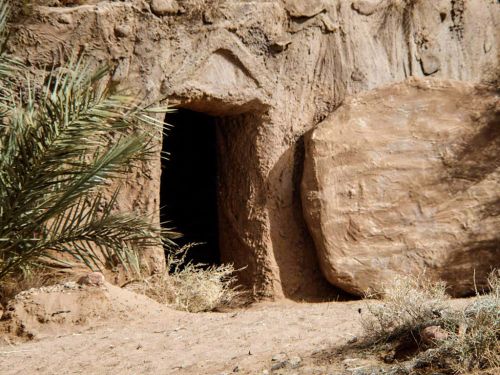
The first day of the week cometh Mary Magdalene early, when it was yet dark, unto the sepulchre, and seeth the stone taken away from the sepulchre. (John 20:1)

The unbelieving Pharisees sought a sign from Jesus proving His credentials. “But he answered and said unto them, An evil and adulterous generation seeketh after a sign; and there shall no sign be given to it, but the sign of the prophet Jonas [Jonah]: For as Jonas was three days and three nights in the whale’s belly; so shall the Son of man be three days and three nights in the heart of the earth” (Matthew 12:39-40).

Most of us know the historical account of Jonah the rebellious prophet of God who ran in the opposite direction of where God had sent him. God has a heart for the lost. The Bible tells us that “The Lord is not slack concerning his promise, as some men count slackness; but is longsuffering to us-ward, not willing that any should perish, but that all should come to repentance” (2 Peter 3:9, emphasis mine). So, God commanded Jonah to go preach to the wicked Assyrians, the mortal enemies of Israel, in Nineveh. These were mean people that tortured and abused their victims harshly. All the neighboring nations feared and hated them, and Israel was next on their menu. Jonah wanted nothing to do with them, and he especially did not want God to bless them in any way. So, rather than obey God’s command, Jonah boarded a ship bound for Spain (Tarshish).

You know the story. God sent a storm that put the ship in danger. Jonah confessed of his rebellion to the crew and they tossed him overboard to appease the Lord, quiet the storm, and calm the sea. The second chapter of Jonah describes the “sign” to which Jesus referred.

God prepared a great fish to swallow up Jonah. Much ink has been spilt in attempt to identify the creature that swallowed Jonah. Some think it could have been something like a whale shark; they certainly are large enough to swallow a man whole. Others propose it was a whale, but a whale is not a “fish” and the Hebrew uses another word for whale, tannı̂yn, which means “sea monster,” or any large sea animal like a dragon or sea serpent. But the Hebrew word used, dâg, means “fish.” If the scholars would just listen to me I can easily resolve the question. The “fish” resembled nothing that we might recognize because the Bible says that God “prepared” this fish specifically for this occasion. The Hebrew word “prepared” is mânâh and it also means “to weigh out; to allot; to appoint.” God designed this fish for an appointment with Jonah.

It is difficult to imagine any man surviving the ordeal of being in the belly of a fish for three days. It seems from Jonah’s prayer that perhaps he actually died. He says, “I cried by reason of mine affliction unto the LORD, and he heard me; out of the belly of hell cried I, and thou heardest my voice” (Jonah 2:2). The Hebrew word translated “hell” here is she’ôl, the “abode of the dead.” It was understood to be the place where the spirits of the dead resided. The Greek word for the same place is hadēs. Jesus referred to this place when He spoke of the rich man who died and went to “hell” (hadēs).[1] Jesus said that when the rich man arrived in this place, “…he lift up his eyes, being in torments, and seeth Abraham afar off, and Lazarus in his bosom. And he cried and said, Father Abraham, have mercy on me, and send Lazarus, that he may dip the tip of his finger in water, and cool my tongue; for I am tormented in this flame” (Luke 16:23-24). Obviously, the man, though he was physically dead, retained all of his senses.

Likewise, Jonah describes his experience in Sheol. He says, “For thou hadst cast me into the deep, in the midst of the seas; and the floods compassed me about: all thy billows and thy waves passed over me. Then I said, I am cast out of thy sight; yet I will look again toward thy holy temple” (Jonah 2:3-4, emphasis mine). Jonah sensed the separation, yet he maintained the hope that one day he would see the “holy temple.”

Jonah prophesied in Israel, the Northern Kingdom, which had no temple. The only Temple resided in Jerusalem, so it seems that Jonah referred to the Holy Temple in heaven of which the earthly Temple was modeled.

Jonah also hints of his death when he says, “I went down to the bottoms of the mountains; the earth with her bars was about me for ever: yet hast thou brought up my life from corruption, O LORD my God” (Jonah 2:6, emphasis mine). The word “corruption” (Hebrew: shachath) can also be translated “destruction.” Jonah continues, “When my soul fainted within me I remembered the LORD: and my prayer came in unto thee, into thine holy temple” (Jonah 2:7). Again, Jonah’s prayer ascended to God’s Holy Temple in heaven.

Jonah died in the belly of the fish, and God revived him after three days and three nights.[2] In like manner, Jesus said He would be in the heart of the earth three days and three nights and rise again.

Jesus died on the cross on Passover. He was our Passover Sacrifice.[3] His death paid the debt of our sins. They buried Him before sundown on Passover and rolled a heavy stone over His tomb. Pilate sealed the tomb with his official seal and posted a Roman guard to watch and ensure that no one tampered with the sepulcher.[4] Then, after three days and three nights in the grave, like Jonah, God raised Jesus from the grave on the first day of the week. Jonah died again eventually, but Jesus lives on. Forty days following His resurrection, Jesus ascended into heaven[5] where He awaits His return to this earth.

The “sign of Jonah” was for the unbelieving Pharisees, who, after His resurrection, continued in their unbelief. The validity of the sign continues even unto our generation. Christ has risen. The tomb is empty. Doubters continue in their rejection hoping that one day someone will find His bones and say, “Here He lies!” But they fail. One day, maybe soon, they will gaze into the sky and behold Him in all His glory “this same Jesus, which is taken up from you into heaven, shall so come in like manner as ye have seen him go into heaven” (Acts 1:11).

Reader, if you are not prepared for that day, please see my page “Securing Eternal Life” before it is too late for you. And as Jesus said, “be not faithless, but believing” (John 20:27).

Notes:


[1]  Luke 16:19-31

[2]  Jonah 1:17

[3]  1 Corinthians 5:7

[4]  Matthew 27:62-66

[5]  Acts 1:3

Comments Off on The First Day of the Week

Filed under Apologetics, Christianity, Easter, Heaven, Hell, Resurrection, Salvation, Second Coming of Christ, Theology

A King In Israel

Rejoice greatly, O daughter of Zion; shout, O daughter of Jerusalem: behold, thy King cometh unto thee: he is just, and having salvation; lowly, and riding upon an ass, and upon a colt the foal of an ass. (Zechariah 9:9)

In my last article, I recounted the early history of Israel.[1] The period of the Judges lasted between 450 and 500 years (my estimation). The Book of Judges ends with this sad assessment: “In those days there was no king in Israel: every man did that which was right in his own eyes” (Judges 21:25). Israel finally got a king to rule over them. By popular consent, God allowed them to choose a king for themselves, Saul, a Benjamite.[2] But Saul was not the king God had in mind for them. From the time Israel entered Egypt and prior to their enslavement, God had already determined that the king would come from the tribe of Judah.[3] This king’s reign would be eternal. “The sceptre shall not depart from Judah, nor a lawgiver from between his feet, until Shiloh come; and unto him shall the gathering of the people be” (Genesis 49:10).

Saul was a miserable failure as king. Only two years into his reign, he disobeyed God by doing things his own way rather than waiting on God’s direction. God took the kingdom away from Saul, “For rebellion is as the sin of witchcraft, and stubbornness is as iniquity and idolatry. Because thou hast rejected the word of the LORD, he hath also rejected thee from being king” (1 Samuel 15:23).

Not long after, Samuel the prophet anointed God’s choice for Israel’s king, a young shepherd boy, a young man of the tribe of Judah and resident of Bethlehem, David, the son of Jesse.[4] During David’s reign, Israel followed the Lord and the Lord helped David conquer most of the land God had promised to Israel. After 40 years on the throne, David’s son Solomon became king, and the spiritual state of the nation slowly started to degenerate again, in part due to the king’s own practice of marrying pagan women and bringing their pagan worship into the land and even participating in their practices himself.[5] It is said of Solomon that he was the wisest man alive, but his behavior brings that into question. However, toward the end of his life, he finally did wise up. He wrote, “Vanity of vanities, saith the preacher; all is vanity … Let us hear the conclusion of the whole matter: Fear God, and keep his commandments: for this is the whole duty of man. For God shall bring every work into judgment, with every secret thing, whether it be good, or whether it be evil” (Ecclesiastes 12:8, 13-14).

Regardless, the damage was done. The leaven already permeated the loaf. Solomon’s son, Rehoboam, rejected the advice of his old advisors, listening rather to his young cronies. This ended up dividing the kingdom with ten tribes to the north and only Judah and Benjamin remaining of David’s kingdom.[6] Both kingdoms soon fell into idolatry once more, Israel (the Northern Kingdom) first followed by Judah (the Southern Kingdom) later. Israel was conquered by the Assyrians and displaced from the land never to return. Judah fell to the Babylonians and was carried away to Babylonian captivity. After 70 years in Babylonian captivity, the Medo-Persian Empire under Cyrus allowed the Jews to return to their land to rebuild Jerusalem and their Temple.[7] However, Israel never really became an independent state again. They were always under some other nation’s thumb. For over 400 years, they longed for their promised Messiah of whom Daniel foretold, “Know therefore and understand, that from the going forth of the commandment to restore and to build Jerusalem unto the Messiah the Prince shall be seven weeks, and threescore and two weeks: the street shall be built again, and the wall, even in troublous times” (Daniel 9:25). The day would come when their king would come and throw off the oppressive yoke of Gentile nations and make Israel great again, as in the days of David and Solomon.

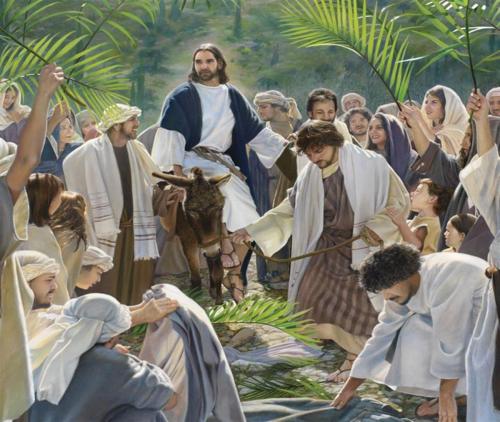
After 400 years, nothing had changed. Then one Sunday morning their long-awaited king made His entrance. However, they did not recognize Him. They were expecting a strong military general that would overthrow the Romans and set up a kingdom equal to or greater than that of Solomon. Perhaps the expected king would expand their borders to include all the lands God had promised.[8] But rather than ride in on a white stallion with a flashing sword and dazzling armor, Jesus rode in on an unbroken donkey’s colt.[9] Rather than the pomp and pageantry of a conqueror’s parade, Jesus was greeted by the cheers of the poor and downcast. “And the multitudes that went before, and that followed, cried, saying, Hosanna to the Son of David: Blessed is he that cometh in the name of the Lord; Hosanna in the highest” (Matthew 21:9); and “Saying, Blessed be the King that cometh in the name of the Lord: peace in heaven, and glory in the highest” (Luke 19:38). The religious leaders, those who should have recognized His presentation, considering the specificity of Daniel’s prophecy,[10] despised the thought of this lowly Galilean being king and rejected His claims to deity. “The Pharisees therefore said among themselves, Perceive ye how ye prevail nothing? behold, the world is gone after him” (John 12:19). “And some of the Pharisees from among the multitude said unto him, Master, rebuke thy disciples” (Luke 19:39). Had these kept silent, Jesus answered them, the very rocks would cry out in proclamation of His kingship.[11]

A few days later, their rejection would be complete as Pilate presented Jesus to them, “Behold your king!”[12] “But they cried out, Away with him, away with him, crucify him. Pilate saith unto them, Shall I crucify your King? The chief priests answered, We have no king but Caesar” (John 19:15, emphasis mine). Rejecting their true King, they preferred rather to remain under the thumb of their oppressors.

This came as no surprise to Jesus. Earlier He confided in His disciples, “Now is my soul troubled; and what shall I say? Father, save me from this hour: but for this cause came I unto this hour” (John 12:27, emphasis mine). His kingdom, at this time, was not an earthly one. His kingdom was not for the Jews alone, but “that whosoever believeth in him should not perish, but have everlasting life” (John 3:16). Before going to the cross, He made this promise. “Let not your heart be troubled: ye believe in God, believe also in me. In my Father’s house are many mansions: if it were not so, I would have told you. I go to prepare a place for you. And if I go and prepare a place for you, I will come again, and receive you unto myself; that where I am, there ye may be also” (John 14:1-3, emphasis mine).

His disciples were naturally curious as to when that time would be. “And as he sat upon the mount of Olives, the disciples came unto him privately, saying, Tell us, when shall these things be? and what shall be the sign of thy coming, and of the end of the world?” (Matthew 24:3, emphasis mine). Jesus gave many indicators of His return at “the end of the world,” but He cautioned, “All these are the beginning of sorrows” (Matthew 24:8). Jesus spoke of wars and rumors of wars, earthquakes in different places, famines, and pestilences.

All these things are taking place today. The naysayers point out that these things have occurred throughout history. Peter foresaw such “scoffers.” “Knowing this first, that there shall come in the last days scoffers, walking after their own lusts, And saying, Where is the promise of his coming? for since the fathers fell asleep, all things continue as they were from the beginning of the creation” (2 Peter 3:3-4). The truth is that these things have never occurred with such frequency and with such unity. The convergence of all of these signs is “unprecedented” (to borrow a term in frequent use these days). Consider the pestilence the world experiences today, the Wuhan virus. This bug has brought the world to a standstill and threatens not only the lives but the livelihoods of millions of people. The world’s economies are on the verge of collapse, and this is but one of the signs of which Jesus spoke.

The time is near. Soon there will be a King in Israel and His Kingdom is forever. Jesus will reign on earth for 1000 years.[13] The world seeks a one-world government ruled by fallible men. Jesus will bring a one-world government, “and he shall rule them with a rod of iron …” (Revelation 19:15). After that, in a recreated heaven and earth, He will reign forever in the “New Jerusalem.”[14]

Are you ready to live with King Jesus in His eternal kingdom? If you are not sure of your eternal destiny, read my page on “Securing Eternal Life.”

Notes:


[1]  “No King In Israel” – https://erniecarrasco.com/2020/04/01/no-king-in-israel/

[2]  1 Samuel 10

[3]  Genesis 49:8-12

[4]  1 Samuel 16

[5]  1 Kings 11:1-8

[6]  1 Kings 12

[7]  2 Chronicles 36:22-23

[8]  Genesis 15:18-21; Exodus 6:4; Numbers 34:1-15; Joshua 1:4

[9]  Mark 11:2

[10]  Daniel 9:24-26

[11]  Luke 19:40

[12]  John 19:14

[13]  Revelation 20

[14]  Revelation 21

Comments Off on A King In Israel

Filed under Christianity, Current Events, Easter, End Times, Gospel, Heaven, Holidays, Religion, Salvation, Second Coming of Christ, Theology

I’m Scared

Yea, though I walk through the valley of the shadow of death, I will fear no evil: for thou art with me; thy rod and thy staff they comfort me. (Psalm 23:4)

I went in search of toilet paper and found all the store shelves empty. I made several trips to different stores and came back empty-handed. The brilliant idea came to me to check Amazon.Com for toilet paper. Amazon.Com has everything, but they too were all out of toilet paper. Throughout my ventures, I found shelves empty of drinking water, disinfectants, hamburger meat, chicken, pork, eggs and other “essentials.” What I found were well-stocked shelves of snacks of all kinds, beer, wine, and soft drinks. In their panic, people are leaving all the non-essentials and hoarding the absolute necessities in preparation for Armageddon!  But that’s not what scares me.

In my visit to my doctors’ offices, I am asked whether I am experiencing fever, aches, and pains, or any kind of flu-like symptoms. I received a message from one of my doctors (I expect to get more) telling me to stay away if I have any flu-like symptoms, have traveled to a Coronavirus[1]-infected country, or have knowingly come in contact with someone who has. But that’s not what scares me.

Everywhere draconian measures have been put in place limiting gatherings of 10 or more people. The government advises citizens to remain in their homes except for essential necessities or health emergencies. Nursing homes are preventing families from visiting residents for fear of spreading infection. But that’s not what scares me.

People everywhere are losing their source of income because their places of employment are closing down. People cannot go out to eat in restaurants anymore because of the aforementioned edicts against gathering in public places. We cannot go to the movies or to the mall. All movement has been restricted. That said, airlines are losing money because no one is traveling and also because most passenger airplanes hold more than ten people. All of this impacts the economy. When people cannot work, they cannot earn money. If they cannot earn money, they cannot buy the things they need, much less the things they want. One thing affects another. It all ties together, and we see the markets plummet. But that’s not what scares me.

I am a student of end-times prophecy. I am not an expert, but I follow many who are. I am attuned not only to the Covid-19-saturated news in our country that largely ignores the rest of the world. I like to pay attention to the happenings in the Middle East, Israel, and the end-time players mentioned in the end-times prophecies recorded in the Bible. The Gog-Magog invasion of Israel mentioned in Ezekiel 38-39 is being staged. The desolation of Damascus mentioned in Isaiah 17:1 is almost complete. The signs Jesus gave in Matthew 24 – wars and rumors of wars, nation against nation (ethnic group against ethnic group), pestilences (like the Wuhan virus), famines, earthquakes in diverse places (we just had one in Utah), etc., are beginning to take place. As He said, “All these are [just] the beginning of sorrows” (Matthew 24:8). “Men’s hearts failing them for fear, and for looking after those things which are coming on the earth: for the powers of heaven shall be shaken” (Luke 21:26). Of course, Jesus’ prediction referred to the “Great Tribulation,”[2] but we see the precursors taking place right now. But that’s not what scares me.

I’m scared for my sons, my daughters-in-law, and my grandchildren who will not listen to my pleas that they turn to Jesus. When Jesus calls me home, they will experience the awful time of Tribulation. If the Tribulation does not change their minds and their hearts, then they face an eternity in hell. They do not like to hear that, and that scares me.

I know many people with whom I have shared the Gospel and they turned a deaf ear to my words. There are many who I do not know that reject the Gospel whether from a loving friend or a preacher on the radio. That scares me.

The end draws near. Jesus may call His church home at any moment. We see the previews of the coming Tribulation, so we know the time is close. I’m scared for all those I love and even those I don’t know who don’t know Christ. What they will face will be far worse than what we are experiencing now. I’m scared for them.

Reader, if you do not know Jesus as your personal Lord and Savior, you need to meet Him now, before you meet Him later. The Bible says that in the end every knee shall bow and every tongue shall confess that Jesus Christ is Lord,[3] but then it will be too late. Invite Jesus to be your Lord and Savior right now. Learn how at “Securing Eternal Life.”

Notes:


[1]  “Wuhan Bug” — https://erniecarrasco.com/2020/03/15/wuhan-bug/

[2]  Matthew 24:21

[3]  Philippians 2:10

4 Comments

Filed under Christianity, Current Events, End Times, Evangelism, Gospel, Hell, Random Musings, Salvation, Second Coming of Christ

Suffering

We are troubled on every side, yet not distressed; we are perplexed, but not in despair; Persecuted, but not forsaken; cast down, but not destroyed; (2 Corinthians 4:8-9)

The Sunday school lesson I taught this morning, based in 2 Corinthians 4, asked, “How can I honor God in my suffering?” Who likes to suffer? Who wants to suffer? The title of the lesson congers up all kinds of images of suffering. We might suffer due to a loss of work. We could suffer from loss of health. We can suffer from the loss of a loved one or the breakup of a marriage. We suffer when our children go astray.

Life necessarily includes a certain amount of suffering, and while the manner in which we handle our suffering can produce a testimony that honors God, that is not exactly what Paul had in mind when he penned this passage to the church in Corinth. Paul sets himself as an example of suffering, but not in the way we might think. Let’s examine the passage more closely.

(2 Corinthians 4:7)  But we have this treasure in earthen vessels, that the excellency of the power may be of God, and not of us.

What treasure to which Paul refers? It is a mystery veiled in the Old Testament to which the Jews were and still are blinded (2 Corinthians 3:14-18). At the beginning of Chapter 4, Paul explains that he has the task of unveiling the mystery (2 Corinthians 4:1) to the Jew first and also to the Gentiles (Romans 1:16). “But if our gospel be hid, it is hid to them that are lost. In whom the god of this world hath blinded the minds of them which believe not” (2 Corinthians 4:3-4). The “lost” cannot understand the Gospel because it is “spiritually discerned” (1 Corinthians 2:14). Of this treasure, Paul says,  “For we preach not ourselves, but Christ Jesus the Lord; and ourselves your servants for Jesus’ sake” (2 Corinthians 4:5). He is compelled to preach, “For God, … hath shined in our hearts, to give the light of the knowledge of the glory of God in the face [πρόσωπον – prosopon — in the presence] of Jesus Christ” (2 Corinthians 4:6).

This treasure is kept in “earthen vessels.” By this Paul is referring to his physical body. “And the LORD God formed man of the dust of the ground, and breathed into his nostrils the breath of life; and man became a living soul” (Genesis 2:7). The problem with “earthen vessels” – clay pots – is that they are fragile and easily broken. Consider the Fall. “And when the woman saw that the tree was good for food, and that it was pleasant to the eyes, and a tree to be desired to make one wise, she took of the fruit thereof, and did eat, and gave also unto her husband with her; and he did eat. And the eyes of them both were opened, and they knew that they were naked; and they sewed fig leaves together, and made themselves aprons” (Genesis 3:6-7). Man sinned resulting in physical and spiritual death and a curse upon God’s perfect creation.

Why place such a great treasure in such weak containers? When submitted to God, these fragile clay pots make is so “that the excellency of the power may be of God.” In that way, God receives the glory “and not of us.” Having this treasure hidden within comes at a cost. Paul, referring to himself as “we,” explains.

(2 Corinthians 4:8-9)  We are troubled on every side, yet not distressed; we are perplexed, but not in despair; Persecuted, but not forsaken; cast down, but not destroyed;

These two verses demonstrate that Paul suffered for the sake of the Gospel of Jesus Christ. A close examination of some key words makes this clear. The word translated “troubled” (θλίβω — thlibo) means to be “pressed, squeezed” – as a grape in a wine press. Yet, Paul is not “distressed” (στενοχωρέω — stenochoreo) meaning “crushed.” He is “perplexed” (ἀπορέω — aporeo) seeming “to have no way out;” “to be at a loss;” “to be without resources,” but not in “despair” (ἐξαπορέομαι — exaporeomai), that is, “to be utterly at a loss; or utterly destitute.” As long as God grants us breath, we can take comfort knowing that God will never abandon us. The psalmist says, “I have been young, and now am old; yet have I not seen the righteous forsaken, nor his seed begging bread” (Psalm 37:25).

Paul states that he has been “persecuted” (διώκω – dioko), that is. “made to run or flee,” but not “forsaken” (ἐγκαταλείπω — egkataleipo), which means “to leave behind, abandon, desert.” He has been “cast down” (καταβάλλω — kataballo) – “to throw to the ground, prostate.” The implication is to be put down hard with violence, but he’s not been “destroyed” (ἀπόλλυμι — apollumi), that is, “to put out of the way entirely, abolish, put an end to ruin; to render useless; to kill.”

(2 Corinthians 4:10-11)  Always bearing about in the body the dying of the Lord Jesus, that the life also of Jesus might be made manifest in our body. For we which live are alway delivered unto death for Jesus’ sake, that the life also of Jesus might be made manifest in our mortal flesh.

Paul bears the Gospel (the treasure) in his body – his “earthen vessel.” It is the Gospel is the message of the death and resurrection of Jesus Christ outlined in 1 Corinthians 15:1-4. The end to which he bears the Gospel is “that the life also of Jesus might be made manifest in our [his] body.” The word “manifest” (φανερόω) means “to render apparent;” “to make actual and visible, i.e., realized;” also “to make visible or known what has been hidden or unknown” That “mystery” hidden from the Jews – God’s salvation through Jesus Christ – reveals itself in Paul’s life as it should in the life of every true believer.

The words “live” and “life” are related. The Greek word translated “live” (ζάω – zaō , verb) means “to have true life and worthy of the name;” the “essence” of living. Like was the Greek word translated “life” (ζωή – zōē, noun) means “the absolute fullness of life, both essential and ethical, which belongs to God.” Jesus said, “… I am come that they might have life, and that they might have it more abundantly.” (John 10:10)

There is another Greek word translated “life” that expresses life to a lesser degree. The Greek word βίος means “the present state of existence,” biological life. This is just mere existence. Jesus spoke of this kind of life in His “Parable of the Sower” also known as the “Parable of the Soils” (more appropriately). Comparing the soil to people, Jesus explained,  “And that which fell among thorns are they, which, when they have heard, go forth, and are choked with cares and riches and pleasures of this life, and bring no fruit to perfection” (Luke 8:14). These people did not have ζωή (zōē), but Paul did.

Still, he says that he is “alway delivered unto death.” The “death” to which he speaks is not the cessation of physical existence. He referred to death to self (Romans 6:4-5; 12:1-2; Galatians 2:20; Colossians 3:3), death to sin (Romans 6:1-2; 8:10; 1 Peter 2:24), and death to the law (Galatians 2:19). Paul summed up his attitude toward his “suffering” like this, “For to me to live is Christ, and to die is gain” (Philippians 1:21). Paul dies “for Jesus’ sake.”

Verses 10 and 11 repeat the same ending phrase: “that the life also of Jesus might be made manifest in our body/mortal flesh” We “suffer” so that the “life of Jesus” in us may be apparent to the lost world around us.

(2 Corinthians 4:12-13)  So then death worketh in us, but life in you. We having the same spirit of faith, according as it is written, I believed, and therefore have I spoken; we also believe, and therefore speak (quoting Psalm 116:10).

By putting his life to “death,” Paul helps others to find “life.” One commentary put it like this: “The “death” of Christ manifested in the continual “perishing of our outward man” (2Co_4:16), works peculiarly in us, and is the means of working spiritual “life” in you. The life whereof we witness in our bodily dying, extends beyond ourselves, and is brought by our very dying to you.” (Jamieson, Fausset and Brown Commentary)

(2 Corinthians 4:14)  Knowing that he which raised up the Lord Jesus shall raise up us also by Jesus, and shall present us with you.

The One who raised up Jesus will do the same for us. Death is not the end. We have a hope beyond. We are joined to the “living” Christ. Paul is dead to the things of this world because he is joined to Christ. We should follow his example!

(2 Corinthians 4:15)  For all things are for your sakes, that the abundant grace might through the thanksgiving of many redound to the glory of God.

Paul’s suffering is for the sake of the church; it is for their benefit – “for your sakes.” The Greek word translated “abundant” (πλεονάζω – pleonazō) means “to do, make or be more, that is, increase.” The word “grace” (χάρις – charis) is “that which affords joy, pleasure, delight, sweetness, charm, loveliness: grace of speech.” The result of this “abundant grace might through the thanksgiving of many “redound” (περισσεύω – perisseuō), that is, “to superabound (in quantity or quality), be in excess, be superfluous” “to the glory of God.”

(2 Corinthians 4:16)  For which cause we faint not; but though our outward man perish, yet the inward man is renewed day by day.

Through his “suffering,” Paul presses on – “we faint not.” Paul expresses this sentiment when he writes to the church in Philippi. “Brethren, I count not myself to have apprehended: but this one thing I do, forgetting those things which are behind, and reaching forth unto those things which are before, I press toward the mark for the prize of the high calling of God in Christ Jesus” (Philippians 3:13-14). Not dissuaded by his circumstances, Paul notes that “though the outward man, [i.e., the physical body] perish, the inward man [i.e., the spirit] is renewed” (through the power of Jesus Christ in us).

(2 Corinthians 4:17)  For our light affliction, which is but for a moment, worketh for us a far more exceeding and eternal weight of glory;

Our suffering is small compared to our eternal reward. Our time on earth is but a nanosecond in the light of eternity. The “suffering” our Lord asks us to bear is but a “light affliction.” Jesus said, “Take my yoke upon you, and learn of me; for I am meek and lowly in heart: and ye shall find rest unto your souls. For my yoke is easy, and my burden is light” (Matthew 11:29-30).

(2 Corinthians 4:18)  While we look not at the things which are seen, but at the things which are not seen: for the things which are seen are temporal; but the things which are not seen are eternal.

Everything in this life is temporal. What lies beyond in the unseen future is eternal. The writer to the Hebrews reminds is that following the Lord requires faith. “Now faith is the substance of things hoped for, the evidence of things not seen” (Hebrews 11:1).

Paul’s example of “suffering” had more to do with self-denial for the furtherance of the Gospel. Indeed, Paul suffered physical and mental anguish and material deprivation. His list of sufferings was long.

Are they ministers of Christ? (I speak as a fool) I am more; in labours more abundant, in stripes above measure, in prisons more frequent, in deaths oft. Of the Jews five times received I forty stripes save one. Thrice was I beaten with rods, once was I stoned, thrice I suffered shipwreck, a night and a day I have been in the deep; In journeyings often, in perils of waters, in perils of robbers, in perils by mine own countrymen, in perils by the heathen, in perils in the city, in perils in the wilderness, in perils in the sea, in perils among false brethren; In weariness and painfulness, in watchings often, in hunger and thirst, in fastings often, in cold and nakedness. (2 Corinthians 11:23-27, emphasis mine).

After all of this, he concludes,

I know both how to be abased, and I know how to abound: every where and in all things I am instructed both to be full and to be hungry, both to abound and to suffer need. I can do all things through Christ which strengtheneth me. (Philippians 4:12-13)

The answer to the question, “How can I honor God in my suffering?” is to die to self, live for God in all that we do, and trust Him to supply all your needs – especially when it comes to sharing the Gospel so that others may live. “But seek ye first the kingdom of God, and his righteousness; and all these things shall be added unto you” (Matthew 6:33).

Comments Off on Suffering

Filed under Apologetics, Bible, Christianity, Gospel, Heaven, Theology

A Thousand-Year Day

But, beloved, be not ignorant of this one thing, that one day is with the Lord as a thousand years, and a thousand years as one day. (2 Peter 3:8)

The retirement lifestyle is a new experience for me. So far, it feels like an extra-long vacation. I’m enjoying doing things in the middle of the week and in the middle of the day that were out of the question when I was tied to a nine-to-five job. I am also enjoying the absence of fighting rush-hour traffic.

On Friday of this week, I experienced an outing to the ICR Discovery Center for Science and Earth History, my former employer, with a group of senior adults from our church. Of course, I know the place inside and out, but it felt different to visit as a “guest.” Our visit was too short (only two and a half hours). After that, we boarded our bus bound for lunch at El Fenix, the oldest Tex-Mex restaurant chain in the Dallas-Fort Worth Metroplex. Our driver took us to the one in Irving, Texas, not far from the Discovery Center.

In the course of conversation over lunch, a lady sitting at the table across from me asked me how I would respond to someone who thinks the Genesis creation account is a myth and argues for an old earth based on 2 Peter 3:8 (our verse above). Of course, attempting to change someone’s mind who is convinced that the miracle accounts in the Bible are myths will take some doing. Their main problem is that they have a very small view of God. They usually also have an overinflated view of man. However, their support for long ages based on 2 Peter 3:8 can be easily debunked.

Many use this verse to argue for long ages in the Genesis creation account. They wrongly interpret 2 Peter 3:8 to say, “one day is with the Lord a thousand years, and a thousand years is one day.” The Day-Age Theory[1] uses this interpretation to argue that the days of creation were 1000 years each making the creation event last 6000 years. Giving credit where credit is due, at least they are not arguing for millions or billions of years for creation. By their reckoning, Creation is about 12,000 years old. However, that raises the question; why does God need that much time to create? Furthermore, the purpose of the Day-Age compromise is to allow for evolution to take place, which brings up another question. Evolution requires death and suffering. How then can death be the penalty for sin[2] if death had taken place for thousands of years before the fall of man? And, how could God declare His creation “very good”[3] when He calls death “the enemy”?[4] Some concede that God used evolution to create. This raises yet another question. Why would God need to “experiment” on His creation in order to improve on it over time? Is He not all-knowing and all-powerful? Can God not simply speak things into being as described in the Genesis account of creation? The notion that God used evolution to create serves only to undermine faith in the power of God!

The resolution to the problem of misinterpreting 2 Peter 3:18 comes down to one word – “as.” Peter employs simile to describe the infinite nature of God. God created time; therefore, He is not bound by time. “Of old hast thou laid the foundation of the earth: and the heavens are the work of thy hands…But thou art the same, and thy years shall have no end” (Psalm 102:25, 27). “For a thousand years in thy sight are but as yesterday when it is past, and as a watch in the night” (Psalm 90:4). What Peter is saying is that, to God, one day is like a thousand years and a thousand years is like a day. Peter is not attempting to define time for God, but rather he is expressing the timeless nature of God. Therefore, attempting to define the days of creation as 1000 years each based on 2 Peter 3:18, misrepresents both Peter’s message and the Genesis account of creation.

However, without being dogmatic, a parallel could be drawn between 2 Peter 3:18, the days of creation, and historical time. God created in six 24-hour days and rested on the seventh. According to biblical chronology, the earth (all of creation) is about 6000 years old, and we look forward to a final, seventh, 1000-year of rest with Christ’s reign over all the earth.

A visitor to the Discovery Center showed me something in the Prophet Hosea that I had missed although I had read that passage many times. It reads as follows. “I will go and return to my place, till they acknowledge their offence, and seek my face: in their affliction they will seek me early. Come [Israel speaking now], and let us return unto the LORD: for he hath torn, and he will heal us; he hath smitten, and he will bind us up. After two days will he revive us: in the third day he will raise us up, and we shall live in his sight” (Hosea 5:15-6:2, emphasis mine).[5]

In the previous verse, the Lord (Jesus) says[6] that He will destroy Ephraim [the Northern Kingdom, i.e., Israel] and Judah. Then He says that He will return to His place (heaven) until they acknowledge their offence (i.e., the rejection of their Messiah) and seek His face. For over 2000 years, the Jews were scattered all over the earth until recent times (1948), but they, for the most part, have failed to seek His face – they still reject Jesus as their Messiah. However, they will return to Him in the near future. Then in Verse 2 of Chapter 6, they (the Jews) say, “After two days he will revive us: in the third day he will raise us up…”

My friend, referring to 2 Peter 3:18, pointed out that Jesus was crucified around A.D. 30, which means that the year 2030 will be 2000 years – two days.  On the third day (1000 years), Jesus will restore Israel. Although we cannot be dogmatic about such things, my friend’s reasoning is sound and his conclusion logical. If his assessment proves correct, that means the seven-year Tribulation could begin in 2023. The Rapture of the Church can take place anytime between now and then. Again, we must be careful not to be dogmatic about these things, but as Christians, the Word instructs us that the return of the Bridegroom for His Bride is imminent[7] and we must be ready at all times, “and so much the more, as ye see the day approaching” (Hebrews 10:25).

Are you ready? If you are unsure, please read my page on “Securing Eternal Life.”

Notes:


[1]  “Age of the Earth” – https://erniecarrasco.com/2018/10/14/age-of-the-earth-2/

[2]  Genesis 2:16-17; Genesis 3

[3]  Genesis 1:31

[4]  1 Corinthians 15:26

[5]  This quotation spans two chapters. The reader must keep in mind that the original text did not have chapter and verse divisions.  The first English Bible to include chapter and verse divisions was the 1560 Geneva Bible.

[6]  Hosea 5:14

[7]  “Imminent” – https://erniecarrasco.com/2020/01/12/imminent/

6 Comments

Filed under Apologetics, Christianity, Creation, End Times, Evolution, Origins, Second Coming of Christ, Theology