Tag Archives: Christ

I Know Whom I Have Believed

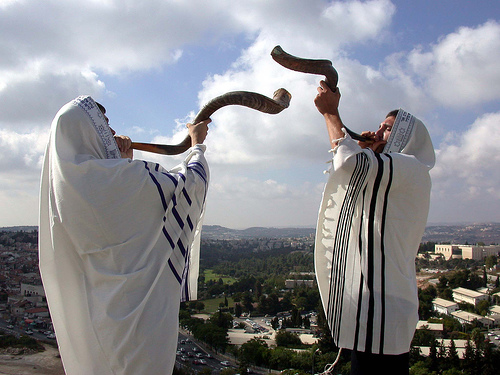
Trumpets

For yet a little while, and the wicked shall not be: yea, thou shalt diligently consider his place, and it shall not be. (Psalm 37:10)

These are exciting times in which we live. The world’s attention is focused to the time around mid-September.  End-times Bible prophets point to the Jewish Fall Feasts (more accurately, the Feasts of the Lord), and note that this year’s feasts are more significant than any others in the past. Jonathan Cahn, author of The Harbinger, recently released his latest book, The Mystery of the Shamitah, where he meticulously points out that in recent US history, Shamitahs have resulted in economic collapse demonstrated by huge drops in the stock market.

The Shamitah is the seven-year cycle assigned by God (Leviticus 25:4) where the Jews were required to leave the land fallow for the entire year to give it a rest – a Sabbath for the land. The Jews failed to keep the Shamitahs for 490 years (7 years x 70 Shamitahs) resulting in their 70 year Babylonian captivity (2 Chronicles 36:21; Jeremiah 25:11-12), one year for each Shamitah they failed to keep. You will need to get Cahn’s book for specific details, but in short, he suggests that God’s laws have transferred to the US because of how our nation was founded – “One nation under God.” Our nation is now reaping the consequences for our rejection of God. Cahn observes that every great economic collapse that America has experienced has fallen at the conclusion of a Shamitah year.

This year (2015) the Shamitah concludes on September 13. If the cycle keeps true to the pattern, the United States will experience a great economic collapse on September 14. This is due to the fact that September 13 falls on a Sunday when the stock market is closed. I noticed this past week that the stock market took a huge hit dropping over 500 points and making Wall Street very nervous. This seven-year cycle has not escaped many economists; however they cannot explain why this happens.

Another interesting event in September is that of Rosh Hashanah (the Feast of Trumpets), which signals the Jewish New Year. This event occurs on September 14. It also signals the beginning of the Jubilee year (Leviticus 25:8). After seven Shamitahs (7×7 or 49 years), the following year was special Shamitah called the Jubilee making a 50-year cycle. At this time all debts were cancelled, all properties were returned to the original owners and all accounts were zeroed. What is significant about this coming Jubilee is that it will be the 70th Jubilee since the law was given 3500 years ago. More could be said on this, but I recommend getting the book God’s Final Jubilee by Dan Goodwin.

These are significant events on God’s calendar (which, by the way, does not follow our solar calendar). But even in the secular world, this coming September seems to hold the promise of “something big” happening. As stated earlier, economists are aware of the 7-year cycle, and even though they do not understand it nor can they explain it, they predict an economic collapse this fall, sometime in September or October. The Pope plans to address Congress on September 24. This will be the first time a Pope has ever addressed the US Congress. This follows immediately after Yom Kippur (the Day of Atonement). Sukkot (the Feast of Tabernacles or Booths) begins on Sunday just three days later.

What does this all mean? I do not know, but it is interesting that all these events are converging from the middle to the end of September. Perhaps this is the year that the Lord will call His bride home. That is my earnest hope at least, but I am not packing my bags and heading to the hills. Jesus gave us all our assignments before He left, and He said, “Occupy till I come” (Luke 19:13). Ever since the turn of the 21st century (perhaps even before that), every time this season rolls around, I start looking toward the eastern sky listening for the call of that last trumpet. So far, I have been disappointed, but not despondent. This is God’s plan, and He is in full control. I know that the call will not come until His time is right. Whenever that happens, I am ready!

One of my favorite hymns says:

     I know not why God’s wondrous grace

To me He hath made known,

Nor why, unworthy, Christ in love

Redeemed me for His own.

     I know not how this saving faith

To me He did impart,

Nor how believing in His Word

Wrought peace within my heart.

          I know not how the Spirit moves

Convicting men of sin,

Revealing Jesus thro’ the Word,

Creating faith in him.

     (I know not what of good or ill

May be reserved for me,

Of weary ways or golden days,

Before His face I see.)

     I know not when my Lord may come,

At night or noonday fair,

Nor if I walk the vale with Him,

Or meet Him in the air.

     Refrain:

But “I know Whom I have believed,

And am persuaded that He is able

To keep that which I’ve committed

Unto Him against that day.” [1] (2 Timothy 1:12)

I look forward to September 2015 in anticipation of our Lord’s return. If it doesn’t happen, that just means that we have more work to do. There is also the possibility that I may die before He returns. Either way, I will be with Him. As the last verse of the hymn says, “I know not when my Lord may come, at night or noonday fair, nor if I walk the vale with Him, or meet Him in the air.” The point is, I know in whom I have believed, and I am fully trusting in His sovereign will. How about you? Are you ready for His return?

Notes:


[1] Daniel W. Whittle, “I Know Whom I Have Believed,” Published 1883.
6 Comments

Filed under Current Events, End Times, Evangelism, Gospel, Heaven, Religion, Second Coming of Christ, Theology

Is Salem Jerusalem?

Melchizedek_Abraham

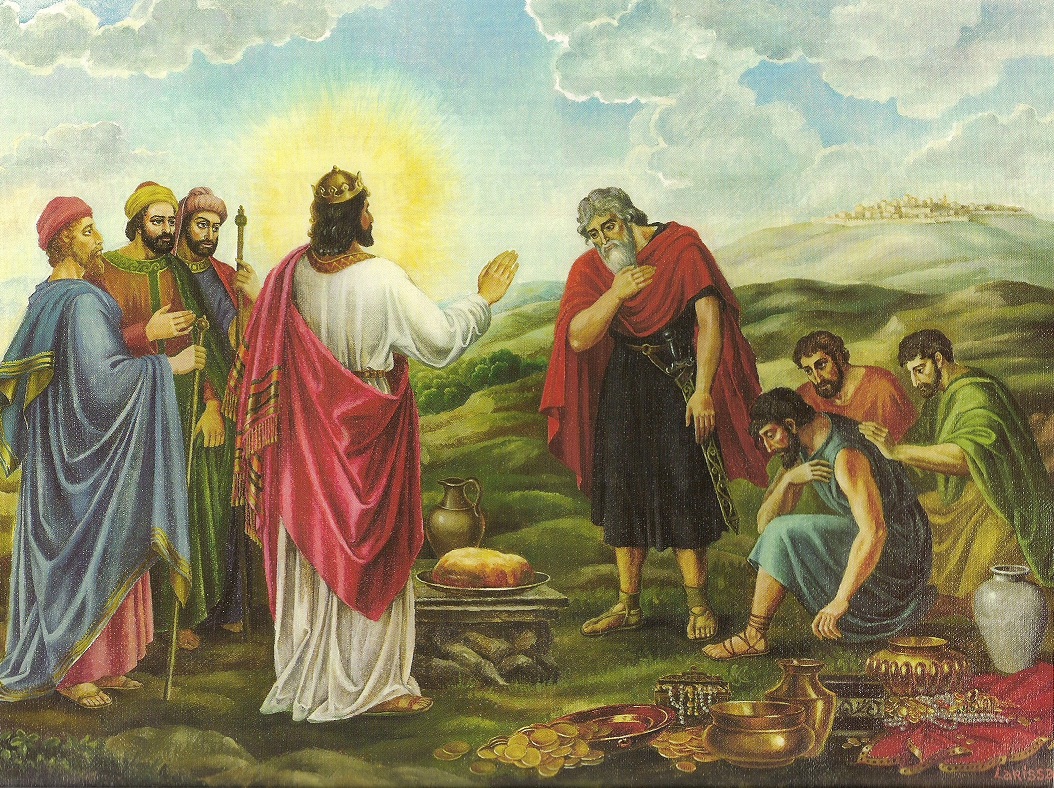
And Melchizedek king of Salem brought forth bread and wine: and he was the priest of the most high God. (Genesis 14:18)

Melchizedek is one of the most mysterious characters recorded in the Bible. He makes his debut in Genesis 14, and the totality of information provided about him is encapsulated within three brief verses (Genesis 14:18-20). It is interesting that the “Book of Beginnings,” which meticulously records all the “begets” of who’s who of important personages of early history, completely ignores the lineage of this apparently most significant person. The New Testament letter to the Hebrews does no better at identifying the parentage of this mysterious figure. Of Melchizedek, the writer of the book of Hebrew writes: “Without father, without mother, without descent, having neither beginning of days, nor end of life; but made like unto the Son of God; abideth a priest continually” (Hebrews 7:3, emphasis mine).

Some believe that Melchizedek was a real person, king of the city-state of Salem. However, Salem is only associated with Melchizedek in the Bible.[1],[2] Nowhere is it listed with the other cities in Canaan, and it is given no significance other than its association with Melchizedek. Some have suggested that Salem was the former name of Jerusalem. They attribute this to clay tablets found at the Tell el Amarna site, dated at 1400 B.C., identifying Urusalim as an early name for Jerusalem. They conclude that “Salem” is just an abbreviated form of Urusalim, and is therefore the same as Jerusalem.

I see several problems with that conclusion. First of all, the date of the Tell el Amarna tablets is about 800 years after Abraham’s encounter with Melchizedek. Israel’s entry into Canaan and the period of the Judges occurred around 1400 B.C. At that time, Jerusalem was known by that name (Jerusalem) and also by the name of Jebus.[3] The Bible identifies Jebus as the city of the Jebusites, and the Jebusites dwelt in the land at the time of Abraham (Genesis 15:18-21). It seems unlikely that the Holy Spirit would refer to the city of Melchizedek as Salem, if He was referring to Jebus (or Jerusalem), and if in fact, Jerusalem existed at that time.

Another problem arises when God commands Abraham to sacrifice Isaac (Genesis 22). God instructed Abraham, “And he said, Take now thy son, thine only son Isaac, whom thou lovest, and get thee into the land of Moriah; and offer him there for a burnt offering upon one of the mountains which I will tell thee of” (Genesis 22:2, emphasis mine). It is widely accepted by Jews, Christians and Muslims, that the place where Abraham offered up his son (Muslims say it was Ishmael) was on Mount Moriah, the place currently occupied by the Dome of the Rock in Jerusalem. If Salem were the same place as Jerusalem, why then did God not clearly say, “Go up to Salem and sacrifice Isaac there”? A close inspection of the text gives the impression that the place to where Abraham was directed was uninhabited.  Note that God directs Abraham to “one of the mountains which I will tell thee.” This was a private matter among God, Abraham and Isaac. It seems unlikely that God would direct Abraham to a population center.

Is Salem Jerusalem? I think not. Jebus, a.k.a. Jerusalem, probably did not exist during Abraham’s lifetime. This would be consistent with the dates of the archaeological finds. So, if Salem is not Jerusalem, then what happened to Melchizedek’s city-state? The validity of the question relies on whether Melchizedek was a flesh-and-blood human being, and whether Salem was a physical place.

I contend that Melchizedek was a Theophany – a preincarnate manifestation of the Lord Jesus Christ. I arrive at this conclusion from the description provided in Genesis 14:18-20 and Hebrews 7:1-4.  As noted earlier, he is described as having no parentage, no beginning, and no end. Only God claims those qualifications. Furthermore, the book of Hebrews notes that he blesses Abraham, and the greater always blesses the lesser. Finally, Abraham offers a tithe (a tenth) of the spoils to Melchizedek. Everywhere else in Scripture, tithes are always associated with service to God, never to men.

His name is more of a title. Melchizedek is a combination of two Hebrew words: melek (king) and tsedeq (righteousness). Combined they render “King of Righteousness” or “Righteous King.” And he is the King of Shalem (peace). His full title could then be rendered as “Righteous King of Peace.” Who does that sound like?

Salem is not Jerusalem. Salem is not a physical place. And Melchizedek is none other than the Lord Jesus Christ, our King of Peace.

Notes:


[1]  See: Genesis 14:18; Hebrews 7:1-2

[2]  Psalm 76:2 associates Salem with Zion – the dwelling place of God.

[3]  See: Judges 19:10-11; 1 Chronicles 11:4-5

2 Comments

Filed under Apologetics, Bible, Religion, Theology

The Rainbow

I do set my bow in the cloud, and it shall be for a token of a covenant between me and the earth.  (Genesis 9:13)

From the beginning of time Satan has attempted to pervert everything that God created and called “very good” (Genesis 1:31). A prime example is revealed in last week’s ruling by the Supreme Court of the United States that homosexual cohabitation should be regarded as “marriage” and protected as a legal right under the Constitution of the United States. Such a ruling stains the bounds of reason considering that the same protection finds no haven in the Constitution for heterosexual unions. The lack of understanding demonstrated by five out of the nine justices illuminates the depths of depravity to which our nation has declined. The court’s decision prompted exhibitions of jubilation from what used to be the White House (now bathed in the colors of the rainbow) down to the streets of America. Local news media fight to maintain objectivity in reporting the atrocity as the grins on news anchors’ faces betray their accord with the order.

Regardless of the decision handed down by these black-robed oligarchs, “marriage” was defined by God at Creation. “So God created man in his own image, in the image of God created he him; male and female created he them” (Genesis 1:27). Out of the side of man, God created the woman (Genesis 2:21) “And the rib, which the LORD God had taken from man, made he a woman, and brought her unto the man” (Genesis 2:22, emphasis mine). In doing so, God effectively performed the first marriage ceremony. Marriage is not a human institution, it is a Divine institution, so much so that the relationship between Christ and His church is described as a marriage (Matthew 22:2-14; John 3:29; Ephesians 5:23; Revelation 18:23; Revelation 19:7). So, aside from the lawlessness of this act by this Supreme Court, it is the height of arrogance for mere man to redefine what God has already established. But, that is nothing new!

So, what does this have to do with the rainbow, you might ask. The rainbow has been adopted by the sodomites as a symbol of their perverted cause. Like the devil, who I imagine is reveling in his presumed victory; they have taken a sign of God’s promise not to destroy the earth by water again, and have used it as a banner to flaunt the kind of perversion that brought about God’s wrath in the first place (Genesis 6:5; Genesis 19:1-9).  Franklin Graham, son of famed evangelist Billy Graham and founder of Samaritan’s Purse, said, “God is the one who gave the rainbow, and it was associated with His judgment. God sent a flood to wipe out the entire world because mankind had become so wicked and violent.”[1]

Note that God identifies the rainbow as His bow: “I do set my bow in the cloud” (Genesis 9:13, emphasis mine). Indeed, the rainbow in the Bible is always associated with the throne of God. The prophet Ezekiel’s description of God’s throne (Ezekiel 1) defies human explanation, but one of the features is the rainbow that surrounds the throne.

And above the firmament that was over their heads was the likeness of a throne, as the appearance of a sapphire stone: and upon the likeness of the throne was the likeness as the appearance of a man above upon it. And I saw as the colour of amber, as the appearance of fire round about within it, from the appearance of his loins even upward, and from the appearance of his loins even downward, I saw as it were the appearance of fire, and it had brightness round about. As the appearance of the bow that is in the cloud in the day of rain, so was the appearance of the brightness round about. This was the appearance of the likeness of the glory of the LORD. And when I saw it, I fell upon my face, and I heard a voice of one that spake. (Ezekiel 1:26-28, emphasis mine)

A similar description of the rainbow surrounding God’s throne appears again in Revelation.

And immediately I was in the spirit: and, behold, a throne was set in heaven, and one sat on the throne. And he that sat was to look upon like a jasper and a sardine stone: and there was a rainbow round about the throne, in sight like unto an emerald. (Revelation 4:2-3, emphasis mine)

And I saw another mighty angel come down from heaven, clothed with a cloud: and a rainbow was upon his head, and his face was as it were the sun, and his feet as pillars of fire: (Revelation 10:1, emphasis mine)

God’s throne is also his “judgment seat.” The Greek word translated “judgment seat” is bēma, and it is translated as throne in Acts 12:21, “And upon a set day Herod, arrayed in royal apparel, sat upon his throne, and made an oration unto them” (emphasis mine). This brings us back around to the rainbow surrounding the throne of God from where He sits in judgment.  “But why dost thou judge thy brother? or why dost thou set at nought thy brother? for we shall all stand before the judgment seat of Christ” (Romans 14:10). “For we must all appear before the judgment seat of Christ; that every one may receive the things done in his body, according to that he hath done, whether it be good or bad” (2 Corinthians 5:10).

The poor misguided souls who celebrate their perversion beneath the colors of the rainbow call down upon themselves the judgment of God. The foolhardy President of the United States who bathes the People’s House in the colors of the rainbow in celebration of the Supreme Court’s foolish ruling unwittingly calls God’s judgment down upon our nation. This may well be the final nail in the coffin that America has built for itself

I see dark days ahead for our nation, but if you are a born-again follower of the King of Kings and Lord of Lords, a brighter day is coming, and it may come sooner than you think. In the meantime, Jesus said, “Occupy till I come” (Luke 19:13). “Ye are the light of the world. A city that is set on an hill cannot be hid … Let your light so shine before men, that they may see your good works, and glorify your Father which is in heaven” (Matthew 5:14, 16). This is not the time for passivity.

Notes:


[1] World News Daily, “Franklin Graham: ‘Gay’ Rainbow Ends Badly,” http://www.wnd.com/2015/07/franklin-graham-gay-rainbow-ends-badly/, accessed July 2, 2015.

4 Comments

Filed under Apologetics, Bible, Christianity, Creation, Current Events, End Times, Evangelism, Gospel, Heaven, Politics, Religion, Second Coming of Christ, Theology

The Curse of Death

And as it is appointed unto men once to die, but after this the judgment (Hebrews 9:27)

And as it is appointed unto men once to die, but after this the judgment (Hebrews 9:27)

But of the tree of the knowledge of good and evil, thou shalt not eat of it: for in the day that thou eatest thereof thou shalt surely die.  (Genesis 2:17)

This week a young man, who labeled himself an agnostic, wrote in with a very good question concerning the curse of death. His question was posed as follows:

Genesis 2:17 says, “in the day that thou eatest thereof, thou shalt surely die.” Assuming that day equals 24 hours (big assumption, but Gen 2 is still part of the creation account) then the death must be spiritual or non-literal, since Adam lived to be 930 years – Gen 5:5. If the death resulting from sin is not literal, what is the relationship between sin and physical death? Is there any relation at all? Could physical death have occurred before sin? If sin and physical death are not related, why would Jesus have to rise from the dead? Is a bodily resurrection necessary for salvation? Why? Does any of the apostle Paul’s teaching of Christ conflict with a spiritual interpretation of death and sin? (I Cor 15:12-22)

Alternately, if the term “day” in Genesis 2:17 is not 24 hours, but instead an unspecified length of time equalling [sic] at least 930 years, most of the same questions about the relationship between sin and physical death would still apply.

His question is a very good one, and one of the key points in our biblical apologetics. The “death” described in Genesis 2:17 must be taken in context with the entire account of creation and the Fall, and in light of the rest of Scripture. Genesis 1 and 2 both narrate the creation account. Genesis 1:1-2:4 is God’s account of creation, and it gives a broad overview of the creation week. (For more details, see the notes on Genesis 1 and Genesis 2:1-4). Genesis 2:5 begins Adam’s account, and the focus is on Day Six and the creation of man. Allow me to regress and point out that chapter and verse divisions are not inspired. The original text was a continual reading with no breaks. This can sometimes be an obstacle, if one does not recognize that fact.

Another point that needs to be clarified is that the 24-hour day is not an “assumption” as he suggests. The Hebrew word used is yom, and it almost always means a normal 24-hour day in the Bible. When it is not a 24-hour day, such as in the “day of the Lord” (yom laYahweh) it is referring to a specific time, but never an extended period of time. Furthermore, God clearly defines the meaning of “day” with the phrase “evening and morning were the nth day” (Genesis 1:5, 8, 13, 19, 23).

At the end of the sixth day, God declared His creation not only “good” as in the previous five days, but “very good” (Genesis 1:31). Keep in mind that this assessment comes from an ultimately perfect being. So, if death existed before the fall, can death be considered a very good thing? If we say death is good, then how can death be a curse? And if death cannot be a curse, then why should Jesus die to pay the curse (the wages) of sin? If death was just a “spiritual” death, then, again, why should Jesus die a “physical” death to atone for a “spiritual” death? That really does throw a huge wrench in the works of the Gospel.

But “physical” death is NOT good. The Bible calls death the “enemy” (1 Corinthians 15:26). In the end, “death and hell (Greek hades “the grave”)” are cast into “the lake of fire” (Revelation 20:14). So, physical death cannot be part of a “very good” creation, if the Creator counts it as an enemy and something to be abolished. When God issued the command “thou shalt not eat of it: for in the day that thou eatest thereof thou shalt surely die” (Genesis 2:17), He was speaking of physical death. “Spiritual” death, i.e., separation from God, was a necessary consequence of that disobedience because He is the source of life (Job 33:4; Psalm 36:9; John 1:4; 5:26; 6:48; 10:28; 11:25; 14:6, et al). So, the death was both physical and spiritual. To further emphasize the point, Adam and Eve, since they had never experienced or observed death (keeping in mind that this all occurred shortly after creation – probably within a week or so), God (in the form of the pre-incarnate Christ – my opinion) sacrificed two (or more) innocent animals (probably sheep) in order to “cover” (atone for) their sin (Genesis 3:21). This was the first physical death of anything to this point, but on the spiritual side, man had already lost that intimate relationship with their Creator (Genesis 3:8).

This young man observed that Adam lived 930 years and concludes that the death curse must not have been physical but only spiritual, because they did not die immediately. One needs only to read Chapter 5 of Genesis and count how often the phrase “and he died” is repeated. Adam and Eve did not die instantly when they ate of the fruit, but they initiated the dying process. The phrase “you shall surely die” (Hebrew: mot tamot) would be better translated “dying you shall die.” Furthermore, the couple was denied access to the “tree of life” (Genesis 3:22) because apparently it had properties that would extend their life forever. The fact that they lived the long ages that they did is attributable to near perfect DNA (with the exception of the death mutation), and a near perfect environment. You may want to note the steady decline in longevity following the Global flood (Genesis 11:11-32).

Paul’s argument in 1 Corinthians 15:12-22 confirms that the curse of death is both physical and spiritual – physical in that our bodies degenerate to the point that they cease to function (we die), and spiritual in that our sin separates us from God (as physical death separates our spirit from our body). Jesus was sinless, like the first lambs sacrificed for Adam and Eve. Paul tells us that the “wages of sin is death” (Romans 6:23); here we are speaking of that spiritual death that separates us from God. Jesus’ death on the cross was the only sacrifice suitable to pay that debt of sin that separates us from God for all of mankind. “For it is not possible that the blood of bulls and of goats should take away sins” (Hebrews 10:4). Then when He rose again, He conquered the curse of physical death so that we can have eternal life. The choice, however, remains with us. From beginning to end, God has provided the way to restore that broken relationship and to enjoy eternal life with our Creator. We can either accept His offer, or reject it. “He came unto his own [not only the Jews, but mankind in general], and his own received him not. But as many as received him, to them gave he power to become the sons of God, even to them that believe on his name” (John 1:11-12).

3 Comments

Filed under Apologetics, Bible, Christianity, Creation, Death, Evangelism, Gospel, Origins, Religion, Salvation, Theology

Marring the Image

This photo appeared on my Facebook News Feed. I have no idea who is pictured in this photo.

This photo appeared on my Facebook News Feed. I have no idea who is pictured in this photo.

So God created man in his own image, in the image of God created he him; male and female created he them. (Genesis 1:27)

The image above appeared on my Facebook news feed recently. Naturally, there were many negative comments made about the young man, who I seriously doubt any of the commentators knew personally. What surprised me was what one young (I presume) lady said in his defense. In part she said, “The guy aint [sic] a pedophile, a murderer or a rapist, he has body modifications, so get over it. It is his body, his decision and he is not harming anyone.” How she knows that I haven’t an inkling. My guess is that she knows him as well as the other commentators, but what struck me was her assertion that “it is his body, his decision and he is not harming anyone.” All three points of her assertion are debatable, so let’s begin with that.

“It is his body.” Is it really? The best place to start is at the beginning. On the sixth day of creation, the Triune God (Father, Son, Holy Spirit) said, “Let us make man in our image, after our likeness” (Genesis 1:26).  The Hebrew word translated “image” is tselem and it means an illusion, or resemblance – a representative figure. In other words, we were created to “look” like Him. God has a human body; His name is the Lord Jesus Christ. We were also created in His “likeness.” The Hebrew word translated “likeness” is demûth meaning resemblance or similitude. The commentator Albert Barnes notes that this implies a “‘likeness,’ in any quality.” Adam Clarke said:

The image and likeness must necessarily be intellectual; his mind, his soul, must have been formed after the nature and perfections of his God. The human mind is still endowed with most extraordinary capacities; it was more so when issuing out of the hands of its Creator. God was now producing a spirit, and a spirit, too, formed after the perfections of his own nature. God is the fountain whence this spirit issued, hence the stream must resemble the spring which produced it. God is holy, just, wise, good, and perfect; so must the soul be that sprang from him: there could be in it nothing impure, unjust, ignorant, evil, low, base, mean, or vile. It was created after the image of God … Hence man was wise in his mind, holy in his heart, and righteous in his actions.

So, as I look upon the young man in the picture, I see the image of God albeit marred. We take offense when we see some work of art vandalized. Our sensitivities are bruised when we see graffiti on public structures or buildings. Why? Because deep inside we know that the vandals do not have to right to disfigure the work of another. It is just wrong! In like manner, our bodies are God’s work of art! He created each one individually to bear His resemblance. The psalmist beautifully phrased it this way:

– I will praise thee [God]; for I am fearfully and wonderfully made: marvellous are thy works; and that my soul knoweth right well.

– My substance was not hid from thee, when I was made in secret, and curiously wrought in the lowest parts of the earth.

– Thine eyes did see my substance, yet being unperfect; and in thy book all my members were written, which in continuance were fashioned, when as yet there was none of them. (Psalm 139:14-16)

Can we really say that our body is our own to do with as we wish – that it’s our decision? The Bible teaches otherwise. “What? know ye not that your body is the temple of the Holy Ghost which is in you, which ye have of God, and ye are not your own?” (1 Corinthians 6:19). Some may object, “Paul is addressing Christians.” Yes, and I see many “Christians” following the pattern set by pop culture. Again, I do not know anything about the young man in the picture. For all I know, he may claim to be a Christian. One thing is sure, God knows. The point, whether he is or isn’t a Christian, is that he has taken it upon himself to vandalize the image of God that he bears; he has no “right” to do that. Having been created in the image of God, he has free will to do as he wishes, and he has reasoning abilities to distinguish and decide how to exercise his will. But just as any vandal, he does not have the right to disfigure, damage, or destroy another’s property. God’s creation – all of it – is His property.

Who does it harm? Well, think of the possibilities. First of all, this person obviously has a low regard of his own worth. I am no psychiatrist or psychologist, but it seems obvious to me that he is desperately trying to draw attention to himself. He feels invisible otherwise. No one really sees him, so this is one way to shout, “Here I am! See me?” Someone who has a low regard for his own life will certainly not have a high regard for someone else’s life. The young lady who defended him saying that he is not “a pedophile, a murderer or a rapist,” had nothing on which to base that assessment. A pedophile has no regard for the value of a young child’s life. A murderer has no regard for the life of another human being. A rapist does not value the great worth of a woman. None of these sociopaths value the lives of their victims, and upon close examination, none of them value their own lives.

Someone who is willing to distort and disfigure their own appearance cannot be trusted. Some of the commentators on the Facebook post noted that this young man would have a lot of trouble getting a job. Is it any wonder? Unless one is running a tattoo parlor or a pot house, how many employers would be willing to put a face like that on their business? How many (sober) moms out would entrust a young child to the care of someone that looks like this? Yes, I hear the outcries of the self-righteous saying, “Judge not, that ye be not judged” (Matthew 7:1 taken out of context). The “judging” in this case refers to God’s judgement, which is reserved solely to Him. But God, as part of His image, has given everyone the ability to “judge rightly,” i.e., discern. Further down in that same passage Jesus says, “Give not that which is holy unto the dogs, neither cast ye your pearls before swine, lest they trample them under their feet, and turn again and rend you” (Matthew 7:6). Obviously, one has to exercise a certain amount of “judgement” to discern what is “holy” and who are the “dogs” and what are “pearls” and who are the “swine.” Likewise we, even in our fallen state, have the ability to make certain judgment calls. In teaching about “false prophets” Jesus said, “[By] their fruits ye shall know them” (Matthew 7:20). What is “fruit” but what a tree puts forth that can be seen and tasted. In the winter, when the trees have all lost their leaves, I can’t tell one tree from another; but when the summer comes, and I see the fruit that a tree is bearing, I know what kind of tree it is. Even if I were blind, I would still be able to smell and taste the fruit. People are the same; if they “look” messed up, they probably are, and they have the potential of harming others.

Now, I do not want to cast a broad net. I realize that people make mistakes that they later regret and their lives change, but the outward scars remain. I also realize that there are some people who look really good on the outside, but inwardly they are rotten to the core. A recent case in point were the would-be ISIS terrorists shot down in Garland, Texas by police before they were able to carry out their act of terror. The two men came from Phoenix, Arizona where neighbors in their apartment complex testified that these were two really nice guys. They were friendly toward their neighbors, helpful, hard workers, etc. – certainly not the kind that would attempt to commit such an atrocity. It goes to show that you cannot always judge by what you see; but most of the time you can.

Leaving the judgment of the heart to God, let’s focus back on just the image in the picture. Here is the image of God, distorted, disfigured, damaged and permanently scarred. What would possess someone do that to themselves? May I suggest Satan? Consider that Satan was created as a high-ranking angel, an archangel to be exact. In ranking, he was next to God (See “Why Satan?”). He, along with all the other angels, was created before God created man on Day Six of creation. He observed God’s care in the creation of man. He noted that God created man in His own image — not so the angels including Satan (Lucifer was his name). Lucifer watched as God gave to man dominion over all of His creation (Genesis 1:26-29), and now the angels were to serve man: “Are they not all ministering spirits, sent forth to minister for them who shall be heirs of salvation?” (Hebrews 1:14). Oh! How this must have galled Lucifer! He has hated man ever since, and his goal from the beginning has been to mar the image of God – to destroy that which God most cherishes. When I look on the face of this young man, I see a young man so deceived by Satan that he succumbed to Satan’s bidding to mar the image of God that he carries. This image saddens me deeply. What saddens me more is when I see “Christians” ignorantly fall for the same deception – piercings, tattoos, immodest dress, vulgar language, etc. What kind of “fruit” do they exhibit? Appearances do matter. No one can judge the heart except God, but we are to bear His image and His likeness, and we cannot do that when we follow that pattern of the world that Satan displays as “pop culture.” Whose image shall we bear? Shall we persist on marring the image of God, or shall we remember that we “have put on the new man, which is renewed in knowledge after the image of him that created him” (Colossians 3:10).

3 Comments

Filed under Apologetics, Bible, Christianity, Creation, Current Events, Origins, Religion, Satan, Theology