Tag Archives: death

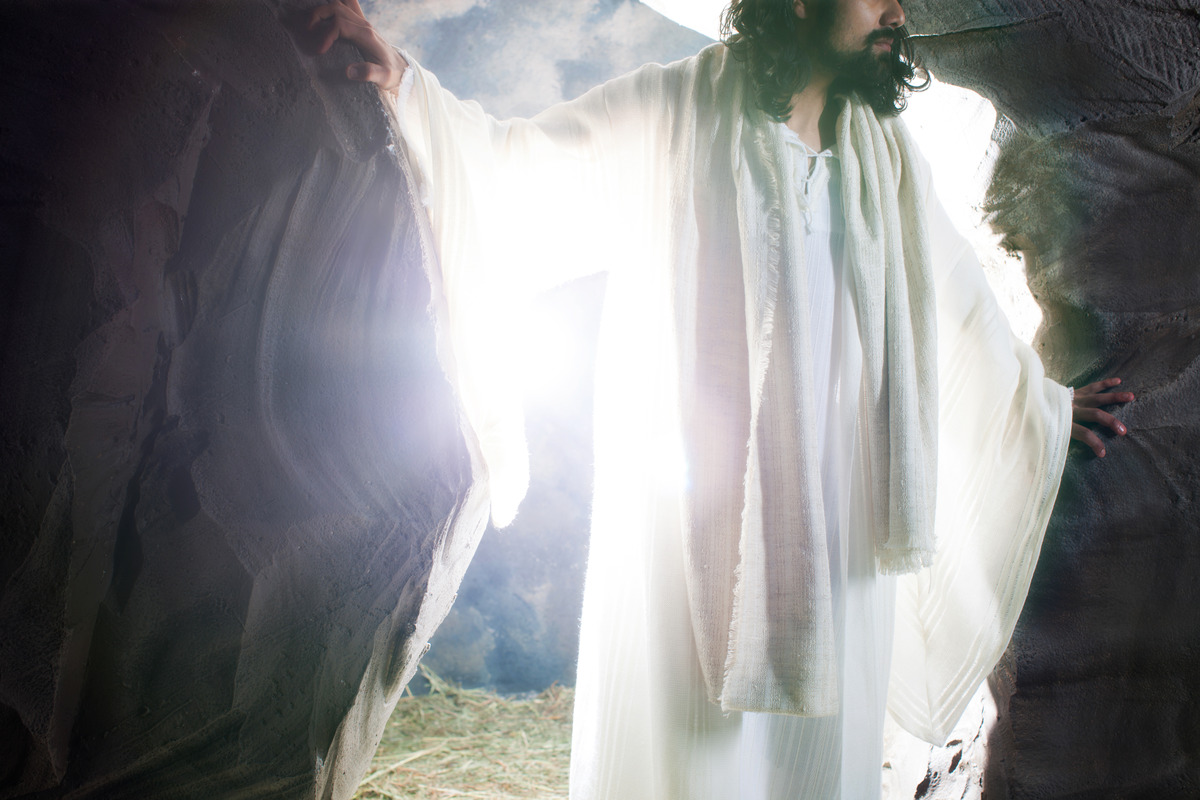
Resurrection

colorful sunset

Jesus answered and said unto them, Destroy this temple, and in three days I will raise it up … When therefore he was risen from the dead, his disciples remembered that he had said this unto them; and they believed the scripture, and the word which Jesus had said. (John 2:20, 22)

Christians today, especially in the Middle East, suffer martyrdom by the hundreds at the hands of brutal ISIS executioners. These undergo a gruesome and horrific death by beheadings or being burned alive. Yet, as ghastly as we may perceive such brutality, the pain and suffering of these victims is short-lived, unlike that experienced by our Lord Jesus Christ on the cross.[1]

On the Lord’s Feast of Passover,[2] Jesus, already physically drained from lack of sleep[3] and subjected to a sham of a trial by the Jewish religious leaders, was brutally beaten and scourged at hands of Roman soldiers, experts at inflicting pain without killing the victim. Then in that depleted condition, He was forced to carry His own cross to the place of execution, and whether it was a fully assembled cross or just the cross beam, for a man in Jesus’ condition at that time was next to impossible – but He did it. Under the weight of that burden, determined to complete His mission, He faced the horror of the cross. God, wrapped up in human flesh, with His host of angelic armies standing at the ready awaiting the command to rain down vengeance upon His tormentors. At the time of His arrest, Peter pulled his sword in His defense, but Jesus stopped him. “Thinkest thou that I cannot now pray to my Father, and he shall presently give me more than twelve legions of angels?” (Matthew 26:53).  Nothing would deter Him from His mission. “[He] made himself of no reputation, and took upon him the form of a servant, and was made in the likeness of men: And being found in fashion as a man, he humbled himself, and became obedient unto death, even the death of the cross” (Philippians 2:7-8).

Determined to give to the very last, He carried Himself up Calvary’s hill, laid Himself down upon the timbers and spread His arms out to receive the nails – our pain, our guilt, our sins. “For [God the Father] hath made him [Jesus] to be sin for us, who knew no sin; that we might be made the righteousness of God in him” (2 Corinthians 5:21). At the last, He gave His life. He did not die. Jesus said, “… I lay down my life, that I might take it again. No man taketh it from me, but I lay it down of myself. I have power to lay it down, and I have power to take it again. This commandment have I received of my Father” (John 10:17-18, emphasis mine). He was not killed. “Jesus, when he had cried again with a loud voice, yielded up the ghost” (Matthew 27:50, emphasis mine). He was not the victim. He was in full control until the very last. John, the beloved disciple, and the only one of the twelve to witness the event said, “When Jesus therefore had received the vinegar, he said, It is finished: and he bowed his head, and gave up the ghost” (John 19:30, emphasis mine). Finished! Paid in full!

That was not the end. On the first day of the week, on that spring Sunday morning, He broke the chains of death and brought sheol’s captives with Him. Matthew records, “And the graves were opened; and many bodies of the saints which slept arose, And came out of the graves after his resurrection, and went into the holy city, and appeared unto many” (Matthew 27:52-53).[4]

His resurrection is key! Had Jesus died and remained in the tomb, we would venerate a martyr, nothing more. His bones would be marked by an ornate shrine. Perhaps followers would make faithful pilgrimages to the site to stand in awe and wonder. If that was the case, our faith’s reward would be death and eternal separation from our Creator with no hope of redemption. “And if Christ be not risen, then is our preaching vain, and your faith is also vain” (1 Corinthians 15:14). “But thanks be to God, which giveth us the victory through our Lord Jesus Christ” (1 Corinthians 15:57).  Because of His resurrection, “Death is swallowed up in victory” (1 Corinthians 15:54). “For if we have been planted together in the likeness of his death, we shall be also in the likeness of his resurrection” (Romans 6:5). So now we can say, “O death, where is thy sting? O grave, where is thy victory?” (1 Corinthians 15:55).

Before going to the cross, Jesus left us with this promise: “Let not your heart be troubled: ye believe in God, believe also in me. In my Father’s house are many mansions: if it were not so, I would have told you. I go to prepare a place for you. And if I go and prepare a place for you, I will come again, and receive you unto myself; that where I am, there ye may be also” (John 14:1-3). His resurrection guarantees the promise. On that day, “the Lord himself shall descend from heaven with a shout, with the voice of the archangel, and with the trump of God: and the dead in Christ shall rise first: Then we which are alive and remain shall be caught up together with them in the clouds, to meet the Lord in the air: and so shall we ever be with the Lord” (1 Thessalonians 4:16-17).

Our Christian brothers and sisters in the Middle East and elsewhere in the world are brutally killed daily by the enemy of God. We can thank God that for many, death is swift; it is nothing like what their Lord and our Lord endured for our sakes. But the guaranteed promise of the resurrection assures us that one day soon, we will be together with Him in His house.

Notes:


[1]  It is said that victims could linger on the cross up to three days until succumbing to dehydration and asphyxia.

[2]  Despite conventional tradition, this even could not have taken place on Friday. Jesus said He would rise in “three days,” not three partial days. Jesus specified “three days and three nights” (Matthew 12:39-40). No matter how one may try to convolute the time to fit a “Good Friday” scenario, one cannot get “three days and three nights” from Friday evening to Sunday morning. Jesus said, “three days and three nights” – 72 hours, nothing less will do!

[3]  Jesus had spent the night in prayer while His disciples slept (Matthew 26:36-46; Mark 14:32-42; Luke 22:39-46) before being betrayed by Judas, arrested and tried.

[4]  Matthew’s recording of this event that seems to coincide with Jesus’ death and the renting of the veil to the Holy of Holies, but a close inspection of the text reveals that this event occurred after the resurrection. See again Matthew 27:52-53.


2 Comments

Filed under Apologetics, Christianity, Easter, Evangelism, Gospel, Religion, Resurrection, Salvation, Theology

A Day Is A Day

Evening and Morning Was One Day

Evening and Morning Was One Day

For a thousand years in thy sight are but as yesterday when it is past, and as a watch in the night. (Psalm 90:4)

In a previous post, No Gap, I discussed the “Gap Theory” compromise of the biblical creation account.  The Gap Theory is only one of several compromises of theistic evolution.[1] Another popular compromise is the “Day-Age Theory.” This offshoot of theistic evolution maintains that God used long ages – billions of years – and evolution to create rather than the six literal days stated in the Bible. The Day-Age Theory attempts to stretch the days in Genesis 1into six long periods of undetermined time. “[The] ‘days’ of creation were interpreted figuratively as the ‘ages’ of geology.”[2]  In order to back up that assertion, the proponents of the Day-Age Theory will cite the psalm above or 2 Peter 3:8: “But, beloved, be not ignorant of this one thing, that one day is with the Lord as a thousand years, and a thousand years as one day.”

Besides the hermeneutical problems with this view, a logical dilemma arises that refutes any form of theistic evolution. To see this, one must have a clear understanding of who God is and what His attributes say about Him. To begin with, God is inconceivably great beyond anything the human mind can imagine. “For my thoughts are not your thoughts, neither are your ways my ways, saith the LORD. For as the heavens are higher than the earth, so are my ways higher than your ways, and my thoughts than your thoughts” (Isaiah 55:8-9, emphasis mine). Considering God’s “thoughts,” one of His attributes is that of omniscience; He is “all-knowing.” Hence, He innately knows all that can be known, and there is nothing He does not know. “Shall any teach God knowledge?” (Job 21:22). “Shall he that contendeth with the Almighty instruct him?” (Job 40:2). “For who hath known the mind of the Lord, that he may instruct him?” (1 Corinthians 2:16). Since that is so, why would God need to take billions of years to create by means of evolution, slowly developing from a single cell one thing, and then the next, and then the next, etc. until in the end He evolved man? That makes God out to be something of a mad scientist experimenting in a laboratory to see what He can come up with next. God does not need to experiment! God has nothing to learn; He has no need to practice. Besides all that, billions of years of evolution also involves billions of years of death. This is contrary to God’s nature. “In him was life; and the life was the light of men” (John 1:4, emphasis mine). God is concerned with life, not death. “The last enemy that shall be destroyed is death” (1 Corinthians 15:26, emphasis mine). If death existed before the completion of creation, God would have erred when He said that it was “very good” (Genesis 1:31). Besides that, death before the fall creates greater theological problems. (I deal with this issue in No Gap.)

In addition we must consider God’s omnipotence; He is “all-powerful.” There is nothing He cannot do. “Is any thing too hard for the LORD?” (Genesis 18:14). “Behold, I am the LORD, the God of all flesh: is there any thing too hard for me?” (Jeremiah 32:27). “With men this is impossible; but with God all things are possible” (Matthew 19:26). “The things which are impossible with men are possible with God” (Luke 18:27). “For with God nothing shall be impossible” (Luke 1:37).

Given that God is all-knowing and all-powerful, i.e., there is nothing impossible for Him, it is not unreasonable to believe the Genesis literal six-day account of creation. In fact, given His omniscience and omnipotence, He could certainly have created in an instant what He took six days to create.

Simple logic with a basic understanding of God’s nature refutes theistic evolution and the Day-Age Theory. Furthermore, these compromises fail when applying proper hermeneutical principals. A plain reading and understanding of the text of Genesis 1, as I explained in No Gap, precludes any possibility of long ages. The Hebrew word, yom, for day can only mean a normal 24-hour day. To further stress this point, God encapsulated the completion each creation day between the boundaries of “evening and morning.” There is no other way to interpret this narrative without pulling in from outside sources information not contained within the text. This system of hermeneutics is known as eisegesis – reading into the text what is not there.

The proponents of the Day-Age Theory in attempting to legitimize their compromise will cite 2 Peter 3:8 and Psalm 90:4, but when properly interpreted, in context, these passages speak of God’s eternal nature and have nothing to do with specifying time limits. God is not bound or limited by time; His transcendent nature places Him outside and inside of time simultaneously. Therefore, one day with Him is like one thousand years and one thousand years is like a day. Peter employs a literary device known as simile; otherwise he would have left off the “like.” Likewise Moses in his psalm says, “For a thousand years in thy sight are but as yesterday when it is past, and as a watch in the night” (Psalm 90:4, emphasis mine). But when God says He completed the work in one day, He means one day. So, why did He take six days to create rather than an instant? He created in six days and rested on the seventh day to set the pattern for our work week – six days of work, one day of rest. Have you noticed that the seven-day week is ubiquitous around the world? Furthermore, He wrote it in stone: “Remember the sabbath day, to keep it holy. Six days shalt thou labour, and do all thy work: But the seventh day is the sabbath of the LORD thy God: in it thou shalt not do any work, thou, nor thy son, nor thy daughter, thy manservant, nor thy maidservant, nor thy cattle, nor thy stranger that is within thy gates: For in six days the LORD made heaven and earth, the sea, and all that in them is, and rested the seventh day: wherefore the LORD blessed the sabbath day, and hallowed it” (Exodus 20:8-11, emphasis mine). The Hebrew word yom for “day” used here in the Fourth Commandment, is the same word yom used in Genesis 1. God was not talking about long ages when He gave this commandment, and He was not talking about long ages when He gave His creation account.

Another argument offered by the compromisers suggests that Genesis uses “poetic” language. This argument falls apart simply by comparing the narrative text of Genesis 1-4 with the literary style of parallelism employed in the Wisdom Books: Job, Psalms, Proverbs, Ecclesiastes and the Song of Songs (Song of Solomon). One does not even need knowledge of Hebrew to see the difference. So, claiming that Genesis 1 employs poetic language is a weak argument in support of a sad compromise.

No long ages fit into the narrative of Genesis 1. The Day-Age Theory compromises and weakens the Word of God. It is a diabolical instrument of Satan to create doubt for God’s Word, and disparage the very character and nature of God. There is no gap in Genesis 1, and there are no long ages. A day is a day, plain and simple.

Notes:


[1]  Henry M. Morris, “Evolution and the Bible,” http://www.icr.org/article/evolution-bible/, accessed 10/23/15.

[2]  Ibid.

4 Comments

Filed under Apologetics, Bible, Christianity, Creation, Death, Evolution, Origins, Religion, Satan

No Gap

earth-implosion

And the earth was without form, and void; and darkness was upon the face of the deep. And the Spirit of God moved upon the face of the waters. (Genesis 1:2)

Ever since Charles Darwin published his On the Origin of Species by Means of Natural Selection or the Preservation of Favored Races in the Struggle for Life, (in which, by the way, he never addresses the main thesis of his book) it seems that Christian theologians have been scrambling to defend the Genesis creation account and allow for millions of years of evolution. Even now with all the great research being done by creation scientists in the fields of biology, cosmology, geology, meteorology, paleontology, physics, and others, and by great organizations like Answers In Genesis, Creation Ministries International, the Creation Research Society, the Institute for Creation Research and others, still we have far too many Christian pastors and theologians that cower at the roar of atheists and evolutionists when it comes to the question of origins. They fear being labeled as ignorant and uneducated and likened to geocentric flat-earthers. Rather than defend the clear teaching of Scripture on this matter, they will either completely capitulate to the evolutionists, or they will find some compromise to accommodate evolutionary concepts. What really frustrates me is when some of these cowards claim to defend the infallible, inerrant, Word of God. If the Word of God is truly infallible and inerrant, then compromise is not an option.

One such compromise is known as the Gap Theory which proposes that there is a “gap” of long ages – billions of years – between the first two verses of Genesis 1. “According to this concept, Genesis 1:1 describes the initial creation of the universe. Following this, the standard events of cosmic evolution took place, which eventually produced our solar system about five billion years ago. Then, on the earth, the various geologic ages followed, as identified by their respective assemblages of fossils (trilobites, dinosaurs, etc.).”[1] Following this, some sort of global cataclysm takes place destroying all life and God must re-create the earth. Thus, Genesis 1:2 is describing the earth “becoming” without form and void. This idea was popularized by the Scofield Bible, and widely accepted for almost a century, but it was due more to fear of ridicule than solid Bible apologetics.

The first problem with this view begins with the first word of the second verse – “And.” We must first keep in mind that the original text did not include chapter and verse divisions. The text was a continuous reading. The “And” at the beginning of verse two is the Hebrew letter waw (pronounced “vav”). In Hebrew grammar, this construct is known as a “waw consecutive” indicating that there is no break between what precedes it and what follows. The text, then, is one continuous thought without any break: “In the beginning God created the heaven and the earth, and the earth was without form, and void.” By the way, punctuation marks were not part of the original Hebrew text; punctuations were added by the translators as they thought proper according to English grammar. The same is true for the remainder of verse two: “and darkness was upon the face of the deep. And the Spirit of God moved upon the face of the waters.” Each of those “ands” is a “waw consecutive” indicating no break in the action. Furthermore, verses 3-5 all begin with a “waw consecutive,” indicating no break in the action from the beginning of verse one to the end of verse five. Simply analyzing the Hebrew grammatical construction of these first five verses of Genesis destroys any notion of “gaps” in the creation account in Genesis. Attempting to insert a gap in the text is simply sloppy hermeneutics.

The second problem presents itself with the final statement in verse five: “And the evening and the morning were the first day.” “Evening and morning” define a normal 24-hour day. In addition, the Hebrew word translated “day” is yom, and it is normally understood to mean a single 24-hour day. Although it is rarely used to indicate an undetermined time as in “the day of the Lord” or “in that day” or “in those days”; it is never used to indicate an indefinite amount of time as in millions of years. There are other options for specifying longer periods of time. For example, in Daniel 9:24, the use of shâbûa‛ meaning “seven” and translated “weeks” in the King James Bible (KJV), is used to indicate a period of seven years. Later, in Daniel 12:7, the use of mô‛êd, meaning “an appointment” or a “fixed season” and translated “time” in the KJV, is used to indicate a year, although “year” in Hebrew is actually shâneh. Hebrew does have a word for an indefinite amount of time; that word is ‛ôlâm, which is often used in the sense of eternity. So, God had other word options to indicate eons of time, yet He chose to use the word for a normal 24-hour day.

Finally, God regards “death” as an enemy. “The last enemy that shall be destroyed is death” (1 Corinthians 15:26, emphasis mine). At the end of the sixth day, God assessed His work, “And God saw every thing that he had made, and, behold, it was very good. And the evening and the morning were the sixth day” (Genesis 1:31, emphasis mine). Think about this: God, who is incapable of any error whatsoever, declares His creation, not just “good,” but “very good.” The Hebrew word for “very” is mǝ‘ôd, and it is an adjective meaning “vehemence” or “vehemently.” That is a very strong word describing God’s assessment of His perfect creation. Now think about this: if God considers death the enemy, why would He allow billions of years of death inserted between Genesis 1:1 and 1:2 and then turn around and exuberantly declare His creation “very good”? That makes no sense! God does not contradict Himself like that. Furthermore, the enemy, death, entered through Adam’s sin (Romans 5:12), and the penalty for sin is death (Romans 6:23). That being true, then how could death have existed before Adam’s sin? And if death existed in “the gap” prior to Adam’s sin, then how could death be “the enemy” and the “penalty” for sin? So, the “Gap Theory” raises some serious theological issues.

If a preacher, pastor, theologian or layman professes to believe in the infallibility and inerrancy of Scripture, it is time to claim ALL of it, stand by ALL of it, defend ALL of it, and stop making excuses and compromising with the secularists that disregard both the Bible and the Creator. There is NO GAP in Genesis. The only gap that exists is the chasm of sin that separates man from God, and that gap cannot be bridged by compromising any part of God’s Word.

Notes:


[1]  Henry M. Morris, “Why the Gap Theory Won’t Work” (http://www.icr.org/article/why-gap-theory-wont-work), accessed October 16, 2015.

12 Comments

Filed under Apologetics, Atheism, Christianity, Creation, Evolution, Gospel, Origins, Religion, Salvation, Theology

The Curse of Death

And as it is appointed unto men once to die, but after this the judgment (Hebrews 9:27)

And as it is appointed unto men once to die, but after this the judgment (Hebrews 9:27)

But of the tree of the knowledge of good and evil, thou shalt not eat of it: for in the day that thou eatest thereof thou shalt surely die.  (Genesis 2:17)

This week a young man, who labeled himself an agnostic, wrote in with a very good question concerning the curse of death. His question was posed as follows:

Genesis 2:17 says, “in the day that thou eatest thereof, thou shalt surely die.” Assuming that day equals 24 hours (big assumption, but Gen 2 is still part of the creation account) then the death must be spiritual or non-literal, since Adam lived to be 930 years – Gen 5:5. If the death resulting from sin is not literal, what is the relationship between sin and physical death? Is there any relation at all? Could physical death have occurred before sin? If sin and physical death are not related, why would Jesus have to rise from the dead? Is a bodily resurrection necessary for salvation? Why? Does any of the apostle Paul’s teaching of Christ conflict with a spiritual interpretation of death and sin? (I Cor 15:12-22)

Alternately, if the term “day” in Genesis 2:17 is not 24 hours, but instead an unspecified length of time equalling [sic] at least 930 years, most of the same questions about the relationship between sin and physical death would still apply.

His question is a very good one, and one of the key points in our biblical apologetics. The “death” described in Genesis 2:17 must be taken in context with the entire account of creation and the Fall, and in light of the rest of Scripture. Genesis 1 and 2 both narrate the creation account. Genesis 1:1-2:4 is God’s account of creation, and it gives a broad overview of the creation week. (For more details, see the notes on Genesis 1 and Genesis 2:1-4). Genesis 2:5 begins Adam’s account, and the focus is on Day Six and the creation of man. Allow me to regress and point out that chapter and verse divisions are not inspired. The original text was a continual reading with no breaks. This can sometimes be an obstacle, if one does not recognize that fact.

Another point that needs to be clarified is that the 24-hour day is not an “assumption” as he suggests. The Hebrew word used is yom, and it almost always means a normal 24-hour day in the Bible. When it is not a 24-hour day, such as in the “day of the Lord” (yom laYahweh) it is referring to a specific time, but never an extended period of time. Furthermore, God clearly defines the meaning of “day” with the phrase “evening and morning were the nth day” (Genesis 1:5, 8, 13, 19, 23).

At the end of the sixth day, God declared His creation not only “good” as in the previous five days, but “very good” (Genesis 1:31). Keep in mind that this assessment comes from an ultimately perfect being. So, if death existed before the fall, can death be considered a very good thing? If we say death is good, then how can death be a curse? And if death cannot be a curse, then why should Jesus die to pay the curse (the wages) of sin? If death was just a “spiritual” death, then, again, why should Jesus die a “physical” death to atone for a “spiritual” death? That really does throw a huge wrench in the works of the Gospel.

But “physical” death is NOT good. The Bible calls death the “enemy” (1 Corinthians 15:26). In the end, “death and hell (Greek hades “the grave”)” are cast into “the lake of fire” (Revelation 20:14). So, physical death cannot be part of a “very good” creation, if the Creator counts it as an enemy and something to be abolished. When God issued the command “thou shalt not eat of it: for in the day that thou eatest thereof thou shalt surely die” (Genesis 2:17), He was speaking of physical death. “Spiritual” death, i.e., separation from God, was a necessary consequence of that disobedience because He is the source of life (Job 33:4; Psalm 36:9; John 1:4; 5:26; 6:48; 10:28; 11:25; 14:6, et al). So, the death was both physical and spiritual. To further emphasize the point, Adam and Eve, since they had never experienced or observed death (keeping in mind that this all occurred shortly after creation – probably within a week or so), God (in the form of the pre-incarnate Christ – my opinion) sacrificed two (or more) innocent animals (probably sheep) in order to “cover” (atone for) their sin (Genesis 3:21). This was the first physical death of anything to this point, but on the spiritual side, man had already lost that intimate relationship with their Creator (Genesis 3:8).

This young man observed that Adam lived 930 years and concludes that the death curse must not have been physical but only spiritual, because they did not die immediately. One needs only to read Chapter 5 of Genesis and count how often the phrase “and he died” is repeated. Adam and Eve did not die instantly when they ate of the fruit, but they initiated the dying process. The phrase “you shall surely die” (Hebrew: mot tamot) would be better translated “dying you shall die.” Furthermore, the couple was denied access to the “tree of life” (Genesis 3:22) because apparently it had properties that would extend their life forever. The fact that they lived the long ages that they did is attributable to near perfect DNA (with the exception of the death mutation), and a near perfect environment. You may want to note the steady decline in longevity following the Global flood (Genesis 11:11-32).

Paul’s argument in 1 Corinthians 15:12-22 confirms that the curse of death is both physical and spiritual – physical in that our bodies degenerate to the point that they cease to function (we die), and spiritual in that our sin separates us from God (as physical death separates our spirit from our body). Jesus was sinless, like the first lambs sacrificed for Adam and Eve. Paul tells us that the “wages of sin is death” (Romans 6:23); here we are speaking of that spiritual death that separates us from God. Jesus’ death on the cross was the only sacrifice suitable to pay that debt of sin that separates us from God for all of mankind. “For it is not possible that the blood of bulls and of goats should take away sins” (Hebrews 10:4). Then when He rose again, He conquered the curse of physical death so that we can have eternal life. The choice, however, remains with us. From beginning to end, God has provided the way to restore that broken relationship and to enjoy eternal life with our Creator. We can either accept His offer, or reject it. “He came unto his own [not only the Jews, but mankind in general], and his own received him not. But as many as received him, to them gave he power to become the sons of God, even to them that believe on his name” (John 1:11-12).

3 Comments

Filed under Apologetics, Bible, Christianity, Creation, Death, Evangelism, Gospel, Origins, Religion, Salvation, Theology

What’s Special About Sunday?

In the end of the sabbath, as it began to dawn toward the first day of the week ... (Matthew 28:1)

In the end of the sabbath, as it began to dawn toward the first day of the week … (Matthew 28:1)

And very early in the morning the first day of the week, they came unto the sepulchre at the rising of the sun. (Mark 16:2)

Why should Christians worship on Sunday instead of Saturday as do the Jews and certain other “Christian” denominations? After all, in fourth of the Ten Commandments, God specifically says, “Remember the sabbath day, to keep it holy. Six days shalt thou labour, and do all thy work: But the seventh day is the sabbath of the LORD thy God: in it thou shalt not do any work, thou, nor thy son, nor thy daughter, thy manservant, nor thy maidservant, nor thy cattle, nor thy stranger that is within thy gates: For in six days the LORD made heaven and earth, the sea, and all that in them is, and rested the seventh day: wherefore the LORD blessed the sabbath day, and hallowed it” (Exodus 20:8-11). So, are we in violation of God’s commandment by worshiping on Sunday?

First of all, let me say that setting aside one day of the week for rest and worship is right and proper whether that day be Friday, Saturday, or Sunday or any day of the week for that matter.  “One man esteemeth one day above another: another esteemeth every day alike. Let every man be fully persuaded in his own mind” (Romans 14:5).

Much of the confusion comes with the interpretation of the word “Sabbath” in the Bible.  The word in the Hebrew does not mean “seventh” (shebəiʽi), but rather “rest” or “to rest” (shebbot).  Genesis 2:2 tells us that “on the shebəiʽi day God ended his work which he had made; and he shebbot on the shebəiʽi day from all his work which he had made.”  Translating that seventh day to mean Saturday “assumes” that God began His creative acts on Sunday, and we really have no textual basis for that conclusion other than what has been handed down to us by Jewish tradition – that, however, is not to say that this tradition is in error.  Furthermore, as you study the “Feasts of the Lord” given in Exodus and Leviticus, you find that each of those days is considered a shebbot (Sabbath) regardless of what day of the week it falls on.  So, we need to be careful not to become dogmatic over things on which the Bible is unclear.  However, it is clear that we need to “sanctify” – set aside – one day a week for the Lord.

Today, on Resurrection Day, we celebrate our Lord’s victory over death. (See “Risen Indeed,” where I cover the facts of the Resurrection.) The Resurrection is significant for us who believe because we have the promise that because Christ conquered death, we too can be assured of a resurrection to eternal life. “But if there be no resurrection of the dead, then is Christ not risen: And if Christ be not risen, then is our preaching vain, and your faith is also vain … But now is Christ risen from the dead, and become the firstfruits of them that slept.” (1 Corinthians 15:13-14, 20). Today we rejoice in Christ’s resurrection and look forward to our own resurrection to be with Him eternally.

In the New Testament, the first Jewish Christians went to the temple or synagogue on the Sabbath (Acts 13:14; 17:2; 18:4) for the sake of the Jews, but they also met on the First Day of the week (Acts 20:7; 1 Corinthians 16:2) because this was “the Lord’s Day” and also for the sake of the Gentiles which were not obligated to follow Jewish custom (Colossians 2:16). The reason for this change is because this is when Christ was raised from the dead (Matthew 28:1, Mark 16:2; Luke 24:1; John 20:1).

The First Day of the week was also the day that the Holy Spirit descended upon the disciples gathered in the upper room (Acts 2:1). Scripture does not specify the day of the week, but when you consider that Jesus arose on the first day of the week and count forward 50 days (the Day of Pentecost) you will find that day to be Sunday also. The day that Jesus arose was the “First Omer” (Nisan 16) and the Day of Pentecost was the “50th Omer (Sivan 6). Not only were these days important on the Jewish calendar, but they have even greater significance in the Christian calendar. For this reason, it is proper that Christians should meet on the First Day of the week to celebrate the Risen Lord and the coming of the Holy Spirit.

 So, as you celebrate this Resurrection Lord’s Day, remember why it is so special. He is risen indeed!

Comments Off on What’s Special About Sunday?

Filed under Apologetics, Christianity, Death, Evangelism, Gospel, Heaven, Hell, Religion, Salvation, Theology