In my Father’s house are many mansions: if it were not so, I would have told you. I go to prepare a place for you. And if I go and prepare a place for you, I will come again, and receive you unto myself; that where I am, there ye may be also. (John 14:2-3)
An old Gospel song that goes by the same title talks about “a mansion just over the hilltop in that bright land where we’ll never grow old.”[1] The singer dreams of having a “gold one that is silver lined.” Does that not seem somewhat esurient to covet the riches of heaven? I admit that the thought did not occur to me until recently.
When I think of a mansion, I imagine the $5 million (or more) homes of the super-rich or the palaces of royalty. Somehow, I do not think that is exactly to what Jesus referred when He spoke the words of our beginning verse above.
Consider this. “Heaven” as described in Revelation 21-22 enjoys a perfect environment much like that of the Garden of Eden[2] that God originally created. So perfect was that environment, that the first couple could run around naked[3] and not worry about getting sunburned, rained on, or frost bitten. Furthermore, all their nutritional needs were provided. It was a perfect place. Their only shelter were the stars above (and oh, how the stars must have sparkled at night in the pollution-free sky!). There was no need for any kind of building for shelter, much less a mansion.
Heaven will be like that, I think. No mansions of gold with silver trim. Before ending His earthly ministry, Jesus promised that in His Father’s house – only ONE house – are many mansions. That word in the Greek is monē, which means “a staying, abiding, dwelling, abode.” If Jesus meant some kind of building, He could have used the word “castle” – Greek parembolē meaning something like a fortress. Or, He could have used the word “palace” – Greek aulē, meaning “a yard (as open to the wind); by implication a mansion: – court, ([sheep-]) fold, hall, palace.”[4] However, Jesus used the word monē promising that we would have a place to stay and He has many places to stay and dwell for those who follow Him.
Sadly, we too often derive our “theology” from the songs we sing rather than from the Word of God. Next time you hear that old Gospel song, put that golden mansion out of your mind and be happy that Jesus has given you a place in His Father’s house.
Reader, if you are unsure of your eternal abode, please read my page on “Securing Eternal Life.” Jesus has a reservation for you in His Father’s house, but you have to take Him up on His invitation.
Notes:
[1] “Mansion Over the Hilltop” by Ira Stanphill, 1949.
And the LORD, he it is that doth go before thee; he will be with thee, he will not fail thee, neither forsake thee: fear not, neither be dismayed. (Deuteronomy 31:8)
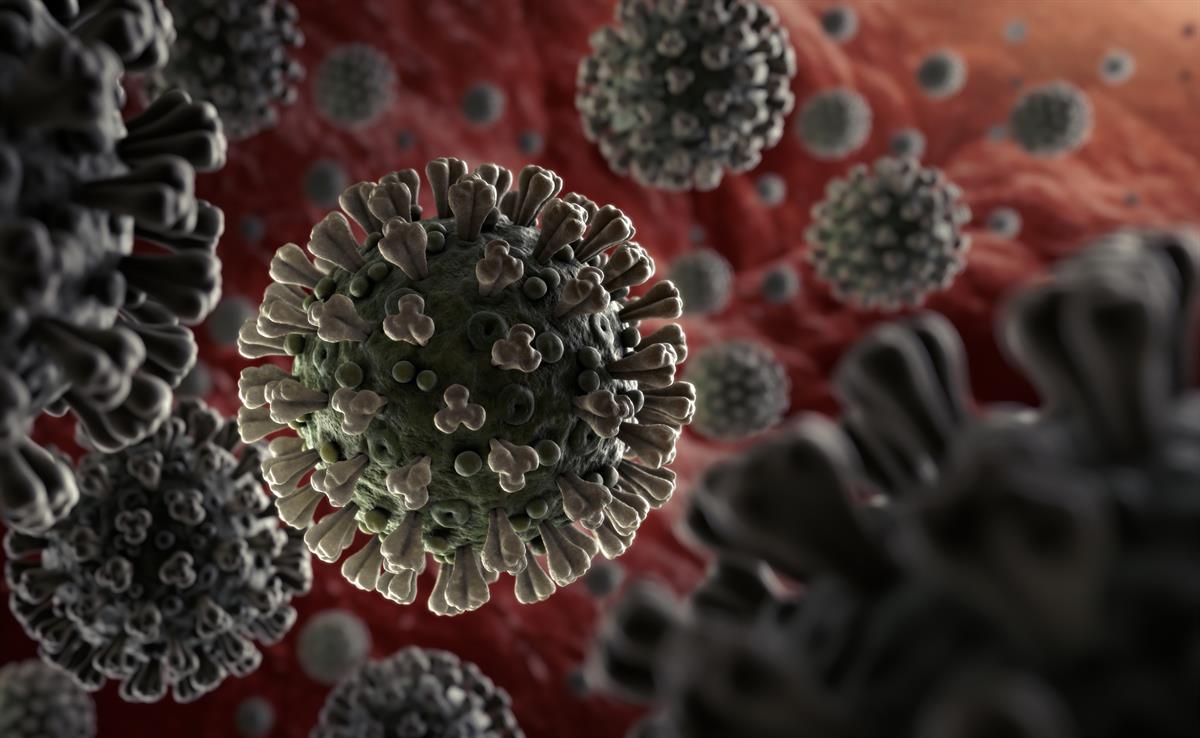
Last Sunday morning, one of the members of our Sunday school class came down with the Wuhan Bug, this in spite of the fact that she had received the so called vaccination. Once diagnosed, she promptly informed the class and the church of her infection and of the possibility that she may have unwittingly exposed others. The church immediately contacted all class members and requested that we all self-quarantine for the next ten days. I will not say that our class is “old,” but most members are over 60. Also, a good majority are deathly afraid of the bug and were first in line to get the “jab.” Regardless, fear persists and the church suspended our in-person Bible study and requested that we not attend the live worship services until after our quarantine time.
We also have an “aging” congregation where close to 50% (perhaps more) of our members are over the age of 60. A good percentage of those fear getting the bug. Our church “shut down” in the spring of 2020 when the two-week national shut down expanded to 30 days, then two months then six months and on. It is just now returning to “normal,” However, fear persists especially now that the “India” variant of the Wuhan Bug arrived on our shores. This variant is less deadly, but more contagious and the current “vaccine”[1] falls short in its efficacy against the new variant. And, oh by the way, other variants are coming.
So, are we to continue to live in fear? What can you do? Where can you hide? I do not know about you, but I refuse to live in fear. As a Christian, God instructs us to put our trust in Him for ALL of those things which are out of our control. “Fear not!” says God’s Word. We hear “Fear not!” from the pulpit. We sing hymns of faith encouraging us to “Fear not!” Our choir sings an anthem that proclaims, “I go to the rock of my salvation. I go to the stone that the builders rejected. I go to the mountain and the mountain stands by me! When the earth around me is sinking sand, upon the Solid Rock I stand. When I need a shelter, when I need a friend, I go to the Rock.”[2]
What good is God’s Word? What good is all that preaching? Of what value are all those “songs of faith” if they have no impact on our lives once we leave the cloistered walls of our churches? They are meaningless activities designed to momentarily distract us from the scary world outside. Christian, if your faith is real, then there is no place for fear in your life. “Thou believest that there is one God; thou doest well: the devils also believe, and tremble” (James 2:19). If you truly believe, then act like it!
I refuse to live in fear, and it saddens me when the Church acquiesces to the fear mongering over this “pandemic.” I am not ignorant nor in denial of what the Wuhan Bug can do, but I refuse to let fear of the remote possibility of catching the Coronavirus dictate how I carry on my life. There are practical things one can do for this threat as well as for any other pathogen. God has blessed me with excellent health all of my life, and I have a well-functioning immune system – thank God! I am 71 years old (in the “high-risk” age group). I maintain a relatively active lifestyle (I do not sit around watching TV all day). I eat a healthy diet and take vitamins. Along with my regular multi-vitamins, I take extra Vitamin C, D, and Zinc to help boost my immune system. I have not, nor will I take the COVID “vaccine.” The main reason for refusing the “vaccine” is that all of them have been developed from cell lines of aborted fetuses.[3] As Christians, we claim to be “pro-life.” So, if we truly stand by that, why in the world would we inject something into our bodies developed from the sacrificed lives of the unborn! That one reason is sufficient for me to reject the jab. The other reason is noted below (Note 1).
For those at higher risk than I, common sense dictates extra precautions. Avoid crowded situations. Maintain a reasonable social distance. Wash your hands often. Take extra Vitamins C and D and Zinc. The efficacy of a mask for stopping the virus is highly questionable. The virus is very tiny, and it can easily penetrate the pores of almost any mask. Someone compared it to trying to stop a mosquito with a chain-link fence.[4] That said, a mask signals to others that you are, or at least “feel,” vulnerable, so they should not be offended if you do not shake hands or hug. Personally, I would still not take the jab. The government (NIH and CDC) is in cahoots with “big pharma” and “big tech” to suppress any negative reports on the jab. Reports of bad outcomes and even death resulting from the jab do not make it to regular media outlets. Take sensible precautions, but trust God. If you have not yet learned this in your life, the government DOES NOT care about you or your well being. The government is not God.
Christians should not live in fear. Fear demonstrates a lack of faith in God. It really does! Not only that but it is a poor witness to a lost world. If Christians are just as fearful as the “lost,” why should they put their trust in God? Christian, your life belongs to God, and your life is in His hands. You will not die until He is ready to call you home. You will not die a moment sooner or a minute later than the time He has determined for you. Furthermore, you do not get to choose the method by which you will go home – car wreck, a stray bullet, a heart attack, cancer, any one of a number of diseases, pneumonia from the flu, COVID, or He may choose to take you in your sleep. Then, when you open your eyes again, you will be in His presence. So why live your life in fear? Where can you hide from the unknown?
The “sweet psalmist of Israel” put it this way. “Whither shall I go from thy spirit? or whither shall I flee from thy presence? If I ascend up into heaven, thou art there: if I make my bed in hell, behold, thou art there. If I take the wings of the morning, and dwell in the uttermost parts of the sea; Even there shall thy hand lead me, and thy right hand shall hold me. If I say, Surely the darkness shall cover me; even the night shall be light about me. Yea, the darkness hideth not from thee; but the night shineth as the day: the darkness and the light are both alike to thee” (Psalm 139:7-12). Where can you hide? There is no place to hide except to hide in Him.
I refuse to live my life in fear. I hope you will join me in living a fearless life in Christ.
Reader, if you do not know the Savior in whom I have placed my life, please read my page on “Securing Eternal Life.”
Notes:
[1] I put “vaccine” within quotation marks because the “jab” is not a vaccine in the traditional sense. In reality, it is “gene therapy” created in the laboratory by “scientists” who have a very incomplete knowledge of the human genome and how it works.
[3] The reader can verify this claim by going to the pharmaceutical companies that manufacture these “vaccines.” Even though one will have to dig, they do not hide this information; however, they do not broadcast the fact openly.
Yea, the stork in the heaven knoweth her appointed times; and the turtle and the crane and the swallow observe the time of their coming; but my people know not the judgment of the LORD. (Jeremiah 8:7)
A couple of weeks ago, I enjoyed an outing to the Henry Doorly Zoo and Aquarium in Omaha, Nebraska. Like all zoos, they have a wide variety of animals from all over the world – birds, reptiles, mammals, and marine creatures. The “Desert Dome” houses all kinds of animals that make the desert their habitat. The dark catacombs beneath the dome feature an assortment of nocturnal creatures like bats and other mammals and reptiles that prefer dark places. The aquarium exhibits penguins, sharks, sea turtles, and a multiplicity of exotic fish. There is also a jungle enclosure set up to resemble a rain forest with all the creatures that would inhabit such a place. A butterfly enclosure offered an array of beautifully colored insects that flitted about from flower to flower displaying God’s artistry in design. Even butterflies of the same species varied in design; no two were alike. Outside, in open enclosures, we enjoyed large animals like giraffes, elephants, rhinos, zebras, etc.
All the animals did exactly what God created them to do. There were no surprises. The elephants did not behave like giraffes, and the giraffes did not behave like the rhinos. Monkeys swung from tree limbs and picked fleas off one another. Whatever they were created to do they did, and in keeping with their design purpose, they glorified their Creator.
Walking around a crowded zoo offers opportunity to observe the behavior of humans that come to observe the animals. Without going into specifics, it is interesting to note how so many humans fail to fulfill the purpose for which they were designed. One way is in the way they distort their appearance by markings, piercings, artificial coloration (hair color and makeup), or immodest dress. Another way is in their speech, conduct, or behavior. Having been created in the image of God, they do not glorify God in their actions.
Animals glorify God by doing what God created them to do; however, God says, “my people know not the judgment of the LORD” (Jeremiah 8:7). Humans designed and built the habitats for the animals in the zoo, and as humans, we can appreciate the beauty in the work of human minds and hands. The animals miss the aesthetics of the creation and only react in the way they were designed to act. Humans enjoy the aesthetics of the place and find entertainment in seeing all the animals, but they attribute it all to time and chance, rather than give glory to God who created humans with the ability to create and appreciate beauty, and who created all the animals for our enjoyment and His glory.
“Ye that fear the LORD, praise him; all ye the seed of Jacob, glorify him; and fear him, all ye the seed of Israel” (Psalm 22:23).
“If ye will not hear, and if ye will not lay it to heart, to give glory unto my name, saith the LORD of hosts, I will even send a curse upon you, and I will curse your blessings: yea, I have cursed them already, because ye do not lay it to heart” (Malachi 2:2).
“What? know ye not that your body is the temple of the Holy Ghost which is in you, which ye have of God, and ye are not your own? For ye are bought with a price: therefore glorify God in your body, and in your spirit, which are God’s” (1 Corinthians 6:19-20).
“Having your [conduct] honest among the Gentiles: that, whereas they speak against you as evildoers, they may by your good works, which they shall behold, glorify God in the day of visitation” (1 Peter 2:12).
Glorify God with your life. Be what God created you to be. Do what God created you to do. Animals do it!
And the LORD God formed man of the dust of the ground, and breathed into his nostrils the breath of life; and man became a living soul. (Genesis 2:7)
Last week, in Part 2, we studied the overall creation. In today’s study, we focus on the creation of man, the fall of man, the resulting curse of death on the whole creation, and God’s solution for restoration.
Part 3, The Cross
Some misunderstand the second chapter of Genesis thinking that it is a second creation account. However, this is a recapitulation of Day Six to focus on the creation of man. The Bible is the account of God dealing with mankind from beginning to end, hence the reason for the recap.
Genesis 2:7-9 shows God placing man in a perfect environment. Unlike the animals, God “formed” – Hebrew yâtsar, to fashion as a potter molds a clay vessel – man out of the dust of the “ground” – Hebrew ‘ădâmâh, the feminine form of “adam.” God “breathed” into man the “breath of life,” distinguishing man from the animals. Humans are NOT animals. God placed man in a special garden – a place where God and man could commune.
In the Garden of Eden, God planted all kinds of luscious fruits and vegetables for man to enjoy without restriction. In the center God planted two unique trees. One was the unrestricted Tree of Life and the other was the Tree of the Knowledge of Good and Evil (Genesis 2:9) Adam could eat all he wanted from the Tree of Life, but he was strictly forbidden to eat of the second tree. “And the LORD God commanded the man, saying, Of every tree of the garden thou mayest freely eat: But of the tree of the knowledge of good and evil, thou shalt not eat of it: for in the day that thou eatest thereof thou shalt surely die” (Genesis 2:16-17). It should be noted that at the time God gave the prohibition, the woman had not yet been created.
Not long after – I believe it was within two weeks – Satan, the serpent, entered the Garden to destroy God’s perfect creation (Genesis 3:1-6). In executing his strategy to destroy mankind by separating him from his Creator, Satan employed three tactics that he has not changed in over 6000 years. He introduced doubt in God’s Word – “Yea, hath God said” (v. 1). Next he slandered God’s Word – “Ye shall not surely die” (v. 4). Finally, he accused God of withholding benefits – “God knows … ye shall be as gods, knowing good and evil” (v. 5).
Eve succumbed to Satan’s tactics by the same three weaknesses that we all have as humans. The beloved Apostle John described them this way. “For all that is in the world, the lust of the flesh, and the lust of the eyes, and the pride of life, is not of the Father, but is of the world” (1 John 2:16). Eve “saw that the tree was good for food” – lust of the flesh. She saw “that it was pleasant to the eye” – lust of the eyes. Finally, She saw that it was “a tree to be desired to make one wise” – the pride of life. As Solomon says, “there is no new thing under the sun” (Ecclesiastes 1:9).
Eve ate of the fruit “and gave also unto her husband with her; and he did eat” (Genesis 3:6). Adam was in on the conversation, so he knew exactly what was taking place. God gave the command to Adam directly. Eve got the command second hand from Adam; therefore, Adam had the greater responsibility. So, why did Adam not intervene?
When they ate of the forbidden fruit, “the eyes of them both were opened, and they knew that they were naked” (Genesis 3:7). I believe that when they were first created, God clothed them in light [‘ôr (אוֹר)] and when they sinned, they lost the cover of light and could see their nakedness.[1] Having their guilt exposed, they feared to face their Creator and they hid themselves. Obviously, they were not acquainted with God’s omnipresent nature. Scripture records that “they heard the voice of the LORD God walking in the garden in the cool of the day” (Genesis 3:8). The Hebrew word translated “voice” is qôl, which can also be translated as “sound” or “noise.” God, the Father, is “spirit” (John 4:24), therefore it is unlikely that a spirit would produce any kind of sound. However, God the Son having a physical body like that of His creation which He created in His image, would make noise as He walked through the Garden. He called out to Adam – as if He did not know where Adam was hiding. Rather than confront them directly, He gave them the opportunity to confess their sin. God seeks confession and repentance. God seeks man: “For the Son of man is come to seek and to save that which was lost” (Luke 19:10). Man does not seek God: “there is none that seeketh after God” (Romans 3:11). God patiently waited for a confession (Genesis 3:11). “If we confess our sins, he is faithful and just to forgive us our sins, and to cleanse us from all unrighteousness” (1 John 1:9). However, instead of confessing and pleas for forgiveness, God got excuses. Adam blames God for the woman (Genesis 3:12) and blames the woman even though he bore the greatest responsibility. The woman blamed the serpent (Genesis 3:13), and the serpent had no one to blame but himself.
With no confession or a plea for forgiveness forthcoming, God pronounced a curse upon man and upon all of His creation because of man. However, God did not end it there. He also provided the promise of redemption. “And I will put enmity between thee [the serpent/Satan] and the woman, and between thy seed and her seed; [He] shall bruise thy head, and thou shalt bruise his heel” (Genesis 3:15). This is known as the “Protevangelium” – the “First Gospel.” It is The first promise of the Savior. He would be the “seed of the woman” previewing the Virgin Birth. The serpent (Satan) would bruise His heel (at the cross), but in the end, He will bruise Satan’s head (Revelation 20:10).
In the meantime, God the Son, instituted the first blood sacrifice[2] to atone for sin (Genesis 3:21). “Atone” means to “cover.” It was a temporary covering for sins. Death now entered the world as God (Jesus) sacrificed an innocent animal to make coverings of skins (‛ôr,עוֹר) for Adam and Eve. Initially, God clothed them with (‘ôr, אוֹר); now He clothed them with (‛ôr,עוֹר). This began the practice of offering animal sacrifices to atone for sin. Jesus would be the ultimate sacrifice to atone for sin, once and for all. Through His perfect sacrifice of His own blood, He won redemption for His fallen creation. Still, there must be a choice. One can choose the Tree of Life, i.e. the cross, or one can continue on the “broad is the way, that leadeth to destruction” (Matthew 7:13) and be “cast into the lake of fire” (Revelation 20:15). There are no other options.
If you are not sure of your eternal destiny, please read my page on “Securing Eternal Life.”
In the beginning God created the heaven and the earth. (Genesis 1:1)
Last week’s study, Part 1, focused on the Creator. Today we will take a closer look at the Creation.
Part 2, The Creation
The first verse of Genesis encapsulates the creation of the universe. The universe, as vast and complex as it is, is composed of three elements, anyone of which being absent render the universe non-existent. “In the beginning” is Time. “God created the heavens” (Space) “and the earth” (matter/energy). These three elements: time, space, and matter, make up the universe.
Secular scientists who strive to explain the origin of the universe though natural causes, hypothesize that all existing matter at one time was densely compressed into a “singularity” that rapidly expanded to create the universe 14.7 billion years ago. This is a relatively recent hypothesis based on the notion rising out of the “enlightenment,” (17th and 18th centuries) proposing that the earth is much older than indicated in Scripture. Since “scientists” had “proven” that the earth was older than stated in the Bible, many theologians attempted to accommodate billions of years into the biblical record by proposing a “gap” of billions of years between Verse 1 and Verse 2 of Genesis 1.
There is no “Gap”[1] between verses 1 & 2. When simply read, Verse 1 flows smoothly into Verse 2. The Gap Theory is highly speculative and based on conjecture. The Gap Theory presupposes a prior creation which “became” void and formless due to Satan’s fall. Satan caused a race of pre-Adamic man to sin forcing God to destroy His first creation. This theory introduces sin and death before the fall of Adam and Eve and effectively nullifies the curse of death for sin. Although theologians who still hold to the Gap Theory try to support it with Scripture, it has no biblical support.
With all the elements of the universe created, the Creator began the task of organizing the formless blob. The raw materials required energy. “And the Spirit of God [the Third Person of the Trinity] moved upon the face of the waters” (Genesis 1:2). “And God said, Let there be light: and there was light.” (Genesis 1:3). The creation of light only required the verbal command from the Word. The Hebrew word for light is ‘ôr (אוֹר), and I will point out something interesting about that word later on (in Part 3).
God declared His first day’s work “good.” “And the evening and the morning were the first day” (Genesis 1:5). The word “day” used here and throughout the creation account is important because many find it hard to believe that God created all there is in six 24-hour days.[2] The Hebrew word for “day” is yom. In the Old Testament, it almost always refers to a normal 24-hour day. It always refers to a normal 24-hour day when preceded by an ordinal number – first, second, third, etc. Furthermore, in order to remove any doubt, God further defines yom by “evening and morning,” which constitutes a normal 24-hour day. Some have attempted to stretch the length of each day by thousands and even millions of years.[3] To support their position they cite Psalm 90:4 and 2 Peter 3:8, but these verses use simile (“like,” “as”) to refer to God’s “timelessness”[4] not to how He counts days.[5] To God, one day is as a thousand years and a thousand years are as a day. God is not bound by time as we are. He created time; therefore He exists outside of the constraints of time.
On the second day, Genesis 1:6-8, God organizes the elements by separating the waters from Earth from the waters in space. The word “Firmament” means a “stretched-out thinness.” It is like a thin membrane separating the earth’s atmosphere from the coldness of space. Remember, at this point there are no other heavenly bodies. The day ended without God’s affirmation that it was “good.” There was work yet to be done.
On Day Three, Genesis 1:9-13, God separated the dry land from the water and called it “good.” The vegetation was created fully mature having its seed in itself and ready to reproduce “after its kind” – no evolution. God created plants with the genetic capability to vary within its own kind, but not to “evolve” from one kind into another. We can verify that is still true today.
On the fourth day, Genesis 1:14-19, God created the remaining celestial bodies. Unlike the evolutionary story, God’s account of creation begins with the planet Earth and all the other stars and planets come thereafter. That makes perfect sense when we consider that God made Earth with mankind in mind. “For thus saith the LORD that created the heavens; God himself that formed the earth and made it; he hath established it, he created it not in vain, he formed it to be inhabited: I am the LORD; and there is none else” (Isaiah 45:18).
“And God said, Let there be lights in the firmament of the heaven to divide the day from the night; and let them be for signs, and for seasons, and for days, and years” (Genesis 1:14). The “lights” (Hebrew mâ’ôr) are “lesser lights” or “luminaries.” They are “lesser” only compared to the original light He created on the first day. We also understand that many of these stars are hundreds of times larger than our own sun, but because of their great distance from the earth, they appear to be lesser. The mâ’ôr were created for signs and seasons, days and years. The word “signs” – ‘ôth means signal, banner, remembrance, omen, warning, and “seasons” – mô‛êd means an appointed time/place/meeting; a sacred season, set feast, appointed season. God used theses “signals” to announce the time of His Feasts.[6] The constellations were placed in the night sky for our benefit. God speaking to Job says, “Canst thou bring forth Mazzaroth [i.e., the Zodiac] in his season? or canst thou guide Arcturus with his sons? (Job 38:32). God made the sun and moon first and then, almost as an afterthought, he made the stars also – God called it “good”
On the fifth day, Genesis 1:20-23, God made marine and flying creatures. God spoke all of these creatures into existence. The “great whales” – the Hebrew word tannı̂yn means “a sea monster, serpent, or dragon” – not only included whales as we know them, but also the giant marine reptiles. God made them to bring “forth abundantly,” i.e., fully mature with the ability to reproduce “after their kind.” They cannot cross with others of another kind, however, they can vary within their own “kind.” And “God saw that it was good.”
On Day Six of creation, Genesis 1:24-25, the Creator spoke the land-dwelling creatures into existence. Like the marine animals and flying things, they are created fully mature and ready to reproduce “after their kind”
The pinnacle of God’s creation was man (mankind), Genesis 1:26-28. Man was created in God’s “image” – Hebrew tselem “resemblance” – like a mirror image or a photograph – that looks like but is not. Man was created in God’s “likeness” – Hebrew demûth “similitude” – having similar characteristics. We could make a long list of God’s attributes that humans also possess, but these are some of the most prominent. Man, like God is triune in nature – mind, body, and spirit as God is Father, Son, and Holy Spirit. Humans are moral beings (although in a fallen state) and God is a moral being. God is Creator; humans are creative. God is love; humans have the capacity to love. And many other comparisons could be made; the list is long.
God made humans “male and female” (He only made two – one pair).There is a procreative reason for the two genders and anything other than that violates God’s design. Jesus confirms only two sexes/genders. Matthew 19:4 “Have ye not read, that he which made them at the beginning made them male and female.” Mark 10:6 “But from the beginning of the creation God made them male and female.” God gave dominion of His creation to humans.
With the creation of man, God completed His creative work (Genesis 1:29-31). Herbs and fruits were “meat” for humans and animals. All were vegetarian, even the animals with big teeth. God declared His completed creation “very good” me’ôd ṭôb – exceedingly good! In God’s completed creation, there was no sin, no death, no sickness, no curse, etc. After sin entered the creation, all of that changed. However, one day, perhaps in the near future, all of that will be restored. “And I saw a new heaven and a new earth: for the first heaven and the first earth were passed away; and there was no more sea … And God shall wipe away all tears from their eyes; and there shall be no more death, neither sorrow, nor crying, neither shall there be any more pain: for the former things are passed away” (Revelation 21:1, 4).
On the seventh day, Genesis 2:1-3, God “rested.” The Hebrew word for “seventh” is shebı̂y‛ı̂y. The Hebrew word for “rested” is shâbathfrom which with get “Sabbath.” “Sabbath” means “rest” not “Saturday” or “seventh.” God was not tired nor did He need a break. He ceased His creative work because it was “ended (kâlâh)” or “completed.” There was nothing left to do – 1st Law of Thermodynamics – matter (except for the initial creation on Day One) can neither be created nor destroyed; it can only be changed.
He blessed the 7th Day, and He set it as an example for us, Exodus 20:9-11 “Six days shalt thou labour, and do all thy work: But the seventh day is the sabbath of the LORD thy God: in it thou shalt not do any work, thou, nor thy son, nor thy daughter, thy manservant, nor thy maidservant, nor thy cattle, nor thy stranger that is within thy gates: For in six days the LORD made heaven and earth, the sea, and all that in them is, and rested the seventh day: wherefore the LORD blessed the sabbath day, and hallowed it.” Six days of creation with one day of rest was for our example to work six days and rest and honor God on the seventh.
That was a good ending for the first week of creation, but that did not last long as we will see next week in Part 3.
If you are not sure of your eternal destiny, please read my page on “Securing Eternal Life.”





 Ernie's Musings