
Tag Archives: Religion and Spirituality

All New Things

And he that sat upon the throne said, Behold, I make all things new. And he said unto me, Write: for these words are true and faithful. (Revelation 21:5)

 We have entered the new year, 2023. How does the future look? Do you think this year will be better than last?

Let us take a sober look at conditions worldwide. North Korea is testing nuclear ballistic missiles and threatening South Korea. China continues to build up its military and threatening the tiny island nation of Taiwan. Iran is within weeks of enriching weapons-grade uranium and continues to threaten Israel and the United States. Russia relentlessly batters the sovereign nation of Ukraine without regard for millions of innocent Ukrainian citizens. Russia, Turkey, and Iran along with their allies are amassing armies and military equipment in Syria and setting the stage for the Gog of Magog war against Israel described in Ezekiel 38-39. The wars and rumors of wars Jesus predicted are all over the world.

Violence permeates the entire world. There are riots in China, Iran, Russia, France, Brazil, and many other nations. Here in the United States, violent crimes go unanswered. Jesus said the last days would be as in the days of Noah,[1] which were days filled with violence.[2] Jesus also said that the last days would be as the days of Lot.[3] Those days were characterized by rampant sexual deviancy.[4] Consider what goes on today with the LGBTQ+ movement and their agenda to pervert innocent children with their drag queen shows that they conduct with children. What are the parents thinking! Children are being trafficked for sexual purposes to deviants and perverts, and if that is not bad enough, abortion continues to rise even with the reversal of Roe v Wade.

On top of all of that, economies are failing all over the world. When that happens, evil leaders become desperate and look to war in order to distract their people from their sufferings. Vladimir Putin has openly made threats of nuclear attacks on any nation that opposes his advances on Ukraine. North Korea, China, and Iran echo their own threats. Meanwhile, the Globalists, many of whom are powerful people in our own government, lick their chops like buzzards circling a dying corpse, eagerly waiting on the demise of the nations so they can come in, “build back better” and install a New World Order.

Our world is sick and getting sicker by the day; 2023 offers no hope for improvement.

What follows, I wrote two years ago with a few changes to bring it up to date.

I am not a pessimist, but I do read what the Bible has to say about the end times. If the Bible is true (and it is), things will get worse before the Lord returns. Jesus said, “And ye shall hear of wars and rumours of wars: see that ye be not troubled: for all these things must come to pass, but the end is not yet. For nation shall rise against nation, and kingdom against kingdom: and there shall be famines, and pestilences, and earthquakes, in divers places. All these are the beginning of sorrows” (Matthew 24:6-8, emphasis mine).

Does that not sound familiar these days? So, do not expect 2023 to get better; it will only get worse. Now, what do we do in light of this dismal outlook; crawl under a rock and hide away? NO! We face the future with the assurance that God has all things in His control.

 What Does God Have to Say About It?

As Moses prepared Israel to enter the Promised Land, a new land filled with giants, dangers, and unknowns, he encouraged them not to fear because God was with them. “Behold, the LORD thy God hath set the land before thee: go up and possess it, as the LORD God of thy fathers hath said unto thee; fear not, neither be discouraged” (Deuteronomy 1:21, emphasis mine). As Israel prepared for battle against their enemies, the priests were to encourage the people, “And shall say unto them, Hear, O Israel, ye approach this day unto battle against your enemies: let not your hearts faint, fear not, and do not tremble, neither be ye terrified because of them; For the LORD your God is he that goeth with you, to fight for you against your enemies, to save you” (Deuteronomy 20:3-4, emphasis mine). The unknown is frightening, but God promises to go with us and even to fight our battles,

So, “Be strong and of a good courage, fear not, nor be afraid of them: for the LORD thy God, he it is that doth go with thee; he will not fail thee, nor forsake thee” (Deuteronomy 31:6, emphasis mine). When we attempt to face challenges on our own, WE WILL FAIL, but God will never fail us or leave us alone.

God has unlimited resources. When Syria harassed Israel, their efforts were constantly thwarted because God, through Elisha, warned the king of Israel before every attack. The king of Syria suspected that he had a spy within his ranks, but one of his servants told him about Elisha the prophet who warned the king of Israel ahead of every attack. Therefore, the king of Syria sent an army and surrounded Elisha’s house. “And when the servant of the man of God was risen early, and gone forth, behold, an host compassed the city both with horses and chariots. And his servant said unto him, Alas, my master! how shall we do? And [Elisha] answered, Fear not: for they that be with us are more than they that be with them. And Elisha prayed, and said, LORD, I pray thee, open his eyes, that he may see. And the LORD opened the eyes of the young man; and he saw: and, behold, the mountain was full of horses and chariots of fire round about Elisha” (2 Kings 6:15-17, emphasis mine).

“And David said to Solomon his son, Be strong and of good courage, and do it: fear not, nor be dismayed: for the LORD God, even my God, will be with thee; he will not fail thee, nor forsake thee, until thou hast finished all the work for the service of the house of the LORD” (1 Chronicles 28:20, emphasis mine). David referred to the Temple Solomon would build. Solomon had the promise that God would not abandon him until the work was complete. Today, believers are the “living temples” of God (1 Corinthians 3:16). As long as God lends us breath, we have work to do “for the service of the house of the LORD.”

Fear thou not; for I am with thee: be not dismayed; for I am thy God: I will strengthen thee; yea, I will help thee; yea, I will uphold thee with the right hand of my righteousness … For I the LORD thy God will hold thy right hand, saying unto thee, Fear not; I will help thee.” (Isaiah 41:10, 13, emphasis mine). When we trust God, He is our strength and our help, He sustains us and holds our right hand.

 Jesus said, “Are not five sparrows sold for two farthings, and not one of them is forgotten before God? But even the very hairs of your head are all numbered. Fear not therefore: ye are of more value than many sparrows” (Luke 12:6-7, emphasis mine). God cares for all of His creation, even those we would count as insignificant. He knows us intimately, even to the most minute detail – the number of hairs on our heads. Since God cares so much for common sparrows, how much more does He care for those created in His image?

What Can We Do?

When Babylon conquered Judah, Nebuchadnezzar carried away the Jews in three deportations. Nebuchadnezzar set Gedaliah as governor over Judah after the third deportation to Babylon. They were going into captivity. In that circumstance, the people are encouraged to “fear not,” accept the situation, and it would be well with them. “And Gedaliah the son of Ahikam the son of Shaphan sware unto them and to their men, saying, Fear not to serve the Chaldeans: dwell in the land, and serve the king of Babylon, and it shall be well with you” (Jeremiah 40:9; 2 Kings 25:24, emphasis mine). God promises to be with us even in difficult situations.

Jesus said, “And fear not them which kill the body, but are not able to kill the soul: but rather fear him which is able to destroy both soul and body in hell” (Matthew 10:28, emphasis mine). The Greek word translated “fear” (used twice in this verse) is phobeō, from which we get the English word “phobia.” Strong’s defines it this way: “to frighten, that is, (passively) to be alarmed; by analogy to be in awe of, that is, revere: – be (+ sore) afraid, fear (exceedingly), reverence” (emphasis mine). With that in mind, Jesus says not to fear or be frightened of those that can kill the body – that would include COVID-19. Rather, we should “revere” the One who ultimately determines our eternal destiny.

When Jesus selected His disciples, Luke records the account this way: “And so was also James, and John, the sons of Zebedee, which were partners with Simon. And Jesus said unto Simon, Fear not; from henceforth thou shalt catch men” (Luke 5:10, emphasis mine). The world may be falling down all around us, but we are not to “shelter in place.” Jesus gave us the “good news” for us to share with those around us.

Jesus also said, “And seek not ye what ye shall eat, or what ye shall drink, neither be ye of doubtful mind. For all these things do the nations of the world seek after: and your Father knoweth that ye have need of these things. But rather seek ye the kingdom of God; and all these things shall be added unto you. Fear not, little flock; for it is your Father’s good pleasure to give you the kingdom. Sell that ye have, and give alms; provide yourselves bags which wax not old, a treasure in the heavens that faileth not, where no thief approacheth, neither moth corrupteth. For where your treasure is, there will your heart be also” (Luke 12:29-34, emphasis mine). We are not to be overly concerned with our material needs. Jesus promises that God will provide what we need.

 “For the eyes of the Lord are over the righteous, and his ears are open unto their prayers: but the face of the Lord is against them that do evil. And who is he that will harm you, if ye be followers of that which is good? But and if ye suffer for righteousness’ sake, happy are ye: and be not afraid of their terror, neither be troubled; But sanctify the Lord God in your hearts: and be ready always to give an answer to every man that asketh you a reason of the hope that is in you with meekness and fear: Having a good conscience; that, whereas they speak evil of you, as of evildoers, they may be ashamed that falsely accuse your good conversation [i.e., behavior/conduct] in Christ” (1 Peter 3:12-16, emphasis mine). When we are secure in the Lord’s care, we can be confident to face whatever the future may bring. When others see our confidence, they will want to know the reason for it, and we need to be prepared to give an answer.

 Conclusion:

We cannot stop 2023 from coming. We cannot alter the circumstances that 2023 will bring. Jesus said, “These things I have spoken unto you, that in me ye might have peace. In the world ye shall have tribulation: but be of good cheer; I have overcome the world” (John 16:33, emphasis mine). However, we can control our own outlook when we place our trust in God knowing that all things are under His control and that He cares for His own. Again, Jesus said, “Peace I leave with you, my peace I give unto you: not as the world giveth, give I unto you. Let not your heart be troubled, neither let it be afraid” (John 14:27, emphasis mine). Ultimately, we have the promise of eternal life with Him in a new heaven and a new earth (Revelation 21:1-5).

Notes:


[1]  Matthew 24:37-38

[2]  Genesis 6:13

[3]  Luke 17:28

[4]  Genesis 19:5

Comments Off on All New Things

Filed under Apologetics, Christianity, Current Events, End Times, Eschatology, Gospel, Holidays, New Year's Day, Theology

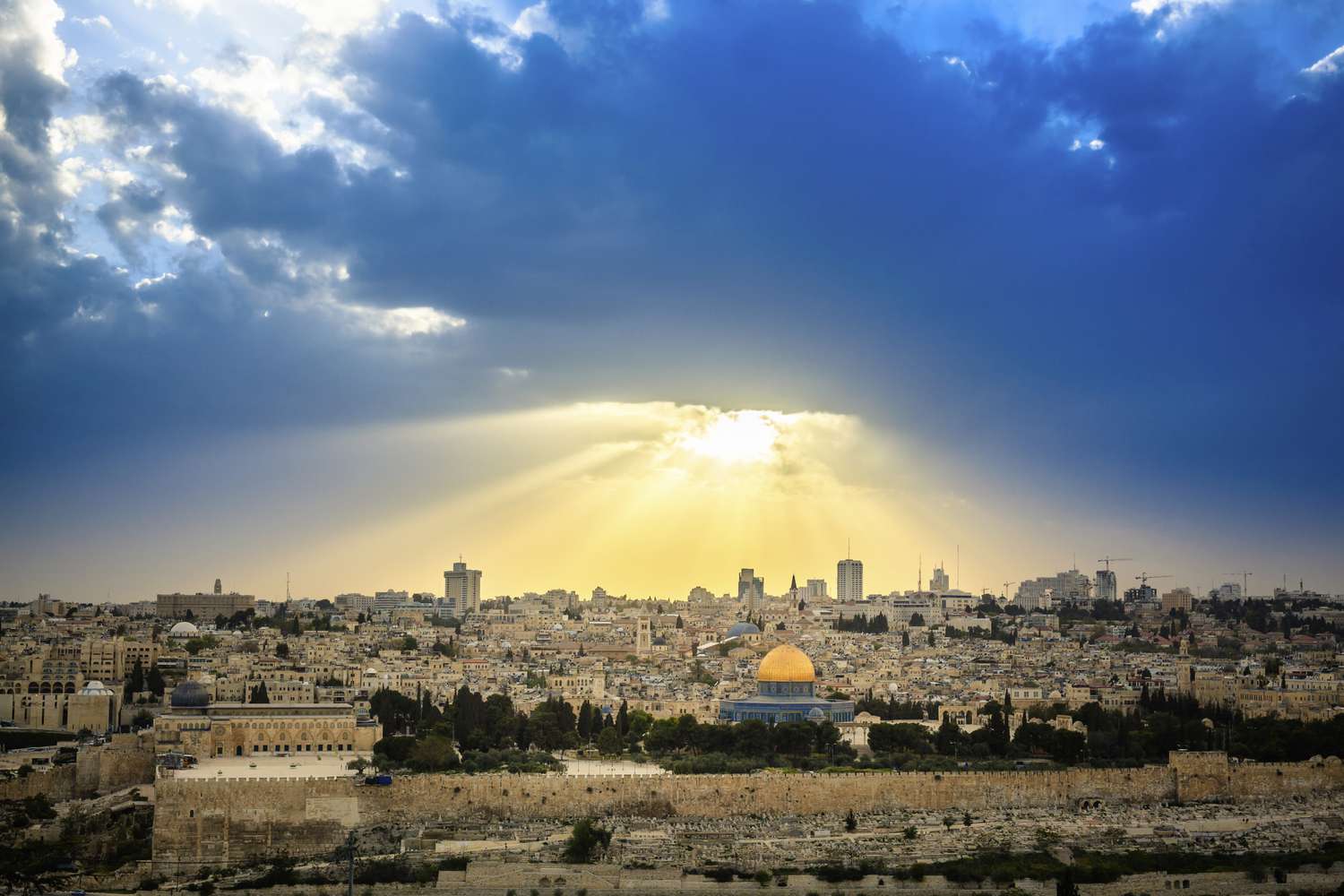
The Peace of Jerusalem

Pray for the peace of Jerusalem: they shall prosper that love thee. (Psalm 122:6)

In Sunday School, our pastor is leading us through a study from John Owen’s book, Rules for Walking in Fellowship.

Owen was by common consent the weightiest Puritan theologian, and many would bracket him with Jonathan Edwards as one of the greatest Reformed theologians of all time. Born in 1616, he entered Queen’s College, Oxford, at the age of twelve and secured his M.A. in 1635, when he was nineteen. In his early twenties, conviction of sin threw him into such turmoil that for three months he could scarcely utter a coherent word on anything; but slowly he learned to trust Christ, and so found peace. In 1637 he became a pastor; in the 1640s he was chaplain to Oliver Cromwell, and in 1651 he was made Dean of Christ Church, Oxford’s largest college. In 1652 he was given the additional post of Vice-Chancellor of the University, which he then reorganized with conspicuous success. After 1660 he led the Independents through the bitter years of persecution till his death in 1683. —J. I. Packer[1]

In our pastor’s absence, I was asked to bring this Sunday’s lesson from the book. It is indeed a very good lesson entitled “Bearing One Another’s Burdens,” which is the 15th chapter in Owens’ book. At the end of the lesson, Owens gives directions on how to apply the principles in the lesson. For the first direction, Owens says, “A proper valuing, strong desire, and high esteem of the church’s prosperity, in every member of it (Ps. 122:6)” – (emphasis mine).

I do not know a lot about John Owens other than he was and is a highly regarded reformed theologian and Puritan preacher. I do not know what his views were on eschatology (the study of end times), however, in the quote above, his use of Psalm 122:6 in connection to the church is misapplied.

I do not want to disparage such a great man of God as John Owen, but the verse, when taken literally as it should be, is speaking of Jerusalem not the Church. A parallel between Jerusalem and the church can certainly be drawn here in the form of allegory, but to make a direct connection cannot be supported if one takes the words of Scripture literally. Jerusalem/Israel is not the Church, nor is the Church Jerusalem/Israel.

In Owens’ defense, he was living at a time when Israel did not exist and had not existed for over 1500 years. Many theologians of that time believed that God had rejected Israel for their rejection of their Messiah and that the Church had replaced Israel. However, not all theologians took that position. Those that did not hold to that “replacement theology” believed that God would restore Israel in the end times. They came to this conclusion from the clear, literal teaching of the Old Testament prophets. I do not know to which camp Owens belonged, so I will withhold judgement.

I will, however, attempt to point out the error in “replacement theology” as concisely as possible. When one studies the Old Testament prophets, one quickly finds God’s repeated promises to (1) scatter Israel to the four corners of the earth, (2) to draw them back into their own land, (3) to restore the nation of Israel once again, and (4) to save the remanent of Israel in the “latter days.” The following is just a small sample of God’s promises to Israel.

And the LORD shall scatter you [Israel] among the nations, and ye shall be left few in number among the heathen, whither the LORD shall lead you. (Deuteronomy 4:27)

And it shall come to pass, that as the LORD rejoiced over you [Israel] to do you good, and to multiply you; so the LORD will rejoice over you to destroy you, and to bring you to nought; and ye shall be plucked from off the land whither thou goest to possess it. And the LORD shall scatter thee among all people, from the one end of the earth even unto the other; and there thou shalt serve other gods, which neither thou nor thy fathers have known, even wood and stone. And among these nations shalt thou find no ease, neither shall the sole of thy foot have rest: but the LORD shall give thee there a trembling heart, and failing of eyes, and sorrow of mind: And thy life shall hang in doubt before thee; and thou shalt fear day and night, and shalt have none assurance of thy life: In the morning thou shalt say, Would God it were even! and at even thou shalt say, Would God it were morning! for the fear of thine heart wherewith thou shalt fear, and for the sight of thine eyes which thou shalt see. (Deuteronomy 28:63-67)

And it shall come to pass, when all these things are come upon thee, the blessing and the curse, which I have set before thee, and thou shalt call them to mind among all the nations, whither the LORD thy God hath driven thee, And shalt return unto the LORD thy God, and shalt obey his voice according to all that I command thee this day, thou and thy children, with all thine heart, and with all thy soul; That then the LORD thy God will turn thy captivity, and have compassion upon thee, and will return and gather thee from all the nations, whither the LORD thy God hath scattered thee. If any of thine be driven out unto the outmost parts of heaven, from thence will the LORD thy God gather thee, and from thence will he fetch thee: And the LORD thy God will bring thee into the land which thy fathers possessed, and thou shalt possess it; and he will do thee good, and multiply thee above thy fathers. And the LORD thy God will circumcise thine heart, and the heart of thy seed, to love the LORD thy God with all thine heart, and with all thy soul, that thou mayest live. (Deuteronomy 30:1-6)

And it shall come to pass in the last days, that the mountain of the LORD’S house shall be established in the top of the mountains, and shall be exalted above the hills; and all nations shall flow unto it. And many people shall go and say, Come ye, and let us go up to the mountain of the LORD, to the house of the God of Jacob; and he will teach us of his ways, and we will walk in his paths: for out of Zion shall go forth the law, and the word of the LORD from Jerusalem. And he shall judge among the nations, and shall rebuke many people: and they shall beat their swords into plowshares, and their spears into pruninghooks: nation shall not lift up sword against nation, neither shall they learn war any more. (Isaiah 2:2-4)

The remnant shall return, even the remnant of Jacob, unto the mighty God. For though thy people Israel be as the sand of the sea, yet a remnant of them shall return: the consumption decreed shall overflow with righteousness. (Isaiah 10:21-22)

Fear not: for I am with thee: I will bring thy seed from the east, and gather thee from the west; I will say to the north, Give up; and to the south, Keep not back: bring my sons from far, and my daughters from the ends of the earth; Even every one that is called by my name: for I have created him for my glory, I have formed him; yea, I have made him. (Isaiah 43:5-7)

Behold, these shall come from far: and, lo, these from the north and from the west; and these from the land of Sinim. Sing, O heavens; and be joyful, O earth; and break forth into singing, O mountains: for the LORD hath comforted his people, and will have mercy upon his afflicted. But Zion said, The LORD hath forsaken me, and my Lord hath forgotten me. Can a woman forget her sucking child, that she should not have compassion on the son of her womb? yea, they may forget, yet will I not forget thee. Behold, I have graven thee upon the palms of my hands; thy walls are continually before me. (Isaiah 49:12-16)

No weapon that is formed against thee shall prosper; and every tongue that shall rise against thee in judgment thou shalt condemn. This is the heritage of the servants of the LORD, and their righteousness is of me, saith the LORD. (Isaiah 54:17)

And they shall build the old wastes, they shall raise up the former desolations, and they shall repair the waste cities, the desolations of many generations. And strangers shall stand and feed your flocks, and the sons of the alien shall be your plowmen and your vinedressers. But ye shall be named the Priests of the LORD: men shall call you the Ministers of our God: ye shall eat the riches of the Gentiles, and in their glory shall ye boast yourselves. (Isaiah 61:4-6)

Who hath heard such a thing? who hath seen such things? Shall the earth be made to bring forth in one day? or shall a nation be born at once? for as soon as Zion travailed, she brought forth her children. Shall I bring to the birth, and not cause to bring forth? saith the LORD: shall I cause to bring forth, and shut the womb? saith thy God. Rejoice ye with Jerusalem, and be glad with her, all ye that love her: rejoice for joy with her, all ye that mourn for her: (Isaiah 66:8-10)

At that time they shall call Jerusalem the throne of the LORD; and all the nations shall be gathered unto it, to the name of the LORD, to Jerusalem: neither shall they walk any more after the imagination of their evil heart. In those days the house of Judah shall walk with the house of Israel, and they shall come together out of the land of the north to the land that I have given for an inheritance unto your fathers. (Jeremiah 3:17-18)

I will scatter them also among the heathen, whom neither they nor their fathers have known: and I will send a sword after them, till I have consumed them. (Jeremiah 9:16)

And I will gather the remnant of my flock out of all countries whither I have driven them, and will bring them again to their folds; and they shall be fruitful and increase. And I will set up shepherds over them which shall feed them: and they shall fear no more, nor be dismayed, neither shall they be lacking, saith the LORD … Therefore, behold, the days come, saith the LORD, that they shall no more say, The LORD liveth, which brought up the children of Israel out of the land of Egypt; But, The LORD liveth, which brought up and which led the seed of the house of Israel out of the north country, and from all countries whither I had driven them; and they shall dwell in their own land. (Jeremiah 23:3-4; 7-8)

There are more. Ezekiel 36 speaks of the scattering and regathering of Israel to and from the nations. Ezekiel 37 presents Israel as a valley of dry bones that God brings together and raises up into a mighty army. In that chapter, God also promises that the “two sticks” (Judah and Israel, the divided kingdoms) will reunite as one.

All of these prophecies deal with the nation of Israel, not the Church. Why is this important? It is important because the integrity of God is at stake. If God can break His covenant with Israel, what guarantee is there that He will keep His promises to the Church? Face it, the “Church” these days these days is not a pristine virgin!

Therefore, because God is faithful, He will keep His promises to Israel and to the Church as well. Israel and the Church are two separate entities, but salvation is the same for both. When the psalmist, David, says “Pray for the peace of Jerusalem,” there is only One Peace that can effectively apply and that is the Prince of Peace, the Lord Jesus Christ.[2]

So, in a way, Owens was correct in applying the psalm to the Church by way of allegory, but not in a literal sense. We are to pray for the “Peace of Jerusalem” because only He can bring true peace to the world. When we pray for the “Peace of Jerusalem,” we pray that the Lord will soon come and set up His kingdom on earth. “Thy kingdom come. Thy will be done in earth, as it is in heaven” (Matthew 6:10). As for the Church, the kingdom, in part, has already come and dwells within the heart of every believer and the Church as a whole by way of the Holy Spirit who gives us peace. Then, one day, perhaps very soon, we will enjoy His physical kingdom here on earth along with our Lord and Savior Jesus Christ. I can hardly wait!

Dear reader, do you know the Prince of Peace? If not, please read my page on “Securing Eternal Life.”

Notes:


[1]  About | John Owen

[2]  Isaiah 9:6

1 Comment

Filed under Apologetics, Bible, Christianity, End Times, Eschatology, Religion, Second Coming of Christ, Theology

I’m Thankful

Thine, O LORD, is the greatness, and the power, and the glory, and the victory, and the majesty: for all that is in the heaven and in the earth is thine; thine is the kingdom, O LORD, and thou art exalted as head above all. Both riches and honour come of thee, and thou reignest over all; and in thine hand is power and might; and in thine hand it is to make great, and to give strength unto all. Now therefore, our God, we thank thee, and praise thy glorious name. (1 Chronicles 29:11-13)

We have once again arrived at that time of year when we set aside a special time to give thanks to God for all the blessings He has lavished on us. We can focus on the commercialization of the season; following right on the heels of that demonic “holiday” that glorifies death (which is highly commercialized). The focus then quickly changes to the “Holidays,” formerly known as Christmas, without even a cursory mention of Thanksgiving Day. Over the years, I have beaten this dead horse with no sign of revival. I have come to the realization that “it is what it is,” so all I can do is practice what I preach regardless of what others do.

Four years ago, I wrote “One Was Thankful” where I detail the attitude of gratitude, so there is no need for a rehash here. I would encourage my readers to follow the link and read the article. I think I did a fair job of handling the topic. In addition, I have other articles on Thanksgiving Day that I will share on Facebook throughout the week of Thanksgiving. For now, I want to share some of the things for which I am thankful.

First of all, I thank God for life. When God created man,[1] He breathed His breath into his nostrils.[2] What a precious gift, the breath of God, withheld from all other creatures. Only mankind has this special spark of life, and it is eternal. So special is human life that God demands capital punishment for that taking of human life. He even requires that of animals that take human life.[3] The psalmist put it like this: “I will praise thee; for I am fearfully and wonderfully made: marvellous are thy works; and that my soul knoweth right well” (Psalm 139:14). He goes on to describe God’s handiwork in the development of a baby in the womb,[4] which directly confronts those who would kill a baby at any stage of development. Every breath that I take, and every beat of my heart is a precious gift from God, which He can take whenever He wills.

Second, I thank God for eternal life. The Bible says that we all have sinned[5] and we are due the wages for that sin, which is death.[6] With no prospect of rectifying the matter on our own, God took on human flesh[7] and took the penalty of sin upon Himself in order so that we might be saved.[8] It seems too easy, but our only requirement is that we believe in Him and what He has accomplished by His death and resurrection by faith. I made that choice 66 years ago at the age of six and my faith in Him has only grown and has never disappointed. Because I know that my life is His, I know that when He comes to call His children home, or if He calls me home in death, I will be with Him for eternity in a place that I am sure is far more beautiful than that the Apostle John could describe.[9]

Third, I thank God for my wife. She blesses my life daily and has done so for over 34 years. I know she truly loves me even when I am not so loveable.

Fourth, I am thankful for family. I am thankful for Christian parents that were instrumental in leading me to Christ. I am thankful for my brothers and sister who love the Lord and for the love we have for one another. I am also thankful for my wife’s family who has taken me in as a real part of their family. We are family! And I am thankful that we all love the Lord and share that common bond.

Fifth, I am thankful for my church family. In my many years as a Christian, I have found that whenever I am among Christian, even those I have never met, I am among family; I never feel out of place. That sense of family is exponentially stronger in our local church. There we do share one another’s burdens and rejoice with the joy of others. We are truly brothers and sisters in Christ.

Finally, I am thankful for all the “stuff” with which God has blessed us (June and me). We have a house, our home. We have two, not-too-old vehicles. We have no debt. We have more clothes than our closets will accommodate. We have plenty of food to eat. We are blessed with good health. We live in a wonderful town filled with wonderful people. All of these things, as described in the leading verse above, come from the hand of God who richly blesses us even though we are undeserving. When God has so richly lavished His love on us, spiritually and materially, how can we be anything but thankful! God is good, and I am so thankful for Who He is and for His love for me. He loves you, too.

Dear reader, do you know this great and loving God? If not, please read my page on “Securing Eternal Life.”

Notes:


[1]  Genesis 1:26-28

[2]  Genesis 2:7

[3]  Genesis 9:5-6

[4]  Psalm 139:15-16

[5]  Romans 3:10, 23

[6]  Romans 6:23

[7]  John 1:14; Philippians 2:5-11

[8]  Romans 5:8

[9]  Revelation 21-22

1 Comment

Filed under Christianity, Evangelism, Gospel, Holidays, Salvation, Second Coming of Christ, Theology

The Red Trickle

And the seventh angel sounded; and there were great voices in heaven, saying, The kingdoms of this world are become the kingdoms of our Lord, and of his Christ; and he shall reign for ever and ever. (Revelation 11:15)

Election Day came and went on Tuesday, November 8, and the anticipated “Red Wave” that was expected fizzled to a slow trickle. On the positive side, Republicans seem to have pulled out a very narrow majority in the House, while the Senate count remains undetermined. It appears that the Senate may win a one-seat majority, but because of outstanding returns (which raises suspicions of voter fraud again), the results may end up in a 50-50 Senate with the Democrat VP as the tiebreaker.

I do not foresee any prospect for improvement in our government. I do not say that as a pessimist. In fact, I see the decline of our nation as a source of optimism. How? I study end-times prophecy, and I see the decline in our nation and that of the western world as the fulfillment of end-times prophecy. In His Olivet Discourse,[1] Jesus foretold what we could expect as signs of His coming and the end of the age.

While we are not there yet, we can see (if we are paying attention) that those things are falling into place. One of the signs of the end of days describes a coming one-world government.[2] The foundations for a one-world government are already in place in the form of the World Economic Forum[3] and the United Nations. However, these entities cannot assume world power with a superpower like the United States getting in the way. Therefore, the USA needs to be neutralized, and we have many in our own government working to do just that.

To me, that is great news! Please do not think that I have no love for my country. I do. As I write this, we celebrate Veterans Day, and I am proud to have served in my country’s armed forces – in the US Navy. However, the nation I once served exists in name only today. I would love for our nation to turn around (repent), but I see no prospect of that. However, I have a greater hope because my eternal citizenship is in heaven. “For we know that if our earthly house of this tabernacle were dissolved, we have a building of God, an house not made with hands, eternal in the heavens” (2 Corinthians 5:1).

Although the election results disappointed, I eagerly look for the coming of my Lord Jesus Christ. He is coming soon, and His kingdom will be one of righteousness and perfect peace. How soon? I do not know, but the darker this world gets, the closer we are to His return. In the meantime, we continue to serve, witness, and do what we know to be right so that when He does come, He will find us working at our assigned duties. “Blessed is that servant, whom his lord when he cometh shall find so doing” (Matthew 24:46).

We are living in the “last days,” and it is only a matter of time before the Lord says that it is enough, and He puts a final end to it all. Dear reader, are you prepared to meet the Savior when He comes to clean up this mess? If not, please read my page on “Securing Eternal Life.”

Notes:


[1]  Matthew 24; Mark 13; Luke 21

[2]  Daniel 9:27; Revelation 13

[3]  The World Economic Forum (weforum.org)

Comments Off on The Red Trickle

Filed under Christianity, Current Events, End Times, Eschatology, Politics, Second Coming of Christ

Perilous Times

This know also, that in the last days perilous times shall come. (2 Timothy 3:1)

At our Gideon camp meeting this Saturday, our Scripture reading was 2 Timothy 3. A visitor to our meeting commented how the passage sounded a lot like today. The way he said it was as if he had never heard that passage before. That is not surprising. Many Christians today live day to day unaware of what is going on around them. It is understandable. Life is full of activities that need to get done. Between work and family, who wants to spend time keeping up with world events when the news can be so depressing if it can be trusted at all? So, spending free time on entertainment of one kind or another is the preferred choice for spare-time activities.

Pastors that do not preach on end-times prophecy only add to the lack of awareness of most Christians. While the congregants may perceive the growing darkness in our country, they do not associate it with the “last days.” They may just assume that these days are no worse than those in the past;[1] many think that we are just more aware of them due to worldwide media coverage. While that may be partially true, the rapid worldwide moral decline is more pervasive, more diverse, and more rampant than anything the world has ever experienced except, perhaps, for the days of Noah or the days of Lot.[2]

So, what did our Gideon visitor hear that sounded so much like today? Paul said that the “last days” would be perilous (i.e., difficult, dangerous, furious) times.[3] Paul goes on to explain what he means by that. He says, “men shall be lovers of their own selves.” Surely men (and that includes women) have always been somewhat egocentric – thinking of themselves ahead of anyone else. But have we ever seen it to the extent that we see it now?

Paul goes on to list other characteristics of “last days” people. They are “covetous” – that is they are avarice, they love money and material possessions particularly when those things belong to someone else. That also includes someone else’s husband or wife.

“Last days” people are “boasters.” They like to “puff themselves” up about their possessions or achievements whether real or presumed. Closely related to that is “pride.” The Greek word here is huperēphanos, i.e., “showing one’s self above others, overtopping, conspicuous above others, pre-eminent.”[4] In other words, they think more highly of themselves than they ought.[5]

“Last days” people are “blasphemers,” “speaking evil, slanderous, reproachful, railing, abusive”[6] of all things pertaining to God. We see blasphemy everywhere these days, in entertainment, in “science,” and in politics (one particular party that has a donkey as its mascot comes to mind). “Last days” people violate the fifth of the Ten Commandments,[7] which says to honor father and mother; they are disobedient to parents. Going along with that, they are “unthankful” either to God or to their parents or anyone who has benefitted them. They are “unholy,” i.e., impious and wicked. “Holy” means to be “set apart,” especially for the service of God. These people are just the opposite.

Paul continues. “Last days” people are “without natural affection,” that is, “unsociable, inhuman, unloving.”[8] The most glaring evidence for this is the abortion issue these days. These “last days” people do not care about human life. They willingly murder unborn babies even up to the moment of birth, and many advocate for infanticide up to two years of age. At the same time, they want to save the panda, the polar bear, the whale, the planet, etc. – “without natural affection.”

“Last days” people are “trucebreakers.” They are untrustworthy. They lie without shame. They are “false accusers.” Think of the many “righteous” people that have been falsely accused by the FBI lately, while those that are true lawbreakers are set free. Paul says that “last days” people are “incontinent.” By that, he means that they lack self-control. Think of the many instances where we see on the news mobs breaking into stores taking anything they want. Think of angry, left-wing protestors that shout down opposing voices and refuse to listen to reason. Think about those that violently attack unsuspecting victims in public and in broad daylight. That last group, Paul defines as “fierce” meaning “not tame or savage.”

“Last days” people are “despisers of those that are good.” They “call evil good, and good evil; that put darkness for light, and light for darkness; that put bitter for sweet, and sweet for bitter!” (Isaiah 5:20). To end the list, Paul names other characteristics synonymous with those already listed. “Last days” people are “Traitors, heady, highminded, lovers of pleasures more than lovers of God” (2 Timothy 3:4).

Dear reader, does that not sound like the world in which we live? The visitor to our Gideon prayer meeting surely thought so. This is not just true within our nation, but it permeates the entire world, which is why we hear of wars and rumors of wars[9] worldwide. These things have not always been this way. They are much more pervasive today, and they are converging together all at once. That is the major difference between now and then.

We are living in the “last days,” and it is only a matter of time before the Lord says that it is enough, and He puts a final end to it all. Dear reader, are you prepared to meet the Savior when He comes to clean up this mess? If not, please read my page on “Securing Eternal Life.”

Notes:


[1]  “Things Have Always Been This Way!” — Things Have Always Been This Way! | Ernie’s Musings (erniecarrasco.com)

[2]  Matthew 24:37-39; Luke 17:28-29

[3]  2 Timothy 3:1-4

[4]  Thayer’s Greek Definitions

[5]  Romans 12:3

[6]  Thayer’s Greek Definitions

[7]  Exodus 20:12

[8]  Thayer’s Greek Definitions

[9]  Matthew 24:6-7

Comments Off on Perilous Times

Filed under Apologetics, Christianity, Current Events, End Times, Eschatology, Politics, Pro-life, Second Coming of Christ, Theology