
Blessed is he that readeth, and they that hear the words of this prophecy, and keep those things which are written therein: for the time is at hand. (Revelation 1:3)
The Bible is filled with promises about the future, and understanding end-times prophecy isn’t just an academic exercise—it’s a source of hope, motivation, and direction for daily life. As David Jeremiah notes in The Book of Signs, “God in His providence has placed a number of critical signs along the highway we call human history. We often think of these signs as prophecies, and we have been made aware of them through the prophetic vehicle of Gods’ Word, the Bibles … [T]he Bible dedicates more space to the subject of prophecy than almost any other. There are over eighteen hundred prophecies in God’s Word concerning the first and second coming of Jesus Christ alone!”[1] with far more space dedicated to prophecy than almost any other topic.
Why dive into this? Let’s explore the reasons and get the big picture.
Why Study End-Time Prophecy?
Bible prophecy, especially unfulfilled portions, remains incredibly relevant today. As 2 Timothy 3:16-17 reminds us, all Scripture—including future-oriented parts—is God-breathed and useful for teaching, reproof, correction, and training in righteousness. Unfulfilled prophecy equips us to stand against false teachings about the end times and prepares believers for what lies ahead.
More than that, it instills hope. Romans 15:4 tells us that everything written in the past was for our learning, so we might have hope through endurance and the encouragement of the Scriptures. “When we understand God’s plan for our future, we can live with hope even during our most difficult days. Prophecy is not intended to frighten those of us who believe but to encourage us.”[2] Paul urges in 1 Thessalonians 4:18 to comfort one another with these words about Christ’s return.
It also promotes holy living. Knowing Christ could return at any moment shapes our priorities. 2 Peter 3:11-12 asks what kind of people we ought to be in light of the coming day of God—living lives of holiness and godliness as we anticipate it. Jesus Himself emphasized readiness in Matthew 24:44-46, blessing those found faithful when the master returns.
Prophecy further compels evangelism. The imminence of the rapture (described in 1 Corinthians 15:52 as happening “in a moment, in the twinkling of an eye”) stirs urgency to share the Gospel. As 1 Peter 3:15 instructs, we’re always ready to give a reason for the hope within us.
Finally, studying prophecy brings blessing. Revelation 1:3 promises blessing to those who read, hear, and keep its words. Yet Revelation 22:18-19 warns against adding to or taking away from these prophecies—a solemn reminder of their importance.
Christians have strong reasons to engage with prophecy: God devoted significant portions to it (about one-fourth of Scripture’s verses), including major sections in Old Testament prophetic books and New Testament works like Revelation, 1-2 Thessalonians, and Jude. Ignoring it means overlooking a huge part of God’s Word.
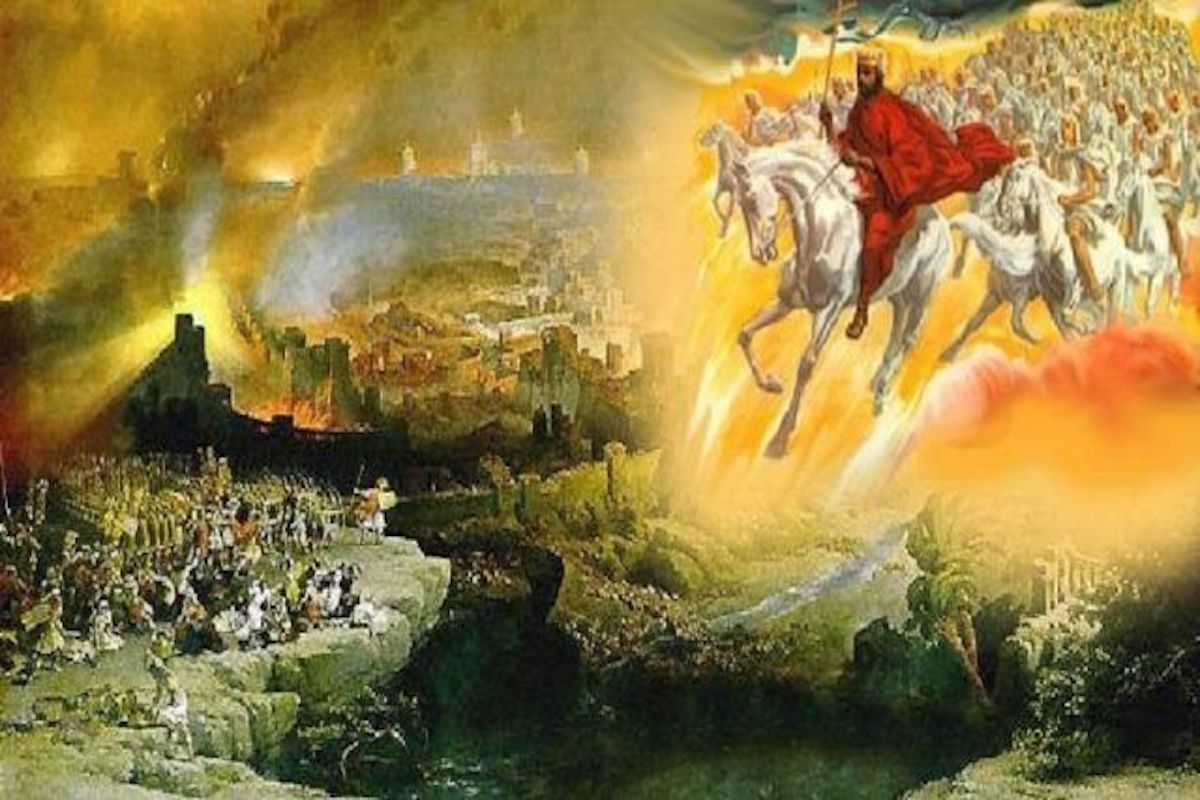
Prophecy reveals God’s nature and Christ’s exalted status—He will return with power and great glory (Matthew 24:30), as King of kings (1 Timothy 6:15), visible to every eye (Revelation 1:7), with every tongue confessing Him as Lord (Philippians 2:10-11).
It motivates evangelism and holy living—as 1 John 3:3 says, everyone with this hope purifies themselves. In a world full of evil and despair, prophecy offers hope, echoing Jesus’ words in John 14:1-3: “Let not your hearts be troubled… I go to prepare a place for you… I will come again and will take you to myself.”
Dispensational Theology: The Big Picture of World History
To understand end-times events, many turn to dispensationalism, a framework popularized in the 20th century North America, especially through the Scofield Reference Bible. “The dispensationalism delineated by Scofield suggested that God works with humans in distinct ways (dispensations) through history; that God has a distinct plan for Israel over against the church; that the Bible, especially predictive prophecy, needs to be interpreted literally; that the church will be secretly raptured from earth seven years prior to Christ’s second coming; and that Christ will rule with Israel during a literal thousand-year earthy reign. Contemporary, or progressive, dispensationalism remains thoroughly premillennial but rejects the ontological distinction between Israel and the church as two peoples of God, seeing them instead as two salvation-historical embodiments of a single people.”[3]
The dispensations include:
- Edenic (Genesis 1-3): Innocence in the Garden.
- Antediluvian (Genesis 4-8): Conscience after the Fall, leading to the Flood.
- Post-Diluvian (Genesis 9-11): Human Government post-Flood.
- Patriarchal (Genesis 12-50): Promise through Abraham and the patriarchs.
- Legal (Exodus onward): Law given to Israel.
- Ecclesiastical (Matthew to Revelation 18): The Church Age of grace.
- Messianic (Revelation 19-20): The millennial kingdom.
- Fullness of Time (Revelation 21-22): Eternal state in the new heavens and earth.
This structure helps see God’s overarching plan unfolding progressively.
Old Testament View of End Times
Old Testament end-times prophecy centers on Israel. Passages like Isaiah 66:22 and Jeremiah 33:16 highlight God’s enduring commitment to the Jewish people.
The diaspora—scattering of Jews—fulfilled prophecies in Deuteronomy 4:27, 28:63-65, Jeremiah 9:16, and others, as judgment for disobedience.
Yet God promised re-gathering and rebirth. Deuteronomy 30:3-5 foretells restoration from dispersion. Isaiah 66:8 speaks of a nation born in a day (many see this fulfilled in Israel’s 1948 establishment). Ezekiel 37:1-14, the valley of dry bones vividly pictures national revival.
The Tribulation for Israel, called the time of “Jacob’s trouble” (Jeremiah 30:7), involves intense suffering but ultimate deliverance (Zechariah 13:8-9; 14:2-4).
In the **Kingdom**, Israel enjoys peace, prominence, and blessing—nations stream to Jerusalem (Isaiah 2:2-4), the desert blooms (Isaiah 35:1-2), and God reigns (Zechariah 14:9).
The Millennium and End Times – Three Main Views
The “thousand years” in Revelation 20:1-7 sparks debate. Here are the primary interpretations:
- Amillennialism (“no millennium”) sees no literal earthly 1,000-year reign. Millennial prophecies are fulfilled spiritually in eternity or the current church age, with prophecies about Israel applied to the church.
- Postmillennialism views the millennium symbolically as the church age, where the Gospel gradually triumphs, Christianizing society and bringing peace. Christ returns after this “golden age” (sometimes linked to Kingdom Now theology).
- Premillennialism holds that Christ returns before a literal 1,000-year earthly kingdom. Most evangelicals favor this, expecting a seven-year tribulation beforehand.
- Variants of Premillennialism include:
- Post-Tribulation Rapture: Church endures the full Tribulation, raptured at Christ’s return.
- Mid-Tribulation Rapture: Rapture at the midpoint (3½ years).
- Pre-Tribulation Rapture: (common in dispensationalism): Church removed before the Tribulation begins, ending the church age and ushering in judgment on earth.
These views differ on timing and nature, but all affirm Christ’s bodily return, final judgment, and eternal kingdom.
Studying end-times prophecy isn’t about fear—it’s about hope, holiness, and readiness. As we see signs aligning, may it draw us closer to Christ, living expectantly for His return. What aspect of prophecy encourages you most? Share in the comments below!
For more on this topic, see my page on Revelation.
Notes:
[1] David Jeremiah, The Book of Signs, (W. Publishing, Nashville, 2019), pp.9-10.
[2] Ed Hindson and Tim LaHaye, Essential Guide to Bible Prophecy, (Harvest House Publishers, Eugene, OR, 2012), p.18.
[3] Stanley J. Grenz, David Guretzke, Cherith Fee Nordling, Pocket Dictionary of Theological Terms, (InterVarsity Press, Downers Grove, 1999), pp. 39-40.



 Ernie's Musings