Tag Archives: theology

Again, Are We There Yet?

And ye shall hear of wars and rumours of wars: see that ye be not troubled: for all these things must come to pass, but the end is not yet. (Matthew 24:6)

Last Sunday evening, September 25, 2022, was Rosh HaShanah,[1] the Feast of Trumpets. For the first time in many years, I was no longer excited about that event. In the past, this time of year elevated my anticipation for our Lord’s return to snatch up His Bride, the Church. Because the Lord fulfilled the first four spring feasts (Passover, Unleavened Bread, First Fruits, and Pentecost) and has not fulfilled the last three fall feasts (Trumpets, Atonement, and Tabernacles), it made sense to me that the Feast of Trumpets (the next on the calendar) was the perfect time for the Lord to sound the trumpet and call us home.

“Behold, I shew you a mystery; We shall not all sleep, but we shall all be changed, In a moment, in the twinkling of an eye, at the last trump: for the trumpet shall sound, and the dead shall be raised incorruptible, and we shall be changed” (1 Corinthians 15:51-52, emphasis mine).

“For the Lord himself shall descend from heaven with a shout, with the voice of the archangel, and with the trump of God: and the dead in Christ shall rise first: Then we which are alive and remain shall be caught up together with them in the clouds, to meet the Lord in the air: and so shall we ever be with the Lord” (1 Thessalonians 4:16-17, emphasis mine).

So, it seemed to me, that the Feast of Trumpets was the perfect time for Jesus to take His Bride to His Father’s house. However, for the last twenty or so years, I have been disappointed (but not discouraged) every year when Rosh HaShanah came and went because the Rapture did not take place. Recently, Amir Tsarfati[2] convinced me that the Feasts are intended for Israel, not for Christians. Jesus will fulfill all the fall feasts but at His Second Coming, when He returns at the end of the seven-year Tribulation as King of Kings and Lord of Lords.[3] That makes the Rapture of the Church imminent; it can happen at any time without warning. There are no signs to predict the Rapture.

So likewise ye, when ye shall see all these things, know that it is near, even at the doors. Verily I say unto you, This generation shall not pass, till all these things be fulfilled. Heaven and earth shall pass away, but my words shall not pass away. But of that day and hour knoweth no man, no, not the angels of heaven, but my Father only. (Matthew 24:33-36, emphasis mine)

This year, I was not disappointed when Rosh HaShanah came and went without the Rapture, because I understand that it should catch us by surprise, but not unaware or unprepared.

Jesus told us that “when ye shall see all these things, know that it is near, even at the doors” (Matthew 24:33). Luke quoted Jesus in his Gospel saying, “And when these things begin to come to pass, then look up, and lift up your heads; for your redemption draweth nigh” (Luke 21:28, emphasis mine).

For what things should we be looking? The biggest hint is the nation of Israel, which God promised to restore after a long period of diaspora. God speaking through the prophet Ezekiel said, “For I will take you from among the heathen [i.e., “the nations”], and gather you out of all countries, and will bring you into your own land” (Ezekiel 36:24). The Old Testament prophets all make many similar predictions. Ezekiel also presents a vision of Israel as a valley full of dry bones that come together and rise up as a mighty army.[4] In the same chapter, God gives Ezekiel a vision of two sticks – Israel (the Northern Kingdom) and Judah (the Southern Kingdom) – that separate, but in the end, God brings them back together.[5]

On May 14, 1948, God fulfilled that prophecy and a nation was born in a day![6] On the day of its birth, defenseless and without an army or air force, the Arab nations that surrounded it attacked with the intention of annihilating the newborn nation. However, God’s plan was not to be thwarted, and God saved Israel and defeated its enemies. The greatest sign that our “redemption draweth nigh” is the nation of Israel.

So, that was more than 70 years ago! Well, friend, that is a generation, and Jesus promised that “This generation shall not pass, till all these things be fulfilled” (Matthew 24:34, emphasis mine). Many of Jesus’ predictions of the last days (which will intensify in the seven-year Tribulation) are taking place right now and getting worse. Just read the Olivet Discourse recorded in Matthew 24 and consider the condition of the entire world today!

Ezekiel 38-39 predicts the alliance of Russia, Turkey, and Iran (Persia) along with their allies. Russia is called “Magog” and the “prince” of Magog is Gog. To the Russian leader, God says, “… Behold, I am against thee, O Gog, the chief prince of Meshech and Tubal: And I will turn thee back, and put hooks into thy jaws, and I will bring thee forth, and all thine army, … in the latter years thou shalt come into the land [i.e., “Israel”] that is brought back from the sword, and is gathered out of many people, against the mountains of Israel, which have been always waste: but it is brought forth out of the nations, and they shall dwell safely all of them” (Ezekiel 38:3-4, 8, emphasis mine).

Very recently, due to a weakened America, “Magog” (Russia) invaded the sovereign country of Ukraine. Just a few days ago, Russia annexed four of Ukraine’s eastern territories. At about the same time, the two gas pipelines that supply Russian gas to Europe, Nord Stream 1 & 2, exploded mysteriously. No “accident” occurred to cause the explosions; the explosions were man-made. The POTUS, prior to the “annexations” made claims, whether intentional or as a mental slip of the tongue (as our President is prone to do), that if Russia annexed the Ukrainian territories, “we” would put a stop to Nord Stream 1 & 2? Did the US blow them up? No one has admitted to it; however, Poland blames the US. There are some that believe Russia blew up the pipelines. But, does that make any sense?

Regardless of who is to blame, the fact remains that Europe is in dire straights and winter is coming. Then comes Israel to the rescue. In recent years, Israel has discovered and developed large gas reserves in the Mediterranean Sea and is prepared to sell gas to Europe by way of Egypt. They will pipe the gas to Egypt and Egypt will pipe it to Europe as well as liquifying and selling the gas in liquid form to Europe. What will Russia think of that? Could this be the “hooks in the jaw” that God uses to turn Gog’s attention to Israel? It could be.

Russia, Turkey, and Iran all have troops stationed in Syria on Israel’s northern border. The stage is set for Ezekiel’s Gog of Magog war. Will it take place before the Rapture, and we get to witness it, or will it take place after the Rapture? We cannot know for sure, but we can know that with the conversion of all the things of which Jesus spoke all over the world and this very intriguing development, we can be sure that our “redemption draweth nigh.”

Reader, are you prepared for that event? After Jesus takes all the true Christians out of the earth, there will come of time of trouble like the world has never experienced. It is called the seven-year Tribulation. If you think things are bad now, you ain’t seen nothing yet! You do not want to be around for what is coming. Ask Jesus to save you from God’s wrath that is to come. Please read my page on “Securing Eternal Life.”

Notes:


[1]  “Rosh HaShanah” — Rosh HaShanah | Ernie’s Musings (erniecarrasco.com)

[2]  Amir Tsarfati of Behold Israel.com: Behold Israel – A Non Profit Teaching Ministry
[3]  Revelation 19:11-16

[4]  Ezekiel 37:1-14

[5]  Ezekiel 37:15-28

[6]  Isaiah 66:8

1 Comment

Filed under Apologetics, Christianity, Current Events, End Times, Eschatology, Feasts of the Lord, Rapture, Religion, Second Coming of Christ, Theology

Answering For What You Know

And thou his son, O Belshazzar, hast not humbled thine heart, though thou knewest all this; (Daniel 5:22)

Following the death of Nebuchadnezzar in 562 B.C., Babylon started to decline from its former glory. Evil-Merodach succeeded his father and reigned for two years. He was murdered by his brother-in-law, Neriglissar (referred to as Nergal-Sharezer in Jeremiah 39:3, 13), in 560 B.C. He reigned four years, died in 556 B.C., and was succeeded by his young son, Labashi-Marduk, who ruled for two months and was assassinated by Nebonitus. Although Nebonitus became king, his interests in restoring the religion of the moon god, Sin, kept him away from Babylon for 10 out of the 17 years he reigned. In his stead, he named his son, Belshazzar as coregent of the kingdom.[1]

On October 12, 539 B.C., while the Persian army, led by Ugbaru, besieged Babylon, Belshazzar threw a party for 1000 of his nobles proudly trusting in the impregnable walls of that great city. Babylon straddled the banks of the Euphrates River. The river’s entrance and exit through the city were protected by iron-bar gates preventing man or beast from passing through. The Persians were not so easily deterred. While Belshazzar partied, the Persians were busy diverting the waters of the Euphrates so that the flow through the middle of the city dried up. The dry riverbed now provided unrestricted entry into the city, and the Persians caught the Babylonians with their proverbial pants down. Considering the engineering effort to divert the Euphrates around the city, it seems apparent that no one was watching. The Persians conquered Babylon, they killed Belshazzar, and Nebonitus was somewhere in Arabia clueless that he lost his kingdom.

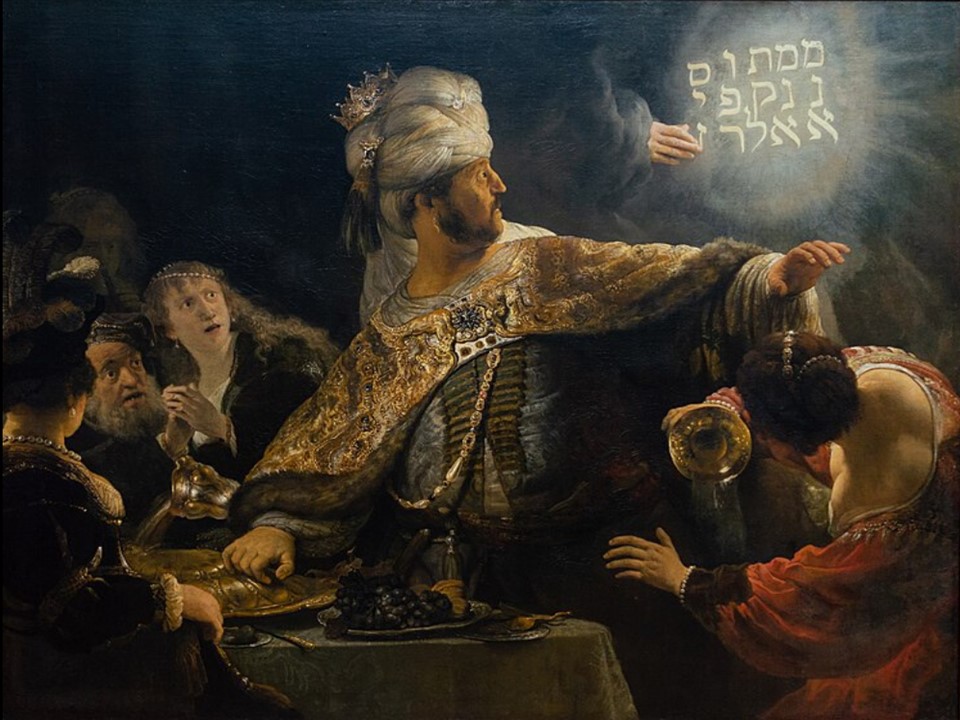
In the middle of all of this drama, Daniel records the final night of Babylon’s glory.[2] As the wine freely flowed into vessels taken from God’s Temple in Jerusalem, Belshazzar saw “the fingers of a man’s hand” writing on the wall. The “vision” so terrified him that he lost control of his bowels.[3] The writing was real. It was not imagined. Belshazzar called his “wise” men to interpret the writing, but they failed. Then Belshazzar’s mother remembered about Daniel and his abilities, so she came to the king to offer advice. “There is a man in thy kingdom, in whom is the spirit of the holy gods; and in the days of thy father light and understanding and wisdom, like the wisdom of the gods, was found in him; whom the king Nebuchadnezzar thy father, the king, I say, thy father, made master of the magicians, astrologers, Chaldeans, and soothsayers. Forasmuch as an excellent spirit, and knowledge, and understanding, interpreting of dreams, and shewing of hard sentences, and dissolving of doubts, were found in the same Daniel, whom the king named Belteshazzar: now let Daniel be called, and he will shew the interpretation.” (Daniel 5:11-12).

Belshazzar called for Daniel and offered him a third of the kingdom if he would interpret the writing. Such status would put Daniel on equal standing with Nebonitus and Belshazzar. However, Daniel refused the offer. He knew it would be short-lived anyway; he knew what was coming. Rather than meet the request directly, Daniel recited Nebuchadnezzar’s history.[4]

O thou king, the most high God gave Nebuchadnezzar thy father[5] a kingdom, and majesty, and glory, and honour: And for the majesty that he gave him, all people, nations, and languages, trembled and feared before him: whom he would he slew; and whom he would he kept alive; and whom he would he set up; and whom he would he put down. But when his heart was lifted up, and his mind hardened in pride, he was deposed from his kingly throne, and they took his glory from him: And he was driven from the sons of men; and his heart was made like the beasts, and his dwelling was with the wild asses: they fed him with grass like oxen, and his body was wet with the dew of heaven; till he knew that the most high God ruled in the kingdom of men, and that he appointeth over it whomsoever he will. (Daniel 5:18-21, emphasis mine)

Daniel charged Belshazzar with the same pride that brought Nebuchadnezzar down. “And thou his son, O Belshazzar, hast not humbled thine heart, though thou knewest all this” (Daniel 5:22, emphasis mine). Belshazzar was not ignorant of this fairly recent history, and yet he blasphemed the only God that could save him.

He knew this, and God held him accountable for what he knew to be true. He would answer for it. Daniel read the writing and gave the interpretation:

And this is the writing that was written, MENE, MENE, TEKEL, UPHARSIN. This is the interpretation of the thing: MENE; God hath numbered thy kingdom, and finished it. TEKEL; Thou art weighed in the balances, and art found wanting. PERES; Thy kingdom is divided, and given to the Medes and Persians. (Daniel 5:25-28, emphasis mine)

“In that night was Belshazzar the king of the Chaldeans slain. And Darius the Median took the kingdom, being about threescore and two years old” (Daniel 5:30-31).

God has given every human on earth enough information so that they can recognize and worship Him as God. “Because that which may be known of God is manifest in them; for God hath shewed it unto them. For the invisible things of him from the creation of the world are clearly seen, being understood by the things that are made, even his eternal power and Godhead; so that they are without excuse” (Romans 1:19-20, emphasis mine).

Indeed, Paul says that those who do not know the law of God follow that law instinctively. “For when the Gentiles, which have not the law, do by nature the things contained in the law, these, having not the law, are a law unto themselves: Which shew the work of the law written in their hearts, their conscience also bearing witness, and their thoughts the mean while accusing or else excusing one another” (Romans 2:14-15, emphasis mine).

Everyone will have to answer for what they know. However, God’s standard requires perfection, and no one – whether knowing the written law of God, or whether knowing the law of God instinctively – can keep the law perfectly. And James says, “For whosoever shall keep the whole law, and yet offend in one point, he is guilty of all” (James 2:10, emphasis mine). In the end, everyone will have to answer for what they know. “And I saw the dead, small and great, stand before God; and the books were opened: and another book was opened, which is the book of life: and the dead were judged out of those things which were written in the books, according to their works … and they were judged every man according to their works. And death and hell were cast into the lake of fire. This is the second death. And whosoever was not found written in the book of life was cast into the lake of fire” (Revelation 20:12-15, emphasis mine).

Reader, Jesus is coming very soon. Are you prepared to meet Him? Now especially, having read this, you will answer for what you know. There is only one way to avoid that judgment. Ask Jesus to be your Savior. Please read my page on “Securing Eternal Life.”

Notes:


[1]  John F. Walvoord and Roy B. Zuck, The Bible Knowledge Commentary, (Victor Books, SP Publications Inc., 1985), p. 1344.

[2]  Daniel 5

[3]  Daniel 5:6 “his loins were loosed”

[4]  Recorded in Daniel 4

[5]  Belshazzar was not related to Nebuchadnezzar. The term “father” is used as a metaphor meaning predecessor or founder.

Comments Off on Answering For What You Know

Filed under Apologetics, Evangelism, Gospel, Salvation, Theology

9:11

And I will establish my covenant with you; neither shall all flesh be cut off any more by the waters of a flood; neither shall there any more be a flood to destroy the earth. (Genesis 9:11)


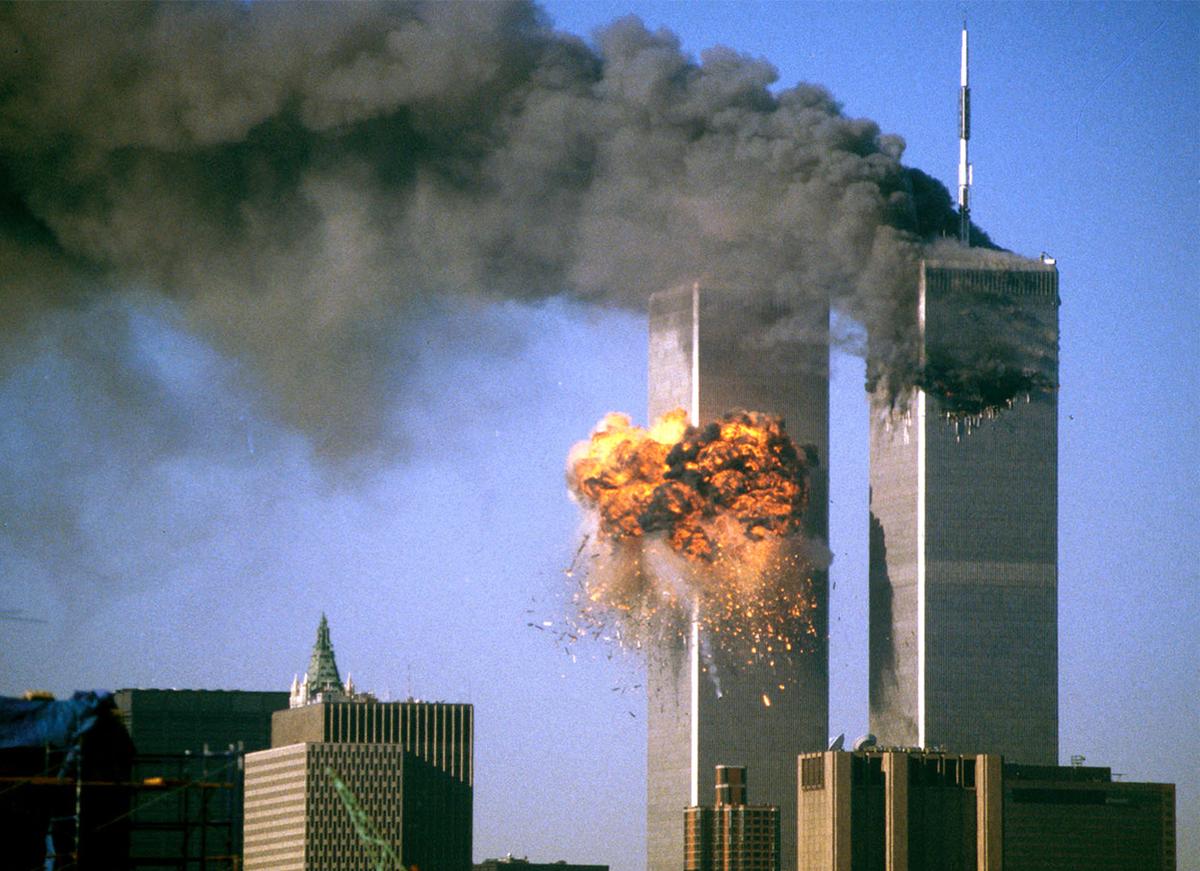
Twenty-one years ago, the world gazed in shock as they watched endless replays of passenger jets flying into the Twin Towers in New York City. If that was not horrific enough, not much later another passenger jet flew into the Pentagon in Washington, DC. A fourth plane, destined either to the White House or the US Capitol building, crashed in a field near Shanksville, PA as a brave group of passengers fought to wrest control of the airplane from hijackers. The actions of those brave passengers cost them their lives and the lives of the others onboard, but it prevented a much worse outcome if the terrorists had succeeded.

Today we remember the events of that fateful day we have come to call 9-11. For a very brief time following those events, our nation was united as never before since at least World War II. For a while, Americans filled the pews of churches and for a moment, there was a feeling of revival. However, the revival was short-lived, and our nation quickly followed the path of the rest of the world into the depths of sin and depravity as this nation has never seen.

The list of sins is long and putrid, but the one that captured my mind was spot-lighted by 9-1-1; it is the sin of nature or earth worship. By earth-worship, I am referring to the Globalists’ agenda to “save the planet” from man-made climate change. The plan to save the planet is Satanic. From the beginning of creation, Satan has wanted to destroy the human race who was created in the image of God. Satan hates God, and he hates God’s most prized creation – the human race.

Globalists are not so much interested in saving the planet as they are in eliminating the majority of the human race and controlling those who remain. If they were serious about their concern for the planet, they would set the example by riding their bicycles rather than flying in private jets, and they would build their carbon-hogging mansions as far away from the sea coasts as possible in case the ocean levels really rise as they claim. However, climate change or global warming is not really their concern. They fancy themselves as the ruling elites, and they desire to lord it over a few peasants that they can control. They no longer hide their intentions. If anyone is interested in knowing their plans, they have published it freely on the website of the World Economic Forum.

For the child of God, this should not cause fear; rather it should cause us to watch and give us hope in the promises of God.

Genesis 9 records the end of the Global Flood where God destroyed all air-breathing land-dwelling creatures on earth, animals and humans. The flood waters receded from the land surface of the earth and Noah and his family and all the animals onboard the Ark came out to walk on dry land for the first time in over a year (371 days). The first thing Noah did when he came out was to build an altar and offer burnt sacrifices to the Lord.[1] “And the LORD smelled a sweet savour; and the LORD said in his heart, I will not again curse the ground any more for man’s sake; for the imagination of man’s heart is evil from his youth; neither will I again smite any more every thing living, as I have done. While the earth remaineth, seedtime and harvest, and cold and heat, and summer and winter, and day and night shall not cease” (Genesis 8:21-22, emphasis mine).

The Globalists seek to stoke the flames of fear with their predictions of global catastrophe (which, by the way, they are causing by their draconian measures) due to climate change – increased carbon dioxide (CO2) in the atmosphere causing global warming, drastic weather changes bringing about crop failures, famines, and disease. However, note the promise of God – while the earth remains the weather will not change. God, not man, controls the weather.

Globalists also predict that rising global temperatures will cause the ice caps to melt. As a result, the ocean levels will rise and flood all the coastlands. Skeptics often ask, “If there was really a global flood, where did all the water go?” “We now know, of course, that the earth has plenty of water to launch a global flood. It has been calculated that if the earth’s surface were completely flat, with no high mountains and no deep ocean basins, that water would cover the earth to a depth of about 8,000 feet.”[2]

The Globalists’ problem is that they do not know the Creator God who controls the elements and keeps His promises. “And I will establish my covenant with you; neither shall all flesh be cut off any more by the waters of a flood; neither shall there any more be a flood to destroy the earth” (Genesis 9:11). Granted, the earth has experienced many devastating floods but never has there been a planet-covering, earth-destroying flood like the one recorded in Scripture.[3]

The destruction of this planet is yet future, but it will not be from ocean levels rising or by warming or cooling temperatures. There will be famines and pandemics, and people will die as a result of wars.[4] However, the world will end according to God’s plan, not by human mismanagement of the environment. “But the day of the Lord will come as a thief in the night; in the which the heavens shall pass away with a great noise, and the elements shall melt with fervent heat, the earth also and the works that are therein shall be burned up … Looking for and hasting unto the coming of the day of God, wherein the heavens being on fire shall be dissolved, and the elements shall melt with fervent heat?” (2 Peter 3:10, 12).

Once again, those who have placed their trust in Christ need not worry. “Nevertheless we, according to his promise, look for new heavens and a new earth, wherein dwelleth righteousness” (2 Peter 3:13). That time is nearer today than ever before. We have God’s Word on it.

Reader, Jesus is coming soon. Are you prepared to meet Him? If you are not a member of His body, you will miss Him when He comes. Don’t do that! Please read my page on “Securing Eternal Life.”

Notes:


[1]  Genesis 8:20

[2]  “Did Noah’s Flood Cover the Himalayan Mountains?” — https://www.icr.org/article/did-noahs-flood-cover-himalayan-mountains

[3]  Genesis 6-8

[4]  Matthew 24

Comments Off on 9:11

Filed under Apologetics, Bible, Creation, Current Events, End Times, Eschatology, Satan, Second Coming of Christ, Theology

Parts Is Not Parts

For the body is not one member, but many. (1 Corinthians 12:14)

Back in the ’80s, the Wendy’s ® fast-food chain offered the anti-slogan, “Parts is parts” for their chicken sandwich. The slogan sent the message that all other chicken vendors used chicken parts indiscriminately in their processed chicken sandwiches, while Wendy’s ® only used the very best parts. One commercial had the customer questioning the content of the chicken and the attendant explaining that they used different parts of the chicken, and after all, “parts is parts.”[1]

Obviously, the parts do matter when ordering a chicken sandwich. One expects to get a tender chicken breast fillet in one’s chicken sandwich, and not an amalgamation of assorted chicken parts like the liver, gizzard, heart, skin, eyes, combs, intestines, etc. “Parts is parts,” but not all parts are suitable for consumption – at least, not in our minds.

Paul offered a similar idea in his first epistle to the Corinthians.[2] He compared the Church to our physical bodies. Our bodies are made up of large body parts that are readily observable – head, eyes, ears, nose, mouth, neck, shoulders, arms, hands, fingers, legs, feet, toes, etc. We also have literally trillions of microscopic parts beneath the skin that play major roles in keeping us alive – our cardio-vascular system, respiratory system, digestive system, endocrine system, neurological system, skeletal system, etc. All of these parts serve their own functions and are vital to our lives, even those that are not seen. Paul points out the obvious. We cannot exist as a hand alone, or a foot alone, or an eye alone, or an ear alone. We need all of our parts functioning harmoniously in union performing their individual roles as part of the whole body.

Apparently, from the tone of Paul’s letter, the Corinthians were having trouble in this department (and others as well). The Church functions as one body comprised of many members (parts). He sums this idea up like this, “Now ye are the body of Christ, and members in particular” (1 Corinthians 12:27). Each member of the body is “particular.” “Particular” translates the Greek word, meros, which means “one of the constituent parts of a whole.”[3]

Like the human body, the “Body of Christ,” the Church, has many members and each member serves a unique purpose in the body. We cannot all be preachers. We cannot all teach, or sing, or play musical instruments, but we all have a purpose. There are needed tasks in the church that seem “menial,” but serve a great need in the church – caring for children in the nursery, keeping the morning coffee going before services, greeting people as they come in the door, or just smiling and saying “Hi” to one another. Every member is important to the Body of Christ, and there is not one function that is more or less important than another. “Parts is NOT parts” The parts are all one in Christ, but we all serve our own unique, God-given purpose.

Reader, Jesus is coming soon. Are you prepared to meet Him? If you are not a member of His body, you will miss Him when He comes. Don’t do that! Please read my page on “Securing Eternal Life.”

Notes:


[1]  https://www.youtube.com/watch?v=y_oem9BqUTI

[2]  1 Corinthians 12

[3]  Definition from Thayer’s Greek Definitions, (Published in 1886, 1889; public domain).

Comments Off on Parts Is Not Parts

Filed under Apologetics, Bible, Christianity, Religion, Theology

The Bible 101

I will worship toward thy holy temple, and praise thy name for thy lovingkindness and for thy truth: for thou hast magnified thy word above all thy name. (Psalm 138:2)

I recently took a volunteer position teaching Bible to third to sixth graders in a local Christian school. My first time meeting with these students was Friday, and rather than jump right into the curriculum, I determined to get to know the students and see what their level of understanding was of the Bible. As I expected, their knowledge about the Bible was pretty rudimentary, but still far and above children of the same age who know nothing about the Bible.

For that reason, I prepared a lesson so they might get a glimpse of what the Bible has to say about the Bible. Most Christians (I hope) know some basic facts about the Bible. These students did as well. The Bible is the Word of God. God is the ultimate Author of the Bible. It was written by men inspired by God, the Holy Spirit. It has 66 books, 39 in the Old Testament and 27 in the New Testament. So, what does the Bible have to say about itself?

The Bible is Unfailing

In other words, what God had recorded in the Bible will come to pass without fail. In commissioning Jeremiah, God gave him a vision. Jeremiah records, “Moreover the word of the LORD came unto me, saying, Jeremiah, what seest thou? And I said, I see a rod of an almond tree. Then said the LORD unto me, Thou hast well seen: for I will hasten my word to perform it” (Jeremiah 1:11-12, emphasis mine). The Hebrew words translated “hasten” in the KJV are shâqad ‛al which literally means, “I will keep watch of, be wakeful over on account of My Word.” God will not allow any of His word to “fall through the cracks.”

To Isaiah, God said the same thing using different words. “For as the rain cometh down, and the snow from heaven, and returneth not thither, but watereth the earth, and maketh it bring forth and bud, that it may give seed to the sower, and bread to the eater: So shall my word be that goeth forth out of my mouth: it shall not return unto me void, but it shall accomplish that which I please, and it shall prosper in the thing whereto I sent it” (Isaiah 55:10-11, emphasis mine). The people in Noah’s day laughed at his ark-building project because they had never seen it rain. Even though Noah preached God’s Word to them, they refused to listen choosing rather to rely on their own experience; but they were wrong and God’s Word proved right. “And [God] spared not the old world, but saved Noah the eighth person, a preacher of righteousness, bringing in the flood upon the world of the ungodly” (2 Peter 2:5, emphasis mine). God does not speak carelessly.

Jesus emphasized that the smallest detail of Scripture would remain forever without fail. “For verily I say unto you, Till heaven and earth pass, one jot or one tittle shall in no wise pass from the law, till all be fulfilled” (Matthew 5:18, emphasis mine). The “jot” is the smallest Hebrew letter “yod” (י) and the “tittle” is the smallest mark distinguishing one letter from another similar-looking letter as in the difference between the resh (ר) and the dalet (ד). Some today see things in the Bible and say those things no longer apply because that is not the way our culture functions now. For example, many churches today employ women as senior pastors of churches even though the Bible speaks against it. “Let the woman learn in silence with all subjection. But I suffer not a woman to teach, nor to usurp authority over the man, but to be in silence.” (1 Timothy 2:11-12, emphasis mine). Many will argue about this point, but the plain reading of the text is clear enough. In the Church, a woman is not to have authority over a man, and that is exactly what a woman does when she is placed in the position of senior pastor. That alteration of Scripture goes beyond changing a jot or tittle!

Peter quotes Isaiah 40:6-8 when he says, “For all flesh is as grass, and all the glory of man as the flower of grass. The grass withereth, and the flower thereof falleth away: But the word of the Lord endureth for ever. And this is the word which by the gospel is preached unto you” (1 Peter 1:24-25, emphasis mine). The Word of God, the Holy Bible, will never fail.

The Bible is Trustworthy

You can trust the Bible and apply its teachings to your life and know that what it says is true. The psalmist says, “The law of the LORD is perfect, converting the soul: the testimony of the LORD is sure, making wise the simple” (Psalm 19:7). The Hebrew word translated “perfect” is tâmı̂ym and it means “complete, whole, entire, sound.” The Hebrew word translated “sure” is ‘âman and it means “to be established, be faithful, be carried, make firm.” Look what it does. It “converts” the soul or causes the soul to “return” (by implication) to God. It gives wisdom to the foolish (who will heed what it says).

Before going to the cross, in His high priestly prayer, Jesus prayed to the Father for us saying, “Sanctify them through thy truth: thy word is truth” (John 17:17, emphasis mine). “Sanctify” means to “set apart” specifically for the service of God. I find it interesting that “the word” may have a dual meaning. At first sight, we understand that “thy word” refers to the Scriptures. However, at the beginning of John’s Gospel, we are introduced to “The Word” (John 1:1-3) and instructed that “And the Word was made flesh, and dwelt among us, (and we beheld his glory, the glory as of the only begotten of the Father,) full of grace and truth” (John 1:14, emphasis mine). So, the spoken/written Word of God became the living Word of God in Jesus Christ in whom we who have placed our trust in Him, are “sanctified.”

Then, just as light makes our way sure in the dark and we trust the light to keep us from stumbling, so the Word of God is a light for us in an ever-darkening world. The psalmist said it this way, “Thy word is a lamp unto my feet, and a light unto my path” (Psalm 119:105, emphasis mine). It will shine its light in a dark world!

God Values His Word

Scripture teaches us not to take the name of God lightly or speak His name carelessly. “Thou shalt not take the name of the LORD thy God in vain; for the LORD will not hold him guiltless that taketh his name in vain” (Exodus 20:7, emphasis mine). “And ye shall not swear by my name falsely, neither shalt thou profane the name of thy God: I am the LORD” (Leviticus 19:12, emphasis mine). It appears that God takes His name very seriously, and He expects us to do the same. Even so, the psalmist records, “I will worship toward thy holy temple, and praise thy name for thy lovingkindness and for thy truth: for thou hast magnified thy word above all thy name” (Psalm 138:2, emphasis mine). As highly as God regards His name, He regards His Word, the Bible, above His own name. What does that say to us? Should we not have the same regard for God’s Word?

The Bible Is Not Man’s Invention

Many critics of the Bible argue that it was the work of men throughout history, just like any other work of fiction or religious literature. Although at least 40 penned the words of Scripture, the Bible claims divine authorship for every word. In his final letter to his young protégé, Timothy, the Apostle Paul writes, “All scripture is given by inspiration of God…” (2 Timothy 3:16, emphasis mine). The phrase “inspiration of God” is one compound word in the Greek: theopneustos, meaning “God-breathed” or “breathed out by God.” So, the Bible is not a human concoction. Consider the miracle of the Bible. Written down by over 40 men, most of them separated by hundreds of years over almost 2000 years, and yet there is consistency and cohesion throughout the entire text – Old and New Testaments. One cannot say that about the Quran, which supposedly had only one author, or the Book of Mormon, which was supposedly given by the angel Moroni to a single man, John Smith. Reading these books can make one’s head spin, but not the Bible. It makes perfect sense through and through, and the more one reads it, the more sense it makes.

The Apostle Peter contradicted the notion that the Bible was of human origin. He argued from the point of his personal witness. He spent three years of his life in close contact with Jesus. He witnessed all of Jesus’ miracles firsthand. He saw Jesus walk on the stormy waters, and he himself walked on the water at Jesus’ bidding. Peter was on Mount Herman when Jesus was transfigured into His glorious divine nature as He spoke with Moses and Elijah. Peter witnessed all of that firsthand; he did not dream it up. Yet, with all of that Peter says, “We have also a more sure word of prophecy [i.e., Scripture]; whereunto ye do well that ye take heed, as unto a light that shineth in a dark place, until the day dawn, and the day star arise in your hearts: Knowing this first, that no prophecy of the scripture is of any private interpretation. For the prophecy came not in old time by the will of man: but holy men of God spake as they were moved by the Holy Ghost” (2 Peter 1:19-21, emphasis mine). Peter says that the written Word of God is more reliable than his own eyewitness account.

The Bible Prepares Us

Finally, God gives us His Word to prepare us for the conflicts that come into our lives and to give us the resource for witnessing about Him, not from our own opinions, but from His Word. The psalmist puts it this way. “Let thy mercies come also unto me, O LORD, even thy salvation, according to thy word. So shall I have wherewith to answer him that reproacheth me: for I trust in thy word” (Psalm 119:41-42, emphasis mine). As Christians, we often suffer “reproach” from non-believers. Here the psalmist pleads for salvation “according to God’s Word” so that he may respond to those who find fault (reproach). Notice that he puts his trust in the Word of God, not his own resources. Likewise, when we are challenged about our faith, rather than answering from our own opinions, our response should be “according to God’s Word.” We can fail, but God’s Word never fails.

Again, Paul instructs Timothy, “Study to shew thyself approved unto God, a workman that needeth not to be ashamed, rightly dividing the word of truth” (2 Timothy 2:15, emphasis mine). “Study” does not mean “scan” the Bible looking for your favorite verses, nor does it mean to read it casually. The Greek word is spoudazō and it means “to exert one’s self, endeavor, give diligence.” All of this is for the purpose of being a “workman that needeth not to be ashamed.” Christian, you do realize that God has you here on earth to be a “workman” in His kingdom, don’t you? Included in that “study” involves the “rightly dividing the word of truth,” i.e., handling God’s Word correctly, not inserting your own interpretation, adding to the Word, or taking away from the Word. Remember what was said earlier, God “magnifies His Word above His own name”! We should handle it carefully and with reverence.

We need to always be prepared and ready to give a response. Peter says, “But sanctify the Lord God in your hearts: and be ready always to give an answer to every man that asketh you a reason of the hope that is in you with meekness and fear” (1 Peter 3:15, emphasis mine). First of all, we begin by giving God His proper place in our hearts. That puts us in the right relationship with Him. When we do that, we should be ready always to give a response to anyone who asks us about the hope that we have. A lost and dying world should be able to look to the Christian and see hope there. And when they ask why we have peace when the world is falling down around us, we should have a ready answer with “meekness” and “fear” (i.e., reverence).

Reader, do you know the Author of this wonderful Book? If not, please read my page on “Securing Eternal Life.”

Comments Off on The Bible 101

Filed under Apologetics, Bible, Christianity, Theology