Tag Archives: theology

Is the Law Sin?

The Law

What shall we say then? Is the law sin? (Romans 7:7)

In recent years I have heard Christians reject the Old Testament as if it no longer applies. One young man tattooed the inside of his left arm with: ουδεν αρα νυν κατακριμα τοις εν χριστω ιησου. In case you do not read Koine Greek, it says, “Therefore there is now no condemnation for those who are in Christ Jesus.” (Romans 8:1, NASB). This reading is translated from the liberal Westcott-Hort Greek New Testament. That text omits the phrase: μη κατα σαρκα περιπατουσιν αλλα κατα πνευμα – “who walk not after the flesh, but after the Spirit” (Romans 8:1, KJV). This additional phrase is included in the Textus Receptus Greek New Testament from which the KJV is translated. (Bear with me; there is a point to this.) When I pointed out the biblical prohibition against tattoos (Leviticus 19:28) to this young man, a seminary student at the time, he lashed out at me pointing out that we are not under Law, but under Grace. Then when I pointed out the missing phrase in his tattoo, he lashed out against the King James Bible. Hmm! The missing phrase “who walk not after the flesh, but after the Spirit” suddenly takes on greater significance. Perhaps the compilers of the Westcott-Hort Greek New Testament did not like that phrase either.

So Paul asks an important question: “Is the Law Sin?” Judging from this seminary student’s reaction the answer must be, “Yes!” But what does Paul say? “God forbid. Nay, I had not known sin, but by the law: for I had not known lust, except the law had said, Thou shalt not covet” (Romans 7:7, emphasis added). So, where do we get the idea that we are to disregard the Law contained in the Old Testament? Jesus quoted from the Old Testament exclusively. Of course, that was all that existed at the time, but He never gave any indication that it no longer applied. In like manner, all the New Testament writers referred constantly to the Old Testament and never hinted that it was passé. In writing to Timothy, Paul affirms that “All scripture is given by inspiration of God, and is profitable for doctrine, for reproof, for correction, for instruction in righteousness” (2 Timothy 3:16, emphasis added). When he penned these words, there was no New Testament, only the Old. Instead of rejecting the Law, Paul says that “the law is holy, and the commandment holy, and just, and good” (Romans 7:12).

Salvation does not come through the keeping of the Law. That is impossible. “For whosoever shall keep the whole law, and yet offend in one point, he is guilty of all” (James 2:10). We know that “by grace are ye saved through faith; and that not of yourselves: it is the gift of God: Not of works [of the law], lest any man should boast” (Ephesian 2:8-9, emphasis added). So, does the Law serve any purpose? Paul seems to think so. “Was then that which is good made death unto me? God forbid. But sin, that it might appear sin, working death in me by that which is good; that sin by the commandment might become exceeding sinful” (Romans 7:13, emphasis added). The purpose of the law is to shine a spotlight on what is sin.

The Christian is saved by Grace, not by attempting to keep the Law (which is impossible to do), but the Law should be to the Christian a guide as to what God regards as sinful. God wants His children to be holy – set apart from the world, and the Law guides us to what pleases God. Can we keep the law flawlessly? Probably not, but we have the assurance that “If we confess our sins, he is faithful and just to forgive us our sins, and to cleanse us from all unrighteousness” (1 John 1:9). But how can we confess, if we do not know that we sinned? The Law helps us see that.

That young seminary student thought his tattoo would be a great witnessing tool. I venture to say (although I do not know for sure) that his tattoo has not helped him lead a single person to Christ. Perhaps, if he had taken to heart the omitted qualifying phrase in Romans 8:1 – “who walk not after the flesh, but after the Spirit” – he would not have violated the commandment against tattoos. I do not question the young man’s salvation, and I fully understand his motive however misguided; but when Paul said, “I am made all things to all men, that I might by all means save some” (1 Corinthians 9:22), I doubt that he meant for us to go out and get tattoos in order to win over tattooed people.

Is the Law sin? No, but it serves to show us what sin is and what we should avoid. God does not change (Malachi 3:6), and He has always expected holiness from His people. “But as he which hath called you is holy, so be ye holy in all manner of conversation; Because it is written, Be ye holy; for I am holy” (1 Peter 1:15-16). The Law is not sin; it reveals sin. The Law should be heeded, not disregarded.

3 Comments

Filed under Apologetics, Christianity, Evangelism, Gospel, Religion, Salvation, Theology

Everyone’s A Slave

No man can serve two masters: for either he will hate the one, and love the other; or else he will hold to the one, and despise the other. Ye cannot serve God and mammon. (Matthew 6:24)

In America, at least for the moment, we consider ourselves to be a free people. After all, we have the Declaration of Independence and the Bill of Rights – the first ten amendments to the United States Constitution. While this may be true in a temporal, earthly sense, it is not so in an eternal, ethereal sense. We are all slaves to something.

Jesus simplifies the slave masters down to two in our verse above. “Ye cannot serve God and mammon.” Mammon was the Aramaic term meaning “riches” or “money,” but the term can be broadened to all the trappings of this world. Anything that demands your time and your devotion is your master. “Know ye not, that to whom ye yield yourselves servants to obey, his servants ye are to whom ye obey; whether of sin unto death, or of obedience unto righteousness?” (Romans 6:16, emphasis added). Many, including Christians, deny that they are slaves to “sin” (i.e., Mammon), but they are self-deceived. This is very easy to prove. It always comes to a choice between the things of God or the things of this world. When confronted with the choice between going to church or Bible study (group or personal) and your favorite diversion, e.g., watching your favorite sports game, watching a favorite TV show or going to a movie, going fishing, boating, or camping, taking the kids to their soccer game, or dance recital, which one comes out on top? None of the things that I listed are necessarily sinful, except when given a superior position to the things of God. Of course, I could have listed really “sinful” choices, but Paul’s exhortation was given to Christians not to “heathen.” If Christians can be enslaved by the things of this world, how much more the non-Christian who is without the power of the Holy Spirit!

The Christian should be guided by a different standard. Paul says that the Christian, “Being then made free from sin, ye became the servants [slaves] of righteousness” (Romans 6:18). Being a “slave of righteousness” (i.e., slaves of God) for the Christian should not be a difficult task. If it is, that one should reevaluate his standing before God. Jesus said, “Take my yoke upon you, and learn of me; for I am meek and lowly in heart: and ye shall find rest unto your souls. For my yoke is easy, and my burden is light” (Matthew 11:29-30). Strange that Jesus should use a yoke as an illustration. Certainly the reader has seen pictures of yoke of oxen pulling a plow or a cart. The yoke that binds the two oxen together for the purpose of pulling a heavy load does not look “easy.” In training oxen to pull a load, a young, inexperienced ox is yoked to an older, experienced ox. The young ox will fight the load, but gradually learns from the older. In the interim, the older ox bears most of the load while the younger is learning. Jesus assures us that “[His] yoke is easy and [His] burden is light” because He “was in all points tempted like as we are, yet without sin” (Hebrews 4:15). He bears the greater load, and as we learn from Him, our load becomes easier to bear; but He must be the Master.

Everyone is a slave to something. You have the choice of who will be master of your life.

2 Comments

Filed under Christianity, Evangelism, Gospel, Religion, Salvation, Theology

What’s Special About Sunday?

In the end of the sabbath, as it began to dawn toward the first day of the week ... (Matthew 28:1)

In the end of the sabbath, as it began to dawn toward the first day of the week … (Matthew 28:1)

And very early in the morning the first day of the week, they came unto the sepulchre at the rising of the sun. (Mark 16:2)

Why should Christians worship on Sunday instead of Saturday as do the Jews and certain other “Christian” denominations? After all, in fourth of the Ten Commandments, God specifically says, “Remember the sabbath day, to keep it holy. Six days shalt thou labour, and do all thy work: But the seventh day is the sabbath of the LORD thy God: in it thou shalt not do any work, thou, nor thy son, nor thy daughter, thy manservant, nor thy maidservant, nor thy cattle, nor thy stranger that is within thy gates: For in six days the LORD made heaven and earth, the sea, and all that in them is, and rested the seventh day: wherefore the LORD blessed the sabbath day, and hallowed it” (Exodus 20:8-11). So, are we in violation of God’s commandment by worshiping on Sunday?

First of all, let me say that setting aside one day of the week for rest and worship is right and proper whether that day be Friday, Saturday, or Sunday or any day of the week for that matter.  “One man esteemeth one day above another: another esteemeth every day alike. Let every man be fully persuaded in his own mind” (Romans 14:5).

Much of the confusion comes with the interpretation of the word “Sabbath” in the Bible.  The word in the Hebrew does not mean “seventh” (shebəiʽi), but rather “rest” or “to rest” (shebbot).  Genesis 2:2 tells us that “on the shebəiʽi day God ended his work which he had made; and he shebbot on the shebəiʽi day from all his work which he had made.”  Translating that seventh day to mean Saturday “assumes” that God began His creative acts on Sunday, and we really have no textual basis for that conclusion other than what has been handed down to us by Jewish tradition – that, however, is not to say that this tradition is in error.  Furthermore, as you study the “Feasts of the Lord” given in Exodus and Leviticus, you find that each of those days is considered a shebbot (Sabbath) regardless of what day of the week it falls on.  So, we need to be careful not to become dogmatic over things on which the Bible is unclear.  However, it is clear that we need to “sanctify” – set aside – one day a week for the Lord.

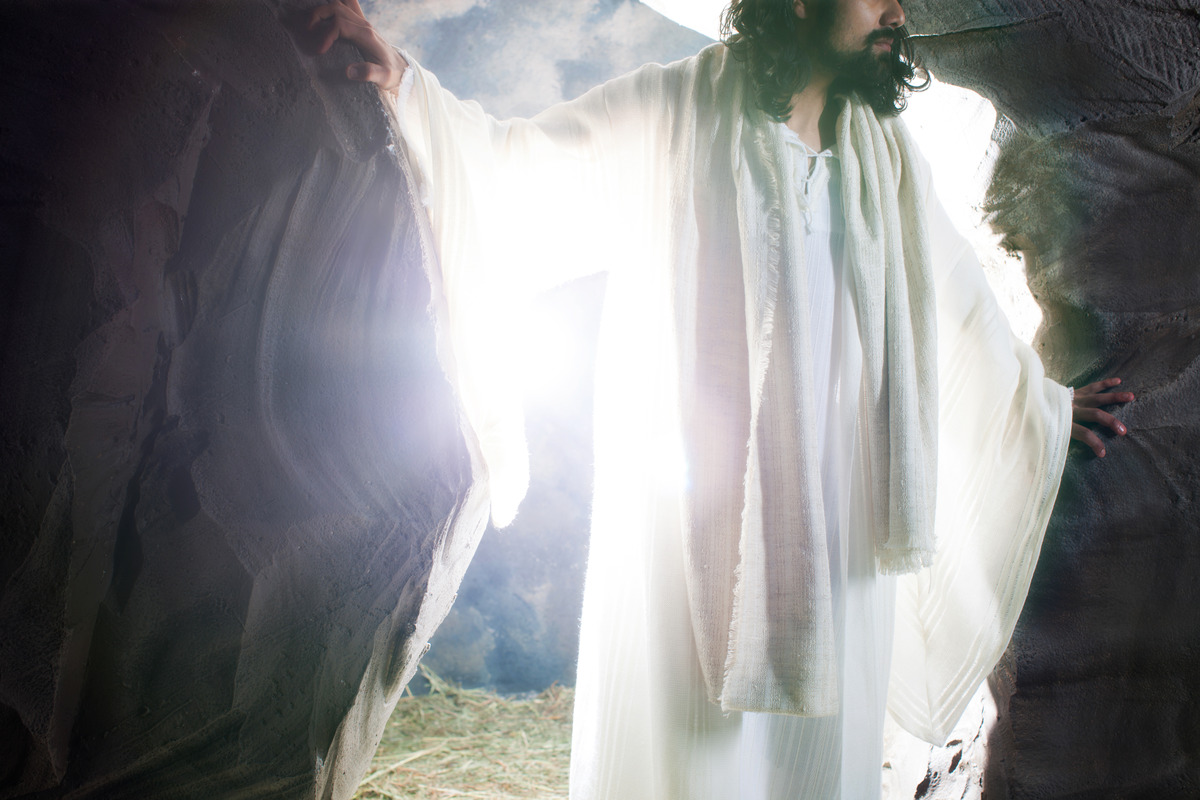
Today, on Resurrection Day, we celebrate our Lord’s victory over death. (See “Risen Indeed,” where I cover the facts of the Resurrection.) The Resurrection is significant for us who believe because we have the promise that because Christ conquered death, we too can be assured of a resurrection to eternal life. “But if there be no resurrection of the dead, then is Christ not risen: And if Christ be not risen, then is our preaching vain, and your faith is also vain … But now is Christ risen from the dead, and become the firstfruits of them that slept.” (1 Corinthians 15:13-14, 20). Today we rejoice in Christ’s resurrection and look forward to our own resurrection to be with Him eternally.

In the New Testament, the first Jewish Christians went to the temple or synagogue on the Sabbath (Acts 13:14; 17:2; 18:4) for the sake of the Jews, but they also met on the First Day of the week (Acts 20:7; 1 Corinthians 16:2) because this was “the Lord’s Day” and also for the sake of the Gentiles which were not obligated to follow Jewish custom (Colossians 2:16). The reason for this change is because this is when Christ was raised from the dead (Matthew 28:1, Mark 16:2; Luke 24:1; John 20:1).

The First Day of the week was also the day that the Holy Spirit descended upon the disciples gathered in the upper room (Acts 2:1). Scripture does not specify the day of the week, but when you consider that Jesus arose on the first day of the week and count forward 50 days (the Day of Pentecost) you will find that day to be Sunday also. The day that Jesus arose was the “First Omer” (Nisan 16) and the Day of Pentecost was the “50th Omer (Sivan 6). Not only were these days important on the Jewish calendar, but they have even greater significance in the Christian calendar. For this reason, it is proper that Christians should meet on the First Day of the week to celebrate the Risen Lord and the coming of the Holy Spirit.

 So, as you celebrate this Resurrection Lord’s Day, remember why it is so special. He is risen indeed!

Comments Off on What’s Special About Sunday?

Filed under Apologetics, Christianity, Death, Evangelism, Gospel, Heaven, Hell, Religion, Salvation, Theology

A King On A Donkey


Hosanna!

Hosanna!

Rejoice greatly, O daughter of Zion; shout, O daughter of Jerusalem: behold, thy King cometh unto thee: he is just, and having salvation; lowly, and riding upon an ass, and upon a colt the foal of an ass. (Zechariah 9:9)

Passover was just a few days away. Jerusalem buzzed with activity. Jews from all parts of the Roman world made the pilgrimage to the Judean capitol to celebrate the first of three Feasts of the Lord that required mandatory attendance by every Jewish male (Deuteronomy 16:16). In spite of Roman oppression, this was a time of celebration as everyone anticipated the promised king that would deliver them and restore Israel’s former greatness. “Perhaps this year,” they thought.

To this cacophony of festivities entered the unassuming King of Kings. Daniel had prophesied this event more than 483 years before. “Know therefore and understand, that from the going forth of the commandment to restore and to build Jerusalem unto the Messiah the Prince shall be seven weeks, and threescore and two weeks: the street shall be built again, and the wall, even in troublous times. And after threescore and two weeks shall Messiah be cut off, but not for himself: and the people of the prince that shall come shall destroy the city and the sanctuary; and the end thereof shall be with a flood, and unto the end of the war desolations are determined” (Daniel 9:25-26). Today the prophecy appeared – lowly, and riding upon a donkey’s foal as prophesied by Zechariah. Even this unnoticed act was miraculous. A foal is a donkey (or horse) that is not yet a year old. This one, a colt (male), had never been ridden (Mark 11:2; Luke 19:30). Surely anyone reading this knows what happens when a donkey, horse or mule is mounted for the first time, but not so here. “And they brought him [the colt] to Jesus: and they cast their garments upon the colt, and they set Jesus thereon. And as he went, they spread their clothes in the way” (Luke 19:35-36). Somehow, that little animal understood the significance of the rider. He was carrying the Creator, the One who said, “Take my yoke upon you … For my yoke is easy, and my burden is light” (Matthew 11:29-30).

Thus Jesus entered His city to present Himself as the “Prince of Peace” (Isaiah 9:6). A conqueror would have entered upon a white charger parading his conquests before him, but a king who comes in peace enters in on a mule or a donkey (1 Kings 1:30-40). As Jesus made His way into the city, the crowd thronged Him singing the words of the psalm “Hosanna!” meaning “Save now!” “Blessed be he that cometh in the name of the LORD” (Psalm 118:25-26). Who knows if the mob understood the significance of the psalm or of the Man to whom they sang? When the religious leaders compelled Jesus to silence the crowd (for they understood very well the significance of the words), “he answered and said unto them, I tell you that, if these should hold their peace, the stones would immediately cry out” (Luke 19:40).

Interesting that at the first Passover, when the children of Israel were in Egypt, Moses required each family to take an unblemished lamb into their home at the first of the month. This lamb would become endeared to the family, and then on the fourteenth of the month, the lamb would be slain and its blood painted on the door posts of the house (Exodus 12:1-12). Now the Lamb of God entered the house of Israel to be sacrificed for the sins of the world. All things foreordained “from the foundation of the world” (Revelation 13:8). Thus Messiah, the King on a donkey, presented Himself only to be “despised and rejected of men” (Isaiah 53:3). Soon the Passover Lamb would be “cut off” (Daniel 9:26).

The King will return. When He returns, His mount will not be a lowly donkey, but a mighty, white steed. “And I saw heaven opened, and behold a white horse; and he that sat upon him was called Faithful and True, and in righteousness he doth judge and make war … And he hath on his vesture and on his thigh a name written, KING OF KINGS, AND LORD OF LORDS. (Revelation 19:11, 16) – no longer a King on a donkey.

Hallelujah! “Even so, come, Lord Jesus!” (Revelation 22:20)

2 Comments

Filed under Apologetics, Christianity, End Times, Gospel, Religion, Salvation, Second Coming of Christ, Theology

A Nation Lost

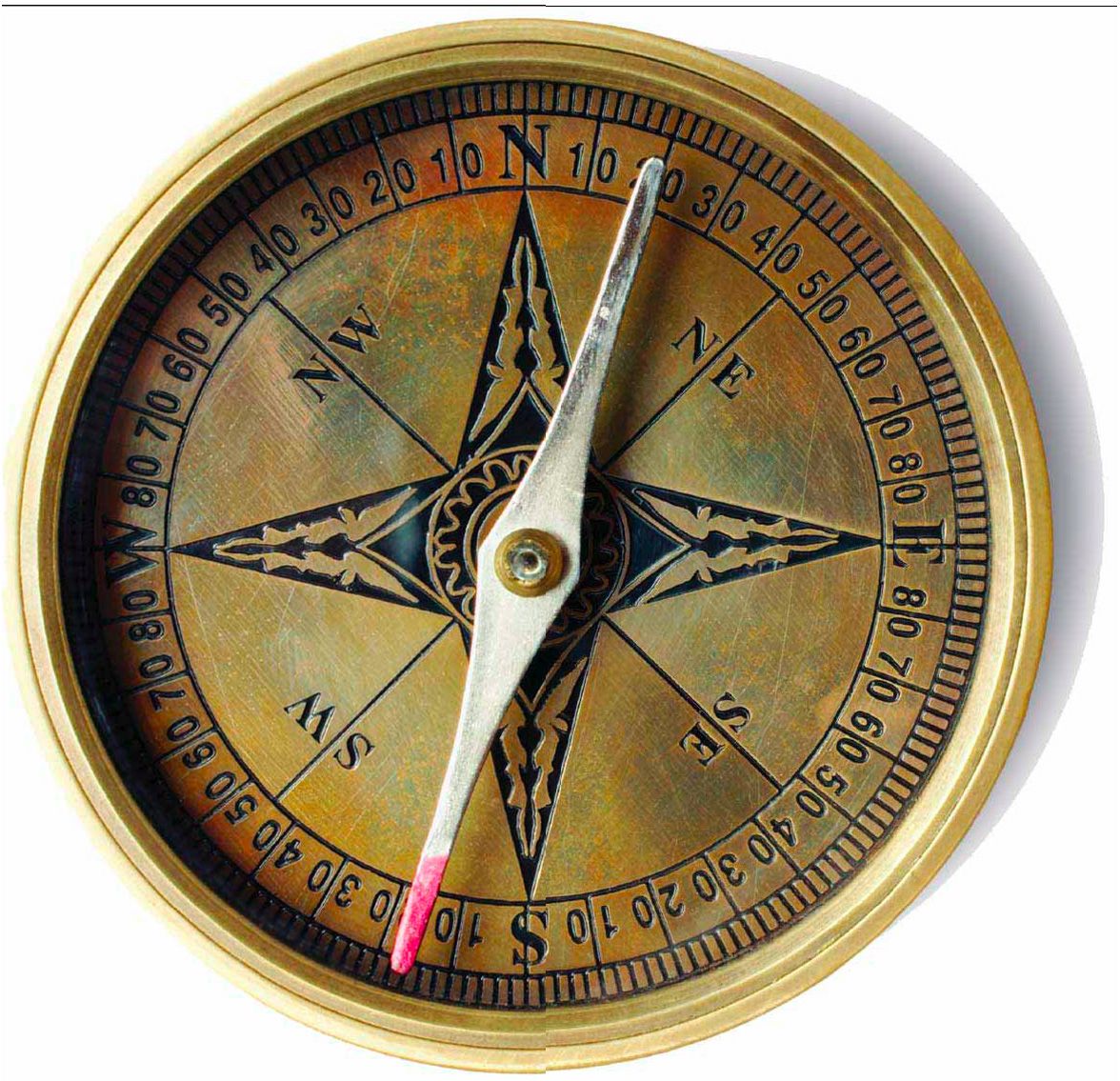
compass-wrong way


Blessed is the nation whose God is the LORD; and the people whom he hath chosen for his own inheritance. (Psalm 33:12)

I have watched with alarm the rapid decline of our nation, these United States of America, especially since the ascendance of the current administration. I have lived long enough to have witnessed the assassination of John F. Kennedy, the Civil Rights marches lead by Martin Luther King, Jr. and his subsequent assassination. I watched in detached amusement the antics of the “flower children” with their message of “make love, not war” as they incoherently protested the war in Viet Nam while “spaced out” on mind altering drugs. “Weirdoes,” I thought as I ignored their protests and enlisted in the Navy to serve my country; it was the right thing to do. Many of those weirdoes are now in positions of power in our national government. Lord, help us!

Because that, when they knew God, they glorified him not as God, neither were thankful; but became vain in their imaginations, and their foolish heart was darkened. Professing themselves to be wise, they became fools (Romans 1:21-22).

As a young child in elementary school, I remember standing to pledge allegiance to the flag followed by a reading of a Psalm or Proverb, followed by a time of prayer. That ended in 1963. I was thirteen. Not long after, I witnessed the rise of the hippie movement. They must have been a minority because all the people I grew up around were relatively “normal” (as in “not hippies”). Did I mention that these people are now in positions of power in our national government?

Wherefore God also gave them up to uncleanness through the lusts of their own hearts, to dishonour their own bodies between themselves: Who changed the truth of God into a lie, and worshipped and served the creature more than the Creator, who is blessed for ever. Amen. (Romans 1:24-25)

Just ten years later, in 1973 the Supreme Court ruled on Roe v. Wade and the American holocaust began. The hippies introduced “free love,” free love generated unwanted babies, and Roe v. Wade “fixed” the problem. Since that time, over 56 million babies have been murdered – all in the name of women’s rights.

For this cause God gave them up unto vile affections: for even their women did change the natural use into that which is against nature: And likewise also the men, leaving the natural use of the woman, burned in their lust one toward another; men with men working that which is unseemly, and receiving in themselves that recompence of their error which was meet (Romans 1:26-27).

During my time of service in the US Navy, a gay (we called them something else back then) sailor kept his “persuasion” to himself otherwise he might find himself lost at sea or dishonorably discharged, if he was lucky. In the 1990s, several studies were done by Simon LeVay and others to determine a physiological cause for homosexual behavior. The effort was spurred on by the desire to “normalize” the behavior by suggesting that these individuals could not alter their predisposition to homosexuality; therefore, they argued, they must be legally protected against such things as being thrown overboard in dark seas or being dishonorably discharged from military service. This lead to the “Don’t ask, don’t tell” (DADT) policy adopted by the military in 1993. The current Commander-in-Chief now encourages military personnel to openly reveal their sodomitic tendencies without fear of repercussion. On the other side, “straights” who harass sodomites in any way are subject to disciplinary action. Of course, this deviant behavior has been around since the beginning of time, but it has always been recognized by the majority of society as “deviant behavior.” Now we are all expected to embrace it as normal.

And even as they did not like to retain God in their knowledge, God gave them over to a reprobate mind, to do those things which are not convenient … Without understanding, covenantbreakers, without natural affection, implacable, unmerciful: Who knowing the judgment of God, that they which commit such things are worthy of death, not only do the same, but have pleasure in them that do them. (Romans 1:28, 31, 32)

Following the “scientific” studies performed in the 1990s the rise of the “gay pride” movement really took off, and these people became ever more aggressive, demanding that their “rights” be asserted, and even more, that they be affirmed as “normal.” Moreover, anyone not in full support of their agenda was labeled as a “hater” and intolerant. Intolerant “homophobes” were not to be tolerated. Now in the 21st Century, they demand that their same-sex unions be legitimized in the same way as heterosexual marriages, with all the same rights and privileges. Just this week (February 26, 2014), US Federal Judge Orlando Garcia declared Texas’ ban against same-sex marriage unconstitutional, which he alleges is in violation of the 14th Amendment of the United States Constitution. The decision is not yet final, but the gay community wasted no time showing up in force to celebrate a victory. That remains to be seen. However, the efforts of this group have made considerable inroads in other states. The strategy of the gay agenda is for gay “couples” to marry in states where it is legal and then move into states where it is not legal and force those states through litigation to recognize their unions as legitimate marriage. Their plan seems to be working.

This century is only 14 years old and I see the rapid demise of our nation as it spins ever faster in a vortex to a dark abyss. Our national debt increased over 7 Trillion (that is 7 followed by 12 zeroes) just during the reign of this current administration. With a massive debt well over 17 Trillion dollars one would think that wisdom would prevail, but our leaders go right on spending. The rhetoric of austerity gushes from “conservative” mouths in feigned antipathy to the looming economic disaster, but when the cameras are off, they return to business as usual and nothing is done. Our economy is on the verge of collapse, and all we get from the politicians is talking points.

Our nation has lost its standing in the world. No longer do we pose a threat to hostile nations. Our President issues meaningless ultimatums that go unheeded. No longer can our allies depend on our support. The nation of Israel may as well face her enemies on her own. Fortunately for Israel, she has the promise of God’s protection whether she realizes it or not. The bottom line is that the United States of America is no longer the country I was born to. It has devolved into something less. The glory days are over.

I hear well-meaning preachers and other Christians call us to pray for our nation. They remind us of the Word of God that says, “If my people, which are called by my name, shall humble themselves, and pray, and seek my face, and turn from their wicked ways; then will I hear from heaven, and will forgive their sin, and will heal their land” (2 Chronicles 7:14). However, I have come to the conclusion that this prayer, when applied to our nation, is contrary to the will of God. In the first place, God was addressing the nation of Israel at the dedication of Solomon’s Temple. God knew that Israel would be unfaithful to Him, and that unfaithfulness would bring God’s judgment on the land. But He promised them that if they repented, He would restore and heal their land. The promise applies specifically to Israel, and does not have broad application to all nations.

More broadly applicable is our leading verse: “Blessed is the nation whose God is the LORD; and the people whom he hath chosen for his own inheritance” (Psalm 33:12). However, as I attempted to demonstrate, our nation has long abandoned the Lord. Our sick, politically correct society bristles at any public display of Christianity, or any reference to God. We have gone beyond the point of no return and as described in Romans 1:28 says, “And even as they did not like to retain God in their knowledge, God gave them over to a reprobate mind, to do those things which are not convenient” (emphasis added). A “reprobate mind” is a mind that is unapproved, rejected, worthless, i.e., a mind that is unable to think correctly. “Woe unto them that call evil good, and good evil; that put darkness for light, and light for darkness; that put bitter for sweet, and sweet for bitter!” (Isaiah 5:20, emphasis added). What an apt description of our current state! Are we, as Christians, called to ask God to bless that which He has cast off?

As I considered this, it occurred to me that the United States of America is not my country. “For our conversation is in heaven; from whence also we look for the Saviour, the Lord Jesus Christ” (Philippians 3:20). That King James word “conversation” is the Greek politeuma from which we get our English word “politic.” It could better be translated “community” or “citizenship.” Paul says that for the Christian, our citizenship resides in heaven, not here on earth. Before the cross, Jesus prayed for His disciples and for us saying, “I pray not that thou shouldest take them out of the world, but that thou shouldest keep them from the evil. They are not of the world, even as I am not of the world” (John 17:15-16, emphasis added).

Romans 13 admonishes us to be law abiding under whatever government we are subject. As long as the law of the land does not violate the law of God, we are to obey. We are also to pray for our leaders. Paul exhorts Timothy (and us):

I exhort therefore, that, first of all, supplications, prayers, intercessions, and giving of thanks, be made for all men; For kings, and for all that are in authority; that we may lead a quiet and peaceable life in all godliness and honesty. For this is good and acceptable in the sight of God our Saviour; Who will have all men to be saved, and to come unto the knowledge of the truth. (1 Timothy 2:1-4, emphasis added)

This seems straightforward and unconditional. Since only God can judge the heart, only He can determine when a person is permanently lost. His desire is the salvation of all men, therefore to that end we must pray for our leaders. The nation may be lost, but individuals can still be saved.

I have concluded that our nation is lost. God’s judgment is on our nation. As a nation, we have gone beyond the point of no return. As our Lord’s return approaches ever nearer, our prayer should not be for the restoration of our nation, but for the coming of His Kingdom – “Thy kingdom come. Thy will be done in earth, as it is in heaven … For thine is the kingdom, and the power, and the glory, for ever. Amen” (Matthew 6:10, 13).  This world, this nation, is not our home.

Related Articles:

Sad Old Flag

Infanticide

Fear the Lord

3 Comments

Filed under Apologetics, Christianity, Current Events, End Times, Politics, Religion, Salvation, Second Coming of Christ, Theology