Category Archives: Religion

God Is Particular

(For the LORD thy God is a jealous God among you) lest the anger of the LORD thy God be kindled against thee, and destroy thee from off the face of the earth. (Deuteronomy 6:15)

This year I have been following a chronological reading plan for reading the Bible through in the year, and currently, I am trudging through the book of Leviticus. Beginning with Exodus 20 when God speaks the Ten Commandments in the hearing of the children of Israel, Scripture goes into tedious detail for the proper worship of God by the Israelites.

Not only do the Scriptures detail the “thou shalt not” commandments, but every minute detail of the construction of the Tabernacle with all of its implements, and the garments of the priests, especially that of the high priest. The methods and occasions for the offering of sacrifices follows that in great detail. Reading the monotonous minutia might make the reader skip over all of those pages to get to more interesting reading, like Numbers. One is tempted to wonder why God would put all of that boring stuff in the Bible and actually expect readers to take it seriously.

For Christians, who are under grace and not under the Law, the reading may seem non-applicable, and to some degree, that is true. We who are born-again, Spirit-filled, children of God ARE the Temple of God[1] and priests unto God.[2] That being the case, where is the value in reading monotonous tedium? Much indeed.

The sacrificial system prescribed by God to Moses made clear God’s view of sin. To God, ALL sin is repulsive. That was true then and it is true today. When one considers the amount of blood shed for every manner of sin, one wonders how their herds were never depleted. To our animal-loving Western minds, the slaughter of innocent animals and the method (the throat was slit to drain blood while the heart continues to pump) for the holocaust is grotesque – it had to be. The revolting procedure dramatically illustrated how abhorrent sin is to God.

God specifies in great detail exactly how the priests were to handle the sacrifice. God gives precise descriptions on how to make the oil for the lampstand, the bread for the showbread, the incense for the altar of incense, and how to maintain all these things on a perpetual basis. Even if one scans quickly through these pages, it becomes readily apparent that God is very particular about how He is to be worshiped. However, this is not a new revelation.

From the beginning, God shed the blood of innocent animals to cover the nakedness of Adam and Eve after the Fall.[3] Apparently, the practice of sacrificing animals for sin in worship to God continued because later we find Cain and Abel sacrificing to God. However, Cain did not offer his sacrifice in the prescribed manner, so his offering was rejected by God.[4] The practice continued until the time of Noah and afterward with Abraham, Isaac, and Jacob (Israel). However, the practice was not codified until God gave the Law to Moses. Not long after the Tabernacle was dedicated and the form of worship was implemented, the first infraction took place. Two of Aaron’s sons, Nadab and Abihu (priests), took fire for the incense altar from somewhere other than from the altar of sacrifice (outside the tent) as prescribed. For their disobedience, God rained fire from heaven and incinerated them instantly.[5] God made His point clear. He is particular about the way He is worshipped.

The modern-day Christian might ask, “What does this have to do with us?” I asked myself the same question. However, as I browsed the minutia, which is not minutia to God, the broad understanding I gleaned is that God is particular about how His people approach Him in worship. We, Christians, are far removed from the sacrificial system and are not bound by the Levitical laws. Jesus is our once-and-for-all sacrifice. “But Christ being come an high priest of good things to come, by a greater and more perfect tabernacle, not made with hands, that is to say, not of this building; Neither by the blood of goats and calves, but by his own blood he entered in once into the holy place, having obtained eternal redemption for us” (Hebrews 9:11-12, emphasis mine).

For the law having a shadow of good things to come, and not the very image of the things, can never with those sacrifices which they offered year by year continually make the comers thereunto perfect. For then would they not have ceased to be offered? because that the worshippers once purged should have had no more conscience of sins. But in those sacrifices there is a remembrance again made of sins every year. For it is not possible that the blood of bulls and of goats should take away sins. Wherefore when he [the Lord Jesus Christ] cometh into the world, he saith, Sacrifice and offering thou wouldest not, but a body hast thou prepared me: In burnt offerings and sacrifices for sin thou hast had no pleasure. Then said I [Jesus speaking], Lo, I come (in the volume of the book it is written of me,) to do thy will, O God. Above when he said, Sacrifice and offering and burnt offerings and offering for sin thou wouldest not, neither hadst pleasure therein; which are offered by the law; Then said he, Lo, I come to do thy will, O God. He taketh away the first, that he may establish the second. By the which will we are sanctified through the offering of the body of Jesus Christ once for all. And every priest standeth daily ministering and offering oftentimes the same sacrifices, which can never take away sins: But this man [Jesus], after he had offered one sacrifice for sins for ever, sat down on the right hand of God; From henceforth expecting till his enemies be made his footstool. (Hebrews 10:1-13, emphasis mine)

So, Jesus, by His sacrifice on the cross, ended the sacrificial system prescribed by the Law. As He breathed out His final breath, He proclaimed, “It is finished”[6] – paid in full. For those who are “born again,” who have placed their faith and trust in Christ, the rigors of the Levitical system of worship have been done away. Does that mean that God no longer cares about how we approach Him in worship? Is He less worthy of awe and reverence now than when He struck down Aaron’s sons for bringing “strange fire” before Him? I think not.

How one comes before God is a matter of one’s personal attitude, so I cannot judge the condition of an individual’s heart. However, as I observe many public gatherings called “worship services,” the focus of the activities seems designed to stir the emotions of the “worshipers,” and even though Christian lingo is randomly repeated, the direction of the “worship” is horizontal (i.e., human to human) rather than vertical.

I follow several well-known pastors who I consider to be very biblically sound and who preach the Gospel without reservation, yet, before they stand to preach, their “band” comes out to warm up the congregation in preparation for the sermon. As the cameras scan the crowd, some stand there unmoved while others raise their hands and sway to the music as if they are at a rock concert.  I wonder how God, Who was so particular in the OT about how He was to be worshipped, feels about the “worship” offered up these days. Indeed, far too often that worship is man-centered, not God-centered; it is not even directed to God. It is all about us and how we feel. Again, I cannot judge the heart of individual worshipers; only God can see into the heart, but what I observe on the surface comes across more as entertainment than worship.

So, regardless of the “atmosphere” of the “worship service” in which we participate, we need to remove all distractions from our minds and focus our thoughts, our minds, and our hearts on the greatness and majesty of our awesome, all-mighty, Creator God. Let Him be the object of our worship, not the performers on the stage.

“I beseech you therefore, brethren, by the mercies of God, that ye present your bodies a living sacrifice, holy, acceptable unto God, which is your reasonable [act of worship]. And be not conformed to this world: but be ye transformed by the renewing of your mind, that ye may prove what is that good, and acceptable, and perfect, will of God” (Romans 12:1-2).

Notes:


[1]  1 Corinthians 3:16

[2]  Revelation 1:6

[3]  Genesis 3:21

[4]  Genesis 4:3-5

[5]  Leviticus 10:1-2

[6]  John 19:30

Comments Off on God Is Particular

Filed under Apologetics, Bible, Christianity, Religion, Theology, Worship

The Mystery of the Gospel

… that I may open my mouth boldly, to make known the mystery of the gospel, (Ephesians 6:19)

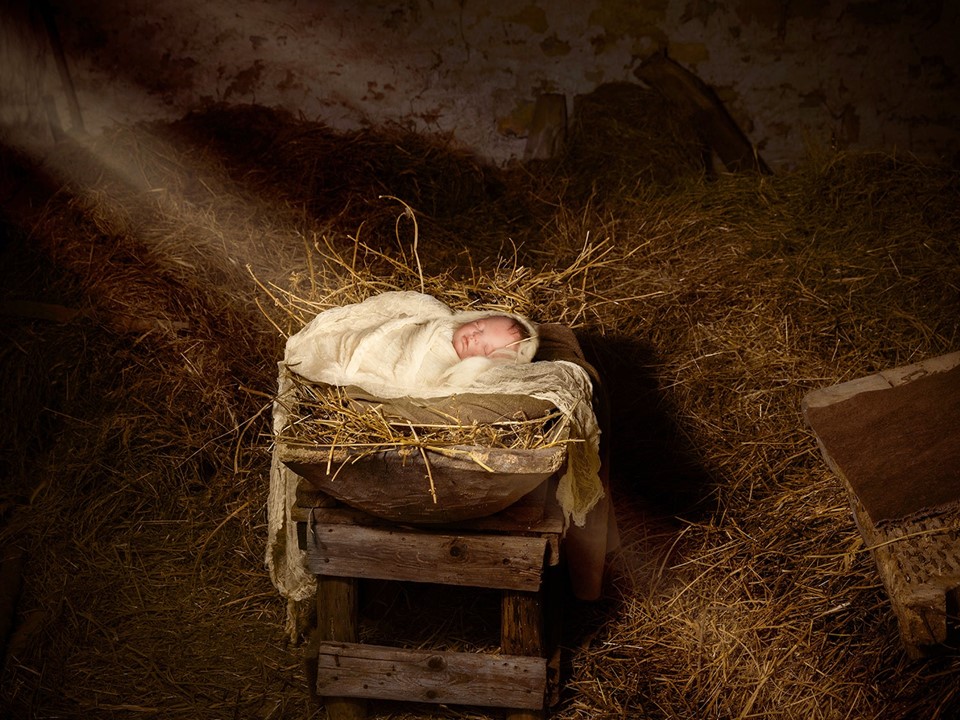
The Gospel is a mystery. The Gospel (Greek: euaggelion) means “good tidings” or “good news.” The angel brought the euaggelion to the shepherds who watched their flocks by night.[1] It was the euaggelion that the Savior was born in Bethlehem. But what did this euaggelion mean? When the angels departed, the shepherds hurried to Bethlehem to see the euaggelion for themselves. Once they had seen the baby, they spread the news to all who would hear. “And all they that heard it wondered at those things which were told them by the shepherds” (Luke 2:18, emphasis mine). It was a mystery!

At Christmastime, we sing the mournful carol, “Oh Come, Oh Come Emanuel.” The lyrics describe a deep yearning for the advent of Messiah. “Oh come, oh come Emanuel, and rescue captive Israel, that mourns in lonely exile here, until the Son of God appear.” However, Israel was not expecting the Son of God to appear. That was the mystery.

Indeed, the prophets foretold of the coming Messiah. When the magi later came searching for “he that is born King of the Jews,”[2] the religious leaders, who knew the Scriptures, directed them to Bethlehem. They quoted the Prophet Micah: “And thou Bethlehem, in the land of Juda, art not the least among the princes of Juda: for out of thee shall come a Governor, that shall rule my people Israel” (Matthew 2:6, emphasis mine). However, they omitted the last phrase of Micah’s prophecy: “whose goings forth have been from of old, from everlasting” (Micah 5:9). That last part was a mystery to them. How could an earthly ruler/king exist “from of old, from everlasting”? That would mean this king existed from eternity past. That could only mean this coming king would be God. To them, that was impossible. It was a mystery.

Four hundred years prior, the last prophet spoke of the coming Messiah. “And he shall sit as a refiner and purifier of silver: and he shall purify the sons of Levi, and purge them as gold and silver, that they may offer unto the LORD an offering in righteousness” (Malachi 3:3). This certainly speaks of authority, but the general tone of the prophecy expressed God’s displeasure with His people obscuring any hint of the Messiah’s divinity. After that, God stopped talking for four hundred years. A lot can be forgotten in four hundred years or blurred beyond recognition.

Previous prophets had spoken of a coming king who would sit on David’s throne. A favorite Christmas passage from Isaiah says, “For unto us a child is born, unto us a son is given: and the government shall be upon his shoulder: and his name shall be called Wonderful, Counsellor, The mighty God, The everlasting Father, The Prince of Peace. Of the increase of his government and peace there shall be no end, upon the throne of David, and upon his kingdom, to order it, and to establish it with judgment and with justice from henceforth even for ever. The zeal of the LORD of hosts will perform this” (Isaiah 9:6-7, emphasis mine). While Isaiah clearly stated that His name would be “The mighty God” and “The everlasting Father,” the promise of His reign on David’s throne overshadowed (in their minds) the fact of His divinity. Since the fifth century before Christ, Israel had been ruled by outside forces; first Babylon, then Persia, then Greece, and now the Romans. The Jews wanted a king to make them a superpower. God coming to reign on earth in human flesh was unthinkable. It was a mystery!

Other prophecies held an even more unimaginable mystery – Messiah would suffer and die. Psalm 22 describes His crucifixion when such execution methods did not exist. Isaiah 53 also details the suffering of Messiah. The prophet Daniel precisely foretold the number of years when Messiah would be “cut off.”[3] The Messiah that was to be king and rule the world would have to die. That makes no sense! It was a mystery!

Even today, the idea that the Almighty, Creator God took on human flesh, in a virgin’s womb, was born by natural means in the lowliest of estates, grew up among “his own, and his own received him not” (John 1:11). “He is despised and rejected of men; a man of sorrows, and acquainted with grief: and we hid as it were our faces from him; he was despised, and we esteemed him not” (Isaiah 53:3). He was nailed to a cross for our sins and rose on the third day so “that whosoever believeth in him should not perish, but have everlasting life” (John 3:16). “But as many as received him, to them gave he power to become the sons of God, even to them that believe on his name” (John 1:12). That is the mystery of the Gospel.

All religions of the world, including many so-called “Christian” religions, demand some kind of sacrifice from their adherents. The adherents of these false religions must do something to appease their gods in order to gain entry into eternal life. It is no wonder then that the idea that all one needs to do is believe in Jesus and trust in the sufficiency of His sacrifice for our sins. It’s too easy. It’s a mystery! Paul describes how Jesus left His first estate as God, and took on human flesh for the purpose of making Himself the perfect sacrifice for our sins.[4] Our God performed the work of salvation for us so that all we need to do is believe. “For by grace are ye saved through faith; and that not of yourselves: it is the gift of God: Not of works, lest any man should boast” (Ephesians 2:8-9, emphasis mine). It is a mystery! “But the natural man receiveth not the things of the Spirit of God: for they are foolishness unto him: neither can he know them, because they are spiritually discerned” (1 Corinthians 2:14). That is the mystery of the Gospel.

As we ponder the mystery of the Gospel, especially during this Christmas season, the thought of God coming to us in the form of a helpless baby should captivate us in awestruck wonder. How could such a thing be! The only thing that remains is praise and thanksgiving for the incalculable gift that He offers. “For God so loved the world, that he gave his only begotten Son, that whosoever believeth in him should not perish, but have everlasting life” (John 3:16).

Reader, if you have not accepted God’s free gift of salvation, there is nothing you have to do but believe. Please read my page on “Securing Eternal Life.”

Notes:


[1]  Luke 2:8-18

[2]  Matthew 2:1-12

[3]  Daniel 9:25-26

[4]  Philippians 2:5-11

Comments Off on The Mystery of the Gospel

Filed under Apologetics, Bible, Christianity, Christmas, Gospel, Holidays, Religion, Salvation, Theology

One Was Thankful

And one of them, when he saw that he was healed, turned back, and with a loud voice glorified God, (Luke 17:15)

Thanksgiving Day is upon us, and I’m sure most of us have plans for food, family, friends, and fellowship. In today’s culture, Thanksgiving Day is just a good excuse to have a day (or two) off work, indulge in gluttonous behavior, and worship before the luminous god of football followed by the giving of alms to the god of materialism the next day, all the while in complete ignorance of the significance of the day.

As I thought about Thanksgiving coming up, the Lord brought to mind the account of Jesus healing the ten lepers. We read about that in Luke 17:11-19:

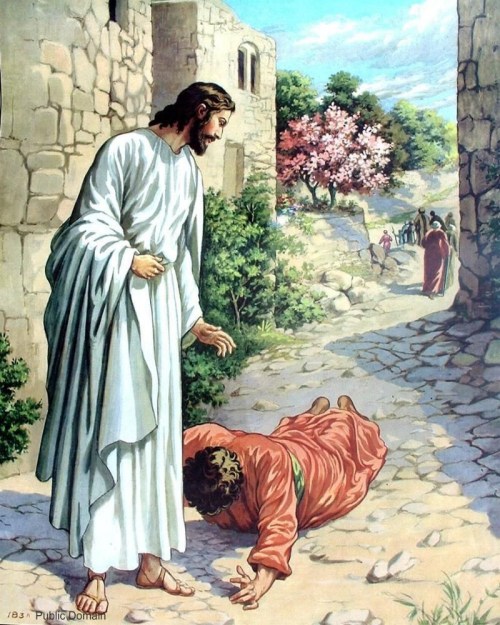
And it came to pass, as he went to Jerusalem, that he passed through the midst of Samaria and Galilee. And as he entered into a certain village, there met him ten men that were lepers, which stood afar off: And they lifted up their voices, and said, Jesus, Master, have mercy on us. And when he saw them, he said unto them, Go shew yourselves unto the priests. And it came to pass, that, as they went, they were cleansed. And one of them, when he saw that he was healed, turned back, and with a loud voice glorified God, And fell down on his face at his feet, giving him thanks: and he was a Samaritan. And Jesus answering said, Were there not ten cleansed? but where are the nine? There are not found that returned to give glory to God, save this stranger. And he said unto him, Arise, go thy way: thy faith hath made thee whole. (Luke 17:11-19)

Following the “Transfiguration” (Luke 9:28-36), Jesus “stedfastly set His face to go to Jerusalem” (Luke 9:51). Coming down from Caesarea Philippi, Luke records that Jesus “passed through the midst of Samaria and Galilee” (v. 11). He is traveling from the north to the south (toward Jerusalem), which means He must pass through Galilee first before going through Samaria. Why did Luke name Samaria first? I do not know. I could not find one commentator that could tell me, but I suspect the answer is down below. Jesus was on His way to the cross.

As the passage records, ten leprous men met Him, and while remaining at a distance –because their disease was so contagious, they were not allowed to come near other people – they cried out for Jesus to have mercy on them. They addressed Him as “Master” – Greek ἐπιστάτης (epistatēs), from epi, “superimposition, to be over, above,” and histēmi, “to stand” Together the title means “one who stands above” – Master! This is not to be confused with διδάσκαλος (didaskalos) meaning “teacher” (Luke 3:12). Thus, they recognized that Jesus had the power to heal their disease.

When Jesus saw them, “He said unto them, ‘Go show yourselves’” (v.14). Note that Jesus does not touch nor approach them. Why? Jesus had often touched lepers when He healed them, why not today? Jesus was on His way to the Cross. He could not allow Himself to become “unclean.” Note also that His Word was sufficient to heal the lepers – “as they went, they were cleansed.” This healing by His verbal command is a clear demonstration of His deity.

All ten exercised faith in believing His Word that they would be healed, but only one returned to give thanks. “When he saw that he was healed, turned back, and with a loud voice glorified God” (v. 15). “And fell down on his face at his feet, giving him thanks: and he was a Samaritan” (v. 16). He did not simply bow in reverence. He completely prostrated himself, flat with his face to the ground. He placed himself at Jesus’ feet. His attitude was one of complete humility, reverence, worship, and gratitude – “and he was a Samaritan.” That this one was a Samaritan may explain why Luke listed Samaria before Galilee. The implication is that the other nine were Jews.

Jesus seems surprised that only this one returned to give thanks. However, knowing that the Lord knows the hearts of all men, His feigned surprise was likely intended to make a point. Jesus said that “[God] is kind to the unthankful and to the evil” (Luke 6:35).

Thankfulness was not particularly characteristic of the Jews. Consider how often they complained after they were freed from Egypt. Think of how soon they fell into idol worship during the time of the Judges. Consider their presumption on God knowing that they were His people. Their lack of gratitude came as no surprise to Jesus. However, the “stranger” recognized his unworthiness and was grateful for the mercy Jesus bestowed on him.

“And he said unto him, Arise, go thy way: thy faith hath made thee whole” (v.19). The Greek word translated “whole” here is σεσωκεν (sesoken), and it means “has saved.” Literally what Jesus said is, “thy faith hath saved thee.” Obedience (which also required faith) had made him “whole,” i.e., healed him. However, his “faith” in recognizing Jesus as “Master” saved him. He was “whole” not only physically, but spiritually.

Does God Expect Us To Be Thankful?

Leviticus 22:29  And when ye will offer a sacrifice of thanksgiving unto the LORD, offer it at your own will.

  1. Not out of obligation
  2. 2 Corinthians 9:7 Every man according as he purposeth in his heart, so let him give; not grudgingly, or of necessity: for God loveth a cheerful giver.

1 Chronicles 16:8  Give thanks unto the LORD, call upon his name, make known his deeds among the people.

Can’t do the latter without the former.

1 Chronicles 16:34  O give thanks unto the LORD; for he is good; for his mercy endureth for ever.

Psalm 30:4  Sing unto the LORD, O ye saints of his, and give thanks at the remembrance of his holiness.

Considering God’s holiness and our unworthiness, how can we not be thankful for the love He has shown to us?

Psalm 95:2  Let us come before his presence with thanksgiving, and make a joyful noise unto him with psalms.

Not “come before His presence with prayer requests.” Prayer requests are fine, but let’s first thank Him.

Psalm 100:4  Enter into his gates with thanksgiving, and into his courts with praise: be thankful unto him, and bless his name.

“Bless His name,” i.e., “speak well of His name” What are some attributes of God that come to mind?

Colossians 2:6-7  As ye have therefore received Christ Jesus the Lord, so walk ye in him:  (7)  Rooted and built up in him, and stablished in the faith, as ye have been taught, abounding therein with thanksgiving.

Philippians 4:6  Be careful for nothing; but in every thing by prayer and supplication with thanksgiving let your requests be made known unto God.

1 Thessalonians 5:18  In every thing give thanks: for this is the will of God in Christ Jesus concerning you.

Consequences of Ingratitude:

Romans 1:21  Because that, when they knew God, they glorified him not as God, neither were thankful; but became vain in their imaginations, and their foolish heart was darkened.

Ingratitude darkens the heart.

2 Timothy 3:1-2, 7-9  This know also, that in the last days perilous times shall come.  (2)  For men shall be lovers of their own selves, covetous, boasters, proud, blasphemers, disobedient to parents, unthankful, unholy … (7) Ever learning, and never able to come to the knowledge of the truth. (8)  Now as Jannes and Jambres withstood Moses, so do these also resist the truth: men of corrupt minds, reprobate concerning the faith. (9)  But they shall proceed no further: for their folly shall be manifest unto all men, as theirs also was.

Benefits of Thankfulness:

Psalm 140:13  Surely the righteous shall give thanks unto thy name: the upright shall dwell in thy presence.

We are made “righteous” through Christ. Because of that we have His presence within us.

Jeremiah 30:19  And out of them shall proceed thanksgiving and the voice of them that make merry: and I will multiply them, and they shall not be few; I will also glorify them, and they shall not be small.

  1. In context, this is referring to Israel’s return from Babylonian captivity.
  2. However, the principle applies.
  3. God will bless our thankfulness.

2 Corinthians 4:15  For all things are for your sakes, that the abundant grace might through the thanksgiving of many redound to the glory of God.

  1. “redound” Greek περισσεύω (perisseuō)
  2. to superabound (in quantity or quality), be in excess
  3. God’s grace to us “supper-abounds” through thanksgiving.

2 Corinthians 9:11  Being enriched in every thing to all bountifulness, which causeth through us thanksgiving to God.

Colossians 3:15  And let the peace of God rule in your hearts, to the which also ye are called in one body; and be ye thankful.

1 Timothy 4:1-5  Now the Spirit speaketh expressly, that in the latter times some shall depart from the faith, giving heed to seducing spirits, and doctrines of devils;  (2)  Speaking lies in hypocrisy; having their conscience seared with a hot iron;  (3)  Forbidding to marry, and commanding to abstain from meats, which God hath created to be received with thanksgiving of them which believe and know the truth.  (4)  For every creature of God is good, and nothing to be refused, if it be received with thanksgiving:  (5)  For it is sanctified by the word of God and prayer.

Conclusion:

Jesus healed ten lepers. Nine of them were of “the chosen.” Their attitude reflected ingratitude for the marvelous work Jesus performed in their lives – almost as if they believed they were entitled to what they received.

One leper – a “stranger,” a Samaritan, clearly an “outsider” due to both his leprosy and his heritage – recognized his own unworthiness and the greatness of the One who healed him; and he returned to give thanks and worship the God who healed him. And he was saved.  Let us recognize that we are all lepers and give thanks for all He has done for us.

Happy Thanksgiving!

3 Comments

Filed under Apologetics, Christianity, Holidays, Religion, Salvation, Thanksgiving, Theology

Lawlessness

And because iniquity shall abound, the love of many shall wax cold. (Matthew 24:12)

Anyone that halfway pays attention to the news – even the “lame-stream-media” – can see the unprecedented rise in crime these days. Mobs of black young people ransacking stores and running off with thousands of dollars’ worth of high-end merchandise. (I am not being racist; I am just stating the obvious for anyone paying attention. Security cameras don’t lie and they are not racists.) They get away with it because police are not allowed to stop them and leftist district attorneys refuse to prosecute them.

Many major American cities are infested with homeless people living in tents along major thoroughfares and some in neighborhoods. They use the streets as their toilets and numb themselves with illegal drugs. Rather than enforce no-loitering laws to clean up the streets, many cities dole out sanitary syringes to keep drug abusers from contracting hepatitis. Very compassionate!

Then there is the Black Lives Matter organization (many of whom are self-deprecating white people), which cares little about black lives and looks for any opportunity to riot and burn down private businesses. Who will be the next black man that violently resists arrest and gets himself killed by police to give these thugs an excuse to riot?

Crime is not limited to the “dregs” of our society. Crime exists in the highest levels of our government. There too, depending on the political party affiliation, crime goes unpunished. Without delving into the details, all one needs to do is mention the names – Clinton, Biden, Comey, Fauci, Palosi, Garland, etc. These treasonous lawbreakers make millions of dollars from the positions entrusted to them by American taxpayers, and the law seems to bypass them. In the meantime, the “Injustice Department” persecutes and prosecutes anyone who dares to challenge their status quo.

Quoting Jan Markell of Olive Tree Ministries, “What did you think the end-times would look like?” In the verse above, Jesus responded to His disciples when they asked, “Tell us, when shall these things be? and what shall be the sign of thy coming, and of the end of the world?” (Matthew 24:3). Jesus gave a detailed description of what the end-times would be like just before His return. One of the characteristics He gave was that “iniquity shall abound” (Matthew 24:12). The Greek word translated as “iniquity” is anomia, meaning “no law.” The Strong’s Dictionary defines it as “illegality, that is, violation of law or (generally) wickedness.” We see that everywhere. One does not need to be that old to notice the rapid rise in lawlessness, and it is happening worldwide.

In the same sentence, Jesus said, “the love of many shall wax cold” (Matthew 24:12). Surprisingly, the word Jesus used for “love” is agapē. That is the “unconditional” love given to another, whether deserved or not, and without expectation of reciprocation. Generally speaking, there is near zero of that kind of love being expressed anywhere. Love is certainly waxing cold.

The lack of love manifests in a variety of ways. In his final words to his protégé, Timothy, Paul predicts the loveless character of people in the “last days.”

This know also, that in the last days perilous times shall come. For men shall be lovers of their own selves, covetous, boasters, proud, blasphemers, disobedient to parents, unthankful, unholy, Without natural affection, trucebreakers, false accusers, incontinent, fierce, despisers of those that are good, Traitors, heady, highminded, lovers of pleasures more than lovers of God; Having a form of godliness, but denying the power thereof: from such turn away. (2 Timothy 3:1-5, emphasis mine)           

Let us examine some of these characteristics more closely. “Lovers of their own selves” characterizes egocentrism, self-centeredness, selfishness, etc. Marketers feed into the egocentrism of their target audience with the idea that “it’s all about YOU!” Self-love gives rise to covetousness, which in its essence is a desire for what others possess. Self-love also feeds the desire to “boast” about oneself whether the boast is justified or not. Self-love makes one “proud,” often without basis. Self-lovers are often “blasphemers” in that they attribute any praise they receive, whether from others or by self-delusion, to themselves rather than giving the glory to God. Such blasphemy takes many forms and finds its roots in humanism. Many scientists and those who worship “science” fall prey to that. They reject God and attempt to explain all of Creation by natural means, and attribute all human advances in medicine and technology to the inexhaustible (by their reckoning) abilities of mankind. That is blasphemy!

That they are “disobedient to parents” needs little explanation. One trip to Walmart ™ and watching some parents trying to control unruly children gives ample support for this truth. However, the result of such unruliness in children is the lawlessness of young adults. This is also characterized by “incontinence” (mentioned later on in the list). “Incontinence” here has nothing to do with the inability to control one’s bodily functions. In the King James vernacular, it simply means “lack of self-control.” It is the idea that “if it feels right, do it,” regardless of whether it is unlawful, immoral, or offensive,” and it plays right along with self-love. “To thyself be true” is the mantra. That, by the way, is satanic.

They are “unthankful” because they believe that anything that comes to them is due to them because they are “worth it.” They are “unholy,” the opposite of “holy,” which means to be “set apart” for God’s purposes. The “unholy” have no place for God.

They are “without natural affection.” I used to think this had to do with homosexuality. What it really means is to not have “natural affection.” The three English words translate the single Greek word “astorgos.” “Storgē” in Greek is “familial love” – the love one has for one’s natural family. The “a” prefix negates the word. Therefore, these people have no natural affection or love for their own families. This also springs from self-love.

All of these characteristics are interrelated and they stem from egocentrism. They are “trucebreakers,” i.e., they cannot be trusted to keep their word. They are “false accusers” – we see a lot of that going on with all of the Trump indictments. They are “fierce,” i.e., savage, violent, combative, etc. That they are “Despisers of those that are good” is demonstrated daily against those who are “pro-life,” those who promote heterosexual marriage, those who rightly believe humans do not cause “climate change,” those who stand for Judeo-Christian principles, those who believe and preach the Bible, etc.

They are “traitors;” they cannot be trusted. They are “heady,” i.e., rash, reckless, precipitate (i.e., “rushing headlong or rapidly onward”). They are “high-minded,” i.e., they think too highly of themselves (Romans 12:3), false pride. “Lovers of pleasure more than lovers of God” once again comes back to self-love, selfishness, and egocentrism.

The saddest part of this list suggests that some of these people pretend to be “Christians.” They have “a form of godliness, but denying the power thereof.” Many pulpits across our nation are filled with this kind that speak using “Christian” vocabulary while preaching that not all of the Bible should be taken verbatim. They teach that we should detach ourselves from the Old Testament and that many New Testament teachings, especially those of Paul, were specific to the culture of his time and do not necessarily apply to our day and time – women in the pulpit, for one example.

Jesus said that in the latter days, “… many false prophets shall rise, and shall deceive many. And because iniquity shall abound, the love of many shall wax cold” (Matthew 24:11-12). Do we not see all of this coming to pass before our eyes? If Jesus’ Word is true (and it is), then His return is very near.

I have published an extensive study on the Book of Revelation and the end-times detailing the events that will transpire during the Tribulation. You can find that on my “Revelation” page. Reader, are you ready to meet the coming Lord Jesus at His return? If not, please read my page on “Securing Eternal Life.”

2 Comments

Filed under Apologetics, Bible, Christianity, Current Events, End Times, Eschatology, Gospel, Religion, Second Coming of Christ, Theology

The Collapse of Babylon

And after these things I saw another angel come down from heaven, having great power; and the earth was lightened with his glory. And he cried mightily with a strong voice, saying, Babylon the great is fallen, is fallen, and is become the habitation of devils, and the hold of every foul spirit, and a cage of every unclean and hateful bird. (Revelation 18:1-2)

I must confess a bit of confusion as I consider this next chapter in the Book of Revelation. In the previous chapter, we saw Mystery Babylon, the controlling religious system of the Tribulation period, destroyed by the Antichrist and the world leaders that used her to gain power and control over the people of the earth. “And the ten horns [i.e., the world leaders] which thou sawest upon the beast [the Antichrist], these shall hate the whore, and shall make her desolate and naked, and shall eat her flesh, and burn her with fire” (Revelation 17:16, emphasis mine).

However, we hear “another angel” – possibly the same Gospel angel of Revelation 14:8 – repeating similar words. “And he cried mightily with a strong voice, saying, Babylon the great is fallen, is fallen, and is become the habitation of devils, and the hold of every foul spirit, and a cage of every unclean and hateful bird. For all nations have drunk of the wine of the wrath of her fornication, and the kings of the earth have committed fornication with her, and the merchants of the earth are waxed rich through the abundance of her delicacies” (Revelation 18:2-3, emphasis mine). As we read further, on the surface, it appears as if the descriptions of “Babylon the Great” apply to Mystery Babylon, but she is also called “that great city Babylon, that mighty city!” (18:10). Because of the several references to merchants and commerce, most scholars see this Babylon as the commercial center of the Antichrist’s (the Beast) government. Then there is all the talk about the rulers of the world having “committed fornication with her” (18:3, 9). That is similar language applied to Mystery Babylon in the previous chapter. If this Babylon is just a commercial and political center, then why does the angel urgently call, “Come out of her, my people, that ye be not partakers of her sins, and that ye receive not of her plagues” (18:4)?

Perhaps my confusion finds resolution in amalgamating the two – a religious and commercial/political center. Clarence Larkin says, “If ‘Mystery Babylon’ was destroyed in the previous chapter then she cannot appear in this chapter, and the ‘City’ here described must be a literal city called Babylon…”[1] Most end-times prophecy teachers would agree with that. I can accept that; however, I suggest that the seat of both the “One-World” religious system and the “One-World” ruling system exist together in the same place. The demise of the religious system at the hands of the ruling system would leave a “residue” of the former so that the remaining ruling system (that of the Beast) would retain many of the same attributes; hence, the similar language used in condemnation of the city. Also, the “kings of the earth” and the “merchants” that lament the demise of “that great city” are probably not part of the “ten horns” over which the Beast rules; the cabal of the Beast are the ones that made “her desolate and naked … and burn[ed] her with fire” (Revelation 17:16). So, for the sake of simplicity, let us agree with those who say this Babylon is the commercial and political center of the Beast’s power after Mystery Babylon is removed.

The next question that comes up concerns the city, Babylon. Is the text to be taken literally or symbolically? Does the text refer to the literal Babylon in Iraq, or is it a “code name” for a different city and system? Those who suggest that Babylon is symbolic say that the term was used by the early church as a code name for Rome and the Roman Empire. They will cite Peter’s epistle where he says, “The church that is at Babylon, elected together with you, saluteth you; and so doth Marcus my son” (1 Peter 5:13, emphasis mine). “This epistle was written from Babylon, but scholars are divided as to whether this refers literally to Babylon in Mesopotamia or symbolically to Rome. There is no tradition that Peter went to Babylon, and in his day, it had few inhabitants. On the other hand, tradition consistently indicates that Peter spent the last years of his life in Rome. As a center of idolatry, the term ‘Babylon’ was an appropriate figurative designation for Rome.”[2]

However, that carries with it a certain degree of speculation based on “tradition,” which may or may not be valid. On the other hand, we are looking beyond the time of John, the human author of Revelation, into the end-times. Regardless of whether Peter was referring to actual Babylon or to Rome does not necessarily mean that John was referring to Rome in his account. When we read the text as we should – “if the plain sense makes sense, then look for no other sense or else you will end up in nonsense” – there is no indication that it should be taken in any other way than literally.

Still, some will claim that the original Babylon was destroyed fulfilling OT prophecy. Against Babylon, Isaiah prophesied, “It shall never be inhabited, neither shall it be dwelt in from generation to generation: neither shall the Arabian pitch tent there; neither shall the shepherds make their fold there” (Isaiah 13:20, emphasis mine). Similarly, Jeremiah prophesied, “And they shall not take of thee a stone for a corner, nor a stone for foundations; but thou shalt be desolate for ever, saith the LORD … And Babylon shall become heaps, a dwelling place for dragons, an astonishment, and an hissing, without an inhabitant … Her cities are a desolation, a dry land, and a wilderness, a land wherein no man dwelleth, neither doth any son of man pass thereby.” (Jeremiah 51:26, 37, 43, emphasis mine). The question we must ask is, have these prophecies been fulfilled literally? Frankly, the answer is a resounding NO! So, if they have not been fulfilled, and because the Word of the Lord is true and trustworthy, then they must be yet future.

Larkin gives a detailed history of Babylon beginning with its origins at the Tower of Babel.[3] Nebuchadnezzar made Babylon one of the wonders of the world. It retained its splendor after the conquering by the Persians and later the Greeks. After that, the city degraded but continued to be inhabited even during the time of the early church. Larkin, citing ancient historians, says that “the Jews left from the Captivity still resided there in large numbers, and in A.D. 60 we find the Apostle Peter working among them, for it was from Babylon that Peter wrote his Epistle (1 Pet. 5:13).”[4] The city, albeit no longer “great,” continued to be inhabited.

Larkin continues, “In A.D. 917 Ibu Hankel mentions Babylon as an insignificant village, but still in existence. About A.D. 1100 it seems to have again grown into a town of some importance, for it was then known as the ‘Two Mosques.’ Shortly afterward it was enlarged and fortified and received the name of Hillah, or ‘Rest.’ In A.D. 1898 Hillah contained about 10,000 inhabitants, and was surrounded by fertile lands and abundant date groves stretched along the banks of the Euphrates.”[5] Obviously, the prophecies of Isaiah, Jeremiah, and Revelation concerning the demise of Babylon are yet future, so the modern Babylon (Hillah) is certainly a contender for the one described in this chapter of Revelation.

However, some end-times prophecy students protest that this modern Babylon is too underdeveloped and too insignificant to qualify as the “great city” described in these verses. Currently, the population of Hillah (i.e., Babylon) is around 455,700;[6] that is about the size of Omaha, NE, USA, which is almost twice the size of the state capital, Lincoln. Just how “great” does it need to be for it to be of significant? With the technology we currently have in the world, the Beast could set up his headquarters anywhere and operate without any problems. If he needs a castle, he could have one built in less than a year. There is no reason, logistically or biblically for the Babylon of Revelation not being located in the original site of ancient Babel/Babylon.

“And I heard another voice from heaven, saying, Come out of her, my people, that ye be not partakers of her sins, and that ye receive not of her plagues. For her sins have reached unto heaven, and God hath remembered her iniquities. Reward her even as she rewarded you, and double unto her double according to her works: in the cup which she hath filled fill to her double” (Revelation 18:4-6, emphasis mine). As I noted earlier, I believe Revelation 18 is an amalgamation of Mystery Babylon and political Babylon, the seat of the Beast’s power. As Larkin pointed out, Babylon had a large population of Jews in Peter’s day. In a way, Peter was calling them out at that time to come out of her. During the Tribulation, the false religion of the Beast will be headquartered in the same place as the Beast, in Babylon. The call to “come out of her” is not only a call to leave the false religion, but to flee the city itself because of the coming judgment, but more so to leave the false religion and not be “partakers of her sins.” The sins of the false religion as well as the sins of the city “have reached unto heaven.” The charge seems to carry a double application, which is why I think this chapter applies to both Mystery Babylon and Babylon “the great city.”

“How much she hath glorified herself, and lived deliciously, so much torment and sorrow give her: for she saith in her heart, I sit a queen, and am no widow, and shall see no sorrow. (Revelation 18:7, emphasis mine). Her self-aggrandizement reminds me of the Church of Laodicea.  “Because thou sayest, I am rich, and increased with goods, and have need of nothing; and knowest not that thou art wretched, and miserable, and poor, and blind, and naked” (Revelation 3:17, emphasis mine). Although this aptly applies to Mystery Babylon, we need to keep in mind that the “religion” of the Beast and the Beast are tightly linked.

“Therefore shall her plagues come in one day, death, and mourning, and famine; and she shall be utterly burned with fire: for strong is the Lord God who judgeth her. And the kings of the earth, who have committed fornication and lived deliciously with her, shall bewail her, and lament for her, when they shall see the smoke of her burning, Standing afar off for the fear of her torment, saying, Alas, alas, that great city Babylon, that mighty city! for in one hour is thy judgment come. And the merchants of the earth shall weep and mourn over her; for no man buyeth their merchandise any more” (Revelation 18:8-11, emphasis). While there still remains some hints of Mystery Babylon in these verses, the application is clearly to “that great city Babylon.” Here we see the prophecies of Isaiah and Jeremiah concerning the demise of Babylon fulfilled in full.

Revelation 18:12-14 describe the lost trade for which the merchants of the world mourn. “The merchants of these things, which were made rich by her, shall stand afar off for the fear of her torment, weeping and wailing, And saying, Alas, alas, that great city, that was clothed in fine linen, and purple, and scarlet, and decked with gold, and precious stones, and pearls! For in one hour so great riches is come to nought. And every shipmaster, and all the company in ships, and sailors, and as many as trade by sea, stood afar off, And cried when they saw the smoke of her burning, saying, What city is like unto this great city! And they cast dust on their heads, and cried, weeping and wailing, saying, Alas, alas, that great city, wherein were made rich all that had ships in the sea by reason of her costliness! for in one hour is she made desolate” (Revelation 18:15-19, emphasis mine). We saw Mystery Babylon destroyed by the Beast and his ten horns in the previous chapter, and now her city and her center of influence is laid waste.

“Rejoice over her, thou heaven, and ye holy apostles and prophets; for God hath avenged you on her” (Revelation 18:20). From this time and forevermore, false religion has been removed from the earth. All the false religions spawned from Babylon, that persecuted the saints of God, are crushed into dust. This is cause for great rejoicing in heaven. The only One worthy of worship will now reign on Earth.

“And a mighty angel took up a stone like a great millstone, and cast it into the sea, saying, Thus with violence shall that great city Babylon be thrown down, and shall be found no more at all” (Revelation 18:21). As a millstone cast into the sea suddenly disappears from view leaving only ripples which soon subside, so will be the sudden destruction of Babylon the Great and all she represents without leaving a single ripple.

Next, the true Christ, the Lord of lords and King of kings comes to set up His kingdom on Earth for 1000 years. We will see that in the next chapter.

How about you, reader? Are you prepared to meet the coming King of kings and Lord of lords? If you do not know the Savior, do not wait any longer. The time is short. Please read my page on “Securing Eternal Life.”

Notes:


[1]  Clarence Larkin, The Book of Revelation, Illustrated, (Rev. Clarence Larkin Estate, Philadelphia, 1919), p. 155.

[2]  New American Standard Bible, The Open Bible Expanded Edition, (Thomas Nelson Publishers, Nashville, 1985), p. 1258.

[3]  Genesis 11:1-9

[4]  Larkin, p.157.

[5]  Ibid.

[6]  Hillah – Wikipedia

Comments Off on The Collapse of Babylon

Filed under Apologetics, Bible, Christianity, Current Events, End Times, Eschatology, Rapture, Religion, Satan, Second Coming of Christ, Theology