Tag Archives: Christ Jesus

Jesus’ Seven Discourses in John (4)

Bread

Labour not for the meat which perisheth, but for that meat which endureth unto everlasting life, which the Son of man shall give unto you: for him hath God the Father sealed. (John 6:27)

The Apostle John penned his Gospel with the purpose of demonstrating the deity of Jesus Christ through the “signs” He performed and His teachings. “And many other signs truly did Jesus in the presence of his disciples, which are not written in this book: But these are written, that ye might believe that Jesus is the Christ, the Son of God; and that believing ye might have life through his name” (John 20:30-31, emphasis mine). In the section I am covering today, John presents two “signs”: Jesus feeding the 5000,[1] Jesus walking on the water;[2] and Jesus’ first “I AM” statement, “I Am the bread of life” (John 6:35, emphasis mine).[3]

On the previous day, Jesus demonstrated His deity by feeding over 5000 people with only five loaves and two fish, and now those who were fed came looking for more. “Jesus answered them and said, Verily, verily, I say unto you, Ye seek me, not because ye saw the miracles, but because ye did eat of the loaves, and were filled” (John 6:26, emphasis mine). This launched Jesus’ fourth discourse as recorded by John to explain how Jesus is “the Bread of Life.”

Today, like then, we tend to focus on the material things of life. The poor worry about where the next meal will come from. The rich worry about accumulating more wealth and keeping the wealth they already possess. Solomon said, “Remove far from me vanity and lies: give me neither poverty nor riches; feed me with food convenient for me: Lest I be full, and deny thee, and say, Who is the LORD? or lest I be poor, and steal, and take the name of my God in vain” (Proverbs 30:8-9). The trouble with Solomon’s Goldilocks system – not too hot, not too cold, but just right – is that the concept of rich or poor is subjective as defined by fallen individuals. Jesus was more succinct. “Therefore I say unto you, Take no thought for your life, what ye shall eat, or what ye shall drink; nor yet for your body, what ye shall put on. Is not the life more than meat, and the body than raiment? … But seek ye first the kingdom of God, and his righteousness; and all these things shall be added unto you. Take therefore no thought for the morrow: for the morrow shall take thought for the things of itself. Sufficient unto the day is the evil thereof” (Matthew 6:25, 33-34, emphasis mine). This is true regardless of one’s perceived financial status.

“Meat” refers to food, and combined with clothing (“raiment”) implies the material necessities of life. Jesus said that life is more than the material stuff required to sustain it. Without food, our physical body will die of starvation. Without raiment, i.e. covering/shelter, we die of exposure. However, Jesus contends that life is more than our temporary physical existence. “Labour not for the meat which perisheth, but for that meat which endureth unto everlasting life, which the Son of man shall give unto you: for him hath God the Father sealed” (John 6:27).

“Meat” costs. One must work to earn the means to obtain it, so their question was understandable. “Then said they unto him, What shall we do, that we might work the works of God?” (John 6:28, emphasis mine).  The Bible teaches that eternal life cannot be bought. “For the wages of sin is death; but the gift of God is eternal life through Jesus Christ our Lord” (Romans 6:23, emphasis mine). “For by grace are ye saved through faith; and that not of yourselves: it is the gift of God” (Ephesians 2:8, emphasis mine). However, Jesus concurs with them that work is required for eternal life. “Jesus answered and said unto them, This is the work of God, that ye believe on him whom he hath sent” (John 6:29, emphasis mine). “Belief” is the work! It is probably the fundamental element for salvation. The Greek word translated “believe” is pisteuō meaning to “have faith in” or “to trust in.” Without it, it is impossible to obtain eternal life. “But without faith it is impossible to please him: for he that cometh to God must believe that he is, and that he is a rewarder of them that diligently seek him” (Hebrews 11:6, emphasis mine). Jesus makes no pretense that believing comes easily. “Now faith is the substance of things hoped for, the evidence of things not seen” (Hebrews 11:1, emphasis mine). It takes a certain amount of effort to place your trust in “things not seen.” It is work; Jesus said so. “This is the work of God, that ye believe on him whom he hath sent” (John 6:29, emphasis mine).

However, the work is not entirely that of the believer. Look again at what Jesus said. “This is the work of God.” “God” is in the genitive case, meaning that the “work” belongs to Him. Looking again at Ephesians 2:8: “For by grace are ye saved through faith; and that not of yourselves: it is the gift of God” (emphasis mine). “Grace” is God’s unmerited favor obtained through the channel of “faith,” which “is the gift of God.” In other words, God gives the “faith” to believe. That is His work through the Holy Spirit working in the heart of the believer. Of the Holy Spirit Jesus said, “And when he is come, he will reprove the world of sin, and of righteousness, and of judgment … Howbeit when he, the Spirit of truth, is come, he will guide you into all truth: for he shall not speak of himself; but whatsoever he shall hear, that shall he speak: and he will shew you things to come” (John 16:8, 13, emphasis mine).

Having been fed and seen the miracles performed by Jesus, His hearers remained incredulous. “They said therefore unto him, What sign shewest thou then, that we may see, and believe thee? what dost thou work? Our fathers did eat manna in the desert; as it is written, He gave them bread from heaven to eat” (John 6:30-31, emphasis mine). It is sadly comical that they believed their history having only heard or read of it, and here they witnessed Jesus’ miracles, and still wanted more proof. Their minds remained bound to their bellies with thoughts of endless manna. “Then Jesus said unto them, Verily, verily, I say unto you, Moses gave you not that bread from heaven; but my Father giveth you the true bread from heaven. For the bread of God is he which cometh down from heaven, and giveth life unto the world” (John 6:32-33, emphasis mine).

Obvious to us, but not to His listeners, Jesus spoke of Himself. “And Jesus said unto them, I am the bread of life: he that cometh to me shall never hunger; and he that believeth on me shall never thirst” (John 6:35, emphasis mine).[4] Just as physical bread contains properties to sustain physical life, the “spiritual” bread that is Jesus sustains life through eternity. Unlike the physical bread that is consumed continually through the mouth, the spirit through faith consumes the spiritual bread once. “For Christ also hath once suffered for sins, the just for the unjust, that he might bring us to God, being put to death in the flesh, but quickened by the Spirit” (1 Peter 3:18, emphasis mine). The method of consumption is through belief. “But I said unto you, That ye also have seen me, and believe not” (John 6:36, emphasis mine).

As stated earlier, “belief” is work. It is the required work for obtaining eternal life. Jesus’ hearers had witnessed miracles of healing. They ate from the five loaves and two fish He multiplied by His creative power. They saw and yet did not believe. No work took place in their lives. “All that the Father giveth me shall come to me; and him that cometh to me I will in no wise cast out” (John 6:37, emphasis mine). We saw that salvation is the work of God. Obviously, God did not work in the lives of these people, or, according to Jesus, they would have come to Him. This raises the question of God’s election, something Jesus clearly teaches. “For many are called, but few are chosen” (Matthew 22:14). “Ye have not chosen me, but I have chosen you, and ordained you, that ye should go and bring forth fruit, and that your fruit should remain: that whatsoever ye shall ask of the Father in my name, he may give it you” (John 15:16, emphasis mine). Superficially, this teaching conflicts with concept of free will. “For God so loved the world, that he gave his only begotten Son, that whosoever believeth in him should not perish, but have everlasting life” (John 3:16, emphasis mine). “And the Spirit and the bride say, Come. And let him that heareth say, Come. And let him that is athirst come. And whosoever will, let him take the water of life freely” (Revelation 22:17, emphasis mine). A tense paradox exists between God’s sovereign will and man’s responsibility. Theologians have debated the question throughout church history without clear resolution to the puzzle. I believe the answer is somewhere in the middle,[5] and cannot be answered here in the short course of this writing. The point is that those who do come to Jesus are eternally secure. “All that the Father giveth me shall come to me; and him that cometh to me I will in no wise cast out” (John 6:37, emphasis mine).

John informs us at the beginning of his Gospel that Jesus, the Word, is the eternal Creator God (John 1:1-3), and that He came and put on human flesh and dwelt among us (John 1:14). Jesus affirms John’s claim. “For I came down from heaven, not to do mine own will, but the will of him that sent me” (John 6:38, emphasis mine). Jesus’ expression seems to indicate that He and the Father are two separate entities, as my father and I are two completely different people. That is not the case in the relationship within the Godhead. (See last week’s article for a little better explanation.)[6] In perhaps overly simplified terms, the Body does what the Head directs.

Here is the bottom line: “And this is the Father’s will which hath sent me, that of all which he hath given me I should lose nothing, but should raise it up again at the last day. And this is the will of him that sent me, that every one which seeth the Son, and believeth on him, may have everlasting life: and I will raise him up at the last day” (John 6:39-40, emphasis mine). Consuming, i.e. taking in or accepting, the Bread of Life assures the believer of eternal life that is sure and secure for eternity.

Reader, have you partaken of the Bread of Life?

Notes:


[1]  “Jesus’ Seven Signs in John (4),” https://erniecarrasco.com/2016/11/13/jesus-seven-signs-in-john-4/

[2]  “Jesus’ Seven Signs in John (5),” https://erniecarrasco.com/2016/11/20/jesus-seven-signs-in-john-5/

[3]  “Jesus’ Seven ‘I AM’ Statements in John (1),” https://erniecarrasco.com/2016/08/28/jesus-seven-i-am-statements-in-john-1/

[4]  Ibid.

[5]  “Somewhere in the Middle,” https://erniecarrasco.com/2013/10/20/somewhere-in-the-middle/

[6]  “Jesus’ Seven Discourses in John (3),” https://erniecarrasco.com/2017/02/05/jesus-seven-discourses-in-john-3/
 

1 Comment

Filed under Apologetics, Bible, Christianity, Evangelism, Gospel, Religion, Salvation, Theology

Jesus’ Seven Discourses in John (3)

john5_19-40-authority-of-jesus

Verily, verily, I say unto you, He that heareth my word, and believeth on him that sent me, hath everlasting life, and shall not come into condemnation; but is passed from death unto life. (John 5:24)

As Jesus returned to Jerusalem for the celebration of Purim,[1] Chapter Five opens with the account of the invalid by the Pool of Bethesda who Jesus healed. The healing once again stirred up the “Jews” who concerned themselves more with His breaking of the of the Sabbath than with the man’s welfare. The miraculous healing of the lifelong invalid demonstrated Jesus’ divine nature, and “Therefore the Son of man is Lord also of the Sabbath” (Mark 2:28; Luke 6:5). “And therefore did the Jews persecute Jesus, and sought to slay him, because he had done these things on the sabbath day” (John 5:16). Unwilling to let an opportunity slip away, Jesus took time to instruct them on the source of His authority.

“Then answered Jesus and said unto them, Verily, verily, I say unto you, The Son can do nothing of himself, but what he seeth the Father do: for what things soever he doeth, these also doeth the Son likewise” (John 5:19, emphasis mine).Christians often get accused of believing in three gods because we hold a Trinitarian view of God stating that we believe in One God manifested in three persons, Father, Son and Holy Spirit. God’s triune nature challenges the limits of our finite minds, and no definition devised by man can fully describe that nature. A weak comparison might be made from the nature of man considering that man was created in the image of God (Genesis 1:27). Like God, man possesses a triune nature composed of mind, body, spirit. The mind controls man’s activities. The body carries out the mind’s commands, and the spirit energizes and motivates man’s activities. Although often thought of as separate entities, the mind, body, and spirit must exist in unison for man to exist.

Knowing that Jesus, the Son, is fully God in every way, His statement sounds strange to our ears. He seems to say that the Father is a different person, separate and apart from Him. After all, when describing our own actions, we would not say something like, “the body can do nothing of itself but what it sees the mind do,” even though, in a certain sense, that is an accurate description of all our actions (unless we have some sort of neurological disorder that causes our body to act contrary to the mind’s control).

However, Jesus’ explanation required a third person description because to the Jews, God was wholly spirit and transcendent. They could not conceive of God in human form or that God could have a human “son” – a confusion that continues on to this day. “Therefore the Jews sought the more to kill him, because he not only had broken the sabbath, but said also that God was his Father, making himself equal with God” (John 5:18, emphasis mine). The Father, like our mind, determines what actions He wants to carry out, and the Son, like our body, carries out the will of the Father.“I can of mine own self do nothing: as I hear, I judge: and my judgment is just; because I seek not mine own will, but the will of the Father which hath sent me” (John 5:30, emphasis mine).“The conclusion from our Lord’s argument is: If I have broken the Sabbath, so has God also; for I can do nothing but what I see him doing. He is ever governing and preserving; I am ever employed in saving.”[2]

Additionally, life comes from God. “For as the Father raiseth up the dead, and quickeneth them; even so the Son quickeneth whom he will” (John 5:21). The word “quicken” is an archaic English word meaning, “to make alive.” The O.T. records at least two instances in which the Father raised the dead: the widow’s son through Elijah (1 Kings 22:17) and the Shunamite’s son through Elisha (2 Kings 4:32-35). The Son also raised the dead: the ruler’s daughter (Mark 5:35-42), the widow’s son at Nain (Luke 7:11-15), and Lazarus, at Bethany (John 11:14-44).“Here our Lord points out his sovereign power and independence; he gives life according to his own will – not being obliged to supplicate for the power by which it was done, as the prophets did; his own will being absolute and sufficient in every case.”[3] Jesus maintains this authority for all time. “Marvel not at this: for the hour is coming, in the which all that are in the graves shall hear his voice, And shall come forth; they that have done good, unto the resurrection of life; and they that have done evil, unto the resurrection of damnation” (John 5:28-29, emphasis mine). Jesus’ promise was meant for the near and distant future. “And the graves were opened; and many bodies of the saints which slept arose, And came out of the graves after his resurrection, and went into the holy city, and appeared unto many” (Matthew 27:52-53, emphasis mine). There is still a time yet to come. “For the Lord himself shall descend from heaven with a shout, with the voice of the archangel, and with the trump of God: and the dead in Christ shall rise first: Then we which are alive and remain shall be caught up together with them in the clouds, to meet the Lord in the air: and so shall we ever be with the Lord” (1 Thessalonians 4:16-17, emphasis mine).

There is yet one final resurrection. You do not want to be part of that resurrection. “And I saw the dead, small and great, stand before God; and the books were opened: and another book was opened, which is the book of life: and the dead were judged out of those things which were written in the books, according to their works. And the sea gave up the dead which were in it; and death and hell [i.e. the grave] delivered up the dead which were in them: and they were judged every man according to their works” (Revelation 20:12-13, emphasis mine). Jesus, as God, has the power to give eternal life, but you obtain it in this life.

Jesus judges based on how man treats Him. “For the Father judgeth no man, but hath committed all judgment unto the Son: That all men should honour the Son, even as they honour the Father. He that honoureth not the Son honoureth not the Father which hath sent him” (John 5:22-23, emphasis mine). What we do with Jesus in this life determines the outcome of our eternal life. “For as the Father hath life in himself; so hath he given to the Son to have life in himself; And hath given him authority to execute judgment also, because he is the Son of man” (John 5:26-27, emphasis mine). God put on human flesh (John 1:14) so that man could relate to Him. “He is the Son of man.” “No man hath seen God at any time; the only begotten Son, which is in the bosom of the Father, he hath declared [i.e. explained, demonstrated, exegeted]him” to us (John 1:18, emphasis mine). We cannot know God the Father better than how we know God the Son. Therefore, when we reject the Son, we reject the Father; consequently, we reject eternal life.

Jesus now gets to the heart of the matter. “Verily, verily, I say unto you, He that heareth my word, and believeth on him that sent me, hath everlasting life, and shall not come into condemnation; but is passed from death unto life. Verily, verily, I say unto you, The hour is coming, and now is, when the dead shall hear the voice of the Son of God: and they that hear shall live”  (John 5:24-25, emphasis mine). The “dead” Jesus refers to here are those who are “dead in their sins.” “Even when we were dead in sins, hath quickened [i.e. made alive] us together with Christ, (by grace ye are saved;)” (Ephesians 2:5)

The Jews needed proof.“By what authority doest thou these things?and who gave thee this authority?” (Matthew 21:23).  They may not have verbalized those sentiments at this time, but they must have been thinking them. “If I bear witness of myself, my witness is not true. There is another that beareth witness of me; and I know that the witness which he witnesseth of me is true” (John 5:31-32,). The law required the testimony of at least two witnesses to prove a matter (Deuteronomy 17:6; 19:15).  Jesus offered up John the Baptist as a witness, but the Jews rejected John’s message (John 5:33-35). Even so, Jesus offered a greater witness – His own works. “But I have greater witness than that of John: for the works which the Father hath given me to finish, the same works that I do, bear witness of me, that the Father hath sent me” (John 5:36, emphasis mine). In addition, the Father bore witness of Him through the works that He performed (John 5:37-38). Nicodemus attested to this: “Rabbi, we know that thou art a teacher come from God: for no man can do these miracles that thou doest, except God be with him” (John 3:2, emphasis mine). Furthermore, the Scriptures testified concerning Him. “Search the scriptures; for in them ye think ye have eternal life: and they are they which testify of me” (John 5:39, emphasis mine).

What more proof is needed? Jesus is Lord over the Sabbath. Jesus is Lord over Creation. He is the Lord and giver of life. “For the wrath of God is revealed from heaven against all ungodliness and unrighteousness of men, who hold the truth in unrighteousness; Because that which may be known of God is manifest in them; for God hath shewed it unto them. For the invisible things of him from the creation of the world are clearly seen, being understood by the things that are made, even his eternal power and Godhead; so that they are without excuse” (Romans 1:18-20, emphasis mine). Creation itself gives sufficient testimony to remove any excuse not to believe; but God provided a greater witness through the Son of God, Son of Man Who, if rejected,will judge the unbeliever guilty without excuse.

Notes:


[1]  “Jesus Seven Signs in John (3)” https://erniecarrasco.com/2016/11/06/jesus-seven-signs-in-john-3/

[2]Adam Clark’s Commentary on the Bible Note on John 5:19.

[3]Ibid, on John 5:21.

Comments Off on Jesus’ Seven Discourses in John (3)

Filed under Christianity, Death, Evangelism, Gospel, Religion, Resurrection, Salvation, Second Coming of Christ, Theology

Jesus’ Seven Discourses in John (2)

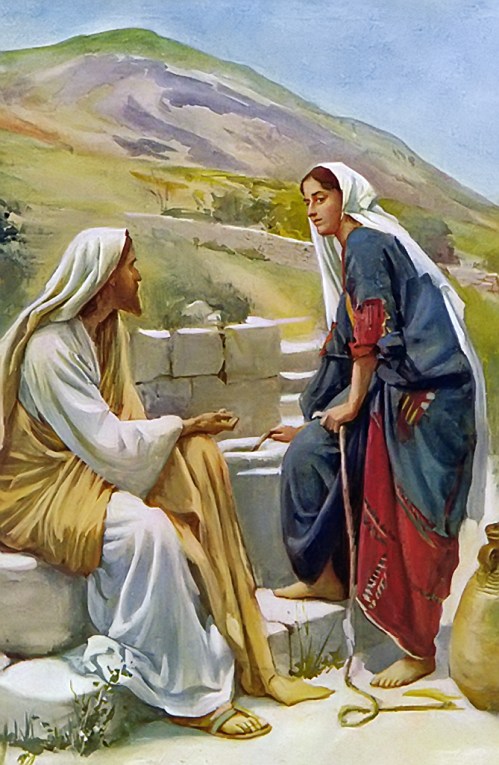
john4_13_jesusandwomanofsamaria

But whosoever drinketh of the water that I shall give him shall never thirst; but the water that I shall give him shall be in him a well of water springing up into everlasting life. (John 4:14)

The time Jesus spent in Jerusalem to celebrate the spring feasts (John 2:13-22) increased Jesus’ notoriety among the common people, but negatively drew the attention of the Jewish religious leaders. “When therefore the Lord knew how the Pharisees had heard that Jesus made and baptized more disciples than John … He left Judaea, and departed again into Galilee” (John 4:1, 3). Obviously, Jesus threatened the status quo, but now was not the time for confrontation.

Jesus took the most direct route to Galilee – directly north through Samaria. Samaritans and Jews shared a mutual animosity toward one another. The Jews considered the Samaritans illegitimate inhabitants of the land. “The term ‘Kuthim’ applied by Jews to the Samaritans had clear pejorative connotations, implying that they were interlopers brought in from Kutha in Mesopotamia and rejecting their claim of descent from the ancient Tribes of Israel.”[1] However, “The Samaritans called themselves – ‘the sons of Israel’ and ‘the keepers’ (shomrim) … The Samaritan Israelites were the faithful remnant of the Northern tribes – the keepers of the ancient faith.”[2] The hatred between the two groups was so great that Jews preferred to take the long way around when traveling north to Galilee. “Strict Jews, like the Pharisees, disliked the Samaritans so intensely that they avoided the territory as much as possible. Their route from Jerusalem to Galilee lay through the region beyond the Jordan.”[3] The route forced them to cross the River Jordan to the east bank, and take a northerly route to circumvent Samaria. Once past the northern boundary of Samaria, they would then cross back over to the west bank of the Jordan.

John indicates some sense of urgency in Jesus’ choice of this route. “And he must needs go through Samaria” (John 4:4, emphasis mine). Jesus never did anything without reason and without purpose. So, it seems that this shortcut was planned with this encounter in mind. He had a “divine appointment,” and He planned to keep it. Upon arriving at the city of Sychar, formerly known as Shechem, John provides for us a glimpse of Jesus’ humanity. “Now Jacob’s well was there. Jesus therefore, being wearied with his journey, sat thus on the well: and it was about the sixth hour” (John 4:6, emphasis mine). If Jesus were only God, He would not have tired, but being fully man also, He grew tired of the long walk and needed to stop and rest, but more than that, He had an appointment to keep.

John records the time of day as noon: “it was about the sixth hour,” and “There cometh a woman of Samaria to draw water” (John 4:7). Many point to the noon hour as evidence that the woman was one of ill repute, and came at that hour to avoid the scorn of the “decent” ladies that came for water in the early hours. However, Eli Lizorkin-Eyzenbert suggests that may be an incorrect assumption.[4] Eyzenbert points to the fact that we often do “regular things during unusual hours,” so the fact that she came at this hour proves nothing. He also points out that the noon hour was not necessarily the hottest time of the day. Recall that Jesus departed Jerusalem immediately following the Passover. It was still early spring at this time; noon would not have been the hottest time of the day. Eyzenbert also questions how a woman of such ill repute could cause an entire village of conservative Samaritans to drop whatever they were doing to go investigate her claim. Perhaps her five former husbands all died. It happens.

Jesus’ approach was direct. “Jesus saith unto her, Give me to drink: (John 4:7, emphasis mine). “That he [sic] should ask a woman for water is perhaps not so surprising, since it was women who generally drew water.”[5] There was also the fact that women at that time accepted their role as subservient to men. The request did not surprise her; it was the requester that gave her pause. “Then saith the woman of Samaria unto him, How is it that thou, being a Jew, askest drink of me, which am a woman of Samaria? for the Jews have no dealings with the Samaritans” (John 4:9, emphasis mine).

As usual, Jesus got right to the heart of the matter. “Jesus answered and said unto her, If thou knewest the gift of God, and who it is that saith to thee, Give me to drink; thou wouldest have asked of him, and he would have given thee living water” (John 4:10). At Jesus’ encounter with Nicodemus, John records “For God so loved the world that he gave his only begotten son,” (John 3:16, emphasis mine). Of course, she did not recognize the “gift of God” sitting before her. To her, He was simply a thirsty Jew needing a drink of water with no way of getting water for Himself, much less getting water for her.

Like Nicodemus, her mind focused on earthly, material things, while Jesus spoke of otherworldly, heavenly things. “The woman saith unto him, Sir, thou hast nothing to draw with, and the well is deep: from whence then hast thou that living water? Art thou greater than our father Jacob, which gave us the well, and drank thereof himself, and his children, and his cattle?” (John 4:11-12, emphasis mine). However, Jesus’ statement was meant to draw her attention heavenward, and away from the earthly.

With her curiosity piqued, Jesus pressed ahead. “Jesus answered and said unto her, Whosoever drinketh of this water shall thirst again: But whosoever drinketh of the water that I shall give him shall never thirst; but the water that I shall give him shall be in him a well of water springing up into everlasting life” (John 4:13-14, emphasis mine). Experientially, she could attest to the recurring need for water. After all, that was the purpose of her daily trek to the water well. But what was this perpetual source of water offering everlasting life? Still thinking in earthly terms, “The woman saith unto him, Sir, give me this water, that I thirst not, neither come hither to draw” (John 4:15).

Jesus accomplished His goal of capturing her attention, but He needed to narrow her focus. Rather than answer her directly, “Jesus saith unto her, Go, call thy husband, and come hither” (John 4:16). As God in the flesh, He knew this woman intimately, so her answer did not surprise Him. “The woman answered and said, I have no husband” (John 4:17). Jesus knew that.  “Jesus said unto her, Thou hast well said, I have no husband: For thou hast had five husbands; and he whom thou now hast is not thy husband: in that saidst thou truly” (John 4:17b-18). Note that Jesus did not chide her for her immoral lifestyle. Unlike the woman caught in adultery to whom Jesus admonished, “go, and sin no more” (John 8:11), Jesus offered no words of reprimand to the Samaritan woman. As I suggested earlier, perhaps her first five husbands died, and the man with whom she lived was just a gracious benefactor. We do not know. Perhaps her promiscuousness is only a product of our sullied minds. At any rate, Jesus exposed a truth about her life that no stranger could have known.

The woman became uneasy and wished to change the subject. Surmising that Jesus was “a prophet,” a reasonable diversion would be change the topic to religion. “Our fathers worshipped in this mountain; and ye say, that in Jerusalem is the place where men ought to worship” (John 4:20). Jesus, not prone to political correctness, shocked her with His response. “Jesus saith unto her, Woman, believe me, the hour cometh, when ye shall neither in this mountain, nor yet at Jerusalem, worship the Father. Ye worship ye know not what: we know what we worship: for salvation is of the Jews. But the hour cometh, and now is, when the true worshippers shall worship the Father in spirit and in truth: for the Father seeketh such to worship him. God is a Spirit: and they that worship him must worship him in spirit and in truth” (John 4:21-24, emphasis mine).

‘Ye’ (plural), Samaritans do not know what you worship” Jesus told her flatly. The Jews had the correct understanding of the Torah even though they failed in its application. By stating that “salvation is of the Jews,” Jesus did not mean that only Jews could be saved, but rather that they were the source through which salvation should come. Jesus’ genealogies recorded by Matthew and Luke (Matthew 1:1-17; Luke 3:23-38) show the O.T. lineage of the promised Messiah from the tribe of Judah (the Jews) and the kingly line of David. “Salvation is of the Jews.” Furthermore, the worship of God cannot be confined to any one place. “God is Spirit.” God is “omnipresent.” Following Jesus’ ascension into heaven, He sent the Holy Spirit to indwell every believer, so that “where two or three are gathered together in my name, there am I in the midst of them” (Matthew 18:20), and the location is irrelevant.  Therein is the “fountain of living water” for which the woman longed.

The light started to come on. “The woman saith unto him, I know that Messias cometh, which is called Christ: when he is come, he will tell us all things” (John 4:25). She knew of the coming Messiah, the Christ, and apparently she accepted that He was of the Jews. “Jesus saith unto her, I that speak unto thee am he” (John 4:26, emphasis mine). She found for what she thirsted and believed. The news was too good to keep to herself. “The woman then left her waterpot, and went her way into the city, and saith to the men, Come, see a man, which told me all things that ever I did: is not this the Christ?” (John 4:28-29). John points out that she ran off without her water pot. She came to get water that quenches thirst temporarily and left with the water of everlasting life.

“Then they went out of the city, and came unto him” (John 4:30).  It is worth noting that the men responded immediately. Had the woman been of immoral character, it is doubtful they would have heeded her invitation. They came because of her witness, but then believed because they heard for themselves. “And many of the Samaritans of that city believed on him for the saying of the woman, which testified, He told me all that ever I did. So when the Samaritans were come unto him, they besought him that he would tarry with them: and he abode there two days. And many more believed because of his own word; And said unto the woman, Now we believe, not because of thy saying: for we have heard him ourselves, and know that this is indeed the Christ, the Saviour of the world” (John 4:39-42, emphasis mine).

Oh, that our witness could bring others to the feet of Jesus that they might say, “Now we believe, not because of what you said, but because we have heard Him ourselves.”

Notes:


[1]  https://en.wikipedia.org/wiki/Samaritans, accessed January 25, 2017.

[2]  Eli Lizorkin-Eyzenbert, The Jewish Gospel of John: Discovering Jesus, King of All Israel, (Tel Aviv, Israel, Jewish Studies for Christians, 2015), 46.

[3]  Leon Morris, The New International Commentary on the New Testament: The Gospel According to John, Revised, (Grand Rapids, MI, Wm. B. Eerdmans Publishing Co., 1995), 226.

[4]  Eyzenbert, 48-49.

[5]  Morris, 229.

Comments Off on Jesus’ Seven Discourses in John (2)

Filed under Apologetics, Bible, Christianity, Evangelism, Gospel, Religion, Salvation, Theology

Jesus’ Seven Discourses in John (1)

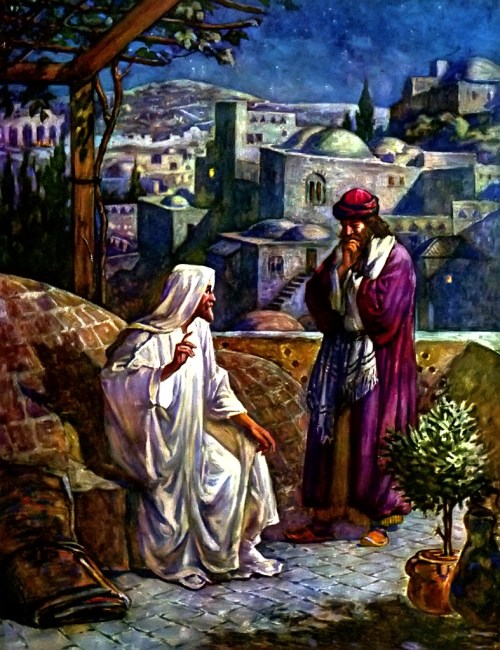
john3_1_jesusandnicodemus

Jesus answered and said unto him, Verily, verily, I say unto thee, Except a man be born again, he cannot see the kingdom of God.(John 3:3)

                   This passage, recorded in John 3:1-21, is the first of seven discourses spoken by Jesus and recorded by John. Certainly Jesus preached many more sermons than the seven recorded by John, but these seven, as least for John, uniquely demonstrated the deity of Jesus. Indeed, John records, “And many other signs truly did Jesus in the presence of his disciples, which are not written in this book: But these are written, that ye might believe that Jesus is the Christ, the Son of God; and that believing ye might have life through his name” (John 20:30-31, emphasis mine).

                   The passage opens with the introduction to the audience – one man, Nicodemus, “a man of the Pharisees … a ruler of the Jews” (John 3:1). His name means “conqueror of the people”[1] or “victorious among his people.”[2] Given the strength of his name, it seems strange that “The same came to Jesus by night” (John 3:2). At a glance, it seems as though Nicodemus came by stealth to avoid detection by those more adamantly opposed to Jesus, but that is not the case. “The Pharisee may have chosen this time in order to be sure of an uninterrupted and leisurely interview. During the day, Jesus would be busy and there would be crowds (crowds of common people!). Not so at night. Then there could be a long, private discussion.”[3]

                   At this point in his Gospel, John had not detailed many of Jesus’ miracles or any of His teachings. Certainly, turning water into wine (John 2:1-12) rates highly as the first of His seven signs. From there, Jesus celebrated the first Passover of His ministry by turning over the tables of the moneychangers at the Temple (John 2:13-22). His action drew fire from the “Jews” who challenged Him: “What sign shewest thou unto us, seeing that thou doest these things?” (John 2:18). Apparently, Jesus made Himself known during this time, although John provides little detail. “Now when he was in Jerusalem at the passover, in the feast day, many believed in his name, when they saw the miracles which he did” (John 2:23).

                   So, it seems that Nicodemus had at least heard of Jesus. Perhaps he witnessed the miracles of Jesus, and heard Him teach. Now he comes to Jesus by night for a private meeting. “Rabbi, we know that thou art a teacher come from God: for no man can do these miracles that thou doest, except God be with him” (John 3:2). Nicodemus addresses Jesus with the sincere title of respect. “Rabbi” acknowledged Jesus as “Master,” that is to say, “Master Teacher.” What little he knew of Jesus instructed him that He was more than an ordinary man. Jesus, he concluded, came “from God” because “no man can do these miracles … except God be with him.”

                   Nicodemus assessed correctly, but Jesus was not interested confirming what He knew to be fact. Nicodemus was not unlike the other “Jews” in many respects. “But Jesus did not commit himself unto them, because he knew all men, And needed not that any should testify of man: for he knew what was in man” (John 2:24-25, emphasis mine). Instead, He went right to the heart of the matter. “Jesus answered and said unto him, Verily, verily, I say unto thee, Except a man be born again, he cannot see the kingdom of God” (John 3:3, emphasis mine). “Again” is a poor translation of the Greek anōthen, which means “from above.” Being “born from above” is in keeping with what John penned in the prologue to his Gospel. “But as many as received him, to them gave he power to become the sons of God, even to them that believe on his name: Which were born, not of blood, nor of the will of the flesh, nor of the will of man, but of God” (John 1:12-13, emphasis mine). Nicodemus clearly understood the term “born,” genneithei, in the normal sense of procreation (John 3:4), but he missed the spiritual aspect of Jesus’ message.

                   To clear up the confusion, Jesus affirms John’s statement in the opening chapter. “Jesus answered, Verily, verily, I say unto thee, Except a man be born of water and of the Spirit, he cannot enter into the kingdom of God. That which is born of the flesh is flesh; and that which is born of the Spirit is spirit” (John 3:5-6). Jesus prefaces His statement with “verily, verily,” i.e. “truly, truly.” Coming from God incarnate, this makes the statement immutable – it is unchangeable. Rebirth is not a matter of external changes, but rather it is a transformation from within, and accomplished “from above” through the saturation of the Holy Spirit. “That which is born of the flesh is flesh; and that which is born of the Spirit is spirit” (John 3:6). We are all born of flesh. That is by design. The spirit of man died at the Garden of Eden (Genesis 3), and thus we are excluded from “the kingdom of God.” Only the rebirth of our spirit can fit us for heaven.

                   The “teacher of Israel” failed to grasp the lesson the Master taught. This called for further instruction. “Verily, verily, I say unto thee, We speak that we do know, and testify that we have seen; and ye receive not our witness. If I have told you earthly things, and ye believe not, how shall ye believe, if I tell you of heavenly things?” (John 3:11-12, emphasis mine). Jesus addresses Nicodemus (thee). “We speak that we do know.” Some commentators suggest that Jesus refers to Himself and His disciples. However, at this point in His ministry, His disciples were novices; there was little that they “did know.” Indeed, His disciples did not receive “full knowledge” until after His resurrection, and the arrival of the Holy Spirit (Acts 2). Therefore, I believe the “we” Jesus refers to is the Trinity. I conclude that from His statement in the next verse: “And no man hath ascended up to heaven, but he that came down from heaven, even the Son of man which is in heaven” (John 3:13). He, the Son of Man, has direct knowledge “from heaven,” from the Creator Himself (John 1:1-3). When Jesus said, “ye receive not our witness,” the “ye” in the KJV indicates that the Greek, second person personal pronoun is plural. Jesus did not single out Nicodemus; He referred to all the “Jews,” i.e., the religious establishment to whom Jesus later referred to as “blind guides” (Matthew 23:16, 24).

                   The rebirth is simple; Jesus explained. “And as Moses lifted up the serpent in the wilderness, even so must the Son of man be lifted up: That whosoever believeth in him should not perish, but have eternal life” (John 3:14-15). Jesus referred to Jewish history recorded in Scripture, the Torah to be precise. Numbers 21:4-9 records the time when the children of Israel wandering in the wilderness complained against God and Moses for the free food God provided daily. “And the LORD sent fiery serpents among the people, and they bit the people; and much people of Israel died” (Numbers 21:6). The Hebrew word translated as “fiery” is śârâph, which means, “burning.” The same Hebrew word (seraphim) is applied to the angelic creatures witnessed by Isaiah in his vision of God on His throne (Isaiah 6:2, 6). In the case of the Hebrew Children, it referred to the burning bite inflicted by the venomous snakes. It may also imply the copper color of the serpents. We derive this from the instructions given to Moses. “And the LORD said unto Moses, Make thee a fiery serpent, and set it upon a pole: and it shall come to pass, that every one that is bitten, when he looketh upon it, shall live. And Moses made a serpent of brass, and put it upon a pole, and it came to pass, that if a serpent had bitten any man, when he beheld the serpent of brass, he lived.” (Numbers 21:8-9, emphasis mine). The Hebrew word translated as “brass” is nechôsheth, which means “copper.”

                   The act of looking upon the bronze snake on the pole when bitten included recognition of the sin that brought about the snake bite, and the faith to believe that simply looking upon the likeness of the serpent on the pole would result in healing and preservation of life. In the same way, Jesus compared the simplicity of the rebirth. “And as Moses lifted up the serpent in the wilderness, even so must the Son of man be lifted up: That whosoever believeth in him should not perish, but have eternal life” (John 3:14-15, emphasis mine). Once again, this reaffirms John’s assertion, “But as many as received him, to them gave he power to become the sons of God, even to them that believe on his name” (John 1:12, emphasis mine).

                   If one has a red-letter edition Bible, verses 16-21 are attributed to Jesus. However, man, not God, inspires red letters. While many Bible scholars agree that Jesus spoke these words, to me this seems that John added his commentary to expand on what Jesus said. It seems redundant that Jesus would say, “That whosoever believeth on him should not perish, but have eternal life (v. 15), and then repeat “that whosoever believeth in him should not perish, but have everlasting life” (v. 16) in the next sentence. Regardless, the Holy Spirit, inspired these words through John’s pen, so they remain God’s Word whether they were spoken directly by Jesus, or whether John, through the Holy Spirit, expounded on Jesus’ words.

                   The teaching is clear. “That old serpent, called the Devil, and Satan” (Revelation 12:9) inflicted a deadly bite on mankind in the Garden of Eden (Genesis 3) from which there is no cure.  “For the wages of sin is death…” (Romans 6:23). “For God so loved the world, that he gave his only begotten Son, that whosoever believeth in him should not perish, but have everlasting life” (John 3:16). Death is antithetical to God who is life (John 1:4; 14:6). Simultaneously, God is holy and cannot tolerate sin. Yet, He loves His creation too much to allow it to “perish,” i.e., die, with no hope for reconciliation.  So, “He gave.” His gift stemmed not from man’s merit, but from His love. “For by grace are ye saved through faith; and that not of yourselves: it is the gift of God: Not of works, lest any man should boast” (Ephesians 2:8-9, emphasis mine). “He gave His only begotten Son.” The burden of sin was too great for any man to bear, so God Himself took on the insurmountable debt of man’s sin. “And the Word [who was God] was made flesh, and dwelt among us, (and we beheld his glory, the glory as of the only begotten of the Father,) full of grace and truth” (John 1:14). God became man so “that whosoever believeth in him should not perish, but have everlasting life.” The Greek word translated “perish” is apótai meaning “to destroy fully.”  The verb is in the aorist tense indicating that it occurred in the past and its effects continue into the present. It is in the middle voice indicating that the subject is acting on itself, and it is in the subjunctive mood meaning that the action is contingent, probable and eventual. That all means that man in the past brought eventual death and destruction upon himself contingent on what he does with the gift God offers.

                   As in the beginning, it comes down to two choices: the tree of life or the tree of death, aka the tree of the knowledge of good and evil. For the children of Israel in the wilderness it was to look upon the bronze serpent and live, or doubt and die. We all have the curse of death upon us. “For all have sinned, and come short of the glory of God” (Romans 3:23).  We also have a choice. “Whosoever believeth in him should not perish, but have everlasting life” (John 3:16). The other choice is unbelief. “He that believeth on him is not condemned: but he that believeth not is condemned already, because he hath not believed in the name of the only begotten Son of God” (John 3:18, emphasis mine). We are “condemned already” because, to begin with, we are all born of the flesh, but not of the Spirit. Then, we are “condemned already” when we reject the gift of salvation God freely offers.

                   “For God sent not his Son into the world to condemn the world; but that the world through him might be saved” (John 3:17).  The condemnation was accomplished at the Fall. God’s solution was to take on human flesh to pay the “wages of sin.”  He paid the debt with His own innocent blood. “For if the blood of bulls and of goats … sanctifieth to the purifying of the flesh: How much more shall the blood of Christ, who through the eternal Spirit offered himself without spot to God, purge your conscience from dead works to serve the living God? (Hebrews 9:13-14, emphasis mine). He did all the work. The choice to believe  or not believe is ours.

                   Nicodemus took Jesus’ words to heart. In the end, he came to His defense. At the Feast of Tabernacles when the Jews wanted to arrest Jesus, Nicodemus spoke up for him. “Nicodemus saith unto them, … Doth our law judge any man, before it hear him, and know what he doeth?” (John 7:50-51). After they crucified Him, Nicodemus accompanied Joseph of Arimathaea in the burial of Jesus, without regard to his Pharisaical reputation (John 19:38-40). He made the choice to believe. We have the same choice.

Notes:


[1]  Eli Lizorkin-Eyzenbert, The Jewish Gospel of John: Discovering Jesus, King of All Israel, (Tel Aviv, Israel, Jewish Studies for Christians, 2015), 32-33.

[2]  Definition from Strong’s Hebrew and Greek Dictionaries.

[3]  Leon Morris, The New International Commentary on the New Testament: The Gospel According to John, Revised, (Grand Rapids, MI, Wm. B. Eerdmans Publishing Co., 1995), 187.

Comments Off on Jesus’ Seven Discourses in John (1)

Filed under Apologetics, Bible, Christianity, Death, Evangelism, Gospel, Religion, Salvation, Theology

What’s Wrong!

dying-uncle-sam

And I will bless them that bless thee, and curse him that curseth thee: and in thee shall all families of the earth be blessed. (Genesis 12:3)

            Recently, shortly after the New Year’s celebrations ended, I was listening to my favorite cable news channel, and I heard one of the news anchors, a lady as I recall, lament, “What’s wrong with our country!”  The outcry was in response to the shooting at the Ft. Lauderdale Airport in Florida.

            These days many echo the same lament as our nation morphs from a nation of laws to a nation of lawlessness. One could point to our outgoing President dragging our country into the gutter, but, in truth, the decline began more than half a century ago. However, except for those living in ignorant bliss, it is obvious to the observant that the degeneration has markedly accelerated over the past eight years. My good friend and author, DiAne Gates, details the decline in her recent blog post: “A SYMPHONY OF DECEPTION.”

            What’s wrong with our country! Lawmakers carelessly vomit out laws aimed at curbing the anarchy of the lawless while, wittingly or unwittingly, denying the God-given freedoms of honest, law-abiding citizens. In the meantime, the “moral majority” celebrates victory for their part in replacing one narcissist with another in hopes of turning the nation around. I voted for Donald Trump, and I thank God that he won the presidential election rather than Hillary Clinton; but I am under no delusion that he is the salve to heal our wounds.

            Our nation is sick. That is obvious to anyone having a sense of awareness, and no one has the solution. Anyone familiar with troubleshooting techniques knows that before finding a solution to a problem, one must clearly understand the cause of the problem. What is wrong with our country? The cause and the solution are simple, but the implementation is hard.

            Both the cause and the solution are contained in the verse above. The promise given to Abram (Abraham) is generally understood to apply to the nation of Israel. That is indisputable (except by those with a perverted understanding of Scripture). After Abram arrived in the land of Canaan, God expanded on His promise. “And the LORD appeared unto Abram, and said, Unto thy seed will I give this land: and there builded he an altar unto the LORD, who appeared unto him” (Genesis 12:7, emphasis mine). God amplified His promise after Abram and Lot separated. “For all the land which thou seest, to thee will I give it, and to thy seed for ever” (Genesis 13:15, emphasis mine). If God’s Word is true, then the promise is irrevocable. The modern nation of Israel occupies only a fraction of the land given to them through Abraham by God. It matters not what the United Nations or the United States say about it, and it belongs to them forever! There you have the source of the problem to the Middle East.

            So, what has that to do with America? Perhaps you missed it. Note that the promise was directed to Abraham’s “seed.” That “seed” certainly applies to Israel, but “the seed” is much more than that. The Apostle Paul made the case that the “seed” applies to Christ more so than it does to Israel. “Now to Abraham and his seed were the promises made. He saith not, And to seeds, as of many; but as of one, And to thy seed, which is Christ” (Galatians 3:16, emphasis mine). Paul bases his argument on Hebrew grammar, which records the “seed” as singular, not “seeds” as plural. The promise made was to Christ, i.e., Messiah, who would come as a descendant of Abraham.

            You still wonder what that has to do with America and the solution to America’s problem. The answer is in our leading verse. “And I will bless them that bless thee, and curse him that curseth thee: and in thee shall all families of the earth be blessed” (Genesis 12:3, emphasis mine). Look first at the last half of the verse: “in thee shall all the families of the earth be blessed.” That is the promise of Messiah, our Savior. Through His death, burial and resurrection, Jesus made the way for all nations to be blessed, if they will accept and submit to Him. He is that Seed of Abraham. Contained in the first half of the verse is the cause and solution to our national problem. God said, “I will bless them that bless Thee, and curse him that curseth Thee.” The emphasis serves to highlight the object of the blessing or curse.

            In its infancy, our nation blessed and honored our God, our Savior. At its founding, God took center stage and our lawmakers unashamedly proclaimed that we are a Christian nation. Oh! How God blessed our beginnings! Why? Because our nation blessed Him. Can the same be said today? Not hardly! Today we, as a nation, curse Christ and cast Him out of every area of public life. Then we wonder, what’s wrong with our country? As a nation, we have called what is good evil, and what is evil, we call good. The solution is equally simple. Stop cursing God, and start blessing Him again. Can it be done? I don’t know, but I do know this, “as for me and my house, we will serve the LORD” (Joshua 24:15).

2 Comments

Filed under Apologetics, Christianity, Current Events, Politics, Random Musings, Salvation