Category Archives: Bible

Creator, Creation, and the Cross (Part 2)

In the beginning God created the heaven and the earth. (Genesis 1:1)

          Last week’s study, Part 1, focused on the Creator. Today we will take a closer look at the Creation.

Part 2, The Creation

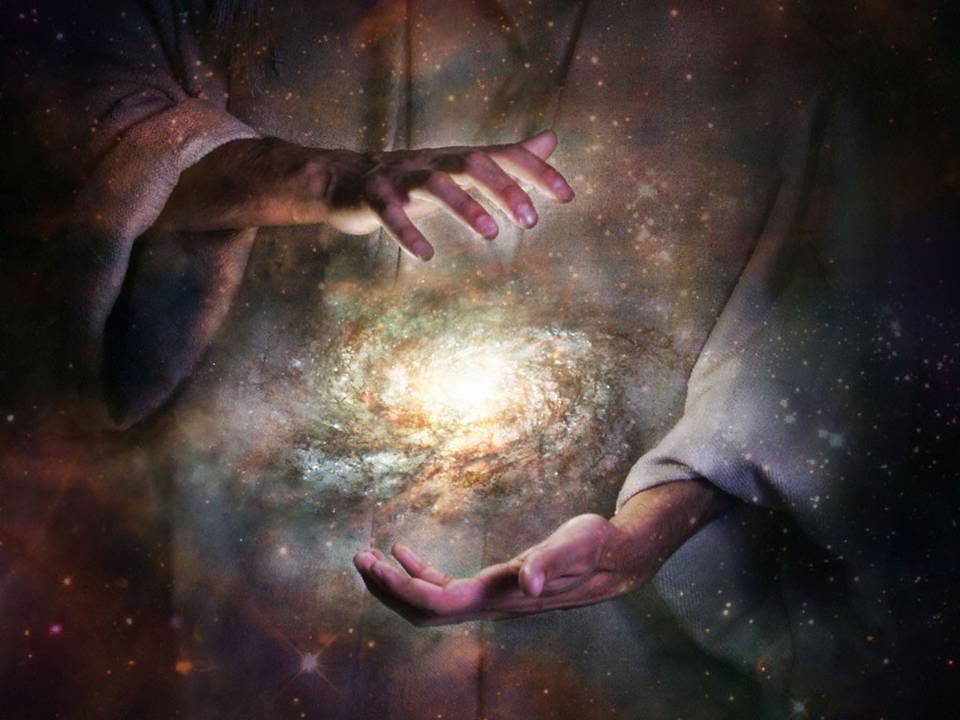
The first verse of Genesis encapsulates the creation of the universe. The universe, as vast and complex as it is, is composed of three elements, anyone of which being absent render the universe non-existent. “In the beginning” is Time. “God created the heavens” (Space) “and the earth” (matter/energy). These three elements: time, space, and matter, make up the universe.

          Secular scientists who strive to explain the origin of the universe though natural causes, hypothesize that all existing matter at one time was densely compressed into a “singularity” that rapidly expanded to create the universe 14.7 billion years ago. This is a relatively recent hypothesis based on the notion rising out of the “enlightenment,” (17th and 18th centuries) proposing that the earth is much older than indicated in Scripture. Since “scientists” had “proven” that the earth was older than stated in the Bible, many theologians attempted to accommodate billions of years into the biblical record by proposing a “gap” of billions of years between Verse 1 and Verse 2 of Genesis 1.

          There is no “Gap”[1]  between verses 1 & 2. When simply read, Verse 1 flows smoothly into Verse 2. The Gap Theory is highly speculative and based on conjecture. The Gap Theory presupposes a prior creation which “became” void and formless due to Satan’s fall. Satan caused a race of pre-Adamic man to sin forcing God to destroy His first creation. This theory introduces sin and death before the fall of Adam and Eve and effectively nullifies the curse of death for sin. Although theologians who still hold to the Gap Theory try to support it with Scripture, it has no biblical support.

          With all the elements of the universe created, the Creator began the task of organizing the formless blob. The raw materials required energy. “And the Spirit of God [the Third Person of the Trinity] moved upon the face of the waters” (Genesis 1:2). “And God said, Let there be light: and there was light.” (Genesis 1:3). The creation of light only required the verbal command from the Word. The Hebrew word for light is ‘ôr (אוֹר), and I will point out something interesting about that word later on (in Part 3).

God declared His first day’s work “good.” “And the evening and the morning were the first day” (Genesis 1:5). The word “day” used here and throughout the creation account is important because many find it hard to believe that God created all there is in six 24-hour days.[2] The Hebrew word for “day” is yom. In the Old Testament, it almost always refers to a normal 24-hour day. It always refers to a normal 24-hour day when preceded by an ordinal number – first, second, third, etc. Furthermore, in order to remove any doubt, God further defines yom by “evening and morning,” which constitutes a normal 24-hour day. Some have attempted to stretch the length of each day by thousands and even millions of years.[3] To support their position they cite Psalm 90:4 and 2 Peter 3:8, but these verses use simile (“like,” “as”) to refer to God’s “timelessness”[4] not to how He counts days.[5] To God, one day is as a thousand years and a thousand years are as a day. God is not bound by time as we are. He created time; therefore He exists outside of the constraints of time.

On the second day, Genesis 1:6-8, God organizes the elements by separating the waters from Earth from the waters in space. The word “Firmament” means a “stretched-out thinness.” It is like a thin membrane separating the earth’s atmosphere from the coldness of space. Remember, at this point there are no other heavenly bodies. The day ended without God’s affirmation that it was “good.” There was work yet to be done.

On Day Three, Genesis 1:9-13, God separated the dry land from the water and called it “good.” The vegetation was created fully mature having its seed in itself and ready to reproduce “after its kind” – no evolution. God created plants with the genetic capability to vary within its own kind, but not to “evolve” from one kind into another. We can verify that is still true today.

On the fourth day, Genesis 1:14-19, God created the remaining celestial bodies. Unlike the evolutionary story, God’s account of creation begins with the planet Earth and all the other stars and planets come thereafter. That makes perfect sense when we consider that God made Earth with mankind in mind. “For thus saith the LORD that created the heavens; God himself that formed the earth and made it; he hath established it, he created it not in vain, he formed it to be inhabited: I am the LORD; and there is none else” (Isaiah 45:18).

“And God said, Let there be lights in the firmament of the heaven to divide the day from the night; and let them be for signs, and for seasons, and for days, and years” (Genesis 1:14). The “lights” (Hebrew mâ’ôr) are “lesser lights” or “luminaries.” They are “lesser” only compared to the original light He created on the first day. We also understand that many of these stars are hundreds of times larger than our own sun, but because of their great distance from the earth, they appear to be lesser. The mâ’ôr were created for signs and seasons, days and years. The word “signs” – ‘ôth means signal, banner, remembrance, omen, warning, and “seasons” – mô‛êd means an appointed time/place/meeting; a sacred season, set feast, appointed season. God used theses “signals” to announce the time of His Feasts.[6] The constellations were placed in the night sky for our benefit. God speaking to Job says, “Canst thou bring forth Mazzaroth [i.e., the Zodiac] in his season? or canst thou guide Arcturus with his sons? (Job 38:32). God made the sun and moon first and then, almost as an afterthought, he made the stars also – God called it “good”

On the fifth day, Genesis 1:20-23, God made marine and flying creatures. God spoke all of these creatures into existence. The “great whales” – the Hebrew word tannı̂yn means “a sea monster, serpent, or dragon” – not only included whales as we know them, but also the giant marine reptiles. God made them to bring “forth abundantly,” i.e., fully mature with the ability to reproduce “after their kind.” They cannot cross with others of another kind, however, they can vary within their own “kind.” And “God saw that it was good.”

On Day Six of creation, Genesis 1:24-25, the Creator spoke the land-dwelling creatures into existence. Like the marine animals and flying things, they are created fully mature and ready to reproduce “after their kind”

The pinnacle of God’s creation was man (mankind), Genesis 1:26-28. Man was created in God’s “image” – Hebrew tselem “resemblance” – like a mirror image or a photograph – that looks like but is not. Man was created in God’s “likeness” – Hebrew demûth “similitude” – having similar characteristics. We could make a long list of God’s attributes that humans also possess, but these are some of the most prominent. Man, like God is triune in nature – mind, body, and spirit as God is Father, Son, and Holy Spirit. Humans are moral beings (although in a fallen state) and God is a moral being. God is Creator; humans are creative. God is love; humans have the capacity to love. And many other comparisons could be made; the list is long.

God made humans “male and female” (He only made two – one pair).There is a procreative reason for the two genders and anything other than that violates God’s design. Jesus confirms only two sexes/genders. Matthew 19:4 “Have ye not read, that he which made them at the beginning made them male and female.” Mark 10:6 “But from the beginning of the creation God made them male and female.” God gave dominion of His creation to humans.

With the creation of man, God completed His creative work (Genesis 1:29-31). Herbs and fruits were “meat” for humans and animals. All were vegetarian, even the animals with big teeth. God declared His completed creation “very good” me’ôd ṭôb – exceedingly good! In God’s completed creation, there was no sin, no death, no sickness, no curse, etc. After sin entered the creation, all of that changed. However, one day, perhaps in the near future, all of that will be restored. “And I saw a new heaven and a new earth: for the first heaven and the first earth were passed away; and there was no more sea … And God shall wipe away all tears from their eyes; and there shall be no more death, neither sorrow, nor crying, neither shall there be any more pain: for the former things are passed away” (Revelation 21:1, 4).

On the seventh day, Genesis 2:1-3, God “rested.” The Hebrew word for “seventh” is shebı̂y‛ı̂y. The Hebrew word for “rested” is shâbath from which with get “Sabbath.” “Sabbath” means “rest” not “Saturday” or “seventh.” God was not tired nor did He need a break. He ceased His creative work because it was “ended (kâlâh)” or “completed.” There was nothing left to do – 1st Law of Thermodynamics – matter (except for the initial creation on Day One) can neither be created nor destroyed; it can only be changed.

He blessed the 7th Day, and He set it as an example for us, Exodus 20:9-11 “Six days shalt thou labour, and do all thy work:  But the seventh day is the sabbath of the LORD thy God: in it thou shalt not do any work, thou, nor thy son, nor thy daughter, thy manservant, nor thy maidservant, nor thy cattle, nor thy stranger that is within thy gates: For in six days the LORD made heaven and earth, the sea, and all that in them is, and rested the seventh day: wherefore the LORD blessed the sabbath day, and hallowed it.” Six days of creation with one day of rest was for our example to work six days and rest and honor God on the seventh. 

That was a good ending for the first week of creation, but that did not last long as we will see next week in Part 3.

If you are not sure of your eternal destiny, please read my page on “Securing Eternal Life.”

Notes:


[1]  “No Gap” — https://erniecarrasco.com/2015/10/18/no-gap/

[2]  “A Day Is A Day” — https://erniecarrasco.com/2015/10/25/a-day-is-a-day/

[3]  “A Thousand-Year Day” — https://erniecarrasco.com/2020/02/09/a-thousand-year-day/

[4]  “The Eternality of God” — https://erniecarrasco.com/2017/06/04/the-eternality-of-god/

[5]  “Time Confusion” — https://erniecarrasco.com/2016/07/31/time-confusion/

[6]  “Rosh HaShanah” — https://erniecarrasco.com/2016/10/03/rosh-hashanah/

Comments Off on Creator, Creation, and the Cross (Part 2)

Filed under Apologetics, Bible, Christianity, Creation, Evolution, Feasts of the Lord, Holy Spirit, Origins, Science, Theology

Creator, Creation, and the Cross (Part 1)

In the beginning God created the heaven and the earth. (Genesis 1:1)

          Upon entering any form of discourse, the best place to start is at the beginning. For one seeking God or desiring to know more about God, the Bible presents God and His relationship with His creation very succinctly in the first three chapters of the first book of the Bible. The Bible presents the matter so clearly and so simply that one must either accept it or reject it. There is no other choice.

Part 1, The Creator

          The opening verse makes a matter-of-fact statement: “In the beginning God created…” We need to stop right there for a moment and consider the significance of that phrase. “God” – Hebrew ‘ĕlôhı̂ym – is a plural noun followed by the singular verb “created” – Hebrew bârâ’. Combining a plural noun with a singular verb makes bad grammar in Hebrew as well as in English. The Author (God Himself) did not make a grammatical blunder here, but rather presented the first indication of the triune nature of God. God is three persons in a singular Godhead. Also important to note is that the word bârâ’ is only used of God in the Old Testament; only God can bârâ’.

          Later on in the New Testament we learn that the Creator is the Second Person of the Trinity, Jesus Christ. John in his Gospel identifies Jesus, the Creator, as “The Word.” “In the beginning was the Word, and the Word was with God, and the Word was God. The same was in the beginning with God. All things were made by him; and without him was not any thing made that was made” (John 1:1-3). A few verses later he clarifies who the Word is. “And the Word was made flesh, and dwelt among us” (John 1:14) referring to Jesus. The Apostle Paul confirms, “For by him [Jesus] were all things created, that are in heaven, and that are in earth, visible and invisible …  And he is before all things, and by him all things consist” i.e., “hold together” (Colossians 1:15-17). Not only is Jesus the Creator of all things, He is also the sustainer of all things.

          We see, then, that the agent of the creation was the Word, Jesus Christ, the Second Person of the Trinity. In the second verse, we see the Third Person of the Trinity involved in creation as He moves upon “the waters” to energize the created matter.

          See Part 2, The Creation next week for the continuation of this study.

If you are not sure of your eternal destiny, please read my page on “Securing Eternal Life.”

Comments Off on Creator, Creation, and the Cross (Part 1)

Filed under Apologetics, Bible, Christianity, Creation, Origins, Theology

How Long, O Lord?

And they cried with a loud voice, saying, How long, O Lord, holy and true, dost thou not judge and avenge our blood on them that dwell on the earth?  (Revelation 6:10)

This scene in heaven takes place shortly after Jesus opens the fifth seal of the seven-sealed scroll.[1] The Tribulation is just beginning. The first seal releases the white horse rider[2] that carries a bow but no arrows. He has a crown and he goes “forth conquering, and to conquer.” Most end-times prophecy teachers believe this one is Antichrist that appears at the beginning of the Tribulation. That he has no arrows for his bow suggests that he conquers through diplomacy. Further confirmation of this comes from the statement that “a crown was given unto him;” he does not take it by force. The Prophet Daniel describes him as the “fourth beast/kingdom”[3] whose kingdom will be unlike any before, and it “shall devour the whole earth.” Daniel’s “beast” – the “little horn” – a.k.a. Antichrist, will “speak great words against the Most High.” Daniel says that he will “wear out the saints,” i.e., the Jews for three and one half years. This will take place at the final three and one half years of the seven-year Tribulation.

In a later vision, Daniel predicts the appearance of Antichrist. “And he [Antichrist] shall confirm the covenant with many for one week [seven years]: and in the midst of the week [after 3 ½ years] he shall cause the sacrifice and the oblation to cease, and for the overspreading of abominations he shall make it desolate, even until the consummation [when Christ returns], and that determined shall be poured upon the desolate” (Daniel 9:27, emphasis mine). Of him the Apostle Paul says, “Let no man deceive you by any means: for that day shall not come, except there come a falling away first, and that man of sin be revealed, the son of perdition [i.e., Antichrist]; Who opposeth and exalteth himself above all that is called God, or that is worshipped; so that he as God sitteth in the temple of God, shewing himself that he is God.” (2 Thessalonians 2:3-4, emphasis mine). Jesus also warned, “When ye therefore shall see the abomination of desolation, spoken of by Daniel the prophet, stand in the holy place, (whoso readeth, let him understand:) Then let them which be in Judaea flee into the mountains” (Matthew 24:15-16).

So, to recapitulate, Antichrist, the rider on the white horse, comes on the scene and obtains world renown and power by diplomatic means (“speaking great words”). He confirms a peace agreement with Israel (and “with many”), which probably allows for the construction of the third temple (which needs to exist since he is going to desecrate it).[4] This act will begin the seven-year Tribulation. After 3 ½ years, he breaks the covenant, he enters the Temple declaring himself to be god, and initiates what will be the worst persecution of Jews the world has ever known. By the way, this persecution will also include Gentiles that come to faith in Christ during the Tribulation.

The next riders also show up at the beginning of the Tribulation, the first 3 ½ years. The rider on the red horse[5] removes peace from the earth. The rider on the black horse[6] brings global economic collapse. The rider on the pale (green) horse brings famine, plague, and death. The four horse riders represent the first four seals of the seven-seal scroll.

“And when he had opened the fifth seal, I saw under the altar the souls of them that were slain for the word of God, and for the testimony which they held: And they cried with a loud voice, saying, How long, O Lord, holy and true, dost thou not judge and avenge our blood on them that dwell on the earth?” (Revelation 6:9-10, emphasis mine). These are the “Tribulation Saints” that come to faith Christ after the Rapture (the “snatching away”) of the Church. Being a follower of Christ during the Tribulation will come at a high cost and many will pay with their lives. Now their souls are with the Savior, but they also see their brothers and sisters in Christ suffering the horrors of the Tribulation on earth. So, they cry, “How long, O Lord, holy and true, dost thou not judge and avenge our blood on them that dwell on the earth?” And, the Tribulation has only just begun.

We are beginning to see the “signs” of the end-times. Israel, the focal point of end-times prophecy, is ready to institute an unstable government. The players in the Gog and Magog[7] war are staging for battle. Through vaccine and mask mandates for the Wuhan Bug, the world population is being conditioned to blindly obey all orders that come from “above.” The US Government spends money that does not exist in the treasury and justify their foolishness by simply printing more. The “woke cancel culture” systematically undermines or destroys all social norms. Even language has lost all meaning. Violence among people groups is increasing all over the world. The downward spiral of our moral decay removes any trace of hope for a rational thinking person.

It seems that I find myself on a daily basis crying out, “How long, O Lord will You allow things to continue as they are?” Anyone who places their faith and trust in Jesus sees the light at the end of this dark tunnel. That light is the hope of Jesus’ soon coming for His Bride. “For the Lord himself shall descend from heaven with a shout, with the voice of the archangel, and with the trump of God: and the dead in Christ shall rise first: Then we which are alive and remain shall be caught up together with them in the clouds, to meet the Lord in the air: and so shall we ever be with the Lord.” (1 Thessalonians 4:16-17, emphasis mine). After that comes the seven-year Tribulation, which culminates with the return of Christ to set up His 1000-year reign on earth.[8]

I feel bad for those that will not come to Christ until after the Rapture. Life will be unimaginably difficult for Christians (Jews and Gentiles) living in the Tribulation, if they are not martyred early on. However, Jesus’ reign on earth is the only fix for this sick and broken world. I can only plead to anyone reading this if you do not know Jesus as your Lord and Savior, you need to settle that right now. Please read my page on “Securing Eternal Life” and meet Jesus at the Rapture rather than at His Second Coming.

Notes:


[1]  Revelation 5:1

[2]  Revelation 6:2

[3]  Daniel 7:23-25

[4]  Israeli religious leaders claim they have everything they need to build the Third Temple. All they need is the “go ahead” in order to start construction. They claim they can have it built in a matter of months.

[5]  Revelation 6:4

[6]  Revelation 6:5-6

[7]  Ezekiel 38-39

[8]  Revelation 19:11-20:10

Comments Off on How Long, O Lord?

Filed under Bible, Christianity, Current Events, End Times, Eschatology, Gospel, Prayer, Rapture, Salvation, Second Coming of Christ, Theology

No Harm Done

They shall take up serpents; and if they drink any deadly thing, it shall not hurt them; they shall lay hands on the sick, and they shall recover. (Mark 16:18)

The final verses of Mark’s Gospel instigate controversy among Bible “scholars,” and many modern translations preface the passage with a warning that “The most reliable early manuscripts and other ancient witnesses do not have Mark 16:9-20.[1] The NIV Study Bible further notes that “Serious doubt exists as to whether these verses belong to the Gospel of Mark. They are absent from important early manuscripts and display certain peculiarities of vocabulary, style and theological content that are unlike the rest of Mark. His Gospel probably ended at 16:8, or its original ending has been lost.”[2]

“Scholars” are the reason we have so many different translations and so much disagreement on which translation is best. I am not averse to higher education. Personally, I enjoy learning and research, especially on matters of the Bible. However, it seems to me that many that achieve the higher degrees lose their grip on reality and rely on the wisdom of man more than the wisdom of God.

When I consider Mark 16:9-20, after having ready Mark’s entire Gospel, I do find the ending somewhat abrupt. It is almost as if Mark completed his Gospel and needed to “wrap it up” in order to get if off to print. (I know. I know! There were no printers in those days.) Most scholars believe that Mark’s was the first Gospel in circulation. The church at the time of the writing was probably no more than 15-30 years old, growing and spreading throughout the Middle East, Asia Minor, and Europe, and there was no written record of the ministry of Christ. As we read Mark’s Gospel, we get the sense that he is moving from one event to the next in the ministry of Jesus. Mark’s is also the shortest of the four Gospels, so the abrupt ending does not surprise me.

The fact that the last 12 verses appear in the text tell me that “The Author,” the Holy Spirit, wanted them there – something the scholars seem to forget. When God says, “For as the rain cometh down, and the snow from heaven, and returneth not thither, but watereth the earth, and maketh it bring forth and bud, that it may give seed to the sower, and bread to the eater: So shall my word be that goeth forth out of my mouth: it shall not return unto me void, but it shall accomplish that which I please, and it shall prosper in the thing whereto I sent it” (Isaiah 55:10-11, emphasis mine). Similarly, Jesus said, “Heaven and earth shall pass away, but my words shall not pass away” (Matthew 24:35). And to answer those who might say that perhaps these were not God’s or Jesus’ words but added later by some human editor, consider the following: “Ye shall not add unto the word which I command you, neither shall ye diminish ought from it, that ye may keep the commandments of the LORD your God which I command you” (Deuteronomy 4:2, emphasis mine). Also, “What thing soever I command you, observe to do it: thou shalt not add thereto, nor diminish from it” (Deuteronomy 12:32) In addition we find, “For I testify unto every man that heareth the words of the prophecy of this book, If any man shall add unto these things, God shall add unto him the plagues that are written in this book: And if any man shall take away from the words of the book of this prophecy, God shall take away his part out of the book of life, and out of the holy city, and from the things which are written in this book” (Revelation 22:18-19, emphasis mine).

Considering God’s solemn charge not to tamper with His word, I find it difficult to conceive that a human editor, who reverences the Word of God, would take it upon himself to “enhance” it of his own volition. As for those “more reliable early manuscripts,” they come from texts that were rejected by the early church due to their Gnostic origins.[3] They were found in “very good” condition because they were not used.

I have a point to make in defending Mark 16:9-20 and specifically as it relates to verse 18, our opening verse. Concerning “them that believe in me” (v. 17) Jesus says (according to Mark), that “They shall take up serpents; and if they drink any deadly thing, it shall not hurt them” (emphasis mine). Paul proved this after his shipwreck on the island of Melita.[4] In gathering wood for a fire, a viper, attracted to the heat of the fire, attached itself to Paul’s hand. Paul shook the snake into the fire and suffered no harm from the snakebite to the astonishment of the inhabitants of Melita.

Based on Mark 16:18, I believe God protects His children from harm due to no act of their own. Even when we knowingly place ourselves in harmful positions, God will sometimes intervene to protect us, but all according to His purpose for our lives. I strongly advise against acting stupidly just to test God; He may just let you suffer the consequences.

Lately, for obvious reasons, I have been thinking about the hype surrounding the COVID-19 vaccines. I refuse to take the vaccine for several reasons. First of all, I believe God designed our bodies to fight of dangerous pathogens. I also believe that God has our days numbered, and we cannot die until our time comes for God to call us home. There are hundreds of ways to die that do not involve COVID-19, and it is up to God to choose which method He wants to use to take us home.

Those are the foremost reasons I have for not taking the vaccine. Another reason that rates highly is the fact that they are derived from a cell line that came from aborted human fetuses. Most Christians claim to be “pro-life” and are against abortion, and I believe that if they really understood the source of the vaccines, they would not take them. However, I can excuse them due to ignorance. Yet another reason that I will not take the vaccine is that it modifies the recipient’s DNA – God’s programming code that makes you who you are. I do not believe man has arrived at the level of intelligence required to modify God’s programming code.

The reader can investigate these things for himself, but many doctors, virologists, warn that the mRNA vaccine will “disable” a human’s natural immune system rendering them vulnerable to other diseases for which we were once immune. So, in effect, the vaccine is a poison. (Again, I realize my explanation is rather simplistic, but I do not have the space nor the desire to cover it in this article. The information is out there, if you want to look.) Many Christians are happily taking this poison through the ignorance induced by the propaganda put out by our government and the media. I believe, based on Mark 16:18, that Christians taking this poison through ignorance will not be harmed by it. However, those who take it with full knowledge of what it is may suffer the consequences later. Time will tell.

Notes:


[1]  The NIV Study Bible, (Zondervan Corporation, 1985), p. 1530.

[2]  Ibid.

[3]  “Thees, Thous, and Wot Nots” – https://erniecarrasco.com/2016/05/01/thees-thous-and-wot-nots/ (See especially my response to Dwayne Cartwright’s comment.

[4]  Acts 28:1-6

1 Comment

Filed under Apologetics, Bible, Christianity, Current Events, Gospel, Holy Spirit, Pro-life, Science, Theology

God’s Devil

And the LORD said unto Satan, Behold, all that he hath is in thy power; only upon himself put not forth thine hand. So Satan went forth from the presence of the LORD. (Job 1:12)

Satan (the name means “adversary”) appears in many forms in the human imagination. He has been depicted as a grotesque angelic being with a goat’s head and goat’s legs and hooves. The Satanic Temple in Detroit houses an idol by the name of Baphomet that represents their god, Satan. At the other extreme is “Hot Stuff,” a fun-loving comic book character that enjoys playing pranks on people. Either extreme makes Satan an imaginary figure that can easily be dismissed along with any other fairy tale character.

However, Satan is very real. Ask any Satanist. While you are at it, ask the Satanist if Jesus is real. So, why do they worship Satan, rather than Jesus? It is because they have fallen for Satan’s lie that he will overcome the kingdom of Christ. Satan has seduced them with the power he possesses.

Satan does have a lot of power; however, his power is nowhere near the power of God. For example, Satan is not omnipresent like God is. He can only be in one place at one time, which means that we cannot blame the devil for every sin we commit; he is not always around to tempt us. However, he does have millions of demons doing his dirty work for him, but they are limited in their power too. Satan cannot read our minds or our hearts like God can, but he and his demons can observe our actions and listen to what we say. When they see our weaknesses, they know how to attack us.

Satan cannot act on his own initiative. He needs permission from God to carry out his deeds. Reading the first two chapters of the Old Testament Book of Job makes this very clear. It appears that God holds a heavenly council where all His angels, good and bad, come before Him. The psalmist says, “God standeth in the congregation of the mighty; he judgeth among the gods” (Psalm 82:1). The Hebrew word translated “might” is ‘êl which means “god, god-like, mighty one.” This verse shows God standing among “the gods” and judging among them.[1] At the opening of Job’s saga, we find that Job lives in the land of Uz.[2] By God’s standards, Job is a righteous man that shuns evil. God blesses Job with wealth and a large family for whom Job intercedes before God just in case his children have fallen into sin.

The scene then shifts to heaven and God’s council, where all of God’s angels come before Him.[3] Scripture points out that Satan was among them. So God asks Satan to report, and Satan says he has been wandering up and down the earth (remember, he is not omnipresent). The Apostle Peter says that Satan wanders the earth like a ravenous wolf seeking whom he may devour.[4] God then asks Satan if he has taken notice of Job, and God brags on Job. (Would it not be great if God could brag about you?) So Satan points out that Job only worships God because God has blessed him with a good life, a large family, and much wealth. Then Satan suggests that God test Job by taking away all of his blessings. God gives Satan permission to remove all of Job’s blessings, but He prohibits Satan from touching Job’s body.

Satan attacks Job by taking away all of Job’s blessings, but Job remains faithful to God. Next, in Chapter Two, at the following council of God, God asks Satan for a report on Job. Satan, knowing that he failed, suggests that Job remains faithful only because he still has his health. So, God gives Satan permission to touch Job’s body, but he is not allowed to take Job’s life.

The point in all of this is that Satan cannot do anything without God’s consent. At the end of the saga, we learn that Job remained faithful to God, and God restored all that Job lost and much more.[5]

Jesus demonstrated His authority over Satan every time He cast out demons. Luke records one of the most dramatic accounts of a man of the Gadarenes that was possessed by a “legion” of demons.[6] In this account, the demons recognized Jesus from a distance and started crying out begging Jesus not to send them to the abyss (the bottomless pit) before their time. They begged Jesus’ permission to go into a herd of hogs instead, and Jesus gave them permission.

On another occasion, Jesus informed Peter that Satan asked permission to sift him as wheat.[7] At the same time, Jesus assured Peter that He had prayed for him that his faith would not fail. Satan cannot do anything unless God gives him permission.

Satan is real. Satan has a lot of power. Satan can cause us a lot of misery. However, Satan is God’s Devil, and God has him on a short leash – but not for long. Soon, God will unleash Satan to terrorize the entire world, but His own He will spare from the Tribulation to come. For now, the only defense we have against Satan is to remain in the shadow of the Almighty. He hears us when we call out to Him. “Shew thy marvellous lovingkindness, O thou that savest by thy right hand them which put their trust in thee from those that rise up against them. Keep me as the apple of the eye, hide me under the shadow of thy wings, From the wicked that oppress me, from my deadly enemies, who compass me about” (Psalm 17:7-9)

If you are reading this and do not have the assurance of God’s protection on you, please read my page on “Securing Eternal Life.”

Notes:


[1]  I realize this concept may be foreign to most of my readers, but the Bible, when carefully studied does not deny the existence of other gods, but rather it clearly points out that they are “no gods” at all. In other words, even though they do exist and exercise power over humans, they do not approach the power of Yahweh, the God who created them. For an in-depth study on this topic, I recommend Michael S. Heiser’s book, The Unseen Realm.

[2]  Job 1:1

[3]  Job 1:6-12

[4]  1 Peter 5:8

[5]  Job 42:12-17

[6]  Luke 8:26-39

[7]  Luke 22:31-34

Comments Off on God’s Devil

Filed under Apologetics, Bible, Christianity, Satan, Second Coming of Christ, Theology