In the beginning God created the heaven and the earth. (Genesis 1:1)
Upon entering any form of discourse, the best place to start is at the beginning. For one seeking God or desiring to know more about God, the Bible presents God and His relationship with His creation very succinctly in the first three chapters of the first book of the Bible. The Bible presents the matter so clearly and so simply that one must either accept it or reject it. There is no other choice.
Part 1, The Creator
The opening verse makes a matter-of-fact statement: “In the beginning God created…” We need to stop right there for a moment and consider the significance of that phrase. “God” – Hebrew ‘ĕlôhı̂ym – is a plural noun followed by the singular verb “created” – Hebrew bârâ’. Combining a plural noun with a singular verb makes bad grammar in Hebrew as well as in English. The Author (God Himself) did not make a grammatical blunder here, but rather presented the first indication of the triune nature of God. God is three persons in a singular Godhead. Also important to note is that the word bârâ’ is only used of God in the Old Testament; only God can bârâ’.
Later on in the New Testament we learn that the Creator is the Second Person of the Trinity, Jesus Christ. John in his Gospel identifies Jesus, the Creator, as “The Word.” “In the beginning was the Word, and the Word was with God, and the Word was God. The same was in the beginning with God. All things were made by him; and without him was not any thing made that was made” (John 1:1-3). A few verses later he clarifies who the Word is. “And the Word was made flesh, and dwelt among us” (John 1:14) referring to Jesus. The Apostle Paul confirms, “For by him [Jesus] were all things created, that are in heaven, and that are in earth, visible and invisible … And he is before all things, and by him all things consist” i.e., “hold together” (Colossians 1:15-17). Not only is Jesus the Creator of all things, He is also the sustainer of all things.
We see, then, that the agent of the creation was the Word, Jesus Christ, the Second Person of the Trinity. In the second verse, we see the Third Person of the Trinity involved in creation as He moves upon “the waters” to energize the created matter.
See Part 2, The Creation next week for the continuation of this study.
If you are not sure of your eternal destiny, please read my page on “Securing Eternal Life.”
And the LORD said unto Satan, Behold, all that he hath is in thy power; only upon himself put not forth thine hand. So Satan went forth from the presence of the LORD. (Job 1:12)
Satan (the name means “adversary”) appears in many forms in the human imagination. He has been depicted as a grotesque angelic being with a goat’s head and goat’s legs and hooves. The Satanic Temple in Detroit houses an idol by the name of Baphomet that represents their god, Satan. At the other extreme is “Hot Stuff,” a fun-loving comic book character that enjoys playing pranks on people. Either extreme makes Satan an imaginary figure that can easily be dismissed along with any other fairy tale character.
However, Satan is very real. Ask any Satanist. While you are at it, ask the Satanist if Jesus is real. So, why do they worship Satan, rather than Jesus? It is because they have fallen for Satan’s lie that he will overcome the kingdom of Christ. Satan has seduced them with the power he possesses.
Satan does have a lot of power; however, his power is nowhere near the power of God. For example, Satan is not omnipresent like God is. He can only be in one place at one time, which means that we cannot blame the devil for every sin we commit; he is not always around to tempt us. However, he does have millions of demons doing his dirty work for him, but they are limited in their power too. Satan cannot read our minds or our hearts like God can, but he and his demons can observe our actions and listen to what we say. When they see our weaknesses, they know how to attack us.
Satan cannot act on his own initiative. He needs permission from God to carry out his deeds. Reading the first two chapters of the Old Testament Book of Job makes this very clear. It appears that God holds a heavenly council where all His angels, good and bad, come before Him. The psalmist says, “God standeth in the congregation of the mighty; he judgeth among the gods” (Psalm 82:1). The Hebrew word translated “might” is ‘êl which means “god, god-like, mighty one.” This verse shows God standing among “the gods” and judging among them.[1] At the opening of Job’s saga, we find that Job lives in the land of Uz.[2] By God’s standards, Job is a righteous man that shuns evil. God blesses Job with wealth and a large family for whom Job intercedes before God just in case his children have fallen into sin.
The scene then shifts to heaven and God’s council, where all of God’s angels come before Him.[3] Scripture points out that Satan was among them. So God asks Satan to report, and Satan says he has been wandering up and down the earth (remember, he is not omnipresent). The Apostle Peter says that Satan wanders the earth like a ravenous wolf seeking whom he may devour.[4] God then asks Satan if he has taken notice of Job, and God brags on Job. (Would it not be great if God could brag about you?) So Satan points out that Job only worships God because God has blessed him with a good life, a large family, and much wealth. Then Satan suggests that God test Job by taking away all of his blessings. God gives Satan permission to remove all of Job’s blessings, but He prohibits Satan from touching Job’s body.
Satan attacks Job by taking away all of Job’s blessings, but Job remains faithful to God. Next, in Chapter Two, at the following council of God, God asks Satan for a report on Job. Satan, knowing that he failed, suggests that Job remains faithful only because he still has his health. So, God gives Satan permission to touch Job’s body, but he is not allowed to take Job’s life.
The point in all of this is that Satan cannot do anything without God’s consent. At the end of the saga, we learn that Job remained faithful to God, and God restored all that Job lost and much more.[5]
Jesus demonstrated His authority over Satan every time He cast out demons. Luke records one of the most dramatic accounts of a man of the Gadarenes that was possessed by a “legion” of demons.[6] In this account, the demons recognized Jesus from a distance and started crying out begging Jesus not to send them to the abyss (the bottomless pit) before their time. They begged Jesus’ permission to go into a herd of hogs instead, and Jesus gave them permission.
On another occasion, Jesus informed Peter that Satan asked permission to sift him as wheat.[7] At the same time, Jesus assured Peter that He had prayed for him that his faith would not fail. Satan cannot do anything unless God gives him permission.
Satan is real. Satan has a lot of power. Satan can cause us a lot of misery. However, Satan is God’s Devil, and God has him on a short leash – but not for long. Soon, God will unleash Satan to terrorize the entire world, but His own He will spare from the Tribulation to come. For now, the only defense we have against Satan is to remain in the shadow of the Almighty. He hears us when we call out to Him. “Shew thy marvellous lovingkindness, O thou that savest by thy right hand them which put their trust in thee from those that rise up against them. Keep me as the apple of the eye, hide me under the shadow of thy wings, From the wicked that oppress me, from my deadly enemies, who compass me about” (Psalm 17:7-9)
If you are reading this and do not have the assurance of God’s protection on you, please read my page on “Securing Eternal Life.”
Notes:
[1] I realize this concept may be foreign to most of my readers, but the Bible, when carefully studied does not deny the existence of other gods, but rather it clearly points out that they are “no gods” at all. In other words, even though they do exist and exercise power over humans, they do not approach the power of Yahweh, the God who created them. For an in-depth study on this topic, I recommend Michael S. Heiser’s book, The Unseen Realm.
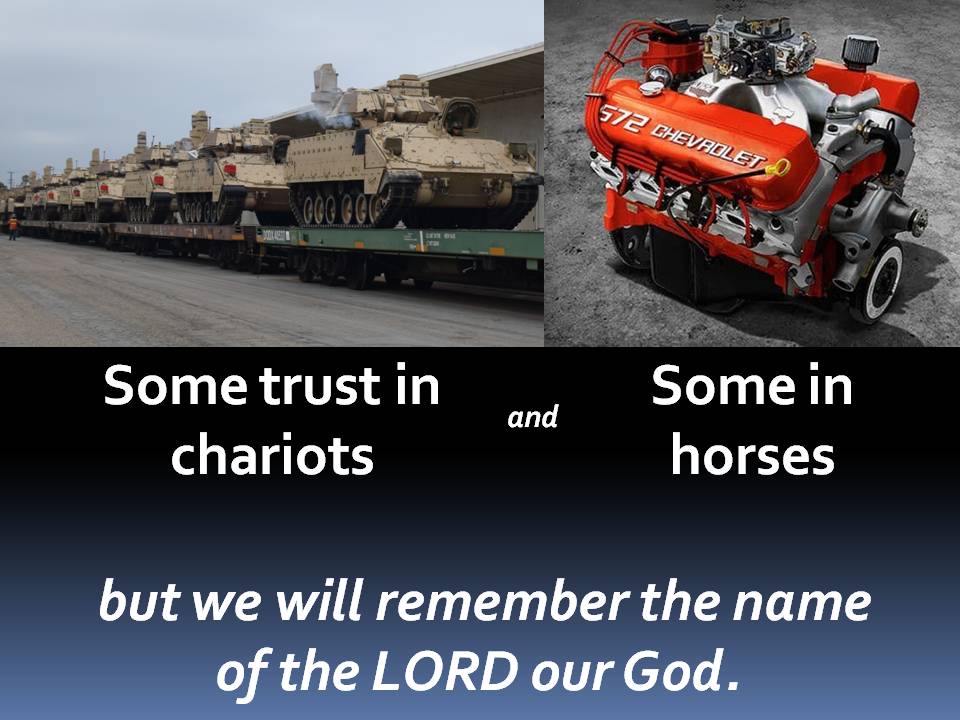
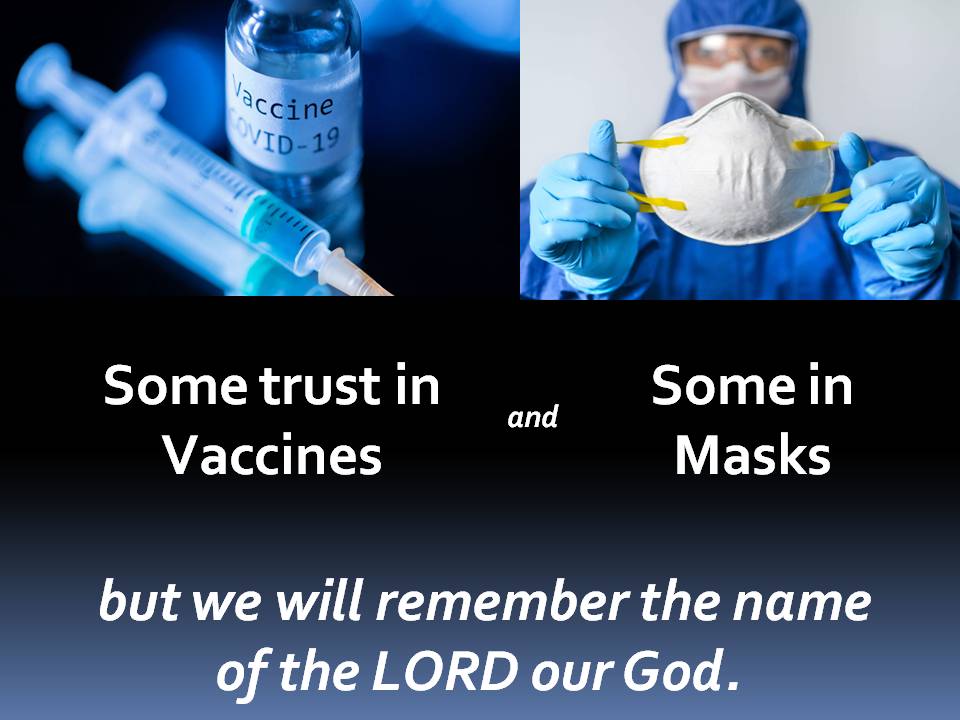
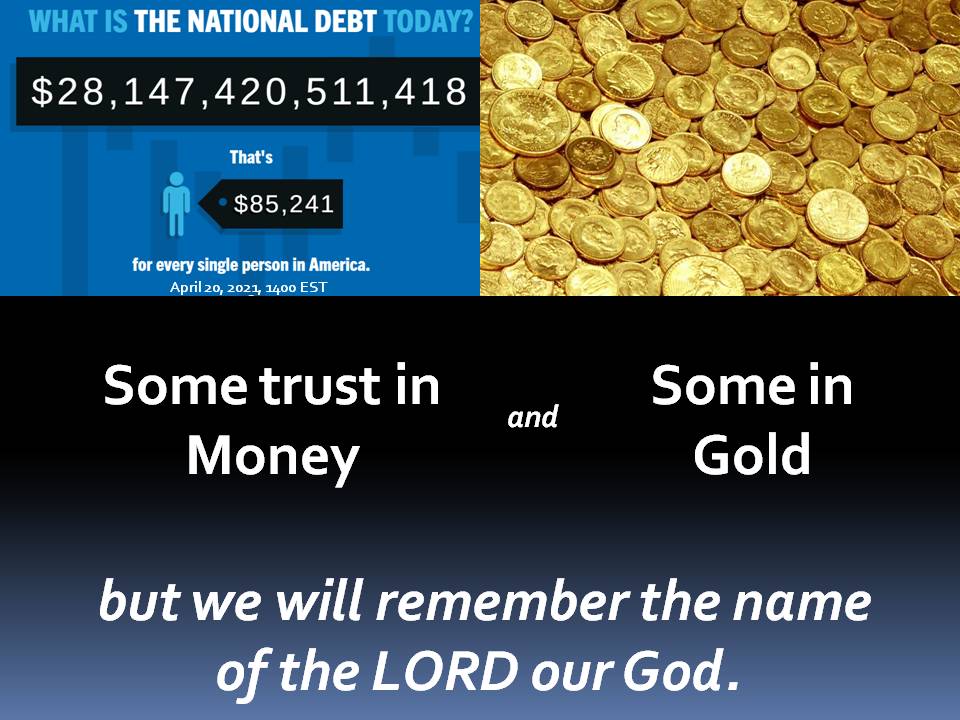
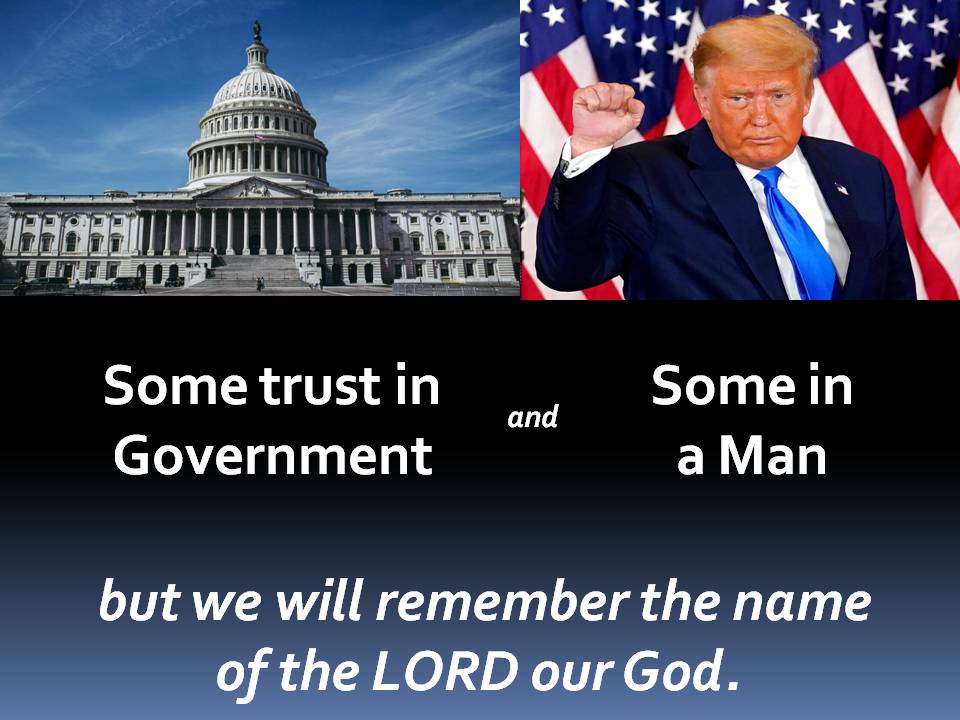
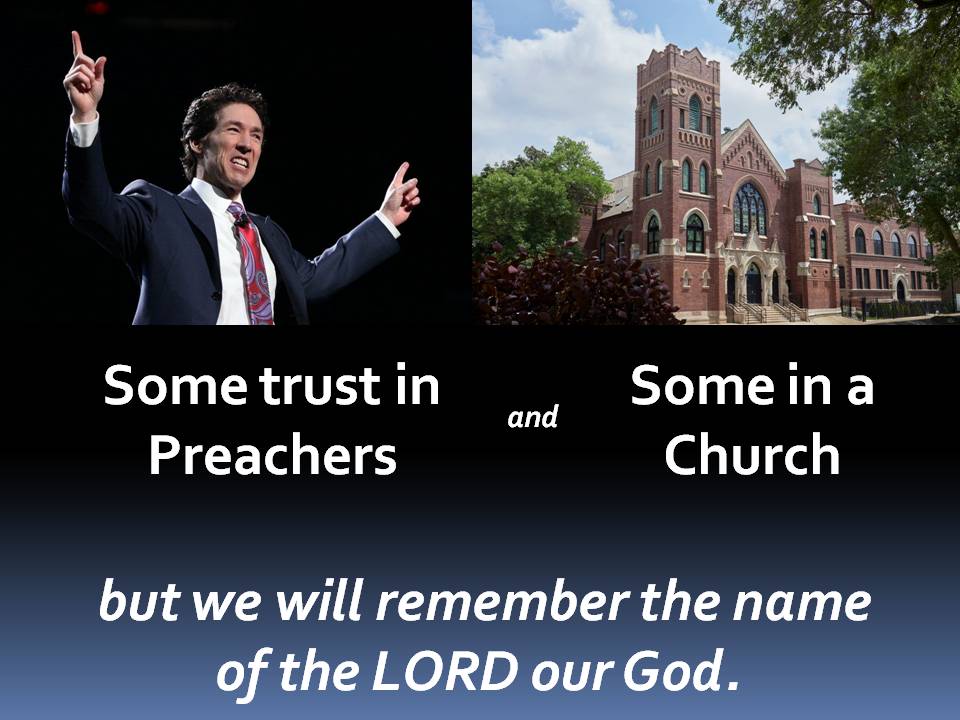
Some trust in chariots, and some in horses: but we will remember the name of the LORD our God. (Psalm 20:7)
The familiar rendition of Psalm 20:7 reads, “Some trust in chariots and some in horses, but we trust in the name of the Lord our God” (emphasis mine) as equivocated by the New International Version (NIV). The first “trust” in the verse does not appear in the original Hebrew, but has been supplied by English translators for ease of reading and understanding. The addition of the word is in keeping with the context of the entire psalm which looks to God for provision, protection and salvation.
The second word rendered “trust” is from the Hebrew root zâkar which means “to remember, recall, or call to mind.” Other versions translate zâkar as “boast, depend, honor, mention, praise, rely, remember, shall call, take pride in, and trust.” The literal translation of zâkar is “to remember.” The Hebrew verb is in the Hiphil imperfect stem, so literally it means “to cause to remember,” but that would give it an awkward rendition in English.
However, we could argue that “trust” is a valid rendering, but only by going through some mental gymnastics. As we go through trials in our lives, God provides, protects, and saves us from harm. We may not sense God’s presence while we are going through our troubles, but when we look back on our lives, we can “see” and “remember” how God’s hand has been upon us to guide, direct, protect, provide, and ultimately, to save us from those times. My favorite Bible verse says, “And we know that all things work together for good to them that love God, to them who are the called according to his purpose” (Romans 8:28). As we “remember” the working of God in our past, we can “trust” Him with whatever we face in the present, and we can “trust” Him with whatever may come to us in the future.
Reader, if you are feeling insecure about your future, please read my page on “Securing Eternal Life.”
Behold, I shew you a mystery; We shall not all sleep, but we shall all be changed, In a moment, in the twinkling of an eye, at the last trump: for the trumpet shall sound, and the dead shall be raised incorruptible, and we shall be changed. (1 Corinthians 15:51-52)
If you came to 2021 hoping for an improvement over 2020, you may be sorely disappointed. If you study Scripture, you know that the closer we get to Christ’s return, the worse things will become. However, for those who place their trust in Christ, this is cause for celebration rather than consternation. Before things get really bad, we have the expectation that Jesus will come and rescue His Church before the events described in the Book of the Apocalypse begin.
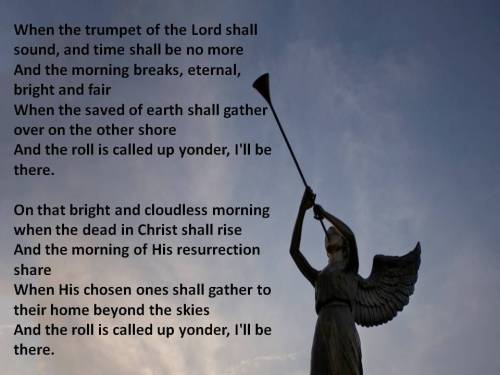
“When the Roll Is Called Up Yonder,” James M. Black, 1893 [1]
The Bible is clear that the Church, the body of true believers in Jesus Christ as Lord, and born again of the Spirit of God will be absent during the 7-year Tribulation period that the Bible calls the “Time of Jacob’s Trouble.”[2] Several of the Old Testament prophets spoke of the coming of the Messiah to set up an earthly kingdom. From their perspective, as if looking across time over a series of mountain peaks where the Messianic Kingdom is at the final peak, they did not see the “Church Age” in the valley between His first coming (the first peak) and His second coming (the last peak). They rightly prophesied about His first coming and even of His death and resurrection, but the next thing, from their perspective, was the setting up of the Messianic Kingdom.
The Apostle Paul explained that the Church, to the OT prophets, was a “mystery.”[3] All OT prophecy deals with Israel. God gave the Prophet Daniel a concise prophecy of the end times that precisely predicted the arrival of the Messiah at His first coming. The angel that delivered the message said, “Seventy weeks are determined upon thy people and upon thy holy city, to finish the transgression, and to make an end of sins, and to make reconciliation for iniquity, and to bring in everlasting righteousness, and to seal up the vision and prophecy, and to anoint the most Holy” (Daniel 9:24, emphasis mine). Notice that the time is determined for Daniel’s people. Who are Daniel’s people, if not Israel? The 70 weeks are 70 sevens of years (70 x 7) which come to 490 years. Four hundred eighty-three (483) years were accomplished with the crucifixion of the Messiah.[4] At that time, God stopped Israel’s time clock and seven years remain to complete the “seventy weeks determined for Daniel’s people.” In the meantime, the “mystery” of the Church is in effect.
In order for the final “week” of the seventy weeks to resume, the church must be taken out of the way. The reason for is that the Holy Spirit resides with every true believer. The Apostle Paul informs us that the Holy Spirit restrains Satan’s full control of the earth, so He must be removed before “prince,” aka, Antichrist, can be revealed. Paul said, “Let no man deceive you by any means: for that day shall not come, except there come a falling away first, and that man of sin [aka Antichrist] be revealed, the son of perdition … For the mystery of iniquity doth already work: only he who now letteth [restrains] will let [restrain], until he be taken out of the way” (2 Thessalonians 2:3, 7, emphasis mine). He that restrains (letteth) is the Holy Spirit. He must be “taken out of the way” before the Antichrist can be revealed, and where the Holy Spirit goes, the Church goes. This event is known as the Rapture.
There are no signs given in Scripture to prepare us for the Rapture. We can know the time is near when we see signs for the last days and the end of times falling into place. Jesus gave His disciples a detailed explanation of the last days prior to His second coming.[5] Jesus told them about wars, rumors of wars, earthquakes, pestilences, etc. in the latter days, but He cautioned that “All these are the beginning of sorrows” (Matthew 24:8). This ramp-up of signs that point to the Second Coming, which is the seven years after the Rapture of the Church, are things we can see taking place now. That lets us know that the Rapture of the Church is very near.
Can we believe in the Rapture? Before going to the cross, Jesus assured His disciples (and us), “Let not your heart be troubled: ye believe in God, believe also in me. In my Father’s house are many mansions: if it were not so, I would have told you. I go to prepare a place for you. And if I go and prepare a place for you, I will come again, and receive you unto myself; that where I am, there ye may be also” (John 14:1-3, emphasis mine). This is the promise that Jesus will come for us and take us to be with him. However, it does not tell us when this will take place.
Some of Paul’s first letters were written to the church in Thessaloniki. Much of what he wrote to this church dealt with the end of time. To them, he wrote, “For this we say unto you by the word of the Lord, that we which are alive and remain unto the coming of the Lord shall not prevent [precede] them which are asleep [dead]. For the Lord himself shall descend from heaven with a shout, with the voice of the archangel, and with the trump of God: and the dead in Christ shall rise first: Then we which are alive and remain shall be caught up together with them in the clouds, to meet the Lord in the air: and so shall we ever be with the Lord” (1 Thessalonians 4:15-17, emphasis mine). Notice that we meet Him “in the air;” He does not return to the earth at that time.
To the church in Corinth, Paul wrote, “Behold, I shew you a mystery; We shall not all sleep [die], but we shall all be changed, In a moment, in the twinkling of an eye, at the last trump: for the trumpet shall sound, and the dead shall be raised incorruptible, and we [who are alive] shall be changed” (1 Corinthians 15:51-52, emphasis mine). However, this still does not explain when that will take place.
The Thessalonians had the same question. To them, he explained that the Holy Spirit that restrains the evil one must be removed before Antichrist can come on the scene. We looked at that verse earlier. “Let no man deceive you by any means: for that day shall not come, except there come a falling away [from the faith, i.e., “apostasy”] first, and [Antichrist] be revealed, the son of perdition; Who opposeth and exalteth himself above all that is called God, or that is worshipped; so that he as God sitteth in the temple of God, shewing himself that he is God” (2 Thessalonians 2:3-4, edited and emphasized for clarity). “And now ye know [the Holy Spirit withholds] that [Antichrist] might be revealed in his time. For the mystery of iniquity [does] already work: only [the Holy Spirit] who now [restrains] will [restrain], until [the Holy Spirit] be taken out of the way. And then shall that [Antichrist] be revealed, whom the Lord shall consume with the spirit of his mouth, and shall destroy with the brightness of his [Second] coming: Even him [Antichrist], whose coming is after the working of Satan with all power and signs and lying wonders” (2 Thessalonians 2:6-9, edited and emphasized for clarity).
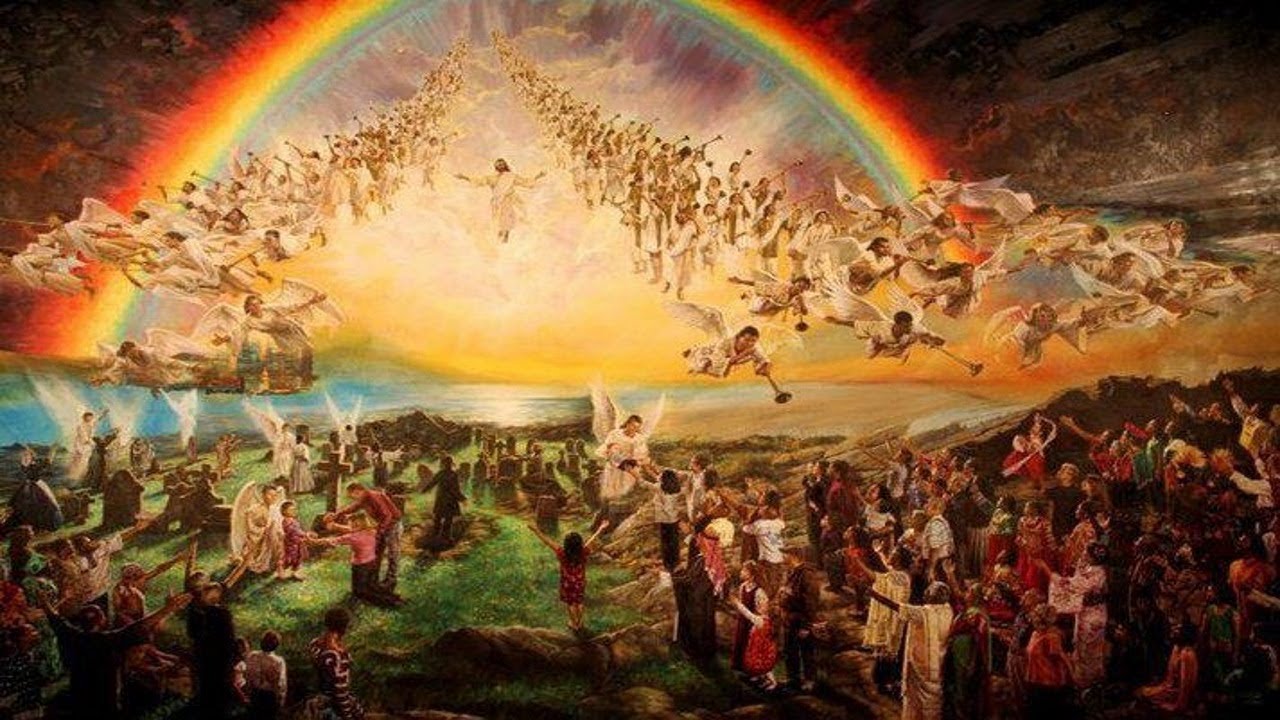
When the trumpet sounds, Jesus will come for His church. Christians who have died will rise from their graves, then Christians who are living will be changed in a moment, in the twinkling of an eye, and will meet with the risen dead together to meet Jesus in the air. Then we will all go together to be with Jesus for seven years. In the meantime, here on Earth, Antichrist will exercise dominion, and God will unleash the worst judgments the world has ever known. At the end of the seven years, Jesus will return with His Church to reign on Earth. “And I saw heaven opened, and behold a white horse; and he that sat upon him was called Faithful and True, and in righteousness he doth judge and make war … And the armies which were in heaven followed him upon white horses, clothed in fine linen, white and clean” (Revelation 19:11, 14). “And I saw thrones, and they sat upon them, and judgment was given unto them: and I saw the souls of them that were beheaded for the witness of Jesus, and for the word of God, and which had not worshipped the beast, neither his image, neither had received his mark upon their foreheads, or in their hands; and they lived and reigned with Christ a thousand years” (Revelation 20:4, emphasis mine).
The trumpet shall sound. Are you ready? If you are not sure, please visit my page on “Securing Eternal Life.”
Notes:
[1] “When the Roll Is Called Up Yonder,” James M. Black, 1893
But from the beginning of the creation God made them male and female. (Mark 10:6)
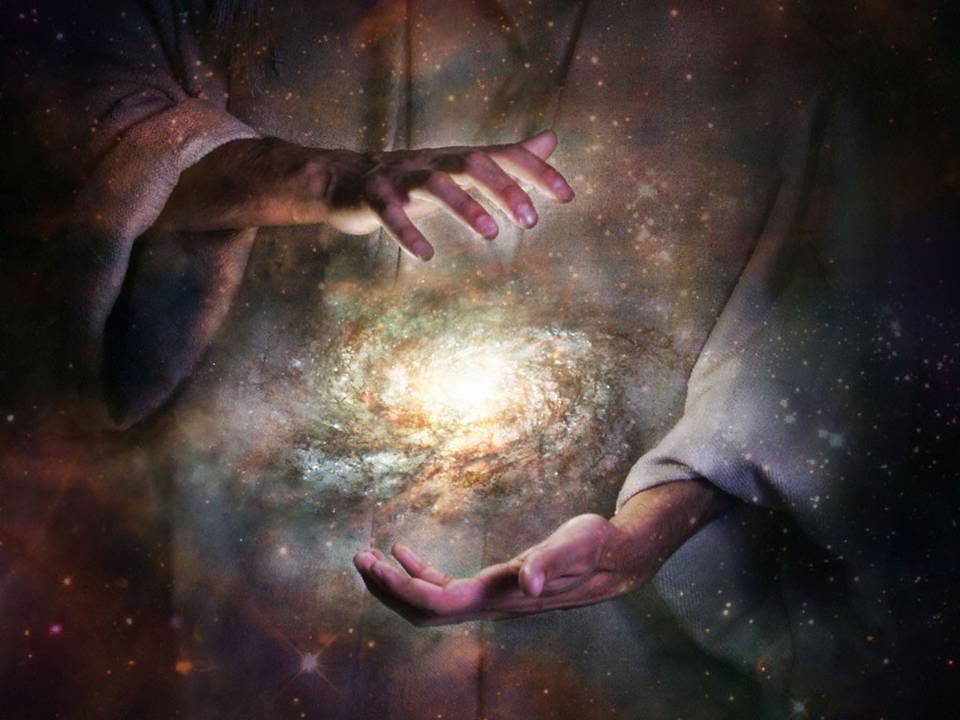
If one wants to criticize and discount the Bible, there is no better place to start than at the beginning with Genesis. Those who reject God find it easier to believe the absurdity that nothing expanded and resulted in everything. They claim to believe the “science.” However, scientific proof requires the implementation of the “scientific method.” As an elementary school teacher just 12 years ago, we still taught the “scientific method” which included observation, hypothesis, experimentation, and falsification. God deniers profess science without employing the scientific method to support their hypothesis. No one observed the Big Bang. No one can experiment to reproduce the Big Bang. (It would be scary if they could!) And no one can falsify the Big Bang, yet they claim to be “scientific.”
The same can said for Creation. Creation cannot be proven by the scientific method. It was a unique, miraculous, one-time event. Creation differs from the Big Bang in that it started with Someone; it did not come from nothing – “In the beginning, God”[1] and God recorded His work in the first chapter of the Book of Beginnings – Genesis. The thinking person (not the God denier – they do not think) only needs to consider the creation account for what it says, recognizing the implied characteristics of the omnipotent Creator’s ability to do what He said He did and compare that to the order out of chaos suggested by the Big Bang proponents. Because of the vast complexity of the universe and life on earth, logic supports creation by an intelligent Creator over life by luck. Of course, some God deniers reject the Big Bang for that very reason and opt to believe that life on earth was “seeded” by extraterrestrials from other worlds, but that raises another question. How did the extraterrestrials originate? That question cannot be answered.
God deniers will not be convinced with logic. They reject God by choice. I am more surprised by those who say they believe the Bible but reject the Genesis account. They have been taught that the Big Bang is a fact and that life on earth arose through the process of evolution. In order to keep their faith in God intact, they rationalize that God somehow used the Big Bang and evolution to create. That makes sense. God can do anything He wants to do and use whatever means He chooses to do it. He is God! However, in reading the straightforward creation account in Genesis 1, one cannot find the logical steps of evolution. God created the universe by His spoken word, not with a bang.[2] He created plant life[3] before He created the sun. He created the sun and moon before creating the rest of the stars as sort of an afterthought.[4] He created marine and avian life before creating the dinosaurs (land creatures). Secular scientists claim that birds evolved from dinosaurs, but Genesis says that birds came first. Furthermore, the Genesis account of creation records that each day of creation was a 24-hour day;[5] that amount of time does not allow for evolution to take place.
Some overly educated theologians dismiss the Genesis account of creation as poetry or allegory. Somehow in all of their education, they miss the fact that Hebrew poetry is distinct by its use of parallelism. There is none of that in the Genesis account. Any Hebrew language novice understands that the first three chapters in Genesis, which take the brunt of the criticism, are written in narrative form like any other historical portion of Scripture. Genesis is not poetry. It presents a factual account, or at least it is factual to the author.
Jesus, who the New Testament credits as Creator[6], affirmed the validity of Genesis. When the Pharisees challenged Him on the question of divorce, Jesus referred them back to Genesis. “But from the beginning of the creation God made them male and female” (Mark 10:6, emphasis mine). The making of the first human pair is recorded in the first chapter of Genesis. “So God created man in his own image, in the image of God created he him; male and female created he them” (Genesis 1:27, emphasis mine). For the sake of this confused world today, it should be noted that God made one pair of opposite, yet complementary sexes. They were not androgynous with the option to choose their sex. God did not create two males to mate with each other or two females to cohabitate. God designed the sexes for reproduction. Two males cannot reproduce, nor can two females reproduce. The union is not about “feeling” but about “function.” Male and female “fit” together. The way God designed it works. The way modern man has perverted it often ends in tragedy.
Genesis records that Adam’s first son was Cain and the second was Abel. Cain murdered Abel in a fit of jealous rage,[7] and Jesus referred to that as a factual account. As Jesus excoriated the Pharisees for their hypocrisy, He said, “Ye serpents, ye generation of vipers, how can ye escape the damnation of hell? Wherefore, behold, I send unto you prophets, and wise men, and scribes: and some of them ye shall kill and crucify; and some of them shall ye scourge in your synagogues, and persecute them from city to city: That upon you may come all the righteous blood shed upon the earth, from the blood of righteous Abel unto the blood of Zacharias son of Barachias, whom ye slew between the temple and the altar” (Matthew 23:33-35, emphasis mine). Jesus again affirmed the veracity of Genesis in citing Abel as a real person. As an aside, I find it interesting that Jesus takes credit for sending the prophets – “I send unto you prophets, and wise men, and scribes.” That is what God does. Therefore, Jesus claims to be God.
The Global Flood account in Genesis 6-9 is also a major point of contention with Bible critics, even those claiming to be Christian. However, Jesus vouched for its authenticity. In speaking on the last days, Jesus said, “But as the days of Noe were, so shall also the coming of the Son of man be. For as in the days that were before the flood they were eating and drinking, marrying and giving in marriage, until the day that Noe entered into the ark, And knew not until the flood came, and took them all away; so shall also the coming of the Son of man be” (Matthew 24:37-39, emphasis mine). So, to those who claim to be Christian yet reject Genesis, do you reject Jesus’ words as well? If you doubt the first eleven chapters of Genesis, how can you believe the words of Jesus? He spoke of the Genesis account as fact.
Jesus created[8] man in His image[9] knowing the kind of body He would one day inhabit.[10] Jesus accepted Abel’s sacrifice[11] over that of Cain’s, and when Cain murdered Abel, He demonstrated mercy toward Cain by setting a mark on him to spare his life.[12] God had Noah build an ark with only one entrance. The Ark was large enough to accommodate thousands of more people than Noah and his family, but only those eight that believed God and entered through the only door were saved from the Flood. Jesus is our Ark of salvation. He said, “I AM the door.”[13] He is the only entrance to eternal life; there is no other way. “Jesus saith unto him, I am the way, the truth, and the life: no man cometh unto the Father, but by me” (John 14:6, emphasis mine).
I understand God deniers rejecting the Genesis account of creation. They are lost and hell-bound. But there is no excuse for Christians rejecting the Genesis account if indeed they believe Jesus’ words.
Reader, if you are questioning the veracity of Scripture, particularly where it comes to creation, perhaps the first thing you need to consider your eternal standing before God. Read my page on “Securing Eternal Life.”



 Ernie's Musings