Tag Archives: Religion and Spirituality

Pilgrims

Signing of the Mayflower Compact, November 11, 1620

Hear my prayer, O LORD, and give ear unto my cry; hold not thy peace at my tears: for I am a stranger with thee, and a sojourner, as all my fathers were. (Psalm 39:12)

On Thanksgiving Day[1] we remember the Pilgrims and the first celebration of Thanksgiving. Sadly, most Americans, including many Christians, cannot explain the significance of the day. For most, the day is a time for gathering together with family and friends to feast on turkey with all the fixings and pass out from tryptophan over a football game. On the following day, everyone swarms the malls and outlet stores to stock up on Black Friday bargains for the next big holiday. For these people, Pilgrims are people with funny clothes, stovepipe hats, big buckles on their shoes, and guns with bell-shaped muzzles. Pilgrims look cute on greeting cards or as seasonal decorations, but what is a pilgrim?

Without rehashing what can easily be found with a quick Google search or repeating what I have written in the past, allow me to give a different perspective on the word “pilgrim.” Dictionary.com defines a pilgrim as (1) a person who journeys, especially a long distance, to some sacred place as an act of religious devotion, (2) a traveler or wanderer, especially in a foreign place, (3) an original settler in a region, (4) one of the band of Puritans who founded the colony of Plymouth, Mass., in 1620, or (5) a newcomer to a region or place, especially to the western U.S.

Those fitting the fourth definition of the word celebrated the first Thanksgiving Day in 1621 after surviving a harsh winter with inadequate shelter where almost half of their company died from exposure to the elements. The Pilgrims came to America to escape religious persecution. These Pilgrims traveled to a foreign place (Definition 2) and were newcomers to the place where they landed (Definition 5). However, it cannot be said that they were the original settlers in the region (Definition 3) because the Patuxet tribe lived on the land before the Pilgrims arrived. Nor can it be said that they came to a sacred place (America) as an act of religious devotion, albeit they desired “the advancement of the Christian faith.”

In October 2017, my wife and I visited the Holy Land as pilgrims (Definition 1). We traveled a very long distance from Dallas, Texas to Israel and visited many sacred places there because of our devotion to the Word of God and our desire to visit the places about which we read in the Bible. Our pilgrimage served to bring God’s Word to life in our minds and to form a stronger bond and love for the land of Israel and especially for the city, Jerusalem, where God has placed His name. June and I were pilgrims!

As Christians, we are all pilgrims. Regardless of where on earth we dwell, we are strangers and sojourners in this world – pilgrims; “For our conversation is in heaven; from whence also we look for the Saviour, the Lord Jesus Christ” (Philippians 3:20). The Greek word translated “conversation” is politeuma and it means “community” or “citizenship.” Our true citizenship and our allegiance are in heaven; therefore, it is right for us to feel out of place in this world. If not, we might need to take a second look at our passports! “Love not the world, neither the things that are in the world. If any man love the world, the love of the Father is not in him. … And the world passeth away, and the lust thereof: but he that doeth the will of God abideth for ever” (1 John 2:15, 17).  Knowing that this world is passing away, I am “Looking for and hasting unto the coming of the day of God, wherein the heavens being on fire shall be dissolved, and the elements shall melt with fervent heat? Nevertheless we, according to his promise, look for new heavens and a new earth, wherein dwelleth righteousness.” (2 Peter 3:12-13).

As a pilgrim, I yearn with an aching heart for the Lord to return as King of Kings and Lord of Lords and make this world right again. Then I will be home, no longer a pilgrim. In the meantime, fellow pilgrims, we can thank Him for all His care and provision as we travel this alien land and for the assurance that our real home is with Him.

Happy Thanksgiving!

Notes:


[1]  “A Day to Give Thanks” – https://erniecarrasco.com/2015/11/26/a-day-to-give-thanks/

Comments Off on Pilgrims

Filed under Christianity, Holidays, Random Musings, Thanksgiving

One Was Thankful

And one of them, when he saw that he was healed, turned back, and with a loud voice glorified God, (Luke 17:15)

Thanksgiving Day is upon us, and I’m sure most of us have plans for food, family, friends, and fellowship. In today’s culture, Thanksgiving Day is just a good excuse to have a day (or two) off work, indulge in gluttonous behavior, and worship before the luminous god of football followed by the giving of alms to the god of materialism the next day, all the while in complete ignorance of the significance of the day.

As I thought about Thanksgiving coming up, the Lord brought to mind the account of Jesus healing the ten lepers. We read about that in Luke 17:11-19:

And it came to pass, as he went to Jerusalem, that he passed through the midst of Samaria and Galilee. And as he entered into a certain village, there met him ten men that were lepers, which stood afar off: And they lifted up their voices, and said, Jesus, Master, have mercy on us. And when he saw them, he said unto them, Go shew yourselves unto the priests. And it came to pass, that, as they went, they were cleansed. And one of them, when he saw that he was healed, turned back, and with a loud voice glorified God, And fell down on his face at his feet, giving him thanks: and he was a Samaritan. And Jesus answering said, Were there not ten cleansed? but where are the nine? There are not found that returned to give glory to God, save this stranger. And he said unto him, Arise, go thy way: thy faith hath made thee whole. (Luke 17:11-19)

Following the “Transfiguration” (Luke 9:28-36), Jesus “stedfastly set His face to go to Jerusalem” (Luke 9:51). Coming down from Caesarea Philippi, Luke records that Jesus “passed through the midst of Samaria and Galilee” (v. 11). He is traveling from the north to the south (toward Jerusalem), which means He must pass through Galilee first before going through Samaria. Why did Luke name Samaria first? I do not know. I could not find one commentator that could tell me, but I suspect the answer is down below. Jesus was on His way to the cross.

As the passage records, ten leprous men met Him, and while remaining at a distance –because their disease was so contagious, they were not allowed to come near other people – they cried out for Jesus to have mercy on them. They addressed Him as “Master” – Greek ἐπιστάτης (epistatēs), from epi, “superimposition, to be over, above,” and histēmi, “to stand” Together the title means “one who stands above” – Master! This is not to be confused with διδάσκαλος (didaskalos) meaning “teacher” (Luke 3:12). Thus, they recognized that Jesus had the power to heal their disease.

When Jesus saw them, “He said unto them, ‘Go show yourselves’” (v.14). Note that Jesus does not touch nor approach them. Why? Jesus had often touched lepers when He healed them, why not today? Jesus was on His way to the Cross. He could not allow Himself to become “unclean.” Note also that His Word was sufficient to heal the lepers – “as they went, they were cleansed.” This healing by His verbal command is a clear demonstration of His deity.

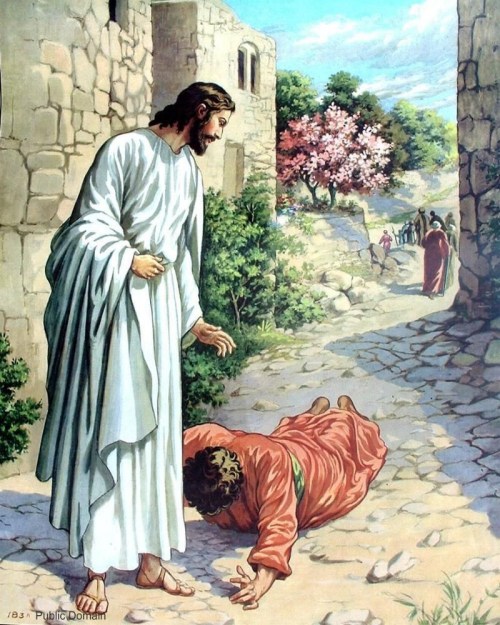
All ten exercised faith in believing His Word that they would be healed, but only one returned to give thanks. “When he saw that he was healed, turned back, and with a loud voice glorified God” (v. 15). “And fell down on his face at his feet, giving him thanks: and he was a Samaritan” (v. 16). He did not simply bow in reverence. He completely prostrated himself, flat with his face to the ground. He placed himself at Jesus’ feet. His attitude was one of complete humility, reverence, worship, and gratitude – “and he was a Samaritan.” That this one was a Samaritan may explain why Luke listed Samaria before Galilee. The implication is that the other nine were Jews.

Jesus seems surprised that only this one returned to give thanks. However, knowing that the Lord knows the hearts of all men, His feigned surprise was likely intended to make a point. Jesus said that “[God] is kind to the unthankful and to the evil” (Luke 6:35).

Thankfulness was not particularly characteristic of the Jews. Consider how often they complained after they were freed from Egypt. Think of how soon they fell into idol worship during the time of the Judges. Consider their presumption on God knowing that they were His people. Their lack of gratitude came as no surprise to Jesus. However, the “stranger” recognized his unworthiness and was grateful for the mercy Jesus bestowed on him.

“And he said unto him, Arise, go thy way: thy faith hath made thee whole” (v.19). The Greek word translated “whole” here is σεσωκεν (sesoken), and it means “has saved.” Literally what Jesus said is, “thy faith hath saved thee.” Obedience (which also required faith) had made him “whole,” i.e., healed him. However, his “faith” in recognizing Jesus as “Master” saved him. He was “whole” not only physically, but spiritually.

Does God Expect Us To Be Thankful?

Leviticus 22:29  And when ye will offer a sacrifice of thanksgiving unto the LORD, offer it at your own will.

  1. Not out of obligation
  2. 2 Corinthians 9:7 Every man according as he purposeth in his heart, so let him give; not grudgingly, or of necessity: for God loveth a cheerful giver.

1 Chronicles 16:8  Give thanks unto the LORD, call upon his name, make known his deeds among the people.

Can’t do the latter without the former.

1 Chronicles 16:34  O give thanks unto the LORD; for he is good; for his mercy endureth for ever.

Psalm 30:4  Sing unto the LORD, O ye saints of his, and give thanks at the remembrance of his holiness.

Considering God’s holiness and our unworthiness, how can we not be thankful for the love He has shown to us?

Psalm 95:2  Let us come before his presence with thanksgiving, and make a joyful noise unto him with psalms.

Not “come before His presence with prayer requests.” Prayer requests are fine, but let’s first thank Him.

Psalm 100:4  Enter into his gates with thanksgiving, and into his courts with praise: be thankful unto him, and bless his name.

“Bless His name,” i.e., “speak well of His name” What are some attributes of God that come to mind?

Colossians 2:6-7  As ye have therefore received Christ Jesus the Lord, so walk ye in him:  (7)  Rooted and built up in him, and stablished in the faith, as ye have been taught, abounding therein with thanksgiving.

Philippians 4:6  Be careful for nothing; but in every thing by prayer and supplication with thanksgiving let your requests be made known unto God.

1 Thessalonians 5:18  In every thing give thanks: for this is the will of God in Christ Jesus concerning you.

Consequences of Ingratitude:

Romans 1:21  Because that, when they knew God, they glorified him not as God, neither were thankful; but became vain in their imaginations, and their foolish heart was darkened.

Ingratitude darkens the heart.

2 Timothy 3:1-2, 7-9  This know also, that in the last days perilous times shall come.  (2)  For men shall be lovers of their own selves, covetous, boasters, proud, blasphemers, disobedient to parents, unthankful, unholy … (7) Ever learning, and never able to come to the knowledge of the truth. (8)  Now as Jannes and Jambres withstood Moses, so do these also resist the truth: men of corrupt minds, reprobate concerning the faith. (9)  But they shall proceed no further: for their folly shall be manifest unto all men, as theirs also was.

Benefits of Thankfulness:

Psalm 140:13  Surely the righteous shall give thanks unto thy name: the upright shall dwell in thy presence.

We are made “righteous” through Christ. Because of that we have His presence within us.

Jeremiah 30:19  And out of them shall proceed thanksgiving and the voice of them that make merry: and I will multiply them, and they shall not be few; I will also glorify them, and they shall not be small.

  1. In context, this is referring to Israel’s return from Babylonian captivity.
  2. However, the principle applies.
  3. God will bless our thankfulness.

2 Corinthians 4:15  For all things are for your sakes, that the abundant grace might through the thanksgiving of many redound to the glory of God.

  1. “redound” Greek περισσεύω (perisseuō)
  2. to superabound (in quantity or quality), be in excess
  3. God’s grace to us “supper-abounds” through thanksgiving.

2 Corinthians 9:11  Being enriched in every thing to all bountifulness, which causeth through us thanksgiving to God.

Colossians 3:15  And let the peace of God rule in your hearts, to the which also ye are called in one body; and be ye thankful.

1 Timothy 4:1-5  Now the Spirit speaketh expressly, that in the latter times some shall depart from the faith, giving heed to seducing spirits, and doctrines of devils;  (2)  Speaking lies in hypocrisy; having their conscience seared with a hot iron;  (3)  Forbidding to marry, and commanding to abstain from meats, which God hath created to be received with thanksgiving of them which believe and know the truth.  (4)  For every creature of God is good, and nothing to be refused, if it be received with thanksgiving:  (5)  For it is sanctified by the word of God and prayer.

Conclusion:

Jesus healed ten lepers. Nine of them were of “the chosen.” Their attitude reflected ingratitude for the marvelous work Jesus performed in their lives – almost as if they believed they were entitled to what they received.

One leper – a “stranger,” a Samaritan, clearly an “outsider” due to both his leprosy and his heritage – recognized his own unworthiness and the greatness of the One who healed him; and he returned to give thanks and worship the God who healed him. And he was saved.  Let us recognize that we are all lepers and give thanks for all He has done for us.

Happy Thanksgiving!

3 Comments

Filed under Apologetics, Christianity, Holidays, Religion, Salvation, Thanksgiving, Theology

Little Ones

Take heed that ye despise not one of these little ones; for I say unto you, That in heaven their angels do always behold the face of my Father which is in heaven. (Matthew 18:10)

The verse above was part of my daily Bible reading this week. It is a very familiar verse that I have read hundreds of times perhaps, heard sermons preached on it, and participated in Bible studies that covered it. When read out of context, it seems that Jesus refers to children – “little ones” – in this discourse, and that is the way it has been presented, or at least the way I have understood it, in the past.

However, as I read the assigned Bible passage (Matthew 18:7-35), it occurred to me that “little ones” did not refer to children. That made me stop and dig a little deeper. In order to understand the complete meaning of a passage, it is advisable always to read a single verse in its full context. In this case, we need to go back to the beginning of the chapter to get a clear picture of what was taking place.

As the chapter opens, we find Jesus’ disciples wondering and questioning Jesus as to who (among them, supposedly) would be the greatest in the “kingdom of heaven” (18:1). Matthew does not name the participants in the discussion nor do the other two synoptic Gospels.[1] Interestingly, all three record this event as having taken place shortly after the Transfiguration.[2] Mark records that the discussion took place on the return trip from Caesarea Philippi, the location of the “Mount of the Transfiguration,” to Capernaum. Three of the twelve, Peter, James, and John, were the only witnesses to the Transfiguration. Surely these three, because the special privilege afforded them, felt that they should be chiefest among them. Moreover, all of the disciples discounted what Jesus told them a short time before. “And while they abode in Galilee, Jesus said unto them, The Son of man shall be betrayed into the hands of men: And they shall kill him, and the third day he shall be raised again. And they were exceeding sorry” (Matthew 17:22-23).[3] The idea was unthinkable, so they quickly eliminated it from memory.

As an object lesson, Jesus took a small child and set him before them. “And said, Verily I say unto you, Except ye be converted, and become as little children, ye shall not enter into the kingdom of heaven. Whosoever therefore shall humble himself as this little child, the same is greatest in the kingdom of heaven. And whoso shall receive one such little child in my name receiveth me” (Matthew 18:3-5, emphasis mine). The Greek word translated as “converted” is strephō. The word, as defined by Strong’s,[4] means “to twist, that is, turn quite around or reverse,” which is similar to “repent.” Obviously, Jesus identified the problem as pride manifested as misguided ambition for greatness. The solution requires repentance, conversion, or transformation from a position of pride to that of humility, like that of a child. Those who make the transformation will achieve greatness in the kingdom of heaven. Jesus then adds that one who receives “one such little child,” i.e., one that has made the “conversion,” in “My name, receives Me.” Jesus was not speaking of a child, but rather one who becomes “like a little child” in humility.  The child in their midst was just the “prop” for the object lesson.

As He continued the object lesson, He added, “But whoso shall offend one of these little ones which believe in me, it were better for him that a millstone were hanged about his neck, and that he were drowned in the depth of the sea” (Matthew 18:6, emphasis mine). At this point, we need to examine the language closer to understand what Jesus was actually saying. At the beginning, Jesus used a child as a prop for the object lesson. The Greek word translated “little child” (18:2) is paidion, which, according to Strong’s means “a childling (of either sex), that is, (properly) an infant, or (by extension) a half grown boy or girl; figuratively an immature Christian” (emphasis mine). Notice that Jesus switches from “little child” to “little ones.” That is a different word in the Greek: mikros. Strong’s defines that word as “small (in size, quantity, number or (figuratively) dignity)” (emphasis mine). This agrees with Strong’s definition of “paidon” being “figuratively an immature Christian” who would also be “figuratively small in dignity.”

Jesus then pronounces a “woe” to the world for the offenses it brings to these “little ones” (mikron, plural). He notes that offences will come, but He issues a warning, “woe to that man by whom the offence cometh!” (18:7). By way of hyperbole, Jesus stresses the seriousness of offending a “little one.” He suggested removing any body part that causes offence rather than going to hell completely whole.[5] The obvious exaggeration is a warning to the mature Christian to cast off anything in life that would cause offense to an immature Christian, causing him to stumble. I see this a lot among Christians who, because of the “freedom” in Christ, conduct their lives closely imitating the ways of the world without consideration for their weaker brethren. Jesus says to cast off such things.

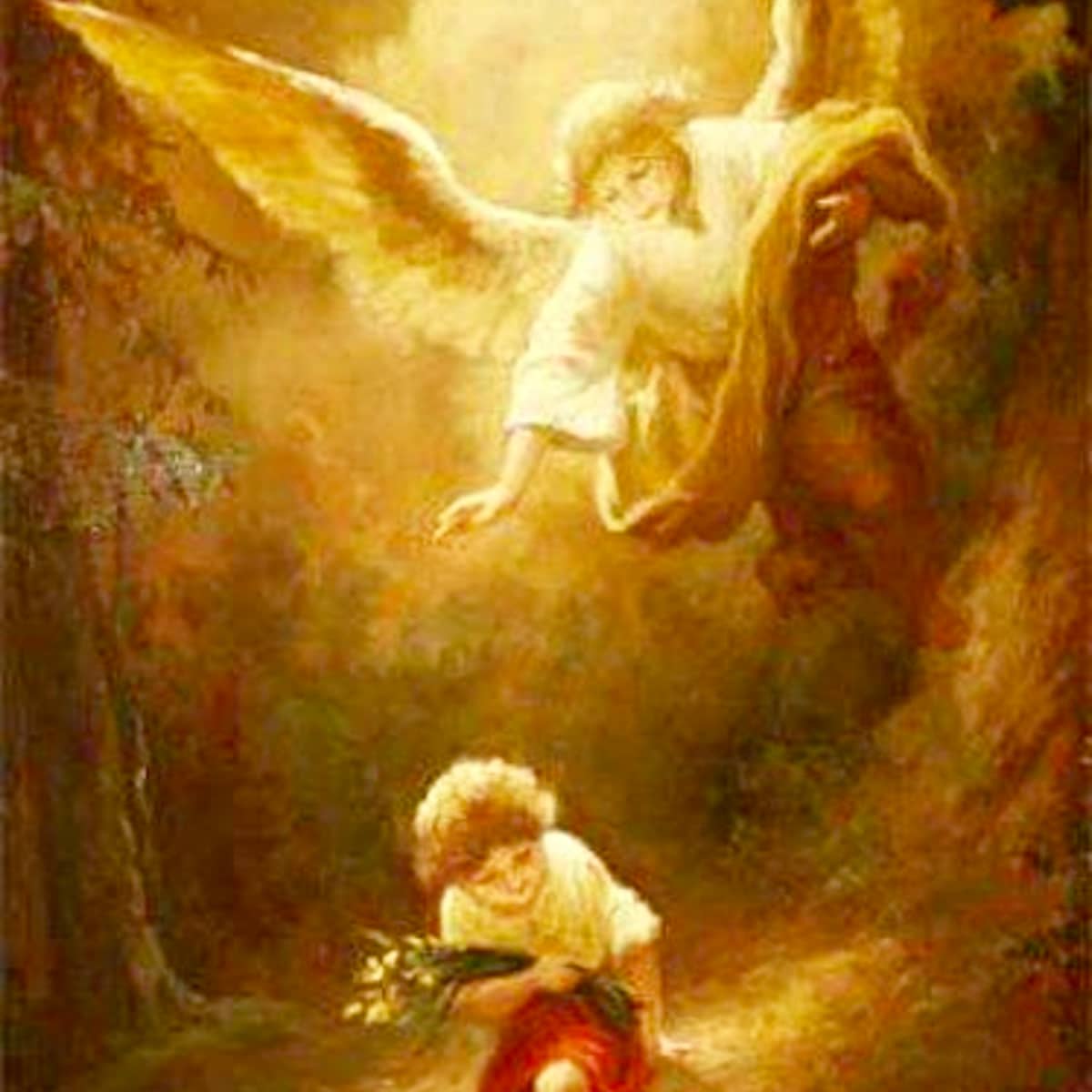
Jesus warns, “Take heed that ye despise not one of these little ones; for I say unto you, That in heaven their angels do always behold the face of my Father which is in heaven” (Matthew 18:10). So, rather than speaking of children having their guardian angels watching over them, as I was taught in the past, Jesus is talking about the mikron (little ones), or immature Christians, who, as mature Christians, we are not to “despise,” i.e., consider lesser than ourselves or count them of low esteem. It is they whose angels watch over them, who stand before the Father. “For the Son of man is come to save that which was lost” (Matthew 18:11).

Jesus illustrates His concern for these “little ones” with the “Parable of the Lost Sheep.”[6] In the parable, the Good Shepherd has 100 sheep, analogous to mature Christians, and one, analogous to the immature Christian, wanders away from the flock. Presumably, that one was offended and caused to leave the flock. The Good Shepherd leaves the 99 behind and goes after that one lost sheep. “And if so be that he find it, verily I say unto you, he rejoiceth more of that sheep, than of the ninety and nine which went not astray. Even so it is not the will of your Father which is in heaven, that one of these little ones should perish” (Matthew 18:13-14, emphasis mine). This further strengthens the argument that Jesus was not speaking of children necessarily, although the application could certainly be made in reference to children. Children watch and learn from adults and many come to Jesus at an early age, so it behooves adult, mature Christians to set a good example that they can follow.

The remainder of the chapter (vv. 15-35) deals with the way we should forgive one another. Forgiveness among the brethren goes a long way in maintaining the bond of fellowship and deters the possibility of offending a “little one.” To illustrate this, Jesus offered another parable of a servant who owed his master (God by analogy) an unimaginable amount of money that could never be repaid. When the master comes to collect, the servant throws himself at the mercy of his master. The master moved with compassion, forgives the debtor, and absolves him of all his debt. God, through Jesus’ sacrifice, has forgiven us of a sin debt that cannot be paid in all of eternity.

Continuing with Jesus’ parable, the servant leaves his master free of all debt, but when he finds a fellow servant who owes him a small amount, he refuses to forgive his fellow servant and has him cast into prison. When the master finds out about the servant’s unforgiving actions, he has him cast into prison until all is paid.

What we learn from this lesson is that we should likewise forgive those “little ones” their offenses toward us, because God has also forgiven us from an eternal debt that we can never repay.

We all carry a debt that we can in no way repay. Jesus died in our place to pay the debt due us. However, we need to come to Him and ask that He, in His mercy, will forgive us. Reader, if you have not asked the Master for that forgiveness, please read my page on “Securing Eternal Life.”

Notes:


[1]  Mark 9:33-34; Luke 9:46-47

[2] Matthew 17:1-9; Mark 9:2-9; Luke 9:28-36

[3]  Mark 9:31-32; Luke 9:44-45

[4]  All references to “Strong’s” come from the Strong’s Hebrew and Greek Dictionaries, Dictionaries of Hebrew and Greek Words taken from Strong’s Exhaustive Concordance by James Strong, S.T.D., LL.D., (Published in 1890; public domain).

[5]  Matthew 18:8-9

[6]  Matthew 18:12-13

Comments Off on Little Ones

Filed under Apologetics, Christianity, Gospel, Theology

Judge Not

Judge not, that ye be not judged. (Matthew 7:1)

Throughout church history, false teachings and outright heresies have arisen due to the faulty hermeneutic of taking Scripture, especially a single verse, or even a single phrase within a verse, out of context. So it is with the verse above.

The “lost” frequently stymie the witness of Christians by misquoting this Scripture – “Judge not” – and they stop there without reciting the remaining portion of the verse. The well-meaning, albeit unprepared, Christian studders and stammers not knowing how to respond. They think, “That’s true. Jesus said, ‘Judge not, that ye be not judged.’ I don’t want to be a judge or be judged.” Thus, the Christian is defeated and the lost person continues in his lost condition thinking himself in a superior condition to that of the Christian.

Did Jesus really mean that we should suspend all judgment? We need to read beyond that single phrase or the single verse. In the verses that follow in the same seventh chapter of the Gospel of Matthew, Jesus gives several examples where judgment must be employed, but let us first inspect the first verses more closely.

The Greek word translated “judge” in this verse is krinō which means, “to distinguish, that is, decide (mentally or judicially); by implication to try, condemn, punish: – avenge, conclude, condemn, damn, decree, determine, esteem…”[1] Simply put, it means to make a judgment for condemnation. Ultimately, that kind of judgment is reserved for God alone. However, the Christian is free to exercise discernment as to the condition of a lost person, and knowing the consequence of that condition, the Christian is obligated to try and redirect the lost one from the road to perdition to the way of salvation. Scripture is clear on this point. “When I [God] say unto the wicked, O wicked man, thou shalt surely die; if thou dost not speak to warn the wicked from his way, that wicked man shall die in his iniquity; but his blood will I require at thine hand. Nevertheless, if thou warn the wicked of his way to turn from it; if he do not turn from his way, he shall die in his iniquity; but thou hast delivered thy soul” (Ezekiel 33:8-9, emphasis mine). In order to recognize “that wicked man,” one must exercise judgment, not in a condemning way, but by way of discernment.

The verse (7:1) concludes with, “that ye be not judged.” In other words, “Do not condemn, so that you are not condemned.” In the Ezekiel passage above, judgment (discernment) must be exercised to identify the “wicked man” and “to warn the wicked from his way, that wicked man shall die in his iniquity.” The condemnation to the Christian comes for failing to warn the “wicked man” – “his blood will I require at thine hand.” It is not our place to condemn anyone, not even the “wicked man.” In fact, that is exactly what we do when we recognize a lost person, and we fail to witness to them. We have effectively condemned them to an eternity in hell.

Jesus continues: “For with what judgment ye judge, ye shall be judged: and with what measure ye mete, it shall be measured to you again” (Matthew 7:2). Consider an occasion where you judge (discern) that someone is lost and you resist the Spirit’s prompting to share Christ with that person. Now consider Jesus looking at you with the same regard you gave to that lost person. Is that not a frightening thought?

Jesus gives self-examination as the prerequisite for making a judgment. He uses hyperbole in His example of inspecting a mote (speck) in someone’s eye while having a “beam” in one’s own eye. “Thou hypocrite, first cast out the beam out of thine own eye; and then shalt thou see clearly to cast out the mote out of thy brother’s eye” (Matthew 7:5). We need to keep our own sin in check before trying to correct the sin in others.

Jesus does not call us to suspend all judgment. Indeed, the verse that follows cannot be accomplished without a certain degree of judgment and discernment. “Give not that which is holy unto the dogs, neither cast ye your pearls before swine, lest they trample them under their feet, and turn again and rend you” (Matthew 7:6, emphasis mine). Jesus uses the terms “that which is holy” and “your pearls” synonymously to represent the precious Gospel that we have. “‘Dogs’ signify people who spurn, oppose, and abuse that doctrine; people of special sourness and malignity of temper, who meet it like growling and quarrelsome curs, Php_3:2; 2Pe_2:22; Rev_22:15. “Swine” denote those who would trample the precepts underfoot; people of impurity of life; those who are corrupt, polluted, profane, obscene, and sensual; those who would not know the value of the gospel, and who would tread it down as swine would pearls, 2Pe_2:22; Pro_11:22[2] (emphasis mine). Obviously, one needs to make a judgment call to discern who are the “dogs” and the “swine.”

Identifying false prophets requires judgment. Jesus warns against false prophets who disguise themselves “in sheep’s clothing, but inwardly they are ravening wolves” (7:15). They can be known. Jesus says, “Ye shall know them by their fruits” (7:16). Their “fruit” is what they produce. Do they bear the “fruit of the Spirit”?[3] Paul sums up the fruit of the Spirit like this: “For the fruit of the Spirit is in all goodness and righteousness and truth” (Ephesians 5:9). If you suspend judgment when you come under a false teacher, how will you know that the teacher is teaching truth? If you suspend judgment, you will swallow everything a false teacher feeds you because, after all, he/she is a seminary graduate with a Ph.D.! Do not let letter suffixes cloud your judgment.

Do not be intimidated by those who misquote and misuse Scripture. Remember, Satan excels in twisting Scripture. He did it with Eve in the Garden of Eden,[4] and he tried it with Jesus in the wilderness.[5] Those who throw up the “judge not” roadblock are only parroting Satan’s tactics. Don’t fall for it. Stick to your guns. Stick to the Word. Don’t even flinch when you hear “judge not!”

Reader, do you know the Lord Jesus? If not, please read my page on “Securing Eternal Life.” He is coming soon and you need to be ready. You can read more about that on my “Revelation” page.

Notes:


[1]  Strong’s Hebrew and Greek Dictionaries, (Published in 1890; public domain).

[2]  Albert Barnes’ Notes on the Bible, (Published in 1847-85; public domain).

[3]  Galatians 5:22-23

[4]  Genesis 3:1-6

[5]  Matthew 4:1-11; Luke 4:1-13

Comments Off on Judge Not

Filed under Apologetics, Bible, Christianity, Gospel, Salvation, Satan, Theology

Lawlessness

And because iniquity shall abound, the love of many shall wax cold. (Matthew 24:12)

Anyone that halfway pays attention to the news – even the “lame-stream-media” – can see the unprecedented rise in crime these days. Mobs of black young people ransacking stores and running off with thousands of dollars’ worth of high-end merchandise. (I am not being racist; I am just stating the obvious for anyone paying attention. Security cameras don’t lie and they are not racists.) They get away with it because police are not allowed to stop them and leftist district attorneys refuse to prosecute them.

Many major American cities are infested with homeless people living in tents along major thoroughfares and some in neighborhoods. They use the streets as their toilets and numb themselves with illegal drugs. Rather than enforce no-loitering laws to clean up the streets, many cities dole out sanitary syringes to keep drug abusers from contracting hepatitis. Very compassionate!

Then there is the Black Lives Matter organization (many of whom are self-deprecating white people), which cares little about black lives and looks for any opportunity to riot and burn down private businesses. Who will be the next black man that violently resists arrest and gets himself killed by police to give these thugs an excuse to riot?

Crime is not limited to the “dregs” of our society. Crime exists in the highest levels of our government. There too, depending on the political party affiliation, crime goes unpunished. Without delving into the details, all one needs to do is mention the names – Clinton, Biden, Comey, Fauci, Palosi, Garland, etc. These treasonous lawbreakers make millions of dollars from the positions entrusted to them by American taxpayers, and the law seems to bypass them. In the meantime, the “Injustice Department” persecutes and prosecutes anyone who dares to challenge their status quo.

Quoting Jan Markell of Olive Tree Ministries, “What did you think the end-times would look like?” In the verse above, Jesus responded to His disciples when they asked, “Tell us, when shall these things be? and what shall be the sign of thy coming, and of the end of the world?” (Matthew 24:3). Jesus gave a detailed description of what the end-times would be like just before His return. One of the characteristics He gave was that “iniquity shall abound” (Matthew 24:12). The Greek word translated as “iniquity” is anomia, meaning “no law.” The Strong’s Dictionary defines it as “illegality, that is, violation of law or (generally) wickedness.” We see that everywhere. One does not need to be that old to notice the rapid rise in lawlessness, and it is happening worldwide.

In the same sentence, Jesus said, “the love of many shall wax cold” (Matthew 24:12). Surprisingly, the word Jesus used for “love” is agapē. That is the “unconditional” love given to another, whether deserved or not, and without expectation of reciprocation. Generally speaking, there is near zero of that kind of love being expressed anywhere. Love is certainly waxing cold.

The lack of love manifests in a variety of ways. In his final words to his protégé, Timothy, Paul predicts the loveless character of people in the “last days.”

This know also, that in the last days perilous times shall come. For men shall be lovers of their own selves, covetous, boasters, proud, blasphemers, disobedient to parents, unthankful, unholy, Without natural affection, trucebreakers, false accusers, incontinent, fierce, despisers of those that are good, Traitors, heady, highminded, lovers of pleasures more than lovers of God; Having a form of godliness, but denying the power thereof: from such turn away. (2 Timothy 3:1-5, emphasis mine)           

Let us examine some of these characteristics more closely. “Lovers of their own selves” characterizes egocentrism, self-centeredness, selfishness, etc. Marketers feed into the egocentrism of their target audience with the idea that “it’s all about YOU!” Self-love gives rise to covetousness, which in its essence is a desire for what others possess. Self-love also feeds the desire to “boast” about oneself whether the boast is justified or not. Self-love makes one “proud,” often without basis. Self-lovers are often “blasphemers” in that they attribute any praise they receive, whether from others or by self-delusion, to themselves rather than giving the glory to God. Such blasphemy takes many forms and finds its roots in humanism. Many scientists and those who worship “science” fall prey to that. They reject God and attempt to explain all of Creation by natural means, and attribute all human advances in medicine and technology to the inexhaustible (by their reckoning) abilities of mankind. That is blasphemy!

That they are “disobedient to parents” needs little explanation. One trip to Walmart ™ and watching some parents trying to control unruly children gives ample support for this truth. However, the result of such unruliness in children is the lawlessness of young adults. This is also characterized by “incontinence” (mentioned later on in the list). “Incontinence” here has nothing to do with the inability to control one’s bodily functions. In the King James vernacular, it simply means “lack of self-control.” It is the idea that “if it feels right, do it,” regardless of whether it is unlawful, immoral, or offensive,” and it plays right along with self-love. “To thyself be true” is the mantra. That, by the way, is satanic.

They are “unthankful” because they believe that anything that comes to them is due to them because they are “worth it.” They are “unholy,” the opposite of “holy,” which means to be “set apart” for God’s purposes. The “unholy” have no place for God.

They are “without natural affection.” I used to think this had to do with homosexuality. What it really means is to not have “natural affection.” The three English words translate the single Greek word “astorgos.” “Storgē” in Greek is “familial love” – the love one has for one’s natural family. The “a” prefix negates the word. Therefore, these people have no natural affection or love for their own families. This also springs from self-love.

All of these characteristics are interrelated and they stem from egocentrism. They are “trucebreakers,” i.e., they cannot be trusted to keep their word. They are “false accusers” – we see a lot of that going on with all of the Trump indictments. They are “fierce,” i.e., savage, violent, combative, etc. That they are “Despisers of those that are good” is demonstrated daily against those who are “pro-life,” those who promote heterosexual marriage, those who rightly believe humans do not cause “climate change,” those who stand for Judeo-Christian principles, those who believe and preach the Bible, etc.

They are “traitors;” they cannot be trusted. They are “heady,” i.e., rash, reckless, precipitate (i.e., “rushing headlong or rapidly onward”). They are “high-minded,” i.e., they think too highly of themselves (Romans 12:3), false pride. “Lovers of pleasure more than lovers of God” once again comes back to self-love, selfishness, and egocentrism.

The saddest part of this list suggests that some of these people pretend to be “Christians.” They have “a form of godliness, but denying the power thereof.” Many pulpits across our nation are filled with this kind that speak using “Christian” vocabulary while preaching that not all of the Bible should be taken verbatim. They teach that we should detach ourselves from the Old Testament and that many New Testament teachings, especially those of Paul, were specific to the culture of his time and do not necessarily apply to our day and time – women in the pulpit, for one example.

Jesus said that in the latter days, “… many false prophets shall rise, and shall deceive many. And because iniquity shall abound, the love of many shall wax cold” (Matthew 24:11-12). Do we not see all of this coming to pass before our eyes? If Jesus’ Word is true (and it is), then His return is very near.

I have published an extensive study on the Book of Revelation and the end-times detailing the events that will transpire during the Tribulation. You can find that on my “Revelation” page. Reader, are you ready to meet the coming Lord Jesus at His return? If not, please read my page on “Securing Eternal Life.”

2 Comments

Filed under Apologetics, Bible, Christianity, Current Events, End Times, Eschatology, Gospel, Religion, Second Coming of Christ, Theology