Tag Archives: theology

The Barley Harvest

Therefore they gathered them together, and filled twelve baskets with the fragments of the five barley loaves, which remained over and above unto them that had eaten. (John 6:13)

On the eve of this posting, May 16, 2021, Jews begin the observance of Shavu’ot, the Feast of Pentecost. The Christian calendar, which does not follow the Jewish calendar, observes Pentecost next Sunday, May 23, 2021.

Pentecost interests me, because of the possible prophetic implications associated with it. I wrote about this topic before, and I believe I gave explanation of its significance in an article titled “Pentecost,”[1] so I will not rehash that material here. Briefly, there are seven Feasts of the Lord,[2] three in the spring (Passover, Unleavened Bread, and First Fruits), three feasts in the fall (Trumpets, Atonement, and Tabernacles) with Pentecost in the middle, separated by a space of time between the others. Pentecost was one of three convocations where all males over the age of 20 were required to attend. The other two times were for the spring and fall feasts.

Pentecost celebrates the barley harvest. Some Bible teachers have mistakenly associated the Feast of First Fruits with the barley harvest, but barley, according to the sources I have checked say that barley does not ripen until around mid May – too late for First Fruits. Again, I explain this in the articles I have cited in the notes below.

Barley is often associated with gentile nations, probably because it is more coarse and less desirable than wheat. Wheat, on the other hand, because it is finer and more desirable represents Israel.

On Pentecost, following Jesus’ resurrection and ascension, The Holy Spirit fell upon the 120 disciples gathered in the upper room.[3] There were in Jerusalem on that day “Jews and proselytes” from many nations present for the required convocation, and they heard the disciples preaching in their own languages. That day, about three thousand souls were saved[4] giving birth to the Church. For this reason, Pentecost is associated with the Church, and because it is separated from the other Jewish feasts, many have seen this as the Feasts of the Lord specifically meant for the Church.

Looking at this prophetically, Jesus fulfilled the first three spring feasts by His death (Passover), His burial (Unleavened Bread – He was sinless), and His resurrection (First Fruits). He then ascended to heaven with the promise to send His Holy Spirit and physically return at some later time. So, the Holy Spirit came at Pentecost and gave birth to the Church. Then there is a long period of time before the fall feasts, which Jesus has yet to fulfill. The long period of time can be likened to the Church Age in which we have lived for the last 1,991 years. At a time known only to God, Jesus will return to earth, possibly on the Feast of Trumpets, fulfill the Atonement, and set up His Tabernacle here on earth. We know this as the “Second Coming.”

Prior to Jesus’ return, the world will experience the full wrath of God for seven years. This is known as the Tribulation. Now (just musing here), there is much support for the crucifixion occurring in 30 A.D. According to the Bible, Creation is about 6000 years old and biblical chronology can be roughly divided into three segments of 2000 years each. We can add the final 2000 years to 30 A.D. and come up with the year 2030. Subtract seven years from that and we arrive at the year 2023 to start the Tribulation.

However, the “wrath” of God is for the “world” not for His Church. The Church will be taken out of the world prior to the start of the Tribulation. “For this we say unto you by the word of the Lord, that we which are alive and remain unto the coming of the Lord shall not prevent them which are asleep. For the Lord himself shall descend from heaven with a shout, with the voice of the archangel, and with the trump of God: and the dead in Christ shall rise first: Then we which are alive and remain shall be caught up together with them in the clouds, to meet the Lord in the air: and so shall we ever be with the Lord” (1 Thessalonians 4:15-17).

We have many “signs” to prepare us for the Second Coming, but we have no signs to prepare the Church for the “catching up,” a.k.a. the “Rapture.” “Behold, I shew you a mystery; We shall not all sleep, but we shall all be changed, In a moment, in the twinkling of an eye, at the last trump: for the trumpet shall sound, and the dead shall be raised incorruptible, and we shall be changed” (1 Corinthians 15:51-52).

The event will be sudden, but it should not be unexpected for the Christian. The “signs” of His Second Coming are everywhere and becoming more pronounced and more frequent. Therefore, we know that His Second Coming is close, and if His Second Coming is close, the Rapture is closer. Jesus said, “All these are the beginning of sorrows … Watch therefore: for ye know not what hour your Lord doth come.” (Matthew 24:8, 42)

Just musing again, if we, the Church, are the barley, and the barley harvest is ready, could this be the day that the Lord harvests us into His barn? Just so you know, the start of the Tribulation does not depend on the Rapture of the Church. The Church could get taken out today and the Tribulation will not begin in earnest until the year 2023. Consider this; our world economy is in freefall. The globalists already have detailed plans for implementing a “one-world” government.[5] Consider the impact of millions of people, especially here in the US, disappearing instantly, all at once, from the face of the earth. Consider the added chaos that would bring to a world already reeling with social, economic and geopolitical trouble. In that event, the one-world system will be put in place and a great one-world leader will arise to bring “peace” to the earth, “And he shall confirm the covenant with many for one week [seven years]” (Daniel 9:27). That will kick off the Tribulation.

The barley harvest is ready. I hope this will be the day, but if not, we must occupy until He comes.[6] Are you ready? If not, please read my page on “Securing Eternal Life.”

Notes:


[1]  “Pentecost” — https://erniecarrasco.com/2017/05/28/pentecost/

[2]  “Rosh HaShanah” — https://erniecarrasco.com/2016/10/03/rosh-hashanah/

[3]  Acts 2:1-13

[4]  Acts 2:41

[5]  World Economic Forum — https://www.weforum.org/
[6]  Luke 19:13

Comments Off on The Barley Harvest

Filed under Apologetics, Christianity, Current Events, End Times, Eschatology, Feasts of the Lord, Heaven, Holy Spirit, Rapture, Resurrection, Salvation, Second Coming of Christ, Theology

Remember

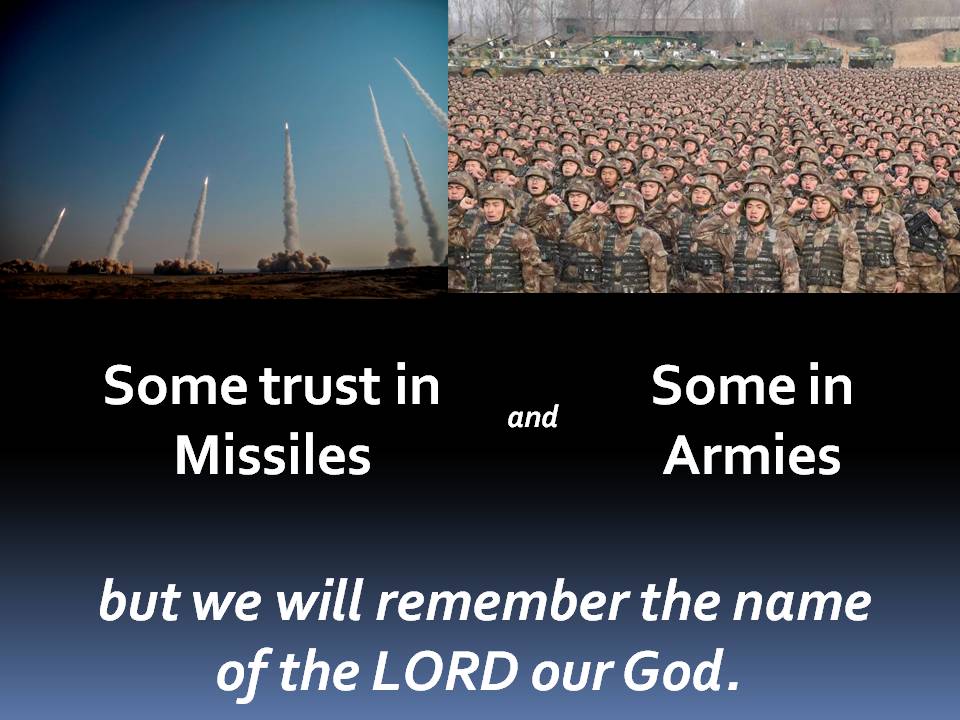
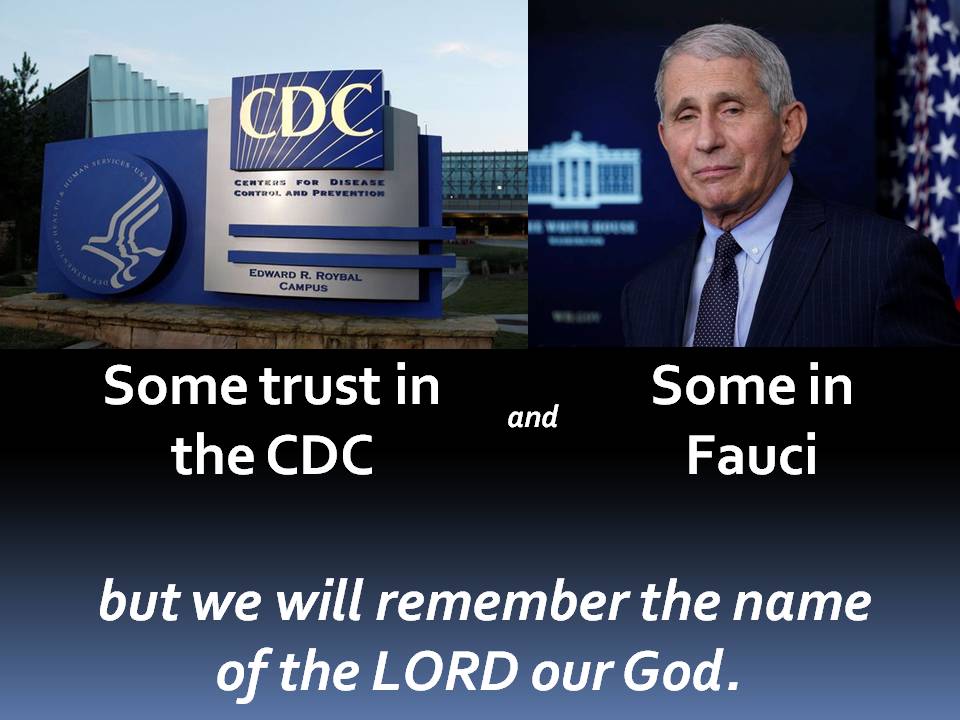
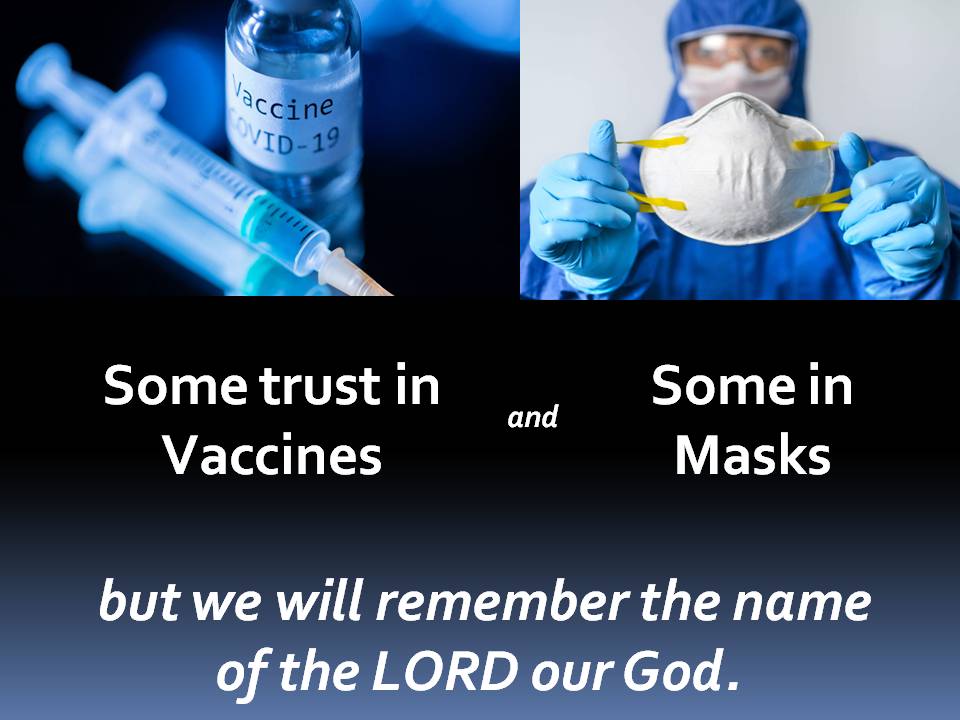
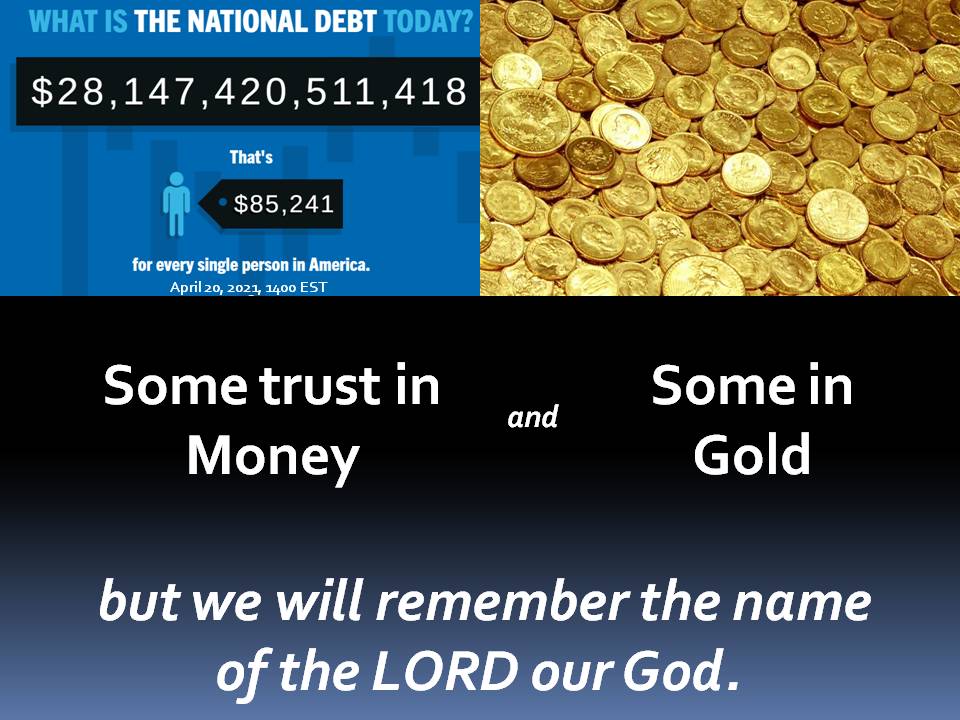
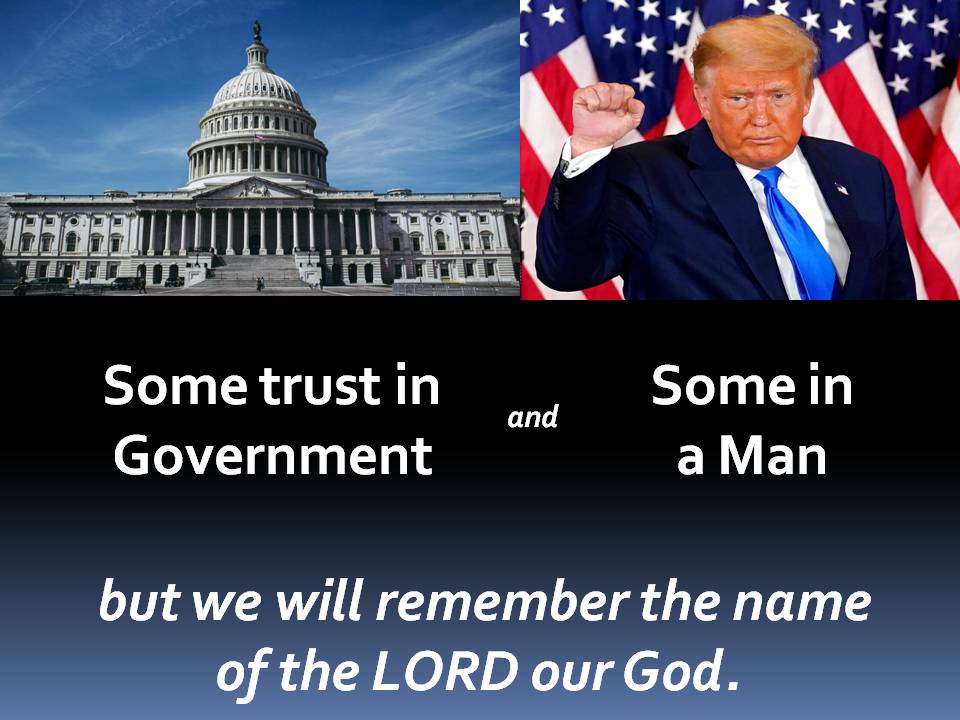
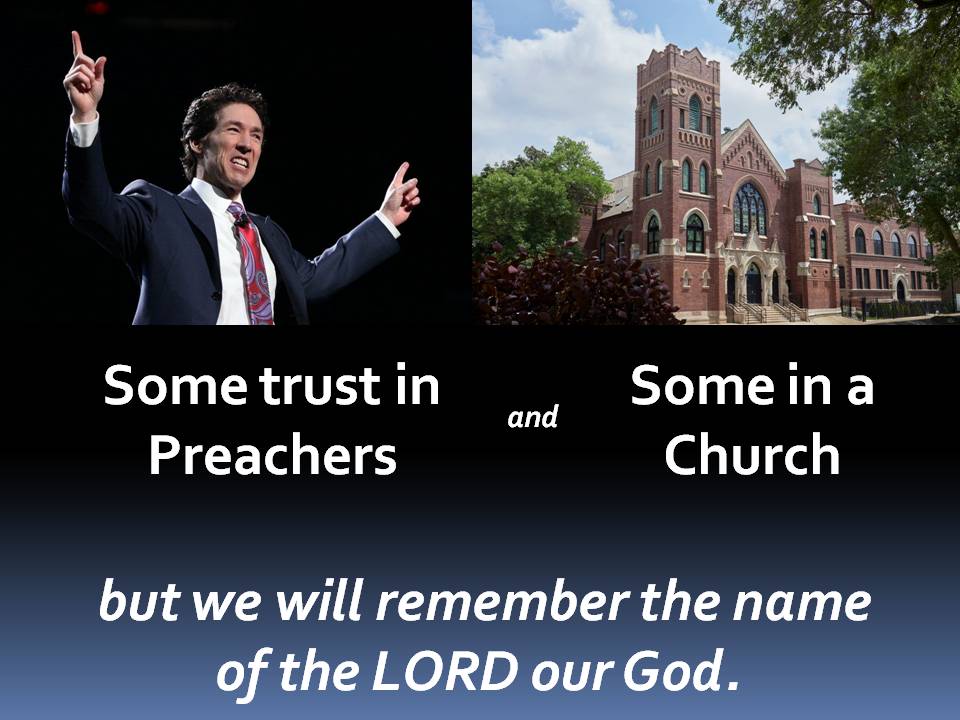
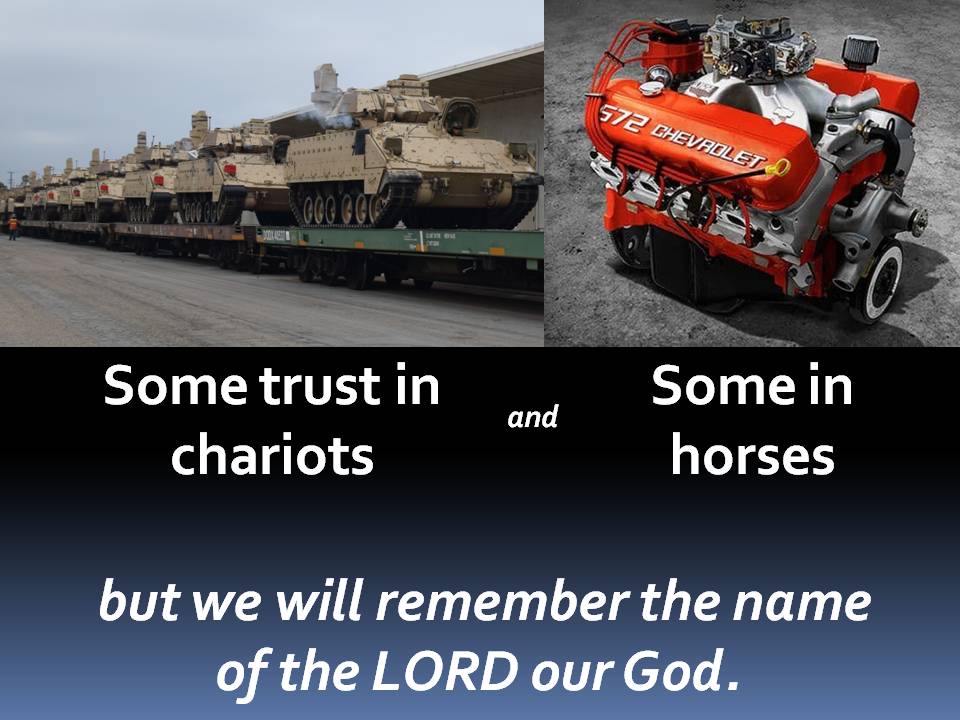
Some trust in chariots, and some in horses: but we will remember the name of the LORD our God. (Psalm 20:7)

The familiar rendition of Psalm 20:7 reads, “Some trust in chariots and some in horses, but we trust in the name of the Lord our God” (emphasis mine) as equivocated by the New International Version (NIV). The first “trust” in the verse does not appear in the original Hebrew, but has been supplied by English translators for ease of reading and understanding. The addition of the word is in keeping with the context of the entire psalm which looks to God for provision, protection and salvation.

The second word rendered “trust” is from the Hebrew root zâkar which means “to remember, recall, or call to mind.” Other versions translate zâkar as “boast, depend, honor, mention, praise, rely, remember, shall call, take pride in, and trust.” The literal translation of zâkar is “to remember.” The Hebrew verb is in the Hiphil imperfect stem, so literally it means “to cause to remember,” but that would give it an awkward rendition in English.

However, we could argue that “trust” is a valid rendering, but only by going through some mental gymnastics. As we go through trials in our lives, God provides, protects, and saves us from harm. We may not sense God’s presence while we are going through our troubles, but when we look back on our lives, we can “see” and “remember” how God’s hand has been upon us to guide, direct, protect, provide, and ultimately, to save us from those times. My favorite Bible verse says, “And we know that all things work together for good to them that love God, to them who are the called according to his purpose” (Romans 8:28). As we “remember” the working of God in our past, we can “trust” Him with whatever we face in the present, and we can “trust” Him with whatever may come to us in the future.

Reader, if you are feeling insecure about your future, please read my page on “Securing Eternal Life.”

Comments Off on Remember

Filed under Apologetics, Bible, Christianity, Random Musings, Theology

When the Lord Returns

Let your loins be girded about, and your lights burning; (Luke 12:35)

I am currently reading the Gospel of Luke in my personal Bible study, and, as often happens when I read my Bible, something caught my attention that I had not seen before. In Luke Chapter 12, Jesus had finished telling the parable of the rich fool[1] who had a bumper crop and started planning about what he would do with his newly acquired wealth. That night, God called him to account. “But God said unto him, Thou fool, this night thy soul shall be required of thee: then whose shall those things be, which thou hast provided?” (Luke 12:20). Jesus’ point was that earthly riches do not amount to much in light of eternity. He said, “So is he [a fool] that layeth up treasure for himself, and is not rich toward God” (Luke 12:21). He went on to teach regarding the futility of worrying about the things of this world because God knows our needs, and He will provide for all our needs (not necessarily our “wants”). The ravens do not sow, reap, or store up food, yet God feeds them.[2] The lilies of the fields neither toil nor spin, yet God clothes the earth more beautifully than Solomon’s apparel.[3] So, Jesus taught, we should not overly concern ourselves with food or clothing because God will provide for our needs. Instead, He said, “But rather seek ye the kingdom of God; and all these things shall be added unto you … For where your treasure is, there will your heart be also” (Luke 12:31, 34)

With that in mind, since this life and this world does not last, He went on to encourage His listeners to be ready for His Second Coming. (I am not sure if His audience caught the significance of His message, but looking back, it should be clear to us.) “Let your loins be girded about, and your lights burning” (Luke 12:35). Having your “loins girded” is an expression that meant to prepare oneself for work, and one only lights a lamp when it gets dark. So the idea is that we should be on the alert and watching. We are to watch and work as we “seek the kingdom of God.”

He went on to amplify His meaning. “And ye yourselves like unto men that wait for their lord, when he will return from the wedding; that when he cometh and knocketh, they may open unto him immediately” (Luke 12:36, emphasis mine). I highlighted in bold italics what I missed before. Jesus spoke in the form of a parable which His audience, His disciples, and His apostles would not have clearly understood at that time. He often used the example of a landowner – a lord or master – leaving on a long journey and leaving the care of his properties in the hands of stewards, i.e., “servants.”[4] All of these parables convey the idea that the Lord will leave – which Jesus did in His ascension – and will return at some undetermined time. In the meantime, His servants continue to conduct His business – in our case that of proclaiming the Gospel – until He returns.

What popped out at me in this passage is the phrase “when he will return from the wedding.” What relevance does a wedding have with the main point of the story? Note also the definite article. It is not just “a” wedding; it is the wedding. The significance is subtle and easy to miss, but indeed it carries great relevance to Christians living in this day.

Before Jesus went to the cross, He told His apostles, “Let not your heart be troubled: ye believe in God, believe also in me. In my Father’s house are many mansions: if it were not so, I would have told you. I go to prepare a place for you. And if I go and prepare a place for you, I will come again, and receive you unto myself; that where I am, there ye may be also” (John 14:1-3, emphasis mine). When His apostles heard this, they caught the imagery of a Galilean wedding. When a man proposed marriage to a young woman, if she accepted the proposal, he would leave to build a house for her. Once the father of the groom inspected and approved the house, he would give his son permission to go get his bride. The wedding would take place and the wedding feast that followed would last for seven days.

Likewise, Jesus, the Bridegroom, is betrothed to His Bride, the Church. His Bride is made up of those who have accepted His proposal.[5] Now He is gone preparing a place for His Bride, and when the Father approves of the house,[6] He will come to get His Bride and take her to the home He has prepared for her. The wedding feast[7] will last one week (seven years).[8] At the end of the seven years, Jesus will return with His Bride to reclaim His kingdom on earth.

The audience that heard the parable was Jewish, and they probably missed the significance of the lord returning from the wedding. Weddings were frequent and common events in those days as they are today. Jews then and now, for the most part, missed the Messiah. Yet Jesus admonishes these who fail to recognize Him to have their “loins girded” and their “lamps burning” in preparation for their Lord’s return from the “wedding.”

After Jesus snatches away His Bride and the seven-year wedding feast begins, those who remain on the earth will experience the seven-year Tribulation. During that time, many Jews will recognize the Messiah they missed and 144,000 of them will preach the Gospel message around the world.[9] Many Jews as well as Gentiles will be saved by their message. It is these whom Jesus admonishes to work, watch, and be ready for His coming. “Blessed are those servants, whom the lord when he cometh shall find watching: verily I say unto you, that he shall gird himself, and make them to sit down to meat, and will come forth and serve them. And if he shall come in the second watch, or come in the third watch, and find them so, blessed are those servants” (Luke 12:37-38).

“The Lord is not slack concerning his promise, as some men count slackness; but is longsuffering to us-ward, not willing that any should perish, but that all should come to repentance” (2 Peter 3:9, emphasis mine). Even after the Rapture of the Church, even in the midst of the Great Tribulation, God is “not willing that any should perish.” Sadly, for many, that time will be the final opportunity for salvation but at such a high cost. Reader, if you do not know the Savior, please do not wait until the last moment. Accept the Bridegroom’s proposal today. Find my page on “Securing Eternal Life” and prepare to enjoy the wedding feast rather than work in the time of Great Tribulation.

Notes:


[1]  Luke 12:16-20

[2]  Luke 12:22-24

[3]  Luke 12:27-28

[4]  Matthew 21:33-41; 25:14-30; Mark 13:32-37Luke 19:11-27

[5]  John 3:16; Acts 16:31; Romans 10:9-10; et al.

[6]  Matthew 24:36

[7]  Revelation 19:6-9

[8]  Daniel 9:27

[9]  Revelation 7:1-8; 14:1-5

Comments Off on When the Lord Returns

Filed under Christianity, End Times, Evangelism, Gospel, Salvation, Second Coming of Christ, Theology

Jesus And Genesis

But from the beginning of the creation God made them male and female. (Mark 10:6)

If one wants to criticize and discount the Bible, there is no better place to start than at the beginning with Genesis. Those who reject God find it easier to believe the absurdity that nothing expanded and resulted in everything. They claim to believe the “science.” However, scientific proof requires the implementation of the “scientific method.” As an elementary school teacher just 12 years ago, we still taught the “scientific method” which included observation, hypothesis, experimentation, and falsification. God deniers profess science without employing the scientific method to support their hypothesis. No one observed the Big Bang. No one can experiment to reproduce the Big Bang. (It would be scary if they could!) And no one can falsify the Big Bang, yet they claim to be “scientific.”

The same can said for Creation. Creation cannot be proven by the scientific method. It was a unique, miraculous, one-time event. Creation differs from the Big Bang in that it started with Someone; it did not come from nothing – “In the beginning, God”[1] and God recorded His work in the first chapter of the Book of Beginnings – Genesis. The thinking person (not the God denier – they do not think) only needs to consider the creation account for what it says, recognizing the implied characteristics of the omnipotent Creator’s ability to do what He said He did and compare that to the order out of chaos suggested by the Big Bang proponents. Because of the vast complexity of the universe and life on earth, logic supports creation by an intelligent Creator over life by luck. Of course, some God deniers reject the Big Bang for that very reason and opt to believe that life on earth was “seeded” by extraterrestrials from other worlds, but that raises another question. How did the extraterrestrials originate? That question cannot be answered.

God deniers will not be convinced with logic. They reject God by choice. I am more surprised by those who say they believe the Bible but reject the Genesis account. They have been taught that the Big Bang is a fact and that life on earth arose through the process of evolution. In order to keep their faith in God intact, they rationalize that God somehow used the Big Bang and evolution to create. That makes sense. God can do anything He wants to do and use whatever means He chooses to do it. He is God! However, in reading the straightforward creation account in Genesis 1, one cannot find the logical steps of evolution. God created the universe by His spoken word, not with a bang.[2] He created plant life[3] before He created the sun. He created the sun and moon before creating the rest of the stars as sort of an afterthought.[4] He created marine and avian life before creating the dinosaurs (land creatures). Secular scientists claim that birds evolved from dinosaurs, but Genesis says that birds came first. Furthermore, the Genesis account of creation records that each day of creation was a 24-hour day;[5] that amount of time does not allow for evolution to take place.

Some overly educated theologians dismiss the Genesis account of creation as poetry or allegory. Somehow in all of their education, they miss the fact that Hebrew poetry is distinct by its use of parallelism. There is none of that in the Genesis account. Any Hebrew language novice understands that the first three chapters in Genesis, which take the brunt of the criticism, are written in narrative form like any other historical portion of Scripture. Genesis is not poetry. It presents a factual account, or at least it is factual to the author.

Jesus, who the New Testament credits as Creator[6], affirmed the validity of Genesis. When the Pharisees challenged Him on the question of divorce, Jesus referred them back to Genesis. “But from the beginning of the creation God made them male and female” (Mark 10:6, emphasis mine). The making of the first human pair is recorded in the first chapter of Genesis. “So God created man in his own image, in the image of God created he him; male and female created he them” (Genesis 1:27, emphasis mine). For the sake of this confused world today, it should be noted that God made one pair of opposite, yet complementary sexes. They were not androgynous with the option to choose their sex. God did not create two males to mate with each other or two females to cohabitate. God designed the sexes for reproduction. Two males cannot reproduce, nor can two females reproduce. The union is not about “feeling” but about “function.” Male and female “fit” together. The way God designed it works. The way modern man has perverted it often ends in tragedy.

Genesis records that Adam’s first son was Cain and the second was Abel. Cain murdered Abel in a fit of jealous rage,[7] and Jesus referred to that as a factual account. As Jesus excoriated the Pharisees for their hypocrisy, He said, “Ye serpents, ye generation of vipers, how can ye escape the damnation of hell? Wherefore, behold, I send unto you prophets, and wise men, and scribes: and some of them ye shall kill and crucify; and some of them shall ye scourge in your synagogues, and persecute them from city to city: That upon you may come all the righteous blood shed upon the earth, from the blood of righteous Abel unto the blood of Zacharias son of Barachias, whom ye slew between the temple and the altar” (Matthew 23:33-35, emphasis mine). Jesus again affirmed the veracity of Genesis in citing Abel as a real person. As an aside, I find it interesting that Jesus takes credit for sending the prophets – “I send unto you prophets, and wise men, and scribes.” That is what God does. Therefore, Jesus claims to be God.

The Global Flood account in Genesis 6-9 is also a major point of contention with Bible critics, even those claiming to be Christian. However, Jesus vouched for its authenticity. In speaking on the last days, Jesus said, “But as the days of Noe were, so shall also the coming of the Son of man be. For as in the days that were before the flood they were eating and drinking, marrying and giving in marriage, until the day that Noe entered into the ark, And knew not until the flood came, and took them all away; so shall also the coming of the Son of man be” (Matthew 24:37-39, emphasis mine). So, to those who claim to be Christian yet reject Genesis, do you reject Jesus’ words as well? If you doubt the first eleven chapters of Genesis, how can you believe the words of Jesus? He spoke of the Genesis account as fact.

Jesus created[8] man in His image[9] knowing the kind of body He would one day inhabit.[10] Jesus accepted Abel’s sacrifice[11] over that of Cain’s, and when Cain murdered Abel, He demonstrated mercy toward Cain by setting a mark on him to spare his life.[12] God had Noah build an ark with only one entrance. The Ark was large enough to accommodate thousands of more people than Noah and his family, but only those eight that believed God and entered through the only door were saved from the Flood. Jesus is our Ark of salvation. He said, “I AM the door.”[13] He is the only entrance to eternal life; there is no other way. “Jesus saith unto him, I am the way, the truth, and the life: no man cometh unto the Father, but by me” (John 14:6, emphasis mine).

I understand God deniers rejecting the Genesis account of creation. They are lost and hell-bound. But there is no excuse for Christians rejecting the Genesis account if indeed they believe Jesus’ words.

Reader, if you are questioning the veracity of Scripture, particularly where it comes to creation, perhaps the first thing you need to consider your eternal standing before God. Read my page on “Securing Eternal Life.”

Notes:


[1]  Genesis 1:1

[2]  Genesis 1:1-5

[3]  Genesis 1:11-12

[4]  Genesis 1:14-16

[5]  “A Day Is A Day” – https://erniecarrasco.com/2015/10/25/a-day-is-a-day/

[6]  John 1:1-3; Colossians 1:16-17; Revelation 4:11

[7]  Genesis 4:1-8

[8]  John 1:1-3

[9]  Genesis 1:26-27

[10]  John 1:14; Philippians 2:7-8

[11]  Genesis 4:4

[12]  Genesis 4:15

[13]  John 10:9


Comments Off on Jesus And Genesis

Filed under Apologetics, Bible, Christianity, Creation, End Times, Origins, Religion, Salvation, Science, Theology

Trumpets

… for the trumpet shall sound, and the dead shall be raised incorruptible, and we shall be changed.  (1 Corinthians 15:52)

This weekend, Saturday and Sunday, September 19-20, 2020, celebrates Rosh Hashanah, the first of the Jewish civil year 5781. Rosh Hashanah is the fifth of the seven Feasts of the Lord prescribed in Leviticus 23, and is also known as the Feast of Trumpets for the sounding of trumpets proclaiming the new year. Feast of Trumpets is also known as the “feast where no man knows the day or the hour.”

The Feasts of the Lord are based on a lunar calendar, and the official declaration of the new year depends on the first sighting of the new moon. Since that cannot be determined precisely, Rosh Hashanah is observed over two days to ensure the sighting of the new moon for the sounding of the trumpets. Hence, no one knows the day or the hour.

Trumpets appear throughout Scripture. The first occurrence of a trumpet in the Bible comes after the exodus from Egypt and the crossing of the Red Sea. God brought the Children of Israel to Mount Sinai where He introduced Himself to them in person.[1] God instructed Moses that He would appear in the form of a cloud around the mountain and that no one could come near the mountain under penalty of death. “There shall not an hand touch it [the mountain], but he shall surely be stoned, or shot through; whether it be beast or man, it shall not live: when the trumpet soundeth long, they shall come up to the mount” (Exodus 19:13, emphasis mine). The sounding of the trumpet summoned the people to come up to the mountain unto the presence of the Lord. “And it came to pass on the third day in the morning, that there were thunders and lightnings, and a thick cloud upon the mount, and the voice of the trumpet exceeding loud; so that all the people that was in the camp trembled” (Exodus 19:16, emphasis mine). So Moses brought the people to the smoke-covered mountain before the Lord “And when the voice of the trumpet sounded long, and waxed louder and louder, Moses spake, and God answered him by a voice” (Exodus 19:19, emphasis mine). Following this, God gave the Ten Commandments to the people, and they all heard the commandments of God directly from God.[2] “And all the people saw the thunderings, and the lightnings, and the noise of the trumpet, and the mountain smoking: and when the people saw it, they removed, and stood afar off. And they said unto Moses, Speak thou with us, and we will hear: but let not God speak with us, lest we die” (Exodus 20:18-19, emphasis mine). From then on, God spoke to the people through His prophets, beginning with Moses.

Trumpets call the people to solemn assemblies. “And the LORD spake unto Moses, saying, Speak unto the children of Israel, saying, In the seventh month, in the first day of the month, shall ye have a sabbath, a memorial of blowing of trumpets, an holy convocation” (Leviticus 23:23-24, emphasis mine) . “Make thee two trumpets of silver; of a whole piece shalt thou make them: that thou mayest use them for the calling of the assembly, and for the journeying of the camps” (Numbers 10:2, emphasis mine). I could give more examples, but basically, the function of a trumpet serves to alert people to an event and to call for a gathering or assembly.

In the New Testament, Jesus refers to a trumpet in the negative sense of calling attention to yourself when performing acts of benevolence. “Therefore when thou doest thine alms, do not sound a trumpet before thee, as the hypocrites do in the synagogues and in the streets, that they may have glory of men. Verily I say unto you, They have their reward” (Matthew 6:2, emphasis mine).

The second occurrence appears in the Olivet Discourse when Jesus teaches His disciples about end-time events. “Immediately after the tribulation of those days … shall appear the sign of the Son of man in heaven … And he shall send his angels with a great sound of a trumpet, and they shall gather together his elect from the four winds, from one end of heaven to the other” (Matthew 24:29-31, emphasis mine).  The “tribulation of those days” to which Jesus referred is the 70th “week” of the Prophet Daniel’s prophecy.[3] Jesus called it a time of “great tribulation, such as was not since the beginning of the world to this time, no, nor ever shall be” (Matthew 24:21, emphasis mine)” At that time God will send His angels to gather His elect, i.e., Israel, from all over the world. These are NOT Christians, and I will explain that later on.

In the next reference to a trumpet, Paul points out the importance of a trumpet giving a distinct sound. “For if the trumpet give an uncertain sound, who shall prepare himself to the battle?” (1 Corinthians 14:8, emphasis mine). He stresses the importance of giving a clear gospel message so that the hearer is not confused. Later he talks about the last days when “In a moment, in the twinkling of an eye, at the last trump: for the trumpet shall sound, and the dead shall be raised incorruptible, and we shall be changed” (1 Corinthians 15:52, emphasis mine). Here he refers to the “dead in Christ” and “we” are the Christians who are alive when the trumpet sounds.

Most biblical scholars believe that Paul’s letters to the Church in Thessaloniki were his first “epistles.” To the Thessalonians he writes, “For this we say unto you by the word of the Lord, that we which are alive and remain unto the coming of the Lord shall not prevent [“precede”] them which are asleep [dead]. For the Lord himself shall descend from heaven with a shout, with the voice of the archangel, and with the trump of God: and the dead in Christ shall rise first: Then we which are alive and remain shall be caught up together with them in the clouds, to meet the Lord in the air: and so shall we ever be with the Lord” (1 Thessalonians 4:15-17, emphasis mine).  For those who claim that “rapture” in not taught in the Bible, the word translated “caught up” is the Greek ἁρπάζω (harpazō) which means to seize; catch away, catch up, pluck, pull, or take by force. The Latin Vulgate translates harpazō as “raptus” from which we get the word “rapture.”

The Beloved Apostle John saw the risen Lord while “in the Spirit” on the Lord’s Day (Sunday).[4] After Jesus finished dictating seven letters to seven churches,[5] John records, “After this I looked, and, behold, a door was opened in heaven: and the first voice which I heard was as it were of a trumpet talking with me; which said, Come up hither, and I will shew thee things which must be hereafter” (Revelation 4:1, emphasis mine). After this point, the Church is no longer mentioned in Revelation until Chapter 19 when she is described as “The Bride” at the marriage supper of the Lamb, and she returns with Jesus to end the Great Tribulation and initiate the 1000-year reign of Christ. This is the trumpet Jesus described in Matthew 24:29-31 above. For this reason, and I am convinced, many end-times teachers believe the church will be taken up before the seven-year Tribulation begins and will not experience the horrors of those times.

Because of the significance of trumpets throughout Scripture and especially in end-time prophecy, many have looked at the Feast of Trumpets as reasonable time for that to take place. Of course, many rear up and point out that Jesus said that “of that day and hour knoweth no man” (Matthew 24:36). That is true. Jesus’ coming is imminent;[6] it could happen at any minute. By studying the events recorded in Revelation and reckoning the division of the seven years, anyone living at that time, if they are paying attention, can determine when Jesus will return to earth. It is a set time – seven years. Once Antichrist affirms a treaty with Israel,[7] it is just a matter of counting the days – 2520. It is not rocket science.

However, the Rapture of the Church has no signs. We cannot guess what year it will take place, but we see the stage being set for the seven-year Tribulation, and Antichrist has not made his appearance, so we know the time is close.

So why single out Rosh Hashanah, the Feast of Trumpets, for the Rapture taking place? We can take a hint from Jesus who said that no man knows the day or the hour. The Feast of Trumpets is the feast that no man knows the day or the hour, so that has some association. Then, there is the idea that Jesus fulfilled the first four of the Feasts of the Lord: Passover, Unleavened Bread, First Fruits, and Pentecost. Pentecost was fulfilled when He sent the Holy Spirit to empower the Church.[8] He has yet to fulfill the last three feasts: Rosh Hashanah, Yom Kippur (Day of Atonement), and Sukkoth (Feast of Tabernacles). The next feast on the Calendar is Rosh Hashanah. So, it makes sense that the Rapture may take place on Rosh Hashanah because the sounding of the trumpet is the calling of the congregation together.

If not this year then perhaps it could happen next year, or the next. However, His coming is imminent – any minute! It doesn’t have to happen at Rosh Hashanah. So, we must always be ready. Jesus said, “Watch therefore: for ye know not what hour your Lord doth come” (Matthew 24:42).

If you read this and hear of millions of disappearances all over the world, you should know what happened. If not, thank God that He has given you more time, but don’t delay. He could come at any minute – imminent! If you do not know Jesus, please read my page on “Securing Eternal Life.”

Notes:


[1]  Exodus 19

[2]  Exodus 20

[3]  Daniel 9:24-27

[4]  Revelation 1:10

[5]  Revelation 2-3

[6]  “Imminent” – https://erniecarrasco.com/2020/01/12/imminent/

[7]  Daniel 9:27

[8]  “Tongues of Fire” – https://erniecarrasco.com/2020/09/13/tongues-of-fire/

Comments Off on Trumpets

Filed under Apologetics, Christianity, End Times, Evangelism, Gospel, Holy Spirit, Religion, Salvation, Second Coming of Christ, Theology